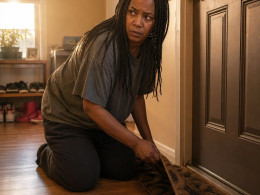




The Screenshot He Slid Over

Grant didn’t raise his voice. He didn’t have to. He just slid a printed screenshot across the mediation table like a knife he’d already wiped clean.
“If you don’t stop,” he said, calm as a weather report, “we’ll ask for supervised visits. For your sake.”
I stared at the page until the words blurred. I’ll make you pay. Then the line that made my throat close: And I can keep him from you any time I want. It looked like my thread. My bubble color. My spacing. Even the contact name at the top—exactly how I’d saved him, down to the stupid little heart I’d added years ago and never removed.
I reached for it and my fingertips squeaked against the glossy paper. The mediator—a gray-haired woman with a pen poised like a judge—watched my face change in real time.
“That’s not—” I started, but Grant cut me off with a tiny shake of his head, like he was disappointed in me. Like he’d caught me stealing.
His attorney leaned in. “Mara, this is very concerning language. Especially from a mother.”
I looked up at Grant. His eyes were steady, almost gentle. And that’s when it hit me: this wasn’t a messy misunderstanding. Someone had built a weapon that fit my phone perfectly, down to the heart by his name—and Grant was waiting for me to deny it so he could call me a liar to my face.
The mediator asked, “Do you recognize this message thread?” and Grant’s mouth twitched like he already knew my answer.
My Son Said It First
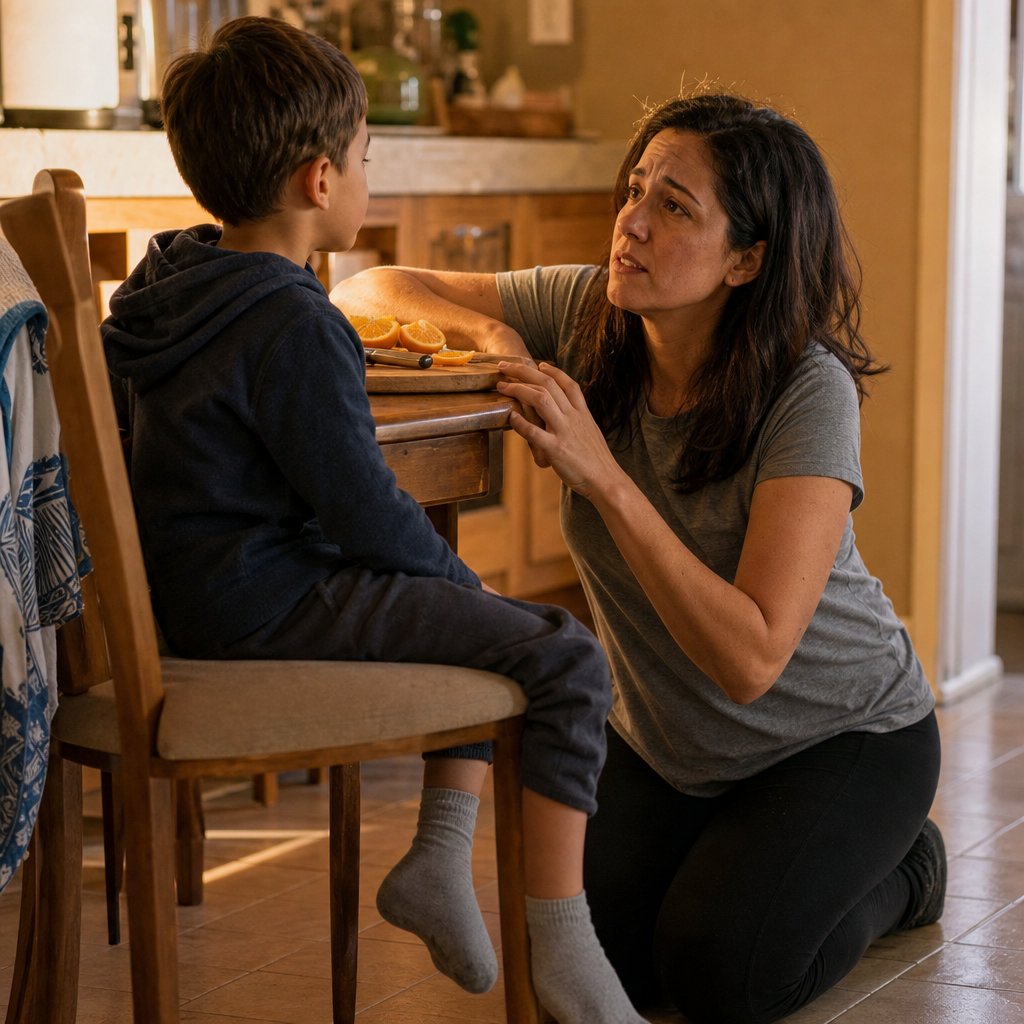
The kitchen still smelled like dish soap and the oranges I’d cut for his snack when my son looked up at me and said, like he was reciting a rule at school, “Daddy said Mommy lies.”
I froze with the butter knife in my hand. The slice of orange slipped, wet and bright against the cutting board.
“What did you say?” My voice came out too careful, the way you talk when you’re trying not to scare a skittish animal.
He shrugged, swinging his legs on the chair. “He said you make stuff up and then you cry. And that’s why the judge has to know.”
My stomach dropped so hard I thought I might actually be sick. The custody fight wasn’t just in emails and court filings. It was already living inside my kitchen, inside my kid’s mouth, wearing my ex-husband’s voice like a puppet.
“Did Daddy tell you to say that to me?” I asked.
He frowned, suddenly unsure. “He said I should be honest. Because Mommy gets mad.”
The word mad landed like a label being slapped on my forehead. I could picture Grant saying it—soft, reasonable, the patient dad dealing with the volatile mom. I could picture him practicing it with our son like a bedtime story.
I knelt beside the chair, forcing my face into something gentle. My hands smelled like citrus as I held his small wrist. “Sweetheart, I need you to tell me exactly what Daddy said. All the words.”
He looked past me toward the hallway, like he was checking if someone else could hear, and his lips parted—
The Plan That Stole Nights
The email came dressed up like peace.
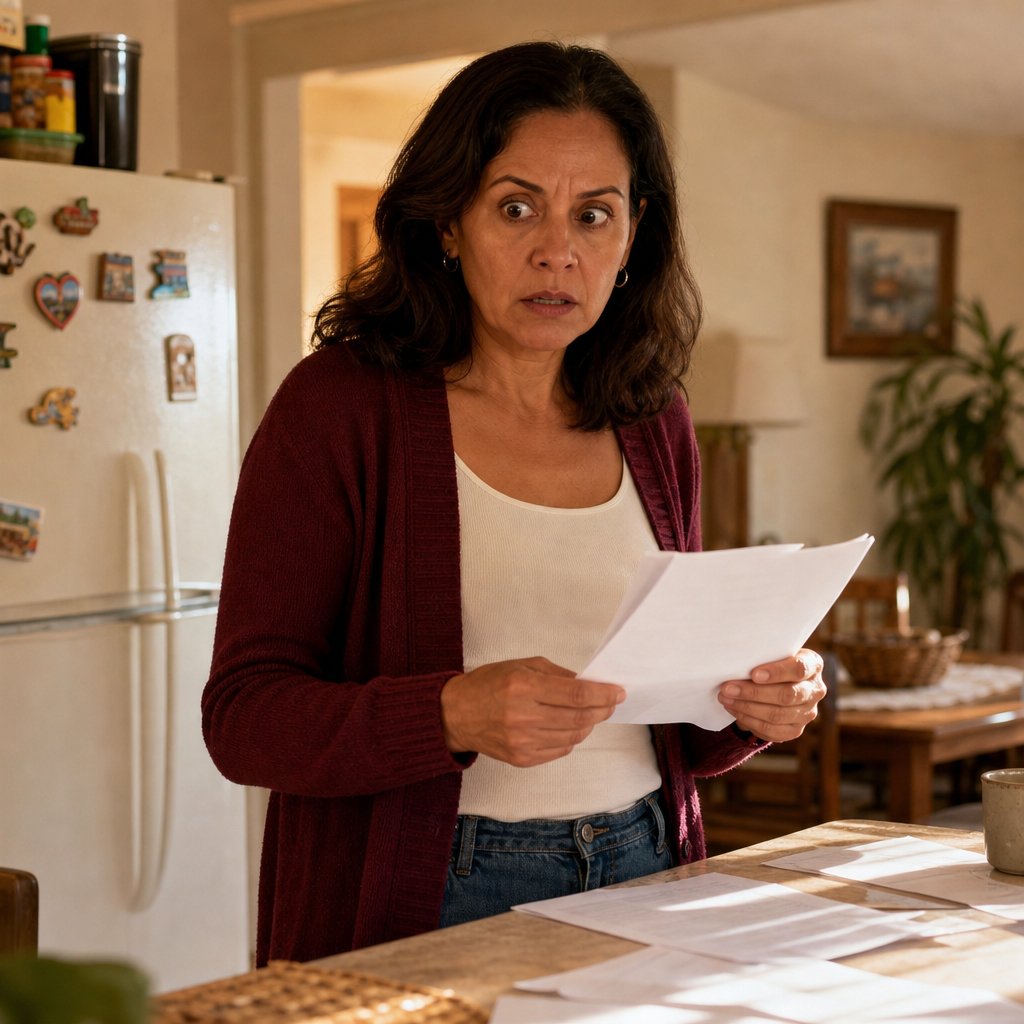
Grant’s attorney sent over a “friendly” parenting plan—polite language, bullet points, the kind of thing you’d forward with a smiley face if you wanted to look reasonable. I printed it because I couldn’t stand reading it on my phone, then held the pages so tight my knuckles went pale.
At first glance: cooperation. Shared holidays. “Encouraging frequent contact with both parents.”
Then I hit the weekday schedule and my breath caught.
Grant got every school night.
Every. Single. One.
I read it again, slower, like maybe I’d hallucinated the words. The plan gave me alternating weekends, a couple dinner visits, and the kind of leftovers people offer when they’re done eating. It was 50/50 in the way a con artist smiles while sliding your wallet out of your pocket.
I pictured our son waking up in Grant’s house Monday through Friday, learning what “normal” looked like without me there. I pictured parent-teacher conferences where I’d be the visitor, not the parent. I pictured Grant explaining to everyone how he “stepped up” because I was “unstable.”
I set the pages on the counter and stared at the refrigerator magnets like they might rearrange into a warning. My hands trembled as I dialed my lawyer, but it went straight to voicemail.
I could feel it then—the opening move disguised as cooperation. If I objected, I’d look combative. If I agreed, I’d disappear from my own child’s weekdays.
I flipped to the last page and saw the signature line already filled with Grant’s name, like the decision had been made without me.
The Day My Money Vanished
The rent check bounced on a Tuesday, which sounds like a small thing until you’re the one standing in a leasing office with heat crawling up your neck.
The manager slid the check back to me with a tight smile. “It says insufficient funds.”
Insufficient. Like I hadn’t been working overtime. Like I hadn’t been careful. Like I wasn’t counting every grocery run in my head.
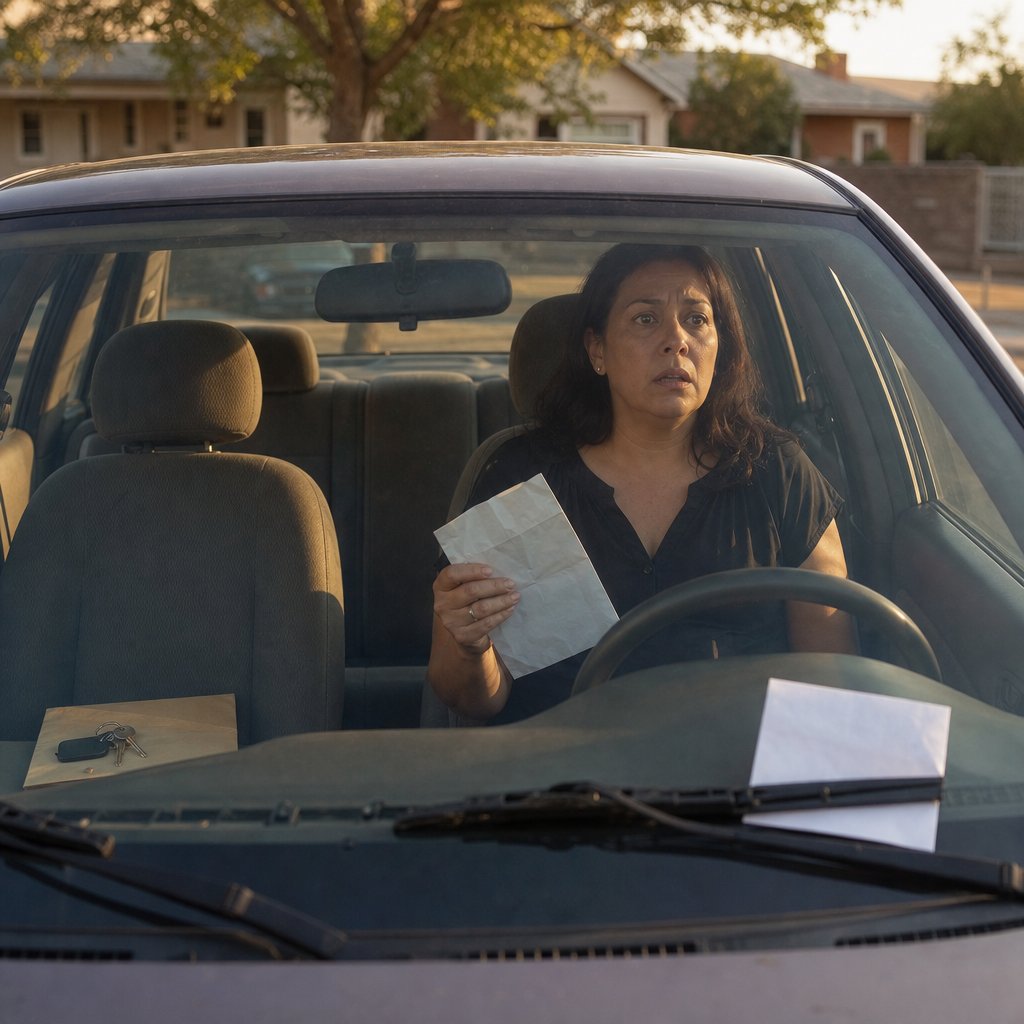
I walked back to my car gripping the envelope so hard it crumpled. The steering wheel felt gritty under my palms. I sat there and called the bank, and the woman on the line kept using the same calm voice people use when they’re about to ruin your week.
“Your joint account is currently frozen,” she said. “We can’t release funds at this time.”
“Frozen why?” I asked, already knowing the answer in my bones.
There was a pause—keyboard clicks, a practiced hesitation. “It appears there was a request… related to a legal matter.”
My phone buzzed as she spoke. A notification from the court: the first hearing date had been scheduled. Same day. Same hour. Like someone had stacked dominoes and flicked the first one with a smile.
Grant didn’t just want custody. He wanted me unstable on paper. Late on rent. Scrambling. The kind of mother who “can’t manage basic finances.”
I called him. Straight to voicemail. I called again. Nothing.
I stared at the crumpled rent envelope on the passenger seat and thought about the screenshot on that mediation table. About how clean it looked. About how prepared he was.
Then my landlord’s number flashed on my screen again, and I realized if I didn’t fix this by tonight, it wouldn’t just be court—I’d be explaining to my son why we couldn’t stay here.
The Voicemail That Chilled Me
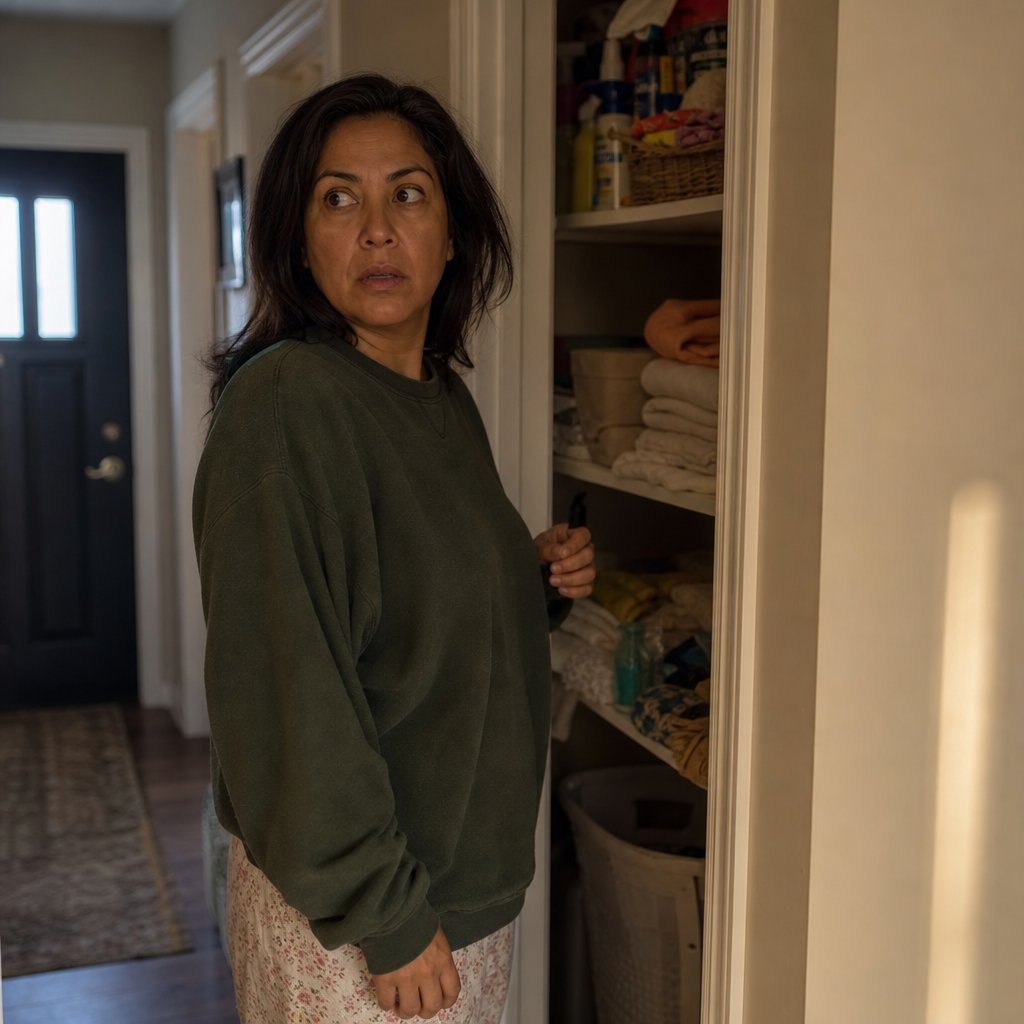
I didn’t listen to the voicemail until after I’d put my son to bed, because I didn’t want him seeing my face do that thing—collapse and harden at the same time.
I stood in the hallway with the linen closet open like I needed something, like I wasn’t just buying time. The air smelled faintly of detergent and old towels.
My lawyer’s voice came through, sharp and low. “Mara, call me as soon as you get this. They have something. Don’t text anyone. Don’t message anyone. Don’t respond to Grant. Just call me.”
My skin went cold. They have something.
Not they’re saying. Not they’re claiming. Like it was real. Like it was already packaged in a folder with my name on it, ready to be slid across another table while people watched me flinch.
I replayed it. Again. And again. Each time the “don’t text anyone” hit harder, because texting was what I did when I was scared—reach out, explain, defend myself before anyone could decide who I was without me.
I thought about Grant baiting me. About him wanting a screenshot of me angry, begging, threatening. About him wanting me to prove his story with my own hands.
I closed the linen closet too hard and the shelves rattled. My son shifted in his room down the hall, a soft thump against the mattress, and I held my breath until he went still again.
I walked into the living room, picked up my phone, and set it face-down on the coffee table like it was a loaded weapon.
Then the doorbell rang.
He Called Me Volatile
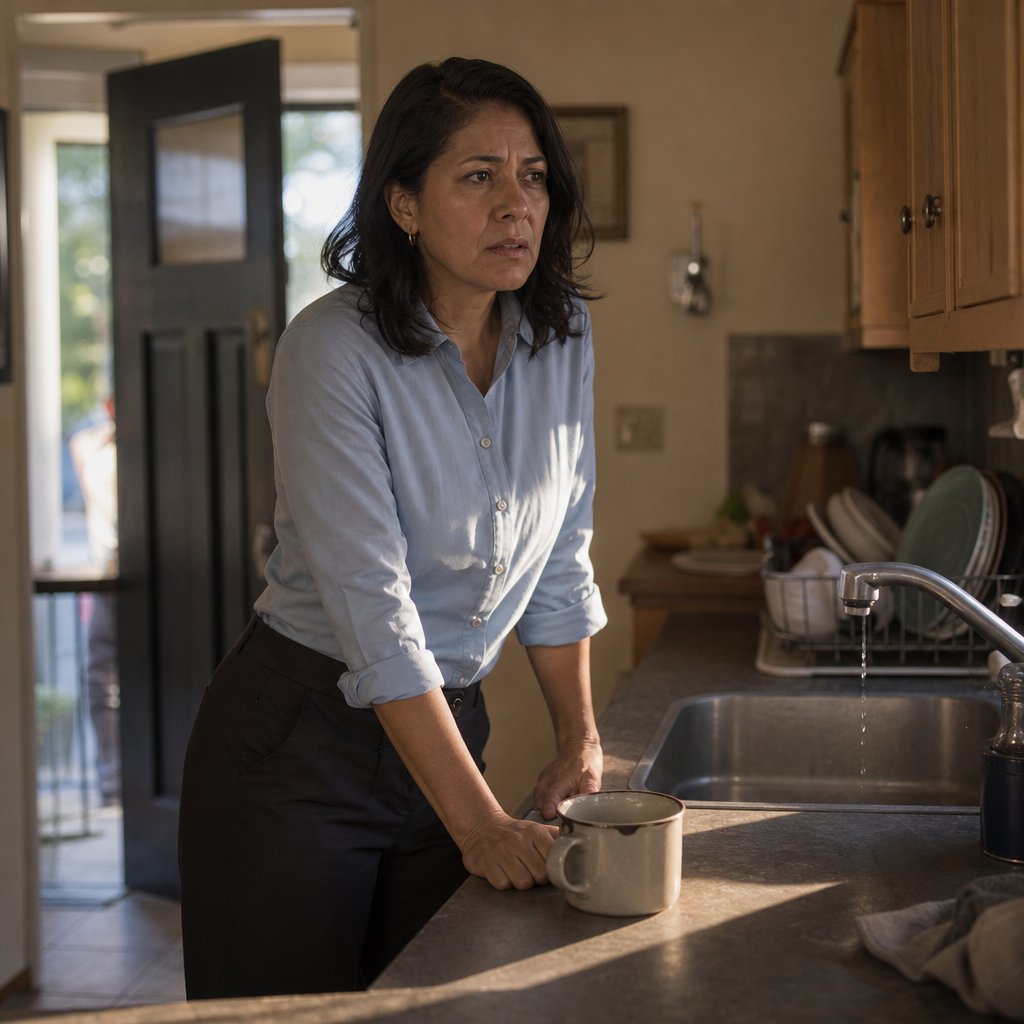
The emergency filing hit like a shove.
My lawyer called back the next morning and didn’t bother with hello. “Grant filed for an emergency temporary order,” she said. “He’s alleging you’re volatile and you’ve threatened to withhold your son.”
Volatile. The word tasted like metal in my mouth.
“Based on what?” I asked, even though I knew. My stomach already knew.
“He attached the screenshot.”
I stood at my sink staring at a coffee mug with a chip on the rim, like if I stared long enough it would un-break itself. The faucet dripped—slow, obnoxious, counting out seconds I couldn’t afford.
“That screenshot is fake,” I said. My voice sounded too loud in my own kitchen.
My lawyer exhaled. “I believe you. But he’s turning a private moment into a public allegation, and the court is going to look at ‘threats’ very seriously. Especially when he’s framing it as safety.”
Safety. Like I was a hazard sign.
She kept talking—procedures, timelines, what not to do—but all I could think about was a judge reading those words and imagining my face behind them. All I could think about was Grant sitting somewhere calm, telling himself he was protecting our son while he lit my life on fire.
I gripped the edge of the counter until my fingers ached. “What did he ask for?”
There was a beat of silence, and then she said it. “Primary custody. Temporary full physical. And restrictions on your communication.”
I swallowed hard. “When is the hearing?”
“Soon,” she said. “And Mara—he’s trying to make you react. If you give him anything—anything he can screenshot—”
My front door lock clicked from the outside.
The Family Group Chat Hit
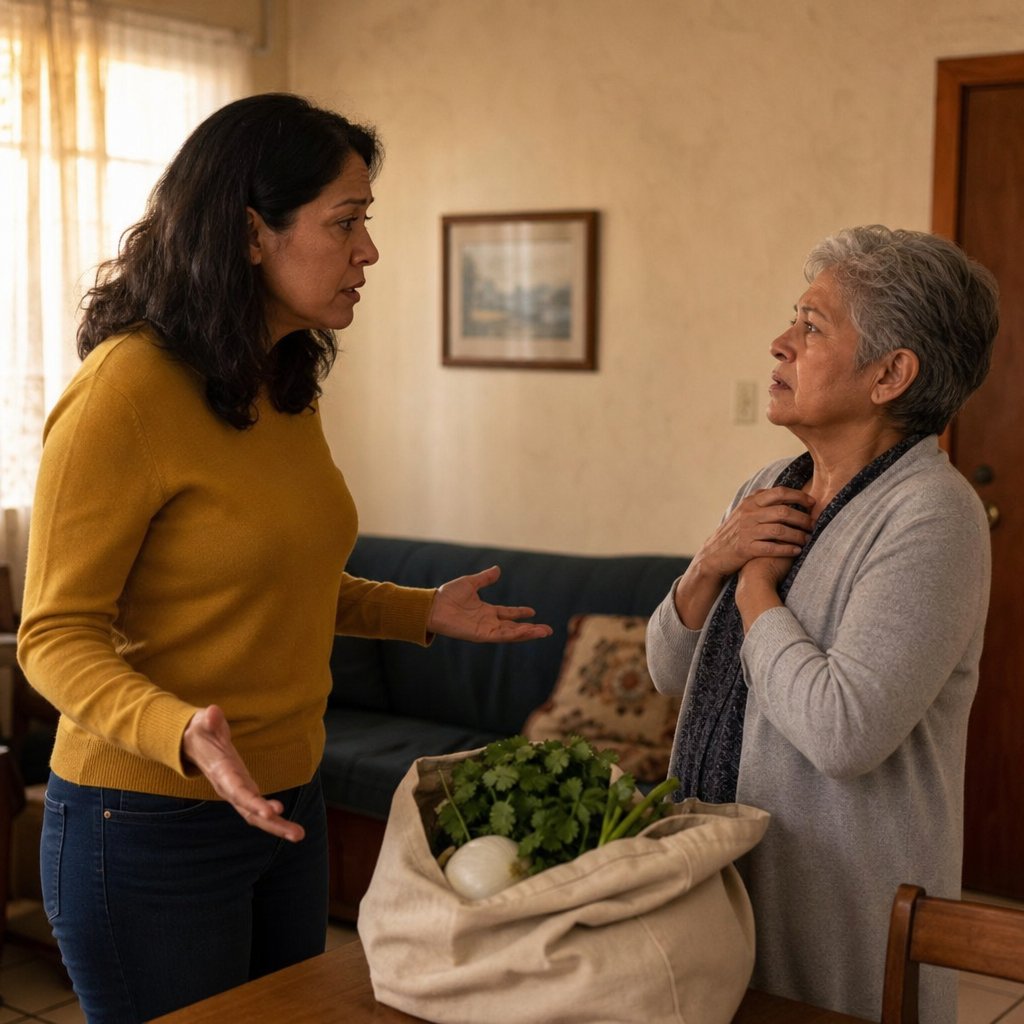
I found out about the reputation campaign from my mother’s face.
She showed up at my place with a grocery bag and that tight, careful expression she got when she was trying not to accuse me of something. The bag smelled like cilantro and onions, sharp enough to make my eyes water.
“Your aunt called,” she said, setting the bag down like it was heavier than it should’ve been. “She said… people are worried.”
“People,” I repeated. My throat tightened. “What people?”
My mom hesitated, then pulled her phone out and held it against her chest, screen hidden like it was dirty. “Grant’s sister sent something around. She said, ‘Did you know?’”
The room tilted. Of course it was his sister—sweet smile, sharp elbows. The woman who hugged me at holidays while taking inventory of my flaws.
“Sent what?” I asked, even as my hands started shaking.
My mother wouldn’t meet my eyes. “A picture. A message. Something you supposedly wrote.”
There it was: the screenshot, now with wings. Not just in court, but in family channels. The legal attack running parallel to the social one, squeezing me from both sides until I either broke or looked broken.
“Did you believe it?” I asked my mother, and hated how small my voice sounded.
She flinched like I’d slapped her. “Mara…”
That pause was the answer. I stared at her, at the way she kept her phone close to her chest like she didn’t want me touching the evidence of my own ruin, and I realized Grant wasn’t just trying to convince a judge.
He was trying to poison the jury I’d had my whole life.
His Deal Came With Teeth
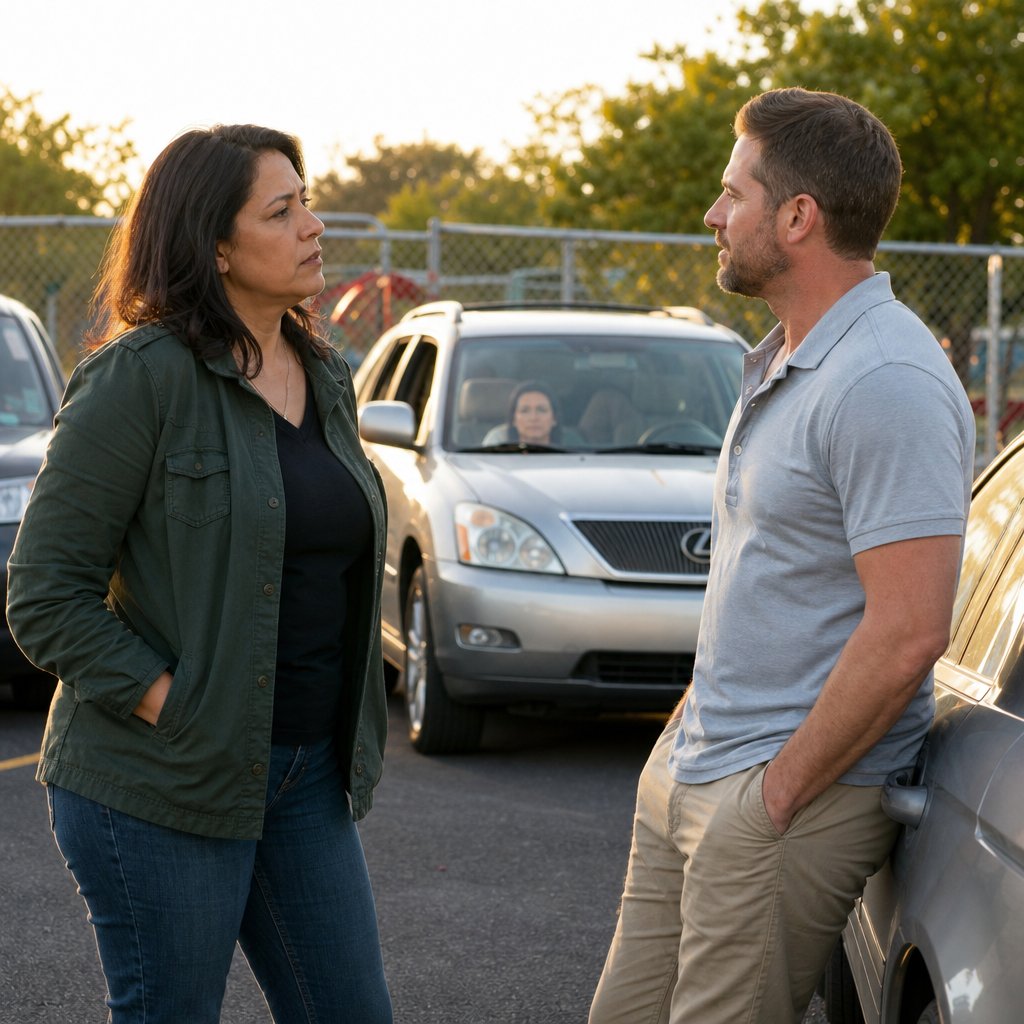
Grant chose a public place to sound reasonable.
We met outside the daycare parking lot, near the chain-link fence where parents pretended not to listen to each other’s business. He leaned against his car like he had all the time in the world. His hair was perfectly trimmed. His wedding ring was gone, but the pale band of skin where it used to be looked like a ghost.
“I don’t want this to get ugly,” he said.
I laughed once, sharp. “You filed an emergency order calling me volatile.”
He held up both hands, palms out, like I was the one escalating. “I’m trying to protect our son.”
Then he stepped closer and dropped his voice. “Sign 50/50. Stop asking about the money. And I’ll let it go.”
The words hit me so hard I forgot to breathe. Not stop fighting me. Not stop making this hard. Stop asking about the money.
“What money?” I asked, watching his face like it was a safe I needed the combination to.
His mouth twitched again—annoyance, maybe, or a warning. “You know what I mean. The accounts. The transfers. All that.”
So it was real. The missing pieces I’d been noticing for months—the “work reimbursements,” the sudden cash-only habits, the way he’d insisted on handling taxes—weren’t paranoia. They were a trail.
He nodded at me, almost kindly. “Don’t make me use that screenshot again, Mara.”
Behind him, a woman’s Lexus rolled slowly through the lot and parked. The driver didn’t get out. She just watched us through the windshield like she was timing something.
The Tracker In His Backpack
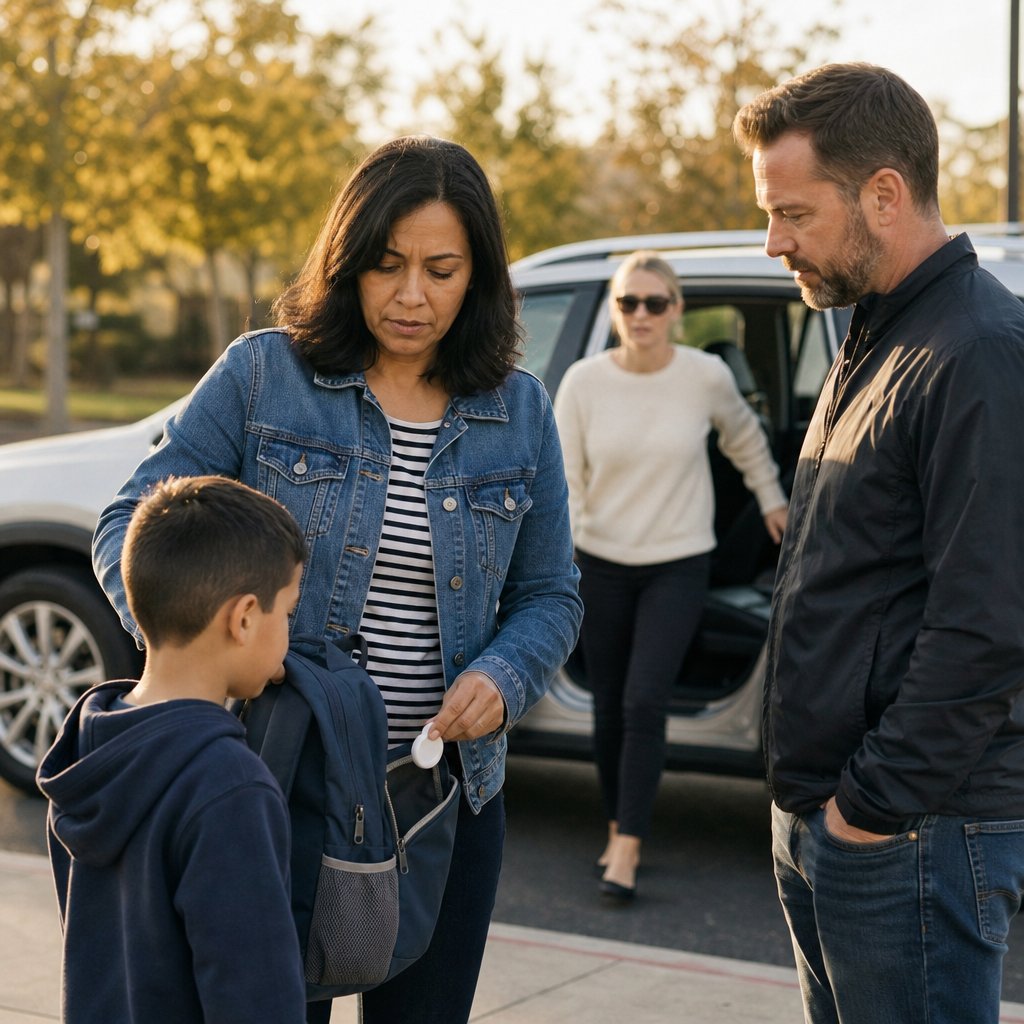
At the exchange, I tried to keep my face neutral. Smile for our son. Be the stable one. The one who didn’t look like she had a storm in her ribs.
Grant walked our son over like he was delivering a package. “He ate,” he said, too casually. “He’s got his homework.”
Our son ran to me, smelling like grape juice and playground dust. His backpack thumped against my hip when I hugged him.
That’s when I felt it—an extra weight in the side pocket, hard and unfamiliar. My fingers slid in and found a small, smooth tag wedged under the fabric seam, like someone had tucked it in fast.
I pulled it out and my blood went cold. A tracker. The kind people use for keys. For luggage. For things they don’t want to lose.
Grant watched my hand. His expression didn’t change, but his eyes sharpened, like he was waiting to see if I’d make a scene.
Across the curb, the Lexus idled. The woman behind the wheel—Sloane, I realized, from the photos I’d tried not to look at—held her phone up at chest level, filming with the casual confidence of someone who’d done it before. She was in her 30s, blonde hair pulled into a sleek ponytail, oversized sunglasses, a cream sweater that looked expensive even from here.
I curled my fingers around the tag until it bit into my palm. “What is this?” I asked Grant, keeping my voice low so our son wouldn’t hear.
Grant smiled like a man being falsely accused.
“You tell me,” he said.
The Backup That Didn’t Match
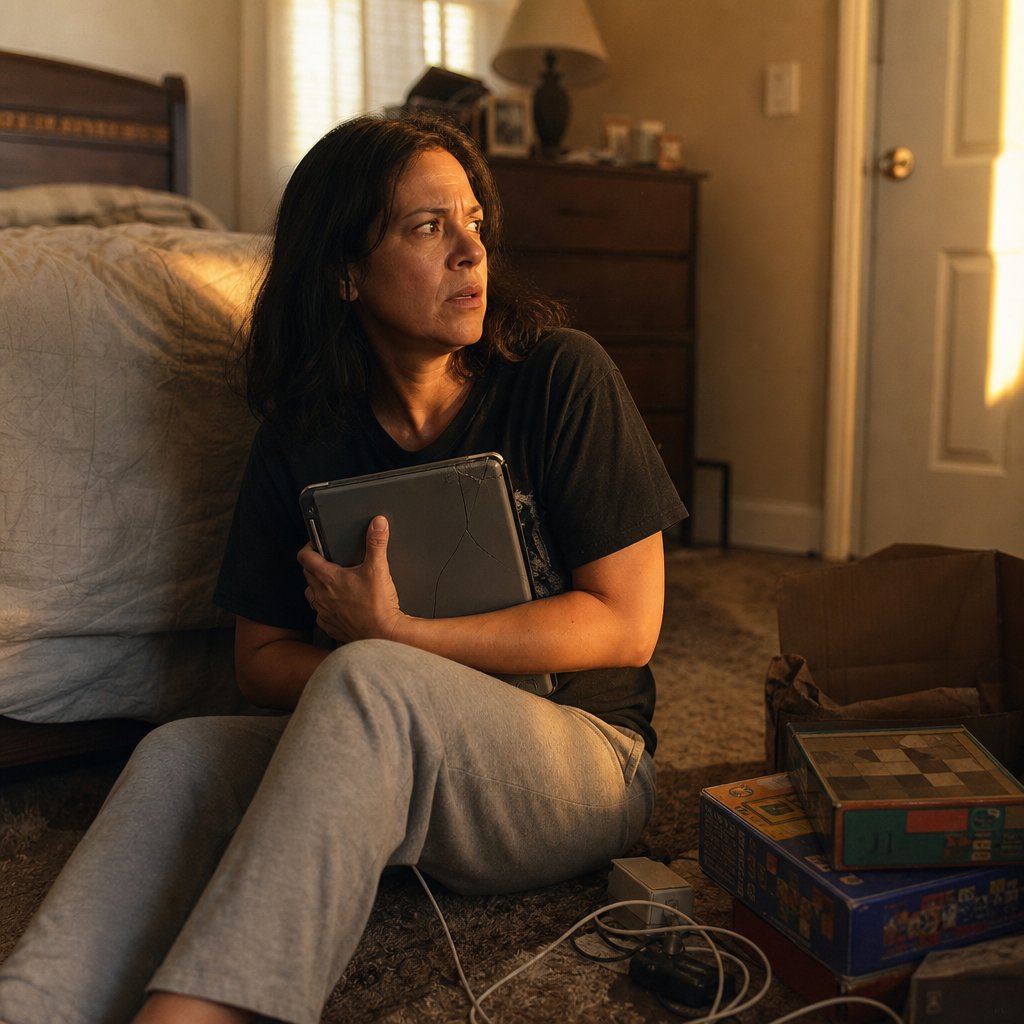
I dug the old iPad out of the hall closet like I was exhuming a body.
It was buried under board games and a tangle of charger cables, screen smudged, case cracked at one corner. I sat on my bedroom floor in sweatpants and a faded concert T-shirt, knees pulled in, and waited for it to turn on like my life depended on it.
When it finally booted up, I didn’t go looking for comfort. I went straight for the backups—the old message threads that lived in the cloud back when Grant and I still shared a password and called it trust.
My heart hammered as I scrolled through the thread with him, my thumb moving too fast, then too slow. I found the day the screenshot claimed I’d sent those lines. I found the hour.
And it wasn’t there.
Not the words. Not even a gap where they could’ve been deleted. The conversation around that timestamp was about pickup times and a missing shoe. Boring. Normal. The kind of mundane proof no one thinks to fake because no one thinks they’ll need it.
I stared until my eyes burned. The screenshot had a timestamp that didn’t match my actual thread. Either it was cropped from something else, or it was staged entirely—built to look like me the way a counterfeit bill looks real until you know where to tilt it.
Vindication rose in my chest so hard it almost hurt. Then reality followed right behind it: courts didn’t run on my gut feelings. They ran on proof that survived cross-examination.
I heard a car door slam outside my building. Heavy footsteps on the stairs. Then a knock—three sharp hits that made my stomach drop.
The Affidavit With A Smile
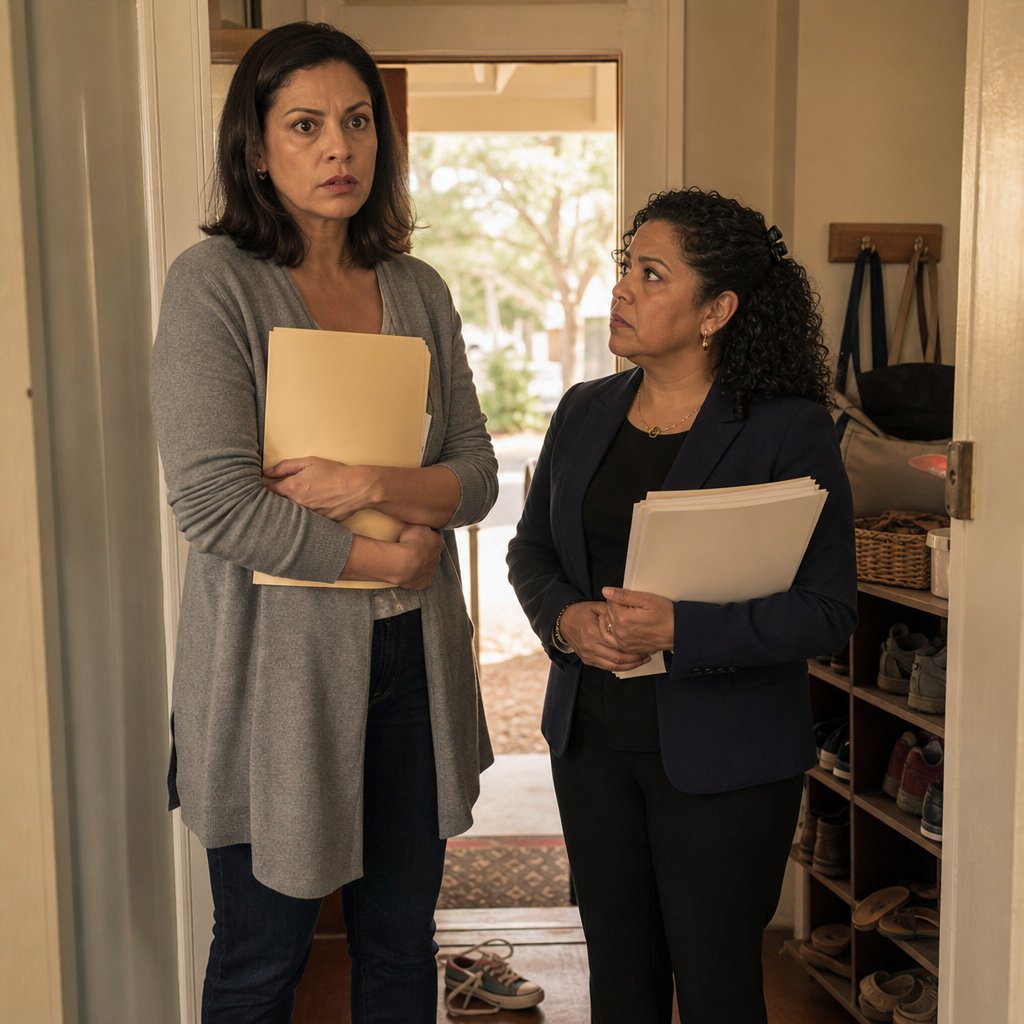
The knocking came a third time, and I opened the door on pure adrenaline.
My attorney, Lila—short, sharp-eyed, curly black hair pulled into a clip—stood in my hallway holding a manila folder like it was heavy. Behind her, the air smelled like rain and hot asphalt. She didn’t ask to come in. She just stepped over my threshold and said, “He filed his financial affidavit.”
I took it with both hands. The paper was warm from her grip. My son’s sneaker sat by the baseboard, one lace chewed into a fray, and the sight of it made my jaw lock.
Grant swore—under penalty of perjury—he had three thousand two hundred fourteen dollars. Not “about.” Not “approximately.” $3,214, like he’d counted it down to the last humiliating penny. “No other accounts.” “No other assets.”
And yet last week, when he picked our son up, he’d rolled up in a new SUV that still smelled like dealership plastic. He’d tossed his golf bag into the back like it weighed nothing. He’d made sure I saw the embossed club tag dangling off the zipper, like a little flag that said: I’m fine. I’m better than fine.
Lila’s voice went quiet. “Mara, this reads like a lie with a suit on.”
I flipped to the signature line and saw his name—steady, practiced, the same hand that used to sign birthday cards for me. My stomach turned as I realized what he’d just done: he’d sworn himself broke while building a case to take our son.
Lila tapped the page once. “Do you want to know the part that scares me most?”
I looked up, and she was already reaching for her phone, eyes narrowing like she’d just spotted a trap being set.
Transfers Just Under The Line
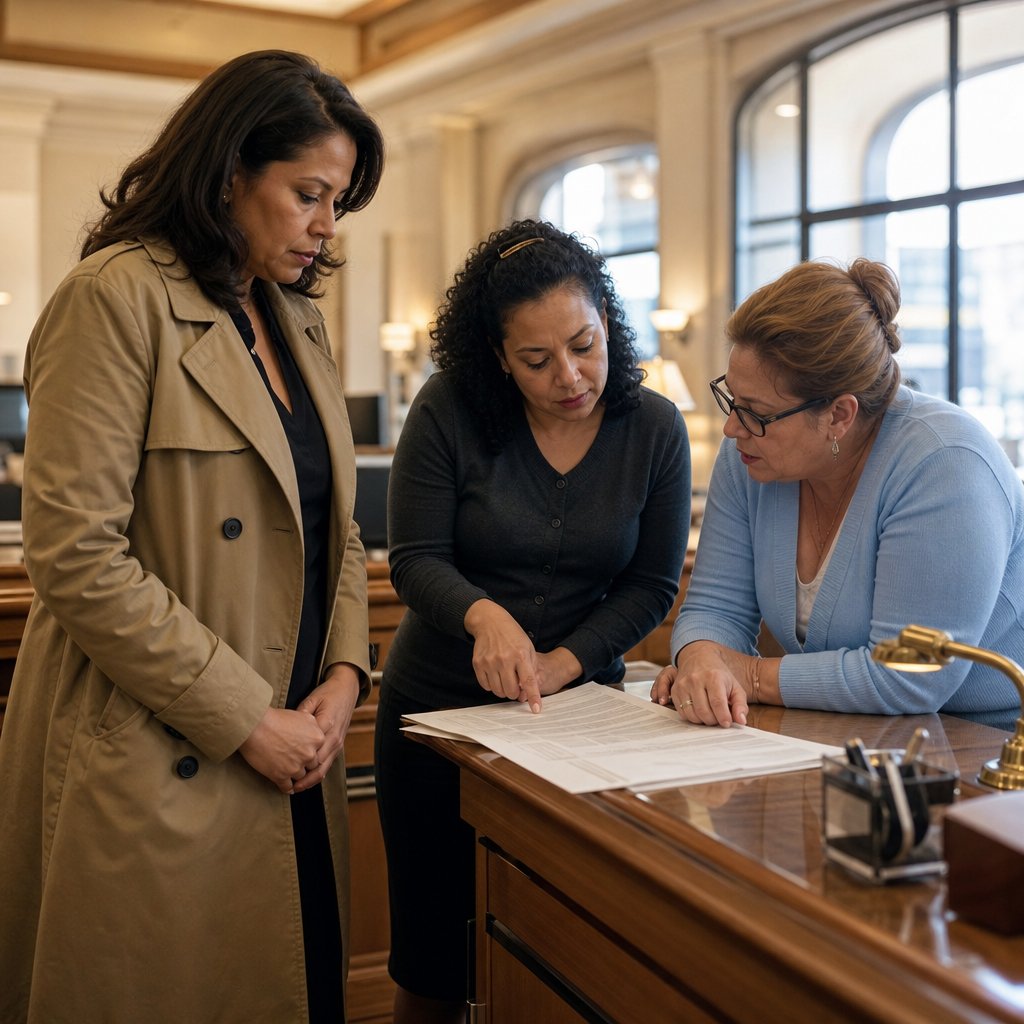
The bank smelled like carpet shampoo and old air-conditioning. I stood at a side desk with my hands folded so tightly my knuckles went pale, while Lila slid a subpoena response across to the clerk.
The clerk was a middle-aged woman with honey-blonde hair in a neat bun and reading glasses that kept slipping down her nose. She didn’t look like a villain. She looked like someone who packed lunches and paid her own bills on time. That made it worse, somehow—because when she lowered her voice, it wasn’t dramatic. It was matter-of-fact.
“I’m not supposed to interpret,” she said, glancing toward the manager’s office like it had ears, “but… you should look at the pattern.”
Lila stayed still. “What pattern?”
The clerk’s finger hovered over a line item on the printout—no screens, just paper that felt too thin for how much it mattered. “Recurring transfers. Always just under the threshold. Not one big move. A lot of small ones.”
My mouth went dry. “Under what threshold?”
She hesitated, then said, “The kind that triggers questions.”
She didn’t point at Grant’s name. She pointed at the destination: an account title I’d never seen before. Not his. Not ours. Something clean and generic, like it belonged to a business that didn’t exist.
“Do you recognize that account name?” Lila asked me.
I stared until the letters blurred, because my brain kept trying to turn it into something familiar—some harmless explanation. But the number of transfers told the truth: someone had been siphoning money in a way designed to look like nothing.
The clerk slid the page closer and whispered, “And there’s another detail you’re going to want to see.”
Printer Wasn’t A Printer
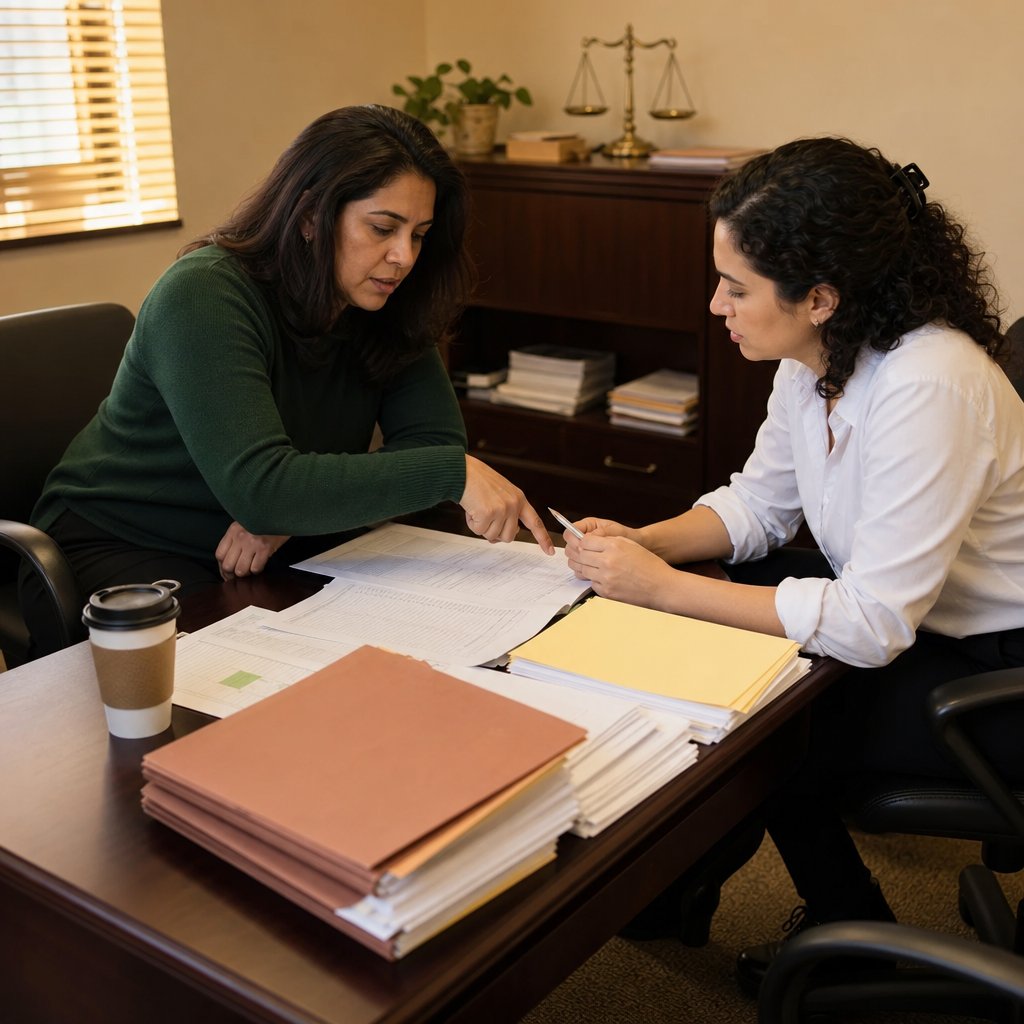
Lila didn’t call it “phone records.” She called it “a map.”
We sat in her office with a paper stack between us, the kind of beige carpet that clung to the smell of burnt coffee. I could hear someone’s muffled laughter down the hall—normal life happening while mine was being disassembled.
“These are the call logs produced in discovery,” Lila said, tapping a column with her pen. “Look at the late-night cluster.”
Grant had always accused me of being obsessed. Of “tracking.” Of “spying.” And yet here it was in black and white: a string of calls after midnight, short bursts, then longer ones right before the screenshot “appeared.”
The contact name listed over and over made my eyebrows pull together. “Printer?”
Lila’s face didn’t change, but her voice did. “That’s what he saved it as.”
She turned one page, and there it was—another production from a different angle: the number tied to an account. Not a print shop. Not a Staples. A person.
“Sloane,” Lila said. “It’s her number.”
The name hit like a slap. Sloane—the new partner. The woman who smiled too wide at exchanges and called my son “buddy” like she’d known him forever. In my head I saw her Lexus idling at the curb, her nails on the steering wheel, her eyes flicking to my front window.
“So when he told the court he didn’t talk to her about the case…” I started.
Lila nodded once. “He didn’t just talk. He coordinated.”
My throat tightened as I traced the timing with my finger. The calls weren’t random. They were steps. Like instructions being read out loud.
Lila slid the page toward me. “Mara—there’s a reason he named her ‘Printer.’”
The Metadata They Wouldn’t Give

Mediation was in a windowless conference room that smelled faintly like lemon cleaner and stale breath. Grant sat across from me in a crisp button-down, sleeves perfect, wedding band gone like it had never existed. Beside him, his attorney—thin, silver-haired, expensive watch—kept smiling like we were negotiating a fence line, not my child’s life.
I kept my hands under the table so they wouldn’t shake.
“We’re requesting the original file,” Lila said evenly. “The screenshot as it was captured. With metadata.”
Grant’s eyes flicked to me, quick and cold. Like: you’re still on that?
His attorney didn’t even pretend to consider it. “No,” he said, voice smooth. “It’s already been authenticated.”
“By who?” I asked before I could stop myself.
Grant’s mouth twitched, almost a smile. He stared at the table, like he was trying not to laugh at a private joke. The mediator—a tired man in a wrinkled suit—cleared his throat and looked at his notes like they might save him.
Lila leaned forward. “Authentication requires access to the original. Not a cropped image forwarded through three people. We’re entitled—”
“It’s irrelevant,” Grant’s attorney cut in. “The content speaks for itself.”
The content. The alleged “confession” that painted me as a vindictive mother who would weaponize our son. The single rectangle of evidence they kept waving like a bloody shirt.
I looked at Grant. “If it’s real,” I said quietly, “why are you so afraid to hand it over?”
His jaw worked once. Then he did something so small and so vicious only I caught it: he slid his foot back, like he was bracing for impact, like he already knew what would happen next.
The mediator exhaled. “Counsel, can you at least provide—”
Grant’s attorney lifted a hand. “No.”
And in that overconfident no, I felt it—the cover. The panic disguised as certainty.
Lila’s hand found my wrist under the table and squeezed once, a warning. I swallowed hard as Grant finally met my eyes, and the look he gave me said he wasn’t done.
The Battery Percentage Betrayed Him
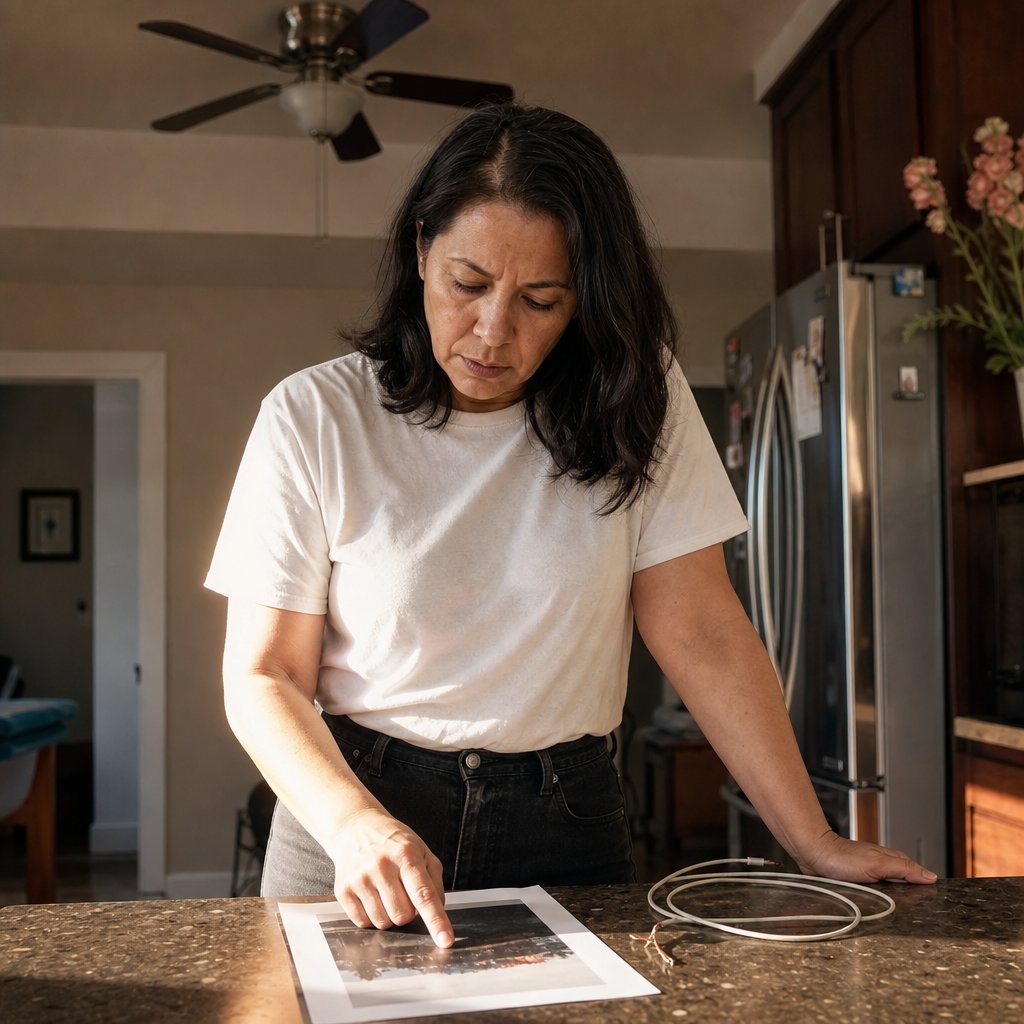
Back in my kitchen, I set the printed copy of the screenshot on the table like it might bite me. The overhead fan clicked with every rotation, a tiny, steady sound that started to feel like a countdown.
I’d stared at the words a hundred times—the line about “making him pay,” the threat about keeping our son from him—until I could recite them in my sleep. But I’d been staring at the wrong thing.
My eyes drifted to the top bar of the image. The details most people ignored. The kind of details you only notice when you’ve lived inside your own phone for years, when your life is calendar alerts and group chats and a battery that never keeps up.
68%.
I actually laughed once, sharp and humorless, because it was so stupid and so perfect. My phone never sat at sixty-eight percent on a workday. I ran low power like a religion. Thirty percent was my comfort zone. Twenty was normal. Anything above that meant I’d been plugged in, stationary, not running between meetings and school pickup and the thousand tiny things Grant used to call “your chaos.”
And the screenshot time stamp—mid-afternoon. A weekday.
I pictured my actual routine: the charger that lived in my car, the frayed cable I kept meaning to replace, the way my battery icon always glowed yellow by lunchtime. Grant knew that. He’d teased me about it for years.
So why did the screenshot show a calm, well-fed battery? Why did it look like a phone that had been sitting on a desk, plugged in, waiting to be used for exactly one thing?
I pressed my fingertip to the little battery symbol on the paper. “You didn’t take this from my phone,” I whispered.
Behind me, the refrigerator kicked on with a low hum, and my stomach dropped with the sudden certainty that the person who did take it had been close enough to know what to fake—and what to forget.
The Room With A Keypad
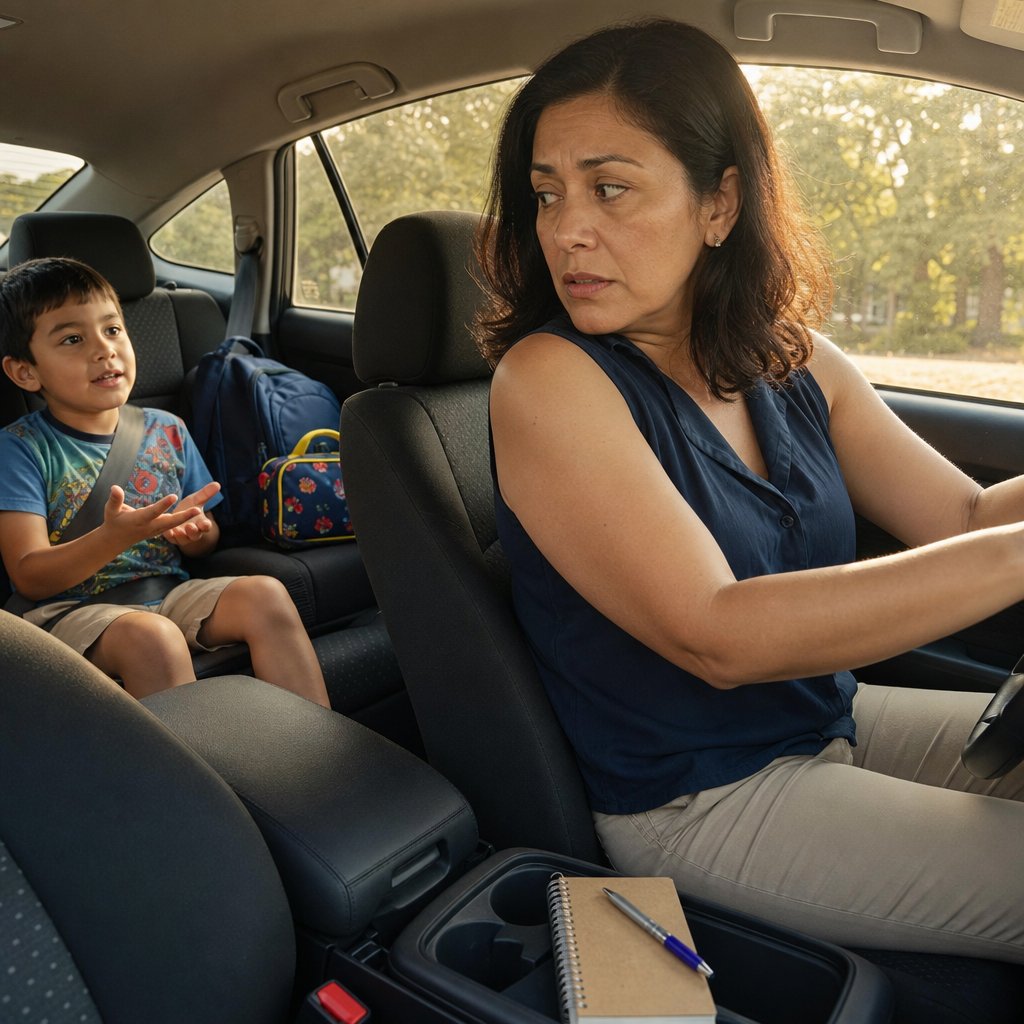
I started a notebook that lived in my purse like a weapon. Dates. Times. Who said what. The exact phrasing. The exact pauses. The things Grant counted on me forgetting because I was “emotional.”
That afternoon, I picked my son up from school and he climbed into the back seat, cheeks pink from the heat, backpack strap twisted around his elbow. The car smelled like crayons and the orange slices he’d begged for.
“How was Dad’s?” I asked lightly, eyes on the road.
He kicked his feet against the seat in front of him. “Fine.” Then, as if it slipped out by accident: “He has a special room now.”
My hands tightened on the steering wheel. “A special room?”
“Yeah. It has a keypad.” He said it like it was cool. Like a spy movie. “Sloane said I’m not allowed to go in. Dad said it’s for ‘grown-up stuff.’”
A keypad. In a house where the most secure thing used to be the junk drawer.
I kept my voice steady. “Where is it?”
“Down the hall. It used to be empty.” He frowned, thinking hard. “Now it’s always closed. And sometimes Dad goes in there when he thinks I’m asleep.”
I wrote the words exactly as he said them the second we got home. Special room. Keypad. Not allowed. Used to be empty. Always closed.
Grant had installed something. Hidden something. Locked it away from his own child. And my mind immediately supplied the worst possibilities: cash, documents, a second phone, a printer, a whole little factory for lies.
My son leaned over the kitchen counter to reach a cookie and added, casually, “Oh, and Sloane told Dad you’d ‘flip out’ if you knew.”
I froze with the pen in midair.
The Message Was Never There
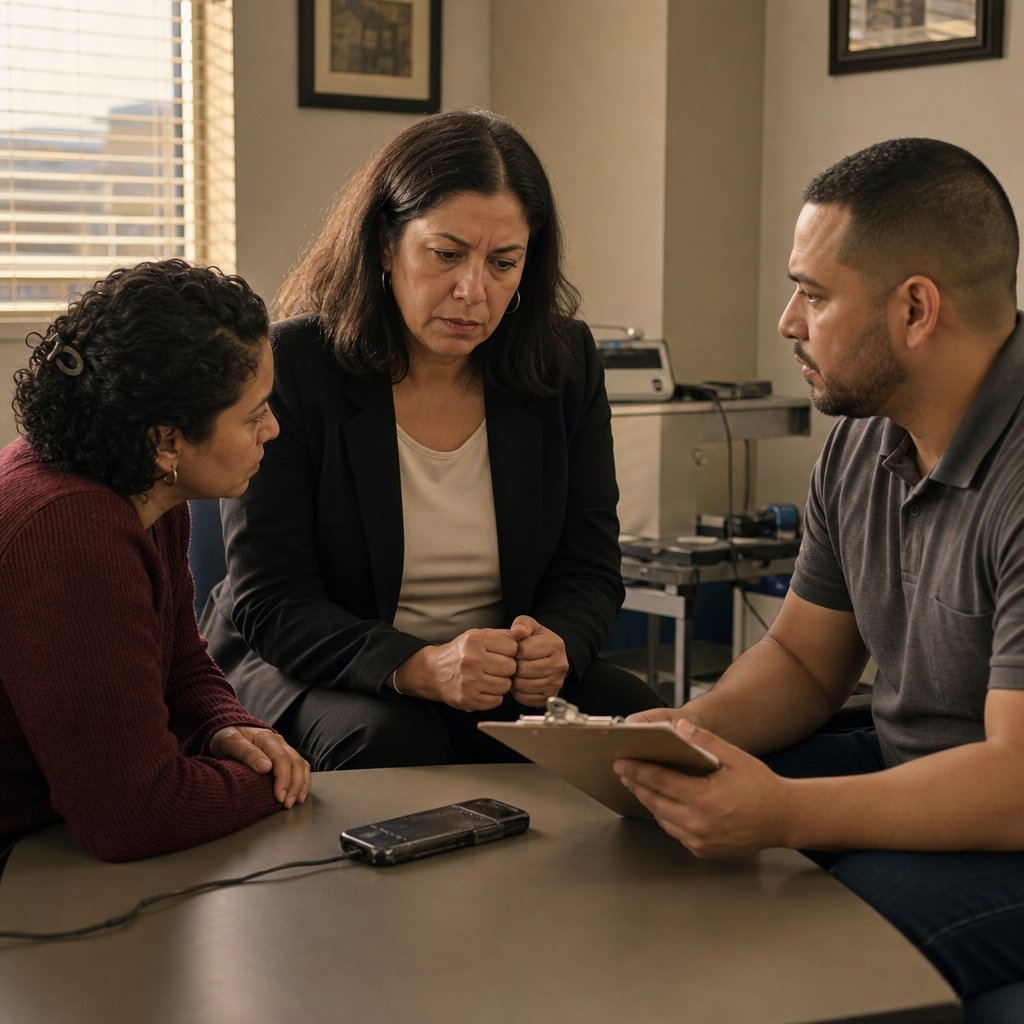
The digital forensics tech’s office was too clean, like a place where mistakes didn’t belong. He was a quiet man in his 30s with close-cropped hair and careful hands, the kind of person who didn’t waste words because words could be twisted.
“Do you still have the old phone?” he asked.
I slid it across the table. It felt heavier than it should, like it contained the last year of my life in a brick of glass and metal. The case was scuffed at the corners. The charger port had that familiar wobble from being yanked out too fast.
He didn’t turn the screen toward me. He didn’t need to. He connected it to his equipment, started the imaging process, and explained what he was doing in a steady voice while my stomach tried to climb out of my body.
“If the message existed, there are traces,” he said. “Even if it was deleted. Even if it was archived. Even if someone tried to wipe it.”
I stared at his hands instead of the phone, watching his fingers move with surgical calm. A tiny whir came from a device on the desk, and it was the loudest sound in the room.
After what felt like an hour, he leaned back and looked at me. His expression wasn’t sympathetic. It was precise.
“It’s not there,” he said.
I blinked. “Not deleted?”
“Not deleted,” he repeated. “Not archived. Not in remnants. Not in the database.”
My throat tightened so hard I could barely breathe. The screenshot had been treated like a confession, like my own words had convicted me. And now a stranger in a clean office was telling me the truth I’d been screaming into walls for months.
He slid a page toward Lila. “This suggests fabrication. Not removal.”
My hands started to shake, not from fear—something sharper. Vindication so intense it hurt.
Then the tech added, quietly, “There’s another thing. The way the text is spaced…”
Composite, Then A Threat

The tech didn’t use dramatic words. He didn’t have to.
He laid out printed examples—generic, sanitized samples—showing how real message threads behaved versus stitched ones. He pointed with the tip of a capped pen. “These line breaks. The margins. The alignment. This looks like a composite.”
“Stitched,” I said, because my brain needed a word I could picture.
He nodded once. “Separate messages. Separate moments. Made to look like one.”
I stared at the paper until the edges blurred. My mind replayed Grant’s face in mediation, the smug calm, the way he’d refused metadata like it was nothing. Because he knew. He knew it wouldn’t survive daylight.
Lila’s eyes were bright in a way that wasn’t tears. It was focus. “We can move to compel,” she said. “We can—”
My purse vibrated against my thigh.
I pulled my phone out and froze. A new number. No name. Just a string of digits like a mask.
I didn’t open it right away. My thumb hovered, and my heart beat so hard I could feel it in my teeth. Lila watched my face change and reached across the table, palm up, silently asking if I wanted her to read it first.
I shook my head. If Grant was going to threaten me, I was going to see it with my own eyes.
I opened the message and my stomach dropped, cold and heavy, like I’d swallowed a stone.
“Stop digging.”
No greeting. No pretense. Just two words that confirmed the worst part: he knew I was close. He knew I’d found the seams. And he was watching me closely enough to switch numbers like he was changing gloves.
The tech looked from my face to Lila. “Is everything okay?”
I couldn’t answer, because my phone vibrated again—another message coming in from the same unknown number.
The Envelope That Wouldn’t Budge
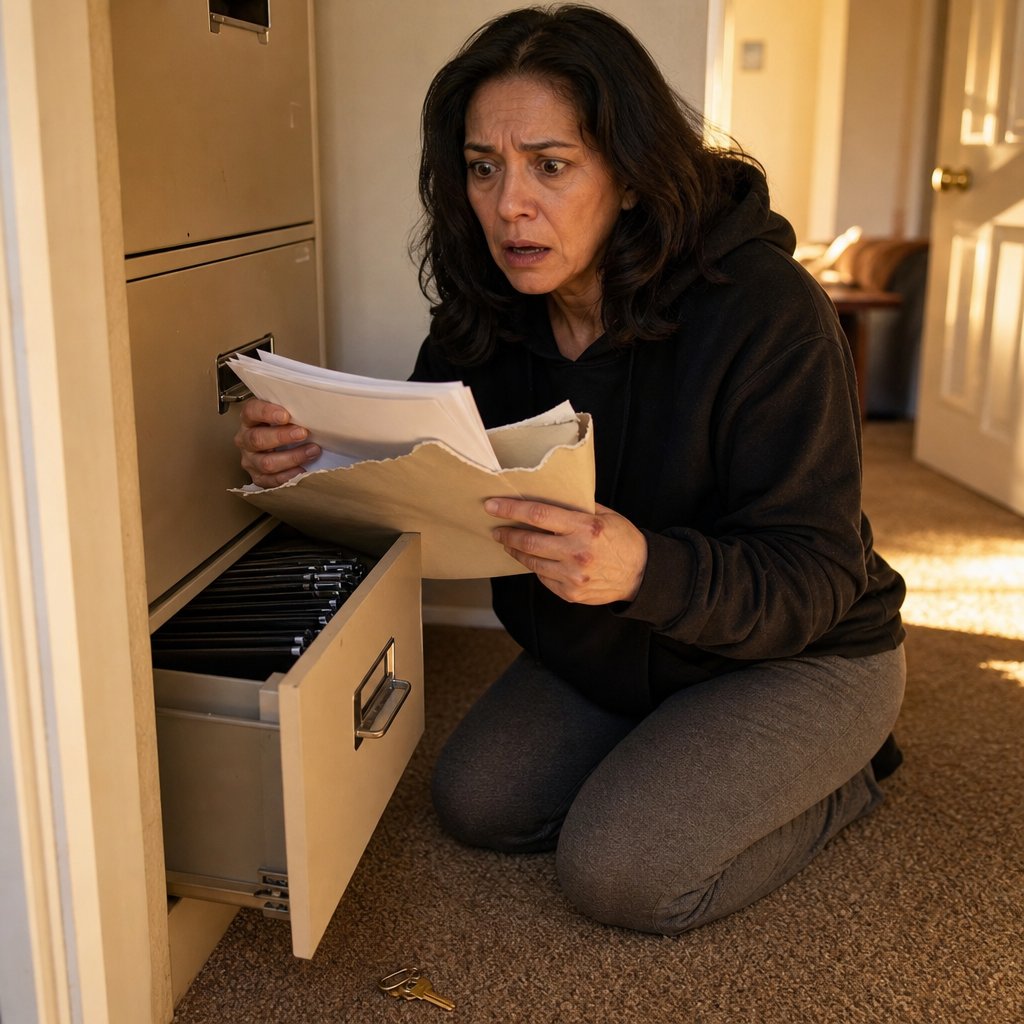
That night, after my son fell asleep with his stuffed dinosaur wedged under his chin, I went to the locked file cabinet in the hall closet. The key was on my ring, cold against my fingertips. I told myself I was just organizing. Just preparing. Just being “responsible.”
The drawer stuck halfway like it was catching on something. I pulled harder. Metal squealed. The smell of dust and old paper puffed out, dry and bitter.
My pulse picked up. I angled my head and saw it: an envelope jammed behind the hanging folders, fat enough to bend the rail. I reached in, scraped my knuckles on the cabinet edge, and tugged until it finally came free with a ripping sound that made me wince.
No return address I recognized. No cute stationery. Just plain, official-looking paper.
I slid the contents out onto the carpet. A confirmation packet. Business formation documents. An LLC.
The date punched me first: six months before Grant moved out. Six months before the “we just grew apart” speech. Six months before he started acting like I was unpredictable, like I might explode at any moment. Back when he was still eating my cooking and kissing my cheek and telling our son, “Go ask Mom.”
I traced the name with my finger and felt the hair on my arms rise. This wasn’t a sudden break. It was an exit plan. A staged collapse. A slow, deliberate build of a second life that didn’t include me—except as the villain in the story he’d already written.
And then I saw the registered agent line. A name I didn’t know. An address that wasn’t ours. My eyes flicked over it again, and I realized with a sick lurch that I had seen that street before—on a holiday card, on a party invite, somewhere I’d never paid attention because I’d trusted him.
I heard my son shift in his sleep down the hall, and I froze with the papers in my hands, because the street name suddenly connected to one person.
Her Lexus In The Driveway

The next morning, my neighbor, Tessa, caught me on my front step. She was in her 30s with a freckled nose and messy auburn hair shoved into a ponytail, holding a paper grocery bag like she’d come over for sugar, not to detonate my week.
“I didn’t know if I should send this,” she said, eyes darting past me toward the street. “But… you deserve to know.”
My stomach tightened. “Send what?”
She reached into the bag and pulled out a printed still image—grainy, nighttime, but clear enough. A driveway. A familiar shape. The curve of a luxury sedan parked where it shouldn’t be.
“I have a camera,” Tessa said quickly, like she was apologizing for being safe. “It caught this the night Grant told everyone he was at a hotel.”
I stared at the car in the photo until my eyes burned. Sloane’s Lexus. The same pearl-white paint, the same distinctive front grille I’d pretended not to notice at pickups. And in the corner, the timestamp digits—blurry but legible enough to land like a punch: 11:47 p.m.
Grant had looked me in the face and said he slept alone in a bland hotel room because he “needed space.” He’d used that night as Exhibit A of his suffering. Of my supposed volatility.
He hadn’t been alone. He’d been rehearsing. With her. In our old driveway like it belonged to them.
My fingers creased the paper without me meaning to. The air tasted metallic. Tessa touched my arm gently. “Mara… are you okay?”
I couldn’t answer, because across the street, a familiar SUV turned the corner—Grant’s new one—slowing as if the driver had all the time in the world to watch me hold proof of his lie.
The Phone He “Lost”
Grant’s new SUV rolled past my curb like it owned the street, slow enough to make a point. He didn’t even look at me. He just lifted two fingers off the steering wheel—casual, smug—then turned into the next block like he was circling back for something he forgot.
I stood there with Sloane’s glossy Lexus photo crumpling in my fist, the paper damp where my palm had sweated through it. My lawyer, Celeste, called as I was still staring at the tire tracks in my own driveway. Her voice was tight, the kind of tight you get when someone is trying to smile in front of a judge and failing.
“He’s been subpoenaed for the source device,” she said. “The actual phone that supposedly captured your ‘confession.’”
My stomach pitched. “Good. Then we’ll see the whole thread. The timestamp. The crop.”
Celeste exhaled like she’d been holding it since breakfast. “Grant says he ‘upgraded.’ Old phone is ‘lost.’ He’s offering a replacement device instead.”
Of course. He always upgraded right when accountability showed up.
“He can’t just lose evidence,” I said, hearing my own voice go sharp. The wind carried the smell of fresh-cut grass from a neighbor’s yard, sweet and wrong for how ugly this was.
“He can,” Celeste said. “And he just did. Deadline is Friday. He’s going to show up with something that looks cooperative.”
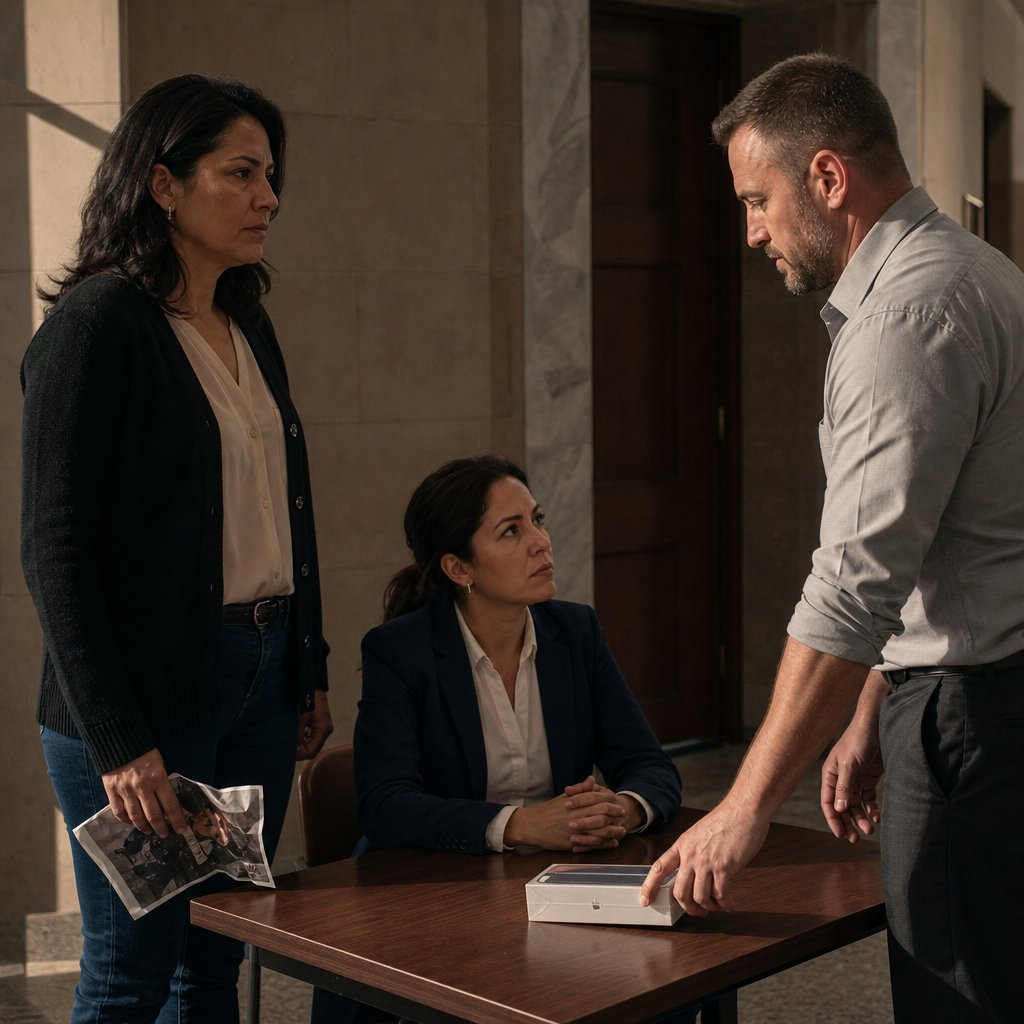
Friday came. In the conference room outside the courtroom, Grant slid a box across the table like a gift: a pristine iPhone, factory reset, still wearing the thin plastic film. He spread his hands. “Here. Full access. See? I’m not hiding anything.”
Celeste’s jaw tightened. She didn’t touch it. “Where is the original device?”
Grant’s smile didn’t reach his eyes. “I told you. Lost.”
And then, like it was the most normal thing in the world, he added, “But you can’t accuse me of not complying when I’m literally handing you a phone,” and I watched Celeste’s gaze flick to the wipe screen, realizing what he’d done just before the judge would walk in—
Smoke Behind His Garage
My son’s voice came through the speaker in a whisper so small I almost didn’t recognize him.
“Mom,” he said, like the word itself was dangerous. “Daddy’s in the garage burning papers.”
I went cold, fast. “Baby, where are you?”
“In my room. He told me to stay.” The whisper cracked. “It smells weird.”
I didn’t ask questions that would make him talk longer. I didn’t tell him what I was thinking—that evidence doesn’t vanish in a factory reset, it vanishes in fire. “Go sit by your door,” I said softly. “If you feel scared, go to the bathroom and shut the door. I’m coming.”
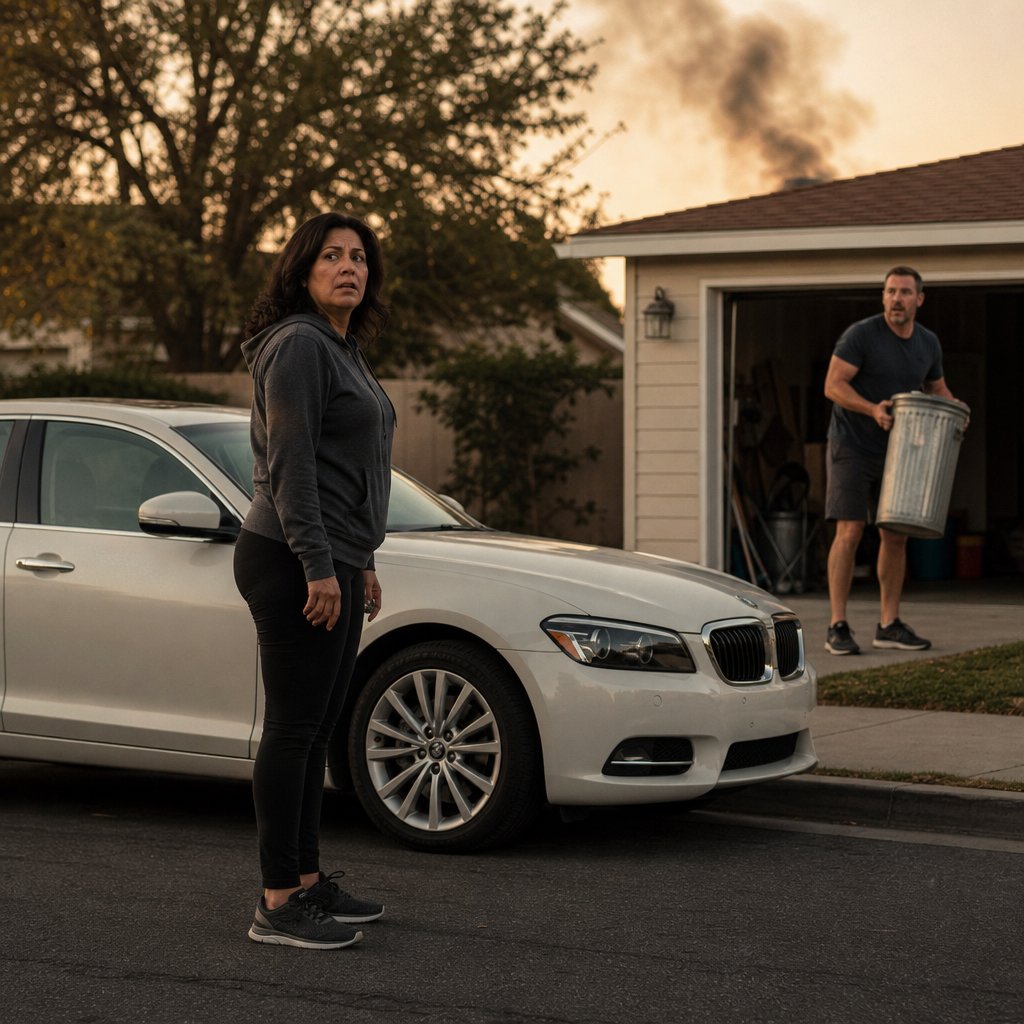
Grant lived twelve minutes away. I did it in eight, hands white on the steering wheel, every red light a personal insult. When I turned onto his street, I saw it immediately: Sloane’s Lexus parked at the curb like she belonged there. The same pearl-white paint from the photo, the same little scuff on the rear bumper that made my stomach twist with certainty.
I didn’t pull into the driveway. I stopped half a house down, heart hammering so hard it made my throat ache. Behind Grant’s garage, a thin ribbon of smoke curled up and vanished into the afternoon like it knew it was guilty. It smelled faintly sweet and chemical, like burning glossy paper.
I got out and lifted my phone—not to call, not yet—just to capture what my eyes were seeing before he could deny it. I kept the screen faced away, my hands shaking so badly I had to brace my elbows against my ribs. Smoke. Lexus. The garage side door cracked open a few inches.
Then the door swung wider, and Grant stepped out with a metal trash can between his hands, his face flushing when he saw me standing there. He didn’t shout. He didn’t wave. He just stared like I’d walked in on something sacred.
And from behind him, a woman’s laugh—Sloane’s—floated out of the garage like a dare.
Not My Screenshot After All
Celeste didn’t call me with small talk. She called me with that quiet, razor-clean tone she used when she was about to change the shape of the room.
“We have the forensics report,” she said.
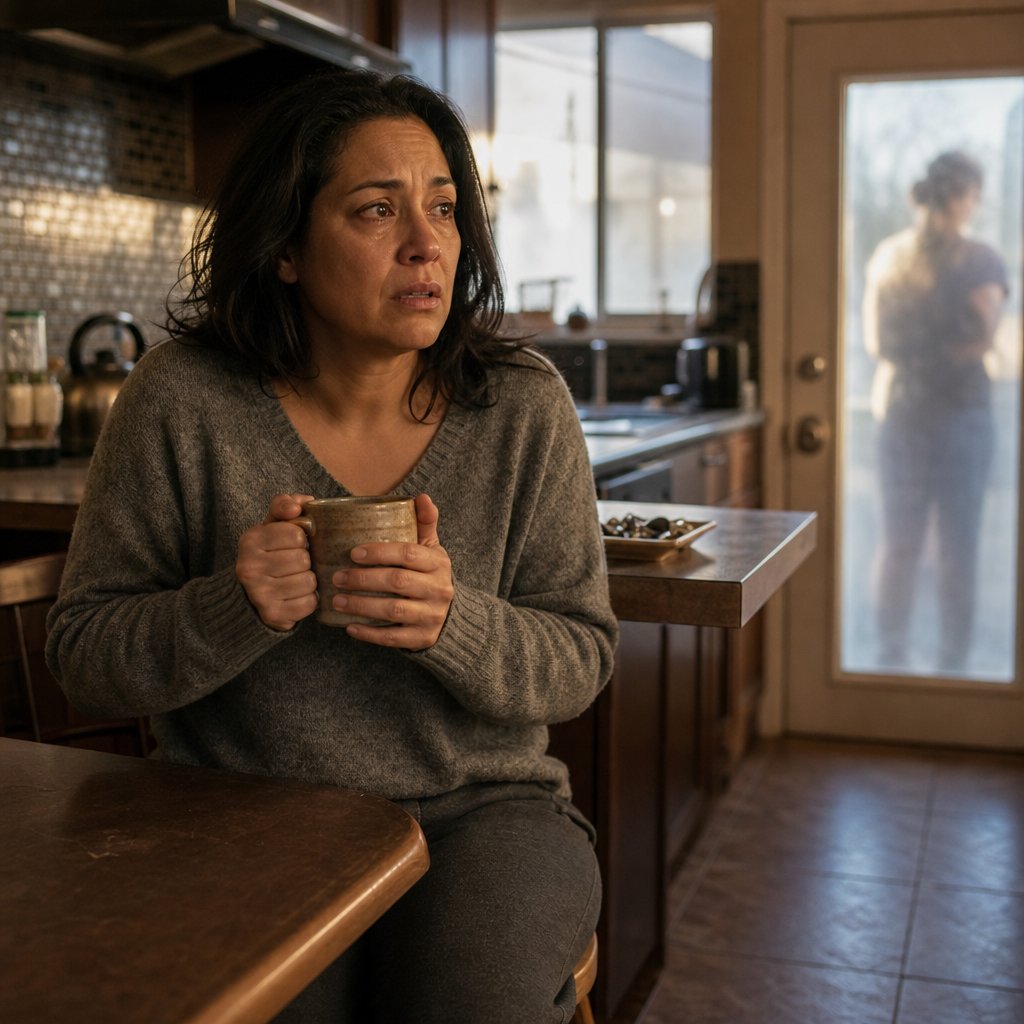
I was in my kitchen, staring at the same spot on the counter where Grant used to toss his keys. The air smelled like dish soap and stale coffee. My hands were damp around a mug I wasn’t even drinking.
“Tell me,” I said, and my voice sounded too calm for how hard my pulse was hitting my jaw.
“The screenshot bears an edit-app signature,” Celeste said. “Not just ‘cropped.’ Altered. Exported.”
I closed my eyes. I saw that single sentence again—I’ll make him pay—like it had been branded behind my eyelids. “So it’s fake,” I whispered.
“It’s fabricated,” she corrected, and the word felt like a door slamming open. “And the metadata points to the device it was created on.”
I sat down so fast the chair legs scraped the tile. “Whose?”
Celeste paused just long enough to make me taste metal. “It wasn’t created on your phone. It wasn’t created on any device tied to you.”
My breath caught. “Then where—”
“Sloane’s iPad,” she said. “The file signature and creation path match her tablet. Same model, same OS build, same app footprint. It’s not a guess, Mara. It’s a pin.”
My throat burned. I thought about her Lexus in my driveway photo. Her laugh drifting out of Grant’s garage. The way Grant had been so comfortable dragging my name through court like he had backup singers.
“So she made it,” I said, and it came out like a confession I’d been terrified to say out loud.
“Which means,” Celeste said, “Grant either knew… or he’s about to claim he didn’t.”
I stared at the empty key spot on the counter, imagining him rehearsing innocence in the mirror, and Celeste added, almost casually, “We’re filing to compel her cloud records next.”
Before I could answer, my front doorbell rang—three sharp presses in a row—and through the frosted glass I saw a familiar silhouette shifting impatiently on my porch.
The Folder Named “Court”
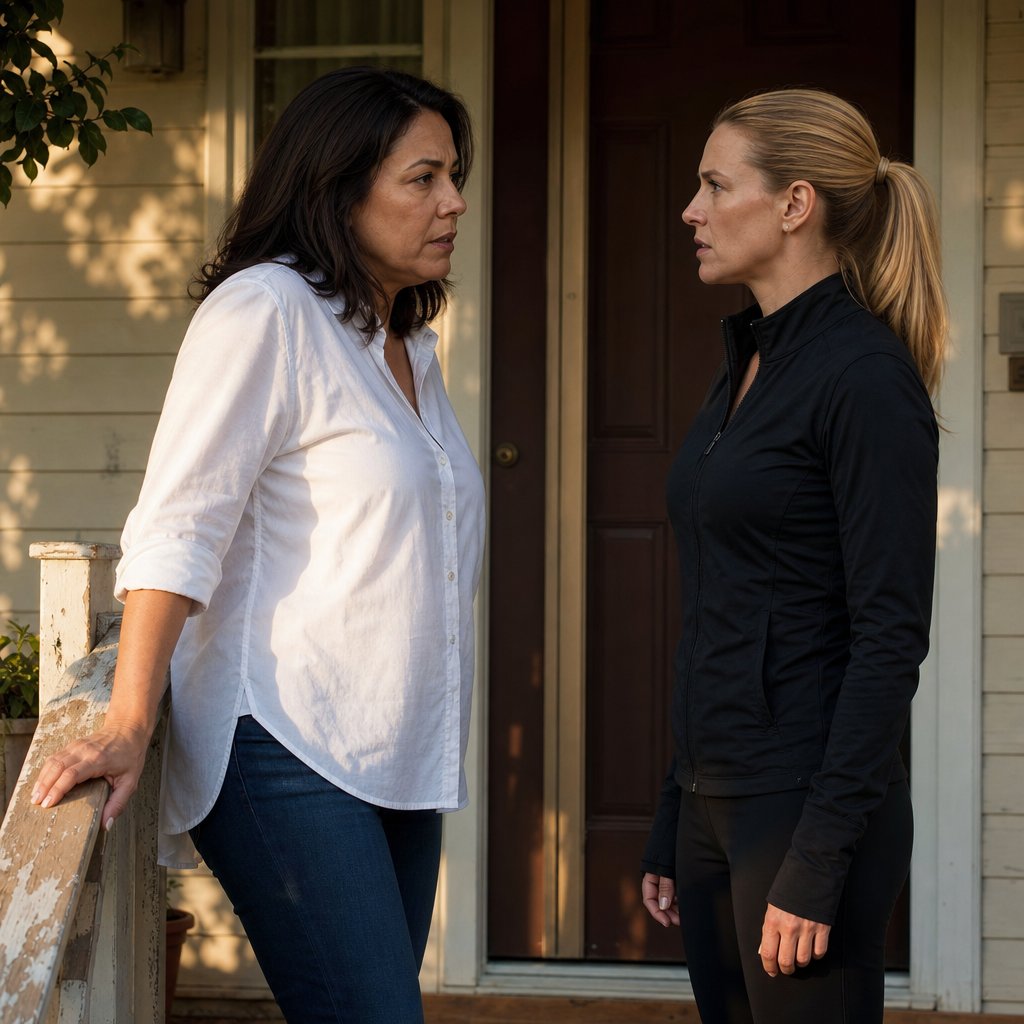
Sloane didn’t bother with a greeting when I opened the door. She stood there in athleisure that looked too expensive to sweat in—black zip jacket, pale sneakers—her blonde hair pulled into a tight ponytail that made her cheekbones look sharper, meaner.
“We need to talk,” she said, like I was the one causing trouble.
I didn’t invite her in. I stepped onto the porch and closed the door behind me, keeping the house—and my son’s drawings on the fridge—out of her reach. The air outside smelled like hot asphalt and someone’s lilacs.
Celeste had warned me: once you corner a liar, they come offering “peace.”
“I already know about your iPad,” I said.
Her eyes flickered. Just once. But it was enough.
That same afternoon, the subpoena returns hit Celeste’s inbox like a meteor. Sloane’s iCloud dump didn’t come back empty. It came back organized. A folder labeled “Court,” and inside it, staged drafts—screenshots with different crops, different timestamps, different little tweaks like she’d been trying on my voice like outfits. There was even a neat, bullet-point script: Mara volatile. Supervised visits. LLC safe.
“LLC safe?” I said out loud, hearing my own name turned into a character in their story.
Celeste’s reply was immediate and sickening. “We found the LLC account.”
I stared at my porch railing, paint peeling under my thumb. “How much?”
“One hundred eighty-seven thousand,” she said. “Moved in chunks. Quiet. Clean.”
My vision tunneled. That was summer camps and braces and college savings. That was Grant telling the judge he was ‘struggling’ while he paid Sloane’s car note.
Grant called that night, voice gentle like a trap. “Let’s not do this the hard way,” he said. “Primary custody. You sign an NDA. We both move on.”
I could hear Sloane in the background, muffled, coaching him like a stage manager.
“No,” I said, and my voice didn’t shake. “We’re doing it in open court.”
There was a beat of silence—then Grant’s tone dropped, all warmth gone. “Then you’re going to regret it,” he said, and I heard him inhale like he was about to say the part he’d been saving for last—
Was choosing open court the right decision here?