




She Opened In My Robe
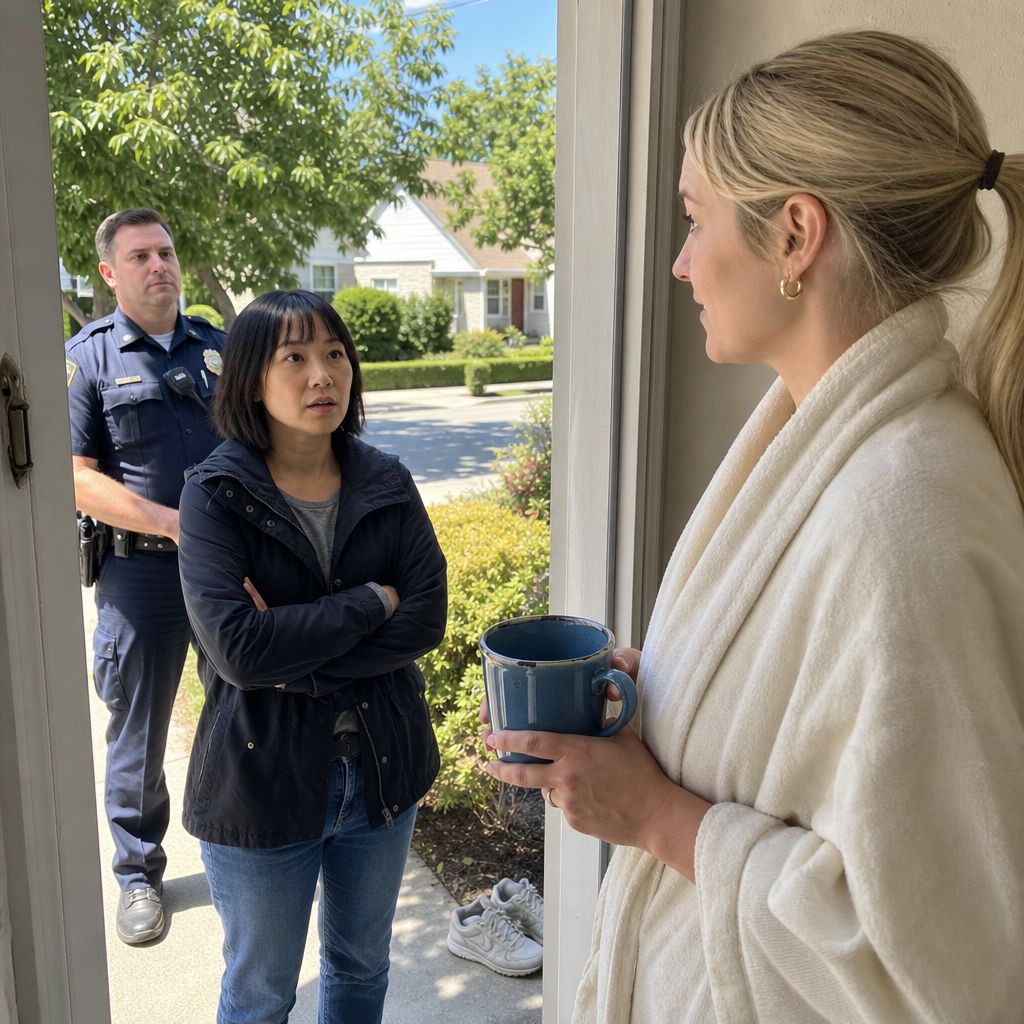
Maren opened my front door like she’d been waiting for me, wrapped in my cream robe, my robe, the belt tied a little too tight like she’d practiced. In her hand was my chipped blue mug—the one with the hairline crack near the handle—and she took a slow sip like it was a prop.
Behind me, the officer cleared his throat. Civil standby. The words had sounded clean on the phone. In real life, it felt like showing up to my own house with a chaperone because my husband had turned me into a threat.
Maren’s face was fresh and unbothered, early-thirties, blonde hair in a glossy ponytail, little gold hoops that caught the light when she tilted her head. She looked past me at the patrol car like she was already collecting evidence for the story she planned to tell later.
“Gavin told me you wouldn’t be coming back,” she said, soft as if she were delivering a kindness.
I felt my jaw lock. My hands were shaking inside my jacket pockets. I stared at the robe collar where my perfume still clung, faint and floral, and I heard myself say, too evenly, “Where’s Gavin?”
Maren’s smile didn’t move, but her eyes flicked toward the hallway like she’d been coached on what not to reveal, and then she stepped back—inviting me into my own house like I was a guest—
My Walls Didn’t Know Me
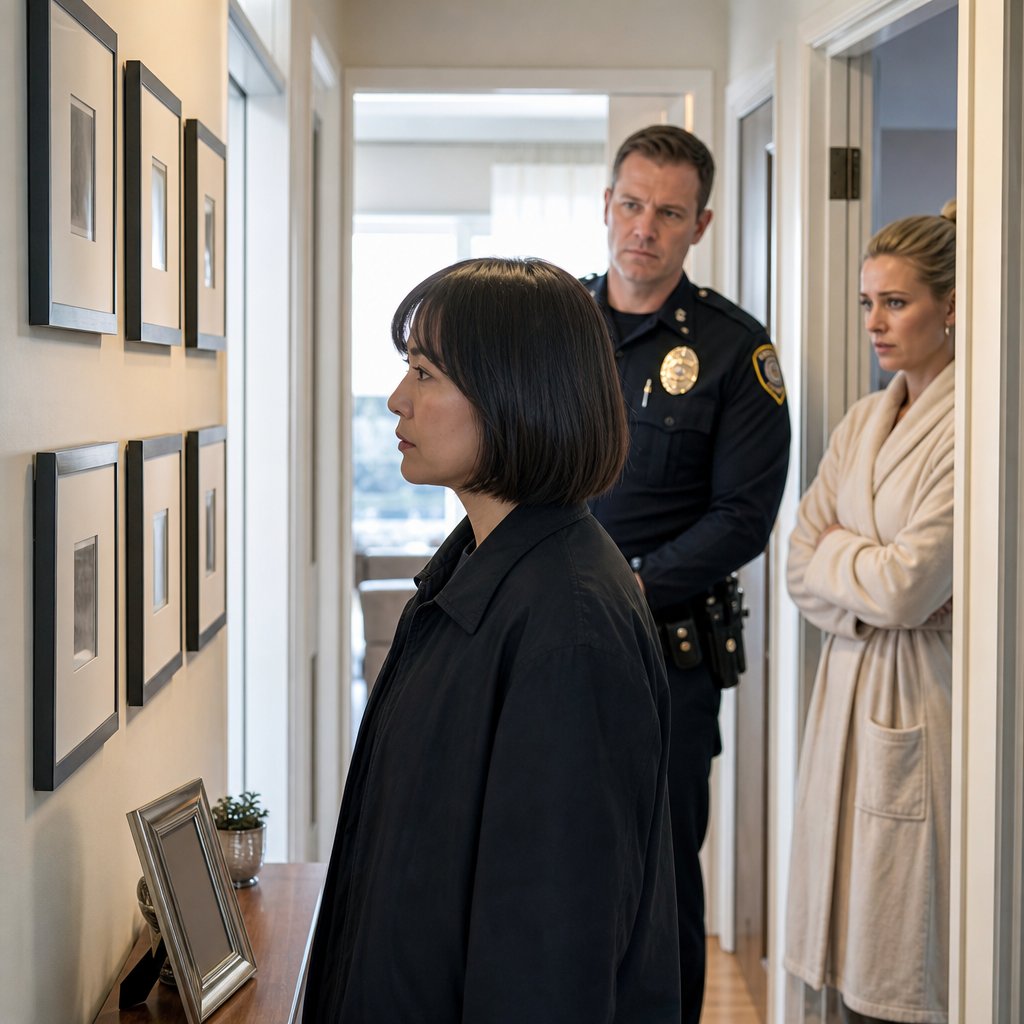
The first thing I saw wasn’t Maren. It was the wall.
Our hallway used to be a timeline: our wedding photo at the top of the stairs, the hospital bracelet shadowbox, the goofy kindergarten picture where my kid had missing front teeth and a grin too big for their face. I’d hung them myself, nails measured, frames leveled with the seriousness of someone building proof that we belonged to each other.
Now it was a gallery of nothing. Neutral prints—beige dunes, abstract lines, a black-and-white photo of some anonymous pier—lined up with the same spacing. Like a hotel. Like a place you’d rent by the week and leave without guilt.
I stopped so hard the officer almost bumped me. My throat went tight. It wasn’t just redecorating. It was deliberate. Someone had stood right here and decided my family’s faces were the problem to solve.
Maren drifted behind me, close enough that I caught a sharp, sweet perfume I didn’t recognize. “Gavin likes it calmer,” she said, as if she were talking about throw pillows.
I turned and stared at her. “Where are the photos?”
She lifted one shoulder in a lazy shrug, the robe sleeve sliding up her forearm like she’d already made herself comfortable in my routines. “Packed away. It’s healthier.”
Healthier. Like my existence was clutter.
The officer asked if I wanted to retrieve personal items. My mouth opened, and for a second I couldn’t even choose what counted as mine anymore—
Trash Bags Where I Lived

I went straight to our bedroom because I needed one thing that still made sense: my closet. My side. My life in fabric and hangers and the smell of cedar from the little blocks I used to tuck into the corners.
The closet door slid open and my stomach dropped so fast it felt like I’d missed a step on the stairs.
Black trash bags—fat, glossy, knotted like fists—were stacked where my dresses had hung. My shoe rack was gone. The velvet hangers I’d bought in bulk were replaced with sleek white ones, all evenly spaced like a showroom. On my shelf, where I kept a battered jewelry box and a folded scarf from my mother, sat a bottle of perfume with a gold cap and a pale pink label. Not mine. Not even close.
I touched one of the bags. The plastic was cold and crinkled under my fingers. Through it, I could feel the shape of my sweaters, my bras, my work blouses—compressed into garbage like they were waste.
“Those are yours,” Maren said from the doorway, too casual. She leaned against the frame as if she had the right. “Gavin didn’t want them in the way.”
In the mirror on the closet door, I caught my own face: pale, furious, my bangs stuck to my forehead. And behind me, Maren in my robe, calm as a landlord.
I didn’t cry. I grabbed a bag and felt something hard in the bottom—like a box. Like something had been shoved in without care.
I looked up. “You went through my things?”
Maren’s smile was tiny. “We had to make space.”
We.
My hands tightened until the plastic bit into my skin, and I realized this wasn’t a visit. This was an installation, a takeover, a quiet eviction—
Her SUV In My Spot
When I stepped back outside, the air hit me like cold water. My hands smelled faintly of plastic and someone else’s perfume. I walked down the driveway on instinct, like if I could just see my car, my spot, my normal, I could anchor myself.
But my spot was occupied.
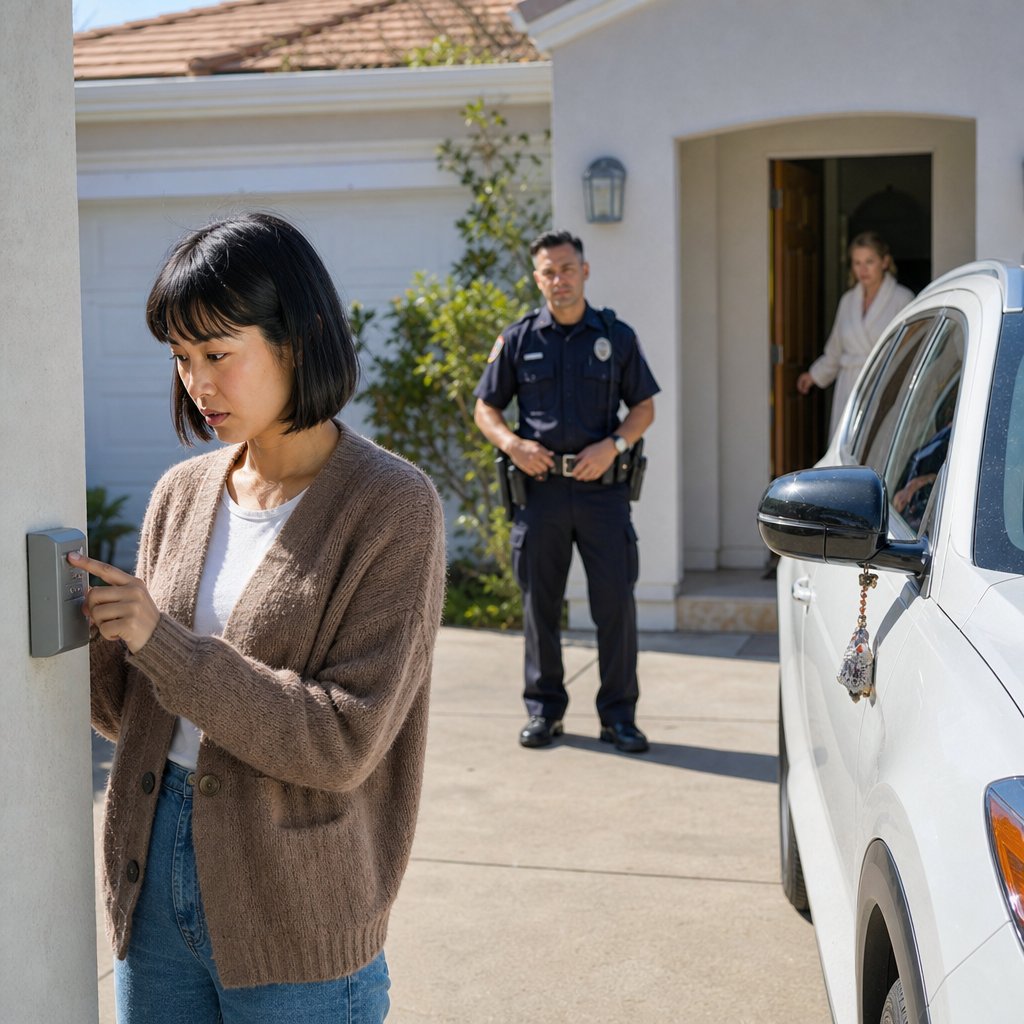
A white SUV sat exactly where I always parked, centered like it belonged there. A little dangling charm swung from the rearview mirror, catching the light. Maren’s. Of course it was Maren’s.
I turned toward the garage keypad and punched the code I’d used for years—muscle memory, the same rhythm I’d typed half-asleep carrying groceries. The keypad blinked red. Denied. I tried again, slower, like it was my fault. Red again.
The officer watched, face carefully blank. “Do you have another code?” he asked.
My laugh came out sharp and wrong. “No. That’s the code.”
Behind the glass of the garage door, I could see the outlines of our life: bikes, storage bins, the edge of the stroller we never quite got rid of. It was all right there, inches away, and I might as well have been on the other side of a border.
Maren appeared in the doorway, robe belt trailing. She lifted her brows like she was amused by my confusion. “Oh,” she said. “Gavin changed it.”
Changed it. Like a lightbulb. Like a preference.
I looked at the officer. “He can’t do that. We’re still married.”
The officer’s gaze slid to Maren, then back to me, and I saw the question he couldn’t ask: why was another woman living here if there wasn’t even an order yet—
Don’t Make This Weird
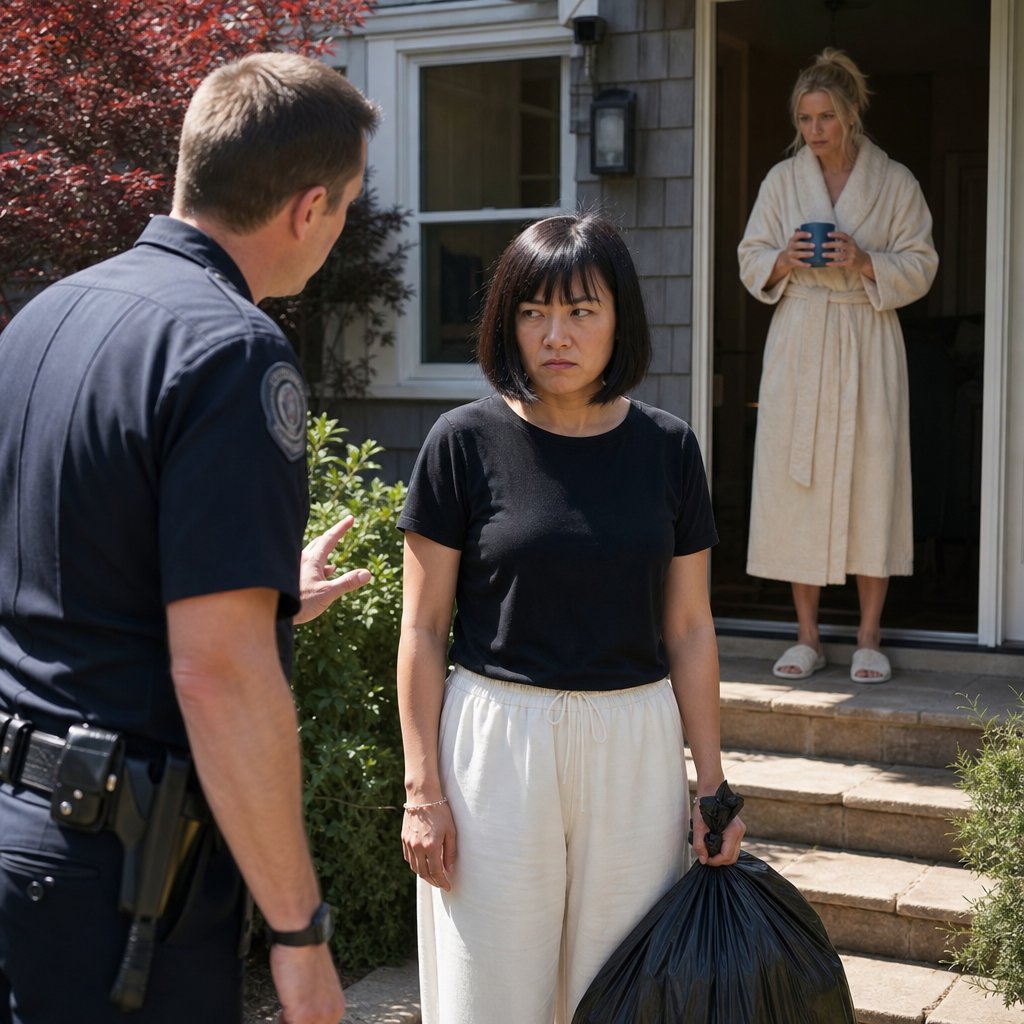
I stood on the front walk with my trash bag of clothes at my feet like I’d been kicked out of a motel. The officer said his job was to keep the peace, not interpret marriage. His voice was polite, practiced, like he’d said it a hundred times to a hundred people who thought the law would feel more personal.
My phone buzzed in my palm. Gavin. I didn’t open it right away, because I already knew it wouldn’t be an apology. Gavin didn’t apologize. He adjusted reality until everyone else doubted their own eyes.
I read the message and felt heat crawl up my neck.
“Don’t make this weird.”
That was it. Not Are you okay? Not Let’s talk. Just a warning dressed up as a joke. Like I was the one showing up uninvited. Like I was the one wearing someone else’s robe.
I could practically hear his voice saying it, that calm corporate tone he used in meetings and at parent-teacher conferences, the tone that made other people trust him. I pictured him somewhere comfortable—maybe inside, maybe at work—telling someone, laughing, that I was “having a hard time” and “being dramatic.”
Maren hovered in the doorway behind the officer, hugging my mug to her chest like it was a trophy. She didn’t look away when I looked at her. She looked…prepared.
I typed back three different replies and deleted each one. Anything I said would become Exhibit A in the story he was already selling: unstable Iris, irrational Iris, the one who “couldn’t let go.”
The officer asked if I was ready to leave.
I stared at Gavin’s message until the words blurred, and I realized the scariest part wasn’t the lockout. It was the confidence. The certainty that everyone would believe him first—
No Order. Just Nerve.
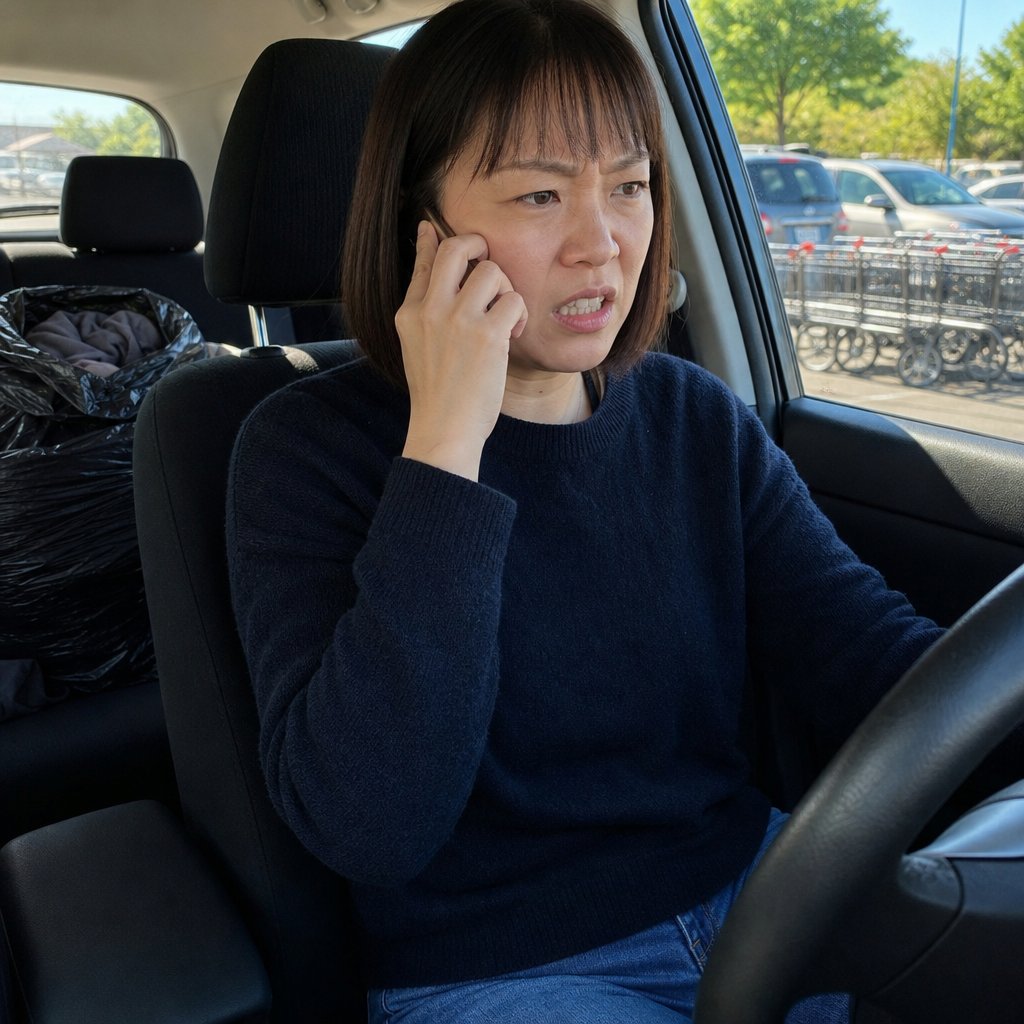
I sat in my car in a grocery store parking lot because I couldn’t trust myself to drive yet. The steering wheel was sticky under my palms, like my skin had turned to glue. My trash bag was in the back seat, slumped over like a body.
My lawyer’s voicemail came through while I stared at the rows of carts rattling in the wind. I held the phone to my ear and listened, my heart ticking like it was counting down to something.
“Iris, it’s me. The temporary occupancy order still hasn’t been filed. I checked again. There’s nothing in place yet.”
Nothing in place.
So Gavin changing the garage code wasn’t procedure. It wasn’t a misunderstanding. It was strategy. He was locking me out before the court could tell him not to, betting I’d be too shocked, too embarrassed, too busy protecting our kid to push back fast enough.
The lawyer kept talking—options, next steps, emergency motion—but my mind snagged on one detail: if there was no order, then everything happening at that house was just Gavin deciding what was true and daring me to contradict him.
I pictured Maren’s robe belt dragging on my hardwood floors. I pictured my photos stacked somewhere dark. I pictured my child walking into a home that no longer showed their mother’s face.
I wiped my cheeks and realized my hands were trembling again, not from sadness this time but from pure, clean anger. The kind that clarifies.
I called my lawyer back immediately. It went to voicemail.
I stared at the phone in my lap, listening to the empty air after the beep, and I knew I had a window—small, dangerous, closing fast—before Gavin made his lockout feel official to everyone else—
Everyone Thought I’d Agreed

School pickup was a blur of exhaust fumes and sticky fingerprints on car doors. Parents clustered in little alliances, leaning into open windows, trading snacks, trading gossip like it was currency. I kept my face neutral, the way I did at work when someone tried to bait me into reacting.
My kid ran to me and slammed into my legs, warm and solid. I breathed in the scent of sunscreen and cafeteria pizza and told myself to stay steady. Protect the calm. Protect them.
That’s when Tara—one of the moms who always wore bright athleisure sets and knew everyone’s business—tilted her head and said, “Hey… are you okay with the new arrangement?”
I blinked. “What arrangement?”
She looked instantly uncomfortable, like she’d stepped on a rake. “I just—Gavin said you guys were…doing something different. That it’s what you wanted. Like, you’re being really mature about it.”
Mature. The word landed like an insult dressed as praise.
I saw it then: Gavin at pickup last week, smiling, chatting, performing. Planting a story in the soft soil of other people’s assumptions. He hadn’t just moved Maren into my house. He’d moved her into the neighborhood’s version of events, too.
My kid tugged my hand, talking about a spelling test, oblivious. I forced a smile so my face wouldn’t betray me in front of them.
“Yeah,” I heard myself say, voice careful. “We’re…figuring things out.”
Tara nodded like she’d been given confirmation, relief smoothing her features. She leaned closer, lowering her voice. “I met her, by the way. Maren. She seems…nice.”
The air felt thin. My nails dug into my palm. I needed to ask what else Gavin had told people—but my kid was watching my face—
Three Transfers, Every Friday
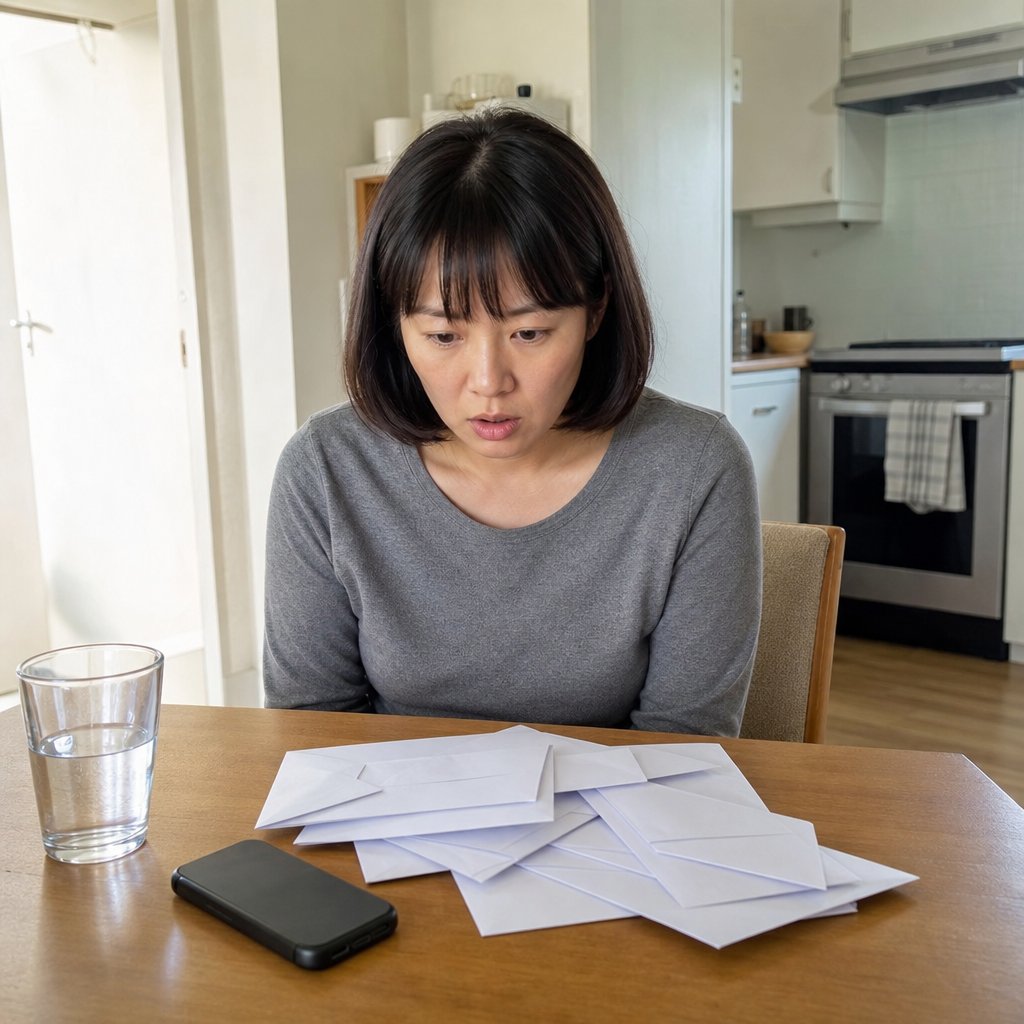
That night, after my kid finally fell asleep, I sat at the kitchen table in my rental with a glass of water I didn’t drink. The place smelled like fresh paint and someone else’s detergent. Temporary. Like my life had been shoved into a waiting room.
I opened the bank app and scrolled through our joint account activity, the one Gavin always insisted was “simple.” My finger paused.
Three transfers. Small enough to look harmless. All on Fridays. Same amount each time, like a metronome. Same recipient: Northline Consulting.
I stared at the name until it stopped looking like words and started looking like a mask.
We had contractors over the years. HVAC. Landscaping. The guy who fixed the fence. Gavin loved vendors, loved outsourcing, loved saying, “I’ll handle it.” But I had never heard that name. Not once. And I was the one who tracked our spending when things got tight after daycare and braces and that surprise medical bill Gavin acted like he didn’t remember.
I clicked into the details and my pulse kicked. The transfers weren’t random. They were scheduled, intentional, repeated—like rent, like hush money, like something you paid to keep going.
I thought about the gutted closet. The changed keypad. The neutral prints. The way Maren had said we.
My hands went cold. If money had been leaking for years, it meant Gavin’s betrayal wasn’t new. It meant he’d been building a second life while I was budgeting ours.
I took a shaky breath and pulled up older statements, scrolling back month by month, hunting for the first Friday it started—
The Address That Gave Him Away

I waited until the next day to bring it up, because I needed my voice to be steady. I called Gavin from my car, parked at the edge of a park, watching wind shove the swings back and forth like impatient hands. I kept my kid inside with a snack and a book. I didn’t want them hearing my tone change.
“What’s Northline Consulting?” I asked the second he answered.
Silence. Just long enough to feel calculated.
“It’s a vendor,” he said finally, breezy. “Don’t spiral, Iris.”
Vendor. The word he always used when he wanted me to stop asking questions.
“For what?” I pressed. “Because we’ve never discussed it, and there are three transfers, every Friday.”
His sigh was theatrical, like I was boring him. “It’s for administrative help. It’s not a big deal.”
I pulled the account details I’d saved and read off the mailing address associated with the recipient—not the bank, not the account number, just the location. A UPS Store. The one tucked between a nail salon and a smoothie place near Maren’s gym. I’d been there once, dropping off a return, waiting behind Maren herself while she chatted with the clerk like they were friends.
Gavin’s breath hitched. A tiny sound, but it was the first honest thing he’d given me in months.
“Why are you stalking her?” he snapped, instantly flipping it. “This is exactly why I said don’t make it weird.”
My fingers tightened around the steering wheel until my knuckles ached. “I’m not stalking anyone. I’m following our money.”
He went quiet again, and in the background I heard a muffled voice—female, close, familiar—like someone was in the room with him, listening—
Move-In Day Was Scheduled
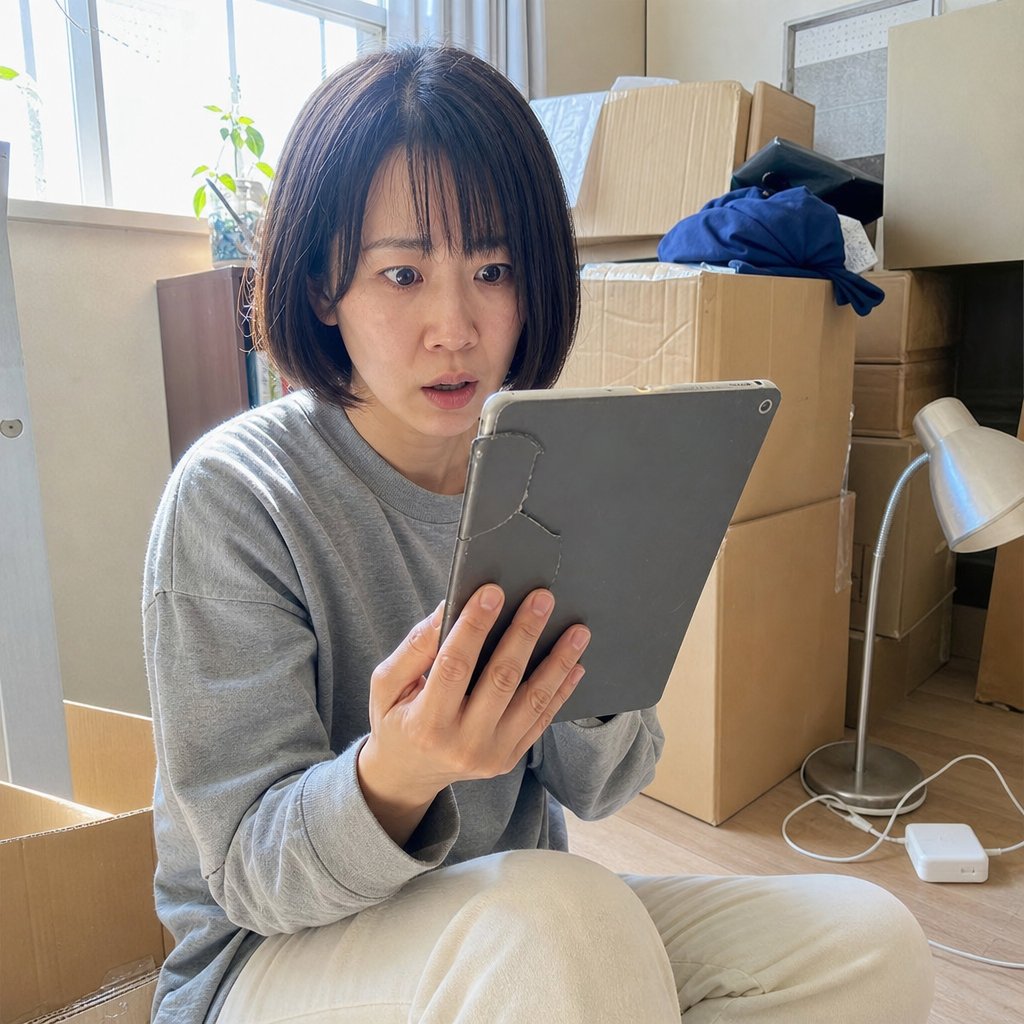
I found the old iPad by accident, buried in the bottom of a box I’d shoved into the trunk during the scramble after the lockout. The screen was smudged with fingerprints. The case had a cracked corner from when my kid dropped it years ago. I charged it, half-expecting it to be useless.
It wasn’t.
Gavin had never logged out of his email.
My stomach turned as his inbox loaded. Not because I wanted to snoop—because I knew I wouldn’t be able to unknow what I was about to see. I searched Maren’s name with shaking hands.
There it was: a calendar invite. Not a vague dinner. Not a “catch up.” A block of time with a title so blunt it felt like a slap.
Maren move-in day.
Dated two weeks before Gavin sat across from me at our kitchen island and said he “needed space.” Two weeks before he watched me cry quietly into a dish towel and promised, hand over mine, that there was no one else. Two weeks before he told our kid we were “taking a break” like marriage was a Netflix show you could pause.
I stared at the date until my eyes burned. The timeline wasn’t messy. It wasn’t impulsive. It was scheduled—like a delivery window. Like I was furniture they needed to clear out before the truck arrived.
My throat tightened around a sound that wanted to be a scream. I scrolled, looking for more—more invites, more lies, more proof—and my finger paused on another entry underneath it, one I hadn’t searched for, one that made my blood run cold—
The Draft That Changed Everything

I clicked into Gavin’s sent drafts and my stomach actually dropped—because the terrifying calendar entry wasn’t a doctor’s appointment or a kid’s recital. It was a block of time labeled like a business deal, and beneath it sat an email draft titled “Quiet sale strategy.”
Not divorce strategy. Not custody. Sale.
The draft read like he was already practicing the story he’d tell strangers with clean hands. He called the lake cabin “my premarital asset” like it was a fact carved into stone, not the place I’d painted with him while I was pregnant, not the place we’d paid taxes on from our joint account, not the place where my son learned to skip rocks.
He’d even typed a line about “keeping it off-market to avoid complications.” Complications, meaning me. Meaning the paper trail. Meaning anyone asking why the deed and the money never matched his new narrative.
I scrolled, heart hammering, and saw he’d already queued a realtor’s name, a price range, and a talking point about “recent improvements” like he hadn’t been buying those improvements while locking me out of my own house.
My fingers went cold around the mouse when I realized the draft wasn’t addressed to a realtor at all—it was addressed to someone saved as “Atty—K. Rios,” and the next line started, “Per our call, here’s how we position—”
I didn’t remember him ever mentioning an attorney named Rios.
Her Name On A Box
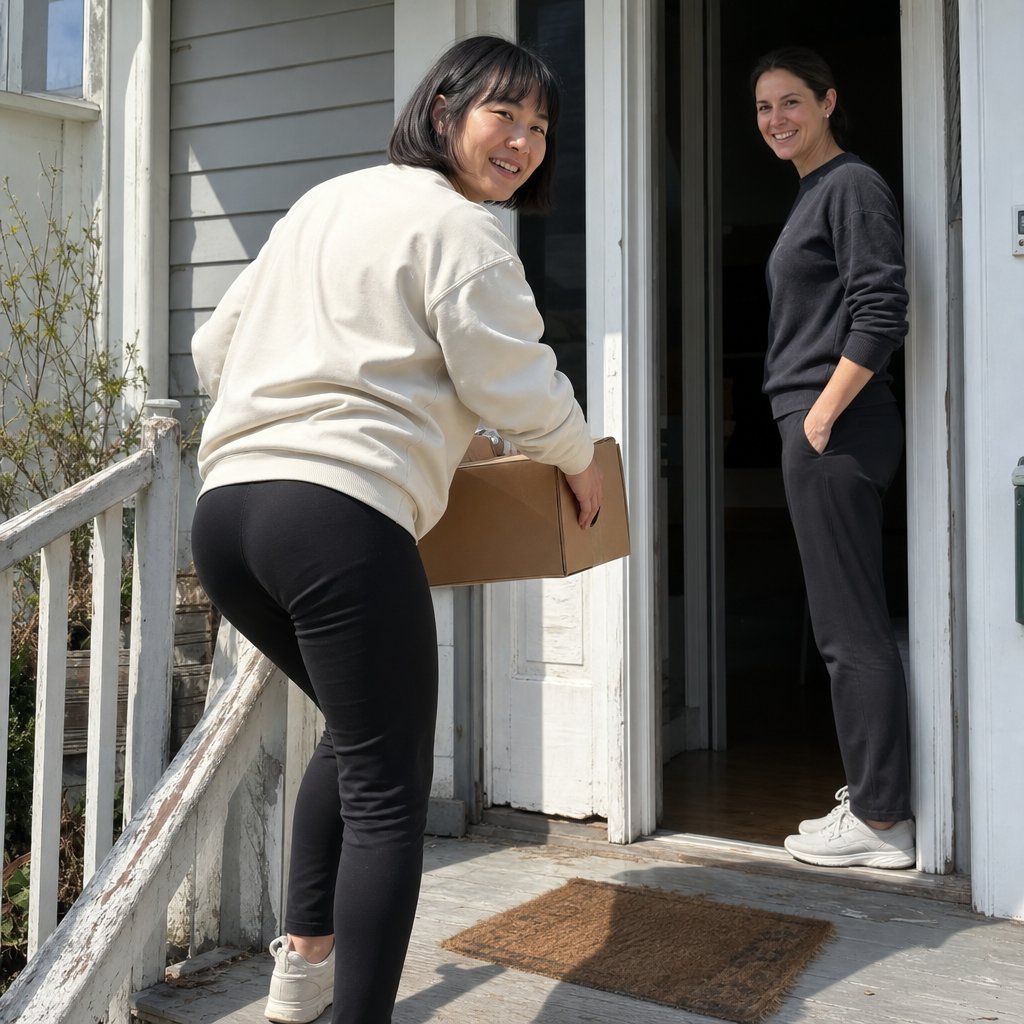
I checked the ring camera history the way you check a bruise—like maybe it’ll look different if you stare long enough. The clip loaded and there it was: my front porch, the chipped paint on the railing, the stupid seasonal wreath I’d hung before everything cracked.
A delivery driver stepped up and set down a medium box. No big deal, except the label was angled just enough for me to make out the first letter and the last name.
“M. Calder.”
Calder. My married name. The name I’d signed on school forms and mortgage paperwork and holiday cards we never mailed. And now she was using it like it had been handed to her with the keys.
The door swung open and Maren appeared—tall, glossy dark hair pulled into a low knot, that “effortless” look that takes effort. She wore a cream sweatshirt and black leggings like she belonged in the doorway. Like this was her routine. She didn’t hesitate. She bent, scooped the box to her hip, and disappeared inside without looking over her shoulder once.
I watched the clip twice more, forcing myself to notice the petty specifics: the way her socked foot nudged aside the doormat I’d picked. The way the door didn’t stick, because Gavin had finally fixed it—after I moved out.
My throat tasted metallic. I reached for my keys out of habit, then remembered the lock had been changed.
And that meant she’d been given the new one.
He Filed First, Of Course

My attorney’s office smelled like stale coffee and lemon cleaner, and I still wasn’t prepared for the way she slid the papers across the table like she was passing me a biopsy result.
“He filed,” she said. “This morning.”
I stared at the first page, my name printed like a headline, and then the sentence that made my vision blur: Gavin claimed I’d “abandoned the marriage.” Abandoned. Like I’d wandered off for fun. Like I hadn’t left because he’d moved another woman into our house while we were still legally married and then changed the locks like I was an intruder.
Then came the part that felt engineered to choke me: he requested exclusive use of the marital home.
Not just living there. Not just “temporary arrangements.” Exclusive use—legal language that turns his lockout into a righteous act. A weapon with a court stamp. The same door he shut in my face, now dressed up as protection from me.
My attorney tapped a paragraph with her pen. “He’s also asking for temporary orders. He wants the court to establish a status quo—him in the home, you out.”
I could hear my own pulse in my ears. I pictured my son’s sneakers still in the hall closet, the little scuffs on the baseboard from his toy trucks—evidence of our life that Gavin was about to frame as something I walked away from.
“We respond,” she said carefully, “but you need to understand what he’s trying to do here.”
I swallowed hard. “He’s trying to make the lockout look… legal.”
She didn’t deny it. She just turned the page to the section labeled “relief requested,” and my stomach dropped again.
My Name, His New Debt

I pulled my credit report from the parking lot because I couldn’t sit still. The car smelled like old french fries and my son’s crayons, and my hands shook so badly I almost dropped my wallet between the seats.
I’d told myself I was being paranoid. That Gavin was cruel in obvious ways, not sneaky ones. But the report loaded and there it was: a new credit card account opened in my name.
Not “authorized user.” Not “joint.” Mine.
The opening date was recent. The balance wasn’t small. And the spending pattern looked like someone had been playing house—hardware store charges, furniture, a couple of big-box purchases that screamed “move-in upgrades.” Like I was the one buying the things that were making Maren comfortable in the home I couldn’t enter.
For a second I couldn’t breathe. I stared at the numbers until they stopped looking real and started looking like a prank. But the knot in my chest didn’t loosen. Because credit doesn’t care about my feelings. It cares about my name attached to a debt I didn’t choose.
I thought about custody hearings, about background checks, about how fast a judge can decide you’re “financially irresponsible” if the other side whispers it with enough confidence.
I pressed my forehead to the steering wheel. The leather was warm from the sun and it made me feel sick. Gavin wasn’t just trying to evict me from my house.
He was trying to stain my identity.
I wiped my face and scrolled down to the account details, and that’s when I saw the mailing address on file.
The Statement That Wasn’t Mine

The envelope showed up in my mailbox like a mistake with teeth. Plain, official-looking, my address but not my name. I almost tossed it into the recycling until I saw the return address: a bank we’d used for years.
I opened it over the kitchen sink, like it might leak something. Inside was a statement for an account I’d never seen. Gavin’s name was printed at the top. Only his. And beneath it was a P.O. box—clean, anonymous, like a second life.
I stood there listening to the faucet drip, my fingers pinching the paper so hard it creased. A separate account meant separate money. Separate money meant plans. And the P.O. box meant he hadn’t just “forgotten” to tell me. He’d built a system to keep it away from me.
I called the bank and forced my voice to stay steady. “I need to confirm whether an account exists under Gavin Calder with a P.O. box for statements.”
The representative paused—just long enough to tell me she was checking. “Yes, ma’am. That account is active.”
My throat tightened. “When were statements redirected?”
Another pause. “Looks like the mailing preference changed months ago.”
Months. While we were still sleeping in the same bed. While he was telling me we were “just going through a rough patch.” While he was quietly moving money into a place I couldn’t see.
“Can you tell me the balance?” I asked, hating how small my voice sounded.
“I’m sorry,” she said, suddenly careful, “I can’t disclose that without authorization.”
I stared at the P.O. box number until it blurred. If he’d been hiding one account, how many others were there?
And then the representative added, “Ma’am… there’s also a linked account under a business name—”
The Northline Folder In Floorboards

I drove to the lake cabin because I needed something solid—something I could photograph, log, hand to my attorney like a weapon that didn’t depend on Gavin’s charm.
The cabin smelled like pine cleaner and old smoke, the way it always did when it had been closed up too long. My key still worked there, at least. I walked through rooms that felt like a memory Gavin was trying to repossess, and I went straight to the little office nook where we kept manuals and tax receipts.
Drawers were too neat. Too curated. Like someone had already come through and decided what I was allowed to find.
I started checking the places people forget—behind the heater, under the built-in bench, inside the storage cubby under the stairs. That’s where I felt it: a thin edge where the floorboard didn’t sit flush.
My nails scraped wood. I pried it up just enough to slide my fingers underneath, and my heart punched against my ribs when I pulled out a manila folder with a handwritten label: “Northline.”
Inside were invoices—clean, professional—paid to an LLC. The payer listed was Gavin’s employer. The payee? A company registered to Maren’s maiden name.
I sat back on my heels, the rough floor biting into my knees. This wasn’t an affair budget. This was infrastructure. A pipeline. Money leaving his work and landing in something that belonged to her, on paper.
I flipped to the next invoice and saw the amounts—regular, large, patterned like a salary that didn’t want to be called a salary.
My hands went numb as I realized what it meant: marital money, rerouted into their new life, laundered through a name he thought I wouldn’t connect.
Then I heard gravel crunch outside the cabin, slow and deliberate, like someone pulling in and taking their time.
The Numbers Didn’t Match Life

The forensic accountant spoke in a calm, careful voice that made everything she said land harder. We met in a rented conference room that smelled faintly like dry-erase markers. She slid a color-coded summary toward me—no drama, just facts lined up like bullets.
“There are patterns consistent with hidden income,” she said. “And dissipation—spending marital funds for non-marital purposes—appears likely.”
I stared at the categories, the neat columns, the dates. It was the first time someone had taken my gut feeling and translated it into something a judge might respect.
Then my phone buzzed in my purse. I pulled it out face-down on the table, flipped it over, and my stomach lurched at the notification: delinquent property taxes—lake cabin.
Delinquent. On the cabin Gavin kept calling “his.”
I felt heat crawl up my neck. “How?” I asked, more to myself than anyone. We’d always paid those. Always. Even when money was tight, those taxes got paid because losing the cabin felt unthinkable.
The accountant didn’t look surprised. She asked, “Do you know where the funds have been going instead?”
And I did. I saw it in my mind like a slideshow: the new locks. The fresh paint. The furniture charges on the card in my name. The way Maren carried packages inside like she was stocking a home.
My shared assets were being starved while their new life got fed.
The accountant’s pen hovered over the page. “If taxes go unpaid long enough,” she said, “there can be liens. Forced sale risks.”
Forced sale. The words hit like a slap. Gavin wasn’t just hiding money—he was letting the things we owned together rot on purpose.
I opened my mouth to answer her when the building receptionist knocked and said, “There’s someone here asking for you by name.”
My Grandmother’s Silver, Listed

I was looking for proof, not pain. But pain is what I got.
A friend had warned me—quietly, like she was handing me contraband—“I think Maren’s selling things.” She didn’t say where. She didn’t have to. I found it in minutes, my thumb hovering over the listing like it might burn me.
The photos were crisp enough that I recognized the scratches on the edge of the serving tray. The little dent on the sugar bowl lid. The pattern of tarnish that never fully came out no matter how long I polished.
My grandmother’s silver.
And the background of the photos made my throat close: my dining table. The same dark wood with the faint ring from the time Gavin set down a wet mug and laughed when I got mad. The same corner where my son used to line up his toy cars while I cooked.
It wasn’t just theft. It was a message. She’d staged it in my space like she was already curating what parts of my life were worth cashing out.
I called my attorney immediately, voice shaking. “I have proof she’s selling my grandmother’s silver.”
“Do not confront them,” she said, sharp enough to cut through my anger. “I know you want to. Don’t. Preserve the evidence. Save the photos. Document everything.”
“So I just—what—watch her sell my family?” I whispered.
“You watch,” she said, “and you build a case that makes them regret it.”
I sat on my couch, nails digging into my palm, and tried to breathe through the humiliation of seeing my inheritance treated like clutter.
Then a new notification popped up—another listing, same account, different item—and I recognized it instantly.
Six Figures And A Borrowed Signature

The bank records arrived in a thick packet that felt heavier than paper should. I spread them across my kitchen table like I was mapping a crime scene, my son’s cereal bowl pushed to the side, the smell of milk still sour in the air.
Northline wasn’t a one-off. It was a river.
Six figures—over three years—routed through the same channels, timed in a way that made my skin prickle. Deposits. Transfers. Withdrawals. A rhythm. A system. The kind of system you build when you’re sure no one will ever look.
My attorney talked me through it on speaker while I took notes with a shaking hand. “This supports concealment,” she said. “And possibly income that wasn’t disclosed.”
I wanted to feel relief—vindication—something. Instead I felt nauseous, because the packet kept going.
“There’s more,” she said, and her voice changed. “A home equity line of credit. A HELOC.”
I blinked. “We didn’t open a HELOC.”
“He did,” she said. “And Iris… the authorization on file uses an outdated signature verification.”
Outdated. Like a copy. Like something pulled from old documents and repurposed. Like my consent had been simulated.
I pressed my palm flat on the table to steady myself. Our house—our main asset—had been leveraged behind my back while I was scrambling to pay for my son’s needs and keep my credit from collapsing.
“How much?” I asked.
She exhaled. “It’s substantial.”
I stared at the neat bank formatting, the sterile lines that hid a violent truth: Gavin hadn’t just moved Maren into my home. He’d mortgaged my future to build theirs.
My attorney’s next sentence came out low and urgent. “We need to move quickly before he draws more.”
Freeze The Money, Trigger The War
Filing to freeze assets felt like pulling a fire alarm. Necessary. Loud. Impossible to take back.
My attorney drafted the motion with brisk efficiency, explaining how we’d argue dissipation, concealment, and the risk of further depletion. I signed what I could, initialed where she told me, and tried not to think about how Gavin would react when someone finally put boundaries around his little private economy.
He reacted faster than I thought he could.
The next day, my attorney called and didn’t bother with small talk. “He filed an emergency motion,” she said.
My mouth went dry. “For what?”
“He’s claiming you’re harassing him. That you’re unstable. He wants the court to restrict your contact and limit your access to information.”
Unstable. The word landed like a dirty hand over my mouth. It wasn’t about money anymore—it was about credibility. If he could paint me as irrational, then every bank transfer and hidden account would become “my misunderstanding.” Every piece of evidence would be “my obsession.”
I looked around my apartment—the borrowed couch, the laundry basket I hadn’t folded, the stack of school papers I kept meaning to organize—and I felt the familiar wave of shame he’d trained into me: you’re too emotional, you’re overreacting, you’re making this worse.
But I wasn’t overreacting. I had records. I had invoices. I had proof of theft.
“What does his motion say?” I asked, and my voice sounded steadier than I felt.
My attorney hesitated. “He attached declarations.”
“From who?”
Another beat. “From Maren,” she said, “and… someone else.”
I stood very still, because there are only a few people who could hurt me more than Gavin with a single signature.
“Tell me,” I said, already knowing I wouldn’t like the answer.
He Said “Our Account”

My attorney’s conference room smelled like burnt coffee and lemon sanitizer, and Gavin still walked in like he owned the air. Navy suit, wedding-ring tan line showing like a ghost. Maren sat behind him in a cream cardigan, hands folded, face set in that calm, curated sympathy she’d weaponized against me.
The court reporter swore him in. The first few questions were softball—employment, title, “just a consultant,” the usual choreography. Gavin’s voice stayed smooth until my attorney slid a single bank statement across the table, face-down, like a blade.
“Do you recognize the account ending in 1142?” she asked.
Gavin didn’t even look down. “That’s Northline.”
“Whose account is it?”
He exhaled through his nose—annoyed, not nervous. “It’s… our account.”
The room went quiet in a way that felt physical. Gavin blinked, and I watched the correction happen behind his eyes like a door slamming.
“I mean—” he said quickly, too quickly. “It’s the company account. Not personal.”
My attorney didn’t pounce. She waited, letting his own words hang there, and then she produced the subpoena response: a stack of payment confirmations tied to one vendor—custom cabinets, stone counters, pendant lights—every line item matching the kitchen renovation in my house down to the last petty, specific upgrade he’d told me we “couldn’t afford.”
Gavin’s jaw tightened. Maren’s fingers started worrying her necklace chain, tiny frantic movements she couldn’t hide.
“So Northline paid for the renovation?” my attorney asked, voice flat.
Gavin’s eyes flicked to Maren for half a second—like checking whether she’d stay loyal—and then he leaned forward and said, “You don’t understand what that was for,” right as my attorney reached for the next exhibit and I realized the “someone else” declaration wasn’t even the worst part…
The Assistant Walked In

They told us there was a supplemental witness. Gavin’s attorney looked mildly irritated, like the court had inconvenienced him. Gavin looked bored—until the door opened and a woman stepped in with a tote bag clutched to her chest like a shield.
She was petite, mid-40s, salt-and-pepper hair pulled into a low bun, black flats that squeaked faintly on the tile. She didn’t look at Gavin when she sat down. She looked at me. Just once. Like an apology she couldn’t say out loud.
“State your name for the record,” my attorney said.
“Lena Park,” she answered, voice steady. “I was Mr. Harper’s executive assistant for six years.”
Gavin’s knee started bouncing under the table. He tried to stop it and failed.
Lena reached into her tote and placed a folder down. No flourish. Just the weight of it. “I was instructed to code Northline invoices as vendor reimbursements,” she said. “So they wouldn’t raise questions during monthly reviews.”
Gavin’s attorney objected, but my attorney already had the foundation laid. Lena kept going anyway, like she’d rehearsed honesty in the mirror until it didn’t shake.
“Who instructed you?”
“Gavin,” Lena said, finally turning her head toward him. “He would say, ‘Mark it as reimbursements. Keep it clean.’”
Then she slid one more thing across the table: a printed photo. I didn’t touch it at first. I didn’t want to. The paper looked glossy and cruel.
When I finally glanced down, my stomach dropped. Gavin and Maren—two years earlier—standing too close at some event, his hand at the small of her back like it belonged there. Not a “coworker” touch. Not a “new relationship after separation.” A practiced intimacy.
Gavin’s face went pale in patches, like someone had erased him unevenly. Maren’s composure cracked for the first time—her lips parted, then pressed shut, eyes darting like she was calculating exits.
“This was taken in May,” Lena said. “Before Iris ever moved out.”
Gavin leaned toward Lena, voice low and sharp. “Why are you doing this?”
Lena’s hands trembled once, then stilled. “Because you asked me to lie,” she said, and my attorney quietly reached for her next question—the one about the bonus payments that never hit payroll…
The Judge Didn’t Buy It

The courtroom air felt too dry, like it was designed to suck the moisture out of excuses. Gavin stood at counsel table in a different suit—charcoal this time—trying to look steady while his attorney talked about “concerns” and “instability” and why changing the locks was “for safety.”
I kept my hands folded in my lap so no one could see them shake. In my purse, my daughter’s hair tie was looped around my fingers like a rosary.
The judge didn’t raise his voice. He didn’t have to. He looked down at the filings, then up at Gavin, and the silence was a verdict all on its own.
“Mr. Harper,” he said, “you do not get to unilaterally lock your spouse out of the marital residence and then claim you’re the stable party.”
Gavin’s face twitched—just once—like a muscle misfiring. Maren sat behind him in a tailored tan coat, chin lifted, but her eyes kept blinking too fast.
My attorney stood and laid out the numbers: actual income, Northline payments, reimbursements that weren’t reimbursements. The judge’s pen moved in short, decisive strokes. When he ordered temporary support based on true income, it felt like someone finally turned on the lights in a room Gavin had been rearranging in the dark.
Then the judge addressed the audit request. “Given the discrepancies,” he said, “I’m ordering production and authorizing a forensic review.”
Gavin’s attorney started to object. The judge held up a hand. Done.
In the hallway afterward, Gavin’s phone buzzed in his pocket so hard I could hear it. He checked it, and the color drained from his face. He swallowed and tried to smile at Maren like everything was fine, but his eyes were frantic.
Later that afternoon, his HR rep called my attorney—not me—with a polite, careful voice: Gavin had been placed on leave pending an internal audit. “Standard procedure,” she said, like this was normal.
Gavin texted me one line from the parking lot—no apology, no explanation, just a threat disguised as calm—and I watched his car idle at the curb, waiting for Maren to climb in, while I realized the judge hadn’t decided the final division yet…
He Tried To Trade Me

Mediation round two was held in a windowless office that smelled like stale spearmint gum and anxiety. Gavin sat across from me in a soft gray sweater like he was auditioning for “reasonable dad,” not “man who moved his girlfriend into my house.” Maren wasn’t in the room, but I could feel her fingerprints on everything he said.
“I’ll let Iris keep the house,” Gavin announced, palms up, generous. “No fight. Clean. She just needs to waive Northline.”
Like the house was his to “let” me have. Like I hadn’t painted the nursery walls myself, my hands sticky with primer, while he told me I was being dramatic about money.
My attorney didn’t argue. She didn’t even blink. She reached into her briefcase and slid a bound forensic report across the table. Thick. Tabbed. Heavy enough to bruise an ego.
Gavin’s smile held for two seconds too long, then collapsed. He flipped pages fast, like speed could undo facts. His breathing changed—shorter, higher. He looked up at me, and for the first time in months I saw something real: fear.
“This is—” he started.
“It’s your money,” my attorney said. “And your timeline.”
Gavin pushed back from the table so hard his chair squealed. “Fine,” he snapped. “If you want Northline so badly, I’ll just transfer it.”
My attorney’s eyes sharpened. “To whom?”
He didn’t answer. He didn’t have to. The silence said her name.
We were still in the building when my attorney stepped into the hallway and made a call. When she came back, her voice was ice. “He’s attempting to move assets during mediation,” she said to the mediator. “We’re going to the judge.”
Gavin laughed—one sharp bark—like the rules were suggestions. Then the mediator’s phone rang. He listened, face changing, and set it down slowly.
“The judge is issuing an immediate freeze on Northline,” the mediator said, staring at Gavin like he’d never seen someone torch their own case so casually.
Gavin’s head whipped toward the door—toward wherever Maren was waiting—and in that split second I knew he was about to blame me for everything he’d done…
Her Boxes Were Already There

The settlement came in a packet that felt heavier than paper should. Clawback for dissipated funds. A larger equity split. Attorney’s fees. A court order that Maren either returned my heirlooms or reimbursed their value—itemized down to the petty little things she’d treated like props: my grandmother’s jade bracelet, the lacquered jewelry box, the framed wedding photo she’d turned face-down in the hallway like she was erasing me.
I signed with a pen that kept slipping because my palms were sweating. Relief didn’t feel like a victory. It felt like exhaustion with paperwork.
A week later, I went to the house for my last boxes. The key they’d finally given me was warm from my hand, teeth biting into the lock like it remembered what it used to mean. Inside, the air smelled faintly of citrus cleaner and someone else’s shampoo.
I walked past the kitchen—the one Northline paid for—and my throat tightened at the sight of the pendant lights glowing over the island like nothing had happened.
Then I saw the front entryway.
Maren’s belongings were piled by the door in a messy, hurried stack: a blush-pink suitcase scuffed at the corners, a woven basket overflowing with hangers, a pair of heeled boots toppled on their sides like they’d been kicked off in a rush. Not staged. Not neat. Eviction energy.
My heart started hammering. Had Gavin finally thrown her out? Had she left him? Had he picked a new person already?
I was still staring when the doorbell rang. A courier stood outside holding a thick envelope with a red-and-white certified strip across it. He asked for my name.
When I opened it at the counter, my fingers went cold. It was a lawsuit—Maren v. Gavin—fraud, misrepresentation, damages.
And under “Witnesses,” my name was listed like a weapon.
I heard footsteps upstairs—slow, deliberate—before I could even decide whether to call my attorney…
Would you have answered the door in a robe then?