



I Said Yes To Stopping
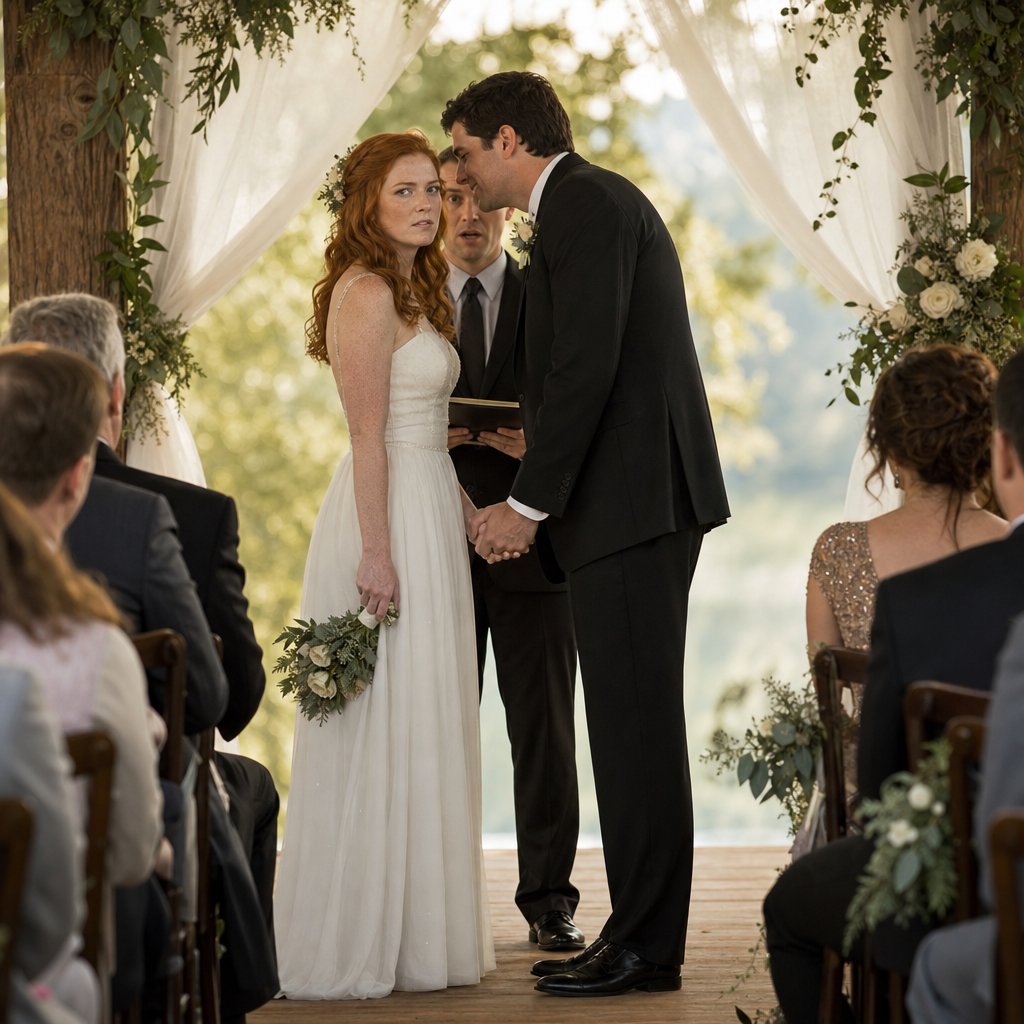
“If anyone knows of any legal impediment…” the officiant began, voice syrup-sweet, like he couldn’t imagine a problem in a room this expensive.
I didn’t mean to answer out loud. I meant to swallow it, to smile, to do what I’d practiced in the mirror until my cheeks ached. But the word came out clean anyway—sharp as a snapped thread.
“Yes.”
The first row inhaled as one body. I saw my mother’s knuckles go white around her bouquet, the roses trembling like they were cold. Behind her, someone’s laugh died mid-breath. Even the string quartet stuttered—one wrong note that made my skin prickle.
Evan’s hand tightened around mine, too firm for a “steadying” squeeze. His smile didn’t move, but his mouth came close enough that I could smell the mint on his breath and something metallic underneath it.
“Smile,” he hissed, teeth still showing to the crowd. “Right now.”
I looked at him—my groom in his perfect suit, hair combed just so, dimples deployed—and all I could see was the manila envelope taped shut at the welcome drinks, like a warning label nobody else could read.
The officiant blinked, confused. “I’m sorry—did you say…?”
Evan’s thumb dragged over my ring finger like he was checking ownership, and he leaned in again, softer this time, like a promise.
“Don’t do this,” he said, still smiling for them, “or I will.”
And then the officiant asked me to explain, and Evan’s grip didn’t loosen even a millimeter.
The Text I Tried Ignoring
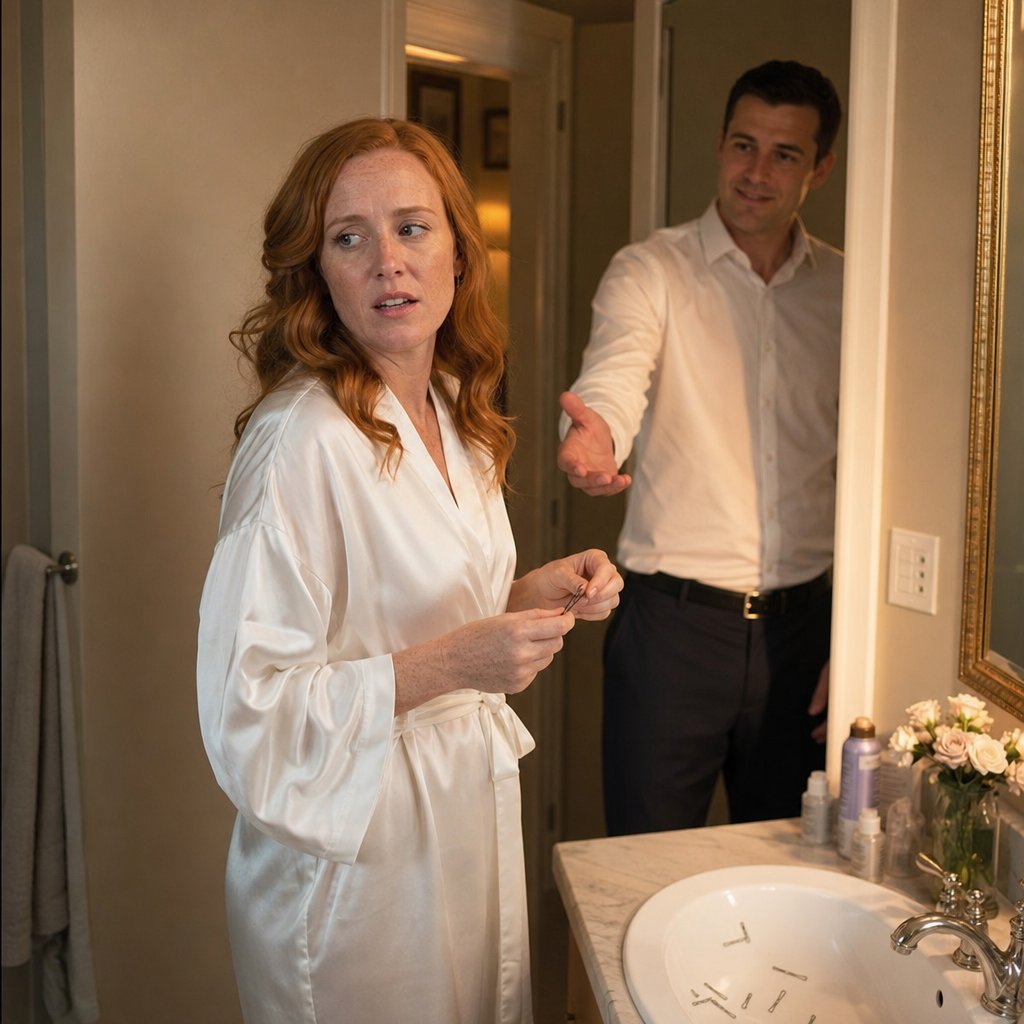
Three hours earlier, my phone buzzed while I was pinning my hair, bobby pins clinking into the porcelain sink like tiny dropped coins. An unknown number. No name. No hello.
“Ask him about Cedar Ridge.”
I stared at it until my eyes went watery. Cedar Ridge meant nothing—and that was the problem. If it was spam, it was weirdly specific. If it was a prank, it was cruelly timed. If it was real… it was the kind of real that hunted you down on your wedding day.
I told myself to delete it. I told myself I didn’t have the emotional bandwidth for mysteries. I told myself my family was finally—finally—getting a day where nobody fought in public.
Then Evan knocked and let himself into the suite like he owned the air in it. He looked perfect: dark hair, crisp collar, the calm of a man who believed the next few hours were guaranteed.
I tried to sound casual. “Have you ever been to a place called Cedar Ridge?”
He didn’t ask why. He didn’t squint like he was searching his memory. He didn’t laugh.
He just blinked once, slow, and his face rearranged into something smooth and ready.
“No,” he said too fast. “Why would I?”
And then—like he’d rehearsed it—he reached for my hands, kissed my knuckles, and said, “Don’t stress yourself out today.”
His calm should’ve soothed me. Instead, it landed like a lid snapping shut over a boiling pot.
Because Evan only got that calm when he was controlling the story.
The Uninvited Guest Smiled First
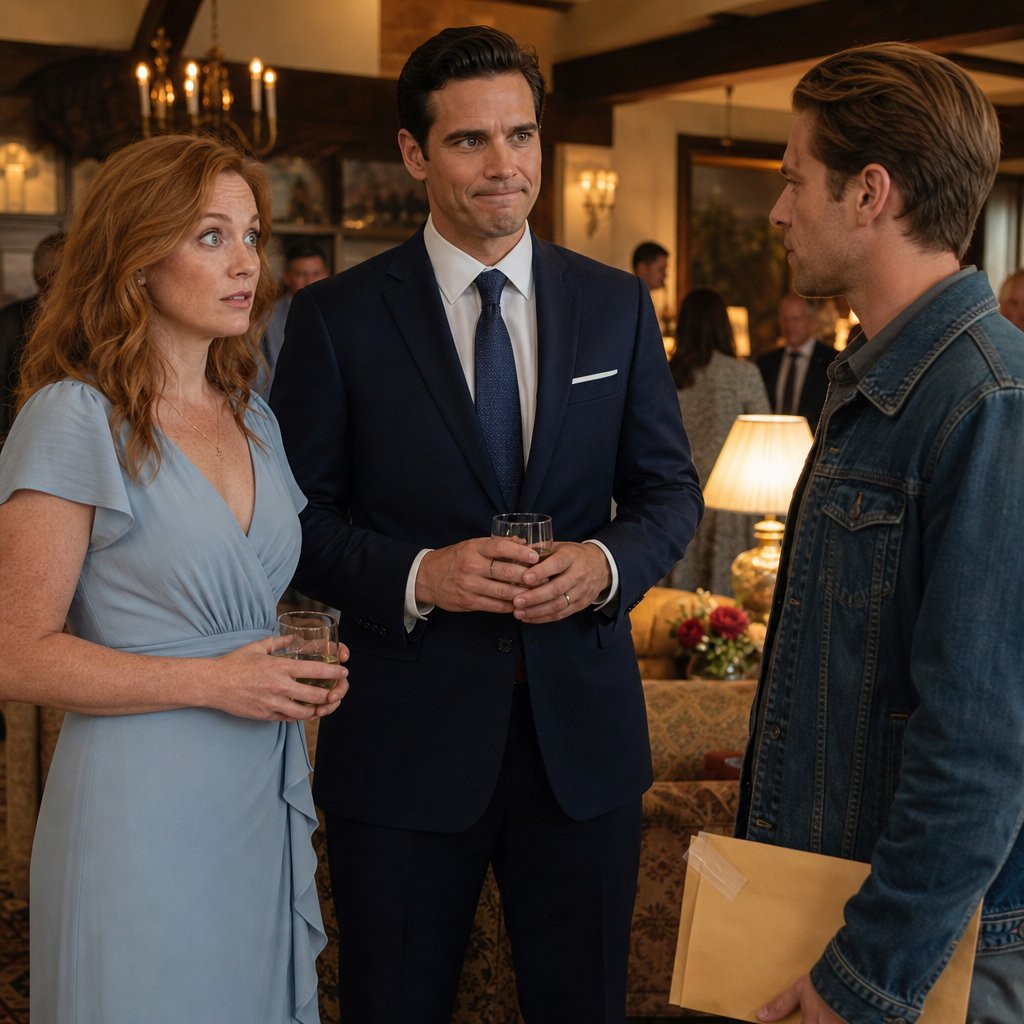
Welcome drinks were supposed to be harmless—string lights, champagne flutes, the soft buzz of people who liked us enough to travel. I kept my shoulders loose, my laugh light, like I hadn’t just been texted a riddle that made my stomach feel hollow.
Then the front doors of the inn opened and Cal walked in like he’d never been asked to leave my life.
Cal: my ex with the dark-blond hair that always looked wind-tossed, the faint scar through his right eyebrow, the kind of face that made strangers assume he was honest. He was in a worn denim jacket over a gray button-down—too casual for the room, which made him stand out like a bruise.
He held a manila envelope, edges taped like it had been opened and re-sealed in a hurry. He didn’t wave. He didn’t scan the room in confusion.
He looked directly at me.
My throat closed. I hadn’t seen him in two years. I hadn’t invited him. I hadn’t even said his name out loud since the day I promised myself I was done being the kind of woman who got dragged into chaos by men with “urgent truths.”
Evan was beside me, laughing at something my cousin said, glass in hand. He turned—mid-laugh—and the moment his eyes landed on Cal, his smile didn’t fade.
It froze.
Like someone had hit pause on his face.
Cal stopped a few feet away, lifted the envelope slightly, and said, quiet enough that it felt private and loud enough that it wasn’t, “We need to talk.”
Evan’s fingers tightened around his glass until I thought it might crack, and he didn’t take his eyes off Cal even once.
The Seal That Made Me Cold
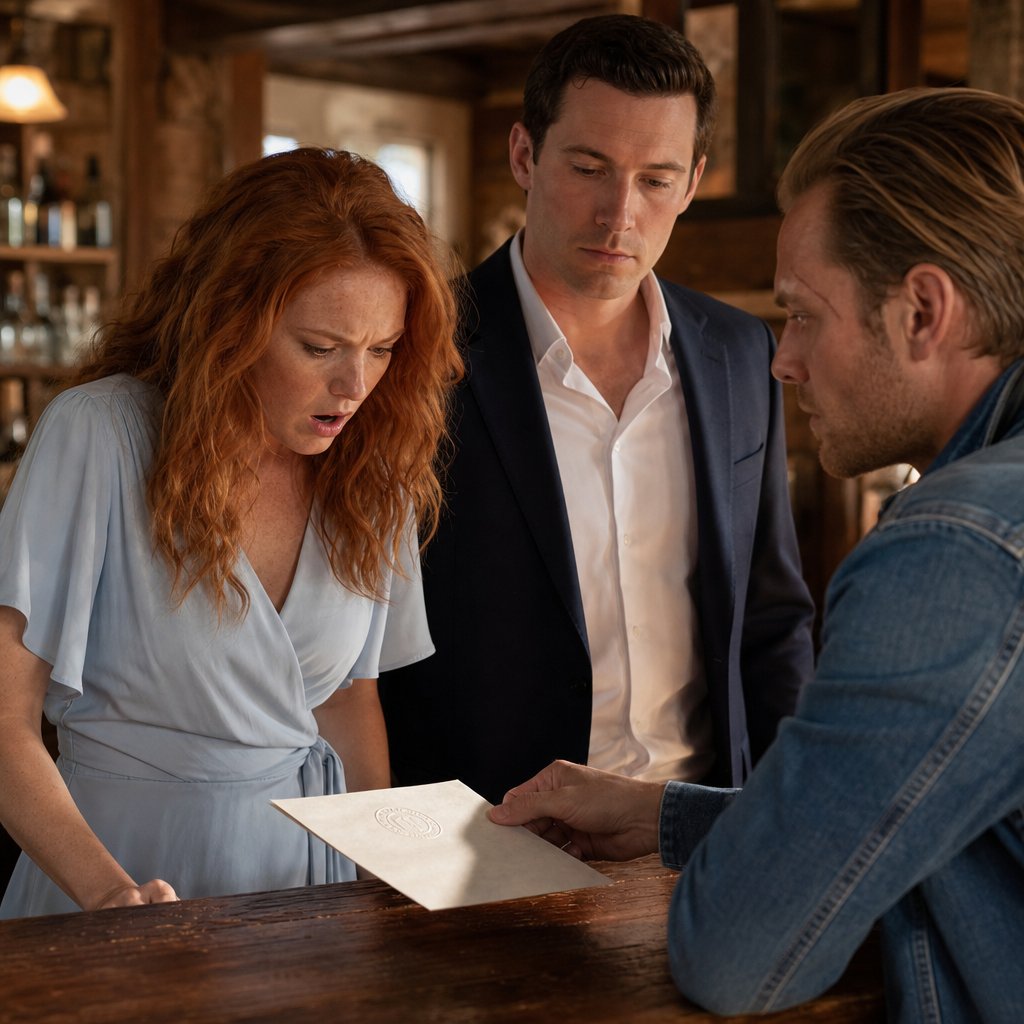
Cal didn’t make a scene. That was the part that scared me most. He moved like someone who’d learned the hard way that loud gets you dismissed.
We ended up at the bar—close enough to the chatter that we looked normal, far enough that I could hear my own pulse. The bartender set down a bowl of citrus slices, and the sharp smell of orange peel cut through the champagne.
Cal slid the envelope onto the polished wood and peeled back the tape with careful fingers. He didn’t look at Evan. He didn’t need to.
Out came a photocopy. He pressed it flat with his palm like he was smoothing a sheet over a body.
A marriage certificate.
Not a joke one. Not a novelty. It had the layout I recognized from late-night searches when my anxiety spiraled, the official formatting, the little boxes, the signatures. And there—faint but unmistakable in the corner—an embossed seal, caught by the bar’s overhead light like a bruise in paper.
I saw Evan’s face on it. Or a face that was him and not him at the same time—same jaw, same eyes, but under a different name. A name I’d never heard him use. A date that wasn’t ancient history. A county stamp: Cedar Ridge.
My stomach dropped so hard it felt like my ribs shifted.
“This is fake,” I whispered, because if I said it louder I’d make it real.
Cal’s eyes stayed on mine. “Then call the clerk,” he said. “Ask if it’s fake.”
I looked up at Evan, waiting for outrage, for laughter, for anything that matched the man I thought I was marrying.
His face had gone perfectly blank.
And in that blankness, I realized the question wasn’t whether the certificate was real.
It was what it made me.
Who Let Him In Anyway
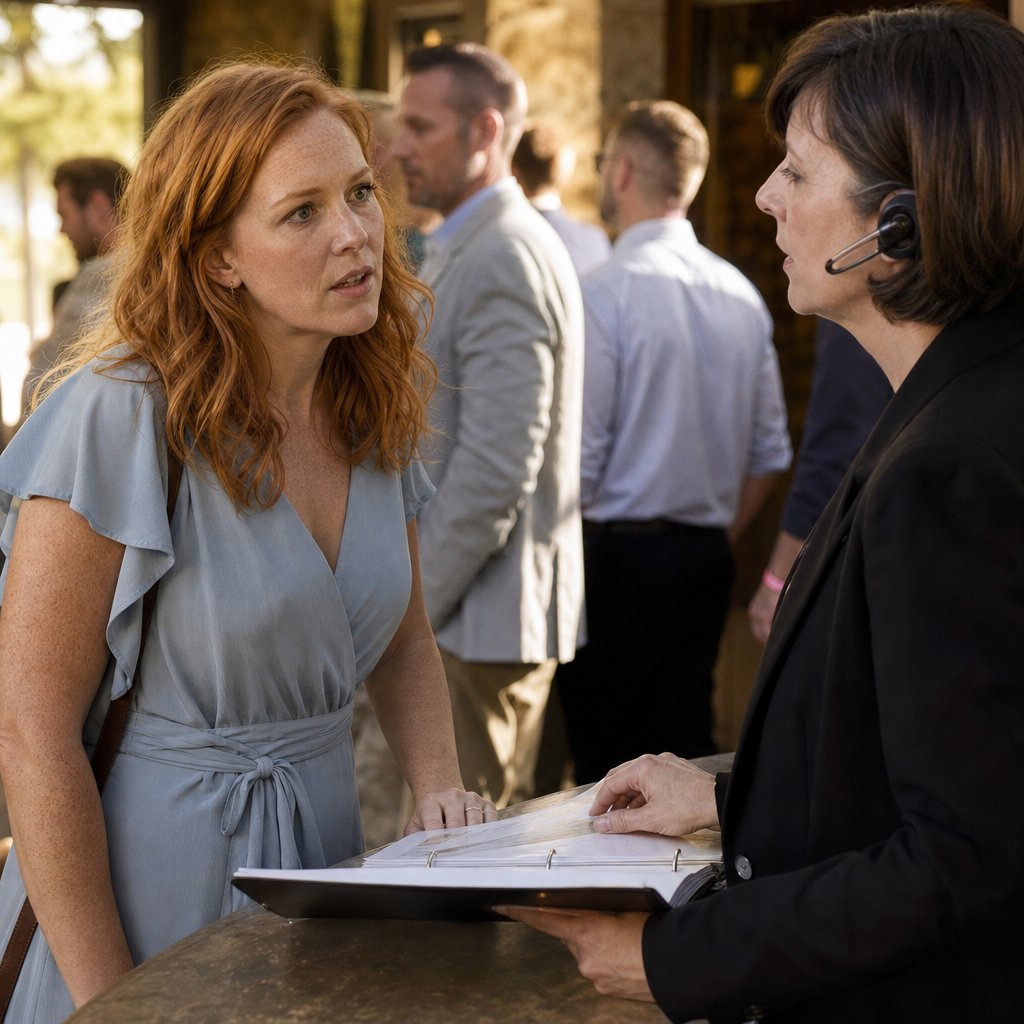
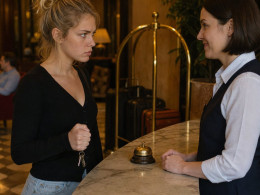
I fled to the front desk like a coward with a mission, my heels clicking too loud on the hardwood. If Cal was lying, I needed to know how he’d gotten close enough to lie to my face. If he wasn’t… I needed to know who had helped him.
The inn coordinator—Janice, fifty-something, sleek bob, headset like a badge—looked up from her binder with the polite fatigue of someone managing other people’s joy for a living.
“Everything okay?” she asked, eyes flicking to my expression and then away, like she didn’t want to be dragged into it.
I kept my voice low. “That man who came in. Cal. He wasn’t invited. Why was he allowed past the door?”
Janice’s mouth tightened. She flipped a page with a manicure so neat it felt insulting. “He had the wristband,” she said. “Groom-party. He was vouched in.”
My stomach gave a slow, sick roll. “By who?”
She hesitated—just a beat too long. “One of the groomsmen,” she said finally, like it was obvious and not at all explosive. “He said he was on your list.”
“Which groomsman?” My voice cracked, and I hated that it sounded like begging.
Janice’s eyes darted toward the lounge, toward the laughing cluster of Evan’s friends in their matching wristbands, toward the easy camaraderie I’d been so grateful for.
“I… I didn’t catch the name,” she said, and the lie sat between us like a spilled drink no one wanted to clean up.
Because she had caught it. She just didn’t want to say it.
He Knew Without Being Told
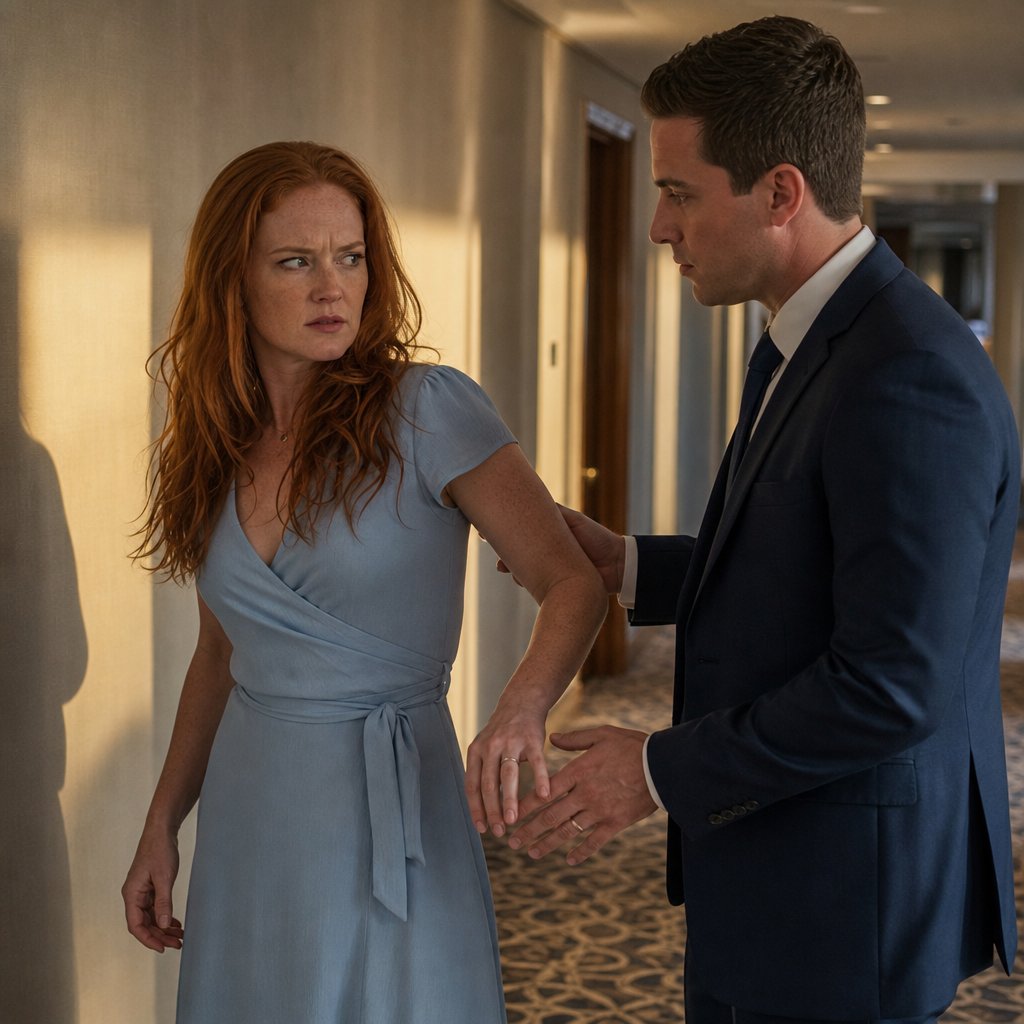
I didn’t even make it back to the lounge.
Evan intercepted me in the hallway like he’d been waiting in the exact spot my panic would funnel me. The corridor smelled faintly of lemon cleaner and somebody’s cologne, and the patterned carpet muffled my steps—like the building itself was helping him trap me quietly.
He took my elbow, not rough enough to draw attention, firm enough to steer. “Marin,” he said, voice warm for anyone who might be listening. His fingers were cool against my skin.
I yanked my arm back. “How did he get in?”
Evan’s eyes didn’t widen. He didn’t ask “who?” or “what are you talking about?” He didn’t do the normal-human thing of being confused.
He leaned closer, smile still ready, and his tone dropped into something private and sharp.
“Whatever he’s here to do,” he said, “don’t let him.”
My blood went cold. He hadn’t seen the photocopy. He hadn’t heard Cal say Cedar Ridge. I hadn’t told him about the text. I hadn’t told him anything.
“What do you think he’s here to do?” I asked, and my voice sounded like it belonged to someone braver than me.
Evan’s jaw flexed once, a tiny muscle twitch he couldn’t hide. His hand drifted toward my ring finger again—habit, possession, warning.
“He wants to ruin you,” Evan said softly. “And he’ll use anything to do it.”
Then he tilted his head, like a man offering comfort, and murmured, “Please. Trust me.”
I stared at him, at the practiced gentleness, and realized he was already fighting a battle I didn’t know existed.
And he was terrified I was about to learn the rules.
The Joke That Hit Bone
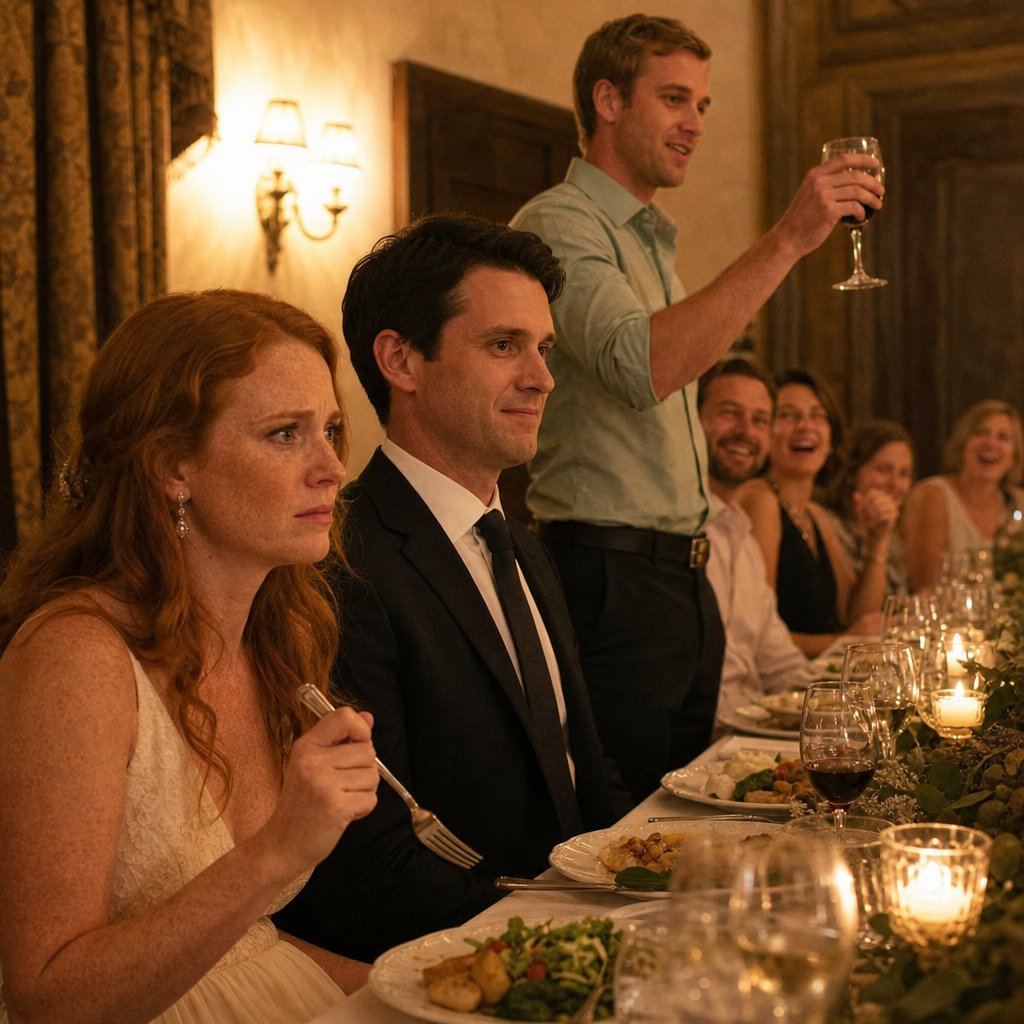
At the rehearsal dinner, they lit candles like that could soften anything. The long table was set with linen so white it felt like a dare. My place card sat beside Evan’s, perfectly centered, like symmetry could force stability.
I tried to eat. I tried to laugh at the right moments. I tried to pretend Cal wasn’t still somewhere in the building like a storm cloud you could feel through walls.
Evan’s best man—Drew, broad-shouldered, sandy-haired, the kind of guy who slapped backs and meant well—stood to toast. He wore a pale green dress shirt with the sleeves rolled up, already a little loose from drinking.
“To Evan,” Drew boomed, grinning. “A man who’s, honestly, a different man in every city.”
The room erupted. Chairs scraped. People howled like it was the funniest, most harmless thing anyone had ever said. Someone at the far end clapped too hard.
I turned to Evan, expecting him to chuckle, to play along, to wink at me like yeah, I’m charming like that.
He didn’t laugh.
His smile stayed glued on, but his eyes went flat, and for a second his gaze slid—not to Drew—but past him, scanning faces like he was counting witnesses.
My fork hovered above my plate. The roasted chicken smelled suddenly sweet and wrong, like it had turned.
Drew kept talking, oblivious. “Seriously, the stories I could tell—”
Evan’s hand closed over my knee under the table, squeezing once, a silent command dressed up as affection.
And I realized the room wasn’t laughing with Evan.
It was laughing at something true it didn’t know it knew.
Open Before You Say It
I didn’t see Cal hand it to me. That’s what scares me. One moment my clutch was light, the next it had weight—an extra heft that didn’t belong.
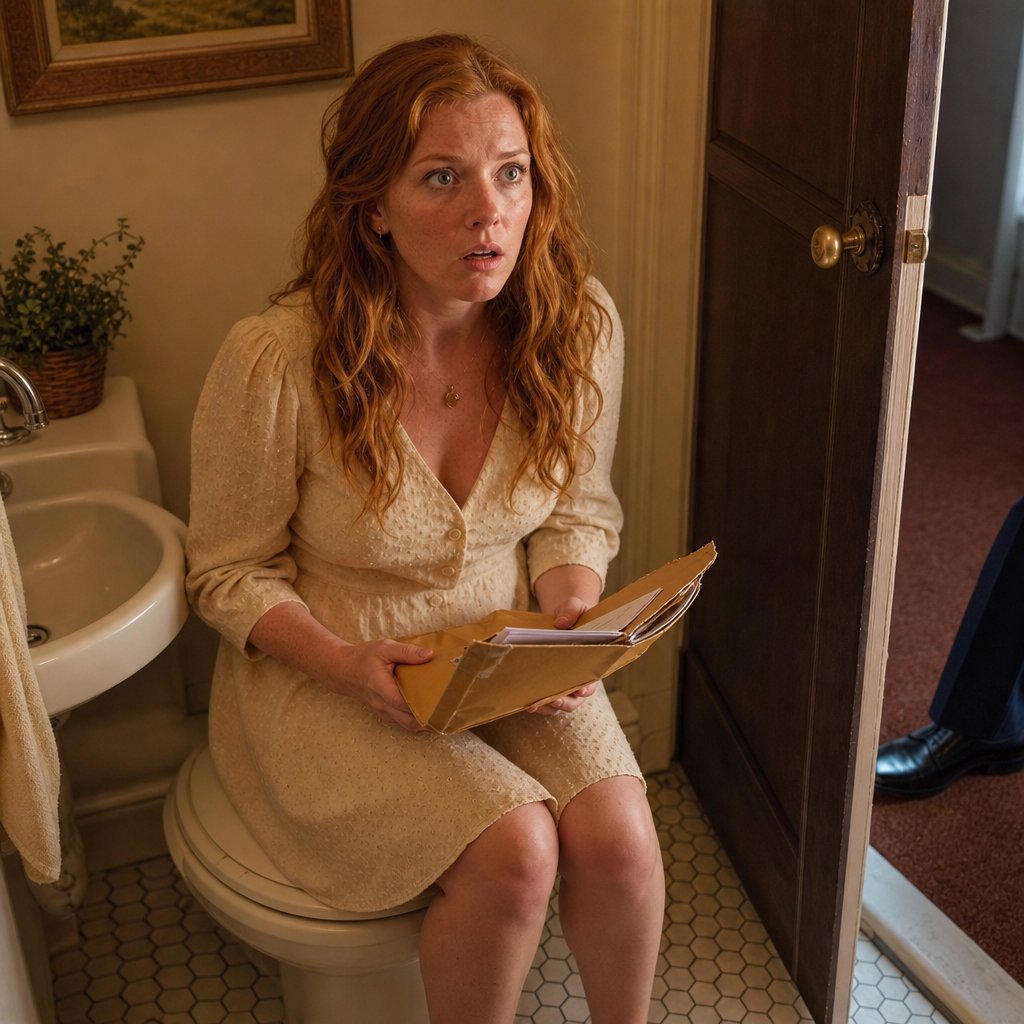
I found the envelope when I ducked into the restroom to breathe. The bathroom smelled like hand soap and flowers, too sweet, like it was trying to cover something sour. I shut myself into a stall like I was sixteen again, hiding from drama I didn’t start.
Inside my clutch: the manila envelope, corners bent, tape re-pressed. On the front, in thick black marker, were the words that made my vision narrow.
Open before you say “I do.”
My hands shook so hard I almost tore the whole thing in half. I peeled it open and slid the contents out onto my lap.
Court filings. Multiple pages. A restraining-order attempt—denied, but not dismissed. Names I recognized and names I didn’t. Dates that formed a breadcrumb trail straight into Cedar Ridge.
Then a copy of a wire transfer confirmation. The heading was blurred by the photocopy, but one word wasn’t: SETTLEMENT—Cedar Ridge.
Settlement meant hush money. Settlement meant someone had been paid to stop talking—or paid because they wouldn’t.
And tucked behind it all was a photo, printed on cheap paper, grainy but unmistakable: Evan, arm around a woman I’d never seen, her hand raised to show a ring.
The stall door rattled—someone trying the handle.
I froze, papers spread across my knees, and heard a familiar voice outside, too close.
“Marin?” Evan called, gentle and patient. “Are you in there?”
Talia Finally Said His Name
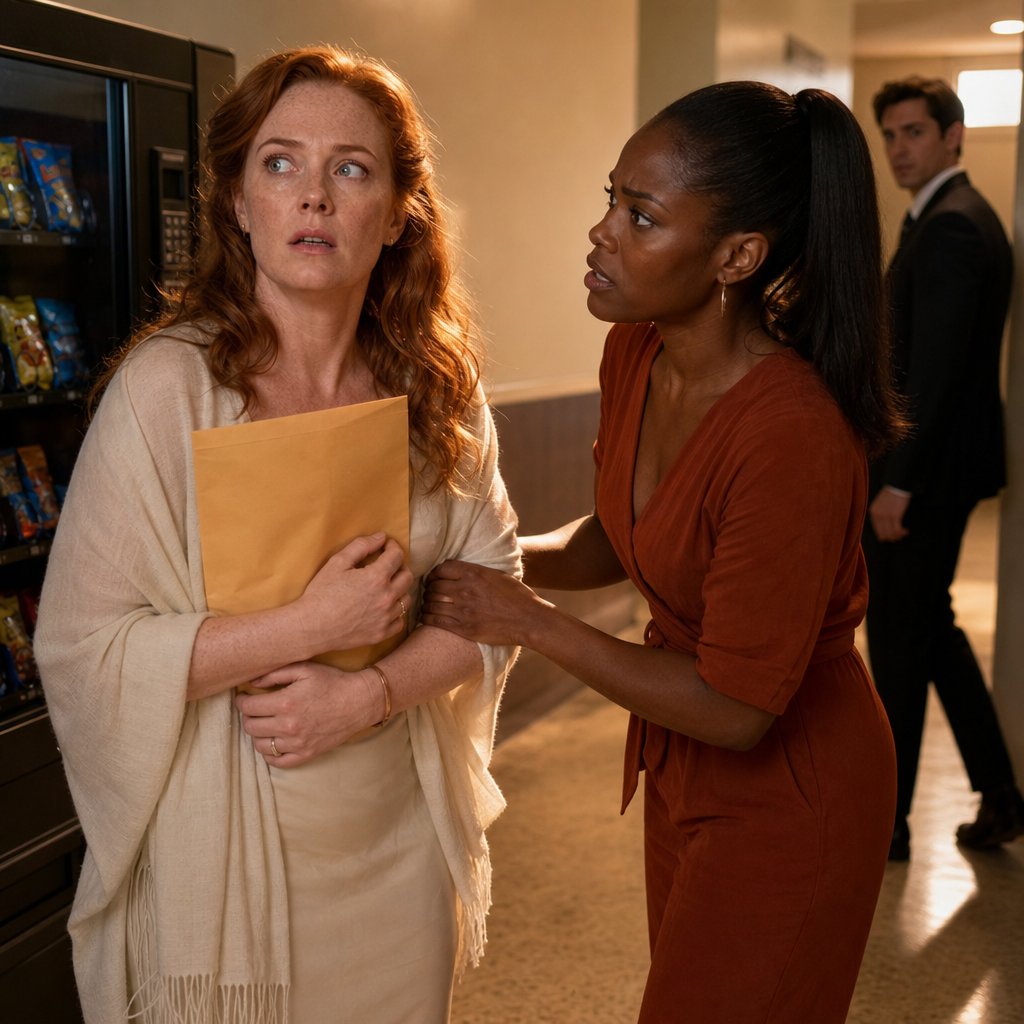
Talia found me by the vending machine in the hallway after the dinner, like she’d been tracking my shadow all night. She was my maid of honor—Black woman in her 30s with a sleek high ponytail, sharp cheekbones, and eyes that missed nothing. She wore a rust-colored jumpsuit and a face that said she’d swallowed something bitter for hours.
“Don’t marry him,” she said. No warm-up. No cushioning. Her voice was low, furious, shaking at the edges.
I flinched like she’d slapped me. “Talia—”
“I saw him,” she cut in. “Earlier. In the coat closet by the ballroom.”
My throat tightened. “Saw him doing what?”
Talia’s nostrils flared. “Deleting a voicemail. He thought he was alone.” She made a tight fist, then opened it like she was releasing the memory. “He listened to the first second, went white, and then hit delete like it was muscle memory.”
I hugged the envelope to my ribs under my shawl, like it could keep my insides from spilling out. “What was it labeled?”
She hesitated—just long enough that I knew she was choosing to blow up my life.
“CR,” she said. “And… ‘Do Not Answer.’”
The hallway seemed to tilt. Cedar Ridge. CR. The unknown text. Cal’s certificate. The settlement.
This wasn’t a random warning.
It was a live thread Evan had been cutting, snipping every loose end before it could reach me.
Talia grabbed my wrist, nails digging in just enough to hurt. “Tell me you’re not going through with this,” she demanded.
Over her shoulder, I saw Evan turn the corner at the end of the hall, scanning—searching—like he could feel the conversation from fifty feet away.
The Trash Held Another Wedding
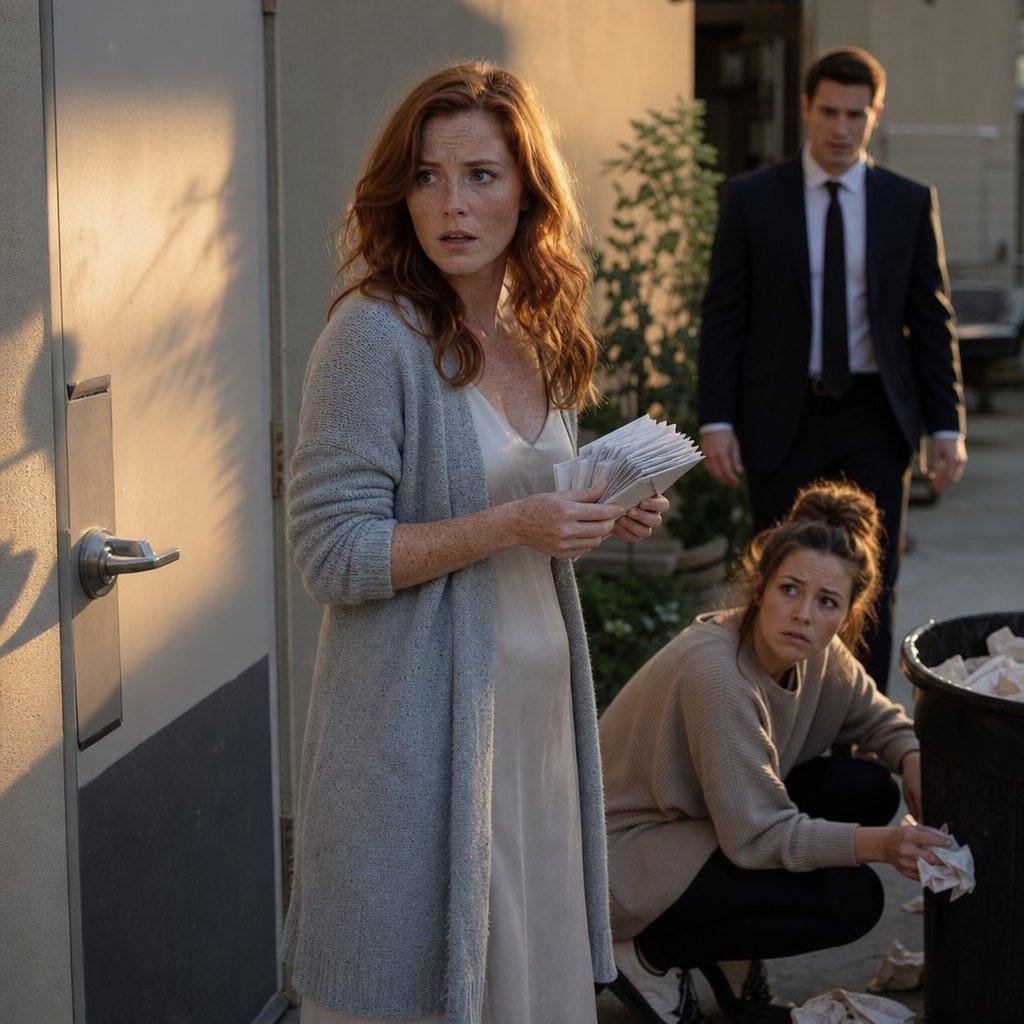
The next morning, the inn smelled like coffee and lilies, like everyone was determined to drown anxiety in fragrance. I was walking toward the ballroom with my garment bag when I saw the florist assistant kneeling by a trash can near the service door.
She was young—maybe twenty—hair in a messy bun, wearing black leggings and an oversized beige sweater dusted with pollen. She looked up at me with the expression of someone who’d found something they weren’t supposed to admit existed.
“Are you… Marin?” she asked quietly.
I nodded, my stomach already bracing.
She held up a stack of place cards she’d fished from the trash. Thick cardstock, the kind I’d obsessed over—font, spacing, color—until it felt like planning could keep me safe.
“These were in the bin,” she said. “But… they’re not the ones we set out yesterday.”
I took them. My fingers went numb at the edges.
Different names.
Not just one. Multiple. The head table—rewritten like a script revised overnight. A seat that should’ve been Talia’s replaced with someone else. A name I didn’t recognize where my brother was supposed to sit. And one card—creased like it had been gripped too hard—had a woman’s name positioned where mine should’ve been.
The assistant swallowed. “Do you want me to tell the coordinator?”
I couldn’t speak. My throat felt packed with cotton.
Because this wasn’t a mistake.
Someone had tried to reassign my wedding like it was a meeting.
And as I stood there holding proof in my hands, I heard footsteps behind me—measured, familiar—and Evan’s voice, too calm for the moment.
“What’ve you got there?”
The Passport Didn’t Flinch
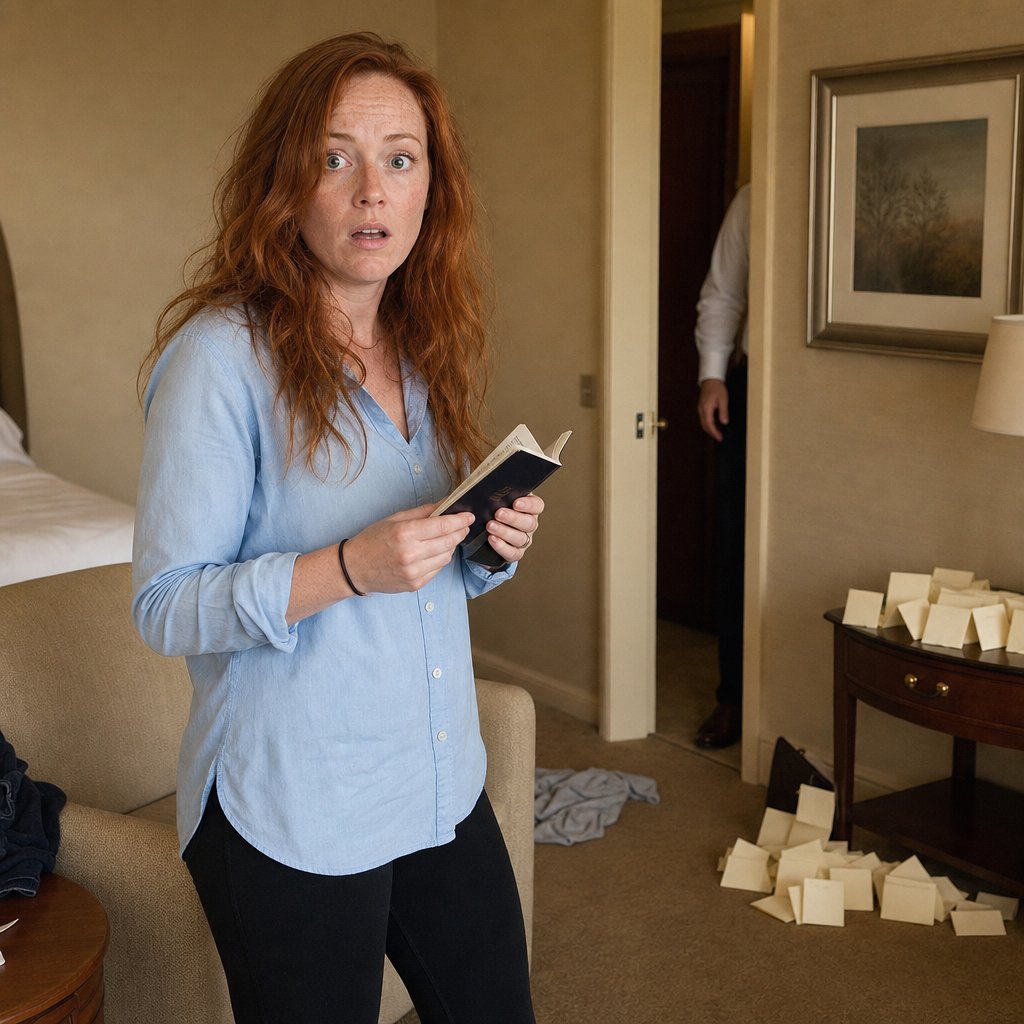
Evan’s voice slid over my shoulder like a hand I didn’t consent to. “Why are there extra place cards?”
I kept my smile glued on, the way you do when your whole body is screaming. The discarded cards were fanned out on the table—thick ivory stock, my name pushed off the head table like a bad typo. A woman’s name in its place. Evan’s gaze kept dipping to them, too quick, too practiced.
“The printer messed up,” I lied, and watched his jaw tighten like he was doing math. His cologne hit me—cedar and something clean—and it suddenly smelled like a disguise.
When he stepped away to “check on the florist,” I moved like my feet had their own agenda. His overnight bag sat half-zipped by the suite’s armchair. I didn’t even rummage; I just opened the side pocket and pulled out his passport like it might burn me.
The cover was scuffed at the corners, familiar enough to be comforting—until I thumbed it open and the pages didn’t sit right. The binding felt…fresh. Stiff where it shouldn’t be. Then I saw it: two tiny staple holes near the spine, clean punctures in the paper like someone had clipped and re-clipped a secret.
Staples didn’t belong in a passport. And those holes lined up with a missing page, a gap disguised by careful pressure and time.
Behind me, the doorknob turned, slow and deliberate.
The Packet In His Bag
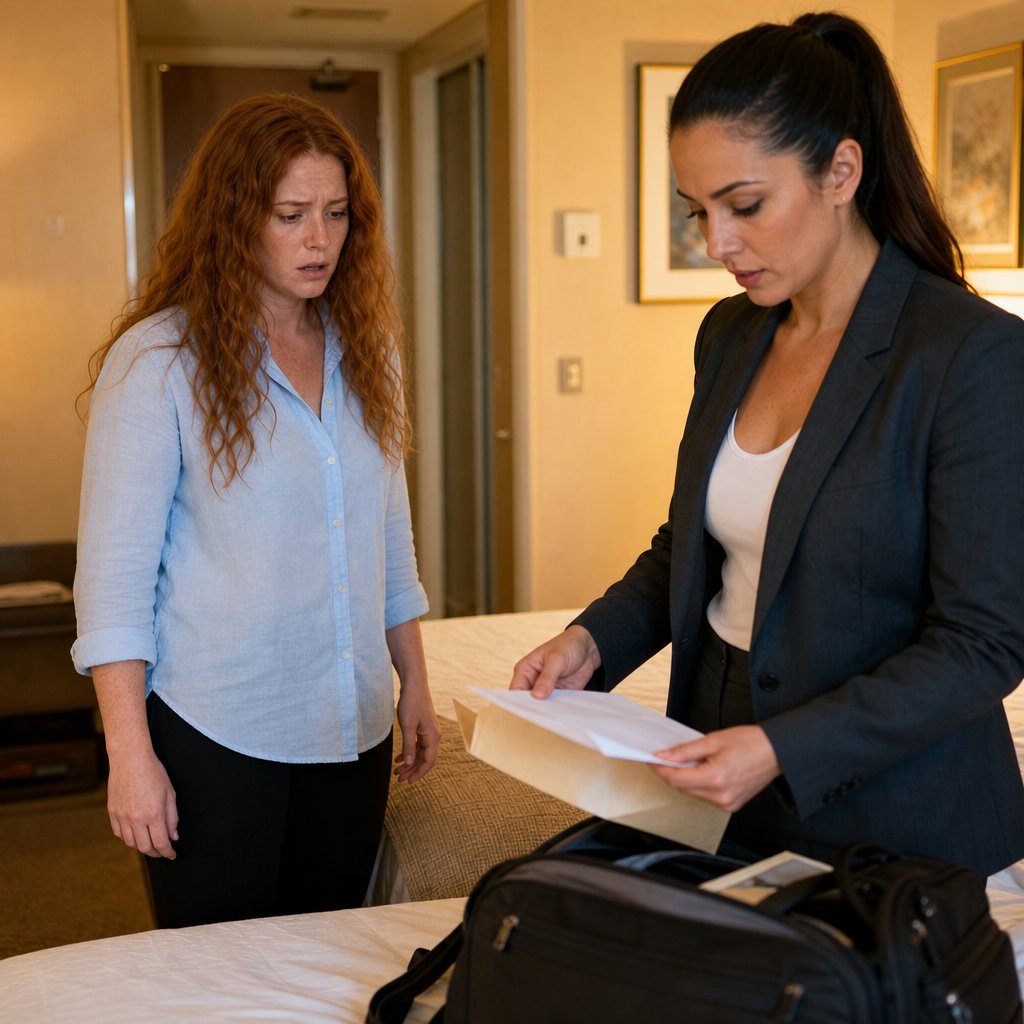
I shoved the passport back like it had teeth and turned just in time to see Talia slip into the suite with the quiet urgency of someone who’d already decided the truth mattered more than manners.
Talia—sleek dark ponytail, sharp eyeliner, the friend who always knew where the exits were—held up Evan’s carry-on by one handle like evidence. Her lips were pressed so tight they’d gone pale.
“I’m not proud of this,” she whispered. “But I found something.”
She unzipped the front compartment and pulled out a thick manila packet. Not the venue contract. Not vows. Official-looking forms, clipped together, the kind of paper that feels too heavy for the life it can ruin.
My throat went dry. “What is that?”
Talia opened it on the bedspread, smoothing it flat with her palm. The top page had boxes and lines—no readable text from where I stood, but the shape of it was unmistakable. Marriage license packet. The kind we were supposed to fill out together, carefully, like it meant something.
It was already filled out. In black ink. Neat, confident handwriting.
And my middle name was wrong.
Not a typo wrong. Not a “he forgot” wrong. A different name entirely, written like he’d practiced it. Like he’d run this form before with someone else and just…swapped me in.
Talia’s finger hovered over the ink. “Marin, why would he pre-fill this without you?”
From the hallway, Evan’s laugh floated closer—too warm, too on-time.
Rochelle’s Key, No Questions
I didn’t let Evan see my face when he finally stepped in—smiling, casual, perfectly timed. I had the packet folded under a throw pillow like I was hiding contraband.
“You two okay?” he asked, eyes flicking between me and Talia like he was checking if we’d synchronized our lies.
“Fine,” I said, and my voice sounded like it belonged to someone who still believed in fine.
He left again—“Just grabbing my mom”—and the moment the door shut, my lungs remembered how to work. Talia and I didn’t even speak. We just stared at each other like we’d both seen the same ghost.
Then Rochelle appeared in the doorway.
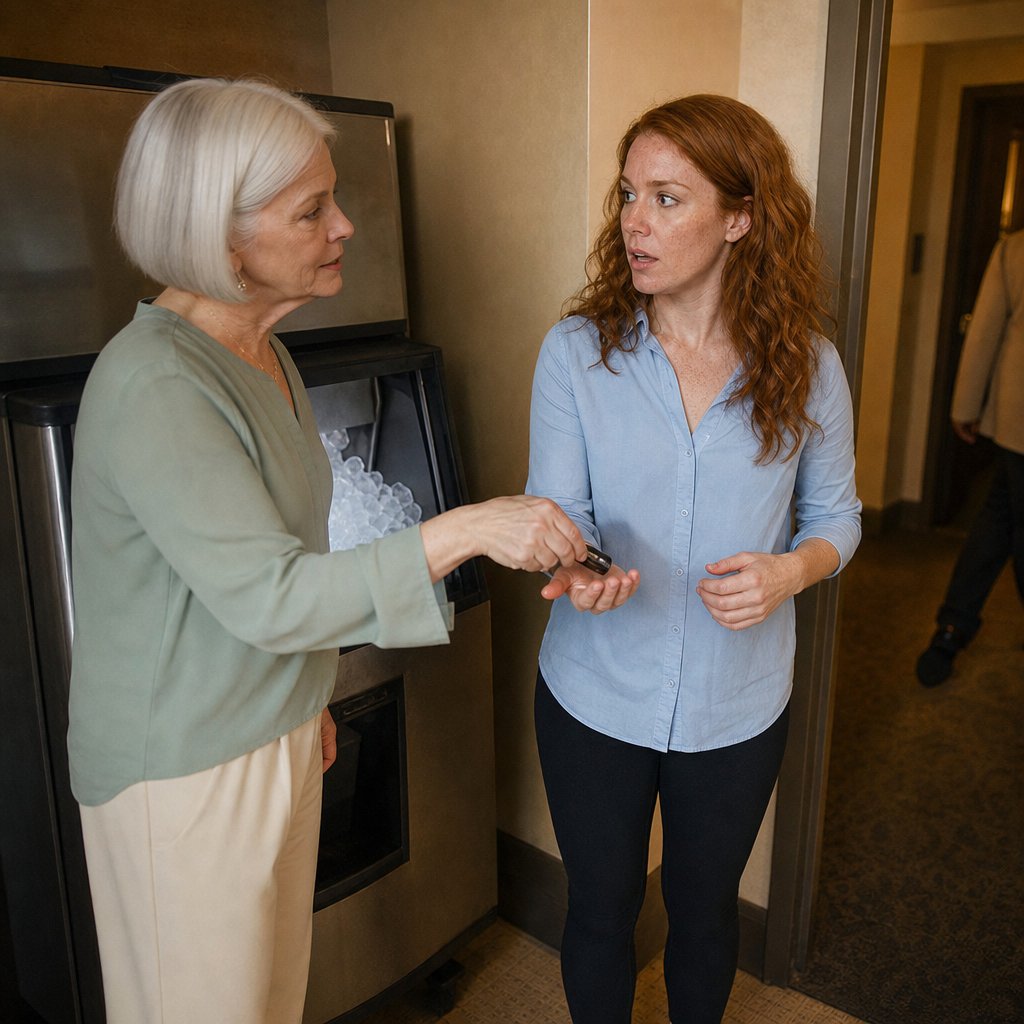
Evan’s mother looked immaculate in cream slacks and a soft green blouse, the kind of woman who could make a hotel hallway feel like her house. Her hair—smooth silver bob—didn’t move when she walked. Her eyes did, though. They went straight to my hands.
“Marin,” she said softly, like my name was fragile. “Come with me.”
I followed her to the service corridor by the ice machine, where the air smelled faintly of chlorine and old carpet shampoo. She didn’t look at me at first. She just took my palm and pressed something cold into it.
A keycard.
Her fingers closed over mine until it hurt. “Unit 309,” she whispered. “Don’t let him see.”
I blinked, stunned. “Rochelle—what is this?”
Her mouth tightened, a crack in her perfect lipstick line. “It’s where he keeps what he doesn’t want you to know.”
Footsteps echoed around the corner, and Rochelle’s face snapped back into calm like a mask being fastened.
Unit 309 Was Stocked
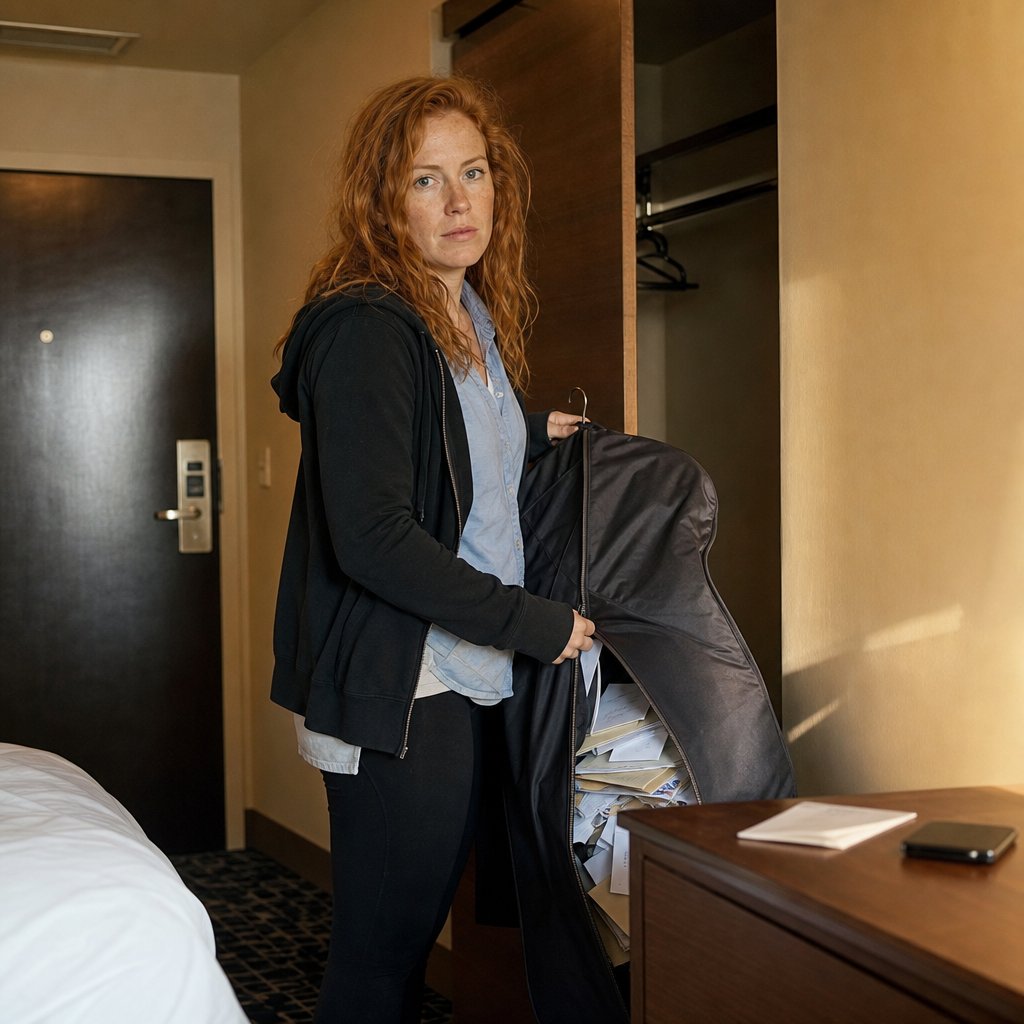
Unit 309 opened with a soft click that sounded too easy, like it had been waiting for me.
The air inside was stale and over-cooled, carrying that plastic-clean smell hotels never quite hide. The curtains were half-drawn. A single lamp cast a dull glow over a room that looked untouched—until I saw the second suit bag propped upright in the closet like a body.
I stepped closer, my shoes silent on the carpet. My hands shook as I unzipped it.
Inside: not wedding clothes. Not anything romantic. Just organized compartments and a bundle of returned mail, rubber-banded tight. Envelopes with different names printed on them—“Evan Locke” and “Evan Larkin”—like he’d been trying on identities the way other people tried on jackets.
My stomach lurched. “Oh my God,” I breathed, and my voice sounded small in the cold room.
On the dresser sat a cheap burner phone, face-down, its edges nicked like it had lived a hard, disposable life. Beside it was a folded sheet of paper—creased, handled, rehearsed. No letterhead. Just a draft, written in the same confident hand I’d seen on the license packet.
I didn’t need to read every word to feel my blood go hot. The sentence that punched clean through me was unmistakable:
“She’s set. After the wedding we move the funds.”
My mind instantly flashed to the joint account Evan had pushed for, the one he’d called “our future,” the one I’d signed because he’d kissed my forehead and promised I was safe with him.
The doorknob behind me twitched.
Pencil Marks That Kept Moving
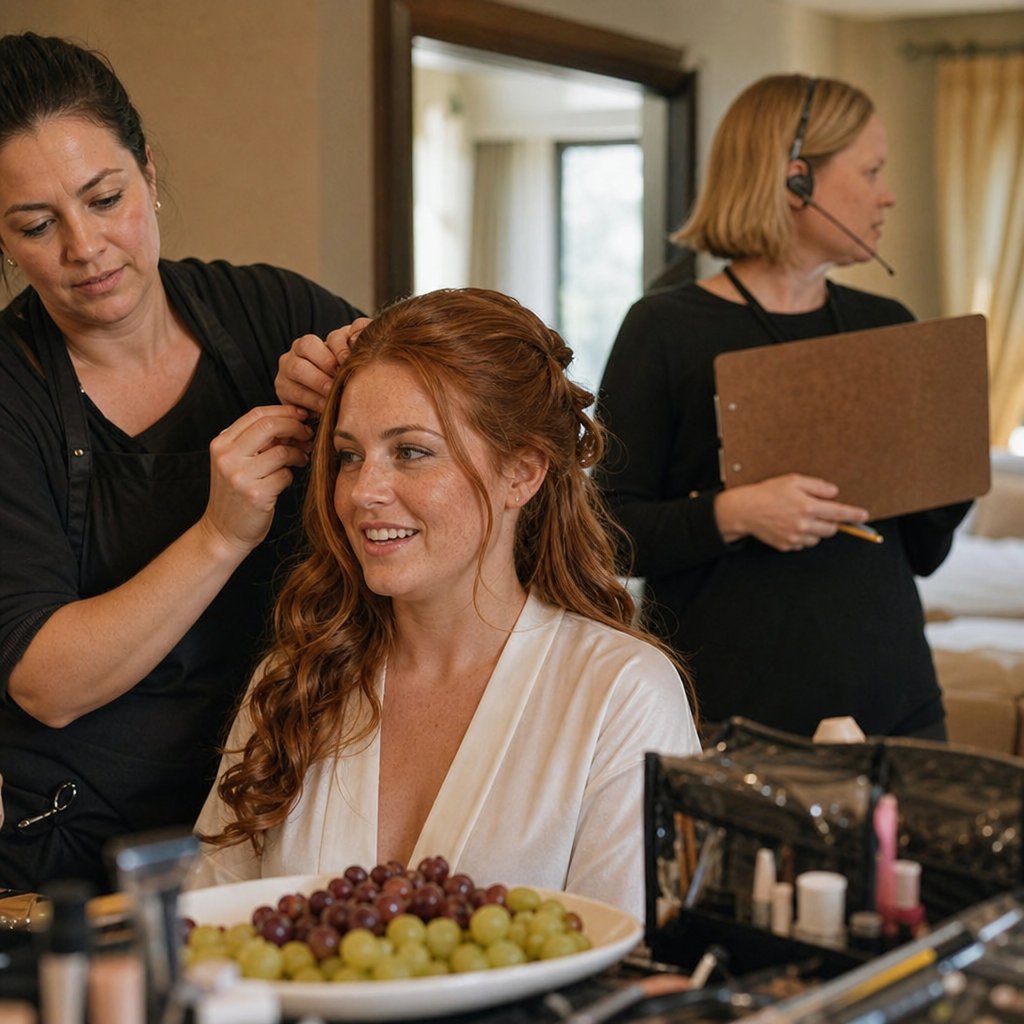
I made it back to the bridal suite with my heart still trying to sprint out of my ribs. I’d shoved Rochelle’s keycard into my bra like a teenager hiding cigarettes, and I hated that my life had shrunk to that kind of secrecy.
Hair and makeup had taken over the room—curling irons, powder brushes, the sharp sweet smell of hairspray hanging in the air like fog. Everyone was talking too loudly, like volume could smother nerves.
I sat in the chair they pointed at and let someone pin my hair while my eyes did what they’d been doing all day: hunting for cracks.
The coordinator’s clipboard sat on the counter beside a bowl of grapes, and it was the only thing in the room that looked like it told the truth. I watched her—Kendra, blond bob, headset—flip pages, make a mark, erase it, make it again.
Not once. Not twice. Over and over.
Guest list. Seating. Witnesses. The pencil moved like a nervous tic, names disappearing and returning like they were being voted off an island. I couldn’t see the words, but I saw the motion—erase, rewrite, erase—until the paper looked bruised.
My scalp tugged as the stylist tightened a pin. “Ow—sorry,” she chirped, and I barely felt it because my eyes were locked on Kendra’s hand.
“Who’s changing that?” I asked, keeping my voice light enough to pass as bridal fussiness.
Kendra didn’t look up. She just said, “I’m just updating per the groom,” and her pencil paused like she’d said too much.
Then she angled the clipboard away from me, shielding it with her body.
She Asked For Mrs. Larkin
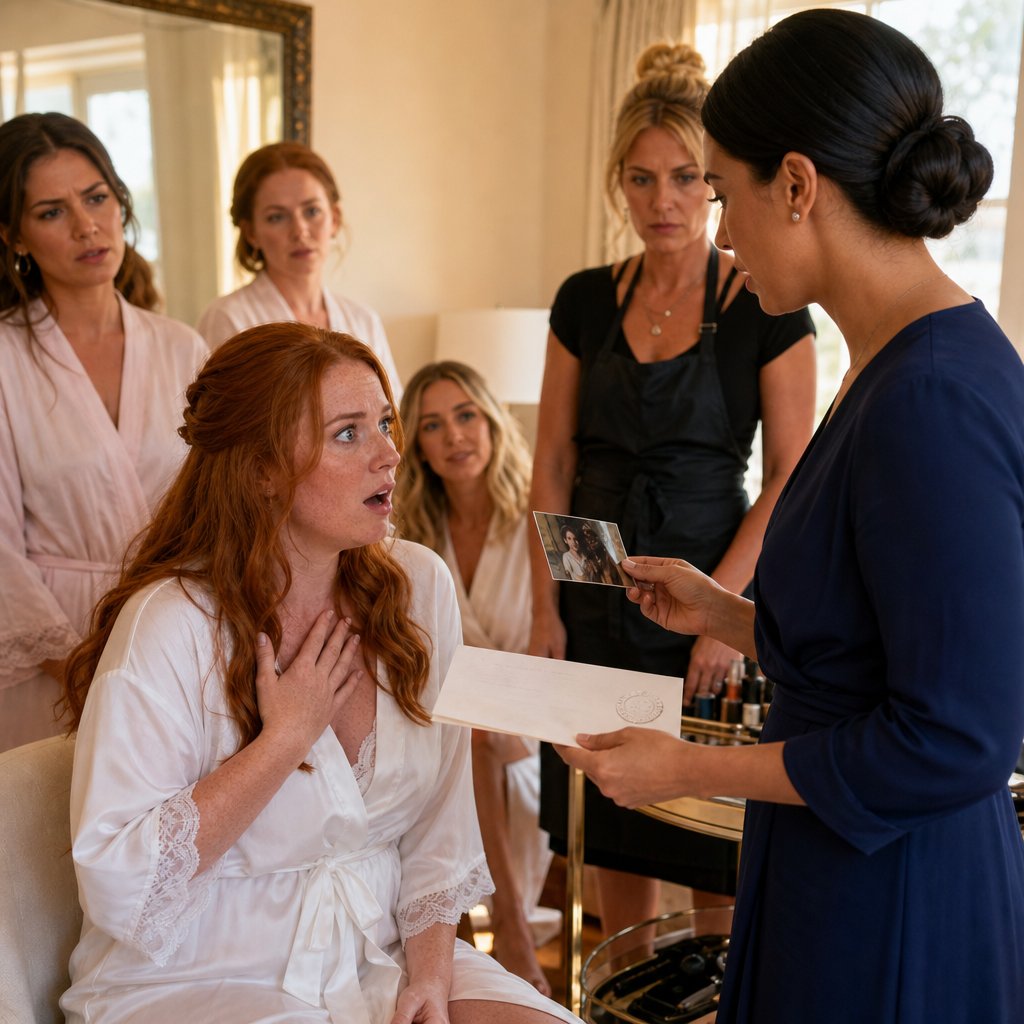
The knock on the door wasn’t tentative. It was the knock of someone who’d already been told no and came anyway.
Kendra opened it a crack, and a woman stepped in like she owned the air. She was in her early thirties, tan skin, glossy black hair in a tight low bun, wearing a fitted navy wrap dress that looked courthouse-appropriate—too neat for a wedding morning.
Her eyes swept the room and landed on me with unnerving certainty. “I’m looking for Mrs. Larkin.”
The room went quiet in that abrupt, collective way—curling iron clicks, brush strokes, chatter—all of it stalling mid-motion. Someone’s bobby pin hit the floor with a tiny metallic ping.
“I’m Marin,” I said, and my voice sounded wrong in my own mouth. “Who are you?”
“Sienna,” she replied, like the name should mean something. Then she reached into her bag and pulled out a thick envelope and a small glossy photo. She held them out with two fingers, careful, almost clinical.
The photo showed a courthouse cake—plain white, lopsided roses—posed on a metal table. It wasn’t a wedding cake; it was a receipt in frosting. My stomach twisted so hard I thought I might throw up in my robe.
Then she slid the other item forward: an original document with a raised seal and a judge’s signature at the bottom. I couldn’t read the words from where I sat, but I recognized the weight of it—the kind of paper that doesn’t get printed twice unless the first time mattered.
Sienna’s gaze didn’t blink. “Evan didn’t tell you he was still married,” she said quietly, “or that the divorce under the other name never finalized.”
My stylist’s hands froze in my hair.
And behind Sienna, the hallway floorboards creaked with familiar footsteps.
Rochelle Whispered, Evan Flinched
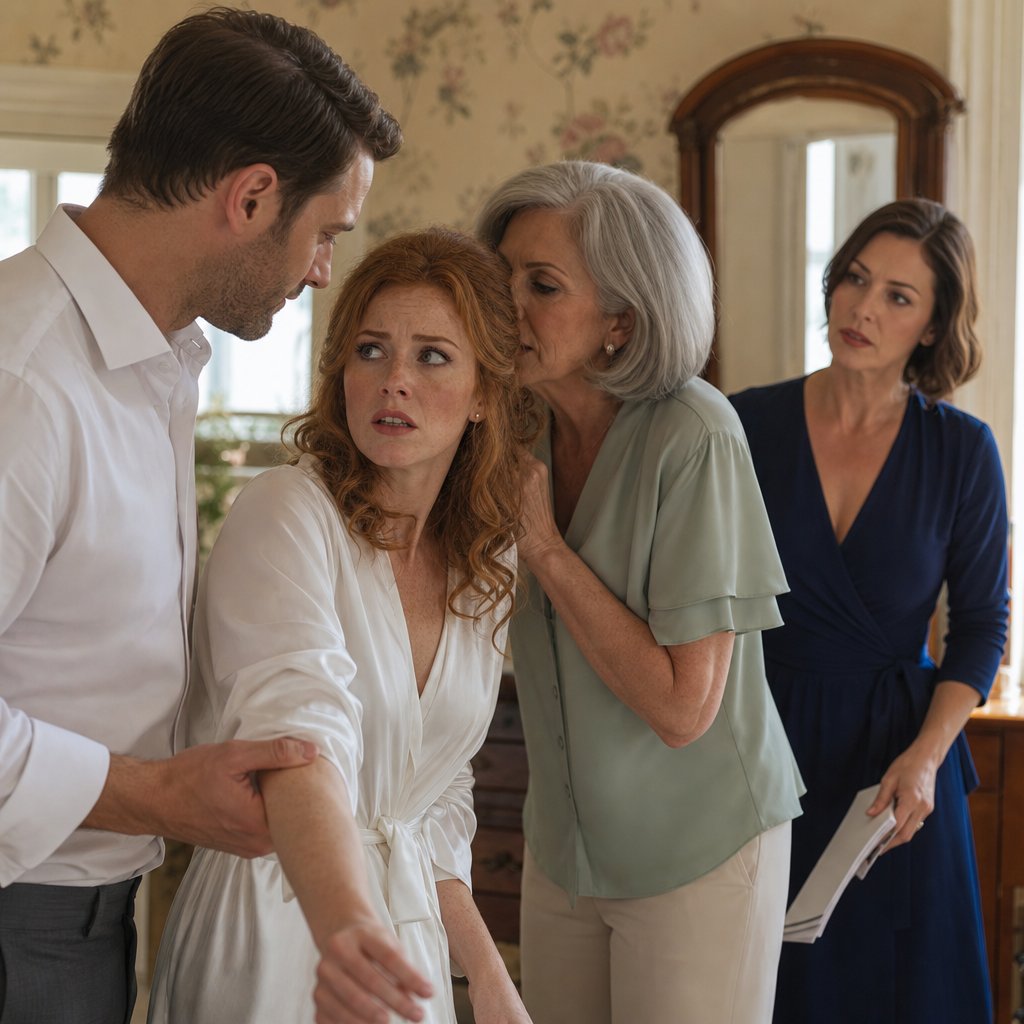
Evan walked in like he was stepping onto a stage—tailored gray slacks, white dress shirt open at the collar, that effortless groom confidence he wore like it was sewn into him.
He took one look at Sienna and the color drained from his face so fast it was like someone yanked a plug. His smile didn’t fade; it froze. A mask caught mid-drop.
“What’s this?” he asked, voice too calm, eyes too sharp.
I didn’t answer. I couldn’t. My tongue felt glued down by panic.
Sienna didn’t move either. She just held the photo and the document steady, her wrist firm, like she’d practiced keeping her hand from shaking.
Then Rochelle appeared in the doorway behind Evan, and the room’s temperature seemed to shift around her. She looked at her son the way you look at a person you love and no longer recognize.
She stepped close enough that her perfume—powdery, expensive—threaded through the hairspray haze. Rochelle leaned toward my ear, but her words were for Evan. She pitched them low, meant to slide under everyone else’s hearing.
“If you do this today,” she whispered, “I won’t protect you again.”
Evan actually flinched. A real, involuntary twitch in his cheek, like she’d slapped him without lifting a hand. His eyes flashed to her, then to me, then to the door—calculating exits, witnesses, damage control.
And in that split second I understood something sickening: this wasn’t his first disaster. This was just the first one I’d been invited to.
Evan’s hand reached for my wrist—gentle enough to look loving, tight enough to be a warning.
I Snatched The License Back
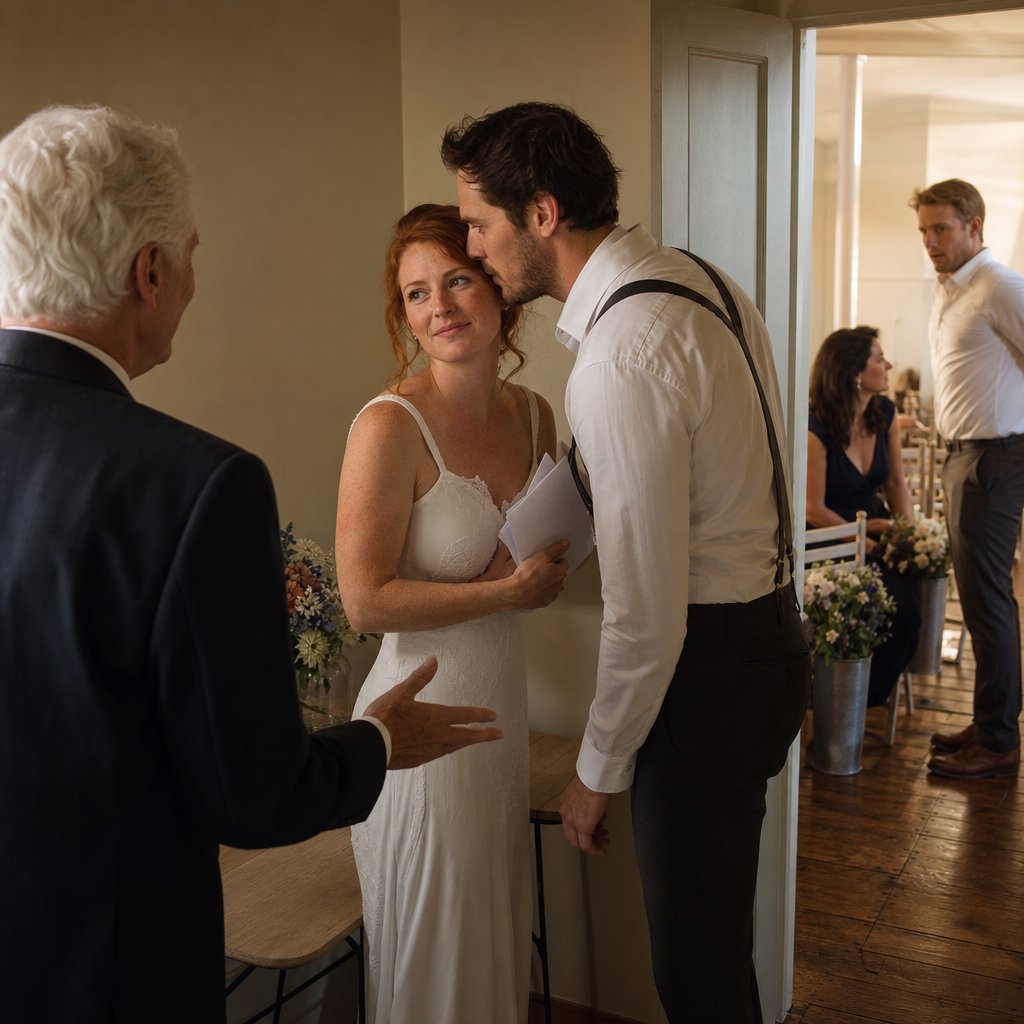
The ceremony run-up blurred into forced smiles and choreographed movement. Someone zipped me into a dress. Someone dabbed powder under my eyes like it could erase the fact that I was about to marry a stranger with my own handwriting trapped inside his plan.
We were in the small side room off the ceremony space—the one meant for “private moments.” It smelled like fresh flowers and damp greenery, buckets of stems lined against the wall. The air was thick with petals and panic.
The officiant stood by a folding table, calm, silver-haired, holding a pen like it was just another job. Evan was beside him, shoulders squared, jaw set in that new, frightening stillness.
He pulled the marriage license packet from his inside pocket and handed it over with a bright, practiced grin. “All filled out,” he said, like he was doing everyone a favor.
I saw the black ink. I saw the wrong middle name. I saw the way the officiant’s eyes skimmed down the page, ready to accept it because people accept what’s placed in their hands with confidence.
My body moved before my brain finished begging it not to. I stepped forward and snatched the packet back so fast the papers fluttered like startled birds.
“Actually,” I said, voice shaking but loud enough to cut through the room, “we need to correct something.”
Evan’s smile didn’t waver. His eyes did. They sharpened, warning me without words.
Through the open doorway, I saw Sienna take a front-row seat, posture perfect, chin lifted like she was here to witness a verdict. And just behind her, Cal hovered—my ex, broad-shouldered, tired eyes, watching Evan like he was finally seeing the shape of the trap.
The officiant held out his hand for the packet again.
Evan leaned close to me, breath warm against my cheek. “Don’t,” he murmured, soft enough to sound like a kiss.
Would you have accepted the stranger's envelope before your wedding?