


The Chair She Claimed
My stomach turned before I even understood what I was seeing.
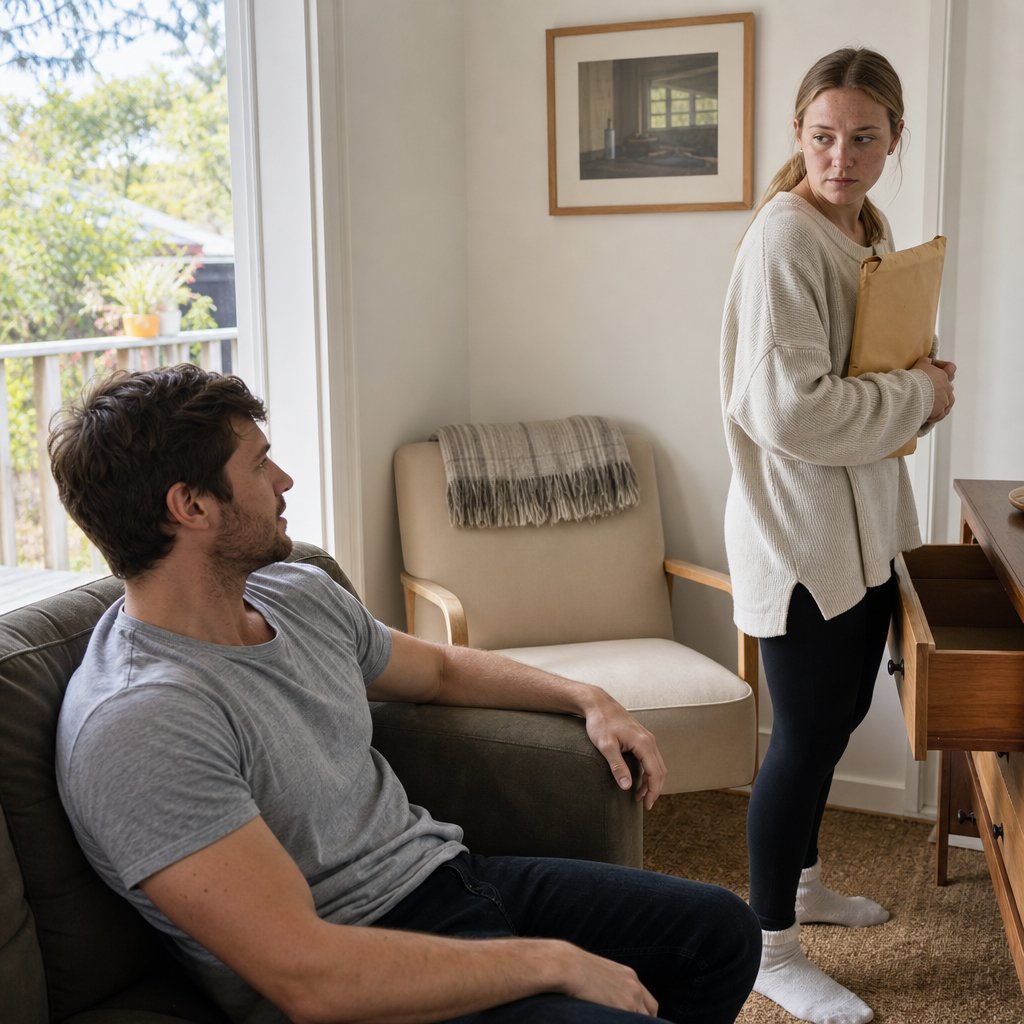
There was Tessa—twenty-six, honey-blonde hair pulled into a neat low ponytail, freckles like she’d painted them on—curled into my living room chair with her socked feet tucked under her like she paid the mortgage. Miles lounged on the couch across from her, broad-shouldered in a soft gray T-shirt, his dark hair damp like he’d just showered. The camera angle was slightly crooked, like someone had nudged the frame and never fixed it, and the whole room looked… too lived-in. Too comfortable.
“This place finally feels like home,” Tessa said, rubbing her palm over the chair arm the way I’d done a thousand times when I was thinking.
Miles didn’t even hesitate. He just laughed—low, easy, intimate. “It is. She’s never here anyway.”
I tasted copper, like I’d bitten my tongue. My fingers dug into the edge of the kitchen counter until the quartz bit back.
Tessa stood, smoothing her leggings like she was about to host a dinner party, and walked straight to Miles’s desk. Not the kid’s art station. Not the mail pile. His desk. She reached under the right-hand drawer like she knew exactly where the catch stuck, then slid it open with a tiny, practiced tug.
She pulled out a thick envelope with my name written across the front in Miles’s handwriting, and her smile didn’t reach her eyes as she turned it over.
Then she tucked it against her chest and glanced toward the hallway like she was listening for someone—like she expected me to walk in.
The Keys That Weren’t Mine
It hadn’t started with something big. It started with my mug.
I came back from a three-day work trip and reached for the chipped navy mug I’d used every morning since before Miles and I were married. It wasn’t in its usual spot. It was shoved behind a row of matching white mugs we didn’t even own last month, like my history had been politely moved out of frame.
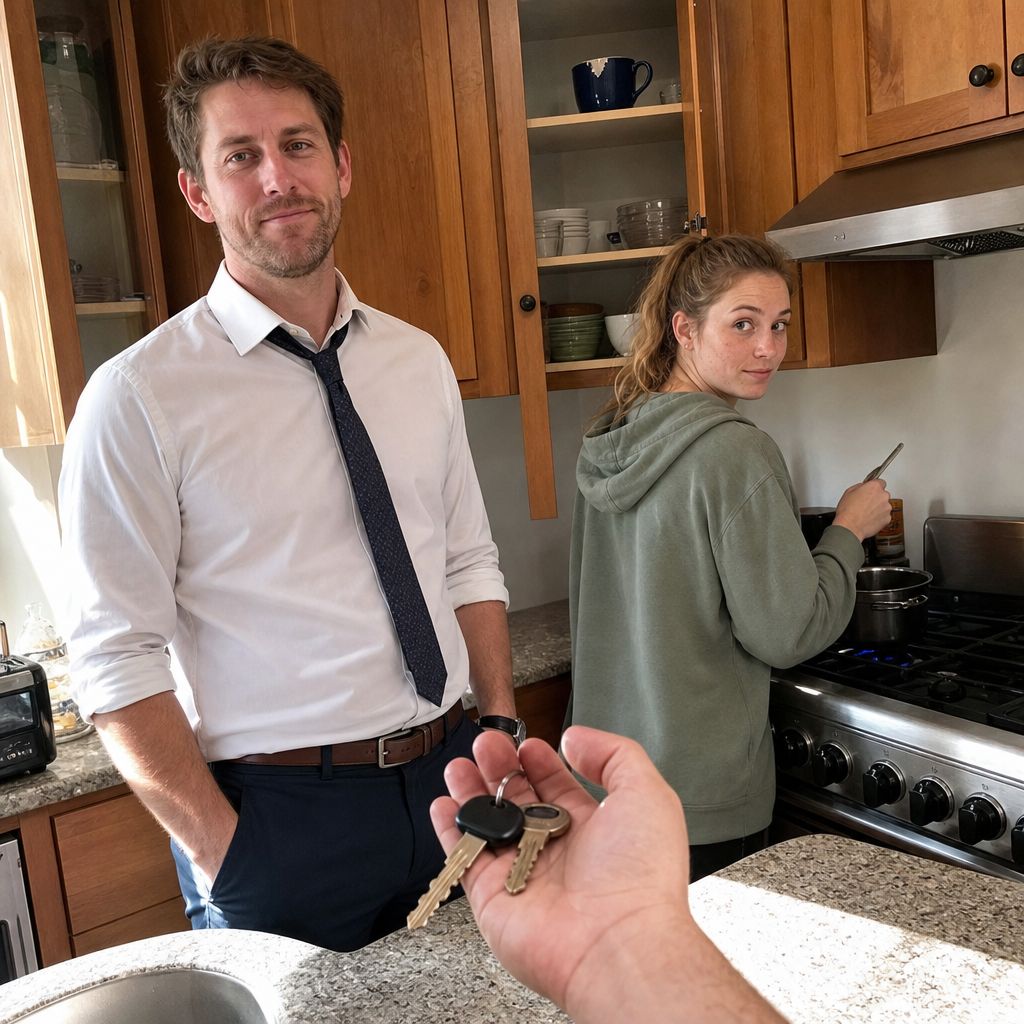
The coffee tasted wrong, too—thin and weirdly sweet. I flipped the bag over and my chest tightened. Decaf. We never bought decaf. I stared at it like it had insulted me personally, and Tessa—standing at the stove in a sage-green hoodie and joggers, hair still damp—chirped, “Oh, I switched it! Miles said he’s been sleeping better.”
Miles walked in, looping his tie, and kissed my cheek like everything was normal. “Babe, don’t be dramatic,” he said, smiling like I was cute when I was annoyed. “It’s coffee.”
I wanted to laugh it off. I almost did. But then I saw them: two keys on the counter beside the fruit bowl. Not on our ring. Not on my ring. Just… loose, like someone had come and gone.
I picked them up. They were warm, like they’d been in a pocket. One was a Yale key. The other had a tiny black fob attached—new, glossy, unfamiliar.
“Whose are these?” I asked, and Miles’s smile didn’t move, but his eyes did.
Flowers In My Wrong Colors

Two weeks later, I was in a hotel room that smelled like industrial lemon cleaner and stale air-conditioning, trying to convince myself I was paranoid.
Miles propped the phone somewhere and angled it so I could see the kitchen behind him. Our daughter, Ivy—six, with a dark bob and serious eyes—climbed onto a stool and waved at me with sticky fingers. “Hi, Daddy’s busy,” she announced in a sing-song voice that made my skin prickle. “But it’s okay because we have rules.”
“Rules?” I repeated, forcing my voice to stay light.
“Yep,” Ivy said, and then she did something that made my throat go tight: she lowered her chin and copied my exact cadence. My exact tone. “We don’t interrupt grown-ups. We ask nicely. We don’t make Mommy stressed.”
Miles chuckled like it was adorable. “She’s just repeating what Tessa’s been working on with her.”
I watched his face for any sign he realized how wrong that sounded. He didn’t. He just shifted the phone slightly, and my eyes snagged on the dining table.
My vase—my heavy, clear one I’d picked out myself—was full of fresh flowers. Loud coral and bright yellow. Colors I hated. The kind of cheerful bouquet you send to someone you don’t know well.
“Oh,” I said, my mouth suddenly dry. “Who sent those?”
Miles hesitated just long enough to feel it, and Ivy, still in my voice, whispered, “It’s for our house.”
She Didn’t Clean—She Nested
I landed on a Thursday night and walked into my own house like I was breaking into someone else’s routine.
The first punch was the pantry. Every shelf had crisp little labels in thick black marker—snacks, pasta, breakfast—in a rounded handwriting I didn’t recognize. It wasn’t organization. It was ownership. The air smelled like cinnamon cleaner, the kind that tries too hard to feel “homey.”
Then I saw the throw blanket.
My blanket—soft charcoal knit, the one I’d dragged through three apartments and one miserable winter—was gone from the couch. In its place was a fluffy cream throw with little tassels, the kind you buy to look good in photos. I stood there with my suitcase still in my hand, just staring, like if I stared long enough my blanket would reappear out of sheer respect.
I went upstairs, trying to tell myself it was harmless. But my skincare drawer was worse. My serums and razors were lined up by height like little soldiers, except half of them weren’t mine. A rose-gold facial roller. A bottle of expensive-looking body oil. A hair clip with fake pearls. Everything arranged with a stranger’s logic, like someone had studied my life and decided to improve it.
I heard Ivy giggle down the hall and Tessa’s voice—bright, confident—say, “No, honey, Mommy likes it this way now.”
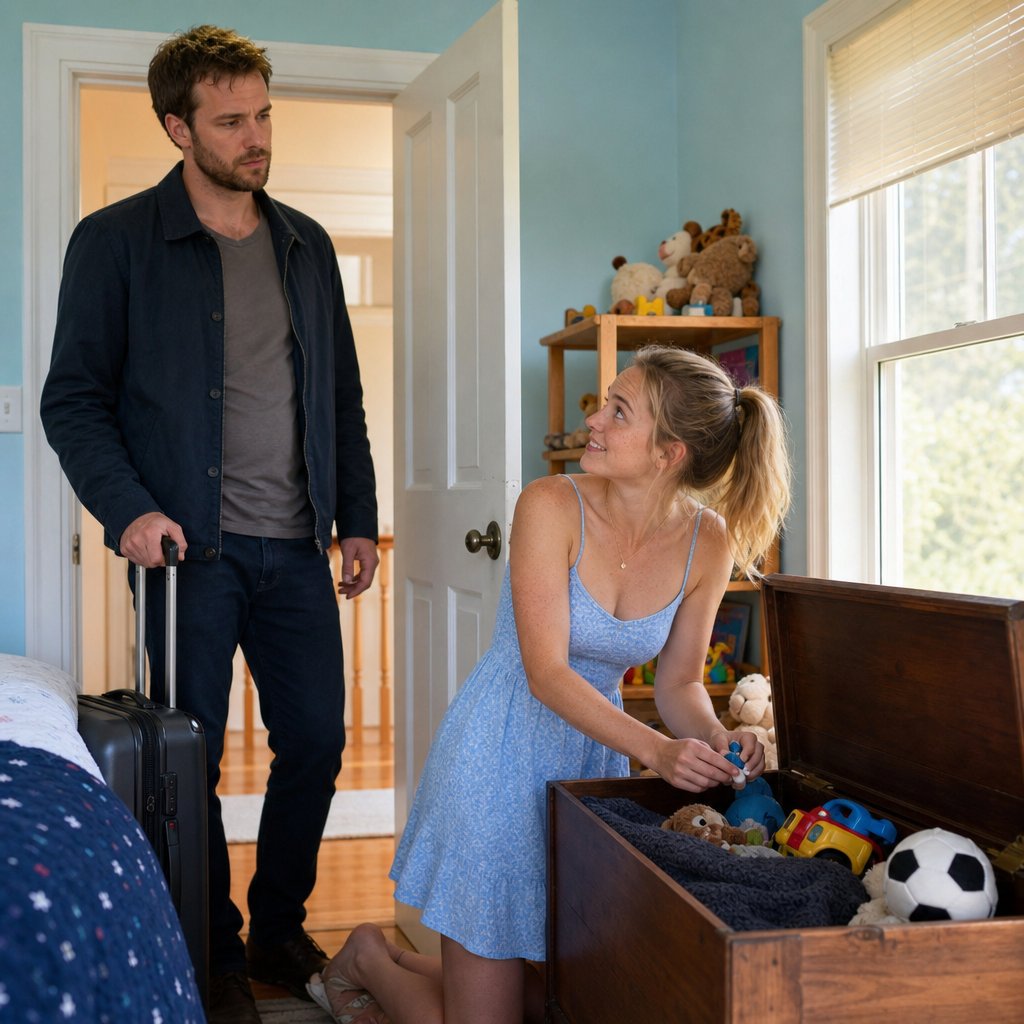
I walked into Ivy’s room and froze. Tessa was kneeling by the toy chest in a pale blue sundress, hair in that neat ponytail, and she looked up at me like she’d been waiting.
“Welcome home,” she said, smiling too wide, and I realized my charcoal blanket was folded neatly at the bottom of Ivy’s toy chest like it had been demoted to clutter.
Lavender Liners And New Scripts
The master bathroom trash was the kind of detail you only notice when something is already wrong.
I went in the next morning barefoot, still half-asleep, and the first thing that hit me was the smell—lavender, sharp and expensive, like a spa trying to seduce you into forgiving it. I looked down and saw the trash can lined with a thick lavender bag, perfectly fitted, the drawstring tied in a neat bow.
We didn’t buy scented liners. I hated scented liners. Miles knew that. I’d complained about them in three different apartments like it was a personality trait.
I pulled the bag open and stared at what was inside: a crumpled receipt for a bougie home store, a cardboard sleeve from a latte that wasn’t mine, and a single long blonde hair stuck to the sticky edge like a signature.
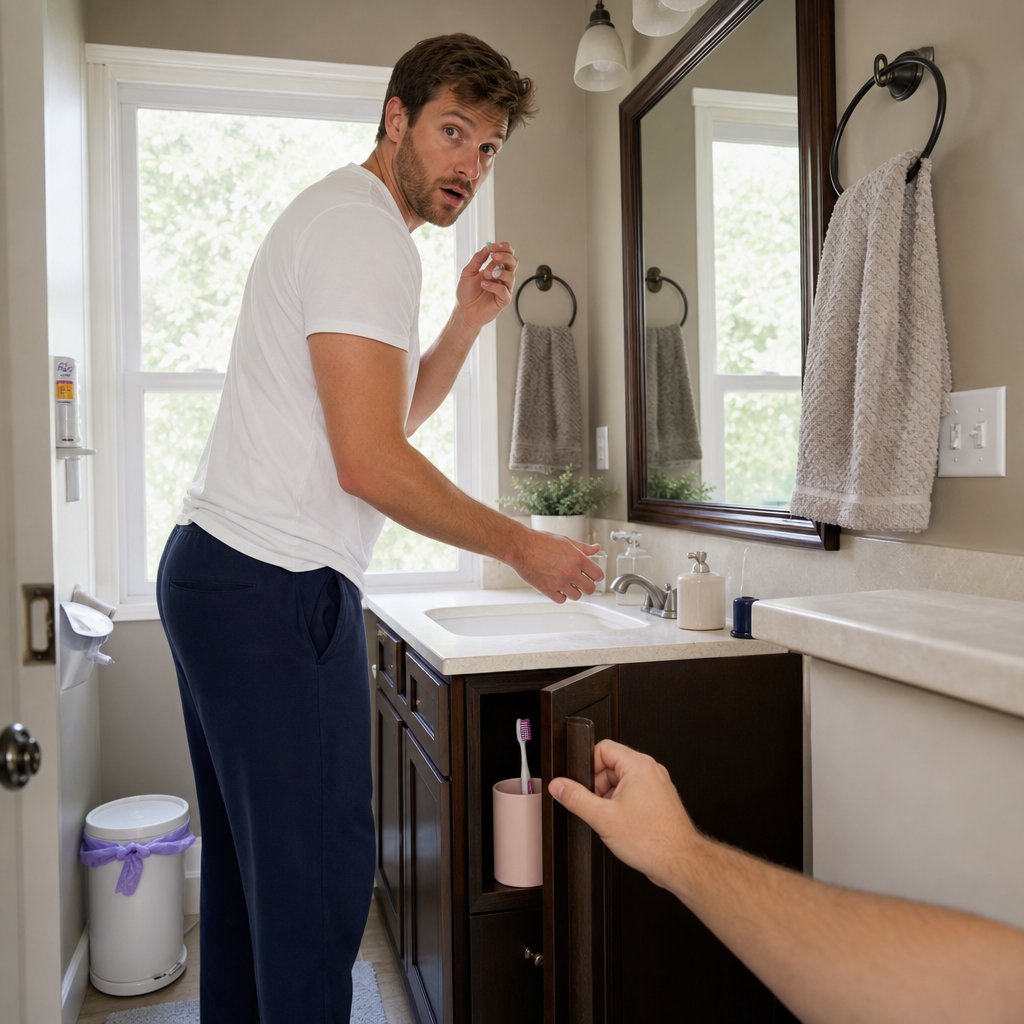
When Miles walked in—freshly shaved, wearing navy joggers and a white T-shirt—he didn’t even look at the trash. He looked at me, like he was checking my mood.
“We switched a few things,” he said quickly. “It’s just more peaceful this way.”
More peaceful. The phrase landed with a thud in my chest because it didn’t sound like him. It sounded like something he’d rehearsed in the car.
“Who is ‘we’?” I asked, keeping my voice low because Ivy was downstairs.
Miles sighed, like I was exhausting. “Don’t start. Tessa’s been helping. You’re always gone and she—” He cut himself off, jaw tightening.
He reached past me for his toothbrush and I saw, behind it, a second toothbrush in a pale pink holder tucked neatly in the back corner of the sink cabinet. Not a kid’s. Not a travel one. A full-size adult toothbrush, bristles still stiff and new.
I turned to him slowly, and he froze with toothpaste on his finger.
When She Said “Our”
Tessa used to text like an employee. Bullet points. Drop-off times. “Ivy ate half her sandwich.”
Then, sometime after the decaf and the labels and the lavender trash bags, her tone shifted into something that made my skin crawl. Not flirty—worse. Domestic. Possessive. Like she was reporting to me the way a spouse does when you’re out late.
“Don’t worry, I handled dinner,” she’d say when I was stuck at the office. “Miles likes the chicken cut thin.”
Or, “I got him that dessert he loves.” Like she was collecting little facts about my husband the way you collect ammunition.
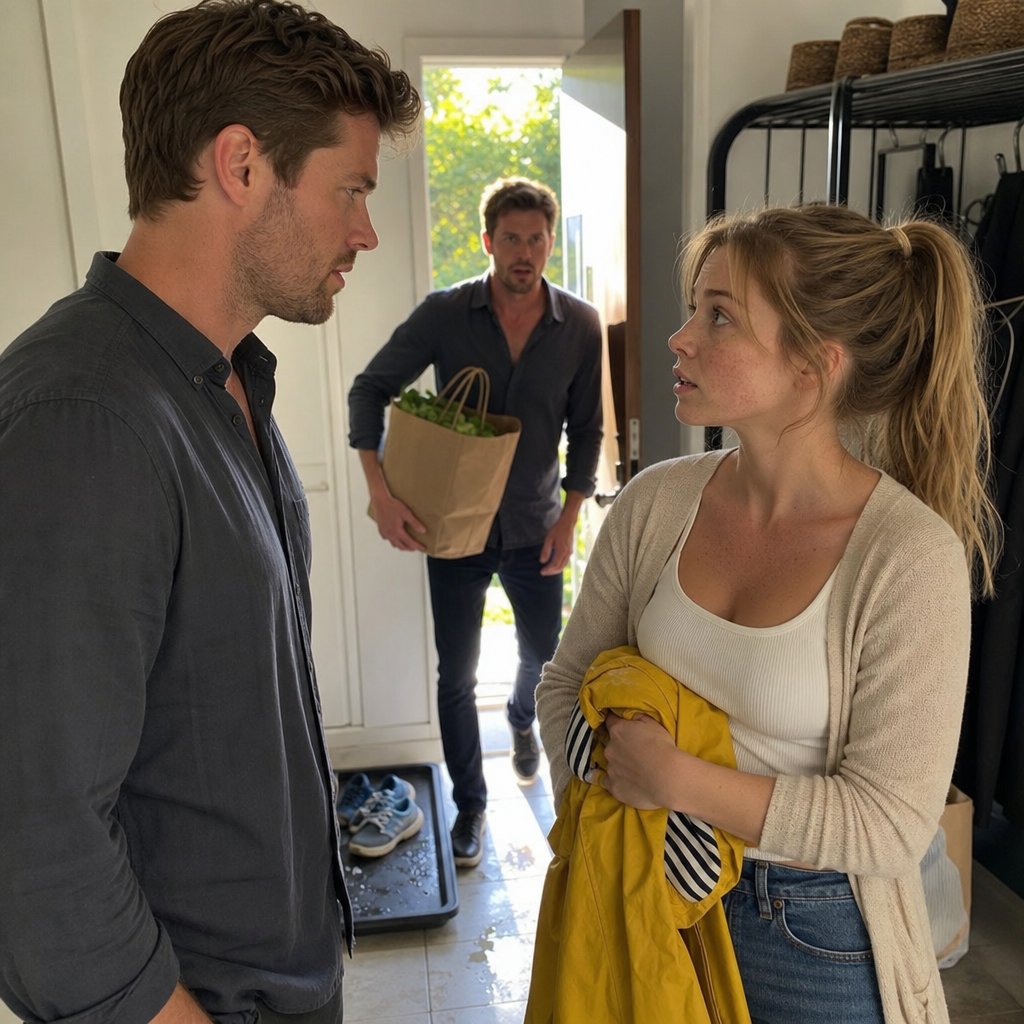
I tried to address it without sounding insane. We were in the mudroom, the air smelling like wet sneakers and lemon detergent. Tessa stood by the bench in high-waisted jeans and a white ribbed tank under a cardigan, holding Ivy’s tiny raincoat like it was a baby. Her freckles were bright, her smile fixed.
“You don’t need to ‘handle’ dinner,” I said, carefully. “Just… let me know what Ivy ate.”
Tessa blinked, then laughed softly like I’d made a joke. “Of course. I just meant with our schedule, it’s easier if I—”
Our schedule.
The words hung there, slick and obvious. She realized it the same second I did. Her eyes widened, then she recovered so fast it was almost impressive.
“I mean,” she rushed, smile too bright, “the house schedule. Yours. Obviously.”
Behind her, the inner garage door clicked, and Miles walked in carrying a grocery bag like he’d been summoned. He looked from Tessa to me, and I saw panic flash across his face before he smoothed it into a grin.
“Everything okay?” he asked, too casually.
Tessa’s fingers tightened around Ivy’s raincoat, knuckles whitening, and she didn’t take her eyes off me.
The Receipt She Forgot
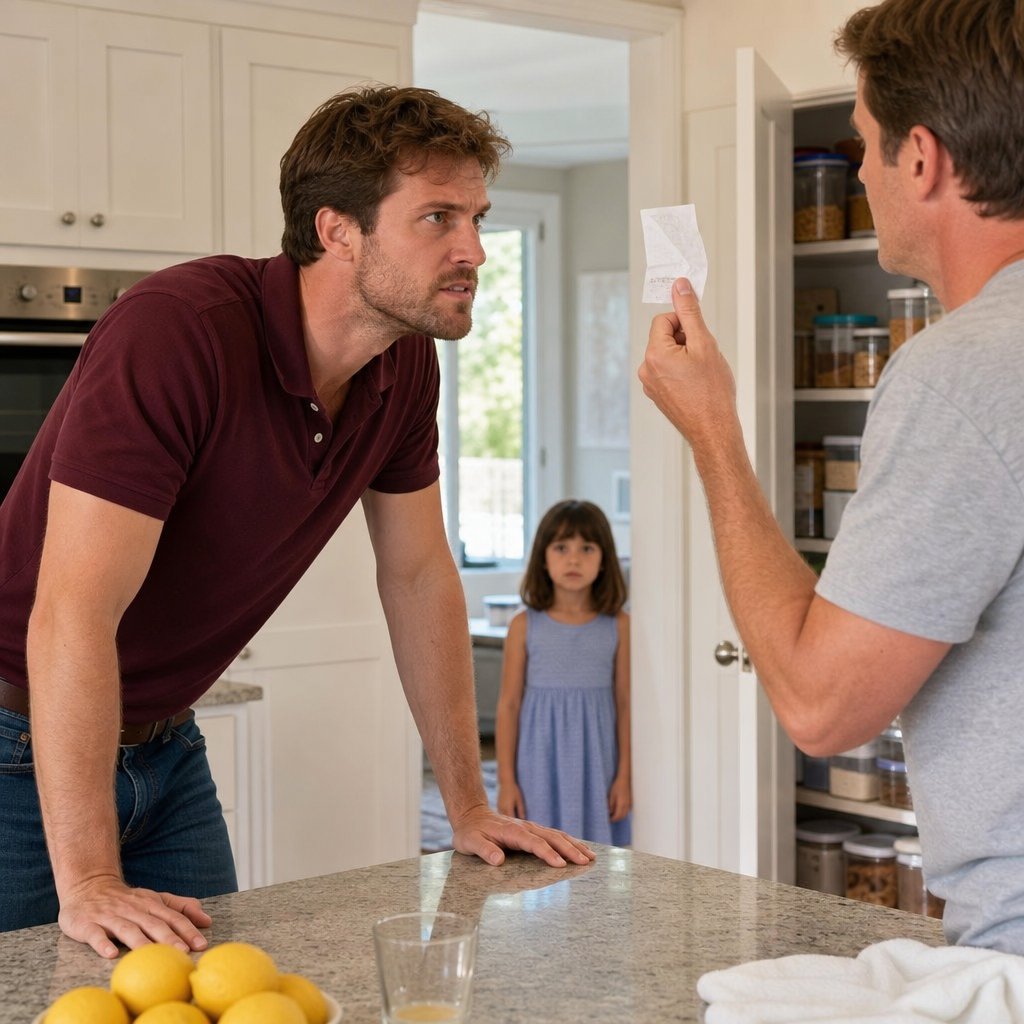
I found the receipt by accident, which is how the universe likes to humiliate you.
I was unpacking my carry-on at the kitchen island, the air smelling like onions from last night’s dinner, when a folded slip of paper slid out of the side pocket—stuck to a pack of gum with melted adhesive. I didn’t recognize the store name at first. Then I saw the date.
It was from my trip. A night I’d been eating room-service salad alone in a hotel bed, answering emails until my eyes burned.
The receipt listed steak. A bottle of red wine. And a dessert I’d never order—Miles’s favorite, the one he claimed was “too rich” so he only had it “once in a while.”
My hands went cold. Not sad-cold. Rage-cold.
When Miles came in, he was in a wrinkled maroon polo and jeans, keys clinking as he tossed them into the bowl like he was the king of this place. I held the receipt up between two fingers.
“Explain,” I said. One word. No room for him to wiggle.
He frowned like he genuinely didn’t understand why I was upset. “That? That was for the kids,” he said too quickly. “Tessa picked it up. We were all starving.”
I stared at him until the silence got loud. “The kids ate steak and red wine?”
His face flushed. He reached for the receipt like he could erase it by touching it. “Don’t do this,” he snapped, voice sharp enough to make Ivy pause in the doorway.
And then he did something that made my pulse spike—he stepped closer and lowered his voice like a threat. “You’re not here. What do you want from me?”
Behind him, the pantry door was slightly open, and I could see one of Tessa’s neat labels fluttering as if the house itself had just inhaled.
The Mail Pile She Controlled
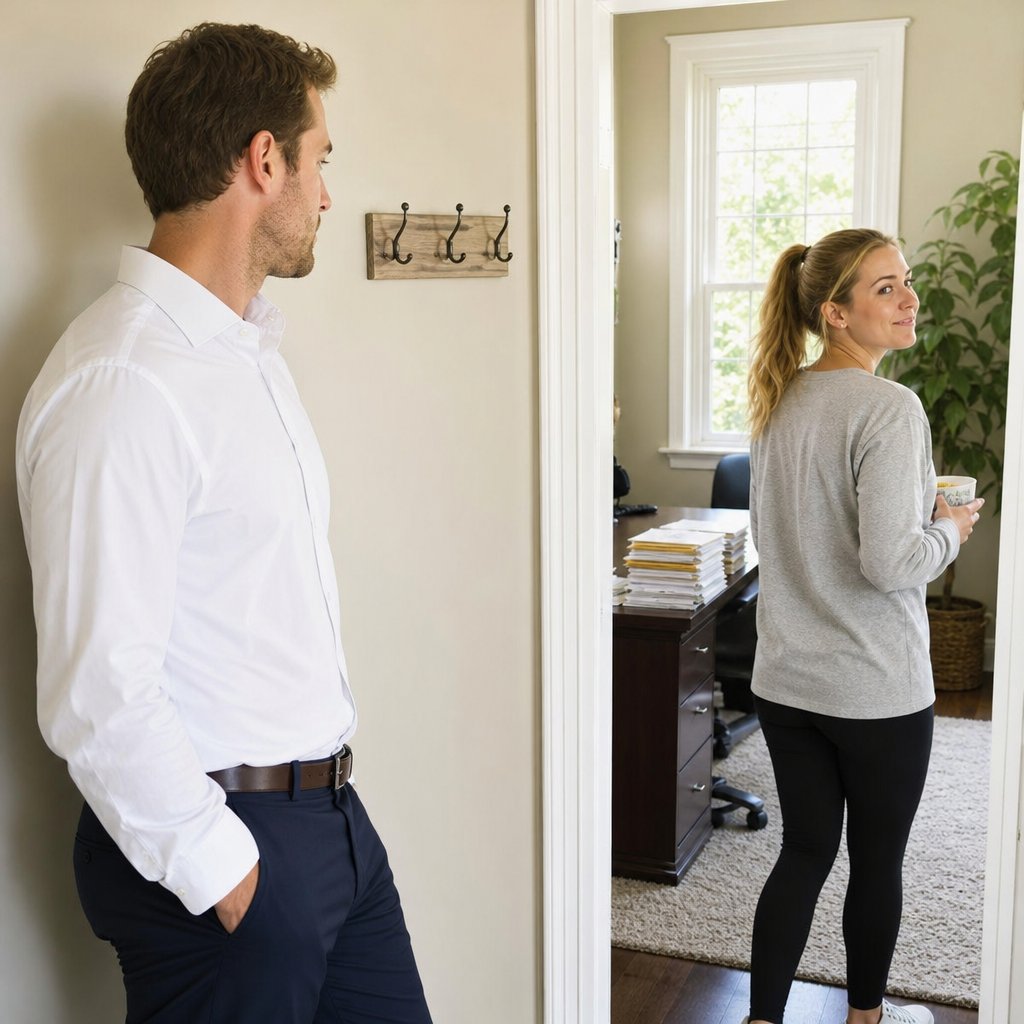
After that, Tessa didn’t just act comfortable. She started acting like a gatekeeper.
When I came home from work, the mail wouldn’t be on the entry table anymore. It was stacked in a neat pile on Miles’s desk, squared like she’d measured it. Bills, school flyers, invitations—anything with my name on it—sorted into a little tower that I had to physically walk into his space to access.
“Oh,” Tessa would say, breezy, like she was doing me a favor. “I put it where Miles can keep track of it. He’s better with that stuff.”
I was standing in the hallway one evening, still in my suit pants, the smell of rain clinging to my coat, when my sister-in-law, Jenna—petite, glossy black hair, always perfectly lined eyes—called on speaker. Her voice floated through the house like gossip perfume.
“Honestly,” Jenna said, laughing, “Tessa is the glue. I don’t know how you two managed before her.”
Miles laughed back, and it wasn’t the polite laugh you give family. It was the laugh you give when you agree.
I watched Tessa in the doorway to the living room, wearing a soft gray sweatshirt and black leggings, holding Ivy’s snack bowl like a hostess. She heard Jenna’s comment and didn’t even pretend to be surprised. She just tilted her head, satisfied, like someone had finally said the quiet part out loud.
“Tell her thank you,” Miles called, not looking at me.
Tessa’s eyes flicked to mine, and she mouthed something without sound—something that looked an awful lot like, see?
Then she turned and walked deeper into the house with Ivy, and I realized I didn’t know where my own mail key even was anymore.
The Joke I Never Heard
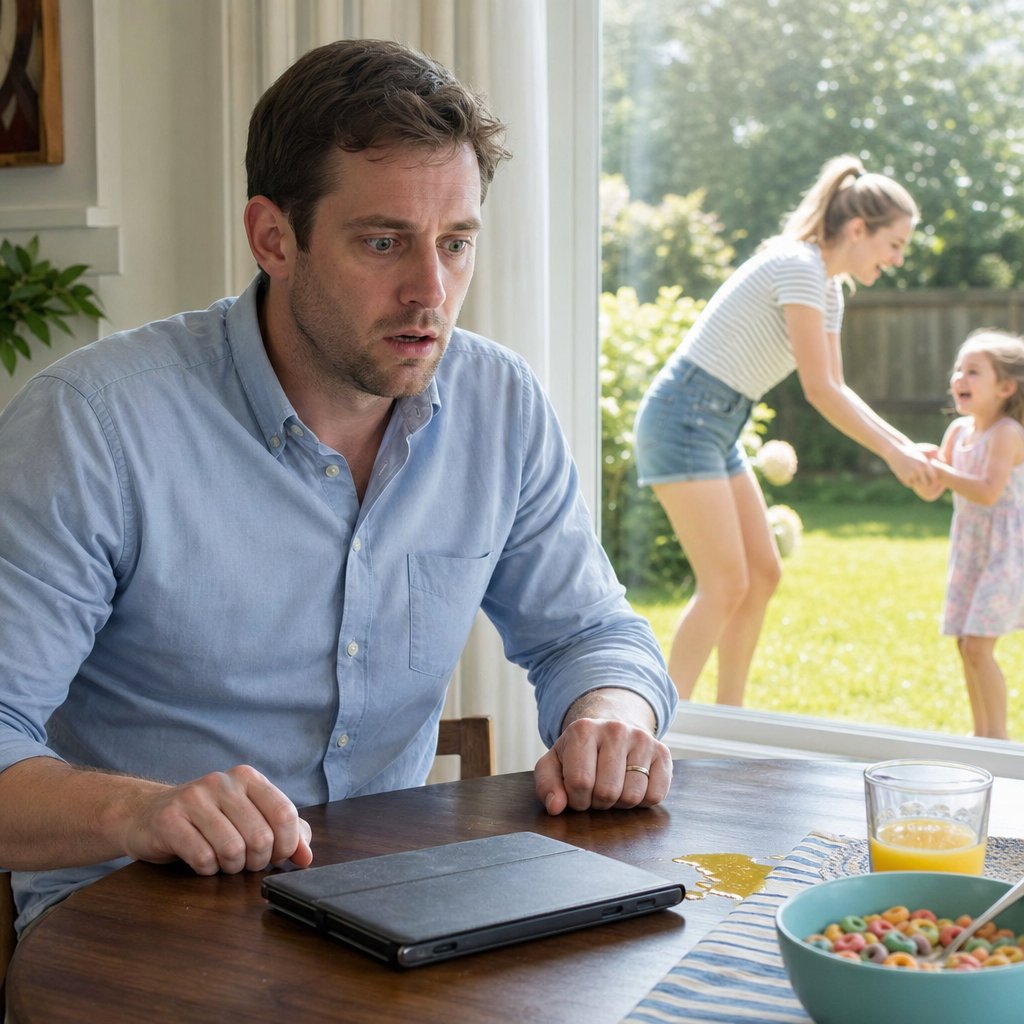
Ivy told it like it was the funniest thing in the world.
We were at the breakfast table, sunlight hitting the sticky sheen of spilled orange juice, and she giggled so hard she snorted. “Daddy says when Mommy’s gone, the house runs on Tessa Time,” she chirped, proud like she’d been handed a secret handshake.
I went still. “Daddy says what?”
Ivy slapped her palm over her mouth, eyes widening like she’d messed up. The sound of her little breath hitched made my heart crack in a new place. Someone had taught her what to hide.
Miles walked in, brown hair still messy, stubble darker than usual, and snatched his coffee like he was late for a meeting. “What are you two talking about?” he asked, too cheerful.
I looked at him and said, “Nothing,” because Ivy was watching me like a hawk and I wasn’t going to make her the battleground.
But the joke sat in my chest like a stone. I knew that line didn’t come from nowhere. It came from repetition. From a group of people laughing together while I wasn’t there.
Later, I went to grab our shared iPad from the living room side table to check Ivy’s school calendar—the one we always kept synced. The device was there, face-down in its case, exactly where I’d left it.
I opened it and my stomach dropped. Logged out.
Not a glitch. Not an update. A clean sign-in screen like someone had wiped me from the family’s digital life.
I tried the password we’d used for years. Wrong.
I tried the one Miles insisted was “more secure.” Wrong.
My hands shook as I looked up, and through the window I saw Tessa in the backyard with Ivy, wearing a striped T-shirt and denim shorts, laughing like she belonged in the frame.
I realized, with a clarity that felt like nausea, that there was a second group chat—and the password change was the door slamming in my face.
The Code She Knew
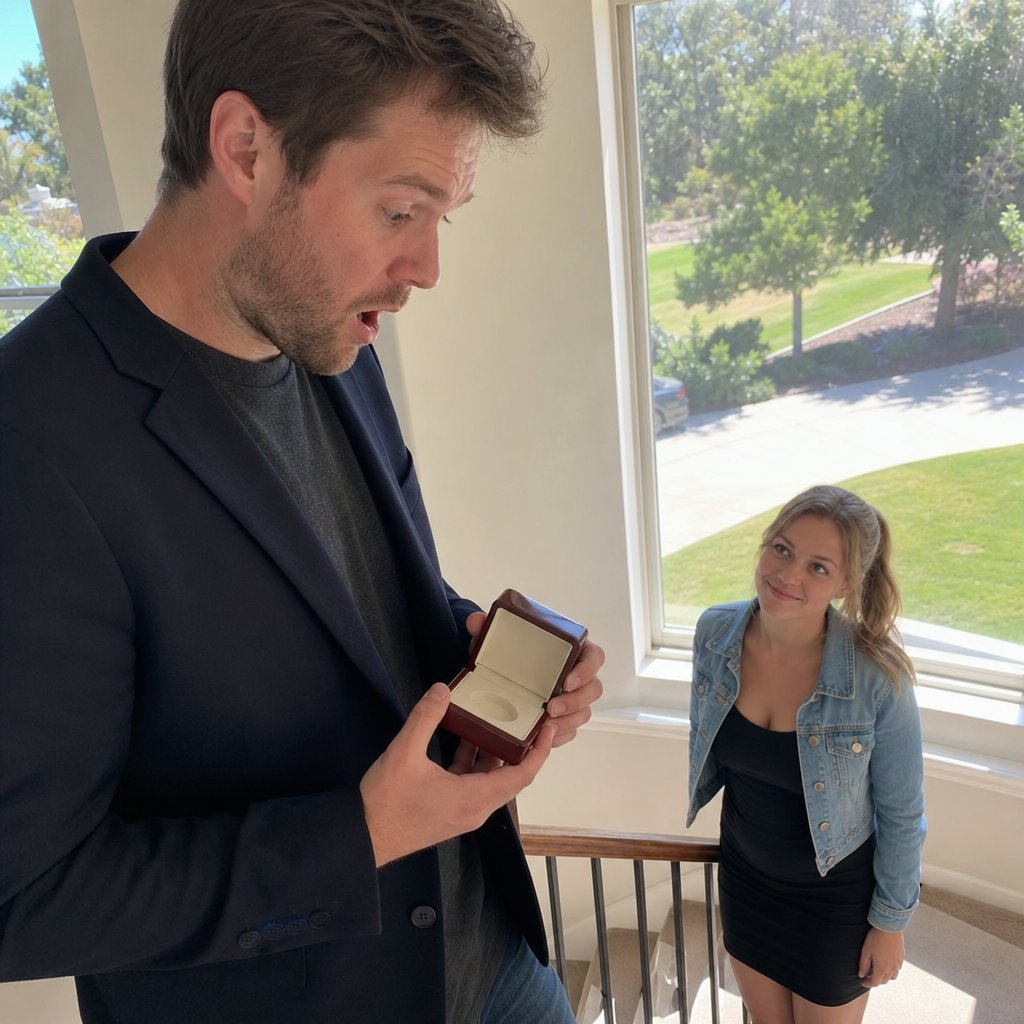
The new keypad code showed up like a bruise you couldn’t explain.
I came home and heard the front door beep in a pattern I didn’t recognize—faster, more confident. When I stepped into the entryway, I saw Tessa already inside, slipping her shoes off like she’d just returned from errands in a house that wasn’t hers. She wore a fitted black dress and a light denim jacket, hair in that neat ponytail, cheeks flushed like she’d been out in the sun.
“Oh,” she said, too casual. “The code’s different now.”
Miles appeared behind her, holding his laptop bag, and didn’t meet my eyes. “Yeah,” he said. “For a contractor. It’s temporary.”
“What contractor?” I asked.
“Just—someone,” Miles mumbled, already walking toward the kitchen like distance could solve it.
I watched Tessa punch the code again, just to lock it behind us, her fingers moving without hesitation. No pause to think. No asking. Like it was muscle memory.
The house smelled faintly of lavender again, and my pulse started hammering in my ears. I went upstairs, not trusting my voice, and opened my jewelry box out of pure instinct—like my body knew before my brain did.
The lid was slightly ajar.
Inside, my watches were shifted. My rings weren’t in their little velvet slots. And the small deep-green velvet pouch—my grandmother’s, the one with the faded drawstring—was gone.
I stood there staring at the empty space, hearing Tessa’s laugh drift up the stairs, and something in me went cold and sharp.
I walked back to the doorway with the jewelry box in my hands, and at the bottom of the stairs, Tessa looked up at me and smiled like she already knew what I was about to accuse her of.
My Perfume On Her Skin
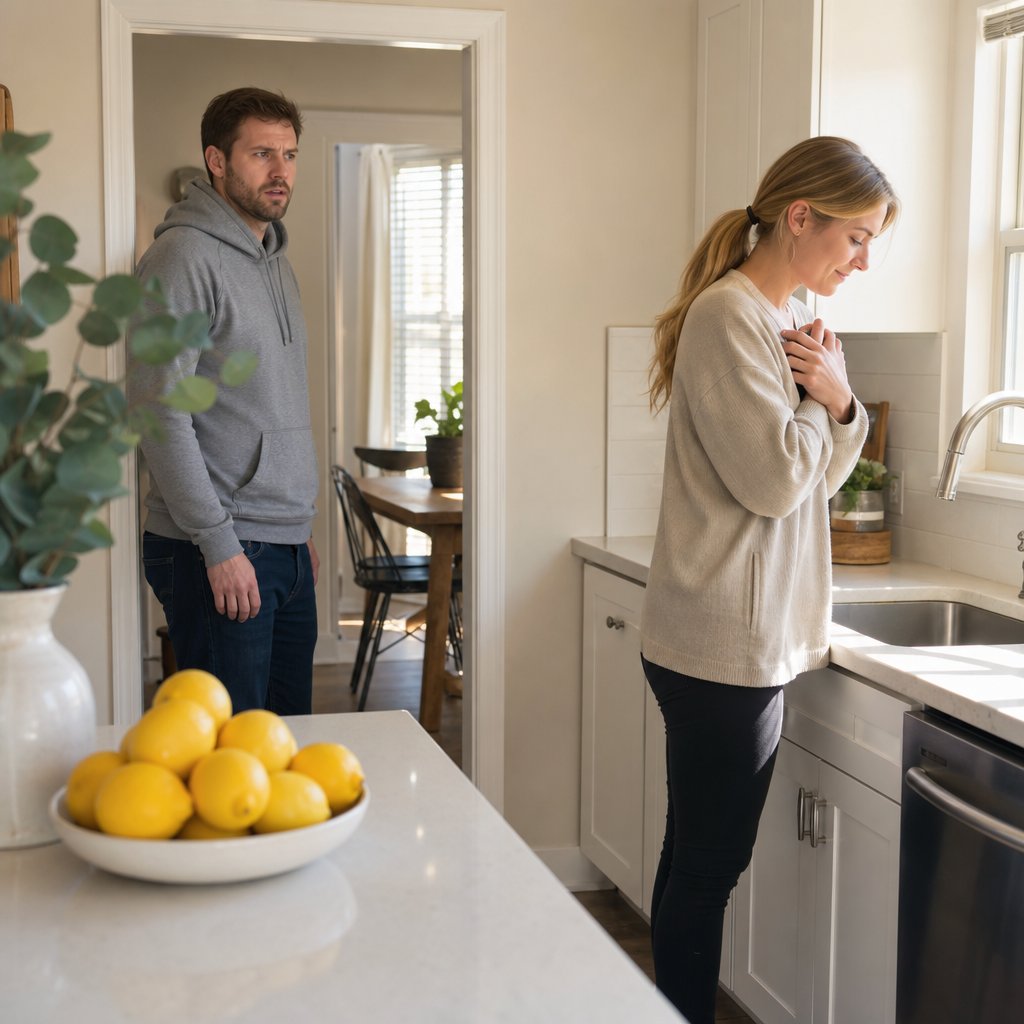
My grandmother’s velvet pouch is missing, and Tessa smiles up at me like she’s ready for the accusation.
I didn’t even get the words out before something else hit me—sharp and familiar. My perfume. The one Miles bought me in Paris because he said it “smelled like home.” It was clinging to Tessa in the hallway like a fingerprint. She leaned in to scoop my son off the floor, and the scent bloomed off her neck and hair, sweet and expensive and not hers.
“New shampoo?” I asked, too lightly.
“Oh,” she said, blinking those wide, innocent eyes. “Maybe it’s from the laundry? I folded your things.”
Folded my things. Like she had any right to be in my drawer. Like she’d been close enough to my skin to borrow my smell.
I walked past her into the kitchen and froze. The counters were staged—my ceramic bowl of lemons angled just so, the vase of eucalyptus moved to the island like a magazine spread. Tessa stood at the sink with her phone, holding it up casually, her elbow tucked in like she’d done it a hundred times. She wasn’t filming the kids. She wasn’t filming a craft.
She was framing my kitchen like it belonged to her.
And when she turned, she didn’t flinch. She just lowered the phone to her chest and smiled like I’d interrupted her in her own house.
“I love how cozy it is in here,” she said softly. “It’s… our little space.”
Our.
I watched her thumb hover over her screen, ready to post whatever she’d just captured, and I realized she wasn’t hiding anymore—she was daring me to say something.
The Ring Alert At Night
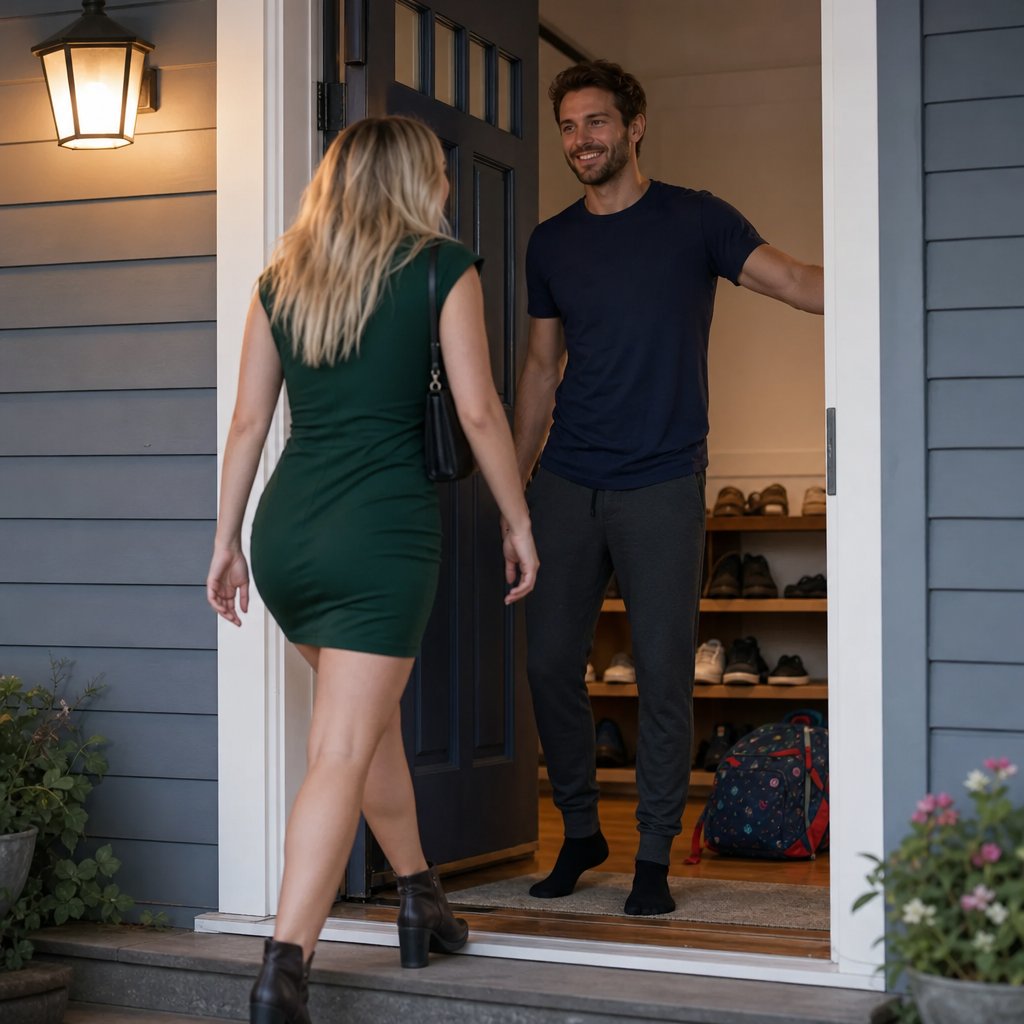
Two nights later, my phone buzzed at 8:30 p.m. with a Ring alert, and my stomach dropped before I even opened it.
Tessa walked up our front path like she was headed to a date, not a bedtime routine. Her hair was down in loose waves. She wore a fitted dark green dress and ankle boots—no diaper bag, no messy ponytail, no “I’m here to chase toddlers” uniform. Just… polished. Intentional.
I called Miles immediately. Straight to voicemail.
Again. Voicemail.
The air in my hotel room felt suddenly stale, like the vents had quit. I tried to picture my kids asleep upstairs while she slipped into my entryway wearing perfume that didn’t belong to her and a smile she saved for adults.
My screen lit again. A text from Tessa: “Kids are asleep. All good here.”
All good here.
Not “Hi!” Not “Just finished bedtime!” Not even a reason why she was showing up at night dressed like she was meeting someone who mattered. Just a neat little status update, as if she worked the front desk of my life.
I stared at the words until they blurred, then I pulled up the camera view again—just in time to see the front door open from inside.
Miles didn’t step out onto the porch. He didn’t look surprised to see her. He held the door wide like he’d been waiting, his hand resting on the edge of the frame in a way that felt… familiar.
And Tessa walked in without hesitating, like she knew exactly where the lock caught.
The door swung shut behind her, and the feed cut to the next angle—too late to show what happened in the dark hallway.
The Bed That Was Warm
I came home early three days later without warning anyone. No cute “surprise!” text. No “What should I pick up?” call. I just walked in with my suitcase handle biting into my palm and my heart hammering like I was about to catch a thief.
The house smelled like lavender cleaner and someone else’s lotion. Too fresh. Too curated.
I climbed the stairs and pushed open the guest room door—and stopped. The bed wasn’t just unmade. It was slept-in. The sheets were rumpled in that heavy, human way, the comforter pulled down like someone had gotten up recently and didn’t bother to fix it. A single long blonde hair clung to the pillowcase like a taunt.
My throat tightened so hard I tasted metal.
Downstairs, Tessa turned from the counter with a bright, practiced smile. “Oh! You’re back early.”
Miles walked in behind her, adjusting his watch like he’d been interrupted mid-sentence.
“We missed you,” he said, but it landed wrong—like a line he’d used because it sounded right.
Tessa laughed softly and looked at him. “M, do you want me to—” She cut herself off when she saw my face.
M. Like they had a little private nickname that didn’t include me.
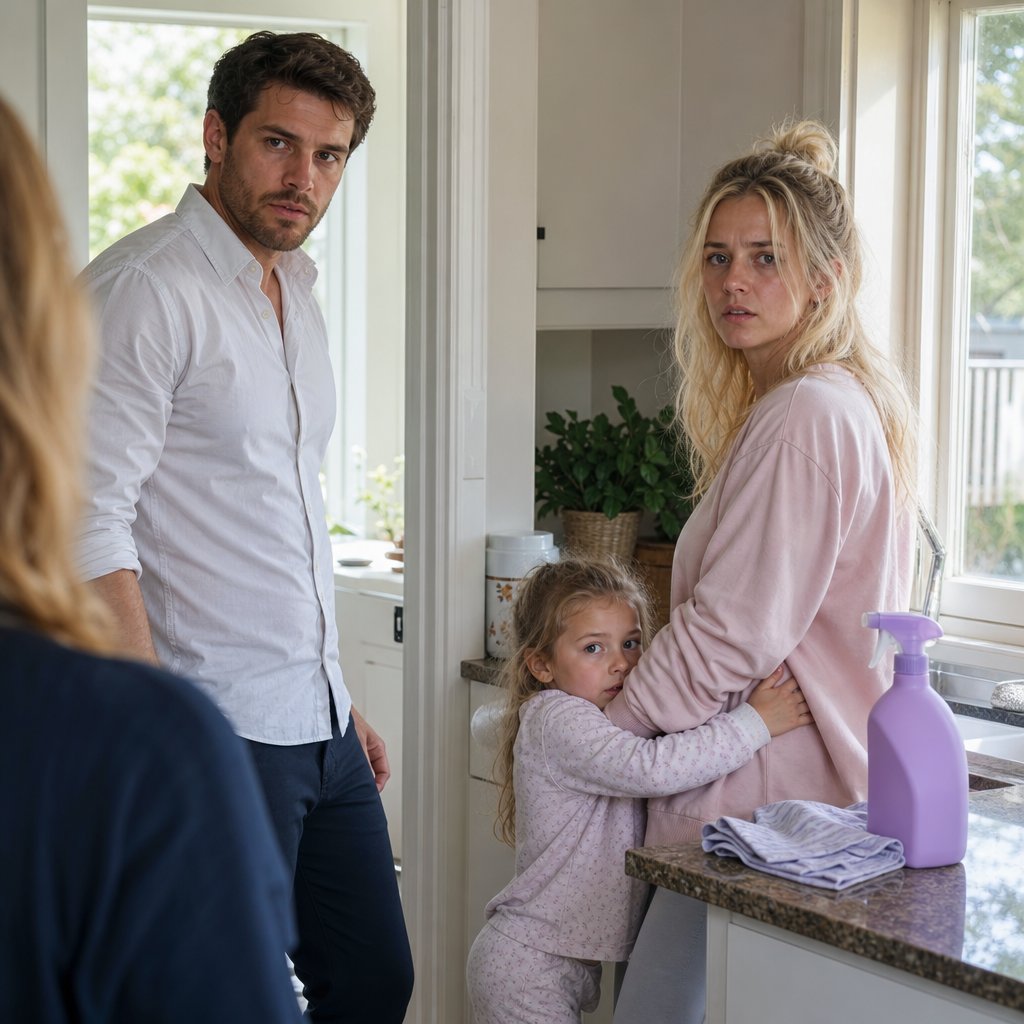
Before I could speak, my daughter padded into the kitchen in her pajamas, rubbing her eyes. She went straight to Tessa and wrapped her arms around her waist like it was muscle memory.
Then she looked up at me, confused and a little annoyed, and said, “Can you stop traveling so much like Tessa says?”
The room went perfectly quiet. Even the refrigerator hum sounded loud.
Tessa’s smile didn’t disappear. It just… sharpened, like she was waiting to see what I’d do with that sentence.
The Note On The Fridge
I tried to tell myself it was just messy boundaries. I tried to swallow it like bitter medicine. But the next morning, I reached for my coffee and found a sticky note on the fridge in Tessa’s neat handwriting.
“Order more of Miles’s creamer.”
Not “the kids’ snacks.” Not “milk.” Miles’s creamer, like she was the one managing his mornings. Like she knew his preferences better than his wife did. The note sat there smugly under a magnet, bright and domestic, like a flag planted in my kitchen.
At breakfast, Miles slid into his chair and said, too casually, “We should think about selling your grandmother’s dining table.”
I blinked. “Excuse me?”
He shrugged, buttering toast like he wasn’t talking about an heirloom that had hosted every holiday of my childhood. “It’s big. Heavy. We could get something more modern. Tessa said—”
He stopped himself, but it was too late. Tessa said. Of course she did.
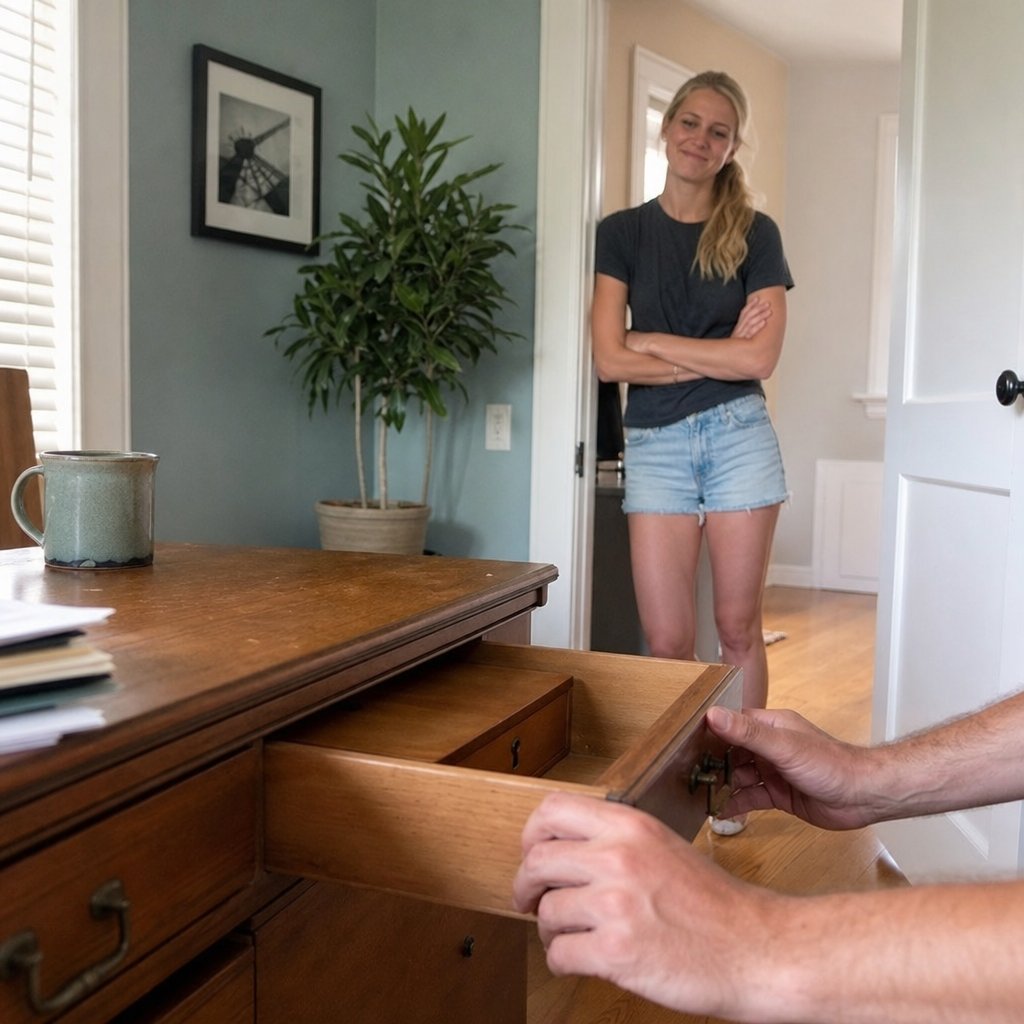
My hands went cold. I set my mug down and watched him chew, watched the way he wouldn’t look at me directly. Then I walked into his office under the excuse of grabbing a charger and opened the top drawer of his desk like I’d done a hundred times.
Except there was a drawer I’d never seen before, tucked underneath, flush with the wood like it had always been there. No handle. Just a small keyhole.
Locked.
I stared at it until my eyes burned. Miles’s desk. In my house. A locked place I couldn’t enter.
Behind me, the floorboard in the hallway creaked—slow, deliberate—like someone had stopped to listen.
The Package With My Initials
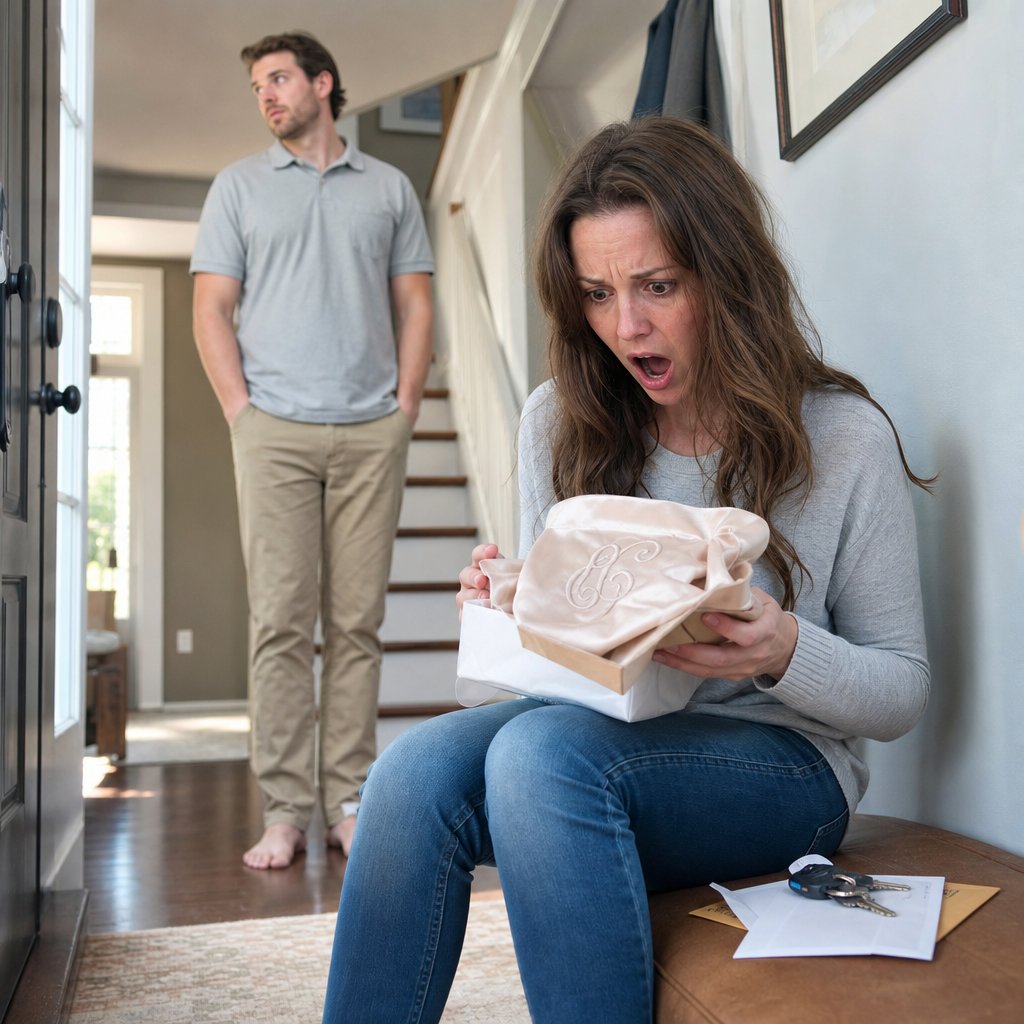
The mail came two days later, and I almost didn’t open it because I was still stuck on that locked drawer like a tongue worrying a sore tooth.
There was a small box on the porch addressed to Tessa at my address. Not unusual by itself—she’d ordered diapers before, a craft kit once. But this one was different. It felt too… personal. Too permanent.
I carried it into the kitchen and turned it over in my hands. The tape was cleanly cut, like someone had already checked it and resealed it. My skin prickled.
Inside was tissue paper and a pale fabric item folded carefully, expensive-looking. And on it—a monogram stitched in a looping style that made my stomach flip.
It looked like my initials.
Not exactly, but close enough that a stranger would assume it was mine. Close enough that it felt like identity theft with thread.
I didn’t even have time to process that before my phone rang. The school office. I answered with relief—finally, something normal.
“Hi,” the receptionist said, cheerful. “Just calling to confirm pickup for tomorrow. We have Tessa as the primary emergency contact.”
I went still. “You have who?”
There was a pause, papers rustling. “Tessa. And Mr. Carter. I don’t see you listed.”
I couldn’t speak for a second. My mouth opened and nothing came out, like my body refused to accept the sentence.
“Can you… read that back to me?” I managed.
“Sure,” she said, still light. “Tessa is primary. You’re not on the form.”
I stared at the monogram in my lap, my fingers digging into the fabric hard enough to crease it.
Someone had rewritten my family’s paperwork while I was packing suitcases.
The Message On Her Phone
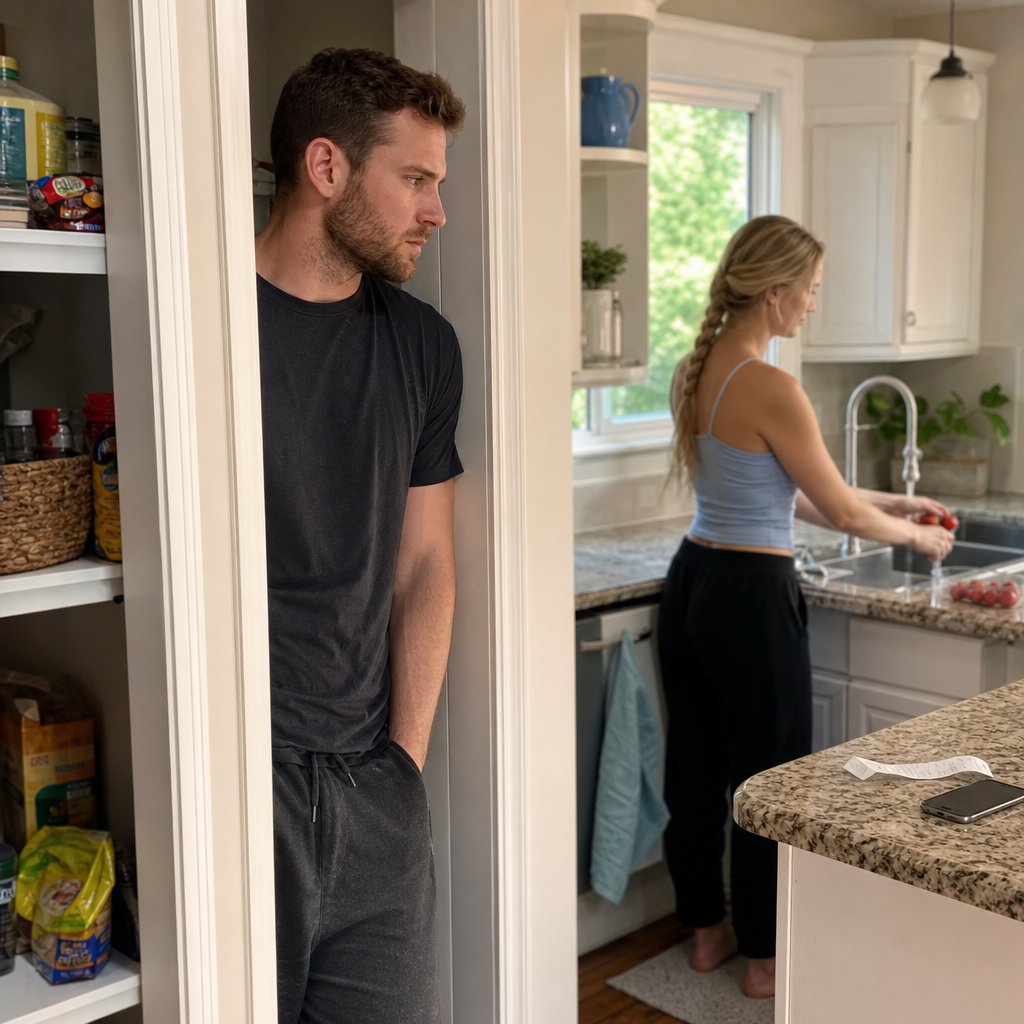
I stopped asking questions out loud after that. Every time I confronted, they got better at smiling through it. Better at making me sound dramatic. So I went quiet and started watching.
It happened on an ordinary afternoon—the kind that makes you feel stupid for suspecting anything. The dishwasher was running. The kids were in the backyard. Tessa set her phone on the counter face-up while she washed strawberries, humming like she didn’t have a care in the world.
Then the screen lit up with a message preview, bright as a flare in my peripheral vision.
“Can’t wait till she leaves again” followed by a heart.
My lungs forgot how to work. For a second I just stood there, staring at the glowing rectangle like it was a live wire. Tessa kept rinsing strawberries, water splashing, the red fruit turning glossy under her fingers.
She didn’t notice me. Or she pretended not to.
I didn’t pick up the phone. I didn’t snatch it. I didn’t give her the satisfaction of seeing me crack. I turned away slowly like I hadn’t seen anything and walked into the pantry where my hands could shake in private.
My nails dug crescents into my palm. My heart was so loud I thought she’d hear it through the walls.
That night, after everyone went to bed, I opened my notes app and started a list. Dates. Times. What she wore. When Miles “worked late.” When the guest bed looked used. When the school stopped emailing me.
I photographed receipts and tucked them into an envelope like I was building a case instead of a marriage.
Because I finally understood: they weren’t slipping up. They were counting on me to react.
And I was done giving them practice.
The Trip I Didn’t Take
I told Miles I had another work trip. I said it the way I always did—apologetic, efficient, already halfway gone. He barely looked up from his plate.
“Okay,” he said. “Text when you land.”
I smiled and nodded and packed a suitcase anyway, loud enough for everyone to hear zippers and hangers. I kissed the kids goodnight with my throat tight, then drove away like I was leaving.
I didn’t go to the airport.
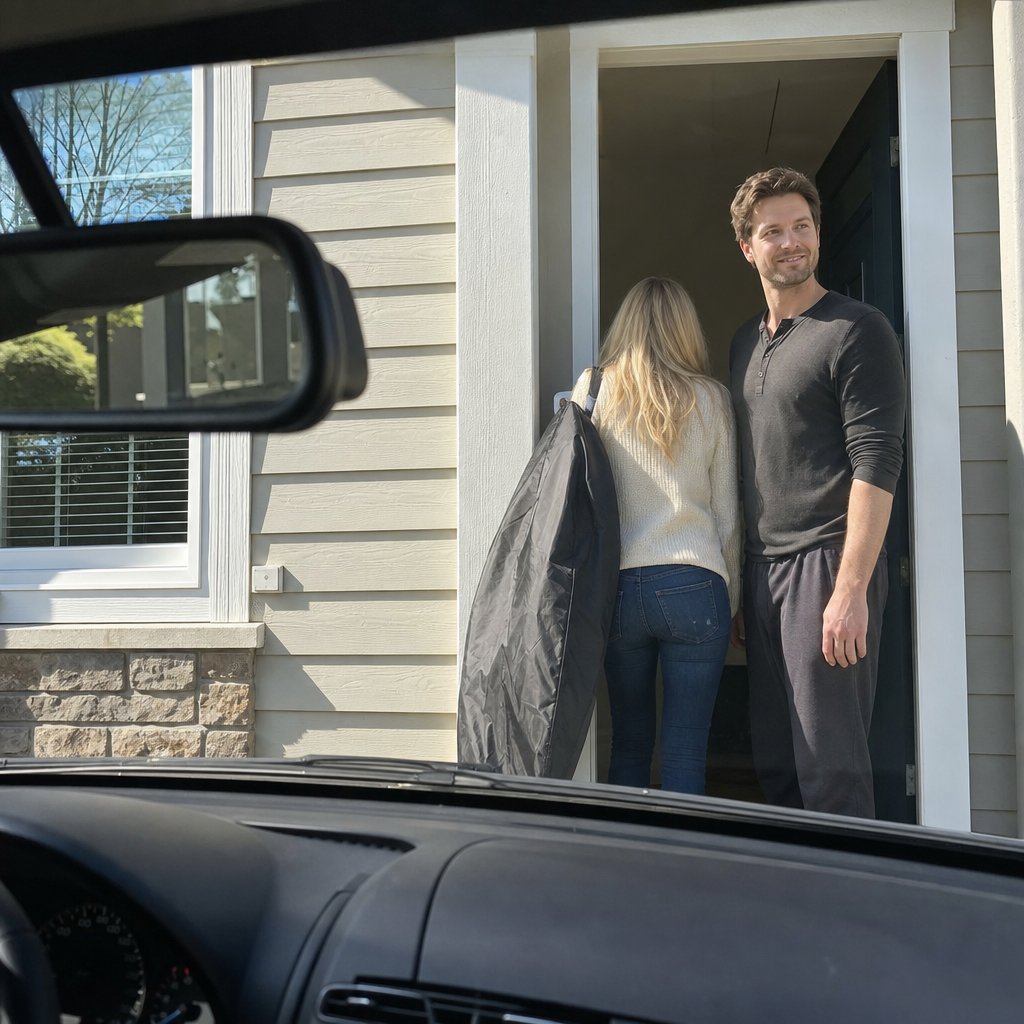
I parked two streets over where I could see our front door through the branches of a neighbor’s maple tree. The car smelled like stale coffee and my own fear. My hands were slick on the steering wheel.
At 9:12 p.m., headlights swept across the driveway.
Tessa stepped out wearing skinny jeans and a cream sweater, a garment bag slung over her shoulder like she was arriving for a sleepover. No babysitter tote. No kid stuff. Just that long, deliberate walk up my path.
I held my breath so hard my ribs ached.
The door opened before she knocked.
Miles stood there in a soft henley and lounge pants, and the smile he gave her was so tender it made me nauseous. It wasn’t polite. It wasn’t grateful. It was familiar, like he’d been waiting for the missing piece of his night.
Tessa said something I couldn’t hear, and he stepped back to let her in, his hand brushing her elbow as she passed like it was the most natural thing in the world.
Then he looked down the street—just a quick scan, casual, practiced.
Right toward where my car was parked.
The Velvet Pouch In Her Tote
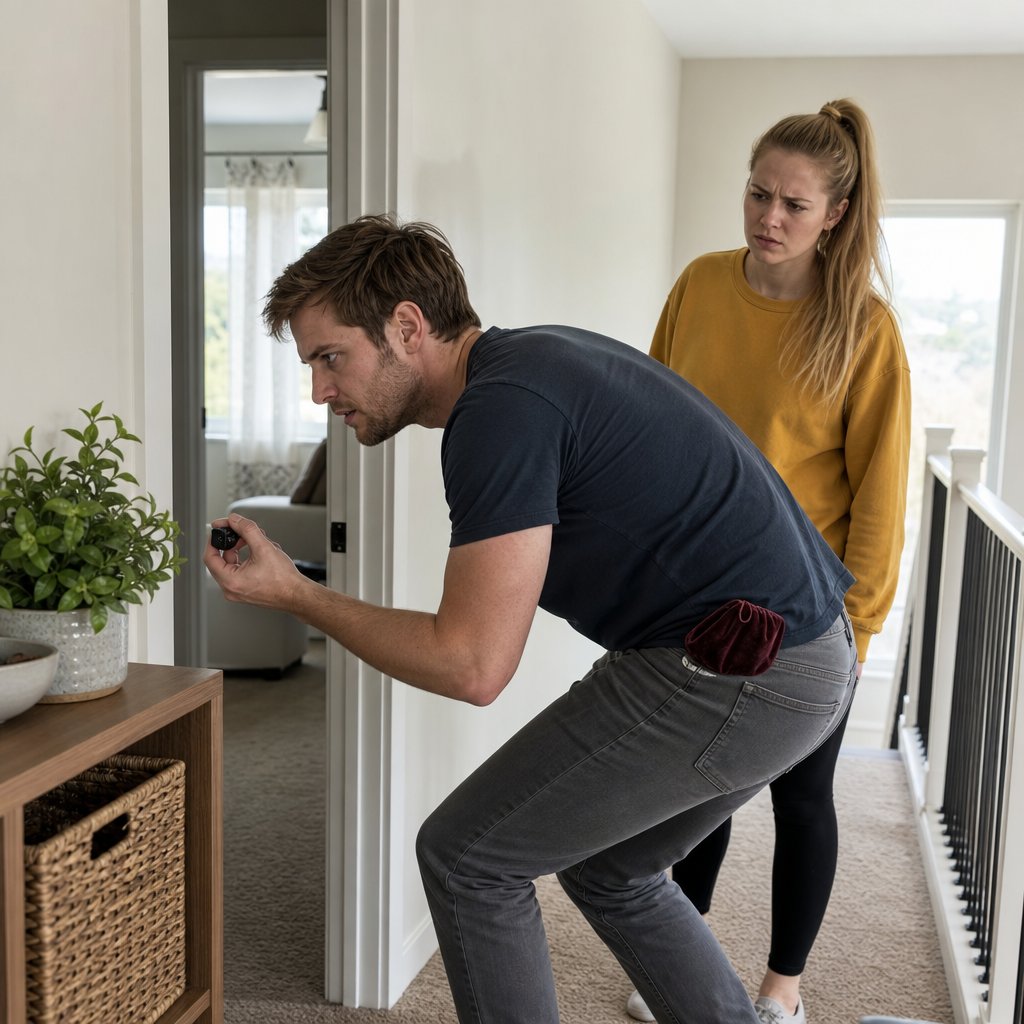
I waited until the next afternoon when I knew she’d be distracted—kids in the playroom, music on, Tessa moving between rooms like she owned the air.
Her tote sat by the mudroom bench, slouched open just enough to show the corner of a familiar deep burgundy fabric.
My grandmother’s velvet pouch.
My pulse went so fast it blurred my vision. I knelt like I was tying my shoe, the tile cold under my knees, and slid two fingers into the bag. The velvet was worn soft, the drawstring frayed in the exact spot I used to pinch it shut as a kid.
I pulled it out and my hands shook so hard the pouch trembled.
Inside was the locket. Gold, oval, engraved with tiny vines—my grandmother’s. The one she wore every day until her hands got too arthritic to clasp it. The one I’d kept in my jewelry box like a relic.
The metal wasn’t pristine anymore.
It had that dull, warmed sheen of something that’s been handled. Worn. Loved like it belonged to someone else. There was a faint smear of foundation near the hinge, like it had been pressed against skin.
I swallowed a sound that wanted to be a scream and shoved it back into the pouch, then into my pocket. Petty satisfaction flickered—proof, finally, in my hand.
Upstairs, I went to the hall closet where I’d hidden the nanny cam months ago and never had the courage to use. My fingers were steadier than I expected as I flipped it on.
I aimed it at Miles’s desk.
Then I heard Tessa’s voice behind me, too close. “What are you doing up here?”
Her Key To His Drawer
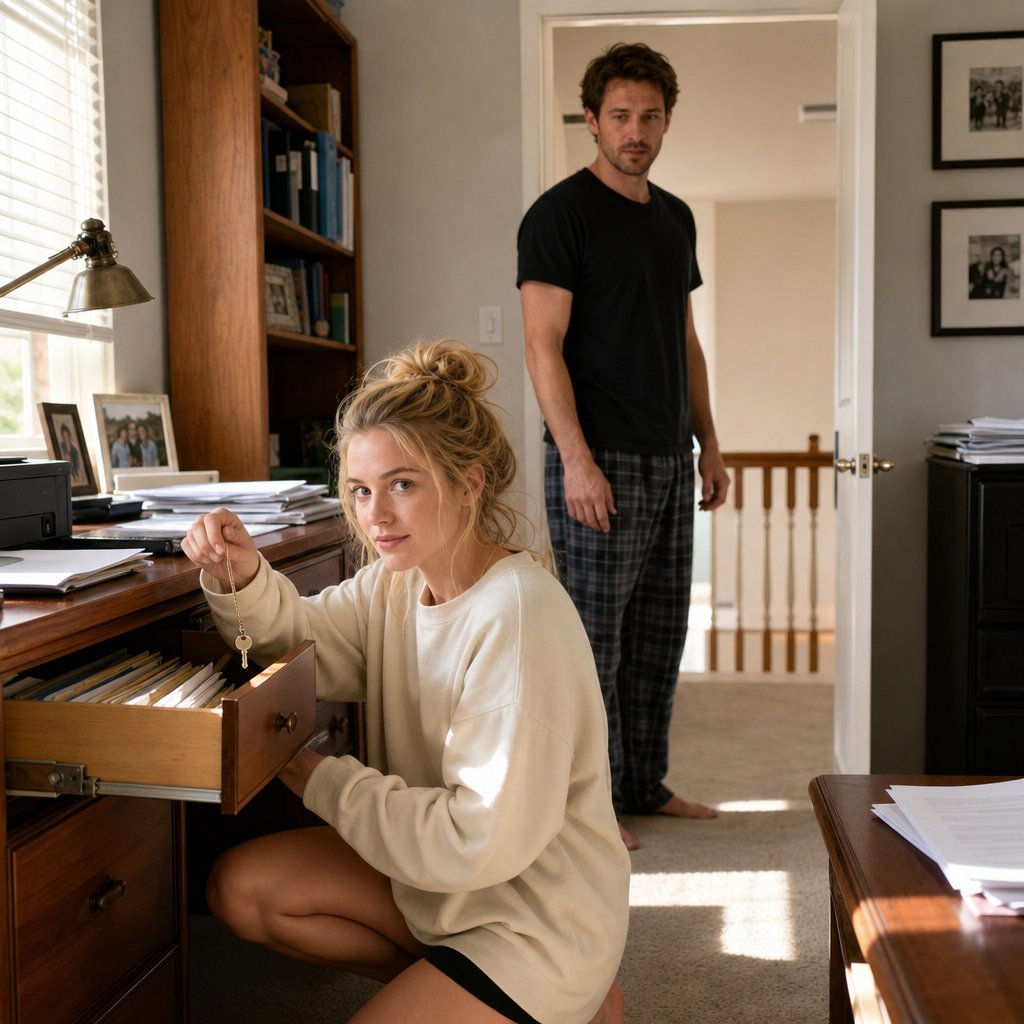
I played it off. Of course I did. I mumbled something about looking for a spare charger, laughed too brightly, and let Tessa shepherd me back downstairs like I was the one who couldn’t be trusted alone.
Then I waited.
That night, after the house settled into its quiet hum, I checked the camera footage with my heart in my throat, pausing every few seconds like my body couldn’t handle too much truth at once.
Miles’s office came into view: the desk lamp, the neatly stacked folders, the little framed photo of the kids that I’d realized—only recently—had been moved to face his chair more directly.
The door opened.
It wasn’t Miles.
Tessa slipped in wearing an oversized sweatshirt and shorts like she’d already decided she was staying. She didn’t creep. She didn’t hesitate. She walked straight to the desk with the confidence of someone who’d done it a hundred times.
She knelt, reached under the top drawer, and pressed her fingers to the hidden seam like she knew exactly where it was. Then she pulled out a key from around her neck—small, silver, on a thin chain that disappeared under her collar.
My skin went ice-cold.
She slid the key into the lock and turned it like it was hers.
The drawer opened smoothly. Inside were papers, clipped and organized, like a plan. She lifted the top page and smoothed it on the desk with both hands—careful, reverent.
I couldn’t read every word from the angle, but I didn’t need to. The layout screamed legal. The signature lines. The way my name sat where a stranger’s would.
And the part that made my vision tunnel: a handwritten note in the margin—“next quarter bonus.”
She wasn’t improvising. They had a timeline. A payout.
Tessa’s mouth curved into a small, satisfied smile as she slid the papers back into the drawer—and then the office door opened behind her.
Would you trust a nanny calling your home 'ours'?