


The Deed Wasn’t Mine

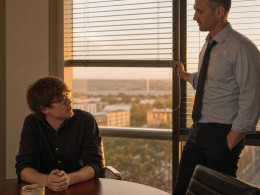
I pulled the folder labeled “Boat Insurance” and a crisp deed copy slid out like it had been waiting for me to touch it. My stomach dropped so hard I actually grabbed the edge of the desk, because the name at the top wasn’t mine. It wasn’t even Grant’s.
The paper smelled faintly like toner and salt air—like the beach house itself had leaked into our filing cabinet. I stared at the clean, official formatting, the county seal embossing catching the light, and I kept blinking as if my name might appear if I tried hard enough. Claire Haddad. Wife. Co-payer. The person who picked every stupid curtain and paid for the stupid septic upgrade when it collapsed on Memorial Day weekend.
Nothing.
I flipped it over, thinking maybe it was a copy of a copy, maybe the second page listed both of us, maybe this was some harmless administrative version. But the owner line stayed brutally singular. My hands started to shake, the kind of tremor you can’t hide even from yourself.
Grant—my husband, with his calm smile and his “we’re building something together” speeches—had filed this under something so boring I’d never open it. Like a trap disguised as a chore.
And the name printed in that owner box was someone I recognized immediately, someone who had toasted us at our wedding with a too-long speech and a too-tight hug—
—Lyle.
A Cousin Owned Our Ocean
Lyle’s name sat there like a smug signature on my life. Grant’s cousin. The guy who always showed up late to Thanksgiving, smelling like cologne and entitlement, acting like he owned every room he walked into. Apparently he owned our beach house too.
I read the deed again, slower this time, tracing the line with my finger as if touch could change ink. Sole owner. No mention of me. No “husband and wife.” No joint tenancy. Just Lyle, like a placeholder Grant could control without ever putting his own fingerprints on it.
It clicked in a way that made me nauseous: Grant hadn’t just lied to me. He’d built a tunnel through family to move the house where I couldn’t reach it. Routing it through blood like some private pipeline. All those weekends we spent sanding the deck—Grant in gym shorts, me with my hair twisted up, both of us sunburned and laughing—had been staged on someone else’s property. A set I helped build for a story he was telling himself.
I could suddenly hear every casual line he’d ever thrown at me. “It’s simpler this way.” “It’ll save us money.” “Trust me.”
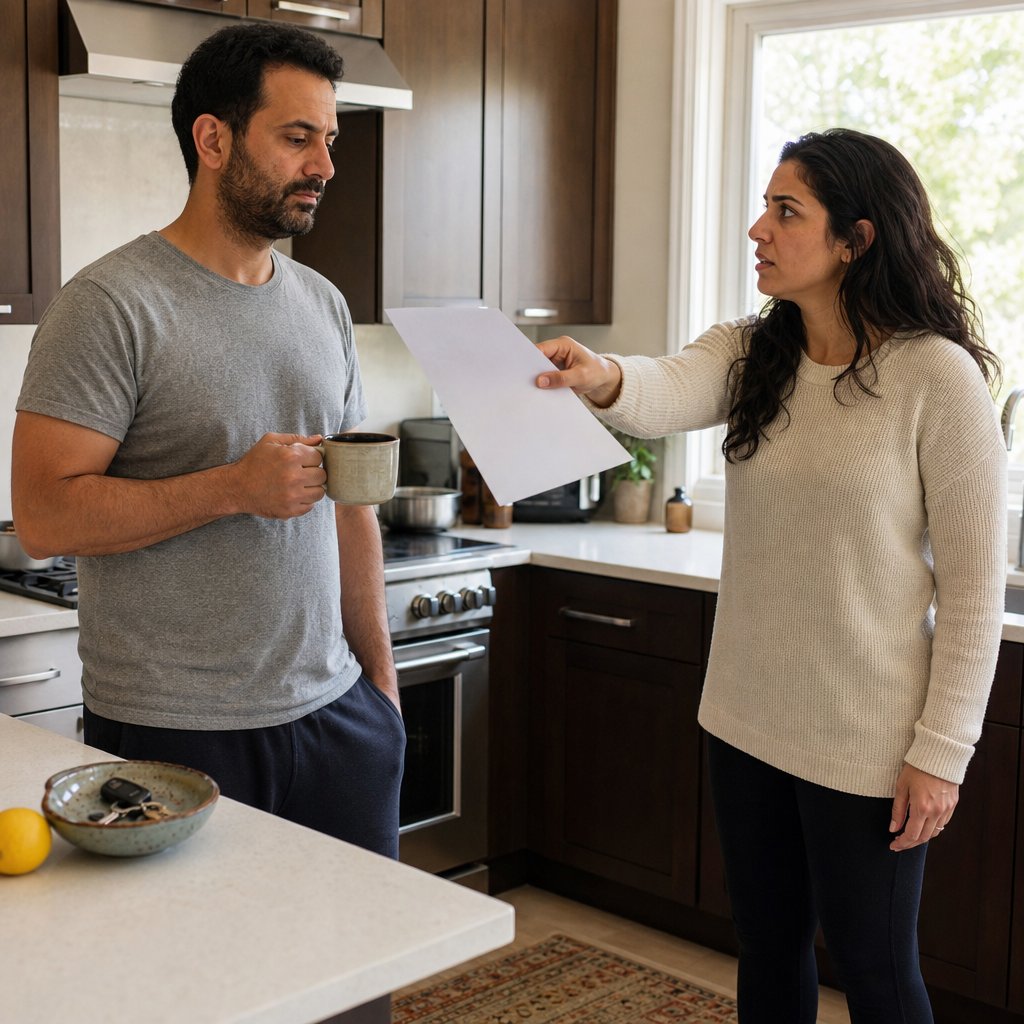
I stood up so fast my chair scraped hard against the wood floor. The sound was sharp, ugly. I walked straight into the kitchen where Grant was pouring coffee like the world wasn’t cracking.
He turned, mug in hand, and I held the deed out between us like evidence in a trial.
“Why is your cousin’s name on our beach house?” I asked, and my voice came out steady in the way it does right before you break.
Grant didn’t even flinch.
He Called It ‘Tax Reasons’
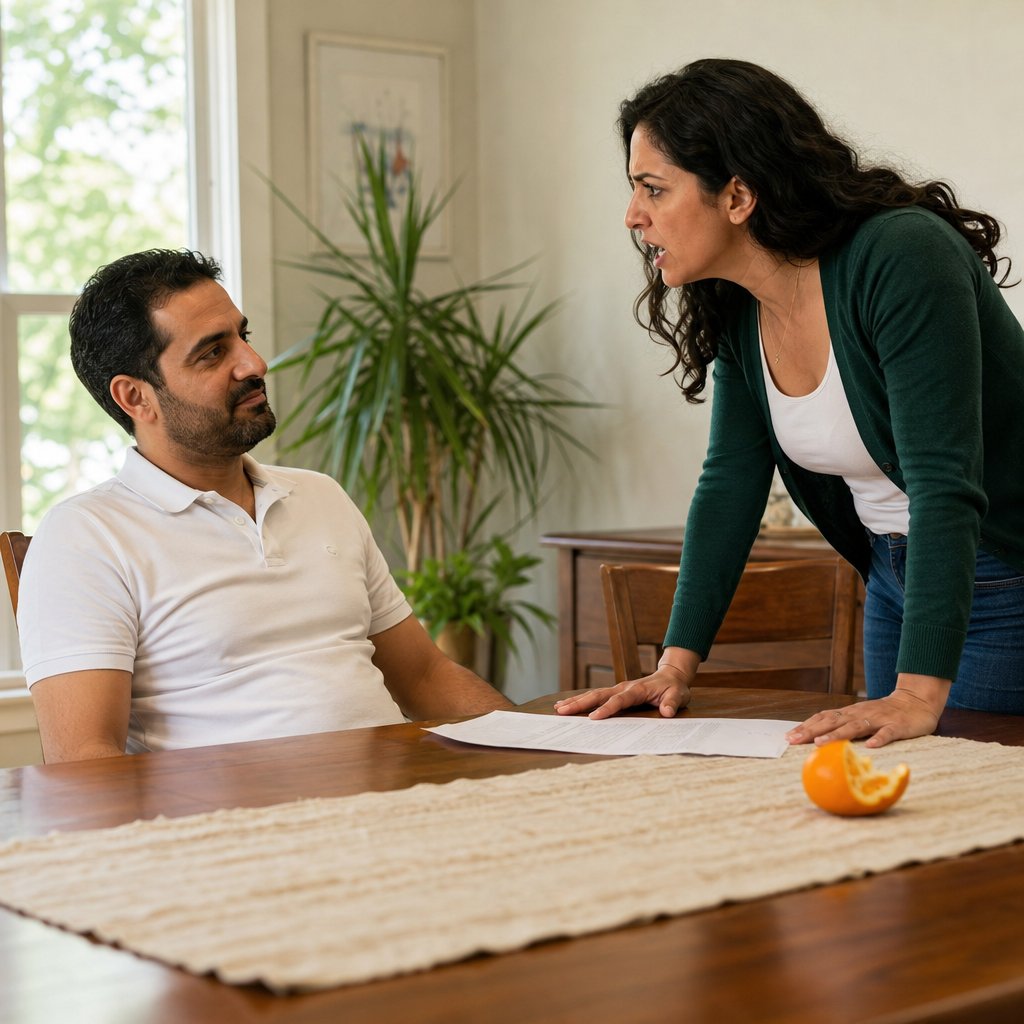
Grant took one slow sip of coffee like I’d asked him if we were out of milk. Then he shrugged—actually shrugged—and said, “Tax reasons.”
I stared at him, waiting for the rest. The apology. The explanation. The panic that someone had just caught him. But he only leaned his hip against the counter, casual as a man commenting on the weather.
“Tax reasons?” I repeated. My mouth tasted metallic, like I’d bitten my tongue. “So you put the deed in Lyle’s name… for taxes?”
He lifted his eyebrows in that practiced way he used when he wanted me to feel dramatic. “It was always meant to be temporary,” he said. “You’re spiraling.”
Temporary. Like the years I spent paying half the mortgage, half the renovations, half the furniture we hauled down in my SUV until the shocks started squeaking. Like the time I picked up extra shifts because Grant insisted we needed to “get ahead” before the next assessment. Like my name—my actual legal name—was a detail that could be added later if I behaved.
I pressed the paper flat against the counter with my palm. The edge cut into my skin. “So you never planned to put me on it,” I said quietly, and the quiet made it worse because it left room for truth.
Grant’s eyes flicked to the deed, then back to me. “Claire,” he said, warning in his tone, like I was a child reaching for a hot stove. “Don’t make this into something it’s not.”
My throat tightened. “What is it, then?”
He set the mug down with a soft clink and smiled without warmth.
“It’s paperwork,” he said. “And you don’t understand it.”
My Lawyer’s Worst Sentence

My attorney, Dana Sloane, didn’t gasp or swear when I slid the deed across her desk. She just went very still, the way professionals do when they’re about to tell you something that will change your life.
Dana was in her forties, sharp bob haircut, pale skin, and eyes that missed nothing. She read every line, then looked up at me over the top of her glasses. “Claire,” she said carefully, “we can’t even claim this as a marital asset in the divorce filings until we confirm title and beneficial ownership.”
I felt my face go cold. “I paid for it,” I said, too fast. “I have transfers. I have receipts. I have—”
“I believe you,” Dana cut in, firm. “But courts don’t divide feelings or weekend memories. They divide what they can prove you own. And right now, on paper, you own nothing.”
Nothing. The word landed like a slap. I thought of the beach house pantry I organized by hand, the little label maker Grant mocked me for using. I thought of the new couch we picked because it was “easy to clean,” like we were planning a future full of sandy kids and spilled juice. All of it suddenly felt like I’d been nesting in a rental without knowing it.
Dana tapped the deed with one nail. “If Grant is hiding assets through family,” she said, “this isn’t just messy. It’s strategic.”
My voice cracked. “So what do we do?”
Dana’s gaze sharpened. “We move fast,” she said. “Because if he sells it or transfers it again before we file the right motion…”
She didn’t finish the sentence, but the silence did.
The Binder Had Been Gutted
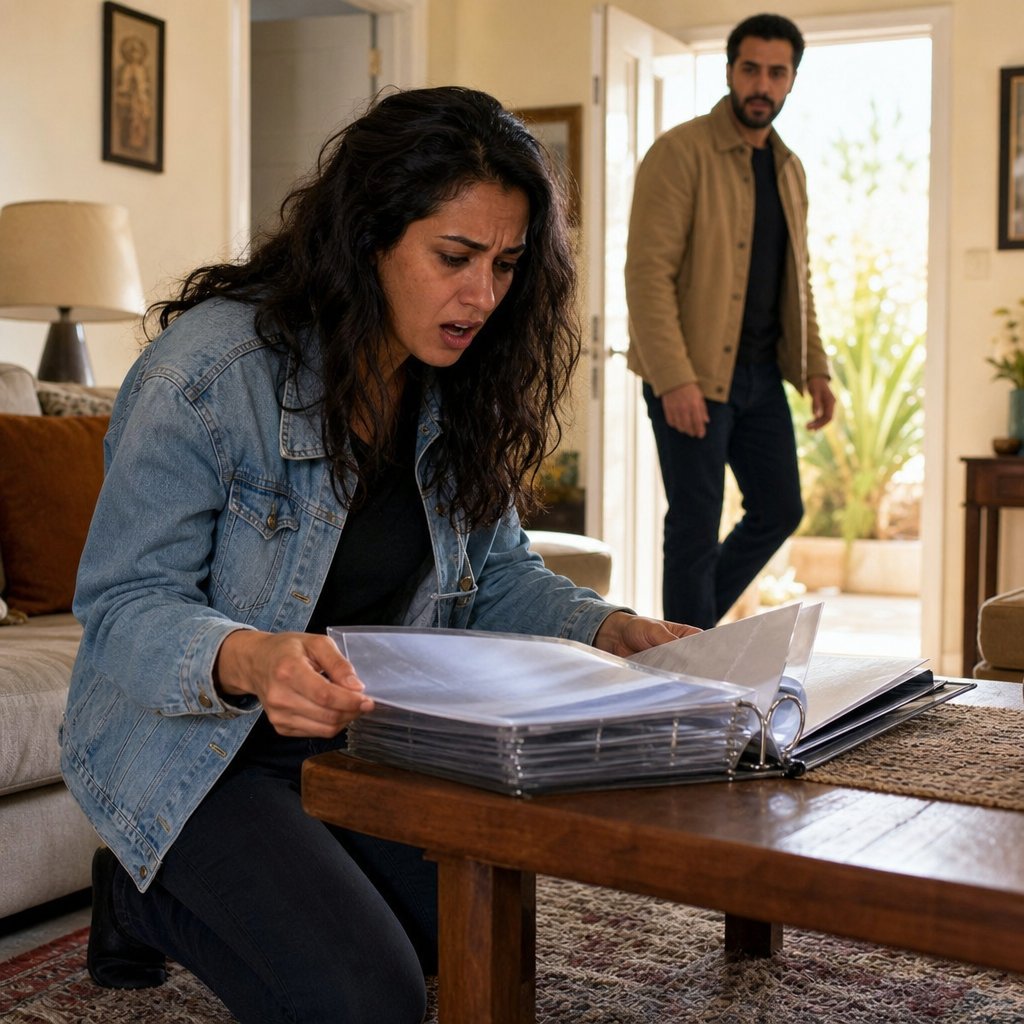
I drove home and went straight for the closing binder we kept in the hall closet—the fat, smug binder Grant insisted we needed “for records.” It was there, exactly where it always sat, like a prop placed back after the crime.
I carried it to the living room and dropped it on the coffee table. The impact puffed a little dust into the air. I flipped through the tabs, my pulse ticking in my ears, and for a few seconds I almost convinced myself I’d overreacted.
Then I noticed the holes.
Not missing pages from sloppiness. Missing chunks. Whole sections cleanly removed, the kind of removal that takes time and intention. The dividers went from “Disclosures” to “Insurance” with a jagged jump, like someone had taken scissors to my reality and stitched it back together wrong. The plastic sleeves were empty but still warm-looking, like they’d held something important until recently.
I dug deeper, flipping faster, the binder’s rings clacking open and shut. Where were the settlement statements? The signed copies? The page that should have listed how title would be held? Gone. Not misplaced—surgically extracted.
I sat back on my heels on the rug, binder open in my lap, and I could suddenly picture Grant at this same table late at night, quietly pulling pages while I slept upstairs. Grant with his neat hands and his careful lies. Grant who always “handled the paperwork” because he said it stressed me out.
My eyes stung. I didn’t cry. I felt something worse: clarity.
I heard the front door open and close, footsteps in the hallway, and Grant’s voice calling my name like he had no idea what I’d found.
I snapped the binder shut just as his shadow crossed the doorway.
The Key Bowl Was Empty
The next morning, I reached for the beach house keys out of pure muscle memory. The ceramic bowl by the entryway was where they always lived—mixed in with spare change and that little shell I’d picked up on our first trip there.
The bowl was empty.
Not just the beach house keys. The specific ring with the chipped blue fob I’d painted myself so we wouldn’t confuse it with the others. Gone. My fingers circled the inside of the bowl like I could scrape up what he’d taken. The shell sat alone at the bottom, ridiculous and useless.
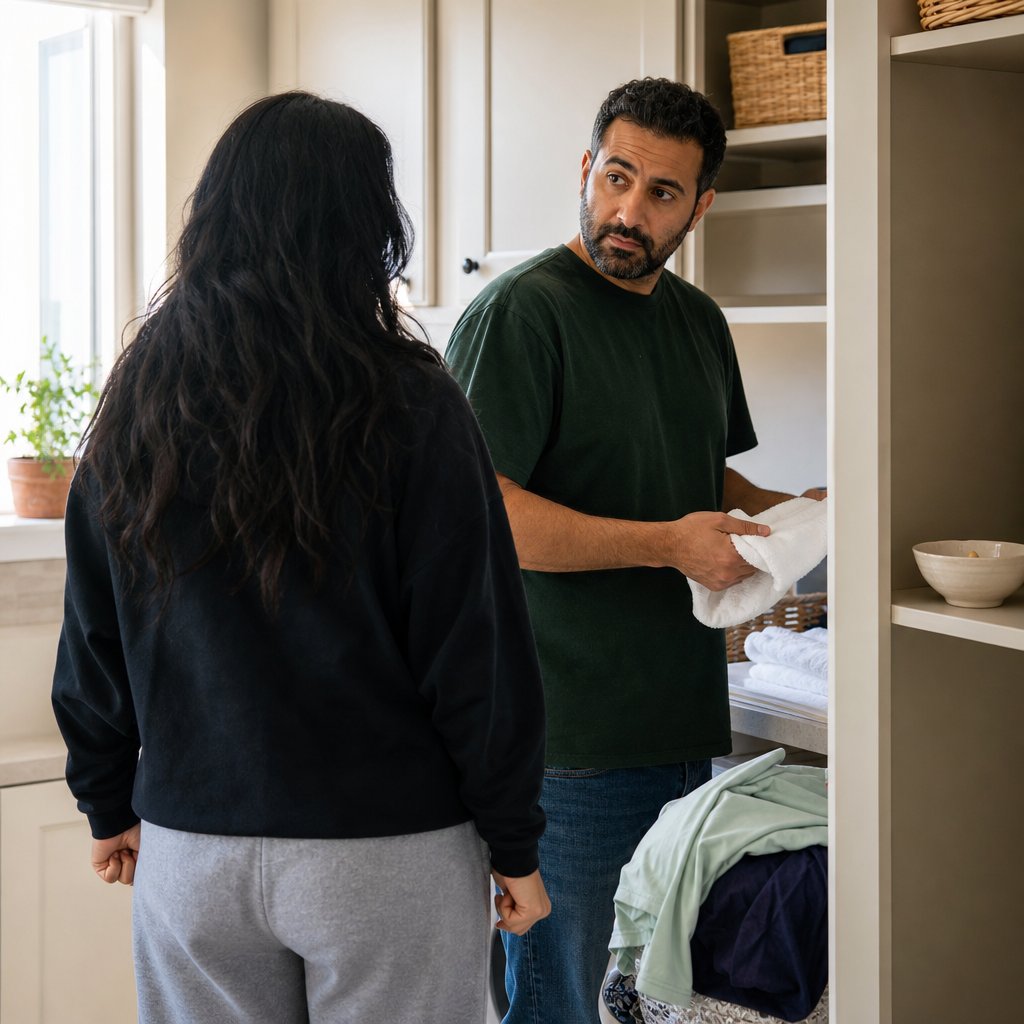
I found Grant in the laundry room, folding towels with the slow precision he used when he wanted to look like a good man. He didn’t look up when I asked, “Where are the beach house keys?”
He gave a small sigh, like I’d interrupted him with something petty. “I don’t know,” he said. “You probably lost them.”
I laughed once, sharp and humorless. “I didn’t lose them. They were right here. Every day.”
Grant finally looked up. His eyes were flat. “Claire, you’ve been all over the place lately,” he said, voice soft in that fake-concern tone that made my skin crawl. “Maybe you should write things down.”
Gaslighting with laundry detergent on his hands. That was the level of disrespect. He wanted me doubting my own grip on reality while he changed locks and moved assets like chess pieces.
I stepped closer. “Give them back,” I said.
Grant folded the towel one last time, perfect corners, and set it on the pile like punctuation.
“Why,” he asked, “do you need them so badly?”
Her White SUV In The Driveway

It came in while I was standing in the grocery store checkout line, staring at a belt of bruised peaches and trying to act normal in public. My friend Tessa’s name flashed on my phone and my chest tightened before I even opened it.
“Are you at the beach house?” her message asked.
I stepped out of line, my cart bumping the side of the register, and called her. Tessa didn’t waste time. “I drove past your place down there,” she said, voice low. “Claire… there’s a white SUV in the driveway. Like, parked straight in it. Like it belongs.”
Maris.
I didn’t need Tessa to say the name. I could see her instantly: bleach-blonde hair always curled into obedient waves, perfect eyebrows, the kind of woman who wore white sneakers and somehow never got them dirty. The woman Grant swore was “just a friend” until our marriage started dying by a thousand small dismissals.
My hand shook so hard I nearly dropped the phone. The grocery store smelled like disinfectant and overripe fruit, and suddenly I couldn’t breathe in it. Grant hadn’t just hidden the deed. He was placing Maris into the house like a replacement lamp. Like she was already the new owner, the new wife, the new story.
“Did you see Grant?” I asked.
“No,” Tessa said. “But Claire… the curtains were open. And I swear I saw someone moving around in the kitchen.”
The image hit me like a punch—someone in my kitchen at the beach house, touching my cabinets, drinking from our mugs.
I abandoned my cart and walked out, keys clenched in my fist so hard they bit my palm.
I was already dialing Dana when Tessa added, “And there was a realtor lockbox on the railing.”
The Code Had Been Changed
I drove down to the coast on pure adrenaline, hands locked on the steering wheel, my jaw aching from clenching. The air got saltier the closer I got, that familiar briny smell that used to mean relief. Now it felt like a warning.
When I pulled up, the white SUV was gone. That should’ve calmed me. It didn’t. It felt staged—like someone had cleared the scene before I arrived.
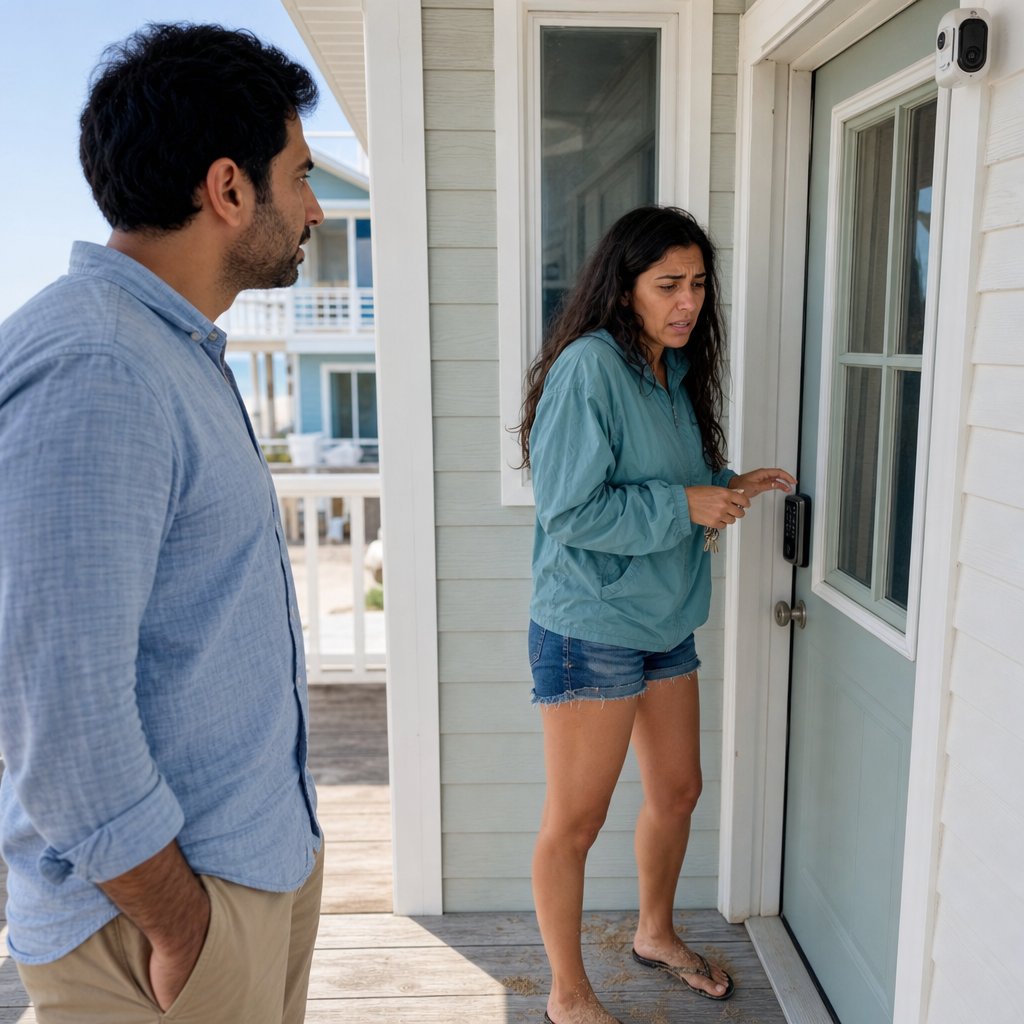
I walked up the front steps and punched in the keypad code we’d used for years—our anniversary, because Grant thought it was “romantic.” The keypad blinked red. I tried again. Red. My fingers went cold, even in the warm coastal air.
“You’ve got to be kidding me,” I whispered, and pressed harder, like force could override betrayal.
Nothing. Locked out of the house I paid for, standing on sun-faded boards I’d stained myself. I leaned closer to the door and saw the tiny black circle of the doorbell camera. It tilted slightly, tracking me. Following my movements the way security follows a thief.
I stepped back, staring at it, suddenly hyperaware of how I must look: a woman on a porch, trying codes, lingering. If someone pulled footage later, it would tell whatever story Grant needed—me as unstable, me as intrusive, me as the problem.
I heard a car door slam somewhere nearby and my whole body jolted. I turned, scanning the street, heart punching at my ribs.
From the side yard, footsteps crunched on gravel—slow, deliberate, like whoever it was wanted me to know they were coming.
‘Don’t Make This Ugly’

I got back in my car and sat there with the engine off, staring at the front door like it might open out of guilt. My hands were still trembling. I could taste salt on my lips from the wind, or maybe from my own panic.
My phone buzzed in my lap. Grant’s name. Of course it was. He’d been watching. The camera, the code change, the timing—it all snapped into place like a trap closing.
I answered, and before I could speak, he said, “Please don’t make this ugly.”
The audacity of it hit so hard I actually laughed. “Ugly?” I said. “You put the deed in your cousin’s name. You removed documents. You changed the code. And I’m the one making it ugly?”
Grant’s voice stayed maddeningly calm. “You’re showing up unannounced,” he said, like I was a stranger. “You’re upsetting people.”
“People,” I repeated, and my throat tightened around the word. “You mean Maris.”
There was a pause—just long enough to be loud. Then he exhaled like I’d exhausted him. “Claire,” he said, “this is why we can’t do this face-to-face. You get emotional and then you do things you regret.”
He was rewriting the story in real time: me as unstable, him as reasonable. The same tactic he used at dinner parties when he’d correct my memories with a smile.
I gripped the steering wheel until it creaked. “Put it in writing,” I said. “Tell me I’m not allowed in.”
Grant’s voice dropped, sharp under the calm. “Just… don’t,” he said.
And then, softly, like a threat disguised as concern: “You have no idea what I’m willing to do.”
‘No Ownership Interest’

Dana filed the emergency motion the same day, and by the next afternoon I was back in her office, sitting so rigidly my back hurt. My stomach growled but food felt impossible, like my body didn’t deserve normal needs while my life was being stripped on paper.
Dana stepped in holding a printed letter, her face set. She didn’t sit right away. She read one line, then looked at me like she was trying to soften a blow that couldn’t be softened.
“Grant’s attorney responded,” she said.
I leaned forward. The leather chair squeaked. “And?”
Dana’s mouth tightened. “They’re taking the position that you have no ownership interest in the beach house,” she said, precise. “Not partial. Not equitable. None.”
The room tilted. I heard the hum of the air conditioner and the faint click of a hallway door outside, normal sounds in a moment that wasn’t normal at all. “They’re just… erasing me,” I whispered.
Dana slid the letter onto the desk—face down, no text visible—and placed her palm on it like she could pin the lie in place. “This is their strategy,” she said. “If they can keep title out of Grant’s name and paint you as someone with no legal claim, they’ll argue the court doesn’t even have jurisdiction over it as a marital asset.”
I swallowed hard. “So he can sell it,” I said. “Or ‘gift’ it to Maris. Or transfer it again. And I’m just… what? A woman who bought furniture for a house she doesn’t own?”
Dana’s eyes sharpened. “Unless we prove the money trail,” she said. “Unless we prove intent.”
My phone buzzed on the desk between us, face down. Dana’s gaze flicked to it. Mine followed.
“That could be him,” she said quietly. “Or it could be someone else.”
I reached for it, fingers numb, knowing whatever waited on the other side was about to decide what kind of war this became.
Two Transfers, One Week
The buzz hit again while Dana was still mid-warning. I didn’t even check it. I just drove straight to the county recorder like my life depended on a file drawer.
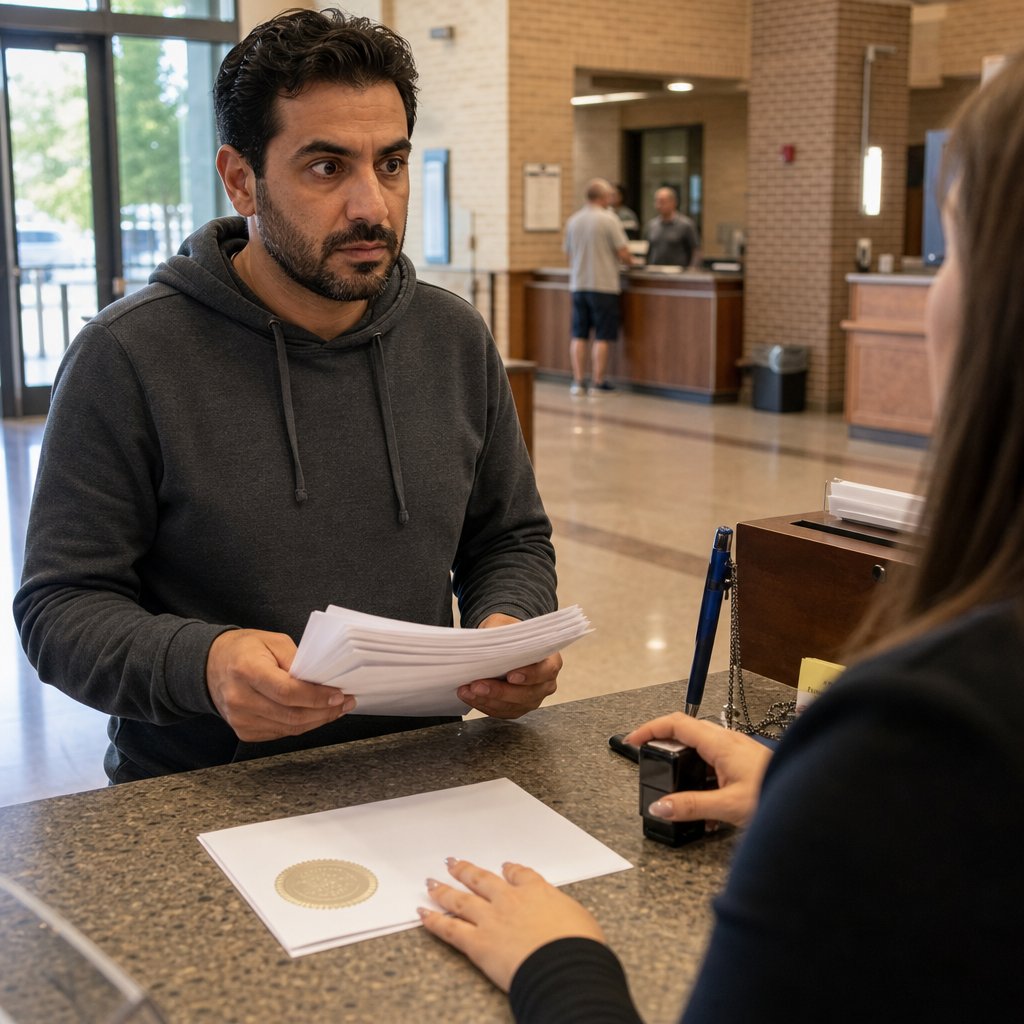
The lobby smelled like old paper and lemon cleaner, and the clerk’s acrylic nails tapped a rhythm that made my teeth hurt. I slid the parcel number across the counter with hands that wouldn’t stop sweating. When she printed the deed history, the pages came out warm, like they’d been sitting on a radiator—like the paper itself was trying to tell me to let go.
I’d expected one ugly surprise. Not this.
Two transfers. One week. The first was Grant moving it out of our names. The second was the same house—our beach house—moved again like a shell game, right after my kitchen-reno bonus hit our joint account. I knew the date because I’d stood in our kitchen with my phone in my hand, laughing, telling him we could finally replace the warped deck boards.
The grantee name wasn’t mine. It wasn’t even Grant’s. It was someone else’s, neat and official, like it had always belonged there.
I stared so hard my eyes watered. The clerk cleared her throat, impatient. “Do you need certified copies?” she asked, already reaching for a stamp.
My throat closed because the name on that second transfer was a name I recognized from nowhere I wanted to admit.
And I realized, all at once, that Grant hadn’t just hidden the deed—he’d timed it around my money.
The Invoice He Didn’t Explain
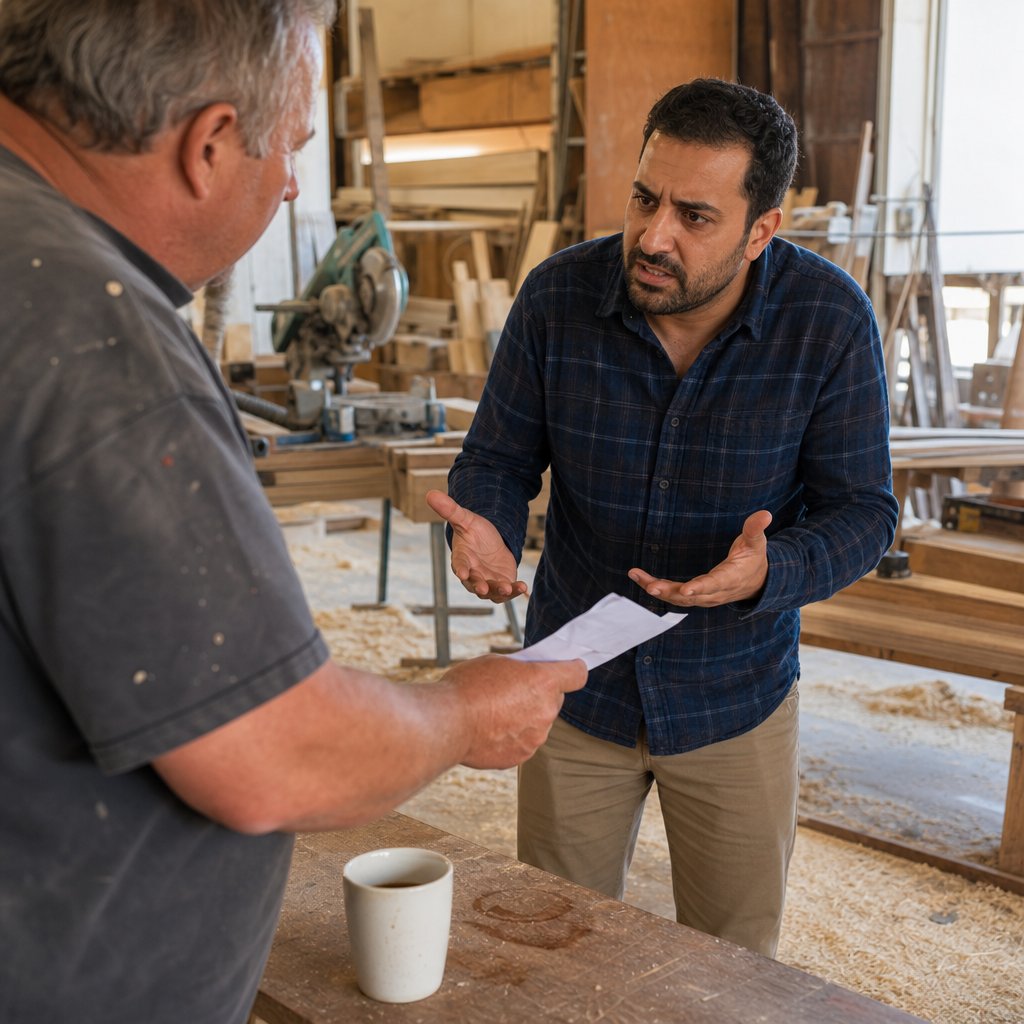
The contractor’s shop was a converted garage that smelled like sawdust and burnt coffee. He looked at me like he’d already decided I was “the ex,” the kind you don’t want to get pulled into. Stocky guy, sun-cracked skin, paint under his nails that never fully came off.
“I just need one thing,” I said, keeping my voice calm the way Dana taught me. “Who paid the final invoice on the beach house deck repair?”
He scratched his jaw, eyes flicking toward the open bay door like he was checking for Grant’s truck. “Grant did,” he said, quick.
“From what account?” I asked, and watched his shoulders tense.
He sighed like I was making him late for his own life. “Look, I don’t pick sides. He paid from an account I hadn’t seen before. Not the usual one.”
My stomach dropped. We had the joint checking. We had the shared credit cards. I knew every account number by muscle memory, the way you know your own address.
“Do you still have the payment record?” I asked.
He hesitated, then opened a drawer and pulled out a wrinkled carbon copy. He held it just out of my reach like it was a hot pan. “You didn’t get this from me,” he muttered.
I leaned in and saw the last four digits—numbers I’d never seen attached to us. Not once. Not in years of budgeting, not in any tax packet, not in any ‘we’re a team’ conversation.
My hands shook as I reached for it, because if Grant had a whole account I didn’t know about…
Then what else had he been paying for that I never got to see?
The Maintenance Account That Wasn’t
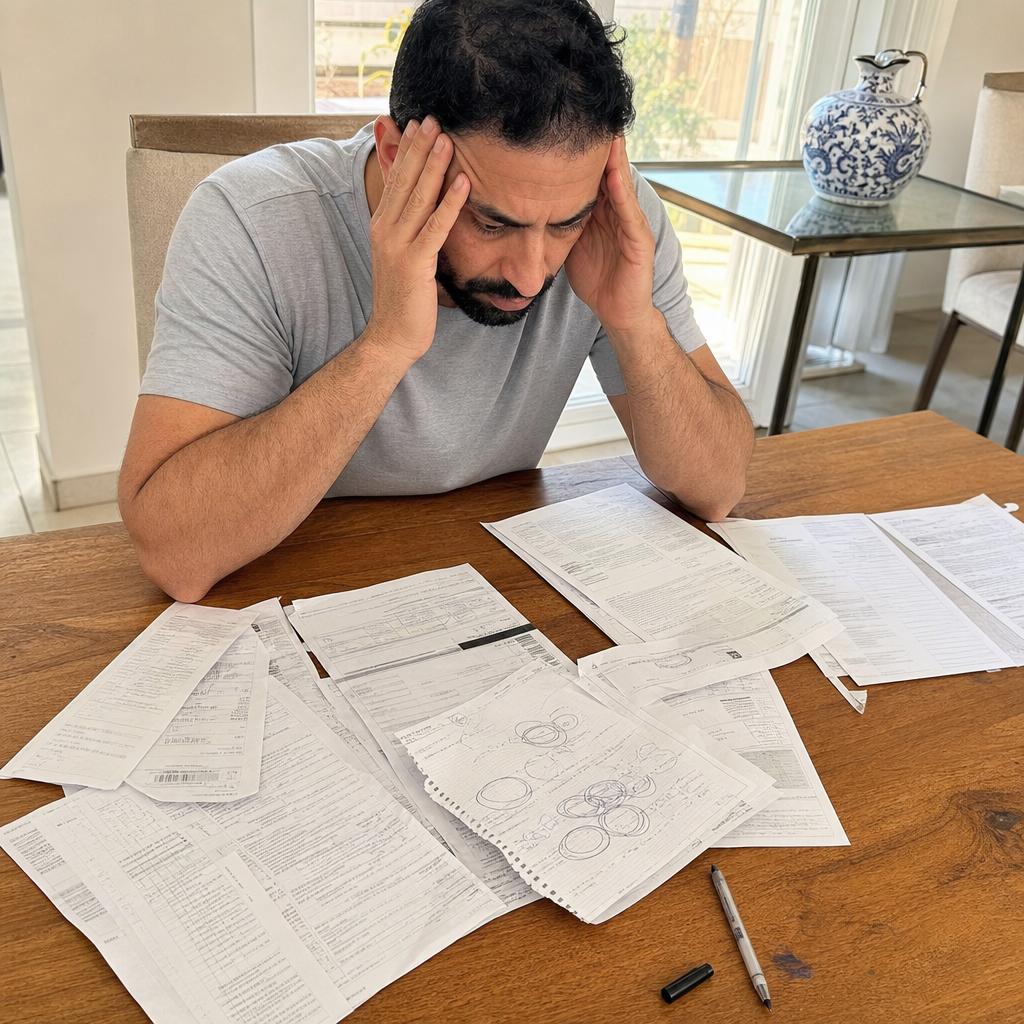
I went home and did what I always did when I was scared: I hunted for numbers. Not feelings. Not memories. Numbers.
I spread bank statements across the dining table until it looked like a paper storm had hit. The air smelled faintly like printer ink and cold leftovers. I circled deposits and withdrawals with a pen so hard the paper tore in places.
That’s when I saw them. Tiny transfers. Always the same amount, always the same day of the month, always labeled like they were harmless. “Maintenance.” Like a gentle lie.
Except there was no “maintenance” account in our shared banking app. No matching bucket. No linked savings. No history I could click into. Just money leaving, consistently, quietly, for years—small enough to hide inside groceries and gas, regular enough to look routine if you didn’t stare too long.
I pulled our old budgeting notebook from the junk drawer—my handwriting, his scribbles, our little jokes in the margins. We’d argued over a $40 streaming subscription once. We’d had a whole fight about name-brand cereal.
And all that time, Grant had been siphoning off a steady stream like a private drip line feeding something I wasn’t allowed to know existed.
I flipped back through year after year, and the pattern stayed perfect. Like a metronome. Like a plan.
My phone vibrated again on the table, face-down, rattling against the wood. Dana. Probably checking if I’d found anything.
I didn’t pick it up yet. I stared at the circled transfers until my vision blurred, because the only question left was simple and sickening:
Where had all that maintenance money been going?
Cash For Your Silence
Grant called like we were still the kind of people who could talk. Like he hadn’t detonated my life with paperwork and smug timing.
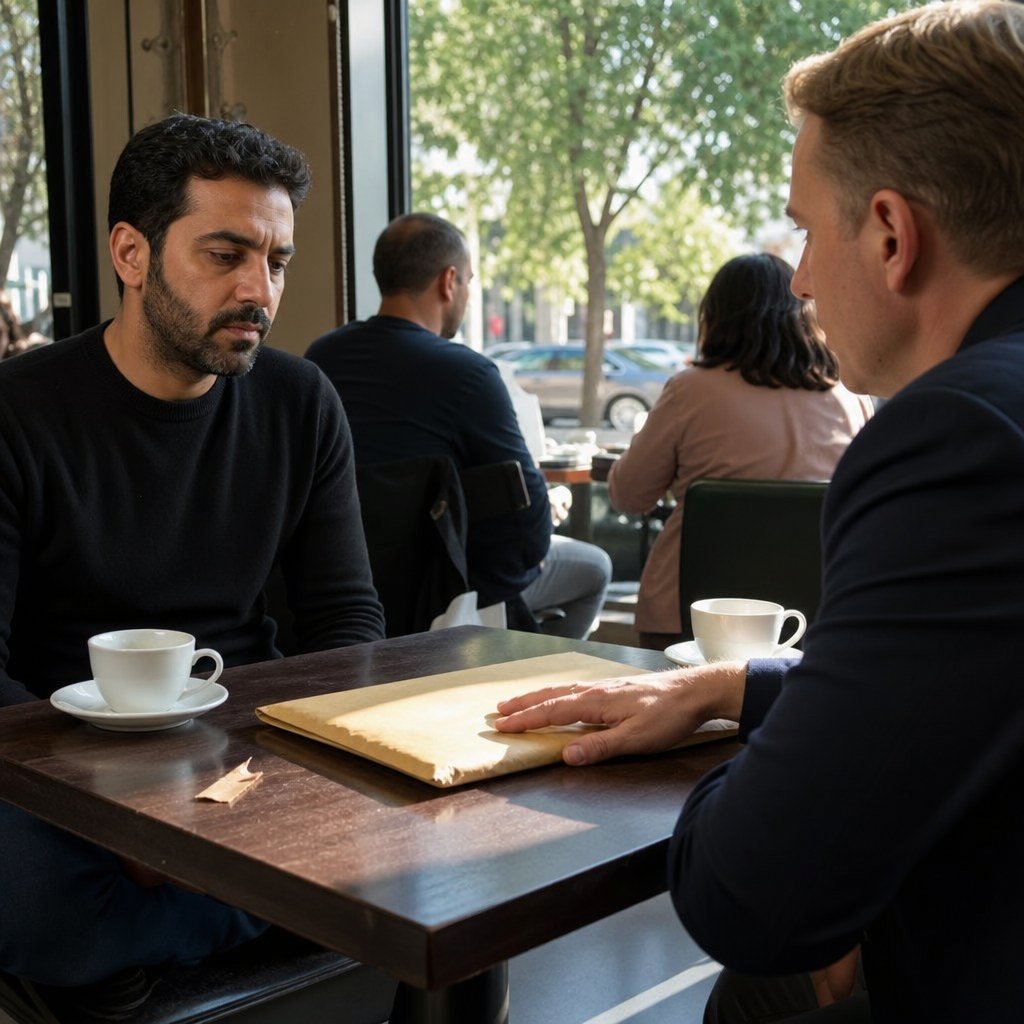
I met him in a coffee shop because Dana told me not to be alone with him in private. He walked in wearing the watch I bought him for our tenth anniversary, the one he’d said was “too much,” and he still wore it like a trophy. His hair was perfectly styled. His smile didn’t reach his eyes.
“I want to be fair,” he said, sliding into the chair across from me. “I’ll give you cash. A clean number. You walk away from the beach house.”
My stomach turned. “You’re offering me money,” I repeated, slow, “to stop asking questions.”
He laughed softly, like I was being dramatic. “No. I’m offering you peace.”
Peace. The word tasted like metal in my mouth. Outside the window, a woman walked past with a toddler and a beach tote, and for a second my brain flashed to our deck—my string lights, my chairs, my work—someone else sitting there like it was always theirs.
Grant leaned forward, voice low. “You’re going to spend thousands chasing this. You could take the cash and start over.”
“Why now?” I asked. “Why are you so eager to pay me off?”
His jaw tightened for half a second. Just enough to show me I’d hit something tender. He reached into his jacket and placed an envelope on the table, thick and heavy, like he’d rehearsed the moment.
“Because I’m trying to be kind,” he said, but his eyes said something else entirely.
I didn’t touch the envelope. I watched his fingers linger on it, possessive, and realized he wasn’t buying my future.
He was buying my silence before I found the part that would ruin him.
My Lights, Her Caption
I didn’t even have to go looking for it. A friend texted me, no words—just a screenshot and a single question mark.
Maris. On my deck.
She was posed under the string lights I’d ordered after Grant complained the deck felt “too dark.” I recognized the little knot I’d tied in the third strand because it had been too long and I refused to cut it. The photo was all wind-tossed hair and soft-smile innocence, like she’d wandered into a life that simply opened its doors to her.
“New beginnings,” she’d written, tagged like she was launching a brand.
I sat on the edge of my couch, staring at the image until my hands went numb. It wasn’t just that they were there. It was that she wanted people to see her there. She wanted witnesses. She wanted to normalize my erasure in public, one cute post at a time.
My chest burned with the kind of anger that makes you stupid if you don’t aim it carefully. Dana’s voice echoed in my head: proof, intent, money trail.
And then another message came in from a different friend: “Isn’t that… your dining set?”
I zoomed in on the corner of the photo—my scratched teak table, the one I’d refinished myself, the one Grant said was “too heavy to move” when I asked for it back.
My throat tightened because Maris wasn’t just occupying the house.
She was curating my life like it was her starter kit.
I inhaled, opened my notes, and started listing every item I could prove I bought—because if she was bold enough to post this…
What else was she bold enough to claim?
Insured, Not Owned
The mail slot clacked, and I almost ignored it. I was living on adrenaline and spite; envelopes felt like background noise.
Then I saw the return address: the insurance company we’d used for years.
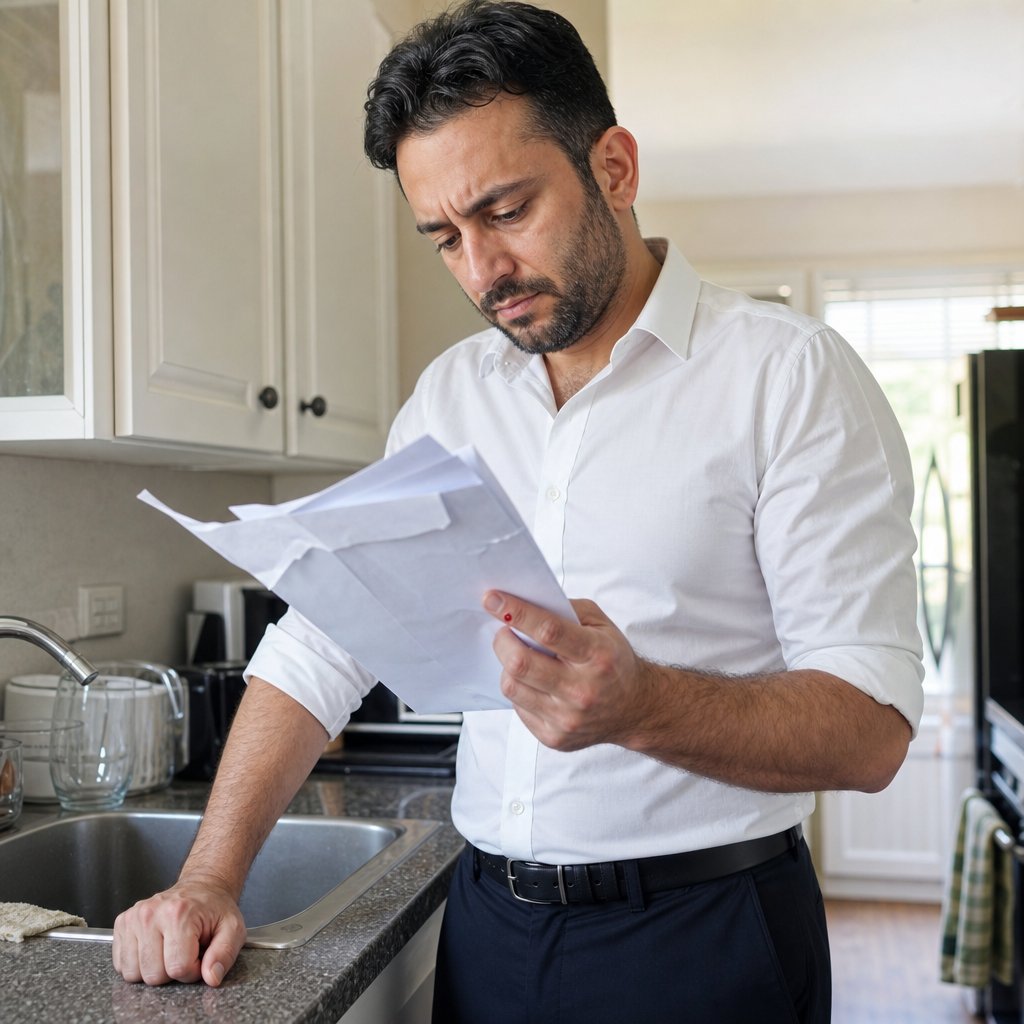
I tore it open standing over the kitchen sink, the paper edge slicing my thumb just enough to sting. The bill was addressed to me—my name, spelled correctly for once. For a split second I felt relief, like maybe I’d been wrong. Maybe I was still attached to that house in some real way.
Then I read the designation.
“Additional insured.”
Not owner. Not policyholder. Not the person with the right to decide anything. Just… extra. A bolt-on. A convenient name to include so the company could collect, so Grant could say he was “protecting” me, so the paper trail looked marital enough to confuse someone skimming.
I flipped through the pages with shaking hands, looking for the named insured. The policyholder was a name I didn’t recognize from our shared accounts, our taxes, our life. The same name from the deed history, sitting there like a smug stamp.
My lungs felt too small. This wasn’t just about stealing the house. It was about using me as camouflage—letting me pay, letting me worry, letting me believe I had a stake, while the legal spine of it all belonged to someone else.
I snapped photos for Dana—careful, no names showing—then stopped, because a new thought hit me so hard I had to grip the counter.
If I was “additional insured,” it meant Grant expected me to be financially responsible if something went wrong.
Which meant he’d built this whole setup to benefit from me… without ever protecting me.
My phone rang. Dana again. I answered, and she said one sentence that made my blood run cold:
“Claire, we need to freeze that property before he moves it again—do you know who the policyholder is?”
The HOA Email Switch
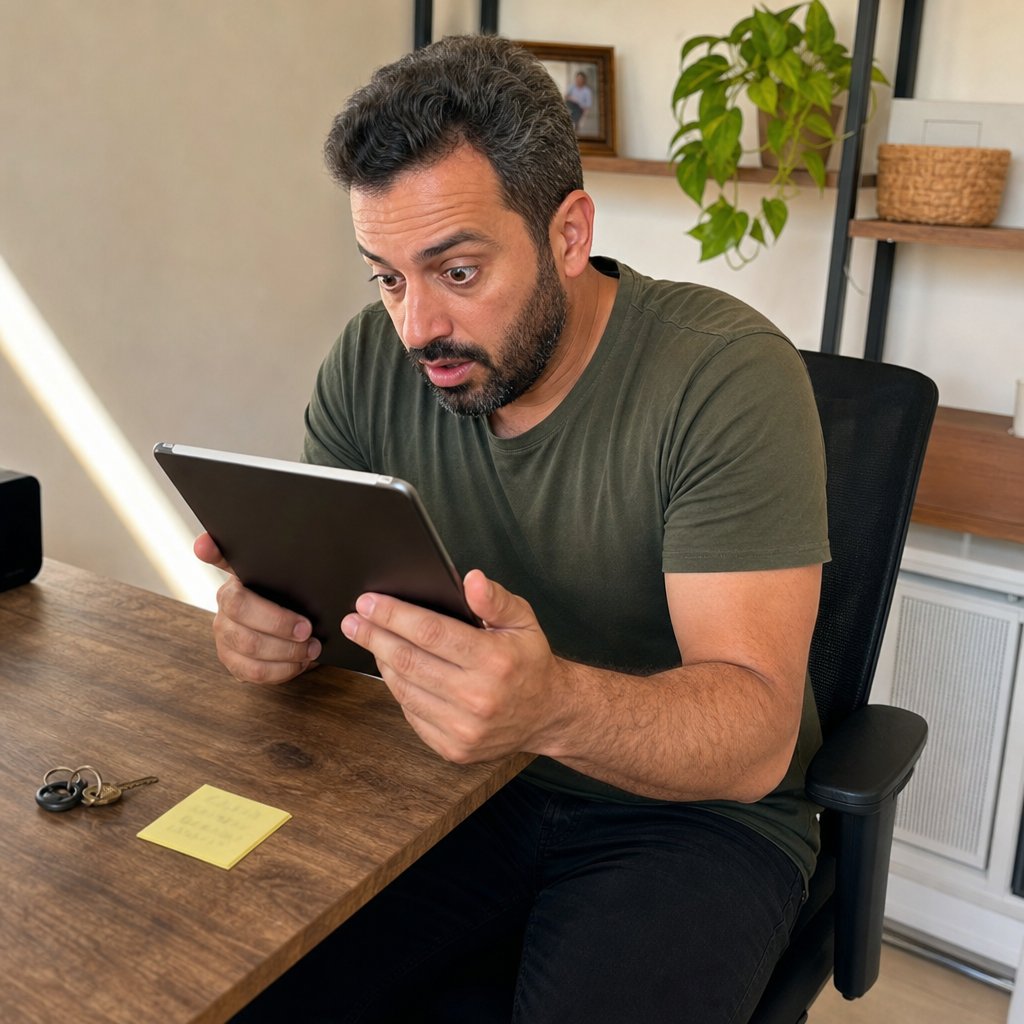
I dug out the old iPad from a drawer like I was exhuming a body. It was one of those dusty, forgotten devices we kept because “it still works,” which really meant we kept it because it held pieces of our life we didn’t want to sort.
The screen lit up, and my reflection stared back at me—tired eyes, beard untrimmed, a face I barely recognized. I opened the HOA app out of habit, expecting the same bland dashboard we used to check dues and gate codes.
It logged in automatically.
My heart started thudding, hard. That meant someone hadn’t bothered to log out. Someone had been comfortable.
I clicked into contact settings, and there it was: the primary contact email had been changed. Not to Grant’s work address. Not to a new joint email. To Maris’s.
Maris’s full name. Her email. Her phone number. Like she was the one who needed the pool key. Like she was the one who should get the violation notices, the meeting minutes, the warnings about exterior changes—everything that would matter if you were planning to sell, rent, or quietly take control.
I sat back so fast the chair legs scraped the floor. The sound was sharp, ugly. I could taste bile.
This wasn’t a fling. This wasn’t “moving on.” This was administration. This was infrastructure. This was Grant building a world where I didn’t exist, one login at a time.
I took a breath and started photographing the settings screen for Dana—no names visible, just the change indicators—when the iPad pinged with a new HOA notification.
My finger hovered over it, because whatever it was, it had been sent to Maris.
And I was about to read it first.
The Off-Market Rush
Dana called it “triangulation.” I called it obsessively connecting dots until they formed a noose.
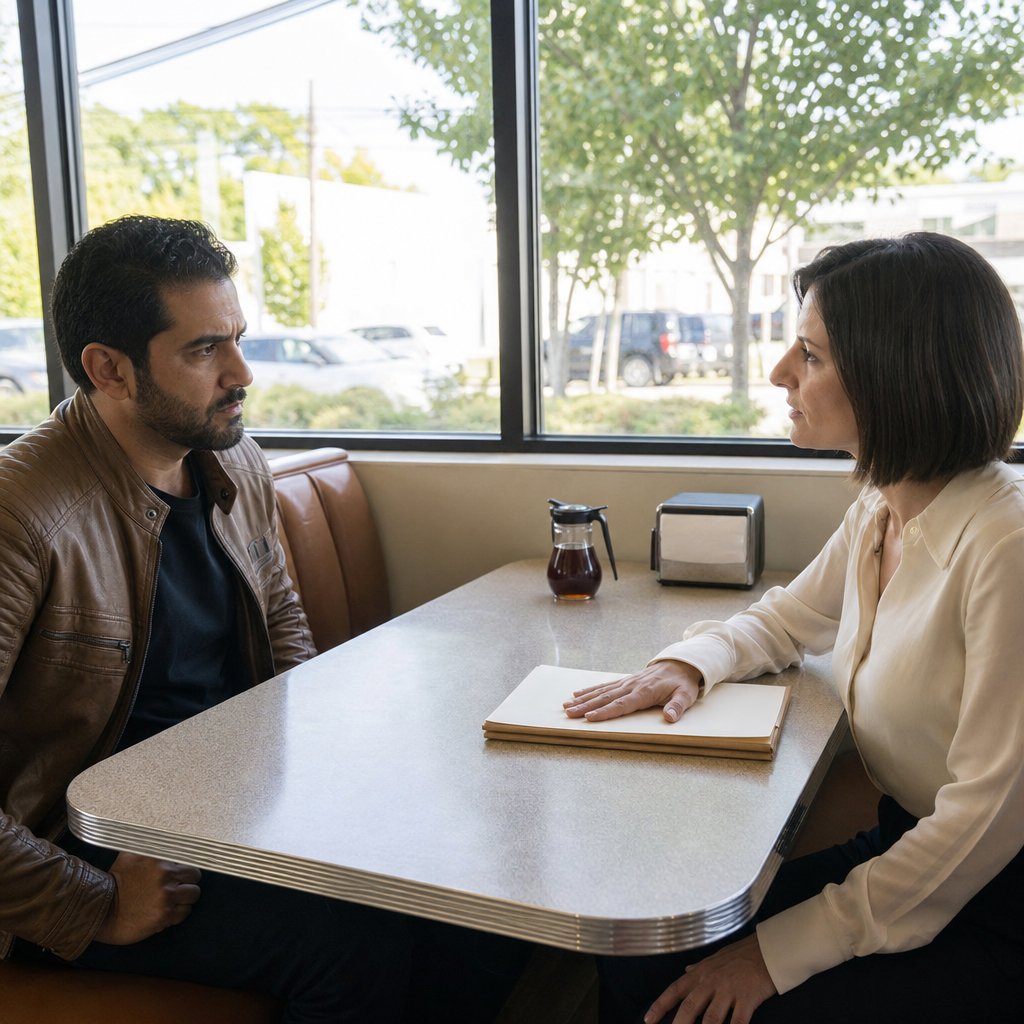
I met a real estate agent Dana trusted in the corner of a quiet diner, the kind with cracked vinyl booths and a faint smell of syrup that clung to your clothes. The agent—Tessa, sharp bob haircut, no-nonsense eyes—didn’t waste time pretending this was normal.
“It’s being whispered,” she said, sliding a folder toward me. “Not listed. Off-market. ‘Discreet sale.’ That’s code for: move fast before anyone can object.”
My pulse roared in my ears. “Who’s whispering?”
Tessa’s mouth tightened. “People don’t whisper without a reason. Someone wants it gone before court dates and filings catch up.”
I thought about Grant’s envelope. About Maris posting “new beginnings” like she was staging a launch. About the deed transfers stacked like dominoes. And suddenly it all clicked into one terrifying, practical goal: sell it before a judge can freeze it. Sell it, wash the money, walk away clean.
“Do you have any proof?” Dana asked over speaker, her voice tinny from the phone Tessa set face-down between us.
Tessa nodded once. “I can tell you this: there’s a buyer sniffing around already. And they’re being told the seller has ‘clear authority.’”
Clear authority. My stomach lurched. That meant someone had paper saying they could sell.
Tessa leaned closer, lowering her voice. “If you want to stop this, you need to know what name they’re selling under.”
She opened the folder, and I saw a printed listing sheet with the top line covered by her hand, hiding the seller info.
“Ready?” she asked.
My hands clenched under the table, because if the seller name was Maris…
Then Grant hadn’t just stolen the house.
He’d handed her the match.
He Called Me Unstable
The subpoena didn’t deliver justice. It delivered crumbs. But the crumbs were enough to show me the shape of the loaf Grant had been hiding.
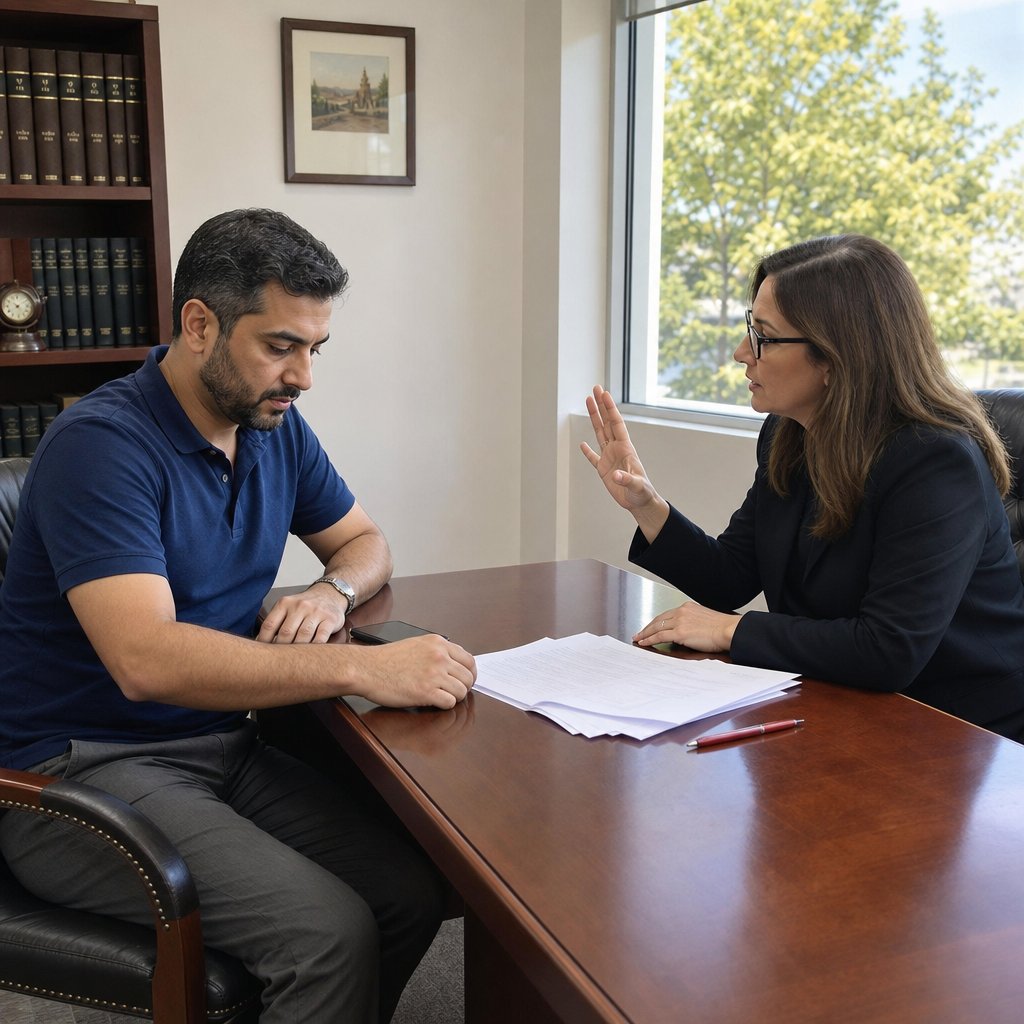
Dana met me in her office, the air sharp with dry-erase marker and stale mint gum. She laid out a small stack of printed communications—redacted, partial, the kind of “compliance” that feels like a smirk.
“This is what we got,” she said, tapping the pages. “Not everything. But look at the pattern.”
I scanned the lines, my stomach sinking with every paragraph break. Grant wasn’t just coordinating money and paperwork. He was coordinating a story.
There it was, in writing, like he’d practiced it in the mirror: Claire is emotional. Claire is erratic. Claire is spiraling. Claire is unstable.
He’d started planting it early—before I’d ever raised my voice, before I’d ever demanded anything more than honesty. He’d described me as a “risk” in the same breath as he discussed “timing” and “transfer.” Like I was a liability to manage, not a person he’d built a life with.
My hands went cold. “He’s setting me up,” I whispered.
Dana’s eyes didn’t soften. “Yes. He’s laying groundwork so if you react—if you show normal anger—he can point to it and say, ‘See?’”
I stared at the pages until the words blurred. This wasn’t just a divorce strategy. This was character assassination, premeditated. He wasn’t afraid of the truth; he was afraid of who the judge would believe.
Dana leaned forward. “We have to be surgical from here. No impulsive messages. No confrontations.”
My phone buzzed on the desk, face-down. A new voicemail. No name displayed—just a number.
Dana watched me reach for it. “Don’t,” she warned, but my fingers were already closing around the phone because I knew, in my bones, that Grant had just escalated.
And whoever had called me wasn’t calling to help.
Coffee And A Soft Threat

Maris showed up at my workplace like she belonged there.
I stepped into the lobby and saw her immediately—tall, glossy dark-blonde hair, perfect posture, neutral-toned outfit that screamed expensive without trying. She held two coffees in cardboard carriers like she was doing a favor, like we were girlfriends meeting to clear the air instead of strangers in a war she’d helped start.
My skin prickled. The lobby smelled like polished stone and someone’s citrus hand lotion. The receptionist glanced between us, curious.
“Claire,” Maris said, smiling too wide. She took a step closer, lowering her voice like she was sharing a secret. “Grant just wants peace.”
“You shouldn’t be here,” I said, keeping my face still even as my pulse tried to punch through my throat.
She tilted her head, pretending concern. “I’m worried about you. He says you’ve been… having a hard time.”
There it was. Unstable. The word wasn’t spoken, but it hung in the air like perfume you couldn’t escape. She was delivering his narrative in person, right where there were cameras, witnesses, and a front desk that could later describe my “behavior.”
She held out one coffee. I didn’t take it. Her smile didn’t falter, but her eyes sharpened—quick, mean, and gone.
“You know,” she said softly, “this could all be over if you’d just let go.”
I looked at the coffee carrier and noticed the detail that made my stomach drop: a thin gold ring on her left hand, catching the lobby light when she adjusted her grip.
Not a casual ring. Not a piece of costume jewelry.
A ring that looked like a promise.
I swallowed, because if Grant had already given her that—if he was already signaling ownership—then the off-market sale wasn’t the only thing moving fast.
Maris leaned in, close enough that I could smell vanilla on her breath, and whispered something I couldn’t quite hear over the blood rushing in my ears.
The Alert That Made Me Shake
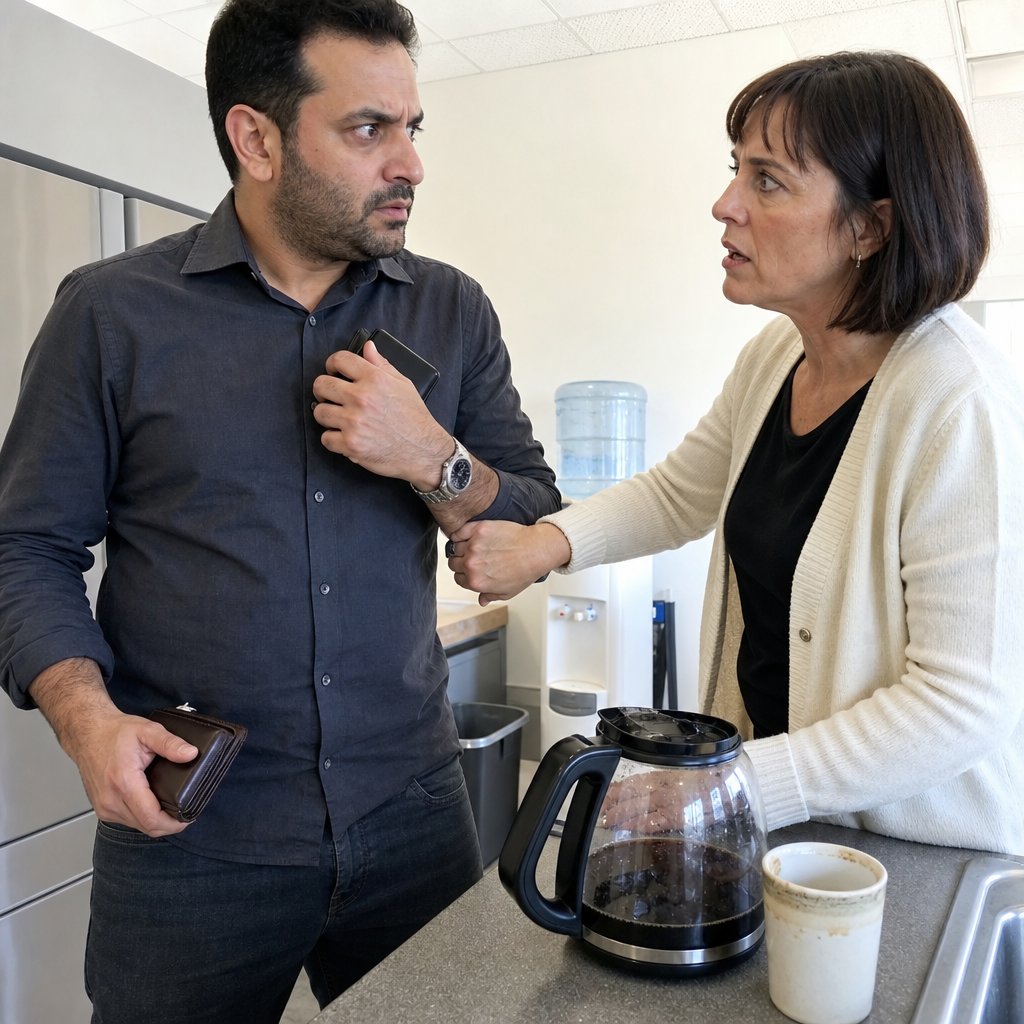
Maris leaned in like she was about to confess a crime. Her lips barely moved, and what came out was a breath of sound I felt more than heard: “He’s… using your numbers.”
My stomach dropped so hard it was physical. I stared at her hand again—the ring Claire had clocked, the one that didn’t belong in a “just dating” story—and then my own phone buzzed in my pocket like it had been listening. I pulled it out and saw the credit monitoring alert banner flash across the top.
Someone had tried to open a new credit card in my name.
For a second I couldn’t make my fingers work. I kept thinking about Grant’s stupid little habits—how he used to “help” by memorizing my login answers, how he’d joke that I was “bad with numbers” and he’d “handle it.” I remembered him insisting we put my Social Security card in the fireproof lockbox because “it’s safer if we keep everything together.”
Maris’s face went pale when she saw my expression, like she already knew what the alert meant. The air smelled like burnt coffee from the pot behind her, and I could suddenly taste it, bitter and metallic, as if my mouth had filled with pennies.
I hit call-back with a shaking thumb, and as it started to ring, my other hand went to my wallet on instinct—like I could physically stop him by holding onto my own ID—right as Maris grabbed my wrist and hissed, “Claire… he didn’t just try once.”
The LLC I’d Never Heard Of
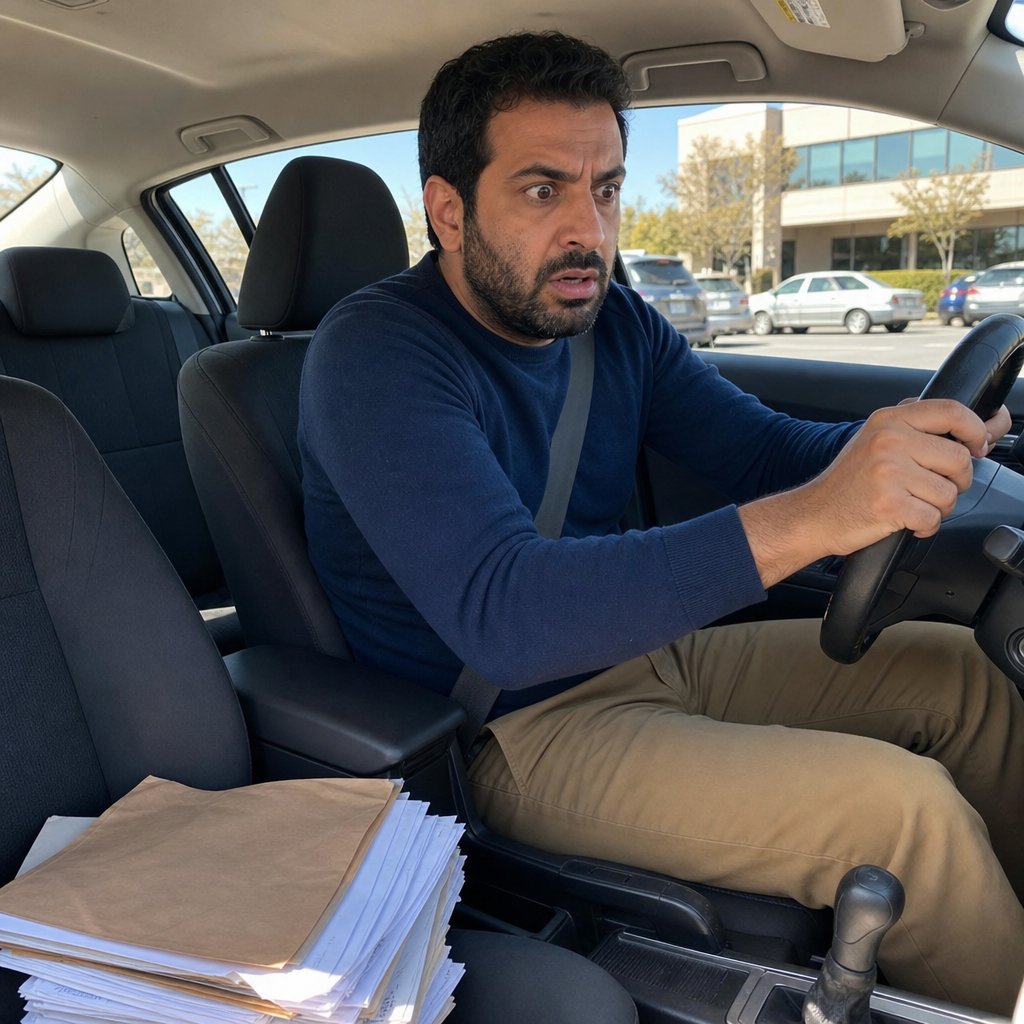
By the time the call ended, I was sitting in my car with the engine off, hands locked around the steering wheel like it was keeping me from floating away. My lawyer, Sima, didn’t waste a single syllable. “I got the bank subpoena returns,” she said, and I could hear paper shuffling on her end—thick, decisive.
“Tell me it’s in his name,” I said, because I still had this dumb, hopeful part of me that wanted the villain to be simple.
Sima exhaled. “It’s not.”
My throat tightened. I pictured that mystery account like a dark room in our house I’d never been allowed to open. “Then whose?”
“An LLC,” she said. “Not yours. Not Grant’s. Something called Seaward Holdings LLC.”
Seaward. Like the beach. Like the house I’d picked paint colors for, the one I’d spent weekends sanding and sealing while Grant ‘ran to the hardware store’ for hours. My palms went slick. I remembered those transfers—small at first, then bigger—always explained away as “reimbursements” or “timing.” Always just out of reach of my questions.
Sima kept going, voice flat in that way that meant she was furious underneath. “The account is the engine. Money goes in, money goes out, and it doesn’t touch the marital ledger. Whoever owns this LLC is the key.”
I looked at the passenger seat where my folder sat, corners bent, stuffed with receipts and photos of the beach house renovations. It hit me like a slap: he hadn’t just hidden the deed. He’d built a whole little machine to move our life around without leaving fingerprints.
Sima said, “The LLC’s mailing address is a private mailbox. If we can tie a person to it, we can crack this open.”
I swallowed hard. “Give me the address,” I said—right as she added, almost as an afterthought, “And Claire… the registered agent’s name is Lyle.”
I Watched The Mailbox Breathe
The mailbox place smelled like cardboard and cheap cologne, the kind that clings to the back of your throat. I sat across the street in a beat-up rental, sunglasses on, heart thudding so loud I kept checking the rearview mirror like it might show up as movement.
Sima hadn’t told me to come. She’d told me not to do anything “reckless.” But Grant had been reckless with my name, my credit, my house—why was I the one expected to behave?
People drifted in and out carrying padded envelopes, their lives neatly contained. Then a familiar gait hit my brain before my eyes could fully focus. Lyle.
He looked exactly like he always did when he was pretending to be harmless: mid-50s, sandy hair combed too carefully, a soft belly under a tucked-in polo like he was trying to dress his way into credibility. He scanned the parking lot with that quick, twitchy caution of someone who didn’t want to be recognized, then walked inside like he belonged there.
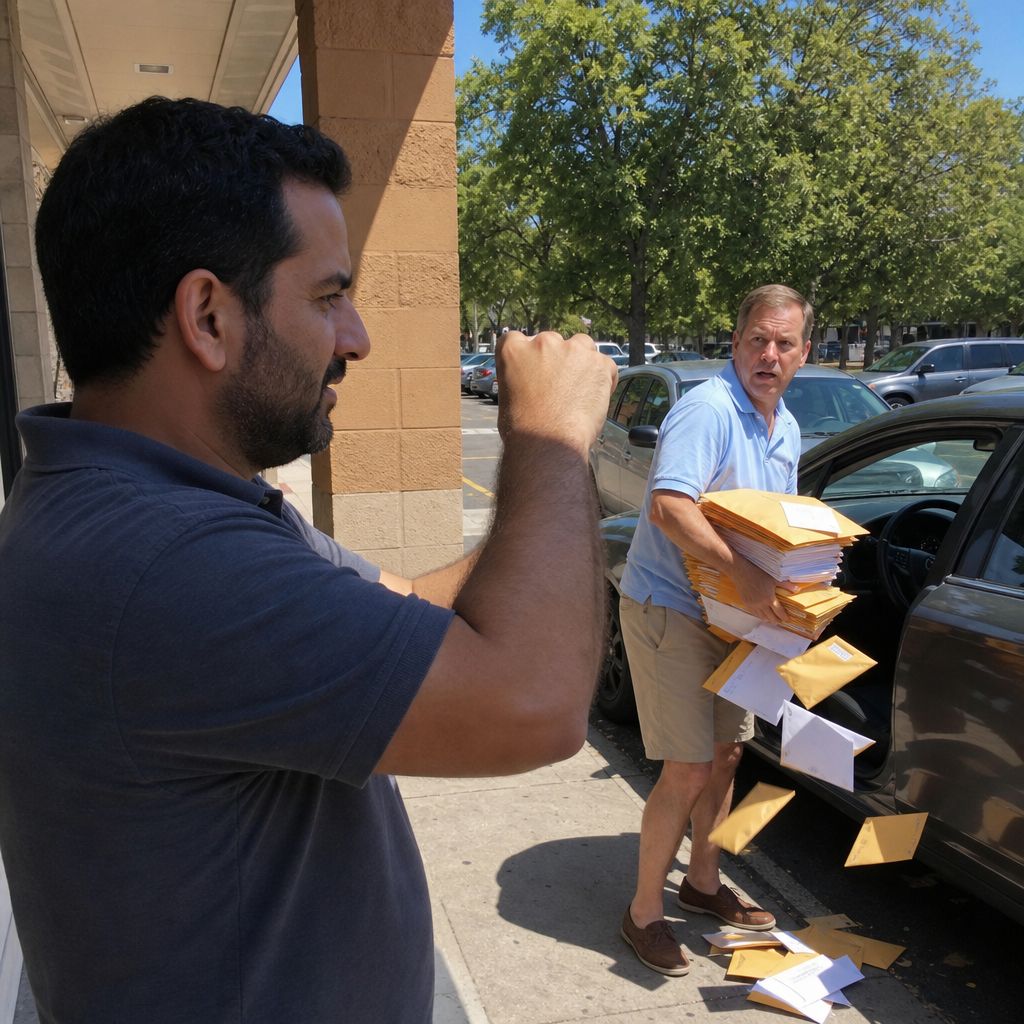
Minutes later, he came back out with a thick stack of envelopes held tight against his chest—too many for a “small business,” too urgent for someone who was supposedly just doing “administrative favors.” He didn’t open them. He didn’t even glance down. He just hustled to his car like the paper could burn him.
I got out, crossed the street, and lifted my own phone—camera pointed, hands steady for the first time in days. I took the photo as he yanked his driver’s door open, his face turning toward me at the exact moment he realized he’d been seen.
His eyes widened, and his mouth formed my name like it was a threat. “Claire,” he snapped, and the envelopes slipped in his grip, corners fanning out like a deck of cards—right as I heard a car engine roar behind me and knew, without looking, exactly whose it was.
Would you have confronted him after seeing the folder?