



The Ranch House Was Empty

I didn’t expect the house to be so bare. The morning light poured in through windows where curtains once hung, but the walls were stripped clean. Drawers that usually held Mom’s old recipe cards and Dad’s tools were gone, and even the familiar furniture was missing. The living room looked hollow, like someone had sucked the memories out of the place. The floor creaked under my steps as I moved through the empty rooms, finding nothing but echoes.
Outside, the air smelled faintly of dust and pine from the nearby trees. I ran my hand over a spot on the wall where a picture used to hang, feeling the roughness of bare plaster. I kept hoping I’d find something left behind—a note, a keepsake—but there was nothing. The silence was heavy. This felt less like cleaning and more like something else.
Rick’s Van And His Bright Grin

Rick pulled up just then, his rented van packed tight and humming with the engine’s low rumble. His smile was too bright, like he thought he had it all under control. "I donated all the junk," he said, waving his hand like it was no big deal. But when I asked where, he clammed up, shifting his weight and avoiding my eyes. There was a flicker of something in his face—nervous maybe, or guilty.
The sun hit the side of the van and caught the dust motes floating in the air, making them sparkle. I noticed the back doors looked scratched, like someone had been loading and unloading a lot. It didn’t feel like charity work; it felt like a cover-up. He kept saying he was doing us a favor, but the words didn’t match the way he looked. I wanted to press him harder, but he shut down fast.
Empty Jewelry Box And Scattered Drawers
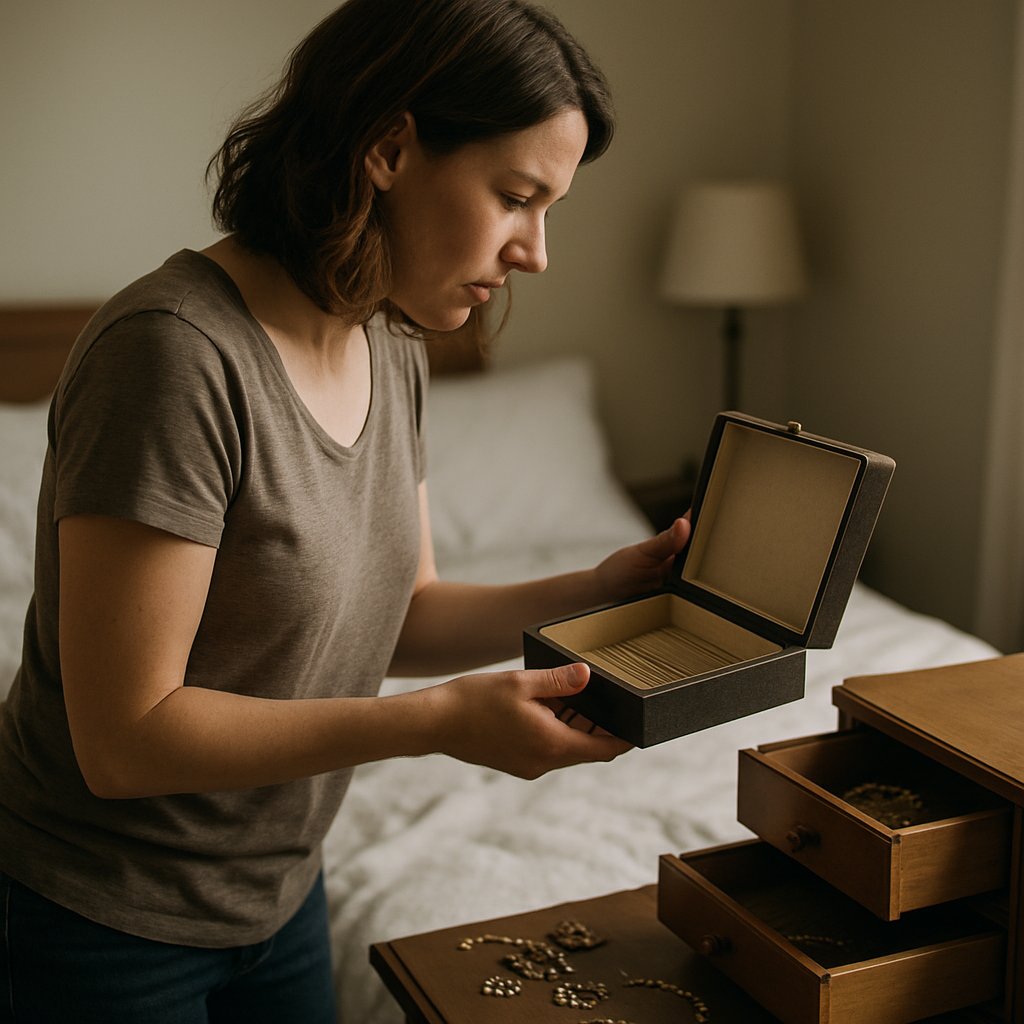
In Mom’s bedroom, the jewelry box sat open on the dresser, completely empty. Usually, it was full of costume pieces and a few real treasures she liked to wear. The drawers were pulled out and tossed on the bed like someone had been searching quickly for one thing. There were rings and necklaces missing, but more than that, the mess felt urgent—as if someone was desperate.
The air in the room smelled faintly of lavender and dust, a scent I remembered from childhood. I ran my fingers over a small note tucked between the drawers, but it was just a scrap with a phone number scribbled half-faded. Whoever had been here wasn’t careful. It was like a frantic search more than a cleanup.
The Sticky Note With Odd Instructions
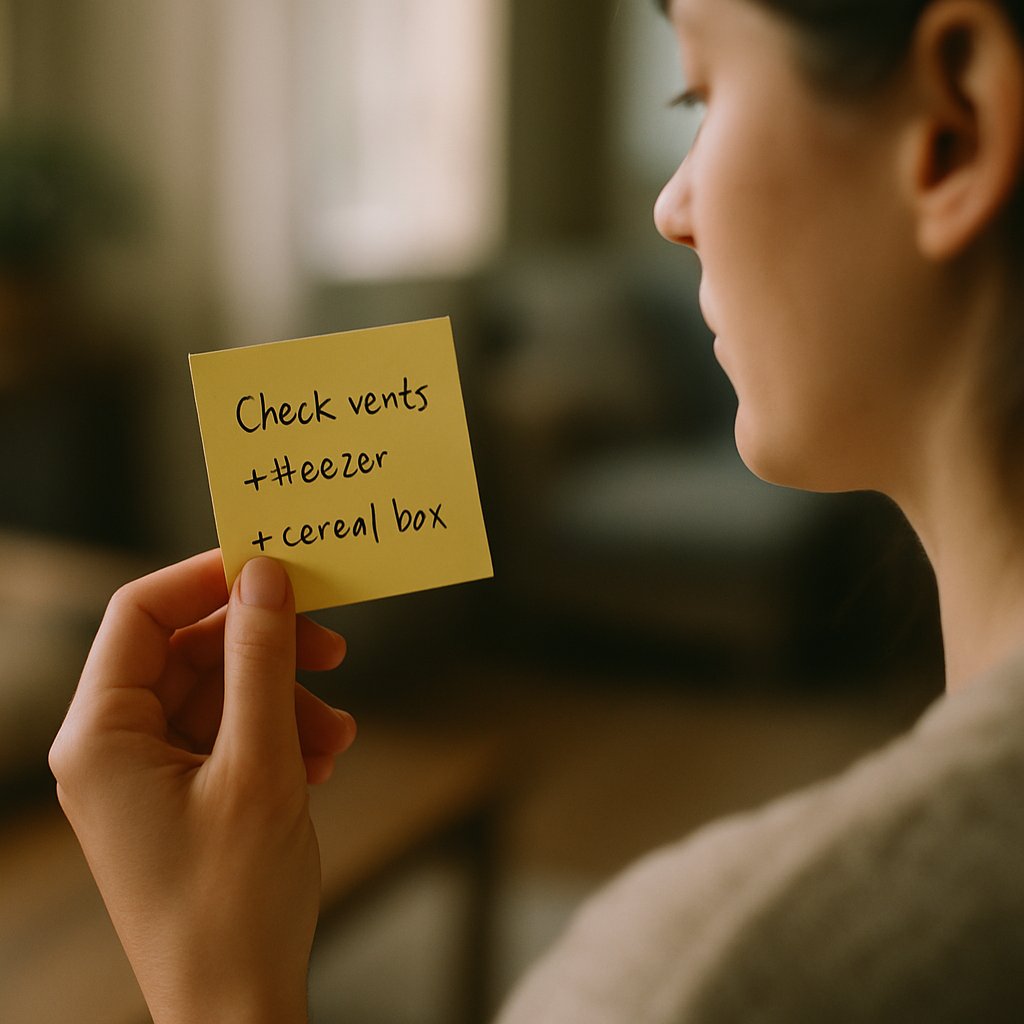
Taped to the inside of one dresser drawer was a yellow sticky note. Rick’s handwriting sprawled across it: “Check vents + freezer + cereal box.” It was out of place, like a scavenger hunt list. Why would anyone look in the vents or the freezer? Or even a cereal box? This wasn’t just cleaning; this was a deliberate search for something hidden.
The note stuck out in the pale light filtering through the window. I peeled it off carefully, studying the words. The handwriting was hurried, almost childish in its messiness. I felt a chill run down my spine. This wasn’t about stuff, it was about something important—something my parents never told me about.
Rick Changed The Obituary
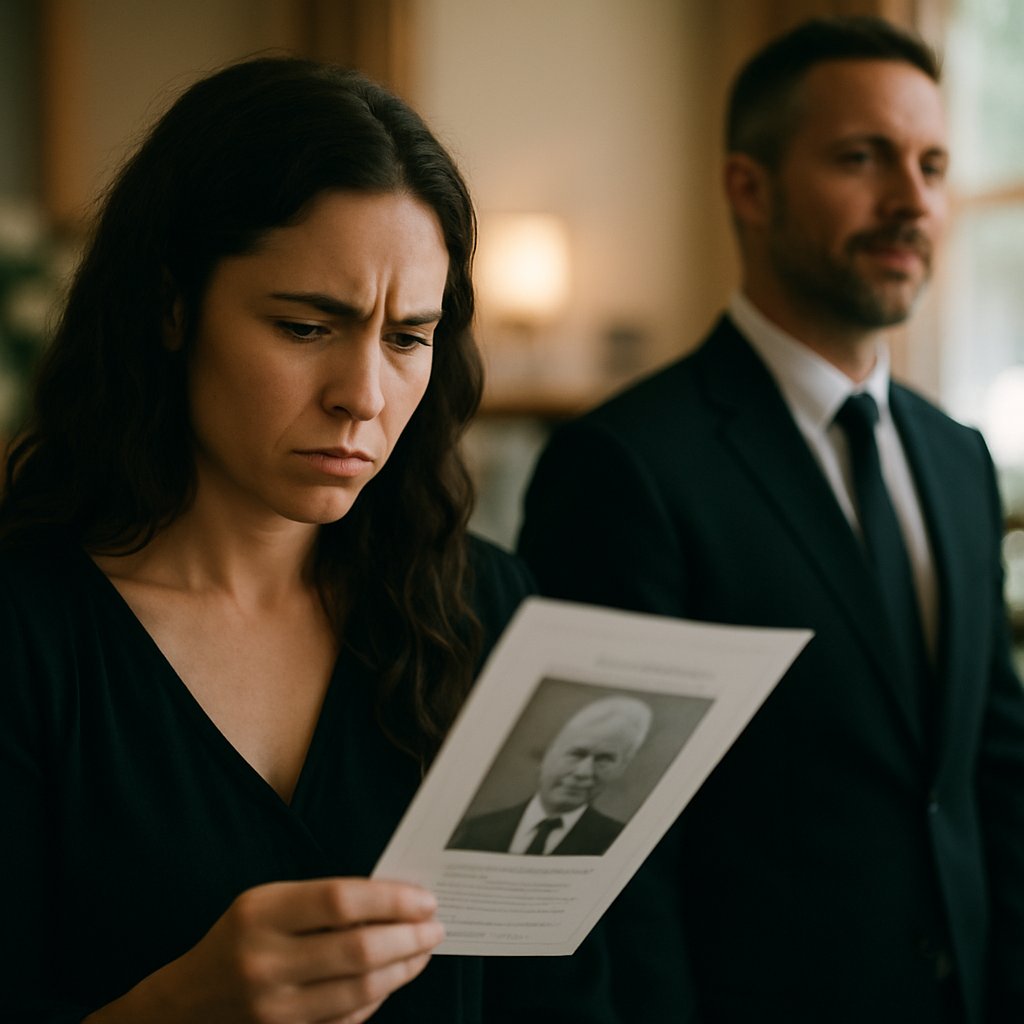
At the funeral home, I overheard the director mention Rick’s name as the primary family contact. Confused, I asked to see the obituary draft and found Rick had already changed it—quietly inserting himself as the main point of contact. The original draft listed both of us, but the final copy made it all about him.
The room smelled faintly of floral arrangements and wax candles. I sat in a wooden chair feeling my stomach tighten. Taking control of the narrative this early felt like a power grab. Was he preparing to take over not just the house but everything about our parents’ lives, even their memory?
Aunt’s Whisper About Tools
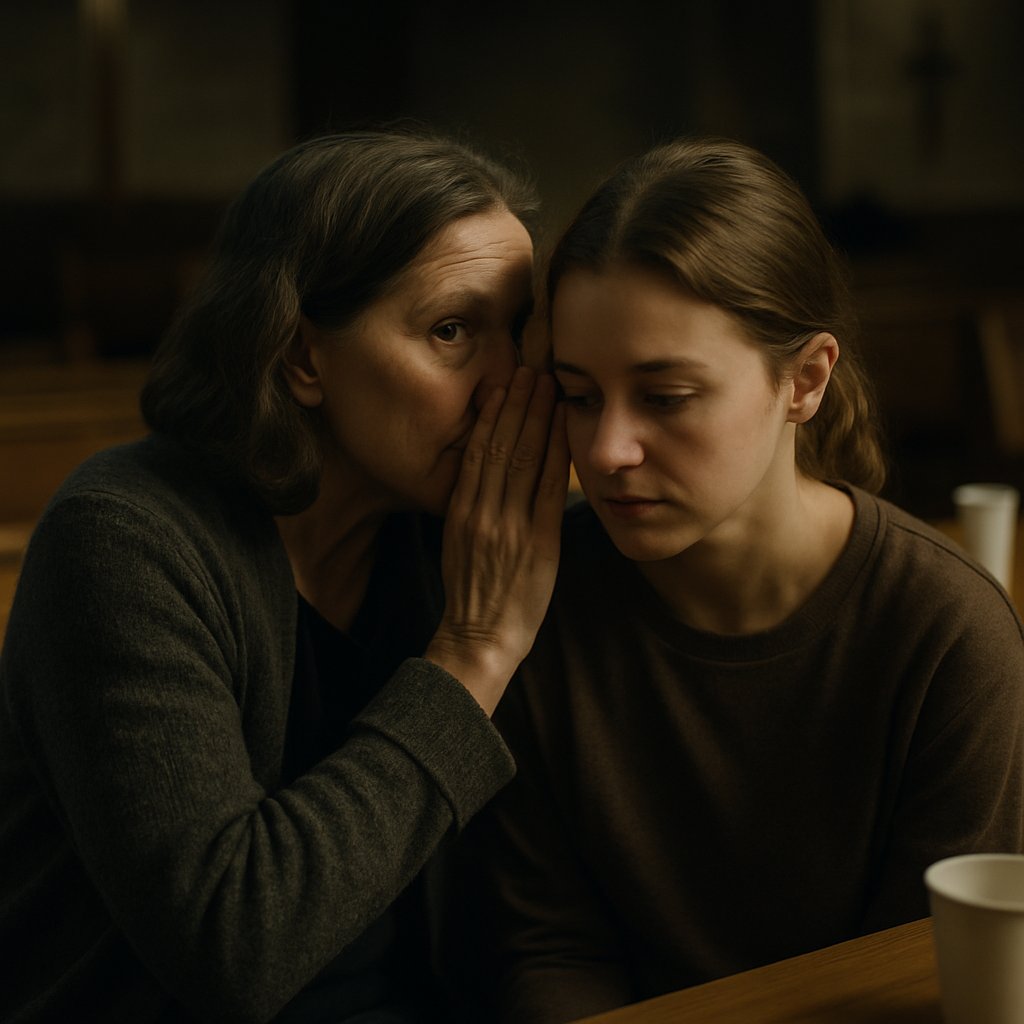
In the church basement, my aunt pulled me aside. She leaned in close, her voice low. "I saw Rick selling Dad’s tools weeks ago," she said, glancing around to make sure no one overheard. "Before Mom even died."
The smell of coffee and old wood mingled in the air, and I could hear muffled voices from the hall. My heart thudded as I tried to process what she’d just said. Selling tools wasn’t just clearing space—it was liquidating estate assets prematurely. Something about Rick’s actions didn’t add up.
Dad’s Office File Cabinet Missing

Back at the house, I noticed Dad’s office looked different. The file cabinet was gone—there were fresh scuff marks on the floor where it used to stand. It was clear someone had moved it recently, and I worried the important papers inside were taken out.
The faint scent of old paper mixed with a faint trace of cleaning spray lingered. I knelt down, running my fingers over the dust-free patch where the cabinet had been. I wasn’t just losing furniture; I was losing evidence, the history that might explain what Rick was after.
Parents’ Couch And Trunk At Rick’s
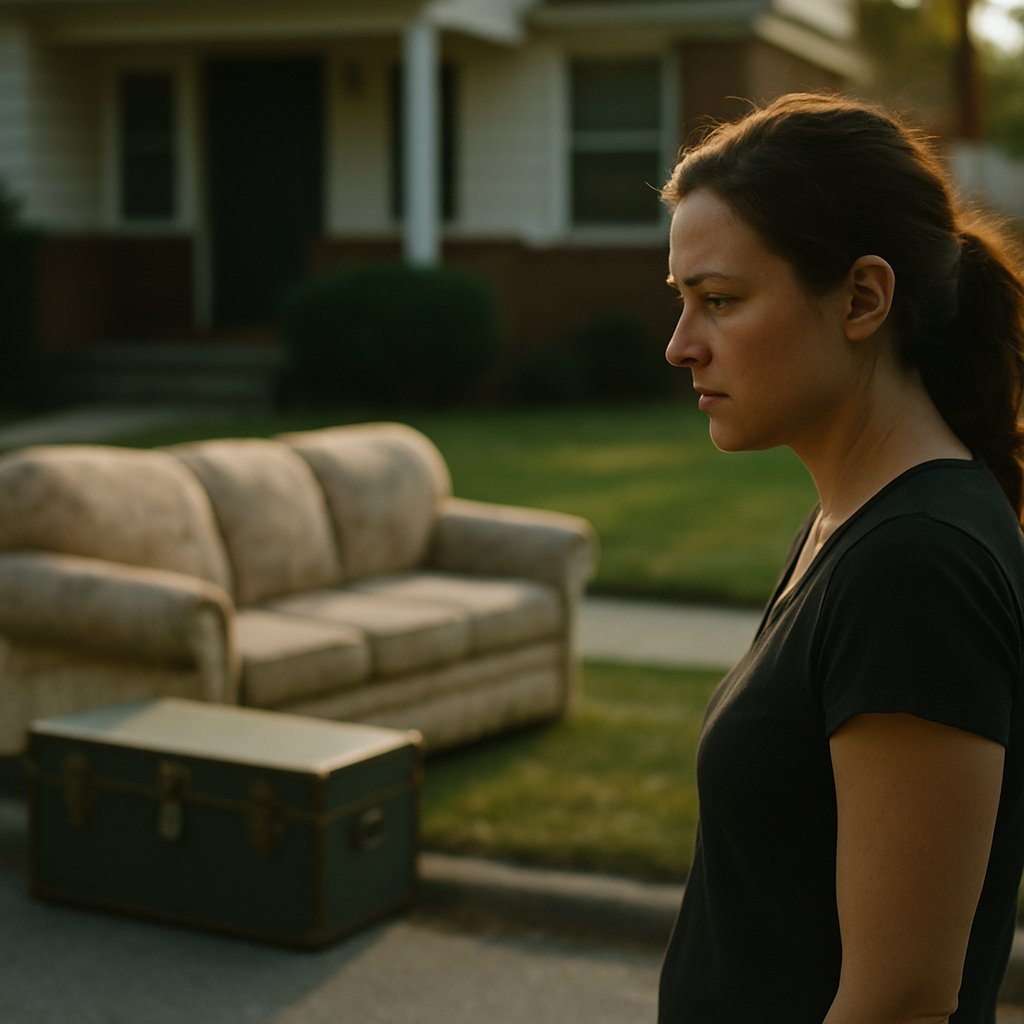
Driving past Rick’s place, I spotted Mom and Dad’s old couch sitting on his front porch, looking out of place and faded in the sunlight. Next to it was Dad’s WWII trunk—paint chipped and weathered but unmistakable. It hit me then: Rick was stockpiling their things at his house, not donating them as he claimed.
The late afternoon sun made the couch’s fabric fibers stand out, worn from years of family use. Seeing those familiar pieces in his yard felt like an invasion. He was hiding the estate’s treasures right in front of me, like he thought I wouldn’t notice.
Rick Denies The Will Exists

Rick was blunt when I confronted him. "There’s no will," he said evenly. "Only what’s fair." Then he laid it out: he believed he should keep the house because he’d been the one taking care of Mom and Dad. His eyes dared me to challenge him, a cold certainty in his voice.
The room felt tight and stuffy, the sun beating down through the window. I could see the tension in his jaw as he waited for my response, as if daring me to prove otherwise. But without a will, what evidence did I have? The silence between us thickened, and I realized this was a battle far from over.
The Locked Safe-Deposit Box

At the bank, I learned the safe-deposit box tied to Mom and Dad’s account was still active. But to open it, I needed the key and official executor paperwork. Without both, the bank wouldn’t let me near it. I left the bank feeling the weight of the clock ticking down on me.
The polished marble floor glittered under the bright overhead lights as I stood near the teller’s window. The receptionist’s firm tone still echoed in my ears: "No key, no access." I wondered where Rick’s key was, or if he even had one. Time was running out to uncover what might be inside.
A Tiny Key Taped Inside
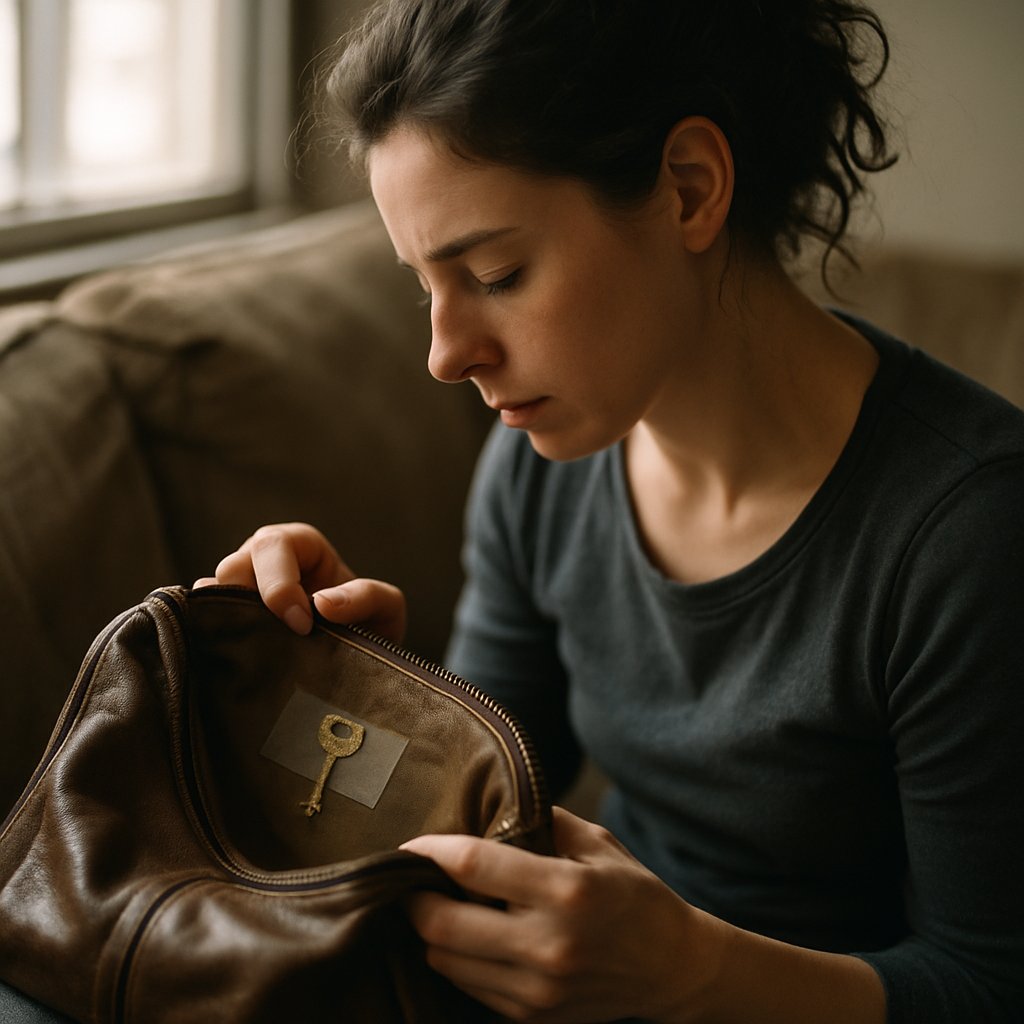
I rummaged through Mom’s purse from the hospital, the one Rick hadn’t touched yet. The smell of worn leather mixed with a faint trace of her favorite lavender perfume. Amid the usual clutter—receipts, loose coins, a crumpled tissue—I found something unexpected. Taped inside the lining was a small key ring with a single tiny brass key attached. It was labeled with just one letter, “M.” No other clue, no tag or chain. I turned it over in my fingers, the metal cool and smooth, as if it had been stashed away for safekeeping.
What did it open? The house had been stripped, but this key looked important—small enough for a lock no one had thought to check yet. Was it for a drawer, a box, a safe? My mind raced with possibilities. I knew Rick wouldn’t have found this, or at least, he wouldn’t admit it if he did. This might be the break I needed, but I had no idea where to start looking next.
Holding the key, I realized it was my only lead left. Could this tiny brass key unlock the mystery my brother was chasing?
The Hall Closet Lock Changed
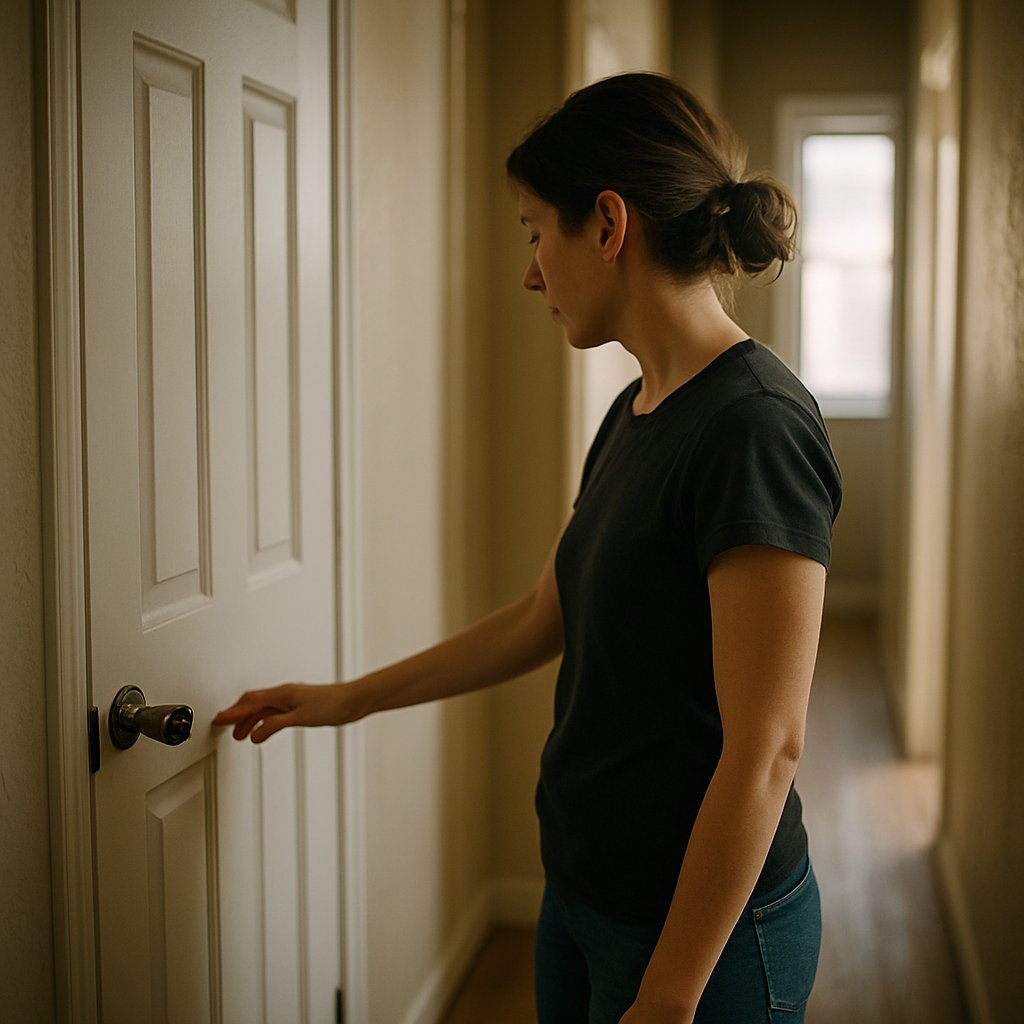
Back at the house, I headed straight for the hall closet where Mom kept important papers. The door looked normal at first, but when I tried the handle, it wouldn’t budge. The lock had been replaced. Rick claimed it was “for safety” but the new lock looked fresh, glaringly out of place. I traced my fingers over the cold metal, the faint smell of sawdust lingering around the doorframe where the lock had been swapped.
I stood back and stared at the door, knowing that the new lock was clearly to keep me out. Rick was already a few steps ahead, barricading whatever secrets lay inside. I needed to find a way in, but the locked closet was my first locked door, and I didn’t have the key.
Every second felt heavier. If Rick was changing locks, what else was he hiding? The house felt emptier than ever, and this locked closet was another wall between me and the truth.
Rick Visited The Lawyer’s Office

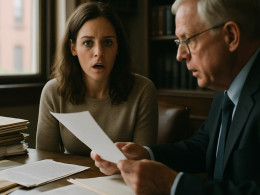
I called the lawyer’s office, Mr. Kline, hoping to get some answers about the will. When I spoke to the receptionist, she told me Rick had already been there that morning, asking questions. It was clear he was trying to get ahead of whatever records or filings existed.
Hearing that sent a cold wave through me. Rick was moving fast, trying to put himself in control before anyone else could intervene. I wanted to believe Mom’s estate would be fair, but my brother’s urgency felt like a warning. He wasn’t just grabbing things around the house — he was calculating his next move, trying to corner every piece of the inheritance.
I scribbled down notes on a yellow pad, my fingers tracing the phone’s smooth surface. The urgency in Rick’s actions was unmistakable, but why? What was he searching for that couldn’t wait?
The Will Was Locked Away

At Mr. Kline’s office, I waited in the quiet, softly lit reception area. The receptionist told me there was a will, but it couldn’t be read until after the funeral and the death certificates were finalized. That meant there was a delay—an official lock on when the will could be opened.
While I sat there, the soft hum of the air conditioner filled the room. It was a small window of time before anything could be legally accessed. Rick had it — a real chance to move quickly, unchecked, in a way that felt wrong. The thought unsettled me more than I expected.
I clenched the armrests of the chair, realizing that until the paperwork was complete, I might not know what was really waiting in the will. That fragile legal barrier was the only thing standing between Rick and whatever treasures or secrets were hidden inside.
Rick Stirred The Family Group Chat

Rick blasted the family group chat, accusing me of “causing trouble.” His messages filled the thread with complaints and half-truths, trying to turn everyone against me. I watched the screen glow as relatives weighed in, some siding with him, others unsure.
The chatter felt like a storm. I could almost hear the ping of every notification in my chest, the swelling pressure of family expectations and alliances pushing me to back off. Rick was building a wall of social pressure to isolate me, and it was working.
My phone vibrated again. Another message from a cousin, urging me to let it go, to stop stirring up conflict. The family line was no longer just about grief—it was a battleground, and Rick was leading the charge.
A Photo Of Vanishing History
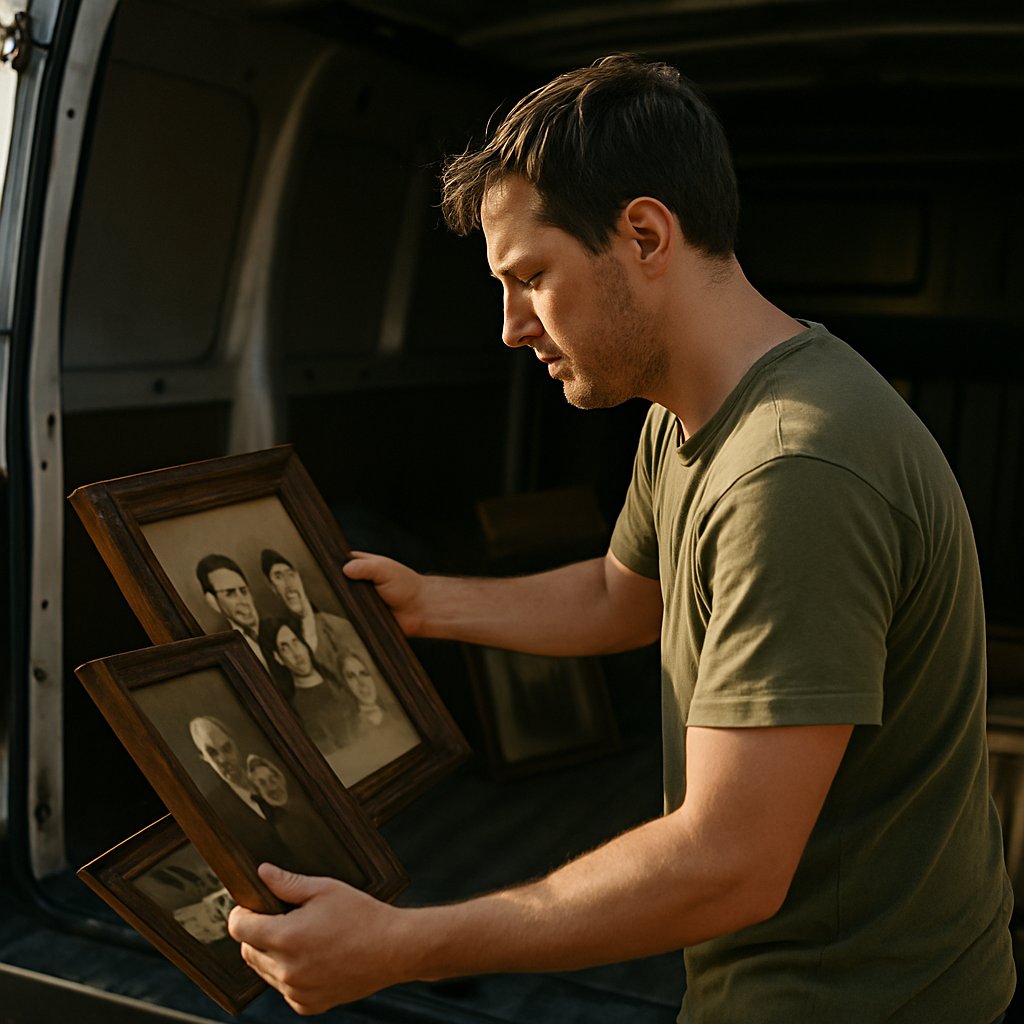
A cousin forwarded me a photo in the group chat. It showed Rick loading framed family pictures into a van. The frames were thick with dust, the faces frozen in time — smiles from birthdays, holidays, years ago. He was packing away our history, the evidence of our parents’ lives, like they were disposable items.
The photo felt like a punch. These pictures were more than decorations — they were memories, proof of who we were. Rick was even taking the evidence of family history, trying to erase it.
I stared at the screen, the dull glare of the phone illuminating my face in the darkening room. What else was he taking? And why was it so important to him?
The Loose Phone Jack Plate
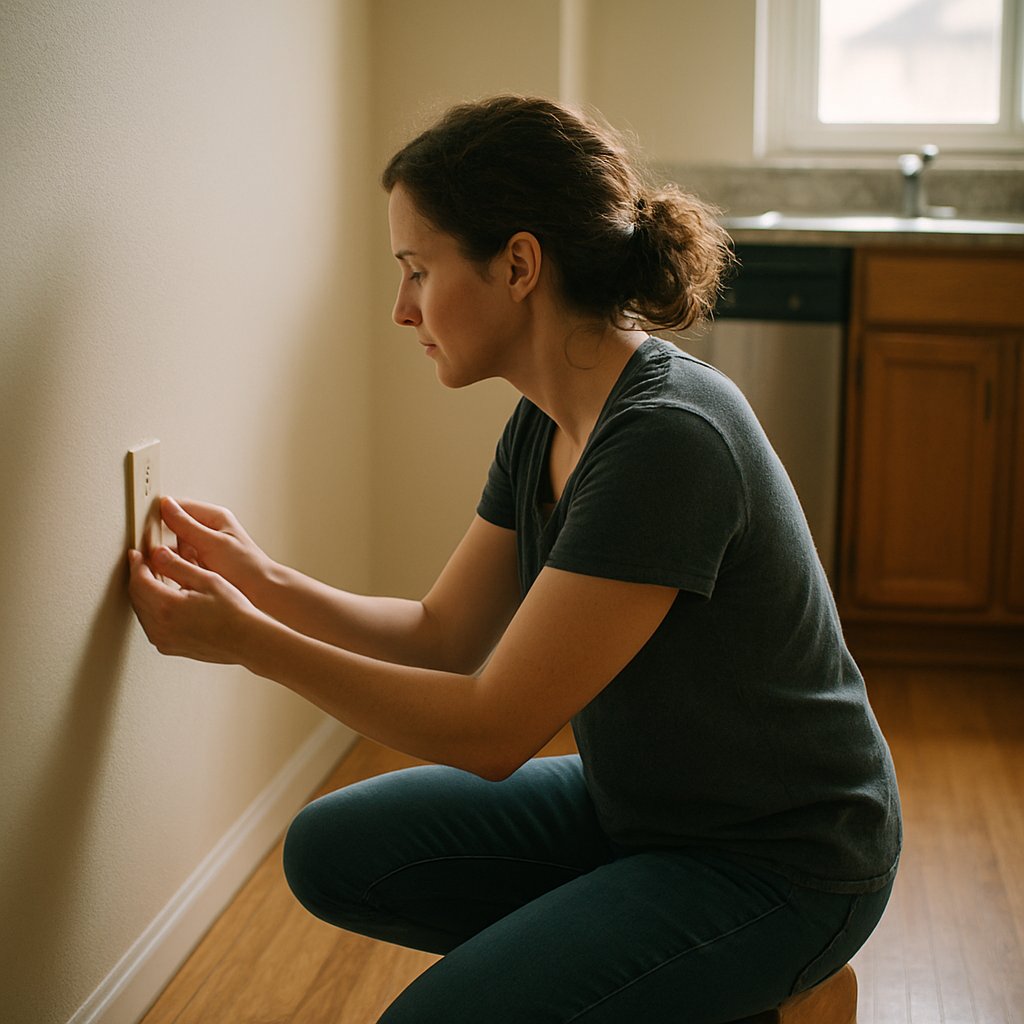
In Mom’s empty kitchen, I noticed something odd. The phone jack plate on the wall was loose, hanging slightly crooked like it had been pried off. I ran my finger around the edges and saw scrape marks and faint dust disturbed behind it.
Somebody had already checked that spot. The kitchen was stripped bare, but this hidden nook felt like a secret space someone had gone through quickly, trying to find what was hidden behind the wall.
The cool edge of the jack plate pressed against my palm as I pulled it gently away from the wall. My heart sped up. Was I too late? Had Rick already been here, hunting for whatever our parents had hidden?
The Key Didn’t Fit Here
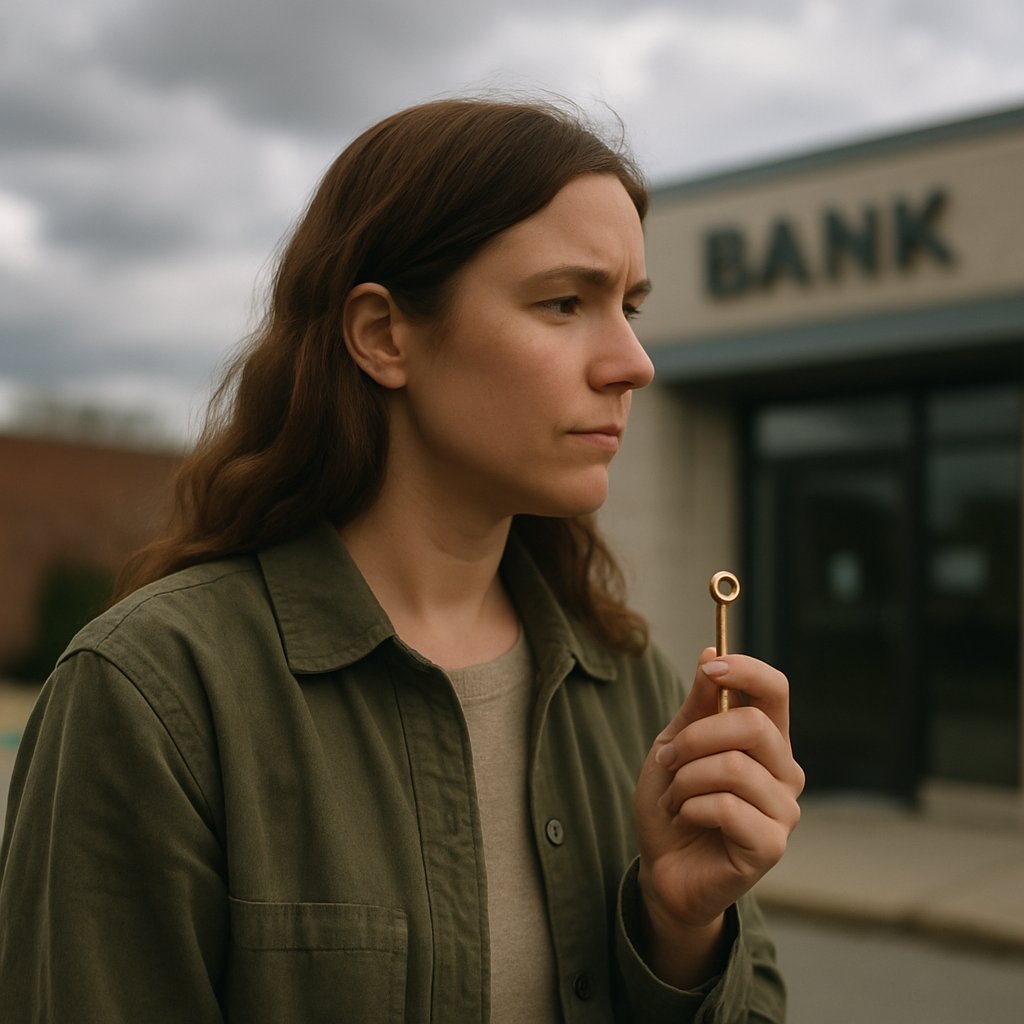
I tried the tiny brass key in the lock of Mom’s usual bank branch. It didn’t fit — the teeth were no match for any of the vaults or safety deposit boxes there. I called the other bank across town, describing the key. The manager recognized it immediately and said Rick had tried to access that very safe-deposit box yesterday but was denied access.
The detail hit me hard. Rick was already moving fast, and someone at the bank was watching him. The box might hold something crucial, but Rick didn’t have the means to open it yet.
Holding the brass key in my palm, I wondered what was inside the box that made Rick so desperate, and why he’d been turned away.
A Note Hidden In The Box

Inside the safe-deposit box, I found a folded handwritten note from Mom. It read: "If Rick is rushing, it means he remembered the envelope. Don’t trust him. Go to Kline and bring the receipt." Her handwriting was shaky but clear, the ink slightly smudged.
The smell of old paper and faint wax from the envelope filled the small box. This wasn’t just an inheritance — it was a warning. Mom had suspected Rick’s moves and wanted me to be prepared.
My hands trembled as I reread the note. What was this envelope, and why did Mom specifically warn me not to trust Rick?
The Mysterious Envelope Warning

Also inside the box was a receipt for a cash-paid storage unit and an envelope addressed to me. The envelope was plain but bore a note on the front: “Do not open this alone.” The paper felt thick and old, and I hesitated, my fingers brushing the seal.
The warning was chilling. It implied a trap or a trigger — something I couldn’t face without backup. My heart pounded as I imagined what might be inside, the weight of the moment crushing the silence around me.
Outside, the afternoon light filtered softly through the curtains, falling on the envelope like a spotlight. I had the key, the note, and an ominous warning. But what was I really walking into?
Kline Shared Trust Details

Kline sat back in his worn leather chair, leafing through several legal documents. He confirmed our dad had set up a trust, with multiple amendments over the years. The last amendment, he said, was triggered by something very specific: “removal of household property prior to funeral.”
I leaned forward, heart pounding. "What are the consequences?" I asked, but Kline hesitated. He wouldn’t reveal that just yet.
The office smelled faintly of old paper and coffee, the afternoon light slicing through venetian blinds. I noticed the faint scratch marks on the desk where he’d been nervously tapping a pen.
There was a heavy silence. Kline glanced up, eyes serious. "I can’t say more until we’re sure what’s been taken. But it affects any inheritance."
The weight of those words settled in. Had Rick already triggered this amendment? Was everything slipping out of reach? My fingers brushed the unopened envelope in my bag — the one I still hadn’t dared open alone.
Rick’s Empty Frames Threaten Dawn
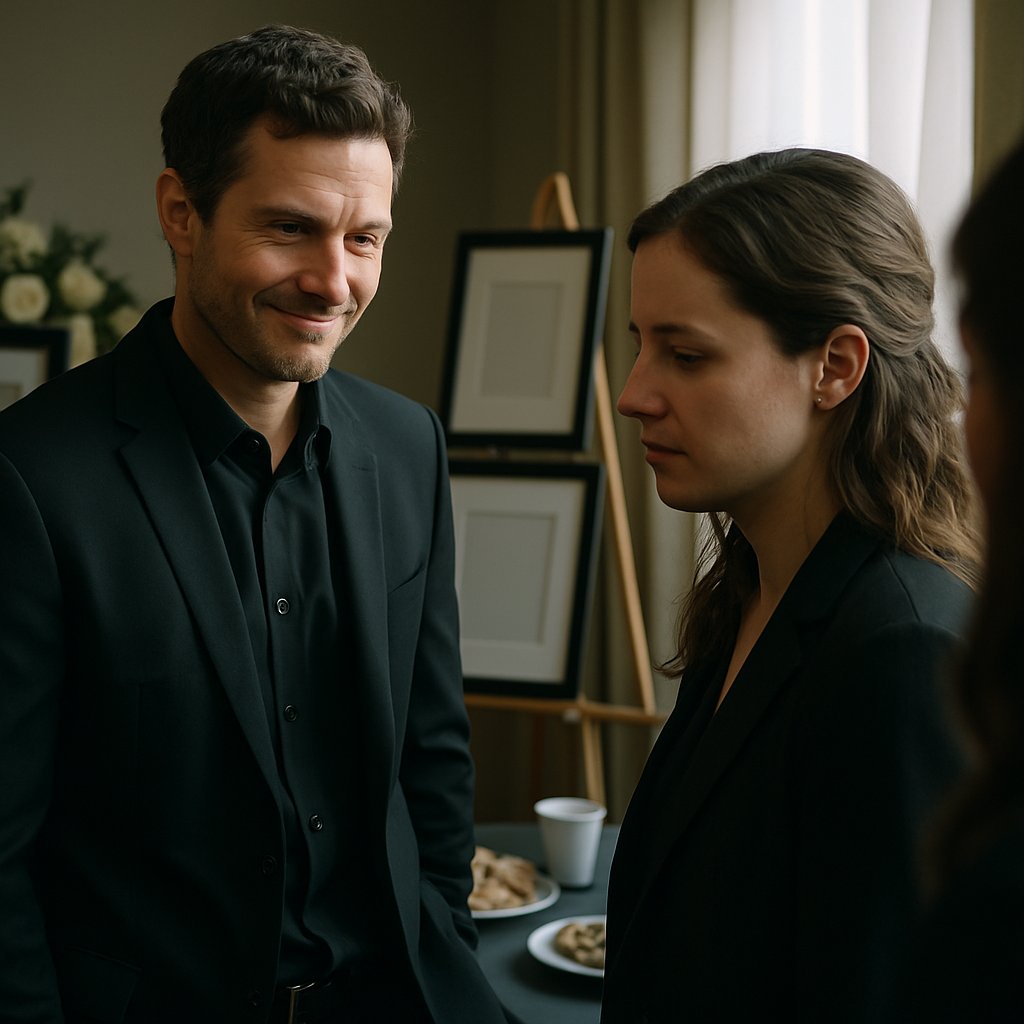
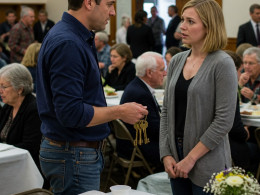
At the visitation, the room buzzed quietly with mourners. I noticed Rick standing by the wall where framed photos of Mom usually hung — except the frames were empty. He smiled in a way that didn’t reach his eyes.
He caught my sister Dawn off guard and cornered her near the refreshments table. His voice was low but sharp. “You won’t get a thing, Dawn. Not if you keep digging.”
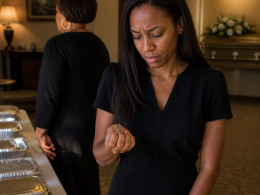
Then he mentioned Mom’s missing ring — the one no one had seen since she passed. "Maybe your chances get better if that turns up," he said, his smirk widening.
The faint scent of funeral flowers mixed with stale coffee. Dawn’s face tightened, but she said nothing.
I watched from a distance, heart thudding. Was Rick trying to intimidate her? How much did he really know about that ring? The empty frames behind him felt like a warning — something missing, something hidden.
The Key Came In The Mail
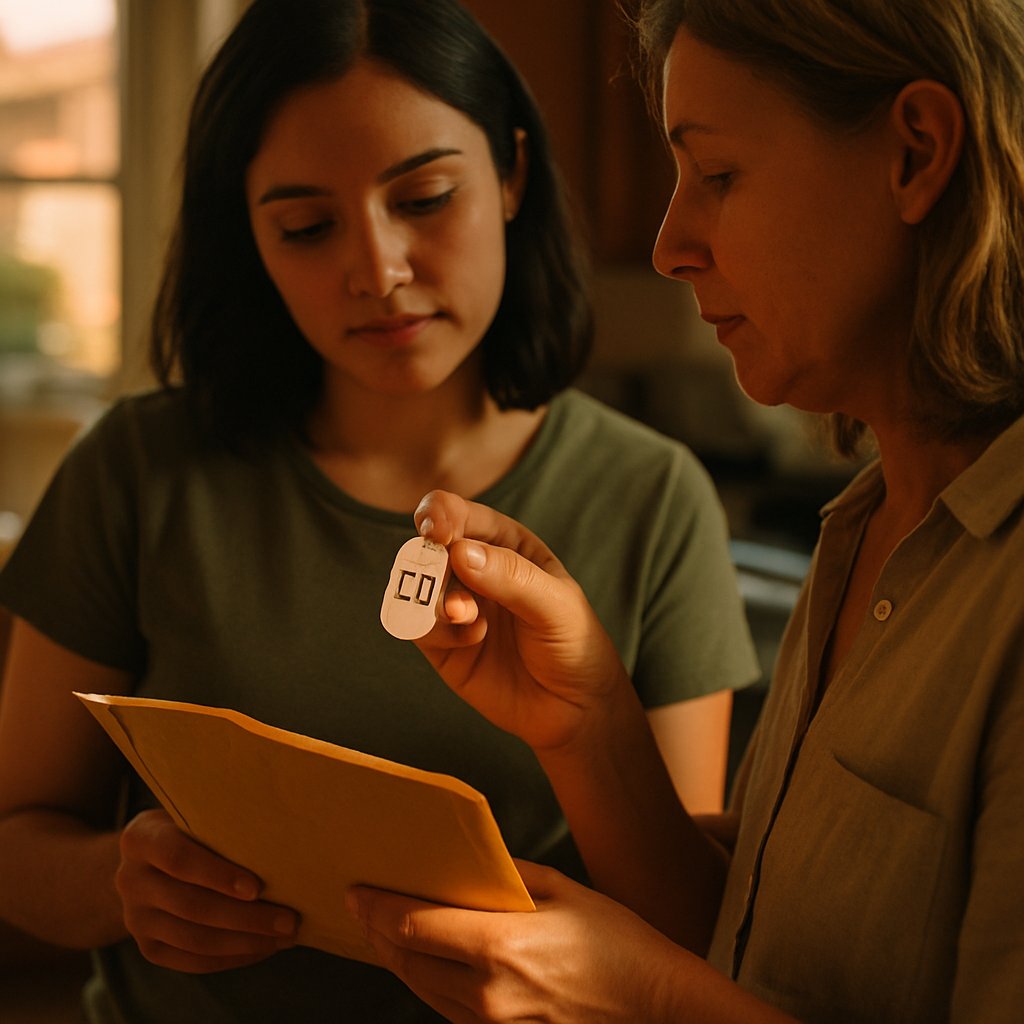
Back home, I found a padded envelope slipped into Dawn’s mailbox. No return address, just our names carefully printed in black ink. Inside was a key tag with a storage unit number scribbled on it.
We looked at each other, unease settling in. Someone was guiding us, but from where? And why send a key instead of a note?
The quiet click as I held the key tag was the only sound in the otherwise silent kitchen. The late afternoon sun cast long shadows on the cluttered counter.
Was this a clue? Or a trap?
Impersonator Called Storage Desk
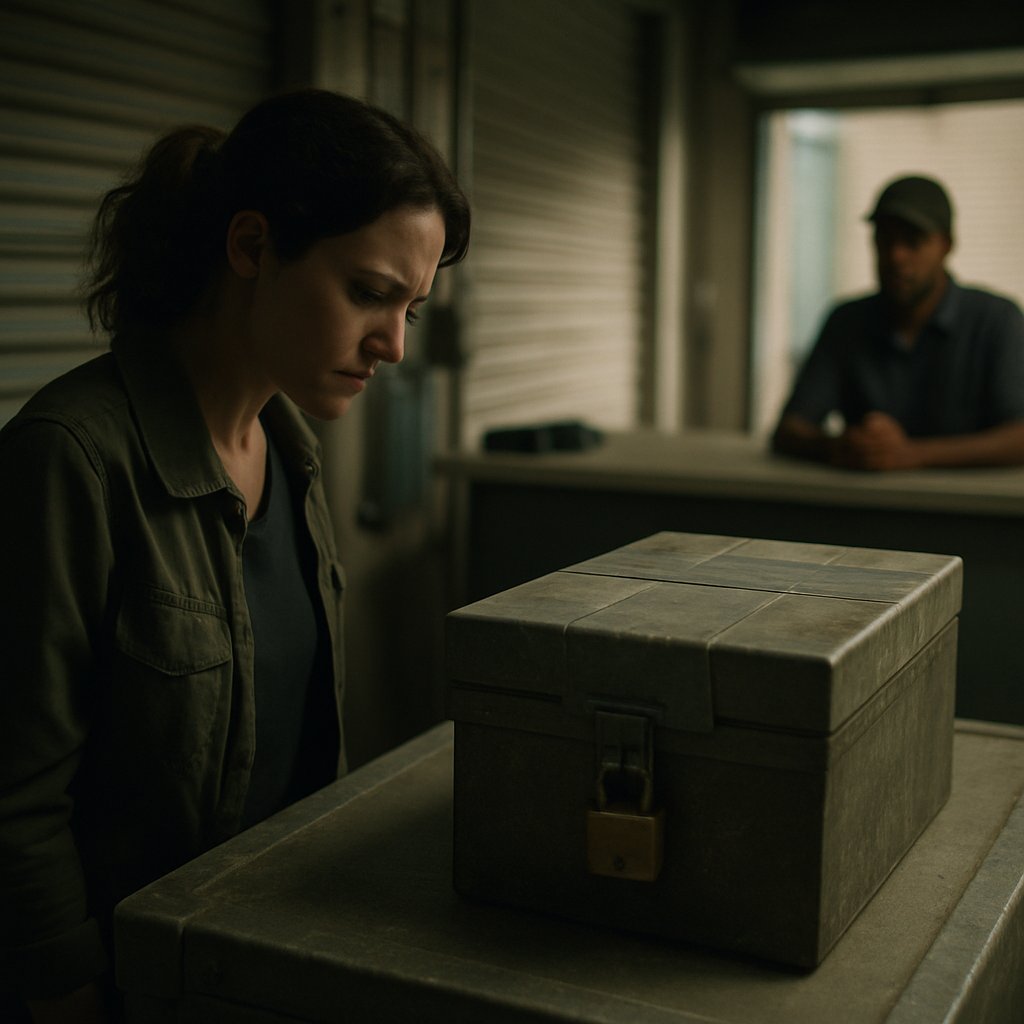
At the storage facility, the clerk looked uneasy. “Someone called earlier today,” she said, “pretending to be you, Dawn, asking about the unit and access codes.”
Inside the unit, I found a heavy lockbox duct-taped beneath a dusty stack of books. The tape had dusty fingerprints — unmistakably Rick’s.
The smell of musty paper filled the cramped space. I ran my fingers over the rough duct tape, the cold metal of the lockbox pressing against my palm.
Why had Rick tried to hide this? And why pretend to be me?
Attic Clues Amid Disturbance

After the funeral, I went back to Mom and Dad’s house. The attic was disturbed — boxes shifted, and the floor dust was scattered.
Near the far corner, I spotted an empty coffee can with a false bottom, its lid tossed aside. A torn corner of an envelope peeked out nearby, with handwriting that read, “To be opened with Kline present.”
The attic smelled of aged wood and dust, the late evening sun creeping through a small window, illuminating the torn envelope.
What could be inside that needed Kline? And why was this hidden here in the attic?