



The One-Week Favor Stayed
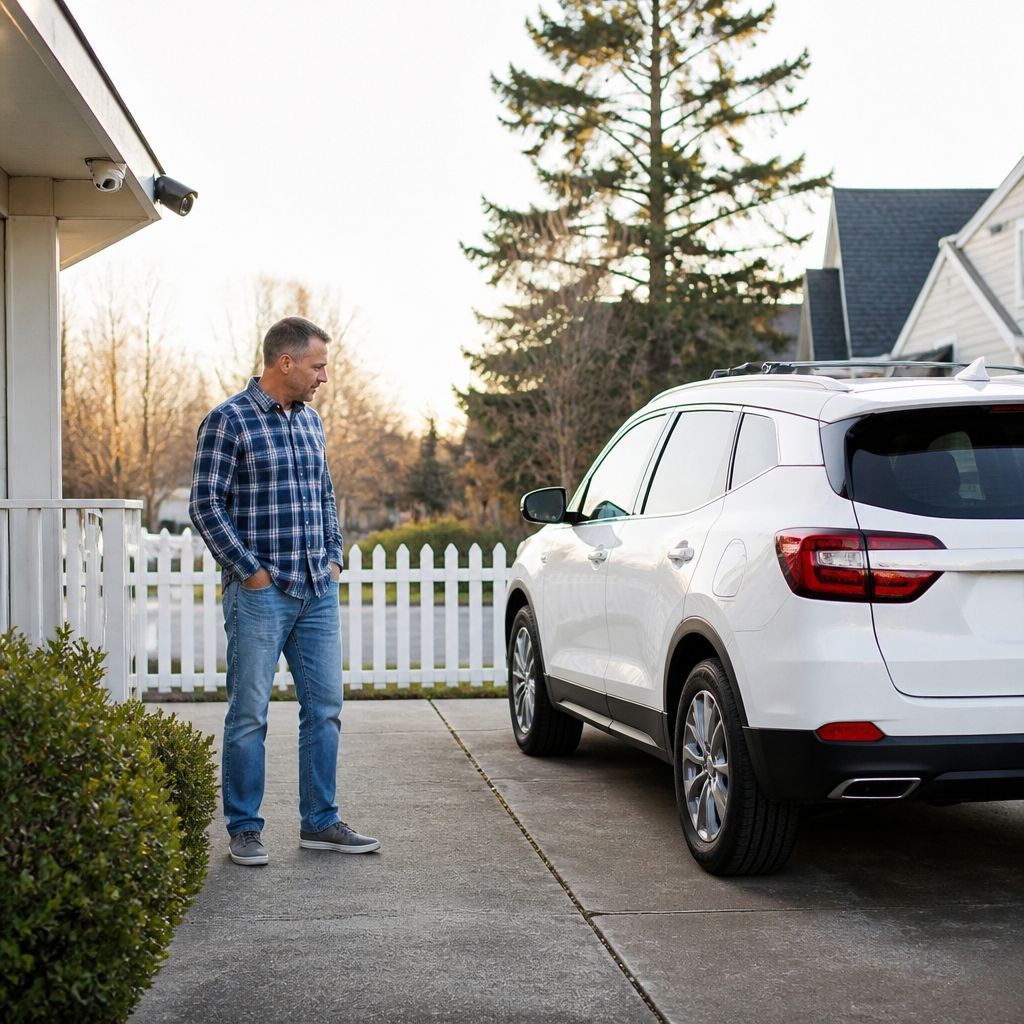
Glen's SUV showed up one Saturday morning, parked just inside the shared driveway. He said it'd be "just one week," a favor, he claimed. I didn't think much of it at first—after all, our driveways met in the middle, and sometimes a car or two spilled over. But by day three, Glen's SUV hadn't moved much. The neighbors' white picket fences framed the driveway on either side, and the line where our properties met was marked by an old, faded concrete seam, barely noticeable unless you looked closely. I noticed the security camera mounted on my porch catching the SUV in its frame during its long stay. The air smelled faintly of gasoline and freshly mowed lawns. I waited for Glen to say something about moving it, but he didn't. It felt like the first crack in how we’d shared the driveway—quiet, but there.
Groceries And The Blocked Pull-In
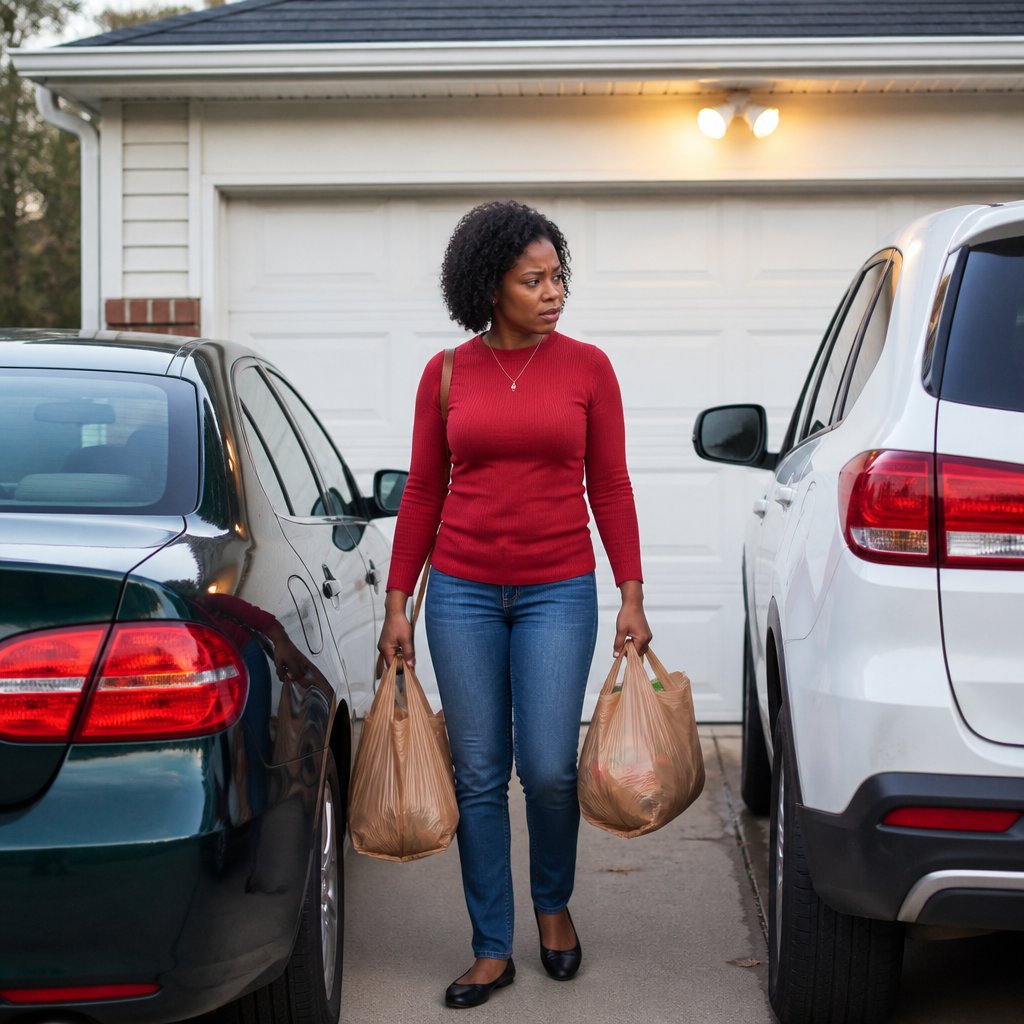
One evening, I came home with bags of groceries, balancing the usual mix of items from the neighborhood farmer's market. When I turned into the driveway, I noticed Glen’s SUV was backed in deeper than before, sitting right where my car needed to swing to get into the garage. The overhead garage lights flickered on as I wrestled with the bags, the smell of ripe tomatoes mixing with the faint scent of rain from earlier. The driveway, usually wide enough for both our cars to pass, suddenly felt tight, like a narrow corridor lined with Glen's dark green sedan and his SUV. I set the bags down on the cracked concrete, frustration creeping in. I realized the "new normal" wasn’t just about a favor anymore—it meant I couldn’t pull in safely or simply without shuffling or waiting. I glanced up at the security camera on my porch, feeling watched and boxed in.
Parking On The Property Seam
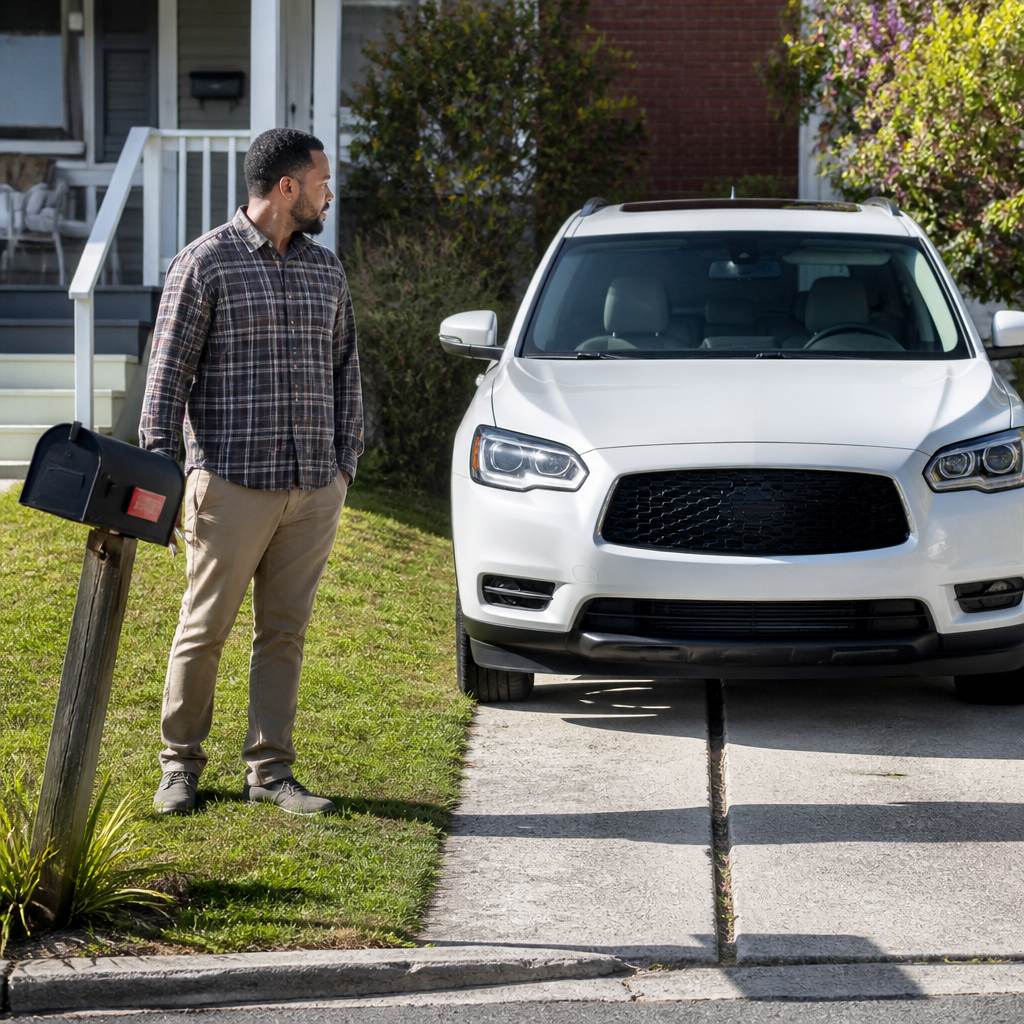
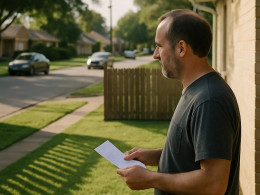
Glen started parking his SUV right on the seam that divided our properties. It was a subtle line—older concrete that cracked in places, with tufts of grass pushing through. He'd angle the SUV just so, leaving a sliver of space on my side, enough to say the driveway was "shared." But the gap was tighter, and every time I came out, I felt like I had to yield. The mailbox by the street stood slightly crooked, a daily reminder of the boundary we never fought over until now. I noticed the chill in the air as I stepped outside one morning, watching Glen from across the street, wearing a flannel shirt and khakis, lighting a cigarette near his front door. The parked SUV seemed like a barricade, and I felt the pressure rising. A letter from the HOA sat unopened on my kitchen counter, its envelope crisp and official. This parking on the seam felt like a quiet pressure, a territorial move I couldn’t ignore.
The Shredded HOA Note Returns
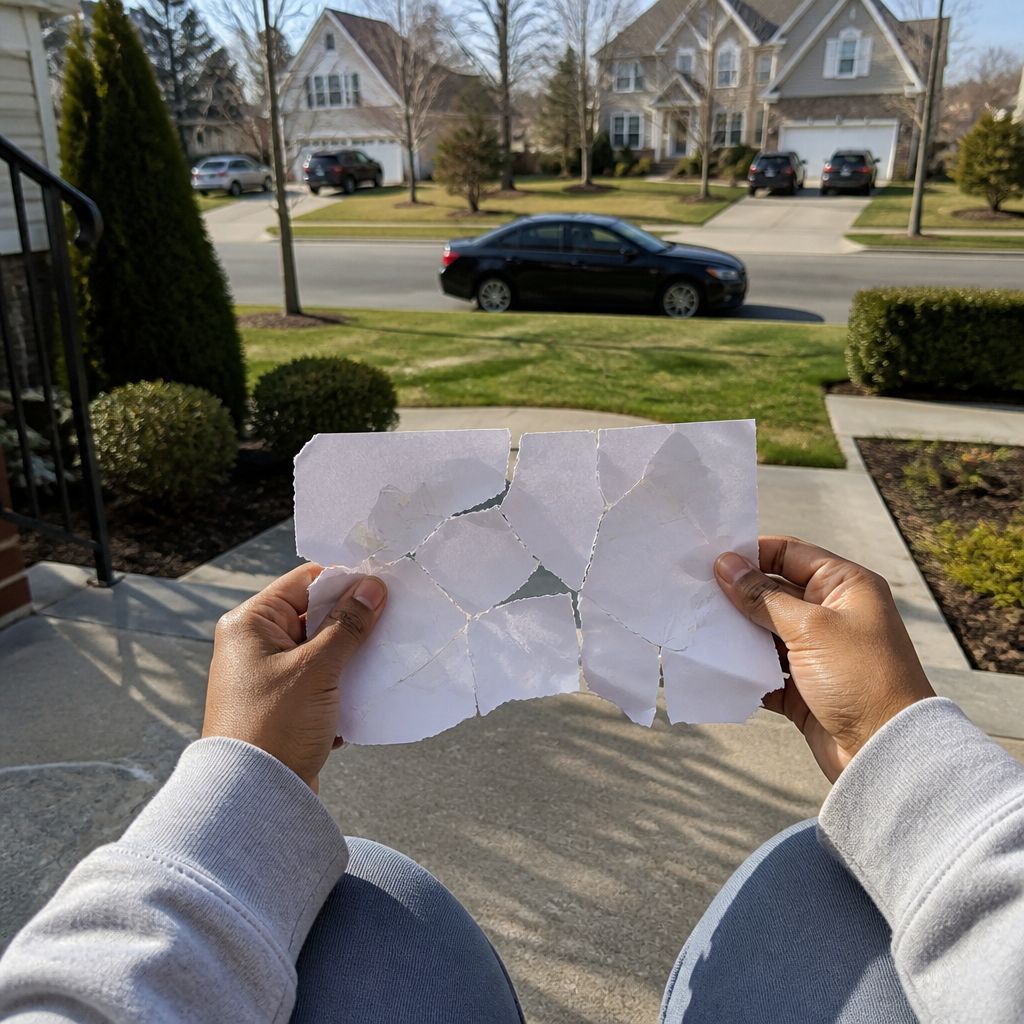
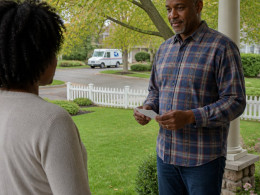
I tried to keep things civil. I wrote a polite note referencing our HOA’s parking rules, pointing out the shared driveway guidelines. I left it slipped under Glen’s door in a crisp white envelope. Days later, the note came back—not in his handwriting or words, but torn to shreds and taped crudely onto my front porch step. The edges of the ripped paper curled slightly in the breeze, and a faint scent of dryer sheets hung in the air from the fresh laundry inside. I stood there, staring down at the mess, my hands shoved into the sleeves of a gray sweatshirt. The neighbor's car passed slowly down the street, the hum of tires on asphalt breaking the silence. That shredded note was a silent message—a warning that pushback wouldn’t come without consequences, even if Glen never said it out loud.
An Anonymous Complaint Arrives
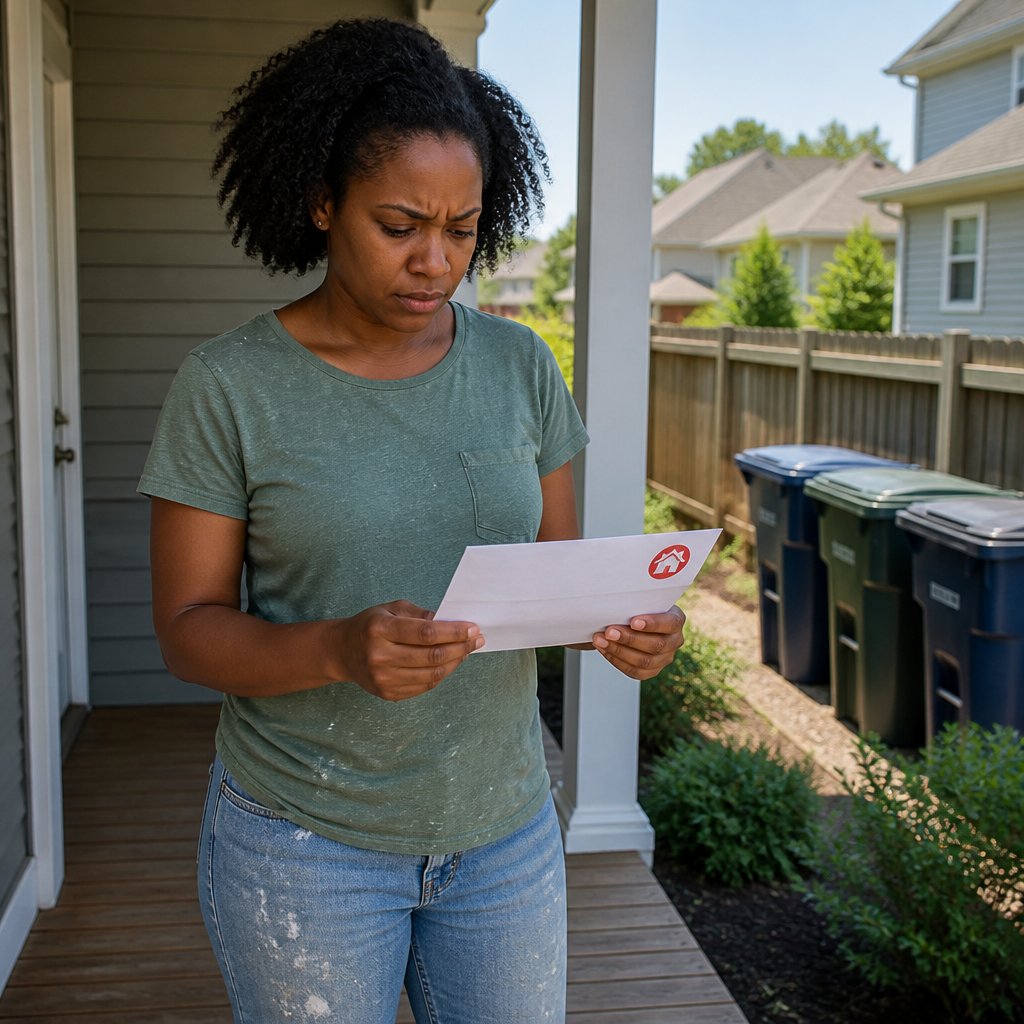
Out of nowhere, a letter from the HOA landed in my mailbox—complaining about my trash bins left out past collection day. The envelope was plain, with no signature or name, just the HOA logo stamped in red. My trash cans sat neatly behind the fence, lined up against the side of the house, their lids closed tight. I was wearing paint-spotted jeans and a faded green T-shirt as I emptied the mailbox on the front porch, the rough wood under my fingers familiar and worn. The scent of freshly cut grass wafted in from the neighbor’s yard next door. It felt like the conflict had turned official, weaponized beyond just me and Glen. I wondered if he’d called the complaint in, or someone else was trying to stir trouble. The letter sat heavy in my hands as I glanced toward the driveway, now feeling less like a shared space and more like a battleground.
Weekend Crowds Choke The Driveway
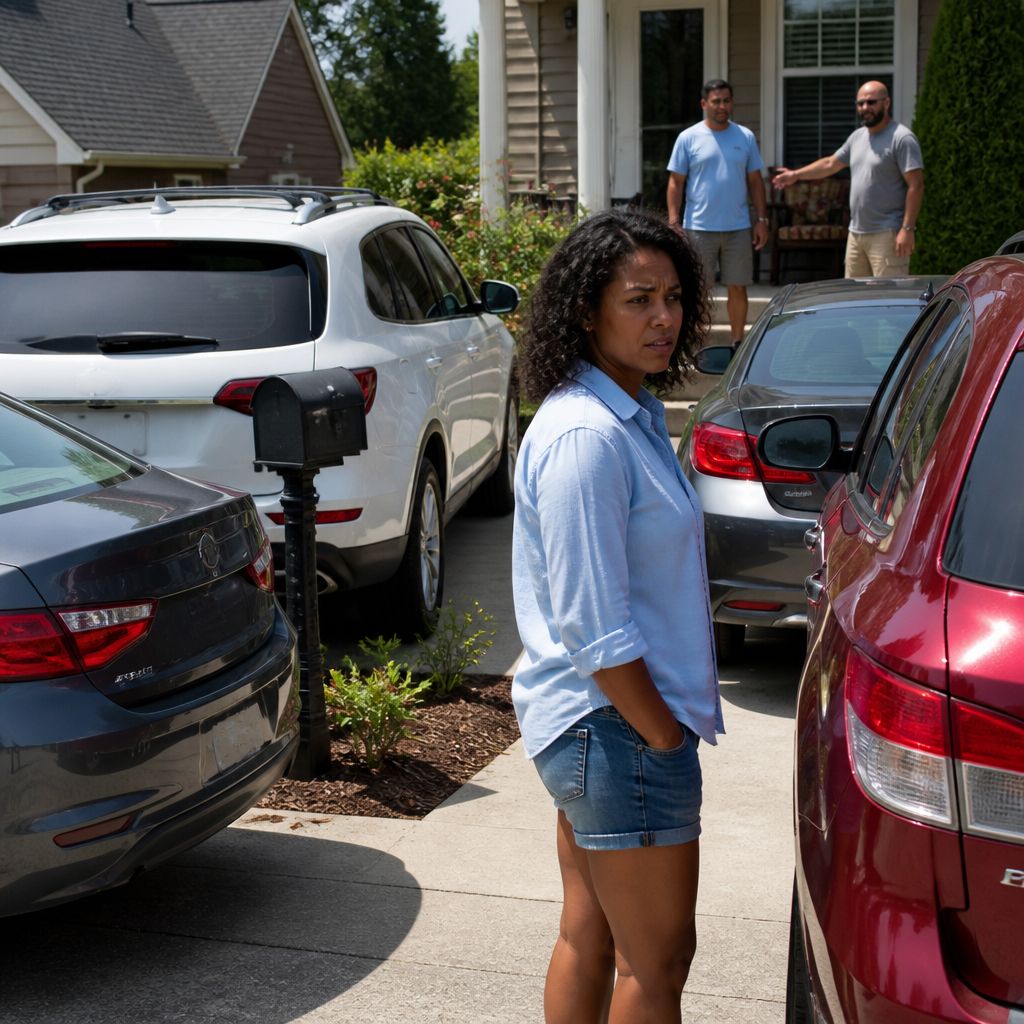
The weekends used to be quiet. Now, they’re a blur of cars spilling into our shared driveway. Glen hosts these gatherings—barbecues, game days, parties—and the driveway quickly fills beyond capacity. I watch from my porch as SUVs, sedans, and minivans squeeze in, blocking my garage door and even crowding the strip by my mailbox. I can’t even pull in or out without navigating a maze of vehicles. It’s like I’m an outsider in my own space.
One Saturday, I tried to back out to pick up a friend. I found my path blocked by his friend’s car, which was parked so close I had to call Glen to move it. His casual shrug over the phone made me feel like I was overreacting. Later, I noticed the mailbox area jammed with parked cars, making it impossible for guests to stop by without blocking traffic—something Glen called ‘temporary inconvenience’ for ‘good company.’
It was clear the driveway was no longer a shared space in practice. Glen’s weekend guests treated the driveway like a parking lot. I even found a crumpled HOA flyer on my porch warning about vehicles blocking mail access—probably sent after a complaint from someone else. It dawned on me how the gatherings weren’t just about fun; they were strategic, choking access and making my everyday movement a hassle. I wondered how long this new pattern would last before it became permanent.
Delivery Van Damage Blamed On Me
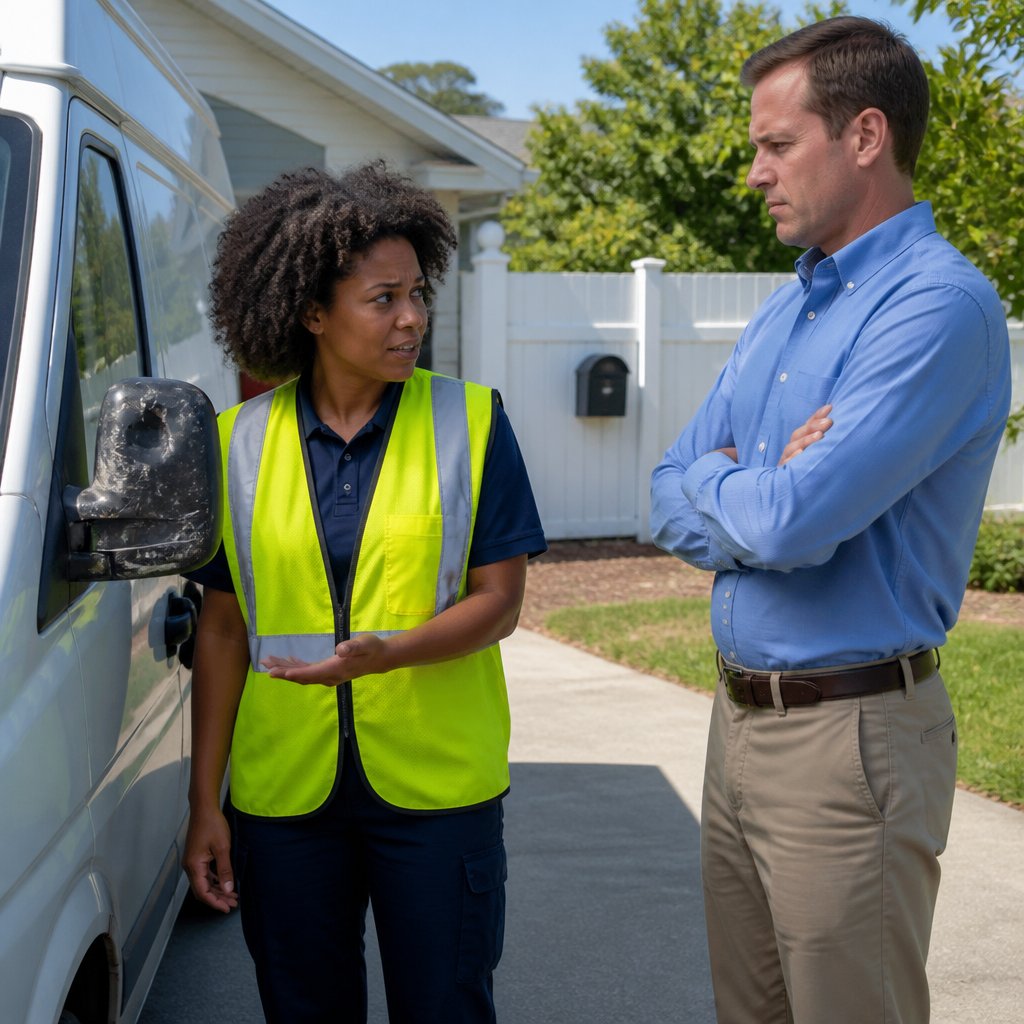
One morning, a knock on my front door startled me. A delivery driver looking embarrassed stood there, pointing at his van’s side mirror, which was bent and scratched. He said it got dinged while trying to maneuver around the crowded driveway. I immediately thought of Glen’s parked SUV blocking the way.
Later that day, Glen appeared outside, acting concerned but dropping a heavy accusation. He said I was careless and caused the damage, turning the delivery incident into proof that I was 'difficult' and inconsiderate. His voice was calm but edged with a warning.
I felt cornered. His friends started murmuring about how I was the problem in the neighborhood. Meanwhile, the driver seemed hesitant to get involved further. I checked the driveway, noticing scuff marks consistent with the van’s damage near Glen’s usual spot. I wanted to speak up, but every attempt felt like pushing against a wall that only got thicker with every accusation.
The damage wasn’t just about paint; it was becoming a weapon to shape the neighborhood’s opinion. I wondered how much longer I could hold my ground before this incident defined me in Glen’s narrative.
HOA’s Vague Driveway Response

I drafted an email to the HOA, hoping to get clear answers about driveway rights and property lines. The next day, I received a response that seemed carefully worded—full of legal jargon and vague phrases. It referenced "shared responsibilities" and "considerations for neighbors' access" but never spelled out exact rules or boundaries.
The letter felt like it had been pre-approved or influenced. There was no mention of Glen’s behavior or the specific complaints I made. Instead, it reminded me to "maintain harmony" and "avoid conflicts," as if warning me not to push too hard.
Looking over the letter again, I noticed it was printed on official HOA stationery but lacked any direct contact info or signatures. The paper carried the faint smell of printer ink and the faint crease from being folded twice, probably stuffed into my mailbox.
I wondered who had drafted it and whether it was meant to discourage me quietly rather than help. It was a disappointing response—and a reminder that I was navigating this battle largely alone.
No Parking Sign Appears Overnight
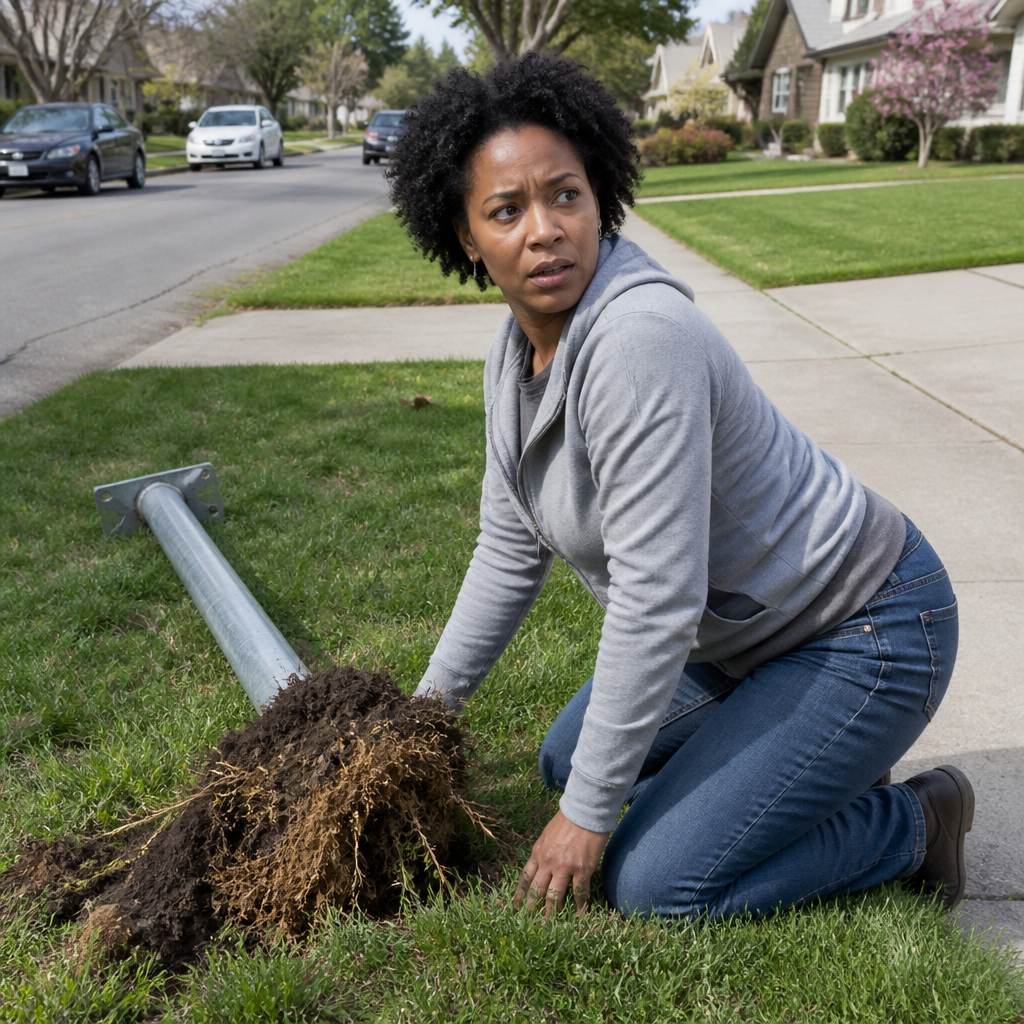
I woke up to find a new sign planted firmly in the ground right beside my side of the driveway. It read "No Parking"—bold black letters on a white background. It wasn’t an official city or HOA sign; it looked homemade but weatherproof. The metal post was stuck deep enough to not come loose easily.
Glen was nowhere to be seen, but I knew this was his doing. When I removed it later that day—thinking it was trespassing—he branded me a thief in front of neighbors during a chance encounter, accusing me of stealing his property.
Everyone’s eyes darted between us. I wanted to explain, but his words felt rehearsed, like a tactic to discredit me before I could dispute it. The sign had shifted the dynamic again, turning parking into a battlefield marked with hostile symbols.
The air smelled faintly of freshly cut grass mixed with the rusty metal of the signpost. I glanced back at the spot where it once stood, wondering what other traps Glen had planned next.
Chalk Lines Mark The Driveway
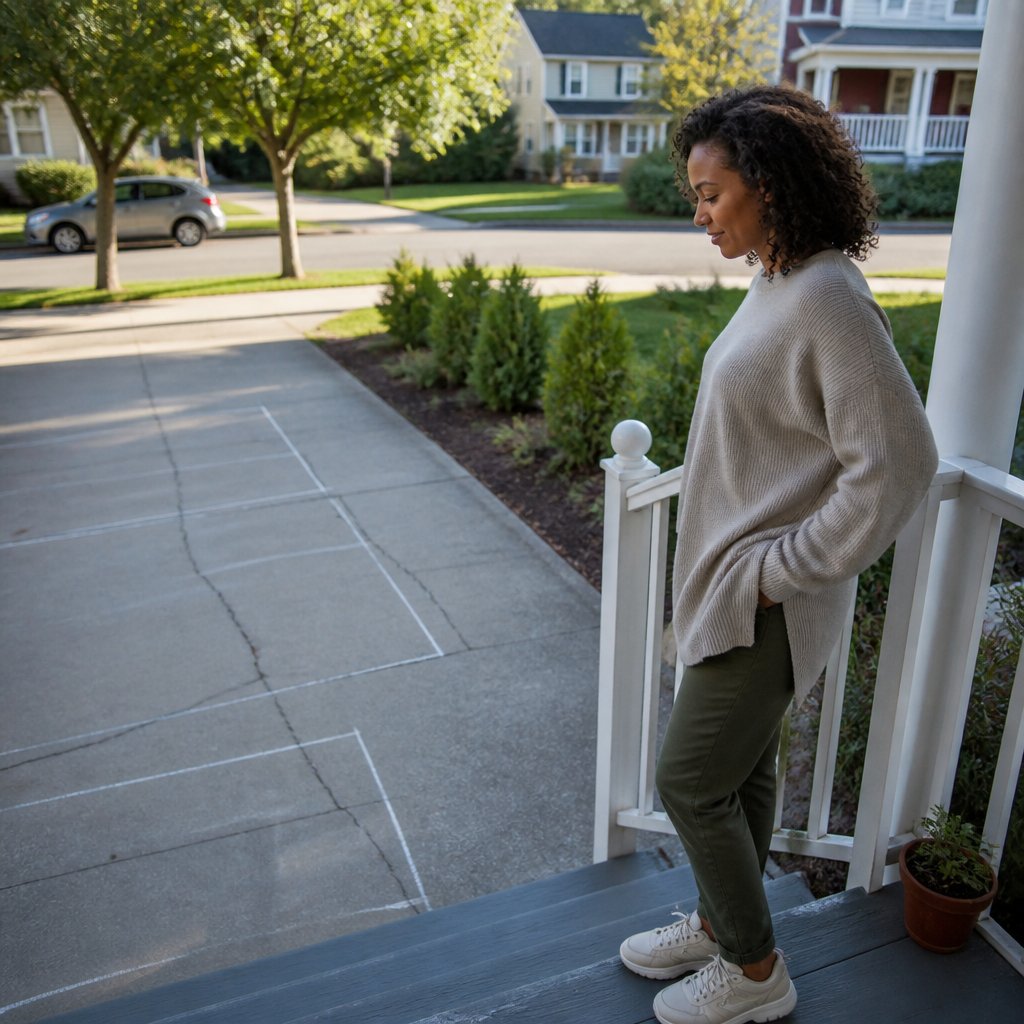
One morning, I stepped outside to find chalk lines tracing strange shapes on the driveway’s cracked pavement. There were measurements scribbled in chalk numbers alongside, outlining rectangles and angled lines I hadn’t seen before.
The markings didn’t look random—they seemed like an attempt to define property boundaries or parking spaces without my input. I followed the lines, noting their proximity to my garage and mailbox, areas Glen had been increasingly focused on controlling.
The cracked asphalt had a rough texture underfoot, and the chalk dust left a faint white residue on my shoes. I took photos with my phone, hoping to document the unauthorized markings. Yet when I asked neighbors, no one admitted to placing them.
It felt like Glen was preparing a story to claim more space, drawing lines that could become ‘proof’ later. I realized I needed to act fast before these arbitrary measurements became part of a new ‘normal’ I had no say in.
HOA Calls For Mediation
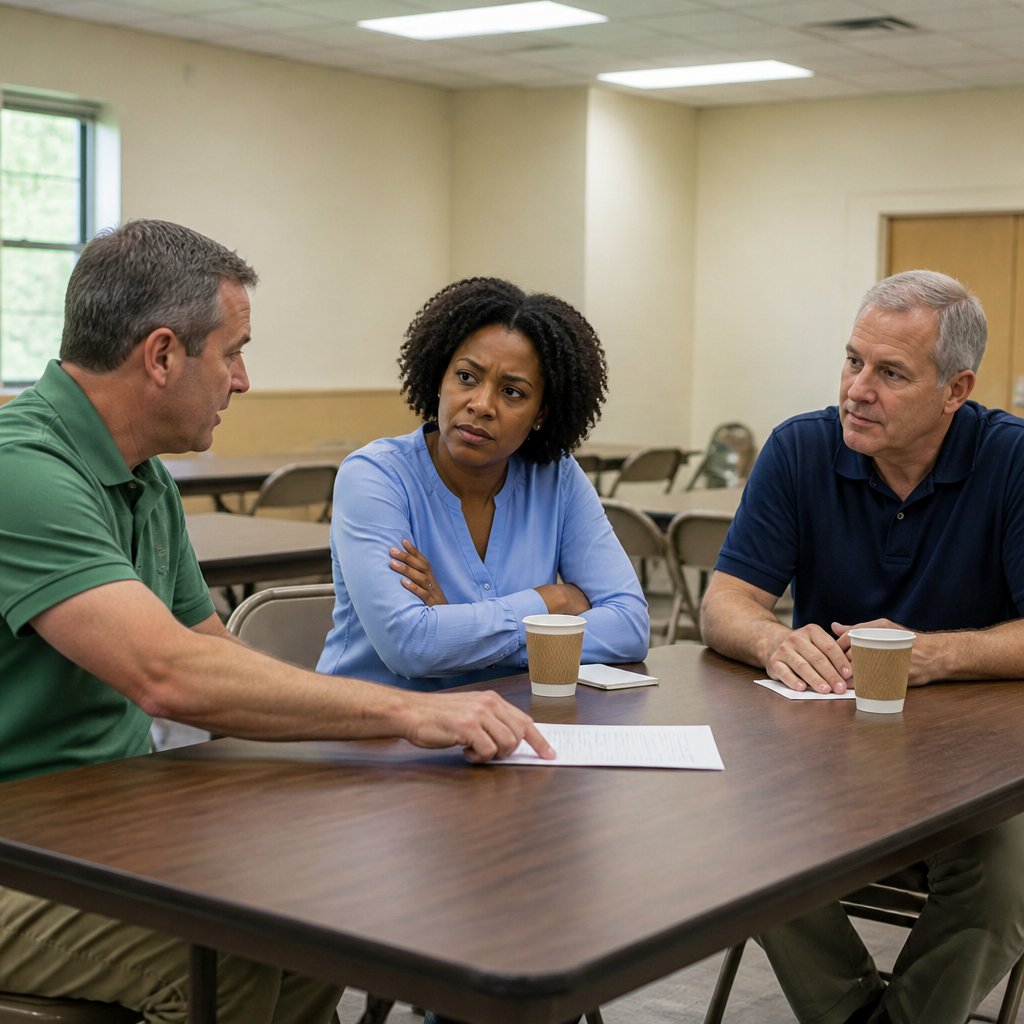
The HOA scheduled a mediation meeting at the community center. I wasn’t sure what to expect, but I hoped it might finally bring some clarity. Glen showed up with a couple of his neighbors—"witnesses," as he called them—wearing casual polos and jeans. They sat confidently across from me, sliding a paper across the table that labeled itself a “compromise.” It claimed Glen could park in the shared driveway “as needed,” effectively legalizing his takeover without any changes to the property lines. The air smelled faintly of coffee mixed with the faint musk of old carpet.
I tried to point out the irregularities, but Glen smiled as if he’d already won. His witnesses nodded, backing his story about his “health needs” and “temporary arrangements.” The HOA rep adjusted her glasses, glancing between us. The room’s hanging fluorescent lights buzzed quietly. I felt the walls closing in, realizing the mediation might not be the neutral ground I hoped for.
Glen Claims Caregiver Status

After I rejected their "compromise," Glen escalated the situation. I received notice that he’d filed for a variance with the county, submitting documents claiming he was a caregiver needing flexible parking arrangements. It was a narrative designed to win sympathy—a way to make the property boundary about his “needs.”
I sat in my cluttered home office, a stack of HOA letters and survey maps on the desk, trying to figure out how to counter his claim. The county’s official letter smelled faintly like fresh ink. Outside my window, a cool breeze stirred the leaves on the maple tree, casting dancing shadows on the driveway.
His filing complicated everything. Suddenly, it wasn’t just neighbors arguing; it was a legal battle over necessity and rights, framed in a way that could make my boundary claims seem unreasonable or uncaring. I felt the weight of his strategy pressing down, wondering how deeply this caregiving angle would influence the variance decision.
Hose Complaints and Sensor Triggers
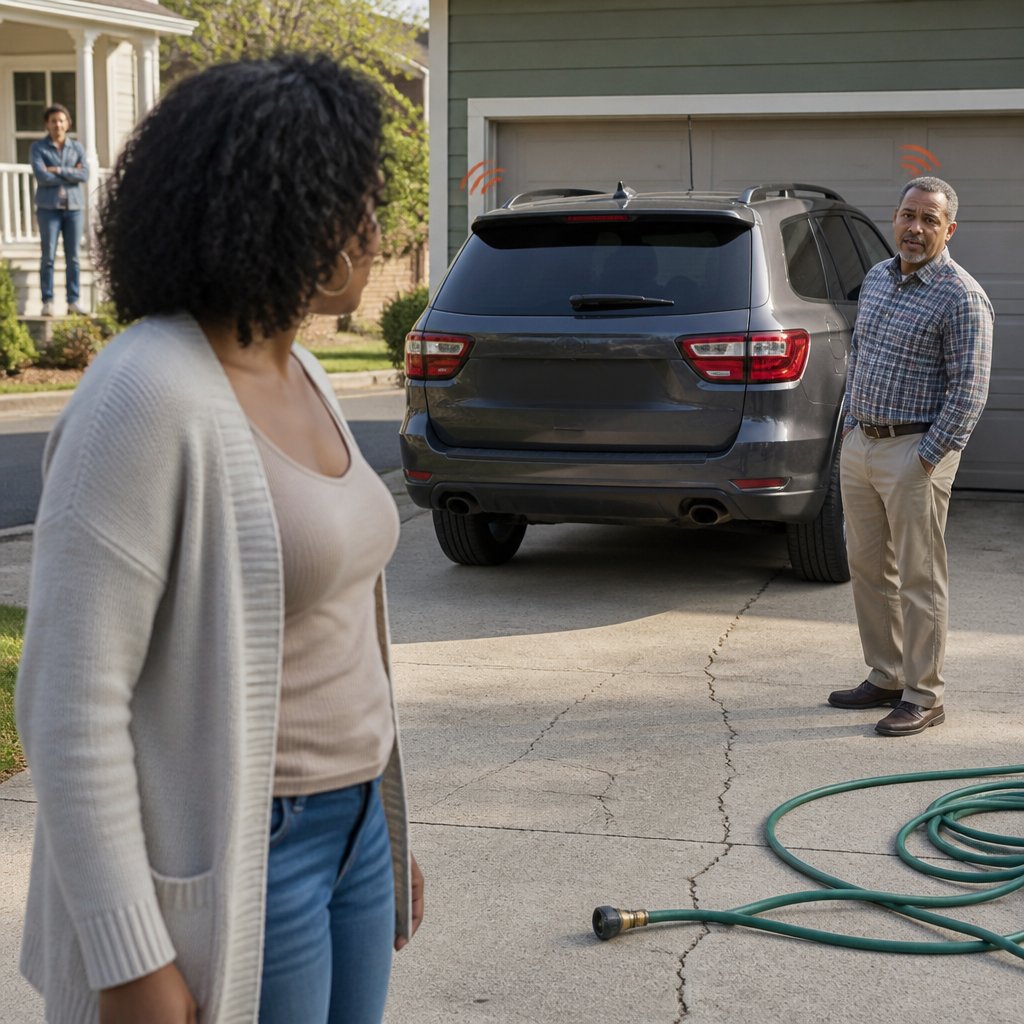
Petty complaints from Glen started piling up. One day, he accused me of leaving my garden hose across the walkway, calling it a hazard. I couldn’t believe he was watching every little thing. Meanwhile, he began parking his SUV in a way that blocked my garage sensors, causing them to trigger whenever I tried to open the door. The sensors beeped loudly, forcing me to step outside just to move his car.
That evening, I stood on the cracked concrete driveway, the hose coiled neatly by the side. The car’s sensors beeped sharply again as Glen’s SUV sat just inches from the garage entrance. The faint smell of exhaust mixed with the scent of freshly cut grass from the neighbor’s lawn. I saw Glen watching from his porch across the street, arms crossed, a smirk on his face.
He was controlling the timing now, making me jump through hoops just to get my own car inside. Every small complaint was another move in a game I hadn’t agreed to play. I felt cornered, unsure which complaint or parking tactic he’d use next.
The Scratch And The Setup
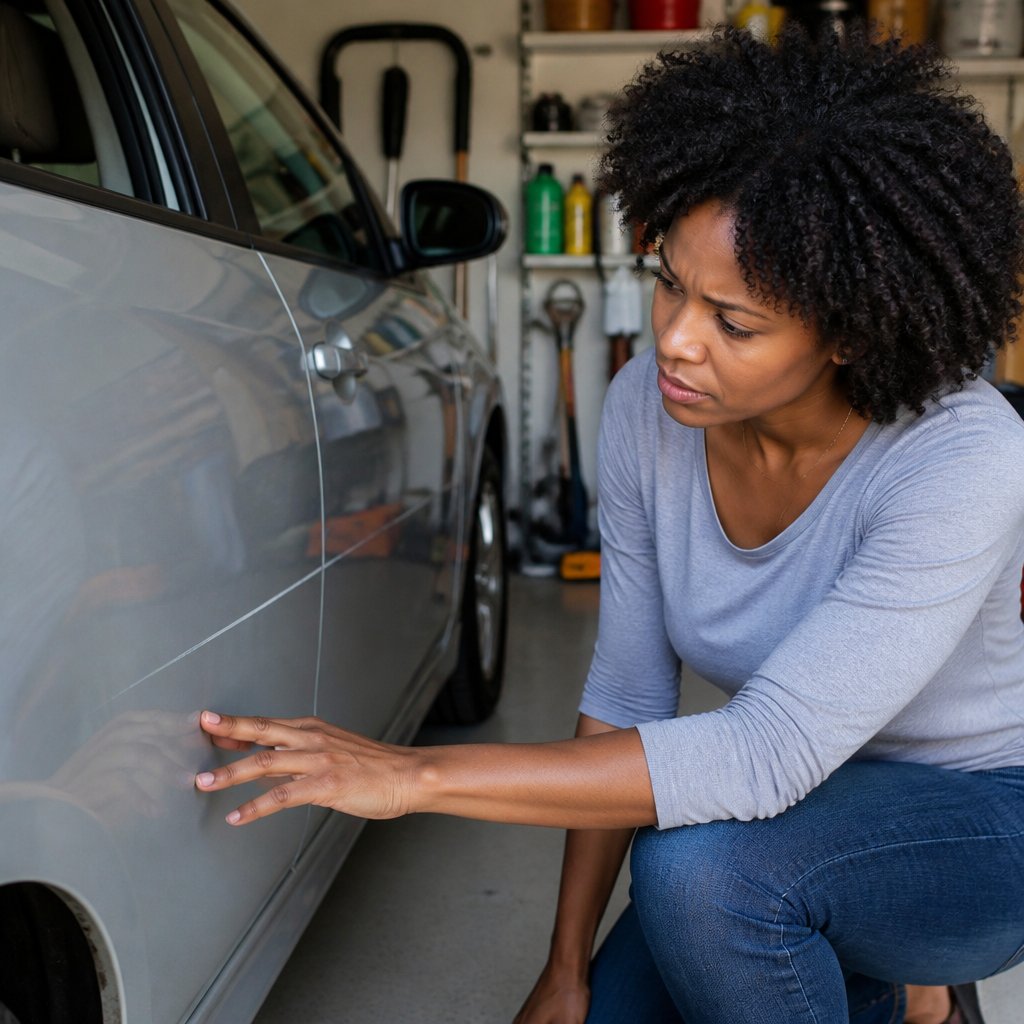
The documentation folder on my desk kept growing—emails, photos, HOA letters, survey reports—all evidence of the ongoing dispute. Then one morning, I noticed a long scratch along the side of my car. It must have happened while squeezing past Glen’s SUV in the driveway, the narrow gap making it a tight fit every time.
I ran my fingers over the fresh scratch, rough against my skin. The garage smelled faintly of motor oil and rubber as I examined the damage. Later, Glen suggested a buddy’s body shop for repairs, casually dropping the name with a smirk. It felt less like a friendly offer and more like a setup, as if he hoped I’d accept and owe him something or let things slide.
His casual attitude put me on edge. Was the damage a warning or an accident? And what if the shop was connected to him somehow? I felt trapped between documenting the damage and the social pressure Glen was applying. The folder on my desk seemed heavier, filled with the growing mess of this neighborhood war.
Tow Warning On Own Car
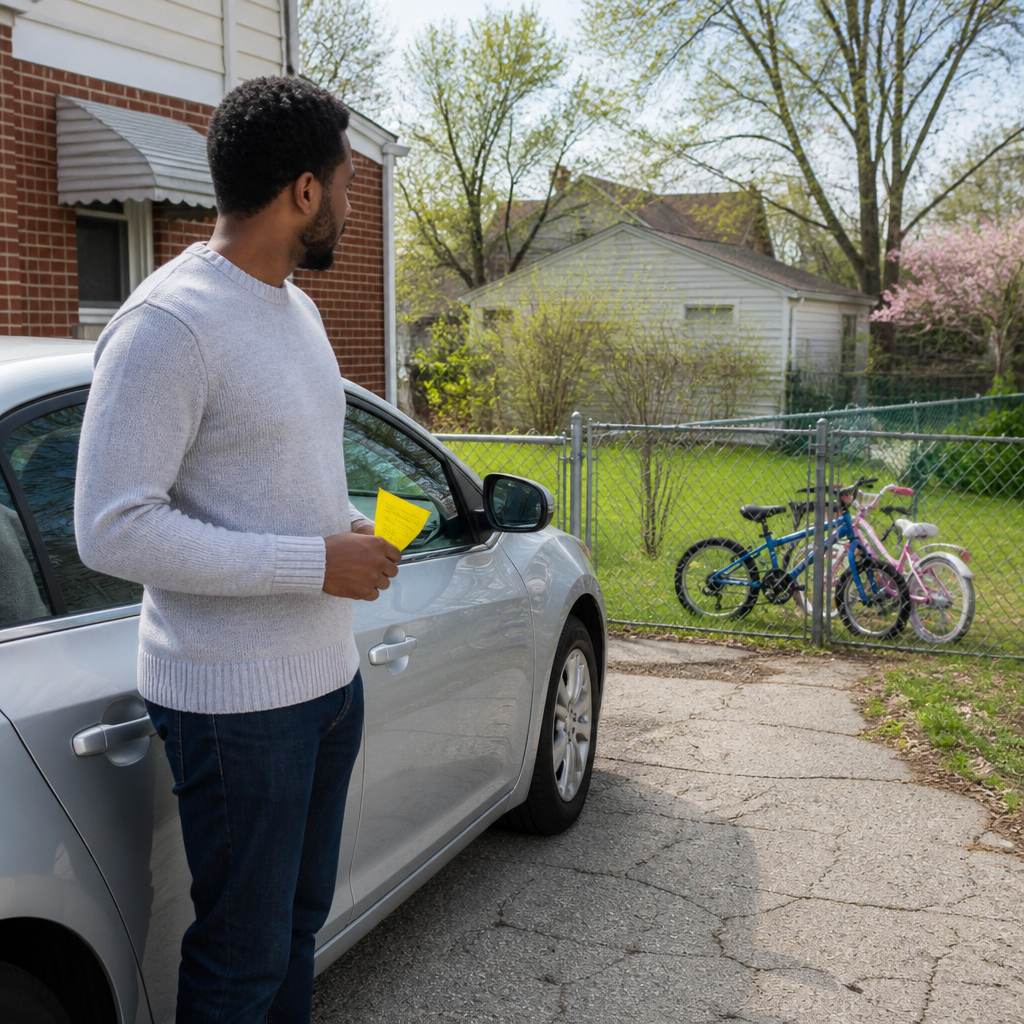
One morning, I found a tow warning sticker slapped on my car’s windshield—even though it was parked in my own side of the driveway. The paper felt gritty under my fingers, its bright yellow color clashing with the silver paint. Confused, I asked around and soon learned that Glen’s family had ties to the local towing company.
I stood in the driveway, the early sun casting long shadows over the cracked asphalt. Nearby, children’s bikes leaned against the fence, silent witnesses to the tension growing in the neighborhood. The realization that Glen might be using influence behind the scenes unsettled me deeply.
Was this another way he was trying to bully me out? The warning felt like a threat, a move designed to shake me up and make me question whether I truly had any control over my own property. I wondered if I should call the towing company directly or dig deeper into Glen’s connections first.
Markers Vanish And Water Redirected
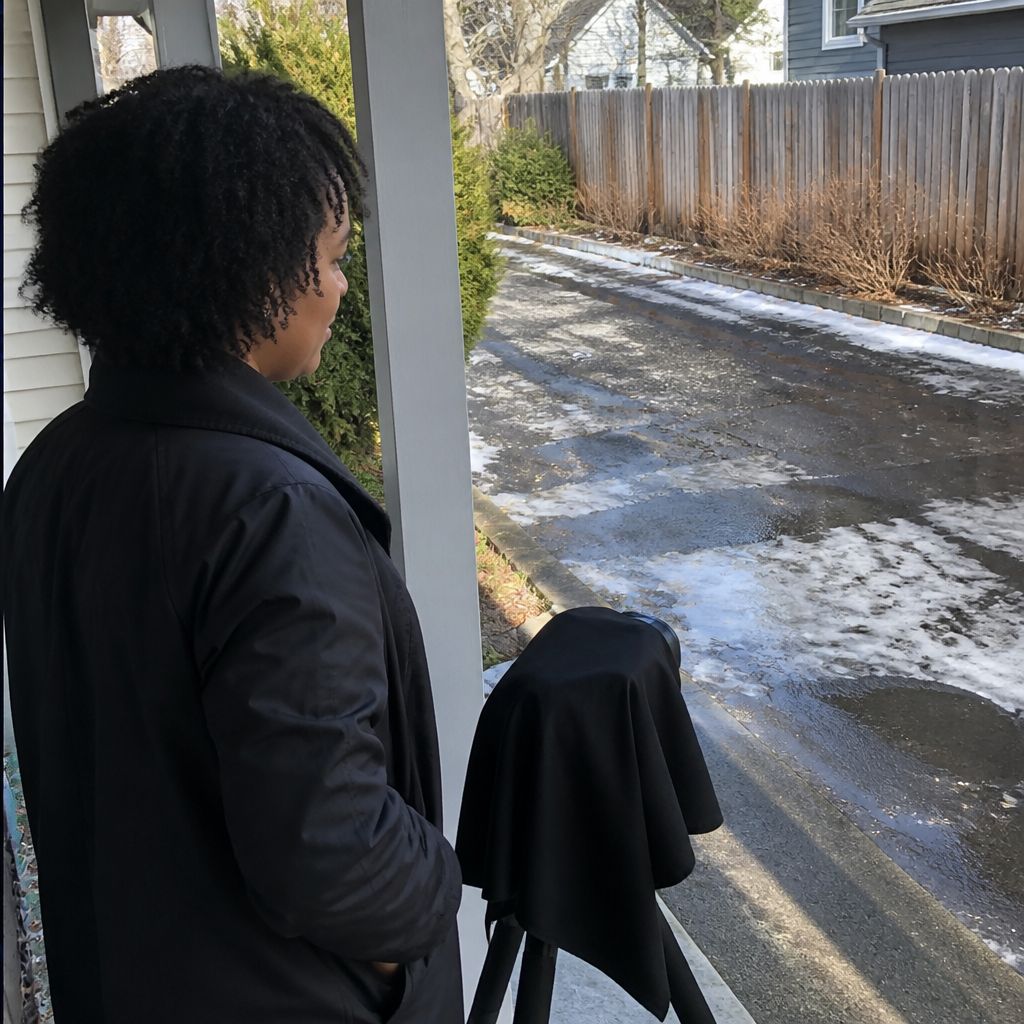
The property markers I’d carefully placed along the boundary started disappearing one by one. I found the small stakes missing or pushed deeper into the ground. Then, the security cameras I’d installed faced trouble—some were blocked by makeshift covers, others pointed the wrong way. It was as if someone was trying to erase the evidence.
One bitter evening, I noticed water pooling strangely near the driveway edge. Glen had redirected his downspouts to flood a section of the pavement that would freeze overnight in winter. The next morning, thin ice coated the driveway, making it treacherous to cross.
I stood on the porch, the sharp crackle of ice underfoot coming from my own boots. The smell of damp earth mixed with faint gasoline fumes drifted through the cold air. These incidents felt less like accidents and more like deliberate moves to create problems that would look like my fault or simple misfortune.
Certified Letter Refused And Fines
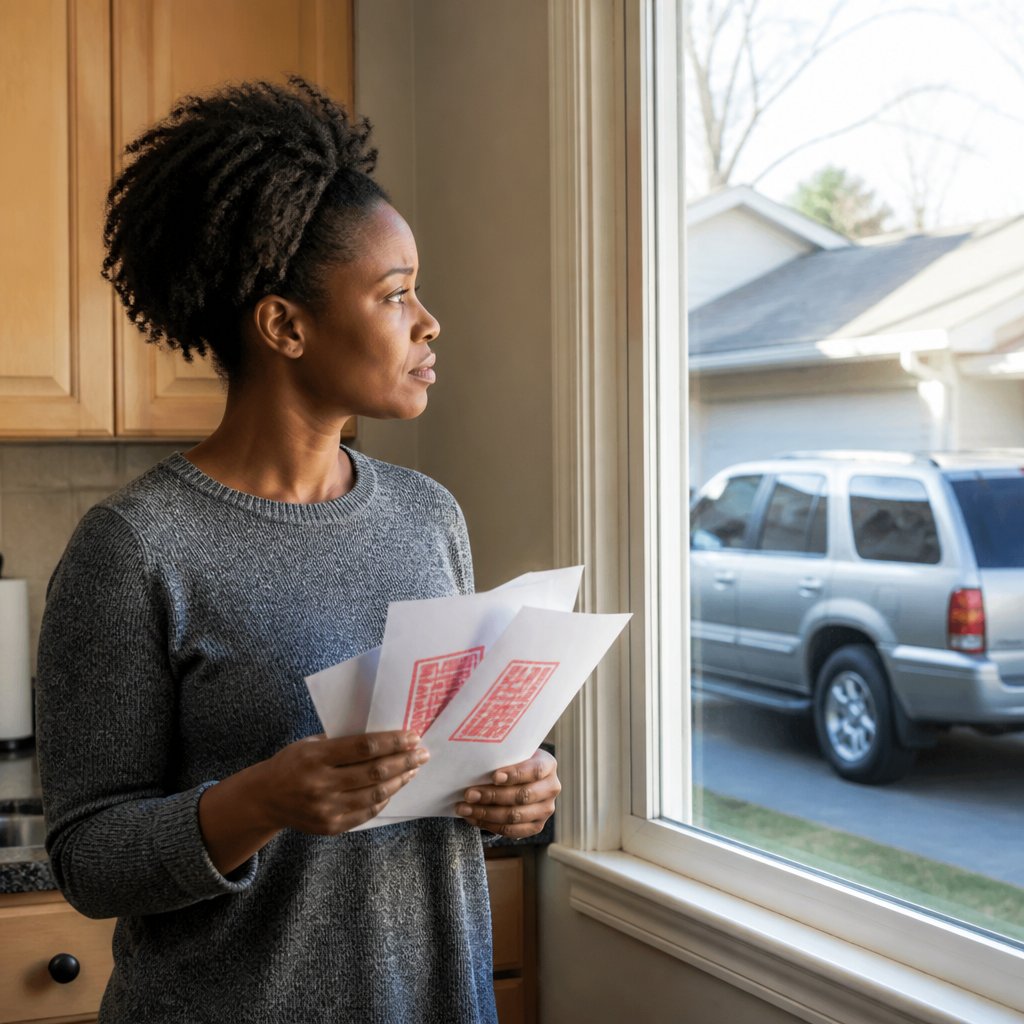
I sent a certified letter to Glen, laying out the property boundaries and demanding he stop blocking my garage. The mail carrier noted Glen refused to accept it. Later, the HOA spun the letter as a “legal threat” against the community and fined me for “harassment.”
Standing in my kitchen, the faint scent of brewed coffee filled the air. I held the stack of HOA fines, their bold red ink glaring at me. Glen was meanwhile pushing for a bollard installation right where I turned my car—a concrete post that would cripple my driveway access.
The mounting tensions felt suffocating. The kitchen window looked out onto the shared driveway where Glen’s SUV sat parked like a silent challenge. I felt trapped, wondering what the HOA’s next move would be and whether Glen would get his bollard installed before I could stop it.
Dumpster Blocks Driveway Days
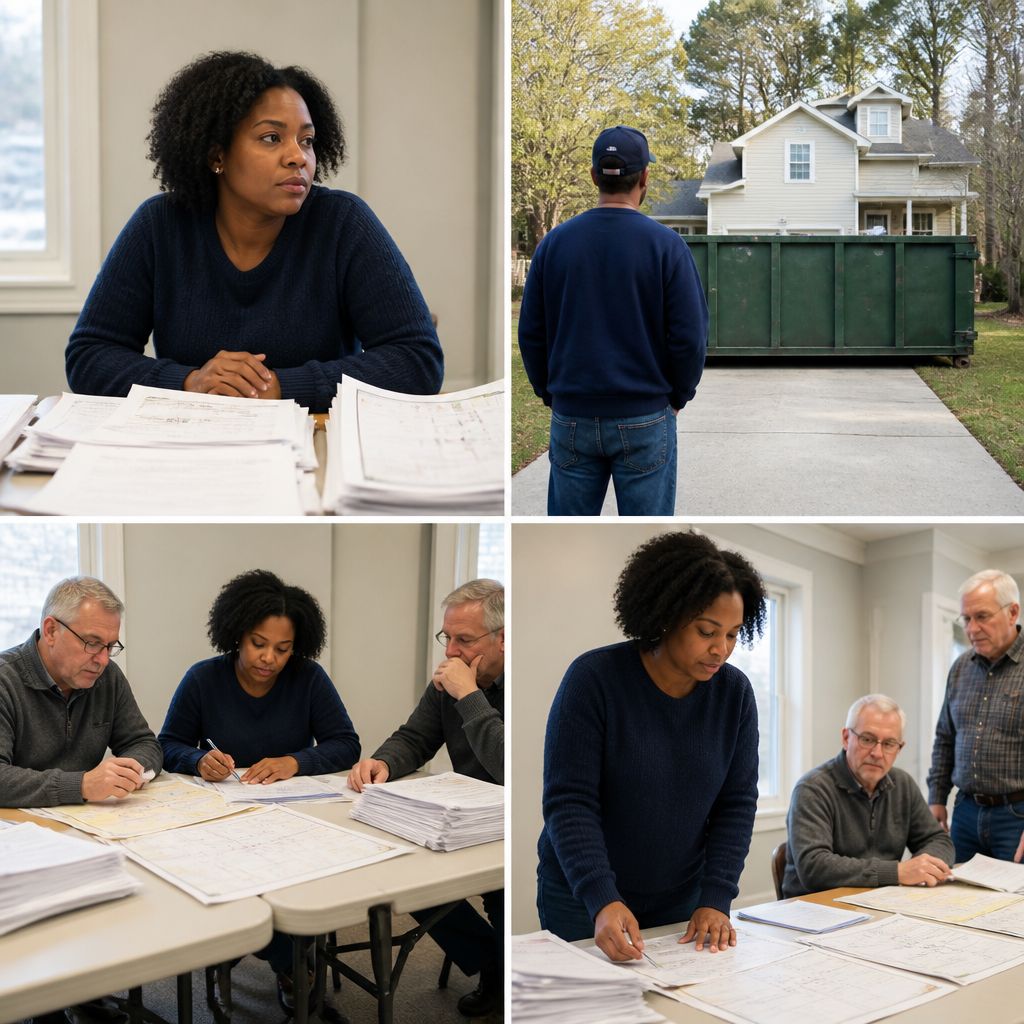
A large dumpster appeared overnight, blocking my driveway for days. The plastic walls scraped against the pavement, and the smell of paint thinner mingled with the heat of the afternoon sun. Glen claimed it was for his remodeling project, but the timing felt deliberate, trapping me in and out.
At the HOA hearing, Glen submitted selective edits of emails and photos to support his case. I countered with full logs, the official survey, and reports from the city. Our papers spread across the folding table looked overwhelming under the buzzing fluorescent lights of the tiny meeting room.
Despite my efforts, the HOA delayed any decision. The frustration settled in as the dumpster sat stubbornly in place, and Glen smiled like he’d won another round without a fight.
Glare Lights And Painted Boundaries

Glen began installing glare lights aimed directly at my bedroom window, shining harsh white beams late into the night. The relentless brightness shattered my sleep, making the room feel like a spotlight stage. He also painted a bright yellow line along the driveway, claiming it marked the “new boundary.”
I dug through old photo albums and plat maps stored in the attic, scanning for anything that supported my claim. The attic dust smelled old and dry as I flipped through the yellowed pictures. Later, my attorney sent a formal notice demanding Glen remove the lights and cease marking disputed boundaries.
That night, I lay awake, the glare still piercing through the curtains. The neighborhood was quiet except for the distant hum of a car engine. The fight was escalating into personal territory, and I wasn’t sure how much longer I could hold on.
Glen’s Biggest Mistake
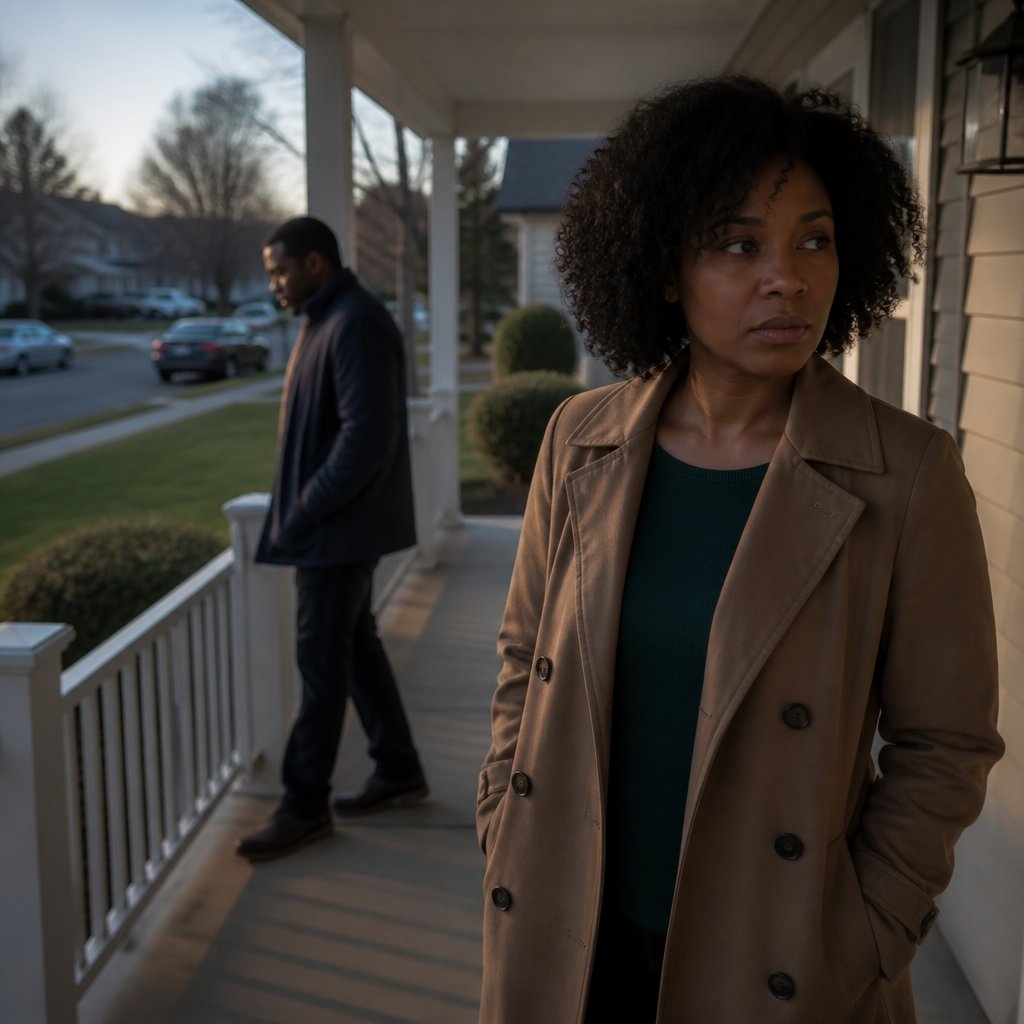
Glen tried to tow my car once, a move that backfired spectacularly. I caught it on camera, and the evidence led the tow company to ban him from making further calls. The HOA attorney sided with my survey, and Glen started facing fines and orders for removal of his illegal parking setup.
The neighborhood started shifting too. Neighbors who’d stayed silent began nodding in acknowledgment, their parked cars and trimmed lawns reflecting a new mood. I saw Glen pacing by his porch, his usual smirk replaced by a guarded frown.
Still, the battle wasn’t over. I knew there were more challenges ahead, but for the first time in months, I felt like the tide might be turning.