



His “Right Hand” Moment

Dylan said it like he was handing me a title. “Mara’s my right hand on this,” he announced, palms open in that practiced manager way, like he was blessing the room with clarity.
But he didn’t look at the room. He looked at me. Too long. Too steady. The kind of eye contact that turns your skin into a projector screen.
I felt my mouth pull into a polite smile while my stomach did that small, private drop. Around the conference table, chairs squeaked. Someone’s pen stopped clicking mid-annoyance. I could practically hear people recalibrating: Oh. That’s what this is.
I wasn’t naïve. I knew I was good. I knew I’d been carrying the messy parts—stakeholder tantrums, slide triage, the “quick question” ambushes. But the way he said right hand made it sound less like competence and more like possession.
His cologne hit me when he leaned forward to point at the printouts, sharp and clean over the stale smell of dry-erase marker. “Mara will drive the narrative,” he added, voice warm, like he was doing me a favor.
Across from me, Jonah’s eyebrows flicked up just once, and I realized everyone had noticed the claim before I’d even decided how to feel about it…
The Thai Receipts Stayed
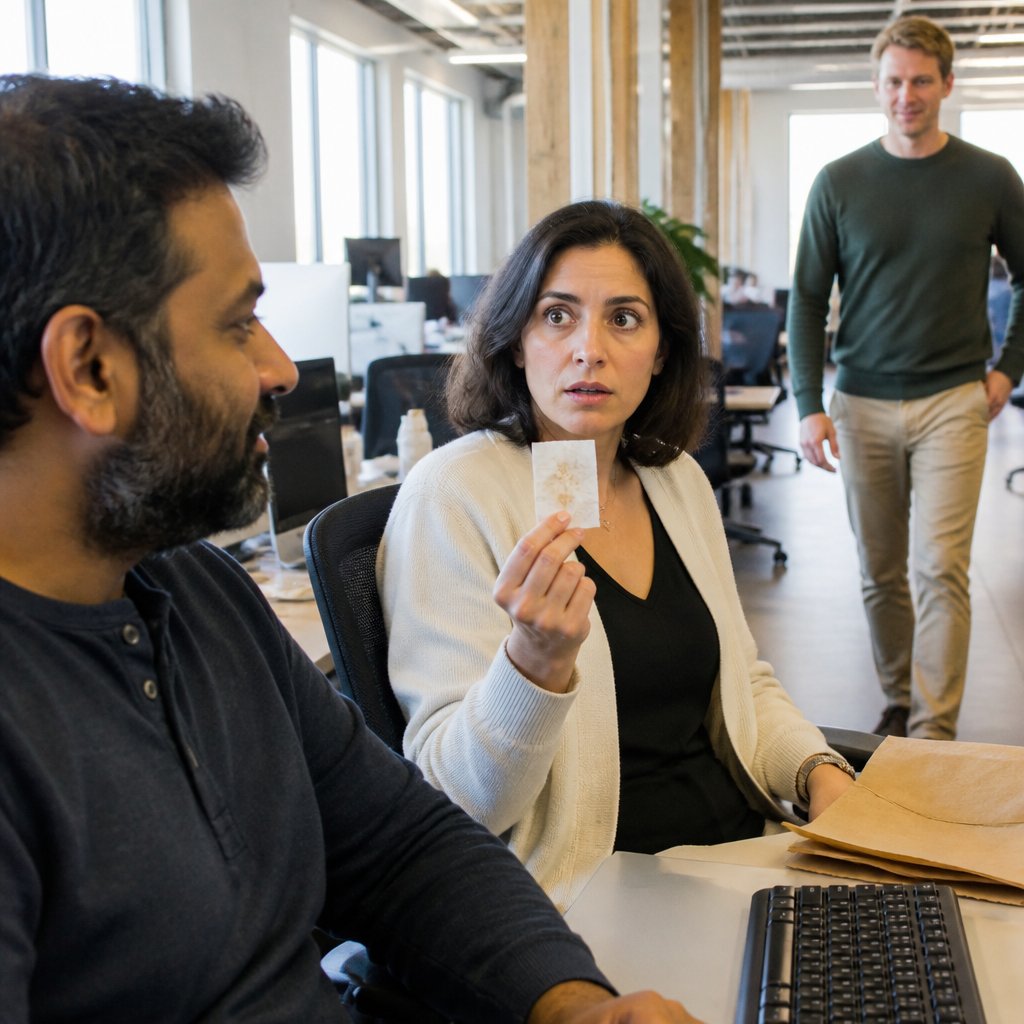
The next morning, my desk looked normal at first—same lanyard, same stack of sticky notes, same little plant I kept accidentally murdering in slow motion. Then I saw it: a crumpled Thai takeout receipt tucked under the edge of my notebook like it had always belonged there.
It hadn’t.
I pinched it between two fingers, the paper still faintly greasy, and my brain replayed the night before in clipped, humiliating highlights. “Deck revision,” Dylan had called it. Just us in a quiet corner of the office, the HVAC clicking on and off like a bored metronome, the cleaning crew vacuuming around our legs like we were furniture.
We’d eaten at my desk because his office felt too intimate. Funny, the way I could recognize intimacy like a hazard sign and still walk right toward it.
I stared at the receipt, at the soft smear of sauce near the bottom, and felt this stupid flare of panic that wasn’t even about HR or ethics yet. It was about evidence. Proof that the night existed outside my head. Proof we’d been alone together after hours while the rest of the floor went dark.
Behind me, the elevator dinged and footsteps came down the aisle. I didn’t even have time to decide whether to throw it away or keep it like some twisted trophy when I heard Dylan’s voice, too close, saying my name…
“For Tracking,” He Said
Dylan stopped by my desk like it was normal, like the receipt hadn’t just lit up in my hand like a flare. He didn’t mention it. He didn’t have to. His eyes flicked down once, then back to my face, calm as a man who knew the rules and enjoyed bending them.
“Let’s move our chatter to email,” he said. “For tracking.”
Tracking. Like we were a shipment. Like nothing could get lost, or found, without a proper thread.
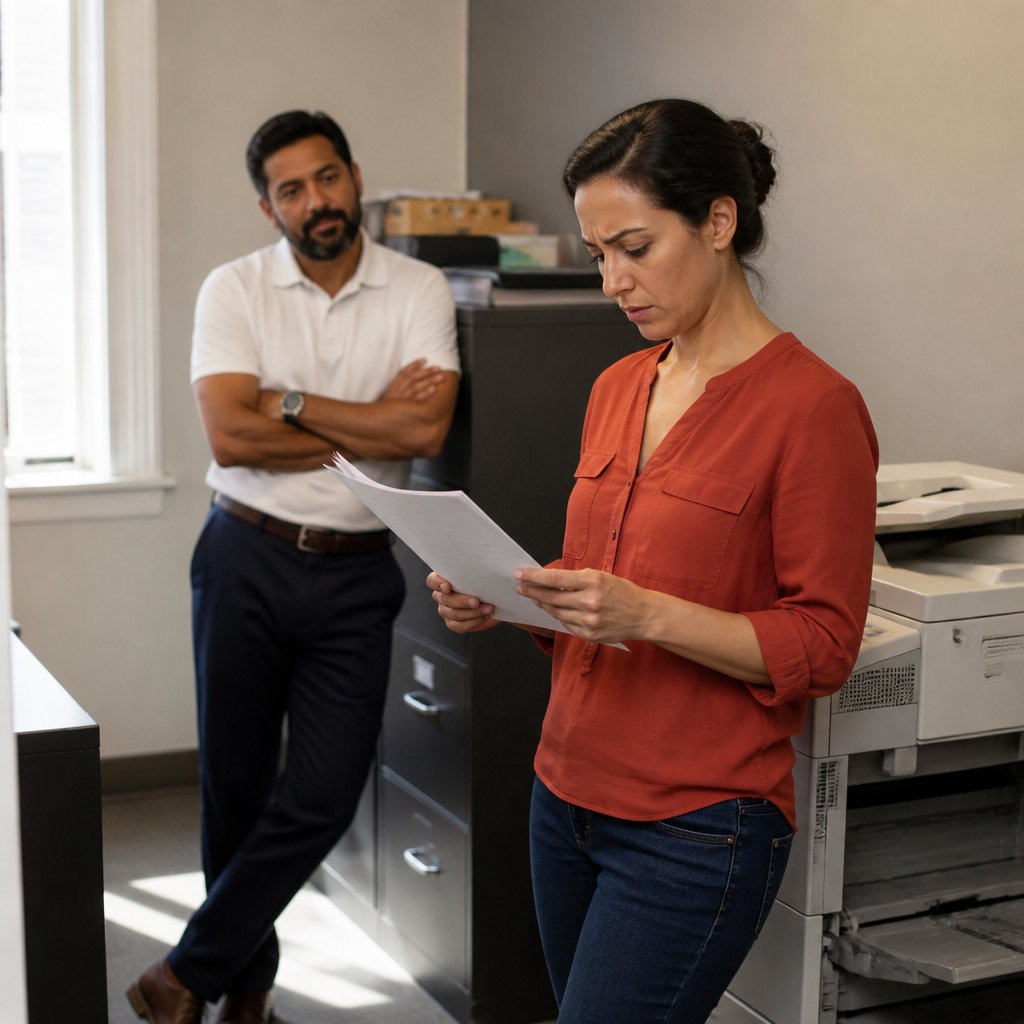
Later, the first message landed with bullet points so neat they looked innocent. I printed it—old habit, something to do with my hands—and read it twice before admitting what my body already knew. The bullets were about the project, technically. A deliverable, a timeline, a stakeholder to soothe.
But tucked between them was a line that didn’t belong in any deck: Appreciate you. Couldn’t do this without you.
That wasn’t feedback. That was a hand on the small of my back, in writing. It made my throat warm in that embarrassing way praise does when you’re tired and underpaid and someone with power aims it directly at you.
I could feel the office around me—paper dust, the faint burnt smell from the communal toaster—while I sat there holding a page that was both work and not-work. If I replied like it was normal, I’d be agreeing to the premise. If I didn’t, I’d be rejecting him, and Dylan didn’t like to be rejected.
My fingers hovered over the keyboard, and I realized “tracking” went both ways…
His Wife Was A Calendar
Once Dylan moved us to email, I started noticing the negative space in his life. The places where a spouse would normally show up—cc’d out of courtesy, mentioned with a casual “I have to run, dinner”—just didn’t exist.
His marriage was a vague obstacle, like a blocked conference room.
“Can’t do Thursday,” he’d say, breezy. “Family thing.” Then he’d offer Friday at eight like it was nothing to steal an evening from. When someone asked how his wife was, he answered with weather. “Good, busy.” No name. No story. No texture. Just a checkbox marked handled.
I told myself it was none of my business. I told myself lots of people kept personal lives separate. And yet, the more he erased her, the more I felt like I was being invited into the empty space on purpose.
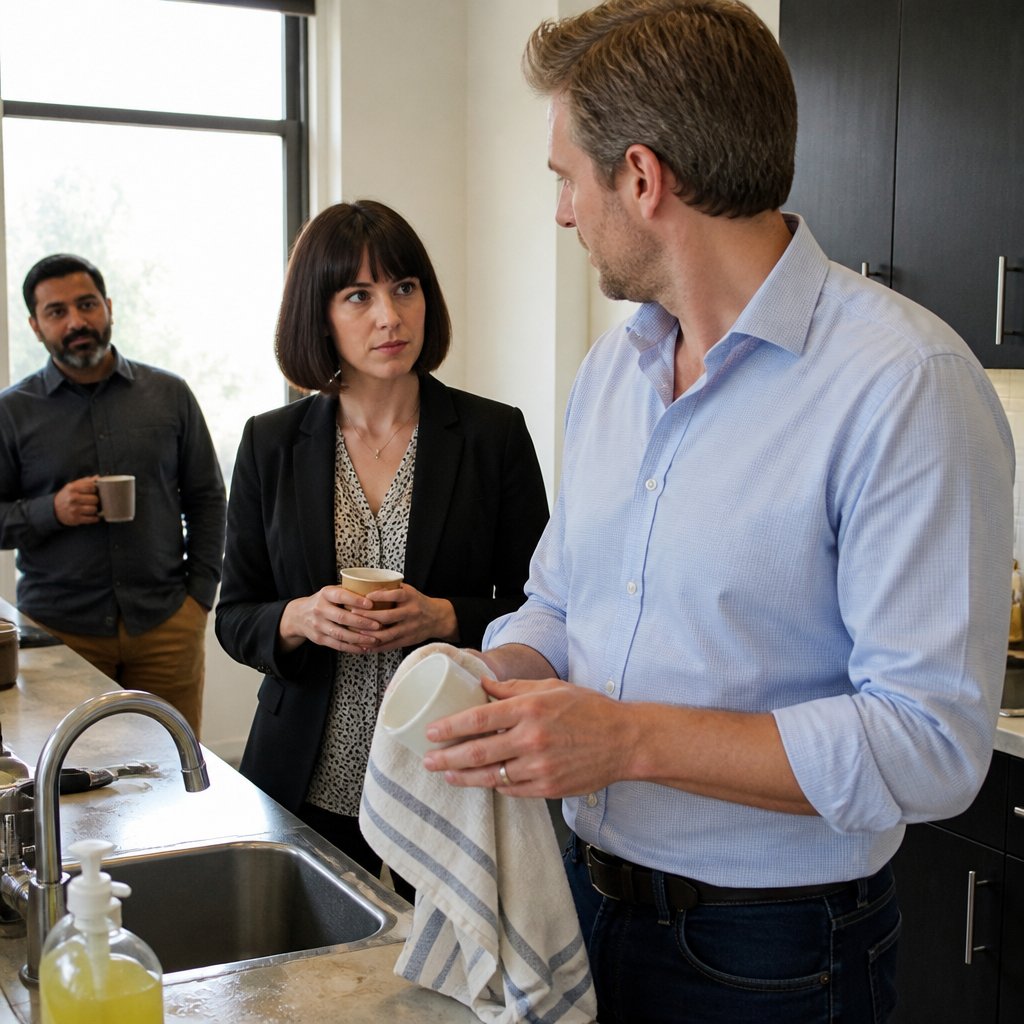
In the kitchen one afternoon, I watched him rinse his mug too carefully, sleeves pushed up, wedding band catching the fluorescent glare like a tiny warning light. The air smelled like burnt coffee and lemon cleaner, and he talked to me about our “alignment” the way other men talked about compatibility.
“You get me,” he said, like it was a fact we’d discovered, not a story he was writing.
I laughed, because that’s what you do when someone hands you a compliment that feels like a hook. But my eyes stayed on that ring as he dried his hands, and I wondered, for the first time, who else had been folded into his calendar before me…
The “Work Wife” Joke

It happened in the open, which somehow made it worse.
We were huddled near the whiteboard after standup, everyone pretending they weren’t hungry or tired or quietly furious about the timeline. Jonah—always the one who tested boundaries like it was his side hobby—tilted his head at me and said, “So, Mara’s basically your work wife now, huh?”
It wasn’t even that funny. The kind of joke people use when they want to say something real but don’t have the guts to own it.
I waited for Dylan to shut it down. A simple “No, don’t be weird” would’ve snapped the whole thing back into place. Instead, Dylan smiled. Not a big smile. A private one, like Jonah had guessed correctly. He didn’t correct him. He didn’t redirect. He just let the label sit there between us like a sticky note no one wanted to peel off.
Heat crawled up my neck. I did a quick little laugh—light, harmless—because women learn early that you can’t look offended without looking guilty. But inside, I felt something settle onto my shoulders: liability, expectation, a story other people could repeat without ever asking me if it was true.
Dylan tapped the marker against the board, eyes still on me. “Mara just gets it done,” he said.
And the way he said my name after that, like it was proof, made me realize Jonah wasn’t the only one who’d been watching…
My Work, His Recap

The recap email went out like it always did—Dylan’s tidy little end-of-day bow on the chaos. People loved them. Leadership loved them. It made him look organized, decisive, in control.
And there it was again: my work, fully visible, completely anonymous.
He summarized the argument I’d built, the risk call I’d made, the stakeholder angle I’d found at the last minute. He wrote it in that confident tone like the insight had floated down to him in the shower. Not one “shout-out,” not one “Mara pulled this together,” not even a lazy “team effort.” Just clean prose that turned my labor into his leadership.
I printed the recap and held it over my trash can, the paper stiff and warm, trying to decide whether I wanted to destroy it or keep it as proof that I wasn’t imagining things. My throat tightened with a petty kind of anger that surprised me. I wasn’t even asking for applause. I was asking to not be erased.
At lunch, I watched him glide through the office with his reusable water bottle like a man who had never doubted his own goodness. People nodded at him. Someone laughed too loud at something he said. He paused at my desk and lowered his voice. “Great work yesterday,” he murmured, like a secret.
A private compliment. A public omission. The imbalance felt suddenly intentional, like he was training me to accept crumbs in exchange for closeness.
My hands shook as I folded the printed recap into quarters, and I caught Jonah watching me from two rows over, expression unreadable…
The 11:47 Email Line

At 11:47 p.m., my apartment was quiet in that thin, late-night way—radiator ticking, street noise softened to a distant hush. I was in an old T-shirt and sweatpants, hair shoved back, telling myself I was done thinking about Dylan for the day.
Then his email came through.
One line. No bullets. No deliverables. No “for tracking.” Just: Still up?
I stared at it like it was a live wire. My first instinct was irritation—how dare he reach into my night like that?—and the second was worse, because it was a flicker of satisfaction. He wanted me. Not my work. Me.
I knew what a reply would mean. It would create a record. It would turn whatever this was into something searchable, forwardable, discoverable. A thread that could survive us.
My cursor blinked in the empty reply box like a tiny heartbeat. I could almost feel the office consequences stacking themselves in advance—whispers, side-eyes, the careful way people stop inviting you into rooms.
I thought about ignoring him. I thought about typing something cold and professional. I thought about the way he’d smiled when Jonah said “work wife,” like he was already rehearsing a version of me that belonged to him.
I rested my fingers on the keys anyway, and in the silence of my living room I realized I wasn’t just deciding whether to answer Dylan.
I was deciding what kind of evidence I was willing to manufacture against myself…
The Thread Became Ours

I replied.
Not with anything dramatic. Not with a confession. Just enough to keep the door open: Yeah. What’s up? The kind of line you can pretend is harmless if someone ever reads it out loud in a conference room.
His answer came fast, like he’d been waiting with his finger hovering. He wrapped it in project language—timelines, pressure, “just thinking ahead”—but every sentence carried a second meaning, the way his compliments did when he kept them private. He wrote like he was speaking into my ear, careful and casual and slightly too familiar.
By the third exchange, the subject line looked ridiculous. Something neutral and boring that could’ve been about anything. That was the point. Our hiding place in plain sight.
Over the next week, the thread grew. Every new “quick thought” from Dylan was a little tug. Every “agree” from me was a little surrender. I’d read his messages twice—once for the task, once for the subtext—and I hated how good I got at it.
In the office, we stayed normal. We joked in meetings. We kept our voices even. But sometimes he’d walk past my desk and tap the edge of it with his knuckle—soft, rhythmic—like a private signal that belonged to only us.
One afternoon, I caught the faint scent of his cologne again as he leaned in to point at a paper draft, and his voice dropped. “Don’t leave me hanging,” he murmured.
I nodded like it was about work, but my pulse told the truth. Later, alone, I scrolled back through the thread and realized how easily it could be misunderstood by anyone who wasn’t living inside it—and then I saw a new reply pop in from Dylan that made my stomach twist…
The Comments Told On Us
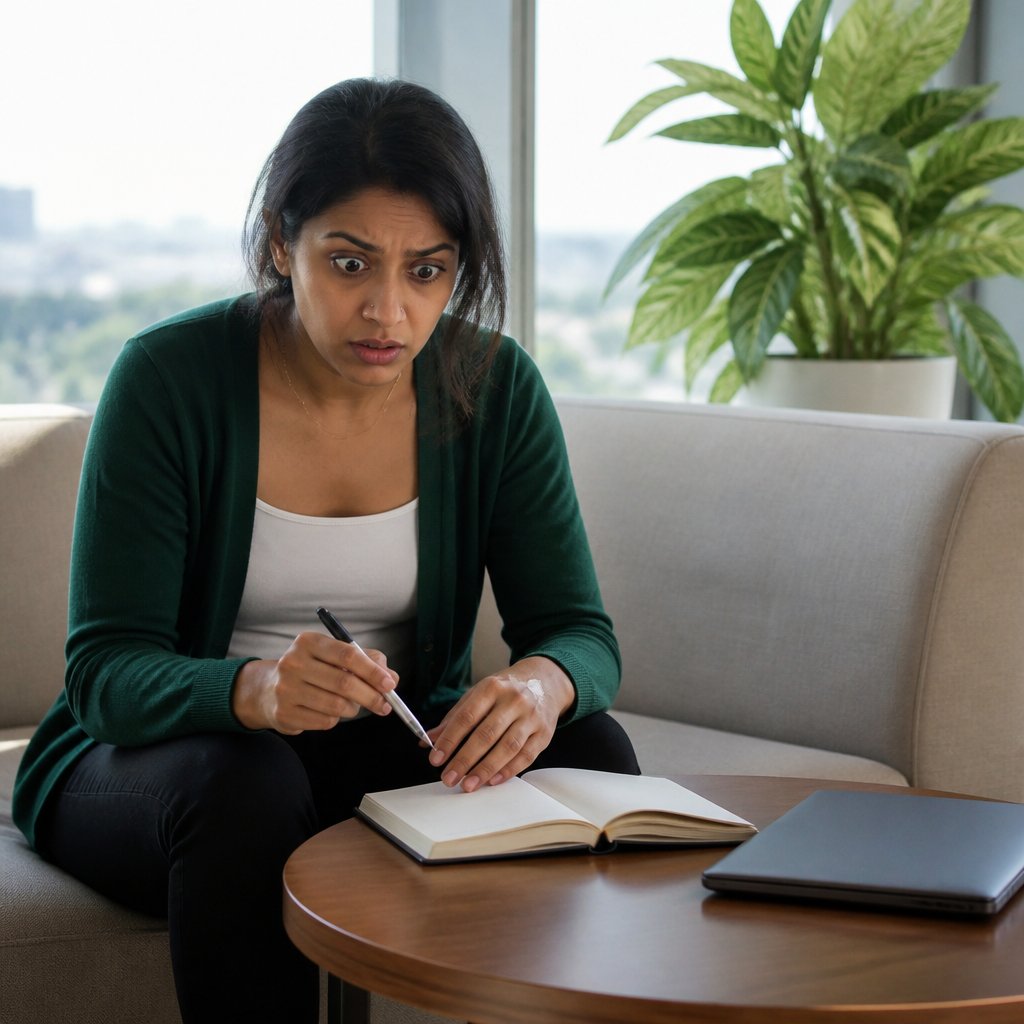
The shared doc was Dylan’s idea. “Let’s keep it clean,” he said, like we were organizing a closet instead of building a secret.
We gave it a neutral title, the kind that could sit in any folder without raising an eyebrow. I told myself that was professionalism. I told myself it was safer.
Then one night, I opened it to check a section and scrolled through the comments. The ones we’d left for each other—quick clarifications at first—had started to read like a diary written in code. Little jokes only we would get. Compliments disguised as edits. Questions that weren’t about the work at all, tucked neatly beside a paragraph like contraband.
Seeing it all stacked like that made me dizzy. In a thread, it felt like conversation. In comments, it looked like evidence.
I could almost hear how it would sound in someone else’s mouth: clinical, suspicious, damning. I imagined HR printing it, highlighting it, laying it out on a table with that careful neutral face they wear when they’re about to ruin your life politely.
The smell of my lavender hand lotion clung to my fingers as I hovered over one of Dylan’s older comments, the one that had made me blush when I first read it. Now it just made me feel trapped. I tried to delete a reply, but my hand froze. Deleting would look like hiding. Keeping it would look like admitting.
I scrolled again, faster, and that’s when I noticed something new: a comment I didn’t recognize, sitting there like a fingerprint from someone who shouldn’t have been in the room…
Lianne’s Listening Tour Smile
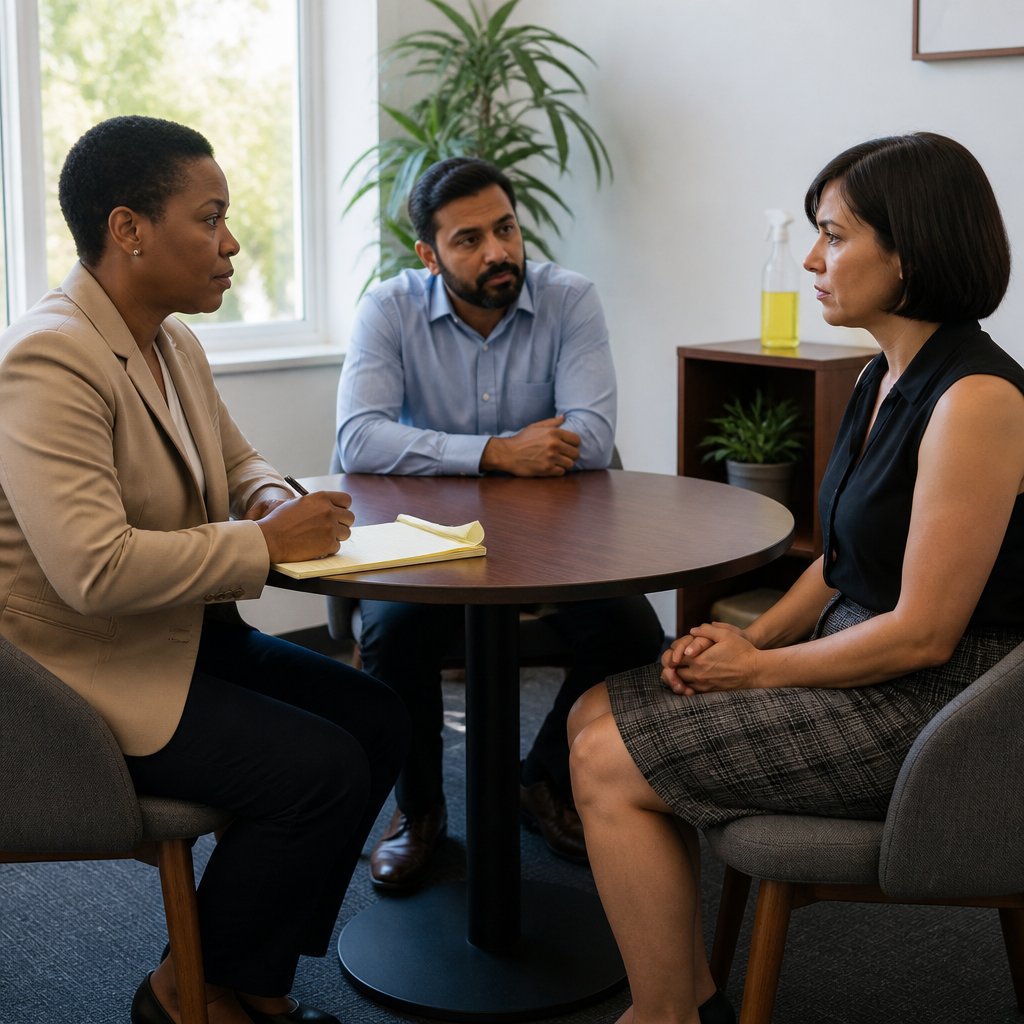
Lianne started the “listening tours” her first week, like she was running for office. New HR partner, new broom, new way of looking at all of us like we were data points with feelings attached.
She didn’t call it an investigation. She called it “getting context.” She scheduled short check-ins in a small meeting room that always smelled faintly of lemon wipes, and she took notes on a legal pad with tidy little strokes, never rushing, never pausing like she needed to think.
When it was my turn, she greeted me with a smile that didn’t reach her eyes. Lianne was in her early 40s, Black, with close-cropped natural hair and a posture so upright it felt like a warning. Her blazer was perfectly tailored, the kind of clothing that made you feel underdressed even when you weren’t.
“I’ve been meeting with everyone,” she said, like that was supposed to comfort me instead of terrify me. “Just want to understand how the team’s doing.”
I sat down and tried to breathe normally. The chair squeaked under my weight, loud in the quiet. My palms were damp, and I hated that she could probably see it in the way I kept wiping them on my skirt.
She asked about workload. About communication. About late nights. Her pen moved steadily, as if she already knew what I was going to say and was simply collecting confirmation.
Then she tilted her head, gentle as a trap. “And how would you describe your working relationship with Dylan?”
My mouth opened on autopilot, but my brain flashed to the thread, the doc, the unfamiliar comment—and the question I couldn’t stop circling: who had been watching closely enough to forward anything at 2:13 a.m.?…
The CFO Noticed My Name

Lianne had barely let go of my file when she said, too neutral, “We’re also doing a quick check-in with Finance leadership. Burnout metrics.” Like my feelings were a dashboard.
The next morning, I found myself in a glass conference room with the CFO—Calvin, silver hair, permanent half-smile—asking questions that sounded like concern and landed like an audit. “How are you managing workload? Nights? Weekends?” He held his pen like a tiny gavel.
Dylan sat beside me, angled just enough to look supportive. He wore a navy quarter-zip that made him look like he belonged in every leadership slide deck. Before I could answer, he jumped in, warm and confident. “Mara’s a great example of healthy hustle. She’s self-directed. She sets boundaries. We’ve been really intentional.”
Healthy hustle. Like I was a case study. Like he’d invented me.
I stared at the tiny water ring my glass left on the table and tried to keep my voice even. I said something about prioritization, about learning to say no, about how the ‘project’ cadence was temporary. Calvin nodded like he’d just found the data point he wanted.
When the CFO’s eyes flicked to Dylan and back to me, I felt the tether tighten—leadership didn’t just see my work anymore, they saw Dylan’s hand on it, and I couldn’t tell if he’d just protected me or branded me
The Elbow Touch That Stuck

The holiday party was supposed to be harmless. A rented event space with too-loud music, paper snowflakes taped to the bar, and a catered buffet that smelled like rosemary and reheated chicken. Everyone pretending we weren’t counting who showed up and for how long.
I wore a green wrap dress and flats because I’d promised myself I wouldn’t dress like I was trying. Dylan showed up in a charcoal blazer over a white tee, casual on purpose, the kind of look that said he had nothing to prove.
He found me near the dessert table like he always did—like my orbit was predictable. “There you are,” he said, and it shouldn’t have sounded intimate, but it did. When we moved through the crowd, his hand landed at my elbow, guiding me past someone’s laughing cluster. It lingered a second too long. Not a grab. Not a squeeze. Just… ownership-adjacent.
I felt it through the thin fabric like a hot coin. I didn’t flinch, which was its own kind of confession.
Two people clocked it. I saw it happen in real time—the pause, the eyes, the tiny recalibration. Sienna, in a red sweater with her hair pinned back, watched with that soft concern she always wore like perfume. And across the room, Lianne’s friend from People Ops—Tara, petite, sharp bob, black jumpsuit—stopped mid-sip and stared like she’d just been handed a missing puzzle piece.
Dylan’s hand finally lifted, and Tara’s mouth tightened as if she’d decided to remember it
Sienna Asked Like It Was Nothing
The Monday after the party, the office smelled like burnt coffee and leftover pine from the lobby tree. Everyone was quieter, hungover on forced cheer. I was trying to act normal, which meant I was overcorrecting—too polite, too efficient, too smiley in the hallway.
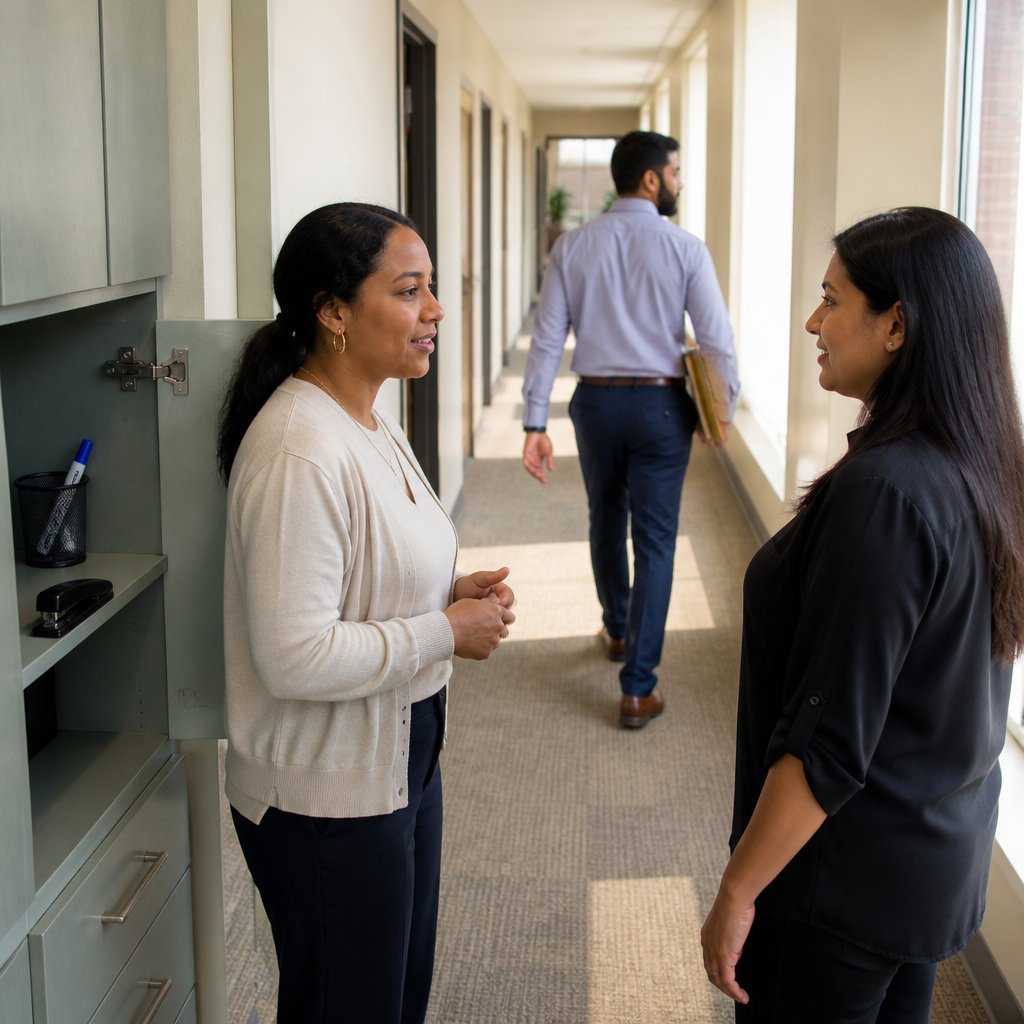
Sienna caught me by the supply cabinets, the ones that always had exactly one working stapler and a sad row of dried-out markers. She looked soft—cream cardigan, gold hoops—but her eyes were doing math.
“Hey,” she said, like we were just two women checking in. “You okay? You seemed… stressed lately.”
I gave her the version I’d been practicing since HR pulled me in: workload, deadlines, family stuff. A vague soup of acceptable reasons.
She nodded slowly, then tilted her head. “Random question,” she said, too casual. “Does Dylan ever email you late at night? Like, after hours?”
The hallway felt suddenly narrow. I could hear the printer in the corner grinding through someone’s handouts, each page hitting the tray with a flat slap. I kept my face still, because my face was the part of me that always betrayed the truth first.
“Sometimes,” I said, and hated how quickly it came out. “It’s… project stuff.”
Sienna’s mouth made a sympathetic shape, but her gaze sharpened. “Yeah,” she murmured. “That’s what I thought.” She touched my arm—light, friendly—and I couldn’t tell if it was comfort or a claim.
Then she walked away, leaving me staring at the cabinet handle, wondering who she’d already talked to
When He Said ‘Complicated’
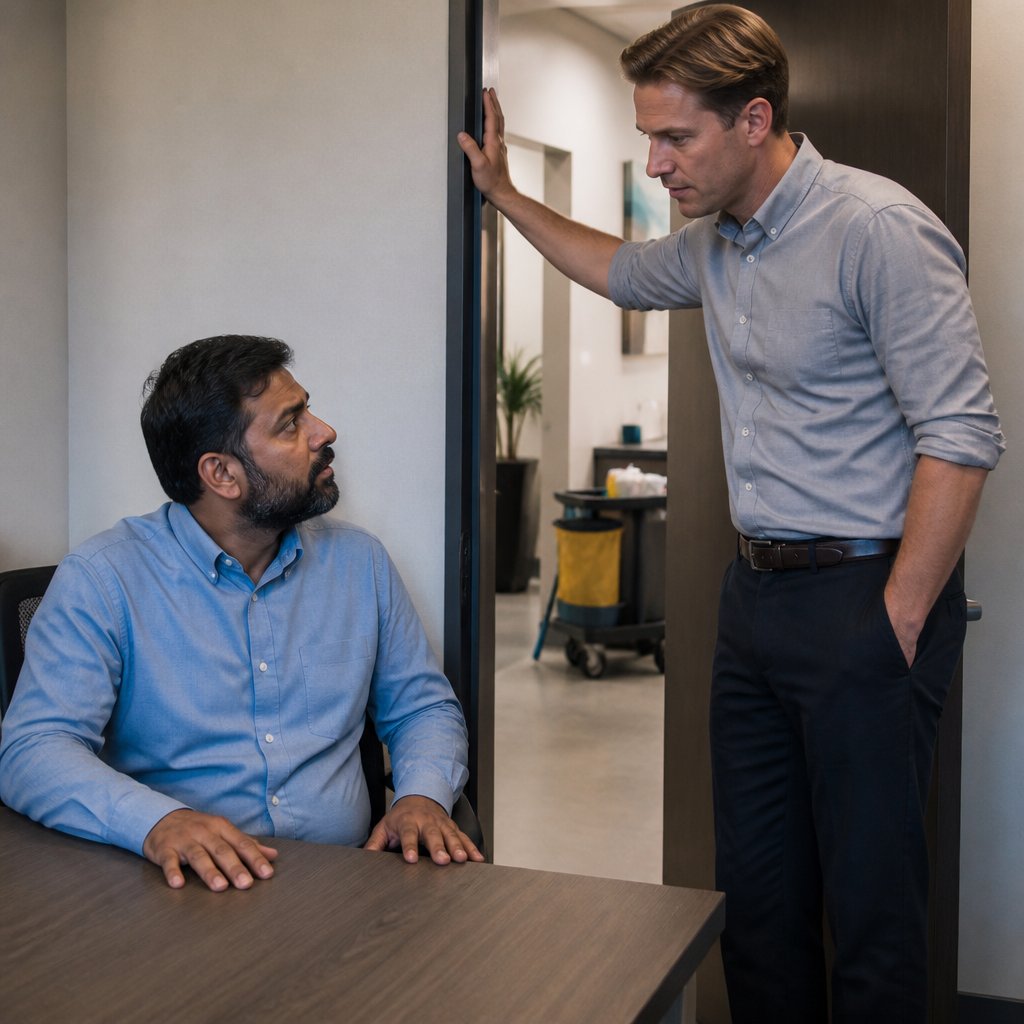
Dylan caught me late on a Tuesday, when the office had that after-hours hush—HVAC hum, cleaning cart wheels squeaking somewhere distant, the smell of lemon disinfectant hanging in the air like a warning.
He leaned in my doorway without stepping inside, like he was trying to look respectful. “You’ve been quiet,” he said. His voice was gentle, which somehow made it worse.
I kept my hands on the edge of my desk. A posture of innocence. “I’m fine,” I lied. “Just tired.”
He nodded, eyes searching my face the way they did when he wanted something without saying it. “Mara,” he said, and then paused like he was choosing a safer word. “My marriage is… complicated.”
There it was. The door he wanted me to walk through. The little confession that wasn’t really a confession, just an invitation to fill in blanks with my own empathy. I could already feel the narrative forming—the lonely man, the misunderstood husband, the one person at work who really got him.
I didn’t ask for details. I didn’t want to know his wife’s name, what she did, what she’d supposedly failed to understand about him. I didn’t want to be handed a role in a story I hadn’t auditioned for.
“I’m sorry,” I said, carefully, like placing a glass down without letting it clink.
He exhaled, almost relieved. “I just… I don’t talk about it with anyone.” His eyes held mine a beat too long. “But with you, it feels different.”
My stomach tightened, not with romance—with danger. Because if I let him keep talking, I knew exactly what I’d become: the person who ‘understood’ him, the person who made it ‘complicated,’ the person HR could name without needing proof
The Weekend Became Our Secret
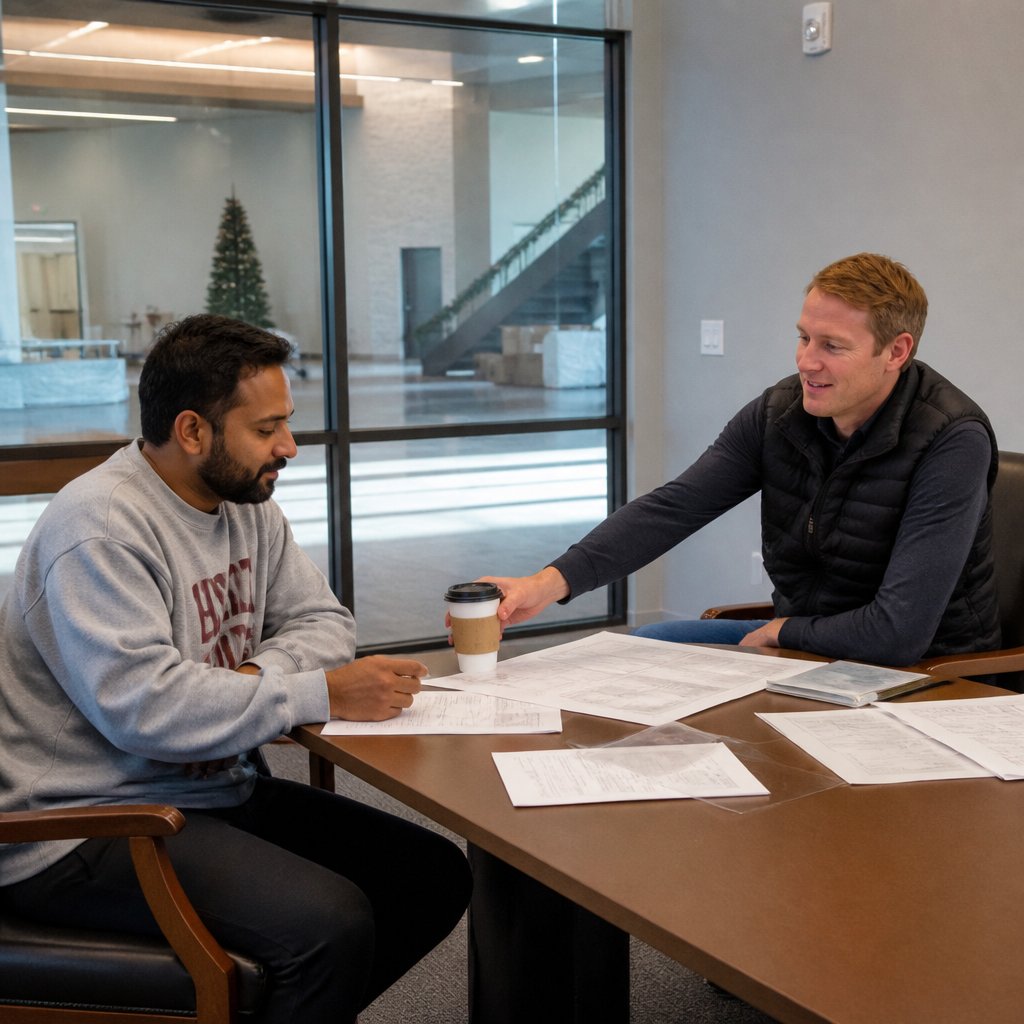
The client escalation hit on a Saturday morning, the kind that makes your stomach drop before you’ve even had breakfast. I was in leggings and an oversized college sweatshirt, hair still damp from the shower, staring at my living room like it had betrayed me by being so peaceful.
Dylan called—actual voice, not a neat little email—and I let it go to voicemail once before I caved. When I picked up, he didn’t waste time on pleasantries. “We need to fix this today,” he said. “I’m looping you in because I trust you.”
Trust. Another word that sounded like a compliment and functioned like a leash.
By noon, I was in the office anyway. The building was mostly empty, the lobby echoing with my footsteps, the air too cold like it didn’t know how to behave on weekends. Dylan met me upstairs in jeans and a puffer vest, holding two coffees like we were a team in a movie. One for him, one for me. No one else to witness the little domestic gesture.
We worked side by side in a conference room, papers spread out, voices low. Every time we solved a piece, he looked at me like we’d done something heroic. “See?” he murmured once. “It’s us against the world.”
And the sick part was: I liked it. The secrecy felt like safety. Like if it was just the two of us, no one could misunderstand.
When he brushed a crumb off the table with his fingertip, I watched his hand and realized I’d stopped thinking about consequences at all
I Deleted, Then I Panicked

It started as a simple, practical thought: clean up the noise. If HR was sniffing around, why keep every late-night “just checking in” and every “you’re the only one I can rely on” sitting in my inbox like kindling?
I did it at my desk on a Wednesday afternoon, wearing a rust-colored sweater and trying to look busy enough that no one would stop by. My finger hovered, my heart doing that tight little stutter it does when I know I’m about to do something I’ll regret. Delete. Delete. Delete.
Each one vanished, and with it came a tiny rush—like wiping fingerprints off a glass. Petty satisfaction, the illusion of control.
Then the rush flipped. Because the moment I did it, I could practically hear Lianne’s calm voice in my head: Have you altered any records? I hadn’t been asked that yet, but I could feel the question in the air, waiting.
My mouth went dry. I tried to remember what I’d deleted. Which ones were harmless project updates and which ones had his little emotional tells tucked between bullet points. I tried to remember if I’d ever forwarded something to myself, if there were backups, if IT could pull it anyway. The office suddenly felt full of hidden eyes—every ceiling vent a listening device.
I stood up too fast and bumped my knee on the underside of the desk, the sharp pain grounding me in my own stupidity.
If this became an investigation, deletions wouldn’t look like self-protection. They’d look like guilt. And I couldn’t even remember what I’d just destroyed
The Complaint With No Names
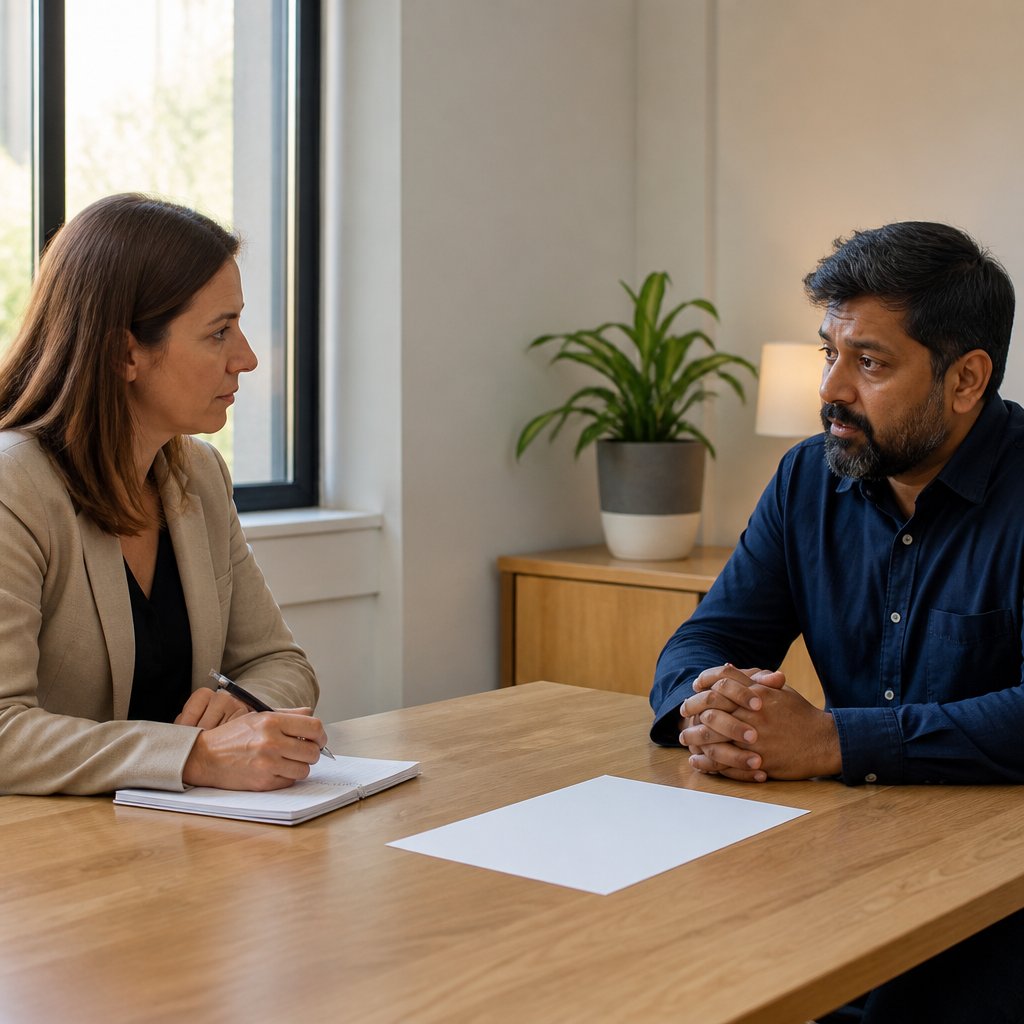
Lianne emailed me a meeting invite that was almost empty—just a time, a room, and that same polite vagueness that made my skin crawl. When I walked into her office, she didn’t offer me a seat right away. She closed the door first. Soft click. Final.
“We received an HR complaint,” she said, and watched my face like it was a live feed. “Anonymous.”
My lungs forgot what to do for a second. Anonymous meant anyone. Anonymous meant everyone.
She slid a single sheet across the desk, face down, like she was sparing me the humiliation of reading it out loud. No names, she said. But the phrasing—“manager/subordinate boundary issue”—hit like a diagnosis. Then the details: late-night communications framed as ‘project’ urgency, weekend meetings when the building was empty, personal check-ins threaded into work updates.
My fingertips went cold. Those weren’t guesses. Those were habits. Someone had been watching close enough to know our patterns, not just our rumors.
“Do you have any idea who might have submitted it?” Lianne asked, voice gentle in a way that felt rehearsed.
I thought of Sienna’s too-casual question. Tara’s tight mouth at the party. The CFO meeting where Dylan volunteered me like a prop. I thought of my own stupid deletions, like I’d tried to erase the trail and only highlighted it.
“No,” I said, and it came out small.
Lianne nodded slowly, then reached for her notepad. “Okay,” she said. “Then we’re going to talk about boundaries. Starting with how often Dylan contacts you outside business hours…”
Her pen hovered, waiting for my answer like a trap already sprung
What He Wanted Me To Forward
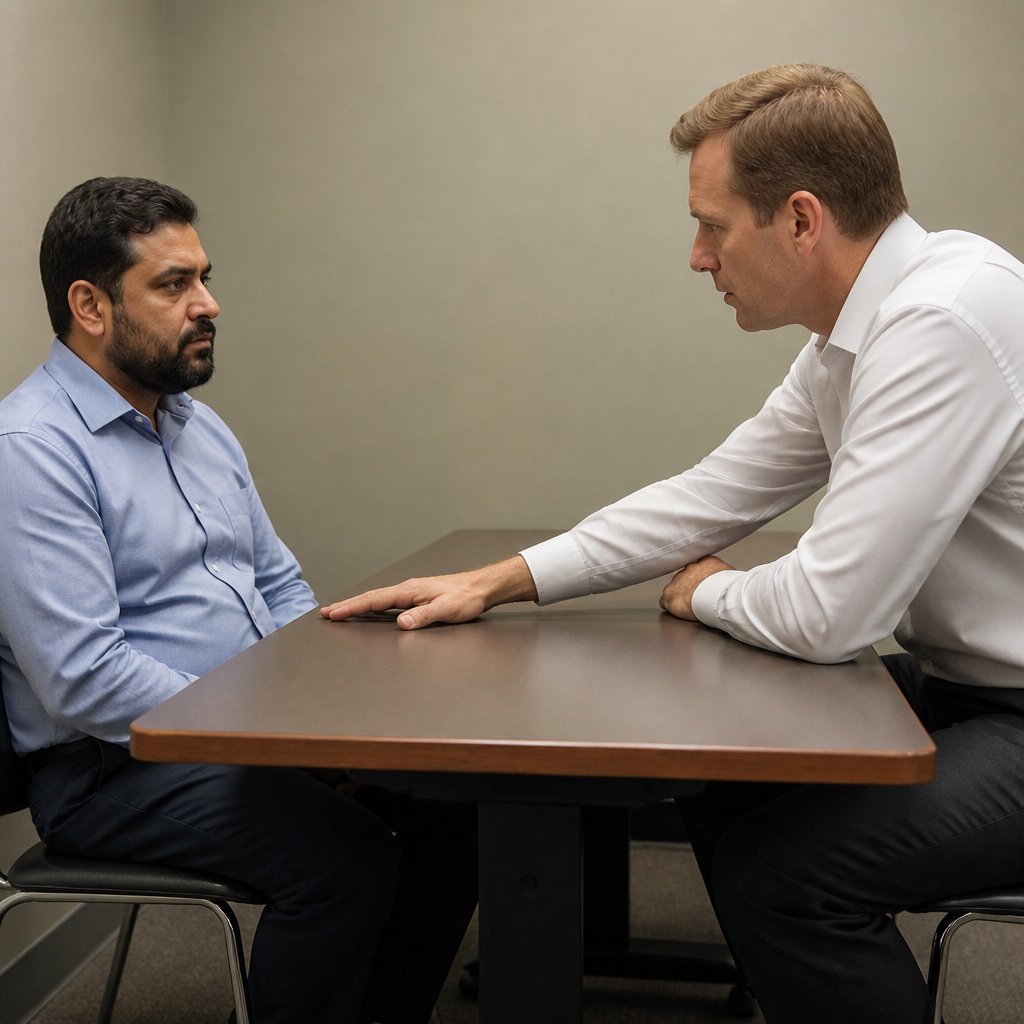
Conference room K2 had always felt like a punishment—windowless, beige walls, a table that wobbled if you leaned wrong. Dylan chose it anyway. Of course he did. Privacy disguised as professionalism.
He arrived first and stood when I walked in, like we were meeting about performance, not survival. Today he wore a crisp white shirt and dark slacks, sleeves buttoned at the wrist, controlled. He didn’t smile. He just gestured to the chair beside him, close enough that our shoulders could have touched if I’d let them.
“Stay calm,” he said immediately, low voice, like he was talking me down from a ledge. “HR is going to overreact to anything that looks messy.”
I sat, back straight, hands folded in my lap. The chair vinyl squeaked under my weight, a small humiliating sound.
He leaned forward, forearms on the table. “If you get anything sensitive—anything that feels like it could be misread—forward it to me. Don’t sit on it. Don’t respond emotionally. Just send it.”
Forward it to me.
It sounded helpful until I heard the other meaning: put it in his hands. Let him decide what’s ‘sensitive.’ Let him curate the record. Let him be the gatekeeper between my story and the people who could end my career.
“Why?” I asked, trying to keep my tone neutral, like I wasn’t suddenly furious.
He held my gaze. “Because I know how leadership thinks,” he said. “And I know how to frame things.”
Frame things. Like a picture. Like evidence.
On the table between us, his hand inched toward mine—not touching, just close enough to remind me who had access to what. And I realized, with a cold clarity, that he wasn’t just telling me to stay calm. He was telling me to stay controllable
The Coordinator Who Disappeared

I didn’t go digging because I’m brave. I went digging because I couldn’t sleep, and my brain needed a target. Anxiety loves a scavenger hunt.
In the break room, the air smelled like microwave popcorn and dish soap. I stood at the counter in a denim shirt and black slacks, stirring powdered creamer into coffee I didn’t want, listening to two people from Operations gossip like they were recapping a show.
“Remember Jenna?” one of them said—Mark, broad-shouldered, always sweating a little. “Dylan’s old coordinator?”
The other—Paula, thin lips, platinum-blonde bob—snorted. “She vanished after that ‘reorg.’ Like, poof. One day she was here, next day her desk was cleared.”
I kept my eyes on my cup like it held secrets. “What reorg?” I asked, too quickly, and tried to soften it with a shrug. “I wasn’t here yet.”
Paula’s eyes flicked to me, assessing. “It was framed as budget, but… you know. There were rumors.” She lowered her voice. “She and Dylan were close. Like, weird close. Late nights. Always together. Then leadership got spooked and suddenly she ‘transitioned out.’”
My spoon clinked against the mug, sharp and metallic. I hated the sound because it felt like my body betraying me.
Mark added, “No one says it, but it’s like a pattern. He ‘mentors’ people hard, then when it’s inconvenient—” He made a slicing motion with his hand. “Reorg.”
I walked back to my desk with my coffee sloshing dangerously close to the rim, thinking about how Dylan had positioned me in front of the CFO. Thinking about how he’d told me to forward him anything sensitive. Thinking about how easy it would be to say I was a high performer until I became a liability.
Jenna. A name I’d never heard until now, and suddenly it felt like a warning label I couldn’t peel off
The PDF That Wasn’t Mine

It hit my inbox on a Thursday afternoon, right when the office lull makes you believe—stupidly—that you might get through the day without another surprise. I was wearing a black blazer over a cream top, trying to look like someone who belonged in meetings, not in rumors.
The message had no name I recognized. No greeting. Just an attachment. My throat tightened before I even opened it, like my body already knew.
I printed it instead of reading it on-screen. I don’t know why—maybe because paper feels more real, and I wanted the horror to be tangible. The printer whirred and spat out pages that were warm to the touch, the edges slightly curled.
It was our email thread. Not all of it, but enough. The “project” subject lines. The timestamps that made everything look worse. The little asides Dylan tucked in—compliments, check-ins, the soft language that could be spun into something dirty even if it never was. And someone had highlighted sections in thick marker, then added handwritten notes in the margins like they were presenting a case.
I stared at the ink, at the aggressive loops of someone else’s pen, and felt my face go hot. It wasn’t just leaked—it was curated. Edited for maximum damage.
The worst part was a detail I wouldn’t have noticed if I hadn’t become paranoid: the metadata line on the cover page. Exported from a machine that wasn’t mine.
My hands shook so hard the pages fluttered like they wanted to escape. I looked around the open office—people chatting, walking, laughing at something near the kitchen—and wondered who could have gotten this without touching my account.
Then my doorframe shadow shifted, and I realized someone was standing there watching me hold the evidence
His One-Line Email Arrived
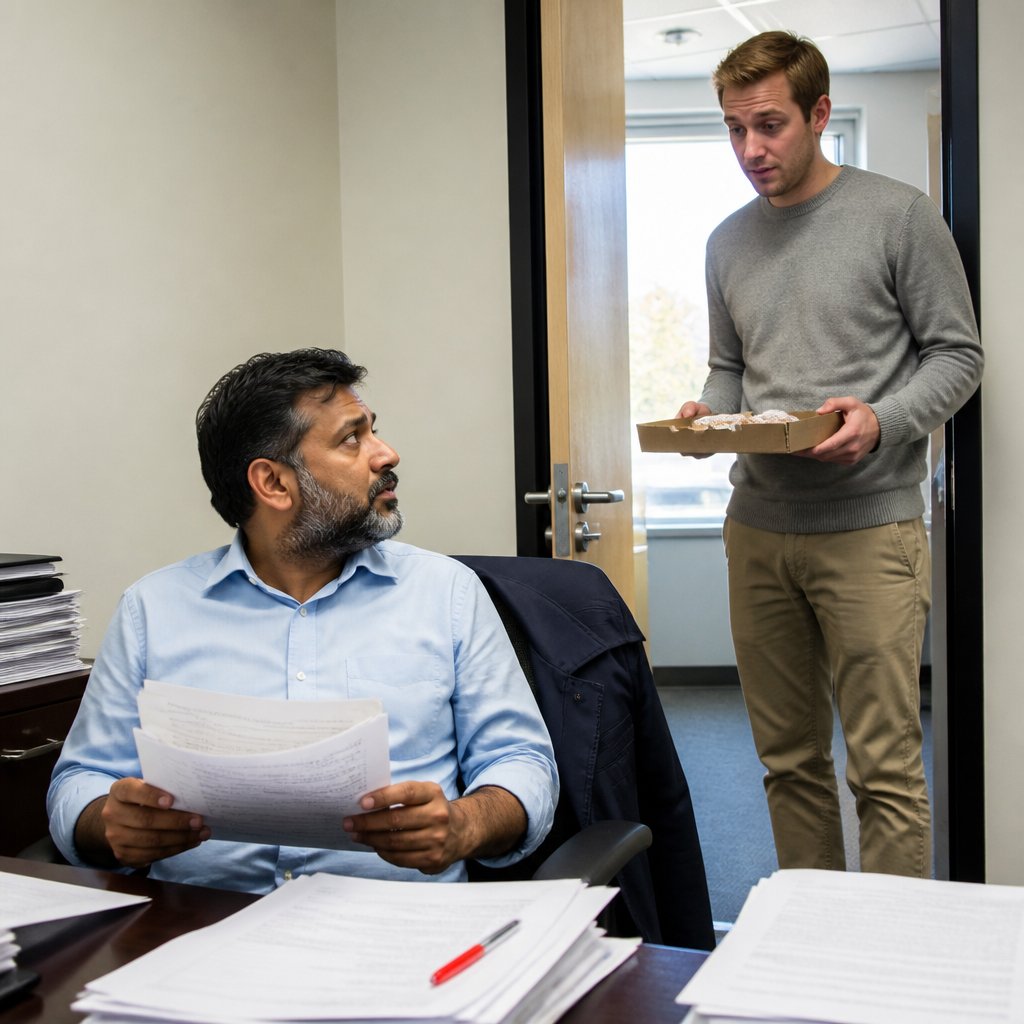
Someone was in my doorway, blocking the slice of hallway light like a human paperweight. I looked up with the annotated PDF still in my hands—my notes in the margins like evidence I’d helpfully highlighted for my own prosecution.
It was Jordan from Finance, tall and always over-caffeinated, clutching a cardboard tray of stale pastries like he’d come to offer condolences. His eyes flicked to the pages in my hands and then away, too fast. “Hey,” he said, soft. “They’re… asking around.” He didn’t step in. He didn’t step out. He just hovered, as if being seen near me now came with risk.
I waited for my phone to buzz with Dylan—some steadying, managerial line about process, about fairness, about how he’d handle it. Instead, my inbox chimed once, and my stomach dropped before I even opened it.
Dylan: Do not respond to anyone. HR will contact you.
No “I’ve got you.” No “Don’t worry.” Not even his usual forced warmth. Just that clipped, procedural sentence—like he’d already put me in a file folder and slid me into a cabinet.
I stared at the email until the words stopped looking like English and started looking like distance. The air in my office smelled faintly like burnt toner, and I realized he wasn’t choosing protection. He was choosing space.
In the doorway, Jordan cleared his throat like he had more to say, and I couldn’t tell if he was warning me or measuring how much I’d crack.
The Line She Made Me Read
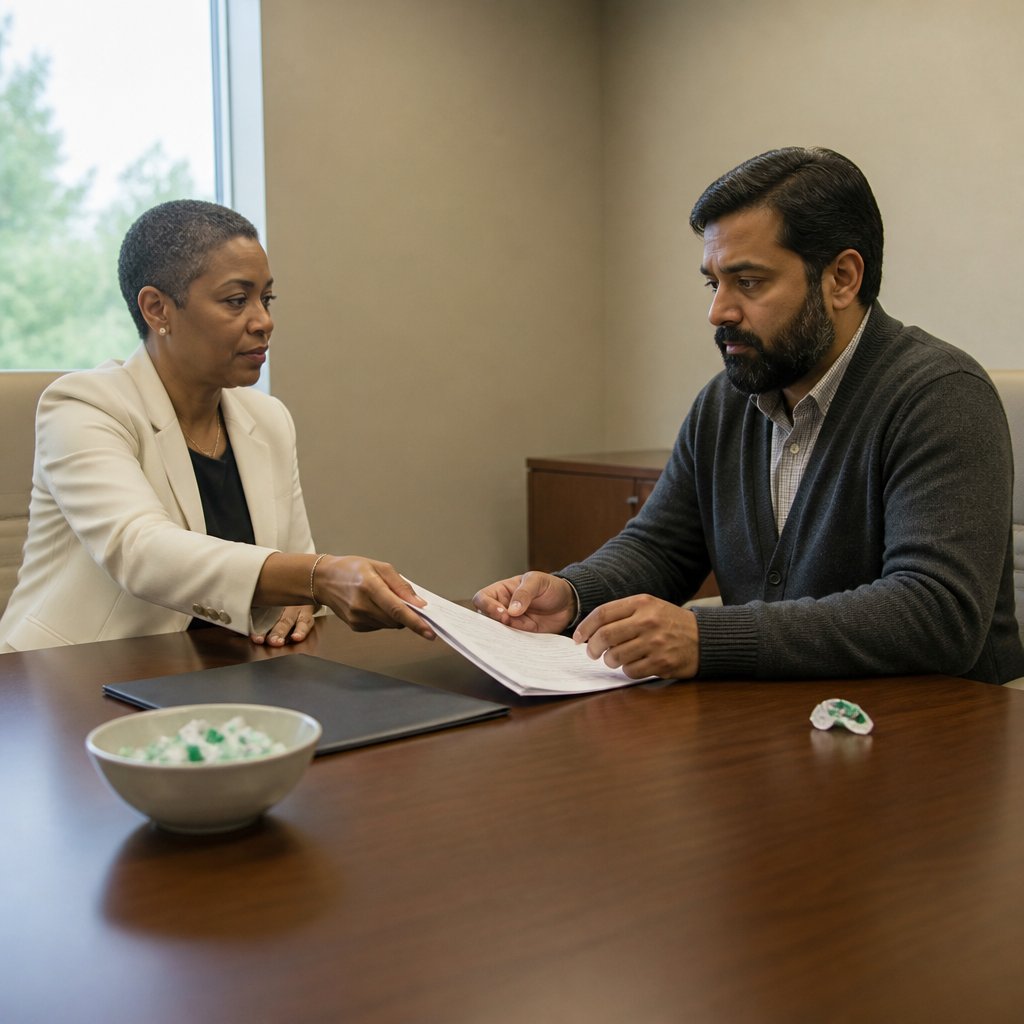
HR didn’t call. HR appeared.
Lianne from People Ops caught me between the kitchenette and my desk, like she’d timed it for maximum humiliation. She was a neat Black woman in her late 40s with close-cropped hair and a calm, unblinking stare that made you feel like you were already lying. “Mara,” she said, using my name like a paperclip. “Conference room. Now.”
The room smelled like lemon cleaner and old carpet. There was a bowl of mints on the table, the kind nobody trusted. Lianne sat across from me with a folder so thick it looked fed. She didn’t waste time on small talk or the faux-therapeutic “How are you feeling?” She opened it and slid something toward me.
Printed pages. The thread. Not just excerpts—whole chunks, stapled, with my words and his words laid out like laundry on a line.
Lianne tapped one spot with her fingernail. “I need you to confirm whether you wrote this line.”
I leaned in and saw it—the sentence where I’d tried to be appreciative, professional, safe. The one that now read like a sigh into someone’s shoulder. I could hear my own tone in my head, too warm, too grateful, too eager to be seen as special.
My mouth went dry. If I denied it, I looked dishonest. If I confirmed it, it sounded like consent—like I’d invited whatever story they were already writing.
Lianne watched my face the way people watch a door they expect to open.
I swallowed, staring at that one line, and I realized she wasn’t asking for truth. She was asking for a signature.
2:13 A.M. Was His Account
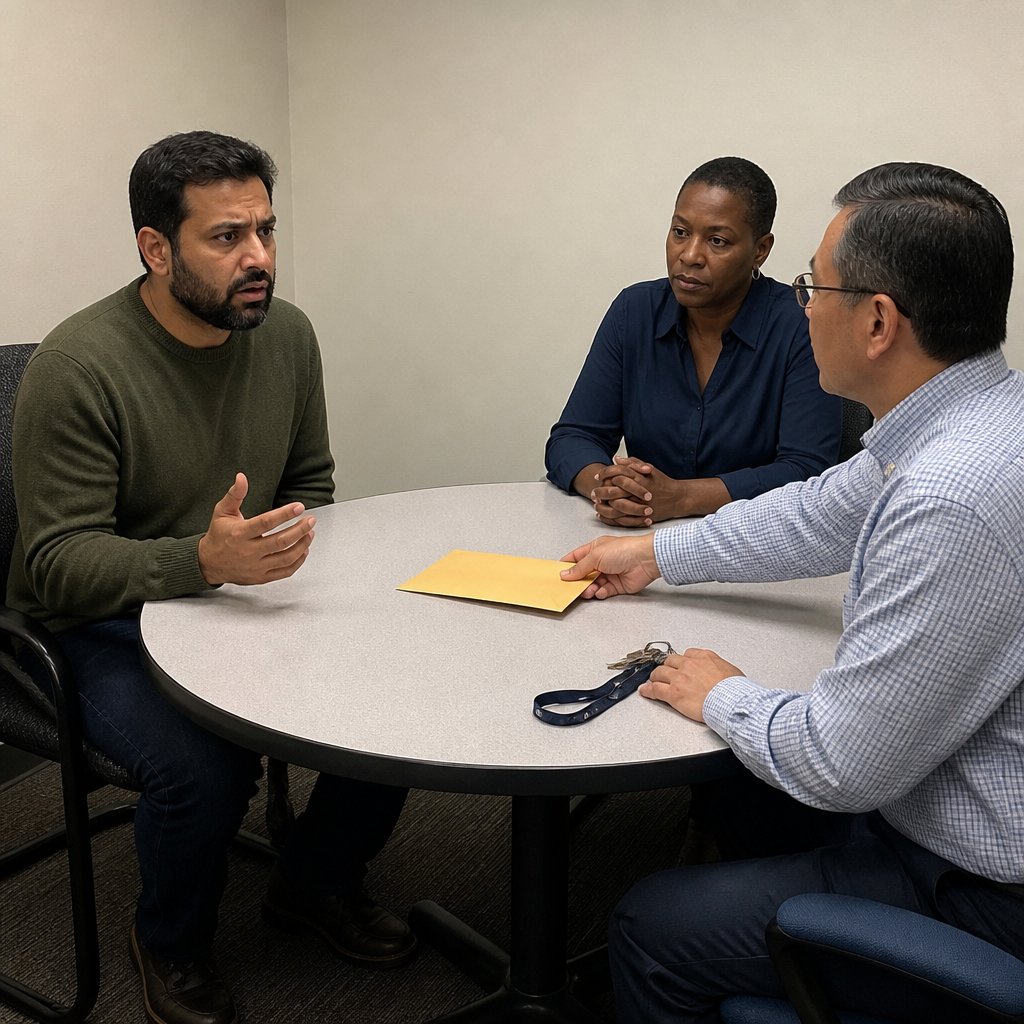
By the time I left that conference room, my legs felt borrowed. The hallway outside HR was too quiet, the kind of quiet that meant people were listening anyway. I could taste the bitterness of the mint I’d panic-grabbed and immediately regretted.
They walked me to a smaller room near IT—no windows, just a round table and two chairs that didn’t match. Lianne was there again, still composed, and beside her sat Ken from IT Security, an Asian man in his early 50s with wire-rim glasses and a posture that said he’d rather be anywhere else.
Ken didn’t do dramatic pauses. He set a manila envelope on the table like it was heavy. “We confirmed the forward,” he said, carefully. “It originated from Dylan’s account. Timestamp: 2:13 a.m.”
My stomach did that ugly drop, like missing a stair in the dark. Dylan’s account. Not “a device associated with,” not “an IP address consistent with.” Dylan. Clean and simple.
“That’s not possible,” I heard myself say, which was pathetic because I didn’t actually know what was possible anymore.
Lianne’s gaze stayed on me. “Dylan states he was asleep at that time.”
Of course he did. If he admitted he was awake, it meant he was in the thread when it moved—present at the moment it became a weapon. If he was asleep, then someone else wore his credentials like a mask.
My mind flashed through late project nights, his easy access, his habit of leaving his laptop open when he went to “grab water.” The office had always been full of small, careless trusts.
Ken slid the envelope a fraction closer, like there was more inside that would finish the thought, and Lianne asked, “Do you have any reason to believe someone would use Dylan’s account?”
I opened my mouth, and the first name that rose in my throat was the one I didn’t want to say out loud.
Would you have confronted Ken about the laptop access?