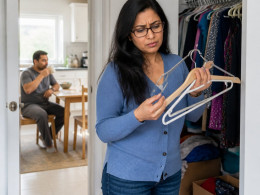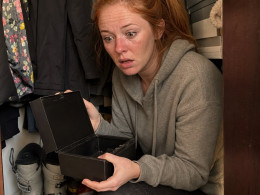




Why Did He Need Minutes?
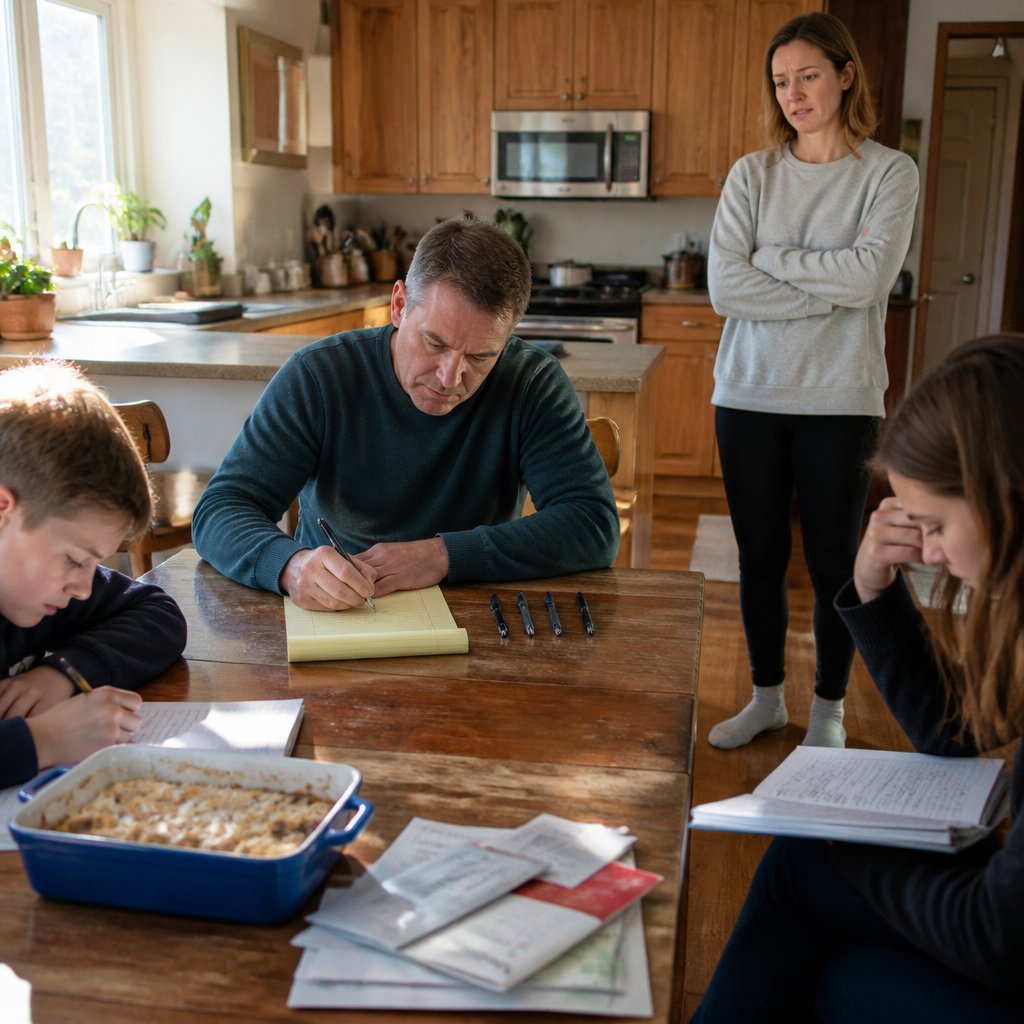
Cal started it on a Sunday night like it was something normal people did. He cleared the mail off the kitchen table, lined up three pens, and told the kids to bring their planners. I was still in socks, the floor cold under my feet, and the dishwasher was humming like it always did after dinner.
“Family meeting,” he said, cheerful in that tight way. “Same time every week. We’ll do quick check-ins, chores, school stuff, schedule. And I’ll take minutes so nobody can say they were misheard.”
He had a yellow legal pad out already, the kind with the stiff cardboard back. He wrote the date at the top and underlined it twice. I watched his hand move, neat and steady, like he’d been waiting for an excuse to do this.
The kids looked relieved, honestly. Structure made them feel safe. I tried to match their energy. I nodded and talked about the soccer carpool, the grocery budget, the fact that the upstairs bathroom fan still rattled. Cal kept saying “Got it,” and writing.
When I asked, lightly, why we needed a record, he didn’t look up. “It’s accountability,” he said, and the pen kept scratching. “It protects everyone.”
I stared at that legal pad and felt my stomach drop, like he wasn’t protecting us at all, like he was building something I couldn’t see yet.
What Was He Writing About Me?
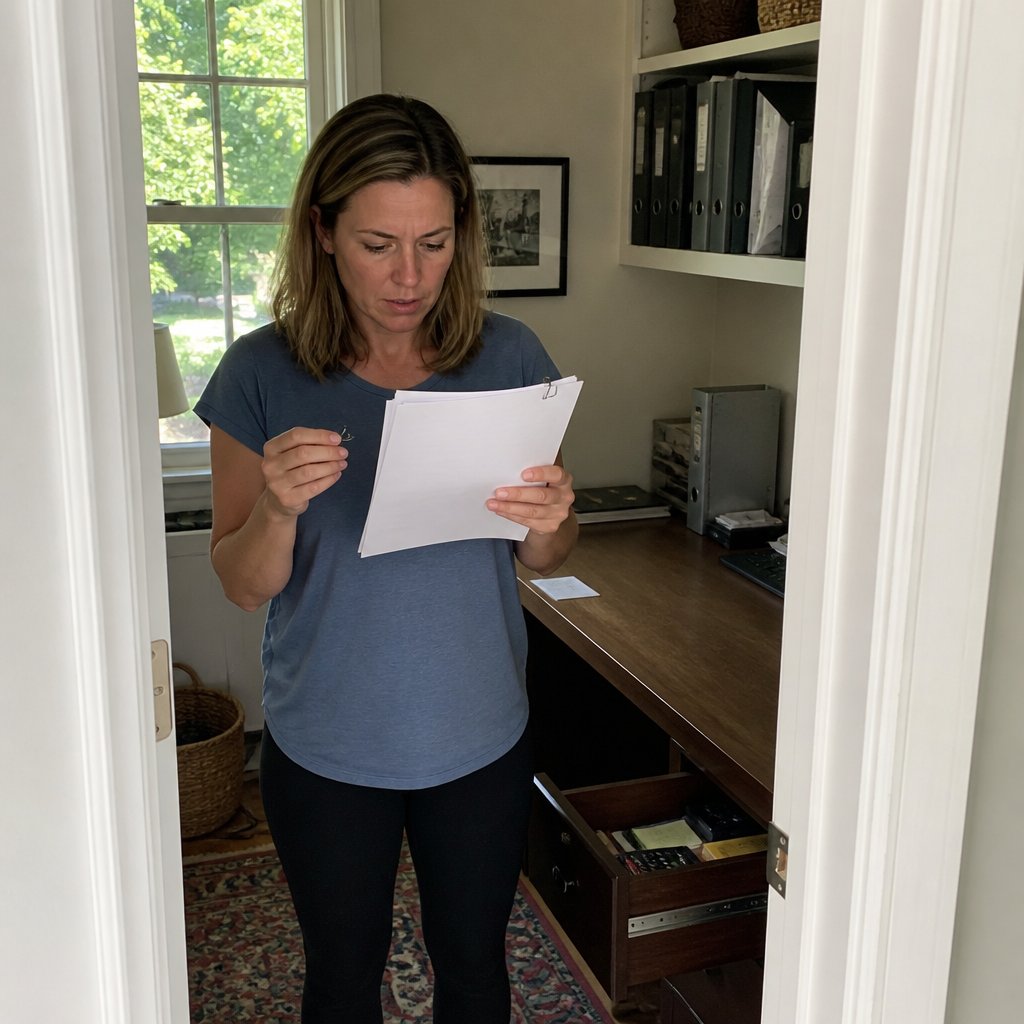
I found the first write-ups by accident on a Tuesday afternoon. I was looking for the stapler because I needed to fix a permission slip, and Cal’s desk drawer stuck the way it always did. When it finally slid open, there were a few pages clipped together, crisp like they’d been printed that morning.
I stood in his office doorway, not even stepping in, and read them fast. The room smelled faintly like his aftershave and paper. At the top was the date and “Mercer Family Meeting Minutes.”
My name showed up more than I expected. Not in a normal way, either. “Ivy expressed concerns emotionally about budget.” “Ivy became overwhelmed discussing pickups.” “Ivy worried about ‘tone’ instead of solutions.”
Cal’s parts were different. “Cal proposed practical system.” “Cal offered support.” “Cal clarified expectations.” It wasn’t just notes. It felt like a grading rubric, like I was being scored for being a person.
I read the bullet points again, searching for anything that sounded like me. I remembered saying I felt stretched thin, not “overwhelmed.” I remembered asking for help, not “worrying about tone.” My face got hot and I could hear my own pulse in my ears.
I put the pages back exactly where they were, even lining up the paperclip the way I found it, and walked out with my hands shaking, wondering how long he’d been practicing making me sound like this.
Why Read Them Out Loud?

The next Sunday, Cal started the meeting by tapping last week’s pages on the table like a teacher. We were back in the kitchen, but this time he’d moved the fruit bowl to the counter and cleared the table completely. The kids had their water cups lined up. I had a dish towel in my lap that I kept twisting.
“Before we move forward, we’ll review last week’s minutes,” he said, and he began reading. He didn’t summarize. He read every bullet point, including the ones about me.
When he got to the budget part, I said, “That’s not what I meant. I said I felt stretched thin, not—”
He held up a hand without looking at me. “Ivy, please. We agreed we wouldn’t argue with the record. If you want to add context, we can note it.”
My stepson, Owen, glanced at me like he was waiting to see if I’d break the rules. My daughter, Lila, stared at her cup. The air in the room felt tight, like when you forget to open a window while cooking and everything smells trapped.
Cal kept reading. “Ivy became overwhelmed discussing pickups,” he said, calm as anything.
“I wasn’t overwhelmed,” I said, and my voice came out sharper than I meant. “I was trying to explain why the schedule keeps changing.”
Cal set the pages down and looked at the kids. “See? This is why the minutes matter. We’re already rewriting it.” Then he picked up his pen and asked, “Do we want to record that Ivy disputes the wording?”
When Did The Kids Believe Him?
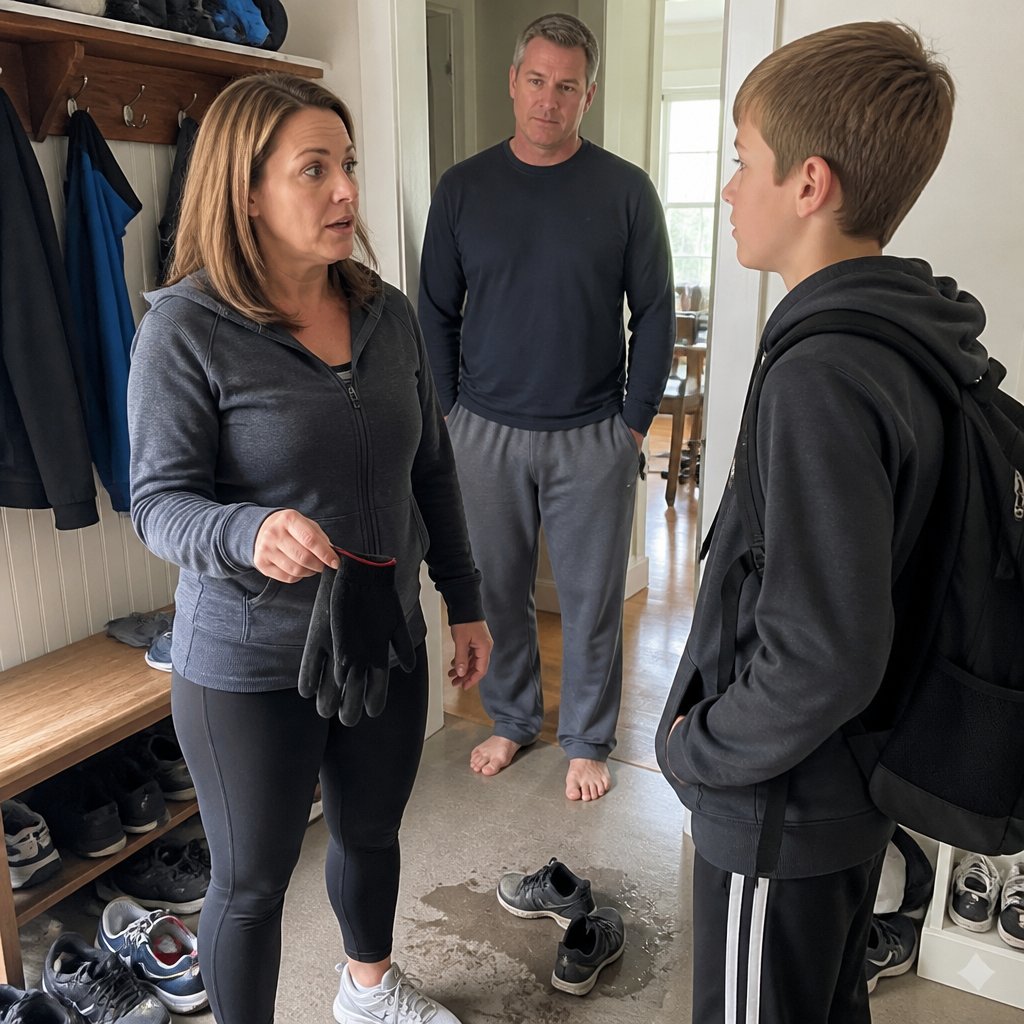
It didn’t take long for the minutes to become a thing in the house, like the chore chart used to be. A few days after that Sunday, I was in the mudroom trying to find the other glove Owen swore he’d left “right there.” Coats were piled on hooks, and the smell of wet sneakers sat heavy near the bench.
Owen stood with his backpack still on, one strap digging into his shoulder. He was twelve, tall for his age, with sandy hair that never stayed combed. He watched me dig through the basket like I was performing for him.
“It says you agreed,” he said suddenly.
I froze, glove in my hand. “What says I agreed?”
He shrugged, like it was obvious. “The minutes. About Dad doing pickups on Thursdays and you doing Tuesdays. You said it was fine.”
My mouth went dry. “Owen, I didn’t agree it was fine. I said we could try it for two weeks if Dana stopped switching last minute.”
He frowned, the way he did when a teacher corrected him. “That’s not what it says.”
I could hear myself getting defensive, my voice climbing. I hated that part most—the way I started sounding like someone arguing in a courtroom instead of a stepmom holding a glove.
“Who showed you the minutes?” I asked.
Owen shifted his weight and looked past me toward the hallway, like he didn’t want to answer. “Dad said it’s for everyone,” he mumbled, and I watched his face shut down, like I was the one making it weird.
Who Else Did He Invite?
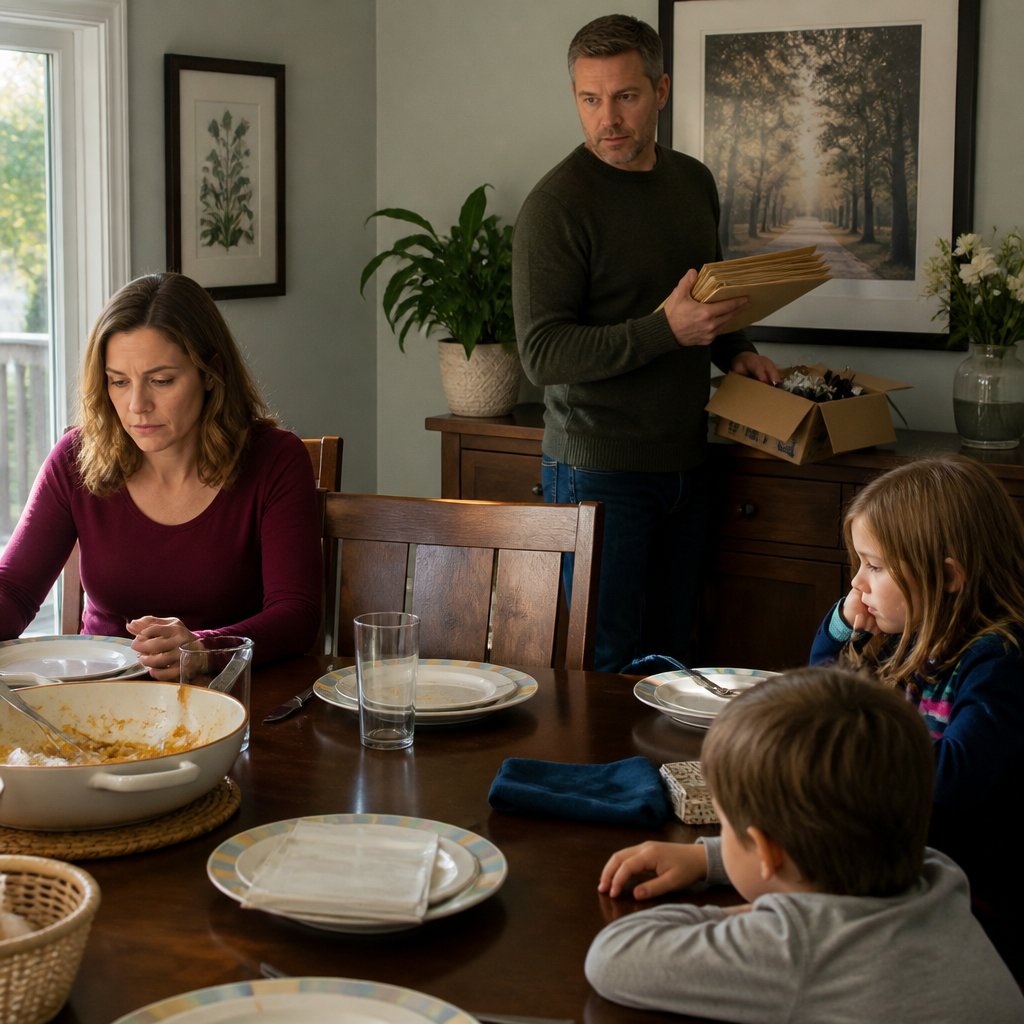
Cal announced the new “system” like it was a favor. We were in the dining room after dinner, plates stacked, the smell of tomato sauce still hanging in the air. He carried in a small box like it was office supplies, set it on the sideboard, and pulled out a fresh stack of folders.
“I made a shared folder,” he said. “For transparency.”
I didn’t ask where. I didn’t want to hear the word “shared” again. He kept going anyway, upbeat. “It’ll keep everything in one place. Meeting minutes, schedules, action items. The kids can check things any time. And I invited Mom.”
“Your mom?” I said, before I could stop myself.
He nodded like it was obvious. “She worries. This will reassure her we’re on top of things.”
His mom, Marlene, had opinions about everything from my pantry organization to how I folded towels. The idea of her reading Cal’s version of me made my throat tighten.
Cal reached into his pocket and set his phone face-down on the table like a paperweight. “I also added Dana,” he said, casual, like he was talking about adding cilantro to a recipe. “So she can’t claim she didn’t know the plan. Accountability helps co-parenting.”
The kids went quiet in that way they did when adults mentioned Dana. I stared at the face-down phone and tried to keep my face still. My heart beat hard enough I could feel it in my neck.
“You added Dana without asking me?” I said.
Cal smiled, small. “Why would you object to transparency, Ivy?” he asked, and the question landed like a trap I couldn’t step around.
How Did Dana Get That?

Dana’s message hit me in the middle of Saturday morning chores. I’d been folding laundry on our bed, warm towels on my forearms, trying to keep my mind on simple things. My phone buzzed on the nightstand. I saw Dana’s name and my stomach flipped.
I picked it up but kept the screen turned away from me at first, like that would make it less real. When I finally looked, I could feel my face tighten. She wasn’t asking. She was quoting.
“Per the minutes,” she wrote, “you agreed to swap next Friday so I can take Owen to my sister’s.”
I sat on the edge of the bed with a towel in my lap, breathing shallow. Dana was thirty-eight, always put together, the kind of woman who wore white sneakers that stayed white. She had never once cared what I agreed to unless it benefited her. Now she had Cal’s notes as a weapon.
I walked down the hall and found Cal in the kitchen rinsing a coffee mug. He was in weekend clothes, relaxed, like nothing was happening. I held my phone against my palm, screen hidden.
“Dana is quoting the minutes at me,” I said, keeping my voice low because the kids were somewhere nearby.
He didn’t even look surprised. “Good,” he said. “Then she’s reading them.”
“How does she have access?” I asked.
Cal set the mug in the drying rack carefully, like he had all the time in the world. “Because it’s easier when everyone’s on the same page,” he said, and then he glanced toward the hallway like he was checking who could hear.
What Did He Tell Church Friends?

Sunday after service, we stood in the fellowship hall with paper cups of coffee and those dry little cookies that always tasted like cinnamon dust. People clustered in small circles, talking about school fundraisers and whose kid had the stomach bug. I tried to act normal, smiling when I needed to, keeping my hands busy with the cup.
Cal drifted into a group with Todd and Renee from our small group, and I followed because that’s what you do. He had his arm lightly behind my back, not quite touching, like he was guiding me into place.
Todd asked how things were going with “all the schedules.” Cal laughed, easy. “We started these weekly family meetings,” he said. “I take minutes now. It helps with Ivy’s memory issues.”
I felt the heat rise in my face so fast it was dizzying. Renee’s smile faltered. Todd’s eyebrows lifted, and then he looked at me like he was deciding whether to be kind or careful.
“Oh,” Renee said softly, like she’d just learned something delicate.
Cal kept going, still joking. “It’s nothing serious,” he said. “Just little things. But the minutes keep us all honest.” He lifted his cup like it was a toast.
I opened my mouth to correct him, but the words tangled. If I said, “That’s not true,” I sounded defensive. If I laughed, I agreed. The circle went quiet in that polite way, and I could feel everyone waiting for my reaction.
I stared at the coffee in my cup, the surface trembling slightly from my hand, and I realized the story wasn’t just in our house anymore. It was out here, with witnesses, and Cal was the one telling it.
What Was In His Binder?
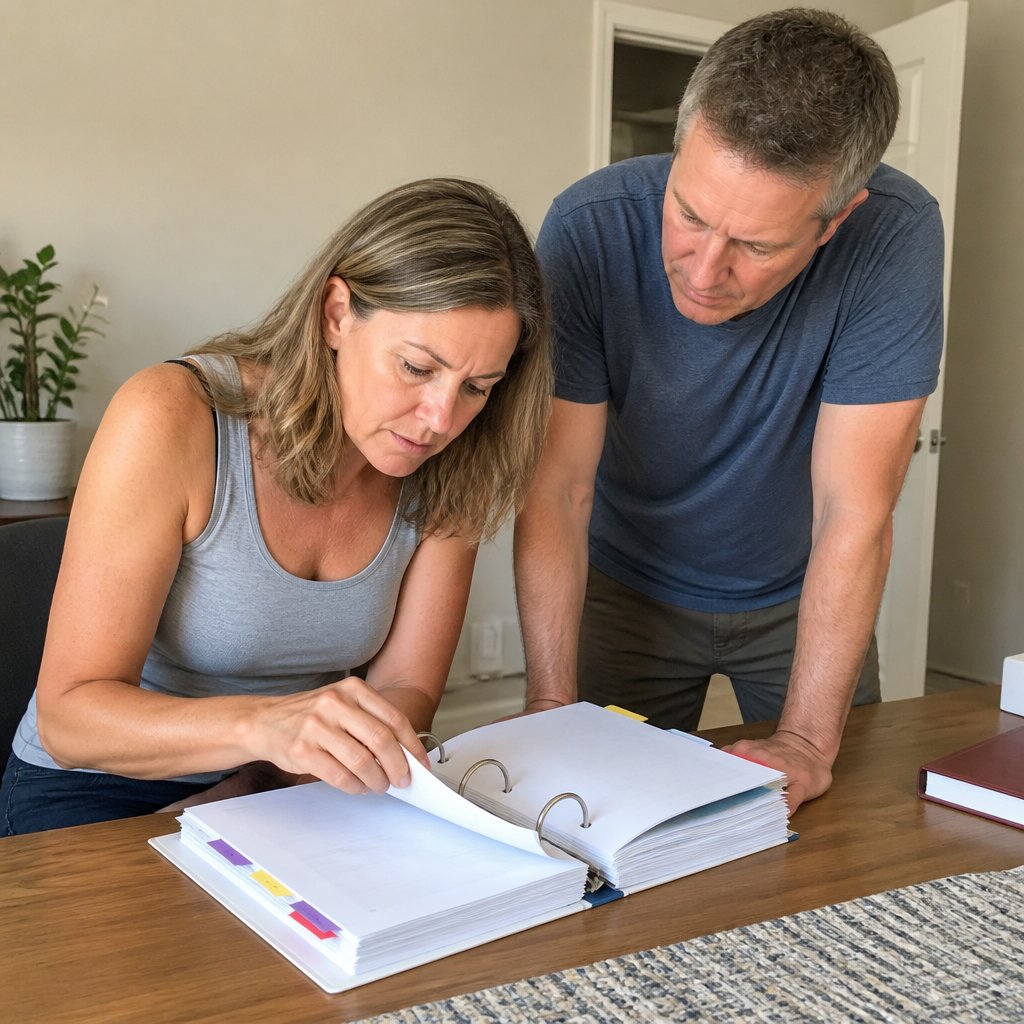
I found the binder on a Wednesday afternoon when the house was finally quiet. The kids were at practice, and Cal had said he’d be “late at the office.” I told myself I was just looking for a spare envelope. That was the lie that got me into his room.
Cal’s office always felt too neat, like a staged photo. Nothing on the floor, pens in a cup, the chair pushed in. I opened the lower cabinet and there it was: a thick white binder, the kind you buy for taxes, with colored tabs sticking out like little flags.
I pulled it out and set it on his desk. My hands were cold. The cover was plain, but inside it was packed. Printed minutes, hole-punched and stacked. Some pages had neon highlights. Some had sticky notes, blank from where I stood but placed like markers.
One tab said “Health,” and under it were pages where he’d written small comments in the margins. I saw the word “menopause” and “mood swings,” like he was labeling me. Another tab held a running “incidents” list—times I’d “raised my voice,” times I’d “forgotten,” times I’d “misremembered.”
I could smell the plastic and paper, that sharp office smell that didn’t belong in a family home. My chest felt tight, and I realized this wasn’t casual note-taking. This was a file.
I flipped to the back and saw a fresh page with a new tab label I hadn’t noticed before, and my fingers paused on it because the title made my stomach drop.
Why Were There Action Items?

After I saw the binder, I started noticing how the meetings changed. Cal didn’t announce it; he just slid it in like it had always been part of the plan. Sunday night, he came to the kitchen table with a fresh page and drew a line down the middle. He wrote “Action Items” at the top of one side.
I wore an old sweatshirt and had my hair pulled back, still smelling faintly like the onion I’d chopped for dinner. I sat down already tired. Cal looked energized.
“Okay,” he said, clicking his pen. “We’ll assign a few tasks so things don’t fall through.”
He didn’t look at himself when he talked about tasks. He looked at me. “Ivy will: schedule the dentist, follow up on Lila’s missing homework, and reorganize the pantry so lunches are easier.” He wrote fast, like the list had been waiting in his head.
“I can do the dentist,” I said, careful. “But the homework thing is between her and her teacher, and the pantry—”
Cal smiled at the kids. “See, this is what I mean,” he said gently. “It’s not about blame. It’s just clarity.”
By Thursday, he was asking, out loud at dinner, “Did you complete your action items?” like I was an employee. When I said I hadn’t called the dentist yet because work ran late, he nodded and said, “Okay,” and I knew exactly what he was going to write next.
That Sunday, he read the list back and said, calm as anything, “Not completed,” beside my name, and Owen’s eyes flicked to me like he was counting.
What Did He Call It Now?
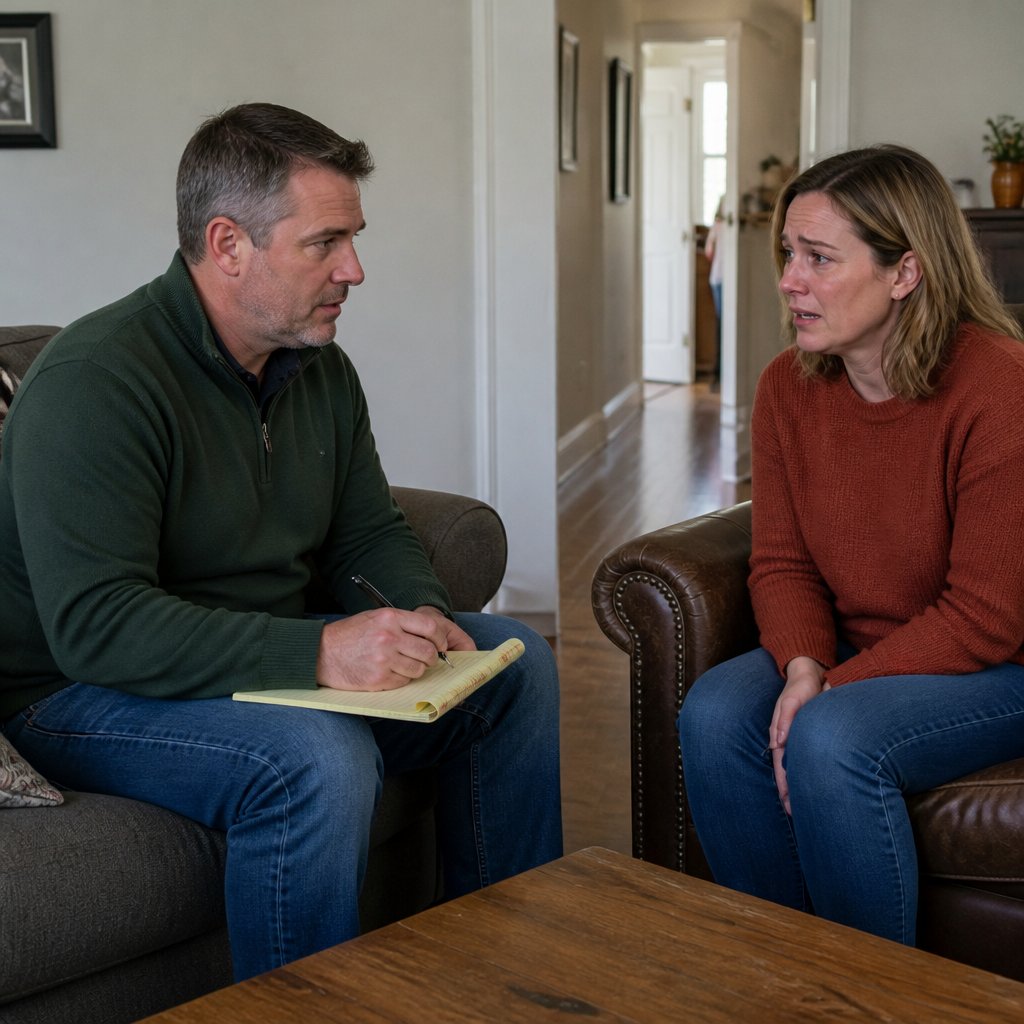
I tried to push back in a way that wouldn’t give him more material. That was the sick part—thinking about my tone before I thought about what was fair. We were in the living room this time, because Cal said the kitchen “felt too charged.” He sat on the couch with his legal pad balanced on his knee. I sat in the armchair with a throw blanket folded beside me like a prop.
“This process isn’t working,” I said, keeping my voice even. “It’s making the kids treat me like I’m always wrong. And your notes don’t reflect what happens.”
Cal’s eyes stayed calm, almost gentle. “You’re attacking the process,” he said. “That’s a common response when someone doesn’t want accountability.”
I stared at him. “I’m not attacking a process. I’m asking you to stop documenting me like I’m a problem.”
He nodded slowly, like he was listening, then wrote something down. The pen made that soft scratchy sound on paper that I’d started to hate.
“What did you just write?” I asked.
He didn’t show me the page. “I wrote that I offered support and you declined,” he said, still calm. “So we remember it correctly later.”
“Declined support?” I repeated. My voice cracked on the second word. “Cal, you didn’t offer support. You offered a record.”
From the hallway, I heard a floorboard creak—someone shifting their weight, listening. I turned my head slightly, but I couldn’t see who it was. Cal followed my glance and then looked back at me, pen poised again, ready for whatever I said next.
Why Did It Light Up?
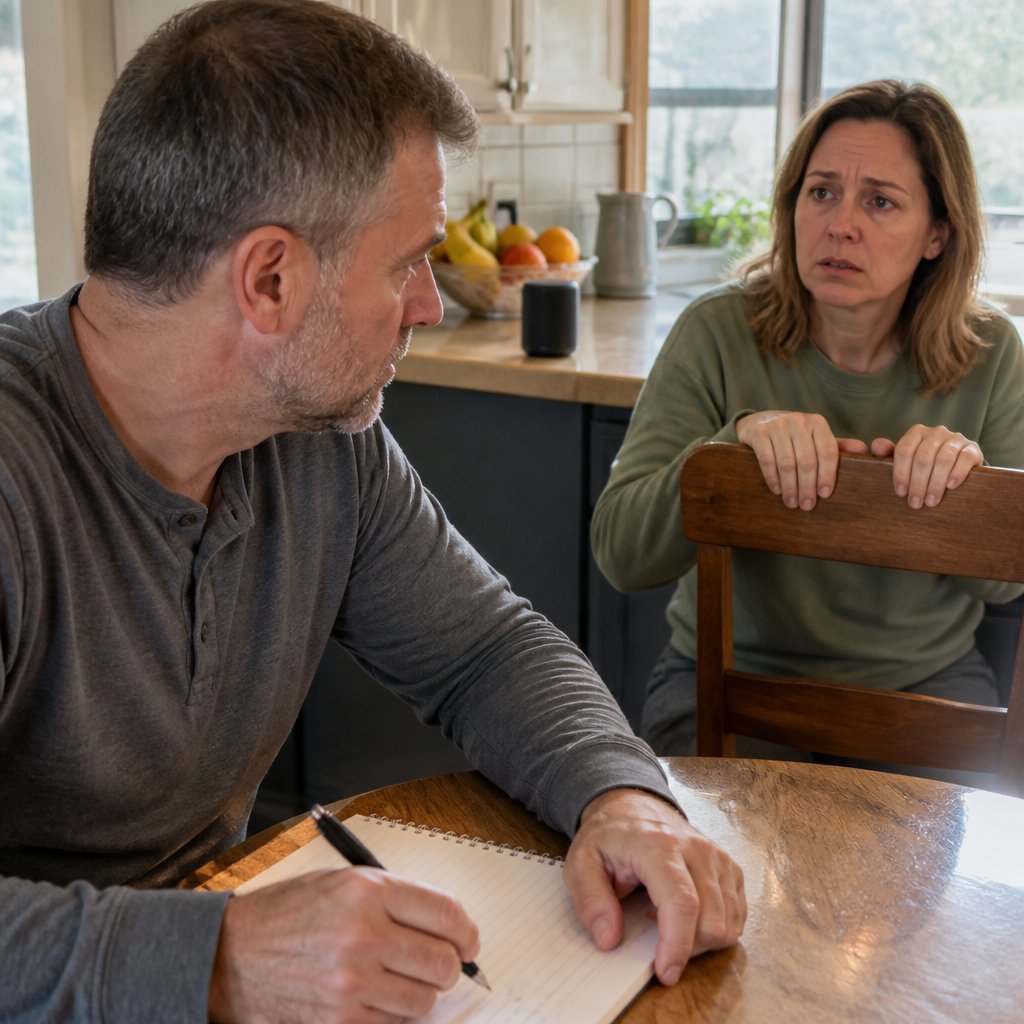
Cal’s pen hovered over the paper, and I heard the floorboard in the hallway give that soft pop like somebody had shifted their weight. I didn’t turn my head. I just kept my eyes on his hand and the neat little bullet he’d already written: “Ivy declined support.”
The next morning, there was a small smart speaker on the kitchen counter, tucked between the fruit bowl and the canister of wooden spoons. Cal said it was “for timers” and asked if I wanted him to set it up for grocery lists too. He said it like he was offering me a favor, like I’d been the one asking for help remembering basic things.
That night, when he called the kids to the table for the weekly meeting, the speaker sat there like another place setting. I watched it while he read the agenda out loud. The ring on the top edge flicked on—just a quick glow—when I cleared my throat to speak. I hadn’t said anything yet.
“It does that,” Cal said, without looking at it. He slid the notebook closer to himself, like he was shielding it. “Please don’t start with the paranoia.”
My palms were damp on the underside of the chair. The kitchen smelled like dish soap and warm pasta water. The speaker’s little light blinked again, and Cal’s pen lowered to the page as if he’d been waiting for it.
Who Was Talking About Me?

By Tuesday, the meeting minutes weren’t just in Cal’s binder. They were floating around like a bad smell you couldn’t find the source of.
I was loading the dishwasher when my neighbor Tessa knocked and stepped in without waiting, holding her phone face-down in her palm like it was hot. Tessa was in leggings and an oversized hoodie, hair pulled up with a clip. She didn’t sit. She just leaned against my counter, eyes darting toward the hallway like she expected Cal to come out.
“I didn’t know how to send this,” she said. “But I would want to know.”
She turned the phone toward herself and scrolled, then slid it across the counter to me without showing the screen. “It’s from the moms’ group. Your sister-in-law… Cal’s sister. She posted that you’re ‘struggling’ and that Cal is ‘doing everything.’ People are reacting. A lot.”
My stomach tightened like I’d swallowed a rubber band. The kitchen smelled like lemon cleaner, sharp and fake. I stared at the phone’s black glass, my reflection a blurry smear.
“Did she… quote anything?” I asked.
Tessa’s mouth pressed into a line. She nodded once, small. “It sounded like… meeting notes. Like somebody’s keeping track.”
My hands were wet, and I wiped them on my jeans, leaving dark patches. From the living room, I heard the front door lock click, and Cal’s keys hit the bowl hard enough to ring.
Why Was He Rewriting It?
I bought a notebook the next day, the cheap kind with a black-and-white marbled cover. I hid it under the stack of casserole dishes I never used, the heavy ceramic ones we got as wedding gifts and didn’t have the cabinet space for.
I didn’t write poetry. I wrote times. Who was in the room. What Cal said first. What I actually said back. I wrote the way his voice got calm when he wanted to look reasonable, and the way the kids’ eyes slid toward him before they answered me.
When Cal spotted it on the counter later, he picked it up with two fingers like it was dirty. “So now you’re documenting?” he said, smiling in that flat way. “That’s… a fixation, Ivy.”
I didn’t argue. I just took it back and put it away.
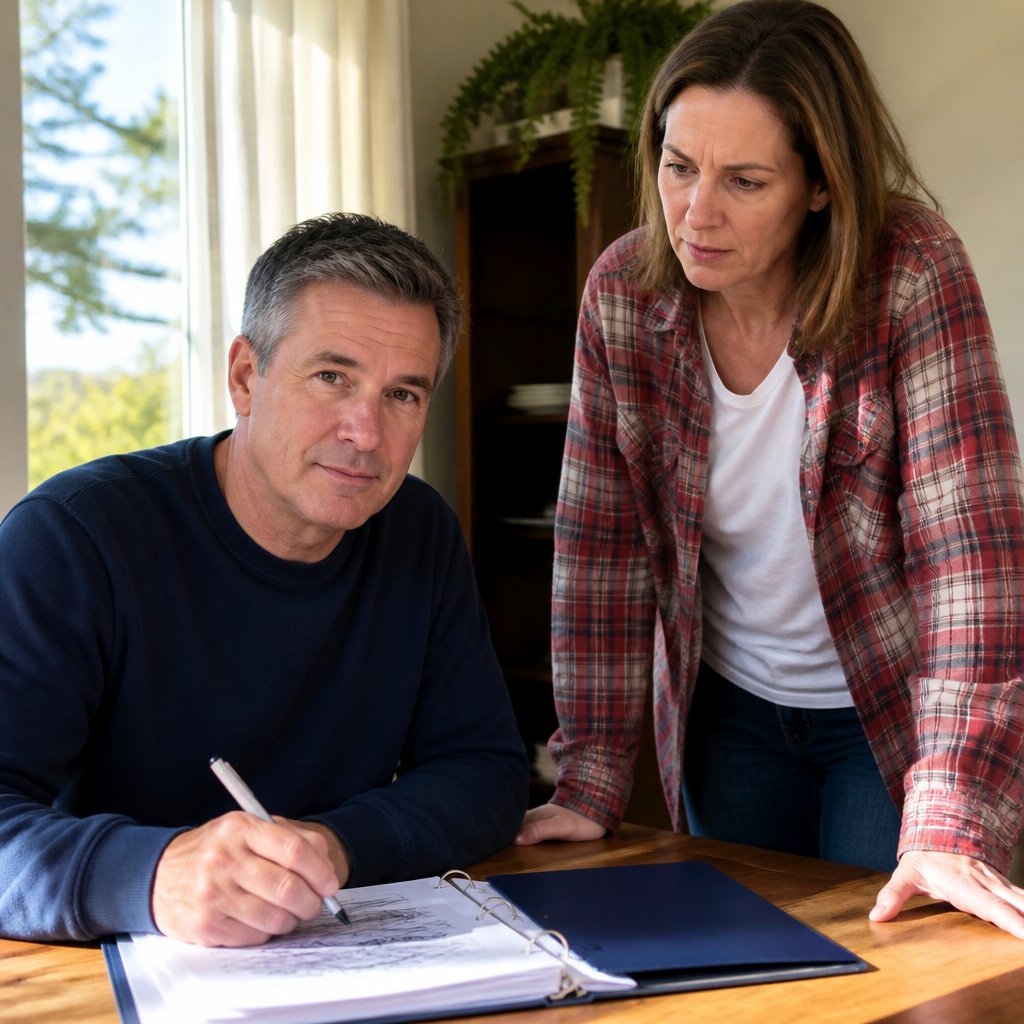
That weekend, after the meeting, Cal went to the garage “to grab the recycling.” I came back into the dining room because I’d forgotten the soy sauce, and I found him at the table again, binder open, pen moving fast. The kids were already in their rooms. The house was quiet except for the ceiling fan ticking.
“You’re editing,” I said.
He didn’t jump. He just kept writing. “I’m clarifying. You get confused after you’re emotional.”
I stepped closer and saw a line scratched out so hard the paper was fuzzy. He flipped the page with his thumb, casual, like I’d walked in on him folding laundry.
“That’s not what happened,” I said, and my voice sounded thin to my own ears.
Cal looked up finally, eyes steady. “It is,” he said, and he tapped the page as if the ink made it true.
Why Did He Need My Signature?
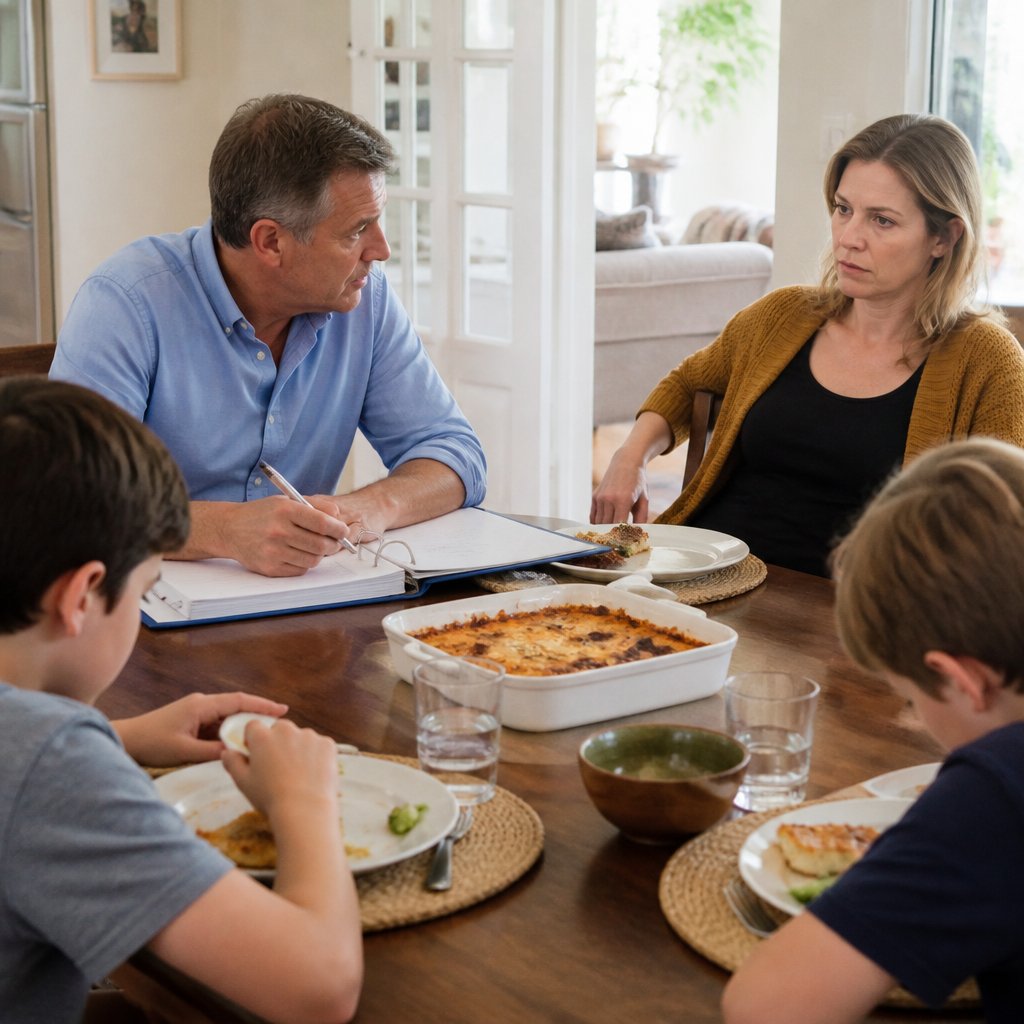
Cal added a new step like it was always supposed to be there. At the end of every meeting, he’d slide the binder toward me and click his pen closed.
“Sign,” he said, tapping the bottom of the page with his fingertip. “Just to confirm we’re aligned.”
The first time, I stared at the blank line he’d drawn and felt my throat go tight. It wasn’t a contract, he’d say. It was accountability. It was “healthy.” Everything he did had a label like that.
“I’m not signing something I don’t agree with,” I said.
Cal exhaled slowly, like he was working with a difficult client. The kids were still at the table, forks resting on plates. There was a cooled-off casserole in the middle, cheese skinning over on top. My stepson stared at his napkin and kept folding it smaller and smaller.
“Okay,” Cal said, and he opened the binder back up. He wrote a new bullet while I watched. His handwriting was careful, almost pretty.
“What are you writing?” I asked.
He tilted the page away from me, just enough. “The truth,” he said.
I could feel the heat rising in my face, the way it always did when he made me choose between swallowing it and looking “unstable” in front of the kids. I pushed my chair back, slow, so it wouldn’t scrape and give him another reason to note my “tone.”
Cal kept writing, lips moving silently as he formed the words. When he finished, he looked up at the kids and nodded once, like the matter was settled.
He turned the binder slightly so I could finally see the line he’d just added: “Ivy refused to participate,” and his pen hovered again, waiting for more.
What Did The Counselor Hear?

The call came while I was folding laundry on our bed. The clean towels were stacked in uneven piles, and one of Cal’s socks was stuck to a fitted sheet like it didn’t want to let go.
I held my phone to my ear and stared at the closet door while the school counselor introduced herself. Her voice was polite, careful, the way people sound when they’ve already decided something is “going on.”
She said my stepdaughter had been coming in during lunch, complaining about stomachaches and feeling “caught in the middle.” That part didn’t surprise me. What surprised me was the next sentence.
“We’ve been made aware there’s ongoing conflict at home,” she said, “and I understand there have been weekly meetings to address it.”
My mouth went dry. I pinched the edge of a towel between my fingers until it creased hard. “Who told you that?” I asked.
There was a pause, the kind where someone decides how much they’re allowed to say. “Your husband sent a summary email,” she said gently. “He seemed very concerned and organized. He asked that we support consistency for your stepdaughter.”
Concerned and organized. That was how it always landed when Cal explained things first.
I tried to keep my voice steady. “Did it say anything about me?”
Another pause. I could hear faint office noises behind her, a chair rolling, a door closing. “It referenced… difficulties with communication,” she said, “and that you sometimes decline support.”
I stared at the towels like they might rearrange themselves into an answer. In the hallway, I heard Cal’s footsteps on the stairs, slow and deliberate, heading toward our bedroom.
Why Did Marlene Have A Key?
Marlene started showing up like she was on a schedule I hadn’t agreed to.
The first time, I heard the lock turn while I was in the shower. I froze with shampoo still in my hair, listening for the second sound—footsteps inside. When I came out wrapped in a towel, Marlene was in my kitchen, setting a bag of groceries on the counter like she lived there. She was Cal’s mom: silver bob, thin lips, perfume that always smelled like powder and something floral.
“Oh good,” she said, looking me up and down, eyes landing on my wet hair. “I let myself in. Cal said it was fine.”
I found my voice. “You have a key?”
She patted her purse. “For emergencies. And to help.”
Help meant opening cabinets, moving my things, asking where I’d put the good knives. Help meant commenting on the dust along the baseboards as if she was making a note.
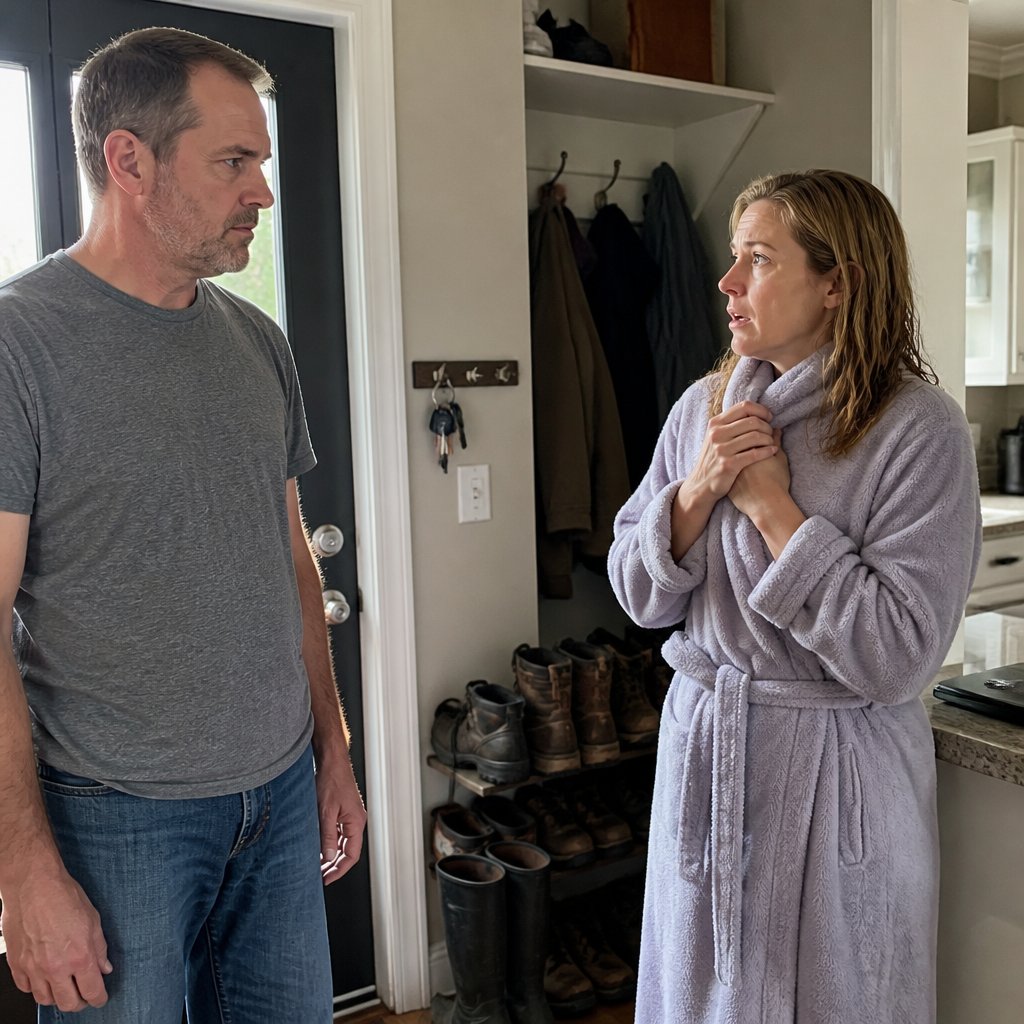
Later, when Cal got home, I confronted him in the mudroom. His work boots were lined up on the mat, perfectly straight.
“Did you give your mom a key?” I asked.
He didn’t deny it. “She worries,” he said. “It’s better if she can check in.”
My stomach sank. Check in. Like I was a patient.
That night, when Cal left his binder on the counter, I saw two sticky tabs on the inside cover—one labeled for Marlene and one for Dana, his ex. Not names written out, just color-coded the way he did everything. I heard the printer start up in the office down the hall, and Marlene’s perfume lingered in the kitchen like she’d never really left.
What Did The Timestamps Prove?
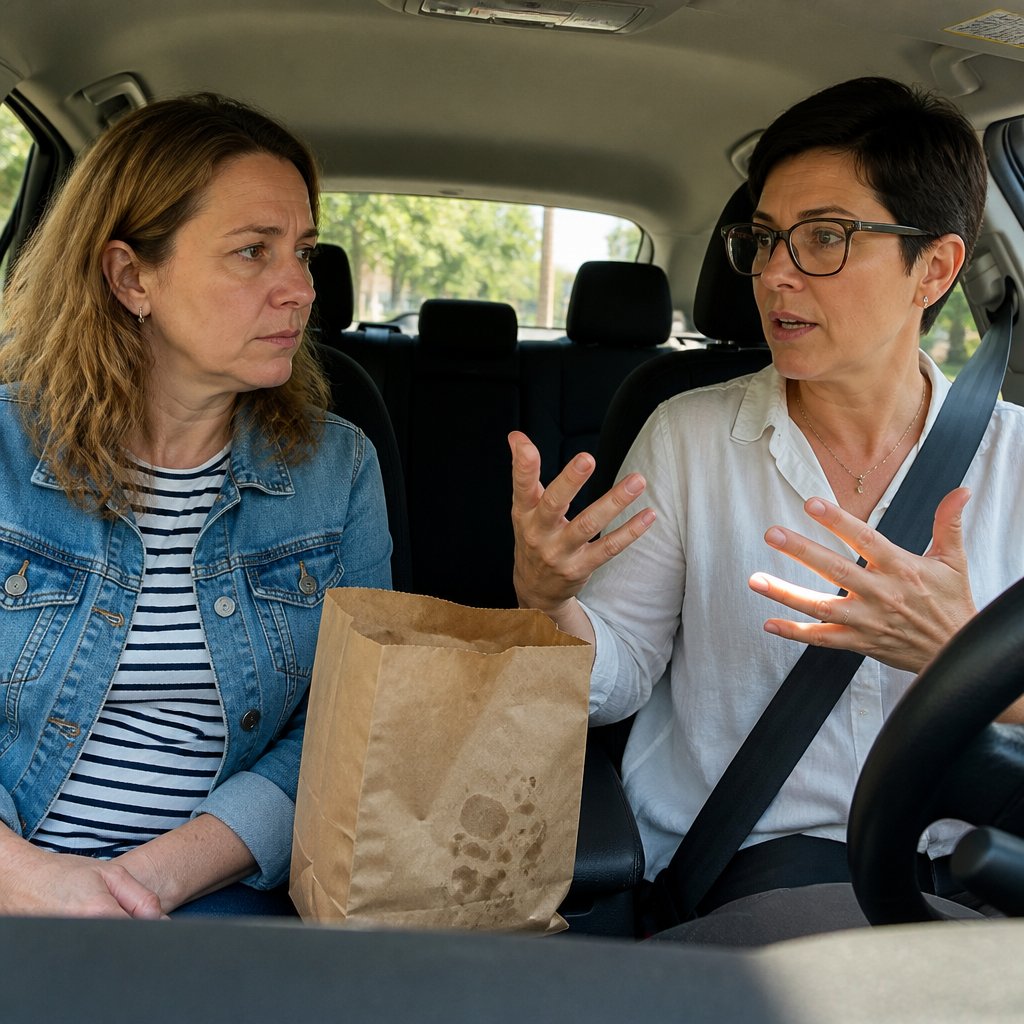
I didn’t know what “version history” really meant until my coworker Jenna showed me on her lunch break.
We sat in her car in the parking lot because it was quiet there, windows cracked just enough to let in air that smelled like hot asphalt. Jenna was practical in a way I envied—short black hair, square glasses, no patience for vague explanations. She listened while I talked, then nodded like she’d already guessed the shape of it.
“If he’s sharing the minutes as a file,” she said, “there’s a trail.”
She walked me through what to look for, what to ask for, how edits show up even when someone swears they didn’t change anything. She didn’t touch my phone. She just told me the steps and watched my face as it clicked into place.
“So if he edits days later,” I said, “it shows?”
Jenna’s mouth tightened. “Yes. And it shows when.”
That night at home, I started taking photos of the minutes only when Cal read them out loud at the table, his voice steady, kids listening. I’d set my phone face-down afterward like it was nothing, like I was just tired.
I also started recording short audio clips, only when he read a paragraph straight through and I could catch his exact words without my own voice in it. My hands shook the first time, so I kept them under the table, fingers pressed into my thigh.
At the next meeting, Cal cleared his throat and announced, “Last week we agreed Ivy would accept support with scheduling.”
My heart kicked hard. I looked at my notes, then at his binder, and realized he was reading from something I hadn’t seen printed yet.
Who Was The “Neutral Witness”?
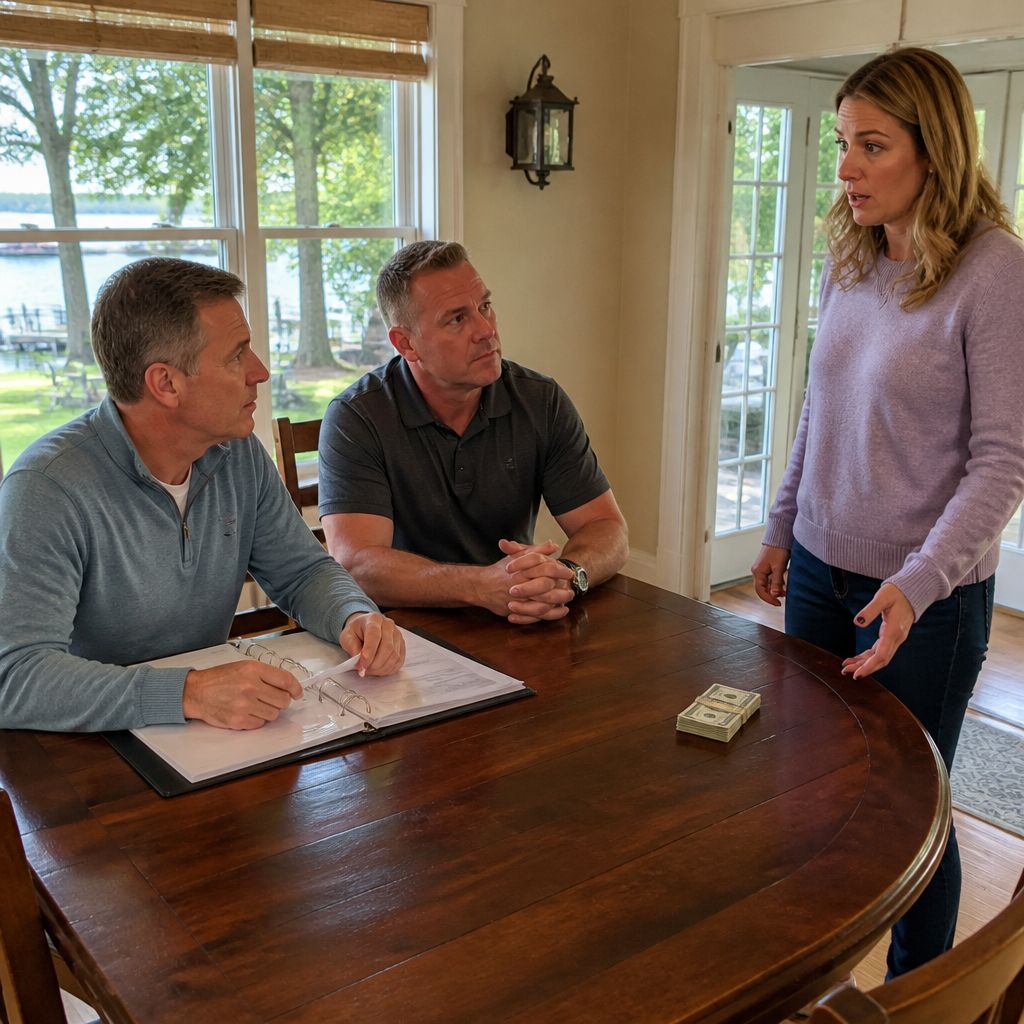
Cal told me his brother was coming over “to help keep things calm.” He said it like I was the one who made things chaotic.
When Ryan arrived, he clapped Cal on the shoulder and gave me a quick half-hug that didn’t reach his eyes. Ryan was taller than Cal, thicker through the chest, with sandy hair cut close and a watch he kept checking like he had somewhere else to be. He sat at our table with his hands folded, looking serious, like he was there for a job interview.
Cal placed the binder in front of him. “We just want transparency,” he said. “No spinning.”
I set out water glasses because my hands needed something to do. The glass felt cold and slick, and I left a wet ring on the wood when I put it down.
Cal read a section labeled “Spending Patterns.” He didn’t look at me when he said, “The minutes show Ivy can be impulsive with money.”
Ryan nodded slowly, like it was a diagnosis. “So what’s the plan?” he asked.
Cal didn’t miss a beat. “Weekly cash allowance,” he said. “Just until things stabilize. I’ll handle the accounts.”
I laughed once, sharp, before I could stop it. “You’re not giving me an allowance,” I said. “I’m not a teenager.”
Cal turned his palms up toward Ryan, a small shrug. “See?” he said softly. “This is what I’m documenting.”
Ryan’s eyes flicked to me, then to the binder, like he was deciding which version of me he believed. Cal slid a small envelope across the table toward me, thick with folded bills, and I felt the room tilt.
Why Was The Lawyer Draft Open?

I found it by accident, the way you find most things you’re not supposed to see.
Cal left his laptop open on the kitchen counter while he took a call in the garage. I wasn’t trying to snoop. I was wiping crumbs with a damp sponge, moving around his stuff like I always did, and I saw the printer tray pulled out and a thick stack of pages sitting there, still warm.
I didn’t read them. I couldn’t risk getting caught standing over them like a cartoon villain. But I saw the binder clip on top, and I saw my name in the corner of one page as a label, like I was a file.
My hands went cold. I carried the stack into the pantry like I was putting away groceries, heart banging so hard I could feel it in my throat. I took one photo of the top page—just enough to prove it existed—then slid it back exactly where it had been.
Later, I sat in my car at the far end of the grocery store lot and called an attorney I’d been given by a friend. My phone was pressed tight to my ear, and the steering wheel felt gritty under my fingers.
She didn’t ask for a dramatic story. She asked for dates. She asked who else received the minutes. When I mentioned the binder and the “documentation,” she got very quiet.
“Do not confront him,” she said. “Assume he’s building a case. Your job is to stay calm and collect proof safely.”
I swallowed hard. “What if he already sent it?”
In the rearview mirror, a car pulled in two spaces behind me. I watched the driver’s door open, and for a second I thought I recognized the shape of the shoulders.
Which Version Would He Swear To?
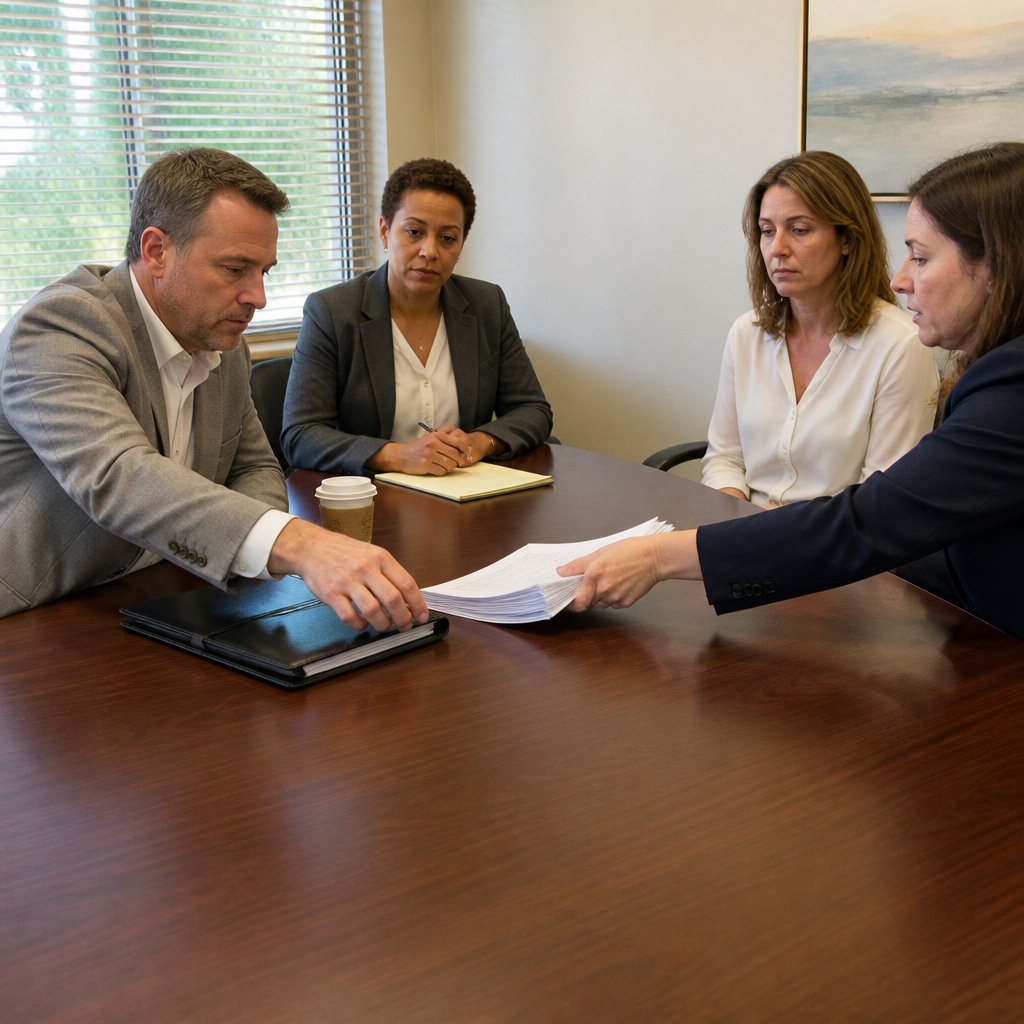
Mediation took place in a beige office that smelled like burnt coffee and hand sanitizer. The chairs were too soft, the kind that made you sink and feel smaller. Cal arrived early, calm, with his binder stacked neatly on the table in front of him like it was a shield.
He greeted the mediator warmly, asked about her weekend, offered everyone water. He looked like the reasonable one before anyone even started talking.
When it was his turn, he opened the binder and quoted the minutes like scripture. “On March eighth,” he said, “Ivy acknowledged she declined support and refused to participate in solutions.” He didn’t glance at me. He didn’t need to. He was performing for the room.
I kept my hands folded in my lap the way my attorney told me to. My notebook was in my bag, along with printed version-history pages Jenna helped me request. The papers felt heavy, like they had their own gravity.
Cal kept going. He referenced a “spending incident,” then a “communication breakdown,” each one pinned to a date and a tidy bullet point. The mediator nodded slowly, pen moving on her pad.
When my attorney spoke, she didn’t argue feelings. She slid the printouts across the table, one at a time. “These timestamps show edits made days after the meeting,” she said. “After Cal read the minutes aloud.”
Cal’s smile flickered, just for a second.
Then my attorney played a short audio clip—Cal’s voice reading a paragraph that didn’t match the version he’d submitted. No one looked at me. Everyone looked at him.
Cal’s jaw tightened, and he reached for the binder like he could close it fast enough to make the room forget what it heard.
Why Were They All Here?
Cal’s hand was still half outstretched when the mediator said we needed a break. His jaw worked like he was chewing something tough. I kept my face plain, gathered my folder, and followed the hallway to the little waiting room with the sad plant and the stack of old magazines.
By that evening, he’d already “invited support.” He didn’t call it a meeting. He called it an intervention, like I was the problem that needed a plan. Dana texted that she and Marlene were coming over Saturday “to help everyone feel safe.” Dana was Cal’s ex, tall and sharp-featured with straight black hair she wore clipped back. Marlene was his mother, a small woman with a neat gray bob and a purse that always seemed heavy.
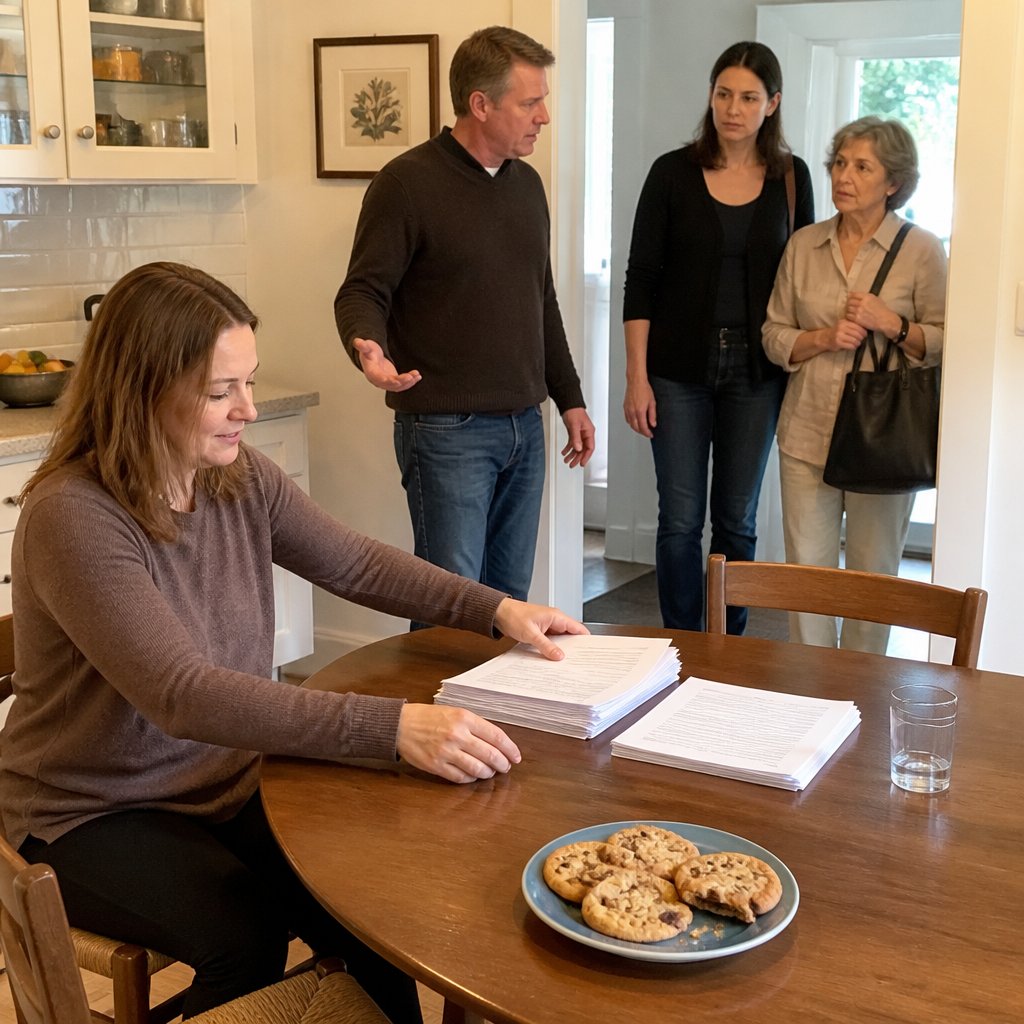
I wrote back yes. I didn’t argue. I just went to the store and bought the kind of cookies the kids liked, the soft ones with chocolate chunks that left a shiny smear on your fingers. Saturday afternoon I wiped the kitchen table until it squeaked, then set out a plate and four mismatched mugs like we were about to have a calm talk.
In my bag, I had my stack: Cal’s “minutes” printed clean, and my copies beside them with the tracked changes he’d made later, the same sentences twisted in small ways. I lined them up at my place, edges squared, like flashcards.
The front door opened and I heard Dana’s heels on our entry tile, then Marlene’s softer steps behind her, and Cal’s voice saying, too loud, “We’re just here to support Ivy,” as I slid the first pair of pages to the center of the table and waited for them to sit.
Did Cal's recorded 'minutes' influence the custody case outcome?