



The Ticket Inside The Bible
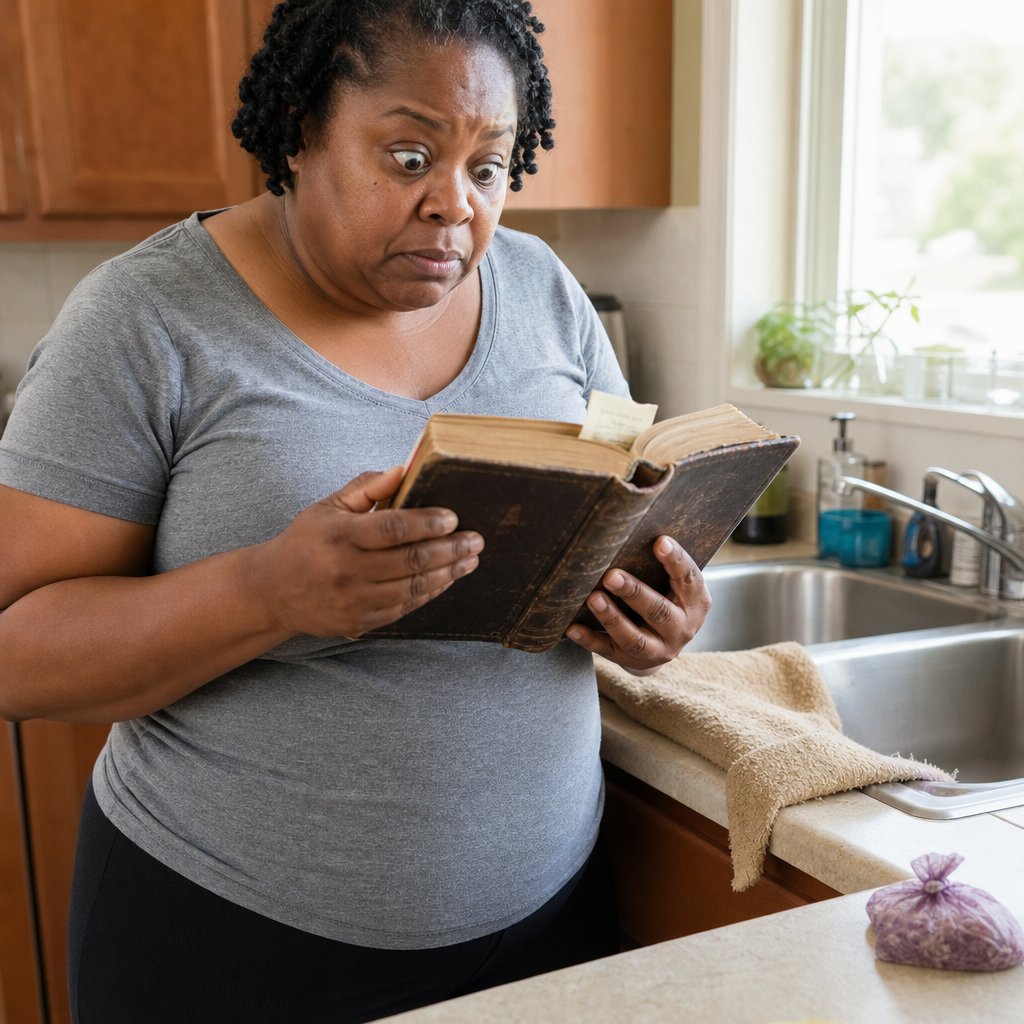
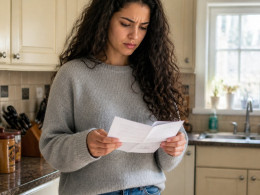
The pawn ticket slid out of the Bible like it had been waiting for my fingers to touch it—thin, greasy paper, folded into a perfect little square like a secret somebody practiced hiding. My stomach dropped so hard I swear my knees went soft right there by my kitchen sink.
Because the Bible was Mason’s “peace offering.” Leather-bound, gold-edged pages, my name embossed on the front like he was some kind of thoughtful brother instead of a liar with a talent for tears. And on the ticket—under the smudged fingerprints and stale cologne—was the same engraving Grandma had insisted on, the one I could recognize in the dark: a tiny vine curl with a nick at the bottom like a chipped tooth.
Grandma’s locket. The heirloom we all agreed stayed in the family. The one Mason swore—hand on his chest, voice all wounded—that he “sold for Dad” because rehab was so expensive and he “had no choice.”
I stood there staring at that pawn ticket like it could burst into flames and confess everything on its own. The paper smelled faintly of cedar, like it had been tucked away with old sweaters.
And then I saw the date—older than his story by weeks—and the little printed line that meant there was a copy somewhere, a record, a place I could walk into and say one name out loud…
The Drawer Was Too Neat
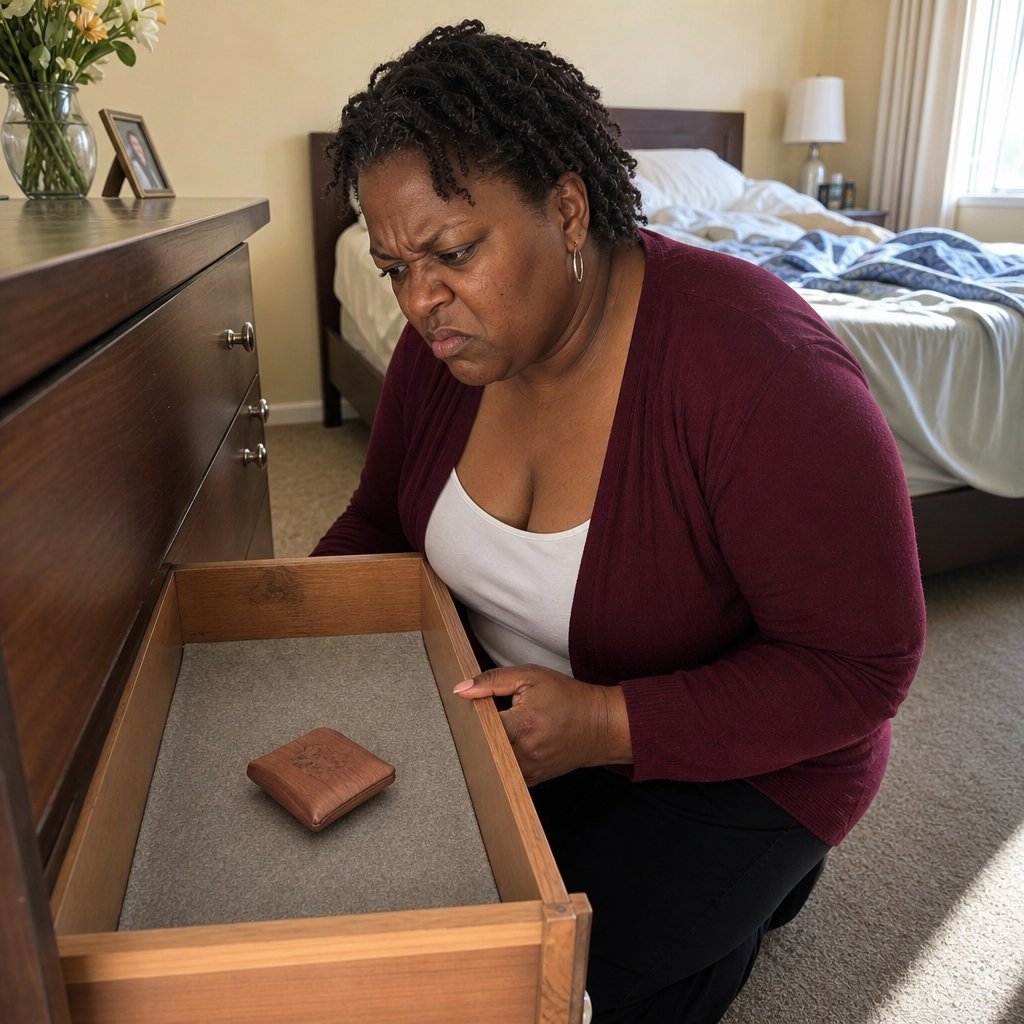
I didn’t even take my shoes off. I went straight to the bedroom and dropped to my knees in front of the dresser like I was praying to it. The locked drawer clicked open with my key—clean, obedient, like it hadn’t just swallowed a piece of our family.
The locket was gone.
But what made my throat burn wasn’t just the empty space. It was how wrong the drawer felt. It was too neat in a way that screamed touched. The felt liner had shifted, just a hair, like someone lifted it and smoothed it back down with careful hands. The cedar sachet Grandma used to keep moths away was flipped over, the little knot facing the wrong direction. My jewelry box sat exactly where it always sat—except the tiny indentation where the locket used to rest was flattened like someone had pressed it with their palm to erase the evidence.
Mason knew our routines. He knew I kept the key on my ring. He knew I counted twice without meaning to, the way I do when I’m anxious. This wasn’t a smash-and-grab. This was somebody walking in like they belonged here.
I pinched the sachet between my fingers and breathed in that sharp cedar smell, trying to keep my hands from shaking. I told myself not to cry. Crying makes you sloppy.
Then I noticed the faint crescent scratch at the inside edge of the lock—fresh enough to catch the light—and my brain started doing the math I didn’t want to do…
His Confession Had Edges
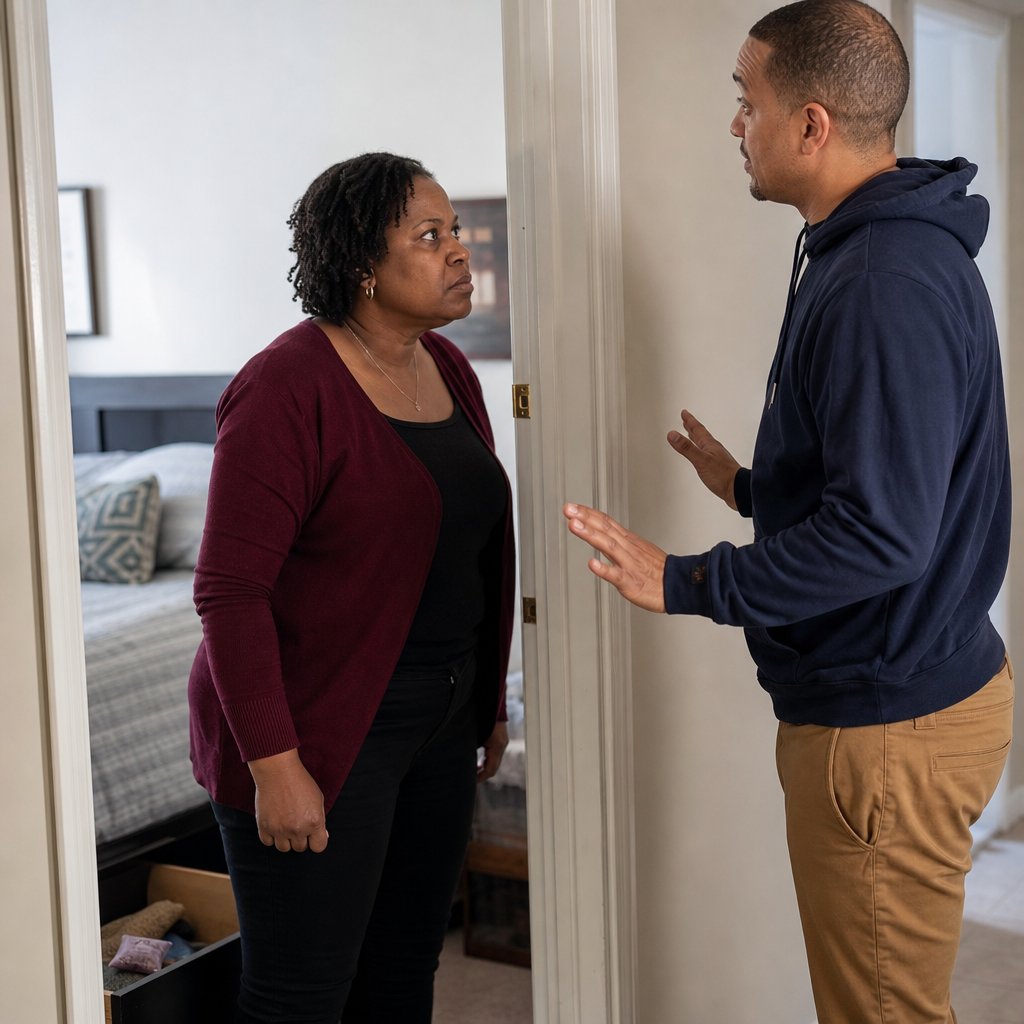
Mason filled the doorway like he owned the air in my house. Late 30s, light-brown skin, close-cropped hair, that same charming smile he used to get teachers to forgive him. He held his hands up like I was a cop and he was a misunderstood citizen.
“Iris, don’t start,” he said, voice already pre-softened. “I was gonna tell you. I took it to be appraised. I handled it.”
I stayed on my knees, one hand still gripping the drawer edge. “Handled it how?”
He exhaled dramatically, like I was exhausting him on purpose. “The money went to Dad’s rehab. You know that. I did what needed to be done.” He stepped closer, and I caught the scent of peppermint gum on his breath—too fresh for someone supposedly drowning in family stress. “And before you get all… intense,” he added, eyes flicking to the hallway like he was imagining an audience, “don’t stress Dad out with this. You know what stress does to him.”
There it was. The little knife he kept behind his back. Not just a lie—an order. A threat dressed up as concern. If I pushed, I was the villain hurting Dad. If I stayed quiet, Mason walked away clean.
I stood up slowly, so he could see I wasn’t small. My chest felt hot, like I’d swallowed pepper. “So you can tell me the amount, right?”
He didn’t even blink. “Enough. I already took care of it.”
And then he smiled—just a flash—like the conversation was already over, like he’d practiced this in a mirror and knew exactly where my guilt lived…
The Rehab Office Didn’t Flinch
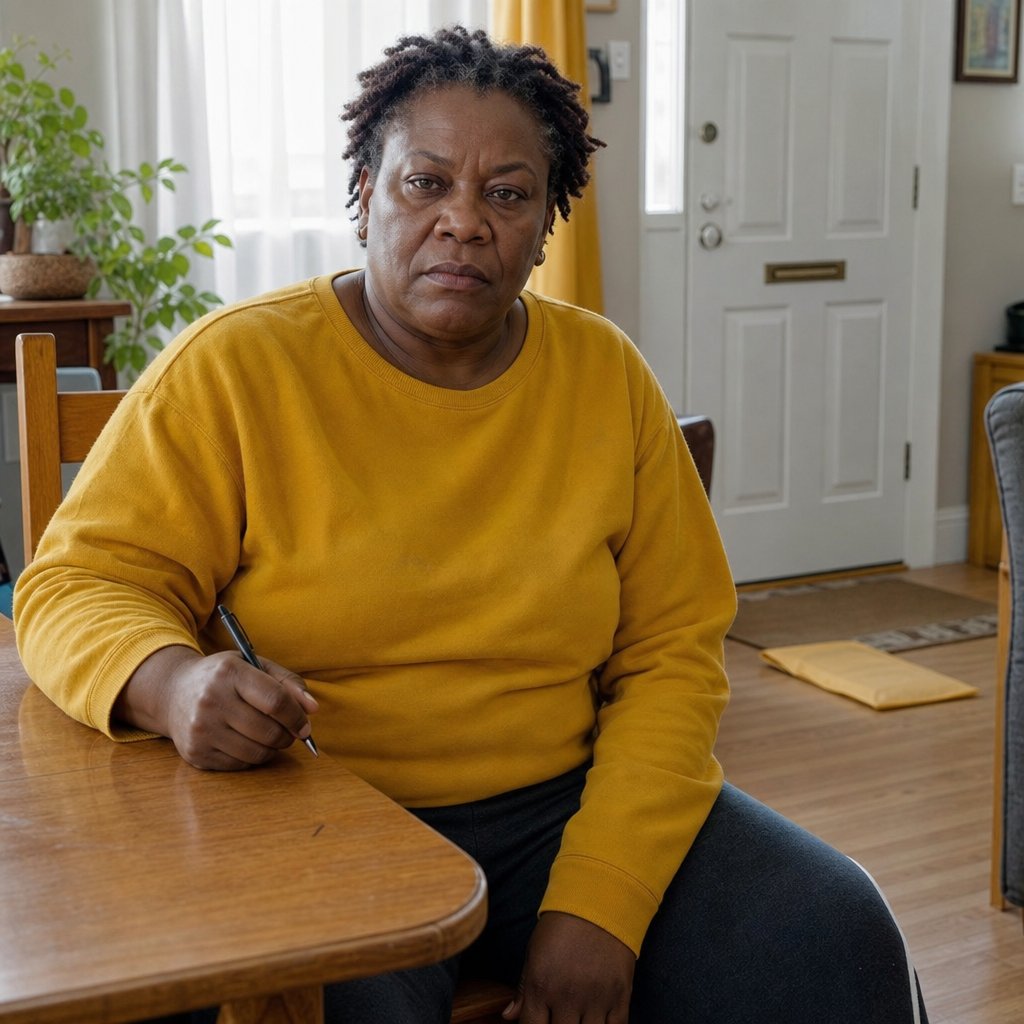
I waited until Mason left—until his footsteps faded and my house felt like mine again. Then I sat at the dining table with a pen in my hand just so I’d look composed, like I wasn’t vibrating with rage. The wood was cool under my forearms, grounding me.
I called the rehab billing office the way you call a dentist: polite voice, steady questions, no drama. My heart thumped so loud I could hear it in my ears.
“Hi, I’m calling about my father’s account,” I said. “I just need to confirm recent payments.”
The woman on the other end didn’t hesitate. She didn’t get cagey. She didn’t say, Oh yes, we received a large lump sum. She just read it off like grocery prices. “We have the monthly autopay,” she said, “and a small co-pay posted. That’s it.”
I tightened my grip on the pen until it bit my skin. “No other payments? No big deposit? Nothing that would’ve covered multiple months?”
“No, ma’am.” Her keyboard clicked, calm and indifferent. “If there had been, you’d see it reflected immediately. Would you like the current balance?”
My mouth went dry. Mason’s story wasn’t just fuzzy—it was impossible. There was no mystery transfer. No heroic sacrifice. Just a missing locket and a brother who swore on Dad’s sobriety like it was a shield.
I thanked her like a lady and hung up like I wasn’t about to explode. The air in the room felt too thin. I stared at the pen mark I’d accidentally made on the table—one ugly little line.
Then I heard the mail slot clack, and a thick envelope slid onto the floor like a dropped clue…
He Made Me The Problem
Mason didn’t come back with answers. He came back with a narrative.
By the next afternoon, my aunt Nadine was calling me with that syrupy, careful voice she uses when she thinks someone is unstable. “Baby,” she said, dragging the word out, “Mason told me you’ve been… really upset. Accusing him of stealing. Are you okay?”
I held the phone away from my ear for a second and just stared at my living room wall like it might crack open and swallow me. The audacity was almost artistic. He’d stolen the locket, lied about Dad’s rehab, and now he was pre-loading the family with the idea that I was spiraling. Not him—me.
“He told you that?” I asked, keeping my voice even.
“He said you’ve been forgetful lately,” she continued, gentler, which somehow felt meaner. “He said you’re under a lot of stress and you’re making… accusations.”
Forgetful. That one hit low. That one reached back into every time I misplaced my keys, every time I walked into a room and forgot why, every time I worried my brain was betraying me the way my family already had. Mason knew exactly which button to press because he installed it.
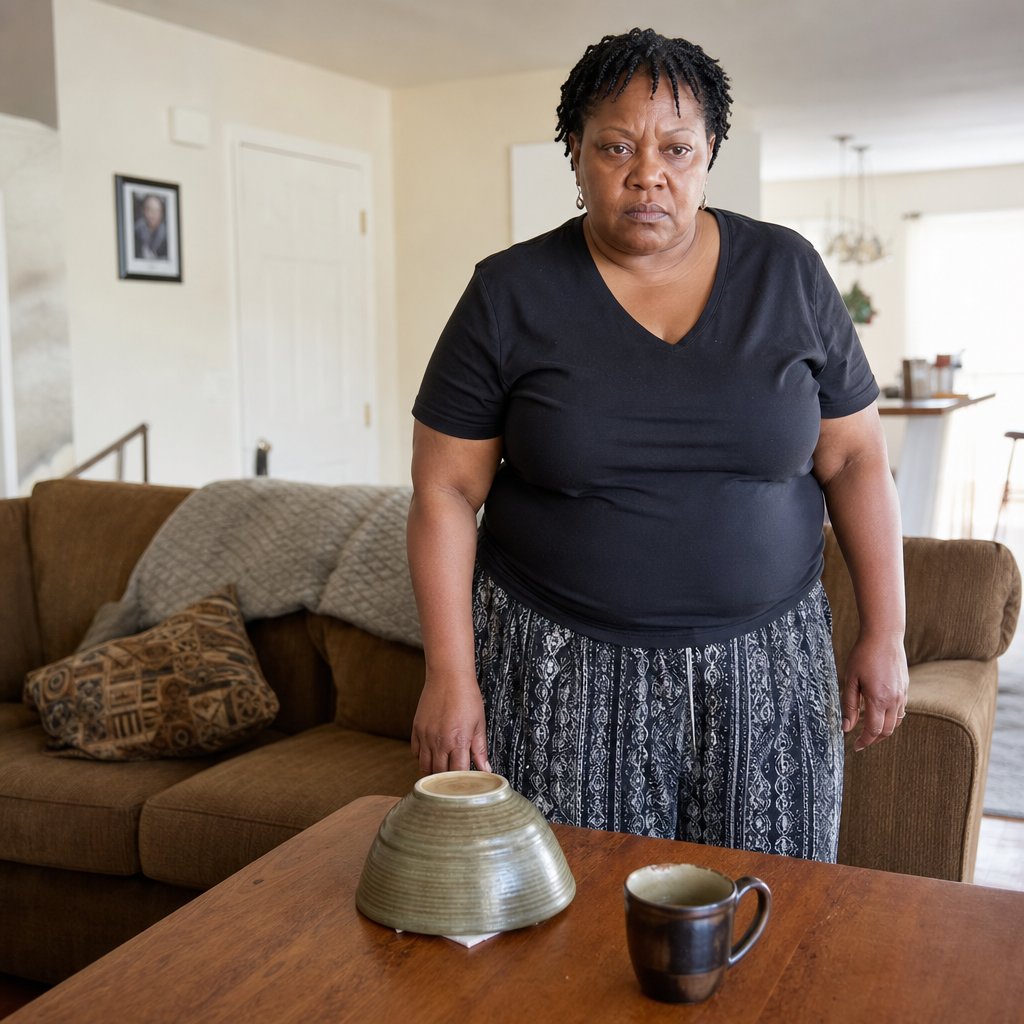
I looked down at my coffee table where the pawn ticket sat under an upside-down bowl like it was contraband. My fingers smelled faintly of cedar still, like the drawer had branded me.
“Aunt Nadine,” I said, voice tight, “did he mention a pawn shop?”
There was a pause—just long enough to feel like a doorway opening somewhere else. Then she said, too quickly, “Why would he—”
And I heard another call click in on her line, like she’d been waiting for it…
The Keys In His Jacket
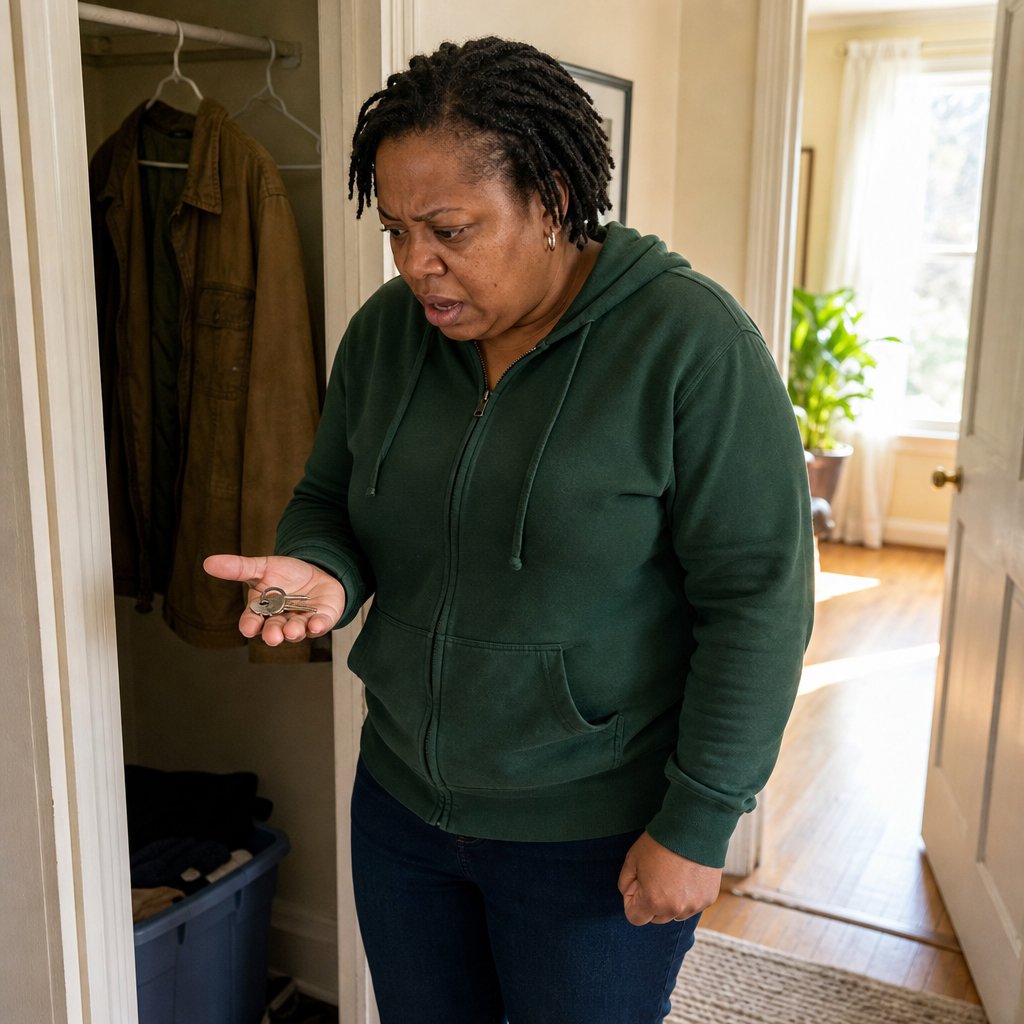
I went hunting in the only place Mason never respected: my space. I didn’t rage-search. I didn’t toss cushions or rip drawers. I moved like I was dusting—quiet, precise, petty in the most satisfying way.
The hall closet still smelled like winter coats and that faint plastic scent from old storage bins. Mason’s old jacket hung in the back like a forgotten excuse, a heavy canvas thing he used to “borrow” and never return. I slid my hand into the pocket expecting lint, maybe a crumpled receipt, maybe nothing at all.
My fingers hit metal.
I pulled out a second set of keys on a cheap split ring—two small brass keys and one silver one with a nicked edge. My breath caught so sharp it hurt. I knew those shapes. I’d held them a hundred times. The silver one was for the dresser drawer. The one he claimed he couldn’t access. The one he acted wounded about, like I’d insulted him by locking it in the first place.
I stood there in the closet doorway with the keys resting in my palm, cold and heavy like proof. The kind of proof that doesn’t argue back. The kind of proof that makes liars start sweating.
For a second, I felt this ugly little flicker of satisfaction—because now I wasn’t guessing. Now I wasn’t “forgetful.” Now I had something that would make even Aunt Nadine’s voice change.
And then, from the living room, I heard Mason’s laugh—too close, like he’d let himself in again…
The Proof That Proved Nothing
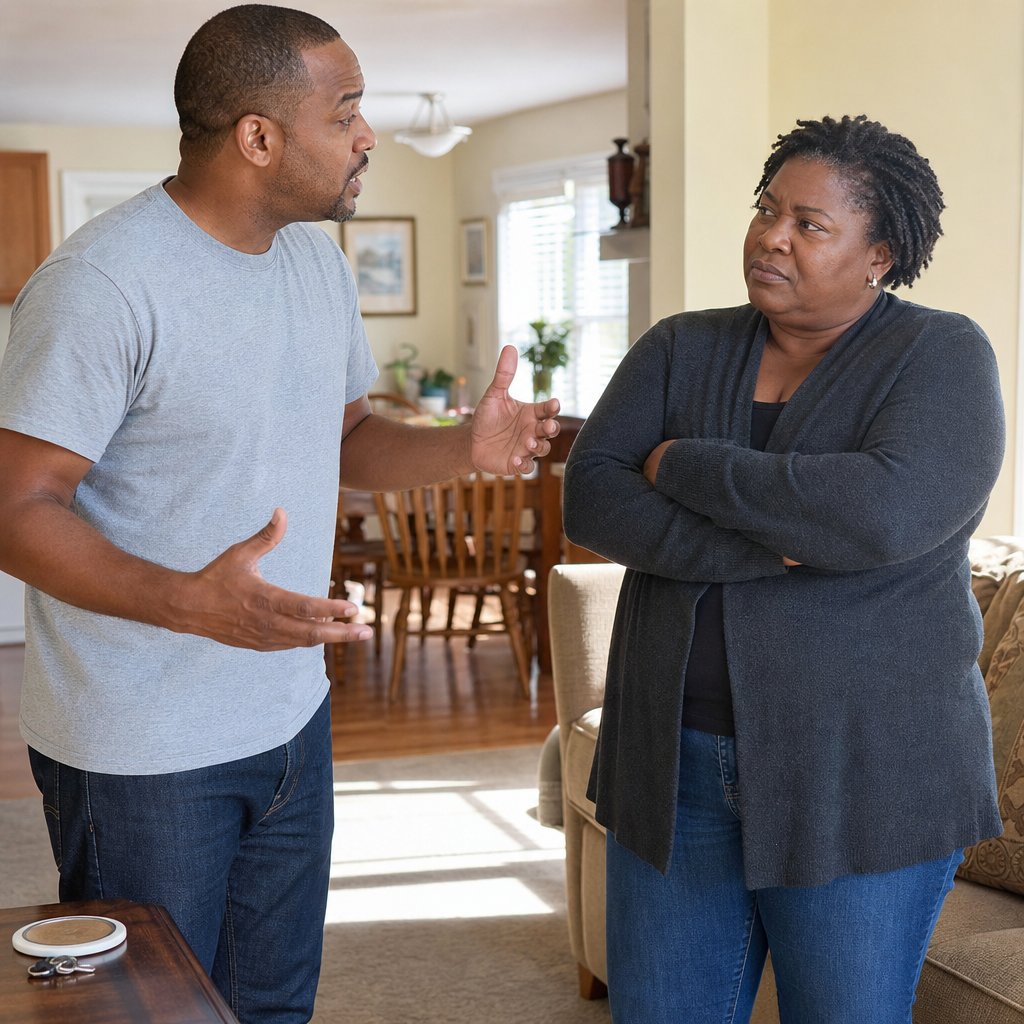
Mason acted like my house was a stage and he was the director. He paced my living room, talking fast, dropping little sighs like punctuation. “I already sent you proof,” he said, like I was too slow to understand basic banking. “The deposit is pending. Transfers take time.”
He shoved his phone toward me, screen angled like a magician flashing a card. I didn’t touch it. I didn’t lean in. I just looked at his face—because faces tell the truth before mouths do.
“That’s it?” I asked. “That’s your proof?”
He rolled his eyes, offended. “Why are you like this?”
The image he’d sent—cropped so tight it might as well have been a ransom note—showed a number and the word “deposit,” but it hid the account name, the date, everything that would anchor it to reality. It was the kind of ‘evidence’ you show someone when you’re counting on them being too polite or too scared to challenge you.
I kept my voice soft on purpose. “Send the full thing.”
His smile twitched. Just for a second, like a stitch popping. “I can’t,” he said quickly. “It has private info.”
Private. Like Grandma’s locket wasn’t private. Like Dad’s rehab wasn’t private. Like my sanity wasn’t private the way he’d been handing it around the family like gossip candy.
I glanced at the side table where I’d set the second set of keys under a coaster. Mason followed my eyes, and something sharp flashed across his face—recognition, then panic—before he covered it with another laugh…
The Chat Name That Slipped
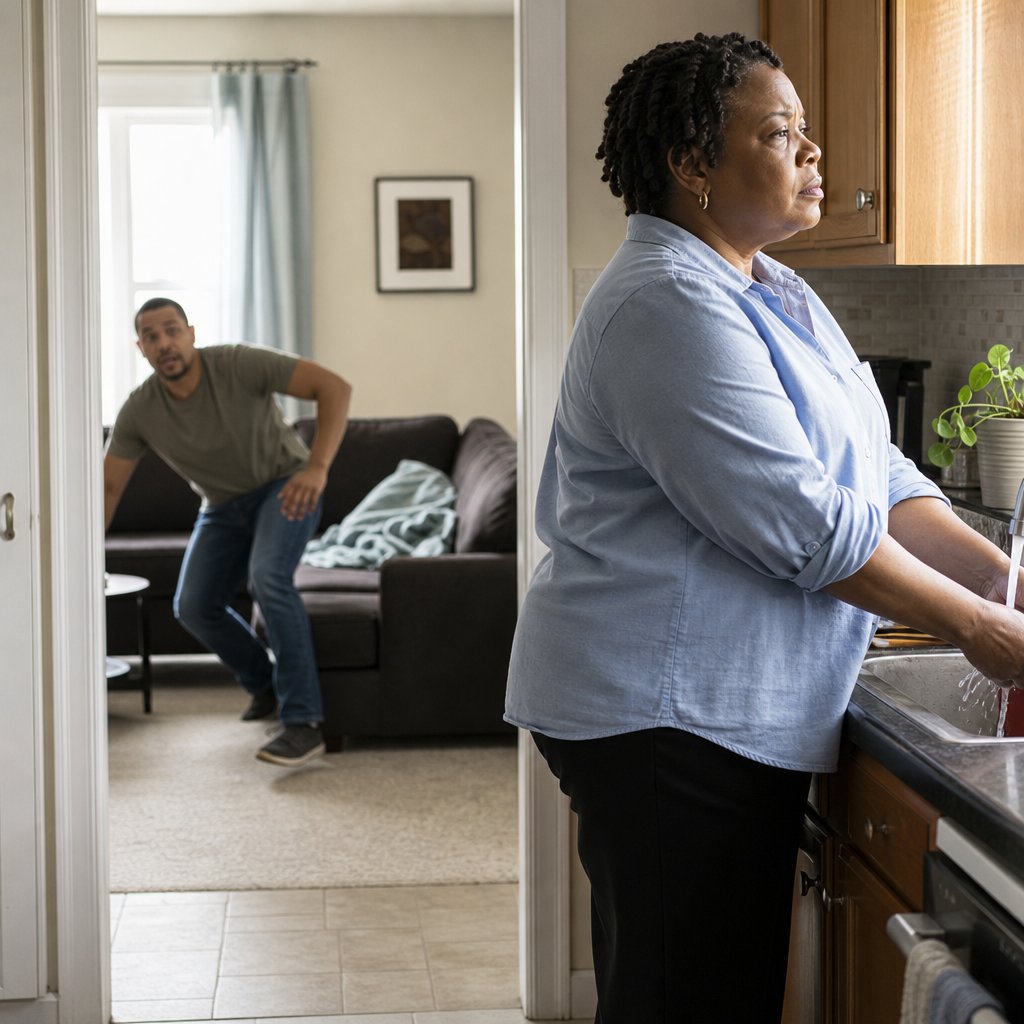
I didn’t plan it. I wasn’t snatching his phone or playing detective in some dramatic way. Mason did what he always does—got comfortable. Too comfortable.
He flopped onto my couch like he paid the mortgage and started talking about Dad in that performative, sad voice, the one that makes people pat his shoulder and tell him he’s such a good son. His phone buzzed on his thigh. He glanced down, smirked, and the smirk told me everything before my brain even caught up.
A notification banner flashed—just a blink—and I saw the group chat name: “Team Dad REAL.”
REAL.
Like there was a fake team. Like I was the fake. Like my concerns were a nuisance they’d formed a committee to manage.
My skin went hot. I kept my face still, because Mason feeds on reactions the way some people feed on compliments. He looked up at me, eyes shiny with that practiced innocence. “What?” he asked, like I was the one acting weird.
I forced a tiny laugh that didn’t reach my chest. “Nothing,” I said. “Just thinking.”
He nodded, satisfied, and went back to his speech—Dad this, Dad that, don’t stress him, Iris. But my mind was already ripping through the implications. Who was in that chat? Nadine? Cousin Tasha? My own sister? How long had he been building this little courtroom where I wasn’t allowed to speak?
I stood up and walked to the kitchen like I needed water, my legs steady even while my insides shook. At the sink, I turned the faucet on and watched the stream hit the stainless steel—hard, loud, relentless.
Behind me, Mason’s phone buzzed again, and this time he snatched it up too fast…
The Townhouse With New Boxes
It was my cousin Darnell who said it like it was nothing. We were outside the corner store, the air smelling like hot asphalt and fried food, when he nodded toward my car and went, “You seen Mason’s new place yet?”
I felt my face go still. “Mason doesn’t have a new place,” I said. “He’s been couch-surfing, remember?”
Darnell blinked. “Uh… okay. I mean, he told me townhouse. Said he’s ‘finally stable.’” He made air quotes so sloppy they might as well have been a confession.
I didn’t argue. I didn’t ask follow-ups. I just smiled like I was fine, got in my car, and drove with my hands at ten and two like I was taking a road test instead of driving straight into betrayal.
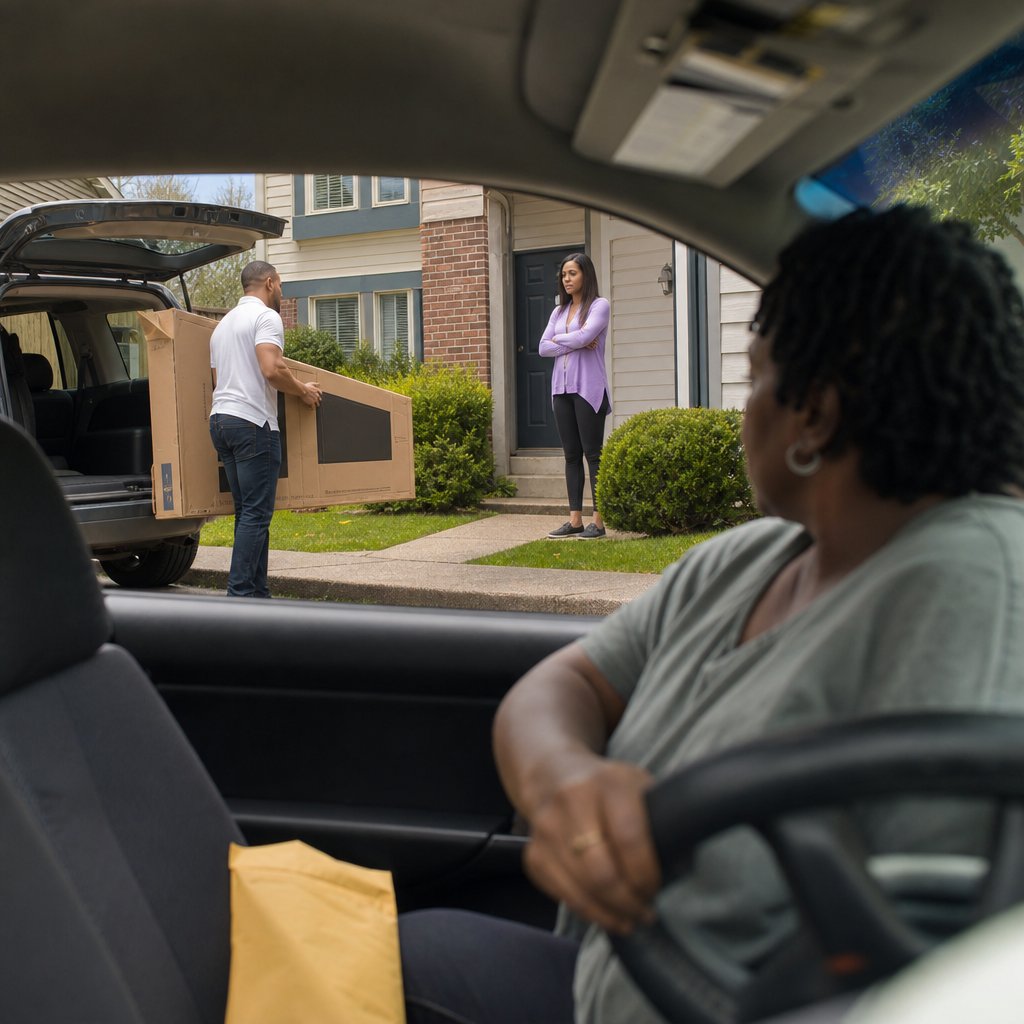
The complex was on the other side of town, neat little rows of beige and brick with fresh mulch and too many parked cars. I rolled past once, slow. And there he was—Mason—wearing a crisp white polo like he was auditioning for “responsible adult,” hauling a brand-new TV box out of the trunk of his car. The cardboard was so clean it looked like it still smelled like the warehouse.
He wasn’t struggling. He wasn’t broke. He wasn’t a martyr.
He was furnishing his life with something that looked an awful lot like heirloom money.
I parked down the street and watched him laugh with someone at the doorway—a woman with long straight hair and a slim build, arms folded like she lived there and liked what she saw. Mason tilted the box, and the sunlight caught the sheen of the packaging like a spotlight.
My throat tightened until swallowing hurt. I reached for my purse, fingers closing around the pawn ticket tucked inside an envelope.
And then Mason turned his head and looked прямо toward my car like he’d felt my stare…
Why He Started Taking Mail
Mason didn’t even pretend to be caught. He smiled like I’d shown up to his little performance right on cue. “This is a friend’s place,” he said, laughing too loud, like volume could rewrite reality. “You are so intense, Iris.”
Intense. There it was again—his favorite word for when I refused to be stupid.
I didn’t give him the satisfaction of arguing in the parking lot. I just watched him adjust his grip on the TV box, watched the woman in the doorway look between us like she didn’t love being a surprise character in our family mess. Mason leaned closer to me, voice dropping. “Don’t do this,” he murmured, like I was the one threatening peace. “You’ll make Dad relapse with all this chaos.”
He weaponized Dad like a rosary bead, rubbing it between his fingers every time he needed forgiveness.
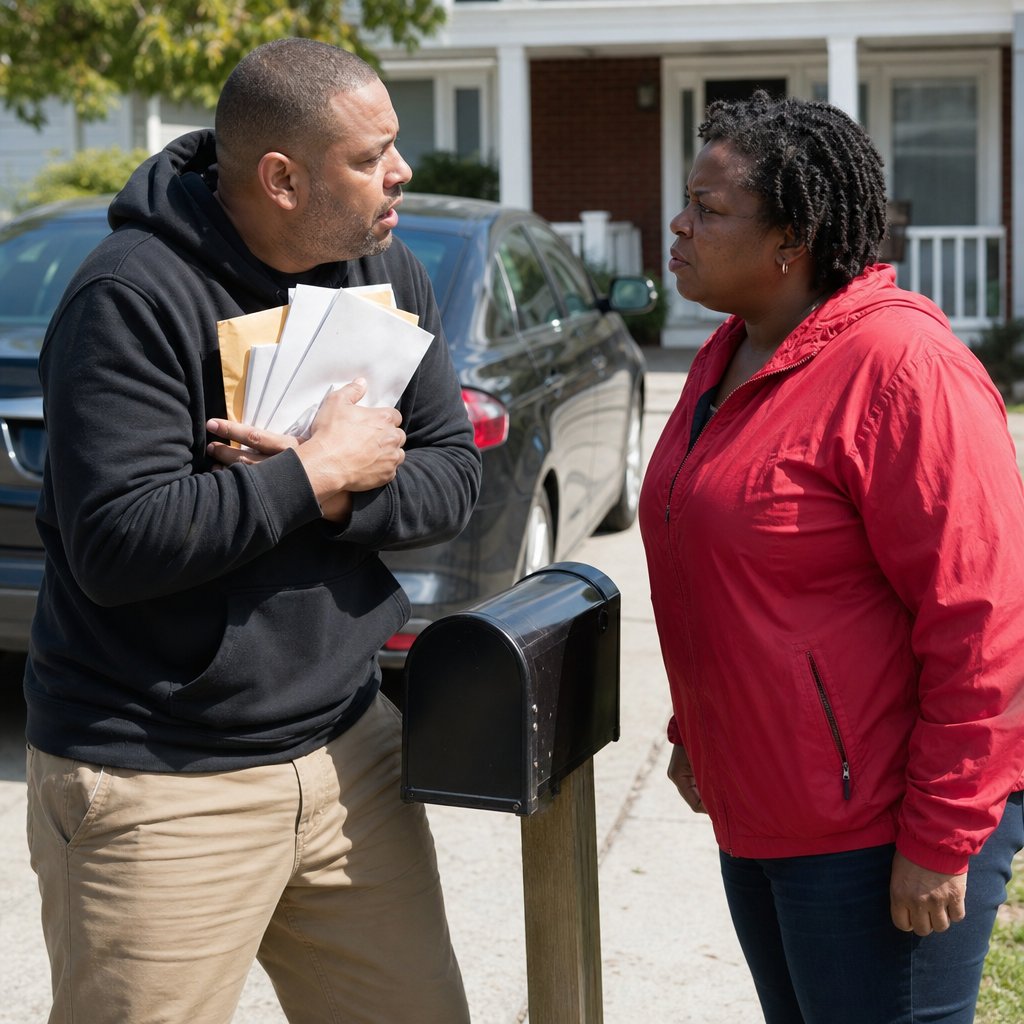
Two days later, he escalated. I came home and found my mail slot empty—too empty. No grocery circulars, no junk flyers, nothing. Then I caught him in my driveway, leaning into my mailbox like he lived here, one hand inside, the other holding a stack of envelopes tight against his chest.
He straightened when he saw me, eyebrows lifted like he’d been doing me a favor. “I was just grabbing Dad’s stuff,” he said quickly. “Didn’t want it sitting out.”
I walked up slow, letting the gravel crunch under my shoes so he’d hear every step. He clutched the envelopes harder. I noticed one was thicker than the rest, the corner bent like it had been opened and shoved back into shape.
“Give me my mail, Mason,” I said, sweet as iced tea.
His jaw flexed. “Why? You don’t trust me now?”
And as he said it, his thumb slid—just slightly—revealing the edge of a return address I recognized from the pawn shop district…
Dad’s Cabinet, Mason’s Name
He tucked the thick envelope behind his back, smiling like he’d already won. I didn’t reach for it. I just looked past him—past the living room clutter, past the throw blanket he never folded—and said, real calm, “Where’s Dad’s key?”
Mason’s smile twitched like a bad signal. “What key?”
“The filing cabinet,” I said, already walking. My hands were steady in a way my chest wasn’t.
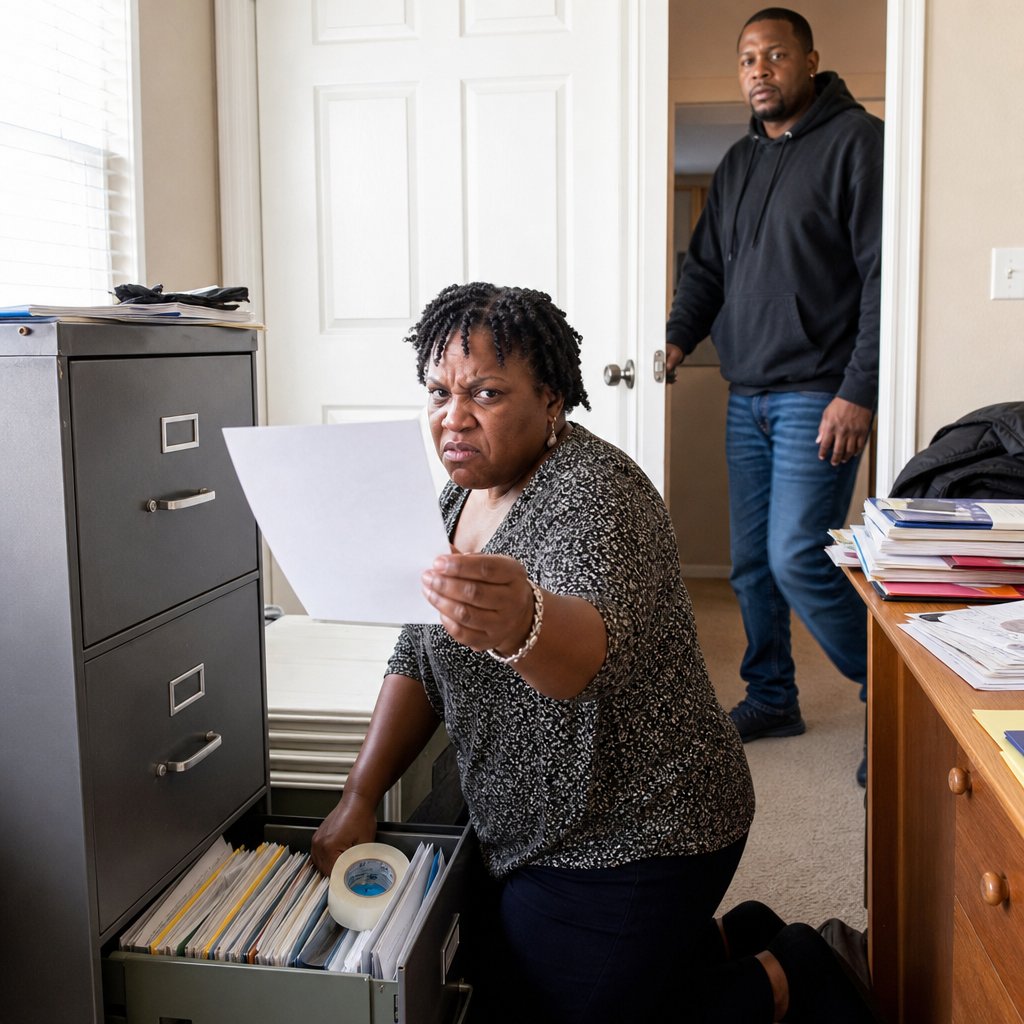
Dad’s office still smelled like menthol rub and old paper. The gray metal cabinet sat under the window, the kind with a single tiny lock that made you feel like you were guarding national secrets. I yanked the top drawer. Locked. Of course it was.
I found the spare key exactly where Dad always hid it—taped under the bottom lip of the desk drawer, gritty with dust. When it clicked, it was the loudest sound in the house.
Inside, folders with Dad’s shaky labels. Insurance. Taxes. “Family Items.” I slid that one out, and a clean, crisp page fell forward like it had been waiting for me.
A jeweler’s appraisal. Six months old. Description: “yellow gold locket, floral engraving.” The measurements matched. Even the note about “small scratch near clasp.”
And under “Client,” it didn’t say Dad.
It said: Mason Bell. With his phone number.
I heard Mason’s footsteps stop in the doorway, and I didn’t turn around as I lifted the paper and asked, “So why was your name on this?”
The Jeweler’s One Sentence
Mason didn’t answer. He just did that thing he always did when he was cornered—exhale like I was exhausting him, like facts were a personal attack.
“It’s nothing,” he said. “Dad asked me to—”
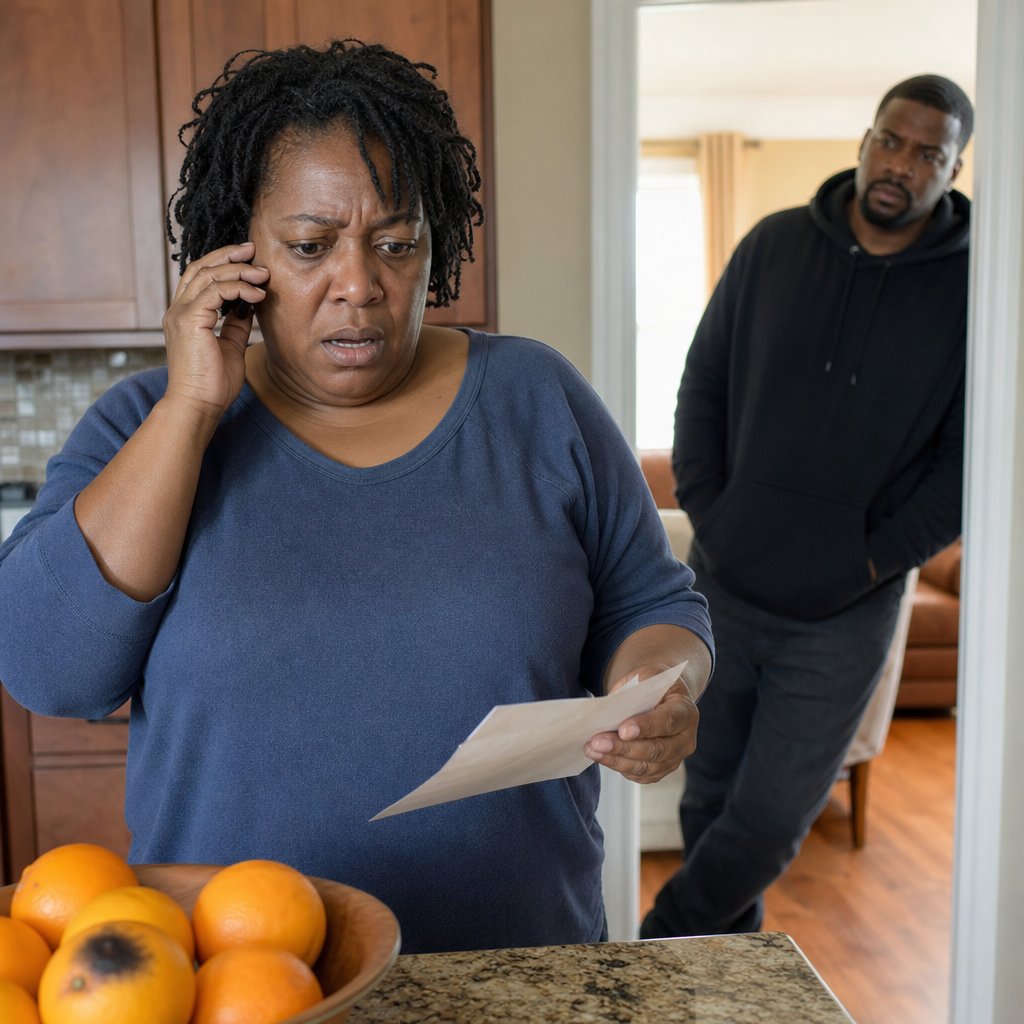
“Don’t,” I cut in, and my voice came out sharper than I meant. I walked right past him to the kitchen, the appraisal paper shaking now that I wasn’t forcing it still. On the counter sat a bowl of oranges with one soft spot leaking into the peel, sweet and rotten at the same time.
I dialed the number on the letterhead with my finger hovering like it might burn me. When the jeweler answered, I kept my tone polite. Almost cheerful. Like I wasn’t about to detonate my own family.
“Hi,” I said. “I’m calling about an appraisal from six months ago. Yellow gold locket. Floral engraving. Client name Mason Bell.”
A pause. Paper shuffling. Then, “Yes, I remember that piece.”
My mouth went dry. “Can you tell me why it was appraised?”
Another pause, like she was deciding how much truth a stranger deserved. Then she said the line that turned my stomach inside out: “He asked about resale options and quick turnaround.”
Quick turnaround. Not “insurance.” Not “for safekeeping.” Not “Dad wants it documented.”
My hand tightened around the phone until my knuckles ached. “Did he sell it there?” I asked.
And the jeweler inhaled like she was about to say a name.
His Venmo Pitch To Family
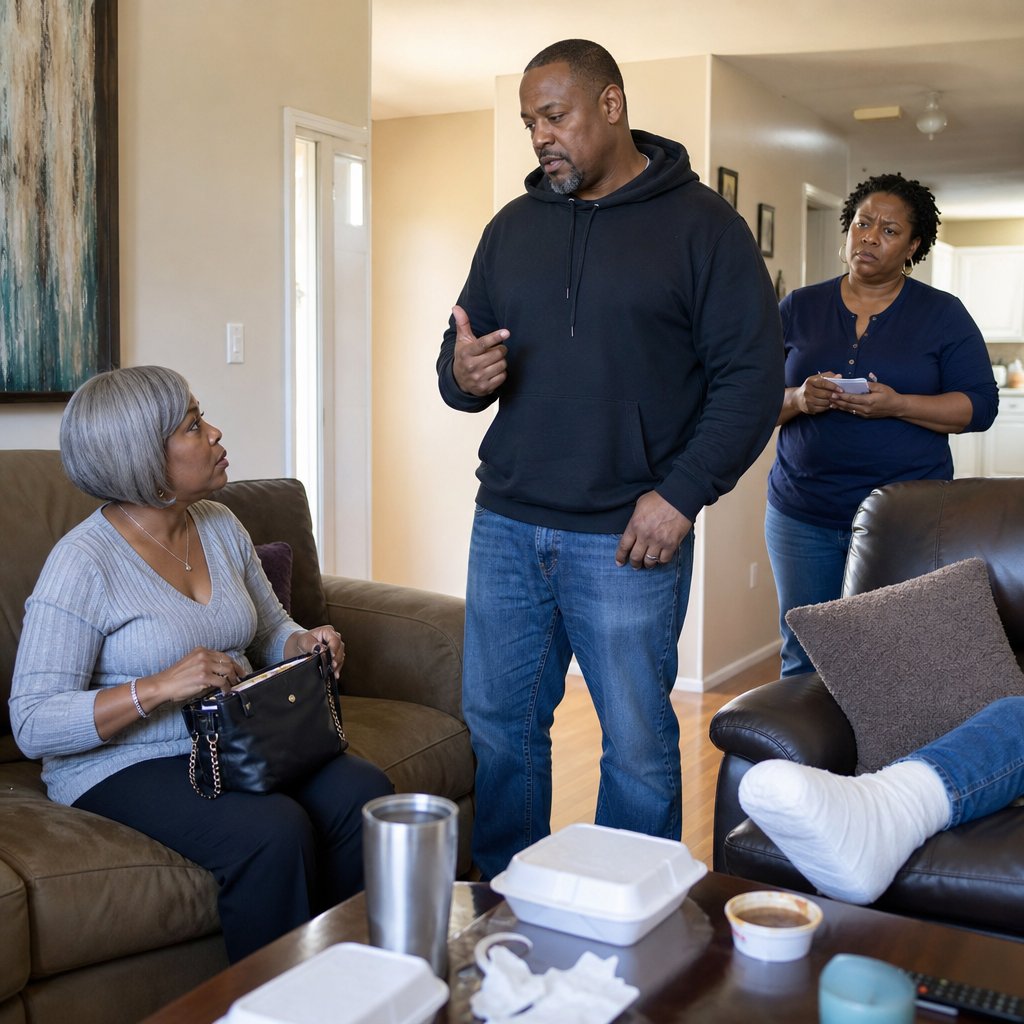
By dinner, Mason had a whole performance ready. He stood at the foot of Dad’s recliner like he was about to accept an award, that thick envelope nowhere in sight now. Dad’s leg was propped up on a pillow, the air smelling faintly like antiseptic wipes and fried onions from the takeout I barely touched.
“I’m handling Dad’s PT privately,” Mason announced, loud enough for our aunt to hear from the hallway. “It’s easier. No paperwork mess. Just Venmo me and I’ll take care of it.”
I watched Aunt Denise—short, light-brown skin, silver bob always perfect—pull her purse onto her lap like she was about to tip a waiter. Her eyes got watery the second Dad grimaced with pain. Mason saw it and leaned in, voice soft. “We can make this smooth for him.”
“I can send something right now,” Aunt Denise said, already digging for her card. “Whatever he needs.”
My stomach clenched so hard it felt like I’d swallowed a fist. Mason’s gaze flicked to me, quick and warning, like: Don’t embarrass me.
I excused myself to the bathroom, shut the door, and called the physical therapy clinic Dad actually went to. I kept my voice low, like I was the one doing something shady.
“Hi,” I said. “Can family pay for sessions through my brother?”
The receptionist didn’t hesitate. “No ma’am. Payments have to be made by the patient or directly at the clinic. We don’t accept third-party personal transfers.”
My throat tightened. “So if someone Venmoed him…”
“That wouldn’t reach us,” she said, firm.
I stared at my reflection—eyes wide, lipstick smudged from biting it—and heard, through the door, Mason laughing in the living room like he was already counting money.
That Scratch Near The Clasp
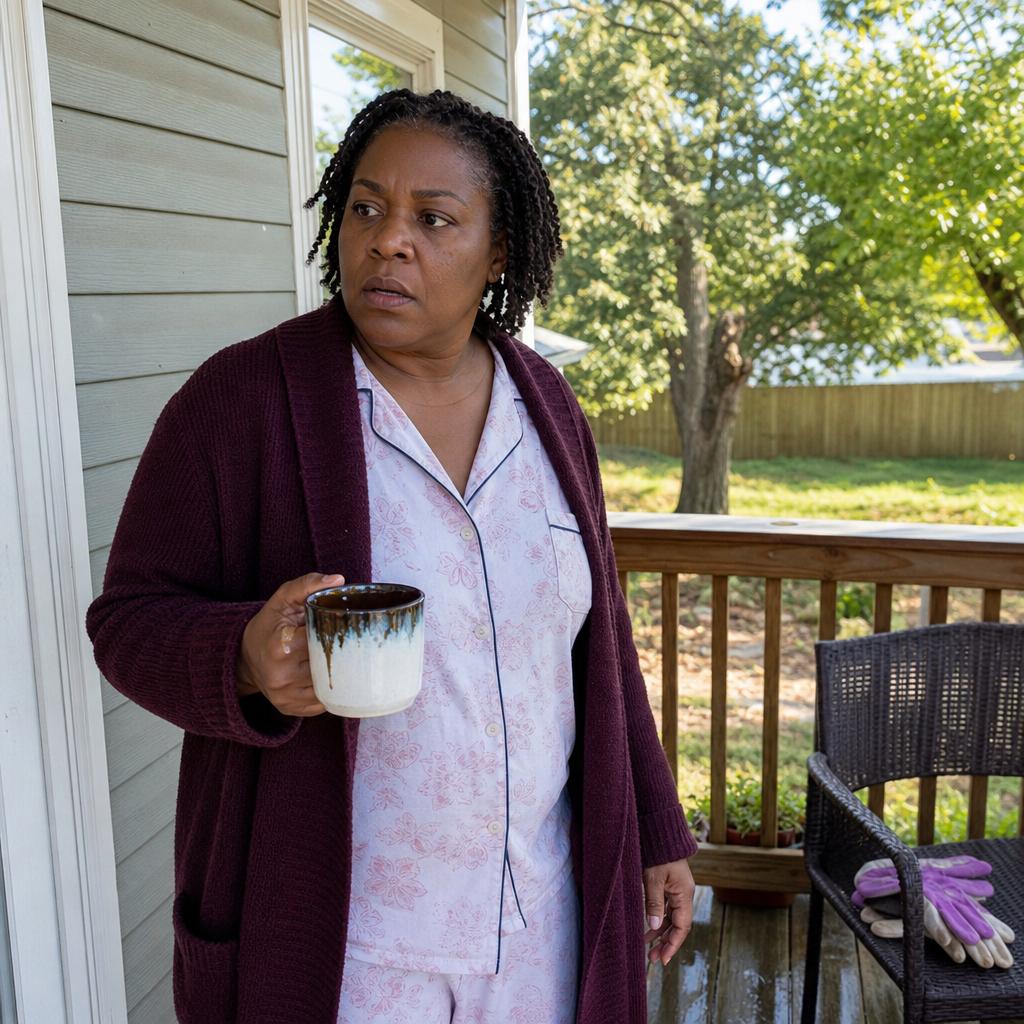
I didn’t sleep. I laid in my childhood bedroom staring at the ceiling fan wobble like it was judging me. Every few minutes, I’d hear the house settle—a pipe tick, a floorboard sigh—and it felt like the whole place was whispering, He’s getting away with it.
In the morning, I stepped onto the back porch with my coffee, the mug warm against my palms, and tried to breathe like a normal person. The air smelled like damp mulch and somebody’s laundry detergent drifting from next door.
Then my Marketplace alert went off.
I’d set it weeks ago, half as a joke to myself, half as a prayer: “vintage gold locket,” “antique locket,” “floral engraving.” I never expected it to actually deliver anything but disappointment.
This time it delivered a punch.
The listing photo showed a hand holding a locket against a neutral background. No faces. No context. But I didn’t need any of that.
I knew that locket the way you know a scar on your own body.
Right near the clasp, a tiny crescent scratch—where I’d dropped it when I was twelve and Grandma made me cry and then hugged me so tight I couldn’t breathe. That scratch was our family’s fingerprint.
So it wasn’t “in process.” It wasn’t “tied up in a bank transfer.” It wasn’t sitting in some safe waiting for paperwork.
It was out there. Being sold like somebody’s cute little find.
I held my coffee so hard it sloshed over the rim and burned my thumb, and I didn’t even flinch as I hit “message seller.”
When the reply came back almost immediately, my heart dropped straight through my ribs.
The Grocery Lot Meet-Up
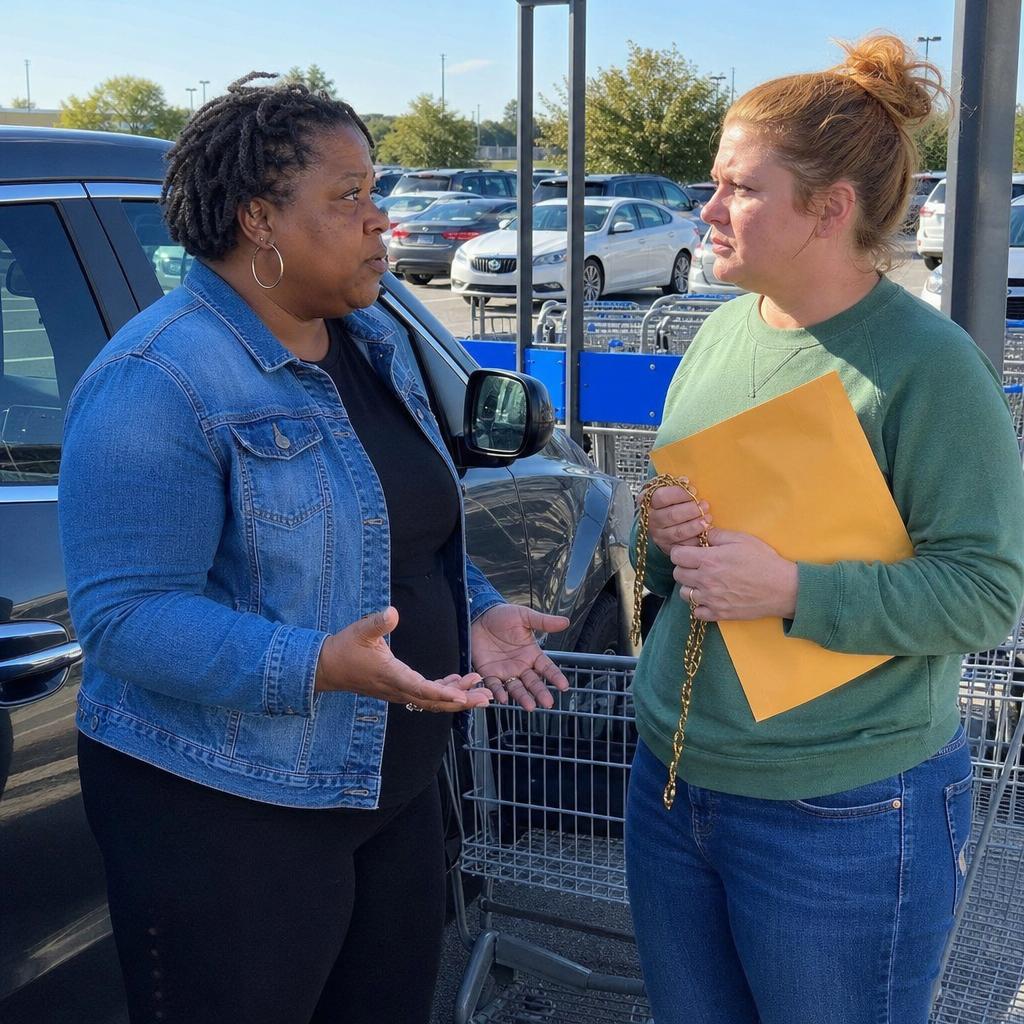
We agreed to meet where nobody would look too long: the grocery store parking lot off Route 9, between the cart return and a line of scraggly shrubs that never grew right. I wore a denim jacket over a black tee and leggings, hair pulled back, trying to look like a woman buying eggs—not a woman about to confront the thief who shared her last name.
The seller arrived in a beige SUV with a dented bumper. She got out slowly, like she’d done this before and hated it every time. White woman, late 30s, strawberry-blonde hair in a messy bun, freckled face, tired eyes that didn’t match the “vintage” excitement of the listing.
“You Iris?” she asked, holding her keys like a weapon.
“Yes,” I said. “That locket belongs to my family.”
Her mouth tightened. “I didn’t steal it.” She opened her glove box and pulled out a manila envelope, edges bent. She slid out paperwork—printouts, a handwritten bill of sale, and a copy of an appraisal page.
I recognized the jeweler’s letterhead immediately. And there, in the chain of custody, like a slap: Mason’s name.
My vision tunneled. The lot smelled like exhaust and overripe bananas from someone’s trunk.
“He sold it to you,” I said, voice low.
She nodded once, almost apologetic. “He said it was his. Said his dad was sick. I paid cash.”
“Then give it back,” I said, and I hated how my voice cracked on the last word.
She hugged the envelope closer to her chest. “I can’t just hand it over. I’m not eating that money. If you want it, you do it the right way.”
The right way meant police reports. Family headlines. Dad hearing it from strangers.
She reached into her purse, and I saw a glimpse of gold chain in her fist.
The Receipt That Didn’t Match
I drove home with my jaw locked so tight my temples throbbed. Mason hadn’t just lied—he’d created a whole little ecosystem where everyone else’s love for Dad turned into his personal cash stream.
So I built a trap that sounded like help.
That afternoon, I found Mason in Dad’s kitchen, rummaging through the junk drawer like he owned the place. He’d swapped the hoodie for a red flannel and looked almost wholesome, which made me want to throw something.
“Hey,” I said, soft. “I talked to the bank. They’re flagging anything that looks like a big medical payment. They said you need documentation for your ‘PT private pay’ thing. Like a receipt. Otherwise it can bounce back.”
His eyes sharpened. Just a flash. Panic, masked as annoyance. “That’s stupid.”
“It is,” I agreed, leaning on the counter like we were teammates. “But you know how they are. If you send me the receipt, I can shut them up.”
Mason hesitated, then nodded too fast. “Fine. I’ll email it.”
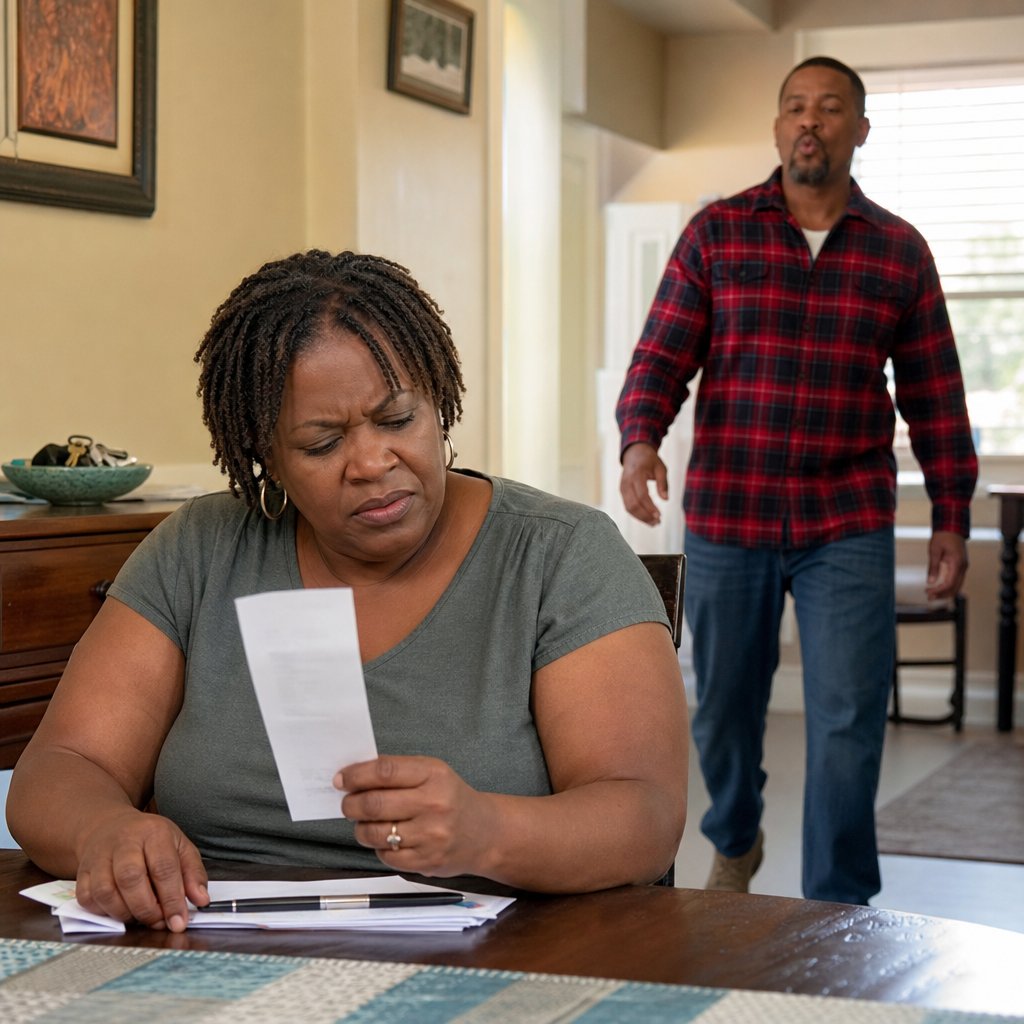
Ten minutes later he strutted through the hallway like he’d just solved world hunger. I sat at the dining table with a pen and paper, waiting. When the document finally came through, I printed it—because paper doesn’t let you pretend you didn’t see what you saw.
At first glance it looked real. Clinic name. Amount. Date.
Then I noticed the address. Wrong street. Wrong suite number. A place across town Dad had never been.
And the line where it said “Paid In Full” had a tiny font shift mid-sentence, like somebody copied and pasted their way into a felony.
I heard Mason whistling in the hallway, getting closer, like he was coming to collect my trust.
What The Clinic Put In Writing
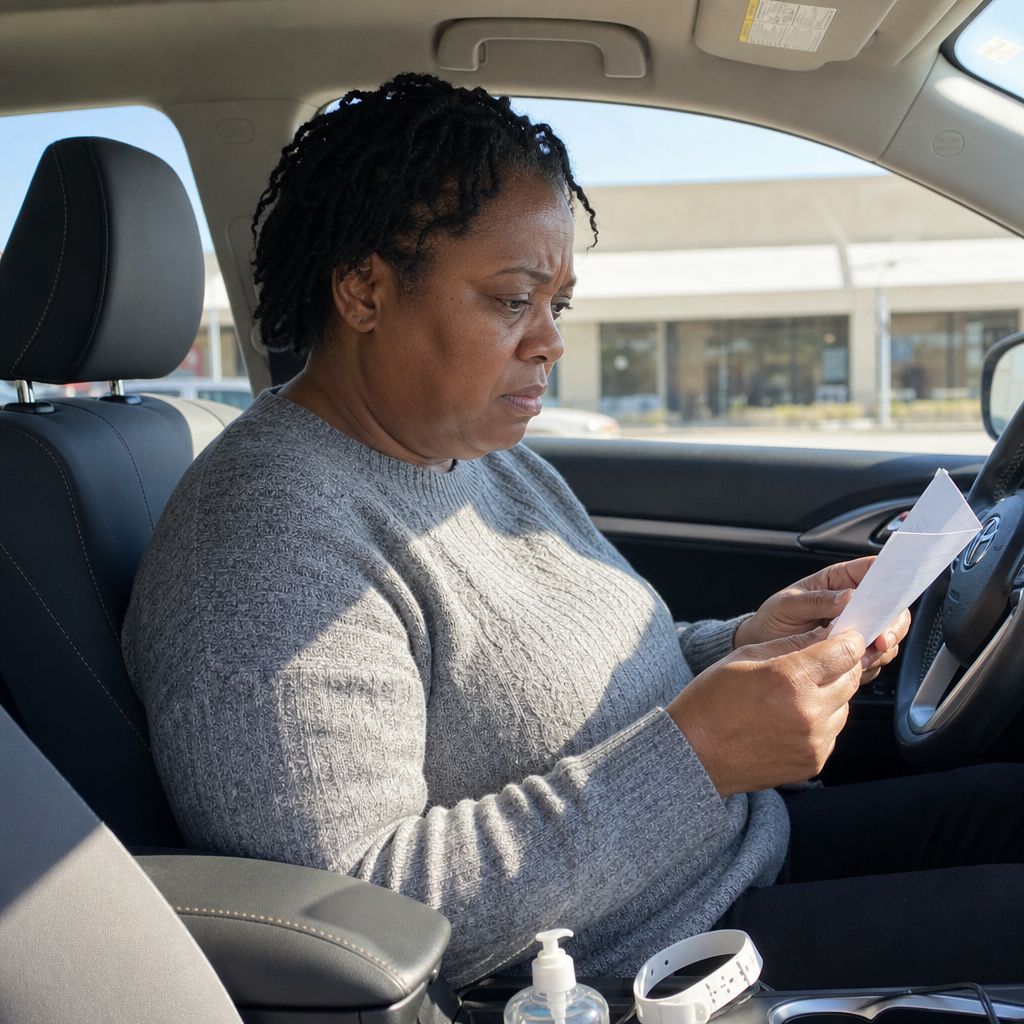
I didn’t confront Mason. Not yet. I smiled so hard my cheeks hurt and told him, “Perfect. I’ll forward it to the bank.”
Then I took Dad’s car and drove straight to the clinic, the receipt folded in my purse like it was radioactive. The waiting room smelled like hand sanitizer and stale coffee, and the TV played something cheerful that made me want to scream.
At the front desk, I asked for the billing manager. When she came out, she was a Latina woman in her 50s with square glasses and a no-nonsense bun. I handed her the paper.
Her eyes moved across it once. Twice. Her mouth flattened.
“This isn’t ours,” she said, immediate. “Our address is wrong. Our invoice numbers don’t look like that. And we would never mark ‘Paid In Full’ like this.”
I swallowed. “Can you put that in writing?”
She didn’t even blink. “Yes. Because if someone is using our name, we need to document it.”
When she handed me the signed statement, my hands went cold. I sat in my car and called the attorney my coworker swore by. I expected a lecture about family drama. Instead, his voice went sharp and professional in a way that scared me more than yelling.
“Iris,” he said, after I read him the facts, “this isn’t just a sibling squabble. This is conversion. Fraud. And because it involves your father’s care and his finances, it can rise to elder financial abuse.”
Elder abuse. The words tasted like metal.
“What do I do?” I whispered.
“You stop giving him room to wriggle,” he said. “And you document everything before he realizes you’ve clocked him.”
I looked down at the clinic’s statement in my lap and realized Mason was no longer just stealing a locket.
He was building a case against himself—and he had no idea I was holding the match.
Dad’s Photo Used Against Me
I gave myself one day. One day to breathe, to stack the proof, to plan a calm family meeting with a neutral witness—so Mason couldn’t spin it into “Iris is being dramatic again.”
He didn’t give me that day.
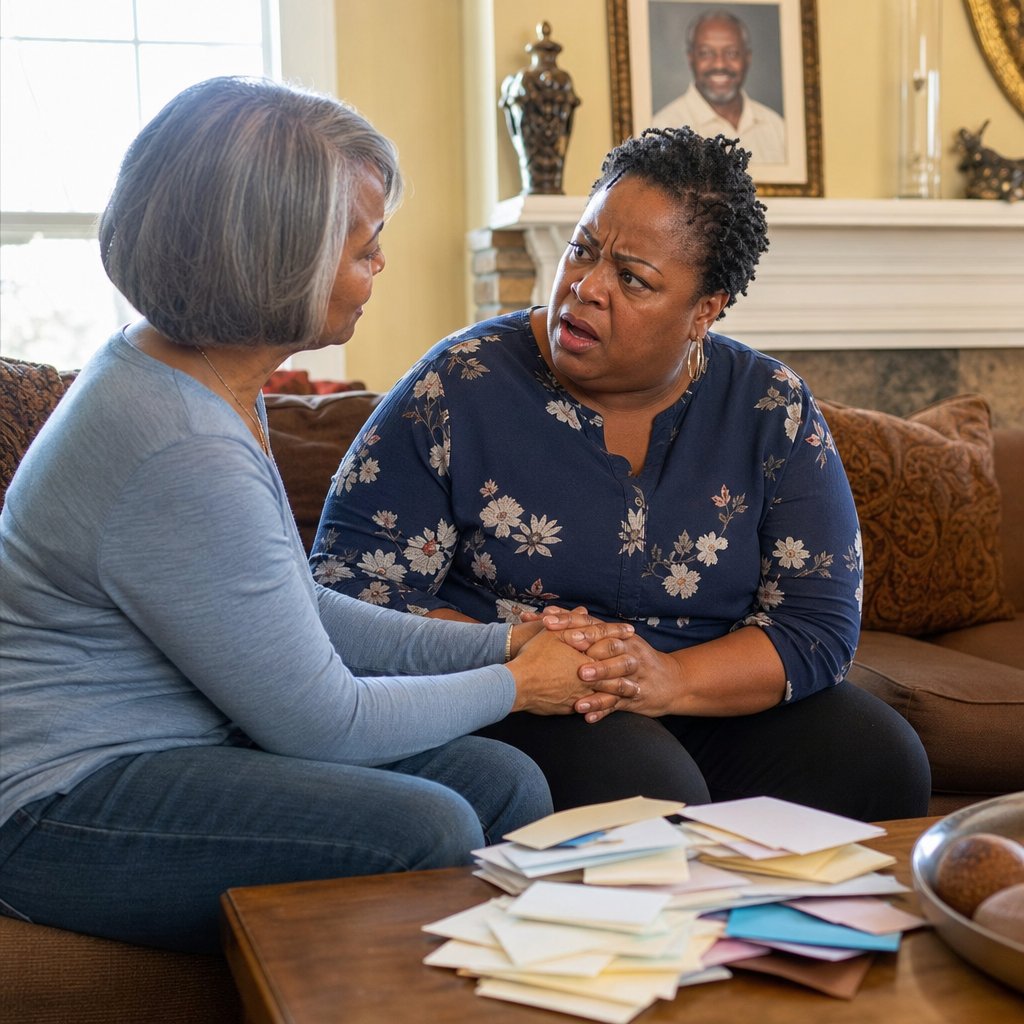
I walked into Aunt Denise’s house and the first thing I saw was Dad’s face—smiling in a photo from last Thanksgiving, the one where his eyes still looked bright and he insisted on carving the turkey even though his hands shook. The photo was printed out and propped on her mantel like a memorial. My stomach dropped.
Denise rushed to me, breathless, cheeks wet. “Honey, it’s beautiful what Mason did,” she said. “People are already giving.”
“What did he do?” I asked, even though I already knew.
She pointed to a stack of envelopes on the coffee table—cash, checks, little notes folded up. No names I could read from where I stood, just the weight of them, the thickness. Like a pile of trust made physical.
“He started a fundraiser,” Denise said. “For Dad’s therapy. He said you were… resistant. That you wanted to control everything and wouldn’t let anyone help.”
My ears rang. Resistant. Control. The exact words Mason used whenever he wanted the family to think I was cold.
In the kitchen, I heard his voice through the doorway—laughing softly with cousins, soaking up their praise like sunlight.
Denise squeezed my hands. “Please don’t fight him on this, Iris. Not when Dad needs us united.”
I stared at the envelopes, at Dad’s smiling face above them, and felt something in me go quiet and lethal.
Because if I pushed back now, I wasn’t just challenging Mason.
I was the villain in a story he’d already sold to everyone.
The Packet I Slid Forward
I refused to let Mason pick the battlefield again.
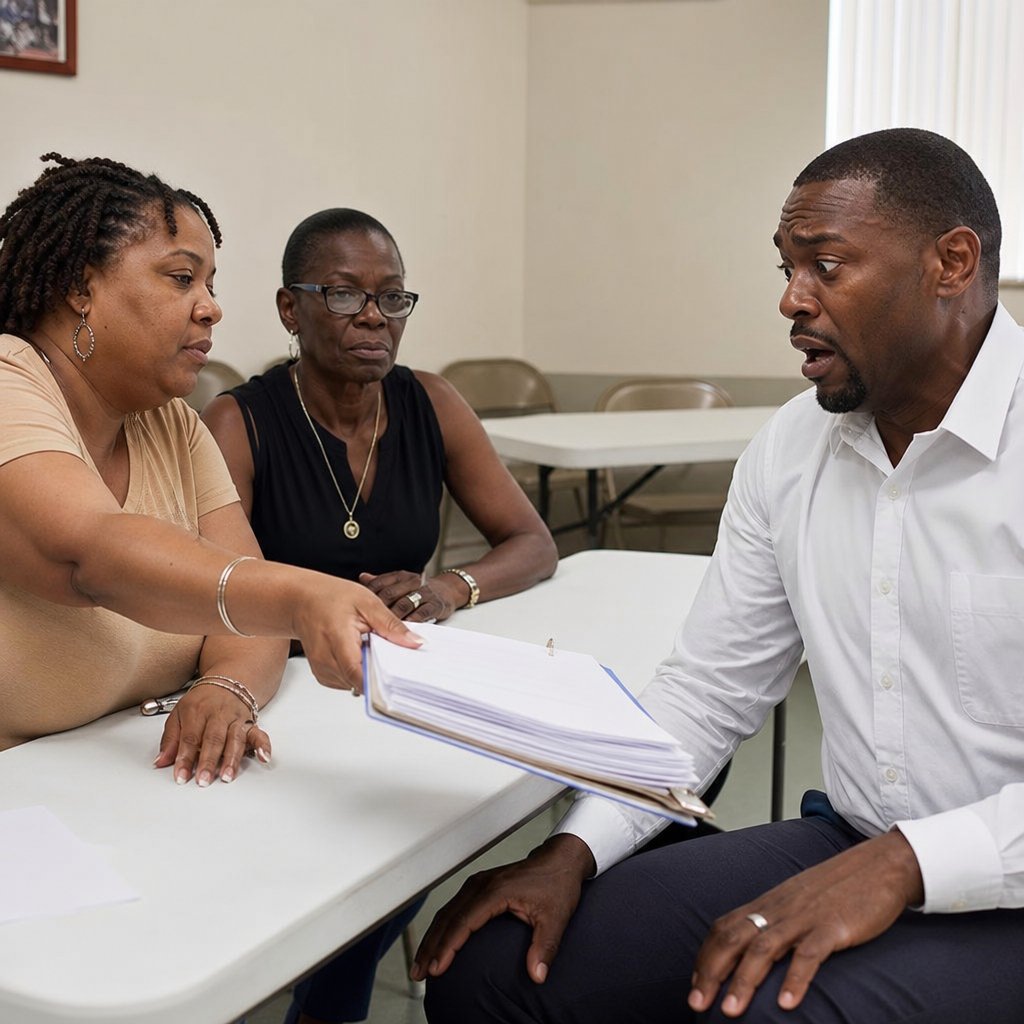
The meeting happened two nights later in the community center’s small conference room—the kind with folding chairs and a faint smell of lemon cleaner that never quite covered the mildew. I invited everyone: Aunt Denise, my cousin Tasha, my uncle Reggie. And I brought a neutral witness: Ms. Harlan, Dad’s longtime church friend, a tall older Black woman with sharp cheekbones and a gaze that made grown men sit up straighter.
Mason arrived ten minutes late, wearing a crisp white button-down like he was going to court or a job interview. He smiled at everyone, that practiced, charming smile, and set a hand on Dad’s shoulder like a brand.
“Let’s keep this respectful,” he said, eyes on me. “Dad doesn’t need stress.”
“Agreed,” I said. My voice surprised even me—steady, almost gentle. I opened my tote bag and pulled out a thick packet, clipped and organized. It landed on the table with a soft thunk that made everyone look.
First page: the will excerpt mentioning the locket as a shared family heirloom. Second: the jeweler’s appraisal with Mason’s name and phone number. Third: the clinic’s written statement that the receipt was fake. Then: printed photos of the fundraiser materials and the Marketplace listing image—close-up on that tiny scratch near the clasp.
Mason’s smile stayed on his face for two seconds too long, like his muscles forgot how to stop.
Uncle Reggie leaned forward, brow furrowing. Tasha’s hand flew to her mouth.
Ms. Harlan adjusted her glasses and said, calm as a judge, “Mason… explain why your name is on this appraisal.”
Mason’s eyes snapped to me, and for the first time I saw it—real fear, bare and ugly, behind the charm.
His fingers tightened on the edge of the table like he was about to flip it.
His Girlfriend’s Crying Confession
Mason shoved back from the table so hard his chair screeched. “This is insane,” he snapped, voice cracking on the last word like it surprised him. He pointed at me like I was the criminal. “You’ve always wanted to make me look bad.”
“Then explain the fake receipt,” I said, quiet. That quiet made him flinch more than yelling ever could.
He stormed out anyway—white shirt flashing through the doorway, leaving a vacuum behind him. Dad stared at the table like it might start spinning. Aunt Denise looked like she’d been slapped. Nobody knew what to say first, which was exactly how Mason liked it.
I gathered my packet with hands that finally started shaking now that the moment had passed. Ms. Harlan touched my elbow. “Don’t chase him,” she murmured. “Let him hang himself.”
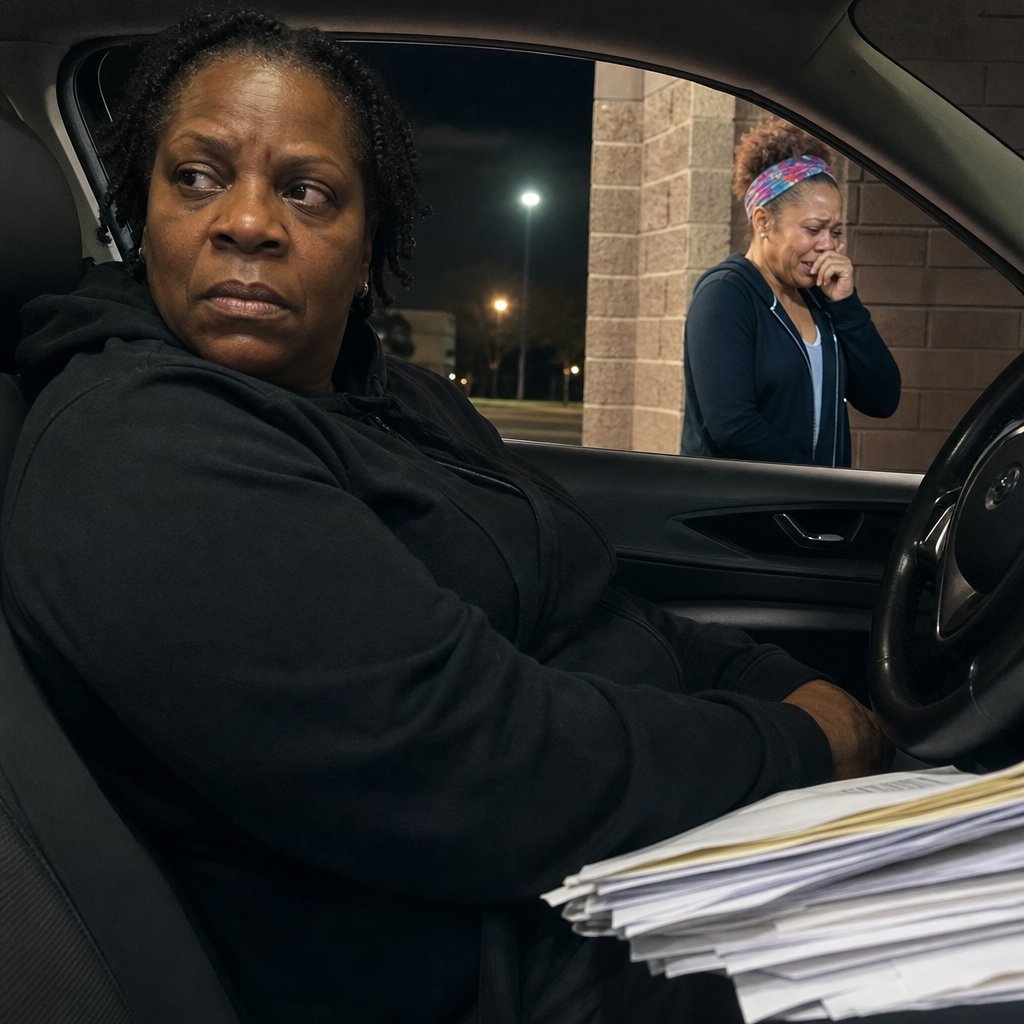
Outside, the air was thick and humid. I sat in my car for a second just to breathe, the steering wheel slick under my palms.
That’s when my phone rang.
It was a number I didn’t recognize, but I answered anyway. A woman’s voice came through, thin and frantic, swallowing sobs.
“Iris?” she whispered. “It’s Kendra. Mason’s— I’m Mason’s girlfriend. Please don’t tell him I called.”
Kendra was petite, caramel-skinned, mid-30s, always wearing those bright headbands and glossy lipstick like she was trying to keep her life cute. Hearing her cry felt wrong, like seeing a cartoon character bleed.
“What is it?” I asked, already bracing.
“He told me it was an inheritance check,” she gasped. “The apartment deposit, the weekend trip—he paid for it with that money. He said it was finally coming through.”
My stomach dropped again, somehow finding new ground to fall through.
Then her voice went even smaller. “And… Iris, I think I know where the locket went. There’s a guy at his gym. Mason kept saying his name like it was a joke. He said he could ‘move anything’ fast.”
“What’s the name?” I asked, barely breathing.
Kendra sniffed hard, and I heard a door close on her end like she was hiding in a closet to say it.
“I’m not sure,” she whispered. “But I can describe him—and I can tell you what gym—if you promise you’ll move fast before Mason realizes I talked.”
The Locket Came Home Quietly
“Don’t say it out loud,” Kendra whispered, eyes flicking over my shoulder like Mason might materialize between the treadmills. Her fingers worried the seam of her gym bag until it squeaked. “It was… a guy. Tall. Always in that gray hoodie. He said his sister was ‘handling the paperwork.’” She swallowed hard. “I heard him say the name Mason. Like it was a joke.”
My stomach went cold in that clean, lemony gym air. I didn’t ask her to repeat it. I didn’t need the satisfaction of hearing his name again—I needed a trail he couldn’t set on fire.
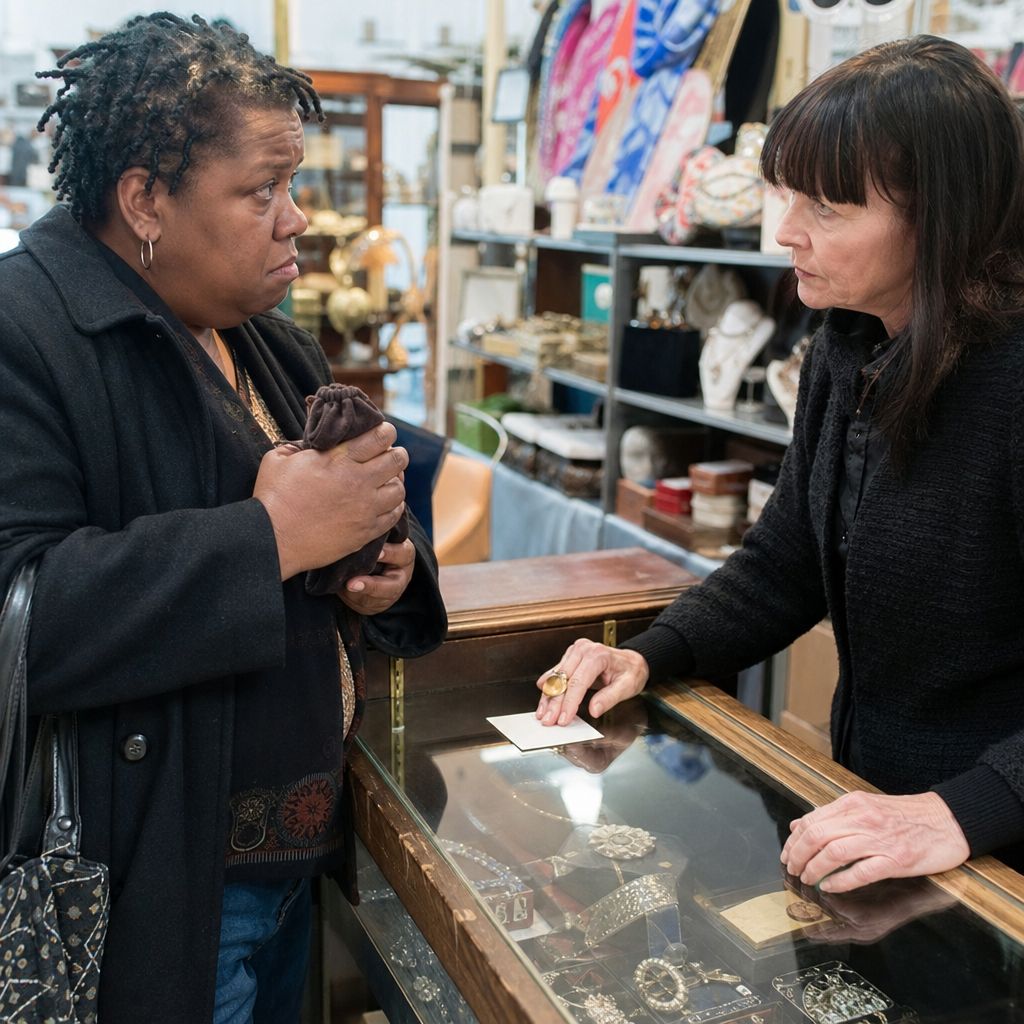
I left with my coat half-zipped and my keys biting my palm. Two calls, one drive across town, and one too-sweet conversation later, I was standing in a cramped little consignment shop that smelled like dust and old perfume. The owner—a thin woman with sharp bangs and a thick gold ring—kept saying, “It’s a shame, really, family pieces always come with drama,” like she was narrating my life for tips.
She brought it out in a small velvet pouch, casual as a pack of gum. The locket. Our grandmother’s. The tiny nick on the hinge was still there—like a fingerprint only grief could recognize. My throat tightened so fast it scared me.
I didn’t argue the price. I didn’t flinch. I paid, smiled, and slid it into my pocket like it was nothing. Like it hadn’t split our family down the middle.
Then I walked straight into the police station, the fluorescent lights making my skin look sallow, and I said, steady as a heartbeat, “I need to file a report for stolen property.” The desk officer lifted his brows and asked, “Do you know who took it?”
I felt the locket’s cool weight through my coat, and I heard my own voice go quiet and lethal. “Yes,” I said, and the officer’s pen hovered, waiting for the name I was about to put on record…
Was Mason justified selling the locket for rehab funds?