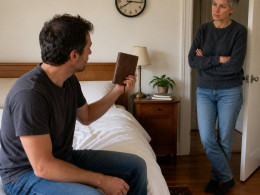




The Bins Weren’t Mine
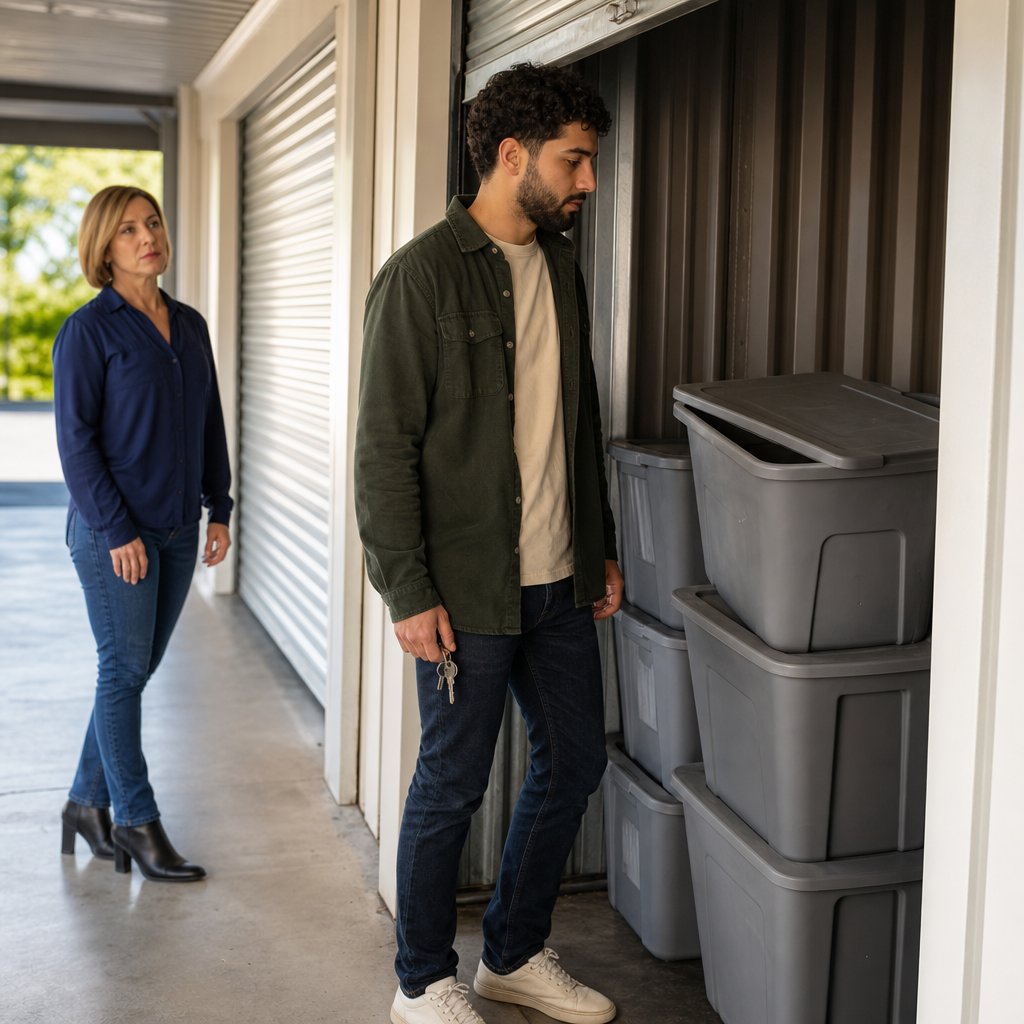
The storage unit door shrieked up and my stomach dropped so hard I tasted pennies. Right there, stacked like someone’s private trophy wall, were gray bins with fat black-marker labels: M. HART—PHOTOS and DAD’S PAPERS. My mom’s maiden name. My dad’s life. Packaged like evidence.
I stood in the doorway with my keys still in my fist, knuckles white, staring at the plastic lids dusted with that gritty, stale-film smell storage units have—hot metal, cardboard, old perfume that won’t die. The kind of place you hide things you don’t want seen. The kind of place you don’t “accidentally” rent.
Behind me, Kendra’s SUV ticked as it cooled. She’d said she was “dropping off donations.” She’d even jingled her keys like it was cute, like she was a woman with errands and a wholesome little list. But the unit wasn’t full of donations. It was full of my mother.
I stepped inside and brushed my fingers over the bin labeled PHOTOS, and a thin layer of dust smeared across my skin like ash. I could picture my mom’s handwriting on the back of every picture—dates, little jokes, hearts over i’s—and I suddenly understood why frames in the house kept going empty.
Then I heard Kendra’s heels on the concrete behind me, stopping right at the threshold, and her voice went syrup-sweet: “Ivy… what are you doing here?”
The Frame Went Blank
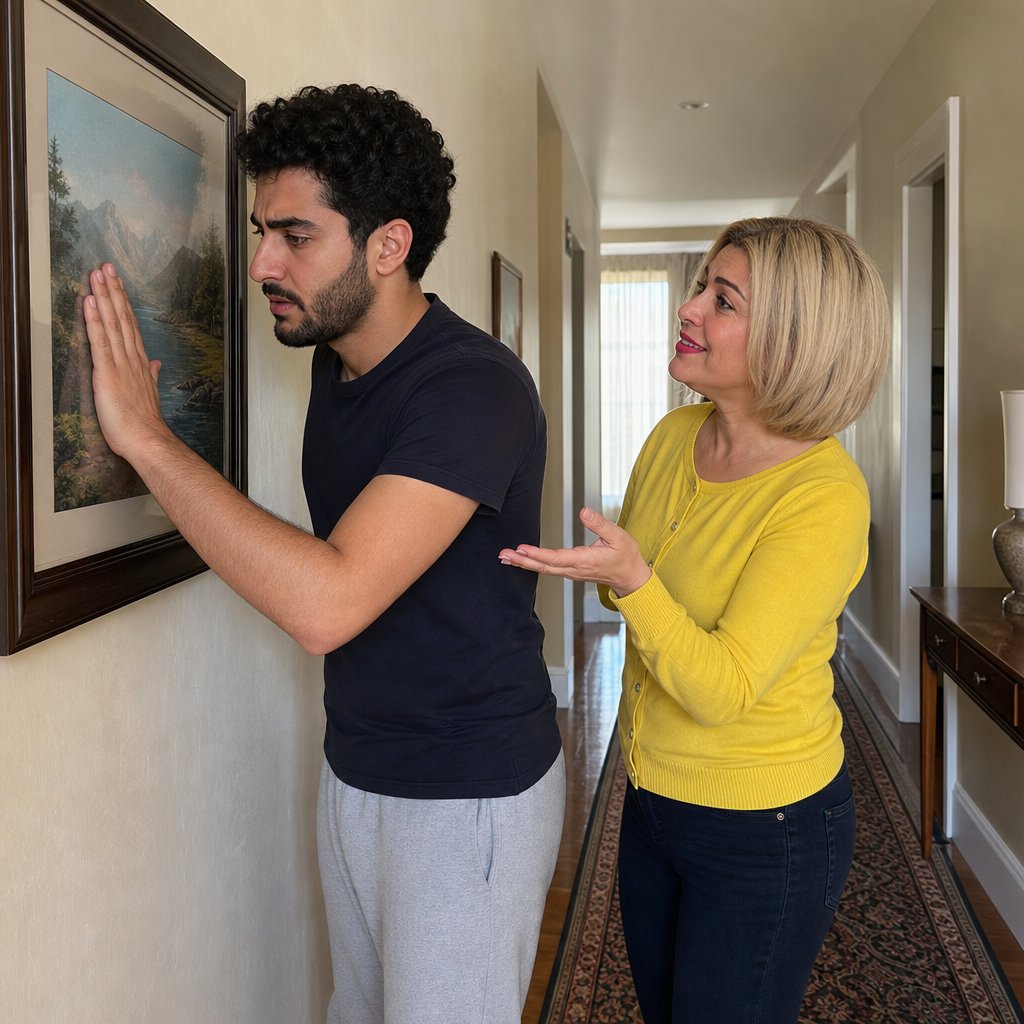
Back at the house, the hallway felt like it was holding its breath. I walked straight to the spot where my mom’s favorite photo had always been—the one where she’s laughing so hard her eyes disappear, flour on her cheek from baking. Except the frame wasn’t empty. It was worse.
A generic landscape stared back at me. Some bland, foggy lake with a lonely tree, like a hotel lobby trying not to offend anyone. The glass was spotless, like it had never held anything that mattered.
Kendra appeared in the doorway of her new “entry refresh,” wearing a lemon-yellow cardigan that screamed cheerful. Her smile was too bright, too practiced, like she’d rehearsed it in a mirror. She tilted her head and said, “Oh, you noticed! Isn’t it calmer?”
I put my palm on the frame and felt the cool, slick surface under my skin. “Where’s the picture of Mom?” My voice came out thin, like a thread stretched too far.
She walked closer, slow and careful, as if I was a stray animal. “I’m not getting rid of anything,” she said, drawing out each word like she was explaining math to a child. “I’m just… editing. Curating.”
Editing. Curating. Like my mother’s face was clutter. Like my childhood was a messy countertop she couldn’t stand looking at.
From the living room, I heard my dad’s laugh—tired, automatic—at something on the radio. He didn’t even look up. Kendra’s eyes flicked toward him, then back to me, and she lowered her voice.
“Your dad deserves a home that isn’t a museum,” she murmured, and her fingers tapped the frame once, possessive. “Don’t make this harder than it needs to be.”
The Wall Kept Shifting
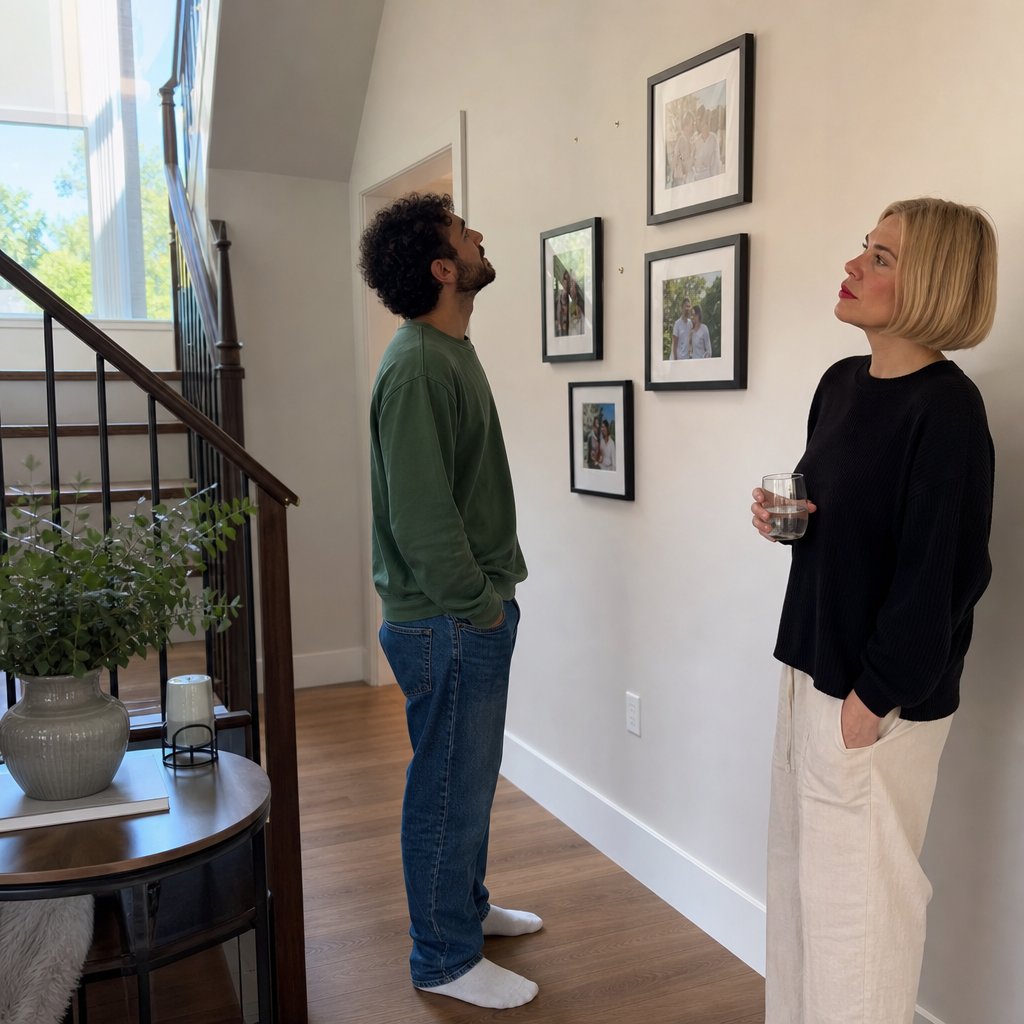
The next morning, I knew something was wrong before I could even name it. The family wall—our little gallery by the stairs—felt… tilted. Like someone had touched it in the night and tried to pretend they hadn’t.
I stood there in my socks, staring, and my throat tightened. The photos of my mom had sunk lower. Not by much. An inch here, a half-inch there. But it was enough to make her look smaller. Like she was being quietly demoted.
I took one step back, then forward again, checking myself. Maybe I was imagining it. Maybe grief makes you paranoid. That’s what Kendra liked to imply—grief as a personality flaw.
By dinner, two of Mom’s pictures were gone completely. The nail holes were still there, tiny dark dots in the paint like pinpricks. Kendra set plates on the table like nothing had happened, the clink of ceramic too loud in the silence.
“Where are they?” I asked, pointing with my fork because my hands were shaking too much to trust.
Kendra didn’t even pause. “In a safe place,” she said, breezy, like she was talking about extra linens.
“What safe place?” I pushed. “Tell me where.”
She finally looked at me, and there was something hard behind her eyes. “Why do you need to know? They’re not gone. I’m trying to protect them.”
My dad chewed slowly, eyes down, like the table grain was suddenly fascinating. “Ivy,” he said, tired, warning. “Let it go.”
And Kendra’s mouth curved like she’d won a point. She reached for her water glass, condensation slick on her fingers, and said softly, “Stop interrogating me.”
I stared at the bare patches on the wall, at the ghost outlines where my mother used to be, and realized the “safe place” wasn’t in this house.
Holiday Decor, My Childhood
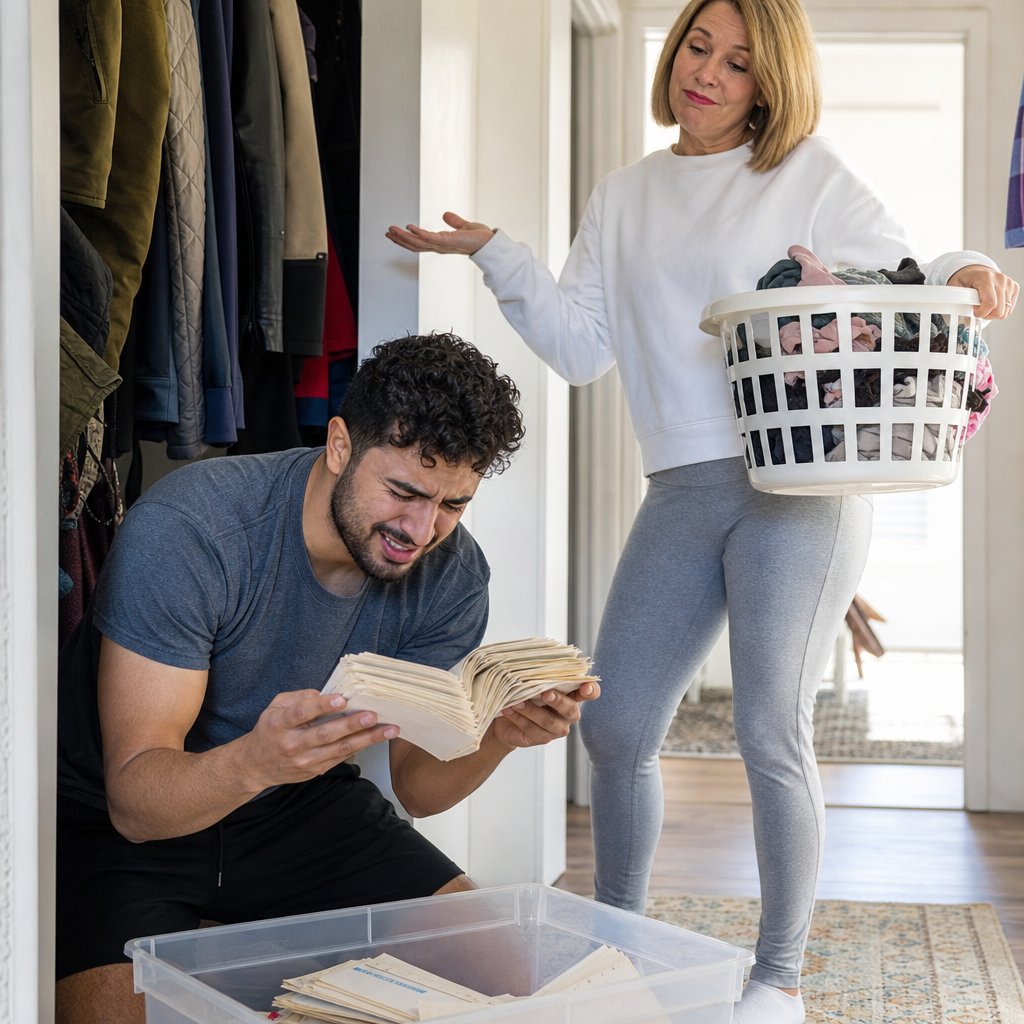
I found the box because I was looking for the cinnamon-scented ornaments my mom used to hang first—always first—while she hummed off-key and swatted flour from her hands. Kendra had “organized” the hall closet into matching bins, all smugly uniform, and one was labeled HOLIDAY DECOR in neat, rounded handwriting that wasn’t mine.
I popped the lid and my chest went hot. No ornaments. No lights. Just my mom’s handwritten recipe cards, jammed inside like filler. Bent. Creased. The corners curled like someone had crushed them in a fist and then decided that was good enough.
I pulled one out and my fingers trembled over the smudged ink—her handwriting, the way she looped her y’s, the tiny star she drew next to “Nana’s rice.” The card smelled faintly like vanilla and old paper, and it hit me so hard I had to swallow back a sound.
Kendra breezed past in leggings and a crisp white sweatshirt, carrying a basket of folded towels like she was starring in a home makeover show. She glanced at what I was holding and shrugged. “Oh, those.”
“Why are these in here?” My voice cracked. “These were in Mom’s kitchen drawer. Flat. Safe.”
She made a little face, like I’d shown her something sticky. “I needed that drawer. And honestly, Ivy, they’re just old notes. You can take pictures of them if you’re so worried.”
Old notes. Like my mother’s hands didn’t write those while I sat on the counter licking batter. Like my whole childhood could be compressed into a box and shoved behind a vacuum.
I heard my dad’s footsteps in the hallway, coming closer, and I knew—knew—Kendra was about to turn around and act like I’d attacked her over “paper.”
Dad Said Her Words
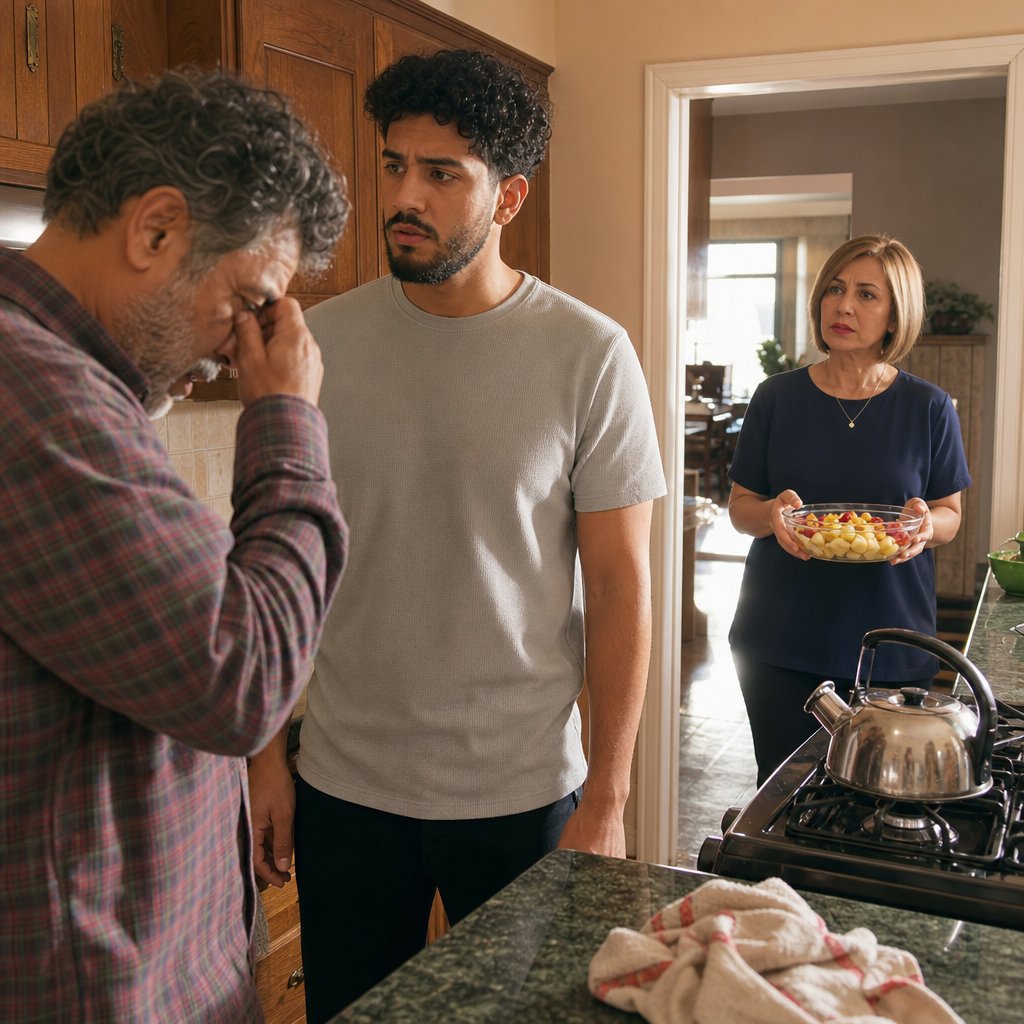
It wasn’t one sentence. It was the way the exact same sentence started coming out of my dad’s mouth like it had been planted there.
We were in the kitchen, the one room that still felt like my mom sometimes—until Kendra swapped the curtains for something “brighter.” Dad stood at the counter in his old plaid shirt, rubbing the bridge of his nose like his bones were tired. The kettle hissed, and the sound drilled into my skull.
“I’m not asking for a shrine,” I said, keeping my voice careful. “I’m asking for her things to stop disappearing.”
Dad exhaled and didn’t meet my eyes. “Kendra’s trying to give us a fresh start,” he said. “Less… morbid.”
I went cold. Fresh start. Less morbid. The same words Kendra had used yesterday, right down to the pause before morbid like she enjoyed it. I stared at him, trying to find him behind it, the man who used to tell me my mom’s photo stayed up because love doesn’t expire.
“Did she tell you to say that?” I asked, and I hated how small it sounded.
His jaw tightened. “No one is telling me anything,” he snapped, too fast, too defensive. “I’m tired, Ivy. I’m tired of the fighting. Can’t you just… stop?”
And there it was—the part that hurt the most. Not anger. Not even disbelief. Just exhaustion that made him willing to accept whatever version of me was easiest to live with.
From the doorway, Kendra appeared with a bowl of cut fruit, all glossy grapes and perfect slices, like she’d stepped in on cue. She looked at Dad first, then at me, and her voice was honey.
“See?” she said softly. “He understands.”
The Drawer With A Key
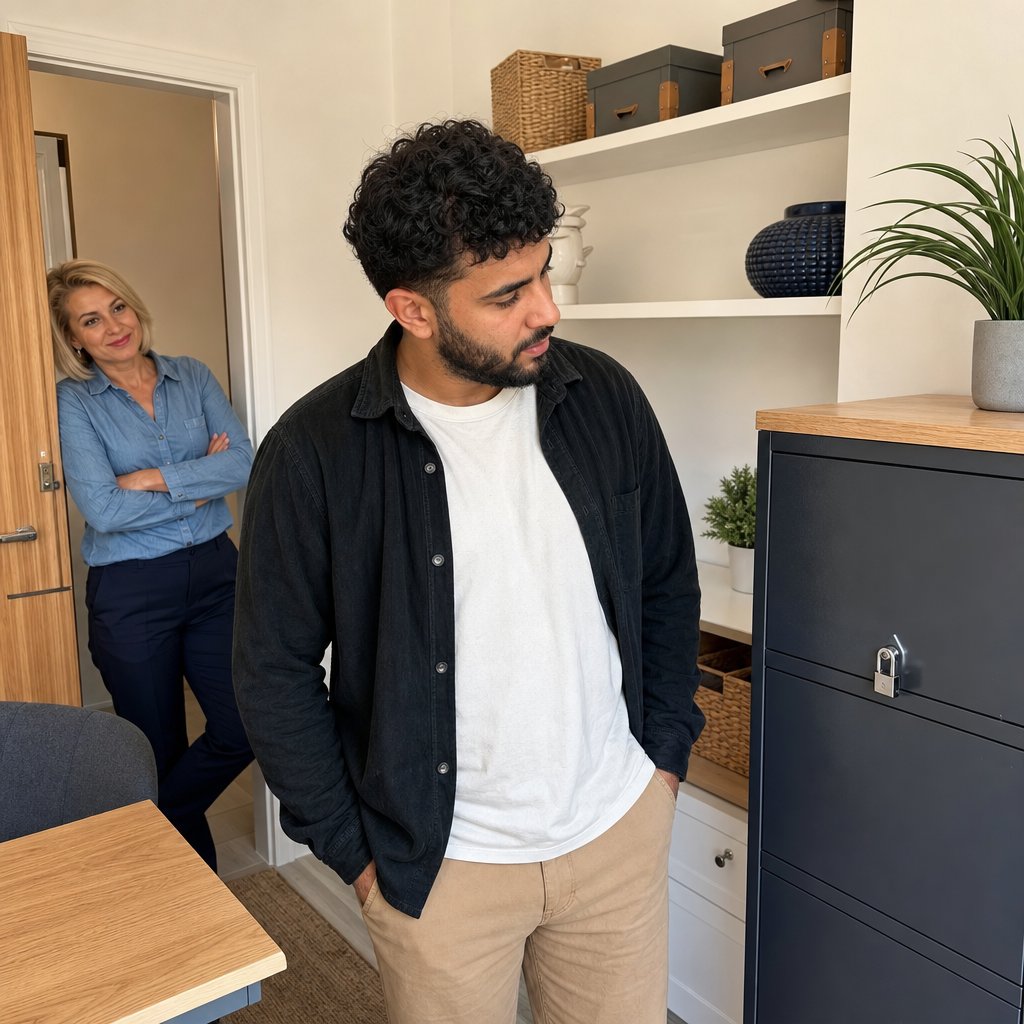
Kendra’s new office used to be my mom’s little sitting room. The one with the armchair that smelled like lavender and the side table where she kept crossword books. Now it was “Kendra’s workspace,” all white shelves and cheerful folders and a fake plant that looked like it had never been touched by dust or life.
I noticed the locked drawer because it didn’t match anything else. A single metal file cabinet tucked under the desk, the top drawer fitted with a shiny little lock. It was the only thing in the room that looked guarded.
I didn’t even try to open it. I just stared at it, and my pulse started thumping in my ears, because suddenly the storage unit bins and the missing frames and the recipe cards all lined up into one ugly, deliberate pattern.
Kendra walked in behind me wearing a crisp chambray button-up, sleeves rolled like she was about to do “real work.” She followed my gaze and let out a laugh that didn’t reach her eyes.
“What’s in there?” I asked.
She leaned against the doorframe, arms crossed, and her smile sharpened. “Boundaries, Ivy.”
“Boundaries?” I repeated, disbelief making my voice louder than I meant.
She shrugged like she was the calm one. “You have a habit of… rummaging. Of fixating. This is my space.”
My face burned. “You mean my mom’s space.”
Her eyes flicked over me, quick and assessing, and she lowered her voice like she was being kind. “Your grief doesn’t get to run this house.”
Then she stepped forward and, with petty precision, tapped the lock with one fingernail—click, a tiny sound that felt like a slap.
And from somewhere inside that drawer, something shifted—paper sliding, or maybe a small object settling—as if it had been listening too.
The Quilt Vanished Overnight
The guest bed looked naked without it. That was the first thing I thought—the bed looked exposed, like someone had stripped the room of its last ounce of warmth.
My mom’s quilt had always been there, folded neatly at the foot. Patchwork squares in faded blues and soft reds, stitches slightly uneven because she did it while watching late-night cooking shows. I used to run my fingers over the seams when I couldn’t sleep, feeling the raised thread like a heartbeat.
Now the foot of the bed was bare. Just a new, too-white comforter Kendra must’ve bought, puffed up like a hotel. The air smelled like sharp detergent instead of the gentle, sun-warmed cotton I remembered.
I marched into the backyard because my brain went straight to her favorite lie: donation. She always said donation like it made her a saint.
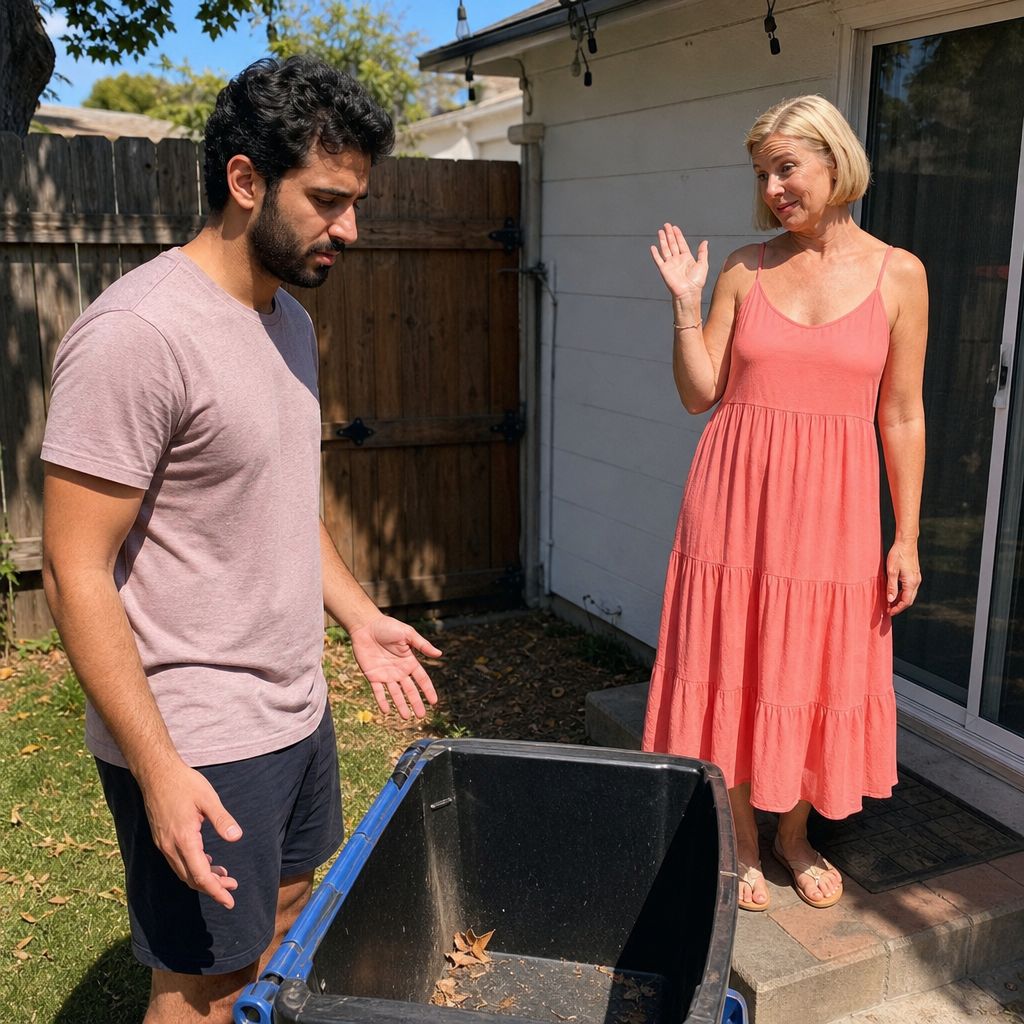
The donation bin by the back gate sat there, lid propped open. Empty. Not a sock. Not a towel. Not a quilt. Nothing but a few dead leaves stuck to the bottom.
Kendra’s voice floated from the patio door behind me. “Oh, that old thing? I donated it. It smelled like the past.”
I turned so fast my vision blurred. “Where?”
She blinked, all innocence. “Somewhere that needed it more.”
“Name the place,” I said, and I heard myself, how sharp I’d gotten, how desperate.
She stepped onto the patio in a coral sundress like she was going to brunch, not gutting my mother’s memory. “Why are you like this?” she whispered, and her eyes went glassy on command. “It’s a blanket, Ivy.”
But the bin was empty. And Kendra’s car trunk had been open earlier that morning, just for a minute, before she shut it too quickly.
The Nick Near The Clasp
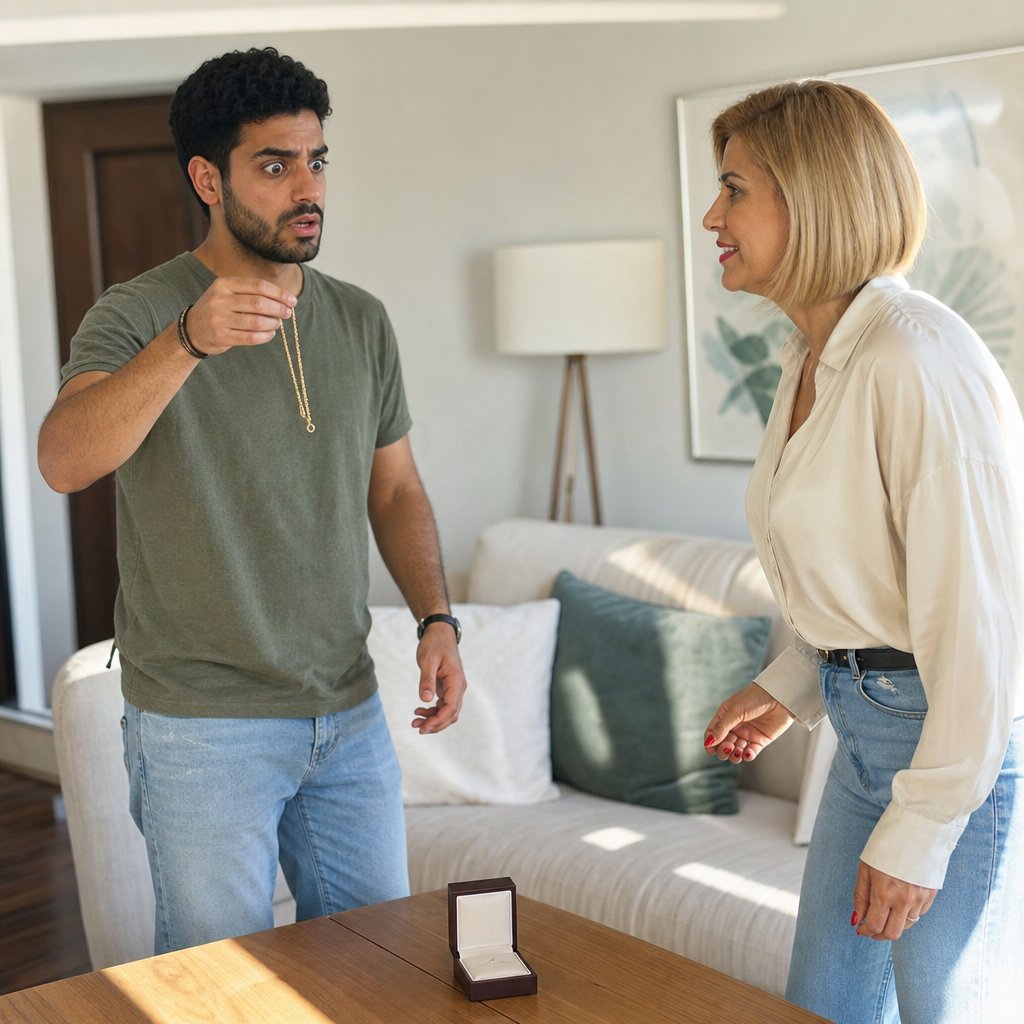
Kendra handed me the little jewelry box like it was a peace offering. Like she was the bigger person. Like I should be grateful she’d decided to be “sweet” after weeks of making me feel crazy.
“I saw this and thought of you,” she said, standing in the living room in high-waisted jeans and a silky cream blouse, her voice soft enough to sound sincere if you didn’t know her. “A fresh start, okay?”
I opened it and my breath caught. A delicate gold necklace lay coiled inside, tiny pendant, simple chain. For a split second, I almost let myself believe it. Almost.
Then I lifted it out and the chain slid over my fingers—cool metal, familiar weight—and I saw it. The tiny nick near the clasp, like a little bite mark. A flaw I knew the way you know a scar on your own skin, because I’d watched my mom fuss with it at the kitchen sink, tongue between her teeth, saying, “It’s fine. It has character.”
My stomach flipped. “This is Mom’s,” I said, quietly at first, because I needed to hear my own voice say it.
Kendra’s smile didn’t move, but her eyes sharpened. “No, it isn’t. I bought it new.”
I held it up between us. The chain trembled. “Then explain the nick.”
She took a step closer, lowering her voice like a warning. “You’re doing that thing again,” she murmured. “Turning everything into a crime scene.”
And right then, I heard my dad’s car door outside. Gravel crunching. Coming in. Perfect timing. Kendra’s expression shifted—softening, preparing—and she glanced toward the front hall like she was about to perform.
Her Tears, His Silence
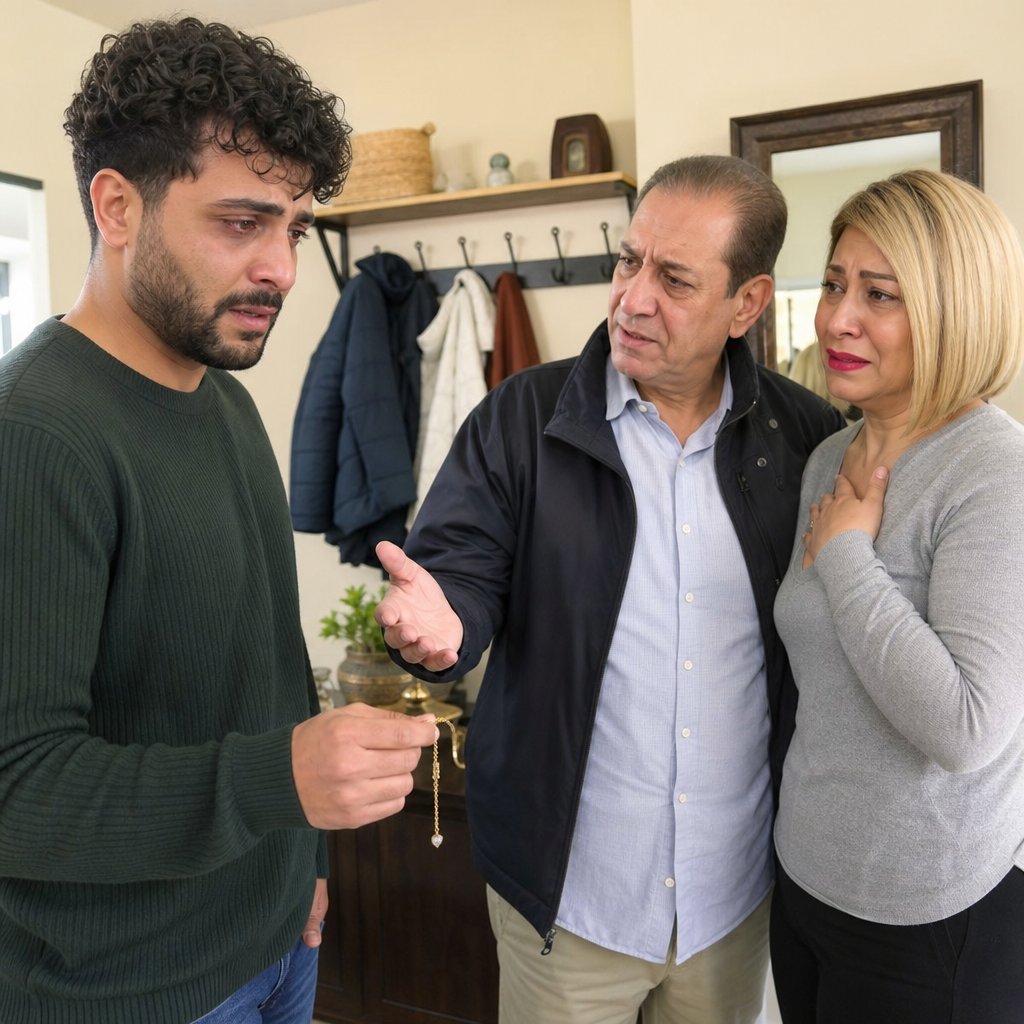
Kendra didn’t even wait for my dad to hang up his coat. The second he stepped into the living room, she inhaled sharply like she’d been holding her breath for hours, and her eyes filled so fast it was honestly impressive.
“I tried,” she said, voice trembling, one hand pressed to her chest. “I tried to do something nice, and she—” She broke off and looked at me like I’d slapped her.
I was still holding the necklace. The chain bit into my fingers. “Dad, it’s Mom’s,” I said. “She’s taking her things and pretending they never existed.”
Kendra turned to him, tears sliding down perfectly. “She’s accusing me of stealing,” she whispered, like the words physically hurt. “Because she needs someone to hate. Because she can’t move on.”
My dad’s face went blank in that way that meant he was retreating somewhere I couldn’t reach. He looked at the necklace, then at Kendra, then at me. The silence stretched until it felt like a rope tightening around my throat.
“Ivy,” he finally said, and my name came out heavy. Not loving. Not protective. A warning label. “Enough.”
I laughed once, sharp and ugly, because what else do you do when your own father hears the truth and chooses the easier lie? “So you’re just… okay with this?” I asked, my voice shaking now. “You’re okay with her erasing Mom?”
Kendra dabbed her cheeks with her fingertips and leaned subtly into my dad’s side, claiming her spot. He didn’t move away.
And then he reached out—not to me—but toward the necklace in my hand, like he was going to take it, like he was going to decide where it belonged.
The Chat I Wasn’t In
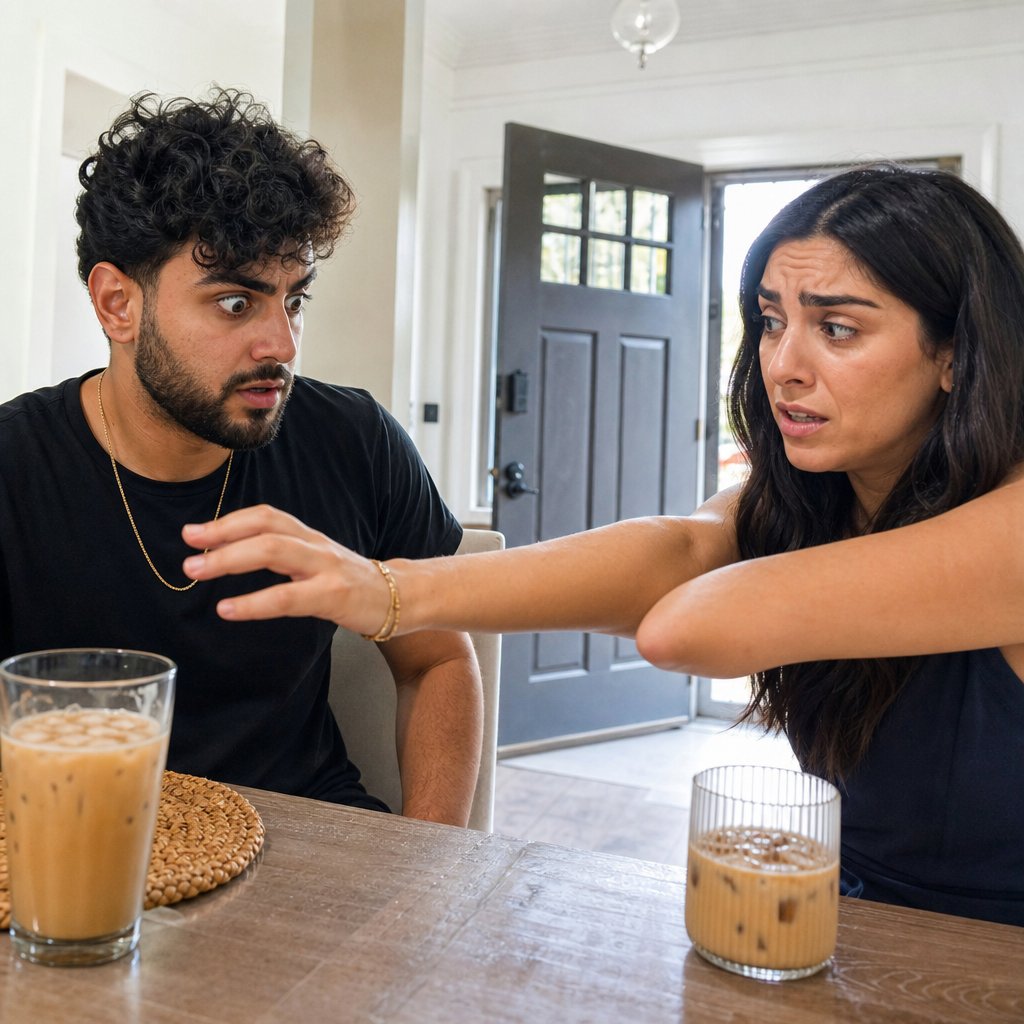
I found out by accident, which is how you always find out you’ve been cut out. My cousin Lina came over with iced coffee and that tense, careful energy people get when they know something you don’t. She kept glancing at me like she was waiting for me to explode.
“What?” I finally asked, and my voice had that brittle edge I hated.
Lina hesitated, then pulled her phone out and set it face-down on the table like it was dirty. “I’m not supposed to show you,” she said, swallowing. “But it feels wrong.”
She flipped it just enough to show me, quick and secretive, her thumb hovering like she could take it back. A family group chat—one I wasn’t in. My name missing like I’d been deleted from the family itself.
I didn’t even need to read every line. The one that punched me straight in the lungs was Kendra’s little joke about turning “the shrine” into “a clean, modern home.” Like my mom’s photos were candles and cobwebs. Like grief was bad decor.
My hands went numb. The room smelled like melting ice and coffee bitterness. Lina’s eyes were wide, apologetic. “They’ve been talking about you,” she whispered. “About how you’re… stuck.”
I stared at the phone and felt something in me shift from hurt into clarity so sharp it almost felt calm. This wasn’t redecorating. This was a campaign.
From the front window, I saw Kendra’s car turning into the driveway, sunlight flashing off the windshield. Lina snatched her phone back like it burned her.
“She can’t know I showed you,” Lina said, panic rising. “Ivy, please—”
The front door handle started to turn.
I Started Documenting Everything
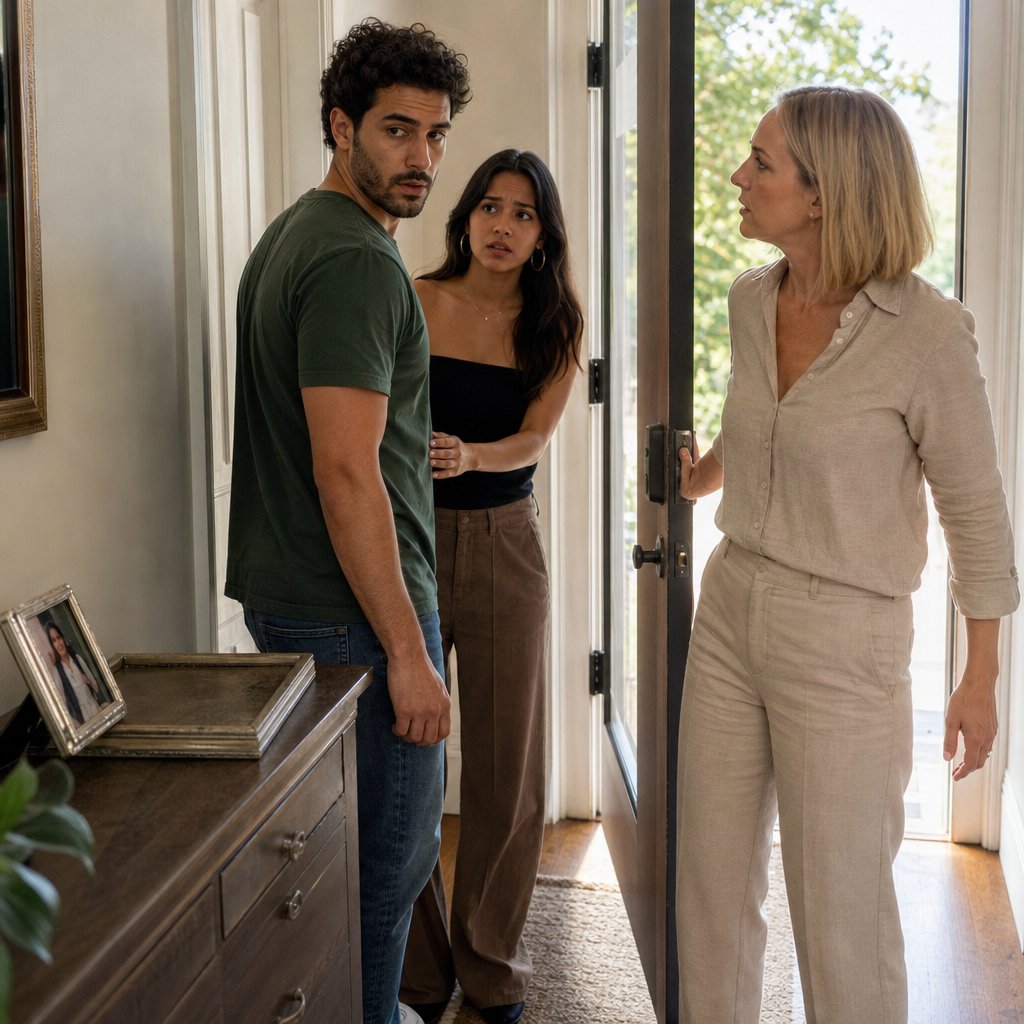
The front door handle turned like someone was testing a weak tooth, and Kendra’s voice floated through the crack like perfume over bleach. “Ivy? Honey, why is the chain on?”
I was in the hallway with Lina, my palms slick, my heart doing that frantic stutter it did when I realized I was about to be the problem in someone else’s story. Lina’s eyes flicked to the framed photo on the console—my mom in a red scarf, smiling like she’d just said something wicked—and then to the empty rectangle of dust beside it where another frame used to be. That clean outline looked obscene, like a body had been dragged away.
“Open up,” Kendra said, still sweet. Sweet like a dentist.
I unhooked the chain and she stepped in wearing crisp linen and that tight little smile that never reached her eyes. She looked past me, straight to the console, like she was doing inventory. “You’ve been… upset,” she murmured, and the way she said it made it sound like a diagnosis.
Lina squeezed my elbow, a silent don’t react. And something in me snapped into cold clarity. If I couldn’t prove what she was doing, I’d be the unstable adult son clawing at ghosts. So I started moving through the house like it was a crime scene—wide shots of walls, close-ups of dusty outlines, the angle of every frame, every shelf. Lina followed, whispering, “Get the corners, get the dates,” like we were building a case.
Kendra watched us from the doorway, arms folded, amused—until her gaze dropped to my hands and sharpened, like she’d realized what I was really doing…
The Keys Under The Sink
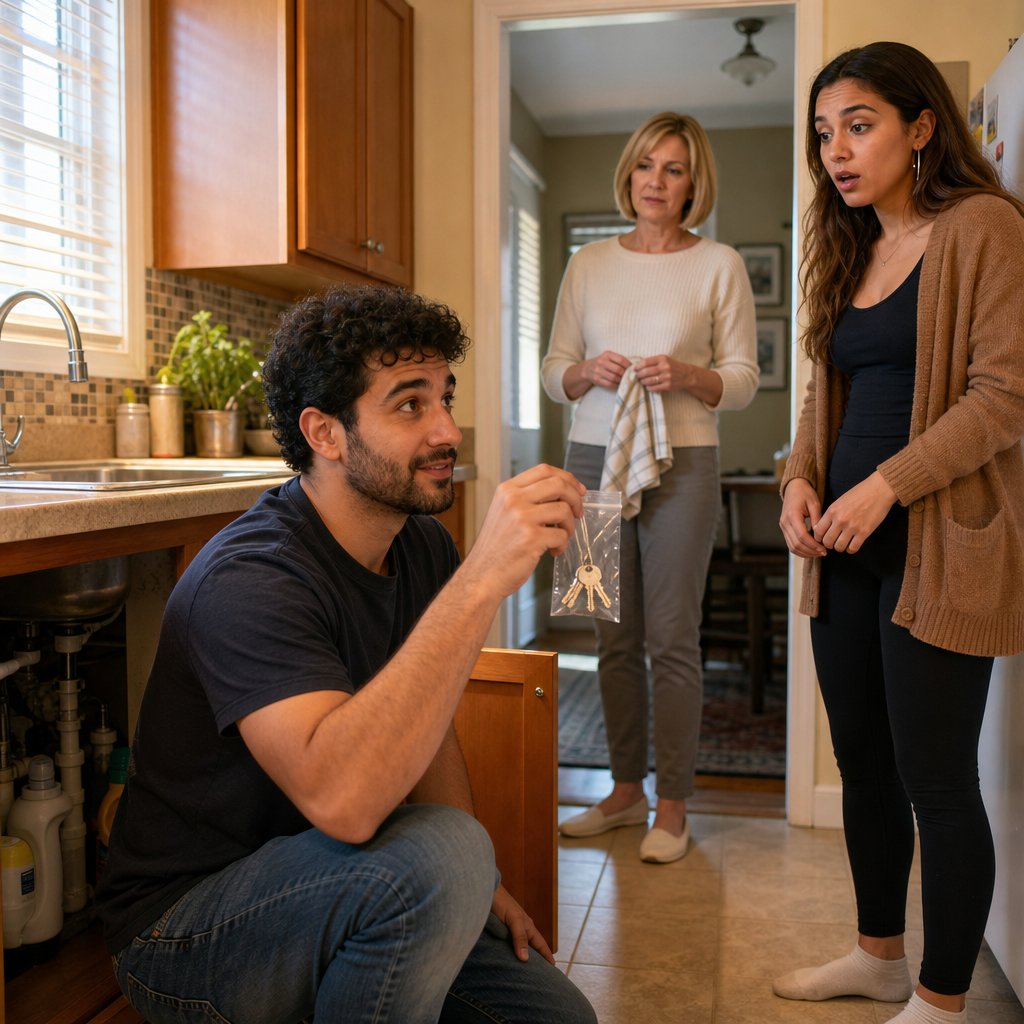
After Kendra floated off to “start dinner,” Lina and I slipped into the kitchen like kids sneaking into a forbidden room. The air smelled like lemon cleaner and something burnt underneath, like she’d scrubbed the truth and forgotten the smoke.
I knelt and opened the cabinet under the sink. The pipes were wrapped in that cheap foam insulation, and there were two half-empty bottles of drain cleaner lined up like soldiers. Lina held her breath like she expected a rat to jump out.
Instead, my fingers hit something taped to the underside of the cabinet—duct tape, thick and fresh. I peeled it back and a plastic bag crinkled in my hand. Inside was a second set of house keys, metal bright like they’d never been used, the kind you’d cut in a hurry.
My stomach dropped. Lina’s face went pale in a way that made me feel less crazy and more furious. “Why would she tape keys under here?” she whispered.
We barely had time to stand before Kendra appeared in the doorway with a dish towel over her shoulder, eyes flicking instantly to my hands. “What are you doing down there?” she asked, too casual.
I held the bag up like a dead mouse. “These.”
Kendra didn’t blink. “Oh, those. Just in case.”
“In case of what?” I said, voice tight. “And who are they for?”
She smiled, slow. “Don’t be dramatic, Ivy.” Then her gaze slid to Lina—like she’d just noticed an audience—and her tone changed. “Put them back.”
My hand closed around the keys, and the metal bit into my palm as Kendra took one step closer…
The Neighbor’s Casual Bombshell
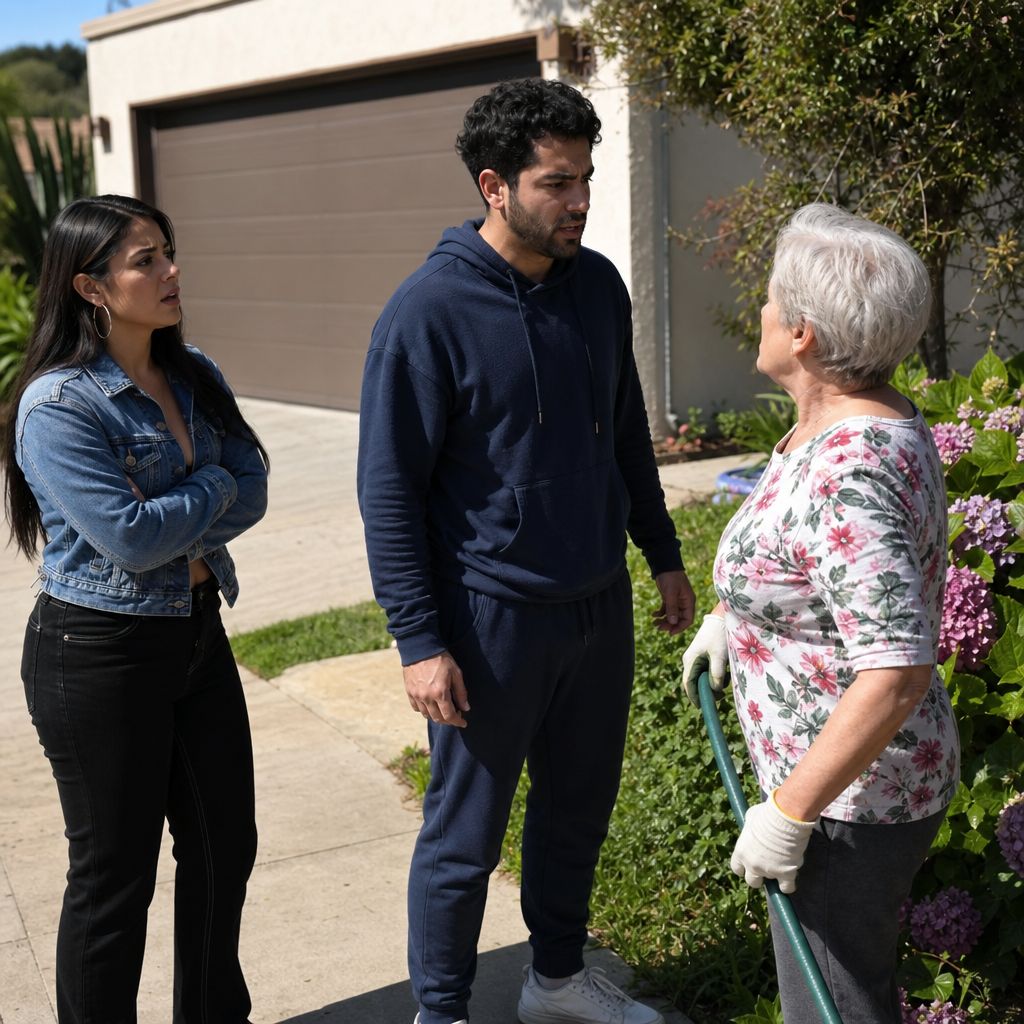
The next morning I walked outside with Lina to “get air,” which was code for: I couldn’t breathe in that house without feeling my mom being erased in real time. The sky was bright, the kind of day that makes grief feel rude.
Mrs. Donnelly from next door was watering her hydrangeas, wearing rubber gloves up to her elbows like she was ready for surgery. She waved at me like nothing in my world was on fire. “Morning, sweetheart. Your dad doing okay?”
“Physical therapy today,” I said automatically, and then I heard myself add, “Did you… see anyone here yesterday?”
She tilted her head, thinking. “Oh! Yes. Kendra had help.”
I went still. Lina’s hand hovered near my back, like she was bracing for impact.
Mrs. Donnelly smiled, pleased to be useful. “A nice man. Tall. Dark hair. He carried boxes out to a car. Very polite. I thought it was your cousin at first.”
The air turned sharp in my lungs. “When was this?”
“Oh, sometime last week—when your father was gone. I remember because I heard the garage door twice.” She leaned in a little, lowering her voice like it was gossip and not a felony. “Kendra said she was just ‘decluttering.’”
Decluttering. Like my mom’s life was lint.
Lina’s eyes met mine, and in them I saw the same ugly thought: someone else had been inside. Someone with keys. Someone carrying my mother out in cardboard.
I forced a smile at Mrs. Donnelly, thanked her, and walked back toward the driveway with my jaw clenched so hard it hurt. The garage door sat there, innocent and closed, and I suddenly needed it open like I needed oxygen…
The Attic Hatch Was Sealed
I didn’t go through the garage. I went for the attic, because if Kendra was moving things, she was hiding them where she could still control the story. The hallway ceiling hatch had a white plastic zip-tie looped through the latch like a cheap security system—new, too clean to belong in a house that old.
“She zip-tied the attic?” Lina whispered, like she couldn’t believe the audacity. I could. I could believe anything at that point.
I grabbed a pair of kitchen scissors and cut through it. The plastic snapped with a sound that felt like crossing a line. Dust puffed down onto my hair and shoulders, gritty and stale, and I tasted insulation in the back of my throat.
The pull-down ladder groaned under my weight as I climbed. The attic was dim and hot, the air thick with old cardboard and cedar. And there, shoved behind a stack of holiday bins, was my mom’s cedar chest—the one she kept at the foot of her bed. The one that smelled like her sweaters and lavender when I was little.
It had a brand-new padlock on it. Shiny. Deliberate.
I yanked it, hard. It didn’t budge. Lina climbed up behind me, eyes huge. “Why would she lock it?”
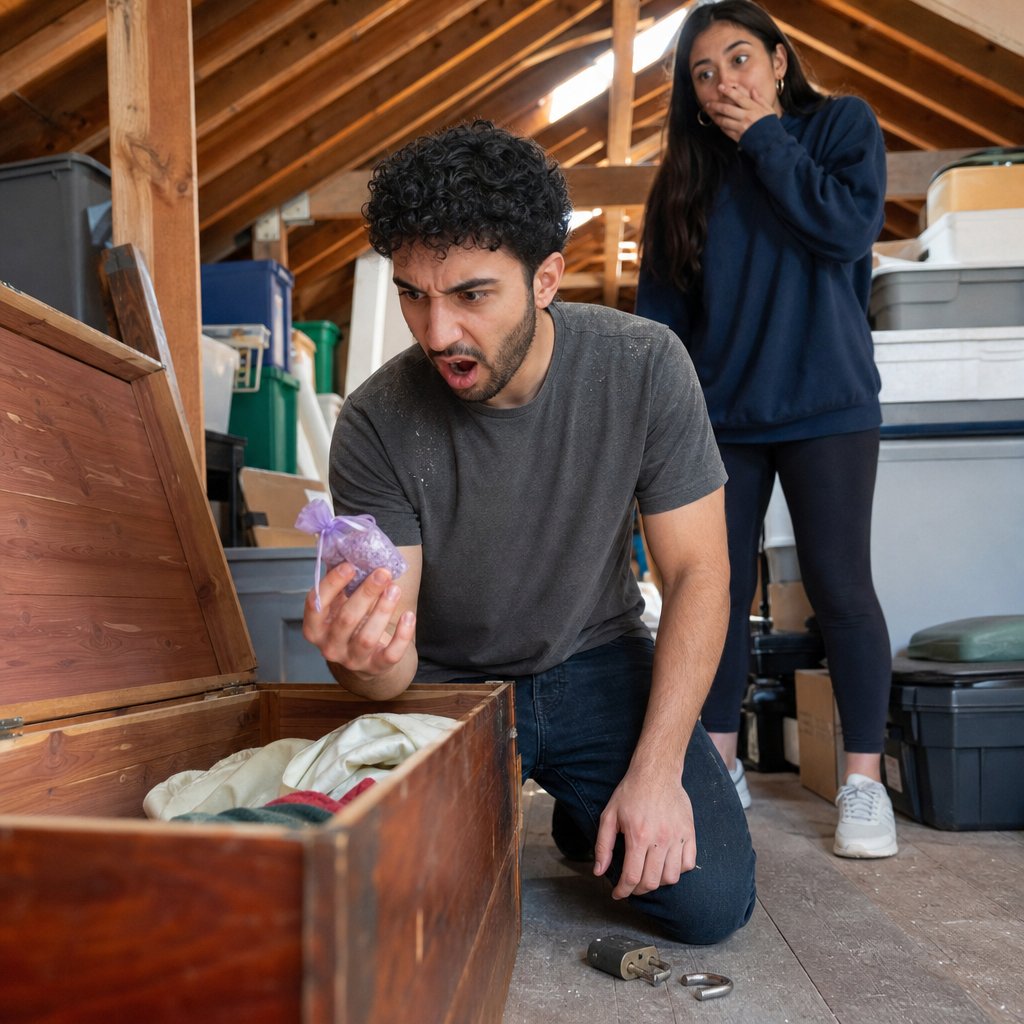
I found a pair of bolt cutters in an old tool bag and my hands shook as I snapped the lock. The metal gave with a harsh crunch that echoed in the rafters.
I lifted the lid.
The chest was empty. No letters. No photos. No scarves. No jewelry box. Just one lavender sachet sitting dead center like a placed offering, purple faded, perfectly neat—like a calling card.
My throat closed. Lina covered her mouth, and I could hear my own blood in my ears. I picked up the sachet and it released that familiar scent, and my eyes burned with rage because it felt like she’d left me a joke.
Behind us, the attic ladder creaked again—slowly, deliberately—like someone else had started climbing…
Dad Asked Me To Stop
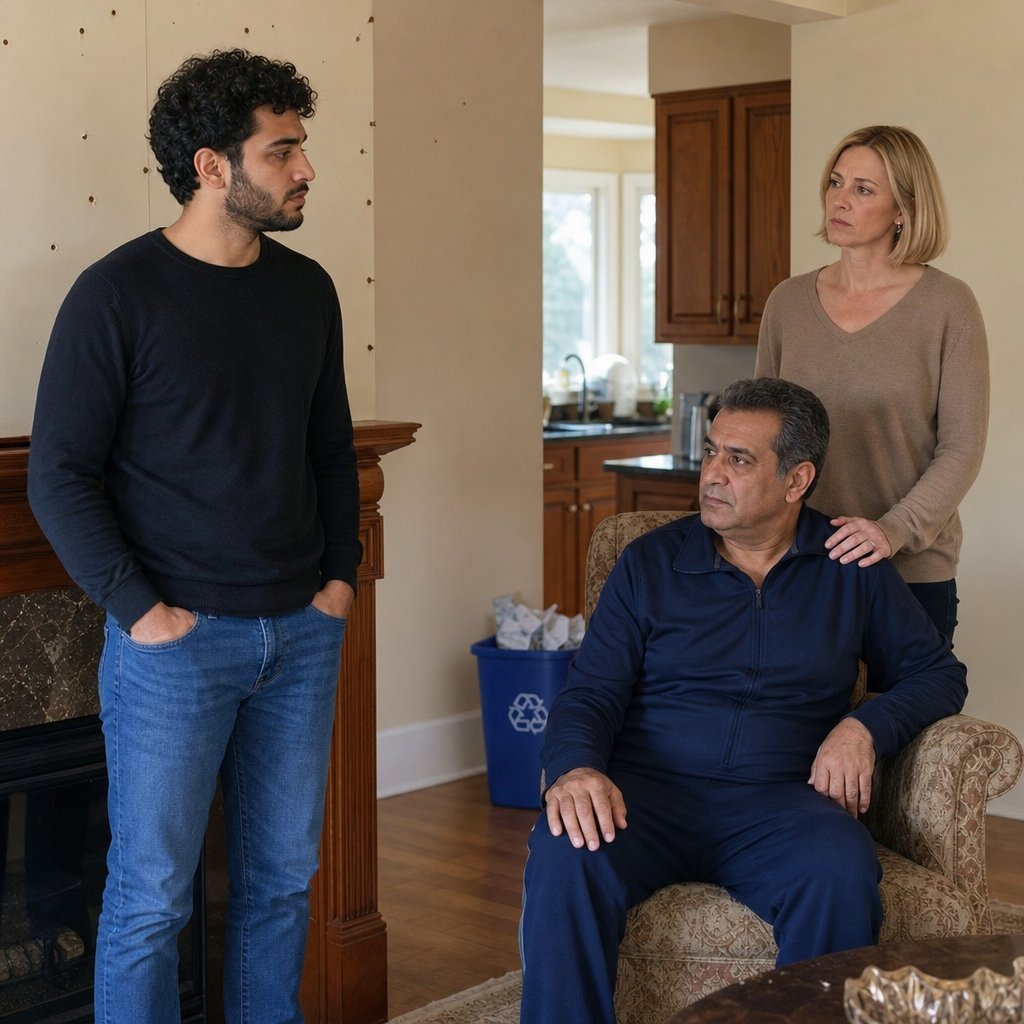
Dad came home from physical therapy looking wrung out, like his bones were tired of being bones. He lowered himself into the living room armchair with a wince, the recliner squeaking in protest. Kendra hovered behind him, one hand on his shoulder like she was the nurse and I was the infection.
I stood by the mantel where my mom’s wedding photo used to be. The wall still had two tiny nail holes. I’d started noticing every missing nail like it was a missing tooth.
“Dad,” I said, trying to keep my voice steady, “Mom’s cedar chest was moved to the attic. It was locked. It was empty.”
Kendra’s face arranged itself into offended sadness so fast it was almost impressive. “Your mother never had anything valuable,” she said softly, like she was doing me a favor by correcting my memories. “This obsession is… unhealthy.”
I laughed, sharp. “Unhealthy is zip-tying the attic hatch.”
Dad’s eyes flicked to Kendra, then back to me. He looked tired in a way that scared me—tired enough to accept whatever version of reality caused the least noise. “Ivy,” he said gently, “please. Stop digging. It’s upsetting Kendra.”
There it was. The sentence that proved she’d done it: she’d made herself the person who needed protecting, and me the threat. I watched Dad’s hand squeeze her fingers, and something inside me went cold.
“So I’m just supposed to… what?” I asked. “Pretend Mom didn’t exist?”
Kendra let out a small, controlled sob, the kind that made Dad’s shoulders tense with guilt. “I’ve tried so hard,” she whispered, staring at the carpet like she couldn’t bear my cruelty.
Dad reached for her, not for me. “Enough,” he murmured, eyes on the floor. “I can’t do this right now.”
And I realized in one brutal second: she was cutting me off from my only ally, one gentle request at a time.
My gaze slid to the recycling bin by the kitchen door—overstuffed, a corner of crumpled paper peeking out—and I felt a sudden, stupid certainty that something in there was going to hurt me…
The Receipt She Forgot
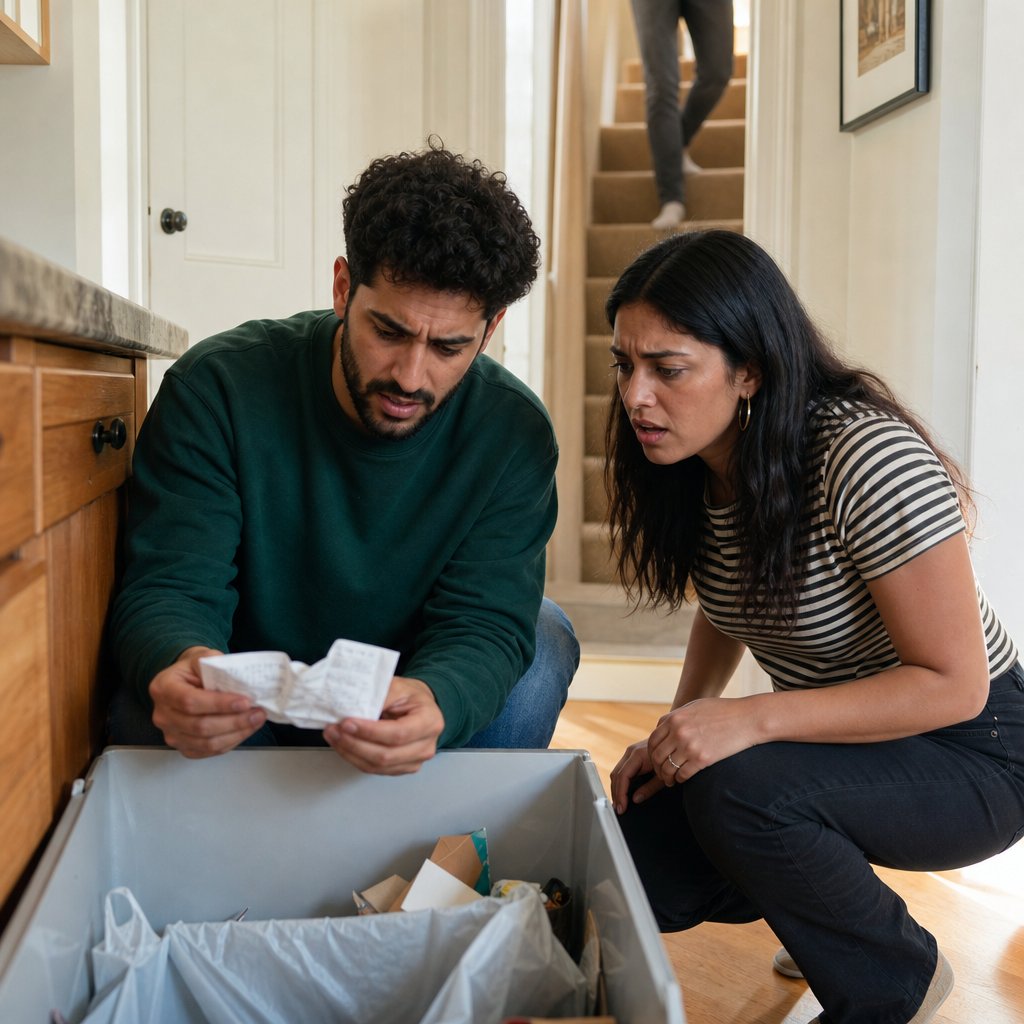
I waited until Kendra went upstairs to “lie down” from the emotional toll of being confronted with her own behavior. Dad had fallen asleep in the armchair, mouth slightly open, the TV remote loose in his hand like he’d dropped the fight too.
Lina and I crouched by the recycling bin like we were about to commit a crime. The bin smelled like old coffee grounds and citrus peels. My hands shook as I pushed aside a stack of flyers and rinsed-out jars.
There it was—one crumpled receipt, twisted tight like someone had panicked and balled it up on instinct. I smoothed it against my thigh, flattening it with my palm until the creases gave.
Consignment payout. Under Kendra’s name.
My stomach did that sick drop again when I saw the item line: vintage gold locket, engraved.
I stared so hard my eyes watered. My mom’s locket wasn’t just jewelry. It was the one Dad gave her when I was born, engraved with a date he still claimed he could never forget. He’d told me—sworn to me—“It’s somewhere safe, habibi. I put it away.”
I could practically feel the weight of it in my hand from childhood, the way the metal warmed against skin. And now I was holding proof that someone had turned it into cash, like it was nothing but scrap.
Lina’s whisper was razor-thin. “Ivy… that’s her locket, isn’t it?”
I nodded, throat tight, and folded the receipt carefully like it was evidence in a trial. Upstairs, a floorboard creaked. Not a settling creak—footsteps.
I slid the receipt into my pocket, breath caught, as the sound moved closer to the stairs…
The Apology Dinner Trap
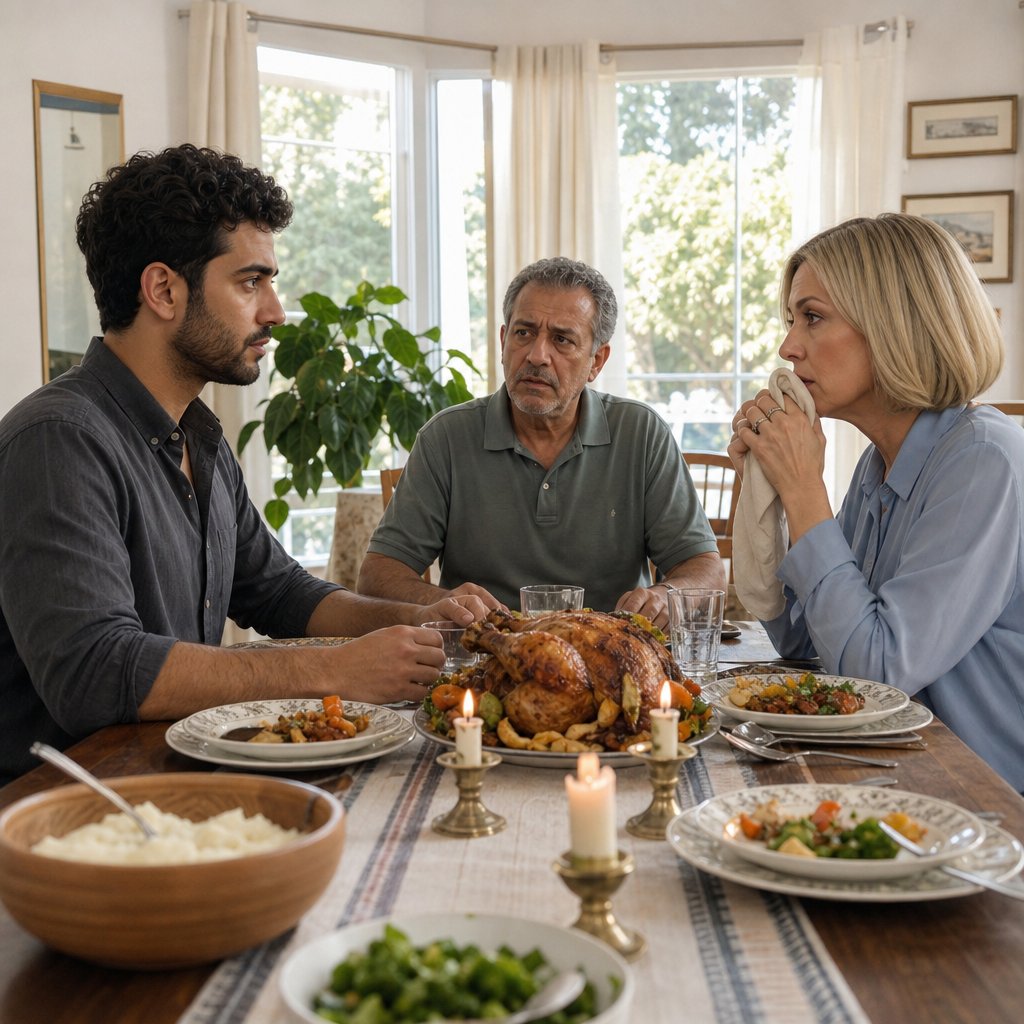
Kendra hosted an “apology dinner” like she was planning a press conference. The table was set with cloth napkins, real candles, and those little water glasses she only used when she wanted to look like the bigger person. The smell of roasted chicken filled the dining room, rich and heavy, like comfort with a hook in it.
Dad sat at the head of the table, shoulders slumped, trying to smile through pain. I sat across from Kendra, my receipt burning a hole in my pocket like a secret weapon.
She lifted her wineglass and gave me a trembly look. “I’m sorry if I made you feel like your mother didn’t matter,” she said, voice perfectly pitched for Dad to hear. “I just want peace in this house.”
I nodded slowly, pretending. “Peace sounds great.”
Kendra’s shoulders loosened, just a fraction. She thought she’d won. She reached for the serving spoon and, in that moment of relaxed triumph, she slipped.
“I’ve been trying to keep things organized,” she said, almost chatty now. “Between the attic and the storage unit—”
The spoon paused midair. Her eyes snapped to mine. Too late. The words hung there like smoke.
Dad blinked. “Storage unit?” he repeated, confused.
Kendra laughed too brightly. “Oh, it’s nothing. I didn’t think Ivy knew about it.”
My pulse roared in my ears. She didn’t think I knew. Meaning it was real, and it was hers, and it was something she’d been keeping out of Dad’s line of sight.
I set my fork down carefully, because my hands were suddenly dangerous. “What storage unit, Kendra?” I asked, voice almost calm.
She stared at me over the candle flame, and for the first time her smile looked… cornered.
Dad’s gaze moved between us, slow and worried, like he could feel the temperature change but didn’t know where the fire was coming from.
Kendra dabbed her mouth with a napkin, buying time. “It’s just… for overflow,” she said.
And then she added, too fast, “You don’t need to go there.”
Inside The Storage Unit
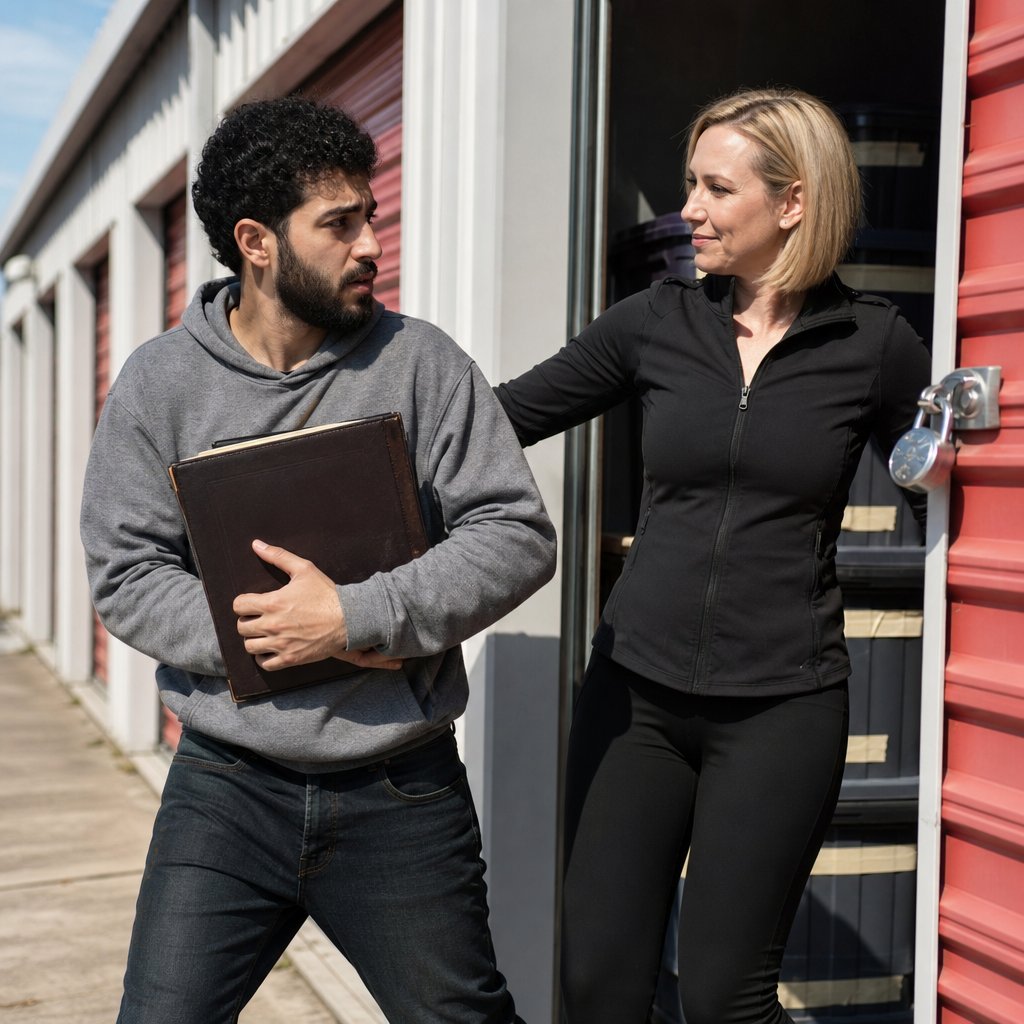
I followed her two days later, far enough back to hate myself and close enough to see her lies breathe. She wore a black zip-up jacket and leggings, hair slicked smooth, sunglasses like armor. I kept my head down, hoodie up, hands jammed in my pockets to keep from shaking.
The storage facility smelled like hot asphalt and old dust. Rows of metal doors sat like clenched teeth. Kendra walked with purpose, like she belonged there, like she’d done this a hundred times.
She stopped at a unit near the end, pulled out a key ring, and I felt my whole body go cold when I saw it: the same brand of padlock as the one on the attic chest. Same shine. Same cheap certainty.
The lock clicked open. The door rattled up.
Inside were plastic bins stacked neatly, each one labeled in thick marker. My vision tunneled as I read them from where I stood hidden between two units: M. HART—PHOTOS. JEWELRY. And then the one that made my throat close: DAD’S PAPERS.
She wasn’t just erasing my mom. She was controlling my father.
Kendra stepped inside and turned her back. I moved fast, heart hammering, slipped into the shadow of the doorway and grabbed the first album I could reach—heavy, leather-bound, familiar. I tucked it under my arm like I was stealing my own childhood back.
As I turned to go, the unit door squealed slightly. I froze.
Kendra was standing right there, blocking the exit, sunglasses off now. Her eyes were bright with something like delight. She looked at the album under my arm and smiled like she’d been waiting for this exact picture.
“You really want a war,” she said softly, “in your father’s recovery year?”
My mouth went dry. Her hand lifted—slowly—toward the padlock, like she could close me in with all her secrets.
The Intervention She Staged
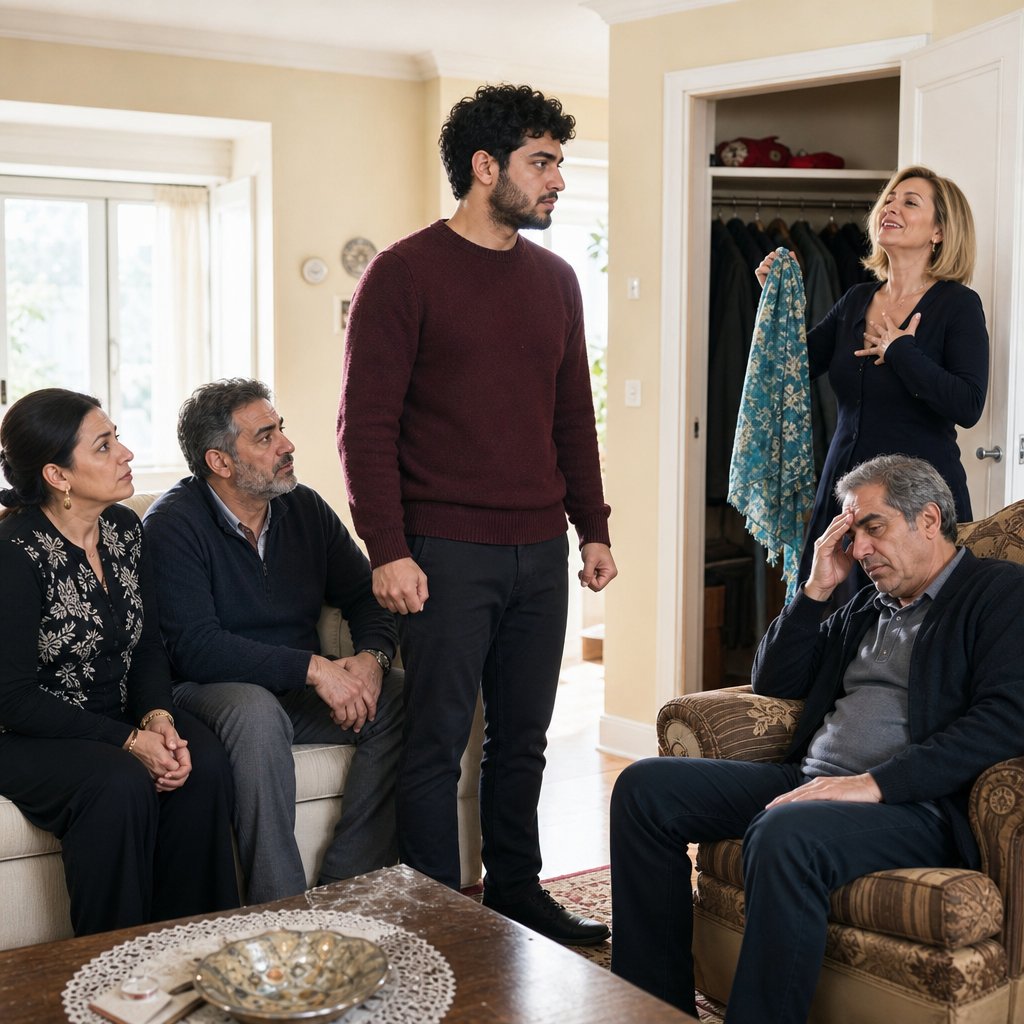
Kendra didn’t need to trap me in the storage unit. She trapped me in the family.
Three days later, I walked into the living room and found Dad’s siblings sitting in a tight semicircle like a jury—Aunt Rania with her sharp eyeliner and sharper mouth, Uncle Samir with his prayer beads looped around his fingers, both of them wearing that concerned expression that always meant someone had been talking about me.
Kendra stood by the coffee table with a tissue in her hand, pale and trembling, like she’d survived something. Dad sat in his armchair, posture guarded, eyes already tired. The air smelled like strong coffee and lemon furniture polish.
“We’re worried about you,” Aunt Rania said, voice gentle in the way that still felt like a slap.
Kendra pressed the tissue to her eye. “I didn’t want to say anything,” she whispered, looking at Dad like he was her only safe place. “But things have been… disappearing. And I don’t want to accuse anyone, but…”
She let the sentence dangle and everyone’s eyes slid to me like magnets.
My chest went tight. “You think I’m stealing?” I asked, incredulous.
Uncle Samir sighed like I’d proven his point by speaking. “Your grief is making you act out,” he said softly. “Maybe you need help.”
Then Kendra did it—the performance. She walked to the coat closet and opened it with a dramatic little gasp. “Oh!” she cried, pulling out my mom’s scarf, the one with the teal threads that always caught the light. She held it up like she’d just found a missing child. “See? It was here the whole time. I told everyone, I’m sure it’s just misplaced.”
My stomach churned because I knew exactly where that scarf had been last: folded in the cedar chest before it went empty.
Dad looked relieved, like this little magic trick erased the bigger question. Aunt Rania nodded at Kendra like she was a saint. And I stood there, suddenly aware that I had an album hidden at Lina’s apartment and a receipt in my drawer—and if I exposed Kendra now, it would look like I was scrambling to cover my own theft.
Kendra’s eyes met mine over the scarf, and her smile said: Go ahead. Make yourself the villain.
My fingers curled into fists as Dad murmured, “Ivy… please,” and I felt the moment where I had to decide whether to go nuclear…
My Final Leverage Pile
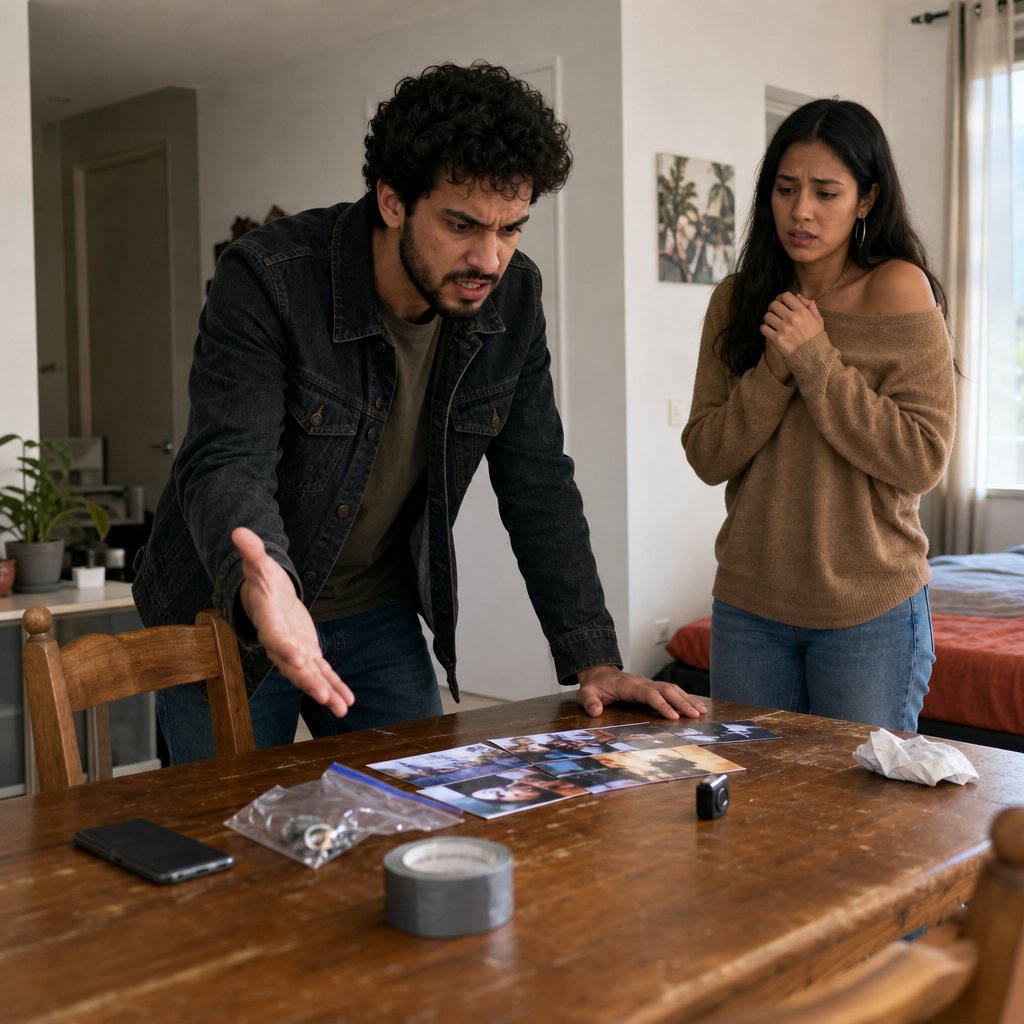
I stopped trying to convince anyone with my voice. I built a stack of truth so heavy it could crush her act.
I set everything on my dining table at Lina’s place because I didn’t trust a single drawer in my dad’s house anymore. The wood was scratched and warm under my forearms, and the whole room smelled like Lina’s cinnamon candle trying—and failing—to soften the rage in my chest.
First: the spare keys from under the sink, still in the plastic bag, the duct tape stuck to it like a dirty fingerprint.
Second: the consignment payout receipt with Kendra’s name, the words vintage gold locket, engraved burned into my brain. I didn’t need Dad to believe me anymore—I needed him to see it.
Third: the footage. Not from the house—because I knew better than to put anything where she controlled the narrative. I’d set a decoy: a cheap ring in a dish by the entryway, and a tiny camera angled just right. Kendra’s hand slid into frame like she owned the air, lifted it, pocketed it, smooth as breathing.
Lina watched it once and went dead quiet. “Oh my God,” she whispered, like she’d finally met the real Kendra.
I had also laid out printed photos of the matching sales listings I’d found—cropped, no text visible, just unmistakable shapes and engravings, placed beside my own photos of Mom wearing them years ago. A pattern, not an accident.
I stared at the pile and felt something settle in me: not grief, not panic—precision.
“We do this now,” I said, already reaching for my jacket. “We go to Dad. We demand the storage unit opened before she can move anything.”
Lina swallowed hard. “And if she says you planted it?”
I looked at the keys again—my proof she’d let someone else in—and I realized the only way to win was to force it into daylight, in front of witnesses, before she could burn the whole story down.
As we headed for the door, my phone buzzed in my pocket—one vibration, then another—and Lina’s face tightened like she already knew who it was…
Would you confront her about the secret storage unit?