



No, She Doesn’t Know Yet
“No, she doesn’t know yet.”
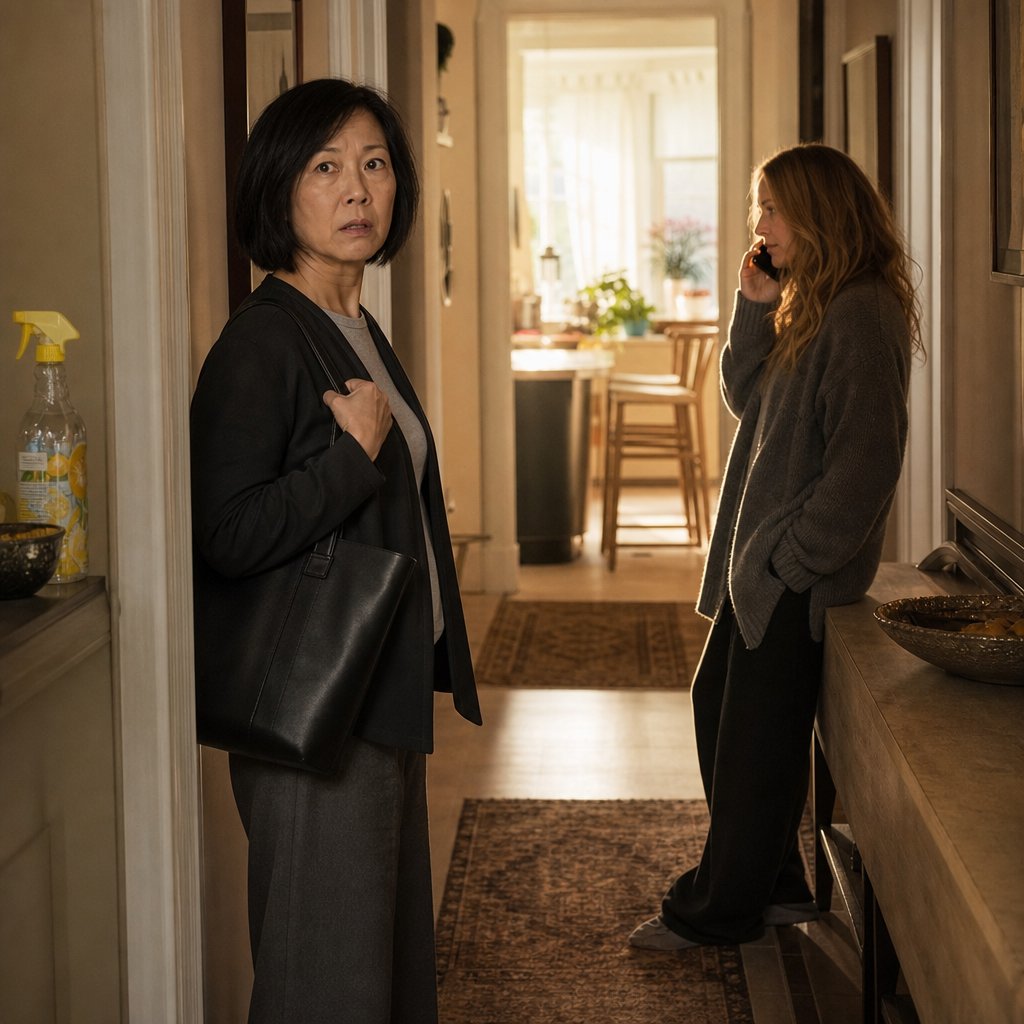
Mara whisper-laughed it into my husband’s phone like my entire life was a surprise party I wasn’t invited to. I froze in the hallway with my work tote digging into my elbow, the strap squeaking as my grip tightened. The house smelled like lemon cleaner—sharp, too bright—like someone had scrubbed away evidence.
Her voice dipped softer, intimate. “Just… tonight. I’ll handle it.”
I could see her from the corner of my eye: Mara—mid-30s, white, long honey-blonde hair always in that effortless wave, big blue eyes that made people instantly trust her—leaning against the console table like she owned it. My console table. She wore my soft gray cardigan, sleeves pushed up like she’d been cooking or comforting someone. Like she belonged in my fabric.
Then she turned and caught me standing there.
Her smile snapped on so fast it felt violent. She lifted the phone away from her ear, finger over the mic, and mouthed, Oh my God, like I’d walked in on her crying, not plotting. In the background, I heard my husband’s muffled voice—Ethan, 50, tall and broad-shouldered with salt-and-pepper hair—asking something I couldn’t make out.
Mara’s eyes flicked over my face, calculating, and she said into the phone, sweet as syrup, “I’ll call you back.” She didn’t hang up right away. She stared at me like she was waiting to see which version of me I’d be.
And then she brought the phone back to her ear anyway.
The Pantry She Rewrote
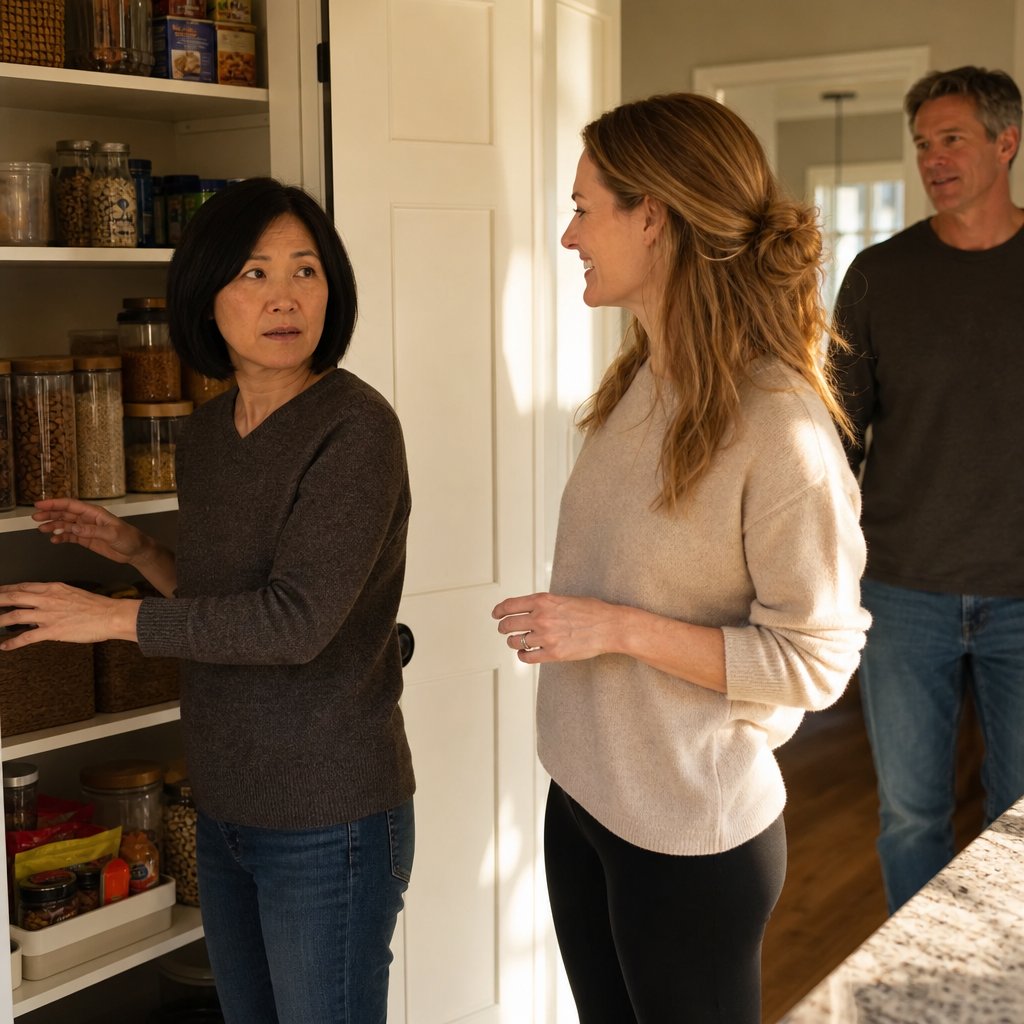
The next morning, Mara was in my kitchen like a saint in a commercial—barefoot, cheeks pink, eyes glossy with gratitude. “I don’t know how to thank you,” she whispered, pressing a hand to her chest as if my spare room had saved her life. She wore an oatmeal-colored sweater and soft black leggings, hair pulled into a loose knot that made her look fragile on purpose.
I wanted to be the kind of woman who didn’t flinch at someone else’s tears. I told myself: she’s my friend, she’s going through it, this is what you do.
But within days, she started “helping.” It was always framed like kindness—her hands moving fast, little satisfied hums as she worked. One afternoon I opened my pantry and just… stopped. My rice was gone from the bottom shelf. My tea tins had been stacked like a display. The spices were lined up alphabetically, labels turned out, like a stranger had staged my habits.
“Isn’t it better?” she chirped, popping her head around the cabinet door.
I reached for my coffee filters—my blue-and-white box I always kept on the left—and found an empty space. Not even crumbs of paper. I checked the drawer. Then the other drawer. Then under the sink, because suddenly I was the kind of person who looked under the sink for coffee filters.
Mara watched me search with that patient smile people use on toddlers. “Oh! I moved those,” she said lightly. “You were keeping them in a weird spot.”
Weird spot. In my own kitchen. In my own house.
I heard Ethan’s footsteps behind me and Mara’s gaze slid past my shoulder to him, her expression softening into something that looked like shared understanding—and I realized she’d been waiting for an audience.
“Mara Thinks” Became Law
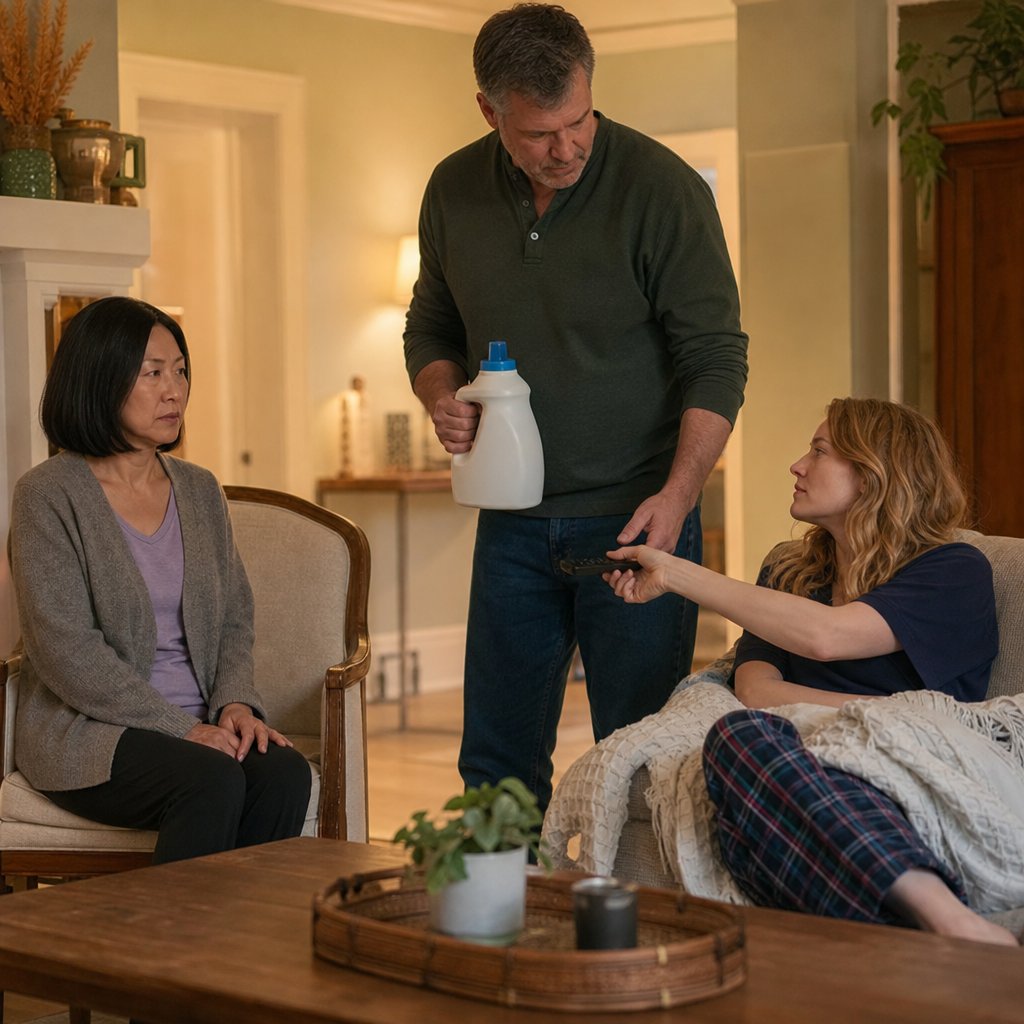
It didn’t happen all at once. It happened in those tiny, casual sentences that are impossible to argue with without sounding insane.
“Mara thinks we should switch to the gentler detergent,” Ethan said one night, holding up the laundry bottle like it was a board meeting proposal. We were in the living room, and Mara was curled into the corner of the couch in an oversized navy T-shirt and plaid pajama pants, blanket tucked under her chin like she was a child we’d adopted. The lamp threw warm light across her face, making her look softer than she had any right to.
I stared at him. “Mara thinks?”
Ethan didn’t even hear the tone. “Yeah. She said your skin’s been irritated lately. Remember you mentioned that?”
I hadn’t mentioned it to him. Not once. I felt it like a pinprick behind my ribs.
Mara’s eyes flicked up, wide and innocent. “I just noticed you scratching your wrist,” she said quickly, like she couldn’t help being observant. Like caring was her reflex and my discomfort was proof I needed her.
Then it got worse. “Mara thinks you’ve been working too much.” “Mara thinks you should let things go.” “Mara thinks you take things personally.” Each time, Ethan said it with that calm, reasonable voice he used when he wanted to sound like the adult in the room.
I started hearing myself in my own head, trying to translate: Mara told him. Mara told him about me. Mara’s been narrating my life to my husband like I’m a character she can edit.
And the part that made my stomach roll was the way Ethan looked at her when he said it—like she was the sane one, the helpful one, the one with the clearer view of me.
Mara reached for the remote on the coffee table, her fingers brushing Ethan’s hand—accidental, light—and he didn’t move away.
The Key That Wasn’t Mine

The extra key showed up like a dare.
I was grabbing my car keys off the garage hook when I saw it—one more metal shape hanging there, gleaming like it had been polished. Same ring style as ours. Same little black fob. It even hung at the same angle, like it had always belonged.
I stood there longer than I want to admit, listening to the refrigerator hum through the wall and the faint drip of the utility sink. My fingers touched the new key and it was cold, heavier than I expected, like it had weight beyond metal.
“Ethan?” I called, trying to keep my voice normal.
He wandered in wearing his work shirt half-tucked, distracted, already thinking about his day. “What?”
I held up the key. “Where did this come from?”
He squinted like I was asking him to identify a random pebble. “No idea.”
And then—of course—Mara appeared in the doorway behind him, hair down in glossy waves, wearing crisp white sneakers and a pale green sundress that made her look like she belonged in a farmers market photo. She leaned her shoulder against the frame, smiling like she’d walked into a sitcom.
“Oh my God,” she laughed, light and musical. “It’s a key. Don’t panic.”
“I’m not panicking,” I said, too fast.
She stepped closer and plucked it from my hand like I was being silly. Her nails were freshly done, a soft pink. “You’re being precious about metal,” she said, still laughing. “Maybe Ethan made a copy and forgot. Men do that.”
Ethan shrugged like that was plausible. Like I was the weird one for caring who could enter my house.
Mara turned the key over in her fingers, eyes narrowing for a split second—recognition, satisfaction—then she slipped it onto the hook again, exactly where it had been, like she was placing a bookmark.
Her Hands On My Time

I missed one appointment. One.
It was a Wednesday, and I’d been running on caffeine and adrenaline, the kind of day where your brain feels like it’s wrapped in cotton. I realized too late—standing in the grocery aisle with a carton of eggs sweating in my hand—that I’d blown past my dentist appointment. My chest tightened with that familiar shame: the working-mom scramble, the too-muchness, the constant small failures.
When I got home, Mara was already waiting at the kitchen island like she’d been rehearsing. She wore a fitted black tank top and high-waisted jeans, hair glossy and down, lipstick just enough to look “put together” without looking like she tried. She slid a mug of tea toward me like a therapist.
“You’ve been so overwhelmed,” she said gently. “Let me handle your calendar for a while.”
I actually laughed. “No. That’s… no.”
“Just the reminders,” she pressed, voice soft. “So you don’t have to hold everything in your head. It’s what friends do.”
Ethan, of course, chimed in from the doorway like a referee who’d already picked a side. “It might help, babe. You’ve been forgetful lately.”
Forgetful. Like I was declining. Like I needed supervision.
I told myself I was being paranoid. I told myself I was tired. I told myself it was easier to let her “help” than to fight about it and look dramatic. So I handed over information I shouldn’t have—dates, times, routines—watching her nod like she was taking custody of my life.
Two days later, I stood in the laundry room, pulling warm towels from the dryer, and realized something was wrong: my phone hadn’t buzzed all morning. No reminders. No pings. Just silence.
In the kitchen, Mara’s purse sat on the counter, unzipped, and I heard a faint vibration from inside it—steady, insistent—like my life was calling for me and landing in her lap instead.
They Thanked Her For Hosting

The group chat went quiet around me in a way that felt deliberate.
It wasn’t that my friends stopped being my friends. It was worse: they started acting like I was fragile glass. Replies came slower. Plans “shifted.” People used that careful voice on the phone—bright, but too controlled—like they were trying not to set me off.
I couldn’t prove anything until the BBQ.
We were in our backyard, the air thick with charcoal and sunscreen, paper plates bending under potato salad. I’d thrown on a loose white linen button-down and denim shorts, trying to look normal, trying to feel like myself. Mara floated through it all in a red sundress, hair shining, laughing in the center of every cluster like she’d been poured there.
At one point I went inside to refill the ice. When I came back out, I caught my friend Talia—curly dark hair, sharp eyebrows, always the blunt one—hugging Mara tight.
“Seriously, thank you for hosting last month,” Talia said, loud enough for everyone to hear. “That was exactly what I needed.”
I stopped so hard my sandal scraped the patio stone.
Last month. Hosting. In my house. While I was at work, apparently, earning the money that paid for the burgers they were chewing.
Mara’s gaze flicked to me over Talia’s shoulder. She didn’t look guilty. She looked… triumphant. Like she’d finally gotten someone to say it out loud in front of me.
“Oh my God, of course,” Mara said warmly, patting Talia’s back. “You know you’re always welcome.”
Always welcome. Not here. Not at my house. Just… welcome. Like she had the authority to grant it.
I watched Ethan at the grill. He heard it. He didn’t correct it. He just flipped a burger, calm as if this was normal.
I felt my face go hot, that dizzy mix of humiliation and rage, and I walked straight toward them, plate shaking in my hand.
“Basically Family,” She Said
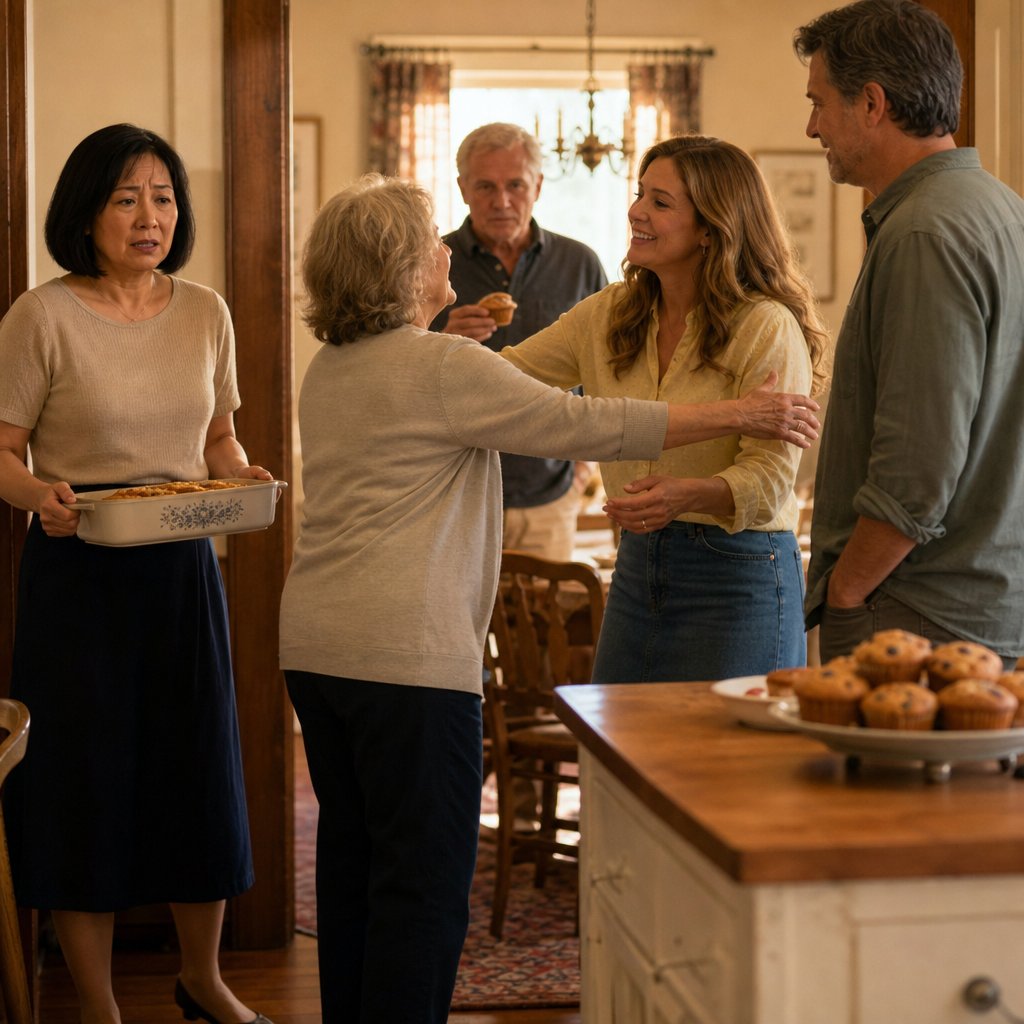
I knew I was losing ground when my in-laws started saying her name like it belonged in their family tree.
We drove to Sunday dinner at Ethan’s parents’ house, and I tried to reset my brain the whole way—window cracked, the smell of cut grass and car upholstery, my fingers tapping my knee like a metronome. Mara rode with us, of course, in the back seat like a kid on a field trip, wearing a pale yellow blouse and a denim skirt, all sunshine and good manners.
Ethan’s mom opened the door and went straight past me.
“Mara!” she squealed, grabbing her hands. “You sweet thing. Come in.”
I stood there on the porch holding the casserole I’d made, feeling like an Amazon delivery.
Inside, the kitchen smelled like roast chicken and cinnamon. On the counter sat a plate of muffins—perfect domes, golden tops. Mara’s muffins. I hadn’t even known she baked.
“She brought these for us last week,” Ethan’s dad said, already chewing. “So thoughtful.”
Last week. While I was at work again. While she was apparently making rounds like a candidate.
Mara laughed softly and touched Ethan’s mother’s arm. “I just wanted you to know I’m grateful,” she said. Then, with a smile that felt like a knife wrapped in velvet, she added, “I’m basically family at this point.”
Ethan’s mom beamed. Ethan didn’t blink. Nobody laughed like it was a joke.
I felt my throat tighten so hard I could barely swallow. My casserole dish was heavy in my hands, heat seeping through the towel, and I realized—sickly, clearly—that they’d been seeing her without me.
Then Ethan’s mother turned to me, still smiling, and said, “Honey, Mara mentioned you’ve been having… a hard time lately?”
My Stationery In Her Room
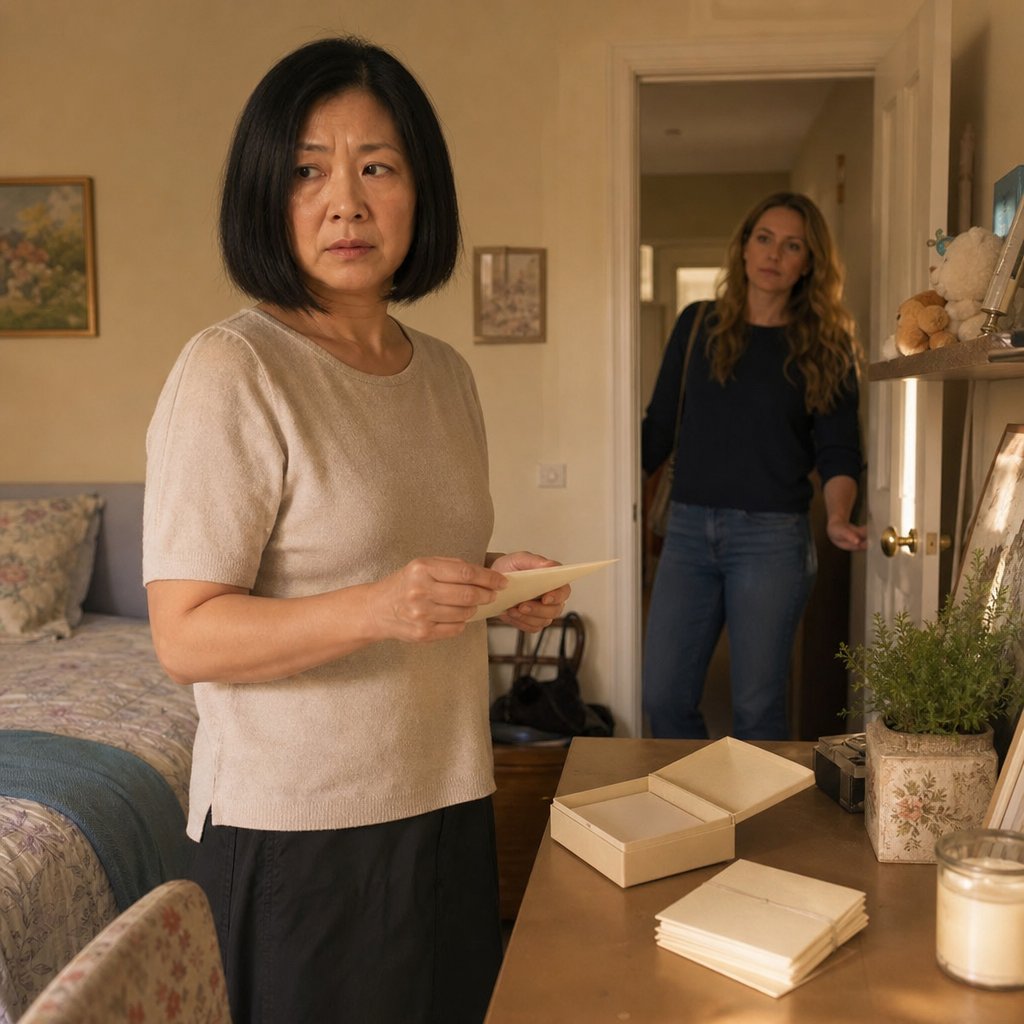
I found it because I was looking for a stapler.
That’s the stupid part—how normal the reason was. I was in the little hallway closet, annoyed, shifting boxes of holiday decorations, when I realized the stapler was usually in the desk drawer. The desk drawer that had been sticking lately. The desk drawer Mara had offered to “fix” with a little laugh.
Her door was half-closed down the hall. I told myself I was just going to knock. I told myself I was respecting boundaries.
Then I saw it: the corner of my cream-colored stationery box, the one with the subtle embossed pattern I’d bought years ago as a treat. It was sitting on the floor just inside her room like it had always lived there, like it was part of her inventory.
I pushed the door open an inch. The air smelled faintly of her vanilla perfume mixed with my laundry detergent—my house, her signature. On her bed, neatly made, were stacked envelopes. My envelopes. A pen cup on her nightstand held my favorite black gel pen.
I stepped inside, heart thudding so hard it made my ears ring. The stationery box was open. Inside, several sheets were missing. Not one or two—enough to notice if you were me. Enough to write letters. Enough to forge a voice.
On her desk sat a small pile of sealed envelopes, addressed—no, not addressed, because I couldn’t see any writing from where I stood. But they were ready. Waiting. Like something had already been sent, and something else was about to be.
I picked up one envelope between two fingers. It was heavier than it should’ve been, the flap pressed down hard. My hands started to shake.
Behind me, the floorboard in the hall creaked.
She Opened My Door First
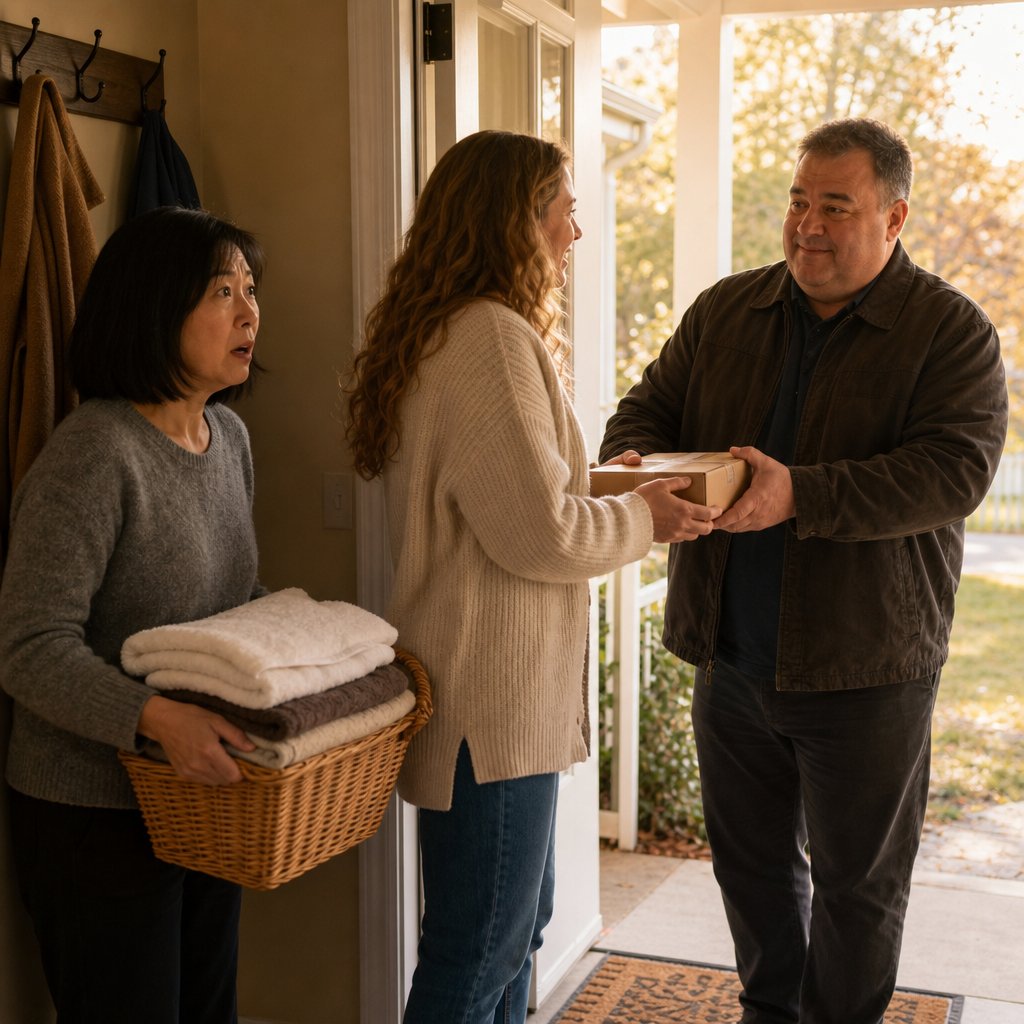
The first time Mara answered my front door, I thought it was an accident.
I was home. I was in the living room folding a basket of warm laundry, the clean cotton smell rising in little puffs as I shook out a towel. The doorbell rang, and before I could even set the basket down, Mara breezed past me like she hadn’t seen me at all.
“Hi!” she called, already turning the knob. “Come in!”
My stomach dropped. It was the way she said it—bright, automatic, practiced. Like she’d said it a hundred times. Like she was the one who belonged at the threshold, granting entry.
On the porch stood our neighbor, Glenn—late 40s, heavyset, kind eyes—holding a small package. He looked relieved to see Mara, like she was the familiar point of contact. Like I was the background.
“Oh, hey, Mara,” he said easily, stepping forward. “I wasn’t sure if—”
He stopped when he saw me behind her, my arms full of towels, my face caught between polite and furious. The air in the doorway felt colder than the rest of the house, like the outside was pushing in.
Mara didn’t move aside. She stayed planted in the opening, shoulder against the frame, body angled like a gate. “She’s right here,” she said with a little laugh, as if she’d just saved me from the burden of greeting my own neighbor.
I forced my voice to work. “Hi, Glenn.”
Glenn’s eyes flicked between us. Confusion, then something like pity. “Oh. Okay. I’ll just… give it to—”
Mara reached out and took the package from him before he could finish, fingers closing over it like she’d done this before. “Got it!” she chirped.
Then she turned, still blocking the doorway, and called over her shoulder into the house, “Ethan! Your thing came!”
My throat tightened. Your thing. Not ours. Not mine. Hers to manage.
And in that second I realized: the front door didn’t feel like an entrance anymore. It felt like a checkpoint she controlled.
Her Name On The Forms
The teacher said it like it was the most normal thing in the world.
I’d come to pick up my daughter from school, juggling my purse and a stack of permission slips I hadn’t had time to sign. The hallway smelled like floor wax and crayons, and the noise bounced off the walls in that specific way that makes your head ache.
Mrs. Donnelly—late 50s, short gray hair, kind-but-busy eyes—smiled at me and said, “Oh, and just so you know, we confirmed the emergency contacts. Mara’s listed, so we’re all set.”
I actually stopped walking. “Mara?” I repeated, like my mouth didn’t recognize the word.
Mrs. Donnelly nodded, already halfway to her next task. “Yes, dear. She’s on the list. Very helpful.”
My skin went cold under my blouse. I could hear blood in my ears. Mara wasn’t just in my house—she was on my child’s paperwork. She had reached into the one place I never loosened my grip.
I drove home gripping the steering wheel so hard my knuckles hurt. In the driveway, I sat for a full minute staring at the front door, like it might open on its own.
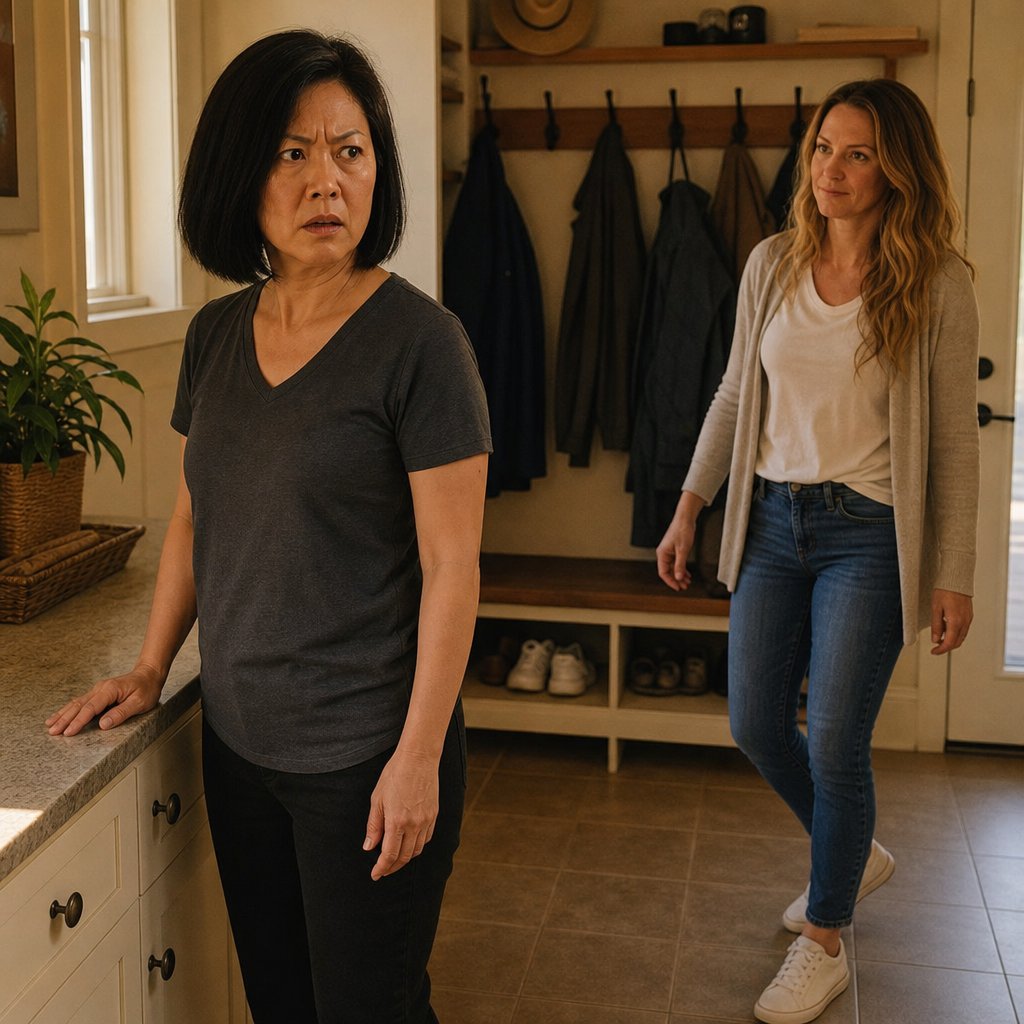
Inside, Mara was in the mudroom, crouched by the bench, tying her sneakers. She looked up too quickly, like she’d been waiting for me. “Hey!” she sang. “Everything okay?”
I didn’t answer. I went straight to my lock controls—my phone face-down on the counter, my fingers moving on pure instinct without looking—checking access like someone checking a pulse.
There were new codes. More than one. Names I hadn’t set. Access times that didn’t match our routines. My throat tightened so hard I gagged.
Mara stood and brushed invisible lint from her jeans, calm as ever. “Oh, that’s a glitch,” she said breezily. “I’ll fix it.”
A glitch. Like my house had betrayed me on its own.
I lifted my head, and Mara’s smile didn’t reach her eyes. “Why,” I managed, voice shaking, “are you listed as my child’s emergency contact?”
She Edited My Cart
Mara’s face flickered—just one crack in the mask—before she stepped closer and said, “Because someone had to be.” Her voice had that soft, pitying tilt, like I was a child insisting monsters lived under the bed. My stomach went cold anyway, because she wasn’t denying it. She was claiming the job.
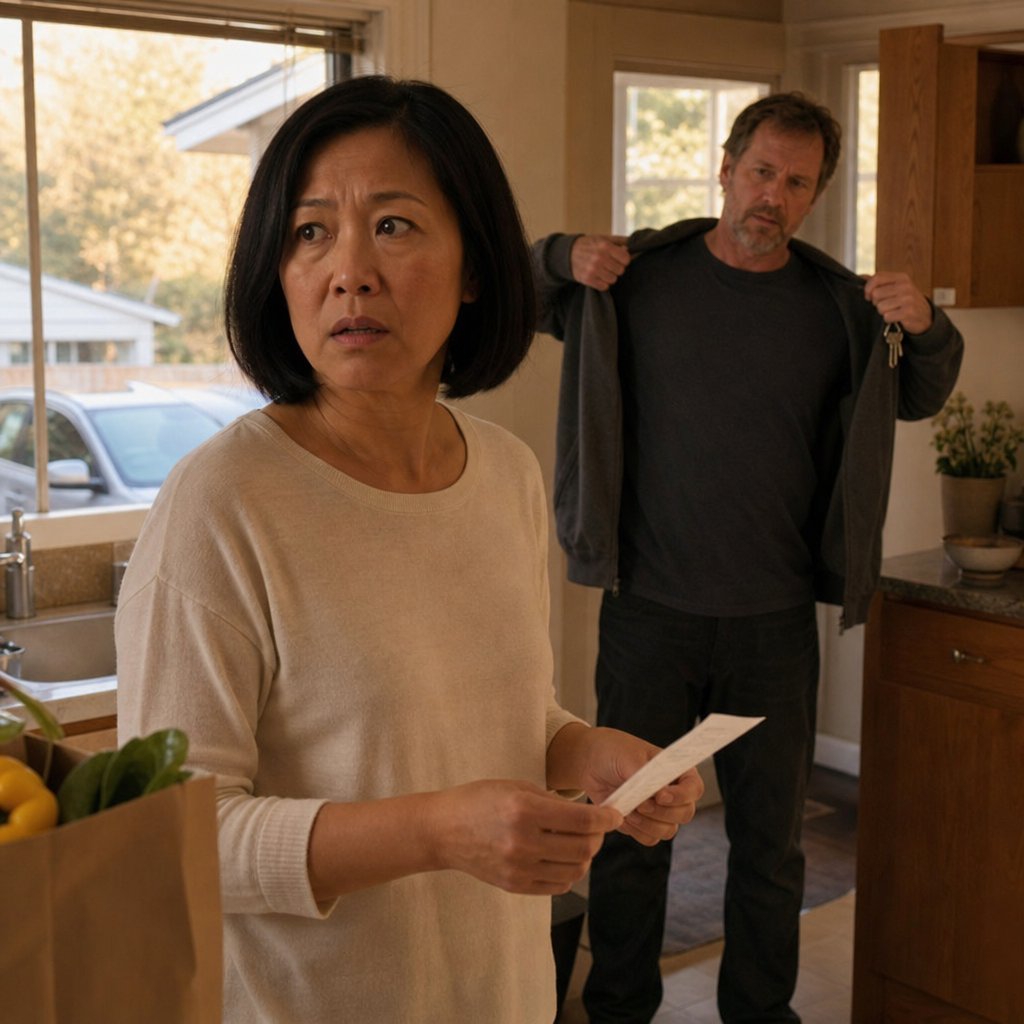
Later, I opened our shared grocery app to distract myself—milk, rice, my usual loop of normal—and there it was in plain, ugly certainty: Mara removed Iris’s items. Not “changed,” not “substituted.” Removed. Like erasing me was a household chore.
I stared at the list until the words blurred, then I added everything back with shaking thumbs. Jasmine tea. My shampoo. The stupid gluten-free crackers my husband teased me about. One by one, proof I still existed.
When my husband came into the kitchen, he didn’t look at me. He grabbed his keys from the ceramic bowl by the door and said, too casually, “I’m heading out early. Mara needed a ride.”
“A ride where?” I asked, and my voice sounded wrong—thin, too controlled.
He paused like the question annoyed him. “Just… out.”
I followed him to the window. Mara’s car was sitting in the driveway, sun glaring off the windshield like an accusation. I turned back, waiting for him to notice the obvious, to laugh and say he misspoke—
He was already opening the door, eyes fixed on the porch, like he couldn’t afford to meet mine.
My Mother’s Panicked Voice

My phone rang an hour later, and the second I heard my mother’s voice I knew Mara had gotten to her. Mom didn’t say hello—she said my name the way she said it when I was twelve and she’d found blood on my sleeve. “Iris… are you okay?”
I pressed my fingertips to my forehead. “Why wouldn’t I be?”
There was a pause full of someone else’s words. “Mara told me you’ve been… having a hard time. That you’ve been confused. Upset. She said she’s worried about you.”
Confused. Upset. The neat little labels people use when they want to put you in a box and tape it shut.
I could almost hear Mara’s gentle voice rehearsing it, the same tone she used when she offered to “help” with my husband’s phone. I swallowed, tasting coffee gone bitter. “Mom, I’m fine. Mara is lying.”
“Honey,” my mother whispered, and that one word made me want to scream. Honey meant she believed the version of me Mara was selling.
When I hung up, I walked straight to the living room where Mara was folding a throw blanket like she owned the couch. She looked up, eyes wide, innocent, a perfect painting of concern. “What’s wrong?”
“Why did you call my mother?” I asked. “Why did you tell her I’m unstable?”
Her mouth trembled. She blinked hard, and tears spilled like she’d practiced the timing. “I didn’t say that. Iris, you’re projecting. I’m trying to help you and you’re… you’re doing it again.”
My husband stepped in from the hallway, drawn by her sniffle like a dog to a whistle. He took one look at her wet cheeks and then at me—flat, disappointed.
“Iris,” he said, warning in his tone, “stop.”
The Receipt In The Trash
I didn’t sleep that night. I lay there listening to the house breathe—pipes ticking, the refrigerator humming—while my husband’s back stayed turned to me like a locked door. In the morning, I moved through the routine like a ghost, waiting for my hands to stop shaking.
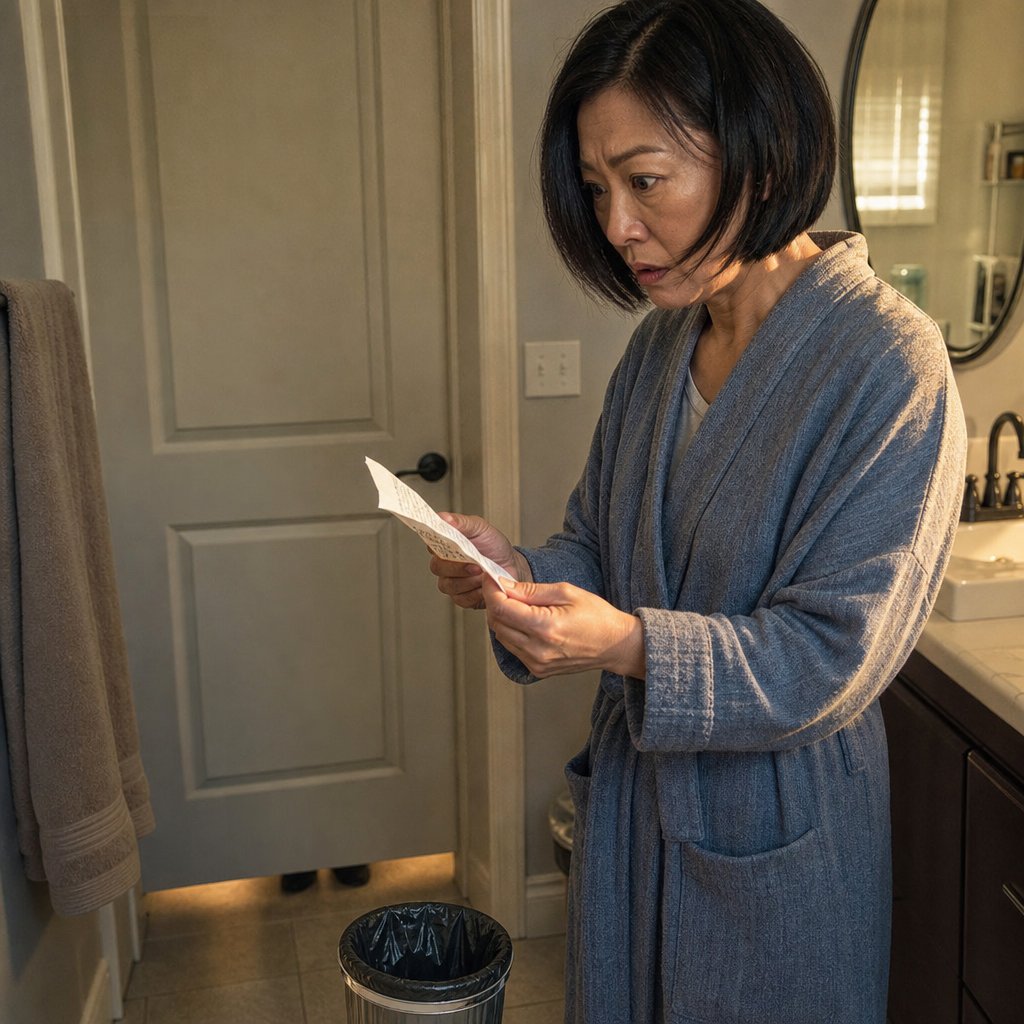
I found it by accident, which is how the universe likes to hand you proof. I was in the bathroom, tossing an empty toothpaste box, when something white and crumpled caught on the rim of the trash can. A receipt. Small. Greasy from someone’s damp fingers.
I shouldn’t have unfolded it. I did anyway.
Key cutting. Two copies. The shop was near my office—close enough that someone could do it on a lunch break and still make it back before anyone noticed. The date was last week. The day Mara had “gone for a walk to clear her head.”
My pulse thudded so hard I could feel it in my teeth. I stared at the numbers until they stopped being numbers and became a timeline. Not paranoia. Not miscommunication. Planning.
I looked at the bathroom door—locked, thank God—and then at the mirror. My own face looked waxy, like I was watching myself from far away. I thought about the way Mara always seemed to appear in the hallway right as I was leaving. The way she knew when my husband would be home before I did.
I folded the receipt small and slid it into the pocket of my robe like contraband.
Then I heard the soft, deliberate creak of the upstairs floorboard outside the bathroom, the one that only squeaked when someone stopped and lingered.
The Group Chat Named After Me
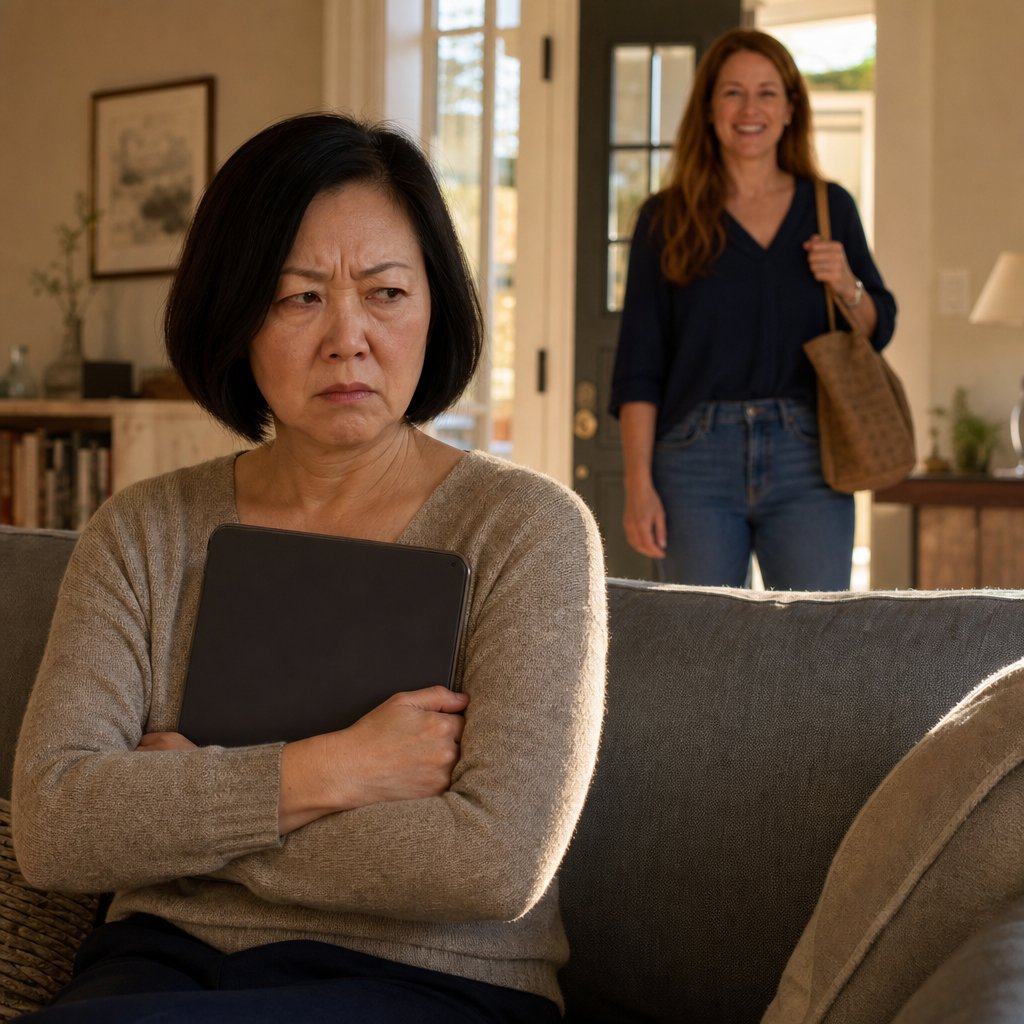
I waited until the house was quiet in that particular way that meant Mara was “resting” and my husband was in the garage pretending to be busy. My hands were steadier than they had any right to be. That scared me most—how quickly fear can turn into focus.
His iPad was on the coffee table, face-down like it was ashamed. I flipped it over, heart battering my ribs, and opened the messages the way you open a door you already know has something dead behind it.
A muted chat thread sat there like a bruise: Iris Support Squad.
I actually laughed once, a sharp little sound that didn’t belong to me. Support. Squad. Like I was a crisis drill. Like I was a weather event everyone needed to prepare for.
Inside were screenshots—my texts to my husband, cropped and framed to make me look frantic. A photo of my grocery list with certain items circled like evidence. Then Mara’s messages, neat and managerial: “If she gets paranoid again, don’t argue. Validate. Redirect.” “Say you’re worried about stress.” “Offer to come over so she doesn’t feel alone.”
Names I recognized chimed in with thumbs-ups and little hearts. My mother. My husband’s sister. A neighbor who had borrowed sugar from me last month and kissed my cheek like family.
My throat tightened so hard it hurt. I scrolled and scrolled, and the iPad felt slick in my hands, like it wanted to be dropped.
Then I saw my husband’s last message: “Tonight might be rough. Be ready.”
Behind me, the front door clicked, and Mara’s voice floated in, cheerful. “I’m back!”
Our Anniversary, Hijacked
I tried to salvage the weekend like it was a torn hem. Our anniversary had always been ours—one dinner, one quiet night, the same corner table at our favorite place where the candles smelled faintly of vanilla and the silverware was always too heavy.
Friday afternoon, I found Mara’s handwriting on the paper calendar on the fridge—rounded, confident loops: “Couples dinner!” at our restaurant. Not asked. Not suggested. Scheduled. Like she had the authority to book my marriage the way you book a haircut.
When I confronted my husband in the pantry, the smell of dried oregano in the air, he didn’t even look guilty. “It’ll be nice,” he said. “Mara’s been feeling isolated.”
“It’s our anniversary,” I whispered, because if I said it louder I might shatter.
He sighed like I was exhausting. “Why are you making everything a thing?”
That night, after the forced laughter and the clink of glasses and Mara’s hand lingering on my husband’s forearm like it belonged there, we came home to the house smelling faintly of her floral shampoo.
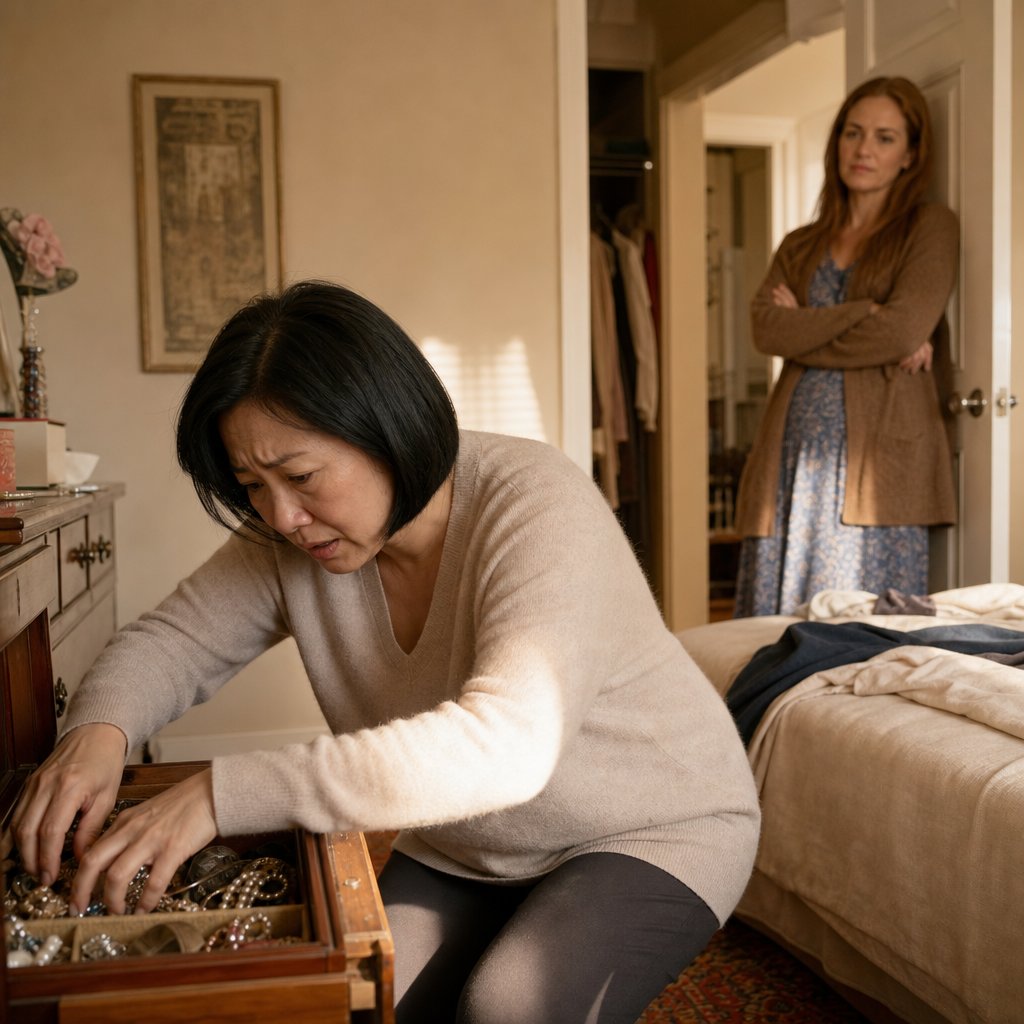
I went to my jewelry dish—my grandmother’s ring, the one with the tiny jade stone worn smooth by decades of hands, always sat in the center like a heartbeat.
The dish was empty.
I tore through drawers, palms sweating, the velvet lining of my jewelry box scraping my nails. My chest went tight, grief rising hot and immediate.
Mara appeared in the doorway, leaning against the frame, watching my face too closely. “Oh no,” she breathed. “Do you want me to help you search?”
Her eyes didn’t go to the floor. They went to my hands.
What The Camera Caught

I stopped asking questions out loud. Questions gave Mara oxygen. Instead, I went to a discount store after work and bought a cheap little hallway camera with cash, like I was doing something dirty. The plastic felt light and flimsy in my palm, but my anger made it heavy.
I hid it on the shelf beside the family photos—angled just enough to see the bedroom door. Then I waited.
The next morning, I took a shower with my ears straining for every sound. Water hammered my shoulders, steam fogged the glass, and my heart wouldn’t slow down. I turned the water off and stood perfectly still, listening.
Floorboard. Soft. A pause. Then the whisper of my bedroom door opening.
I wrapped a towel around myself so fast it snagged on my skin and slipped out into the hallway, silent as I could manage. The air felt colder outside the bathroom, like the house was holding its breath.
Mara stepped out of my bedroom, smoothing her hair with one hand like she’d just checked herself in my mirror. In her other hand, she held my husband’s cufflinks—silver, the ones I’d given him our first anniversary, the ones he only wore when he wanted to feel important.
She didn’t jump when she saw me. She smiled, small and private, like we were sharing a secret.
“Oh,” she said softly, closing her fingers around them. “I was just putting these somewhere safe.”
I looked past her into my bedroom. The duvet was disturbed. My nightstand drawer sat slightly open, like a mouth that had been pried.
Behind my ribs, something snapped into a clean, terrifying calm.
I Built A File On Her

I didn’t confront after that. I collected. Every time Mara smiled like she was doing me a favor, I wrote it down. Every “helpful” calendar change, every grocery edit, every time my husband repeated her exact phrasing like a ventriloquist dummy—I saved it.
I started taking photos of the paper calendar before bed. I screenshot lock notifications and emailed them to myself with bland subject lines. I tucked the key-cutting receipt into an envelope and hid it inside an old cookbook Mara never touched because it smelled like fish sauce.
Lock logs. Calendar changes. The muted chat. The camera clip. A neat little pile of reality that no one could talk me out of.
And still, the story outside my house was shifting. I felt it the way you feel weather pressure—friends replying slower, voices softer, questions loaded.
At the end of a Pilates class, a woman I’d known for years touched my arm like I was fragile glass. “Mara told me you invited her to stay because you were… you know… in a spiral,” she said gently.
Spiral. There it was again. The word that turned my anger into a symptom.
I went to my car and sat with my hands on the steering wheel until my knuckles went white. The inside of the car smelled like old sunscreen and peppermint gum, suddenly nauseating.
Mara wasn’t just taking my things. She was taking my credibility. She was building a version of me that couldn’t be believed, so she could do anything she wanted in my name.
When I got home, Mara was in the kitchen stirring soup like a wife, and my husband was laughing at something she said—his shoulders loose, his face warm.
Then he looked up and saw me, and the laughter shut off like someone flipped a switch.
The Storage Unit With My Name

The second set of keys kept itching at my brain like a splinter. Who cuts keys unless they plan to keep using them? Not for one night. Not for an emergency. For access.
I did something I never thought I’d do: I followed paper trails like a stranger in my own life. A slip in Mara’s mail. A quick glance at a return address. A storage facility across town with a name that sounded harmless, like it stored seasonal decorations and old baby clothes.
I drove there on my lunch break with my stomach in my throat. The office smelled like dust and stale air freshener. A bored employee slid a clipboard toward me without looking up. I didn’t sign anything. I just watched, waited, and listened until I heard the unit number said out loud to Mara over the phone.
That was enough.
When the roll-up door finally rattled open—because yes, the second key worked on the padlock—I felt like I’d stepped into my own theft.
Boxes. Stacked neatly. My things.
My winter coats. My photo albums. A lamp from my side of the bed. On the cardboard, thick black marker: “Clutter.” “Donate.” “Sort.” Like my life was a messy closet she was bravely tackling.
On top of one box sat a manila folder with printed emails inside—pages of “next steps,” timelines, and bullet points that made my skin crawl. And underneath it, a hotel receipt—creased, handled—dated the night my husband swore he worked late.
My vision tunneled. I held the receipt so hard it crinkled, and the edges dug into my palm.
Behind me, the metal door clanged softly—as if someone had just let it drop.
The Peace Dinner Trap

I planned the dinner like a performance and a funeral at the same time. “Peace dinner,” I called it, because that’s what everyone wanted from me—quiet, agreeable, grateful. My husband loved the idea immediately, which told me everything. He thought I was coming to heel.
We hosted at my sister-in-law’s house—neutral territory with nice plates and a dining table that could fit every witness I needed. My mother came. The neighbor. My husband’s sister. Two friends Mara had charmed into nodding sympathetically at the word spiral.
Mara arrived in a cream sweater, hair glossy, carrying a bottle of wine like she was the hostess. She kissed my cheek and whispered, “I’m proud of you,” which made my skin crawl. My husband squeezed her shoulder as he walked past her, and I watched the contact like it was a crime scene.
We sat. Forks clinked. Someone lit a candle that smelled like citrus and smoke. Small talk floated over the table like a thin blanket trying to cover a mess.
Halfway through the salad, I set my napkin down carefully. My hands were steady now. “Mara,” I said, sweet as sugar, “can you show everyone the smart lock app? Just so we can clear up the confusion.”
Her smile didn’t move at first. Then it widened—too fast. “Of course,” she said, reaching for her phone.
I stood and picked up my own phone. “Actually,” I said, turning toward the living room TV, “I’ll show you.”
My husband’s fork paused mid-air. My mother’s eyes widened. Mara’s face stayed smooth—until the second the first access log appeared and her pupils pinched like she’d been slapped.
Was Mara wrong to access the smart lock app secretly?