



The Ring Tap That Broke Me
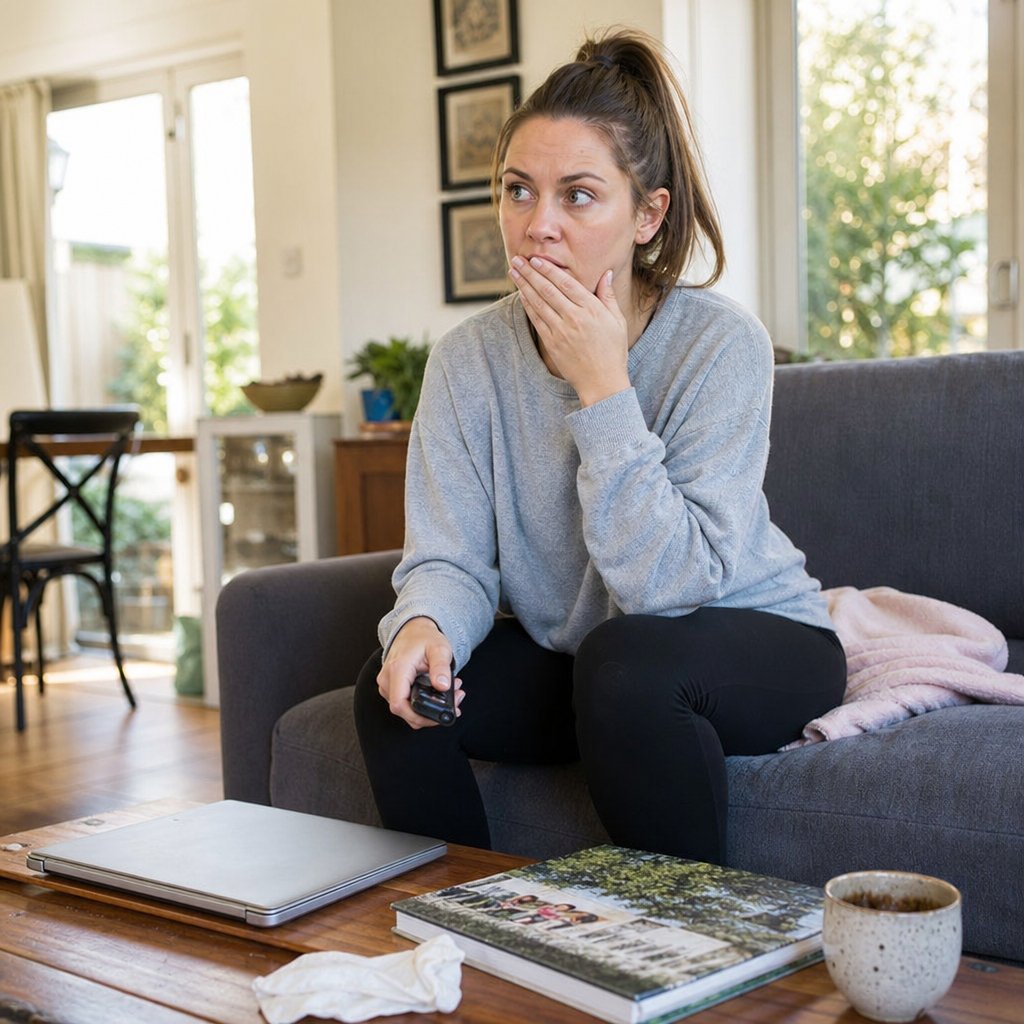
The woman behind my cake table looked straight into the lens like she knew I’d be watching later, and she tapped her ring finger twice—slow, deliberate, almost bored. In the next breath of the clip, Nate’s smile collapsed so fast it didn’t look human. He flinched, hard, like someone had just said a word only he understood.
I had to pause it because my throat did this tight, hot thing, and the room around me suddenly felt too quiet. The frosting on the screen was that ridiculous buttercream rosette pattern I fought the bakery over—peach fading into ivory—and right behind it stood this stranger in a pale gold dress that hugged her like she belonged in our photos. She wasn’t in my getting-ready shots. Not in my seating chart. Not in my head.
Nate’s jaw worked once, like he was swallowing a scream. Then, on instinct, his eyes flicked past the camera—toward the card box, toward the gift table, toward… her.
And she didn’t smile. She lifted her hand again, that same ring finger, and made the tiniest warning motion—like don’t—and Nate’s shoulders went rigid as if he’d been caught mid-crime.
I hit play again, leaning closer, and that’s when I noticed what her other hand was doing near the card box…
That Text Suddenly Felt Threatening
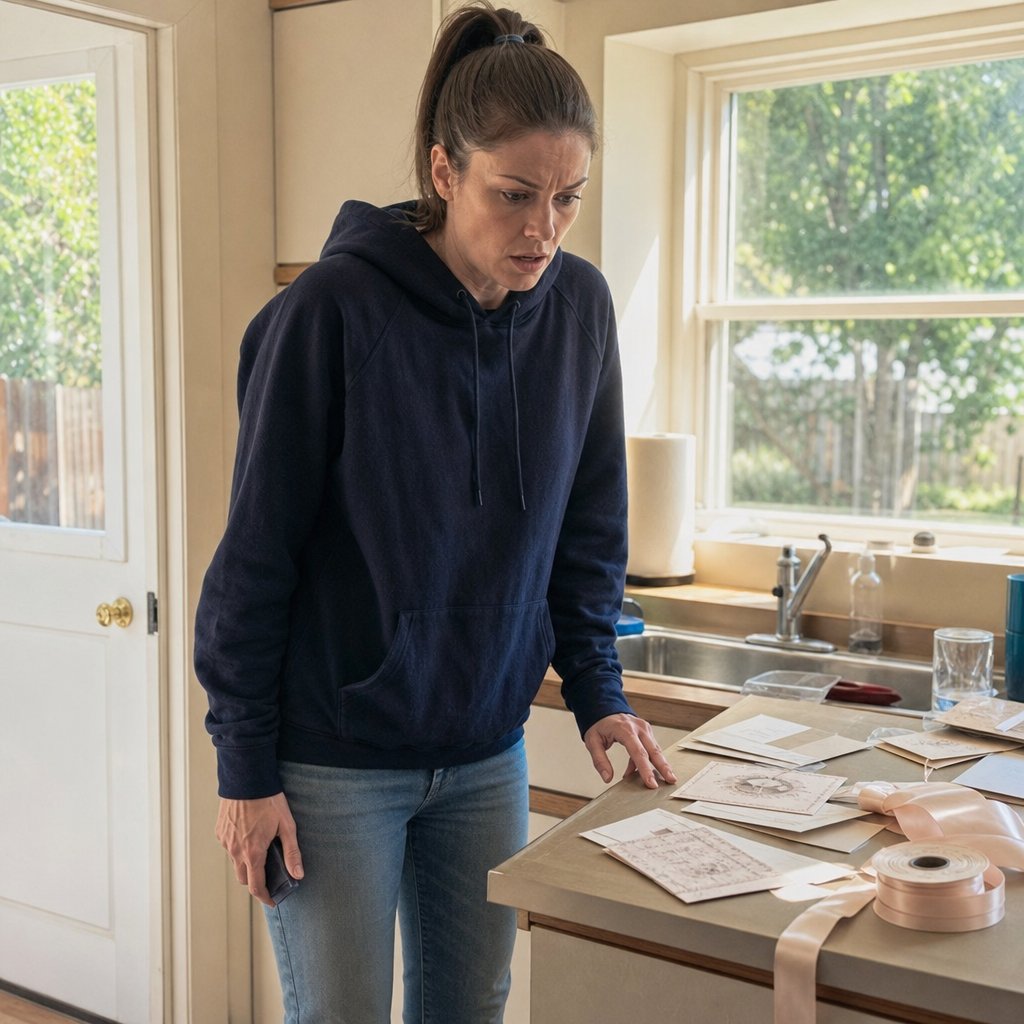
I rewound the clip so many times my thumb started to ache. Tap-tap. Nate’s flinch. Tap-tap. The stranger’s eyes dead on the lens like she was speaking to me through time.
My hands were shaking so badly I had to set the remote down and press my palms against my jeans until the tremor eased. That was when my brain did the mean thing it does—dragging up a detail I’d filed away as “sweet” because it was easier.
That morning, while my bridesmaids were spraying hairspray into a fog and someone was burning a curling iron on the bathroom counter, Nate had sent me a text. Not a heart. Not a joke. Just: “We’re good. Please trust me today.”
At the time, I’d laughed and shown it to my maid of honor like, aw, he’s nervous. I’d answered with something breezy and loving and then gone back to mascara, believing in the version of my life where nothing had sharp edges.
Now, watching him recoil at a two-tap ring signal like it was a code word, that text didn’t feel romantic. It felt like a preemptive alibi. Like he was trying to get my trust on record before something happened that would shred it.
I picked the remote back up, went frame-by-frame, and tried to catch Nate’s eyes—because in one frozen second, he looked past the cake table like he was checking whether she’d done it yet…
The Place Card I Never Made
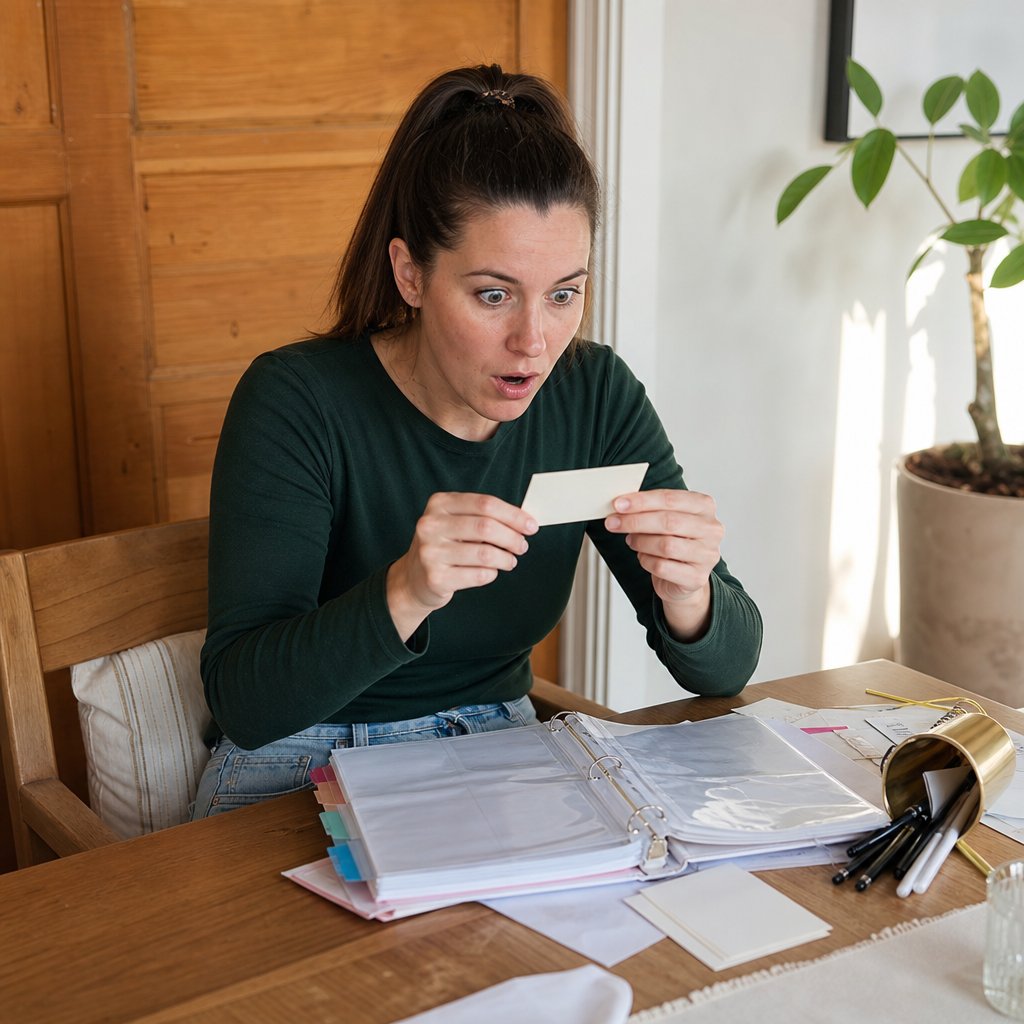
I went for my planning binder like it was a life raft. The stupid white three-ring monster with tabs and color-coded sticky notes—my proof that I’d controlled every detail down to the font size on the escort cards.
I dumped it on the dining table and flipped so fast the laminated dividers snapped against the rings. Vendor contracts. Timeline. Seating chart drafts. I could almost smell the hotel ballroom again—those over-chilled air vents and the faint vanilla from the cake.
Then something slid out from between “Reception” and “Table Assignments” and landed facedown like it didn’t want to be seen.
I turned it over and my stomach did a slow, sick roll.
A place card. Thick ivory stock. The exact calligraphy style I paid extra for. And on it, in neat black ink, was a name I had never written, never approved, never printed: Mara L.
I stared until my eyes burned, then checked the back like it would explain itself. Nothing. No smudge. No misprint. It looked like it had always belonged with my stack.
I yanked open the binder pocket where I kept the final table list and found the slot for Table 6—my cousin’s table, the one near the dance floor.
And there, tucked in like it had been waiting, was “Mara L.” already assigned a seat.
My throat went dry as paper because if Mara L. was real, then someone had decided she would be in my room, at my tables, on my day—without my consent—and I had no idea when they’d started writing her into my life…
The Seating Chart With Different Ink
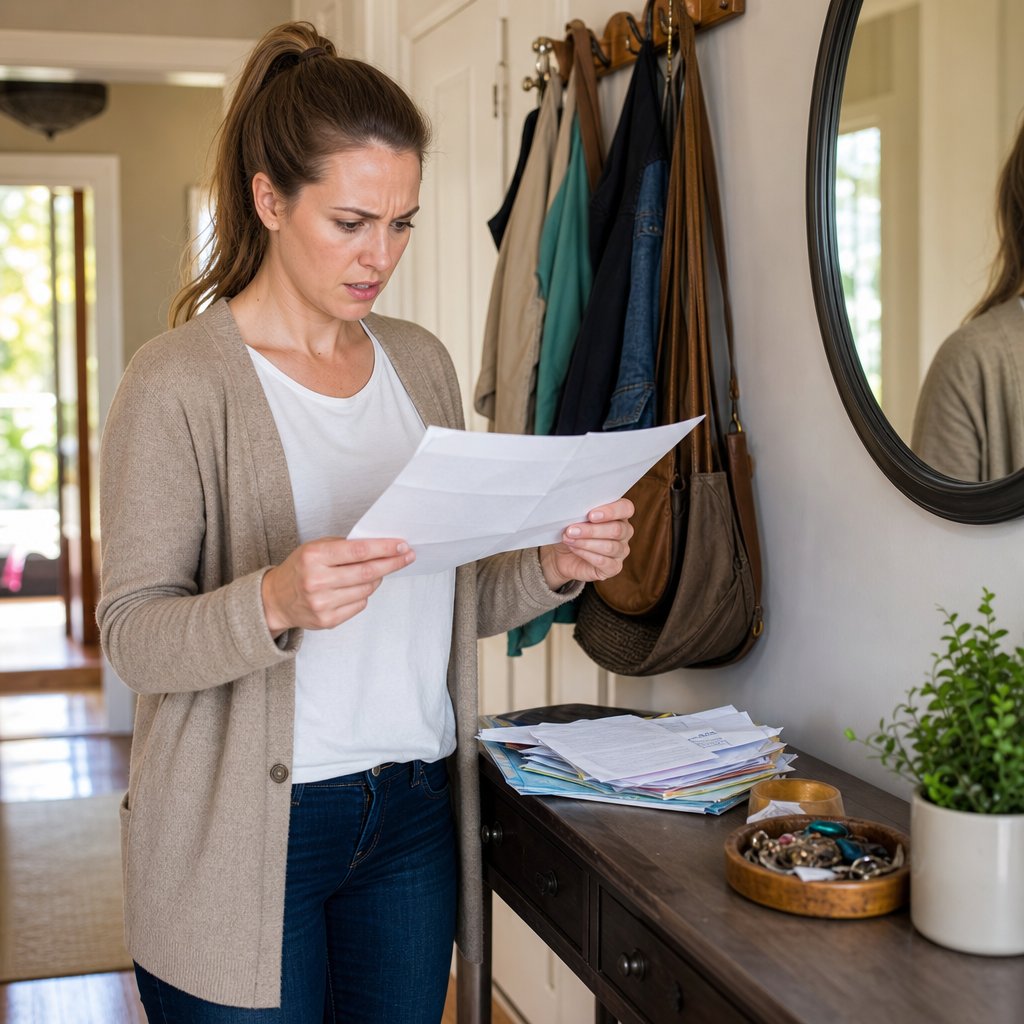
When I called our coordinator, Tessa, she answered in that bright, competent voice that used to calm me. “Nothing changed,” she insisted, like she could smooth reality with tone alone. “We followed your final plan exactly.”
I put her on speaker and started pulling things out of the binder with the kind of precision you use when you’re trying not to cry. “Then explain Mara L.,” I said, and even hearing myself say the name felt like swallowing a pebble.
Tessa paused—just long enough for my skin to prickle. “Maybe a last-minute plus-one? But you would’ve told me.”
“I didn’t,” I said, sharper than I meant to. I could hear my own breathing, too fast, too thin.
I went hunting for anything paper that had touched the venue that day. Programs. Bar menu mockups. The final print packet I’d handed over like a sacred text.
Behind the bar menu—my bar menu, with the stupid signature cocktail names—there was a second sheet folded into quarters. Not mine. Different paper weight. Different pen pressure. Different handwriting, slightly slanted, like someone who learned cursive out of spite.
I unfolded it and my mouth went numb.
A second seating chart.
Table 6 rearranged. Two of my friends swapped. A chair added. And scribbled into the new gap—like it had always been accounted for—was Mara L.
On speaker, Tessa kept talking, but her words turned into a blur because all I could see was the proof that someone had quietly rewritten my “perfect” plan while I was busy smiling for photos.
I looked at the bottom of the page, at the initials next to the changes, and my stomach dropped because I recognized the first letter…
She Kept Appearing Everywhere
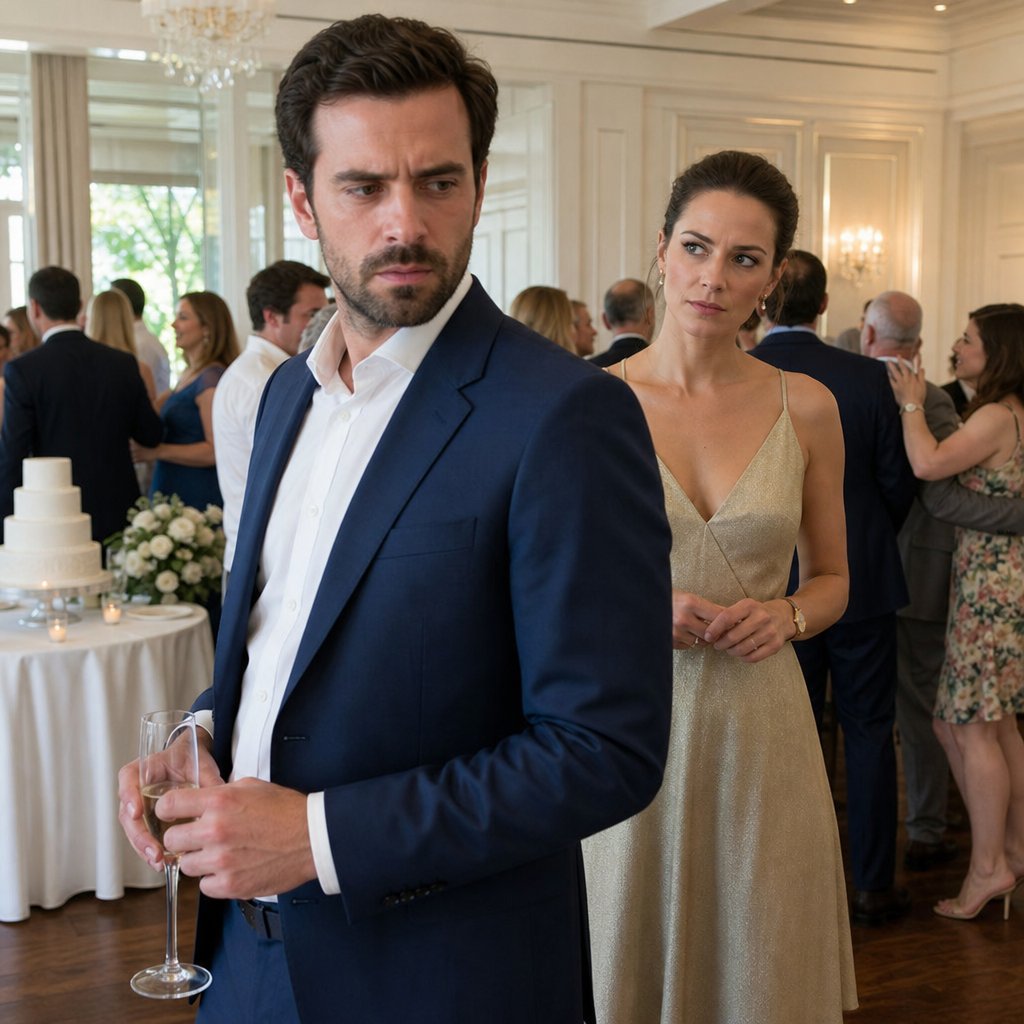
I went back to the video with a new kind of rage—quiet, surgical. If she was on one clip, she’d be on more. People like that don’t just drift through a wedding by accident.
Frame-by-frame, I started spotting her the way you start seeing a certain car after you’ve been almost hit by it.
Cake table: pale gold dress, hair pinned back, a calm expression that didn’t match the chaos of dessert plates and laughing guests. Gift table: same dress, same posture, her hand hovering too close to the card box like she was waiting for the room to blink.
Then—during the best man’s toast—there she was again, and my blood went cold because she wasn’t near me. She was behind Nate.
Not “in the background.” Too close. Close enough that if he leaned back, his shoulder would brush her. Like she was tracking his movements, triangulating him through the night, staying just outside the radius of my attention.
Nate stood there in his suit, smiling for everyone, but his eyes kept flicking sideways in tiny, panicked cuts. The best man lifted his glass, the room laughed, and behind Nate, the woman in gold angled her body so her face was half-hidden—like she understood cameras.
I paused on a frame where Nate’s smile looked stapled on. The stranger’s mouth was near his ear, not touching, not intimate—worse. Like she was delivering a message he couldn’t ignore.
And in that frozen second, Nate’s fingers tightened around his champagne flute so hard his knuckles went white, like he was holding himself together by sheer force.
I hit play, and the audio caught a breathy syllable from her—just one—before the crowd noise swallowed it…
The Toast That Named Nothing
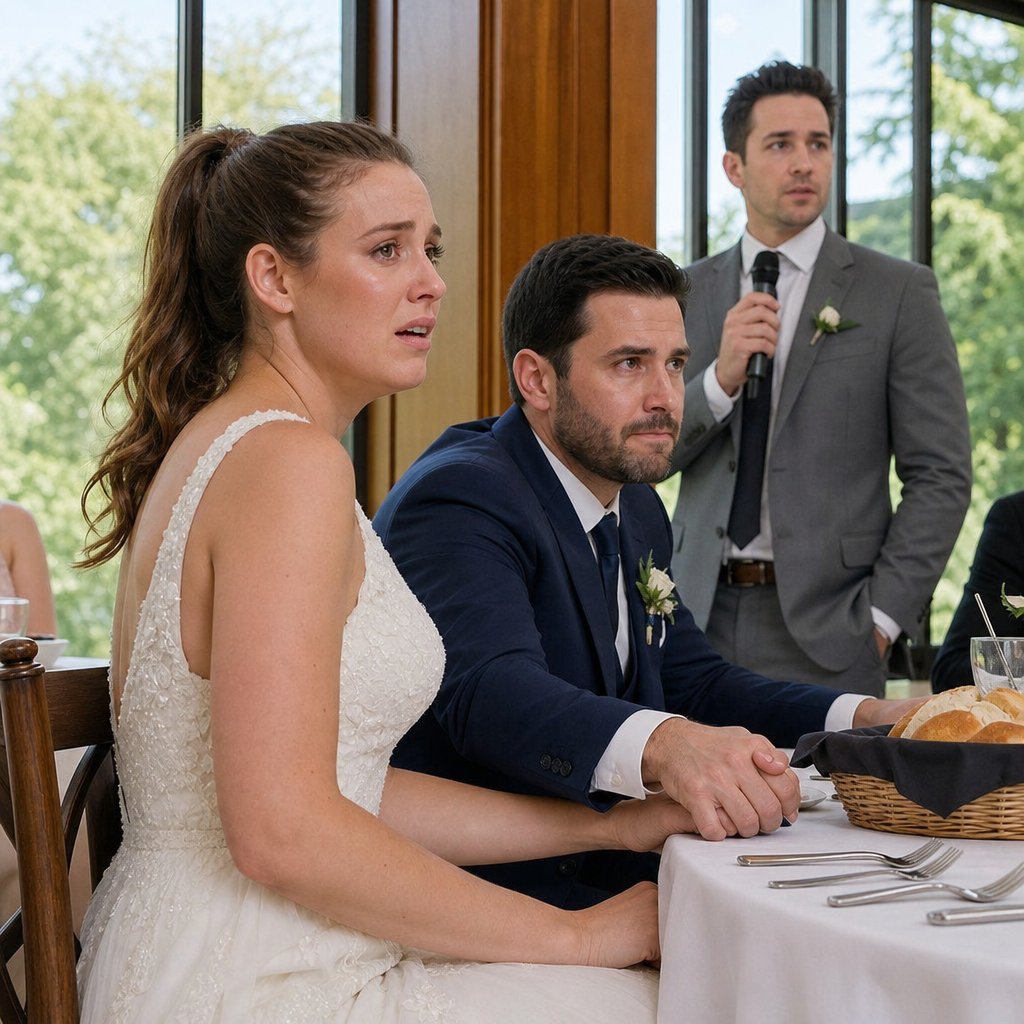
The best man—Caleb, Nate’s college roommate with the too-perfect hair and the loud laugh—started like every wedding toast starts. A few jokes. A sweet story. Everyone relaxed. I remember the clink of silverware and the warm yeasty smell of dinner rolls.
Then his tone shifted, just slightly, like a car changing lanes without signaling.
“To second chances,” Caleb said, lifting his glass higher than he needed to. His eyes flicked to Nate, then away. “To becoming someone new… and leaving behind names you don’t use anymore.”
My smile froze. I felt it happen—my cheeks locking in place like a mask. Around us, a few people laughed politely, like they didn’t know what to do with that sentence. Caleb’s mouth kept moving, but I couldn’t hear anything except the blood in my ears.
Nate’s hand found mine under the table. At first I thought it was comfort. Then his fingers closed and crushed.
It wasn’t a squeeze. It was a warning. Pain shot up my wrist, sharp and humiliating, and I jerked my eyes to him. His smile was still there for the room, but his gaze was hard, almost pleading—like he was silently begging me not to react, not to look too closely, not to ask the question forming behind my teeth.
I tried to pull my hand back and he tightened again, harder, until my ring pressed into my skin. Across the room, I caught a flash of pale gold near the edge of the dance floor.
The woman’s head tilted, just enough to meet my eyes, and she lifted her ring finger like she was counting down.
Caleb’s voice rose on the next line—something about “the truth”—and Nate’s grip went bone-deep as if he could physically keep me from hearing it…
The Envelopes That Vanished Quietly
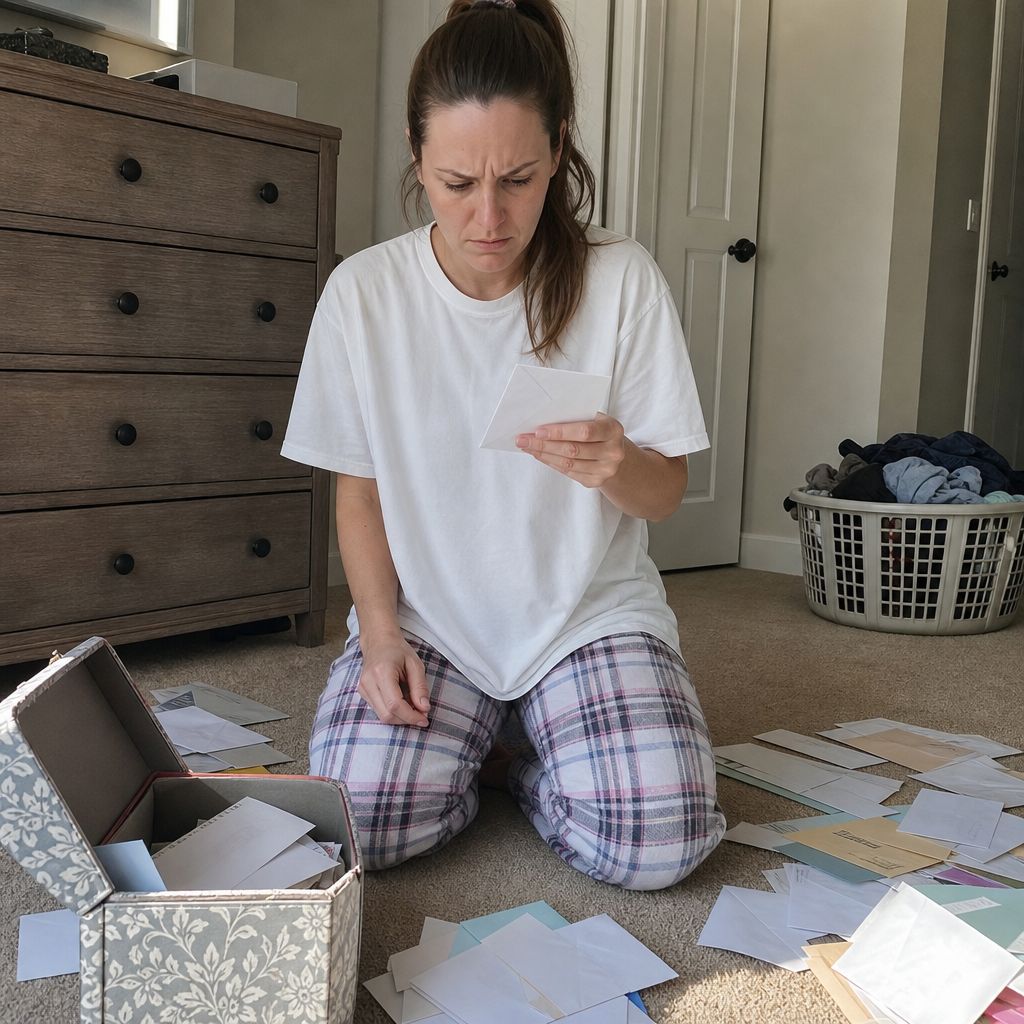
I didn’t even realize how much money people had given us until I started counting what was left.
Two nights after the wedding, I sat on the floor of our bedroom with the card box between my knees like it was evidence. The cardboard still smelled faintly of the venue—dust and perfume and that sweet, cloying floral arrangement we’d argued about. I spread the envelopes out in little piles, trying to match them to faces: Aunt Diane’s handwriting. My boss’s precise printing. The couple from Nate’s office who wore matching navy outfits.
And then I hit a gap that made my stomach drop.
We were short. Not one or two. Several.
I counted again, slower. Same result. It felt impossible because everyone had been so smug about security that night. “The card box was never unattended,” Nate had said, like he’d personally guarded it with his body. Tessa had echoed it. My mom had echoed it. Even Caleb had joked about “protecting the loot.”
But my mind snapped to the only window I could remember—the ten minutes during golden-hour photos when the camera was pointed away from the reception room and everyone was outside pretending to be effortlessly happy. The ballroom doors had been propped open. People had been drifting in and out for jackets and lipstick and—God—bathroom breaks.
I stood up so fast my knees cracked, clutching an envelope like it could tell me what happened. Because if the box was never unattended… then whoever took them had help. Permission. A distraction.
And the woman in gold had been stationed near that table like she was assigned there.
I grabbed the video again and jumped to the timestamp for golden hour, my pulse hammering, and paused on the moment the doors swung open—right as a figure slipped back inside…
The Guest Book That Went Silent
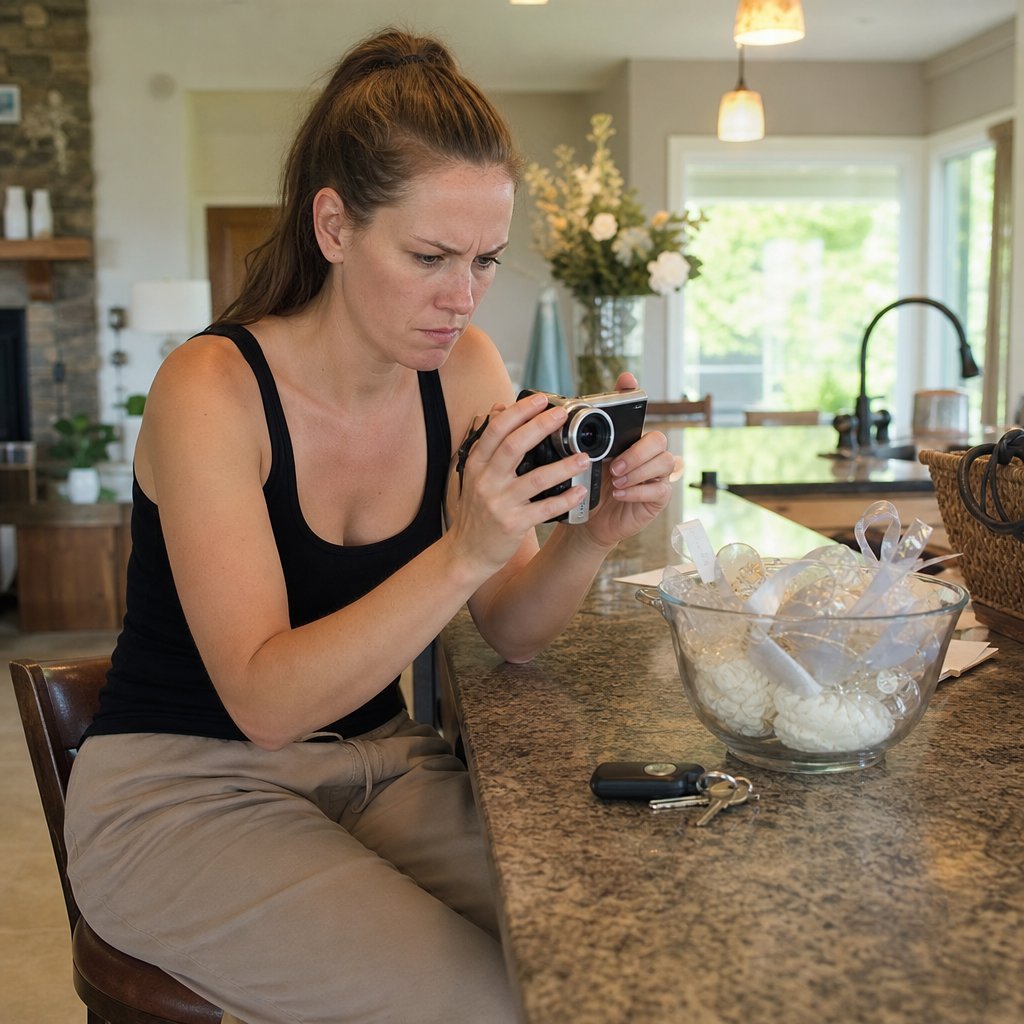
The camcorder guest book station had been my favorite “extra.” A little corner with a tripod and a chair, where people could sit and record messy, sweet advice. I remembered laughing when my cousin leaned in too close, remembered my dad getting misty and clearing his throat like he could edit emotion out of his voice.
So when the card count came up short, I went straight for those recordings like they were a backup brain. If someone had hovered near the gift table, someone would’ve joked about it. Someone would’ve noticed the stranger in gold.
I sat at the kitchen island with the small camera in my hands, turning it over like it might confess. The plastic felt warm from my palms. I scrolled through the files without watching the tiny preview—just selecting by time, by length, by instinct.
The last guest-book clip before speeches ended abruptly. Not naturally. Not “Grandma forgot to hit stop.” It cut off mid-laugh, mid-sentence, as if someone had pressed a button with purpose.
Then there was a gap.
The next clip started after the speeches, after the first dance, after the moment the room would’ve been full of the exact kind of chaos that hides theft and whispered warnings. The camera angle was slightly different too—tilted a few degrees, like someone had adjusted it with careful hands.
My skin prickled all over, that crawling sensation of being watched even when I was alone. Because this wasn’t just someone stealing envelopes. This was someone deciding what would survive. What evidence I’d be allowed to keep.
I set the camera down like it was contaminated and stared at the empty space in the timeline. My brain tried to fill it in: the woman in gold. Nate’s flinch. Caleb’s loaded words.
Then I remembered something—someone had been near the guest book right before speeches. Not a guest. Someone with a lanyard.
I could see the shape of it in my mind, swinging against a black shirt as they leaned toward the tripod…
The Assistant Nobody Could Name

I pulled up the vendor list from my binder—the master page I’d printed and handed out like a commandment. Photographer. Videographer. DJ. Coordinator. It was all supposed to be clean.
But under the videographer’s line, in smaller handwriting, there was an add-on I didn’t remember approving: an assistant.
The name didn’t land in my brain with recognition. Not even a flicker. And I’m the kind of person who remembers everyone—who wore what, who ordered the salmon, who spilled red wine and tried to hide it with a napkin. I remembered the bartender’s freckles. I did not remember this person.
Next to the assistant’s name was a signature on the “received” line—too neat, too practiced, like someone who had forged before and knew exactly how confident to be. The letters looped perfectly, no hesitation marks, no messy human panic.
I stared at it until the ink seemed to rise off the page. My fingers traced the indentation where the pen had pressed down. Whoever signed had been standing in my wedding venue, holding my paperwork, smiling at my coordinator, blending into the blur of black outfits and headsets and “just doing our job” energy.
And suddenly that lanyard I’d remembered near the guest book station wasn’t just a vague detail—it was a shape I could almost attach to a face. A staff face. A person who had access to the camera, the timeline, the angles.
I flipped to the videographer’s contract and found the contact sheet, then hesitated with my finger hovering over the call button on my phone—face-down on the counter, screen hidden from my own superstition.
Because if I asked who that assistant was… I had to be ready for the answer to involve Nate.
And I had to be ready for the videographer to say the one sentence that would make this real: “Oh, you mean Mara.”
His Mother Wanted The Footage
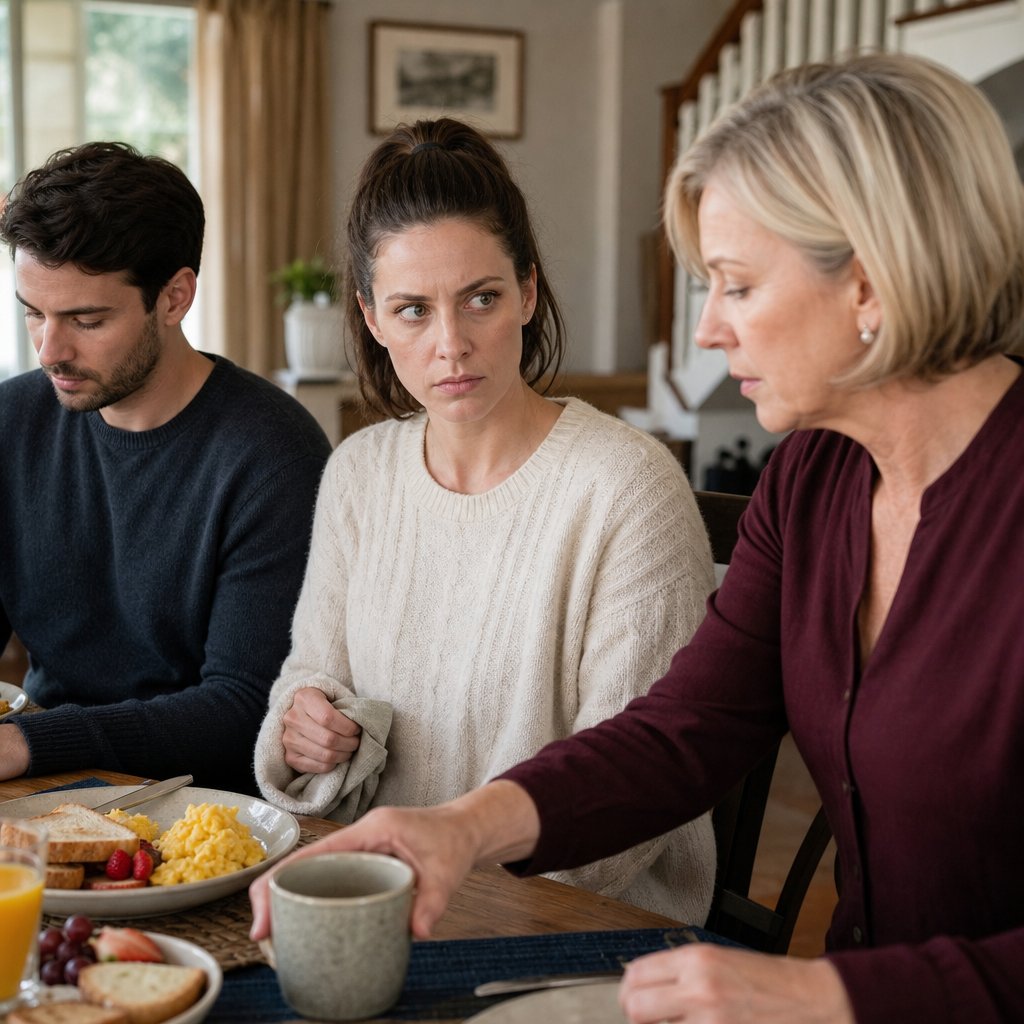
Sunday brunch was supposed to be leftovers and laughter—post-wedding decompression with Nate’s parents at their house. Instead, it felt like an interrogation wrapped in linen napkins.
Nate’s mother, Patricia—silver-blonde bob, pearl studs, lipstick that never smudged—poured coffee like she was performing control. Her eyes didn’t leave me when she asked, casually, “So when do we get the wedding footage for the family archive?”
“I’m still going through it,” I said, keeping my voice even. My fork hovered over a plate of scrambled eggs that suddenly smelled too sulfurous. Nate sat beside me in a plain charcoal sweater, shoulders slightly hunched, staring at his plate like it had instructions on how to survive.
Patricia’s smile stayed in place, but her tone sharpened. “Don’t take too long. These things get… lost.”
I felt heat climb my neck. “Why?” slipped out before I could sand it down.
Patricia set her mug down with a soft, precise clink. “Because families keep records,” she said. “And because you need to stop digging for problems, Lena.”
My pulse thudded in my ears. “Digging?” I repeated, and Nate’s knee bumped mine under the table—hard. Not an accident. A signal.
Patricia leaned in just slightly, close enough that I could smell her perfume—powdery and expensive. “You had a beautiful wedding,” she said, each word careful. “Don’t ruin it by hunting for shadows.”
I stared at her, and the realization landed like a slap: she wasn’t worried about me being upset. She was worried about me finding something.
And then, without looking at me, she added, “By the way—who’s Mara?”
The Name That Broke Her Face
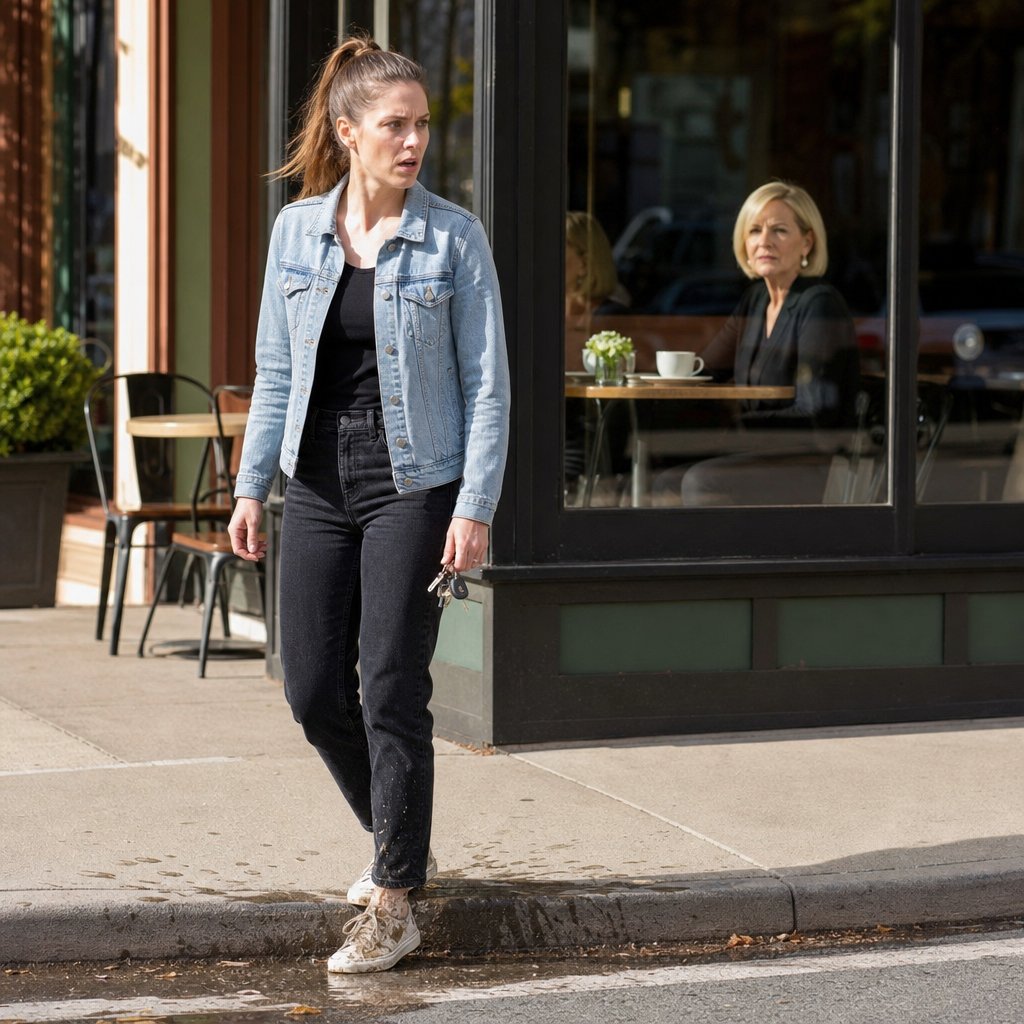
Patricia’s voice stayed syrup-sweet as she stirred her coffee, like she hadn’t just slid a razor under my skin. “By the way—who’s Mara?”
I walked out of that café with my stomach doing that slow, nauseous roll, the kind you get when you realize you’ve been smiling in a room full of people who hate you. Outside, the air smelled like wet asphalt and cinnamon from the bakery next door. I called the only person I knew who floated between my world and Nate’s without belonging to either: Jessa Kline.
Jessa picked up on the second ring, breathy like I’d interrupted a run. “Lena? What’s up?”
“Do you know someone named Mara?” I kept my voice flat, but my fingers were shaking so hard my keychain clinked against my wedding band.
There was a pause so sharp I could hear her swallow. “I… I thought you knew about Mara.”
My heart slammed once, stupidly hopeful—then dropped. “Knew what?”
Silence. A car whooshed past, spraying gutter water onto my shoes. “Jessa?”
“I can’t,” she whispered, and the line went dead.
I called back. Straight to voicemail. I texted—nothing. Then I watched her little profile icon vanish like she’d been erased, and a cold realization crawled up my spine: Mara wasn’t a random name Patricia tossed out. It was a test.
And I’d just failed it.
The Cropped-Out Girl Again
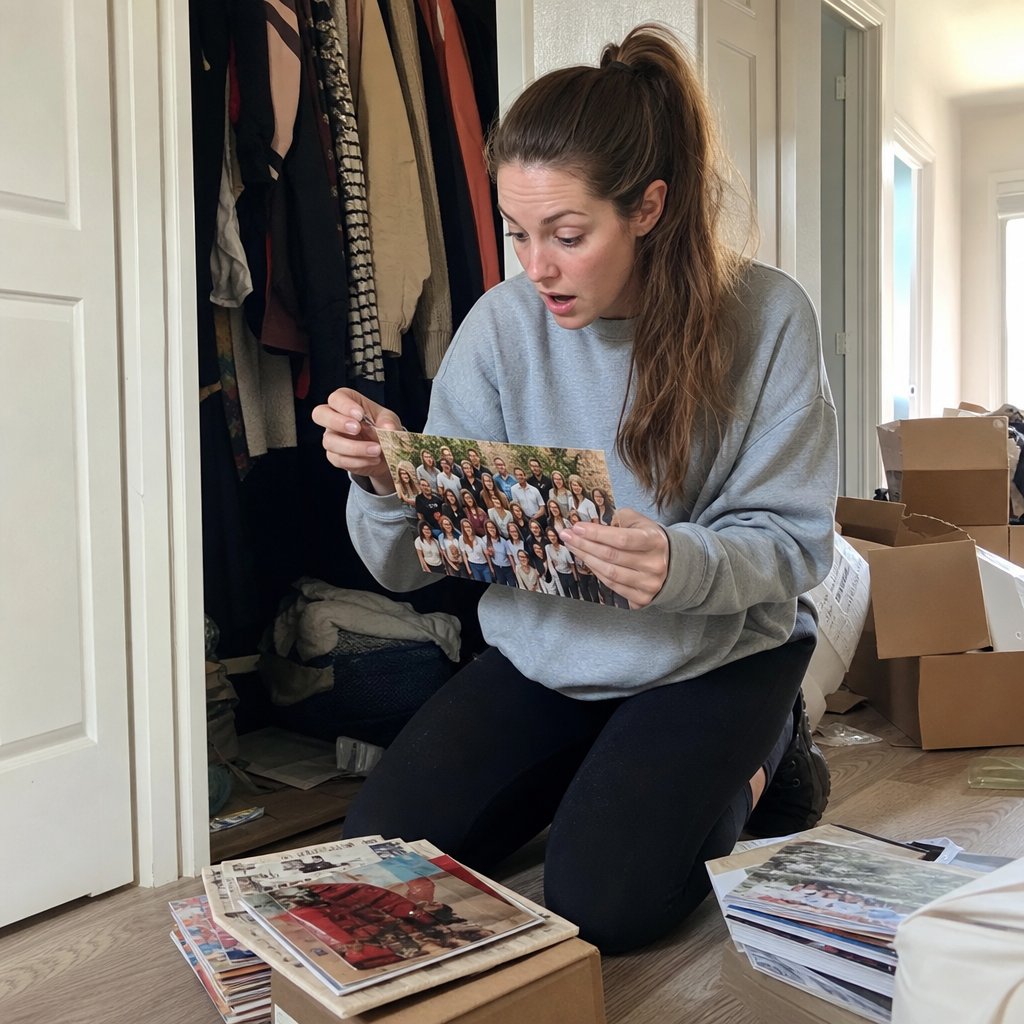
Jessa blocked me for twenty-four hours, which was almost worse than if she’d screamed at me. It meant she’d decided—consciously—to protect something. Or someone.
I went hunting the only way I could without anyone’s permission: through old boxes in the hall closet, the ones Nate always called “junk” and never touched. Dust puffed up when I yanked the lid off, that dry-paper smell like forgotten libraries. Inside were photo strips, thrift-store frames, and a college scrapbook his mom had “helpfully” dropped off after we got engaged.
There it was—an oversized group photo from some campus lawn. Sun-bleached grass, red plastic cups, everyone squinting into the light. Nate was in the center, baby-faced, one arm slung around a guy in a backward cap.
And at the far edge—half in the frame, half cut off like an accident—was her.
The same sharp cheekbones. Dark hair pulled back. That exact, unsettling stillness in her expression, like she was the only one not pretending. I felt my throat go tight because the cropping wasn’t natural. Someone had trimmed the edge so close it clipped her shoulder, like the photo had been altered with scissors and spite.
I flipped it over with trembling fingers. No writing. Just old tape marks and the faint impression of where a label used to be—peeled off.
My hands went cold. This wasn’t “a stranger behind the cake table.” This was a woman who’d been in Nate’s life long enough for someone to try to erase her from his past.
And now she was back.
His Face Went Blank
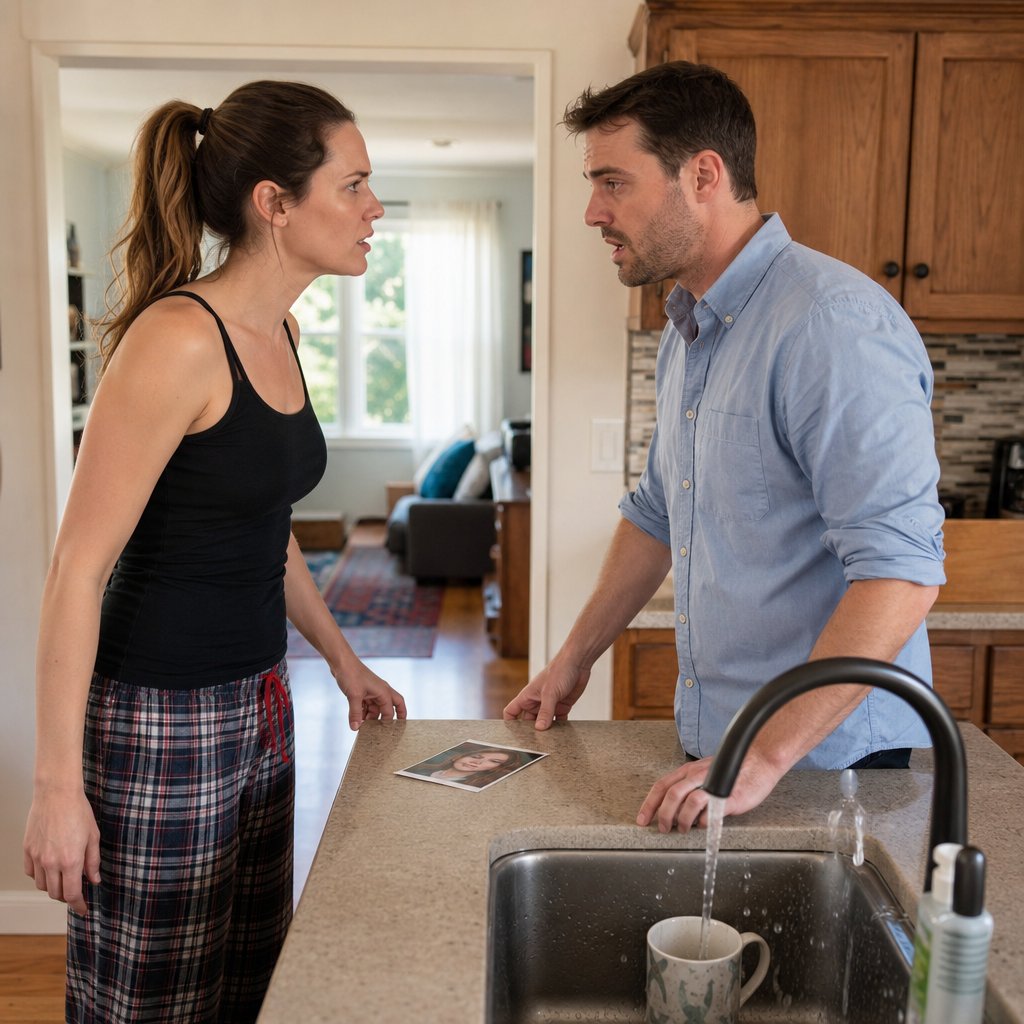
I didn’t bring the photo to Nate like a normal person. I brought it like a weapon.
He was in the kitchen in his work shirt, sleeves rolled up, rinsing a mug like he had all the time in the world. The sink ran too loud, the water a steady hiss. I set the photo on the counter between us and watched his eyes flick down.
“Who is she?” I asked.
Nate barely glanced at it. “I don’t know.”
My laugh came out wrong—sharp, disbelieving. “You don’t know the woman who shows up behind our cake table and makes a warning gesture at you on our wedding video?”
He turned the faucet off. The sudden quiet felt violent. “Lena, I swear to God, I’ve never seen her.”
“Then why did you look like you saw a ghost?” My voice climbed in spite of me. “I watched your face. The second she stepped into frame, you went paper-white. Your mouth literally dropped.”
His jaw worked like he was chewing something he couldn’t swallow. He reached for the photo, then stopped, hand hovering. “I didn’t— I don’t remember that.”
“You don’t remember your own face?” I leaned in, close enough to smell the dish soap on his hands. “Her name is Mara. Patricia asked me like it was a joke.”
That did it. A single tremor crossed his expression—so fast I almost missed it—before he forced his features back into place. “Mara?” he repeated, too carefully.
And in that tiny, controlled repetition, I saw it: not confusion.
Recognition.
He swallowed hard and reached for his phone—face-down on the counter—like he needed an anchor, and I realized he wasn’t preparing to answer me.
He was preparing to call someone.
The $200 “Surprise” Tip
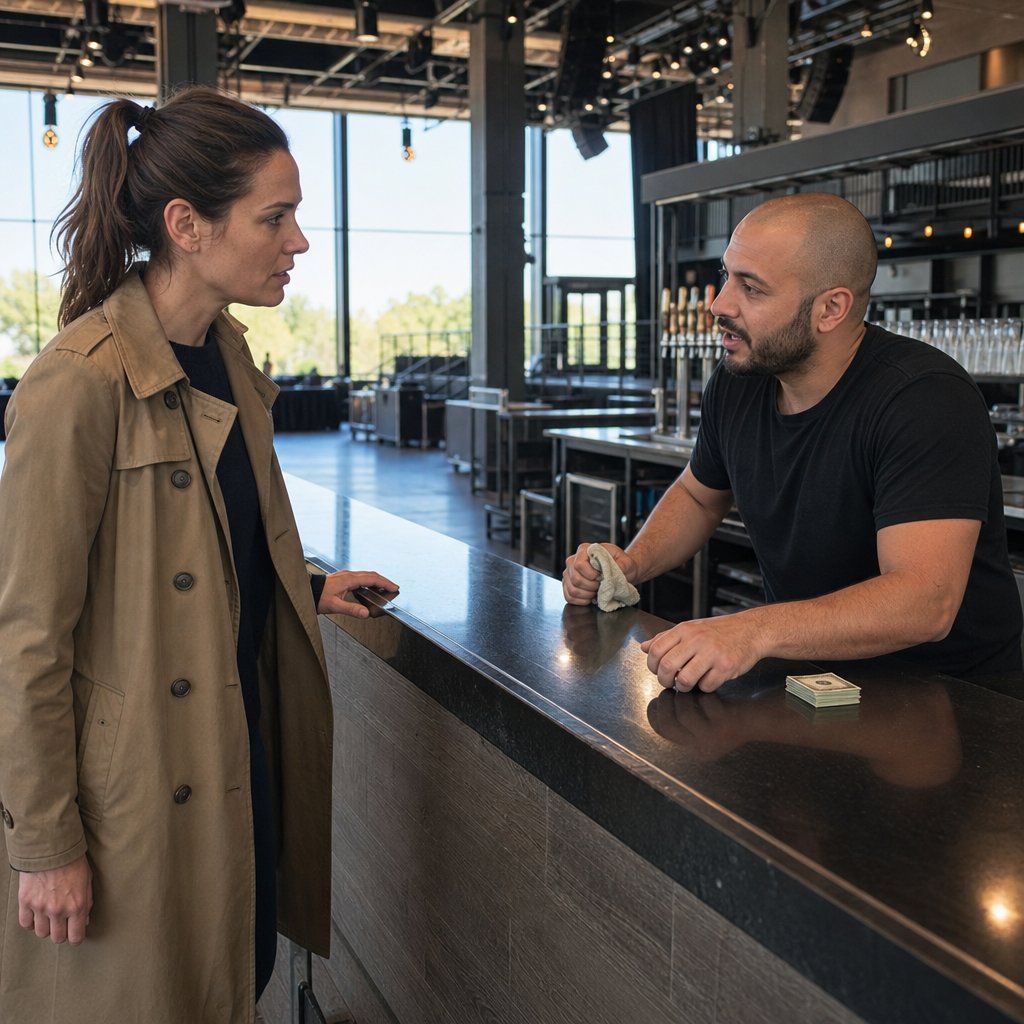
I went back to the venue alone, the way you go back to the scene of a car accident when you can’t stop replaying the impact.
The coordinator recognized me and did that sympathetic head tilt that makes you want to scream. “Everything okay?”
“I just forgot something,” I lied, and my voice sounded too bright. My hands stayed shoved in my coat pockets so no one would see them shaking.
The bar smelled like citrus cleaner and old limes. Behind it, a bartender with a shaved head and a neatly trimmed beard was wiping down the counter in slow circles. His name tag said Cal, but I didn’t say it out loud. I didn’t want to be memorable.
“Can I ask you something about the reception?” I kept my tone casual, like I was asking about a cocktail recipe. “There was a woman… dark hair. Gold dress.”
His cloth paused. “Yeah.” He looked up fully now, eyes narrowing as he searched his memory. “She tipped me two hundred cash. Like, folded bills. Said it was for being ‘discreet.’”
My stomach dropped. “What did she want?”
Cal leaned closer, lowering his voice. “She asked where the card box would be. Specifically. Said it was ‘for a surprise.’”
My skin prickled. I pictured her behind the cake table, the quick hands, the way she slid toward the gift table like she belonged there. “Did she take anything?”
Cal shook his head. “I didn’t see her steal. She wasn’t drunk. She was… focused.” He frowned. “Like she was on a timer.”
A timer. I heard Patricia’s voice in my head again—stop digging—and suddenly the $200 didn’t feel like a tip. It felt like a down payment.
Cal opened his mouth like he was about to add something else, something he’d held back, and my pulse roared in my ears waiting for it.
The Envelope Nobody Mentioned
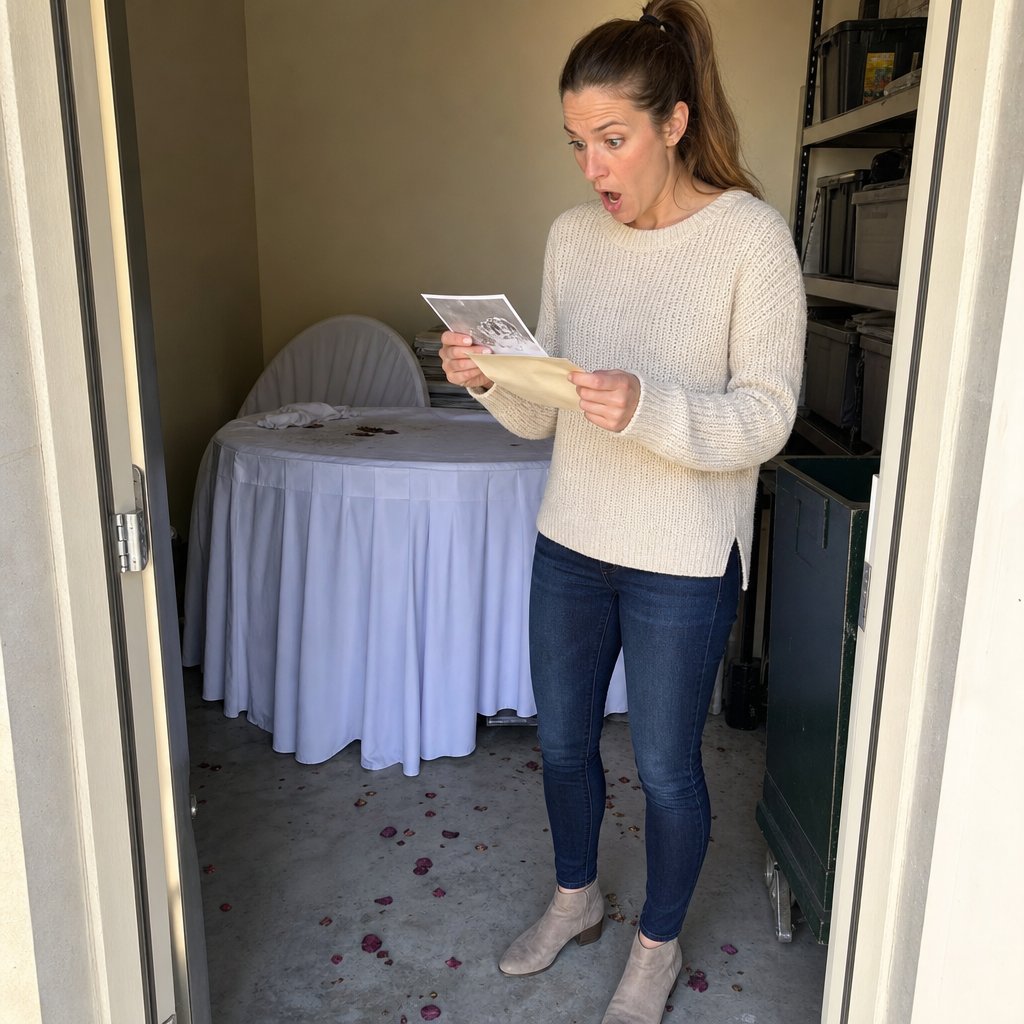
Three days later, I was packing up the last of the wedding décor from the venue storage closet because apparently I was still the only adult in our marriage who finished things.
The sweetheart table—our sweetheart table—was propped against the wall, its white skirt folded up like a secret. I tugged it free and a faint scent of wilting roses puffed out, trapped fabric and old petals.
Something slid to the floor with a soft papery slap.
An envelope.
Unopened. Slightly bent. Addressed to me in blocky handwriting that didn’t match anyone I knew. No return address. My name looked too deliberate, like it had been practiced.
I stared at it for a full ten seconds before I touched it, like it might bite. My fingertips were cold when I finally tore it open.
Inside was a printed still image—grainy, like it had been pulled from the wedding footage. The woman in gold stood behind the cake table, her face caught mid-glance. Someone had circled her in thick red marker so aggressively the ink bled through the paper.
And beneath it: a note on plain white paper.
She isn’t who they told you he was married to first.
My vision tunneled. Married to first. My mouth went dry so fast my tongue felt stuck to my teeth. I reread it, hoping the words would rearrange into something less impossible.
They didn’t.
Behind me, the storage door creaked like someone had shifted their weight on the other side, and I realized I wasn’t alone with the envelope in my hands.
The Signature That Didn’t Match
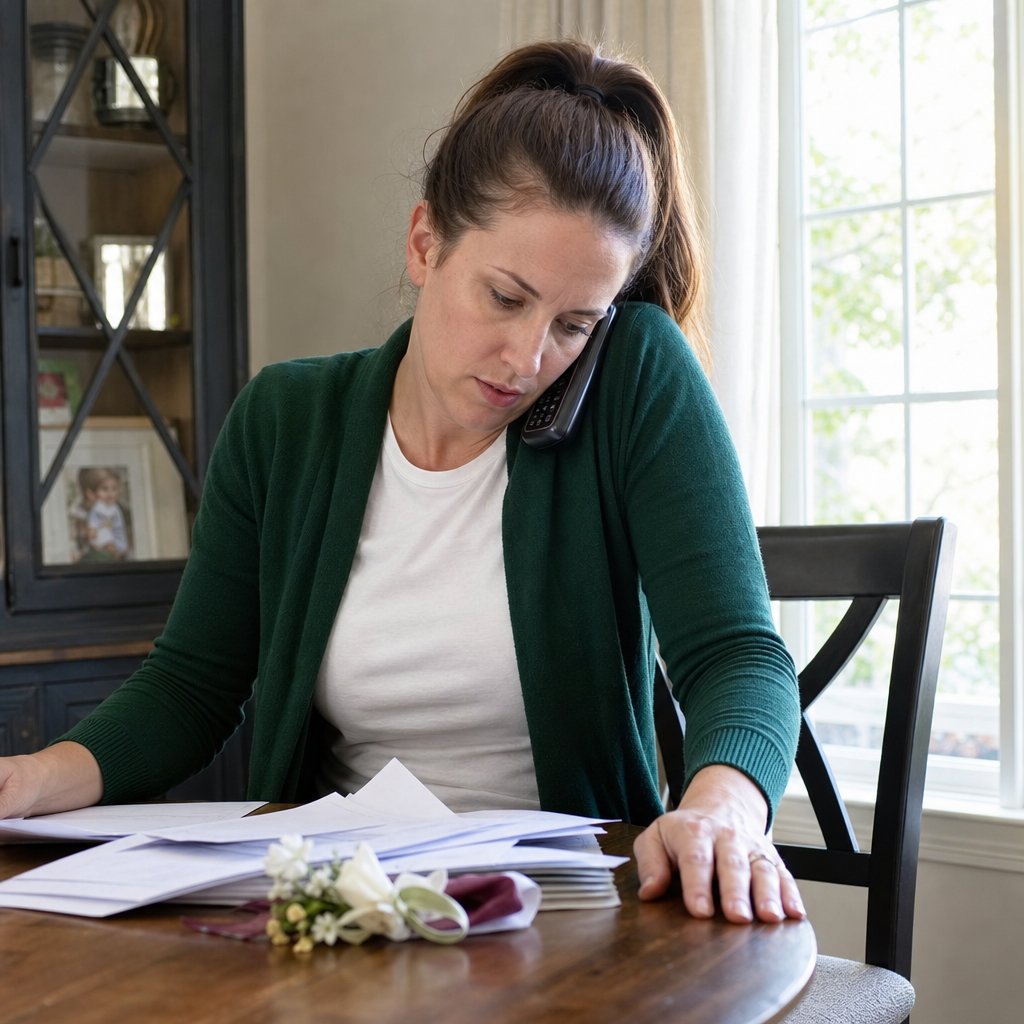
I didn’t tell Nate about the envelope. I didn’t tell anyone. I drove straight home and dug through our wedding file folder like I was trying to perform surgery with shaking hands.
The marriage license copy was there, tucked between vendor receipts and a pressed, flattened corsage. I’d looked at it before—smiled at it, even—like a stamp made it sacred.
This time I looked at the officiant’s signature.
And then I pulled up the sample signature Nate’s mother had emailed months ago, printed and tucked in the same folder because she’d insisted we “keep everything neat.” The loops didn’t match. The slant was wrong. The flourish at the end was completely different, like two different people had written the same name.
My breath came shallow. I called the officiant’s number off the contract, gripping the edge of the counter until my knuckles ached. When he answered, his voice was cautious, like he already knew why I was calling.
“This is Lena,” I said. “From the Collins wedding.”
A pause. Then, quietly, “Yes. I remember.”
“Did you sign our license?”
He exhaled, long and miserable. “I did. But… there was a situation beforehand.”
My throat tightened. “What situation?”
“A woman cornered me,” he said. “She was crying. Begging me for one last chance to stop it.”
Stop it. My stomach turned. “Who was she?”
He hesitated just long enough to tell me he knew the answer was dangerous. “She said her name was Mara.”
I felt the room tilt, like the floor had shifted under the house. “Why would she—”
“Lena,” he cut in, voice suddenly urgent, “who gave you my contact information?”
Because in his tone, I heard it: he wasn’t afraid of me.
He was afraid of whoever else might be listening.
Mara’s First Sentence
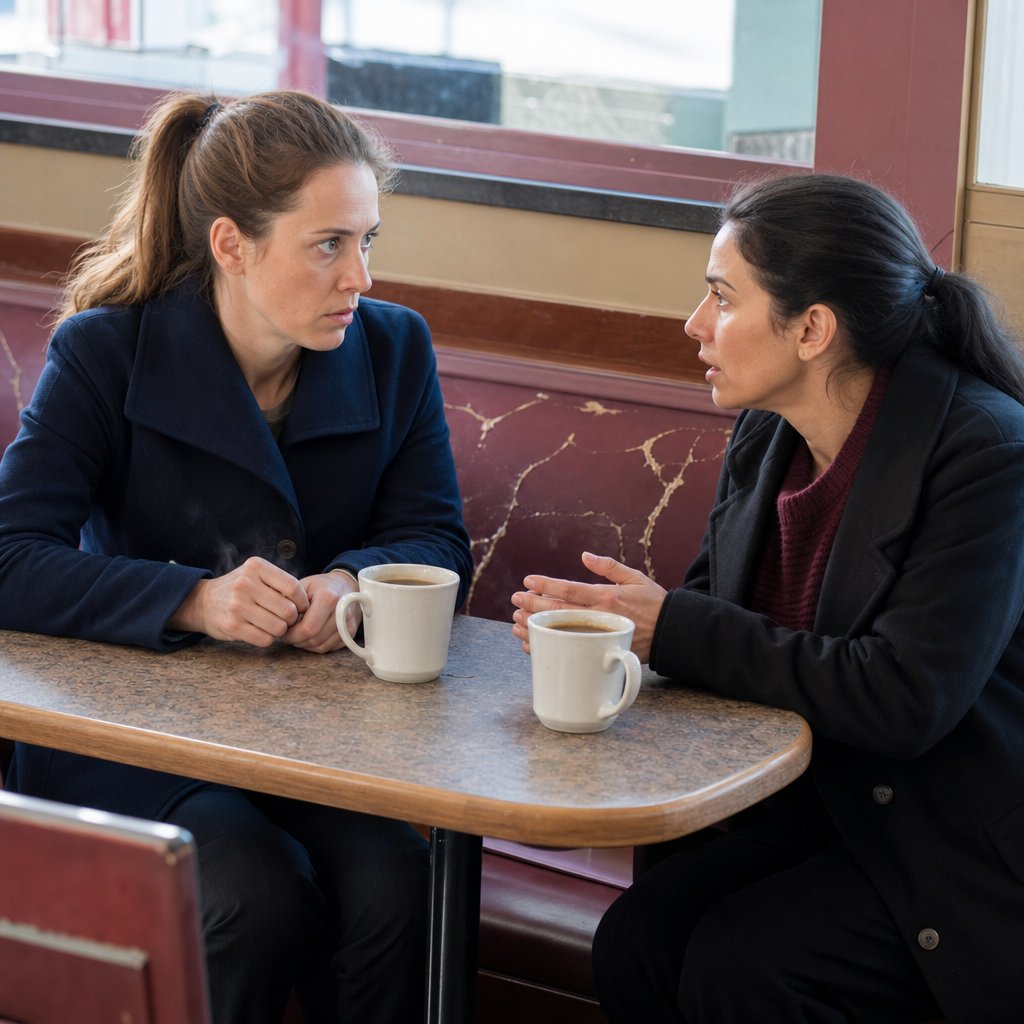
I met her in a public place because I wasn’t stupid. I was just desperate.
The diner smelled like fried onions and burnt coffee, the kind of place where the booths are cracked and everyone pretends not to listen. I slid into a vinyl seat and kept my back to the wall. My ponytail felt too tight, like it was pulling my scalp into a headache.
She walked in wearing a plain black coat over a burgundy sweater, dark hair pulled back cleanly, no jewelry except a thin silver ring on her right hand. She looked smaller than she had on the footage, but the stillness was the same—controlled, watchful. Her eyes flicked to me and held, like she’d been waiting for this longer than I had.
“Lena,” she said, not as a greeting but as a confirmation.
My voice came out thin. “You’re Mara.”
She sat without asking. “I didn’t steal your money.”
I flinched anyway, because that meant she’d expected me to accuse her. “Then why were you near the card box? Why were you behind the cake table making—” I mimed the gesture, my fingers stiff with rage.
Her mouth tightened. “That wasn’t a threat. It was a warning. I tried to get something to you before the family intercepted it.”
“What family?” I snapped. “Nate’s?”
Mara’s gaze didn’t waver. “Yes.”
My heart thudded hard enough to make my chest ache. “Why would they—”
She leaned forward, lowering her voice to a knife edge. “Because I’m still his legal wife.”
The words hit so cleanly I stopped breathing. The clatter of plates behind the counter seemed to fade. “That’s not possible,” I whispered.
Mara’s eyes were glossy but furious. “The divorce never finalized.”
I stared at her ringless left hand, at the calm way she held her coffee cup, and all I could think was: if she was telling the truth, then I wasn’t a bride.
I was a mistake they dressed in white.
Proof Routed To His Parents

Mara didn’t pull out a dramatic folder like in the movies. She slid a thick stack of receipts and mail stubs across the table like she was done begging to be believed.
“I kept everything,” she said. Her voice shook once, then steadied. “Because nobody believes the woman they’ve already decided is ‘crazy.’”
I flipped through them with numb fingers. Certified mail slips. Payment confirmations. A copy of a court notice—no readable text from where I sat, but the stamps and dates were unmistakable. And every time there was an address line, it wasn’t Nate’s old apartment. It wasn’t his office.
It was his parents’ house.
My stomach lurched. “Why would it go there?”
“Because she changed it,” Mara said, and didn’t have to say who. “Your Patricia. She ‘helped’ him file. She offered. She insisted.”
My hands went cold around the paper. I could almost hear Patricia’s voice—bright, managerial—telling me she loved checklists.
Mara tapped the stack. “And voicemails.” She reached into her bag and set a small recorder on the table, not playing it, just letting it exist like a loaded gun. “He says he’ll handle it. He says his mom has it. He says ‘just wait.’ Over and over.”
I swallowed hard. “Nate told me he was divorced.”
“He told you what he needed you to hear.” Mara’s eyes were wet now, but her chin lifted. “Ask him if he ever verified. Ask him if he ever saw the final decree.”
That night, I confronted Nate in our living room with the stack in my lap, the paper edges biting my palms. He stared at the address, then at me, and something in him collapsed.
“My mom handled the filing,” he said hoarsely. “I… I never checked.”
The room felt suddenly too small for the air in it. “So what are we?” I whispered.
Nate’s eyes darted toward the hallway like he expected Patricia to step out of the shadows. “Lena,” he said, voice cracking, “I think— I think our wedding might be—”
He couldn’t finish the sentence.
The Dinner Before I Pressed Play
The videographer met me in a parking lot behind his studio like he was handing off contraband. He was a young guy with tired eyes and a baseball cap, shifting from foot to foot. He didn’t want to look at me.
“I’m not supposed to give this out,” he muttered, passing me a plain drive in a small plastic case. No screens. No proof in the moment—just the weight of it in my hand. “Someone offered money for a clean edit. Said it would ‘save the family embarrassment.’”
“Patricia,” I said, and it wasn’t a question.
He didn’t answer, which was answer enough.
When I watched the raw footage at home, I felt like I was watching a crime happen in slow motion while everyone smiled. The card box chaos wasn’t Mara. It wasn’t some mysterious outsider. It was Nate’s cousin—Evan, in his too-tight suit—sliding envelopes into his inner jacket pocket with the casual ease of someone taking what he’d been told was his. In the background, Patricia leaned close to the videographer’s assistant, whispering like she was giving stage directions. And Mara—Mara fought to get into frame, her face tight with panic, like she was trying to be seen before she was erased.
I didn’t sleep. I didn’t cry. I planned.
Two nights later, I invited Nate’s parents and his cousin to a “thank-you dinner.” I set the table with the leftover wedding candles because I wanted the whole house to smell like vanilla and lies. Nate sat beside me, rigid, eyes bloodshot, while Patricia laughed too loudly at nothing.
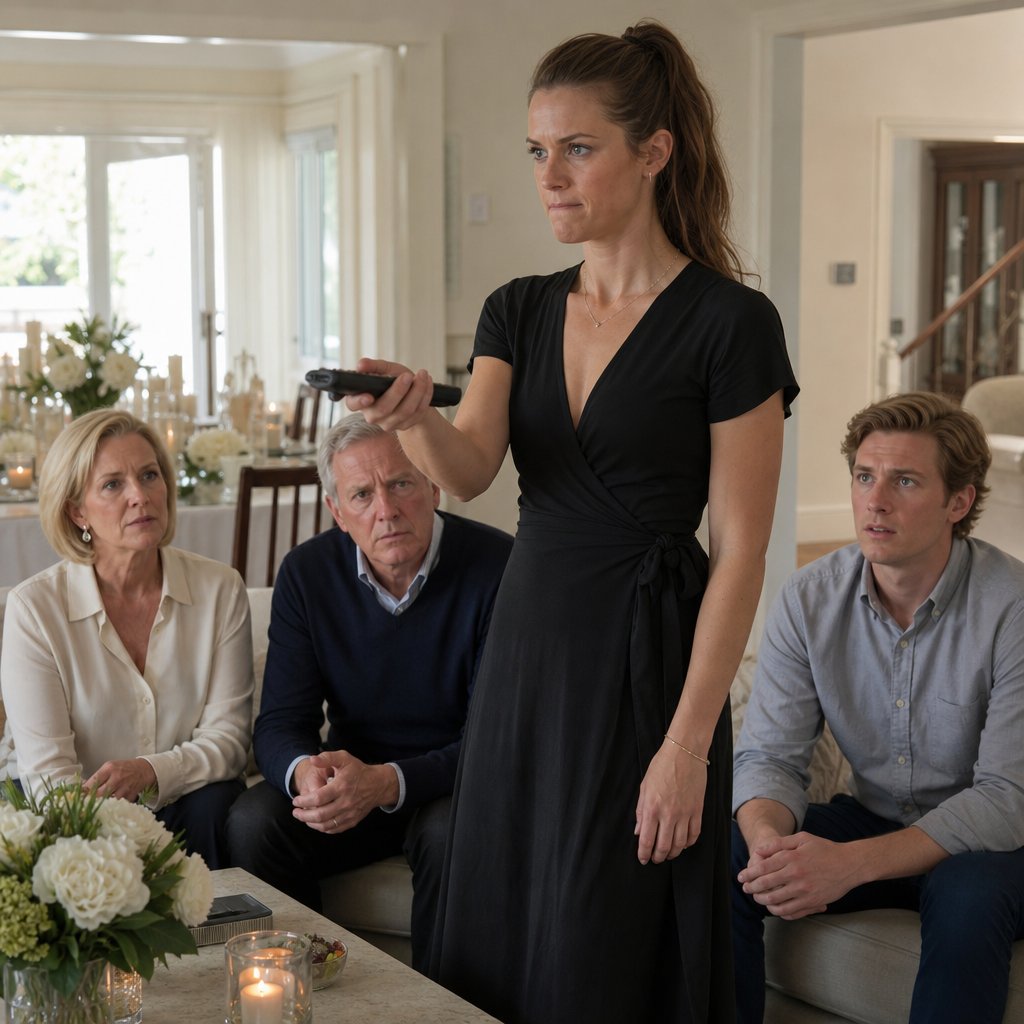
After dessert, I stood and walked to the living room where the TV was already on, the remote heavy in my palm. Everyone followed, still smiling, still unsuspecting.
“I found something from the wedding,” I said, sweet as frosting. Patricia’s eyes sharpened.
I lifted the remote, thumb hovering, and for the first time all night Nate looked directly at me—silent, pleading—like he knew exactly what the footage would do to his family.
And I pressed my thumb down.
Would you have confronted the woman tapping her ring?