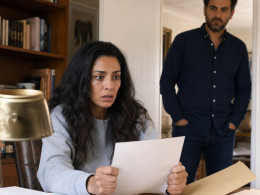




The Email Draft Was Open
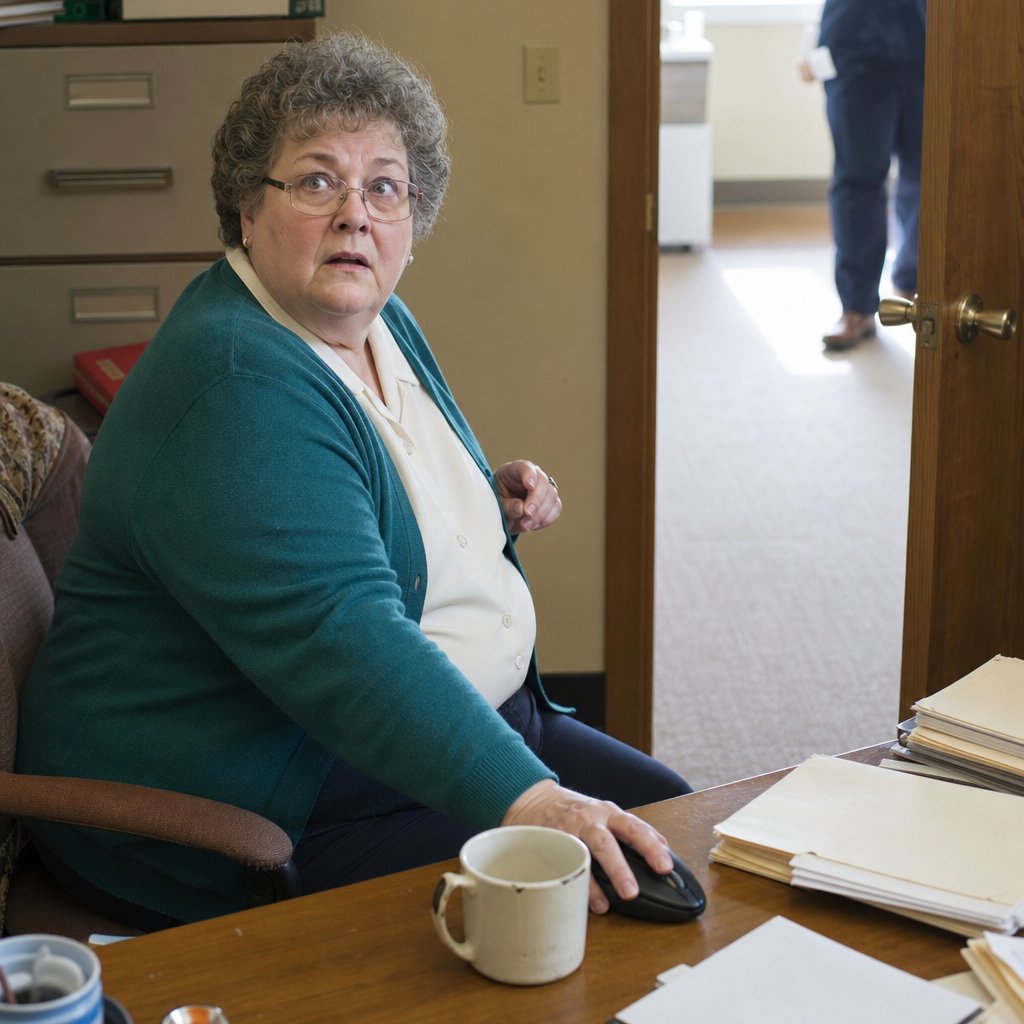
My cursor blinked inside a company-wide email draft like it was breathing. Subject line: After-Hours Access: Findings. And there, in the middle of a neat bullet list, my name was highlighted in yellow—twice—like somebody had taken a highlighter to my reputation and pressed down hard.
Then I saw the third line.
Badge 0417.
Not a person. Not a name. Just a number sitting there like a ghost that knew where I’d been.
I could smell the burnt office coffee from the communal pot behind me—stale, bitter, the kind that clings to your sweater. My hands went cold anyway. I hadn’t opened a draft like that. I hadn’t searched for “findings.” And I definitely hadn’t highlighted myself like a target.
My glasses slid a little down my nose as I leaned closer, the yellow blocks glaring against the white page. Whoever wrote it knew exactly how to make it look official. Calm language. Neutral tone. The kind of email that pretends it’s about “process improvements” while it quietly decides who gets to keep their job.
Footsteps scuffed outside my half-open door, slow and deliberate, like someone wasn’t trying to be quiet anymore. I reached for the mouse to close it, and the draft shifted—like someone had just nudged it from somewhere else—and the cursor jumped down to a new blank line under my name.
As if it was about to add one more detail I didn’t know yet—
The Guard Knew Too Much
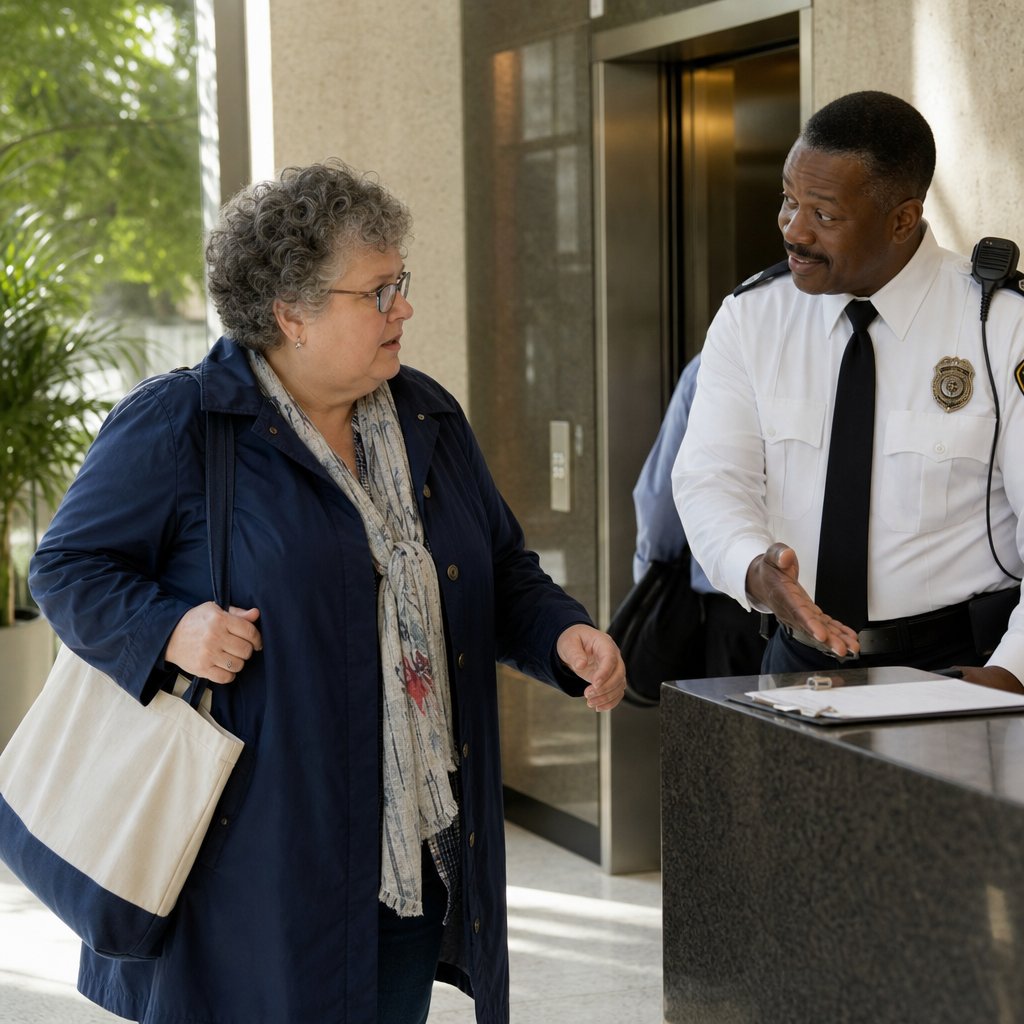
The next morning, the lobby felt like it always did—too bright, too cold, the air smelling faintly of lemon cleaner and wet umbrellas. I was halfway to the elevators when the night guard on day rotation, Lionel, lifted his chin and smiled like we shared a private joke.
“You two were here past midnight again,” he said.
Again. Like it was a habit. Like it was a story he’d been enjoying for weeks.
I stopped so fast my tote bag strap bit into my shoulder. “What do you mean, again?” I asked, keeping my voice light the way women learn to do when something is suddenly dangerous.
Lionel’s uniform shirt was crisp, his badge clipped straight, his eyes sliding past me toward the revolving door as if he expected Gavin to appear on cue. “Just saying,” he went on, still smiling. “Some people have real dedication.”
Dedication. That was the kind word for it. The other kind word was evidence.
I could feel heat climb up my neck under my gray perm. Gavin and I had stayed late on deadlines, sure—sprint planning, postmortems, the endless “just five more minutes” that turned into hours. Innocent to us. Damning on paper. And now the guard was counting us as a pair.
I forced a laugh that sounded wrong even to me. “Must be mixing me up with someone else,” I said, and Lionel’s smile twitched like I’d missed the punchline.
“Nah,” he said softly, and he tapped the sign-in clipboard with one finger—no names visible from where I stood, just the gesture—“I remember faces.”
Then the elevator dinged behind me, and I realized Lionel wasn’t the only one watching.
The Invite With No Agenda
The calendar invite landed like a slap.
Facilities Audit: Access Review.
No agenda. No meeting notes. Just a time block and a guest list that made my stomach drop—my entire department CC’d, right down to the interns. It wasn’t a meeting. It was a public implication. A neon sign over our heads that said: There’s something to find.
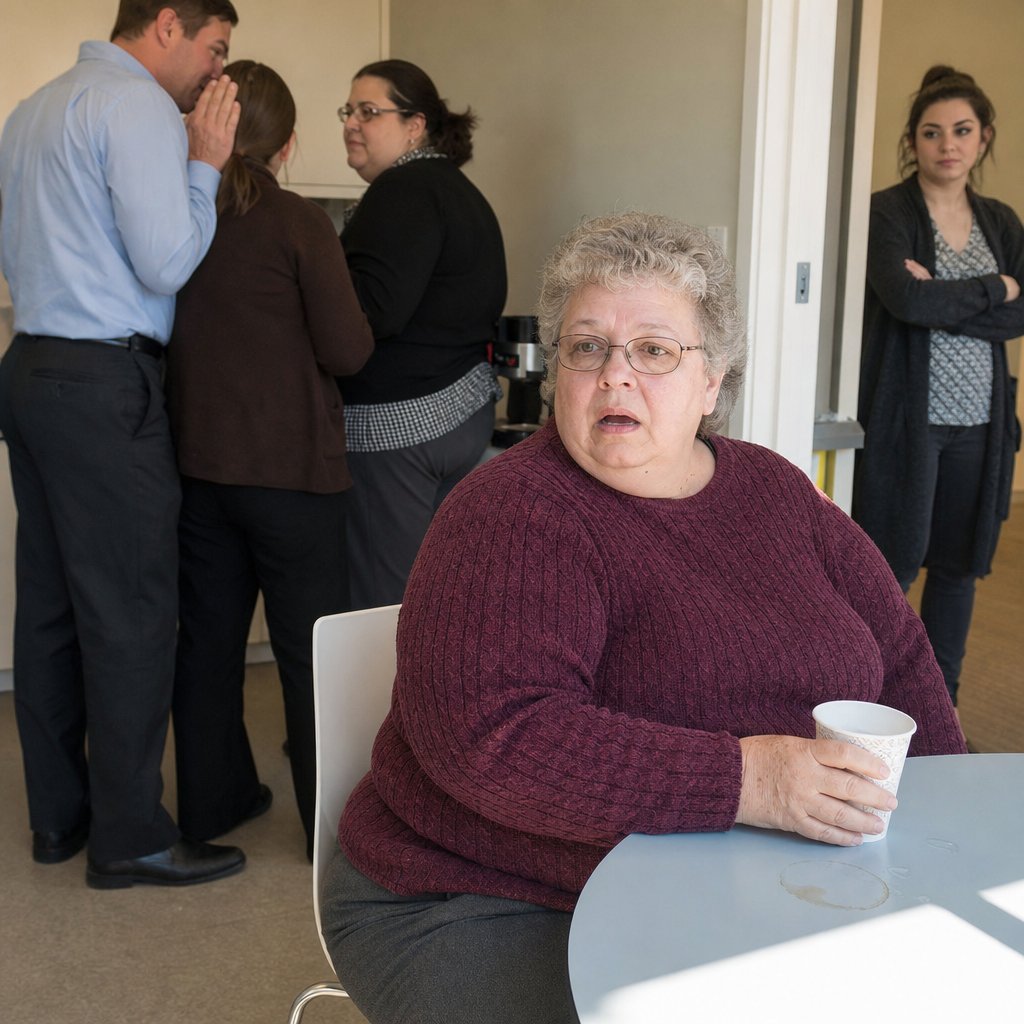
I sat in the break room clutching a paper cup of water I didn’t drink. The ice had melted and left a ring on the table, a perfect little halo of condensation like a petty omen. Around me, people laughed too loudly at nothing, the way office laughter always gets when everyone is pretending they aren’t listening.
Mara—my direct report, twenty-something, sharp eyeliner, always a little too eager—walked in and stopped when she saw my face. Her smile flickered. She glanced at the others, then back to me, like she was doing mental math.
Gavin wasn’t there yet. Of course he wasn’t. He had that talent for arriving right after the tension peaked, like he preferred to step into a room that was already on fire.
I opened my mouth to say something neutral—something managerial—when my coworker Ben leaned over the counter and murmured, “Facilities doesn’t do audits unless someone asked for one.”
“Who asked?” I whispered.
Ben’s eyes slid toward the hallway that led to Compliance, and his voice dropped even lower. “If they CC’d everyone, they want everyone to know. That’s the point.”
My phone buzzed again, a second notification from the same invite—someone had added a new attendee. And the name that appeared made my throat go tight.
Priya Asked About My Badge
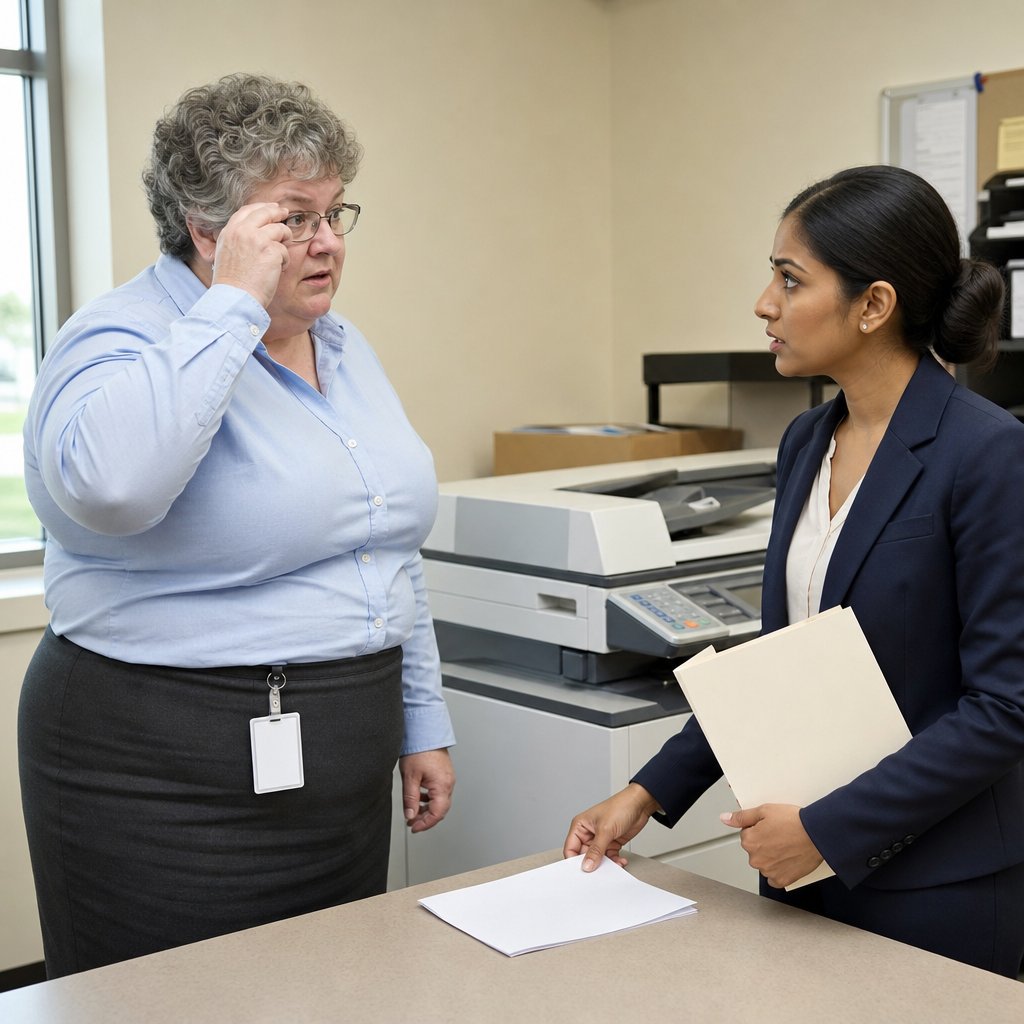
Priya from Compliance caught me near the copy room like she’d been waiting for the exact moment I was alone.
She looked polished in that way that always reads as intentional: sleek dark hair in a low bun, precise eyebrows, a navy blazer that never wrinkled. Her smile was casual, but her eyes were doing inventory.
“Quick question,” she said, voice light. “Do you ever lend out your badge?”
I actually laughed. It came out sharp. “No,” I said. “Who does that?”
Priya’s gaze flicked to the badge clipped at my waistband, then back to my face. “You’d be surprised,” she replied, like she’d already seen the surprise in spreadsheet form.
The copy room smelled like warm toner and paper dust. The machine behind us hummed, then clicked, then went quiet—like it was listening too. I could hear my own heartbeat in the pause she let stretch, the silence doing more work than her words.
“This is about the after-hours logs,” I said, not a question.
Priya tilted her head, a tiny shrug that meant nothing and everything. “Facilities is doing a review,” she said. “Compliance is… supporting.”
Supporting. Like I was a chair they were testing for weak legs.
I adjusted my glasses with fingers that suddenly felt clumsy. “Why are you asking me?”
Priya’s smile thinned, just a fraction. “Because your badge is consistent,” she said carefully. “Patterns are easier to interpret when they’re consistent.”
Consistent. My name highlighted in yellow. Lionel’s “again.” A company-wide email draft with the word “findings.”
Priya reached into her folder and slid something forward—not close enough for me to see, just enough to make my skin prickle. “One more thing,” she added. “Badge 0417—does that number mean anything to you?”
And the way she watched my face told me she already knew the answer she wanted.
Gavin’s Joke Didn’t Land
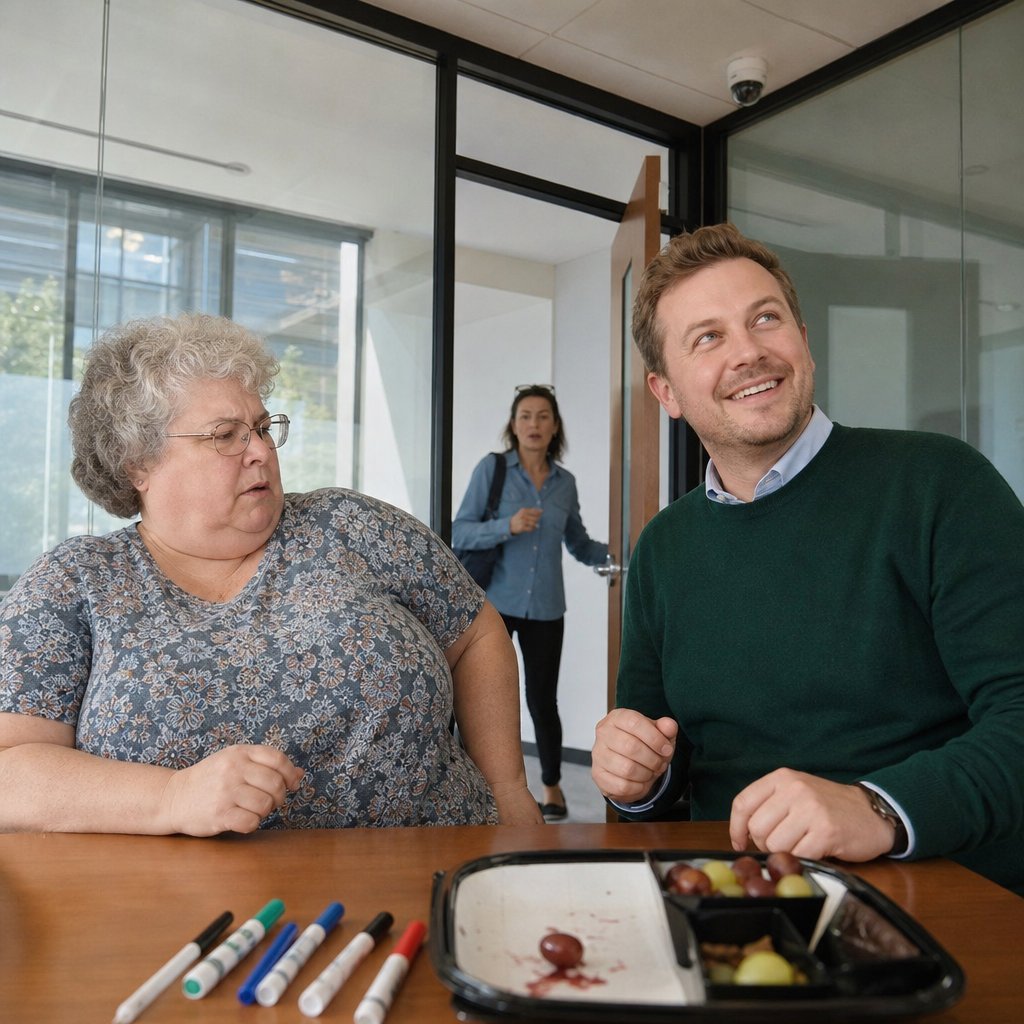
Gavin finally showed up in the Sprint Room like nothing in the world was happening.
He had that easy, charming face—late 30s, sandy hair always slightly messy on purpose, stubble that made him look perpetually “in the trenches.” Today he wore a green crewneck over a collared shirt, sleeves pushed up like he’d been working with his hands instead of with words.
He dropped into the chair beside mine, close enough that my arm hair lifted from the heat of him. The whiteboard markers on the table smelled like cheap alcohol, and someone had left a smashed grape in the corner of the snack tray, purple juice staining the plastic like a bruise.
“Well,” Gavin said brightly, loud enough for the room, “if they’re auditing after-hours, I guess they’ll finally have to acknowledge we’re basically work-married.”
A couple people chuckled. Not because it was funny—because it was safer than silence.
I stared at him. “Don’t,” I said under my breath.
His grin stayed in place, but his eyes didn’t. They flicked past me—up and to the right—toward the little black dome in the corner where the hallway camera could see through the glass panel.
He looked at it like you look at a knife you didn’t know was on the table.
My stomach tightened. Gavin had never cared about cameras. Gavin had always acted like rules were suggestions for people without deadlines. But now he was measuring angles, distances, sight lines—like he’d just remembered we weren’t alone even when we were alone.
“Relax,” he murmured, still smiling for the room, his knee bouncing under the table. “This isn’t about you.”
“Then why is my name in it?” I whispered back.
His eyes met mine for half a second—sharp, warning—and then the door opened and someone stepped in, pausing like they’d been invited to catch us mid-sentence.
The Forward Everyone Saw

The team alias pinged during lunch, and the whole floor felt it at once—the tiny collective flinch when a message hits everyone. Conversations stuttered. Forks paused mid-air. Someone’s chair squeaked loudly in the sudden quiet.
By the time I walked into the kitchenette, people were already pretending not to look at each other. Ben was stirring his soup so hard it sloshed. Mara stood too straight near the fridge, hands clasped like she was about to testify.
An anonymous forward. No name attached. No explanation. Just the subject line, blunt as a threat.
Someone had attached screenshots of after-hours swipes—names highlighted with the same ugly yellow I’d seen in that draft. My name included. Not circled, not questioned. Highlighted like a dare: Say it isn’t true.
I didn’t need to see the images to feel what they did to the room. People’s eyes avoided mine with practiced delicacy, like I was suddenly fragile glass. And then there were the others—the ones who looked a beat too long, curiosity sharpening into judgment.
The smell of microwaved fish hit me like punishment. My throat tightened, and I tasted metal, the way I always did right before I cried in public and fought it down.
Gavin pushed through the crowd behind me, too fast, jaw set. He didn’t look at anyone. He looked at me, and for the first time his easy charm was gone.
“Who sent it?” I asked, voice low.
Gavin’s gaze snapped to Mara—just a flick, just a fraction of a second—then back to me. “Not here,” he said, and his hand closed gently around my elbow like he was guiding me away.
But Mara’s face had gone pale, and she was staring at Gavin like she’d just realized he could ruin her.
Gavin Blamed Someone He Rejected
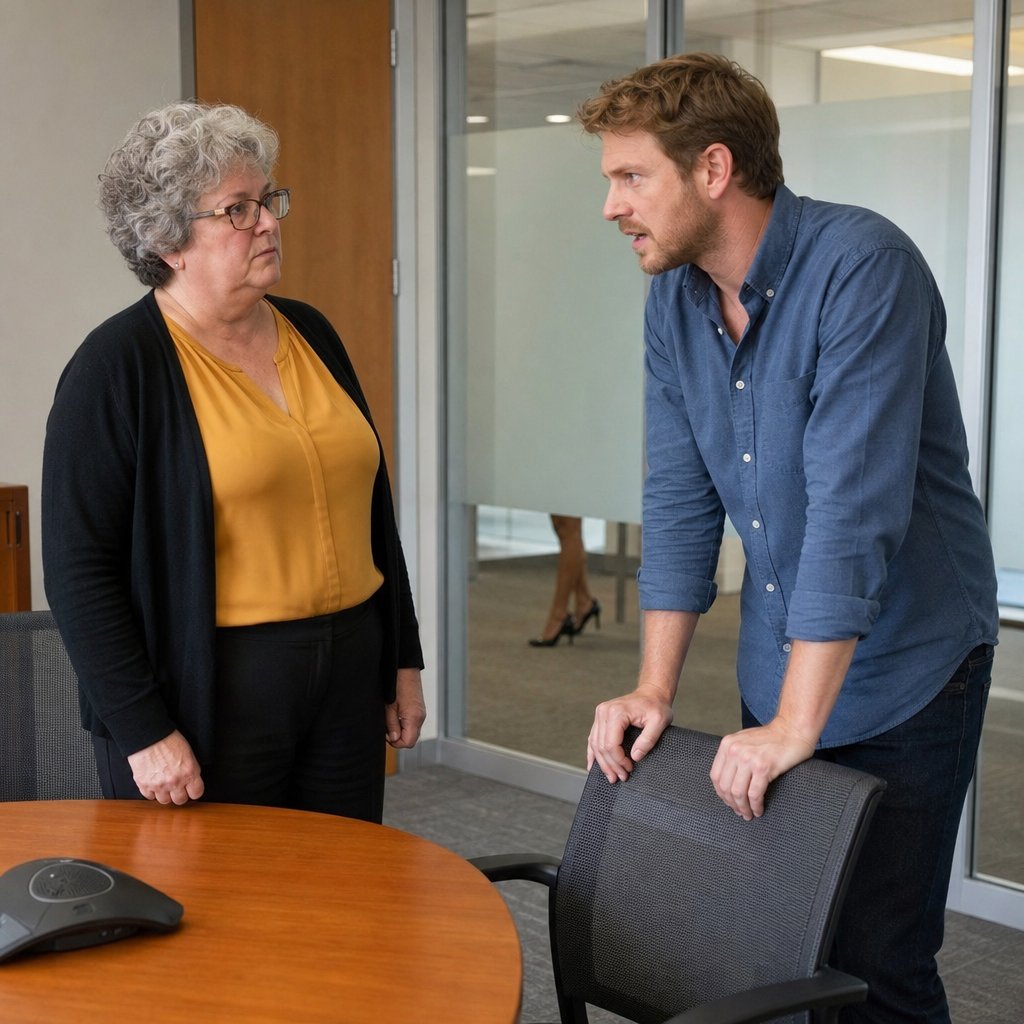
Gavin pulled me into a small conference room that smelled like dry-erase cleaner and old carpet. He shut the door with careful control, like he was trying not to make a scene while his whole body was one.
“This is about me,” he said immediately, pacing once, then stopping with his palms on the back of a chair. “Someone I rejected. They’re doing this to get at me.”
I stared at him through my glasses, my reflection faint in the glass wall behind him. “Rejected,” I repeated. “At work.”
He winced like I’d hit a bruise. “Not like that,” he said too fast, which told me it was exactly like that in at least one person’s mind. “It’s—complicated. But your name is collateral. They needed a second person, someone credible, someone… safe to imply.”
Safe. The word landed heavy. I was older, heavier, the office mom type everyone assumed was harmless. The perfect decoy. The perfect shield.
“So who?” I asked. “If you know who’s behind it, say it.”
Gavin’s eyes skittered away, to the corner of the room where the little speakerphone sat like an eavesdropping bug. He lowered his voice. “I’m not saying names in here.”
“Gavin,” I said, keeping my voice steady even as my hands shook. “My name is being broadcast like I’m some kind of scandal. You don’t get to be vague.”
He stepped closer, expression suddenly earnest, almost pleading. “Please. Trust me. If I say it out loud, it becomes real. And if it becomes real, they’ll go nuclear.”
“Who is they?” I demanded.
Gavin opened his mouth, then stopped. His throat bobbed. And then, from the hallway, I heard heels click past our door—slow, deliberate—followed by a soft pause, as if someone had stopped to listen.
HR Called It Culture
The HR invite came in the late afternoon, right when everyone’s blood sugar dips and their courage goes with it.
Culture Check-In.
I almost laughed until I read the description. Three times, like a chant meant to hypnotize: boundary-setting. boundary-setting. boundary-setting.
No one says “culture” when they mean “friendly.” They say “culture” when they’re about to put you on a list.
I walked down to HR anyway because I refused to look like I was hiding. The corridor outside their office smelled like floral air freshener fighting a losing war against stale carpet. On the wall hung framed photos of smiling employees at volunteer events—faces frozen in optimism that suddenly felt like propaganda.
Inside the waiting area, a woman I didn’t recognize sat with her hands folded over a notebook, posture too perfect. She looked up as I entered, and her eyes traveled over me in one slow sweep—my gray perm, my glasses, my cardigan stretched over my stomach—like she was matching me to a description.
My mouth went dry. Consultants. Investigators. External counsel. Whatever you call them, they’re never there for “check-ins.”
When the HR coordinator opened the door, she didn’t say my name. She said, “Come on back,” in the same tone nurses use right before they draw blood.
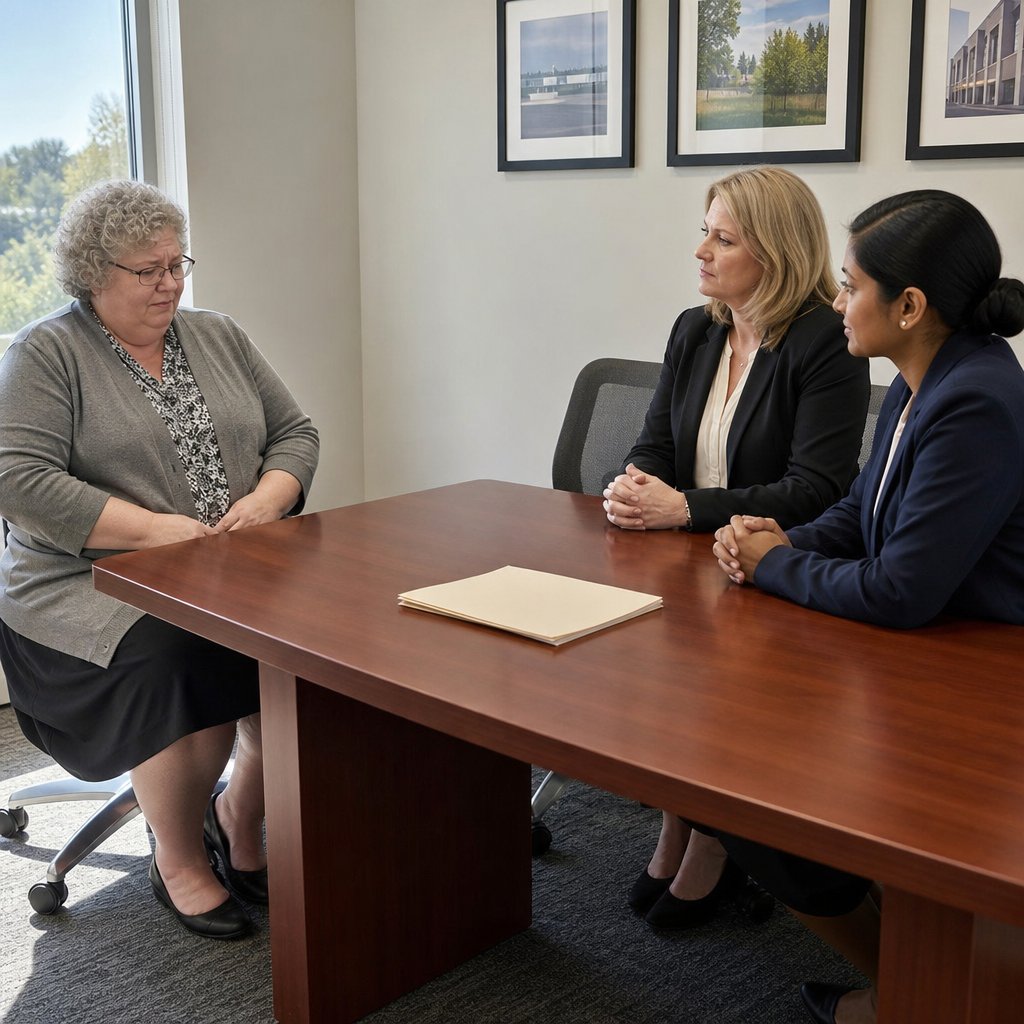
The conference room inside had two chairs on one side of the table and one chair on the other. Guess which side had the single chair.
I sat, smoothing my skirt with trembling fingers, and looked up to see Priya already seated beside an HR manager with a tight smile. On the table was a manila folder—thick—placed dead center like an offering.
The HR manager clicked her pen once and said, “We’re going to talk about your after-hours boundaries,” and Priya’s eyes didn’t blink.
Mara Brought Receipts Unasked
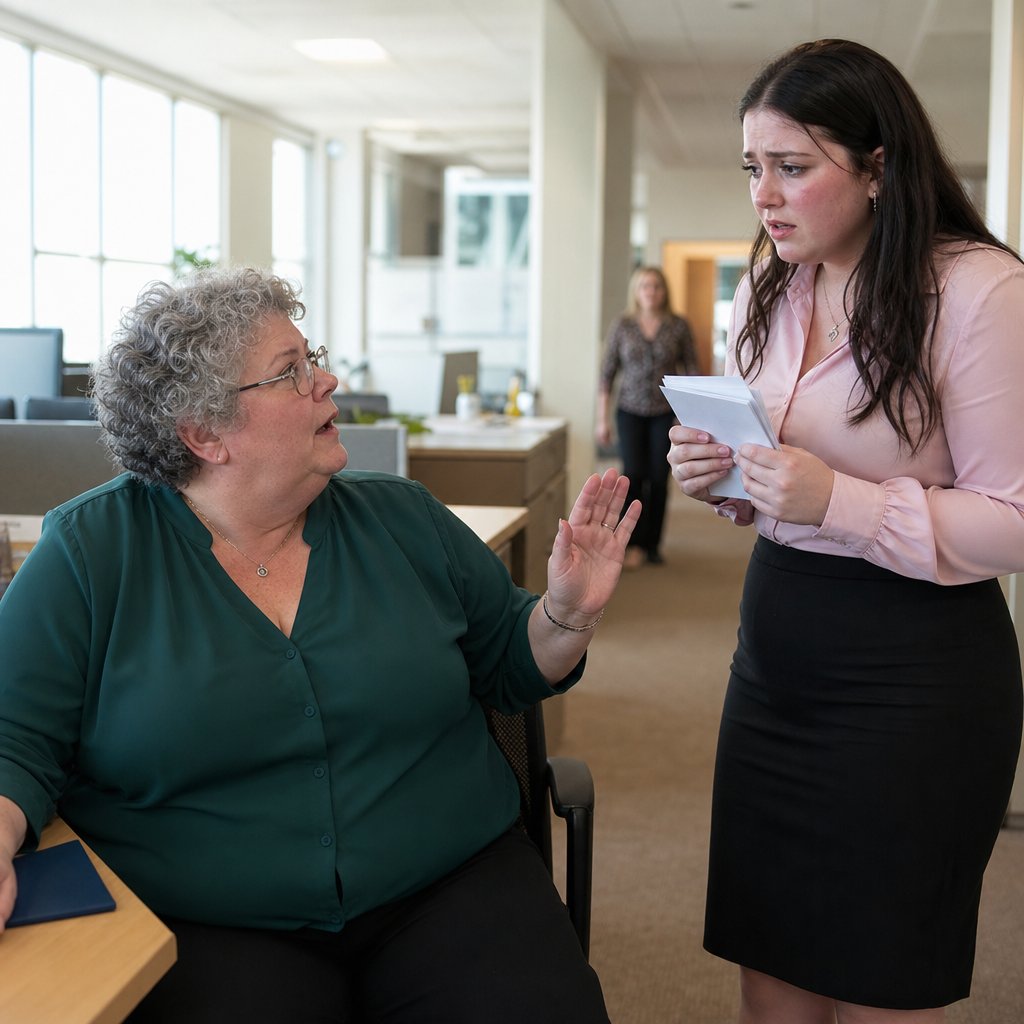
Mara caught me at my desk right after the HR meeting, like she’d been hovering in the hallway waiting for the door to open.
“I just want to be totally clear,” she said, words tumbling out. “About late nights. About who was where. I have—like—I wrote down dates. I can pull the parking validation slips. I can show when I ordered rides. I can show—”
I held up a hand. “Mara,” I said gently, because I wasn’t trying to make her cry in the open office. “I didn’t ask for any of that.”
She froze like I’d yanked a cord. Her cheeks flushed a blotchy red under her foundation. She looked past me toward the aisle, then back, eyes bright and frantic.
“I’m just trying to help,” she insisted, too loudly.
Help who, though?
Because the way she was overexplaining didn’t feel like support. It felt like preemptive defense. Like she’d already been questioned, already been cornered, already been told there was a story—and she was trying to shove her version into my hands before I even knew what the story was.
I could still taste that metallic HR panic in my mouth. The office around us sounded too normal—keyboards clicking, someone laughing at a podcast—while my world narrowed to Mara’s shaking hands and the thin sheen of sweat at her hairline.
“Did someone talk to you?” I asked.
Mara swallowed hard. Her gaze flicked toward the Sprint Room down the hall, then back to me, and she lowered her voice to a whisper. “I don’t want to be the one who gets blamed,” she said.
Blamed for what?
Before I could press, Mara’s eyes widened at something behind me, and her shoulders stiffened like she’d just been caught doing exactly what she was afraid of.
My Badge Swiped Without Me
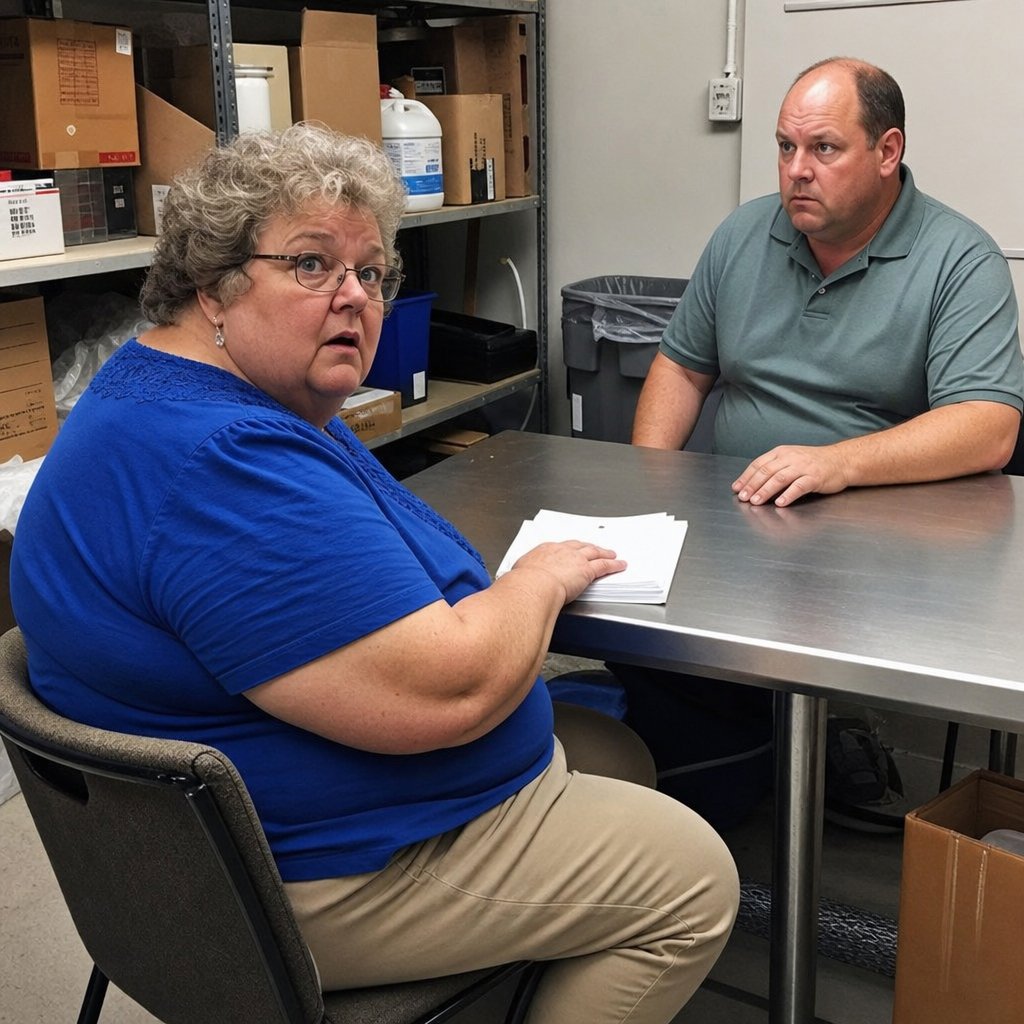
Facilities didn’t hand me my access history like it was routine. They handed it to me like it was radioactive.
We met in a windowless little room off the loading corridor where the air smelled faintly of cardboard and dust. A Facilities supervisor—Ron, heavy jaw, thinning hair, polo shirt tucked too tight—set a stapled packet on the table between us. No letterhead I could read from where I sat, just pages and pages of time stamps and door names in neat columns.
“This is your badge history,” he said, not unkindly, but with that tone people use when they’ve already decided you’re going to lie. “We’re asking everyone to confirm anything unusual.”
My fingers shook as I flipped through. The paper felt rough under my thumb, the staples catching slightly like tiny teeth. Most of it matched my memory—early mornings, normal exits, the occasional late night with Gavin when we were cleaning up a sprint deliverable and too tired to be charming.
Then I saw it.
A midnight swipe. My badge number. A door I recognized: the Sprint Room corridor access point. A date that made my stomach drop because I remembered that night perfectly—sweatpants, my couch, a rerun playing while I fell asleep with my reading glasses on my chest.
I looked up so fast my chair legs scraped the floor. “That’s wrong,” I said, voice thin. “I wasn’t here.”
Ron didn’t react the way an innocent mistake deserves. He just watched me, eyes steady, and asked, “Are you saying someone else had your badge?”
Because if I said yes, I was admitting negligence. If I said no, I was calling the system a liar. And either way, Badge 0417 was suddenly breathing down my neck.
My mouth opened to answer—and Ron’s phone on the table vibrated face-down, the buzz rattling the packet like an alarm, and his expression changed as he glanced at whoever was calling.
The Camera Angle Was “Down”
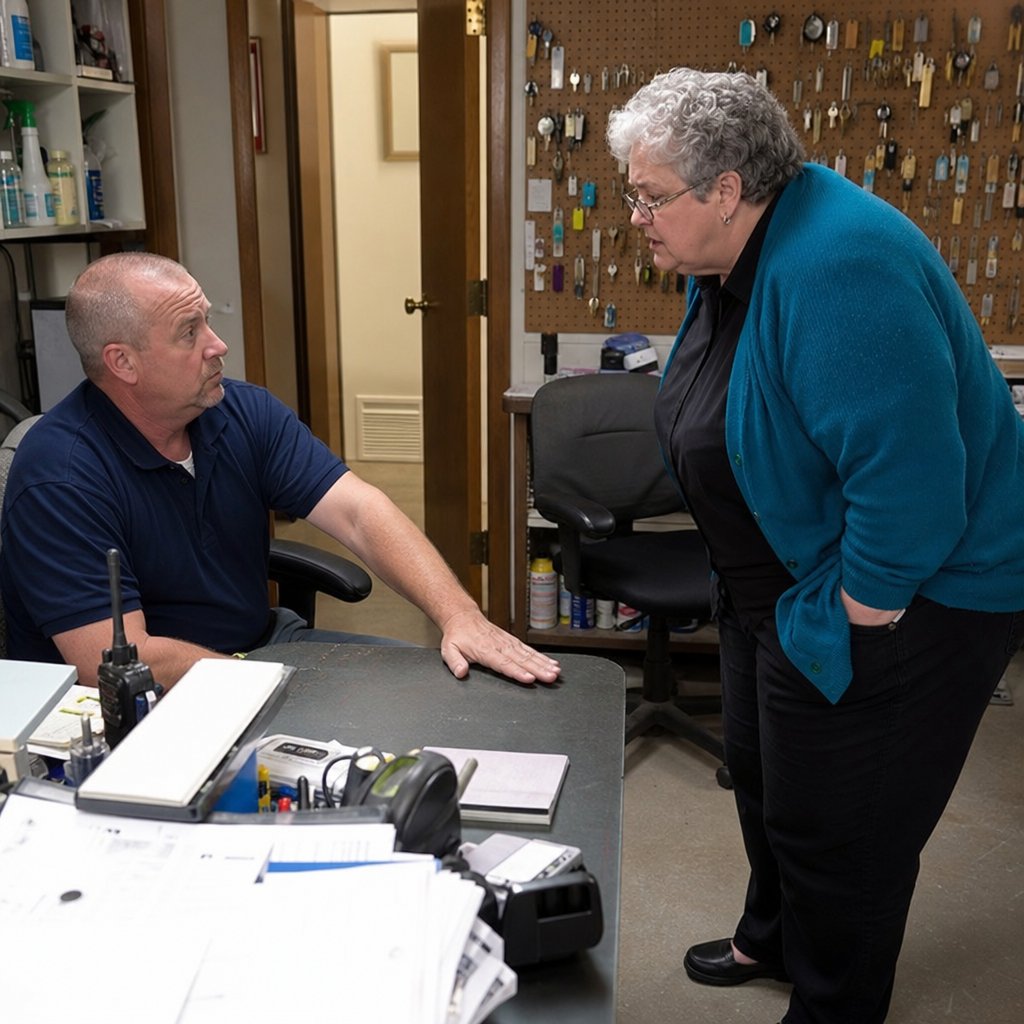
Ron’s face changed when his face-down phone buzzed, as if the caller had been waiting for my answer.
He didn’t pick it up. He just slid it an inch farther from me, like distance could make the problem smaller. “You want footage,” he said carefully, “from the third-floor east hallway.”
“The hallway outside Legal and the conference pods,” I said. “The one that would show who was actually here after midnight.”
Ron’s smile was the kind you practice in a mirror for layoffs. “That camera angle was down for maintenance.”
I waited for the punchline. None came.
“What dates?” I asked, already knowing what he’d say because I’d learned the rhythm of institutional lying: they offer you the exact amount of truth that makes you stop asking.
He cleared his throat. The air in Facilities always smelled faintly like wet cardboard and lemon disinfectant, and suddenly I could taste it. “The exact week the… concerns started circulating.”
My stomach went heavy. The week the first leak hit. The week the security logs suddenly mattered. The week my name started sounding like a rumor instead of a person.
“So,” I said, voice too steady, “the one camera that could clear this just happened to be ‘down’ the exact week someone began weaponizing access.”
Ron finally touched his buzzing phone—didn’t answer, just pressed it face-down like he was smothering a noise. “I’m not saying that,” he murmured, eyes flicking to the closed door, “but if you keep asking for footage, you’re going to make someone very interested in why you want it.”
And then his phone buzzed again, longer this time, and he whispered, “They’re calling back.”
Gavin Was Suddenly Everywhere
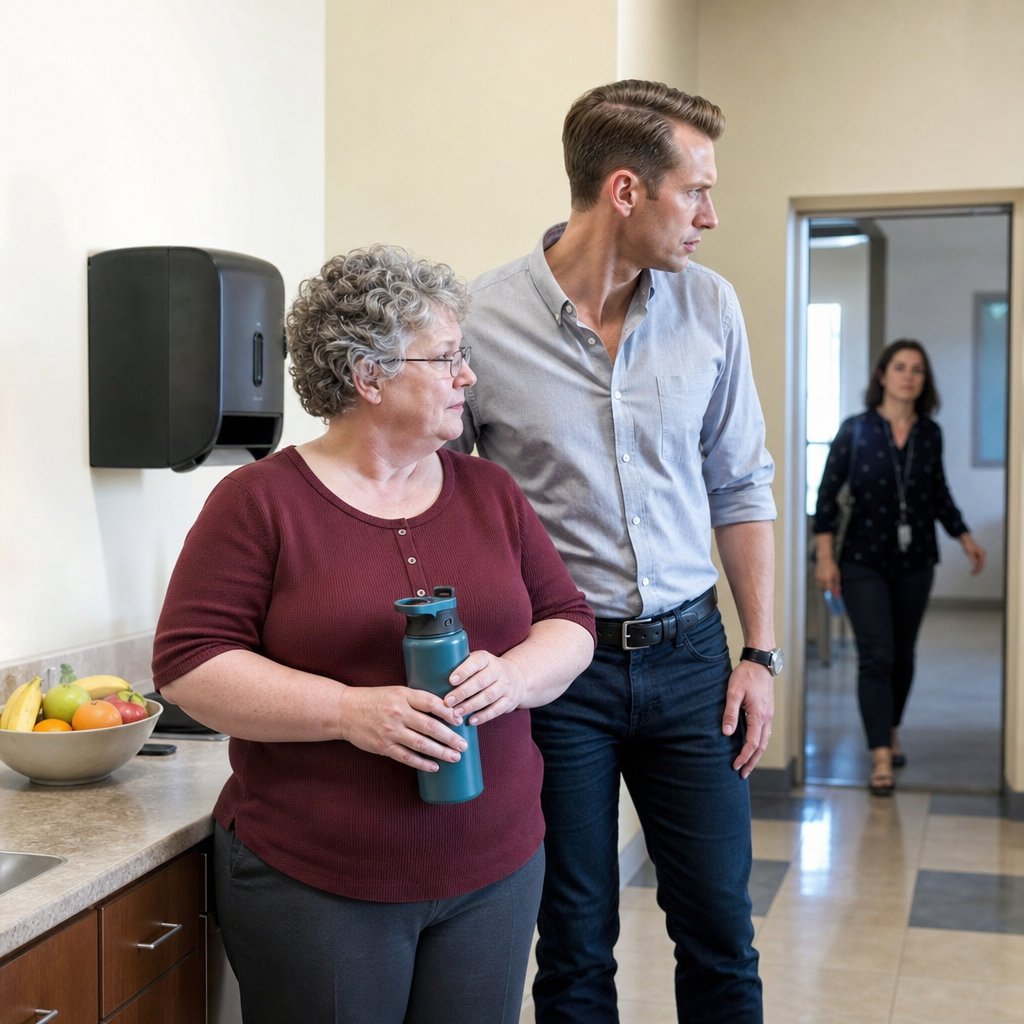
By the next morning, Gavin had turned into a coincidence that followed me.
I stepped out of the elevator with my tote digging into my shoulder, and there he was—Gavin, tall and lean with that neat dark-blond hair he always kept like he’d just left a barber chair, holding a coffee like he’d been waiting for the doors to open. “Hey,” he said too brightly. “Thought I’d catch you.”
“Catch me doing what?” I asked, and the words came out sharper than I meant.
He smiled anyway, the soft, reassuring one he used when we were deep in late ‘project’ nights and the building went quiet. “Just… making sure you’re okay.”
At the printer, he appeared again, leaning his hip on the cabinet like we were still a team. In the break room, he was there before I even got my water bottle filled, chatting with a junior analyst like he owned the airspace around me. Every time someone approached—Priya from Compliance, or even Denise from Finance—Gavin would subtly angle his body between us, like he was managing traffic.
I noticed the tiny details you only catch when you’re being hunted: the way his eyes darted to my badge as it swung on its lanyard, the way his laugh got louder when someone else walked in, the way he always positioned himself so I’d have to look at him to leave.
“You don’t need to babysit me,” I said, keeping my voice low.
His jaw tightened for half a second—gone so fast I almost missed it. “I’m not babysitting,” he said. “I’m keeping you from being alone when people are… talking.”
And then the elevator dinged behind us, and Gavin’s face shifted like he’d just recognized whoever was stepping out.
The Badge IDs Only List
The second leak didn’t come with names. It didn’t need them.
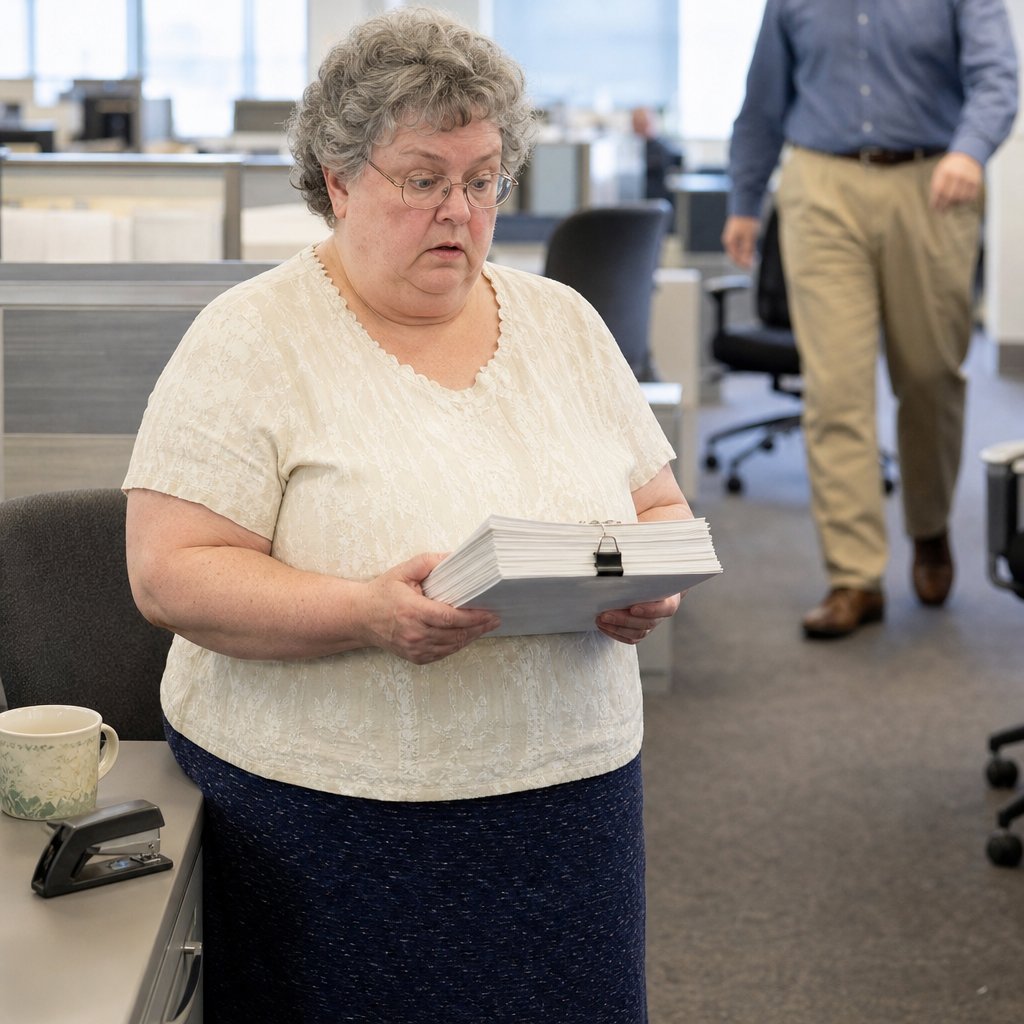
A plain envelope showed up on my chair like someone had been in my space on purpose. No return address, no flourish—just a thick stack of paper clipped hard enough to leave a dent. My fingers actually trembled when I lifted it, and the metal clip was cold, biting my skin.
Rows and rows: times, doors, badge IDs. No departments. No explanations. Just a spreadsheet turned into a weapon.
I found my own entries the way you find your name in a lawsuit—too fast, too easy. There I was, after-hours on nights I could picture perfectly: the stale smell of burnt coffee, the hum of the HVAC, Gavin’s voice saying, “Five more minutes, we’ll wrap it.”
Then I saw Gavin’s badge ID. A familiar rhythm of his swipes, the late-night pattern we’d laughed about like it was a shared secret.
And between us—threaded like stitches—0417.
0417 appearing after my entry, before Gavin’s. 0417 at 12:14 a.m. 0417 at 12:22 a.m. 0417 again, like someone circling us in the dark.
I stared until the numbers blurred, because the timing wasn’t random. It was too neat. Too intentional. Like a third person wanted the record to show they’d been there, but not enough to show who they were.
Behind me, a chair wheel squeaked in the aisle. I didn’t turn right away—because I suddenly knew someone was watching to see my reaction.
Priya’s Evidence Stack
Priya didn’t text me. She didn’t “circle back.” She walked straight to my desk with pages in her hands like she was serving papers.
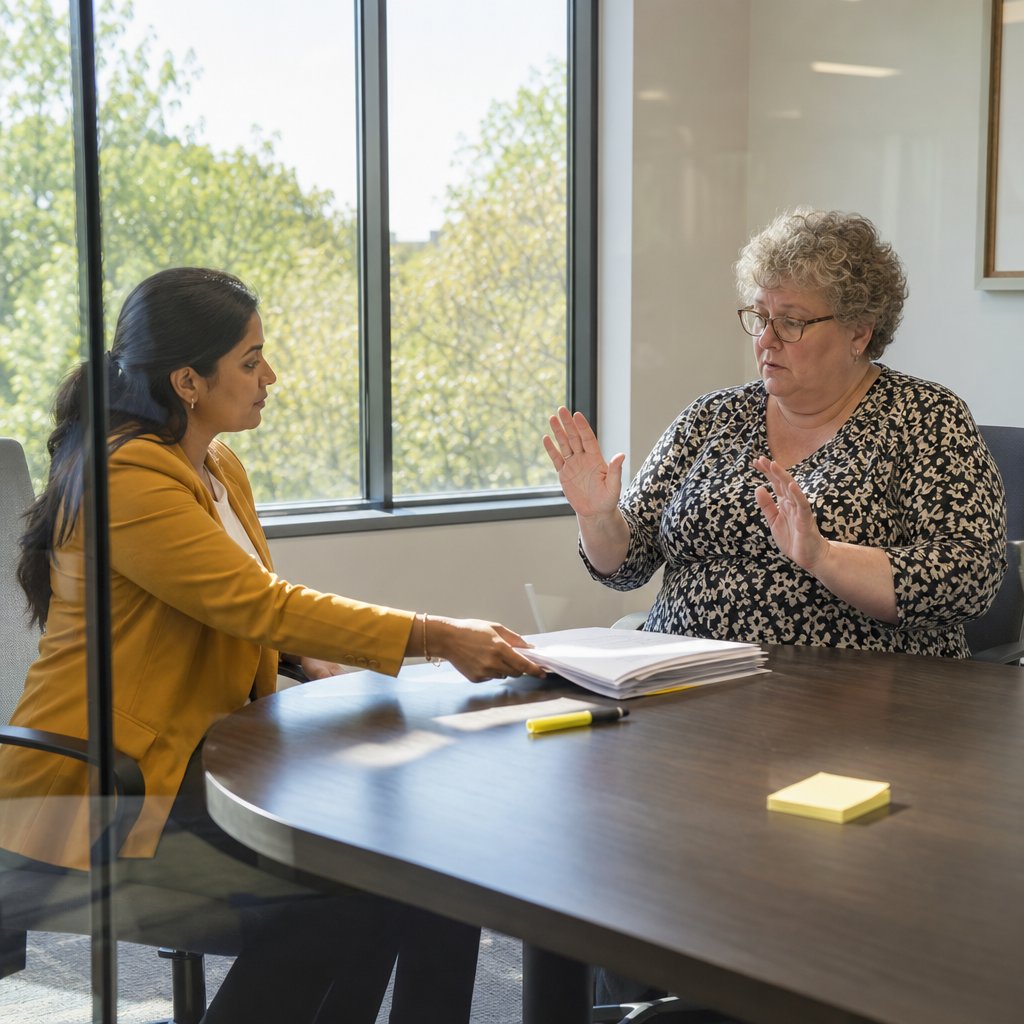
Priya was small and razor-straight in posture, South Asian, early 30s, with long black hair in a low ponytail and the kind of calm face that makes you feel guilty before you’ve done anything. Today she wore a mustard blazer that looked almost cheerful—until you saw what she was carrying.
“Can we talk,” she said, already turning toward a glass conference room.
Inside, she set the papers down between us with a soft slap. Not the leaked badge list—something else. Printouts with highlighted sections, sticky notes, and a neat little timeline someone had built like a case file. My throat tightened, and I hated that my first instinct was to look at the door like I’d been cornered.
“This isn’t about an affair,” Priya said, voice low. “I don’t care who you have dinner with. This is about policy.”
“What policy?” I asked, and I could hear the tremor I couldn’t stop.
She pushed a page closer with one fingernail, precise. “After-hours access. Unescorted presence. Patterned entry. Anything that looks like… privilege.”
Privilege. The word landed like a slap because it was the exact word people used when they wanted you gone without saying it out loud.
Priya’s eyes didn’t soften. “They can end a career quietly with this,” she said. “No hearing. No drama. Just… ‘access review’ and a goodbye email.”
I opened my mouth to defend myself, and Priya held up her hand—because there was one more page she hadn’t shown me yet.
The CFO Assistant Whisper
By lunch, the office had that particular quiet where everyone is pretending to work while they listen for blood in the water.
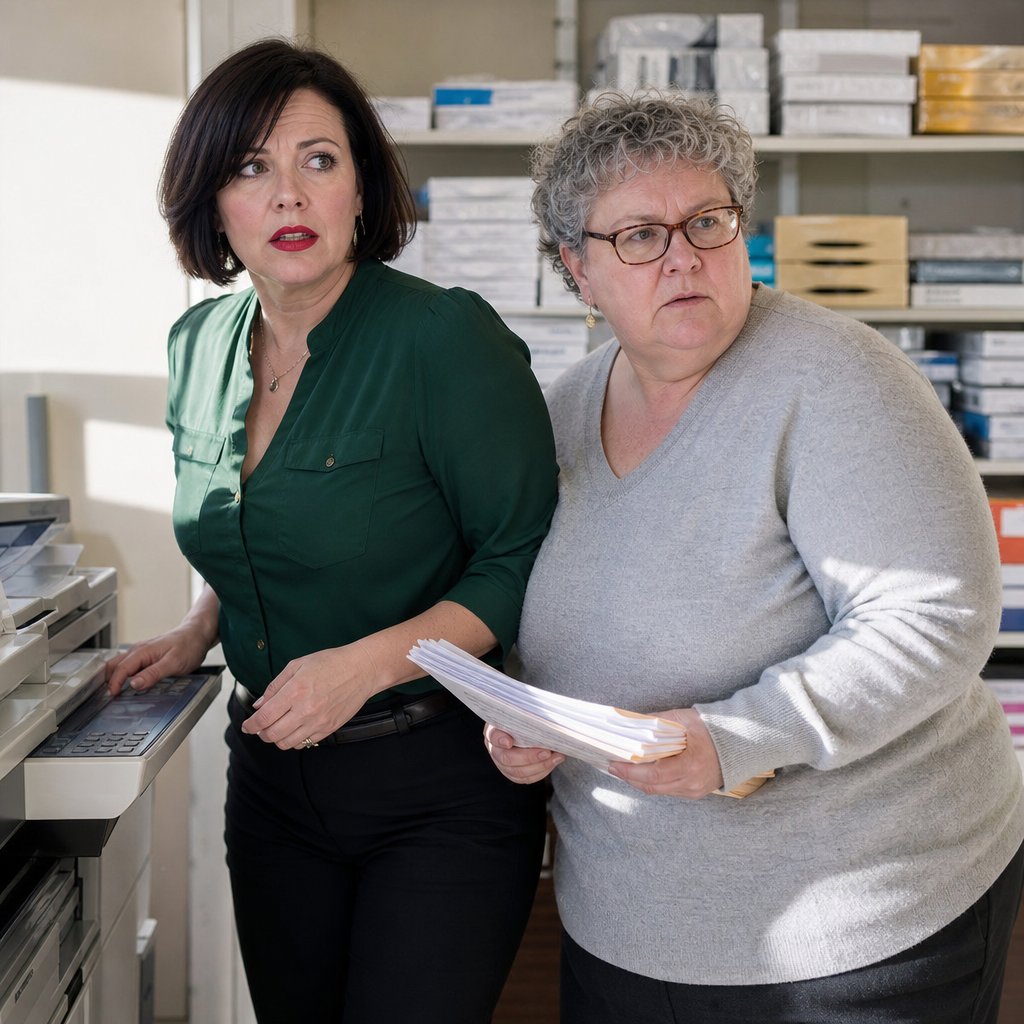
I was in the copy room, feeding paper into a tray with hands that felt too big for my body, when Denise from Finance drifted in like she’d been “just passing.” Denise was in her 40s, white, with a sharp bob and lipstick that never smudged. She didn’t look at me right away. She stared at the toner cartridges like they were fascinating.
“You didn’t hear this from me,” she said.
I didn’t answer. I just waited, because people like Denise only tell you things when they want the story to move.
“The CFO’s executive assistant,” she murmured, “got moved floors after an access review last year.”
My heart did a stupid little leap. “Moved?”
Denise nodded once, tight. “Same language. Same ‘we’re just tightening controls’ speech. Then suddenly her desk was on four instead of eighteen. Different manager. Different badge permissions.”
“Why?” I asked, and my voice sounded too loud against the hum of the copier.
Denise finally looked at me, and there was something almost pitying in her eyes. “Nobody will explain why. That’s the point. It looks clean from the outside.”
The copier spit out warm paper, the smell of it faintly sweet and chemical. Denise reached out and tapped the stack like she was emphasizing a moral. “She never technically got fired,” she said. “She just… disappeared from the rooms where decisions happen.”
I swallowed hard. “What was her name?”
Denise’s gaze flicked to the doorway, and her mouth opened—then she stopped, like she’d just seen someone approaching.
The Message I Never Sent
It hit my inbox like a slap, not a rumor—proof.
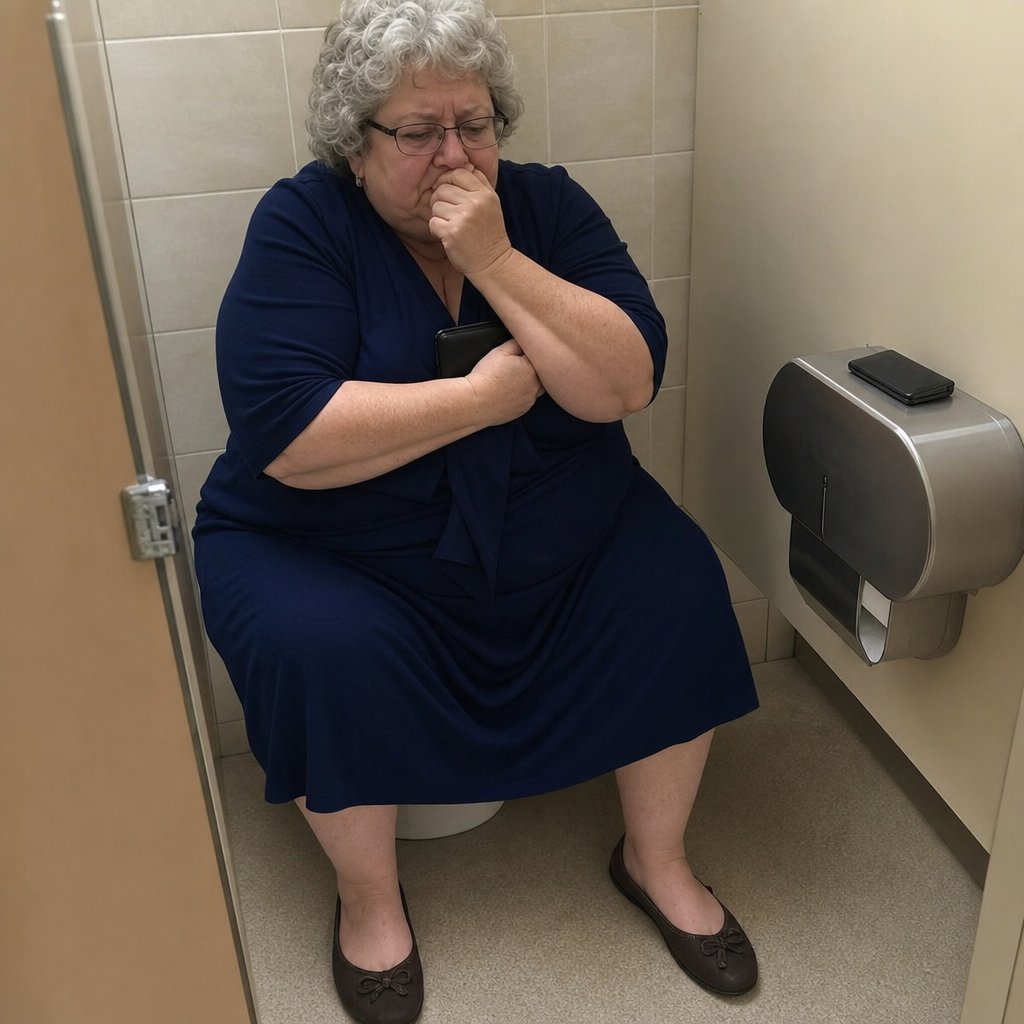
An email from an address I didn’t recognize, subject line blank, body empty except for one attachment. I didn’t open it at my desk. I walked to the women’s restroom, locked myself in the far stall, and set my phone face-down on the toilet paper dispenser like it was contaminated.
When I finally flipped it over, my own punctuation stared back at me.
Someone had sent me a screenshot of a Slack message I didn’t write—flirty, needy, humiliating in that specific way that makes you feel fifty-nine and foolish all at once. The worst part wasn’t the content. It was the formatting: my exact habit of double spaces after periods. The way I use ellipses when I’m trying to be gentle. The little dash I always put before a confession.
It looked like me. It sounded like me. It was the voice I’d used in a hundred harmless messages, twisted into something that would make HR’s eyes go flat.
I pressed my knuckles to my mouth to keep from making a sound. The restroom smelled like citrus cleaner and panic. My glasses fogged, and I wiped them with the hem of my sleeve like a child.
At the bottom of the screenshot was a timestamp and a channel name—blurred just enough to be deniable, clear enough to be believed.
My phone buzzed again. Same unknown sender, another message incoming, and I stared at it like it might explode.
IT’s New Report Machine
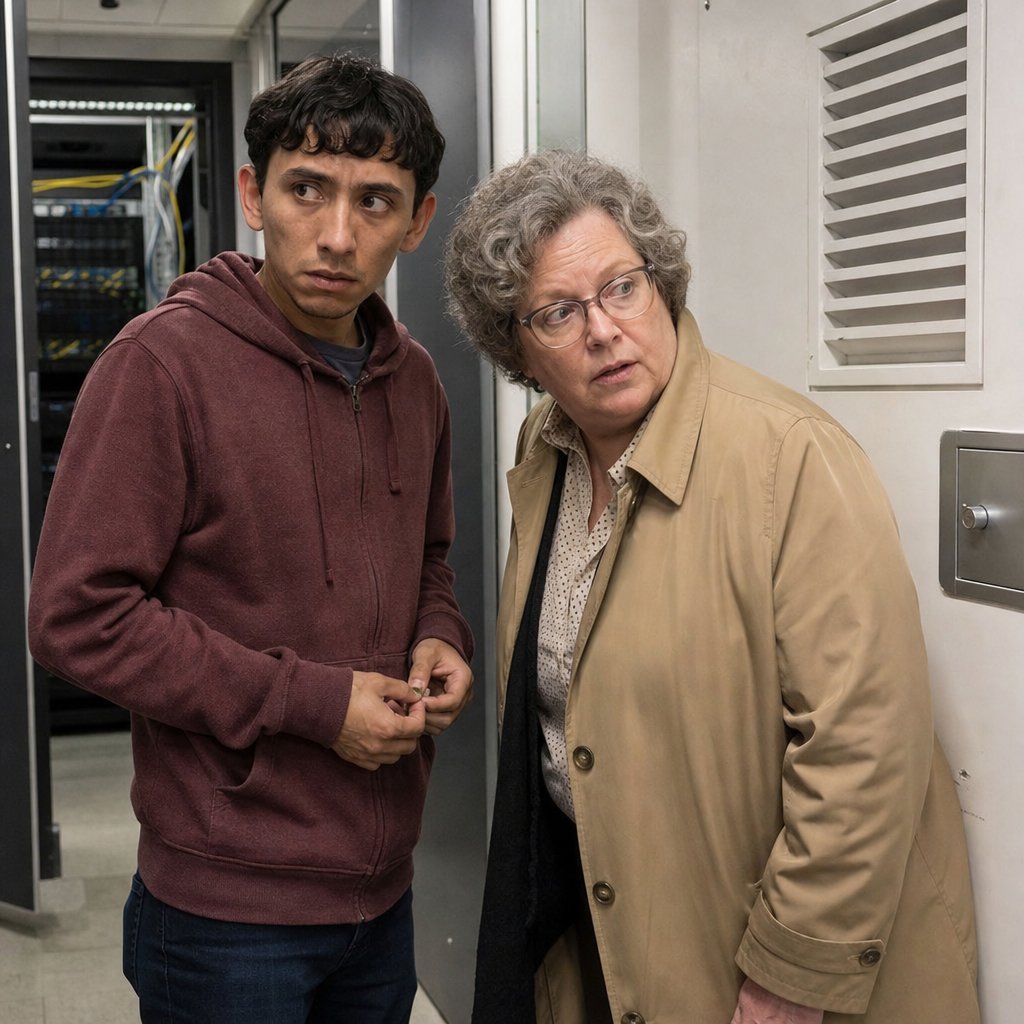
I cornered Mateo by the server room hallway the way you corner someone when you’re done being polite.
Mateo was my age’s opposite—late 20s, Latino, skinny as a paperclip, always in a hoodie like he could vanish into it. Today it was a faded maroon one, sleeves pushed up, showing a nervous habit of picking at his cuticles. He stopped short when he saw me, like he already knew what I was going to ask.
“Don’t,” he said immediately.
“I’m already in it,” I told him. “So either you tell me what’s happening, or I get to be surprised in an HR meeting.”
His eyes flicked down the corridor. The air back here smelled like hot dust and cold metal, and the vents made everything feel too loud. “They rolled out a new security integration,” he admitted. “It auto-generates after-hours pattern reports.”
I felt my skin go cold. “Pattern reports.”
Mateo nodded, swallowing. “It flags clusters. Repeated entries. People who overlap. It’s supposed to be neutral.” He gave a tiny, humorless laugh. “But it’s not neutral when someone decides what ‘suspicious’ looks like.”
“Who decided?” I asked.
Mateo hesitated just long enough to tell me the answer was dangerous. “A certain VP requested a custom version,” he said quietly. “More… granularity. More alerts. More—” He stopped, because footsteps echoed from around the corner.
My heart kicked. “Which VP, Mateo?”
He opened his mouth, eyes wide, and the footsteps got closer, fast.
Gavin Had My Log First
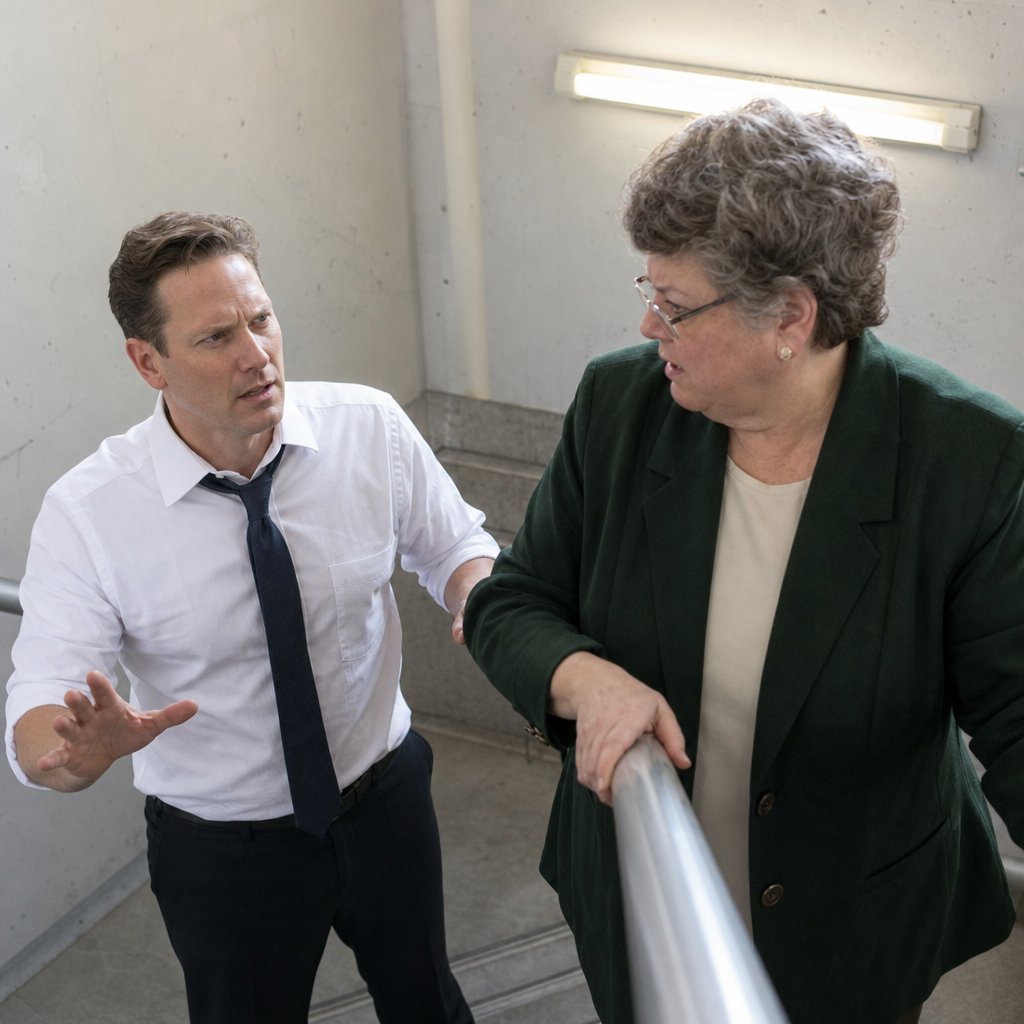
I didn’t mean to confront Gavin in the stairwell. It just happened the way storms happen—pressure, heat, nowhere else to go.
He was coming down, two steps at a time, tie loosened, sleeves rolled. I was going up, clutching the railing because my knees felt unreliable. The stairwell smelled like concrete and someone’s cologne trapped in stale air.
“Did you know about 0417?” I asked, not even hello.
Gavin blinked, then smiled like he could talk me off a ledge. “Where are you hearing things?”
“Answer,” I said. My voice echoed, sharp and ugly.
His smile faltered. “I asked Facilities for your access log,” he said, and then—like he realized what he’d just admitted—he tried to patch it with a softer tone. “To protect you.”
The world went thin. “You… asked for my log.”
“I was worried,” he insisted. “People were talking. I wanted to see what they could twist.”
I stared at him, seeing every “helpful” check-in, every too-perfect coincidence of him showing up where I was. He’d had my data before I did. He’d known what the building said about me while I was still telling myself it was nothing.
“When?” I whispered.
Gavin’s eyes flicked away—just once, but it was enough. “Before you went to Ron,” he admitted.
My hand tightened on the cold metal rail until it hurt. “So you watched me walk into this blind,” I said.
He took a step closer, palms up, like he could physically contain the damage. “I was trying to manage it,” he said, voice dropping. “I was trying to keep you from—”
From what? I opened my mouth to demand it, and Gavin’s phone vibrated in his pocket. He froze, listening, like the caller owned him.
HR’s Friendly Little Trap
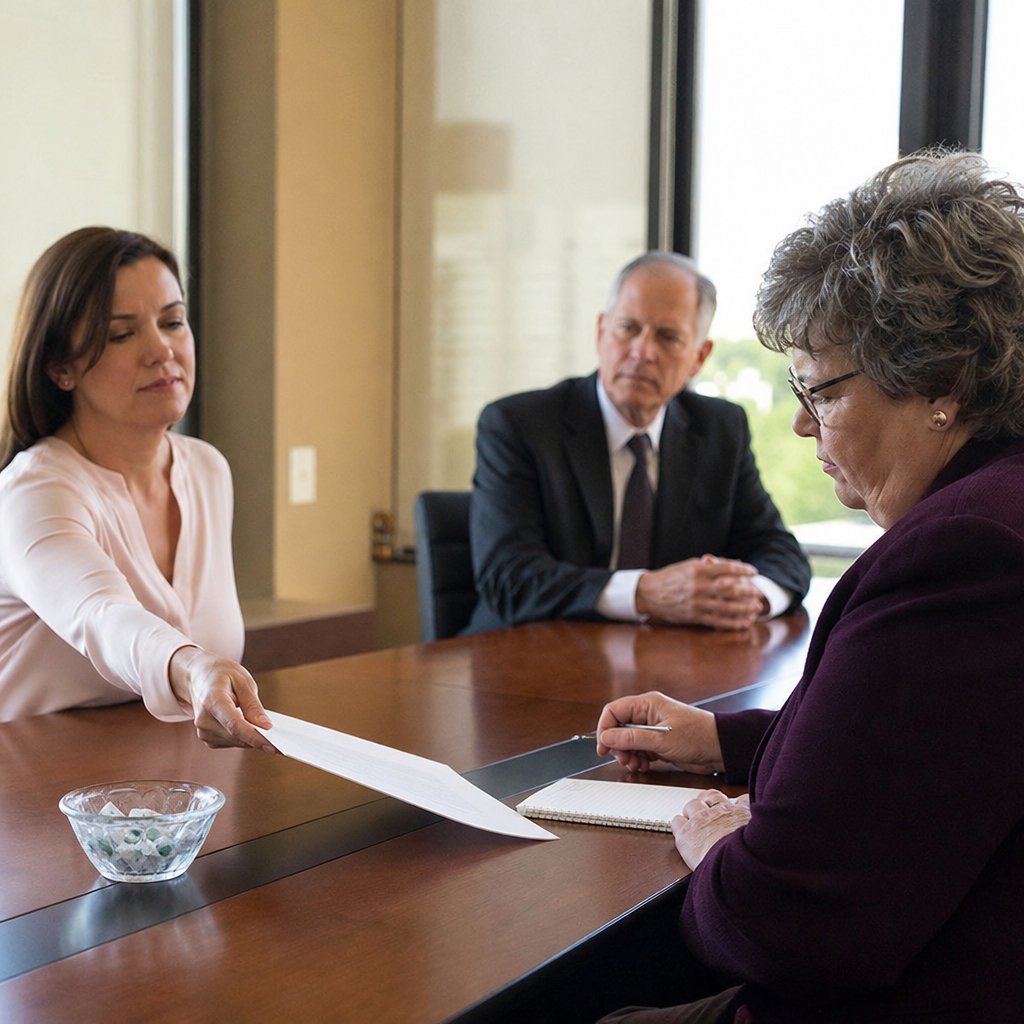
HR didn’t summon me with a calendar invite. They sent a “quick check-in” through my manager, like a courtesy, like a hug.
The conference room they chose had soft chairs and a bowl of mints that tasted like peppermint and threat. Across from me sat Lila from HR—white, early 40s, sleek brown hair tucked behind one ear, wearing a pale pink blouse that made her look harmless on purpose. Next to her was a man I’d never met, older, in a charcoal suit, hands folded like a priest.
“We’re here to support you,” Lila began, voice warm enough to melt steel.
“Support me how?” I asked.
She slid a single page across the table. No letterhead I could see from where I sat. No drama. Just a document waiting for my signature. “An acknowledgment,” she said. “About boundary-setting. After-hours best practices. It’s proactive.”
I didn’t touch it. “And if I don’t sign?”
Lila’s smile didn’t change, but her eyes did. “Then we escalate to a formal investigation,” she said gently, like she was offering me tea. “Which can take time. And involve interviews. And require we suspend certain access while we review.”
My mouth went dry. Suspend access. The quiet way to erase someone. I glanced at the man in the charcoal suit; he watched me like he was counting my breaths.
“This is blackmail,” I said.
“It’s an option,” Lila corrected, still soft. “A way to buy time.”
I stared at the pen she’d placed perfectly parallel to the paper, and realized the trap wasn’t the document—it was the clock they’d started without telling me.
My hand hovered over the pen, and Lila leaned in a fraction, waiting.
Mara’s Notebook Of Ghosts
Mara quit on a Tuesday.
No goodbye cake. No teary lap around the floor. Just an empty chair by noon and her cardigan draped over it like a shed skin. Mara was the kind of person who always had a spare charger, always knew whose birthday was coming up. The office didn’t feel safer without her. It felt… curated.
I found out in the kitchenette when someone said, too casually, “Oh, Mara’s gone.” Like she’d been a broken printer they finally replaced.
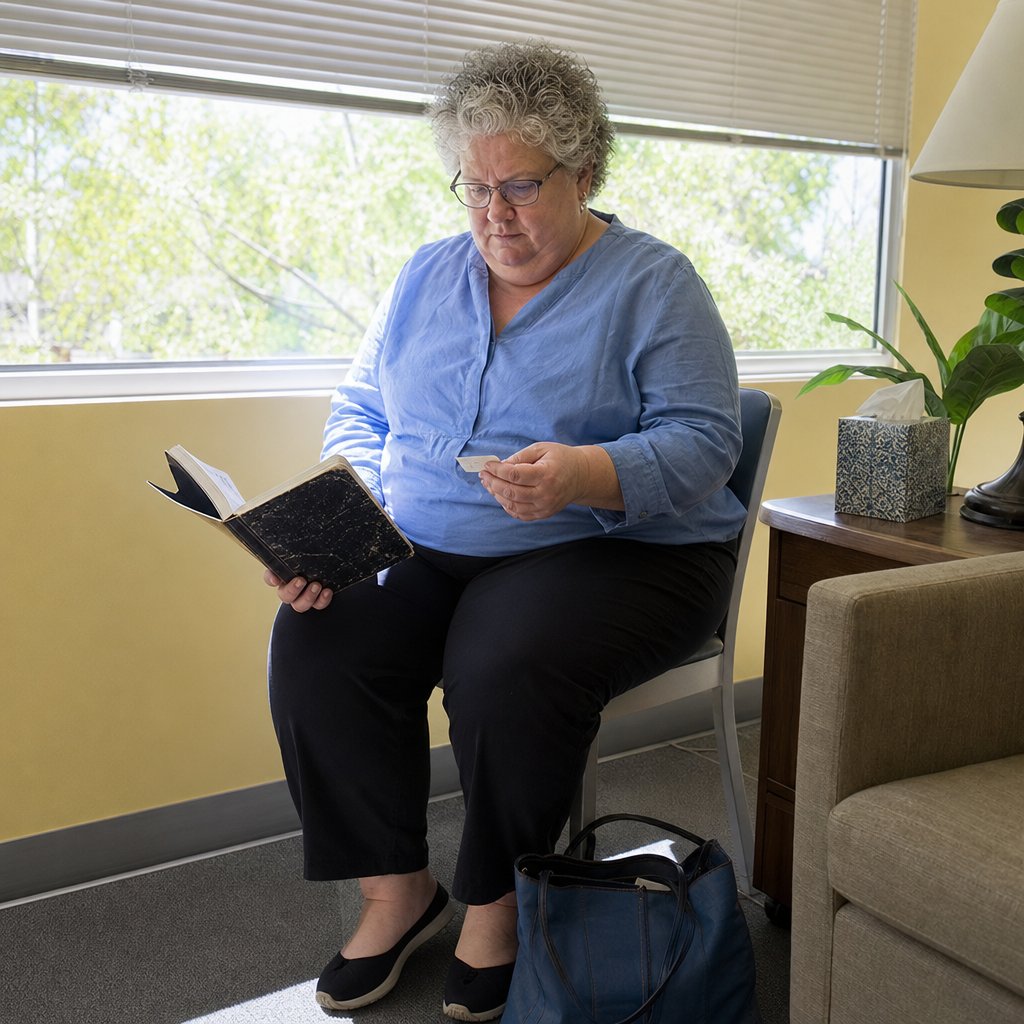
My throat went tight, and I went to her desk on instinct, half expecting her to pop up and laugh. Instead, there was a small notebook tucked behind her monitor stand, the kind with a cracked black cover and an elastic band. It wasn’t locked. It wasn’t hidden well. It was left.
I slid it into my tote like I was stealing a relic.
In a single-stall wellness room down the hall, I opened it with hands that wouldn’t stop shaking. Dates. Room numbers. Times. A list that looked like someone had been mapping the building the way you map a crime scene. Some entries had one repeated note in the margin, written hard enough to emboss the page:
0417 = borrowed
Borrowed. Not hacked. Not duplicated. Shared.
My chest tightened as I flipped forward and saw the same note again and again, next to different rooms, different nights—like Mara had been tracking a ghost credential moving through the office like a person with keys.
Then a slip of paper fell out from the back cover—folded small, creased like it had been opened a hundred times—and I froze before unfolding it, because I could feel, in my bones, that it was going to name someone.
The Badge That Shouldn’t Exist
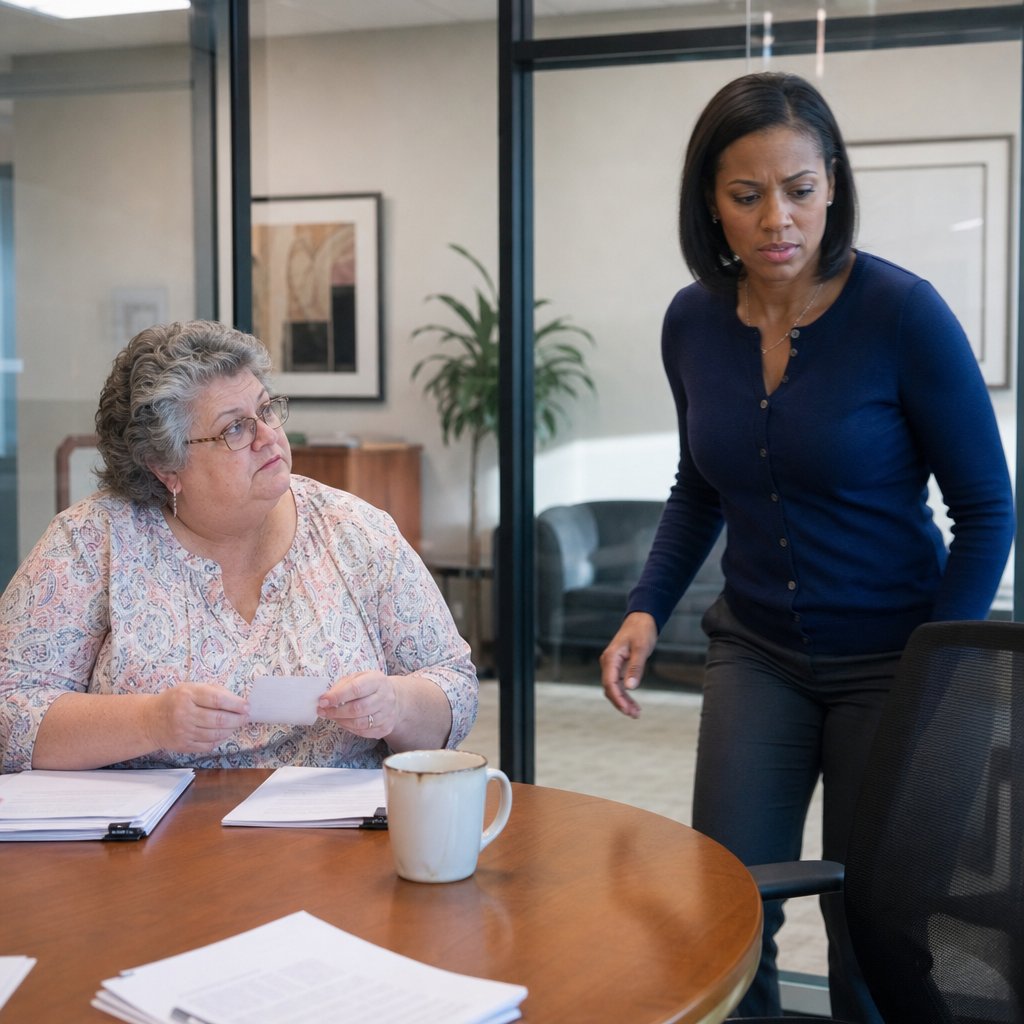
Mara didn’t unfold the slip of paper. She pinched it like it was contaminated and slid it across the conference table to me with two fingers. Her nails were bitten down to the quick, and for a second her eyes flicked to the ceiling camera like it could read guilt off her face.
I unfolded it anyway.
A badge number. 0417. And a contractor account name I recognized in the way you recognize a smell you hate—faintly, then all at once. It was one of those “temporary” vendor profiles Facilities sets up when someone’s here for a week and then disappears. Except this one was flagged in my old project notes as deactivated—months ago, after the elevator incident and the whole scramble to tighten access.
I pushed my glasses up and stared until the digits blurred. My mouth tasted like burnt coffee. “This account is dead,” I said, too loud, and Mara flinched.
I went straight to the access roster printouts we’d been given—no screens, no forwarding, nothing traceable—just stapled pages that smelled like toner. Contractor: ACTIVE. Badge: 0417. Sponsor: blanked out with a thick black bar like someone had gotten to it first.
Dead accounts don’t keep swiping in after midnight. Unless somebody kept it alive on purpose. Unless somebody needed a badge that didn’t belong to anybody.
When I looked up, Mara’s chair was suddenly empty, still warm, and the door was swinging shut like she’d fled on a wire.
What The Guard Finally Said
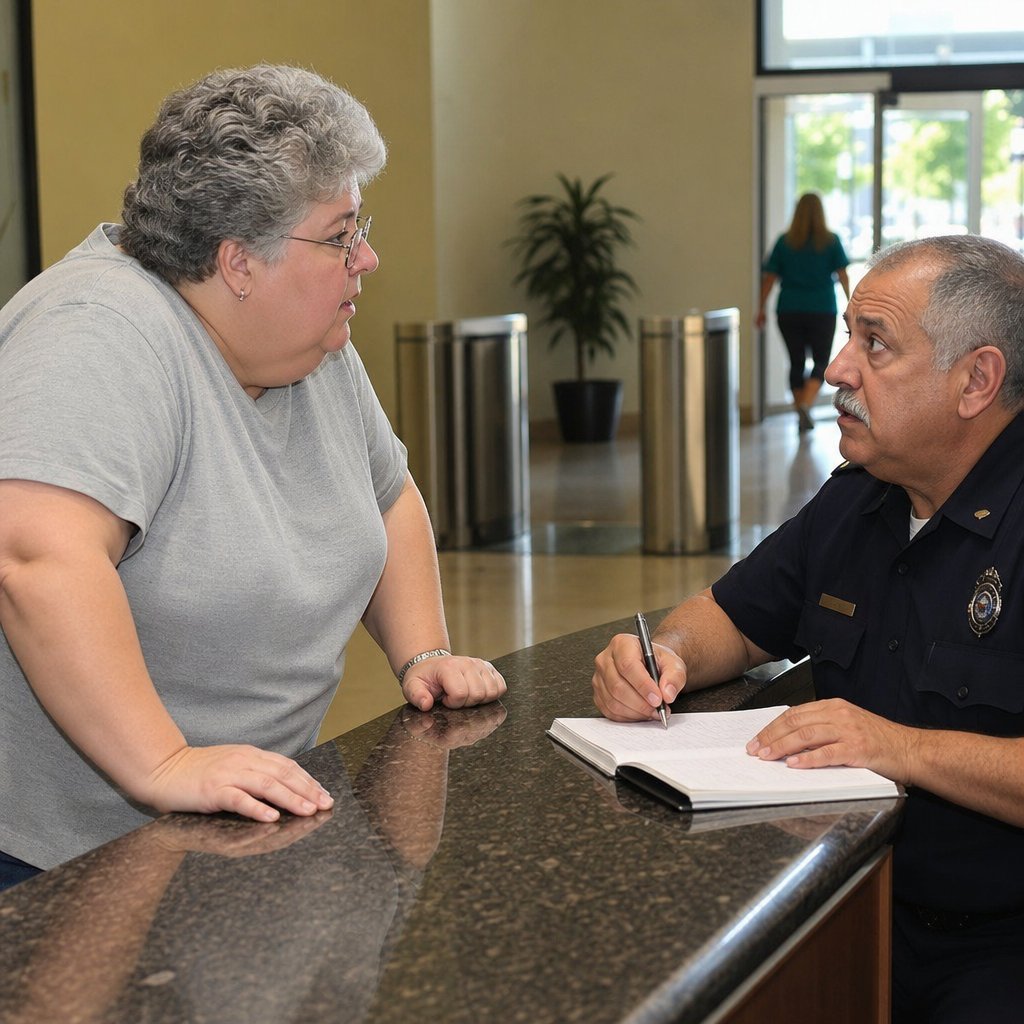
I caught Ron at the security desk when the lobby was in that dead hour between lunch rush and the after-school pickup crowd. The air smelled like lemon cleaner and the fake greenery by the turnstiles looked dusty enough to be real.
Ron was older, paunchy, with a salt-and-pepper mustache and a habit of tapping his pen like he was keeping time to a song only he could hear. He didn’t smile when he saw me. He looked tired—tired in that way people get when they’ve been asked to lie and the lie keeps needing maintenance.
“You’ve been logging me,” I said. Not a question.
His pen stopped mid-tap. He stared at the sign-in book like it could rescue him. “It’s just procedure,” he murmured.
I leaned closer until my perfume—cheap vanilla, my guilty comfort—hung between us. “Procedure doesn’t single out names.”
Ron’s eyes flicked to the hallway, then back to me. He lowered his voice. “I was told to watch for you,” he said. “And Gavin. To note if you arrived together. Or… if you arrived separate but close.”
My stomach went cold. “Told by who?”
He rubbed his forehead like it hurt. “I’m not trying to get fired,” he whispered. “They said it was for ‘employee care.’ Like… safety. Boundaries.”
Employee care. The phrase landed like a slap. Because it wasn’t care. It was a net.
Ron swallowed hard, and then he added, almost apologetic, “And they asked me to write down who came in after you. Every time.”
I felt my face flush, hot and humiliating, as the lobby doors hissed open behind me—someone coming in—and Ron’s eyes widened like he’d just said too much.
My Name Vanished Publicly
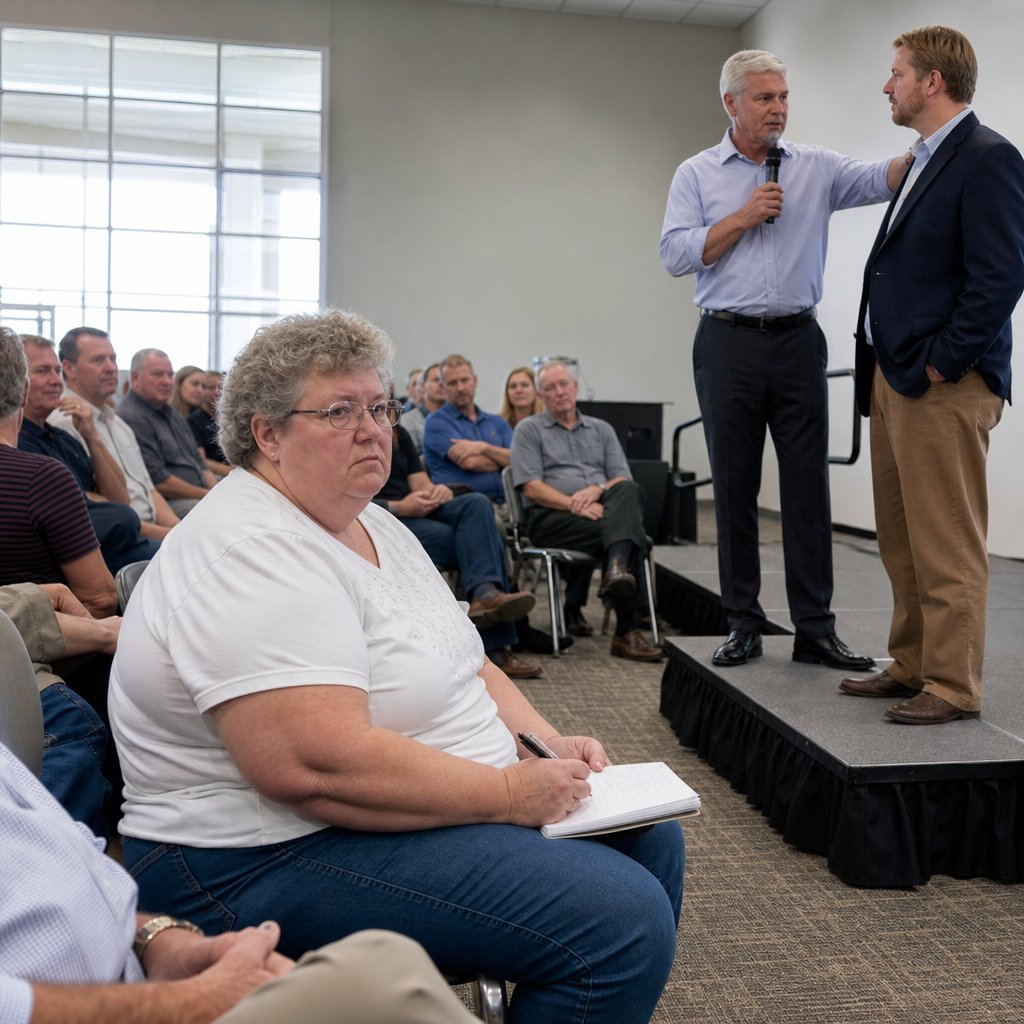
The all-hands was in the big multipurpose room—the one with stackable chairs and that industrial carpet that always smelled faintly like wet wool. I sat in the third row with my notebook open, like I was still a person whose work counted.
Gavin sat two seats away, jaw tight, doing that thing where he looked straight ahead so no one could accuse him of looking at me. He’s tall, sandy-haired, early 40s, with the kind of earnest face people trust. It used to make me feel safe. That day it made me feel disposable.
Our VP—Elliot Harrow, mid-50s, silver hair combed back, expensive calm—took the mic. He didn’t clear his throat. He didn’t warm up. He just smiled like he was about to give out prizes.
“We’re making a small leadership adjustment on the rebrand launch,” he announced.
My pen hovered. The room felt suddenly too warm. “Small,” he said, like he was talking about moving a plant.
“Gavin will be partnering directly with me,” Elliot continued, “to ensure alignment and… accountability.” The word accountability landed heavy, like it was meant to have my name attached to it.
I waited for him to say my name. For him to acknowledge that I built the timeline, that I fought for the vendor, that I stayed late so often my husband started asking if I still worked here or lived here.
He didn’t.
Instead he turned and clapped Gavin on the shoulder—possessive, public—while the room applauded like this was generosity, not theft. I felt the sting behind my eyes and swallowed it down so hard my throat hurt.
Gavin finally looked at me, just a flicker, and his expression wasn’t triumph. It was warning.
Because he mouthed, barely, “They’re watching,” and then Elliot called for questions.
The Invite Only Suspects Got
I didn’t tell Gavin what I was doing. That was the point. If I even hinted, the wrong person would hear it through the office’s invisible vent system—gossip ductwork, perfectly engineered.
I made a late-night Sprint Room “problem-solving” invite the way we always did during crunch: vague title, urgent tone, just enough bait to make a certain kind of person show up. I sent it to exactly four people—Mara, Ron’s supervisor in security, Priya from People Ops, and Elliot’s executive assistant, Jules, a thin white guy in his late 20s with hair always too neat and a smile that never reached his eyes.
Then I waited.
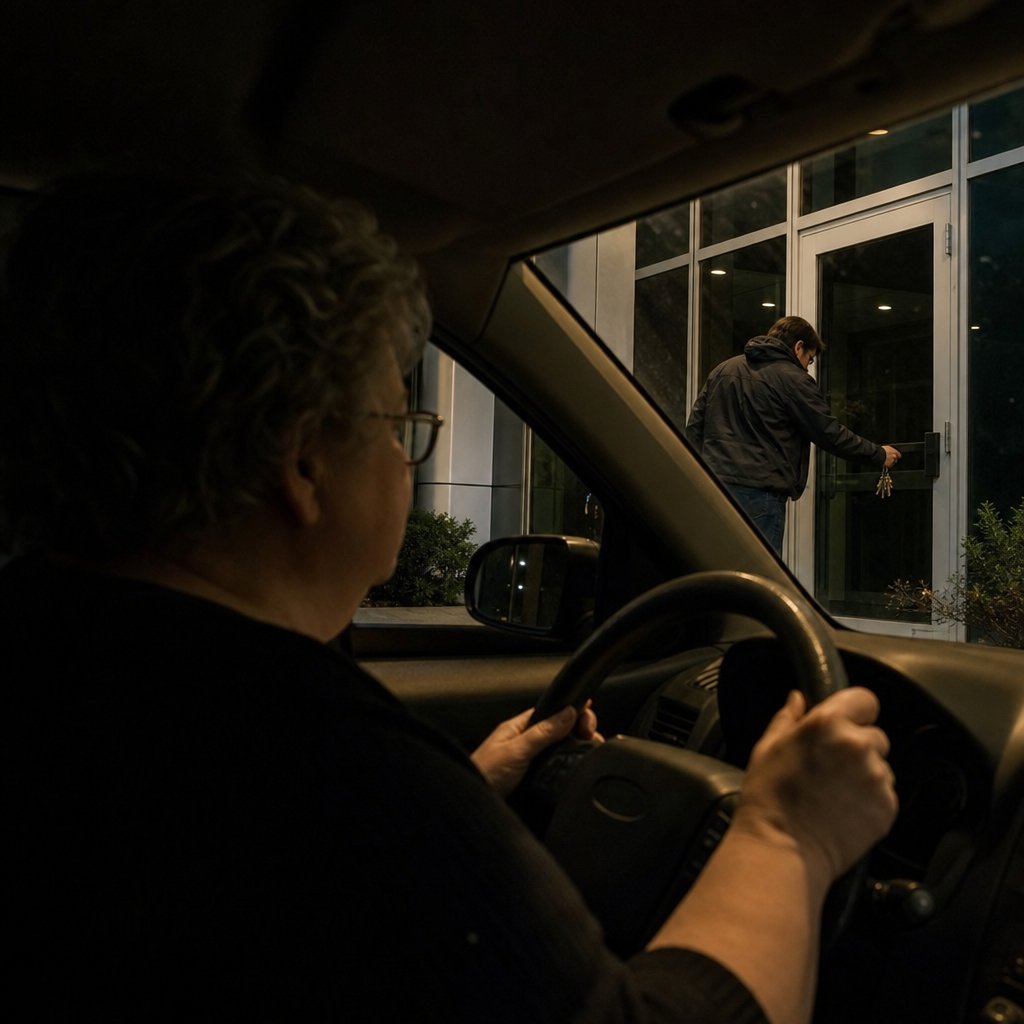
At 11:47 p.m., I was in my car across the street, watching the building like it was a sleeping animal. The lobby lights were still on. The glass reflected the streetlamp in a dull smear. I could taste mint from the gum I’d been chewing too aggressively, like I could grind my nerves into calm.
I wasn’t supposed to be here. Not after the “accountability” speech. Not after the way my name had been erased in front of everyone like a typo.
Midnight crept closer. My hands were damp on the steering wheel.
And then—movement at the entrance.
Not one of my four suspects. A figure in a dark jacket, head down, moving with the confidence of someone who wouldn’t be questioned. They didn’t hesitate at the reader. There was a tiny, distinct clink—metal on plastic—like a keychain hitting a badge.
The door unlocked.
I exhaled so hard it hurt. Because whoever just swiped… didn’t even need the invite.
Badge 0417 wasn’t reacting. It was listening.
The Joke In The Hallway
I got inside through a side entrance I still had access to—my own badge, my own name, my own risk. The building at night sounded different. The HVAC sighed like it was bored. My footsteps on the polished floor came back at me too loud.
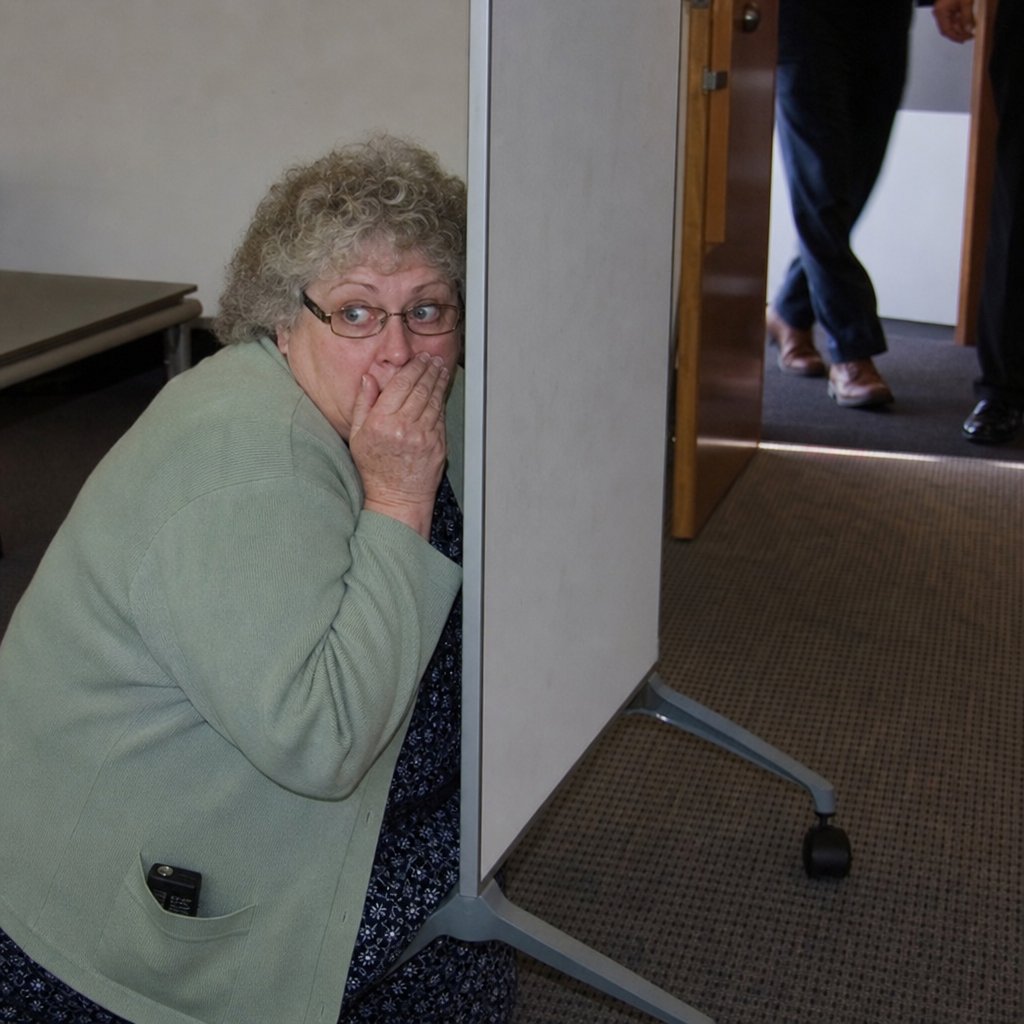
I slipped into the Sprint Room and killed the overheads, leaving only the spill of light from the hallway under the door. The room smelled like dry-erase marker and stale pretzels. I wedged myself behind the tall rolling whiteboard, heart thudding so hard I was sure it would give me away.
I had my recorder tucked in my cardigan pocket, hidden under the soft fabric like a secret bruise. I wasn’t proud of it. I was past proud.
Footsteps approached—two sets. Slow. Unhurried. Like they owned the building’s after-hours air.
Then the sound: a badge clip tapping against something hard. A little clink-clink, casual, intimate. Like jewelry.
A voice laughed quietly. “We’re just keeping the care initiative clean,” the voice said, amused, like they were telling an inside joke at a dinner party.
Care initiative. Again. That phrase. It was everywhere now, like a perfume sprayed over rot.
Another voice replied—lower, deferential. “She’s getting paranoid.”
The first voice snorted. “Good. Paranoid people make mistakes.”
I pressed my palm to my mouth to keep from making a sound.
Then the first voice said a name, too casual, too familiar: “Priya will handle the rest.”
My stomach dropped so hard I thought I might actually be sick, right there behind the whiteboard, while the doorknob began to turn.
I Knew That Laugh

The door didn’t open all the way. It cracked, paused, and then pushed wider, slow like whoever was outside wanted to savor the moment. My lungs refused to take a full breath.
I saw shoes first: polished leather, expensive, the kind that never touched a puddle. Then a cuffed pant leg. Then the edge of a blazer sleeve.
And then I heard it again—soft laughter, the same laugh I’d heard in conference rooms when someone asked about “culture” and the answer was actually about control.
It was her.
Veronica Sloane, VP of People Ops. Early 50s, sleek auburn bob, sharp cheekbones, lipstick always perfect like she applied it with a ruler. She had a way of speaking that made every sentence sound like policy. She’d once told me, smiling, that “perception is part of performance.” I’d thought it was advice. It was a threat.
Veronica stepped into the doorway just enough for her profile to catch the light. The air carried a faint, expensive citrus scent—her. My throat tightened around a soundless gasp.
Behind her was Priya—late 30s, South Asian, long black braid, oversized tote slung on her shoulder like she was just working late. Priya’s eyes darted into the room, quick, searching, guilty.
Veronica’s voice stayed light. “We can’t have another Lena-and-Gavin situation,” she murmured, like she was discussing a stain. “The board loves a clean story.”
I felt heat crawl up my neck. So it wasn’t rogue gossip. It wasn’t concerned coworkers. It was People Ops. It was her.
Priya shifted her tote, and something inside clinked—badge hardware—and Veronica held out her hand like she expected to be given a weapon.
The Report Everyone Received

The next morning, the office felt like a courtroom pretending to be a workplace. People smiled too fast. Conversations stopped when I walked by. The espresso machine hissed like it was gossiping.
I didn’t need anyone to tell me something had happened. I could feel it in the way my coworkers’ eyes slid off me—like I was something they didn’t want to touch and didn’t want to admit they’d seen.
Gavin found me near the supply closet, where the air smelled like paper and plastic wrap. He looked wrecked. His tie was slightly crooked, like he’d dressed in a hurry. “They sent something out,” he said, voice tight.
“People Ops?” I asked.
He didn’t answer, which was an answer.
By noon, it was everywhere without ever being said out loud: a “sanitized report,” framed like a kindness, a concern, a neutral summary. A neat little narrative about “repeated boundary crossings,” “after-hours patterns,” “risk to team cohesion.” My name, paired with Gavin’s, like we were a hazard label.
And the timing—of course the timing—landed like a knife: the night before the board presentation. The one I’d built half the deck for. The one Elliot had reassigned with that calm, smiling theft.
I watched Priya walk past my desk without looking at me. Her braid swung once, controlled. Veronica followed behind her, heels clicking in a steady rhythm that sounded like punctuation.
I opened my drawer and pulled out my binder—the one I’d started assembling like a life raft. Logs. Contractor roster. Notes from Ron. A list of swipes that didn’t match my calendar.
My hands shook, but not from fear anymore. From rage.
Because if they wanted a clean story, I was about to show them the dirt—starting with the audio still sitting in my pocket, waiting to be heard.
I Asked For Five Minutes
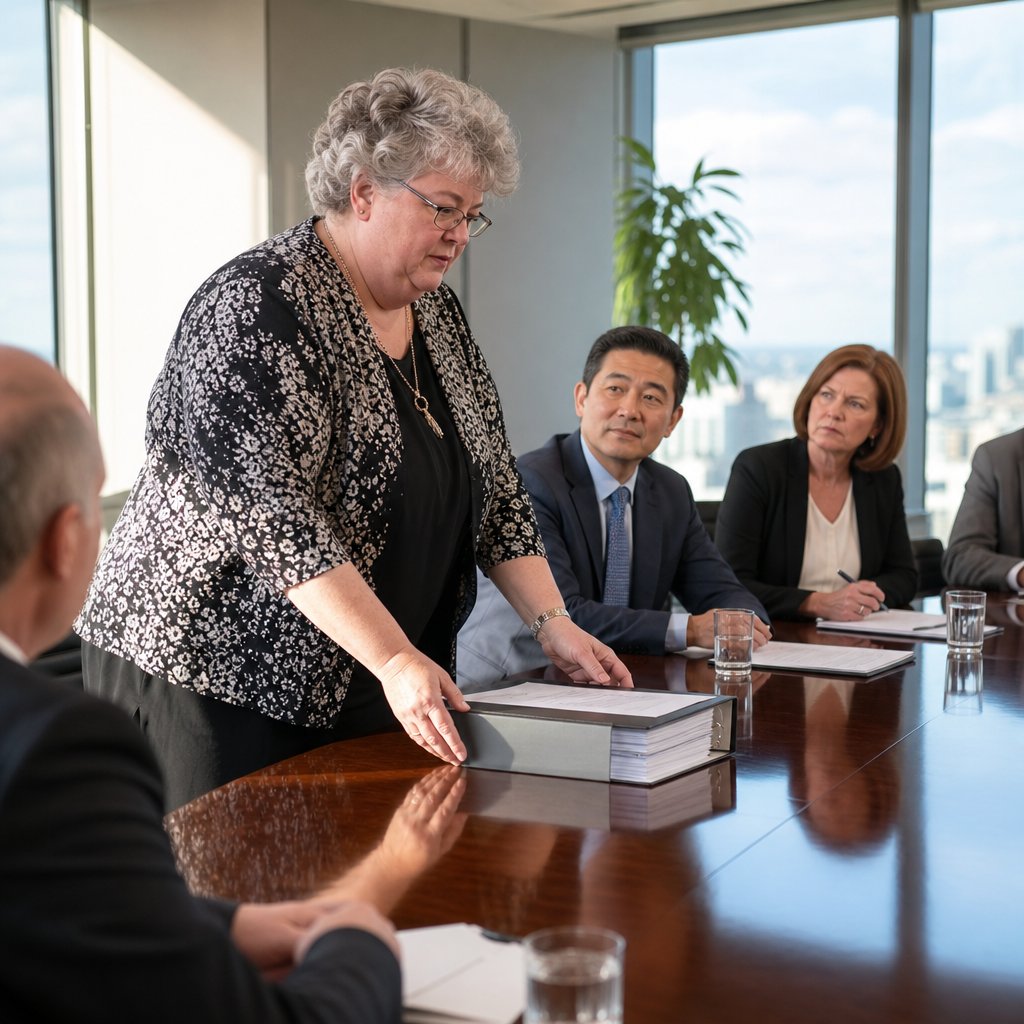
The board meeting was in the top-floor conference room—the one with the long table that always felt too glossy, too expensive, like it was designed to reflect your mistakes back at you. The air smelled faintly of lemon water and new carpet adhesive.
I stood outside the door with my binder hugged to my chest. My palms left damp marks on the plastic cover. Through the glass, I could see silhouettes: Elliot at the head, Gavin beside him, shoulders rigid. The CEO—Derek Lin, late 40s, lean, always calm—sat with his hands folded like he was already deciding who was worth saving.
Veronica was there too, of course. People Ops always “observed,” like a benevolent chaperone. She caught my eye through the glass and gave me the smallest smile—polite, deadly, as if to say you can’t prove it.
I pushed the door open.
The room went quiet in that instant way groups do when an unexpected person enters—like a flock turning midair. Heads tilted. Someone’s pen stopped scratching. The projector hummed softly, impatient.
Elliot’s expression hardened. “Lena,” he said, like my name was a disruption.
I set the binder on the table with a controlled thud. The sound was satisfyingly solid. “Before we begin,” I said, keeping my voice steady with sheer spite, “I’d like five minutes on the agenda.”
Derek blinked once. “Five minutes for what?”
I looked directly at him, then at Veronica, then at Gavin, who couldn’t meet my eyes. “To clarify the security log narrative,” I said. “With evidence.”
Veronica’s smile didn’t move, but her fingers tightened around her pen until her knuckles went pale.
The Swipes That Weren’t Mine
Derek gave a small nod. Not permission—curiosity. It was all I needed.
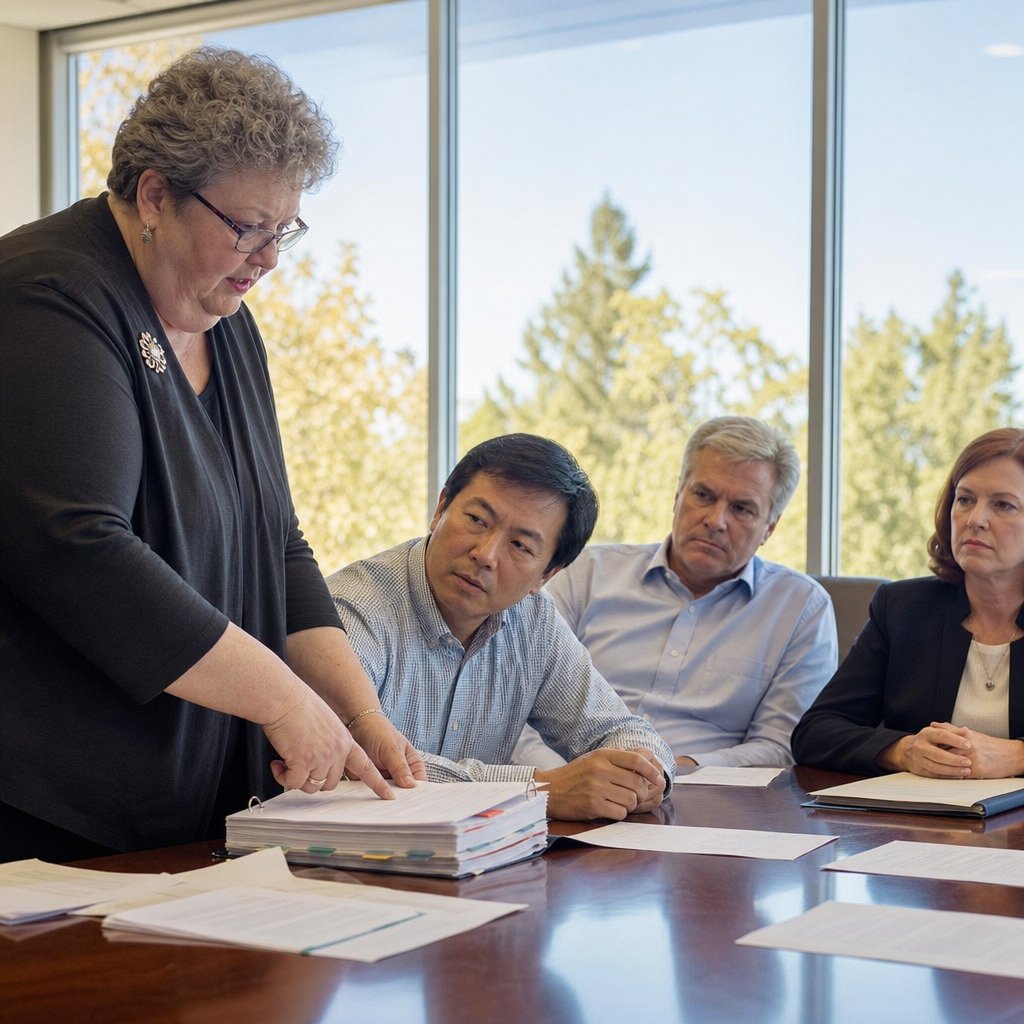
I opened the binder and slid out the pages I’d marked with colored tabs, my hands steadier than I felt. The paper edges were sharp under my fingertips. I’d stopped caring if I looked “emotional.” I was done being managed.
“These are the after-hours access logs,” I said, keeping my voice even. “And these are my documented whereabouts on the same nights—calendar entries, meeting notes, witness confirmations. Nights my badge supposedly swiped in when I was not in the building.”
Elliot leaned back, lips pressed thin. “You’re implying the system is wrong?”
“I’m implying,” I said, looking right at Veronica, “that the system was made to be right for whoever requested it.”
I flipped to the next section: the contractor badge details—0417—kept active past deactivation. A vendor profile that should’ve been dead, revived like a ghost with a purpose.
Gavin’s breath caught when he saw the number. His eyes flicked to Elliot, then away.
“Now,” I continued, “this is the part that matters.” I tapped the page with my index finger. “Custom alerts. Not standard reporting. Alerts that flag specific names and note who arrives after them. That’s not safety. That’s surveillance.”
Veronica finally spoke, voice smooth as glass. “We monitor patterns when there are concerns.”
“Concerns you manufactured,” I shot back before I could stop myself.
The room tightened. Derek’s gaze sharpened. “Who requested the alerts?” he asked.
I slid the final tabbed page forward—metadata from IT, clean and boring and devastating—then reached into my pocket for the audio clip I’d kept like a match.
The Question That Stopped Air

I didn’t play the audio yet. I held it back on purpose. Veronica had lived her whole career off controlling the sequence—what gets said first, what gets framed, what gets buried. I wasn’t giving her the order anymore.
Derek kept his eyes on the documents, scanning like he was assembling a puzzle he didn’t like the picture of. The room was so quiet I could hear the soft tick of someone’s watch and the faint squeak of Gavin’s chair as he shifted.
“Badge 0417,” Derek said slowly. “Contractor account. Supposedly deactivated.”
Veronica’s posture didn’t change, but her throat bobbed once when she swallowed.
Elliot tried to smile. It came out wrong. “Contractors come and go. Access clean-up isn’t always immediate.”
“Yet it kept swiping in,” I said. “After midnight. On nights I was allegedly here. On nights Gavin was allegedly here. And on nights neither of us were.”
Gavin’s face went pale at that last part, like he’d just realized he’d been used too—and that his silence had helped.
Derek lifted his gaze from the binder and looked directly at Veronica. “People Ops was involved in the ‘care initiative,’ correct?”
Veronica’s smile returned, thin and professional. “We oversee employee well-being and risk mitigation, yes.”
Derek nodded once, like he’d reached the end of his patience and found something sharp underneath it.
Then he asked, clearly, into the dead center of the room: “Why would People Ops need a contractor badge after midnight?”
Veronica’s lips parted—ready with a cover story that suddenly didn’t exist yet—and Elliot’s head snapped toward her, the first real crack in his composure.
Would you have confronted the suspicious badge log entry?