



The Draft He Forgot
I slid his phone out from under his suit jacket, and my stomach dropped before I even unlocked it—because the screen lit up on a notes app like it had been waiting for me. No notifications. No missed calls. Just one unsent draft, blinking at the top like a dare.
“After today, she can never know.”
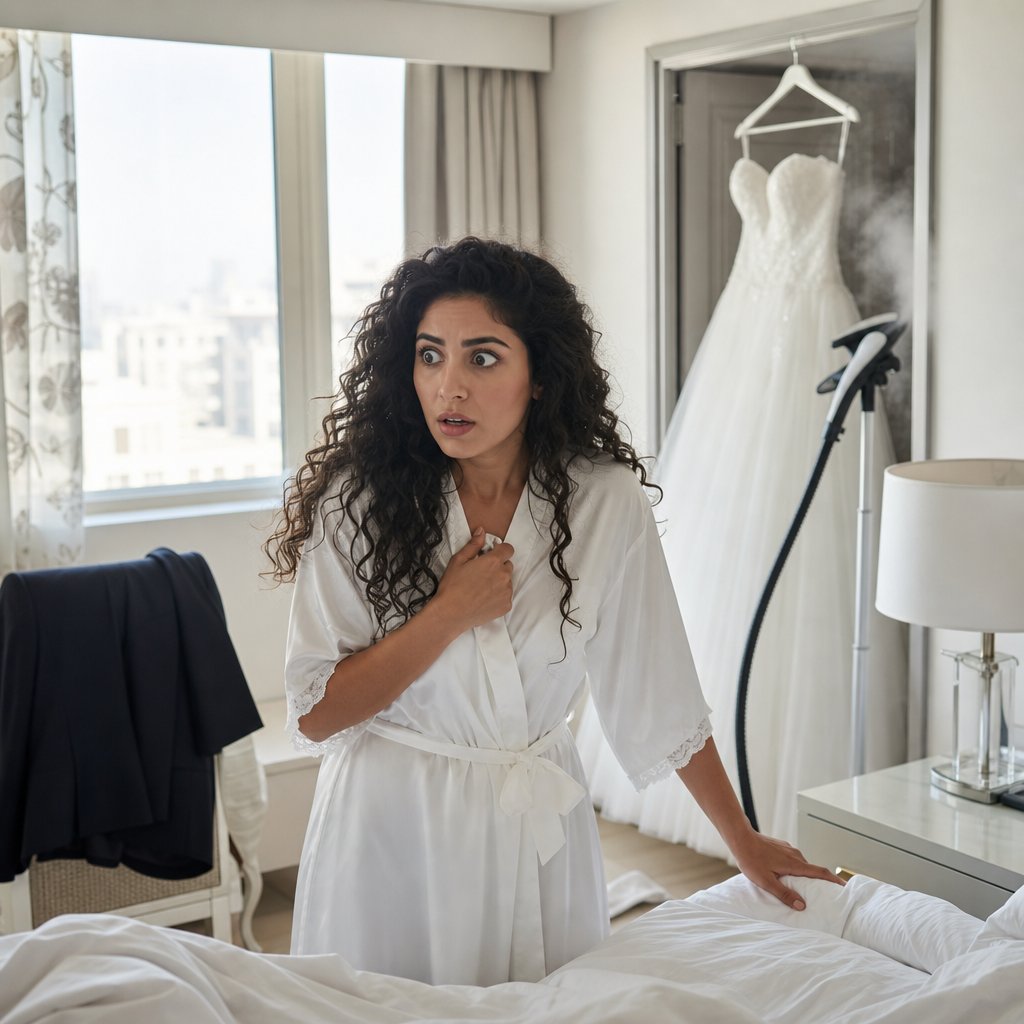
My thumb went cold against the glass. For a second I couldn’t breathe, like the room had lost oxygen. I heard the downstairs door thump—some vendor arriving early—and the faint hiss of my garment steamer in the bathroom, turning my wedding dress into a cloud.
I scrolled up. Nothing. No context. No name. No “she” besides the obvious one: me. Except… the sick part was how it sounded like someone else had been the “she” first, and I was the one being managed.
I backed out, heart punching my ribs, and checked his messages. The newest thread list looked too clean, too normal, like a staged apartment for a showing. Then I remembered the 6:12 a.m. preview I’d seen when his phone buzzed on the nightstand—just a flash of a name and a slice of a sentence before he snatched it away.
I stared at his locked bedroom door, the one he’d shut when he went to “grab ice,” and realized I was standing there in my robe holding the one thing I wasn’t supposed to touch, with his draft still open like a confession he never meant to send…
The Name On The Preview
The preview from 6:12 a.m. hadn’t been some random number. It hadn’t been a coworker or a spam text or a cousin with bad timing. It was Mara.
My maid of honor. My sister’s best friend since middle school. The woman who helped me pick this venue and swore she’d “run interference” so my wedding day stayed perfect.
I found it again by digging through his notification history—just enough to confirm what my brain kept trying to soften into something less lethal. Her name. Her little profile photo. And the words that made my throat burn:
“Tell the truth before she walks the aisle.”
Not “before the ceremony.” Not “before the vows.” Before I walked the aisle—like the aisle was the point of no return, like once I took those steps I’d be trapped inside whatever lie they’d been building around me.
I heard laughter downstairs, bright and rehearsed, and the clink of glass as someone set down a tray. The whole house smelled like the citrus cleaner my mom used when she wanted to erase evidence of panic. It felt like everyone was polishing the outside of a bomb.
Mara had been with me last night, braiding my hair and telling me I looked “safe” with him. Safe. Who says that about love? I remembered her hand lingering on my shoulder a beat too long.
I stared at the ceiling and tried to picture any version of this where Mara wasn’t protecting him from me—or protecting me from him—and the only person who kept appearing in the middle of that triangle was my sister.
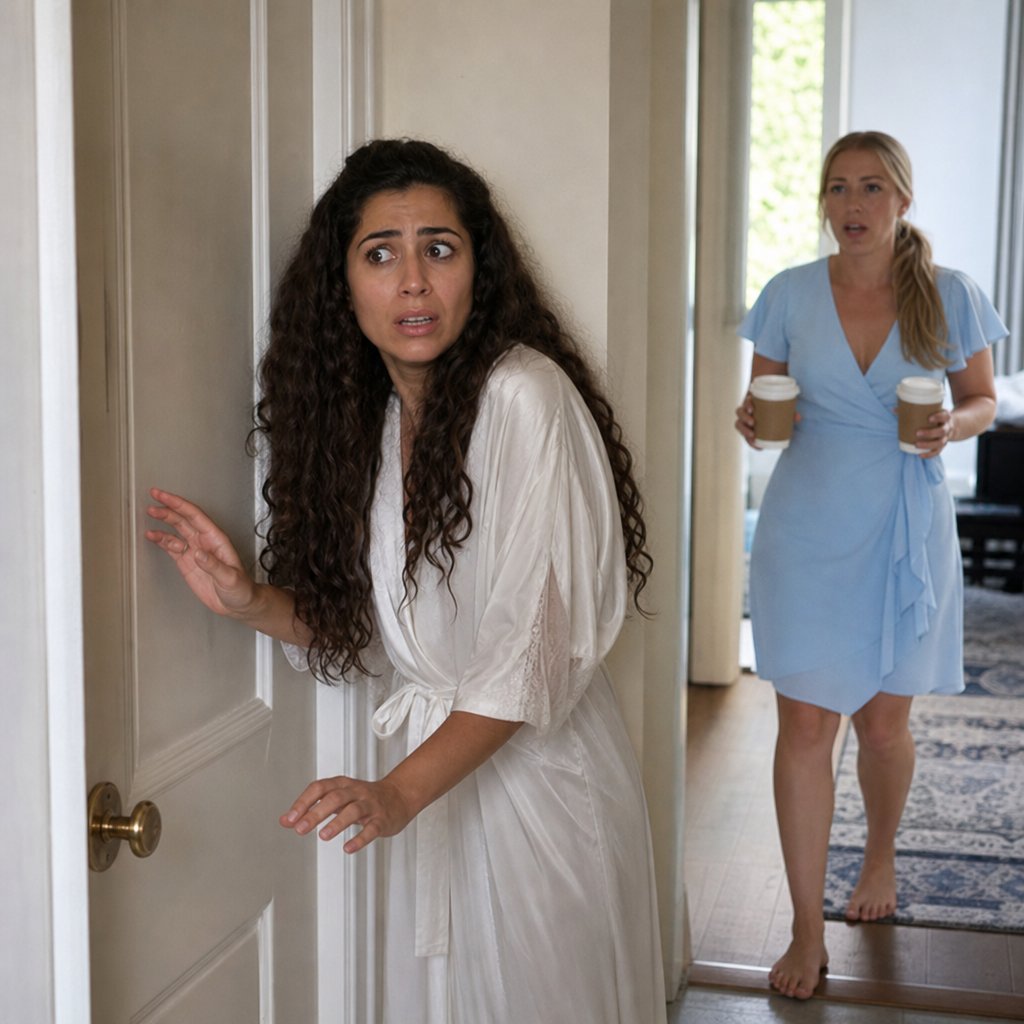
Then I heard Mara’s voice in the hallway, close enough that I could pick out the forced cheer in it, and my pulse went feral…
The Thread That Wasn’t
As soon as Mara’s footsteps faded—someone called her name downstairs and she pivoted away—I went hunting for the rest of it. Because nobody sends “tell the truth” like that into a vacuum.
I opened his messages and searched Mara’s name. Nothing. I searched my sister’s name. Nothing. I searched words that felt like they’d belong in a secret: “tonight,” “don’t,” “promise,” “after.” Nothing. His inbox looked like a man with no history and no mess, the kind of clean you only get when someone scrubs.
That’s when it hit me: it wasn’t missing by accident. It was wiped clean like someone planned for me to look.
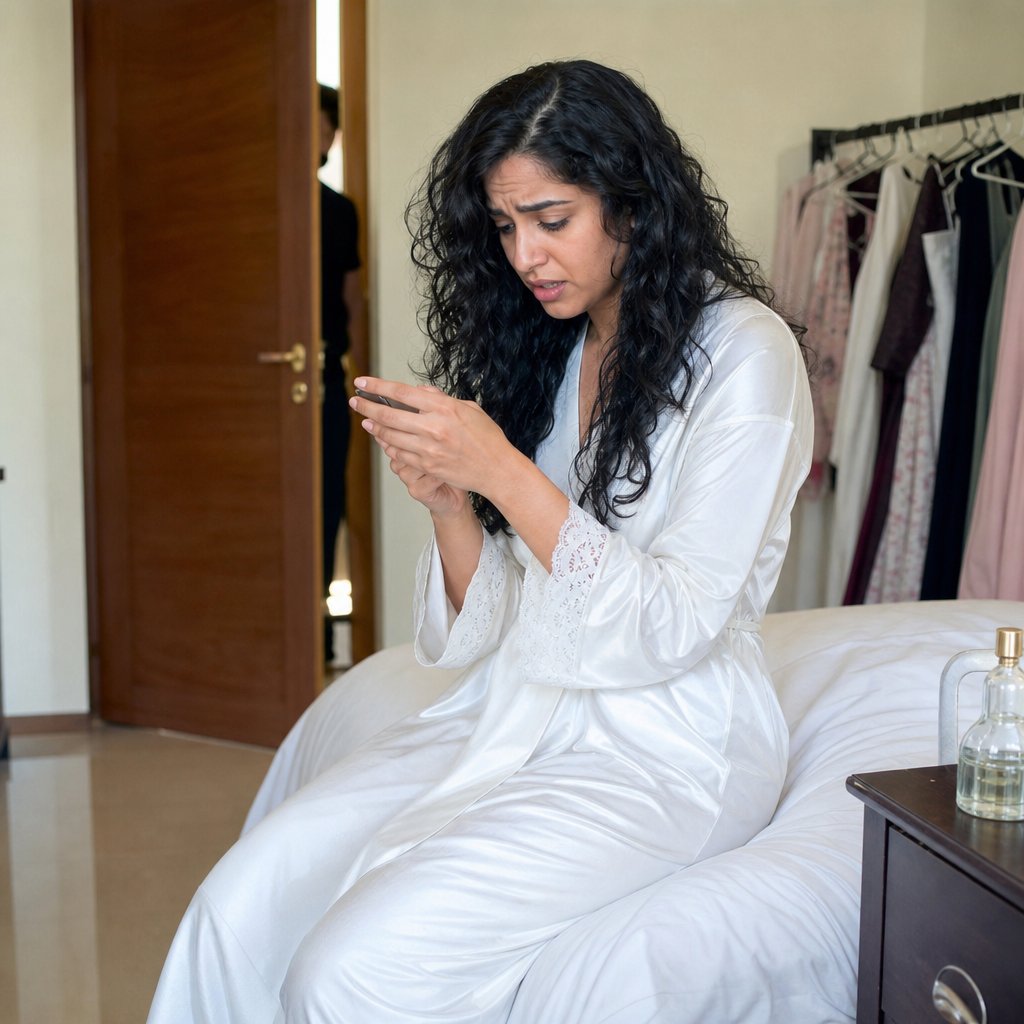
I went into the deleted folder. Empty. I checked his call log. A few harmless calls—his mom, his best man, the caterer—like a curated museum exhibit of Normal Groom Behavior. My hands shook so hard I had to sit on the edge of the bed, the mattress dipping under me like it was giving up.
Downstairs, someone rolled a garment rack across hardwood. The wheels squeaked in a steady rhythm, like a metronome counting down to a wedding I suddenly couldn’t trust.
I thought about the draft again—“After today, she can never know”—and the way it sounded less like guilt and more like strategy. Like a plan with steps, with helpers, with contingencies. Like Mara’s 6:12 a.m. text had been part of an emergency protocol.
I stared at his phone and realized the scariest part wasn’t what I couldn’t find. It was how much effort had gone into making sure I couldn’t find it.
And then a shadow moved under the door, and a familiar perfume slipped into the room—Mara’s—sweet and sharp like crushed flowers…
Coffee And A Too-Fast Smile
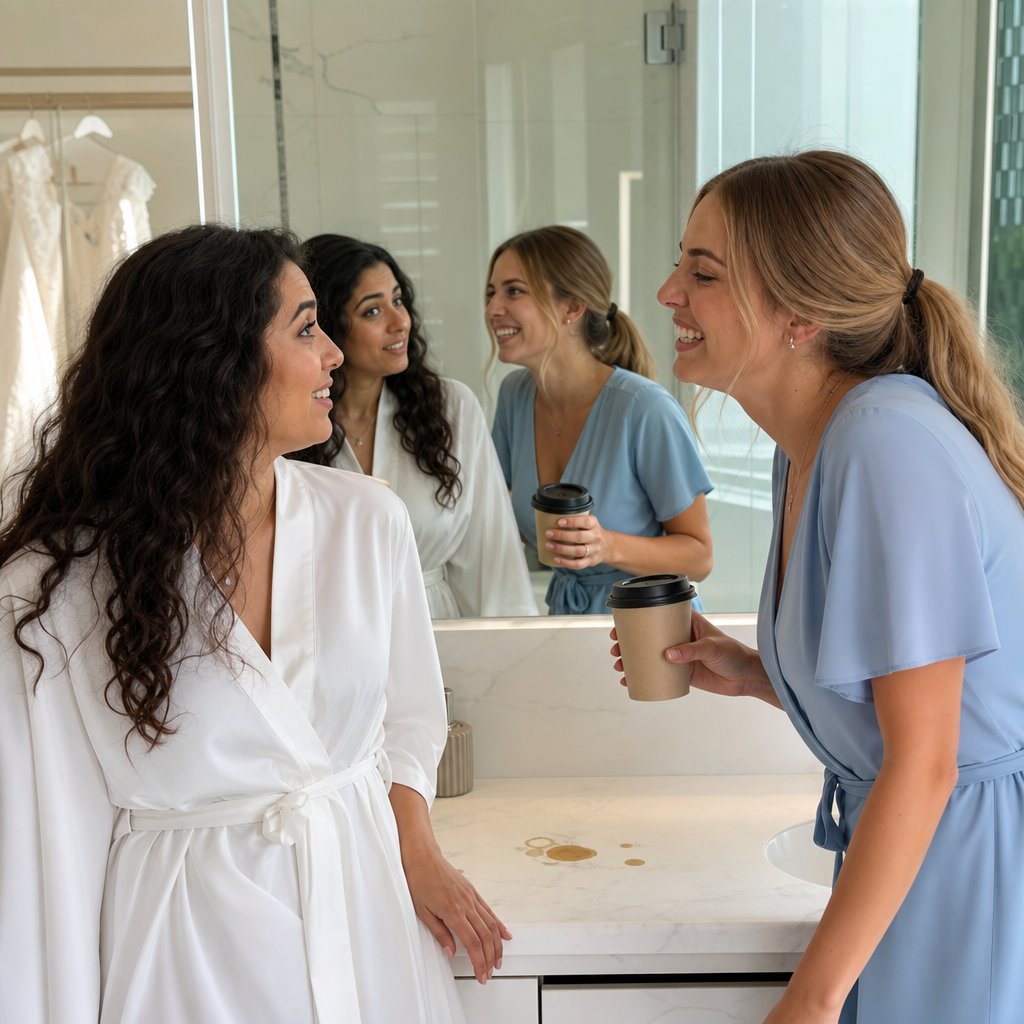
Mara walked in like nothing was wrong—two coffees balanced in one hand, the other hand already reaching for me like she was about to fix my hair. Her smile came out too fast, too practiced, like she’d rehearsed it in the car.
“Okay,” she said brightly, breathless. “Drink this. You’re spiraling. You misread the message.”
I didn’t even tell her what I’d seen.
That’s what made my skin prickle. She was insisting I’d misread it before I’d accused her of anything. Like she’d come in preloaded with my denial, like she’d been waiting for me to blink and accept a new version of reality.
She set one cup on the vanity so hard the lid popped and a ribbon of coffee sloshed onto the white countertop, a brown stain spreading like a bruise. “See? Disaster,” she laughed, too loud. “And we’re not doing disasters today.”
I looked at her—straight blonde hair pulled tight, pale blue wrap dress, mascara perfect—and I tried to find my friend in her face. All I saw was someone monitoring me.
“What message?” I asked, keeping my voice soft on purpose.
Mara’s eyes flicked—just once—to the phone in my hand, like a reflex she couldn’t stop. Then she leaned closer, lowering her voice into something almost tender. “Babe. I’m helping you. Don’t make this into a thing.”
Don’t make this into a thing. Like the truth was an inconvenience I could choose not to create.
Behind her, in the mirror, I caught my own reflection—robe, bare face, wide eyes—and for the first time it didn’t look like a bride. It looked like a witness.
Mara’s smile held, daring me to doubt my own eyes, and I realized she wasn’t afraid of being caught.
She was afraid I’d stop being controllable…
The Chair That Moved
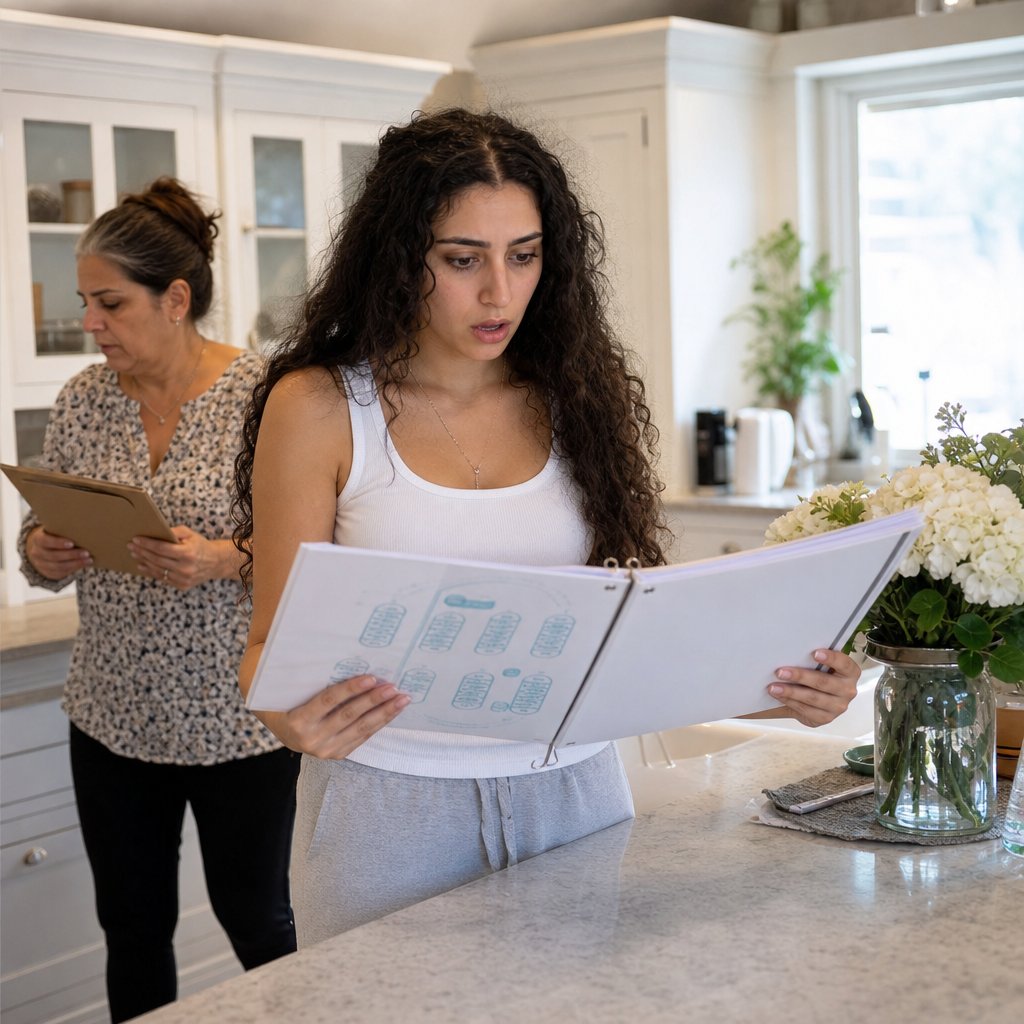
After Mara finally drifted out—leaving her coffee like a peace offering I couldn’t touch—I opened my wedding binder with hands that felt like they belonged to someone else. The tabs were color-coded. The pages were laminated. I’d built this thing like a fortress.
And right there, clipped to the inside pocket, was the seating chart.
There was a change.
Not my handwriting. Not my planner’s neat block letters either. A different pen, pressed too hard, the ink slightly indented into the paper like whoever wrote it was angry or rushed. One name had been moved overnight to the front row—close enough to the aisle to be unavoidable.
I traced the arrow with my fingertip, feeling the groove in the page. My mouth went dry. Front row seats were sacred in my family—earned, fought over, mourned over. You didn’t just slide someone in like an afterthought.
I flipped to the final version I’d approved last week. That name wasn’t there.
The binder smelled faintly of hairspray and paper glue, and it hit me how intimate betrayal can be—how it shows up in the small logistics you trust other people to handle while you’re busy believing in love.
I heard my mom downstairs calling out vendor instructions, her voice bright with that ceremonial authority she slipped into when she wanted everything to look perfect. I imagined her ushering strangers into seats I hadn’t agreed to, smiling politely while my entire life rearranged itself by inches.
I shut the binder and hugged it to my chest like it could protect me, but it felt like holding evidence.
Because whoever moved that chair wanted someone close enough to watch me say “I do.”
Close enough to make sure I couldn’t pretend I didn’t see them when the music started…
The Escort Card That Threatened
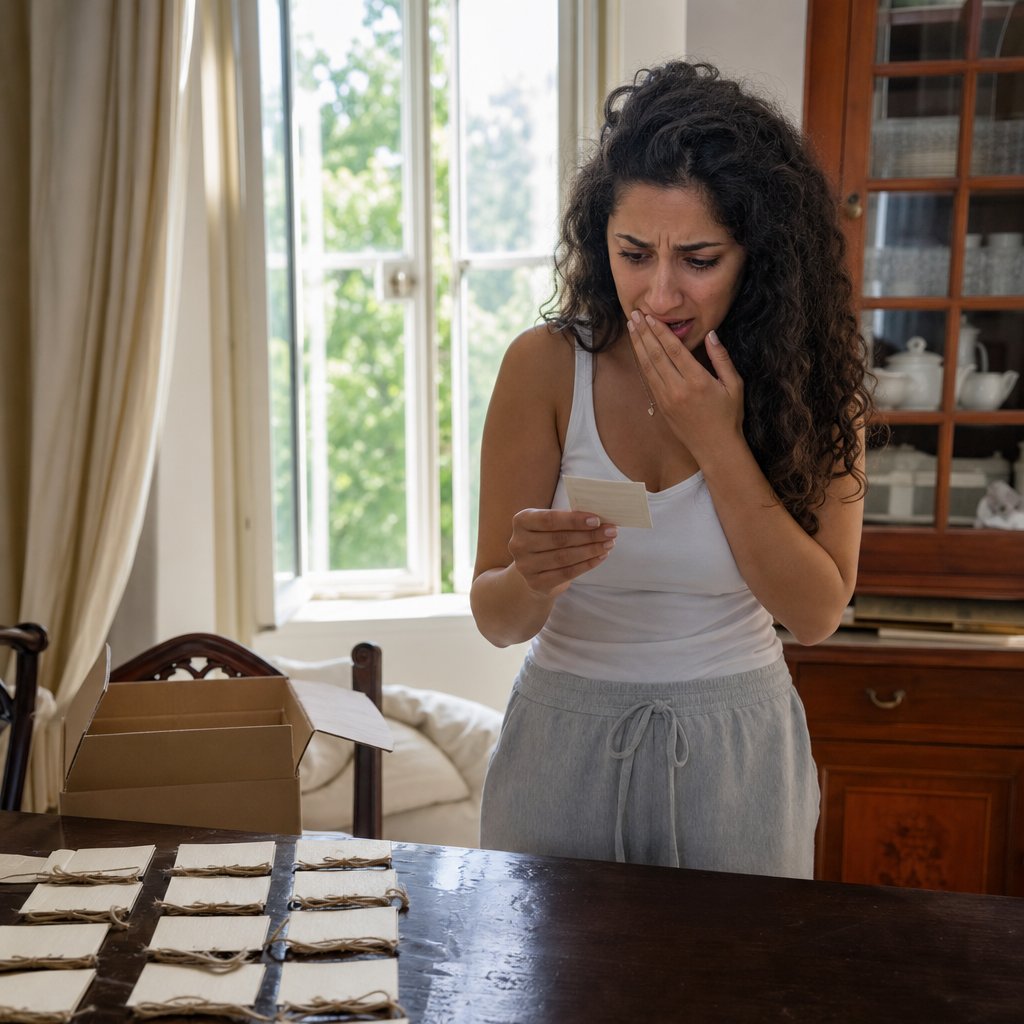
The escort cards were stacked in neat rows, tied with twine and organized by table number like little promises. I’d obsessed over the font. The paper thickness. The exact shade of cream that wouldn’t clash with my dress.
So when I slid the stack for the front row out of the box, my fingers instantly found the one that didn’t belong—because it felt heavier, like the cardstock had been cut with sharper intent.
“J. Harlan.”
No full name. No plus-one. Just an initial and a last name, printed cleanly and confidently, like whoever ordered it knew it would make it through to paper. Like they knew nobody would question it because the wedding machine was already in motion.
My throat tightened. I read it again, hoping it would change. It didn’t. The black ink looked almost wet, even though it was dry—too crisp against the cream.
I rifled through the rest. Everyone else had full names. My cousins, my coworkers, the elderly neighbor my mom insisted on inviting. Even the kids had their whole names spelled out with care.
But not J. Harlan.
I held the card up to the light from the window, stupidly checking for some watermark or clue, and all I saw was the faint texture of the paper and my own trembling fingers. Outside, a delivery truck door slammed, and somewhere a man shouted directions like we were building a stage.
That’s what it felt like—like someone had built a stage around me and planted a character in the front row.
I could almost see him sitting there, calm, watching me walk toward my fiancé like he already knew the ending.
My hands started to sweat, and the twine bit into my palm as I realized one terrifying thing: this wasn’t a secret anymore.
This was an arrival…
My Mother’s Casual Bombshell
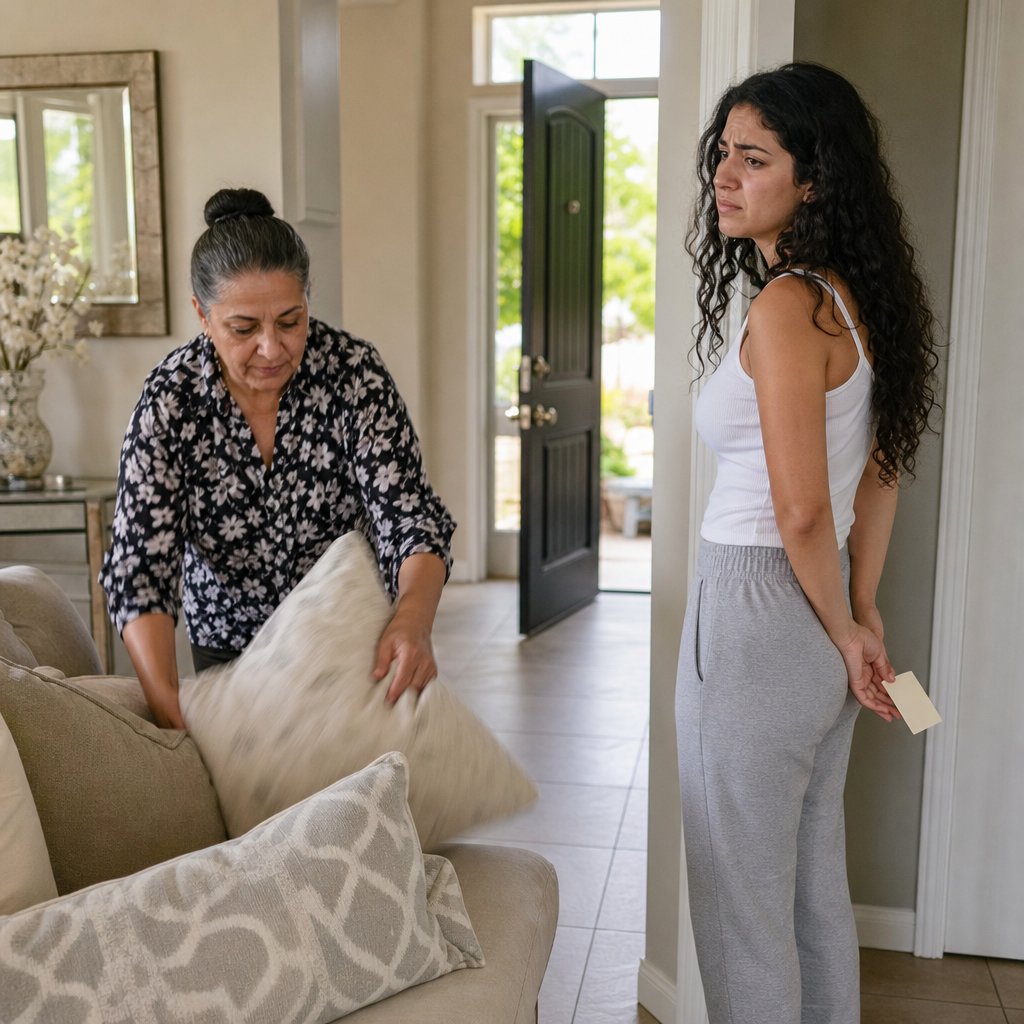
My mom said it like it was nothing—like she was telling me we’d run out of ice.
“Oh, by the way,” she called from the living room, adjusting a throw pillow that didn’t need adjusting, “Mara told me we needed an extra chair in the front row for someone important to the groom.”
I froze in the doorway, the escort card still pinched between my fingers. My mom didn’t look up. She was in full-host mode, smoothing and straightening, curating the illusion that everything was under control.
“An extra chair?” I repeated, and my voice came out thin.
“Yes,” she said, waving a hand. “She said he asked. Your fiancé never mentioned it, but you know men. They forget details.” She laughed softly to herself, like the idea of my future husband hiding a front-row guest was a charming quirk.
My fiancé never said a word.
I felt heat rise up my neck, the kind that comes right before you cry or scream. I stared at my mom’s hands—manicured, steady—tugging a corner of fabric into place. There was something obscene about how calm she was while my brain was on fire.
“Did Mara say who?” I asked.
My mom paused, finally glancing at me with mild annoyance, like I was interrupting. “No. Just ‘someone important.’ She was very… insistent.”
Insistent. That word landed like a slap. Mara wasn’t just helping. She was directing. And my fiancé—my almost-husband—had apparently agreed to let her.
I looked down at the card in my hand. J. Harlan. A front-row chair. A wiped thread. A draft that sounded like a vow between conspirators.
My mom went back to fluffing pillows, humming under her breath, and all I could think was: if this person was so important, why wasn’t I allowed to know their full name?
Then the doorbell rang, long and impatient, and my mom called, “That’ll be the florist!” like it was the most normal thing in the world…
The Forwarded Note To The Planner
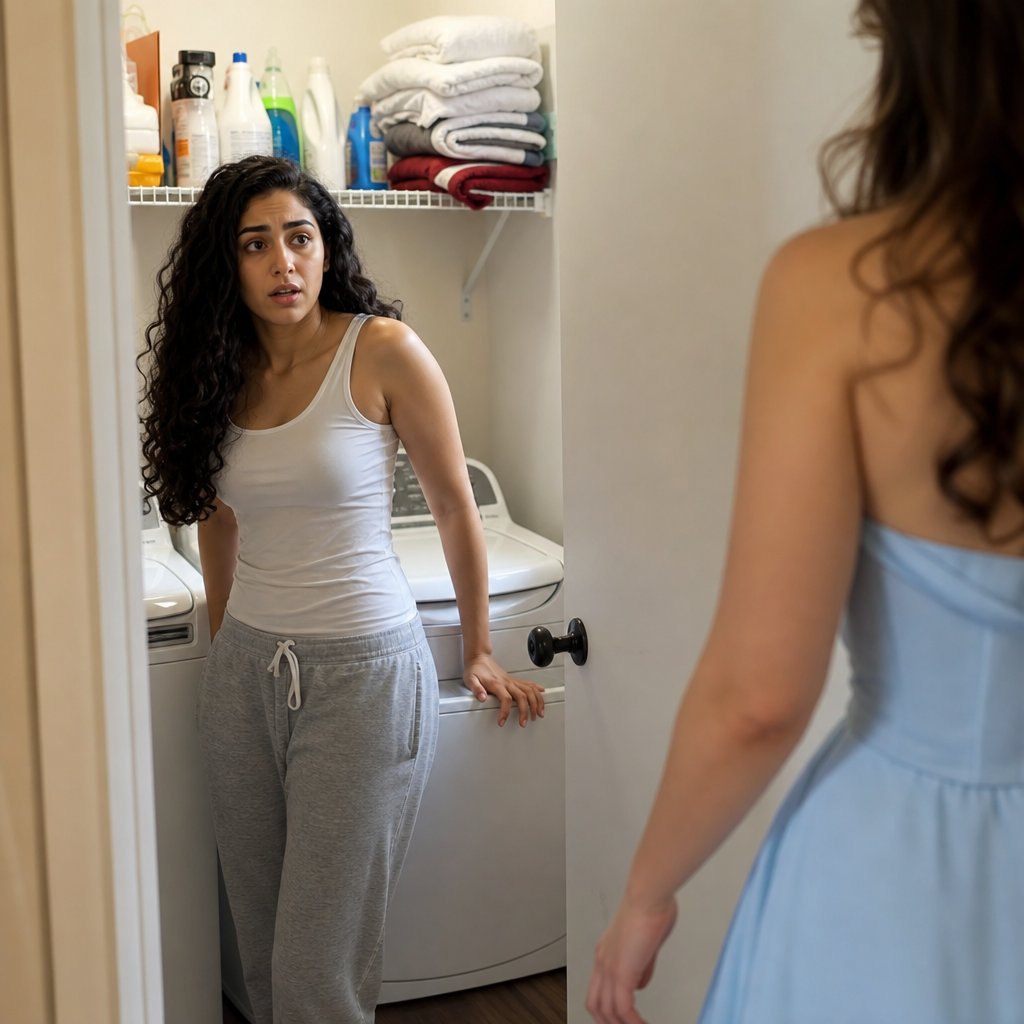
I waited until my mom disappeared toward the front door before I slipped into the quietest place I could find—the laundry room off the kitchen, where the hum of the dryer could swallow a panic attack. I wasn’t proud of what I did next, but pride felt like a luxury I’d already lost.
I opened my laptop and dug through the wedding email chain like I was excavating a crime scene. Vendor confirmations. Timeline updates. My own “thank you!” replies peppered in like confetti. And then—buried in a thread with our planner—something forwarded from Mara.
My eyes snagged on a line that made my blood go ice-cold:
“Make sure he’s seated where she can’t ignore him.”
He. Not “them.” Not “a guest.” He, like a singular man with a purpose. Like a weapon you place carefully so it lands.
I reread it three times, hoping I was misunderstanding, hoping there was some benign interpretation—an estranged uncle, a surprise friend, some sweet reconciliation moment. But the wording was too sharp, too deliberate. She can’t ignore him. Not “won’t.” Can’t.
My fingers curled against the edge of the washer until my knuckles hurt. The laundry detergent on the shelf smelled like fake lavender, bright and chemical, and it made me nauseous.
Mara hadn’t just asked for a chair. She’d instructed my planner like she had authority over my day. And my planner had complied.
I scrolled up, desperate for context, and saw Mara’s signature line—her little heart at the end, the same one she used when she texted me memes. Seeing it there, attached to something so calculated, made me feel stupid in a way that stung.
I heard footsteps in the kitchen—quick, purposeful—and a man’s voice I didn’t recognize asking where to set something down. Vendors. Helpers. Strangers carrying pieces of my wedding around like luggage.
I closed the laptop, heart thudding, because suddenly I didn’t want to be in a room with a door that didn’t lock.
And then I heard Mara laugh—right outside the laundry room—close enough that I could picture her face as she said my name…
The Best Man’s Strained Voice
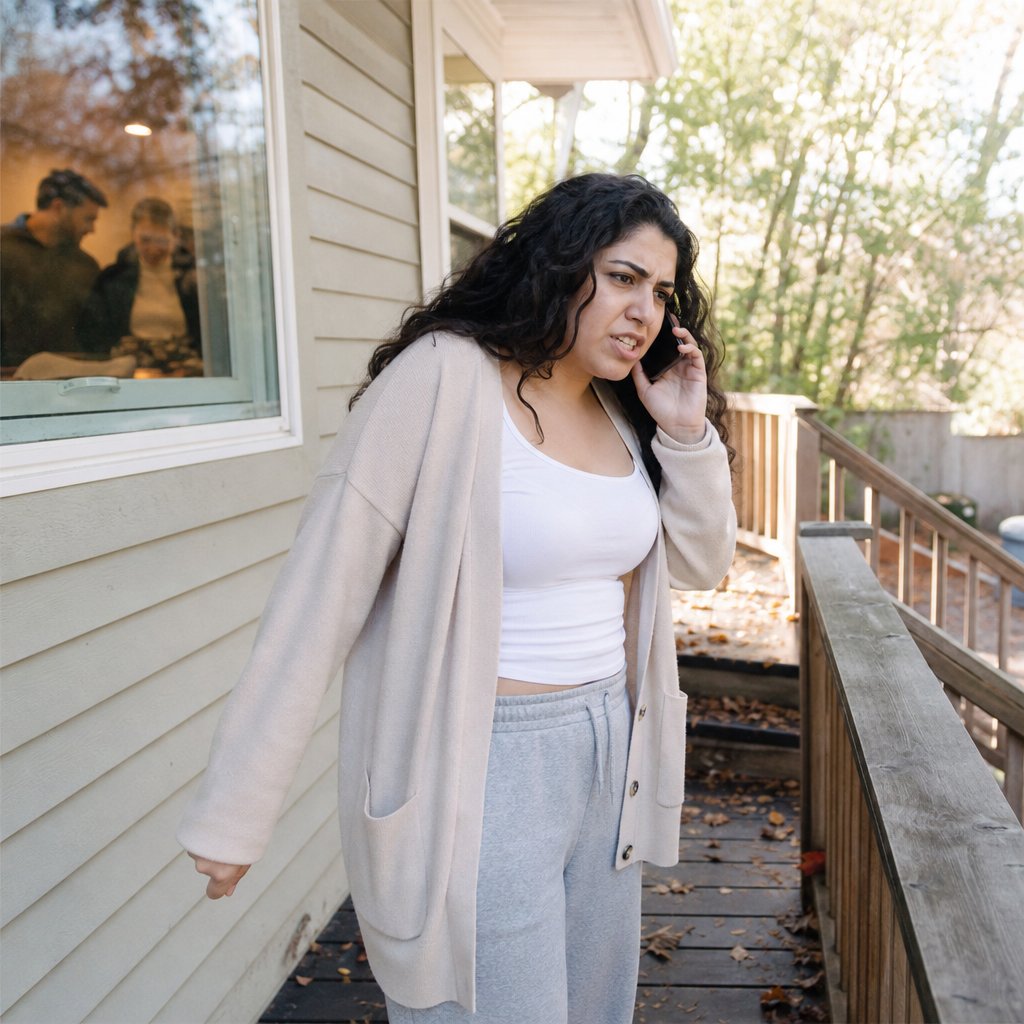
I didn’t let Mara corner me. I slipped past her with a muttered excuse—something about needing bobby pins—and went straight outside onto the side porch where the air was colder and smelled like wet leaves from last night’s watering.
I called my fiancé.
It rang twice. Then someone else answered.
“Hello?”
It was his best man, Tyler—tall, broad-shouldered, always joking at family dinners like he was auditioning for my approval. Except now his voice sounded squeezed, like he was holding something in his teeth.
“Where is he?” I demanded. I could hear movement behind Tyler, muffled voices, a door closing hard. The kind of background noise you get when men are trying to solve a problem without letting women hear it.
Tyler exhaled, and it came out shaky. “He can’t talk right now.”
“Why?”
A pause. Too long. Then, quietly: “It’s being handled.”
Handled. Like my wedding was a crisis with a containment plan. Like I was a variable, not a person. I squeezed the porch railing until the paint bit into my palm, rough and flaking, grounding me in a way my own mind couldn’t.
“Tyler,” I said, lowering my voice so it didn’t crack. “Who is J. Harlan?”
There was a sound on the other end—Tyler swallowing, or maybe someone grabbing the phone from him. “Listen,” he said fast, “don’t—don’t do anything yet. Just… wait.”
Wait. Another instruction. Another attempt to keep me in place while everyone else moved pieces around me.
I heard Tyler whisper, not quite covering the receiver, “She knows,” and my whole body went cold.
Then a deeper voice cut in—my fiancé’s voice, muffled and furious—too far from the phone to make out the words, but close enough to hear the panic in it…
The Extra Boutonniere Arrived
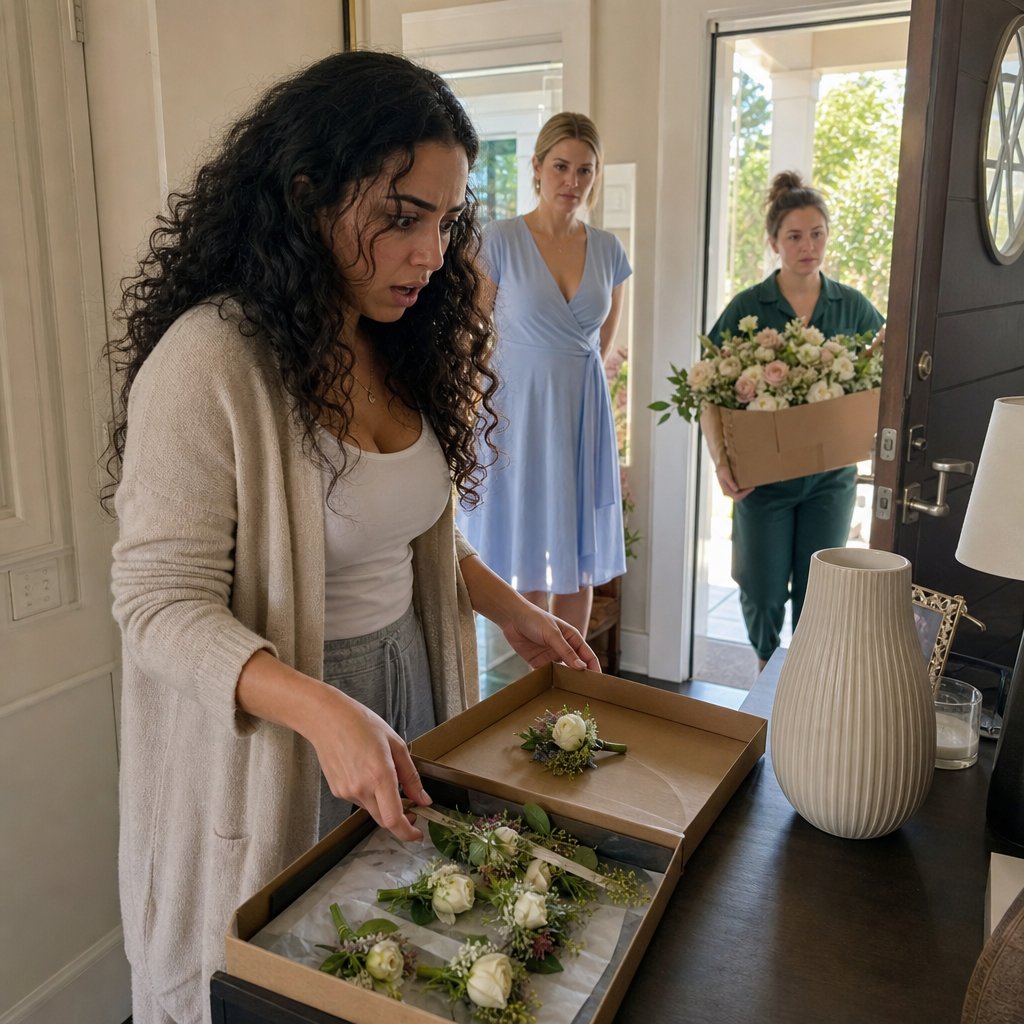
The florist swept in like a gust—arms full of boxes, cheeks pink from rushing, hair pinned up with loose strands escaping. She smiled at my mom, apologized for being “early,” and started unloading arrangements like we were all still playing the same happy script.
I stood near the entryway, watching with that new hyper-awareness you get when you realize you’ve been lied to: every item, every choice, every person suddenly suspicious.
“These are the boutonnieres,” the florist said, setting down a shallow box on the console table. White blooms, green sprigs, tiny pins taped in careful bundles. The air filled with that sharp green smell of snapped stems.
I lifted the lid.
There was one more than we ordered.
It wasn’t dramatically different—same style, same flowers—but it was tucked in with a quiet confidence, like it belonged. Like it had always been part of the count. Like it would slide onto a lapel and nobody would question it.
And tied around the stem was a small tag with two letters written in black marker: JH.
My fingers went numb. My mom was chatting behind me, asking about the arch flowers, completely unaware she was standing beside a landmine. The florist kept talking, oblivious, but I couldn’t hear her over the blood rushing in my ears.
Because this meant J. Harlan wasn’t just a name on paper. He was physically accounted for. A body. A suit jacket. A front-row chair. A flower pinned over a heart.
I slowly closed the box like I could close the reality with it, but my hands were shaking too hard. I looked up—and Mara was standing in the hallway watching me, her smile gone now, her eyes flat like she’d decided something.
She took one step toward me and said, very softly, “We need to talk.”
And behind her, the front door opened again, letting in a draft of cold air and the sound of unfamiliar footsteps…
Mara’s Warning Hit Low
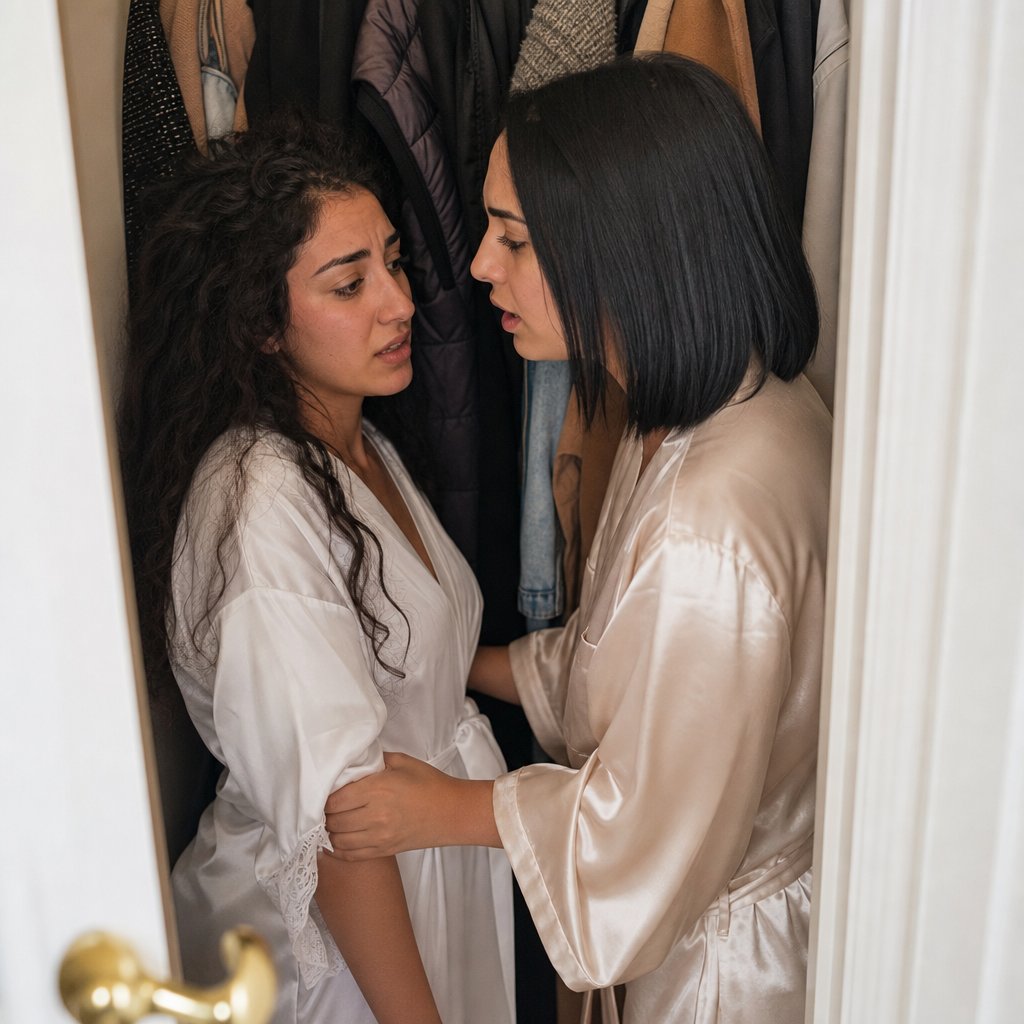
The stranger’s hand was still on the doorframe when Mara appeared behind him like she’d conjured him—sleek dark bob, champagne robe, eyes already glossy with something she was trying not to spill. I stepped into her path so hard my bouquet ribbon snapped against my wrist.
“Did you text him?” I kept my voice low, but it shook anyway. The entryway smelled like citrus cleaner and hair spray, sharp enough to sting my nose.
Mara’s gaze flicked past me, over my shoulder, toward the stranger. Then back to my face. “Not here,” she hissed, grabbing my elbow and dragging me into the coat closet like we were hiding from our own wedding.
In the dark, I could hear the muffled clink of someone setting down a tray in the hall. Mara’s nails dug into my forearm. “Yes,” she admitted. “I texted Callum.”
The name in her mouth made my stomach flip. “Why?”
Her laugh came out too sharp. “Because you’re walking into something blind. Because Mom—” She swallowed, and her voice changed, smaller but meaner. “Listen to me. If you confront him today, you’ll ruin everything for Mom.”
I stared at her. “My wedding is not Mom’s hostage negotiation.”
Mara leaned in until I could smell her mint gum. “It is if you make it one,” she whispered, and the closet door handle started to turn from the outside.
He Asked For Our Father
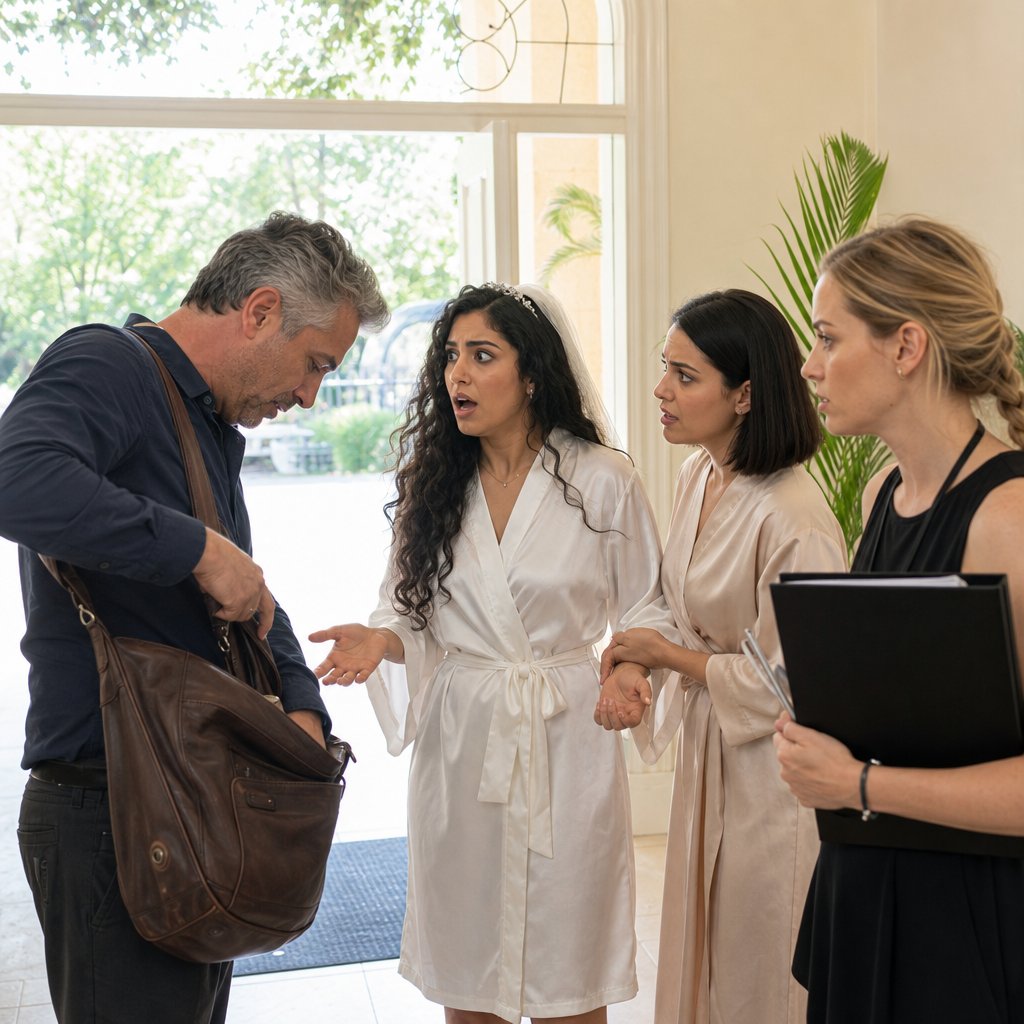
The door swung open and I stumbled out of the closet like I’d been pushed. The stranger stood in the entryway with a messenger bag slung across his chest, salt-and-pepper hair combed back, a jaw that looked like it had made hard decisions for decades. He wasn’t dressed for a wedding—gray button-down, scuffed brown shoes—like he’d come straight from a different life.
Our coordinator, Tessa—blonde braid, black clipboard—stepped forward with the polite smile she used on vendors who were late. “Hi! Can I help you?”
The man didn’t look at me. He looked through me, past me, like he was scanning for someone he’d already met in his head. “I’m early,” he said. “I need to speak to the coordinator—Tessa, right?—about Mara and Calla’s father.”
My throat closed. The hallway felt suddenly too bright, the white walls too clean, like they were mocking me. “Our father is dead,” I heard myself say, and it came out flat, like I was reading it off a card.
Mara made a sound behind me—half choke, half warning.
The man’s eyes finally landed on my face. They didn’t soften. They didn’t apologize. They narrowed, as if he was checking my features against a memory. “That’s… not what I was told,” he said quietly.
Tessa’s smile faltered. “I’m sorry—who are you?”
He reached into his bag, slow and deliberate, and Mara’s hand shot out to grab my wrist like she could anchor me to the floor before whatever he pulled out rewrote everything.
Those Eyes At The Photos
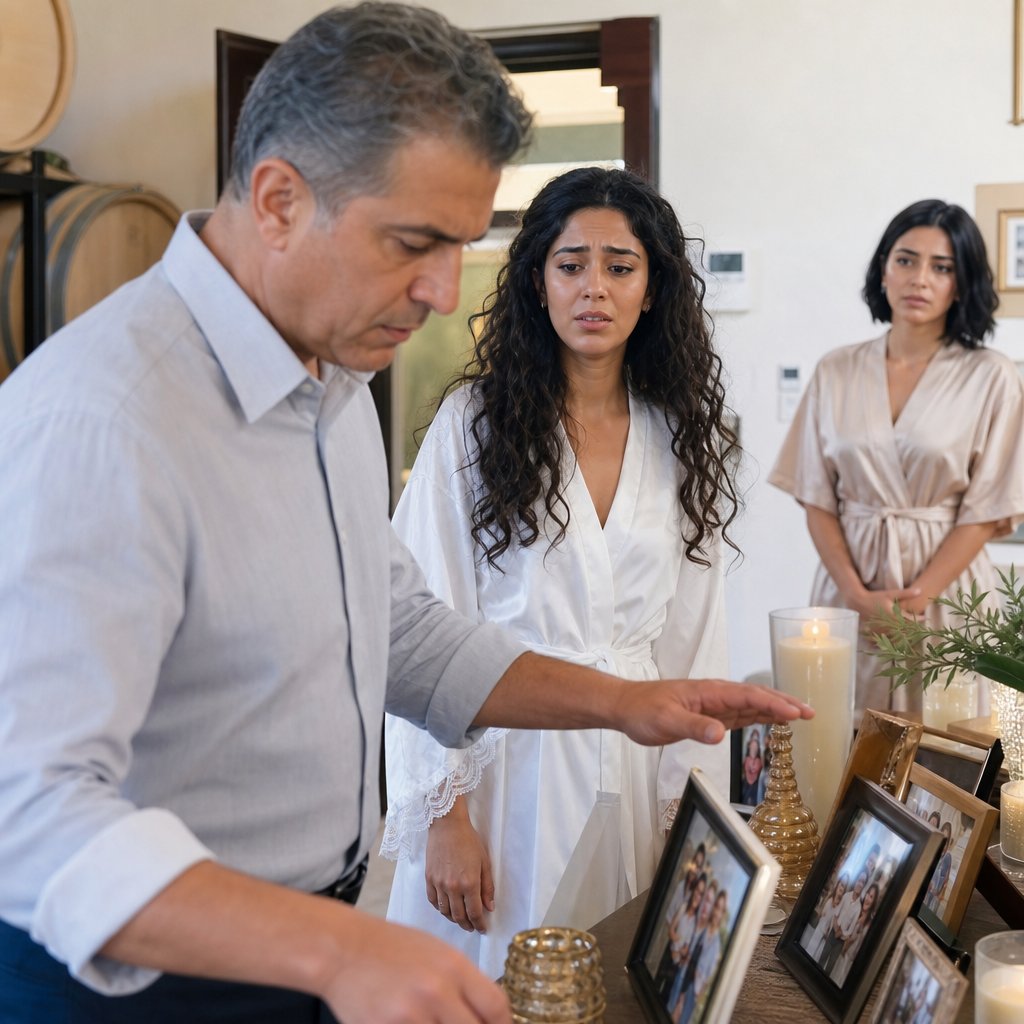
They didn’t let him open whatever was in the bag. Tessa did what coordinators do—redirect, relocate, control the chaos. She ushered him down the hall toward the tasting room “to wait,” her voice tight, her clipboard hugged to her chest like a shield.
I followed at a distance, barefoot on the cool tile, feeling the hem of my robe brush my calves with every step like a nervous tick. Mara trailed behind me, silent in that way that meant she was deciding what lie to tell next.
The tasting room was set up like a memory museum: framed engagement shots, a table of family photos in mismatched frames, candles that smelled faintly like vanilla and smoke. The man stopped in front of the display and leaned in, not to admire— to inspect.
He studied the photo of me and Mara at eight and ten, missing teeth and sunburnt noses. Then the one from Dad’s funeral—Mom in black, my curls pinned back, Mara’s face hard as stone. His gaze moved like he was checking boxes.
And then he looked at the picture of Dad—my dad—smiling in a suit from some long-ago wedding. The stranger’s mouth didn’t twitch with sympathy or recognition.
He looked… cheated.
Something cold slid down my spine when he lifted his hand and hovered his fingers just above the glass, almost touching Dad’s face but stopping short, like contact would burn.
Mara whispered my name behind me, too soft, too late. Because the man turned slightly, and in his eyes I saw something terrifyingly familiar—like he was verifying a life he’d been owed.
The Adoption Reveal Call
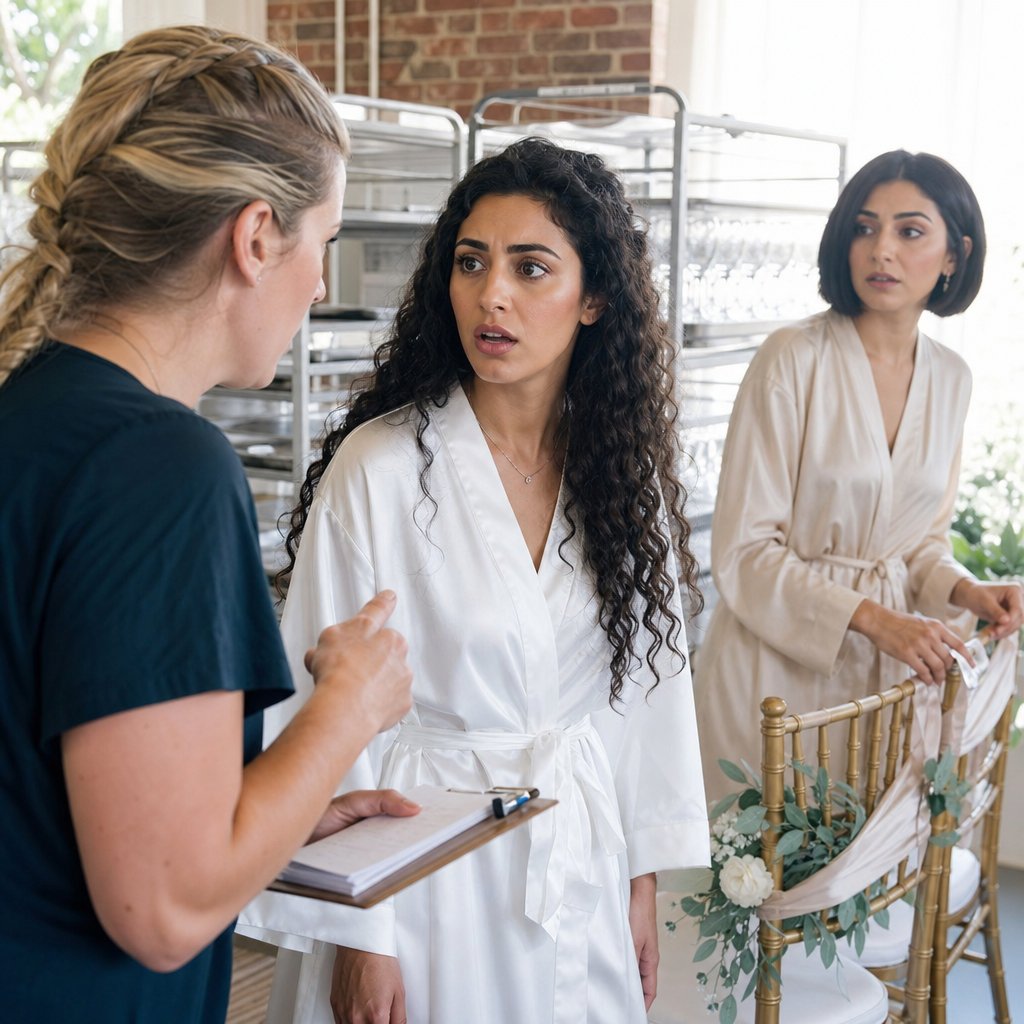
Tessa pulled me aside near the catering prep area, away from the photos and the man’s quiet stare. The air smelled like lemon zest and hot metal from the chafing racks. Her professional voice was gone; she sounded like a person with a secret she didn’t want to be holding.
“Calla,” she said, lowering her clipboard. “Someone called this morning. Private number. They were… aggressive.”
I laughed once, because my body kept trying to turn terror into noise. “Okay?”
Tessa’s eyes flicked to Mara, who had followed us and was now pretending to adjust a ribbon on a chair like she wasn’t listening. “They demanded I confirm where the adoption reveal happens.”
My skin went prickly. “The what.”
“They said,” Tessa continued carefully, “that there was supposed to be a moment—during the reception or before the vows—where it’s revealed. Their words, not mine.” She swallowed. “Calla, I don’t have anything in the timeline about an adoption reveal.”
I stared at her, my mouth dry. “Because I’ve never been adopted.”
Behind us, a tray of glasses clinked as someone set it down, the sound too fragile for how hard my heart was punching. Mara’s hand froze mid-ribbon.
Tessa’s face tightened with confusion and dread. “Then why would someone be calling me like it’s a scheduled part of your wedding?”
I turned to Mara, slow. Her eyes were shiny again, but not with tears—with calculation. “What did you do?” I asked, and my voice came out deadly calm.
Mara opened her mouth, but before she could answer, the tasting room door creaked like someone was about to join our little circle of lies.
Under The Sweetheart Table
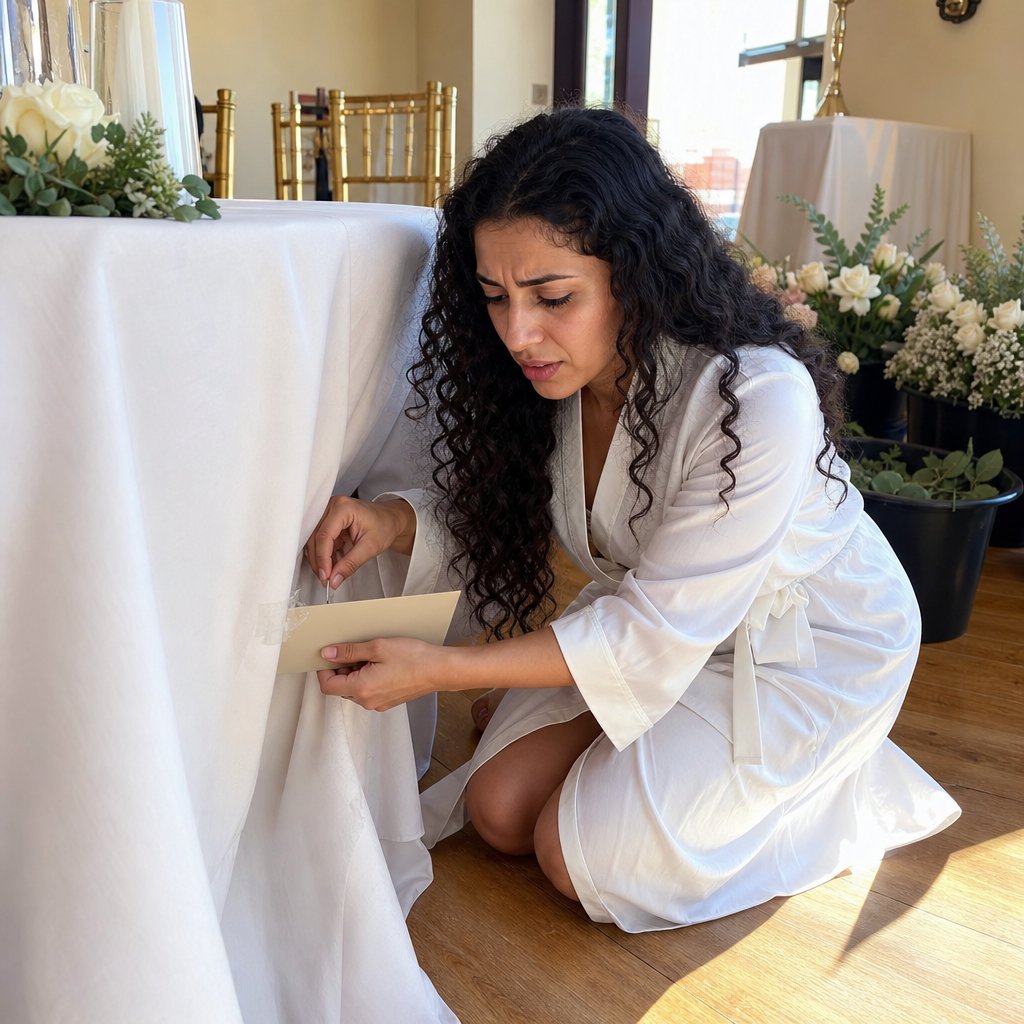
I left them mid-breath. I couldn’t stand in that prep area and let my life be discussed like a seating chart problem. My feet carried me to the reception space on pure panic—past rows of chairs, past florals still in buckets, past a lone saxophonist warming up a scale that sounded like a question.
The sweetheart table sat at the front like a stage waiting for its actors: two chairs, white linen, soft blush napkins folded into perfect triangles. Someone had taped the edges of the runner down so it wouldn’t shift. Someone had been careful. Someone had been here before me.
I dropped to my knees, robe pooling on the floor, and ran my fingers under the table’s lip. Dust and a strip of tape caught on my nail. My heart thundered so hard I could taste it.
There—beneath the table, out of sight unless you were desperate or guilty—an envelope was taped flat against the underside. The tape was the same clear kind Mara used for everything, the kind she always tore with her teeth when her hands were full.
My name was written on it in her handwriting. Thick black ink. The loops were too familiar, too intimate, too cruel.
“You deserve the whole story before the vows.”
The paper felt warm from the room, almost alive. My fingers shook as I peeled at the tape, careful not to rip it, like the envelope might explode if I angered it.
Someone laughed in the distance—one of the groomsmen, maybe—bright and oblivious. I held the envelope against my chest for one second, breathing in the scent of linen and flowers, and then I slipped my finger under the flap.
It opened too easily, like it had been waiting.
The Photo That Didn’t Exist
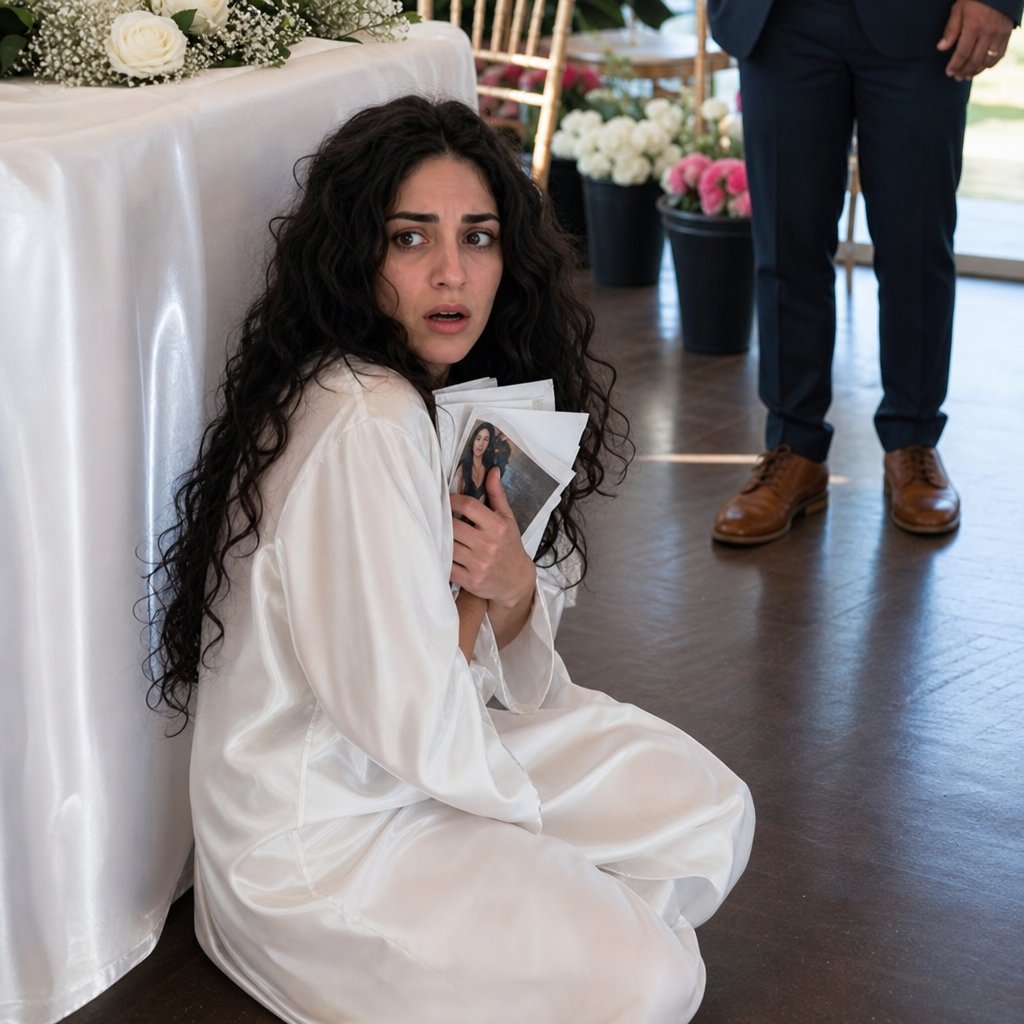
I pulled out the contents with hands that didn’t feel like mine. The first thing was a form—official-looking, heavy paper—requesting a birth certificate. My name was there in blocky print, and the sight of it made my stomach drop like I’d missed a step on stairs.
Then the photo slid out.
Not a wedding photo. Not an engagement photo. A candid from years ago: a dim party, cheap string lights, a plastic cup caught mid-gesture. Callum at nineteen—barely a man, all sharp cheekbones and arrogance—laughing with his head tipped back. And beside him, Mara.
Mara with her hair longer then, but unmistakable—same sleek line of her jaw, same eyes. Callum’s arm was around her waist like it belonged there, like it had done that a hundred times. Mara’s hand rested on his chest in a way you don’t do with someone you’re just “friends” with. They looked… practiced. Shared. Like they had a private language and the camera had interrupted it.
My throat made a sound I didn’t recognize. The paper edges cut into my palm as I gripped too hard.
All morning, I’d been trying to decide if the 6:12 a.m. text meant betrayal. This photo didn’t suggest betrayal. It proved a whole hidden timeline.
I stared until the faces blurred, until the laughter in the photo felt louder than the music drifting in from the other room. My ring finger—bare, because I hadn’t put anything on yet—ached like it knew it was about to be lied to.
Behind me, a shadow crossed the floor. Someone stepped into the reception space, close enough that I could smell cologne and fresh-cut stems, and I didn’t have to look up to know I wasn’t alone.
Mara Finally Said It
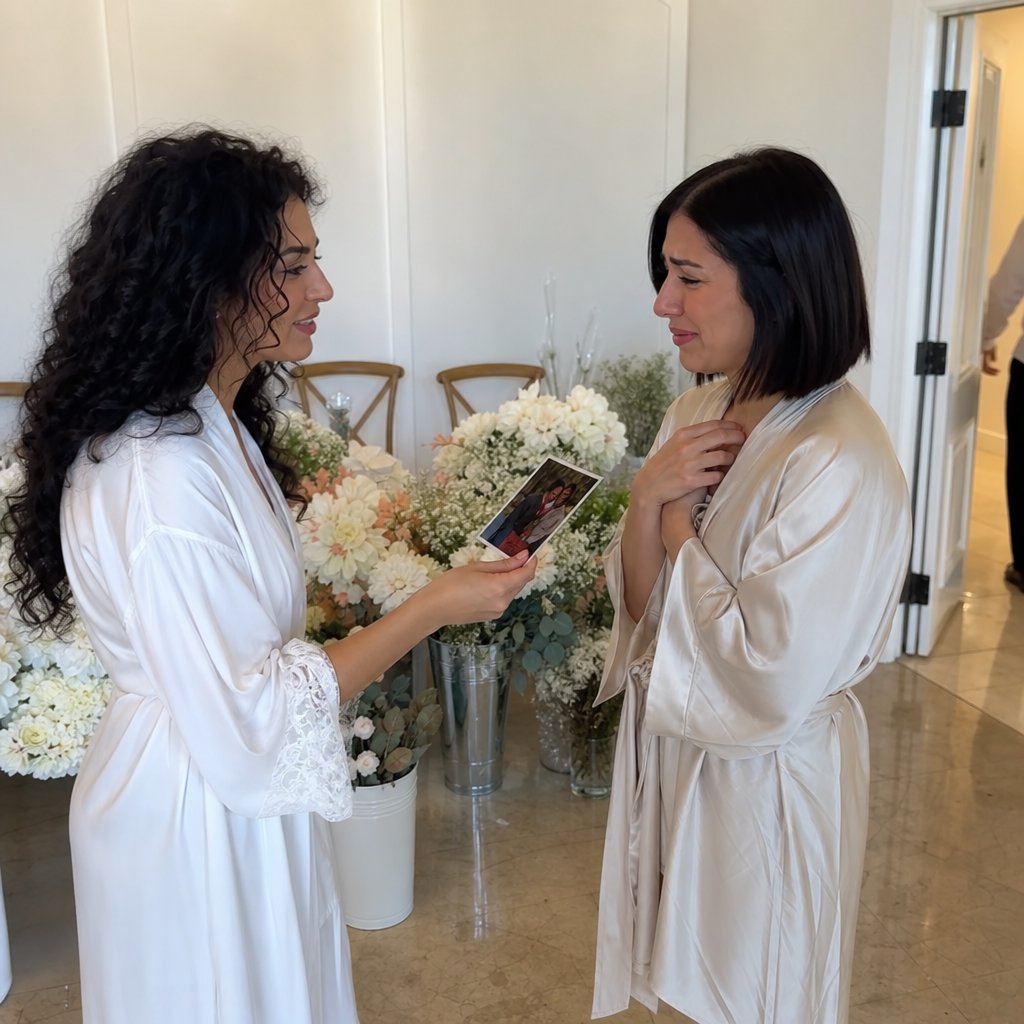
“Give me that.” Mara’s voice came from above me, brittle as a snapped branch.
I turned, still on the floor, and held the photo up between us like evidence in court. Mara’s face shifted when she saw it—first anger, then fear, then a tired resignation that made my skin crawl. She was wearing the same champagne robe, but now it looked like a costume on someone caught in the wrong story.
“So this is why you texted him,” I said. My voice sounded steady, which felt like a miracle. “Because you and Callum—”
“Don’t,” she snapped, and then her eyes filled, fast. “Don’t say it like that.”
“Like what?” I got to my feet too quickly and the room tilted. The linen on the sweetheart table brushed my shoulder like a ghost hand. “Like you were in my life first?”
Mara’s mouth trembled. She looked past me, toward the aisle, toward all the chairs waiting for bodies that didn’t know they were about to witness a collapse. Then she looked back at me and, finally, she stopped performing.
“Yes,” she said, voice low. “Callum used to date me.”
The words hit like a slap, even though I’d already seen the photo. Hearing it out loud made it real in a way paper couldn’t. I felt my heart squeeze—humiliation, rage, grief, all braided together.
“And he didn’t tell me,” I whispered.
Mara shook her head quickly. “He doesn’t know you’ve seen proof.” Her eyes flicked to the photo in my hand. “And if you go at him with this today, you will blow up more than your relationship.”
“More than my relationship?” My laugh came out sharp. “What else is there?”
Mara opened her mouth, and her face crumpled like she’d been holding her breath for years—right as footsteps sounded at the doorway.
Mom’s Face Went Blank
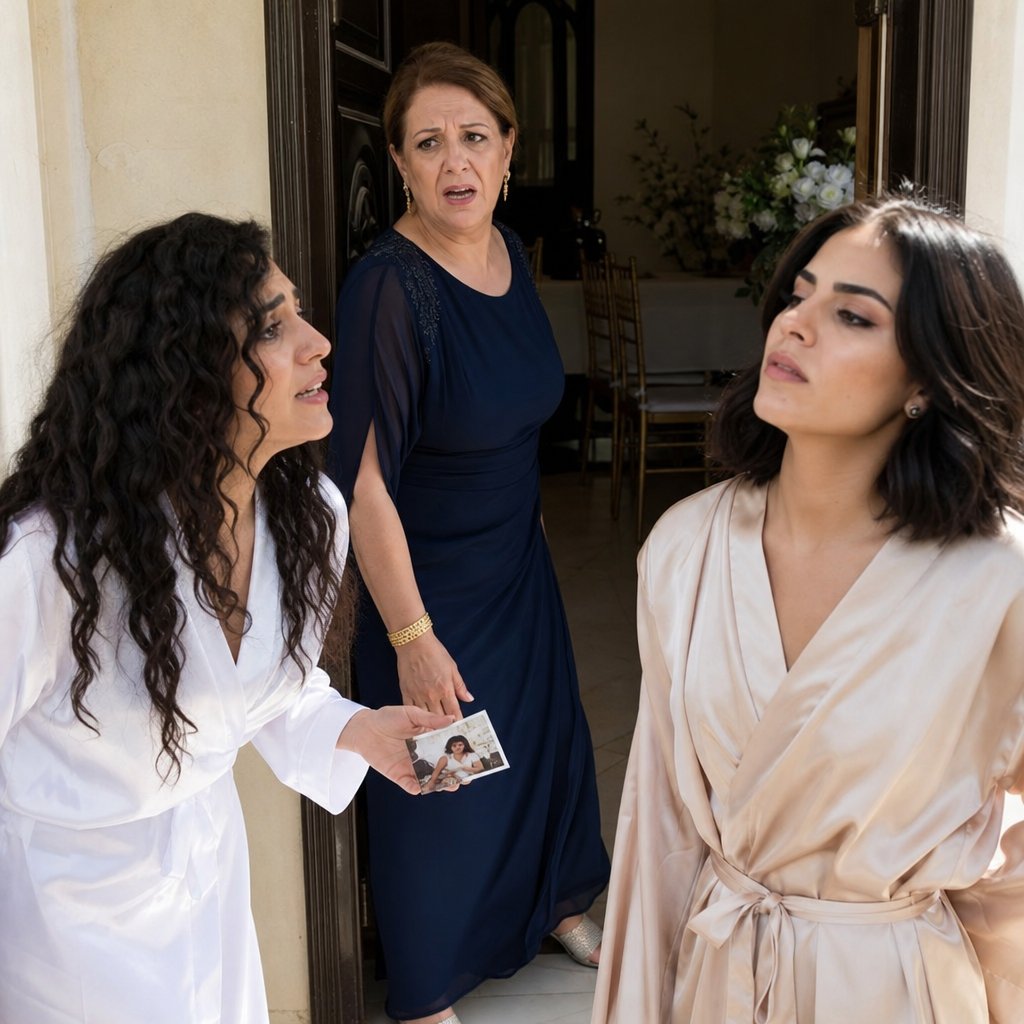
Mom stood in the doorway like she’d been summoned by the exact words she didn’t want to hear. She was already dressed—deep navy dress, gold bracelet, lipstick too carefully applied—and her hair was pinned back so tightly it made her look sharper, stricter. Her eyes went from my face to Mara’s, then to the photo in my hand.
Everything drained out of her expression in one terrifying second. Not anger. Not confusion. Just blank, like a light turning off.
“What is this?” I asked, and my voice cracked on the last word. “Mom, did you know?”
Mara started talking fast, like she could outrun the truth. “Mom, tell her to stop. Tell her she can’t—”
“Stop,” Mom said, and it came out so cold it made me flinch. She didn’t look at me when she said it. She looked directly at Mara, like Mara was the one holding the match.
Mara’s chin lifted in defiance that didn’t reach her eyes. “You don’t get to silence me anymore.”
Mom’s hand went to the wall, fingers splayed as if she needed something solid to keep her upright. I noticed the tiny tremor in her wrist. I noticed because my body had become a crime scene investigator of my own family.
“Calla,” Mom said finally, and my name sounded like a warning siren. “This isn’t just… a past relationship.”
The air left my lungs. “Then what is it?”
Mom’s eyes flicked toward the hall—toward the tasting room, where the stranger was waiting by our family photos like he belonged there. Her mouth opened, and for the first time in my life, my mother looked afraid of what she was about to say.
He Claimed My Blood
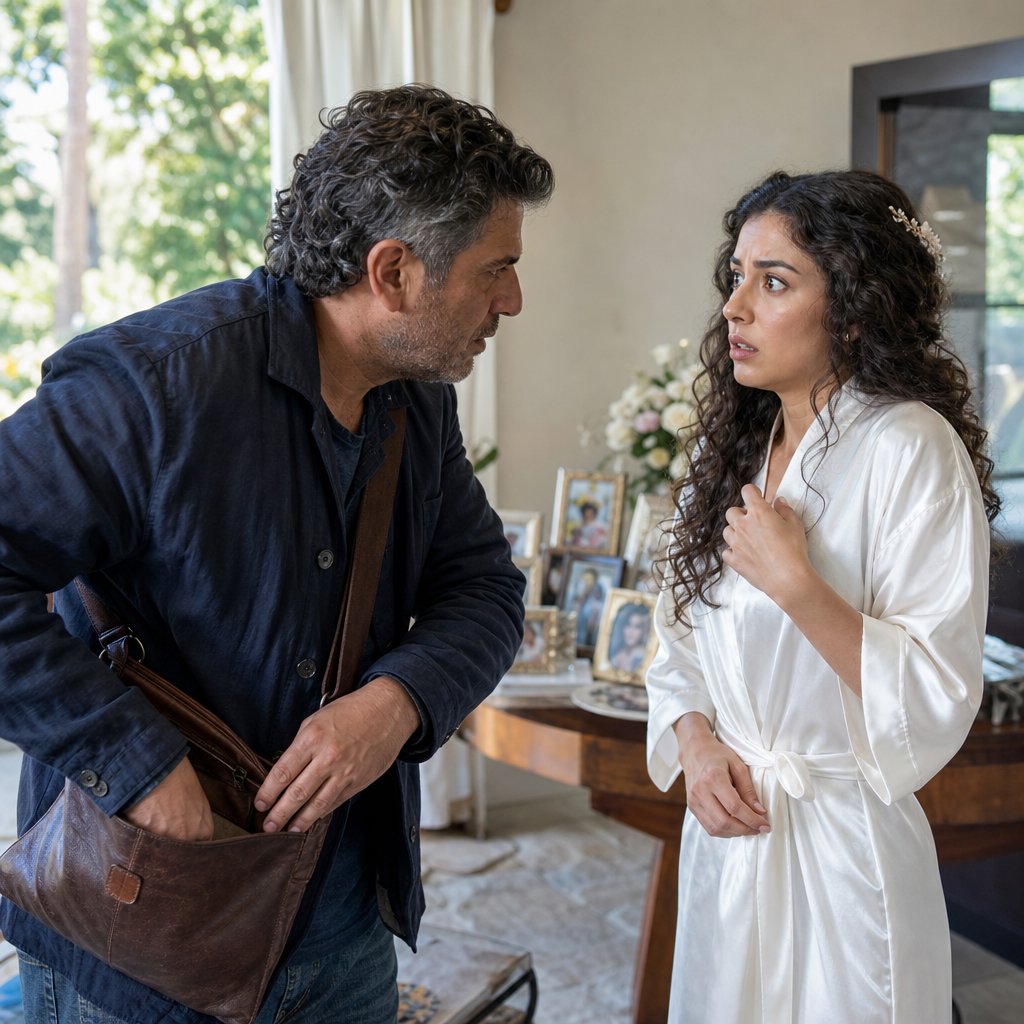
Tessa’s voice echoed from down the hall—tight, professional, failing at both. “Sir, please—this is a private event.”
Then the man appeared in the doorway like he’d decided waiting was over. Salt-and-pepper hair, messenger bag, eyes that kept landing on me like they were taking inventory. He held his hands out, palms visible, like he was the reasonable one walking into a mess he didn’t start.
Mom went so still I thought she might actually faint. Mara’s lips parted, and for a second she looked younger—like a kid who’d pulled a pin and realized the grenade wasn’t a metaphor.
“Calla,” the man said, and my name in his mouth sounded wrong, like he’d practiced it in the car. “May I speak with you privately?”
My legs moved before my brain agreed. The tasting room was close; it felt like gravity dragged us there. The air smelled like vanilla candle wax and cut stems. He closed the door behind us with a soft click that felt louder than any slam.
Up close, I saw details I didn’t want: the faint lines at the corners of his eyes, the way his gaze kept darting to my nose, my mouth, my curls, like he was mapping me onto someone else.
He swallowed once, hard. “My name is James Harlan.”
I didn’t respond. I couldn’t. My pulse roared in my ears.
His voice dropped, rawer. “I’m your biological father.”
The room tilted. My stomach lurched like I’d been shoved.
“Mara invited me,” he added quickly, almost defensively, like that part would make it make sense.
I stared at him until my eyes burned. “My father is in the ground,” I whispered. “Who are you to say that to me on my wedding day?”
James reached into his bag again, slower this time, and my body locked up, bracing for whatever proof he thought he had the right to hand me.
My Wedding As Cover-Up
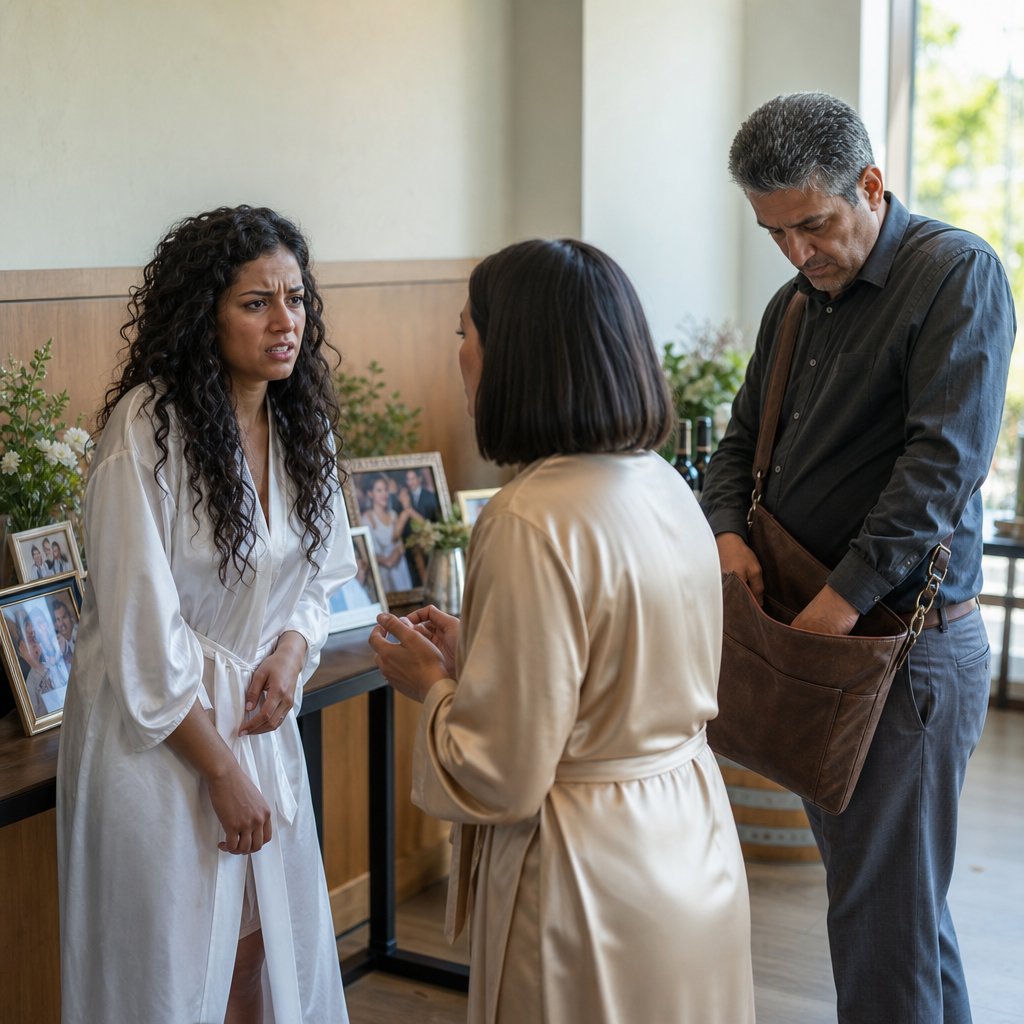
I didn’t let him pull anything out. I backed away until my hip hit the photo table and a frame rattled, the glass clinking like a tiny alarm. “No,” I said, shaking my head so hard my curls slapped my cheeks. “No. I’m not doing documents with a stranger.”
He froze, hand still in the bag. “I understand,” he said, but he didn’t look like he understood anything except entitlement.
The door opened and Mara slipped in, shutting it behind her like she was sealing us in. Her eyes were red now, not glossy—actually red. “I told you not to come out here,” she snapped at James, and then she turned to me. “But you needed to know.”
“You invited him,” I said, my voice rising despite myself. “You brought a man here to claim me like property—on my wedding day.”
Mara flinched, then hardened. “I did it to end Mom’s lie,” she said. “She’s been carrying it her whole life, and she was going to die with it tucked under her tongue while you smiled for pictures.”
My chest hurt. “What lie?”
Mara’s gaze flicked to James, then back to me, and her voice dropped to something sharp and specific. “Callum is tied to it.”
I felt my mouth go numb. “How.”
“Because,” Mara said, and her hands shook even as she tried to look brave, “your marriage isn’t just a marriage. It’s part of the cover-up.”
The word cover-up hit me like a physical shove. Behind Mara, James finally pulled something from his bag—still half-hidden in his fist—and I realized they’d planned this moment down to the breath.
What Was In His Bag
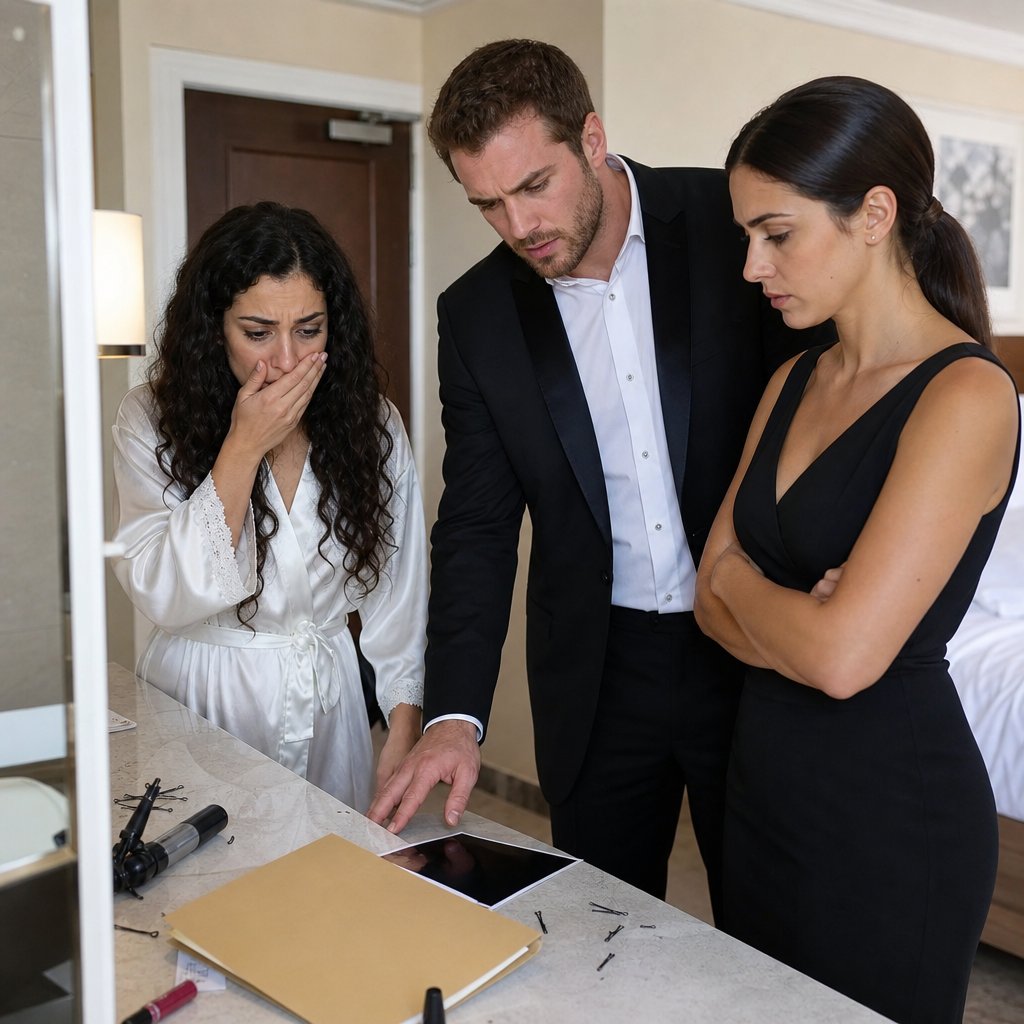
James pulled something half-hidden from his bag as Mara said my marriage was part of the cover-up.
It wasn’t a ring box. It was a manila folder, thick enough to bend at the corners, cinched with a rubber band like it had been handled too many times in too many rooms. His knuckles were white around it. Mara’s mouth was set in that calm, mean way she got when she’d already decided I was going to be the one to bleed.
“Don’t,” I said, but my voice came out small. The hotel suite smelled like hairspray and hot curling iron metal, and the sound made everything feel even more unreal—like my life was being styled into place while it fell apart.
James swallowed hard. “It’s my dad’s firm,” he said. “Harlan & Cole. They—”
Mara cut in, crisp as a blade. “They didn’t just ‘handle paperwork.’ They arranged it. Closed adoption. The kind that stays shut because powerful people keep it shut.”
I stared at him. “You’re telling me your family’s law firm—your family—”
James flinched. “I didn’t know. Not then.” His eyes were glassy, the way they got when he was trying not to beg. “I found out last year. My dad was cleaning out old case files. I saw your mom’s name. Your sister’s. Mine. I—”
“And you said nothing,” I whispered, because the words felt like swallowing gravel.
He shook his head fast, frantic. “I tried. I tried to tell you. Mara told me if I did, your mother would deny everything, your father would—” His voice broke. “She said the wedding would implode and you’d never forgive me.”
Mara lifted her chin, almost smug. “Because you wouldn’t. And because he’d lose you. So he chose silence.”
James slid the folder toward me like it was radioactive. The rubber band snapped softly when he pulled it free, and a single photograph slipped out—face-down—onto the vanity between my lipstick and a scattering of bobby pins.
“Open it,” Mara said, her eyes locked on mine. “Tell her what you promised me you’d never tell.”
James’s hand hovered over the photo, trembling, as the first knock from a vendor sounded down the hall like a countdown.
The Seating Chart Was Weaponized
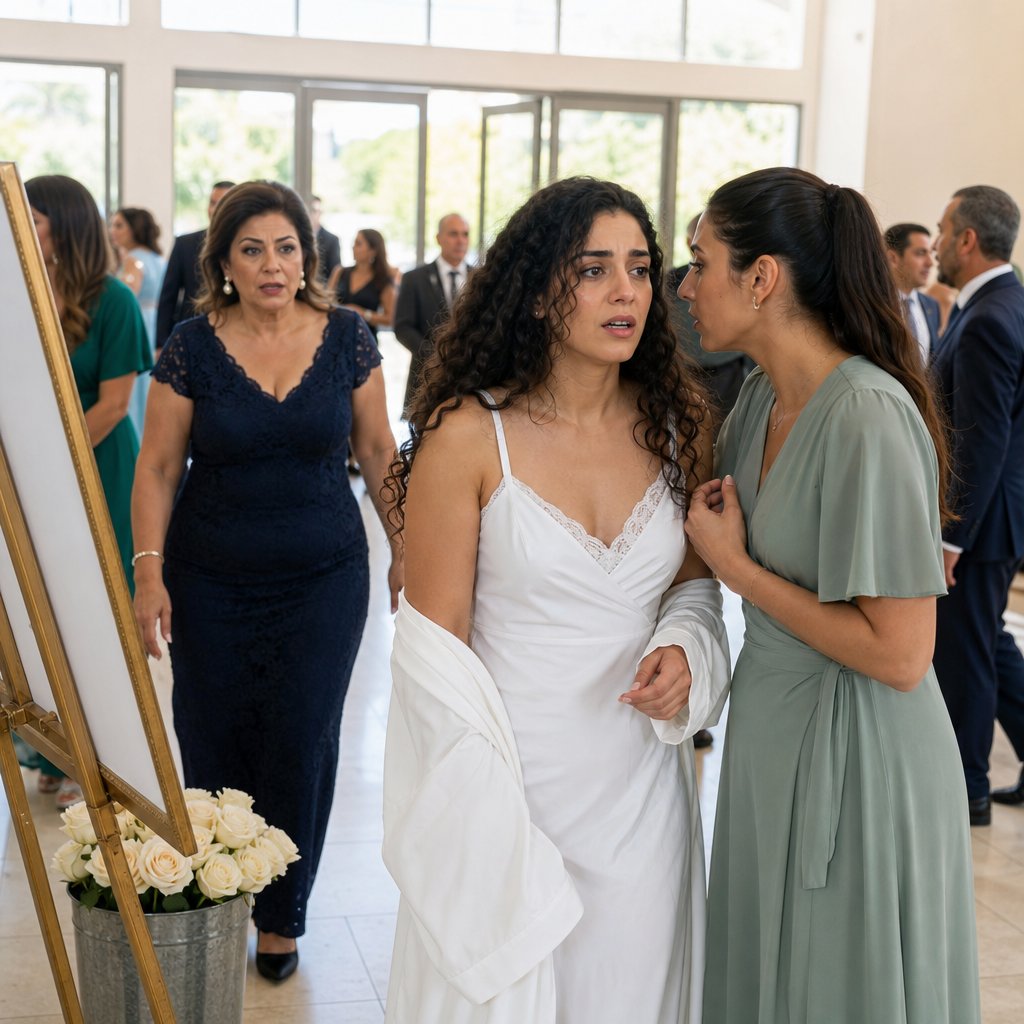
The hallway outside the suite had that sour-sweet smell of coffee and hotel carpet cleaner, and it hit me like I’d stepped back into a world that didn’t know it was about to fracture.
“We don’t have time for this,” my coordinator said, breathless, clutching a clipboard to her chest like a shield. Behind her, a florist rolled past with buckets of pale roses, their petals bruising at the edges from the heat. Somewhere downstairs, a violinist warmed up—thin, testing notes that sounded like questions.
I walked like my body belonged to someone else. Mara stayed on my left shoulder, close enough that I could feel her presence like a hand on my spine. James trailed behind, still holding the folder against his ribs, as if keeping it pressed there could stop it from being true.
In the foyer, the seating chart was set up on an easel, framed in gold like it was something to be proud of. Guests were already drifting in, perfume and cologne mixing with the sharp scent of greenery. I could hear laughter—high, bright, oblivious—while my throat tried to close.
My eyes found it immediately. Front row. Beside my mother.
James Harlan.
Not “James,” not “James +1.” Full name. Formal. Public. A placement so deliberate it felt like a finger pressing on a bruise.
I turned slowly. Mara’s expression didn’t flicker, but her gaze slid to my mother across the room—my mother in her navy dress, smoothing her skirt, smiling at someone I couldn’t see.
“You did that,” I said, my voice barely there.
Mara leaned in, her whisper cold against my ear. “If everyone is going to watch you become part of their story, they might as well watch the moment you realize it.”
At the far end of the aisle, the officiant took his place. The first real notes of the processional started to gather, swelling like a tide, and my mother turned—finally—toward the seating chart.
Her smile faltered as her eyes landed on James’s name, and she started walking straight toward me.
Would you have confronted the person who texted you then?