



The Envelope She Dared Me
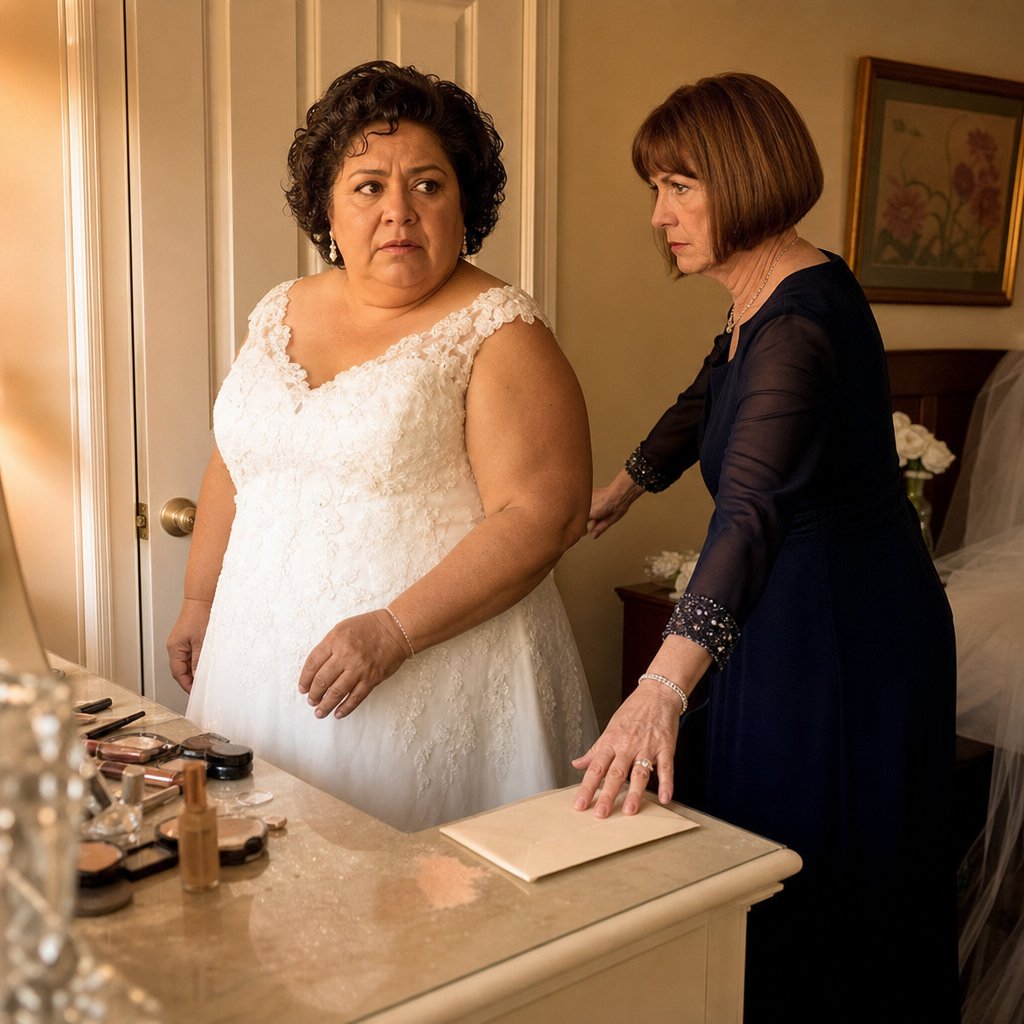
Carole slammed the bridal suite door so hard the mirror trembled, then turned the lock like she owned the place. Two hours before my wedding, my future mother-in-law stood between me and the hallway in a stiff navy dress, her lipstick too perfect for panic. Her eyes went straight past my veil, straight past my face, like she couldn’t afford to see me as a person.
“If you open this,” she said, sliding a thick sealed envelope across the vanity, “you won’t marry him today.”
The envelope made a papery scrape against a dusting of loose powder, leaving a pale streak like a tiny crime scene. My hands hovered over it anyway, because my whole life I’d been trained to fix things—smooth things over, take the blame, keep the peace. I was a heavyset Latina woman in my fifties with short dark curls and a dress that suddenly felt like a costume. I should’ve been thinking about mascara and music cues. Instead I was staring at Carole’s knuckles—white, rigid—like she was holding herself together by force.
“What is that?” I asked, and my voice came out small.
Carole’s jaw ticked. “Proof.”
Outside, someone laughed in the corridor, bright and oblivious. Inside, Carole leaned in close enough that I caught the sharp scent of her mint gum and whispered, “You think you know who you’re marrying.”
Then she put her palm flat on the envelope to keep it from me.
The Text That Turned My Stomach
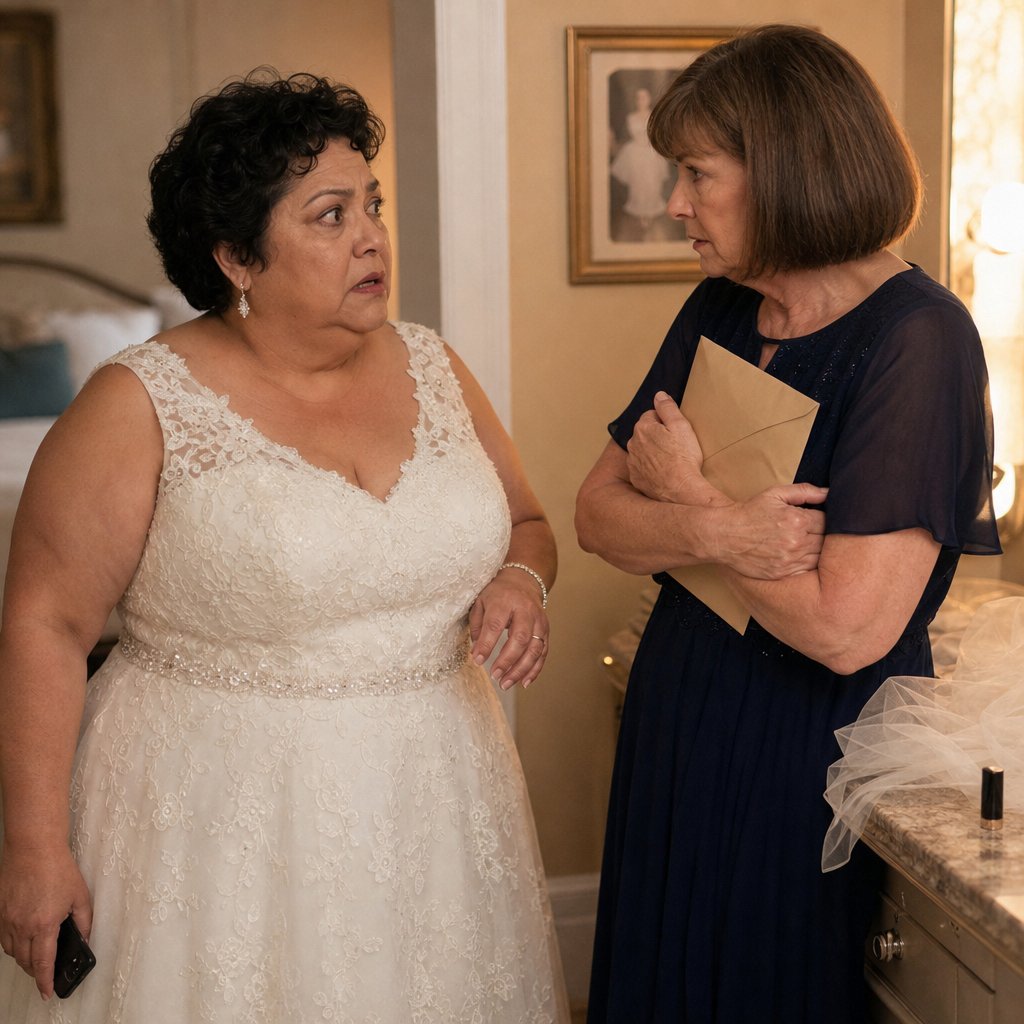
My phone buzzed against the vanity like it was trying to crawl away from me. I snatched it up on reflex—then froze, because Carole’s eyes flicked to my hands like she could see the message through my skin.
One line. No name. No context. Just a punch to the ribs: Ask Carole about 1999. Do it before vows.
I stared until the letters blurred, then turned the phone face-down like hiding it would make it less real. My heart was beating so hard I could taste metal at the back of my throat. “Who is this?” I demanded, not even sure whether I meant the texter or the woman in front of me.
Carole didn’t blink. “You shouldn’t be looking at your phone right now,” she said, like I was the problem.
“Why are you here?” I asked. “You’re two hours early. You didn’t come in with the other parents. You came straight here like—like you were breaking in.”
Her gaze slid to the garment bag hanging behind me, to my veil, to my bare shoulders. A flicker of something ugly crossed her face—fear, maybe, or disgust. “Because I couldn’t wait,” she said. “Because someone needed to stop you.”
“Stop me from what?” I snapped, and my voice cracked on the last word.
Carole’s fingers tapped the sealed edge of the envelope once, twice—impatient, controlling. “From making a mistake you can’t undo,” she said, and when I reached for the envelope again, she yanked it back like I was a child reaching for a hot stove.
The lock clicked softly when she leaned against the door.
The Place Card She Wouldn’t Stop Touching
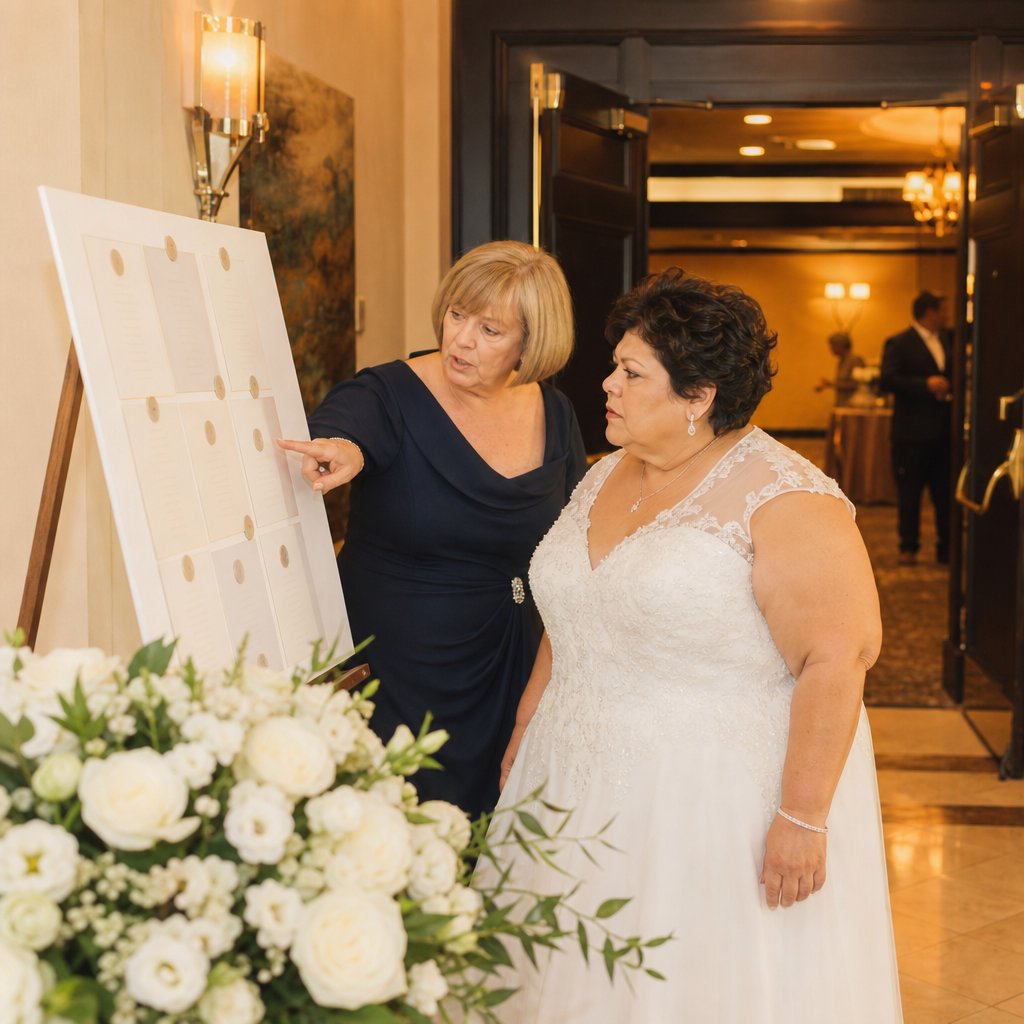
Carole finally unlocked the door—only because my maid of honor started knocking hard enough to rattle the frame—and she slipped out like smoke. I followed her down the hall on legs that didn’t feel like mine, past floral arrangements and people who smiled at me like nothing was wrong.
In the foyer outside the ballroom, my coordinator had the seating chart laid out on an easel while she fussed with ribbon. Carole drifted toward it like a magnet had been buried under the paper. I watched her from behind a spray of white roses, my pulse thudding in my ears.
She didn’t scan the chart like a normal person. She went straight to one single place card and pressed her finger on it—tap, tap, tap—hard enough to bend the cardstock. Her nail clicked against it with this maddening, steady rhythm.
I stepped closer. “What are you doing?”
Carole’s hand snatched back, guilty-fast, but not fast enough. I saw it. A name I didn’t recognize. A table I hadn’t approved.
E. Hale.
My mouth went dry. “Who is that?” I asked, and I hated how polite I sounded, like I was asking about a chicken entrée.
Carole’s eyes darted toward the ballroom doors, then back to me. “No one,” she said too quickly. “It’s—ignore it.”
“I made this list,” I said, heat rising in my face. “I don’t have an ‘E. Hale.’ I didn’t invite an ‘E. Hale.’”
Carole’s lips pressed into a thin line, and for the first time she looked like she might actually lose control. She leaned in so close I could smell her perfume—powdery, old-fashioned—and whispered, “If he sees you before you know the truth, it’s over.”
Behind us, the ballroom doors creaked open.
The Cash Exchange In The Lobby
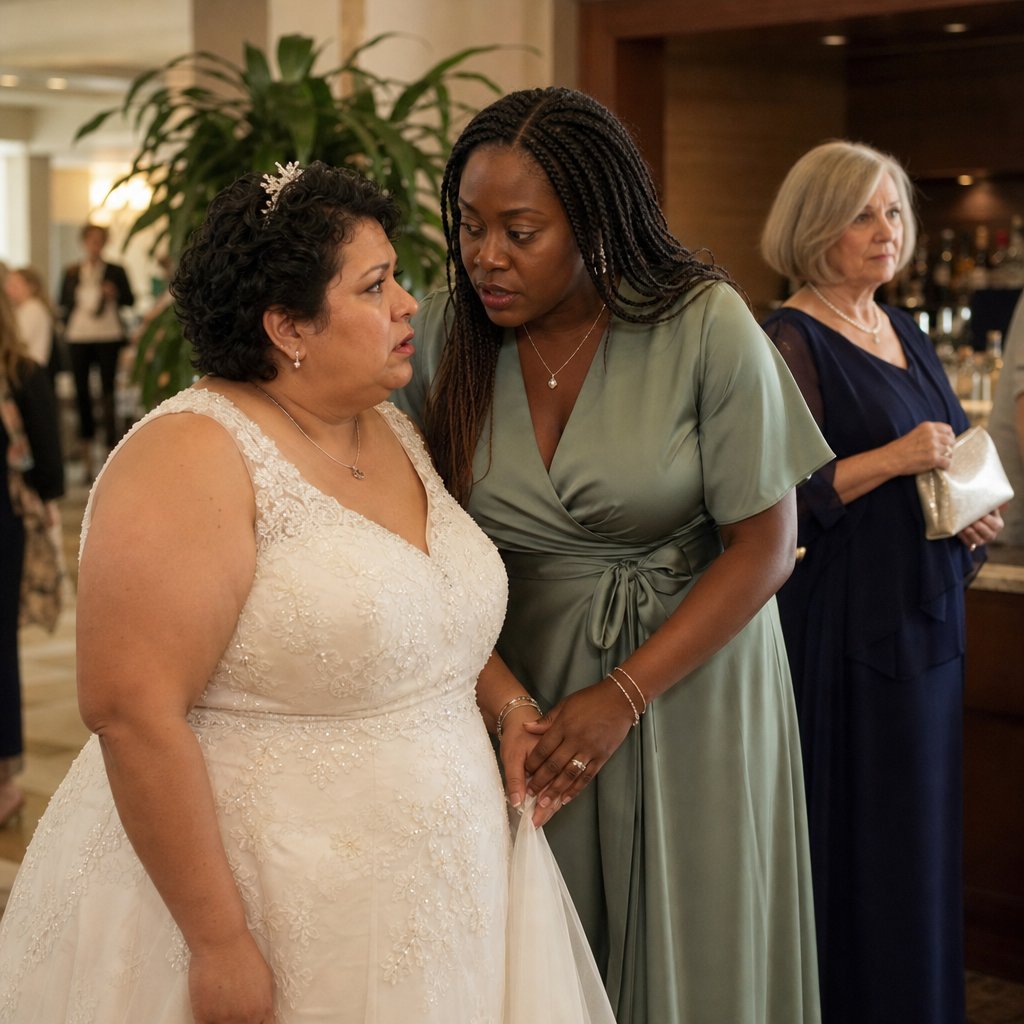
My maid of honor, Talia—tall, Black, early thirties, with long braids and a satin sage wrap dress—caught my elbow and pulled me a few steps away like she was rescuing me from traffic. Her eyes were too bright, her smile too forced, the way people look right before they say something that changes everything.
“I need you to listen,” she whispered, voice tight. “I saw Carole downstairs. In the lobby.”
My stomach dropped. “Doing what?”
Talia glanced around at the guests milling with champagne flutes, then lowered her voice even more. “Paying cash to a man with a camera bag. Not staff. Not your photographer. Some guy in a gray hoodie, kind of scruffy, hanging back by the plants like he didn’t belong.”
The air felt suddenly too cold against my arms. I pictured Carole’s perfect lipstick, the envelope, the lock turning in my face. “Paying him for what?” I asked, and I already knew the answer wouldn’t make me feel better.
Talia’s fingers dug into my arm through the lace. “I don’t know. But she was… urgent. Like she was buying silence. Like she was making something disappear.”
Across the foyer, Carole stood near the bar, chatting with an auntie like she was just another proud mother. When she laughed, it sounded normal. That’s what scared me. She was good at normal.
I swallowed hard. “Did he give her anything?”
Talia hesitated. “He handed her a small padded mailer. She tucked it into her purse like it burned.”
My chest tightened. Another package. Another secret.
Carole’s eyes lifted—straight to mine—like she’d felt me thinking about her. And she smiled.
Her ‘Family’ Speech Was A Threat
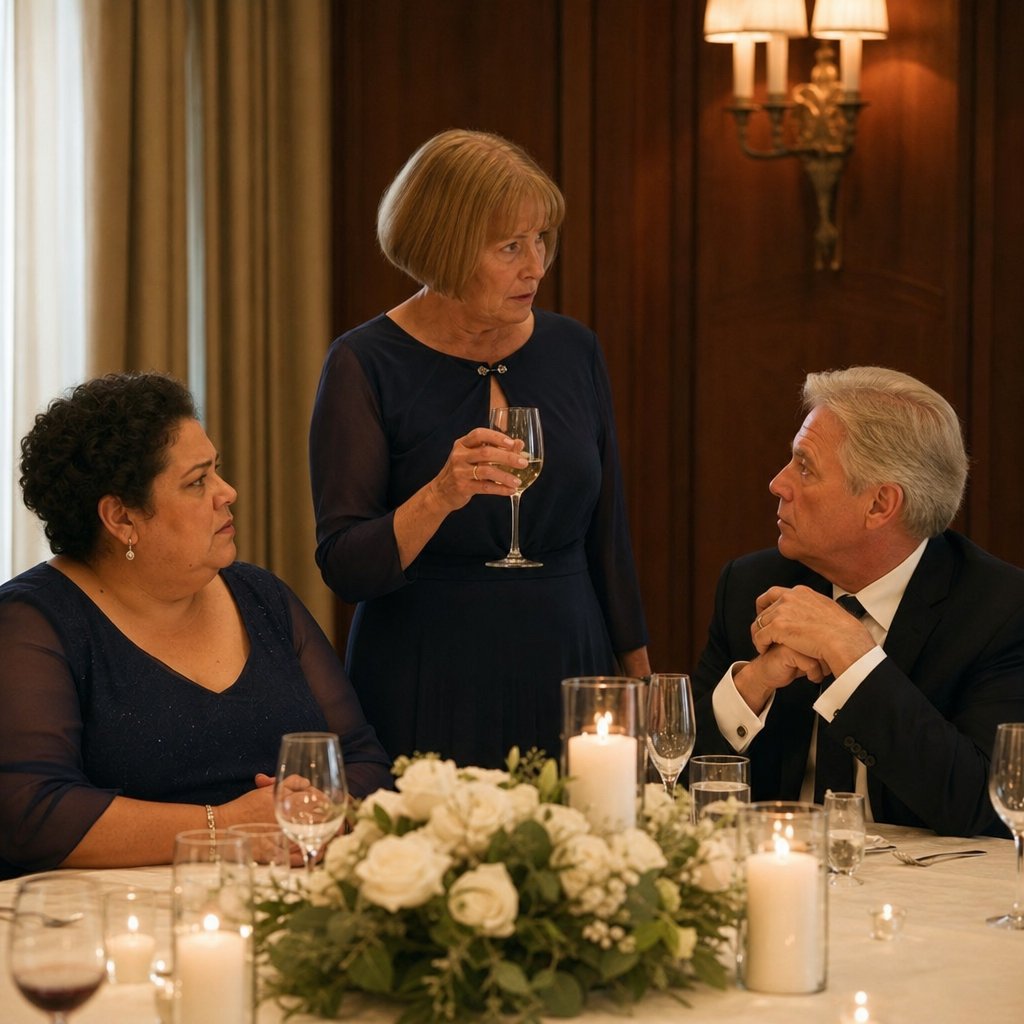
The rehearsal event the night before came back to me in flashes, like my brain had been saving it as evidence. We’d been in a private dining room with low centerpieces and too-bright candles that made everyone’s faces look shiny. Carole stood to give a “family” toast, tapping her spoon against a glass until the chatter died.
She smiled at me first—sweet, practiced—then let her eyes slide to my fiancé’s father, Richard: a tall, silver-haired white man in his sixties with a golf-club posture and a smile that never reached his eyes. He sat at the head table, cufflinks gleaming like little shields.
“Family,” Carole said, drawing the word out. “It’s not just blood. It’s what you’re willing to protect.”
Her tone sharpened on that last word, and Richard’s jaw flexed like he was chewing something bitter. I remember the way Carole’s fingers tightened around her stemmed glass until her knuckles went pale, the rim leaving a faint lipstick crescent when she took a sip.
“Sometimes,” she continued, “you think you know where someone came from. You think you know who raised them. But the past has a way of… resurfacing.”
She held Richard’s gaze for too long. It wasn’t a blessing. It was a warning delivered in a room full of people who would clap no matter what she said.
My fiancé had squeezed my hand under the table, smiling like he didn’t hear the edge in his mother’s voice. But I’d felt it then—this tiny, ugly prickle at the base of my neck.
Now, remembering it, I could see what I’d refused to see: Carole hadn’t been celebrating us. She’d been cornering Richard in public.
The Second Chart Nobody Mentioned
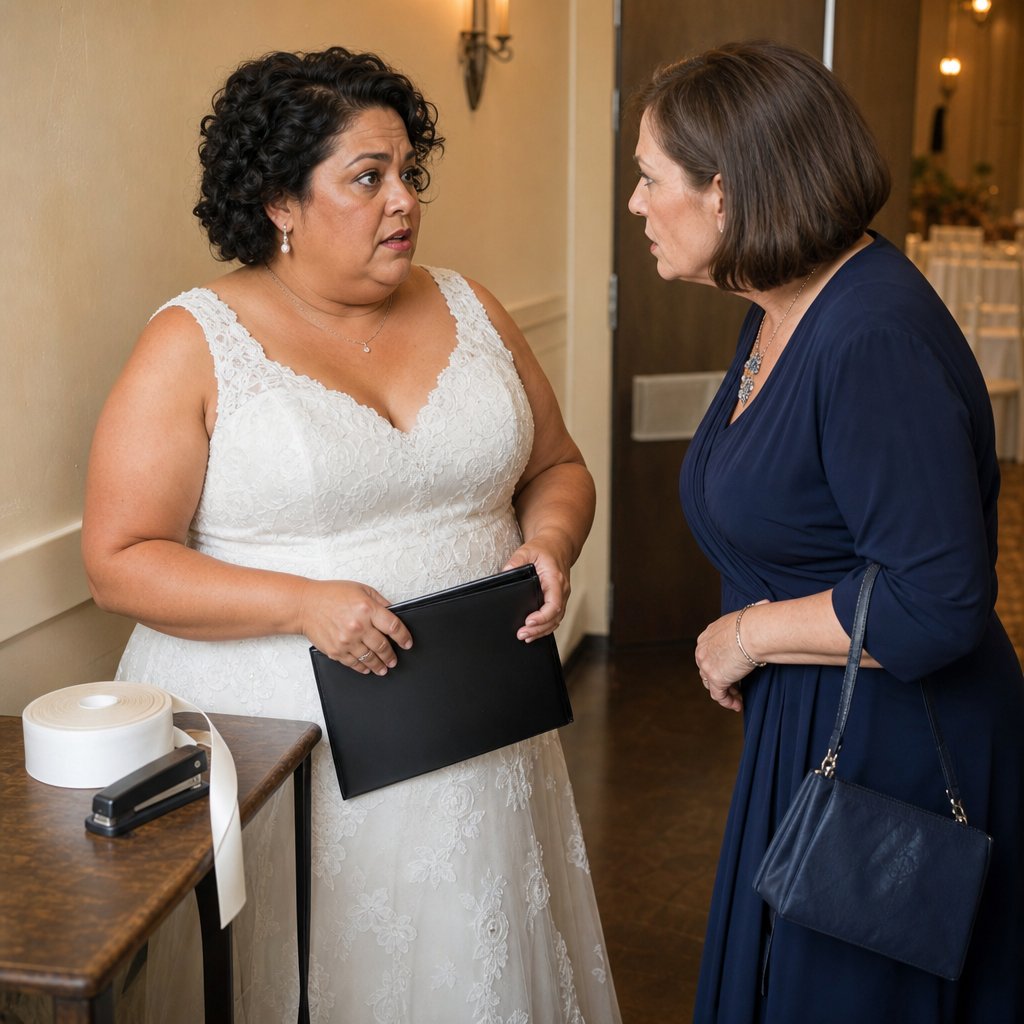
I found it by accident—because I was looking for anything that would make Carole make sense.
The coordinator’s folder sat open on a side table near the service hallway, weighed down by a stapler and a roll of ribbon. I told myself I was just checking timing notes. That’s what a responsible bride does, right? But my hands were shaking as I flipped through pages that smelled like fresh printer ink.
Then I saw it: a second seating chart.
Same layout. Same tables. Same neat little blocks. Except this one had an extra table drawn in the back, tucked behind a pillar like a secret. Someone had even labeled it in smaller writing, like they hoped no one would look too closely.
Hale Party.
My throat closed. Hale again. Not just “E. Hale”—a whole party. Multiple people. A plan. A deliberate hiding place where they could see the ceremony but not be seen.
I ran my finger along the edge of the page and felt a faint indentation—like it had been pressed hard against something else, traced, copied. This wasn’t a mistake. This was coordination.
Footsteps sounded behind me. I snapped the folder shut too fast, the metal rings clacking loud in the quiet corridor.
When I turned, Carole was standing there with her purse hooked over her arm, watching me like I’d just opened her safe.
“You weren’t supposed to find that,” she said softly.
My vision tunneled. “Who are they?” I whispered. “Why are they hidden?”
Carole stepped closer, and for the first time her composure cracked into something that looked almost… desperate. “Because if they sit where they’re meant to sit,” she said, “everyone will know.”
The Photo He ‘Didn’t’ Take
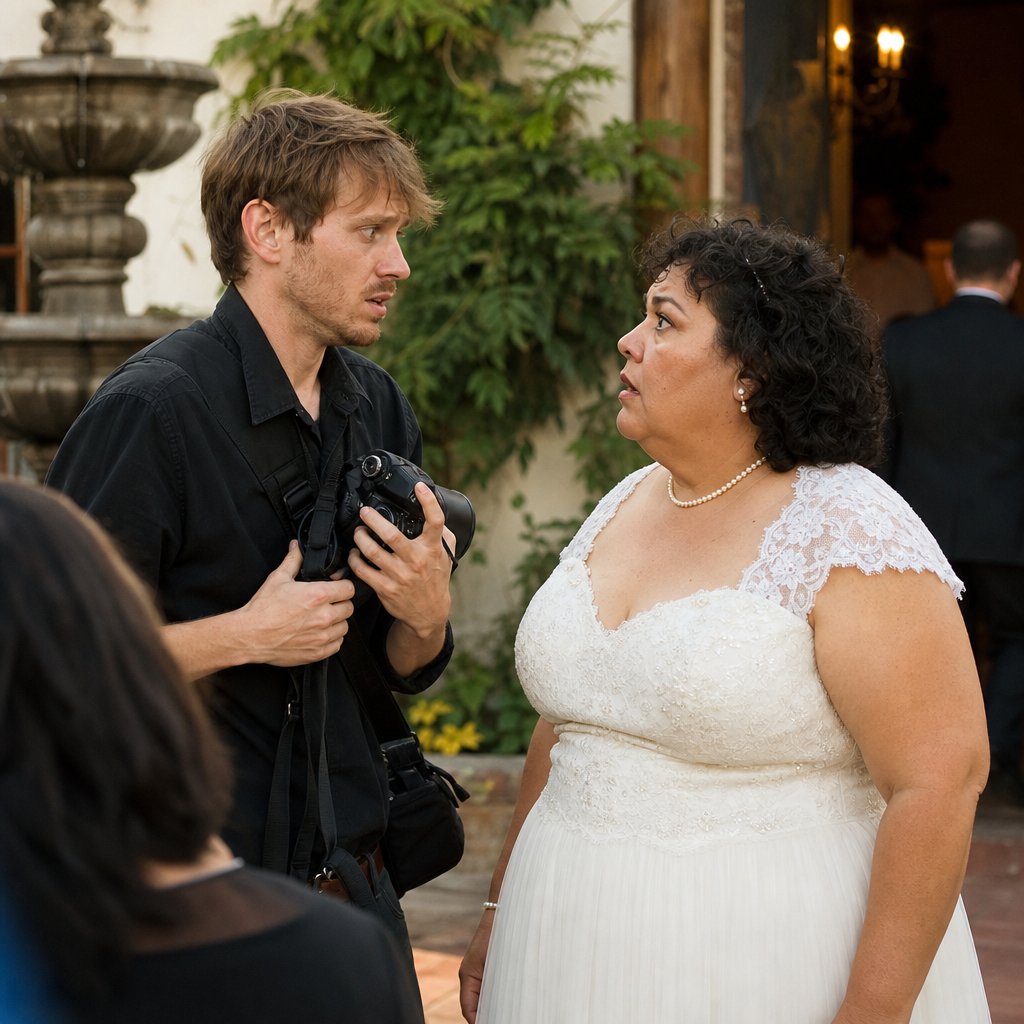
Our photographer, Miles—skinny white guy in his thirties with sandy hair and a nervous habit of rubbing the back of his neck—cornered me near the courtyard doors like he’d been carrying a stone in his chest. He wasn’t smiling. He wasn’t making jokes. He looked… scared.
“I need to show you something,” he said, voice low, and he held his camera to his chest like a shield. “It was an accident. I didn’t mean to take it.”
My skin went cold. “Miles,” I said, “what did you take a picture of?”
He swallowed hard, then angled the camera down between us. I couldn’t see the screen—he didn’t let me—but I didn’t need to. His face told me everything: this was bad. Bad-bad.
“It’s your… future mother-in-law,” he murmured. “In the parking lot. Before rehearsal. She met someone.”
“Someone who?”
He exhaled like he’d been holding his breath for hours. “A man. Late fifties maybe. Weathered face. Brown jacket. And she hugged him like—like they’d known each other forever. Not a polite hug. A we’ve survived something together hug.”
The courtyard smelled like damp stone and clipped greenery. A fountain burbled softly, obscene in its calm. My mind flashed to that hidden “Hale Party” table, to the unknown text, to Carole locking me in a room like I was a threat to her plan.
“Did you recognize him?” I asked.
Miles shook his head. “But when they pulled apart, he wiped at his eyes. And she—she checked over his shoulder like she was afraid someone would see.”
I stared at the camera in his hands like it was a ticking bomb.
He Said He’d Never Heard It
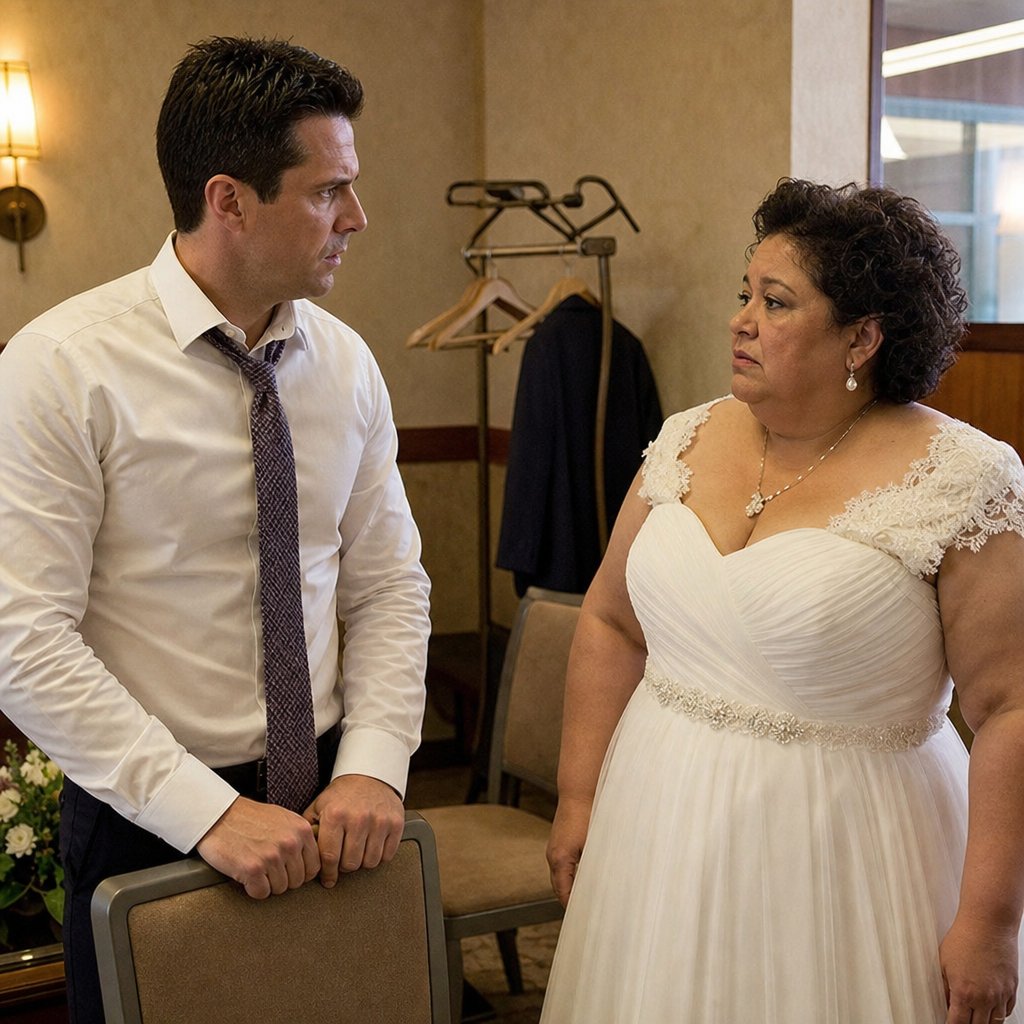
I found my fiancé, Daniel, in a quiet side room off the lobby—dark-haired, clean-shaven, early forties, athletic build, in his dress shirt with the tie loosened like he was already exhausted. He looked up when I walked in and his face softened, automatically, the way it always did when he saw me.
Then he saw my expression.
“What happened?” he asked, and the softness vanished.
I didn’t sit. I didn’t breathe. “Who is Hale?” I said. “Why is there a ‘Hale Party’ table hidden behind a pillar? Why is there an ‘E. Hale’ place card on my seating chart?”
Daniel blinked once. Twice. “I don’t know what you’re talking about.”
“Don’t,” I snapped, and the word came out like a slap. “Don’t do that thing where you act calm so I feel crazy.”
His throat bobbed. His hands—those steady hands I trusted—started to shake as he reached for the edge of a chair. He gripped it too hard, like he needed something solid.
“I’ve never heard the name Hale,” he said, too quickly, too rehearsed. “Not once.”
“Then why did someone text me to ask your mother about 1999?”
His eyes sharpened, and something hot flashed across his face—fear dressed up as anger. “Who texted you?” he demanded. “Show me. Right now.”
I held my phone tighter, instinctively protective. “Why do you care more about who texted me than what it said?”
Daniel took a step toward me, breathing hard through his nose. “Because this is our wedding day,” he said, voice low. “And someone is trying to sabotage it.”
“Or someone is trying to save me,” I whispered.
Daniel’s jaw clenched so tightly I thought I heard his teeth grind. “My mother told you something,” he said. Not a question. An accusation.
I didn’t answer fast enough.
The Rings Suddenly Went Missing
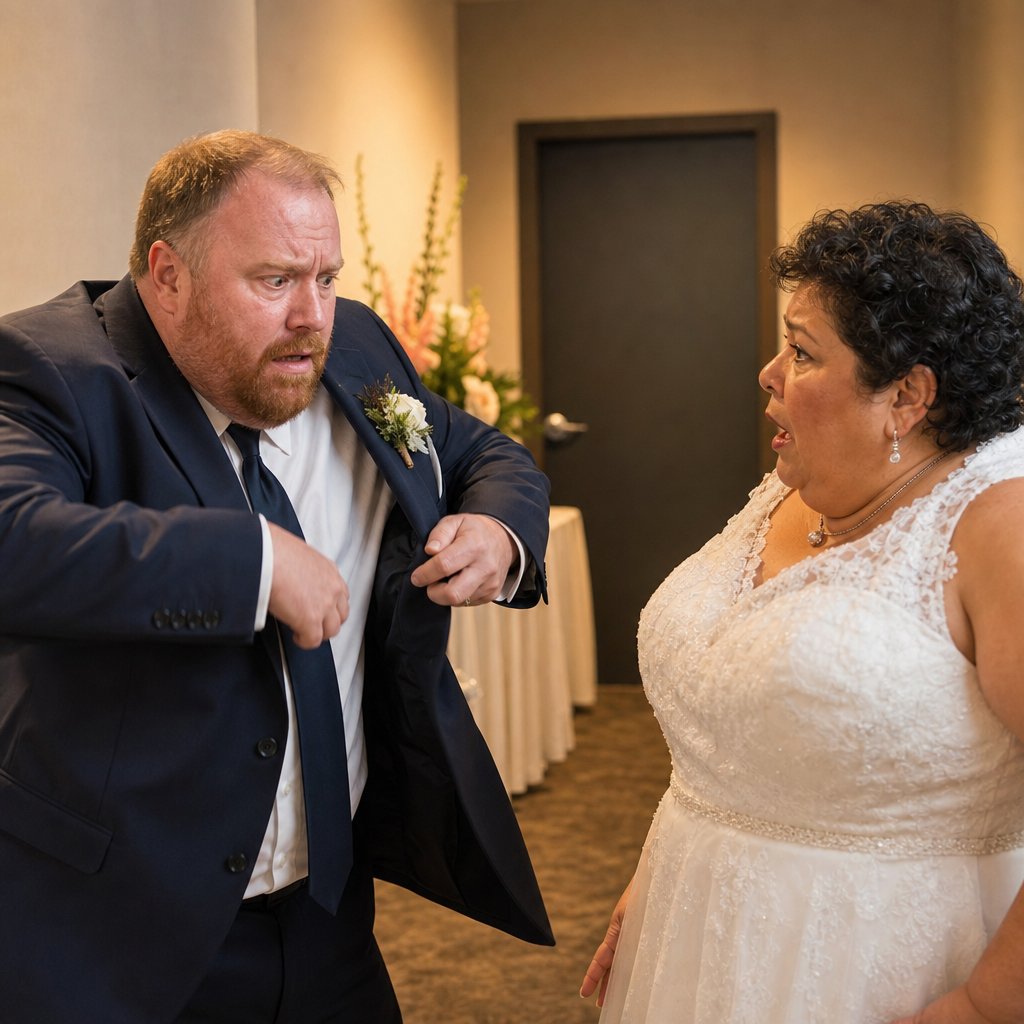
The best man, Kevin—stocky, pale, mid-forties with a reddish beard and a suit that fit a little too tight across the shoulders—found me near the back hallway by the restrooms, where the air smelled faintly of lemon cleaner and lilies. He looked like he’d been running.
“Hey,” he said, forcing a smile that didn’t land. “You okay?”
I laughed once, sharp and humorless. “Do I look okay?”
Kevin’s eyes flicked left and right. “Listen. I didn’t want to bother you, but… Carole came up to me earlier.”
My spine went rigid. “What did she want?”
He swallowed. “The rings.”
I felt my blood drain so fast my fingertips tingled. “What?”
“She said she needed them for ‘safekeeping,’” he mumbled, cheeks going pink under his beard. “Like she was worried someone would lose them. She was… intense about it.”
“And you gave them to her?”
Kevin’s face twisted. “No. I said no. I kept them.” He shoved a hand into his inner jacket pocket, then froze. His brow furrowed like he’d hit an empty space where something should be.
He patted the pocket once. Twice. Then he started checking the other side, faster now, breathing louder. “No, no, no,” he whispered, like a prayer going wrong.
I watched his hands move, frantic, and my whole body went cold.
“Kevin,” I said, voice barely there. “Where are the rings?”
He looked up at me, eyes wide and wet with panic. “They were right here,” he said. “I swear to God they were right here.”
Somewhere down the hall, someone called his name, cheerful, oblivious.
The Runner She Insisted On Removing
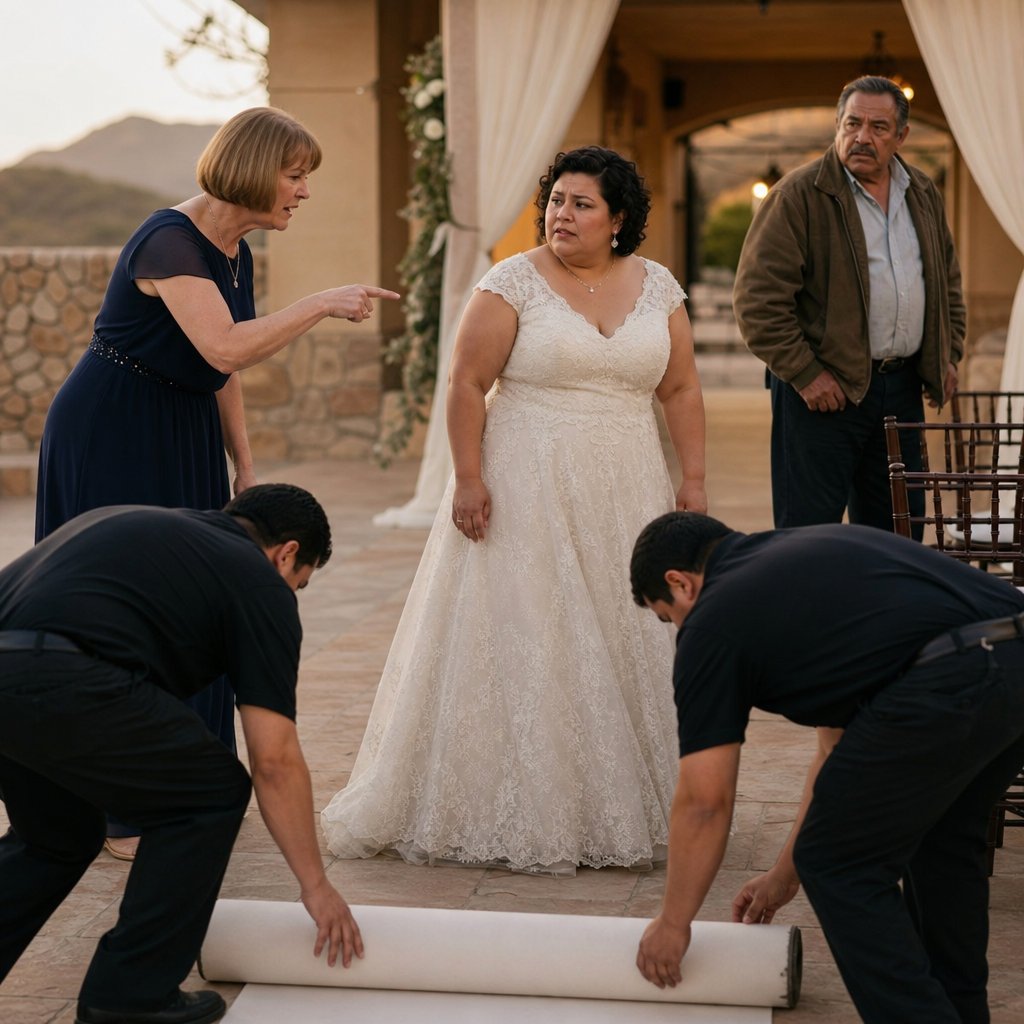
Carole appeared at the ceremony entrance like she’d been summoned by my fear. The aisle runner—white fabric laid straight down the center—was being smoothed by two staff members. It looked pristine, innocent. It looked like every wedding photo I’d ever saved.
Carole marched right up and lifted her hand. “No,” she said, loud enough that both staff members stopped. “Take it up.”
The coordinator blinked. “Carole, it’s already placed—”
“I don’t want anyone slipping,” Carole cut in, and her voice was all sugar on top and steel underneath. She glanced at me as if daring me to challenge her in front of everyone. “We don’t need a lawsuit on top of everything else.”
My pulse hammered. Slipping. That was her excuse. But her eyes weren’t on the runner. They were on the front row. On the angle of the chairs. On the sightline behind the pillar where that hidden table would be.
I followed her gaze and saw a man I didn’t recognize hovering near the side—late fifties, weathered face, brown jacket. He kept his hands clasped like he didn’t know what to do with them. He looked up at Carole, and for a split second the room around us fell away.
Carole’s mouth tightened, and she spoke through her teeth without looking at me. “If that runner stays,” she murmured, “someone is going to walk right into the truth.”
The staff started rolling the fabric up, the white cloth whispering against the floor as it gathered into a thick coil.
I watched the runner disappear and realized Carole wasn’t trying to prevent a fall.
The Invite That Hit Zero
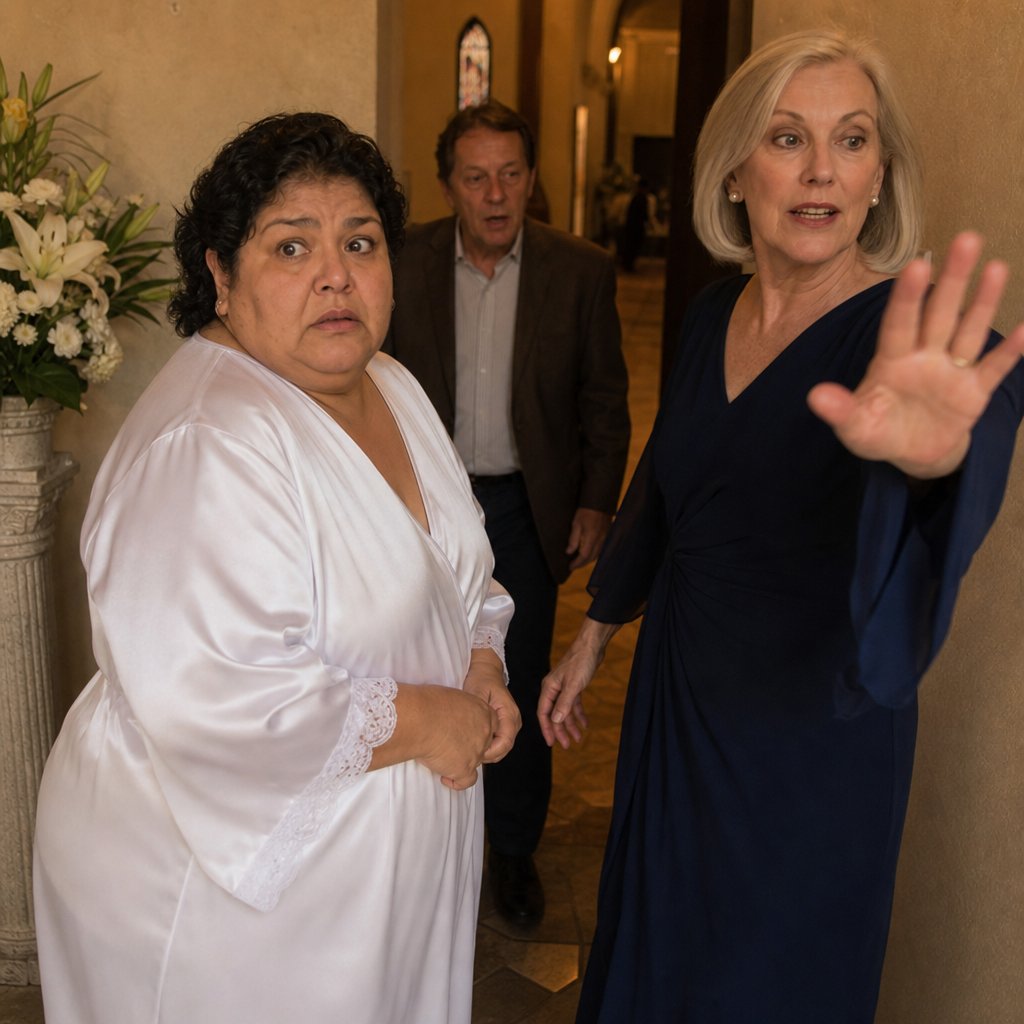
The man in the brown jacket took one step toward the aisle—and Carole lifted her hand like she was about to stop him.
My phone chose that exact second to buzz against my palm, a sharp, insistent vibration like it was trying to crawl out of my grip. I glanced down, expecting a last-minute vendor question. Instead, a calendar invite flashed from an email I didn’t recognize—something clipped and clinical, like a law office: “DNA RESULTS – Printouts attached.”
Scheduled time: the exact minute my music was supposed to start.
My stomach dropped so hard I tasted the bitter edge of my own lipstick. I looked up at Carole—tall, rigid, silver-blonde bob set like armor, pearl studs bright against her flushed ears—and she wasn’t looking at me. She was watching the man in the brown jacket like she’d been waiting for him to arrive all day.
Behind her, my fiancé’s groomsmen in their slate suits kept smiling for guests, unaware the air had changed. The florist’s lilies on the entry pedestal smelled too sweet, suddenly nauseating.
I turned my phone face-down without opening anything. If I clicked, it would become real. If I didn’t, it was still just a vibration, still just a glitch in time.
Carole’s eyes finally snapped to mine, and she mouthed one word—“Now”—as the ceremony doors started to open.
The Envelope Was Not Empty
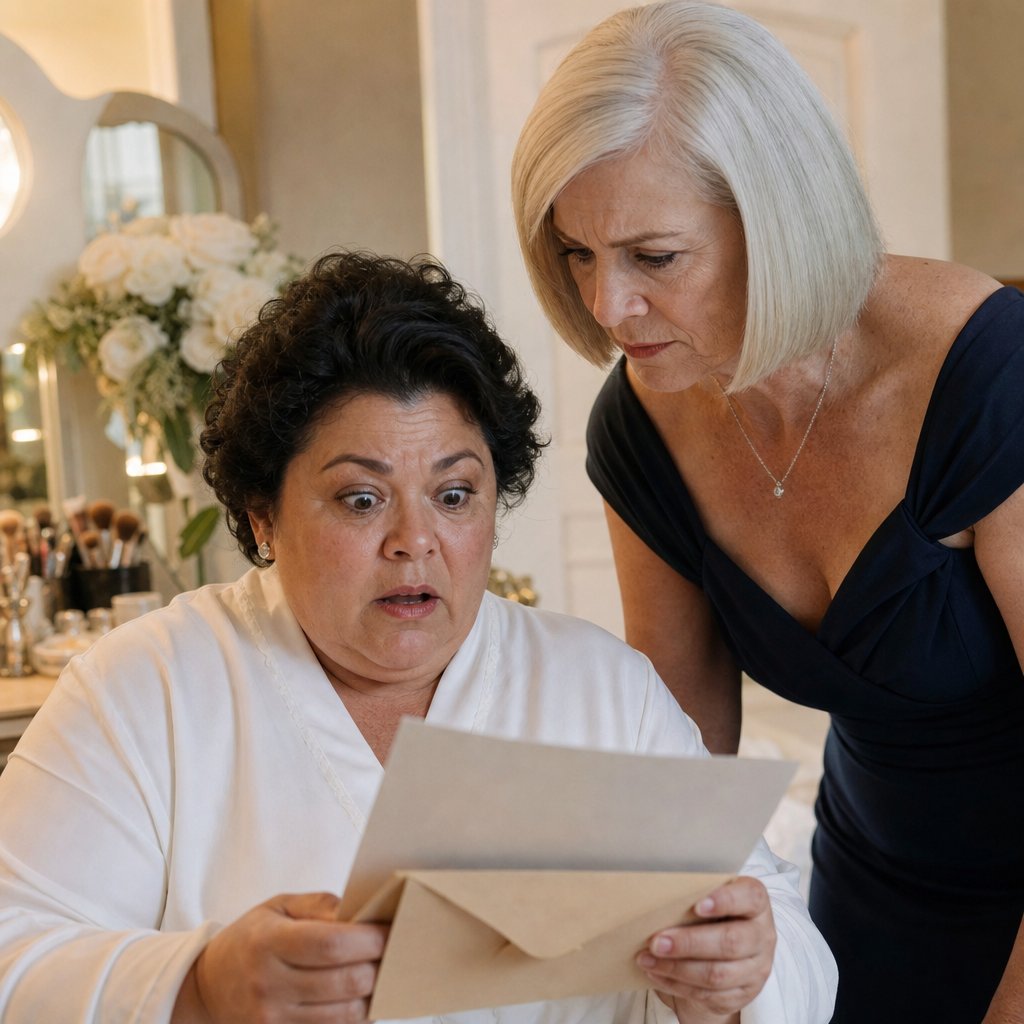
I yanked Carole’s envelope from her death grip like I was taking back something she’d stolen. The paper was thick, expensive, the kind that makes a soft rasp when you tear it—like a whisper you didn’t ask to hear.
“Don’t,” my maid of honor hissed behind me, her breath hot with panic. “Just walk. Just—walk.”
I didn’t walk. I opened it.
Inside was a birth certificate, not a photocopy, not a souvenir printout—an official-looking document with a notary stamp that left an indented seal you could feel with your thumb. My fiancé’s name sat there in black ink, steady and unquestioned.
And then my eyes slid to the mother’s line.
It wasn’t Carole.
The room tilted. The scent of hairspray and lilies mashed together until my throat tightened. I read it again, slower, as if the letters might rearrange themselves out of respect for the day I’d planned. Same first name. Same last name. Same birth date.
Different mother.
Carole’s mouth didn’t move, but her jaw worked like she was grinding something to dust. She watched me read it the way you watch someone step onto thin ice—knowing exactly where it will crack.
“That’s fake,” I whispered, even though the seal bit into my fingertip when I pressed it. “That has to be—”
Carole leaned in close enough that I could smell her perfume—powdery, sharp—and she said, so softly it felt like a confession pressed into my ear, “Ask him why he never showed you this.”
His Face Went Bloodless
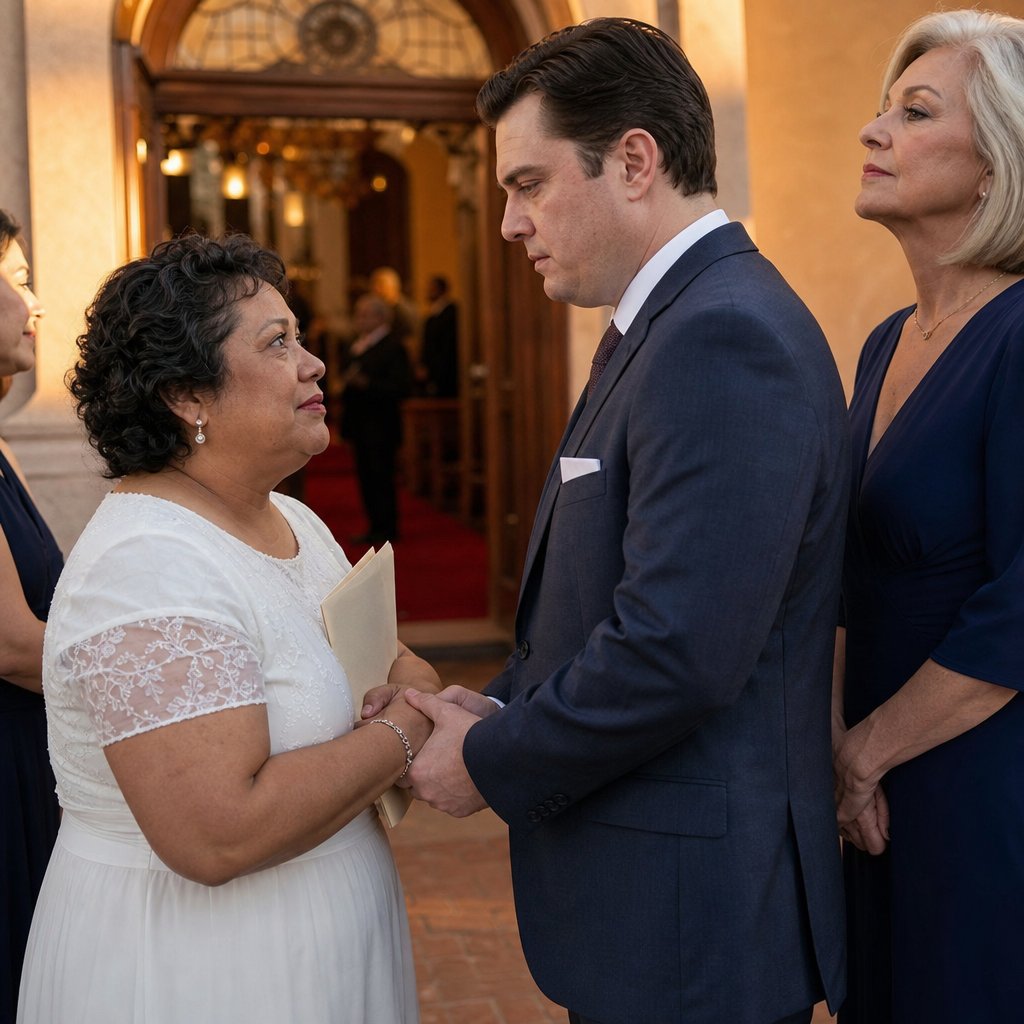
I found him just off the side corridor near the chapel doors, adjusting his tie like muscle memory could keep him from shaking apart. My fiancé—Daniel, broad-shouldered, dark hair neatly combed, clean-shaven—looked so handsome it hurt. Until he saw what was in my hand.
His eyes went straight to the envelope. Not my face. Not my trembling fingers. The paper.
“Where did you get that?” he asked, and his voice cracked on the last word.
I held up the certificate like it might burn me. “Is this real?”
He swallowed. His throat bobbed like he’d taken a punch. “Yes,” he said, too fast. Then: “It’s… it’s an adoption thing. It never mattered. It was handled when I was a baby. My mom—she’s doing this because she can’t stand losing control.”
He grabbed my hands, warm and desperate, and squeezed until my ring dug into my skin. “Please,” he said, eyes glassy. “Don’t let her ruin today. We’re right there. We’re—”
“An adoption thing,” I repeated, because the words sounded insane against the notarized seal.
Carole appeared at his shoulder like she’d been summoned by the lie itself. Her smile was thin and surgical.
“He’s not adopted,” she said, loud enough that the nearest groomsman stopped pretending not to listen. “He was swapped.”
Daniel’s grip tightened like a warning.
Carole’s gaze snapped to me, and her eyes were wet but unblinking. “And you,” she said, voice steady, “are the proof.”
My lungs forgot what to do. “What does that even mean?” I managed, but Daniel was already shaking his head, frantic, like he could erase her sentence with motion.
The Boutonnière That Didn’t Belong
I tried to breathe through my nose like my therapist taught me, but every inhale scraped. Carole moved away with purpose, and I followed because I didn’t trust what she’d do unattended.
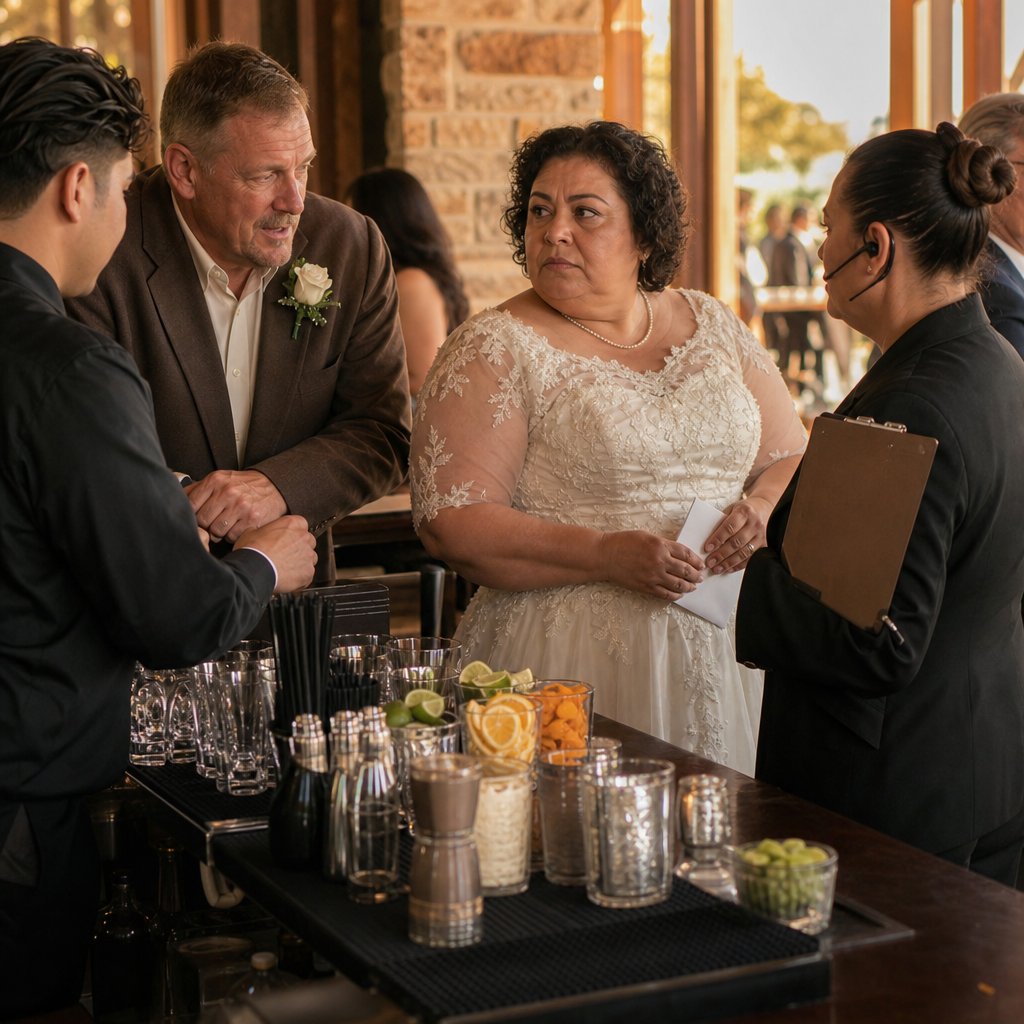
The corridor opened into the reception area where the bar was already stocked and shining like nothing in the world could go wrong. Glassware clinked. Someone laughed too loudly. The smell of citrus garnish hit me—bright and wrong for a moment like this.
And there he was.
The man in the brown jacket stood at the bar, shoulders relaxed, chatting with the bartender as if he’d been part of the plan all along. He wasn’t wearing a guest’s confused expression. He looked… placed. Intentional.
A boutonnière was pinned to his lapel—white rose, a tiny sprig of greenery—matching Daniel’s family photos on the welcome table.
My skin prickled. I turned to the venue manager, a young woman with a headset and a tight bun, and asked, “Who is that?”
She didn’t even hesitate. “Evan Hale,” she said, like she’d said it a dozen times today. “He’s authorized.”
“Authorized by who?” My voice came out thin.
The manager glanced at her clipboard, then at me, then lowered her voice. “Carole signed him in. She paid a security fee and said he was family.”
Family.
Evan Hale turned his head, finally noticing me, and smiled like we shared a private joke I’d never agreed to be part of. His eyes flicked to the envelope in my hand, and his smile widened a fraction.
Carole didn’t look back. She kept walking toward the chapel like she was leading a procession to an execution.
She Objected With Evidence
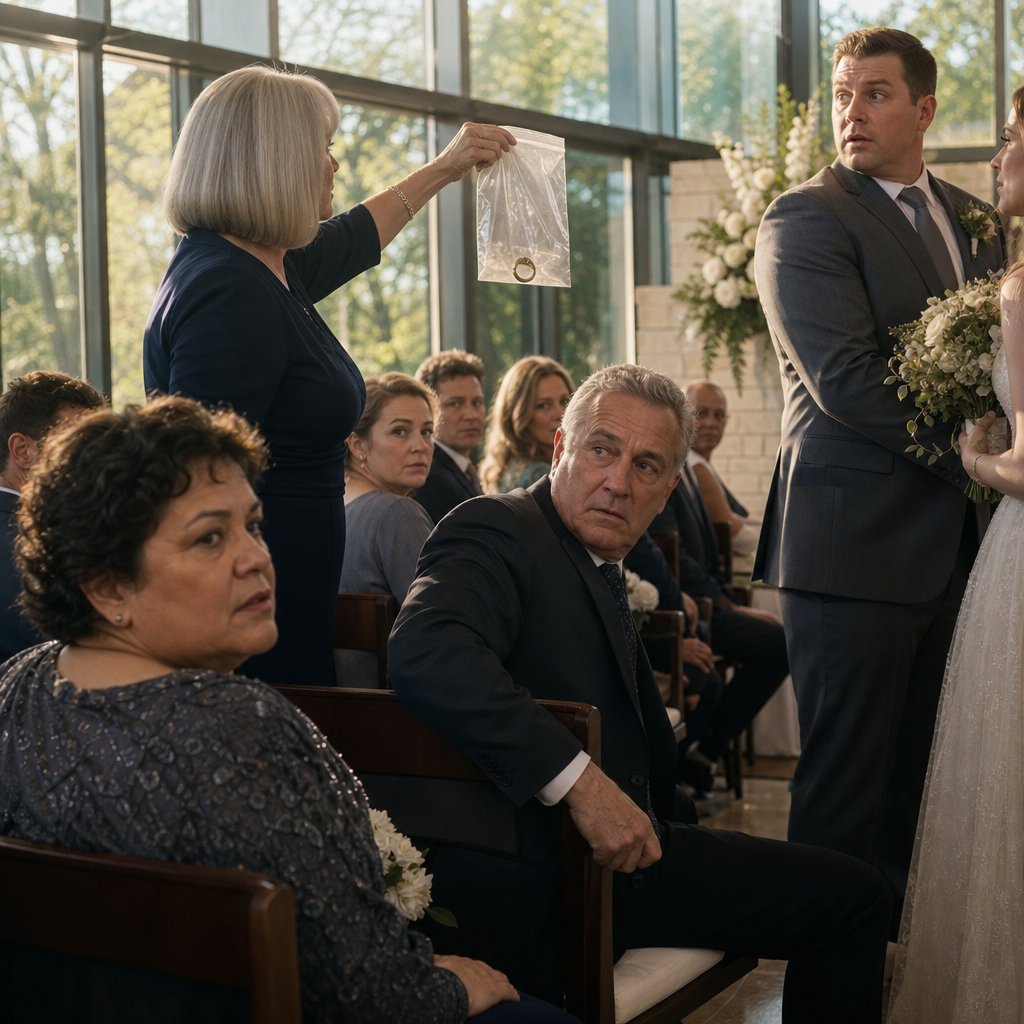
The glass chapel looked like a snow globe someone shook too hard—light everywhere, faces distorted through the panes, guests settling into chairs with their programs fluttering like nervous birds.
I was supposed to be behind the doors, waiting for my cue. Instead, I was half-visible in the side entry, gripping my bouquet so tightly the stems slicked my palm.
Daniel stood at the front, trying to smile like a man who hadn’t just been accused of being swapped at birth. His father—Richard, tall, gray at the temples, expensive suit—sat in the first row with his jaw set like stone. My mother, Marisol, sat two seats down in a pale blue dress, hands folded too neatly.
Carole didn’t sit.
She rose right as the officiant began his warm welcome, and the sound of her chair legs scraping the floor cut through the room like a blade. Heads turned. Someone coughed. The officiant blinked, confused, still holding his little book.
“I object,” Carole said, clear as a bell.
A gasp rippled through the rows—soft, hungry, immediate.
Carole lifted her hand and held up an evidence bag like she was in court, the plastic crinkling loud in the quiet. Inside was a ring. Not mine. Not Daniel’s. Gold, worn at the edges, engraved with initials I didn’t recognize.
Daniel’s face went slack with shock, and his eyes darted—not to Carole, not to the ring—to his father.
The officiant stammered, “Ma’am, this is highly—”
Carole stepped into the aisle and angled the bag so Richard could see it, and I watched his fingers curl around the armrest like he was about to lunge.
The Name My Mother Knew
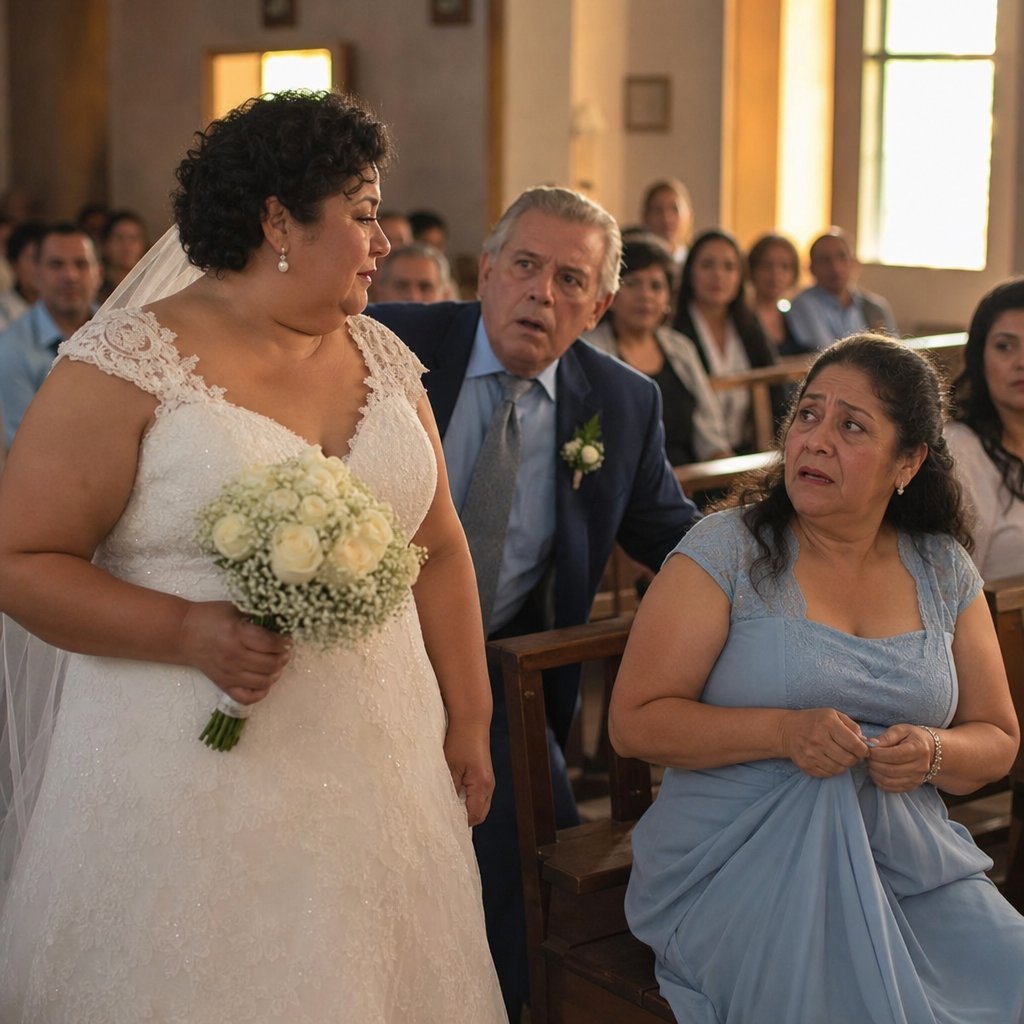
Richard surged halfway up from his seat, then froze like someone had pressed pause on him.
Carole didn’t flinch. She didn’t even look at the guests anymore. Her attention locked on Richard with a focus so personal it made my skin crawl.
“Tell them what you did at the hospital,” she said.
The words hit the glass walls and bounced back. A few people laughed nervously, like it had to be a joke because what else could it be? The officiant’s mouth opened and closed. Daniel’s best man’s smile collapsed into a flat line.
Richard’s hand hovered in the air, fingers spread, like he didn’t know whether to grab the evidence bag, his wife, his son, or the truth.
Then I saw my mother.
Marisol’s face changed—fast, involuntary. Her eyes widened, not in surprise but in recognition, like a door in her mind had just been kicked in. The color drained from her cheeks, and her lips parted on a silent syllable she didn’t say out loud.
I leaned forward, bouquet trembling. The roses smelled like metal. “Mom?” I whispered, but she didn’t hear me.
Carole’s voice softened, almost tender, which somehow made it worse. “You remember the name,” she told my mother, like she was sure. “You remember who signed the chart.”
Marisol’s hands unclasped. Her fingers dug into the fabric of her dress at her knee, twisting it. Her gaze flicked from Carole to Richard to Daniel, and I watched her swallow hard like she was forcing something back down.
Daniel turned to my mother too, and the fear on his face was so naked it didn’t look like him anymore.
My mother finally looked at me, and in her eyes I saw an apology forming—before she even spoke.
The Swap Carole Swore
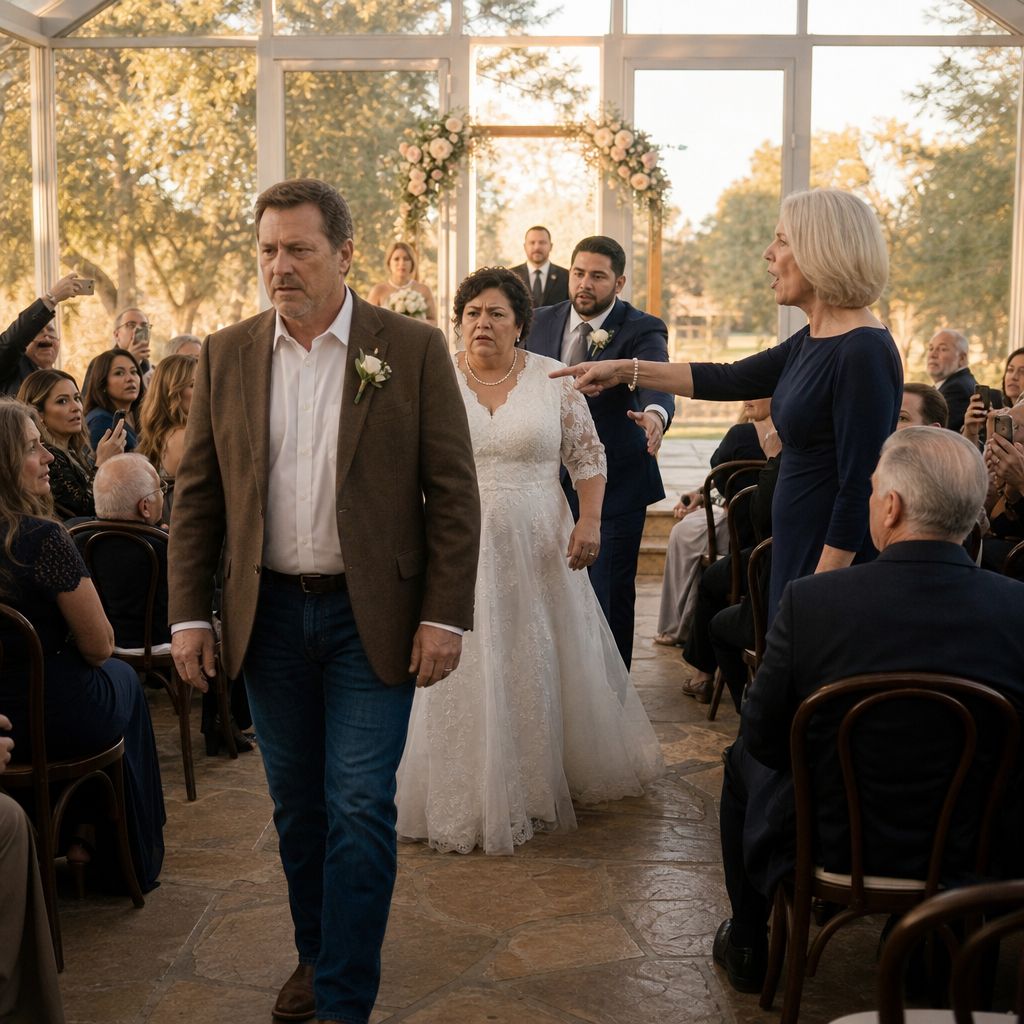
Evan Hale stepped out from the side like he’d been waiting for his cue the whole time. Up close, he looked late 40s, weathered in a way that wasn’t age but experience—short brown hair, clean-shaven, eyes too steady. The boutonnière on his jacket made him look like a relative in a family portrait no one remembered taking.
He opened his mouth to speak, and Carole cut him off with a slice of her hand.
“No,” she said. “Not yet. Let them look at you first.”
A murmur rolled through the guests. Chairs creaked as people leaned. I could feel the attention like heat on my face. Somewhere, a baby started fussing and got shushed too late.
Carole lifted her chin. “1999,” she said, loud enough to turn the year into a weapon. “The night of the power outage at St. Agnes. The generator failed. The nursery went dark. And in that darkness, a baby was swapped.”
Daniel’s father made a strangled sound—half laugh, half choke.
Carole pointed at him, her arm rigid. “You,” she said. “Take a DNA test. Right now.”
And that’s when I noticed the phones coming up—hands rising in rows like a field of periscopes. Screens pointed, recording, hungry. The officiant took a step back, face pale, as if he’d wandered into the wrong room.
Richard’s eyes darted around, calculating, cornered. “This is insane,” he snapped, but his voice didn’t have the force it should’ve.
Evan Hale finally spoke, quiet but carrying. “I’m here because I have something you need to hear,” he said, looking straight at me like he knew my name without being told.
Daniel moved toward him fast, and I heard fabric shift, shoes scuff, breath catch—like the whole chapel braced for impact.
The Card In My Handwriting
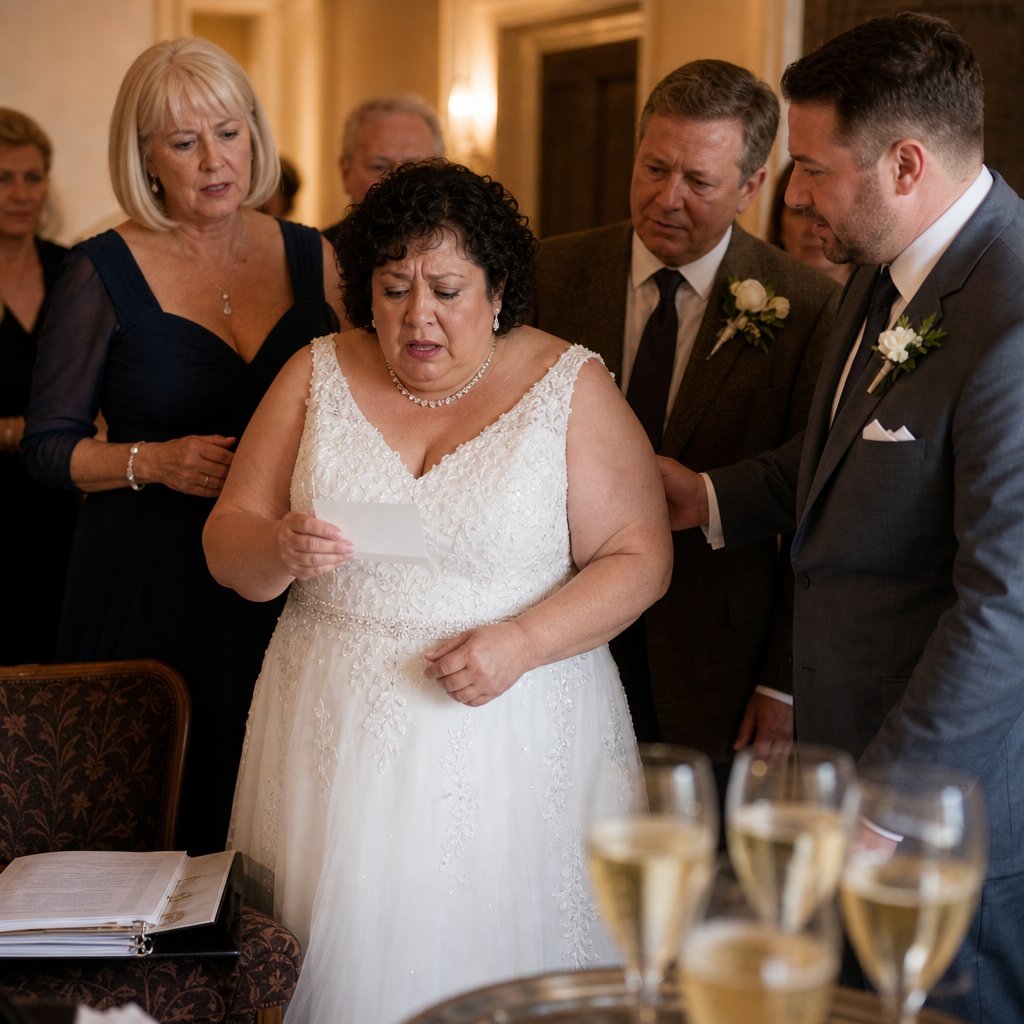
The officiant finally found his voice. “We’re going to take a brief private recess,” he announced, trying to sound calm and failing. “Immediate family only.”
Carole didn’t wait for permission. “Bridal suite,” she said, like she owned the building. “Me. Her. Daniel. Evan.”
Daniel’s eyes flashed at mine—pleading, furious, terrified—like he wanted me to choose him without knowing what I was choosing. My mother stood on shaky legs behind us, reaching out and then stopping, her hand suspended in midair like she didn’t deserve to touch me.
In the hallway, the noise of the chapel muffled into a dull roar. My heels clicked too loud on the tile. Someone brushed past me with a tray of champagne flutes, and the smell of yeast and sugar made my stomach lurch.
I needed something solid. Something normal. So my hand went to my wedding binder—my stupid, color-coded lifeline—tucked on a chair by the coat closet where I’d left it earlier.
That’s when I saw the place card.
It was perched on top like it had always been there, folded tent-style, creamy paper. No names visible from where I stood—just the unmistakable loop of my capital letters on the edge, the way I always curved my R’s like little hooks.
But I hadn’t written anything today. I’d been in hair and makeup since dawn. My pens were zipped in my tote. My binder had been closed.
I picked the card up, and the paper was still crisp, like it had been folded minutes ago. My pulse hammered in my ears.
Someone had been inside my binder.
Carole’s heels stopped behind me. Evan Hale’s breath sounded close. Daniel’s hand reached for my elbow—too late—because I was already turning the card over to see what else I wasn’t supposed to find.
Would you confront your future MIL after finding a secret DNA test?