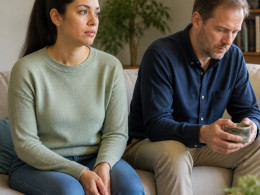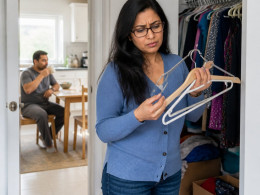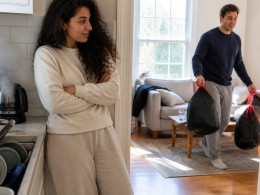




The Dye On Her Hands
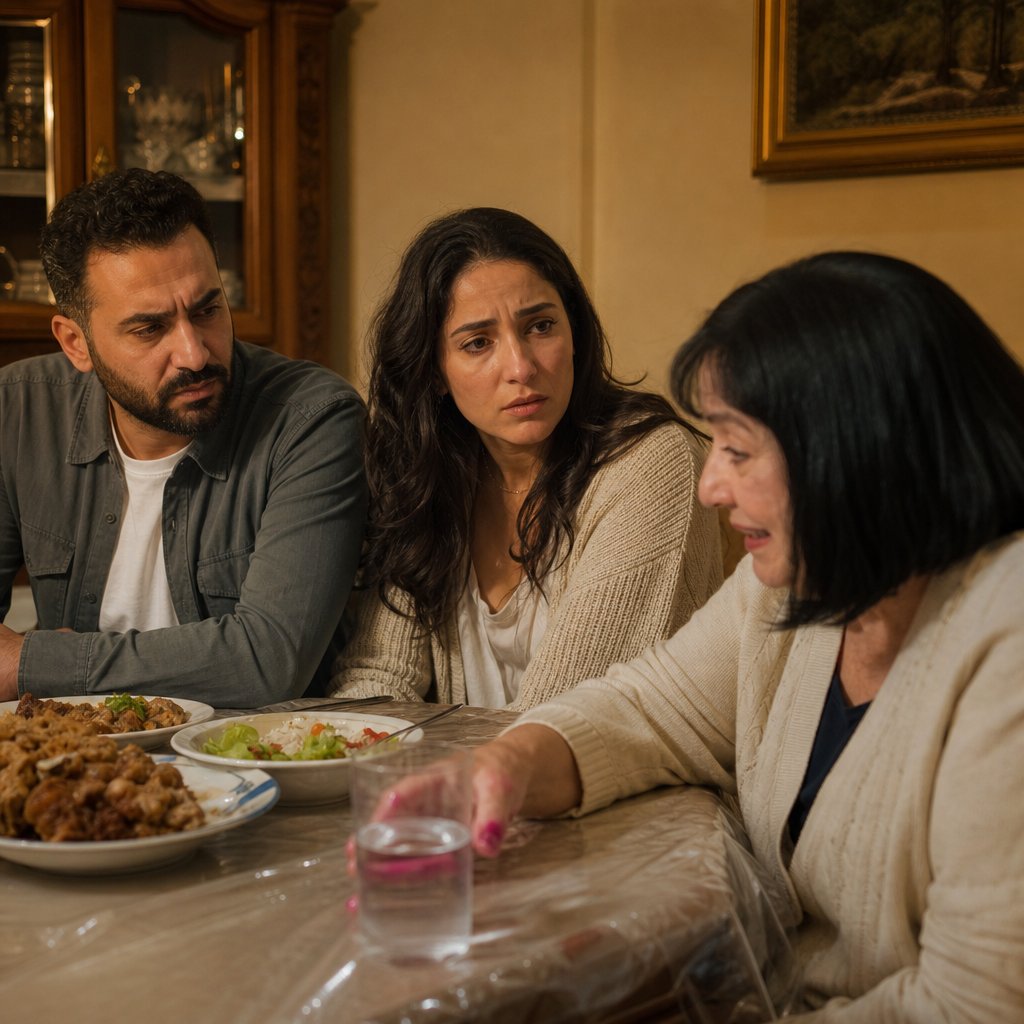
I slid the photo across the dinner table so hard it skimmed over the cheap plastic tablecloth and stopped right in front of her plate. My mother-in-law’s fork froze halfway to her mouth. In the picture, her fingers were stained a violent, unmistakable neon pink—like she’d dipped them in a highlighter and tried to scrub it off until her knuckles turned raw.
“How did you get that on you,” I asked, keeping my voice sweet enough to pass for polite, “if you haven’t been in my house?”
The room went weirdly quiet, the kind of quiet where you can hear someone’s swallow. My husband, Omar—late 30s, dark hair, short beard, the same calm eyes that used to steady me—blinked like I’d spoken a different language. His mother, Nadia, sat perfectly upright in her cream cardigan, her glossy black bob tucked behind one ear, lips pressed into that practiced little smile she used when she wanted people to think I was being dramatic.
She didn’t even look at the photo at first. She looked at me. Like she was taking measurements.
Then she glanced down, and I watched her eyes flick to her own hands in her lap—hands she’d kept hidden all evening under the table—before she lifted her chin and said, “What photo?”
Omar’s chair creaked as he shifted, confused and suddenly defensive, and Nadia’s smile widened by a millimeter as she reached for her water glass with those stained fingers—
The House That Felt Wrong
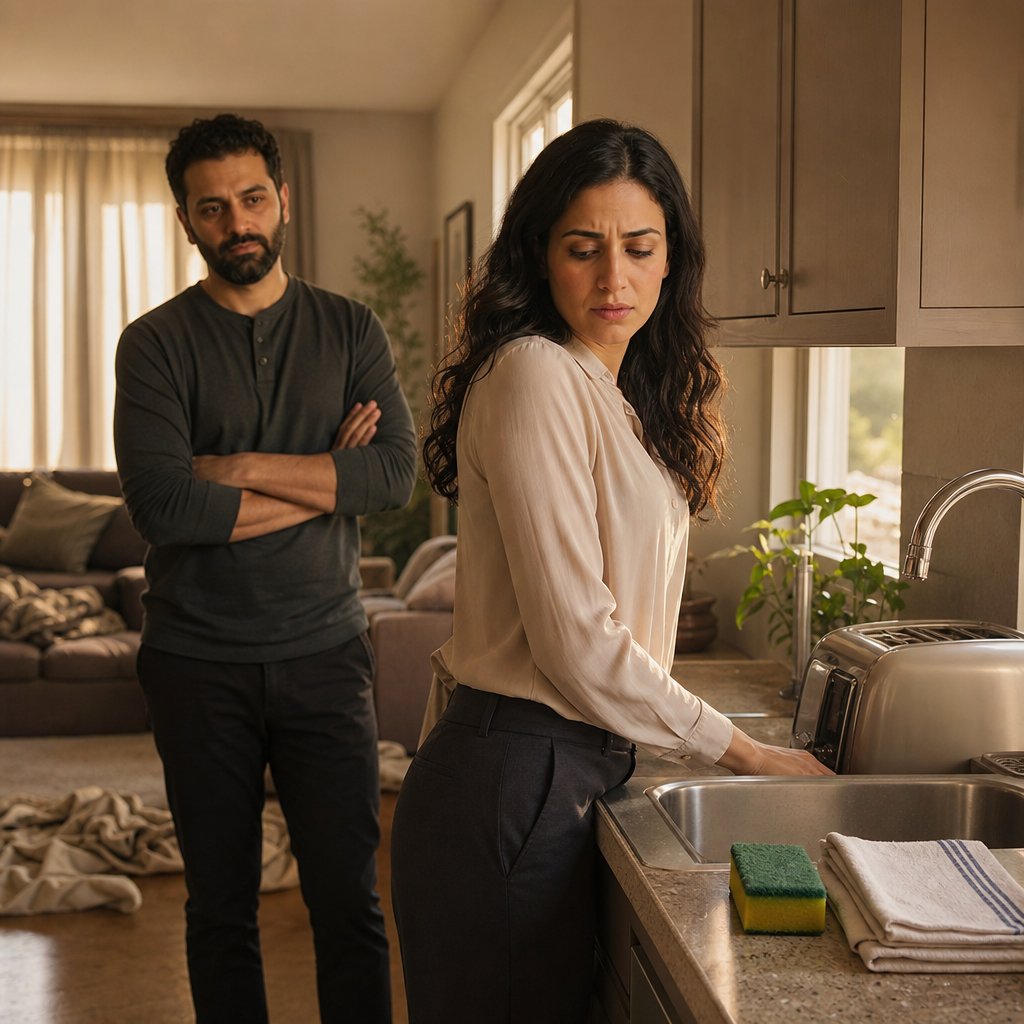
It started with the sponge. I came home and the yellow sponge by the sink—my lopsided one with the corner I’d cut off so it wouldn’t scratch the pans—was gone. In its place was a brand-new green one, standing upright like a little soldier, too clean for a kitchen that had actually been used.
Then the couch pillows. I always angled the striped one on the left because the seam scratched my wrist if it was on the right. One evening it was flipped, seam out, like someone wanted me to notice and feel ridiculous for caring. My perfume—my one indulgence—moved from the bathroom shelf to the nightstand, positioned like a prop. Not knocked over, not messy. Placed.
I told myself it was Omar. Except Omar didn’t “stage” things. Omar left his socks by the hamper like they’d fainted there. Omar didn’t fold the dish towel into a perfect square and tuck it under the toaster like a magazine photo.
I walked the house in my work clothes, heels clicking on the tile, and tried to prove to myself I was being paranoid. But every room had one tiny wrong note: the pantry cans lined up label-out when I never bothered, the hallway runner shifted an inch so it bunched at the corner, the framed wedding photo on the console turned just slightly toward the door—as if someone wanted it to be the first thing you saw when you walked in.
When Omar came home, I watched his face as he stepped inside. No reaction. No pause. Just normal.
Which meant either I was losing my mind… or someone was playacting as me in my own house, and getting off on how small the changes were.
That night, when I opened the front closet for my coat, the faintest smell of someone else’s floral hand lotion hit me—fresh, powdery, not mine—and I stood there with my hand on the hanger, suddenly sure I wasn’t alone in this story.
The Code Used At Noon
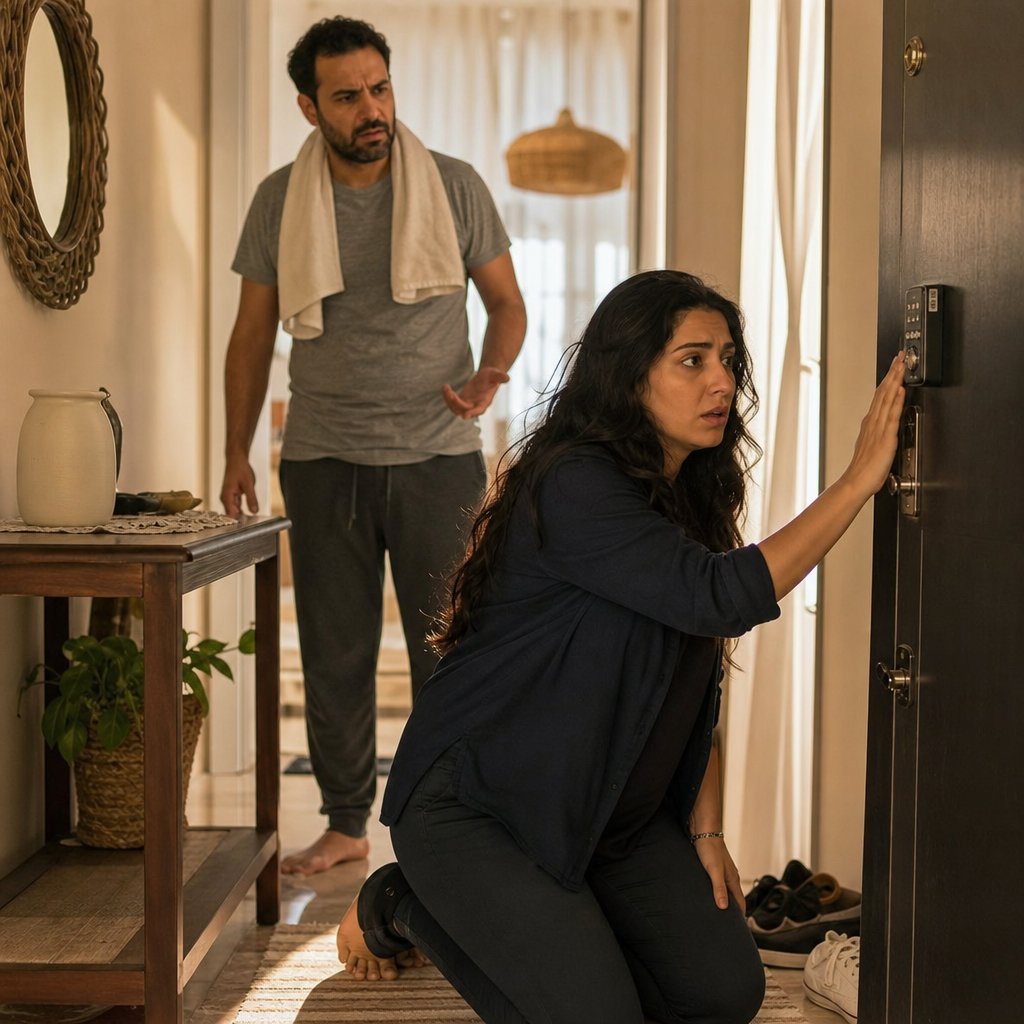
I didn’t want to check the keypad history. Something in me knew that if I looked, I’d have to accept whatever it said.
So I waited until Omar was in the shower, the bathroom fan humming like it was trying to drown out my thoughts. I knelt by the entryway and pulled the little panel open with my thumbnail. The lock’s tiny indicator blinked while I scrolled through the log, my hands sweating so much I had to wipe my palm on my jeans.
There it was: a code entry at 12:14 p.m. on Tuesday.
My stomach dropped so hard it felt like a physical thing. Tuesday, Omar and I had both been out—him at a client site across town, me in back-to-back meetings. We’d even texted about grabbing takeout because neither of us would have time to cook. The house should’ve been empty except for dust and that one stubborn spider in the laundry room.
The log didn’t lie. It showed a valid code. Not a forced entry. Not a dead battery reset. Someone had typed the numbers like they belonged there.
And the code label—just a number, assigned to a user slot I didn’t recognize—sat in the list like it had always been there.
I heard the shower shut off. Omar’s footsteps, damp and familiar, moved down the hall. I snapped the panel closed too fast, pinching my finger, pain blooming under the nail.
When he walked into the living room in his gray T-shirt, towel around his neck, I tried to smile like nothing had happened. My heart was beating so loud I was sure he could hear it.
“Hey,” he said, relaxed. “What’s wrong with you?”
I stared at his face and wondered, for the first time, if he already knew about that code… and just hadn’t told me.
He Said I Was Imagining
Omar’s face did that thing it did when he thought he was being patient—brows lifted, mouth soft, like I was a child insisting there were monsters under the bed.
“Babe,” he said, “you’re spiraling. You’ve been stressed. You’re seeing patterns.”
I wanted to throw something. Not at him—just somewhere—because the calmness in his voice felt like a slap. I stood in the living room with the remote in my hand, knuckles white, and tried to keep my voice steady.
“So you think I’m lying?”
He sighed, the kind of sigh that said he was the reasonable one. “I think you’re… making it bigger than it is.”
And then the house did it again. That night I went to grab my skincare from the bathroom cabinet and my toothbrush was on the wrong side of the cup—mine always on the left because I’m right-handed. The cap on the mouthwash was tightened so hard I had to use a towel to twist it off, like someone wanted to leave proof of their grip.
I told Omar. He didn’t even get up from the couch. “Maybe you did it,” he said, not unkindly, which somehow made it worse.
Over the next few days, the wrongness got petty. My favorite mug—the chipped one I refused to throw away—showed up in the back of the cabinet behind the tall glasses. The throw blanket I always left folded over the armrest was rolled tight and shoved into the basket like it was being punished.
Each time, Omar’s eyes slid away when I pointed it out. Like he didn’t want to see it. Like someone had already told him what my “episodes” looked like.
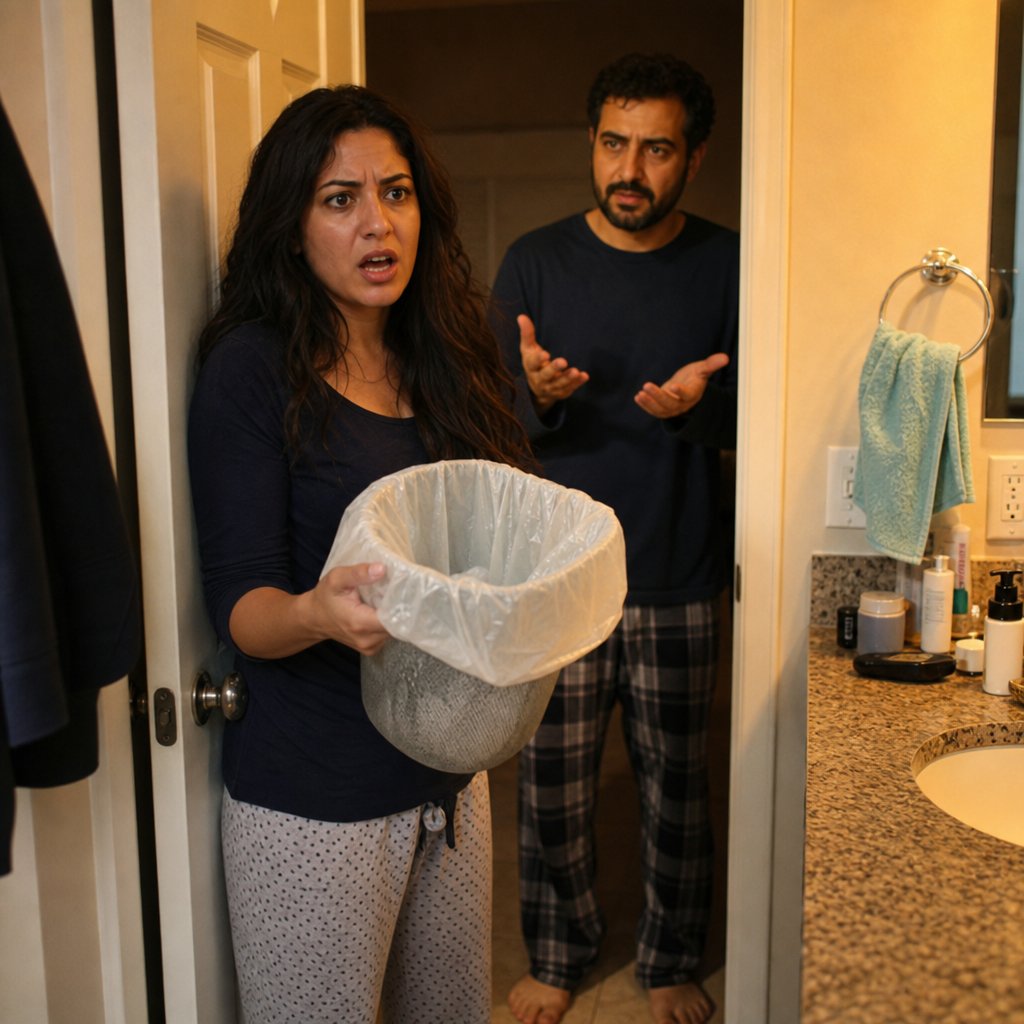
On Friday, I came home and found the bathroom trash emptied—down to the last cotton pad—when I knew I hadn’t taken it out. The bin smelled faintly of lemon cleaner.
I stood there holding the empty liner, and behind me Omar said, too casually, “Did you remember to lock the junk drawer?”
The Drawer Still Locked
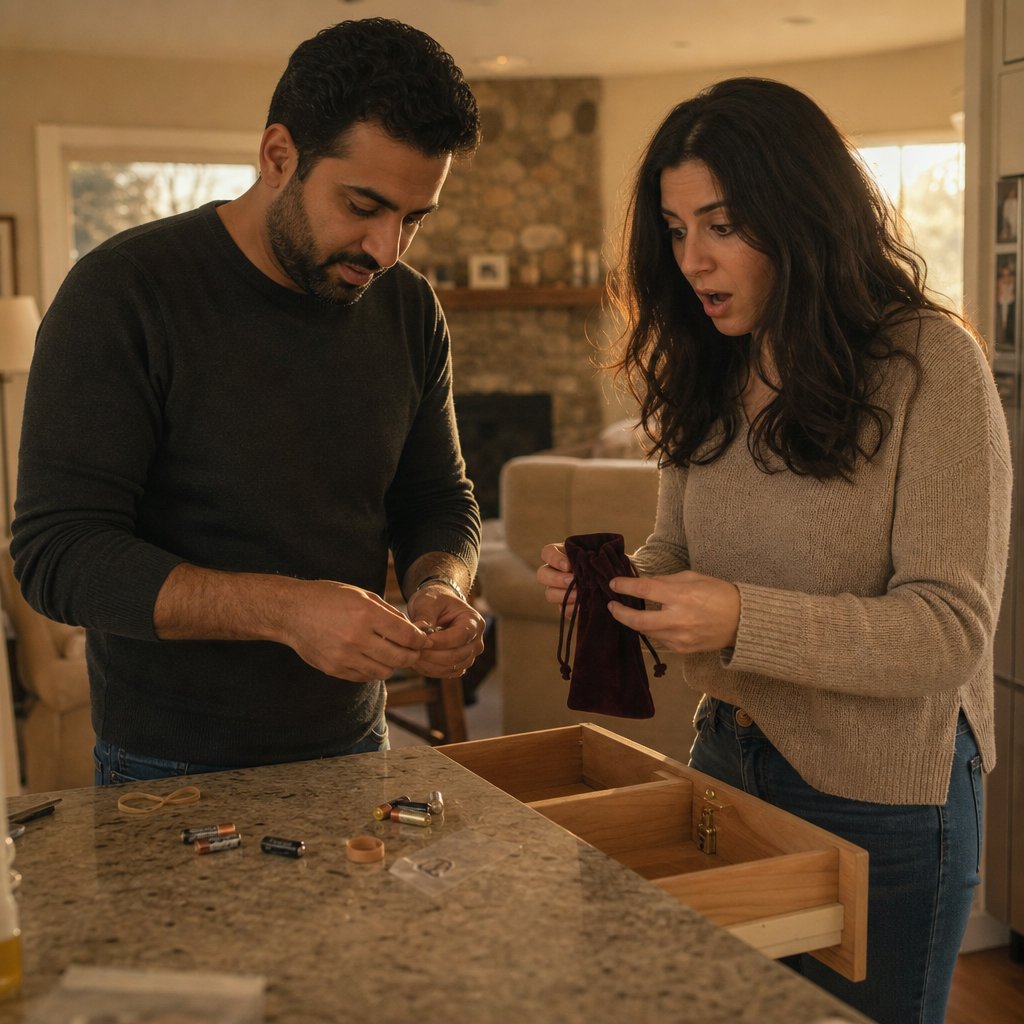
The junk drawer was my one controlled chaos. Batteries, spare keys, the tiny screwdriver set, receipts I couldn’t let go of. And inside it—wrapped in a little velvet pouch—I kept my spare house key because I didn’t trust myself not to lose it.
I went straight to it after Omar’s comment, my pulse already sprinting. The drawer sat exactly where it always did, in the kitchen island, and the small brass lock was turned sideways—locked.
Good, I thought. At least that’s still mine.
I pulled the key from my ring, opened it, and the drawer slid out with that familiar wooden rasp. Everything looked… too neat. The paperclips in a little pile, the rubber bands looped together like someone had organized them with a ruler.
I found the velvet pouch and my fingers shook as I opened it.
Empty.
I stared down into the soft dark fabric like the key might be hiding in the seam. I shook it. Nothing. I dug through the drawer, tossing aside takeout menus and a half-dead lighter, my throat tightening with every second.
Then I froze with my hand still inside the drawer because the logic hit me like ice water: the drawer had been locked. I was the only one who ever locked it. I was the only one who carried the little brass key.
So how was the spare house key gone… while the drawer remained locked exactly the way I left it?
I heard Omar in the living room, laughing at something on a podcast, relaxed. Normal. Like nothing was missing from our life.
I shut the drawer slowly and turned the brass lock back into place, my fingertips numb. I walked to the hallway closet and checked the small hook where we kept the backup set of car keys.
They were there.
Which meant whoever took my spare house key didn’t need anything else. They’d taken exactly what they came for.
And in that moment, I knew the changes weren’t random anymore. They were preparation.
The Detail She Shouldn’t Know
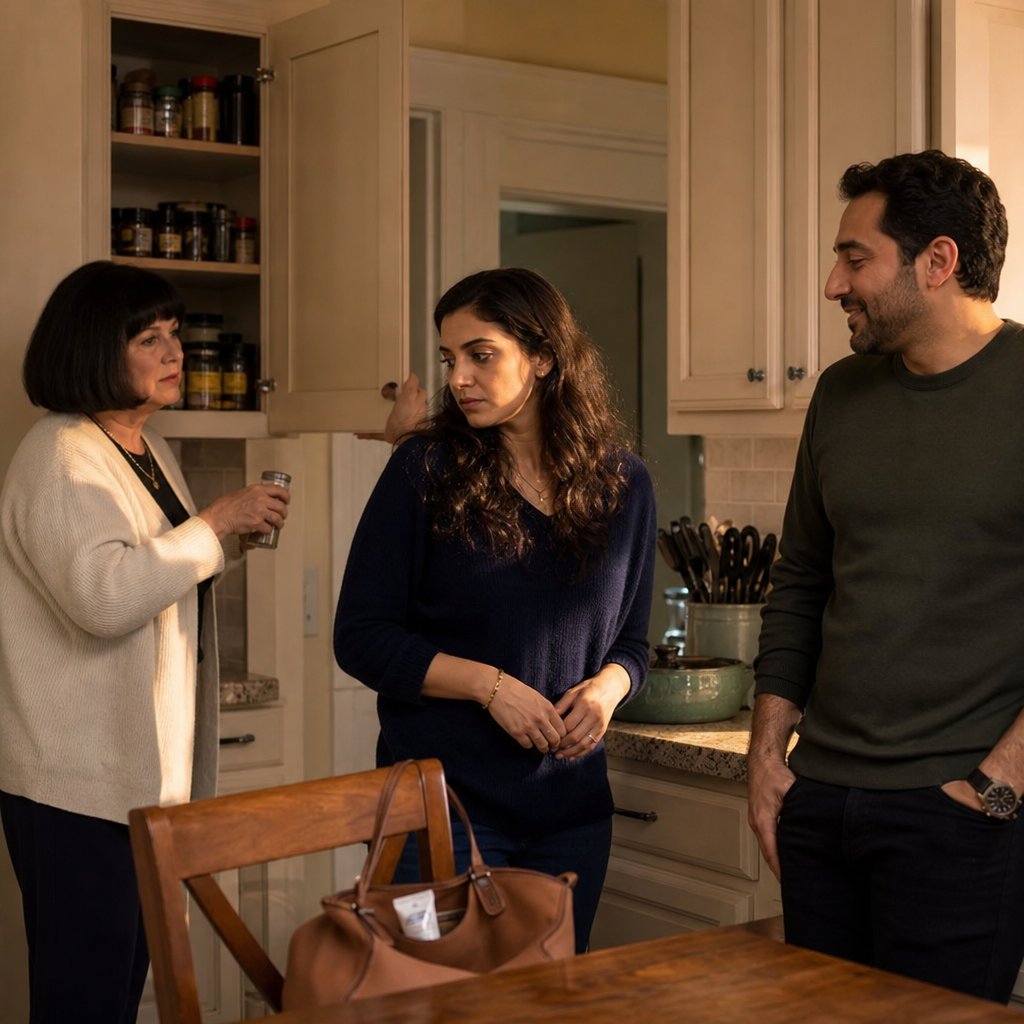
Nadia dropped by on Sunday like she always did—unannounced, perfumed, acting like our front door was a suggestion. She kissed Omar’s cheek, patted my shoulder like I was a coworker, and glided into the kitchen without asking.
I watched her the way you watch someone near an open flame.
She opened a cabinet and paused, frowning. “Oh,” she said lightly, “you moved the cumin behind the tea again. You know it clumps if you keep it there.”
My whole body went cold.
Because I had moved the cumin behind the tea. Two days ago. At midnight. While Omar was asleep. It was the kind of tiny, stupid thing you do when you’re trying to feel like you still have control over your own house.
Omar didn’t even know where the cumin lived. Omar thought spices magically appeared when food tasted good.
Nadia set the jar down with a soft click and turned, watching my face like she was waiting for the exact second it cracked. Her eyes—dark, sharp, amused—flicked to my hands, then to Omar, then back to me.
I forced a laugh that sounded like it belonged to someone else. “Did I?”
“Mm,” she hummed, and reached into her purse. Not for her keys. Not for her lipstick. For a small packet of something—like she’d brought supplies.
Omar smiled at her, warm and trusting, and I felt a hot flare of rage so bright it scared me. She wasn’t just invading. She was auditing me. Cataloging my reactions.
She stepped closer, lowered her voice like we were sharing a secret, and said, “You should really keep your important things somewhere safer. You never know what gets misplaced in a house like this.”
Her gaze dropped, pointedly, toward the kitchen island drawer.
Twenty Minutes Of Silence
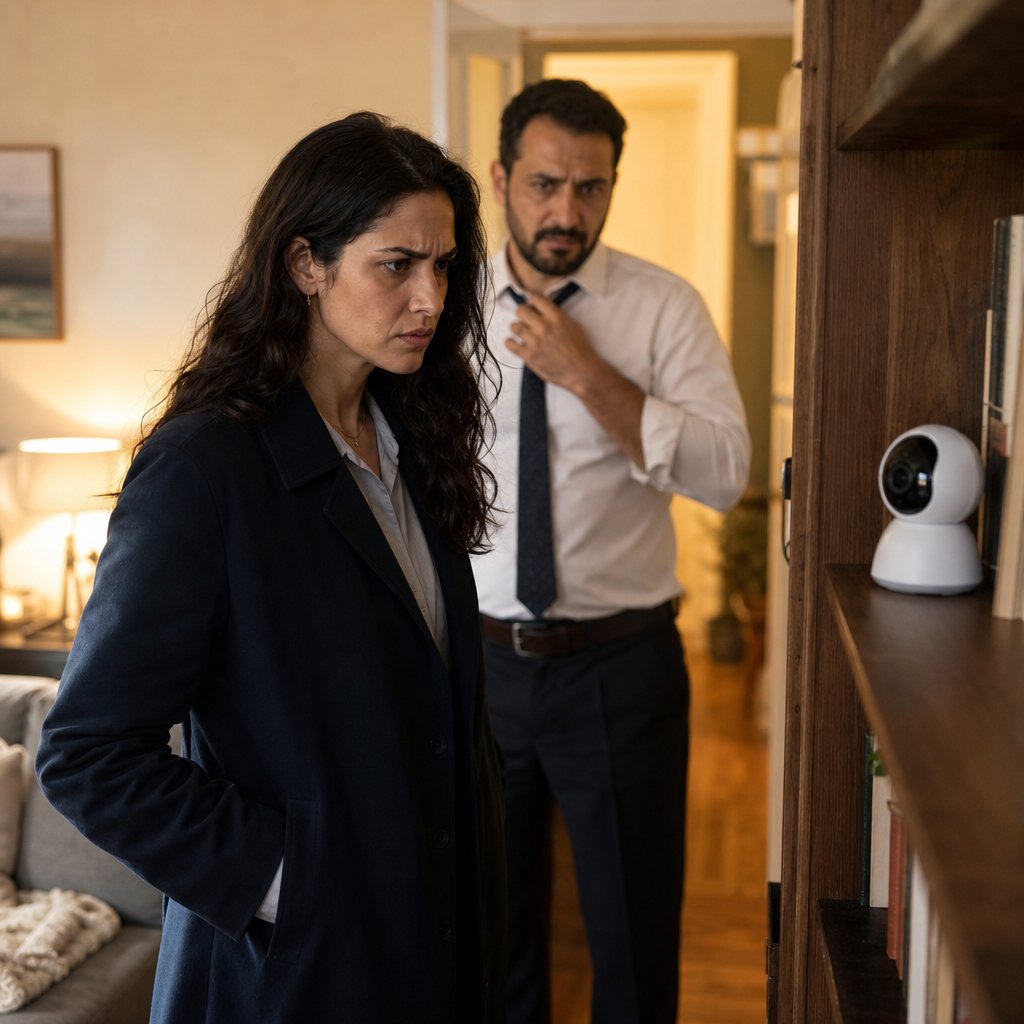
I bought the cheapest indoor camera I could find, the kind that looked like a baby monitor and came in a box with too much plastic. I didn’t tell Omar. If he thought I was “spiraling,” fine—let me spiral with evidence.
I set it on the bookshelf facing the entryway, angled just enough to catch the door and the hallway table. I even dusted around it so it wouldn’t look like I’d just placed it there. Then I went to work with a knot in my stomach and my keys clenched so tight they left dents in my palm.
At lunch I checked in—everything fine. The little indicator light blinked like a heartbeat.
At 12:07 p.m., I checked again.
Nothing. Not the view, not the connection, not even a stutter. Just the camera offline, as if it had been politely unplugged from reality.
I tried not to panic. Wi‑Fi hiccups happen. Routers glitch. The universe doesn’t revolve around my paranoia.
At 12:27 p.m., it came back. Like nothing had happened.
Exactly twenty minutes.
I stared at the little device when I got home, my coat still on, my bag sliding off my shoulder onto the floor. The camera sat there innocently, its lens pointed forward, untouched—no signs it had been moved, no dusty fingerprints, no obvious tampering.
But the router in the hallway closet was fine. The other devices were connected. The Wi‑Fi hadn’t dropped once for me all afternoon.
Someone had made that camera go blind for the precise window they needed. Someone who knew what time I’d check. Someone who understood just enough to make it look like an accident.
Omar walked in behind me, loosened his tie, and glanced at the bookshelf. His eyes lingered on the camera for half a second too long.
“What’s that?” he asked, casual, but his voice had a thin edge.
I turned to him slowly, and in the reflection of the camera’s little glossy lens, I saw my own face—pale, furious—like a stranger in my house.
The Neighbor Thought It Was Sweet
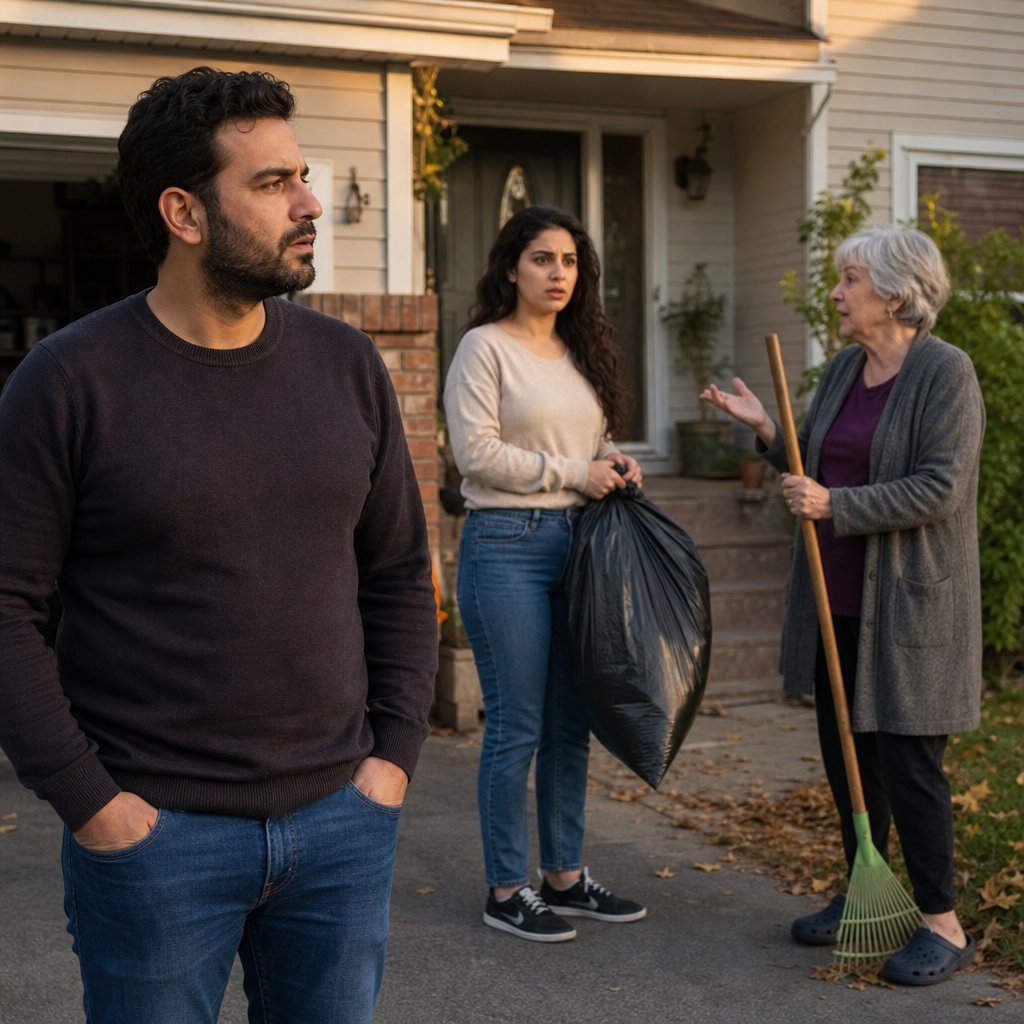
I was taking out the trash when Mrs. Larkin from next door waved me down with the kind of eager smile people reserve for gossip they think is harmless.
“Your mother-in-law is over again!” she called, like she was announcing a surprise delivery. “So sweet she helps you. Not everyone has family like that.”
The trash bag sagged in my hand, warm through the plastic, and I felt my face go blank.
“She’s… over?” I repeated, keeping my voice steady with pure force.
Mrs. Larkin nodded, leaning on her rake like it was a microphone. “Oh yes, she came earlier. Let herself in like she always does. I saw her with that big tote bag. She’s such a doer. You’re lucky.”
Like she always does.
I stared at our front door from the driveway, the wreath hanging slightly crooked like it was smirking at me. Our curtains were drawn, the house quiet, pretending to be empty. Pretending to be mine.
“Did you… talk to her?” I asked, and my throat tightened around every word.
Mrs. Larkin laughed. “Just waved! She looked busy. Oh—and honey, don’t worry, she said you’ve been having a hard time lately. We all have our moments.”
My fingers clenched until the trash bag handle cut into my skin. So Nadia wasn’t just sneaking in. She was building a story outside my walls. A story where she was the saint and I was the mess.
I walked back up my driveway like my legs belonged to someone else. I unlocked the door, stepped inside, and the air smelled faintly of lemon cleaner again.
On the hallway table, the small ceramic bowl where I tossed my keys had been turned perfectly to face the door—like it had been posed for a visitor.
My Tiny Traps Were Sprung
I stopped looking for big proof. Big proof is for movies and courtrooms. Nadia was playing in millimeters, so I started playing back.
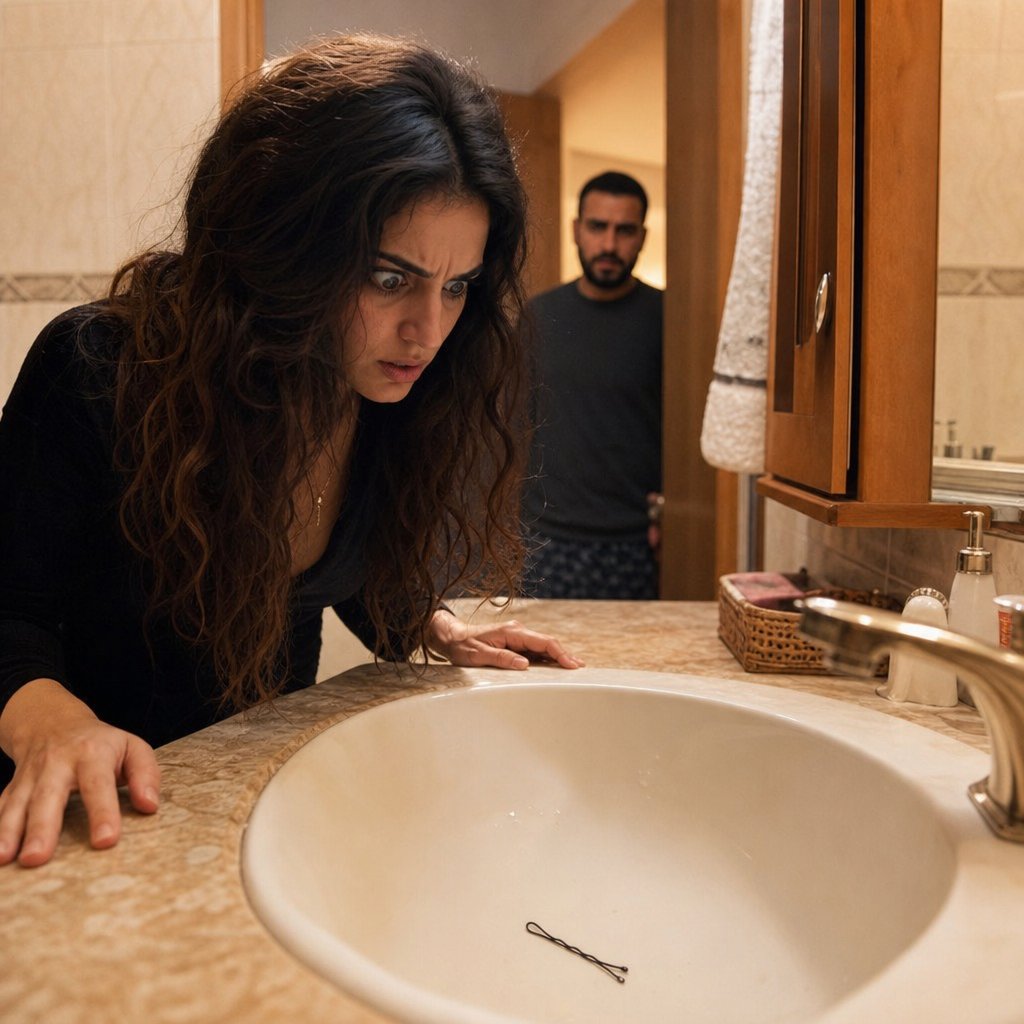
I tore a thin strip of clear tape and pressed it along the seam of the junk drawer—so smooth you’d never notice unless you knew where to look. Then I slid a single bobby pin into the medicine cabinet hinge, balanced so delicately it would fall if the door opened even a breath wider than normal.
I felt ridiculous doing it. Like I was starring in my own low-budget spy thriller. But my hands were steady in a way they hadn’t been for weeks. This wasn’t paranoia. This was a test.
I went to work and tried to act normal. I answered emails. I smiled at coworkers. I drank burnt coffee and pretended my life wasn’t being quietly edited by someone who hated me.
When I got home, I didn’t even take my shoes off. I went straight to the kitchen island and crouched down like I’d dropped something.
The tape was wrinkled. Not torn—wrinkled, like it had been peeled back carefully and pressed down again by someone trying to be clever. My mouth went dry.
I walked to the bathroom and opened the medicine cabinet slowly, heart pounding. The bobby pin wasn’t perched in the hinge anymore.
It was in the sink.
Just sitting there, innocent, like it had fallen on its own. Like gravity had a grudge against me specifically.
I turned the faucet on to wash my hands because I needed something to do, and the water came out warmer than it should’ve—like someone had run it recently. The steam smelled faintly metallic.
I gripped the edge of the counter until my fingers ached. Someone had been inside again. Someone had touched my things and then tried to put the world back the way it was, like I was a child who wouldn’t notice.
Behind me, the front door clicked.
Omar’s voice floated down the hall. “Hey, did you take something out of the drawer?”
Questions That Weren’t His
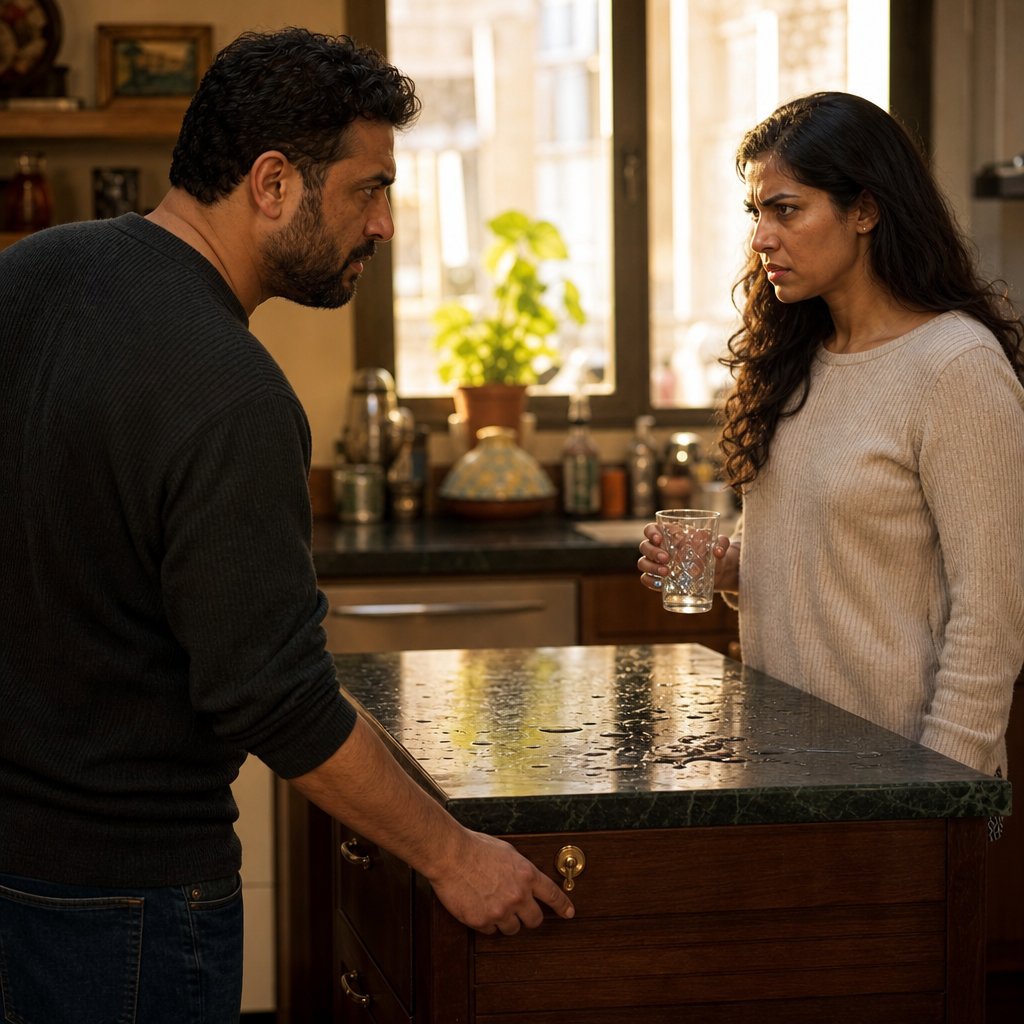
Omar didn’t say hello the way he used to. He didn’t kiss my forehead. He didn’t ask about my day. He leaned his shoulder against the kitchen doorway and looked at me like he was trying to catch me in a lie.
“Did you go through my mom’s things?” he asked.
I actually laughed—one sharp, disbelieving sound—because it was so backwards I didn’t know where to start. “What?”
His jaw tightened. “She said you’ve been… fixated. That you accused her of stealing. That you were checking the locks like—” He cut himself off, but the word hung there anyway: crazy.
I set a glass down on the counter a little too hard and water sloshed over the rim, cold against my fingers. “So she’s reporting on me now?”
Omar’s eyes flicked away, and then back, sharper. “She’s worried about you. And honestly, I am too.”
That was new. Omar didn’t do “honestly” like a weapon. Omar didn’t interrogate. Omar listened. But now his questions came clipped and rehearsed, like he’d practiced them in the car. Like someone had handed him a list and told him which buttons to press.
“Did you move your perfume just to test me?” he said. “Did you lock the drawer to make a point?”
My throat burned. “No. I did it because someone is coming into our home.”
He shook his head slowly. “Or because you think someone is.”
And then he said the line that made my skin prickle: “My mom said you’ve been hiding things lately. Receipts. Keys. Stuff you don’t want me to see.”
I went still, because Nadia didn’t just want Omar to doubt me. She wanted him looking for planted proof. She wanted him searching my drawers, my bags, my sanity—until he found whatever she’d decided I was guilty of.
Omar stepped toward the kitchen island, eyes on the locked drawer like it was a confession waiting to be opened, and he held out his hand. “Give me the key.”
The Chat He Forgot Muted
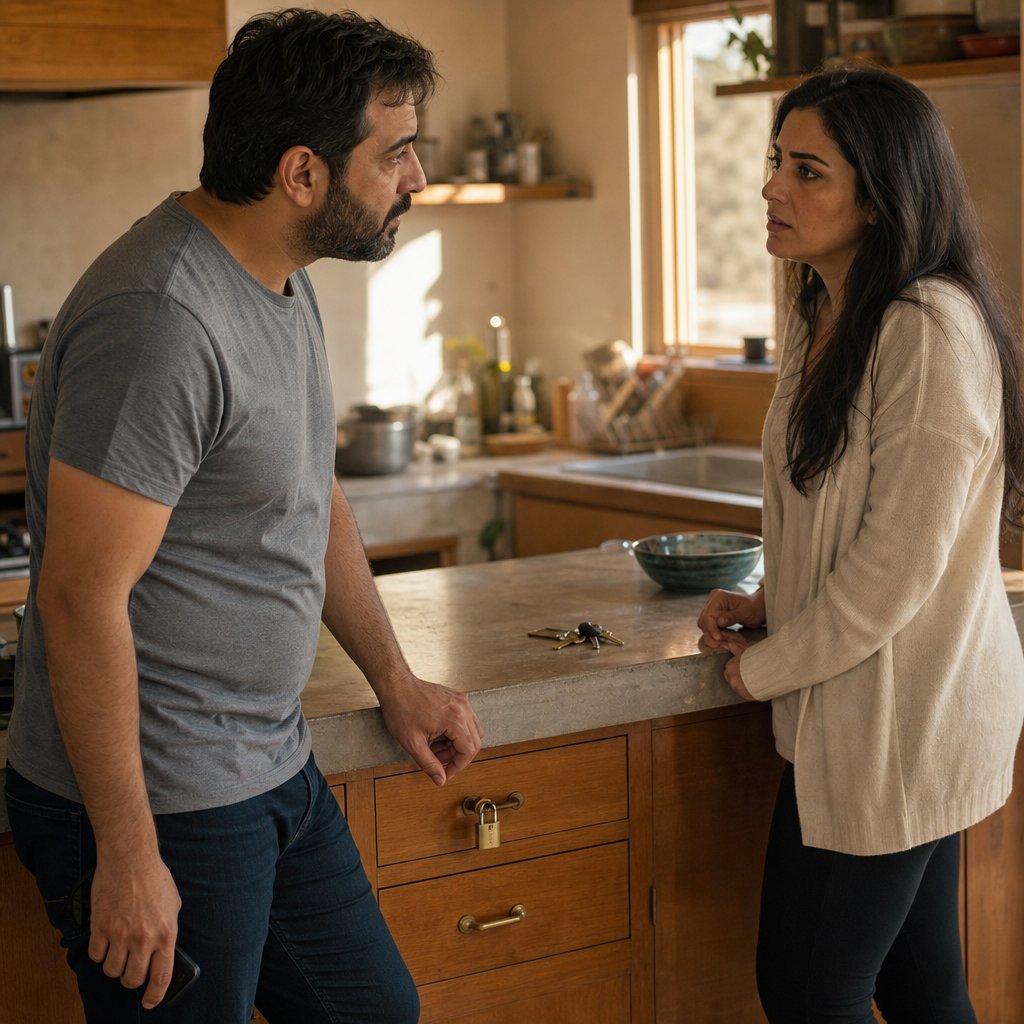
Omar reached for the locked drawer like it was going to bite him, palm out, eyes hard. “Give me the key,” he said, and the way he stared at me—at me—made my throat close.
I didn’t move. I just watched his hand hover there, impatient, like I was a teenager caught hiding cigarettes. Then his phone buzzed on the counter, face-down, that familiar dull vibration that never stopped in our house lately.
He snatched it up without thinking, thumb flicking fast. And that’s when I saw it—just a sliver before he angled it away. A muted family group chat. The kind you mute when you’re tired of nonsense… or when you’re hiding it.
His mother’s name sat at the top like a crown. Under it, her message preview: not angry, not dramatic—sweet. Surgical. “I’m only saying this because I love you, habibi. I’m getting really concerned about her stability.”
My stomach turned like I’d swallowed pennies. I could practically hear her voice in my head—soft, prayerful, the way she spoke when she wanted to sound like a martyr.
Omar’s eyes flicked up and met mine for half a second, and I knew he’d seen me see it. His jaw tightened.
“Why are you looking at my phone?” he snapped, and the drawer handle creaked under his grip as he pulled—still locked, still accusing—like he expected the proof of my “unstable” self to be inside.
Her “Concerns” Got Detailed
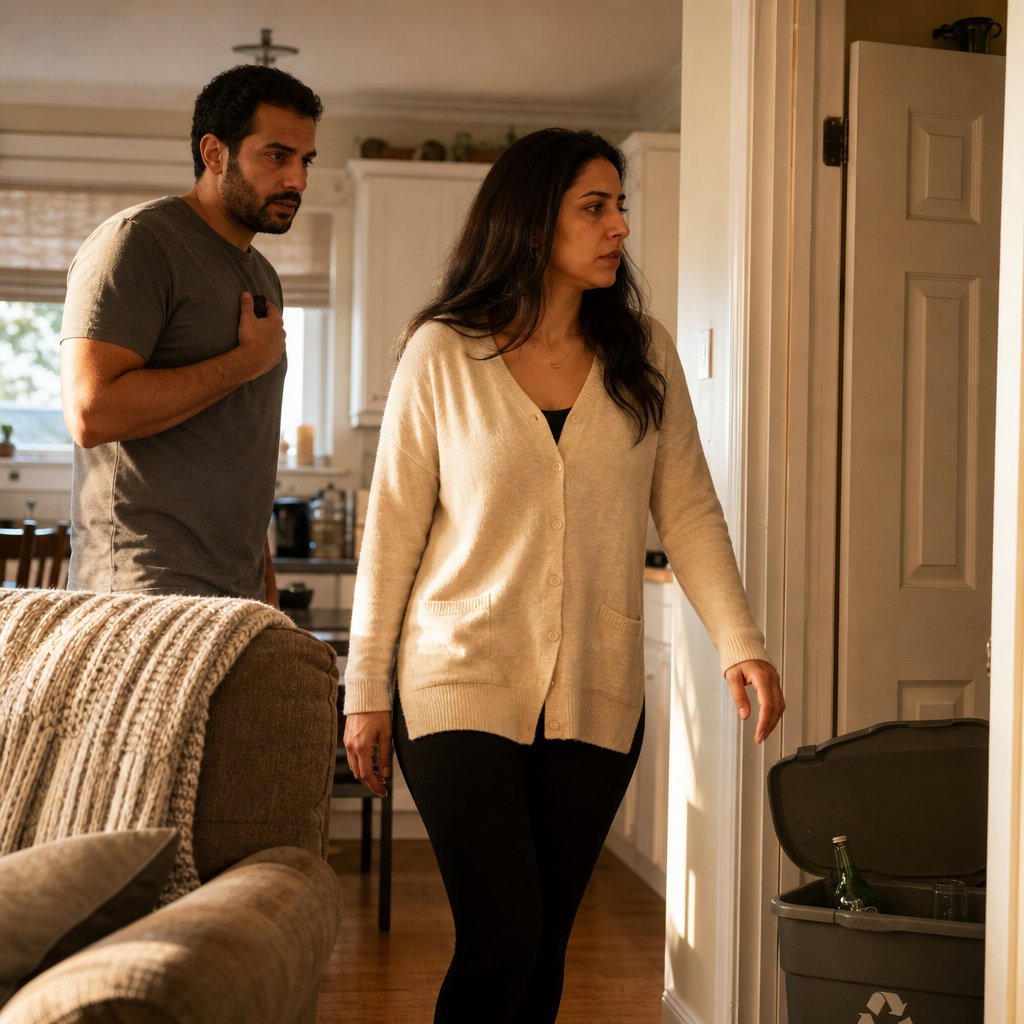
He tried to turn his body like a shield, but it was too late. I’d clocked the chat, and the sick part was how calm it looked—no screaming, no curse words. Just my mother-in-law laying down little “facts” like breadcrumbs for Omar to follow out of our marriage.
Omar’s thumb hovered, then scrolled—fast, guilty. I could tell because his breathing changed, short and sharp through his nose. He wasn’t reading to reassure himself. He was checking what she’d already convinced him of.
“Past-due bills again,” she’d written, like she was reporting weather. “I found expired food in their pantry. Empty bottles in the recycling. I’m not saying she’s doing it on purpose, but…”
Empty bottles.
I stared at the recycling bin by the door, the plastic lid half-cocked. All I could smell suddenly was sour citrus cleaner and that faint, stale-sweet scent of something alcoholic that didn’t belong in our house.
“Why would she even know what’s in our pantry?” I asked, voice too steady. That steadiness was the only thing keeping me from launching the entire drawer across the room.
Omar didn’t answer. He just held the phone tighter, like it was a life raft. “She’s worried,” he said finally, and it landed like a slap—she was worried, so now I was on trial.
I took one step toward the pantry, my heartbeat loud in my ears, and Omar’s eyes followed me like he was afraid of what I’d find.
The Receipt Behind Paper Towels
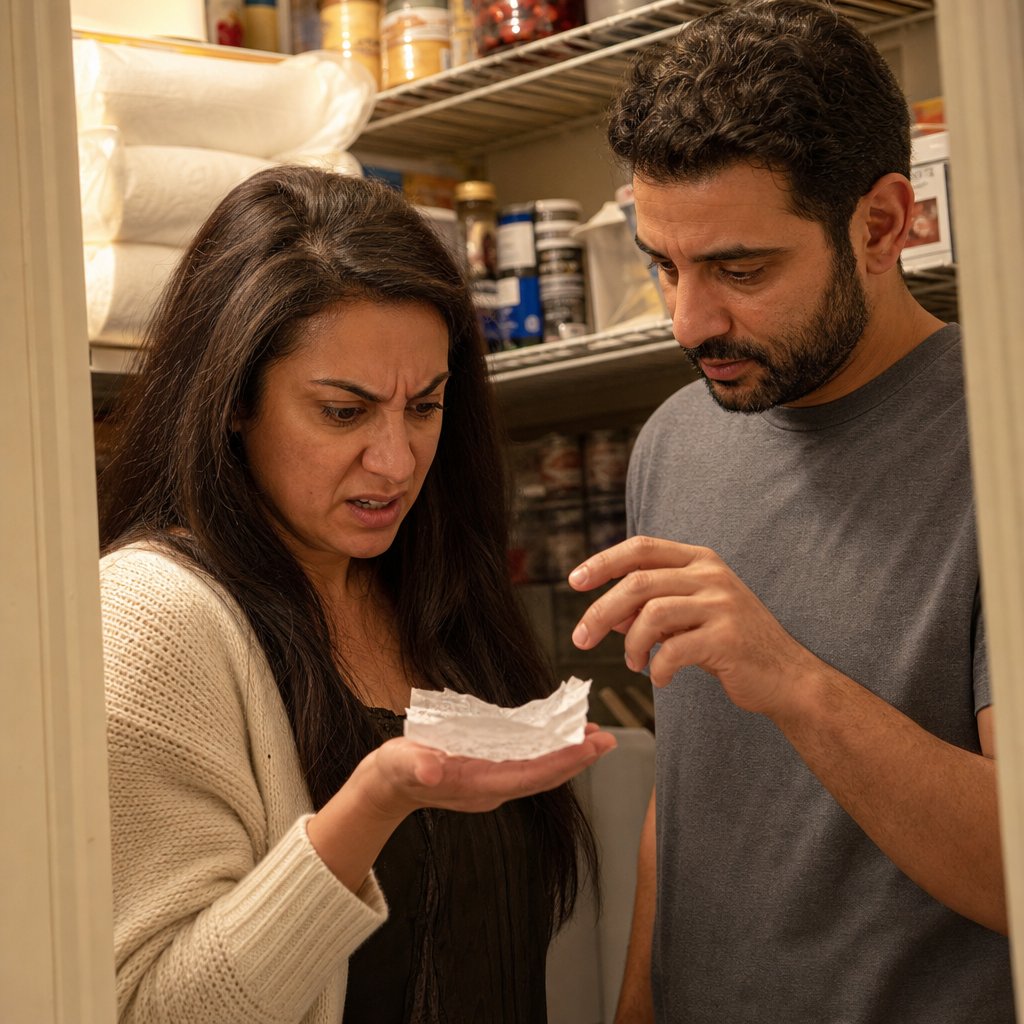
I yanked open the pantry like I was ripping off a bandage. Cans, cereal, a stack of paper towels—everything looked normal at first, which somehow made it worse. Normal meant curated. Normal meant someone had been in here deciding what I should look like.
I shoved the paper towels aside and something fluttered down like a dead leaf.
A crumpled receipt.
My fingers shook when I smoothed it against my palm. The paper was warm from being wedged in there, and it smelled faintly of dust and mint—like it had been pressed against gum.
Vodka. Gum.
I looked up at Omar, and he was already frowning, eyes narrowed like he was doing math he didn’t want the answer to. I didn’t even have to say it out loud. He’d seen the words. He’d seen the little list that could destroy me in one screenshot to his precious muted chat.
“That’s not—” I started, but my voice cracked on the second word.
Then I saw the timestamp.
12:14 p.m.
I let out this sharp, ugly laugh that didn’t sound like me. “I was in a meeting across town at 12:14,” I said, too fast, too desperate. “You can check my calendar. You can call my office.”
Omar didn’t reach for me. He reached for the receipt, two fingers like it was contaminated, and his eyes flicked to the front door.
“Who was in our house at noon?” I whispered.
The Camera Finally Proved It
I didn’t sleep. I sat at the dining table with my laptop closed—because I didn’t need more noise—and my cheap little camera kit spread out like tools on a surgeon’s tray. My hands smelled like lemon dish soap from washing and rewashing them, like I could scrub off the feeling of being set up.
Omar had gone quiet in that dangerous way, the way he got when he wanted to believe the easiest story. The easiest story was that I was spiraling. The hardest story was that his mother was hunting me inside my own home.
So I aimed one camera at the front door. Another down the hallway. No drama, no confrontation. Just… truth.
Two days later, I stood in the laundry room pretending to fold towels while my heart beat so hard it made my ears ring. The little motion sensor chirped softly from the hallway.
I walked to the entryway and stared at the door like it was a mouth about to confess.
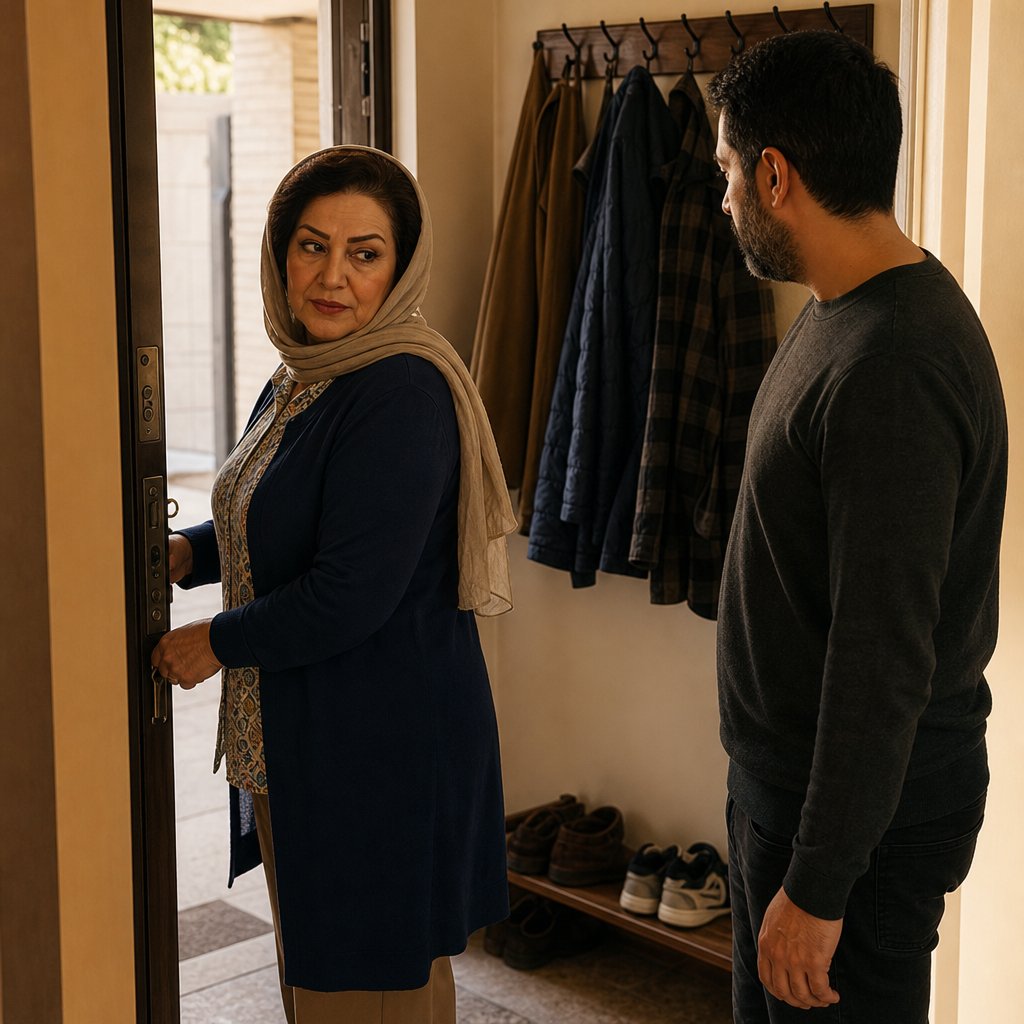
Later, when I checked the clip, my mother-in-law was there—perfect lipstick, neat scarf, her posture like she owned air. She didn’t knock. She didn’t hesitate. She pulled out a key like it was the most natural thing in the world.
The lock turned. Clean. Familiar.
She stepped inside humming—humming—and walked straight past the living room, straight past the kitchen, straight toward our bedroom like she was headed to her things.
And right before she disappeared down the hallway, she paused and glanced over her shoulder, eyes sharp, like she knew exactly where the cameras would be if I’d ever been smart enough to place them.
He Blamed Me For Proof
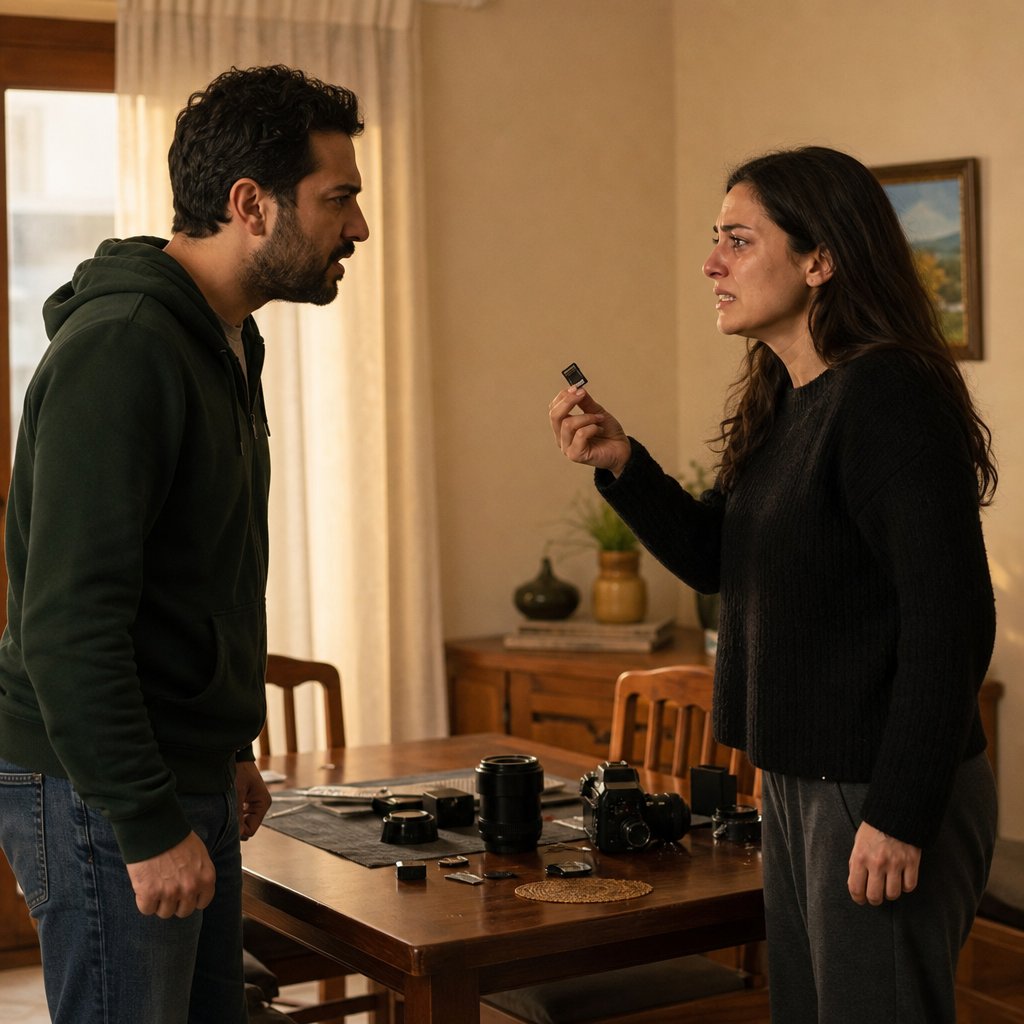
I waited until Omar got home, until his shoes were off and his guard was down. I had the camera memory card pinched between my fingers like a tiny, deadly thing. My palms were sweating so much it kept slipping.
“I need you to sit,” I said.
He looked annoyed before he even looked curious. That alone told me how far his mother had already dragged him away from me.
When I showed him the clip—when he saw his mother’s hand on our lock, her key sliding in like it belonged—his face drained so fast it scared me. His mouth opened, then closed. For one second I thought he might finally turn that anger where it belonged.
Then his eyes snapped to me, and they weren’t soft. They were offended.
“You put cameras in the house?” he said, voice low, like I’d confessed to something filthy. “What is wrong with you?”
I just stared at him. My throat burned. “What’s wrong with me?” I repeated, because it was all I could manage. “Your mother has a key. She’s coming in while we’re gone. She’s planting receipts—”
He cut me off with a sharp shake of his head, like he couldn’t even listen without betraying her. “This is exactly what she means,” he said. “You’re… you’re paranoid. You’re spying.”
I laughed again, that broken sound. “So the lock turning itself is paranoia?”
Omar’s hands curled into fists at his sides, and he took one step toward the drawer like he was about to prove something—about me, about her, about who he’d chosen.
Things Vanished To Shame Me
After that, the house felt booby-trapped. Not with anything loud—nothing you could point to and scream about—but with tiny absences that made me look forgetful, sloppy, dishonest.
It started with my work badge.
I kept it in the same spot every day: a little ceramic dish by the keys. Monday morning, it was gone. I tore through couch cushions, the junk drawer, my purse, the pockets of coats I hadn’t worn in months. Omar watched me the way you watch someone unravel, and I hated him for it.
By noon, I was running late and sweating through my blouse, my hair sticking to the back of my neck. I could taste panic—metallic, like I’d bitten my tongue.
That night, I found the badge tucked inside a cookbook on the shelf. Not fallen. Not slipped. Placed. Like a joke.
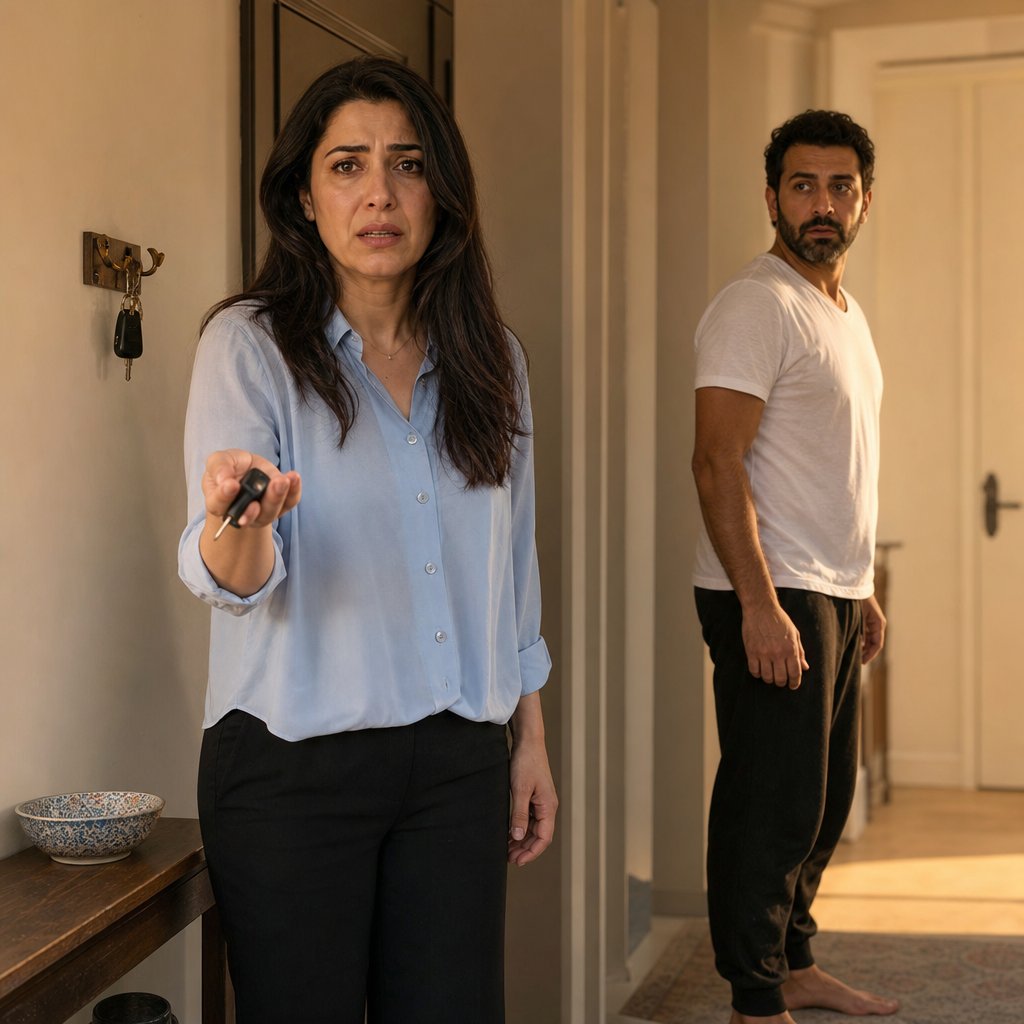
Two days later, the spare car key vanished from the hook by the door. Omar’s eyebrows lifted when I told him. “Maybe you moved it,” he said, too casual, like he was repeating a line he’d practiced.
I found it the next morning in the pocket of my gym bag—the gym bag I hadn’t opened in weeks—nestled next to an old hair tie, like someone wanted it to feel believable.
My hands shook as I held it up. “Do you see what’s happening?” I asked.
Omar didn’t answer. He just stared at the key in my palm, then past me toward the front door, like he was listening for the sound of another lock turning.
The Laundry Basket “Accident”
The day she escalated, I was on a work call in the small spare room, headset on, trying to sound normal while my life quietly imploded. I’d shut the door, but not all the way—because I still believed, stupidly, that my home was mine.
I heard it: the soft click of the lock, the hush of the door opening, the familiar shuffle of shoes that didn’t belong to us.
My stomach dropped straight through the floor.
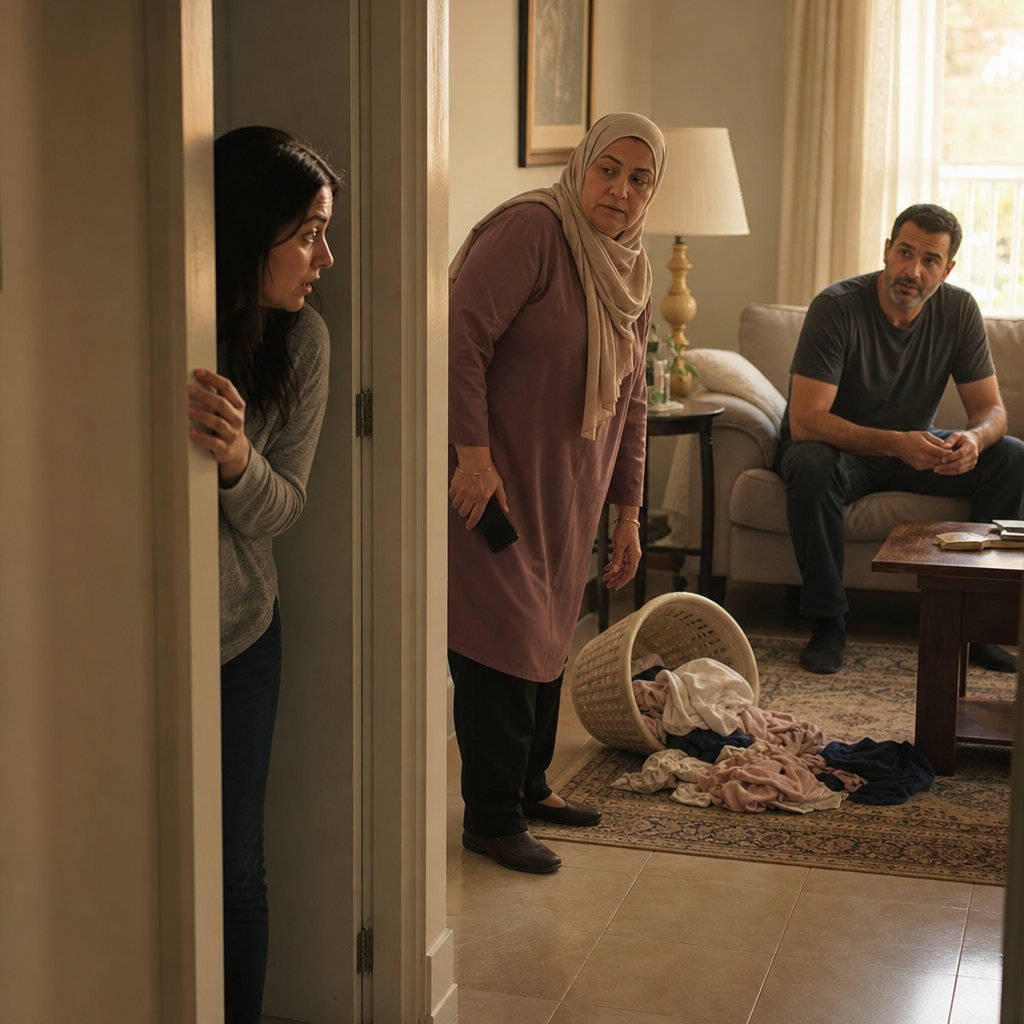
I muted myself and crept into the hallway. My mother-in-law stood in the living room in a pale mauve tunic and black pants, her hair tucked under a scarf like she was about to pray, not sabotage. She stared at the space like an inspector. Then she did something so petty and calculated I almost admired it.
She hooked her foot under my laundry basket—neatly folded towels on top, the one thing that made me feel like I had control—and tipped it. Slow. Deliberate. Clothes slid out in a messy spill across the rug.
Then she stepped back, hands up like she was innocent, like the mess had appeared by magic. She picked up her phone, angled it toward the chaos, and her face softened into that worried, saintly expression she saved for Omar.
I could practically hear the message she was sending without seeing it.
Behind me, my work call unmuted itself with a beep, and my boss’s voice floated into the hall—“Are you there?”—right as my mother-in-law turned her head toward the spare room door.
I Became My Own Witness
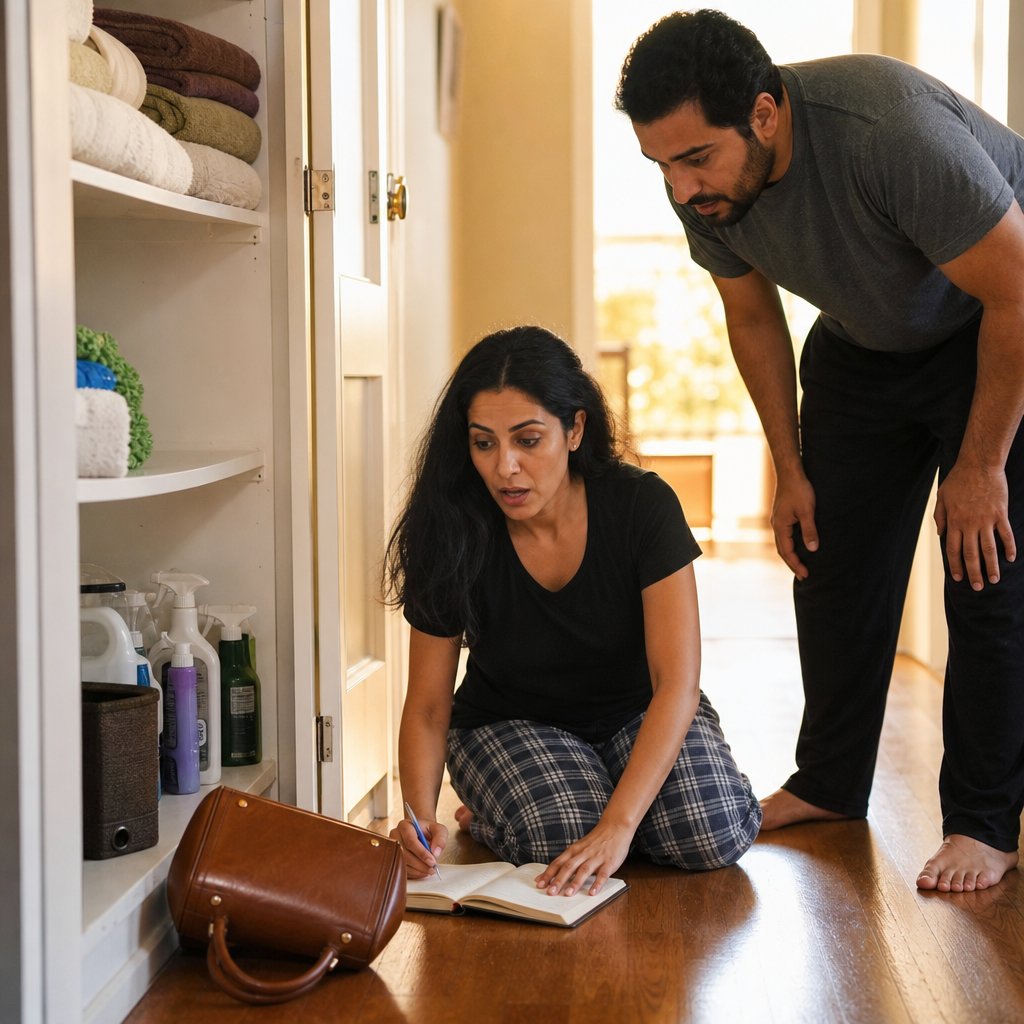
That night, I stopped begging to be believed and started building a file.
I bought a cheap notebook and wrote dates like I was testifying in court. Tuesday: badge missing. Found in cookbook. Thursday: spare key in gym bag. Saturday: laundry basket tipped. My handwriting got smaller the angrier I got, tight little letters pressed so hard the pen left grooves in the paper.
I took before-and-after photos of drawers, shelves, the recycling bin—angles that made my life look stupidly staged, like I was documenting a haunted house. I even started lining up pantry items exactly, labels facing forward, because if she moved one can, I wanted it to scream.
Omar watched me do it from the couch, his expression pinched, like my organization offended him more than his mother’s trespassing. “You’re making this worse,” he said, and I didn’t even look up.
“No,” I said quietly. “She’s counting on me looking crazy. I’m not giving her that.”
My phone stayed face-down on the table. I didn’t need it to light up for my heart to race. Every creak of the house sounded like a key turning. Every time Omar left the room, I wondered who he was texting and what version of me he was feeding them.
I opened the hall closet to put the notebook away, and something slipped from the top shelf—soft leather, familiar weight—landing at my feet with a dull thud.
It was my mother-in-law’s purse.
The Invoice In Her Purse
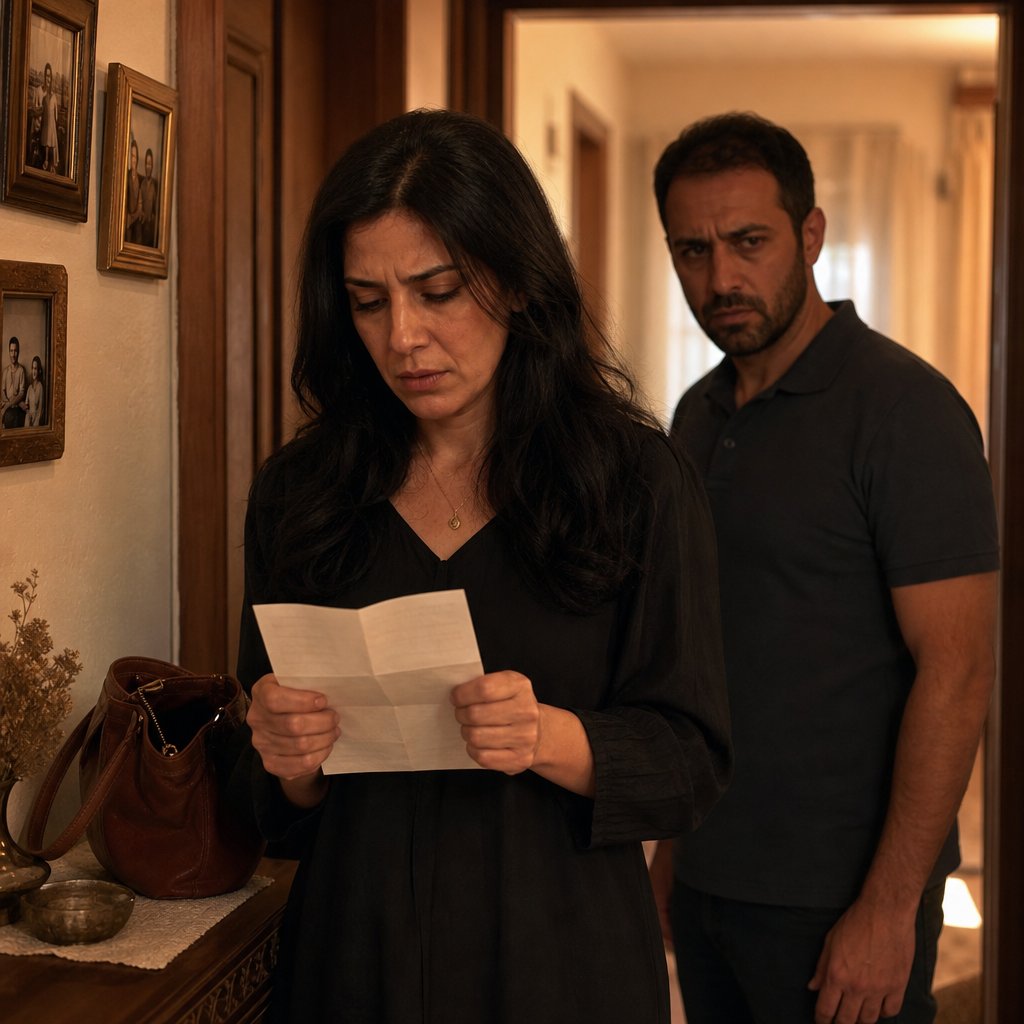
I stared at that purse like it was a snake. For a full five seconds I didn’t touch it, because some part of me still wanted to be the kind of person who didn’t go through someone else’s things.
Then I remembered she’d gone through my pantry, my bedroom, my marriage.
My fingers trembled as I lifted it. It smelled like powdery perfume and stale mints. The zipper made a loud, obscene sound in the quiet hallway, and I froze, listening for Omar’s footsteps. Nothing. Just the hum of the refrigerator down the hall.
Inside was the usual clutter—tissues, a compact mirror, a rosary-like string of beads. Then I found a folded slip of paper shoved into a side pocket, creased like it had been handled a lot.
I unfolded it carefully, expecting maybe a grocery list, maybe a doctor appointment. My eyes landed on the shape of it—formal layout, stamped lines, the kind of paper that meant money had changed hands.
A locksmith invoice.
My breath caught. Years ago she’d made a huge show of losing “the spare set.” She’d cried about it at dinner like it was a tragedy, swore she’d never forgive herself, swore she’d never be careless again. Omar had comforted her. I’d smiled like an idiot.
This invoice wasn’t old and dusty. It looked recent. Like she’d replaced keys on purpose. Like she’d planned a whole second entrance into our life.
I heard Omar’s voice behind me, too close. “What are you doing?”
I didn’t turn around yet. I just held the paper tighter, feeling the edge dig into my skin.
My Sister-In-Law’s “Help”

The next day, Layla showed up with a bright smile and a casserole dish like we were in some wholesome family sitcom. She was Omar’s sister—early 30s, glossy black bob, big innocent eyes that didn’t match how sharp her questions were. She wore a white linen blouse and high-waisted jeans, the kind of outfit that said I’m just here to support you.
“I heard things have been stressful,” she said, stepping inside without waiting for an invitation. Her gaze flicked to the corners of the room, like she was cataloging mess. Evidence. Ammo.
I kept my voice polite because I wasn’t going to give them the satisfaction of calling me hostile. “We’re handling it,” I said.
She set the dish down and leaned against the counter, casual. Too casual. “Do you guys ever… forget bills?” she asked, like she was asking if we liked spicy food. “Like, do you miss payments sometimes? It happens, right?”
My skin prickled. “No,” I said. “Everything’s on autopay.”
She nodded like she was taking mental notes. “And the recycling—Omar said there were bottles?” Her tone was light, almost teasing. “Is that like… friends coming over, or…?”
I stared at her. The casserole smelled like cumin and onions, and suddenly it made me nauseous. “We don’t keep vodka,” I said slowly. “And if you’re here to interrogate me—”
Layla lifted her hands, all innocence. “No, no, I’m on your side. I just want to understand.”
But later, when Omar walked in and Layla hugged him, I saw her glance at her purse on the chair—like she couldn’t wait to report back. Like my answers were already being rewritten into “admissions” the second they left my mouth.
Omar looked from his sister to me, conflicted, and Layla’s smile sharpened just a fraction as she asked, “So… where do you keep the spare keys, anyway?”
The Printouts In Her Purse
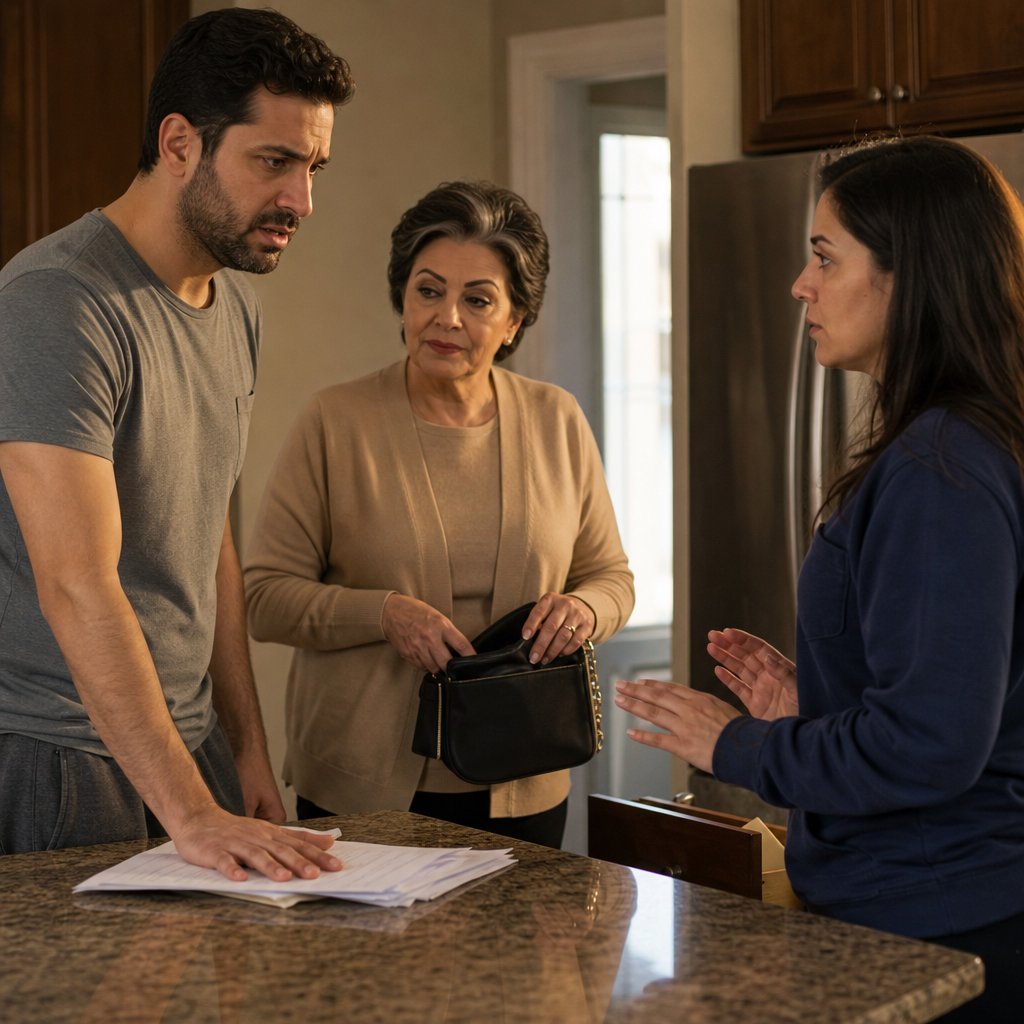
Layla asked where we kept the spare keys with that sweet, already-winning smile, and my husband—Omar, dark hair still damp from the shower, short beard neatly edged—didn’t even look at me when he said, “Top drawer by the fridge.”
My stomach dropped so hard I swear I tasted metal. Because the top drawer by the fridge was exactly where my taxes folder lived. Exactly where I’d seen it shifted last week, the manila edge peeking out like it had been yanked and shoved back in by someone in a hurry.
Layla’s mouth softened into pity like she was looking at a stray dog. She patted Omar’s arm—possessive, casual—and said, “Habibi, I didn’t want to be the one to tell you, but…” She reached into her purse and pulled out a thick stack of paper, already creased like they’d been read and reread. Printouts. My printouts.
She fanned them on our kitchen counter with her manicured nails, the papers whispering against the granite. “A hidden account,” she said, voice trembling on purpose. “Transfers. Numbers. And she keeps it with the taxes because she thinks you won’t look.”
Omar’s eyes flicked over the pages, then up to me—confused, hurt, that specific kind of hurt that makes a man go quiet. Layla leaned in, lowering her voice like she was protecting him from me. “It looks like she’s planning to leave,” she murmured, “and take everything.”
I opened my mouth to speak, but she slid one page forward like a prosecutor presenting Exhibit A, and Omar’s hand went flat on the counter—right on top of it—before I could even touch it.
“Why is this in our drawer?” he asked, and Layla’s smile barely moved as she added, “Ask her why the lock was still locked after I ‘stopped by.’”
The Envelope I Wanted Her To Take
I didn’t argue with Layla’s “evidence” that night. I watched Omar’s face—how it kept tightening, how he kept swallowing like he was trying to choke down betrayal—and I learned something ugly: Layla didn’t need the truth. She just needed a performance he could believe.
So I gave her one.
The next morning I took PTO with a smile so normal it scared me. I made coffee, kissed Omar’s cheek like we weren’t cracked straight down the middle, and waited until his car backed out. Then I pulled the top drawer by the fridge open and let it hang slightly ajar—just enough to look like a mistake.
I slid a thick envelope inside, tempting and obvious, like a secret begging to be stolen. Under the drawer’s lip, where you’d only notice if you were searching, I taped a tiny dye packet—one of those prank ones that explodes color when disturbed. I pressed it down with the flat of my thumb until the tape warmed and stuck, my hands steady even though my heart was sprinting.
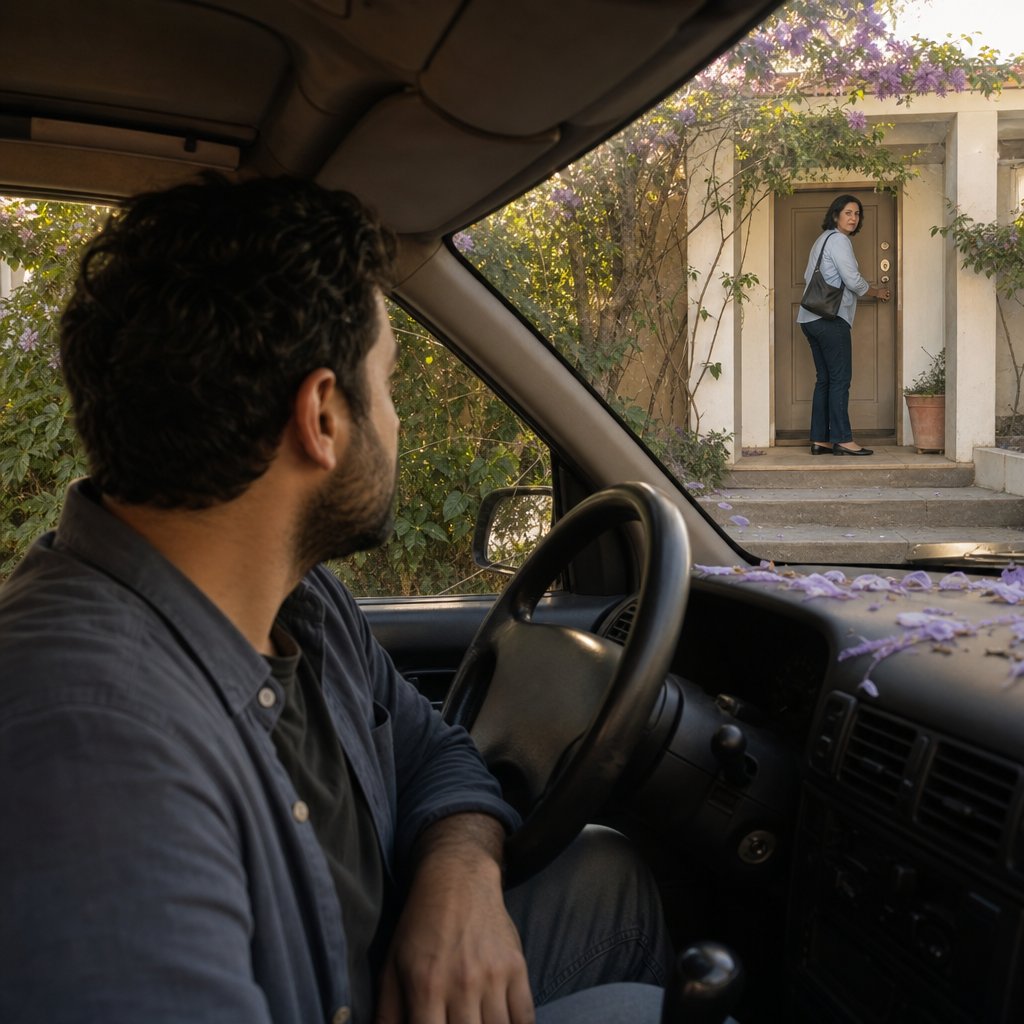
Then I left. Not far—just down the street, parked where I could see our front door through the leaves of a jacaranda tree. The purple blossoms had dropped onto my windshield like bruises.
I waited with my phone face-down in my lap, listening to my own breathing and watching our quiet house like it was a stage. Minutes dragged. My jaw ached from clenching.
And then Layla’s silver sedan turned the corner like she owned the block. She didn’t hesitate. She walked right up to our door, pulled out a key, and let herself in—no knock, no pause—like the house had always been hers.
My throat went dry as I watched her disappear inside, because I knew exactly where she’d go first.
The Color On Her Hands
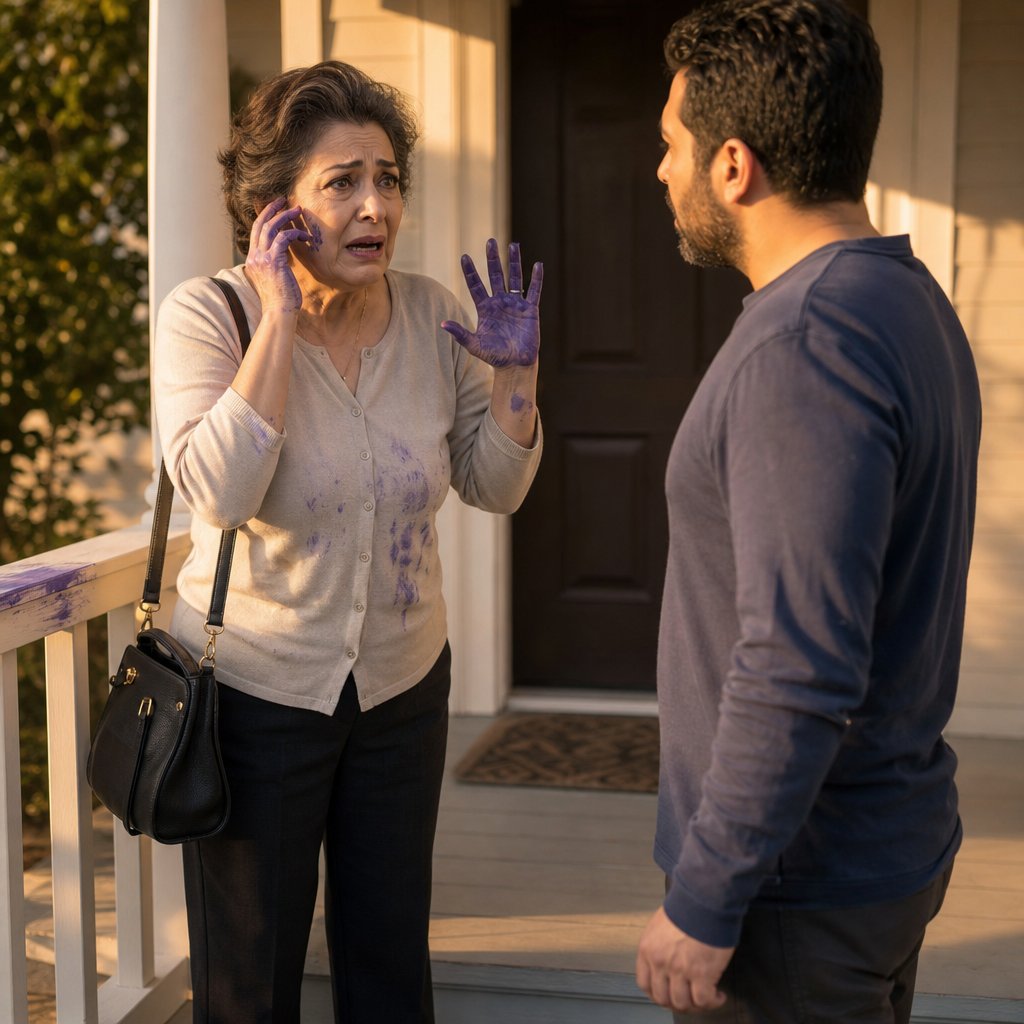
I didn’t breathe until I saw her again.
Layla burst out of my front door like the house had spit her out. She was clutching her purse with both hands, shoulders hunched, head snapping left and right like she expected the neighbors to jump out and accuse her. Even from down the street I could see it—bright, unnatural dye smeared across her fingers and palms, loud as a warning sign.
She tried to wipe it on her cardigan, then froze when it only spread. Her face twisted into panic, then fury, then something almost childlike—caught, cornered, humiliated. The afternoon air carried the faint smell of my neighbor’s cut grass, and it made the whole thing feel disgustingly normal for what it was.
She fumbled for her phone and hit call so hard I thought she’d crack it. She paced on my porch, dye flashing every time she gestured, leaving ghosty streaks on the strap of her purse. I put my own phone to my ear, thumb hovering, recording before my brain could talk me out of it.
Omar answered on speaker—his voice tinny, rushed. “Mom? What’s wrong?”
Layla’s sob came out perfectly timed, like she’d rehearsed it. “Omar, I—” She sucked in a breath, and then it happened: the slip she couldn’t take back. “I was inside because I had to check something. I didn’t mean—my hands—something exploded—”
There was a silence on the line so thick I felt it in my teeth. Layla kept talking, spiraling, trying to patch the hole she’d just ripped open with her own mouth. “I was protecting you,” she pleaded. “You know how she is—she hides things—”
I watched her smear dye across her cheek with a frantic swipe, turning her own face into proof, and I kept recording until my thumb cramped. Because now I had her voice admitting she’d been inside our home.
I ended the recording and stared at my front door, already picturing the dinner table, the way Layla’s eyes would widen when I played it—
—and my phone buzzed in my hand with Omar’s name calling back.
Would you confront her about secretly entering your home?