



The Ultrasound I’d Never Seen
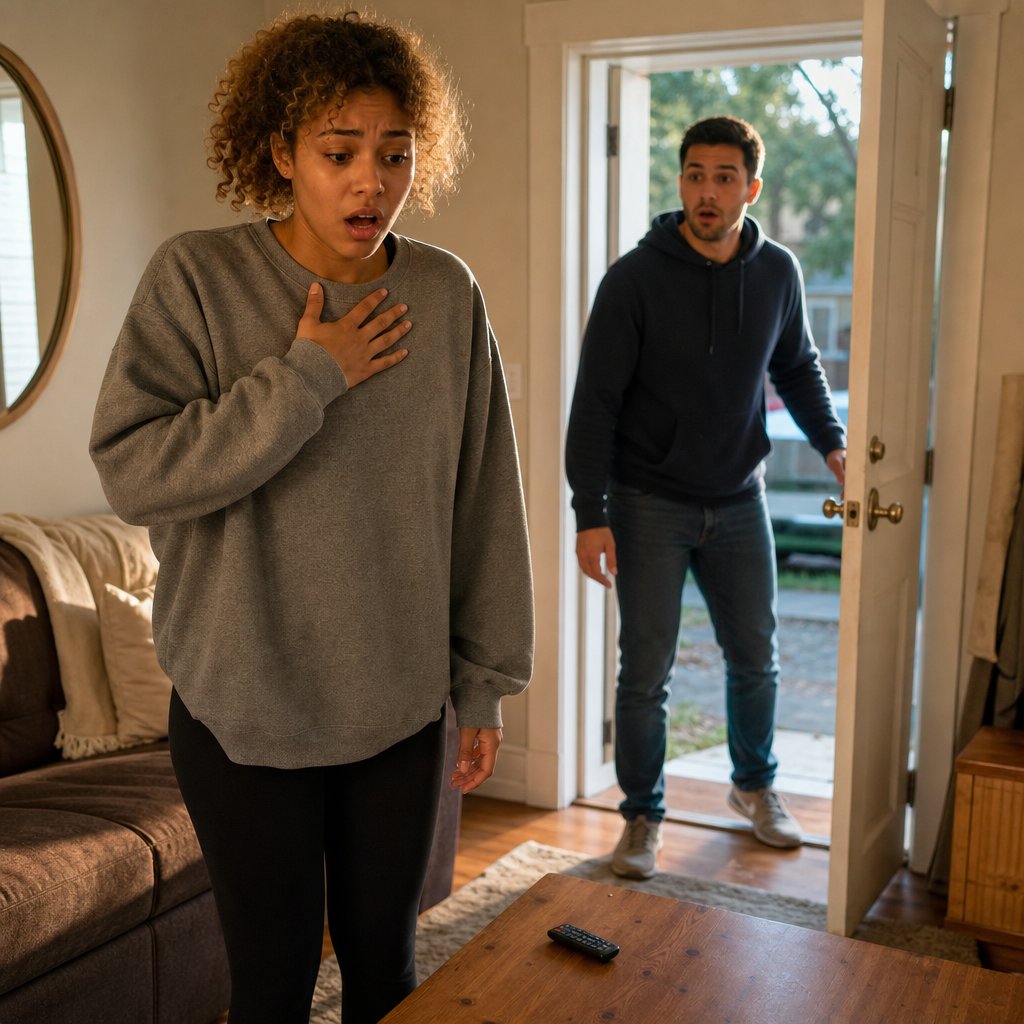
My own name popped up on the TV like a punchline, and for a second I thought I was hallucinating from stress. Then I saw it—Iris—right there in Grant’s family group chat, under a photo of an ultrasound I had never seen in my life.
Grant’s phone was on the coffee table, face-down like he’d been careful. But the TV was still mirrored from earlier, and the last thing on-screen hadn’t timed out yet. Lacey’s message sat at the top, cruel and casual, like she was reading a menu: “Tell Iris to clip another coupon for that baby she’s not having.”
My throat went tight. My skin went cold. I could actually hear the fridge hum behind me, loud in the silence, like the apartment was holding its breath too.
Then Grant’s reaction appeared—his stupid little laughing response, instant and automatic, like he didn’t even have to think before turning me into a joke. Right next to it, the ultrasound photo. A curved, grainy little comma of a life, timestamped in my mind as something that never belonged to me.
I stared so hard my eyes burned, trying to make it make sense—trying to find any version of reality where this wasn’t what it looked like—when the front door lock clicked and Grant called out, “Babe?” from the hallway.
And the TV was still glowing with my humiliation when his footsteps started toward the living room.
Behind The Passports
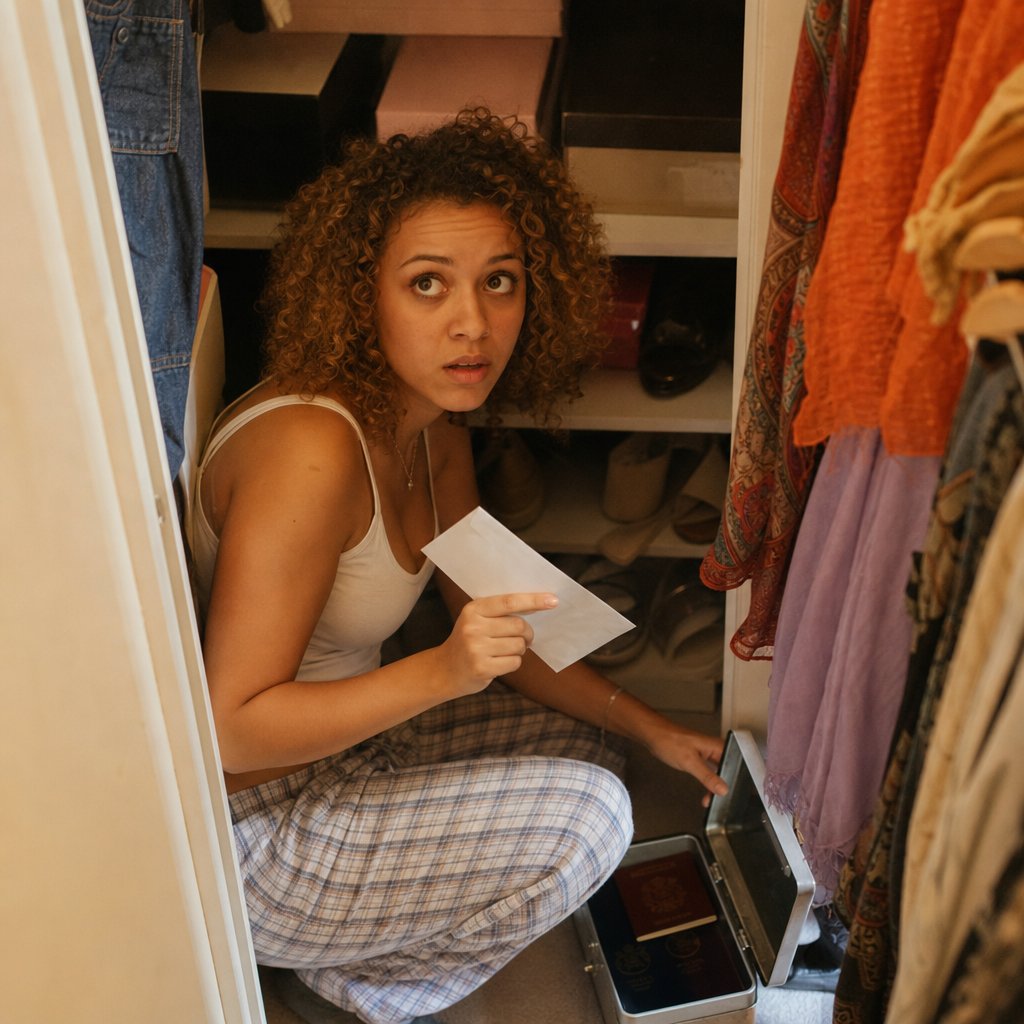
Hours earlier, I’d been kneeling on the closet floor with the spare key in my head like a simple task. Grant had sworn it was “somewhere safe,” which meant it was buried under his version of order: shoe boxes stacked like bricks, an old duffel that smelled faintly of cedar, and our lockbox shoved behind winter scarves.
I popped the lockbox and dug past our passports, my fingers brushing the stiff, familiar covers—mine scuffed at the corners, his still annoyingly pristine. That’s when I felt something smooth and new tucked behind them, like it had been placed there on purpose.
A bank envelope. Sealed. Not old, not forgotten. The paper was crisp enough to squeak when I slid it out.
Inside was a debit card with Grant’s name embossed like a quiet threat. Not our joint bank. A different one. Different colors. Different numbers. A second life in plastic.
I sat back on my heels, the carpet imprinting my knees through my leggings, and tried to breathe normally like this wasn’t evidence. Like it didn’t feel exactly like being lied to with a straight face for months.
We’d fought last week over a seventy-dollar grocery run. Seventy. He’d made me put back the good coffee like it was a moral failing.
My hand shook as I flipped the envelope over, looking for anything—an explanation, a clue, a reason—when I heard Grant’s car door slam outside.
I shoved the card into my pocket and stood up too fast, my head spinning, because I suddenly had to decide if I was going to pretend I hadn’t just found it.
Why Did He Snarl?

I didn’t even come at him screaming. I tried it calm—almost polite—because I wanted to see what he’d do when I didn’t give him an excuse to call me “emotional.” I held the envelope between two fingers like it was contaminated and said, “What is this, Grant?”
His eyes flicked to it so fast I felt it like a slap. Then his face rearranged into something casual, something practiced. “Oh my God. That? It’s just an old account.”
“An old account,” I repeated, slow. “So… why is the card sealed in a new envelope and hidden behind our passports?”
He exhaled hard through his nose like I was a child asking why the sky was blue. “Because I don’t use it. It’s not a big deal.”
My stomach turned. “Okay. Then give me the login.”
The shift was instant. His jaw tightened. His shoulders went rigid. The air in the kitchen felt sharp, like the room had grown edges. He stepped closer—not touching me, but close enough that I could smell his deodorant and the stale coffee on his breath.
“Why do you need the login?” he snapped, loud enough that the silverware in the drying rack seemed to rattle.
I blinked. “Because we’re married. Because you’ve been telling me we can’t afford basic things. Because I found a secret debit card.”
He laughed once, humorless. “So now you’re going through my stuff?”
Like my question was the betrayal. Like I was the one with something to hide.
He held his hand out for the envelope, palm up, impatient—an order dressed up as a request—and I realized he wasn’t asking if I wanted transparency. He was testing if I’d hand my power back without a fight.
The Manufactured Shortage

After that, the money got “tight” again—like it always did right after I questioned him. Not coincidentally. Not subtly.
Grant started narrating our spending like a sportscaster. “Do we need the name-brand?” at the grocery store, loud enough for the guy stocking cereal to glance over. He’d stand behind me at the checkout, watching the total climb, sighing dramatically like my existence was a line item. When I picked up shampoo that didn’t smell like hospital soap, he plucked it from my hand and replaced it with the cheapest bottle, the one with the cap that never closed right.
At home, he’d “forget” to transfer money into the joint account until the last minute, then act wounded when my card declined. “See?” he’d say, like the beep was proof I was irresponsible. The humiliation was so specific it felt engineered—declined at the pharmacy when I tried to buy cold medicine, declined at the gas station with three cars behind me, declined when I offered to cover coffee for my friend Maya.
Meanwhile, he still ordered lunch out every day. He’d come home smelling like fries and confidence, tossing the receipt without thinking. “It’s only twelve bucks,” he’d shrug, like that wasn’t the exact amount he’d made me put back in groceries.
I started keeping track in my head because I didn’t trust the numbers anymore. The shortage didn’t feel real. It felt like a leash—tightened when I pulled, loosened when I behaved.
Then one morning, I heard him jingle his keys by the door, and the sound was… wrong. Too many clicks. Too light. Like something new had joined the ring.
The Keys That Didn’t Fit
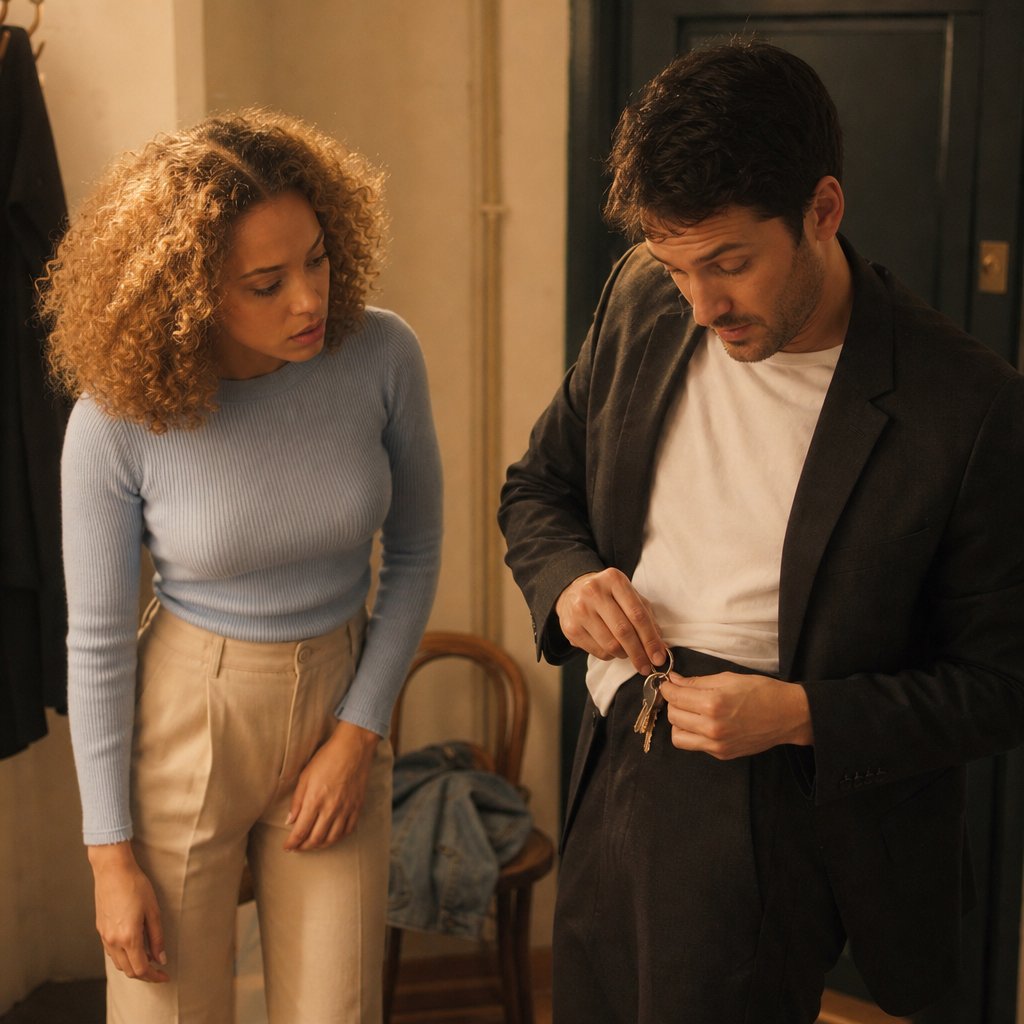
I noticed the second set of keys because Grant never stopped fidgeting with them. He’d spin them around his finger while he talked, like a magician distracting an audience. That morning, he was running late and doing everything with that frantic, self-important energy he used to make his chaos feel like my responsibility.
“Have you seen my—” he started, then cut himself off when his eyes landed on me watching his hands.
There they were: two tiny gold keys I’d never seen before, hanging off his ring like little secrets. Not our house key—ours was silver and slightly bent from the time he forced it in at the wrong angle. Not his office key either; that one had a black plastic head.
These were delicate. Almost dainty. The kind of keys that open something you don’t want rattling around in plain sight.
I reached out like it was casual. “What are those?”
He yanked his hand back too fast. Too sharp. “Nothing. Just… old keys.”
“Old keys to what?” I kept my voice light, but my heartbeat was loud in my ears.
He shoved them into his pocket with the rest of the ring, metal clinking against his belt buckle. “Why are you interrogating me first thing in the morning?”
Interrogating. Like I was the problem for noticing the new weight of his lies.
He kissed my forehead—quick, performative, like a stamp—and grabbed his jacket off the chair. The fabric brushed my arm as he passed, and I caught a faint smell of something sweet and powdery that wasn’t my perfume.
“I’ll be late,” he said, already halfway out the door.
And when it closed behind him, I stood there staring at the chair where his jacket had been, because something in me knew the answer wasn’t in the keys. It was in where they led.
The Receipt In His Pocket

I waited until his car backed out and the building settled into that quiet daytime emptiness. Then I went straight for the chair like it had called my name.
Grant’s jacket was slung over the back, casual, like he didn’t have a care in the world. I picked it up and felt the weight in the pocket—paper, folded. My fingers hesitated for half a second, long enough for guilt to try to crawl up my throat.
Then I remembered the ultrasound. The laughing reaction. The way my card had declined at the pharmacy while he ate lunch out like a king. The guilt evaporated.
I slid my hand into the pocket and pulled out a receipt, creased and warm from his body heat. It had that sharp, chemical smell of fresh printer ink. I didn’t even need to read every line to understand the one that mattered: a monthly storage unit payment across town.
Across town—nowhere near his office. Nowhere near his gym. Nowhere near the “I’m just running errands” loops he always narrated to me like I was his manager.
I stared at the numbers until they blurred, my thumb rubbing the paper like I could erase what it meant. A monthly payment. Not a one-time thing. Not a mistake. A routine expense, tucked into his life like it belonged there.
My mind went to those tiny gold keys. The second debit card. The manufactured shortage. It clicked together with an awful clarity: there was a place I wasn’t allowed to know about, and he was paying to keep it.
I folded the receipt back exactly how I found it, hands shaking, and shoved it into my bra because I didn’t trust my pockets.
Then I grabbed my own keys and walked out, locking the door behind me, because suddenly I didn’t care where he said he went.
I cared where he actually did.
He Arrived Like Clockwork
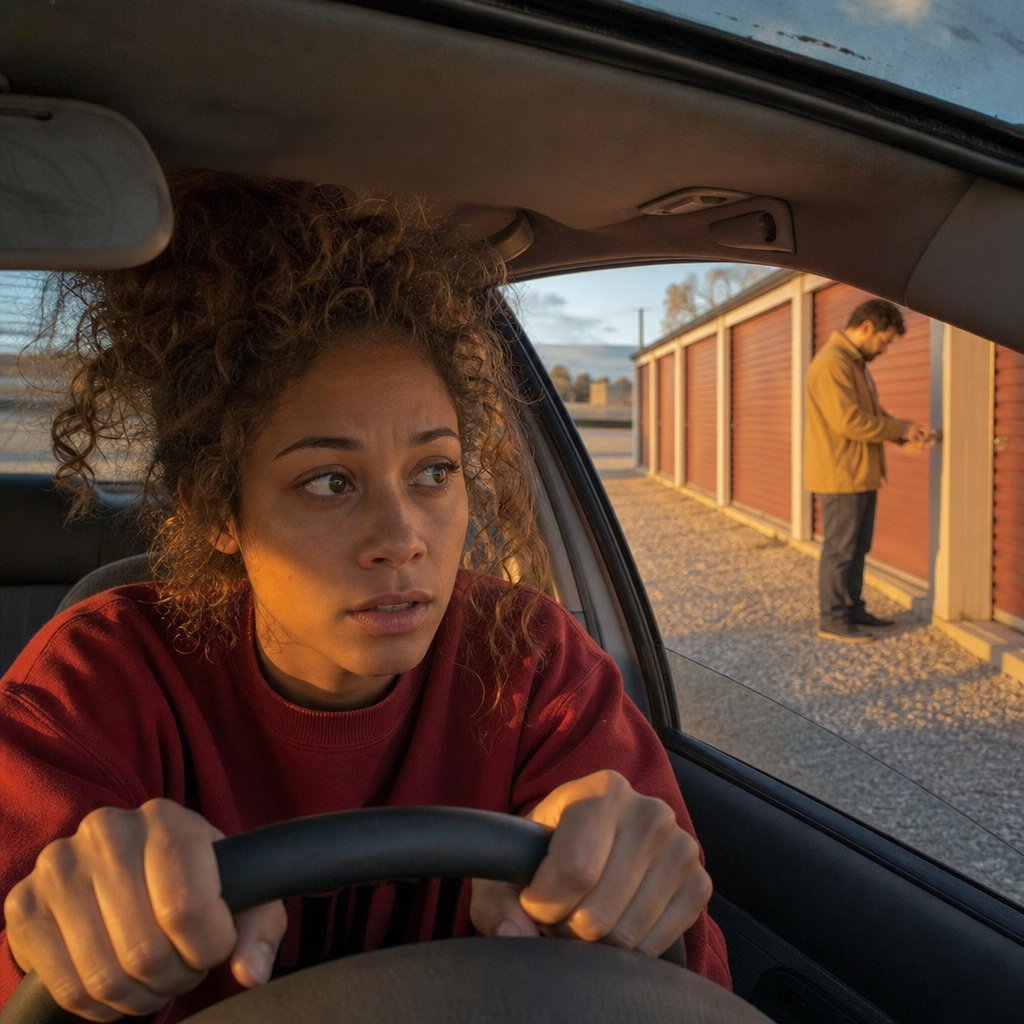
I sat in my car outside the storage facility and tried to swallow around my own heartbeat. The place was ugly and ordinary—chain-link fence, rows of metal doors, a sad little strip of weeds pushing through gravel like even the ground was tired.
My hands shook so badly I had to wedge them under my thighs to stop the tremor. I kept telling myself there was a harmless explanation. Old furniture. Work stuff. His dead dad’s boxes. Anything but what my gut was screaming.
Cars came and went, each one making my shoulders tense. I watched a woman in scrubs drag a plastic tote. A guy in a baseball cap wrestle with a mattress. Normal secrets. Normal lives.
Then, like the universe wanted to be cruelly efficient, Grant’s car turned in.
I knew it instantly—same dent near the rear wheel from the time he swore he “barely tapped” a pole. He didn’t hesitate at the entrance like a first-timer. He rolled through like it was a coffee run. Like this place was on his schedule.
My stomach dropped so hard I thought I might throw up. He parked two rows down from me, far enough that he wouldn’t casually spot my car… but close enough that I could see him clearly when he got out.
He looked relaxed. Relaxed. He stretched his arms, yawned, and walked toward the units with that keyring swinging from his hand, the tiny gold keys flashing once in the sun like a wink.
I ducked lower in my seat, my breath shallow, and watched him stop in front of a door. He didn’t look around. He didn’t check his phone. He just reached for the lock like he’d done it a hundred times.
The padlock clicked.
And the door started to lift.
The Boxes Were For A Baby

I didn’t walk up like some movie heroine. I moved like a thief in my own life—quiet, crouched, heart hammering so hard it made my ears ring. I kept to the row behind him, using the corners of the units as cover, my palms slick against the cold metal.
Grant lifted the door just enough to slide inside, like he knew exactly how much he needed and exactly how much he didn’t want anyone else to see. But he left a gap. A careless inch of truth.
I leaned in and looked through it.
Baby furniture boxes. Big ones. The kind with thick cardboard and reinforced corners. A crib. A stroller. I could tell by the shapes even without seeing any words. And stacked beside them—boutique shopping bags with stiff ribbon handles, the kind you only get when someone doesn’t flinch at prices.
My vision went hot and blurry. I thought about the way he’d made me put back the good coffee. The way he’d sighed over my shampoo. The way he’d said “we can’t afford it” like it was a law of physics.
Inside that unit, money sat in neat piles: new, expensive, untouched by our life. Not meant for our home. Not meant for me.
Grant shifted, and I heard the soft scrape of cardboard against concrete. He murmured to himself—something low and affectionate, like you talk to something you love. My stomach twisted so hard it felt like my organs were trying to leave.
He reached deeper into the unit, and a small object slid forward into the gap—something pale and folded, like fabric.
I held my breath, staring at it, because I knew if I saw what it was, I couldn’t unsee it.
The Overdrafts Didn’t Match
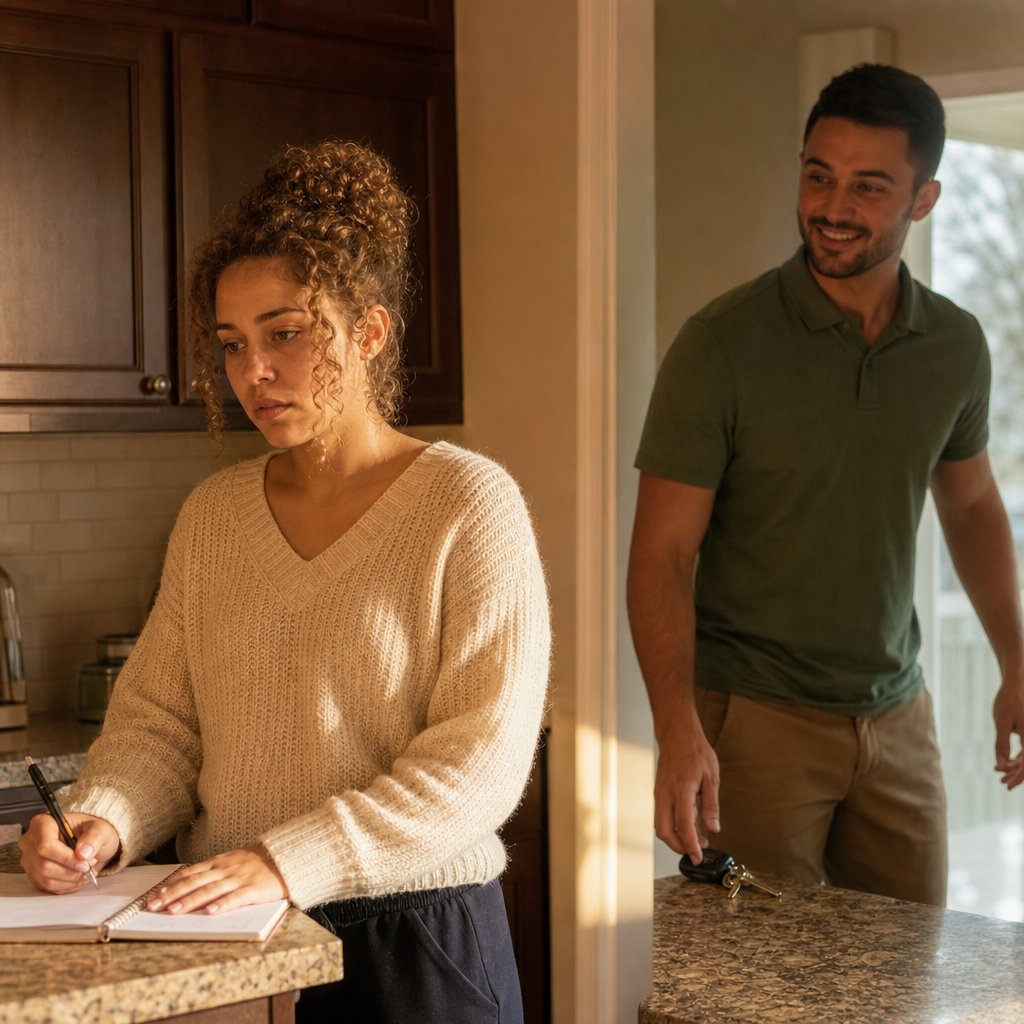
By the time I got home, my body felt like it was full of sand. Heavy. Gritty. I washed my hands twice like I could scrub off what I’d seen, but the image of those boxes stayed stuck behind my eyes.
I didn’t even take my shoes off. I went straight to the kitchen counter where Grant always tossed his wallet and keys, like the apartment was just a pit stop between his real life and the one he performed with me.
I opened our budget notebook—the one I kept because he’d trained me into thinking the problem was my spending. My pen hovered over the page, and I tried to make the math work in a way that didn’t make me feel insane.
Overdraft fees. Again. Little penalties that came with little shames. The pharmacy decline. The gas station decline. The grocery store “can you try again?” moment that made my cheeks burn.
And yet there was that storage unit payment, month after month, living somewhere else—funded by a stream of money that never touched our visible life. Like he’d built a separate pipeline just to keep me thirsty.
I stared at the numbers until my eyes ached, listening to the faint tick of the kitchen clock. Each tick felt like a second he’d stolen from me.
Then I heard Grant’s key in the lock. The familiar rattle—plus that lighter, newer clink of the tiny gold keys. He walked in whistling, like the day had been normal, and tossed his jacket onto the chair.
“Hey,” he said, cheerful. “How was your day?”
I looked at his face and realized something horrifying: he was calm because he thought he was still in control.
My mouth opened to speak—something sharp, something final—when his phone buzzed on the counter and he smiled at it like he’d been waiting for that exact message.
Added To Their Cruelty

The next part still makes my teeth clench, because it wasn’t even something I hacked or hunted down. It landed in my lap like an accident that revealed a whole crime.
I was folding laundry on the couch—Grant’s socks paired into neat little sets, mine in a wrinkled pile because somehow my needs always came last—when his phone buzzed again. He’d left it on the armrest. Face-down. Like he’d learned that lesson.
But the sound kept going, the insistent little vibration against the fabric, and I glanced up just as Grant called from the bathroom, “Can you hand me my phone?”
I picked it up, intending to toss it to him without looking. The screen lit for a second as I moved it—just long enough for me to see a notification banner: I’d been added to a family group chat.
My name was there. My full name. Like I was a new toy they’d invited into the room.
Another buzz. Another banner. Lacey again, and I didn’t need to read much to feel the sting: she was mocking my “coupon era,” dragging me for being “so brave” about budgeting, like my humiliation was content.
And then—right underneath—Grant’s reaction. That same laughing response. The exact casual cruelty he’d used on the ultrasound photo.
My hands went numb. I could hear the dryer tumbling in the background, steady and mindless, while my entire marriage rearranged itself into something uglier.
From the bathroom, Grant called out again, sharper this time: “Iris? Where’s my phone?”
I stared at the device in my hand like it was evidence in a trial, and I realized I had one chance to decide who I was going to be next.
The Ultrasound He Posted

“Give me my phone, Iris.” Grant’s hand was out, palm up, like I was a toddler who’d grabbed a knife.
I kept it just out of reach, my thumb hovering while his family group chat kept bubbling like a pot about to boil over. My heart was banging so hard I could feel it in my teeth. His sister Lacey—blonde, glossy, always wearing those too-perfect lash extensions—had just finished typing something smug when the chat suddenly went quiet for half a second.
Then Grant posted a photo.
Not a meme. Not a jab. An ultrasound.
I stared at the grainy black-and-white curve like it was a prank that forgot to be funny. The little crescent shape. The measurement lines. The sterile hospital look of it. My mouth went dry, and the room smelled faintly like the lemon cleaner I’d used on the counters an hour ago—like I’d been trying to scrub our life into something orderly.
Grant’s face drained so fast it was like watching someone realize they’d stepped off a cliff.
“Why would you post that?” I whispered, even though my voice wanted to scream.
His mom’s reply popped in immediately—too fast, too excited—while Grant lunged again, fingers curling for the phone, and I saw the caption under the ultrasound before he could block it…
He Fought For Evidence
“It’s not what you think.” Grant said it like a magic phrase that should erase the ultrasound from my brain.
I stepped back until my hip hit the kitchen island. The cold quartz edge bit through my hoodie. I flipped the phone facedown in my palm like it was suddenly radioactive, but I didn’t hand it over. He wasn’t looking at me—he was looking at what I had. That told me everything.
“Not what I think?” I repeated. “You posted an ultrasound to your family chat. Your family chat that I wasn’t even in until five minutes ago.”
His throat bobbed. He tried to smile, like we were negotiating a grocery list. “Babe, just—just give it back. You’re spiraling.”
Spiraling. The word hit like a slap because it was one of his favorites. When I asked about the second debit card? Spiraling. When I asked why we couldn’t afford a new water heater but he had cash for “work lunches”? Spiraling.
He took a step closer and reached again—faster this time—going for my wrist. His grip was too tight, too familiar, like he’d practiced it on every argument where he needed the conversation to end.
“Do not touch me,” I said, and my voice came out low and ugly.
His eyes flicked toward the hallway, like he was calculating exits, witnesses, angles. “Iris, please. If you read more, you’ll—”
“I’ll what?” I snapped. “Find out you’ve been planning a baby behind my back?”
His fingers closed again, and this time he went for the phone with both hands, desperate enough that the edge of my thumbnail scraped my own skin as I yanked away—
Helping Family, Supposedly
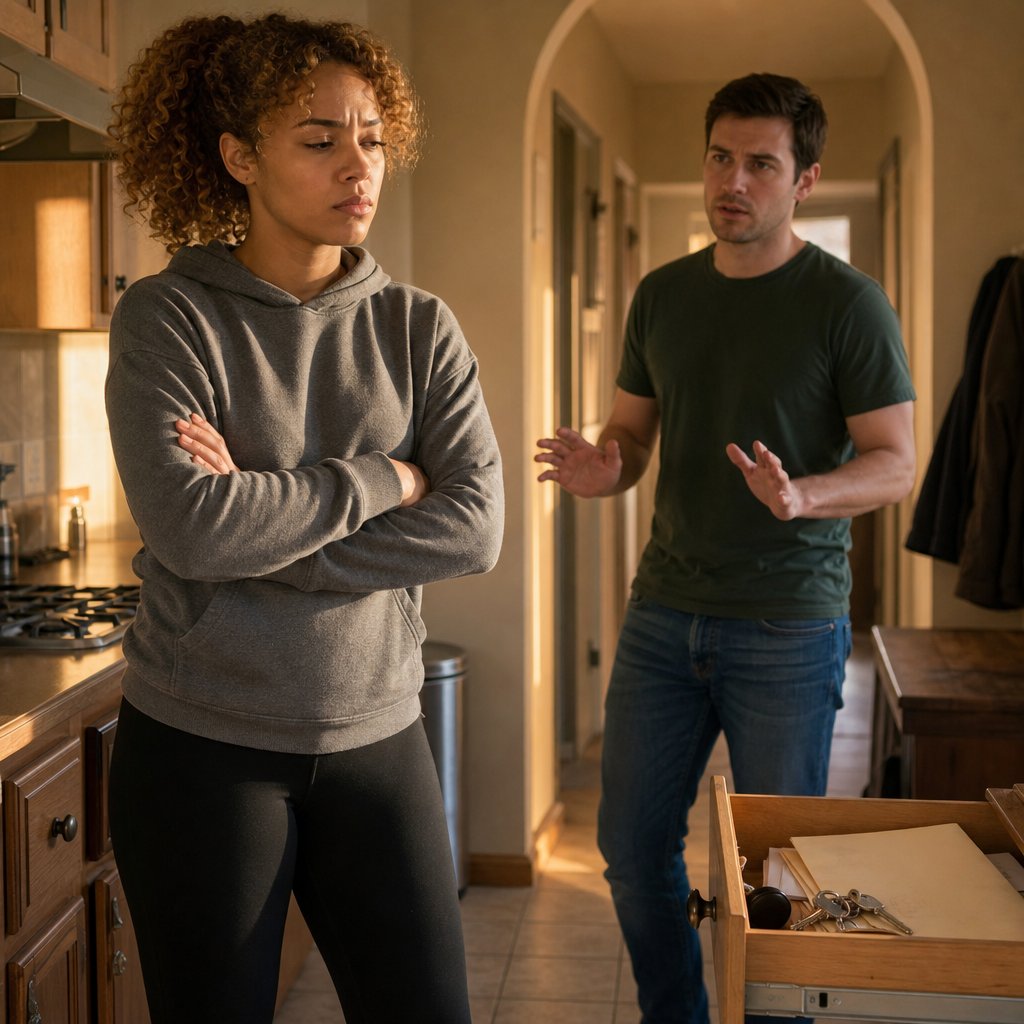
He finally let go like he remembered, too late, that grabbing me made him look exactly like what he was.
Grant dragged a hand down his face and paced two tight loops between the fridge and the pantry, like the kitchen had turned into a cage. “Okay. Okay. Listen.” He held both palms up, performative calm. “Lacey is pregnant.”
The words landed wrong. Not because I didn’t understand them—because I did. Because they explained too much and not enough at the same time.
“Lacey,” I repeated. “Your sister.”
He nodded hard, as if enthusiasm could make this reasonable. “She’s… she’s going through it. And Mom’s been stressed. I’m helping family. That’s it.”
I laughed once, sharp and humorless. “With a hidden bank account?”
His eyes flashed. “It wasn’t hidden. It’s—” He stopped, recalibrated. “It was just easier. You get anxious about money.”
That was the poison underneath every sentence: you can’t be trusted with the truth. I could taste it.
“So you told me we couldn’t replace the bald tires,” I said, each word precise, “because you were paying for… what? Prenatal vitamins? Baby clothes? A stroller?”
He exhaled like I was exhausting him. “It’s temporary.”
“Temporary doesn’t require a second debit card,” I said. “Temporary doesn’t require you lying to my face for months.”
His jaw tightened. “You don’t understand the situation.”
“Then explain it,” I said, and leaned forward so he couldn’t pretend he didn’t hear me. “Why did it need to be secret from your wife?”
Grant’s gaze slid away from mine—straight to the drawer where we kept our important papers—like the answer was sitting in there, waiting to betray him next.
The Address I Never Knew
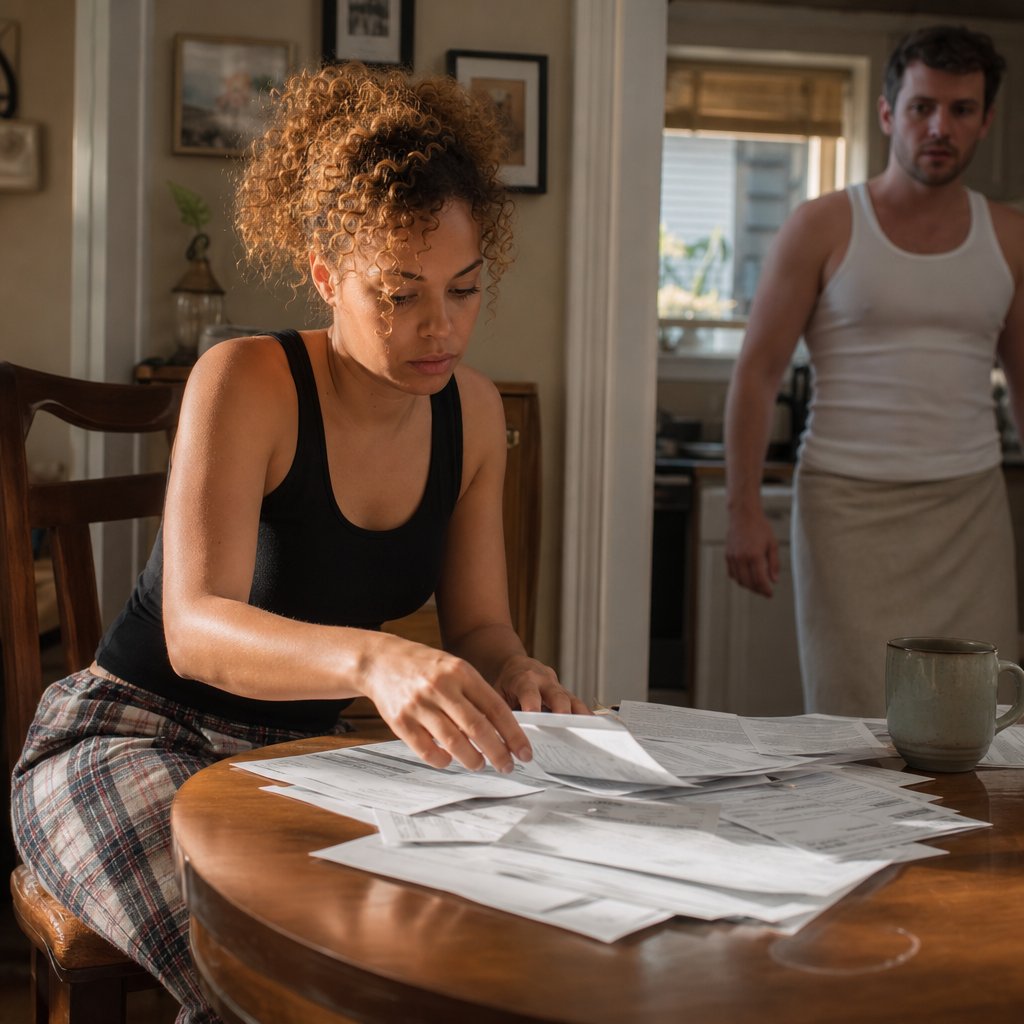
When Grant finally went to shower—like hot water could rinse guilt off his skin—I didn’t cry. I went hunting.
I pulled the file folder from the drawer he’d stared at and spread everything across the dining table like I was building a case. The paper edges rasped under my fingers. Tax returns. W-2s. That one random 1099-INT I’d never bothered to look at because it was always small numbers, boring adult stuff.
Except this time, it wasn’t boring. It was a breadcrumb.
I traced the line with my fingertip until I found it: interest income from an account I didn’t recognize. Not our joint. Not his known checking. Something else—something that had been earning just enough to exist quietly.
Then my eyes snagged on the address.
Not our house. Not his office. Not his mom’s place. A totally different address in town, formatted like it belonged to a mailbox place. My stomach rolled like I’d missed a step on the stairs.
I checked the prior year’s return. Same thing. Different amount, same mystery account, same address—like a signature.
Upstairs, the shower shut off. Pipes clanked. Grant started humming, casual as a man who hadn’t just detonated my marriage.
I sat there in the dining chair, papers fanned out, my hands steady in a way that scared me. Because if he’d been routing money through an address I didn’t know, that meant this wasn’t a panic decision. It was infrastructure.
I heard his footsteps on the stairs and slid the 1099 back under the stack, my pulse loud in my ears as he headed toward the table—
The PO Box Connection
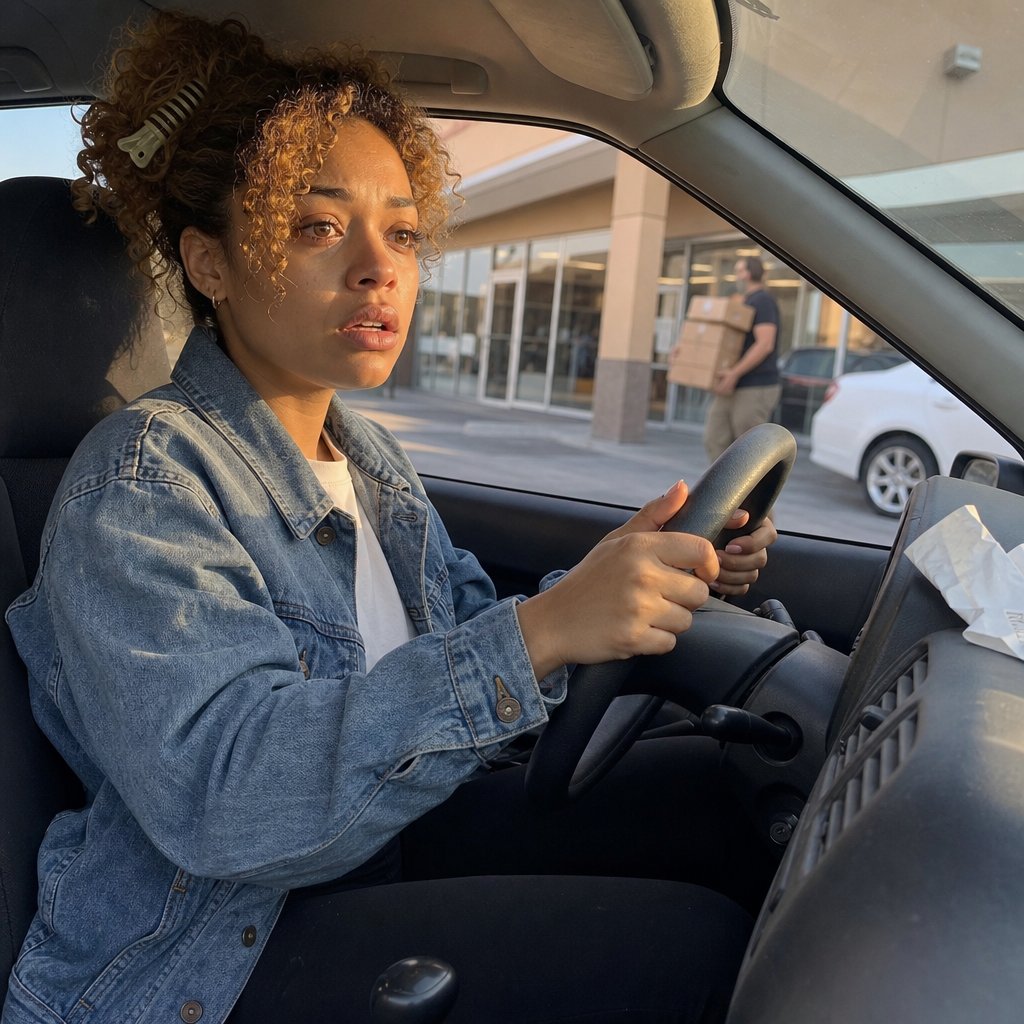
The next morning I drove to the address on the return like I was possessed. I didn’t even change out of spite-clothes: leggings, an old denim jacket, hair shoved up with a clip that kept slipping because my hands wouldn’t stop sweating.
It was a shipping-and-mail place wedged between a nail salon and a dry cleaner. Fluorescent-clean, too tidy, like secrets loved places that looked harmless.
“I’m trying to confirm a PO box holder,” I told the clerk, forcing my voice into polite-wife mode. My throat felt tight, like I’d swallowed a stone.
She hesitated, eyes flicking over me. “We can’t give out—”
“I have the address from our tax return,” I cut in, softer, like we were on the same side. “My husband’s name is Grant Harlow.”
Something shifted. Maybe pity. Maybe recognition. She turned the monitor toward herself, typed, and her eyebrows rose a fraction—the tiniest tell, but it punched me in the gut.
“He has a box here,” she said carefully.
My mouth went numb. “Just him?”
She swallowed and lowered her voice. “There’s… an authorized user.”
“Name?” I asked, already knowing. My nails dug crescents into my palm.
She glanced toward the back like she was checking who could hear. “Lacey Harlow.”
My vision tunneled. Helping family wasn’t a favor. It was a partnership. A coordinated system with paperwork and permission slips and a place to send things I was never supposed to touch.
I thanked her like an idiot and stumbled out into the parking lot, where a minivan door slammed nearby and the sound made me flinch. I sat in my car, hands shaking on the steering wheel, and realized the only way this made sense was if the mail—statements, cards, notices—had been going straight to her.
And if Lacey had access to his money like that, then what else did she have access to?
The Call I Almost Made

That night I sat on the edge of our bed with my phone in my hand, face-down on my thigh like it weighed a hundred pounds. Grant was downstairs watching something loud enough to pretend we were normal.
I had the bank’s number memorized from years of calling to ask why our balance never matched what he promised. My thumb hovered over the keypad. I could hear his voice in my head—his exact cadence—like I could slip it on and impersonate him. All I needed was a birthday, a security question, a confident “yes.”
And for a sick moment, I wanted to do it.
I pictured myself saying, “Hi, this is Grant,” and the universe not striking me down. I pictured finally seeing the statements, the transfers, the names. I pictured the relief of proof.
Then another picture flashed: handcuffs. Court. My mom’s face when she realized my marriage had pushed me into a felony just to get the truth my husband owed me for free.
I set the phone on the nightstand so hard it thunked against the wood. My hands were shaking. I pressed my palms to my eyes until I saw stars.
This was the part no one talked about—how betrayal didn’t just hurt you. It tempted you. It dared you to become someone you didn’t recognize just to stop feeling stupid.
Downstairs, Grant laughed at something on the TV. A bright, easy laugh like he didn’t have a second life running parallel to mine.
I stared at the ceiling and realized I needed someone who could look at numbers without flinching. Someone who could dig without me crossing a line.
Because if I made that call, I wouldn’t just be married to a liar.
I’d be his accomplice.
The Money Was Diverted
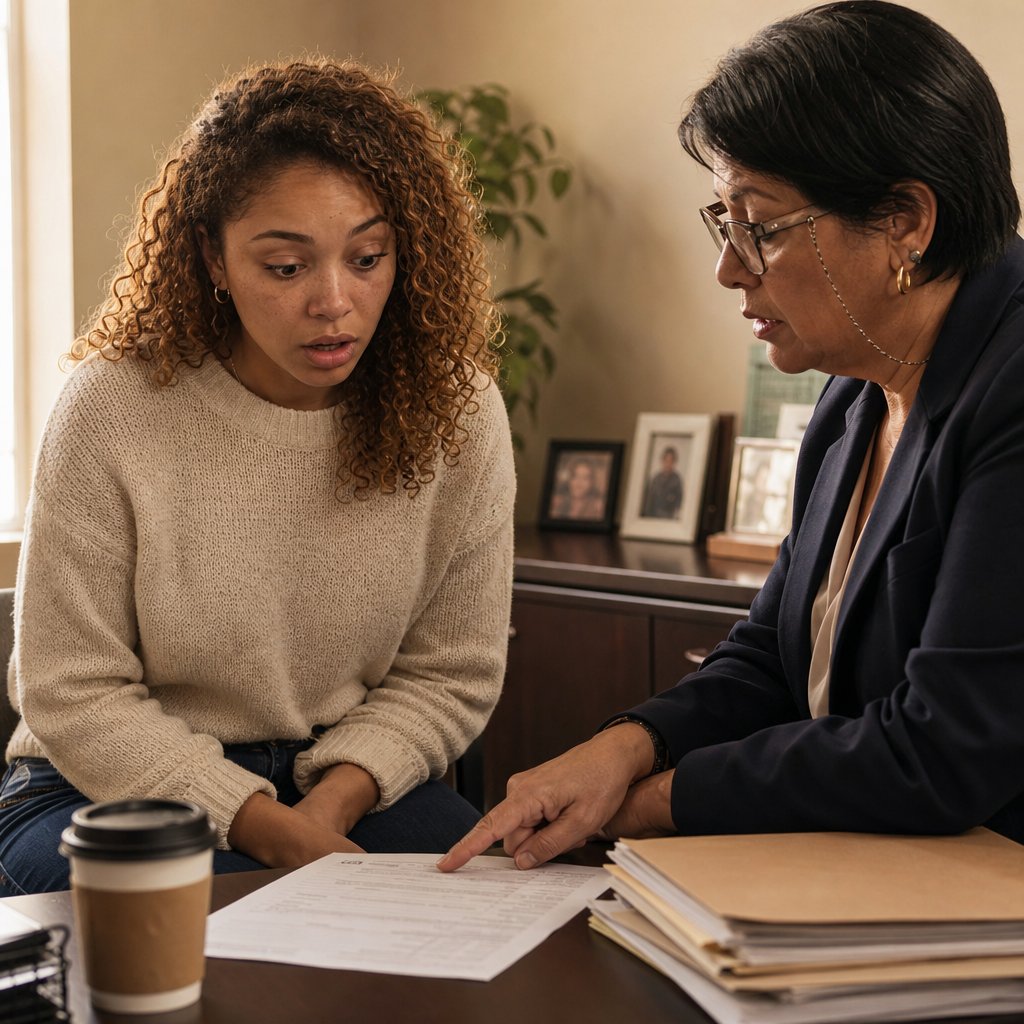
I met the forensic accountant two days later in a quiet office that smelled like burnt coffee and printer toner. Her name was Marisol—mid-40s, sharp bob haircut, reading glasses on a chain—and she looked at my folder like it was a body on a table.
“Tell me what you know,” she said, clicking a pen.
I told her everything. The second debit card. The lies about being broke. The ultrasound. The PO box with Lacey authorized like she was a spouse.
Marisol didn’t gasp. She didn’t judge. She just nodded and started building a timeline with the calm of someone who’d seen a hundred versions of my shock.
“Here’s the part that matters,” she said, tapping my bank statements with the pen. “This isn’t overspending after the money hits your joint account. His paycheck is being split before it lands.”
I blinked. “Before?”
“Direct deposit allocation,” she said. “One portion to the joint. Another portion to the account you didn’t know existed. That’s not an accident. That’s a decision made with HR paperwork.”
My stomach dropped so hard I had to grip the chair. I could suddenly see it: every time he’d shrugged and said, “Taxes were weird this month,” every time he’d acted confused about why the joint was low. He hadn’t been confused. He’d been performing.
Marisol slid a page toward me—highlighted numbers, neat columns. “He’s siphoning. And because it’s automated, he doesn’t have to ‘transfer’ anything and risk you noticing.”
I stared at the columns until they blurred. The betrayal wasn’t impulsive. It was engineered.
Marisol leaned in, voice quieter. “Now we figure out where the diverted portion is going. And Iris—” her eyes sharpened—“it’s usually not just diapers.”
Not Baby Stuff At All

Marisol didn’t just “trace” the money. She followed it like a blood trail.
“Look at the merchant patterns,” she said, sliding another summary across the desk. “Rent payments. Utility accounts. A car insurance policy.” She paused on that last one, letting it hang.
“Car insurance,” I repeated, my voice thin. “We have car insurance.”
“Not this one,” she said. “Different policy. Different vehicle. Not tied to your household.”
My hands went cold. I pictured our own car—old, dented, the air conditioner that wheezed like it had asthma—while Grant told me we couldn’t afford to fix it. Meanwhile he was paying to insure a vehicle I’d never seen.
“So who is he supporting?” I asked. The question came out like I was asking about the weather, because if I let emotion in, I was going to crack in half.
Marisol’s expression didn’t soften. That was almost worse. “Someone with bills. Someone with a lease. Someone who needs a car.”
I heard Grant’s voice in my head again: It’s just helping family. Helping family doesn’t look like a full second household. Helping family doesn’t require utilities in someone else’s name paid like clockwork.
Marisol tapped the page. “The insurance payments include a VIN reference in the transaction memo sometimes. It’s truncated here, but it’s a start. If you can find a full VIN anywhere—an email, a document—then we can match it to a vehicle.”
A sensory memory hit me out of nowhere: the smell of Grant’s cologne on his jackets when he came home “from work,” too late, too cheerful. Like he’d been somewhere he wanted to impress someone.
I gathered the pages with fingers that didn’t feel like mine. A VIN. An email. A laptop.
And suddenly I wasn’t thinking about diapers at all.
I was thinking about whose driveway that insured car was parked in right now.
The Car At Her Complex
I waited until Grant fell asleep with his mouth slightly open, like a man who’d never lost a minute of rest to his own lies.
I sat at the kitchen table with his laptop in front of me, my hands steady in a way that made me feel dangerous. I didn’t even have to guess the password. Of course it was the same one he used for everything—because he never imagined I’d stop trusting him.
I searched for anything that looked like insurance. Registration. A quote. A confirmation email. My eyes burned from staring too hard, my jaw clenched so tight it ached.
And then I found it: a message with a string of numbers and letters that made my skin prickle. The VIN. The whole thing.
I wrote it down on the back of a grocery list, the pen digging so hard it almost tore the paper. I didn’t feel like a wife anymore. I felt like a detective in my own house.
The next afternoon, I drove to Lacey’s apartment complex with the VIN memorized like a prayer. The parking lot was packed. I walked rows like I was shopping for a car I already owned.
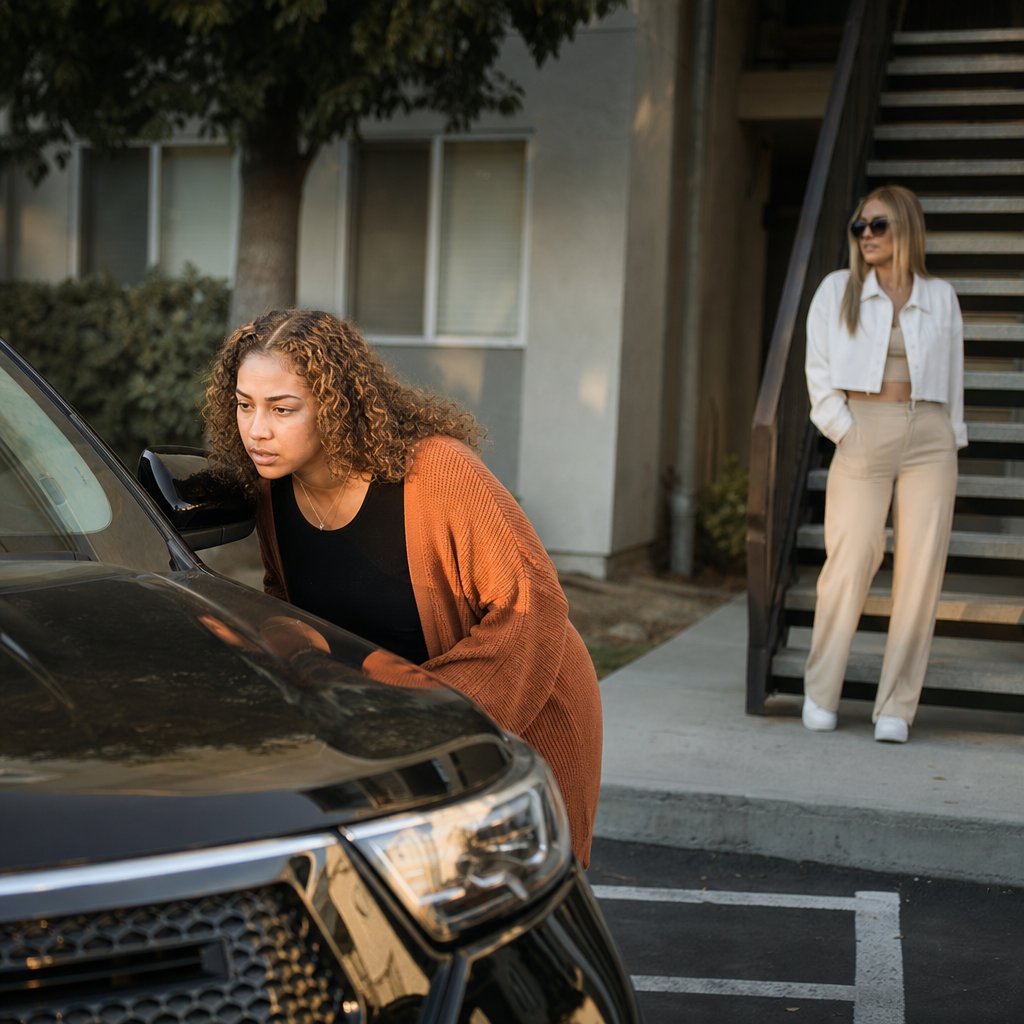
Then I saw it: a brand-new SUV, paint still glossy, parked crooked like someone who’d never had to worry about door dings. I leaned in and checked the tiny plate on the dashboard corner—numbers matching my scribble—my stomach flipping with vindication and nausea.
Lacey stepped out of a stairwell at the far end of the lot, sunglasses on, phone in hand, and paused like she sensed me. She angled her body toward the SUV and lifted her chin, that smug little smile already forming.
She posed beside it like it was a trophy she’d won.
And when her eyes met mine across the asphalt, she didn’t look surprised.
She looked like she’d been waiting for me to find it.
Nursery Talk Over Pot Roast
Grant showed up the next day with flowers so expensive I could smell the guilt under the perfume. He set them on the counter like an offering, like petals could patch a hole he’d cut straight through our life.
“Date night,” he announced, too bright. “Just us. I made reservations.”
I stared at the bouquet—tight white roses, baby’s breath, a satin ribbon—while my mind replayed the SUV’s glossy paint and Lacey’s smirk. “I want the bank statements,” I said.
His smile didn’t drop. It just tightened. “Why are you doing this?”
Because you’re funding someone else’s life, I thought. Because your sister is authorized on your PO box. Because you posted an ultrasound like a victory lap. Out loud I said, “Because I’m your wife.”
He kissed my forehead like I was fragile. Like I was the problem. “Let’s not ruin the weekend,” he murmured.
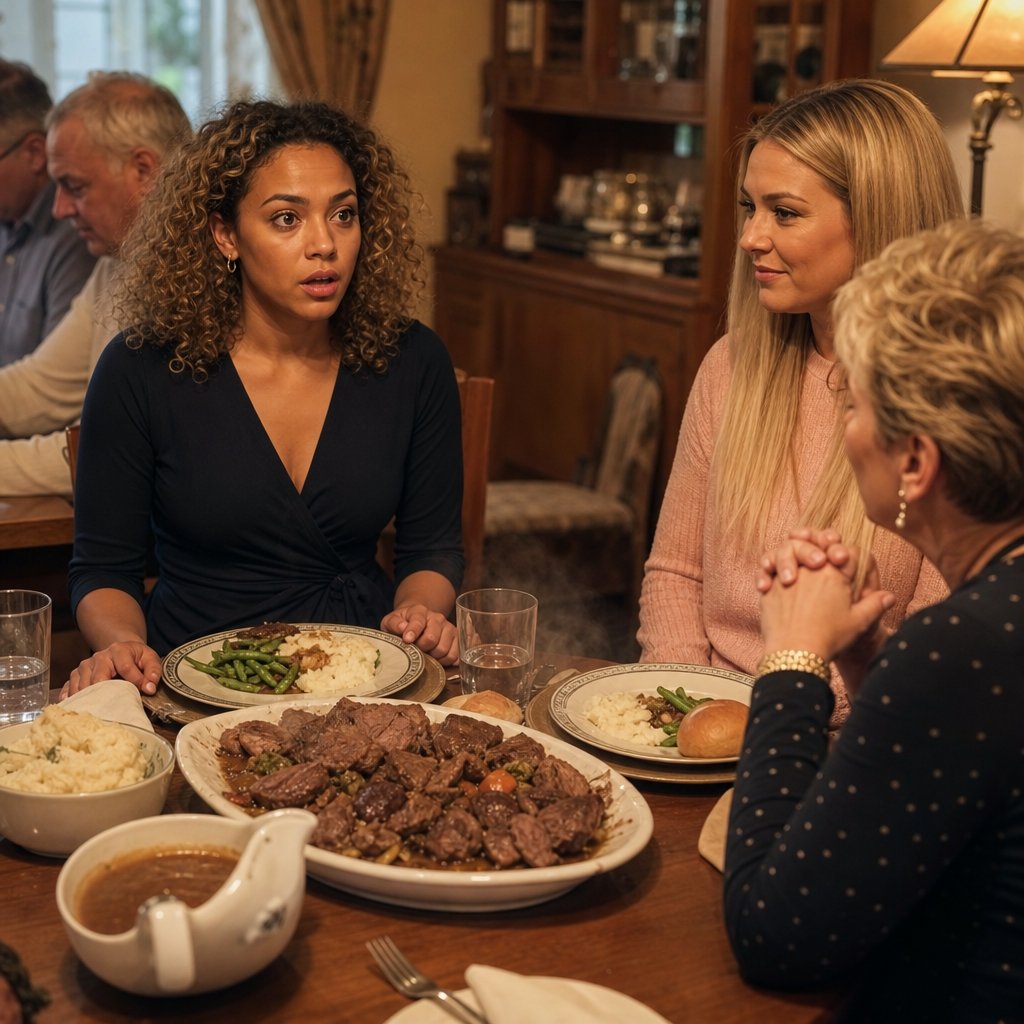
Sunday dinner at his mom’s house was a performance I didn’t audition for. The table was crowded with family and the smell of pot roast and onion gravy clung to everything. Lacey sat across from me in a soft pink sweater, hair glossy, nails perfect. She kept touching her stomach in this absent little way that felt rehearsed.
Halfway through, she leaned toward Grant’s mom and said, casual as breathing, “I think the nursery should be sage green, not gray. Gray feels… sad.”
Silence hit the table like a dropped plate.
Lacey’s eyes slid to me—slow, deliberate—watching my face like she was waiting for the exact second I broke.
Grant’s fork froze midair.
And his mother turned to me with a smile that didn’t reach her eyes and said, “Oh honey… he hasn’t told you yet?”
The Deposit Date Didn’t Lie

Grant’s mother dabbed her napkin at her mouth like she’d said something perfectly normal. “He hasn’t told you yet?” she repeated, eyes sliding to Grant, then to his sister, Lacey—who suddenly got very interested in her mashed potatoes.
My fork paused midair. The air smelled like gravy and that lemony cleaner she used on her dining table. Grant’s jaw tightened in that way that always meant: don’t embarrass me.
“Told me what?” I asked, sweet enough to make my own teeth ache.
His mom blinked, too late realizing she’d stepped on a landmine. “Oh. Nothing. I just… assumed.”
Grant laughed once, sharp. “Mom. Seriously?”
I watched Lacey’s hand tremble as she reached for her water glass, the ice clinking like a warning bell. That tiny sound followed me all the way home. Because there was a “yet.” There was a plan. And I was the last to get the memo.
Two days later, I sat in a beige office that smelled like toner and stale coffee while a no-nonsense accountant named Mr. Patel flipped through statements from the second account I’d finally gotten access to.
He tapped one line with his pen. “This is… interesting.”
“What?” My voice came out thin.
“A private-school admissions deposit,” he said, turning the page toward me. “Paid months ago. And it predates the transfers you mentioned.” He looked up. “You said your husband claimed this started when he was ‘helping Lacey’?”
My stomach dropped as if the chair had disappeared. Because the deposit date sat there like a bruise—quiet, undeniable, and way older than any story Grant had fed me.
Mr. Patel’s pen hovered over the next page. “Do you want to see what else was paid before that?”
I opened my mouth, and the only thing I could think was: what kind of father plans a school deposit before he even admits there’s a baby?
The Lease Packet In Lacey’s Bag
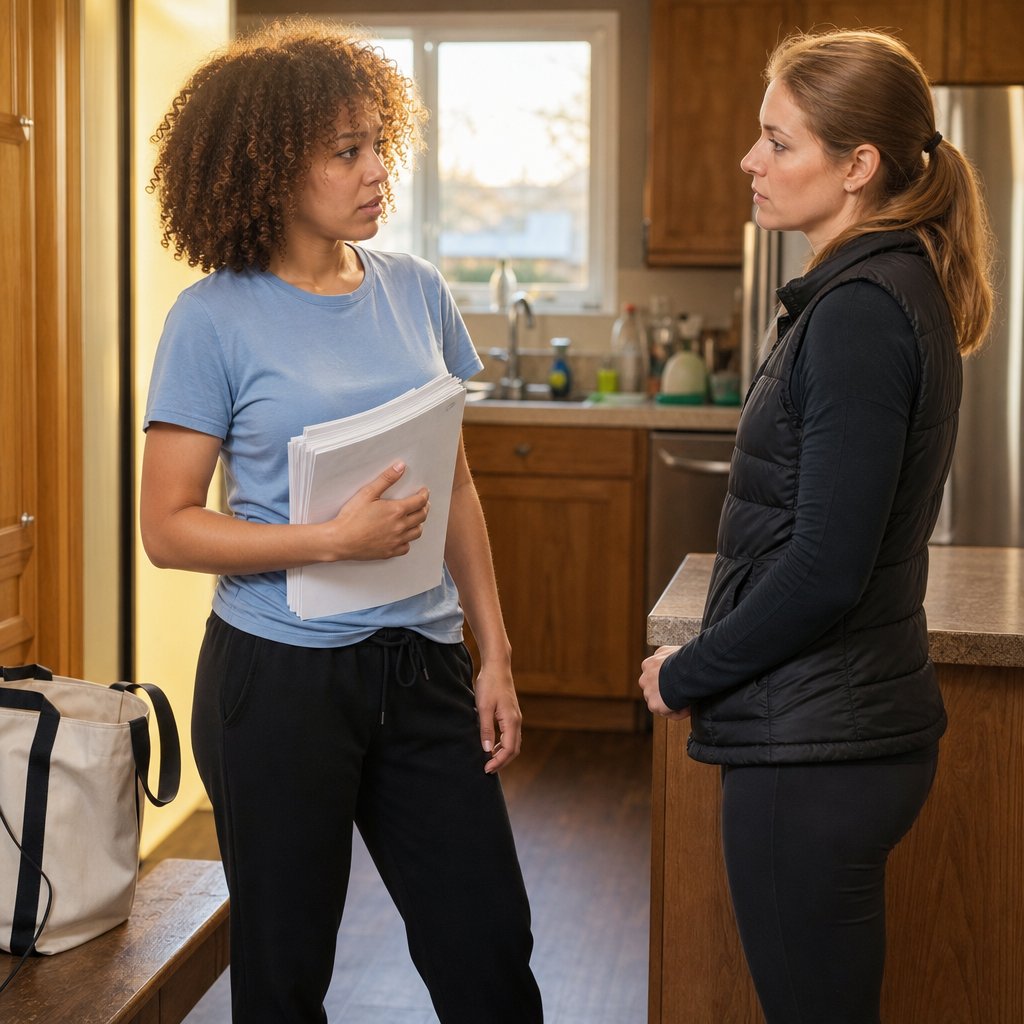
Mr. Patel didn’t even have to say “I told you so.” His eyebrows did it for him as he slid another stapled packet across the desk. It wasn’t a bank statement this time. It was thick—too thick—and it smelled faintly like that plasticky ink you get from fresh copies.
“This was attached to the payments,” he said. “Same account.”
I took it home and didn’t open it right away. I waited until I had a reason to be in the same room as Lacey without Grant hovering. She came by “to drop off Mom’s casserole dish,” wearing leggings and a puffy vest, all innocent errands and sisterly smiles.
Her tote bag slumped on my entryway bench. Heavy. Paper-heavy.
When she went to the bathroom, I slipped my fingers inside the bag like I was stealing my own life back. The packet was right there, corner bent, the kind of thing you don’t carry around unless you’re terrified someone will find it.
I opened it on my kitchen counter. Lease forms. A move-in checklist. A page of signatures.
Grant’s name was on it.
Not just as a reference. As a co-signer.
My throat went tight. He’d told me we couldn’t replace our broken dishwasher because “we need to be careful,” but he’d put his name—our name—on an apartment for Lacey like it was nothing.
Then I saw the emergency contact section. I expected their mom. I expected a cousin. Anyone but—
Grant. Listed as the emergency contact, like the person you call when your real partner doesn’t pick up.
I heard the bathroom faucet turn off. Footsteps. Lacey humming under her breath like she wasn’t carrying a whole second life in her tote.
I shoved the packet back just as she came into the kitchen, smiling too hard. “Everything okay?” she asked, eyes flicking to my hands.
I looked at her and realized she was waiting to see if I’d caught it. And that meant she already knew exactly how bad it was.
The Other Name On It

I didn’t sleep. I lay there listening to Grant’s breathing like it was a metronome counting down to something awful. In the morning, I waited until he left for work, then drove to the bank like my hands weren’t shaking on the steering wheel.
I’d learned the rules of his system the hard way: everything “for family” was vague, everything that mattered was hidden behind someone else’s name.
The banker—young, neat, polite—pulled up the secret account details without looking at me like I was insane. Maybe she’d seen this story before. Maybe she’d even starred in it.
“There’s an authorized cardholder,” she said, scrolling through paperwork on her side. “Not the primary account holder. Different name.”
My mouth went dry. “Who?”
She read it out loud.
And I swear, my entire body went cold in one wave.
It wasn’t Lacey.
It was Maren Fields.
Maren from Grant’s office. Maren who’d come to our holiday party wearing a cream sweater and gold hoops, smiling at me like we were friends. Maren who’d squeezed my arm in the kitchen while I refilled the cheese board and said, “You’re so lucky, Iris. Grant talks about you like you hung the moon.”
I’d replayed that line a hundred times since finding the second debit card, wondering if it was just office-chit-chat. It hadn’t been. It had been a test. A little toe on my boundary to see if I’d flinch.
I forced my face to stay calm as the banker slid the printed form toward me. My fingers left faint sweaty marks on the paper.
“Do you want a copy of the authorized user documentation?” she asked softly.
Behind me, the bank door chimed. Someone walked in laughing, normal life spilling into my nightmare. I didn’t turn around. I just stared at the name, at the neat black letters, and felt something inside me snap into focus.
Because Lacey wasn’t the secret. She was the cover.
The Registry That Matched
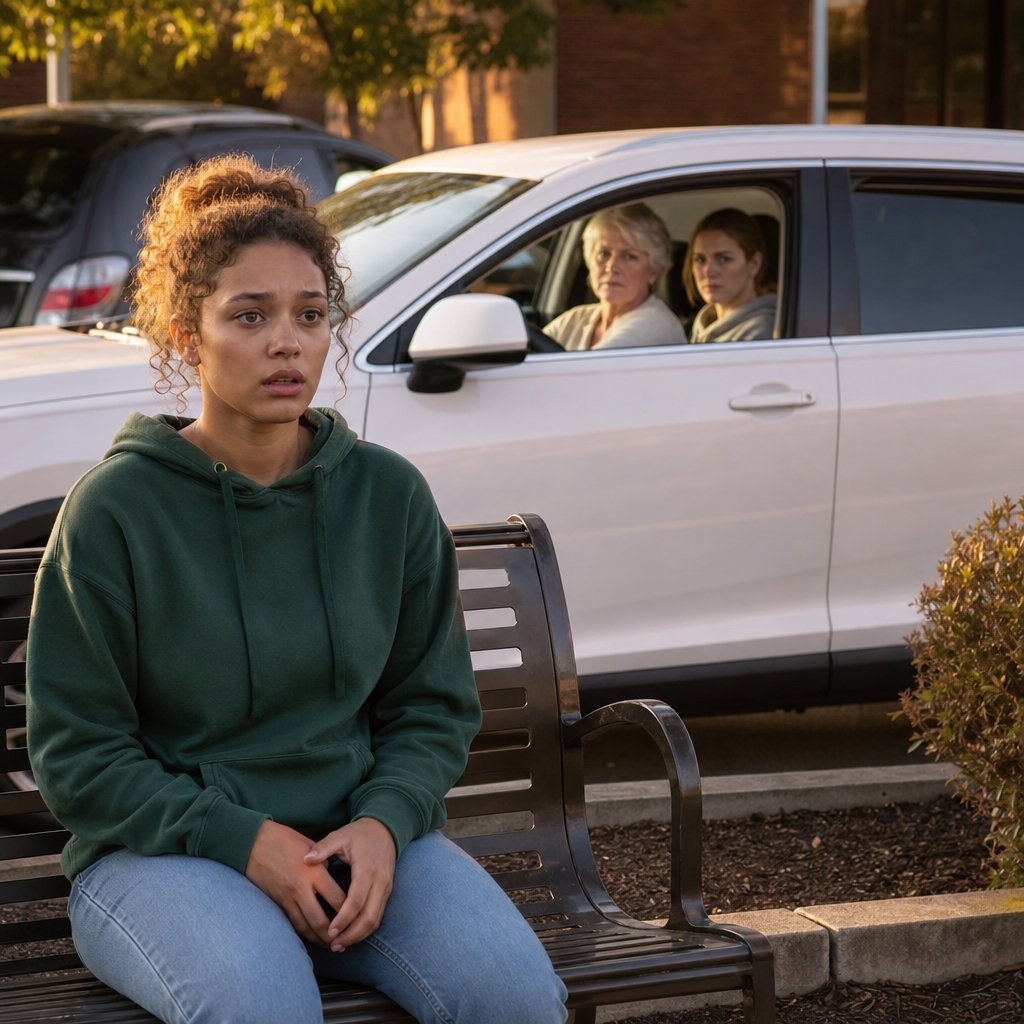
I didn’t even go back to my car right away. I sat on a bench outside the bank, the metal cold through my jeans, and called the one person who never tried to make me “calm down.”
My friend Nia answered on the second ring. “You sound like you’re about to throw up. Where are you?”
“Grant’s been paying for someone,” I whispered. “Not Lacey. Someone at his office.”
There was a pause—then the sharp inhale of a woman putting pieces together faster than I could. “Name.”
When I said Maren Fields, Nia went quiet for exactly three seconds. Then: “Check your messages in five.”
I didn’t ask how she moved that fast. Nia worked in HR. She knew everyone’s cousin, everyone’s ex, everyone’s secrets. The kind of network you don’t appreciate until you’re drowning.
Five minutes later, she sent me one image. A screenshot she’d gotten from a friend-of-a-friend baby shower invite chain. She didn’t write anything with it. She didn’t have to.
It was Maren’s baby registry.
My breath hitched. My hands went numb. I stared at the due date until the numbers blurred, then snapped back into focus like the universe was forcing me to read them correctly.
The due date matched the ultrasound date Lacey had “accidentally” left on my counter weeks ago—the one she’d laughed off as “a friend’s.” The one Grant had insisted was none of my business.
I tasted something metallic, like I’d bitten my own tongue.
This wasn’t Grant helping his sister. This was Grant funding his affair partner’s entire life, and he’d used Lacey as the smiling, family-shaped decoy to keep me from asking the right questions.
Nia’s next message came through: “There’s more. Call me.”
I lifted the phone—then froze, because a familiar white SUV rolled slowly past the bank parking lot. Grant’s mother’s SUV. She didn’t stop. She just passed, like she was checking whether I was where I said I’d be.
And in the passenger seat, I saw Lacey’s profile turn toward me.
She Showed Up Furious
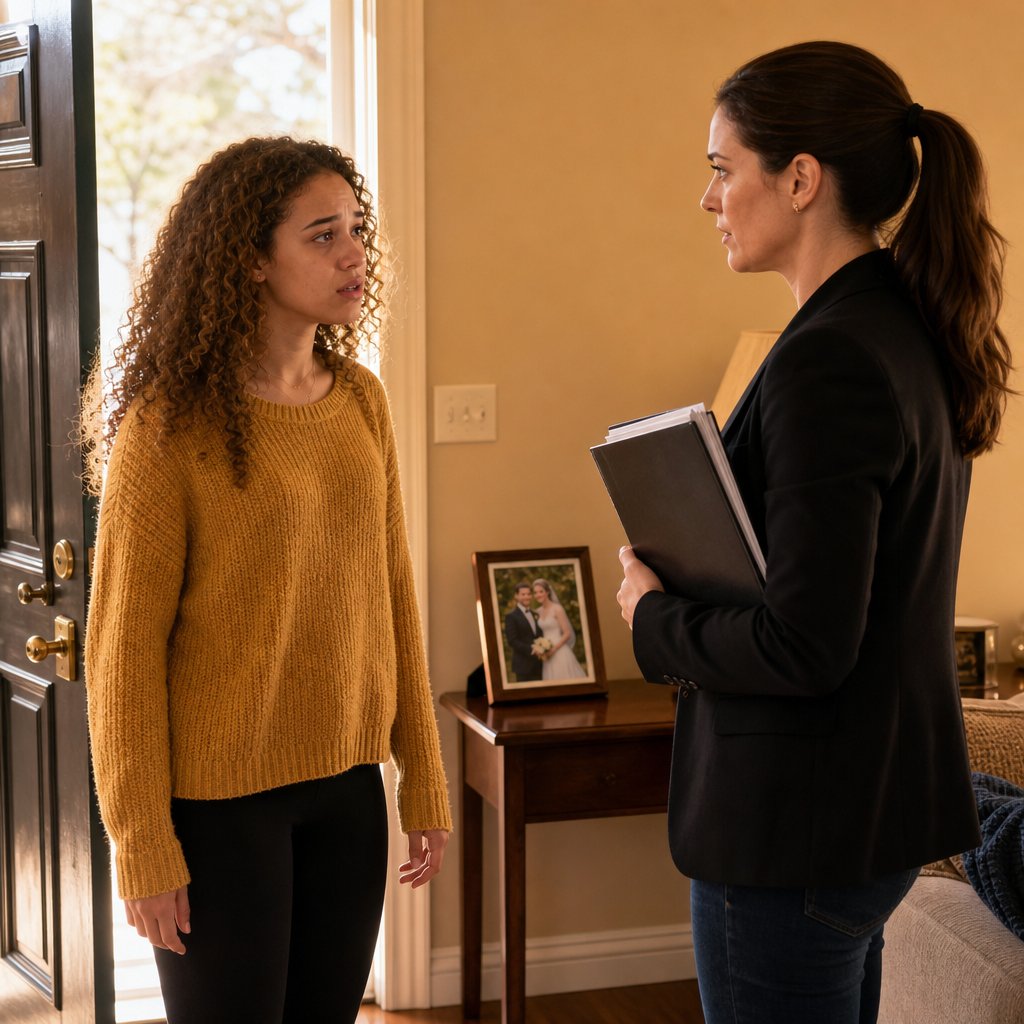
I barely made it home before the doorbell started pounding like someone was trying to break the frame. Not a polite ding-dong. A frantic, angry, continuous assault.
I looked through the peephole and my stomach flipped.
Maren Fields stood on my porch in a fitted black blazer and jeans, hair pulled into a glossy ponytail, cheeks flushed like she’d been crying in her car. She wasn’t holding a gift basket or a casserole. She was holding a folder so tightly her knuckles were white.
I opened the door a crack. “Can I help you?”
Her eyes snapped to mine—hazel, bright with rage. “Is Grant here?”
“No,” I said. “He’s at work.”
“Of course he is,” she hissed, like that explained everything. She shoved the folder up between us. “My rent bounced. My landlord is threatening to post a notice. Grant promised me—”
I laughed once, ugly. “Grant promised you?”
Her face changed, just for a second. Confusion. Then suspicion. “Who are you?” she demanded, like I was the one trespassing.
“I’m Iris,” I said, and watched the name land on her like a slap. “His wife.”
The porch smelled like hot concrete and that cheap vanilla air freshener people hang in their cars. Maren swayed slightly, like her body was catching up to her brain.
“No,” she whispered. Then louder, to cover the crack in her voice: “He said you were separated.”
I opened the door wider, because suddenly I didn’t want to protect Grant from anything. “Come in,” I said quietly. “Tell me what he told you. All of it.”
Maren stepped inside, eyes scanning my living room—our framed wedding photo, the throw blanket I’d bought on sale because “we couldn’t afford” the nicer one. Her anger faltered and something else took its place.
Then she lifted her chin and said, “He told me Lacey handled the transfers so you wouldn’t get stressed.”
My vision tunneled. Because that meant she knew about Lacey. And Lacey knew about her. And I’d been the only one living in the dark.
I heard tires crunching on my gravel driveway.
Lacey Was Skimming Too
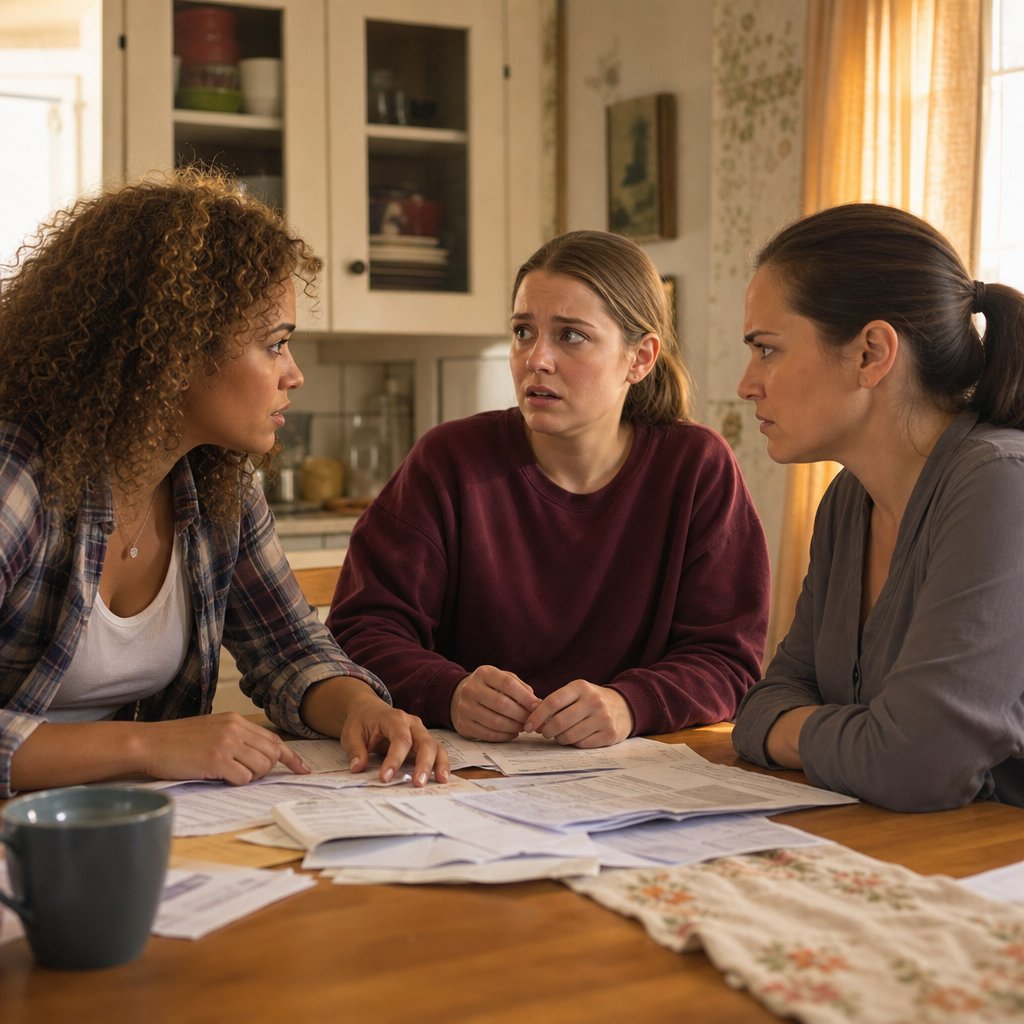
The car in my driveway wasn’t Grant’s.
It was Lacey’s little gray hatchback, the one with the dented bumper she always blamed on “parking lots.” I watched it through the front window as if my stare could burn a hole through the glass.
Maren’s voice went tight. “She’s here?”
“Apparently,” I said, and opened the door before Lacey could knock. I wanted her caught mid-breath, mid-lie.
Lacey froze on the porch, sunglasses still on even though it was cloudy. She had a grocery bag in one hand like a prop. “Oh,” she said, too brightly. “Hey.”
Then she saw Maren behind me and her whole face drained of color. Like she’d walked into the wrong courtroom.
“You,” Maren snapped, stepping forward. “You said the transfer would hit yesterday. My rent bounced.”
Lacey’s mouth opened and shut. “I—Grant—”
“Don’t,” I cut in. “Come inside. Both of you.”
At my kitchen table, we dumped what we had like we were emptying pockets after a robbery. Maren had receipts and a landlord email printout. I had account statements, the lease packet, and Mr. Patel’s notes. Lacey brought… nothing but excuses.
But the numbers didn’t care about excuses.
There were transfers out of the secret account that matched Maren’s rent amount—except not all of it. A few hundred missing here. Two hundred there. The kind of “small” that adds up when you do it every month.
Maren’s eyes narrowed as she did the math out loud. “It’s short. Every time. It’s always short.”
Lacey’s leg bounced under the table so hard the silverware rattled. She finally whispered, “I had to. You don’t understand what he—”
“What he what?” I leaned forward. I could smell Lacey’s fruity shampoo, sickeningly familiar from family dinners. “What did Grant promise you in exchange for being his courier?”
Lacey swallowed, and for the first time she looked at me like I wasn’t just a sister-in-law—like I was a threat. “He promised,” she said carefully, “that when this was over, you’d be… taken care of.”
Maren’s head snapped toward me. “Taken care of how?”
Before I could answer, Lacey’s phone buzzed on the table—face-down—but the sound made her flinch like she’d been hit.
No Phones, Just Family

I planned it like a crime scene cleanup—quiet, efficient, almost tender.
“Family dinner,” I texted Grant. “No phones at the table. I miss us.”
He loved that version of me. The one who missed him. The one who didn’t ask questions.
By Friday, my dining room looked warm enough to fool a stranger. Candles. Real plates. The good wine glasses we never used because Grant said they were “impractical.” The air smelled like garlic and roasted chicken, and my hands didn’t shake once as I set the serving spoon down.
Grant’s mother arrived first in a teal blouse and pearls, smiling like she hadn’t detonated my life with one sentence. Lacey followed in a cream cardigan, too soft, too innocent. Grant came last, tie loosened, acting like the hero returning home.
“No phones?” Grant said, amused, dropping his into the ceramic bowl by the entryway like he was indulging a cute trend.
“House rule tonight,” I said. “Just us.”
His mom laughed. “Oh, Iris. I love this.”
Lacey poured wine with a steady hand that made me want to scream. She’d practiced being calm. She’d trained for this.
They sat. They ate. They complimented the seasoning. Grant squeezed my knee under the table like he owned me.
And behind them, in the living room, my laptop sat connected to the TV with a neat little cable, the screen dark for now. Like a mouth closed before it tells the truth.
Halfway through dinner, Grant leaned back and said, “So what’s this about? You’ve been… weirdly cheerful.”
I dabbed my lips with my napkin and smiled. “I made a little slideshow,” I said. “Something to share.”
Grant’s mother clapped once, delighted. Lacey’s wine paused mid-pour.
I stood up and reached for the remote.
His Mother’s Text Exposed

The first image hit the TV and Grant actually smiled—until he realized it wasn’t vacation photos.
His smile died in slow motion.
I didn’t narrate. I let the evidence speak like a witness that couldn’t be bullied. Group chat screenshots printed into clean slides—Grant and Lacey mocking me for “budget spirals,” laughing about my “little dishwasher obsession,” calling me “manageable” like I was a dog they’d trained with treats.
Grant’s mother’s laugh turned into a cough. “What is this?”
Next slide: the ultrasound image date. Next: the private-school deposit line item. Next: the PO box receipt. Next: the lease packet with Grant’s signature. Next: the storage unit payments. Each one landed with a dull thud in my chest, the kind you feel more than hear.
Lacey’s face went shiny, like she’d been sweating under her makeup the whole time. Grant stood up so fast his chair scraped the floor. “Turn it off,” he snapped.
“Sit down,” I said, and my voice shocked even me. Calm. Flat. Final.
Then the slide changed again.
This one wasn’t from the bank. It wasn’t from Nia. It was from Grant’s mother.
A text thread I’d gotten from Mr. Patel’s document pull—because Grant had backed up his messages to an old shared tablet account like an idiot. One message was highlighted, circled, impossible to miss.
“Keep Iris calm until everything is settled,” his mother had written. “Don’t make her suspicious.”
The room went silent in that instant-before-a-scream way. Grant’s mother stared at the TV, blinking like the words would rearrange themselves into something kinder.
Grant lunged toward the TV stand, hand outstretched.
And his mother whispered, almost to herself, “I never said that.”
Frozen Mid-Transfer
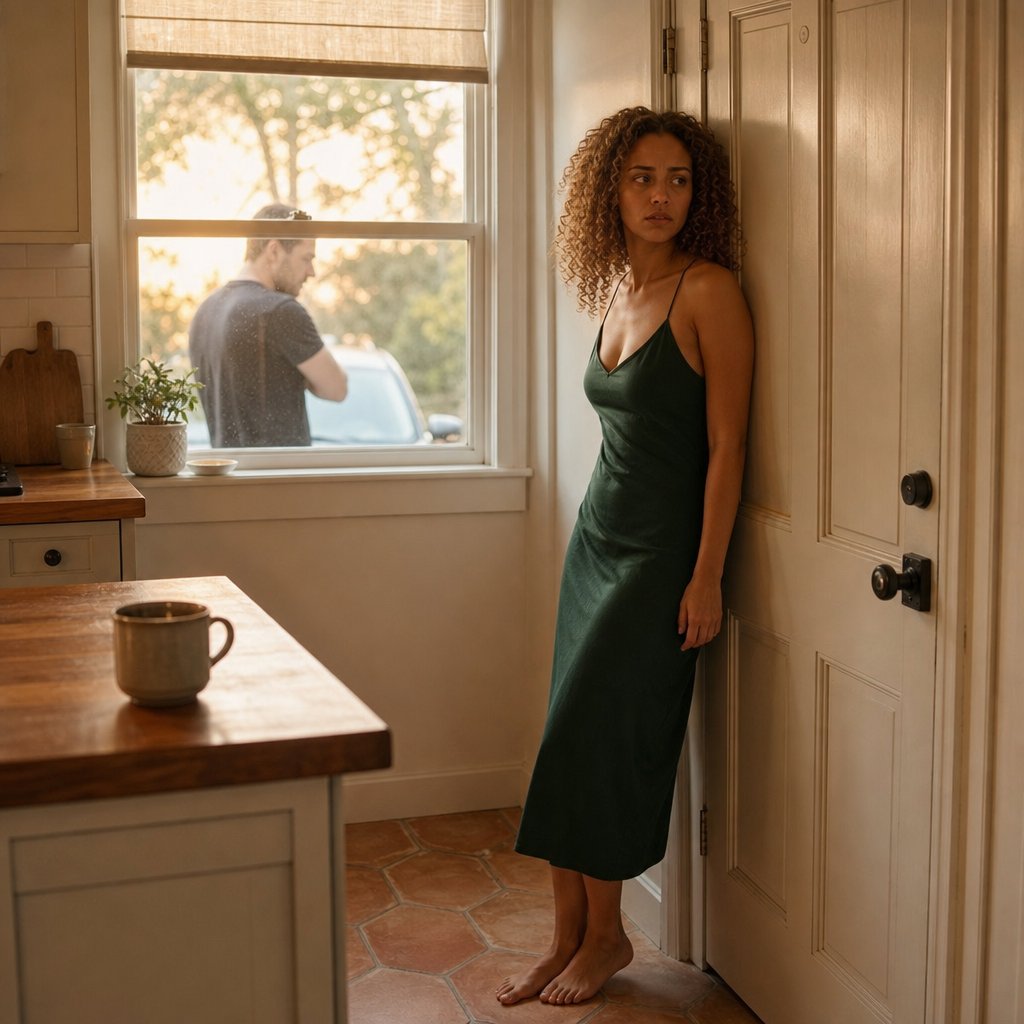
Grant didn’t sleep at home that night. He stormed out like a teenager, slamming the door so hard a framed photo tilted crooked. His mother left without looking at me. Lacey left last, eyes red, whispering, “You’re ruining everything,” as if I’d built the lie and not just turned on the lights.
I didn’t chase anyone.
I sat at my kitchen island in yesterday’s dress, barefoot, and called my lawyer the second her office opened. Her name was Dana, and her voice had the calm, surgical tone of someone who’d seen men like Grant try to rewrite reality for a living.
“We file today,” she said. “Emergency motion. Dissipation. Freeze order.”
Grant thought he was the only one who could move pieces on the board.
By noon, he started calling. Over and over. I let it ring. Then he switched tactics—showed up in my driveway, pounding on the door like he still had rights to my air.
“Open up!” he shouted through the wood. “We need to talk!”
I didn’t open it. I stood on the other side with my back against the door, feeling the vibration of his fists like thunder in my bones.
“You don’t understand what you’re doing,” he said, voice dropping into that softer, dangerous register. “I can fix this.”
Fix. Like I was a mess he’d made and could tidy up again.
My lawyer texted me one sentence: “Court signed. Accounts are being served.”
Grant’s pounding stopped abruptly. Silence. Then his muffled voice, suddenly sharp with panic: “Why isn’t it going through?”
I heard his car door slam. Gravel sprayed. An engine revved too hard.
Dana called me, and I could hear the smile in her voice without her ever letting it turn warm. “He attempted a transfer,” she said. “We got him mid-act. The freeze hit while he was moving it.”
I closed my eyes, tasting cold coffee and adrenaline.
“Iris,” Dana added, “he’s going to escalate now.”
The Judge Called It Dissipation
Mediation felt like sitting under fluorescent lights while strangers dissected my marriage like a dead thing on steel.
Grant arrived in a new suit like he could dress his way out of what he’d done. His lawyer kept calling the secret account “a misunderstanding.” Grant kept calling it “temporary support.” He never once called it theft. He never once called it betrayal.
I brought a binder so thick it barely fit in my tote. Every transfer. Every deposit. Every co-sign. Every missing “few hundred” Lacey skimmed. The private-school deposit date circled in red like a scar.
Grant’s face stayed smooth until Dana slid the freeze-order timeline across the table and said, “He tried to move the money after being confronted. The court froze it mid-transfer.”
That’s when Grant finally looked at me, not like a husband, but like a man realizing the person he managed had learned to bite.
The judge didn’t raise his voice. He didn’t need to. He looked at the numbers, looked at Grant, and said the word that made Grant’s lawyer go still.
“Dissipation.”
It sounded clinical. Like a diagnosis. Like something you don’t come back from.
Restitution was ordered. The secret account treated as marital assets he’d siphoned. I kept the house. Grant kept the debt he’d created trying to fund a life that wasn’t mine. Dana’s hand brushed my elbow under the table—grounding me, reminding me I was still in my body.
Grant’s mother sat in the back row on the day it was finalized, lips pressed thin, eyes fixed ahead like she could stare through shame. Lacey wasn’t there. Maren wasn’t there. Just Grant, blinking too fast, like a man waking up in a room he didn’t recognize.
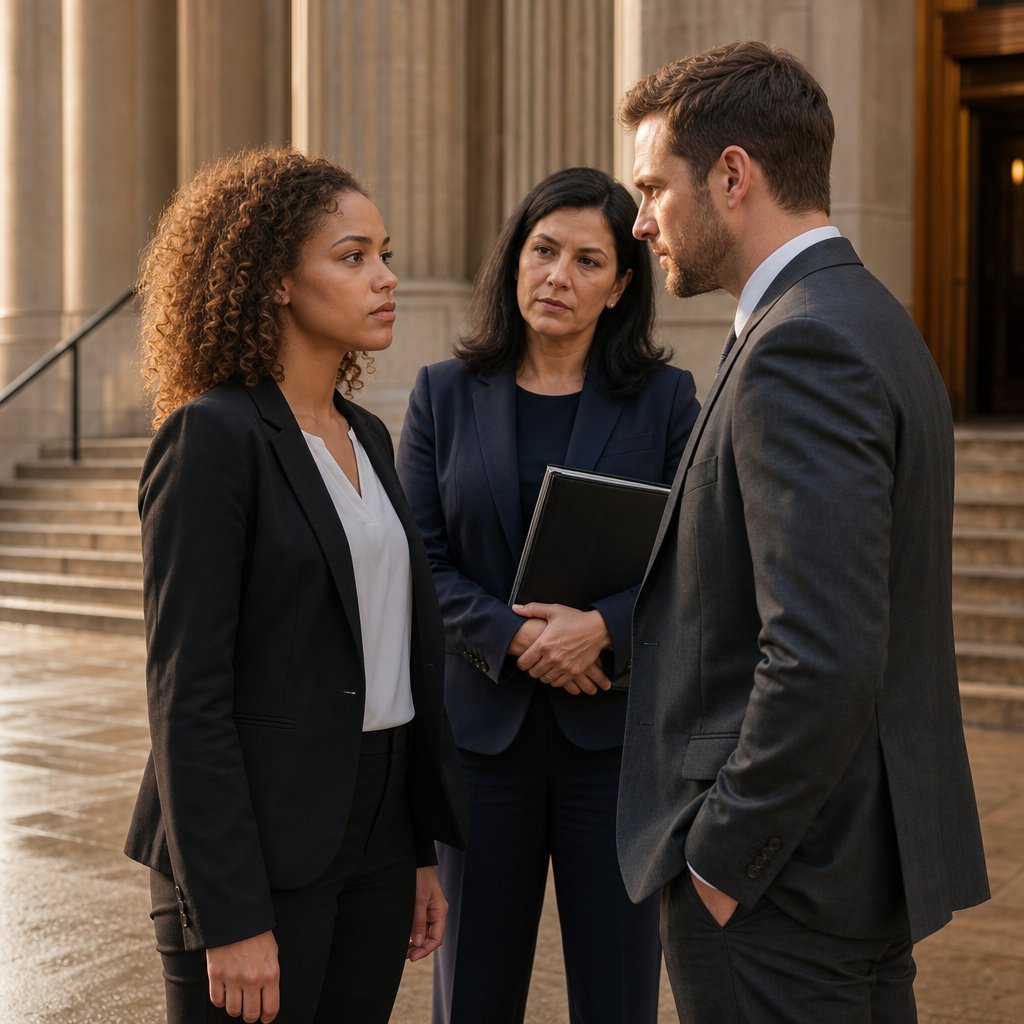
Outside the courthouse, the air smelled like rain on hot pavement. Grant stepped close enough that I could see the tiny twitch in his jaw.
“You think you won,” he said quietly. “But you have no idea what you just started.”
I didn’t answer. I just watched his hand slide into his pocket—slow, deliberate—like he was reaching for something he’d saved for last.
The Storage Unit Wasn't Ours
Grant’s hand disappeared into his pocket like he was reaching for a weapon. Not a gun—worse. A choice.
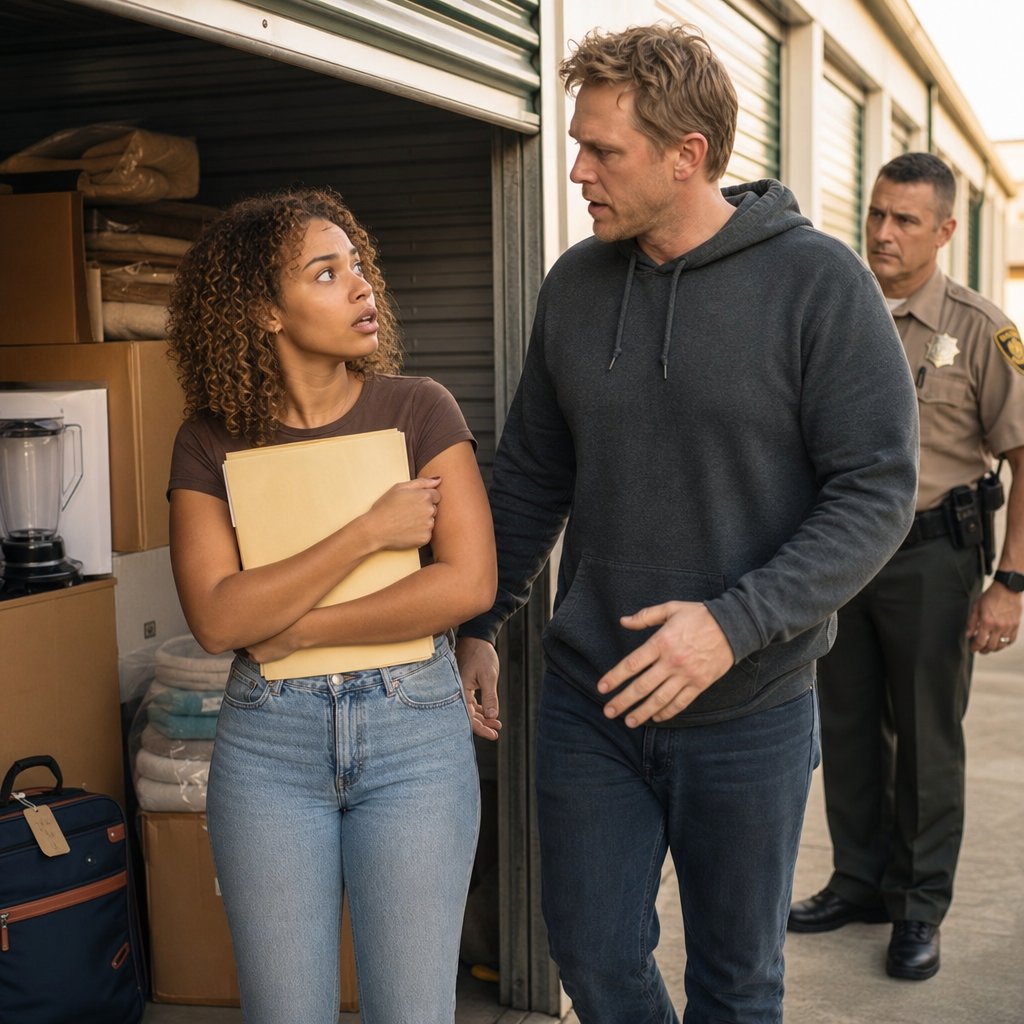
“You have no idea what you started,” he said again, and his voice went thin and careful, like he was trying not to crack in front of the deputy.
I stood there with my curly light-brown hair shoved behind my ears, my palms damp against the paperwork the court had forced him to sign. The storage facility office smelled like burnt coffee and industrial cleaner, and the clerk—a bored woman with a tight bun and acrylic nails—kept clicking her pen like a countdown.
Grant finally pulled his hand out. Keys. A second ring. Not the one on our kitchen hook. This one was scuffed silver with a little green tag, like it had lived in his pocket for months. He didn’t look at me when he handed it over. He looked at the floor, jaw working like he was chewing glass.
The deputy walked us down the corridor of metal doors. Grant—tall, sandy-haired, that clean-cut grin he used on waiters—had none of it left. He was pale, sweat darkening the collar of his charcoal hoodie. Every few steps, he glanced back at me like he was memorizing my face for later.
When the lock finally clanked open, the sound echoed hard enough to make me flinch. The door rattled up and the air that rolled out was stale cardboard and cedar—like a closet no one wanted to admit existed.
Inside wasn’t a nursery. Not even close.
There was a neatly stacked “fresh start” kit: brand-new towels still banded in plastic, a cheap set of plates, a flat-packed bed frame, a blender box, a men’s toiletry bag, and a suitcase with the tags still on. On top of it all sat a framed photo of Grant—alone—on a hiking trail I’d never been on with him, smiling like someone had just told him he was free.
And then I saw the folder, tucked in a banker’s box like it was sacred. Thick. Labeled in Grant’s handwriting: Post-Divorce Budget.
My throat went tight as I reached for it, because the first tab wasn’t “legal” or “assets.” It was “Apartment Options.” And Grant suddenly took one step forward, fast, like he was going to stop me—
—right as the deputy said, “Ma’am, are you sure you want to open that?”
Would you have confronted him about the hidden card?