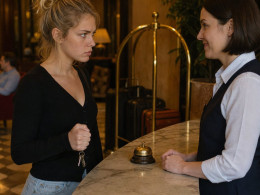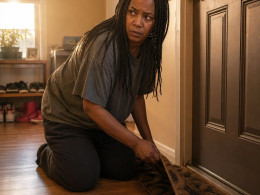




My Screenshot, Their Table

“Did you send this?”
The investigator’s hand—dry, careful—slid a single page across the glossy boardroom table like it was evidence from a crime scene. And there it was: my screenshot. Cropped too tight. Time-stamped. The deleted Slack I’d grabbed on instinct the night I saw it—Lila tagging Grant with a little inside joke that made my stomach go cold—before it vanished like it had never existed.
I stared at my own mouse cursor frozen in the capture, my name in the corner. My glasses felt too tight against my temples. Across from me, our outside counsel sat with a pen poised, not taking notes so much as waiting for me to hang myself with my own words. The air smelled like overbrewed coffee and expensive cologne—Grant’s, faint but unmistakable, like he’d been in this room an hour ago and left his confidence behind.
“I didn’t send it to anyone,” I said, and hated how defensive it sounded.
The investigator didn’t blink. “Then why was it forwarded to the acquisition diligence team from an internal address?”
My throat clicked. Acquisition diligence. That wasn’t a normal phrase you heard unless something was already on fire.
He leaned in just enough to make it personal. “We can subpoena Slack’s retention logs,” he said softly. “But I’d rather hear it from you. Who did you show this to?”
Before I could answer, the conference room door handle turned—slow, deliberate—like whoever was outside had all the time in the world.
She Took The Private Elevator
Back on the floor, everything looked normal in that aggressively cheerful way corporate offices try to look normal when they’re actually a pressure cooker. People laughed too loudly near the snack wall. Someone had sprayed citrus cleaner on the glass doors, and it stung the back of my nose.
Then I saw Lila.
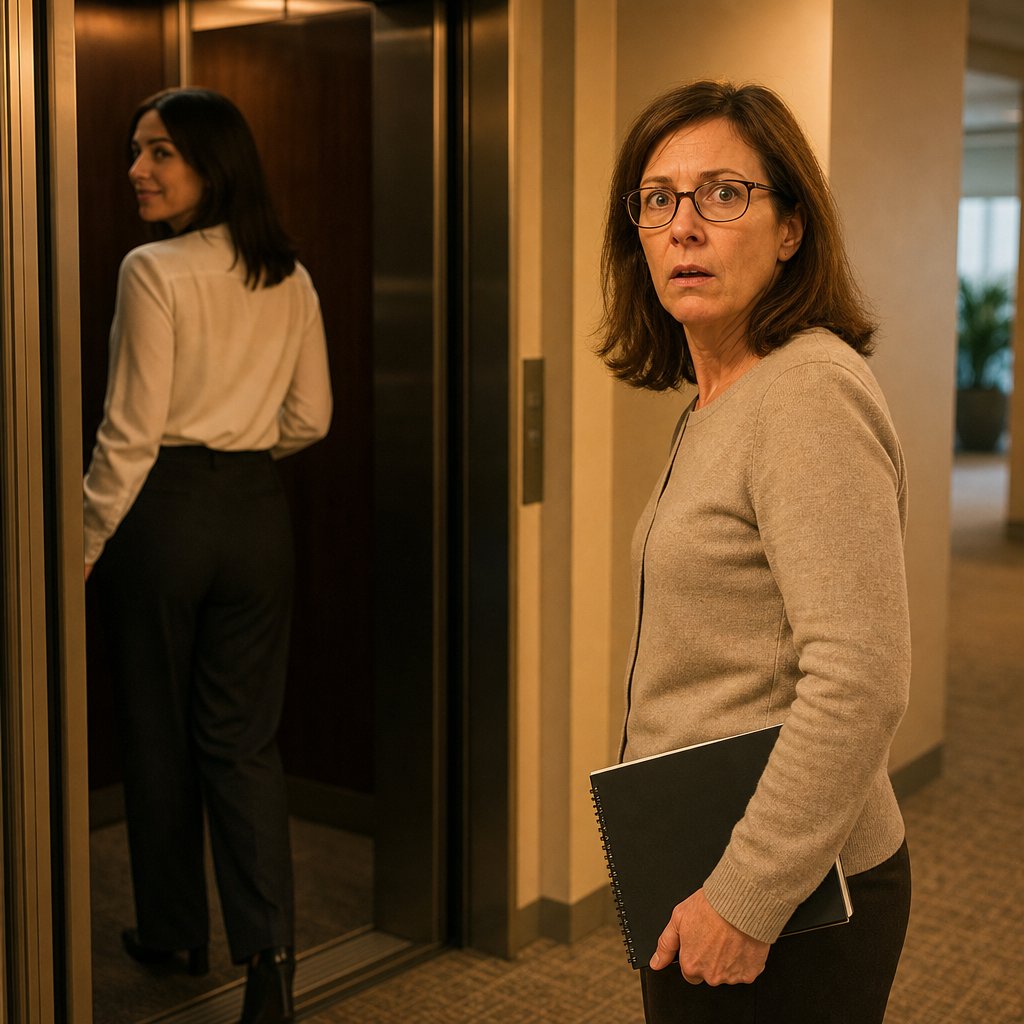
She wasn’t rushing. That was the first tell. New hires rush or hover or apologize with their posture. Lila moved like she had a calendar that belonged to her. She wore a soft cream blouse tucked into dark trousers, hair glossy and perfectly blunt at her shoulders, and she didn’t look left or right as she cut across the executive corridor—past the sign-in desk she’d never once had to use.
The CEO’s private elevator sat at the end like a secret, brushed metal doors with no call buttons where normal people could see. Usually you needed an escort. Usually you needed a reason. Usually you needed to be someone.
Lila walked up, paused for half a heartbeat, and lifted her badge—not fumbling, not checking which way it faced. The doors parted immediately.
No hesitation. No “I’m sorry, is this allowed?” No assistant appearing to scold her. Just that little, practiced tilt of her chin like she’d done it a hundred times.
I realized I’d stopped breathing when she glanced back—just once—and our eyes met. Her smile was small, polite, almost sweet. Like she was thanking me for noticing.
Then she stepped inside, and the doors began to close, swallowing her whole.
She Said His First Name
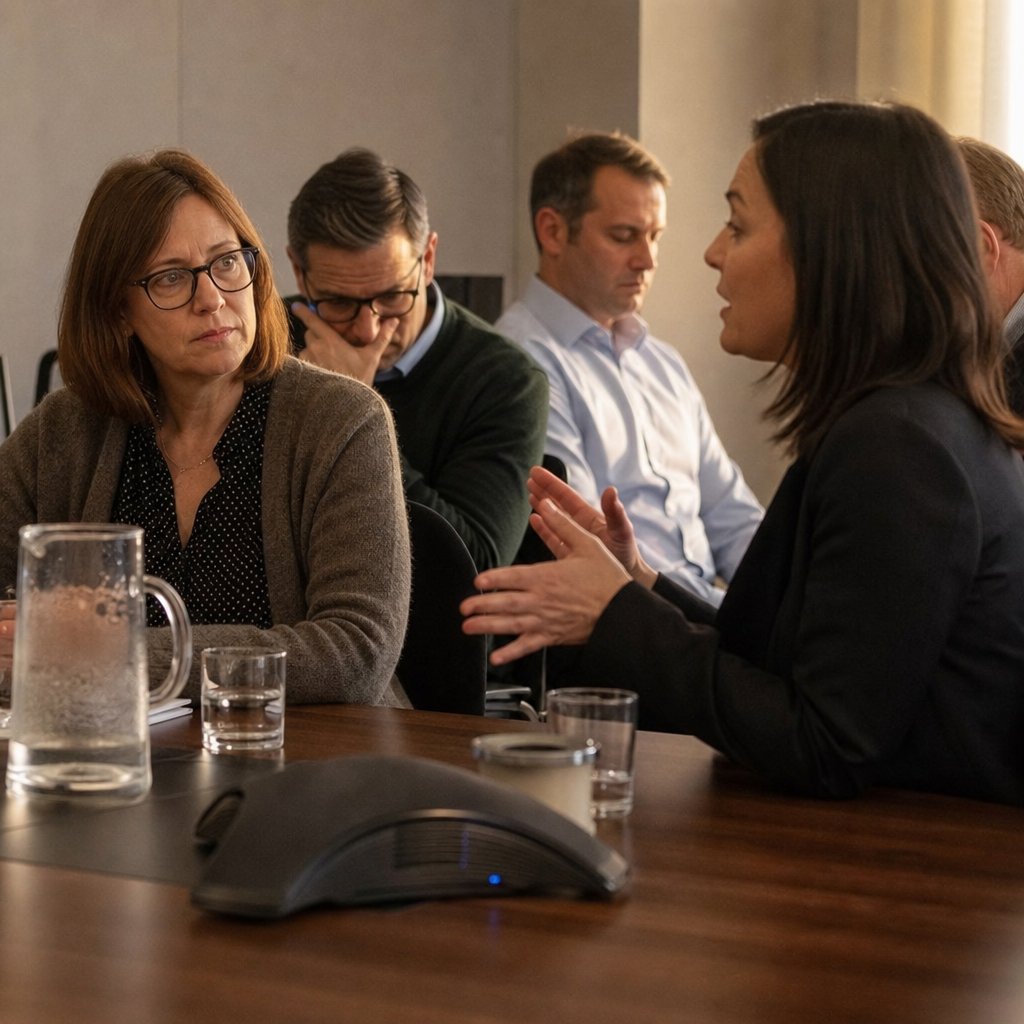
The weekly operations sync was the kind of meeting where everyone spoke in bullet points and nobody admitted they were scared. The conference room was too cold, the kind of cold that made your skin prickle under your sleeves. A pitcher of water sweated onto a stack of coasters nobody used.
Grant wasn’t in the room—he rarely was—but his presence always was. His assistant had dialed him in “for the first ten minutes,” which meant: behave, perform, don’t embarrass us in front of the money.
Lila sat two chairs down from me like she’d been assigned there by fate. She had her pen lined up perfectly with the edge of her notebook, and she didn’t take a single note the whole time. Instead, she watched people. Catalogued them.
When the speakerphone crackled and Grant’s voice slid into the room, everyone straightened like a marionette string had been pulled. Evan cleared his throat. Someone laughed at a joke that wasn’t funny.
“We’re aligned on timelines,” Evan said, too eager. “We just need final approval on the resourcing exception.”
Lila leaned forward like she was about to help. “Grant—” she said, quick and instinctive, like the name belonged in her mouth. Then she caught herself. “Mr. Hargrove,” she corrected, smooth as oil.
The room did something strange. A collective blink. A decision, made silently, to pretend the slip hadn’t happened.
Except my body didn’t get the memo. My pulse spiked so hard it felt like my eardrums throbbed.
On the speakerphone, Grant paused. Just long enough to be noticed. Then his voice came back warmer. “Go ahead, Lila,” he said, like he’d been waiting for her to speak all along.
And across the table, Evan wouldn’t look at me.
The 7:10 A.M. Ghost Block
I didn’t mean to look. That’s what I told myself later, anyway.
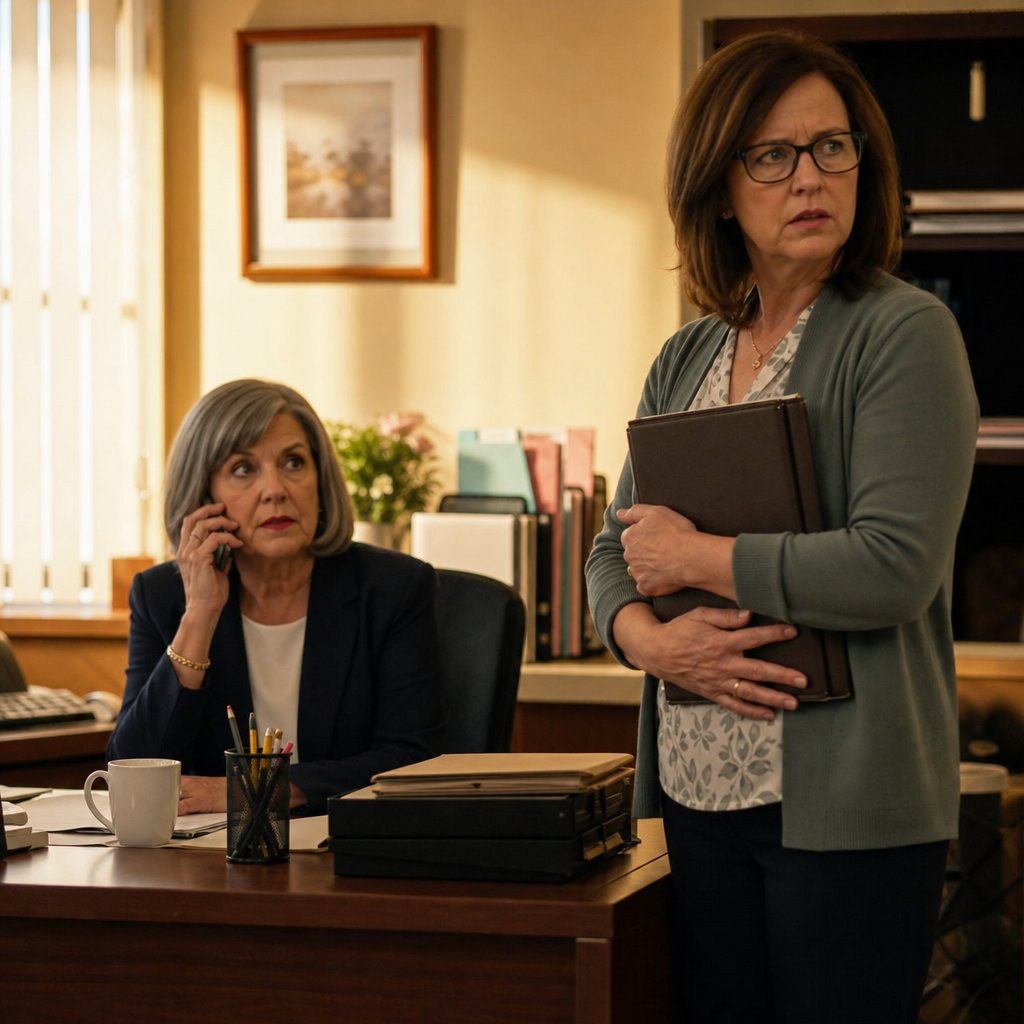
Grant’s assistant, Marcy—late 50s, steel-gray bob, lipstick the color of dried roses—was juggling three conversations at once in the executive admin bay. Her desk smelled faintly of peppermint tea and printer toner. She had that calm, lethal competence that made you forget she was the gatekeeper to the most powerful man in the building.
“Can you confirm the diligence briefing room for Thursday?” she asked me, fingers flying over her keyboard.
While she clicked through Grant’s calendar, I saw it again. The same block I’d glimpsed last week when she’d spun her monitor a hair too far: 7:10 a.m., locked, recurring. The label was always the same bland nothing—“Vendor Sync.” No vendor name. No dial-in. No room. Just a tight gray bar like a secret trying to look boring.
Marcy’s eyes flicked up, catching my stare with surgeon-level precision. “Something you need?” she asked, polite as a threat.
“Just… making sure we don’t double-book him,” I said, too quickly.
She turned the monitor slightly away without breaking her smile. “Grant doesn’t get double-booked,” she said, and it landed like a warning shot.
But I’d already clocked the pattern. Same time, every Tuesday and Friday. Same fake label. And the kicker—each time, the block was followed by a fifteen-minute buffer labeled “Reset.”
Reset from what? A workout? A call? A person?
Marcy’s phone rang, and her whole posture sharpened as she answered. “Yes, Grant,” she said softly.
Her eyes stayed on me while she listened, and then she nodded once, like she’d just been given an instruction about me specifically.
Evan Locked Me Out
The war-room used to be mine.
Not officially. Nothing in this place was ever official when it came to who did the real work. But for months, I was the one with the whiteboard markers in my bag and the keycard that still worked after hours. I was the one who stayed until the cleaning crew started vacuuming around my ankles like I was furniture.
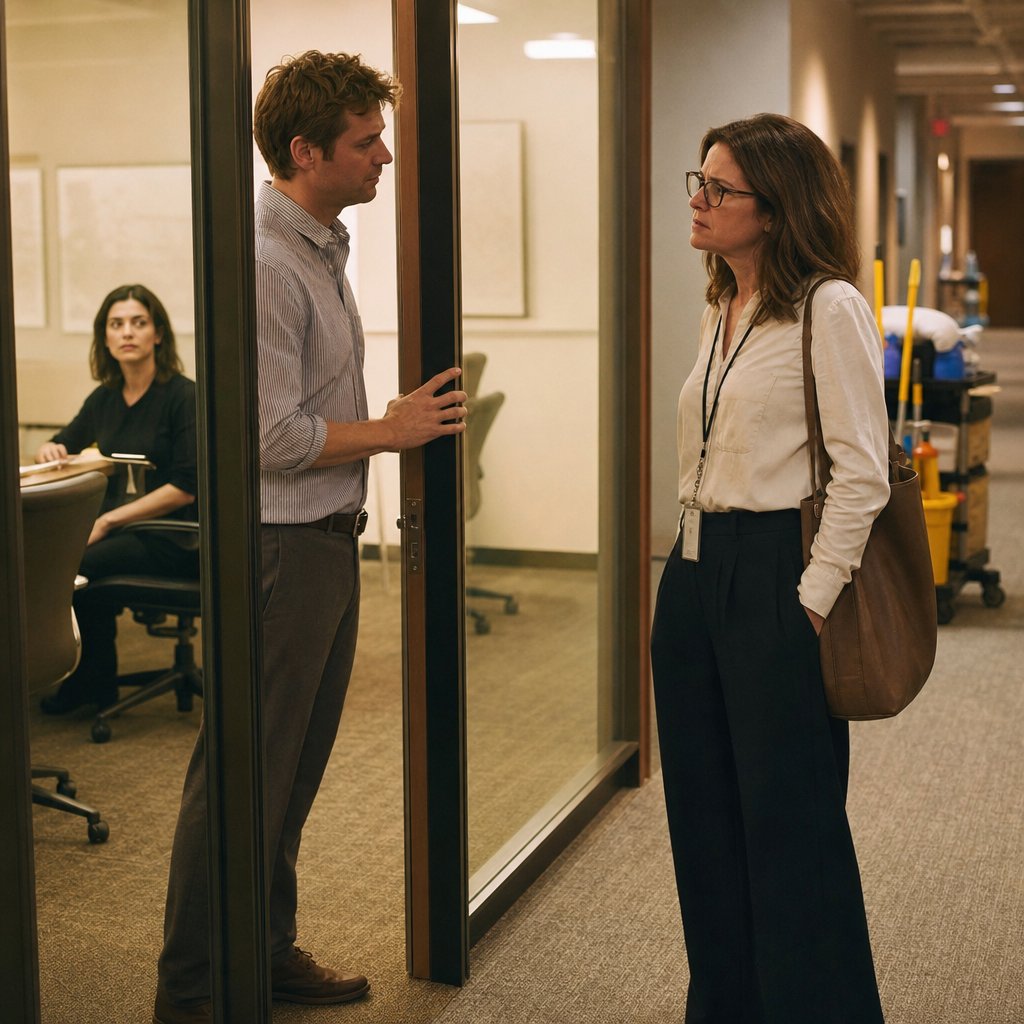
Now, at 9:47 p.m. on a Tuesday, I walked past the glass-walled project room and saw Evan inside with Lila.
Evan was early 30s, sandy hair always slightly messy like he wanted to look “too busy to groom,” and he had the kind of anxious ambition that made him dangerous. He used to text me questions at midnight with a dozen exclamation points, like I was his lifeline.
Tonight he didn’t even glance up when I stopped. Lila sat at the table with her sleeves rolled to her elbows, calm as a surgeon. She wasn’t typing or scrambling; she was waiting.
I tapped on the glass. “Hey. I didn’t realize we had a late session.”
Evan finally looked at me, and something flickered—guilt, maybe, or annoyance at being caught. He stepped out into the hallway and pulled the door almost shut behind him, like he didn’t want my voice contaminating the room.
“Why is she in there?” I asked, keeping my tone light because I could feel my pride trying to lunge out of my mouth.
He didn’t answer the question. He just lowered his voice. “Just trust me.”
“Trust you with what?”
His jaw tightened. “With not making this harder than it already is.”
Behind him, through the narrow gap in the door, I saw Lila turn her head slightly—listening. And when our eyes met, she lifted her eyebrows like: see? even Evan knows.
Evan’s hand stayed on the door, ready to shut me out completely.
Her Badge Shouldn’t Work
The executive stairwell was one of those building quirks nobody talked about. It wasn’t on the office tour. It wasn’t on the emergency maps. It was just a heavy door tucked behind a frosted glass partition, painted the same sad beige as everything else meant to disappear.
I found myself there because I was tired of being paranoid in public.
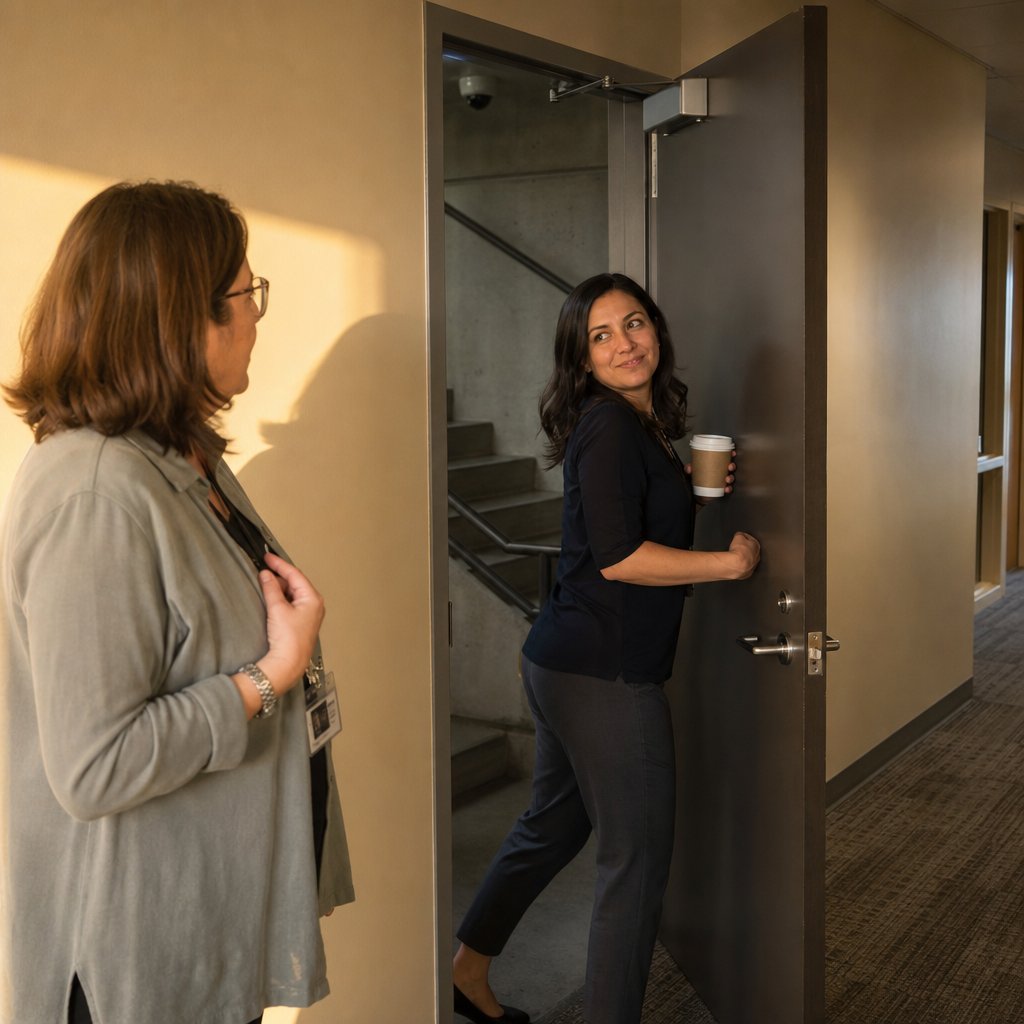
Lila came around the corner with a paper coffee cup in her hand, walking like she knew exactly where she was going. The hallway smelled faintly of lemon cleaner and that metallic, recirculated-air scent that always clung near locked doors.
I pretended to check my watch. She didn’t slow.
She reached the executive stairwell door and swiped her badge.
The lock clicked green.
I actually laughed—one sharp, disbelieving sound that scraped my throat. “That’s… not supposed to open for you,” I said, before I could stop myself.
Lila turned, coffee cup steady, eyes bright with something that wasn’t surprise. She wore a charcoal cardigan today, simple flats, nothing flashy. But her expression was all authority.
“Really?” she said, like the idea was charming. “Sloppy IT, I guess.”
She smiled, and it was the kind of smile you give a child who thinks they’ve found a secret passage.
“Yeah,” I said, and my voice went thin. “Sloppy.”
She pushed the door open with her shoulder and stepped into the stairwell. Before it swung shut, I caught the inside: concrete steps, bright industrial paint, and a security camera angled down like a watchful eye.
Lila paused one step up and looked back at me. “You should be careful,” she said softly, like advice.
“Careful about what?” I asked.
Her smile didn’t move, but her eyes did. They slid past me—down the hallway—like someone else was standing there too.
They Blamed Me Out Loud

Morning standup was usually a quick ritual: status, blockers, fake optimism. Today it felt like a public stoning with coffee breath.
We clustered near the project wall, everyone holding their mugs like shields. The air smelled like toasted bagels and burnt espresso. Evan stood at the front, shoulders squared, doing his “leader voice.”
“We have an issue,” he said, and my stomach sank because I already knew he was going to make it mine.
The client deck—our pristine, acquisition-adjacent, don’t-you-dare-mess-this-up deck—had been altered overnight. Not small formatting mistakes. Strategic changes. Numbers moved. A slide that reframed risk like a joke. The kind of edits that, if they got in front of the wrong person, would make us look either incompetent or dishonest.
Evan looked straight at me. “We need to understand why the deck was changed after final sign-off.”
I blinked. “I didn’t change it.”
“You were the last owner,” he said, too smoothly, like he’d rehearsed the phrasing.
I felt heat rise up my neck. “The permissions were opened yesterday. Anyone on the war-room list could access it.”
Lila stood slightly behind Evan, hands folded, face neutral. But her eyes did this tiny, satisfied thing—like she was watching a plan click into place.
“Lila was helping late,” Evan added, throwing her name in like a kindness. “She flagged some inconsistencies.”
“She flagged them by changing the deck?” I snapped, and the room went silent in that hungry way people love when someone finally loses their composure.
Evan’s expression hardened. “We’re not doing this,” he said. “We’re fixing it. And we’re doing it fast.”
Then he turned to the group. “I’ll need everyone’s support,” he said, eyes still on me. “Especially from people who’ve been… resistant.”
Resistant. That word hit like a slap. And Lila’s mouth twitched, like she’d just won something I didn’t know we were playing for.
She Gave Orders Upstairs

I stayed late because I refused to let my name be the thing that got remembered.
By 8:30 p.m., the office had thinned into that eerie after-hours quiet where every printer noise sounds like gossip. The carpet smelled faintly of dust and whatever floral deodorizer the cleaning crew used. My eyes burned from staring at versions and backups and trying to reconstruct what had been changed without leaving fingerprints of my own.
I went hunting for a spare adapter in the supply closet and passed Conference Room 12B. The door was mostly shut, but not latched. A thin blade of light cut into the hallway.
Voices.
I slowed, the way you do when you don’t want to know but you need to know. Through the narrow gap, I saw Lila at the head of the table. Not sitting. Standing. One hand on the chair back like she owned the room.
Across from her was Dana, the Chief of Staff—mid 40s, tall, sharp black bob, always in tailored blazers like she’d been poured into them. Dana was the person who could cancel your access with a smile and call it “streamlining.”
“No,” Lila said, crisp. “We’re not doing it that way. We need the narrative consistent before diligence asks. Move the meeting. And I want Evan off the email thread.”
Dana didn’t interrupt. She listened.
Then, unbelievably, Dana nodded. “Understood,” she said. Like Lila was the one giving the marching orders. Like Lila’s preferences were policy.
My hand tightened around the adapter box until the cardboard creased. My pulse thumped in my fingertips.
Dana glanced toward the door—straight toward the gap—like she’d felt the weight of being watched.
I stepped back silently, but the floorboard under my heel gave a tiny, traitorous squeak.
The Email He Snatched Back

The next morning, my hands were still shaking when I poured creamer into my coffee. I told myself it was the caffeine. It wasn’t. It was the certainty that I was watching someone get protected in real time, and I didn’t know who was doing the protecting.
At 10:12, Jonah from Finance—mid 20s, baby face, always in rumpled button-downs like he slept in them—appeared at my desk with that panicked look junior analysts get when they realize they’ve just stepped on a landmine.
“Hey—uh—ignore that,” he blurted, reaching toward me like he could physically pull back what he’d already sent.
“Ignore what?” I asked, already feeling my stomach drop.
His eyes darted around. “Nothing. Wrong person. Seriously, please don’t—”
I’d already glanced at the subject line in my inbox preview. I didn’t even have to open it to feel the blood drain from my face.
L.S. — placement.
Placement. Not hiring. Not onboarding. Placement like a chess move. Like a body being put on a square for a reason that had nothing to do with merit.
Jonah’s voice cracked. “HR said it was sensitive. They said it’s… above my pay grade.”
My mouth went dry. “Why were you on it?”
“I’m not supposed to be,” he whispered. “It was in a folder I was reconciling for acquisition prep, and it— it just auto-filled—” He swallowed hard. “They called me the second it went out. Like they were watching.”
I looked up, scanning the floor, suddenly convinced every glass wall had ears.
“Jonah,” I said quietly, “who in HR?”
He hesitated, lips parted, and then his eyes flicked over my shoulder toward the corridor.
“Oh no,” he breathed.
I turned—and saw Marcy walking straight toward us, expression perfectly pleasant, like she was coming to offer help.
HR’s Smile Didn’t Reach

The HR conference room had that sterile, motivational vibe that always felt like a trap: beige walls, a bowl of mints nobody ate, and a fake plant in the corner collecting dust. The air smelled faintly like spearmint and copier heat.
Tanya from HR sat across from me—late 30s, caramel skin, tight curls pulled into a low bun, cardigan buttoned to the top like professionalism was armor. Her smile was technically friendly, but her eyes were measuring me the way people measure exits.
“This is just a culture check-in,” she said, palms open. “Nothing formal.”
Nothing formal was what people said right before it got formal.
“Okay,” I said, keeping my voice even. My knee bounced under the table. I forced it still.
Tanya tilted her head. “There have been some concerns that you’re… not supportive of new talent.” She said new talent like it was a brand name.
I let a beat pass. “Who said that?”
Her smile widened a millimeter. “It’s not about who. It’s about how we show up as a team.”
“Is this about Lila?” I asked, and the room went so quiet I could hear the hum of the ventilation.
Tanya didn’t answer. She reached for a folder—plain, unmarked—and set it on the table without opening it. A gesture. A reminder that paperwork existed with my name on it, whether I’d earned it or not.
“We want you to feel supported,” she said softly. “But we also want to make sure you understand the impact of… repeated focus on one colleague.”
Repeated focus. Like noticing contradictions was a personality flaw.
I stared at the folder. “So what are you telling me, Tanya?”
Her eyes finally hardened. “I’m telling you to stop watching her,” she said, still in that gentle tone—then there was a light knock at the door.
Tanya didn’t look surprised. “Come in,” she called, and I felt my stomach drop because she’d been expecting whoever was on the other side.
The Notebook By The Printer
The HR door cracked open and a man in a navy suit stepped in like he owned oxygen. Not Grant—thank God—but Compliance: Owen Kline, early 30s, baby-faced, hair too perfect, the kind of guy who said “just circling back” like it was a personality.
Tanya’s smile went professional-wet. Mine stayed stuck somewhere between nausea and rage. Owen didn’t look at me once; he looked at Tanya’s notes, at the empty chair across from me, at the little box of tissues like it was part of the décor.
“We’re done here,” Tanya said, too fast. “Everyone’s aligned.”
Aligned. Like I was a spreadsheet cell she could drag into place.
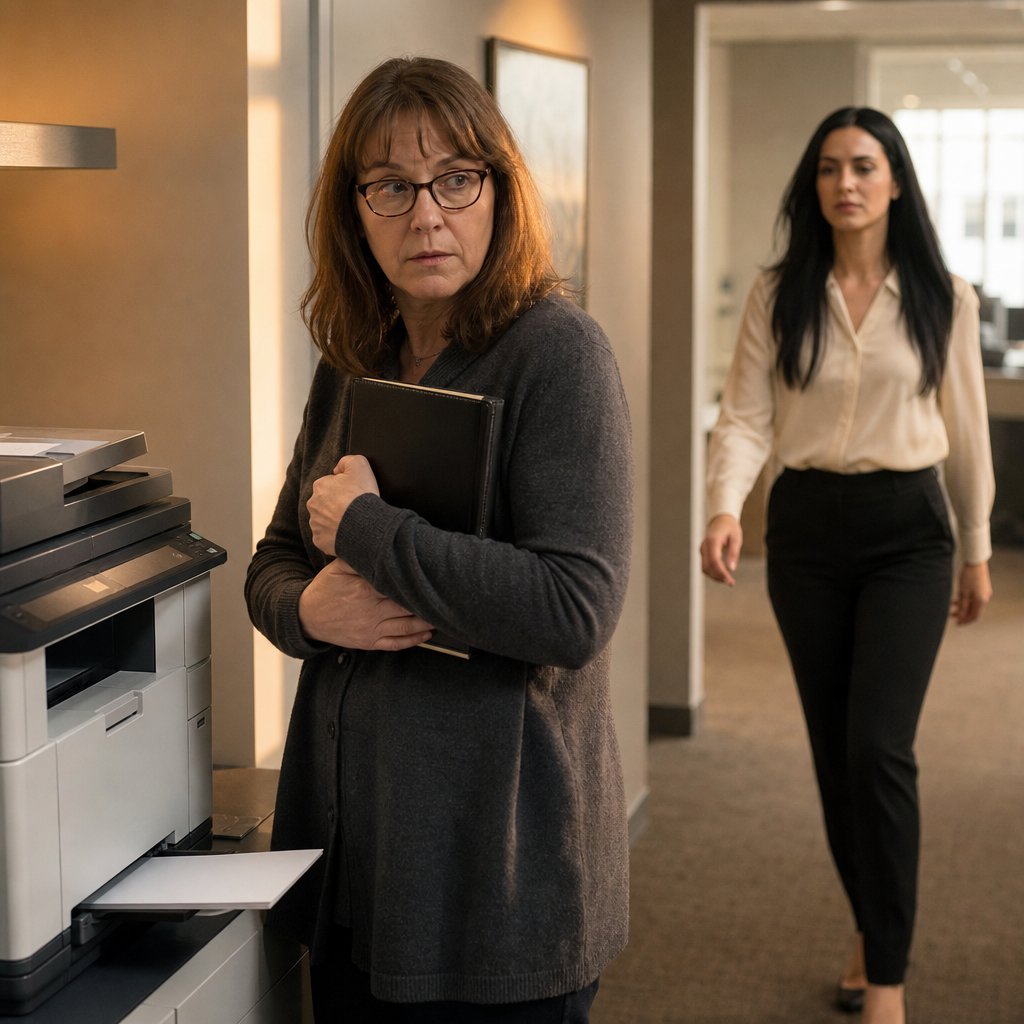
I walked out with that HR carpet-static clinging to my calves and headed straight for the printer bay because my hands needed something normal to do. That’s where I saw it: Lila’s leather notebook—black, soft, expensive—resting beside the output tray like she’d set it down for one second and forgot the world was full of thieves.
The air smelled like hot toner and burnt paper. I told myself I was just moving it so it wouldn’t get trashed. My fingers flipped the cover and there it was—bulleted dates, deal milestones, code names, an acquisition timeline so specific my throat tightened.
None of this had been shared outside the executive team.
I heard heels behind me, quick and decisive, and I shut the notebook on my own pulse.
Her Smile Went Flat

Lila didn’t snatch the notebook. That would’ve been honest. She just stopped beside me and placed her palm on the printer like she was leaning in for gossip, not damage control.
“You lose things a lot?” I tried to make it light, like we were two coworkers sharing an eye-roll at Monday. My voice did that thin, joking thing it does when I’m terrified. “Because this is… kind of above our pay grade.”
For half a second, she smiled. Not the glossy onboarding smile she wore in meetings—the real one, tight at the corners, like she’d tasted something bitter and decided to swallow it anyway.
Then her smile died. It didn’t fade. It shut off.
Her eyes went straight to my glasses like she was deciding whether they made me look harmless or just easy to break. The printer hummed, warm air breathing out, and suddenly I was aware of how alone that hallway was—no footsteps, no chatter, just the faint click of the motion sensor light.
“You don’t want to start fires in a building made of glass,” she said softly.
There it was. Not a threat you could quote to HR. Not a confession. A warning dressed up as friendly advice—like she was doing me a favor by letting me know she could ruin me without raising her voice.
I held the notebook out, careful, like it might explode. She took it with two fingers and didn’t break eye contact.
“You’re smart,” she added, almost fond. “Stay that way.”
And as she turned to go, she paused—just long enough to glance at the HR wing sign behind me like she knew exactly where I’d just been.
The Corporate Card That Lied

Marisol didn’t text me. She grabbed my elbow and steered me into a small conference room like we were late for something important. Marisol was late 20s, Puerto Rican, curly hair always pulled into a high puff, big hoop earrings that swung when she got mad—which was often and usually justified.
She shut the door and slapped a stapled expense packet onto the table. Not gently. The paper made that sharp, papercut sound against laminate.
“Tell me I’m reading this wrong,” she said.
I leaned in. The air smelled like dry-erase marker and old coffee. Lila’s name sat there in clean columns, like she’d always belonged on our ledgers. Corporate card issued. Limit that made my eyes widen. Approvals that didn’t route to our director, didn’t ping Finance like everything else did.
Executive discretion. Baked in. Like a birthmark.
“She’s been here five minutes,” I whispered.
Marisol’s laugh was humorless. “My request for a replacement laptop took three approvals and a sacrifice to the IT gods. But she gets a card that can buy a car?”
She flipped a page, nails clicking. “And look at the exception note. Not a policy code. Not a training completion. Just—” She stopped, jaw tight, and tapped the paper like it might confess if she hit it hard enough.
“Who authorized it?” I asked.
Marisol’s eyes went up to mine, wide and bright with the kind of fear that comes after you realize the monster has a key.
“It’s not a who,” she said. “It’s a level.”
And then the doorknob turned from the outside.
The Message That Slipped
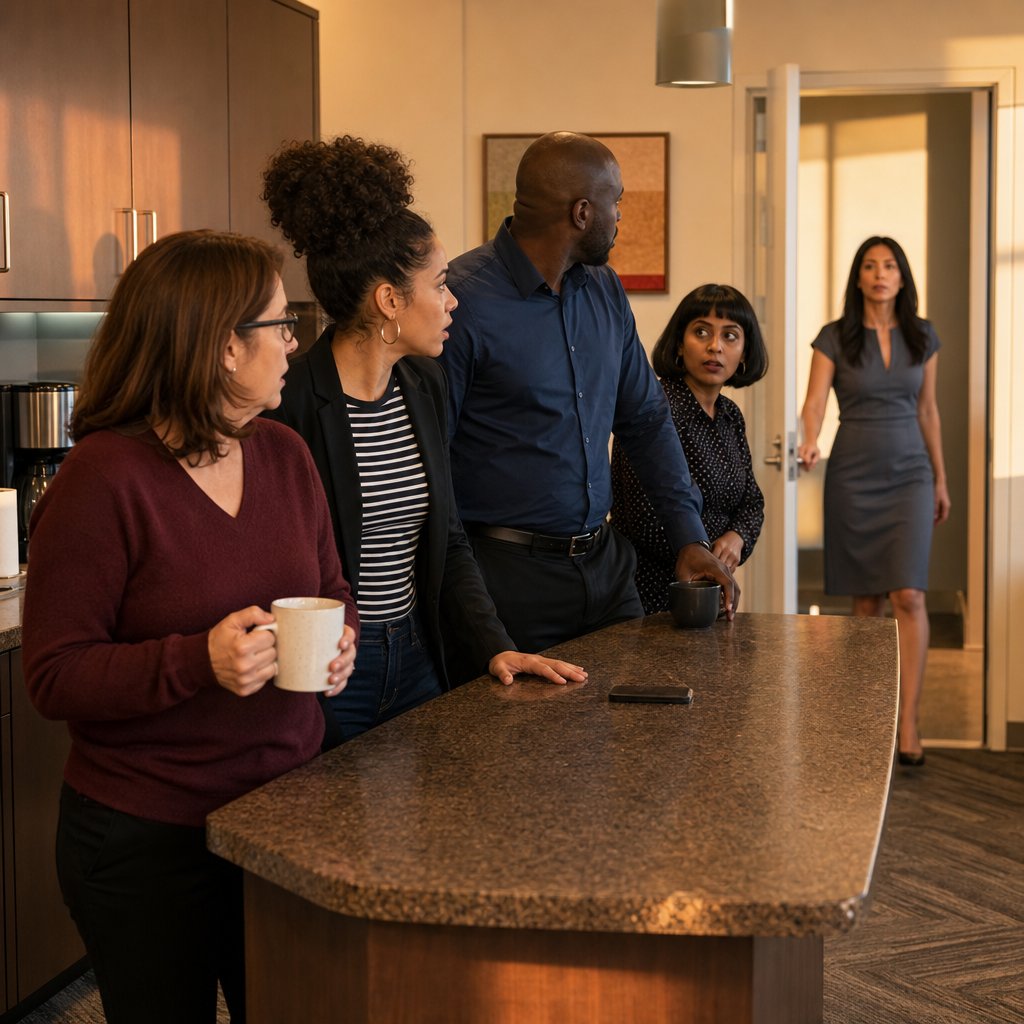
It happened in the kitchen, of all places—the little break area with the sad fruit bowl and the humming soda fridge. I was stirring powdered creamer into my coffee when Marisol’s head snapped up like she’d heard a gunshot.
Across the room, Devon from Sales—tall, Black, shaved head, always wearing loud socks under perfectly boring slacks—froze mid-laugh. Priya from Product, petite with a blunt bob and cat-eye liner sharp enough to cut glass, had both hands on the counter like she needed the support.
Me? I just watched their faces because whatever they saw, I didn’t want to see first.
Then Marisol slid her phone face-down across the counter toward me like it was contaminated. No screen visible. Just the frantic way her fingers shook.
“It posted,” she mouthed.
Devon whispered, “In the shared channel.”
Priya’s voice came out thin. “From Lila’s account.”
My stomach dropped through the tile. A message meant for Grant—meant to be private—had gone out where half the company could’ve seen it. It was up for seconds, Devon said. Seconds. Then it disappeared like it never existed.
But three of us had the exact same expression: the face of people who knew what a delete button couldn’t erase.
Marisol’s eyes were wet with adrenaline. “I screenshotted it,” she hissed. “So did Devon. So did Priya.”
I could smell burnt coffee and lemon disinfectant as I realized something worse than the message itself:
Lila either slipped… or she wanted someone to see.
The kitchen door swung open, and Lila walked in like she owned the air.
The Gossip Post Hit Overnight

By the time I got home, my group chat was a pile of frantic typos and half-sent thoughts. Someone had posted a blind item—one of those vague, smug little rumors people share like they’re doing the Lord’s work.
“CEO’s got a secret at his own company.”
No names. No proof. Just enough smoke to make everyone start sniffing the air.
I barely slept. My brain kept replaying Lila’s dead smile and that line about glass buildings. At 3:12 a.m., my downstairs neighbor’s bass thumped through the floor like a heartbeat I couldn’t calm down from.
The next morning, the office felt… scrubbed. Too clean. Too bright. Like someone had wiped fingerprints off every surface. People talked in that careful way they do when they don’t want to be caught talking.
At 9:06, Compliance rolled out conflict-of-interest training. Mandatory. “Refresher.” The timing was so perfect it felt like a punchline—like they’d been waiting with their finger hovering over the send button.
Tanya walked past my desk and didn’t look at me. Owen from Compliance lingered by the badge scanners, smiling at everyone like a camp counselor.
Marisol leaned over my cubicle wall and whispered, “This is an alibi. They’re building an alibi.”
I nodded, throat tight, watching Lila cross the floor in a new blazer like nothing in the world could touch her.
Then my phone buzzed—face-down on my desk—and Marisol’s eyes went wide as she read the subject line on the paper printout she’d just grabbed from the communal tray.
The Shell Company Address
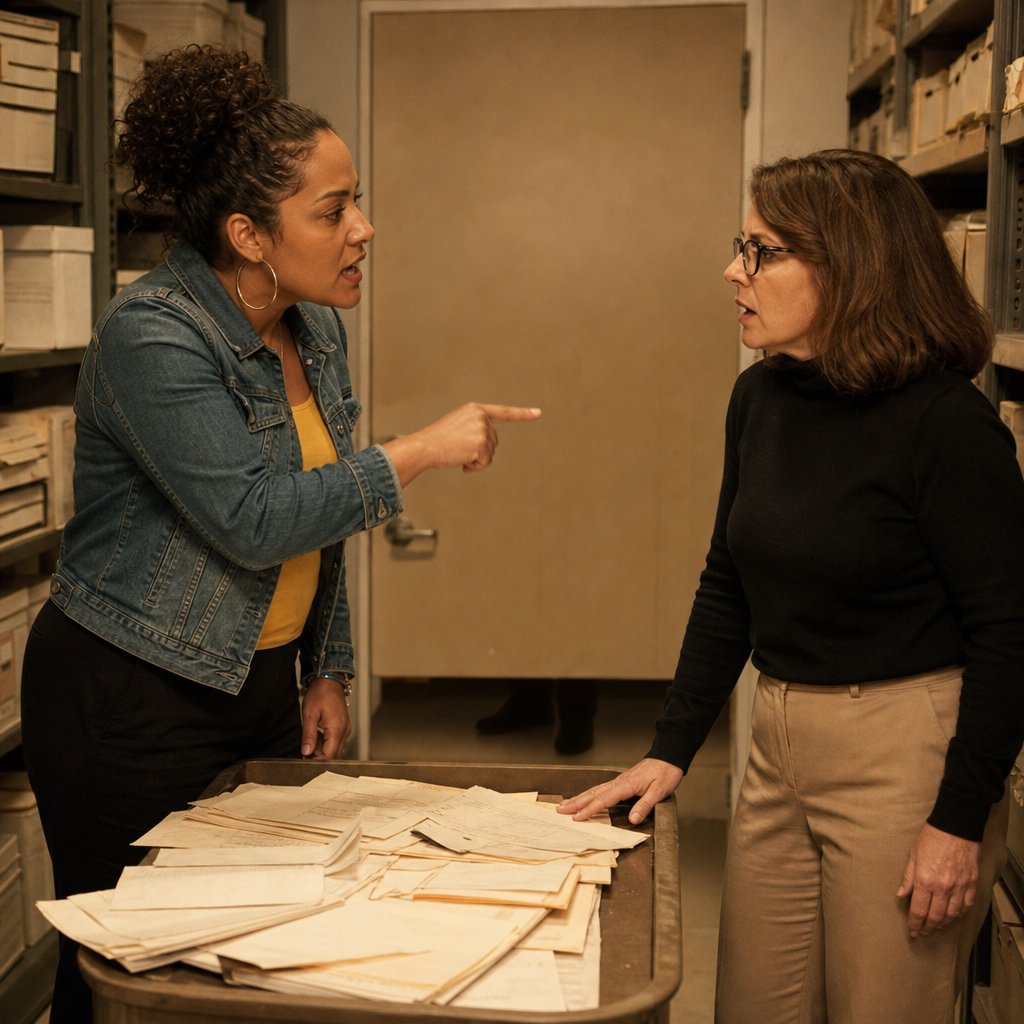
We hid in the records room—a windowless little bunker with rolling shelves and that metallic smell of paper clips and dust. Marisol shut the door with her heel and spread her findings across a cart like she was setting up surgery.
“Okay,” she whispered, breathing hard. “I followed the reimbursements.”
Not Lila’s travel. Not the obvious stuff. The weird, recurring payments that were always just under thresholds, always approved without questions. A consultancy name that sounded like it had been generated by a bored robot.
“It’s a shell,” Marisol said, voice shaking with fury. “No employees. No website. No footprint. But it has an address.”
She tapped the page. Again, no readable text—just the way her fingernail landed like a gavel. “I looked up the building. Guess who owns units there?”
I didn’t answer because I already knew, and the knowing made my skin feel too tight.
“Grant,” Marisol said. “Not the company. Grant. Personally.”
The room swayed like I’d stood up too fast. Money moving like it was trying not to be seen. Like it had a reason to hide. Like it had been hiding for a long time.
Marisol’s jaw clenched. “This isn’t just favoritism. This is infrastructure.”
My mouth went dry as sand. “If this is tied to the acquisition…”
Marisol swallowed. “Then it’s not just scandal. It’s leverage.”
We both went silent when footsteps paused outside the door—slow, deliberate, like someone had stopped to listen.
The Photo They Cropped
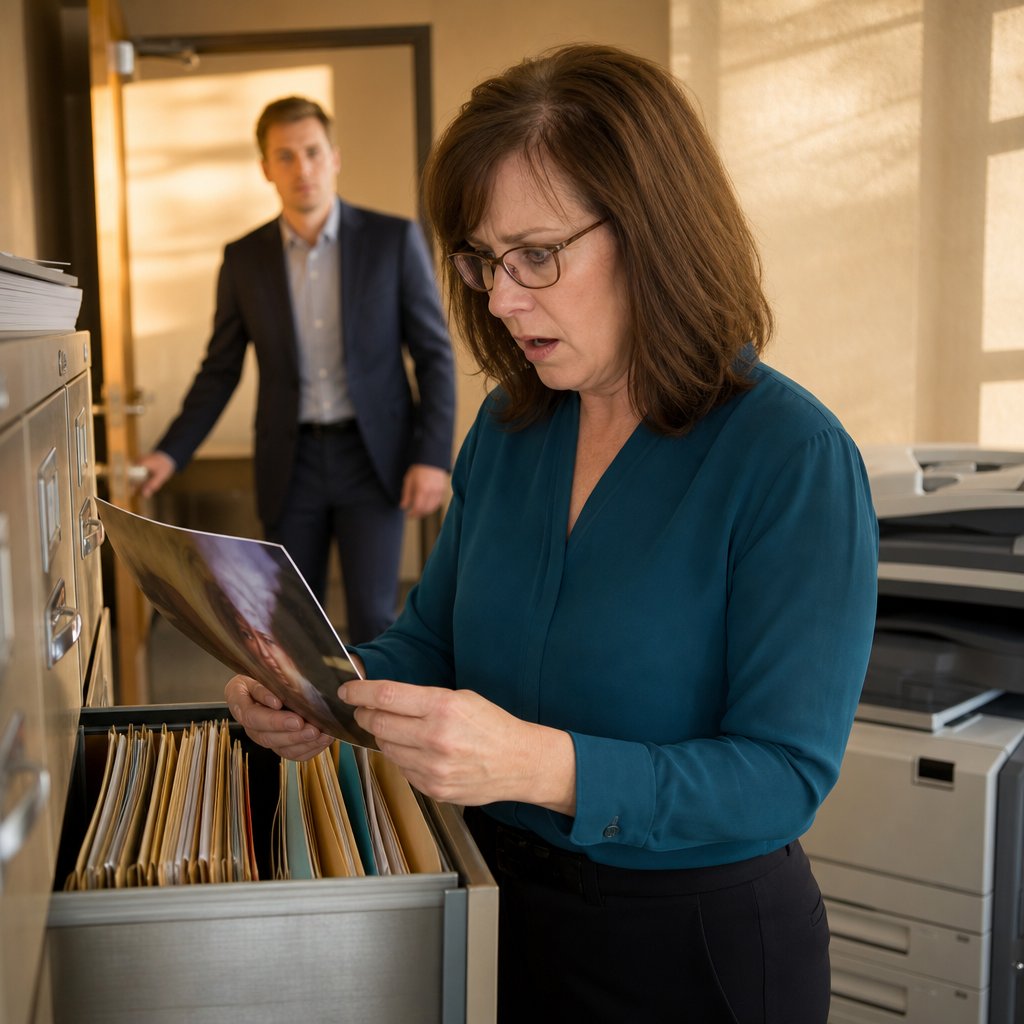
I found it because I was petty enough to look.
Comms kept a press folder in a locked cabinet in the copy room—physical, because they were paranoid about leaks. I’d been asked to pull “approved assets” for a vendor deck, which meant I had a key and exactly five minutes of plausible deniability.
The folder smelled like glossy paper and perfume—someone’s hands had been in there recently. I flipped through smiling headshots and ribbon-cutting shots, all perfectly framed to show Grant as benevolent and alone.
Then I saw the charity gala set.
In the official version, Grant was centered, laughing, hands visible, no one too close. Clean. Safe. CEO-shaped.
But tucked behind it was the uncropped original.
My breath caught so hard it hurt. Grant’s arm was around Lila—around her waist like it belonged there. Not a quick “we’re posing” touch. A proprietary one. Her head tipped toward him like they’d practiced the angle. They looked… comfortable. Familiar. Two people caught mid-private joke in a public room.
And the timestamp on the photo sleeve—printed by the photographer, not typed by an intern—put it two years before Lila was ever a “new hire.”
My fingers left a faint sweat mark on the glossy edge. The background blurred into chandeliers and tuxedos and a world I’d never been invited into.
I slid the photo halfway out to stare again, and behind me, the copy room door opened with a soft click.
The Invite With No Sender
The calendar invite showed up with no name attached. No organizer. No notes. Just a time and a location that made my stomach clench.
“7:10 a.m. Vendor Sync.”
CEO floor.
I didn’t tell Marisol. I didn’t tell anyone. I just laid out my clothes like I was going to war and set three alarms like my life depended on being early.
The elevator lobby was nearly empty at that hour—just the faint smell of floor cleaner and a security guard sipping something from a paper cup. My badge felt heavier than usual, like it knew it didn’t belong where I was headed.
I got off one floor below and took the stairs, heart hammering, because I didn’t want a camera catching my badge ping on the executive turnstile.
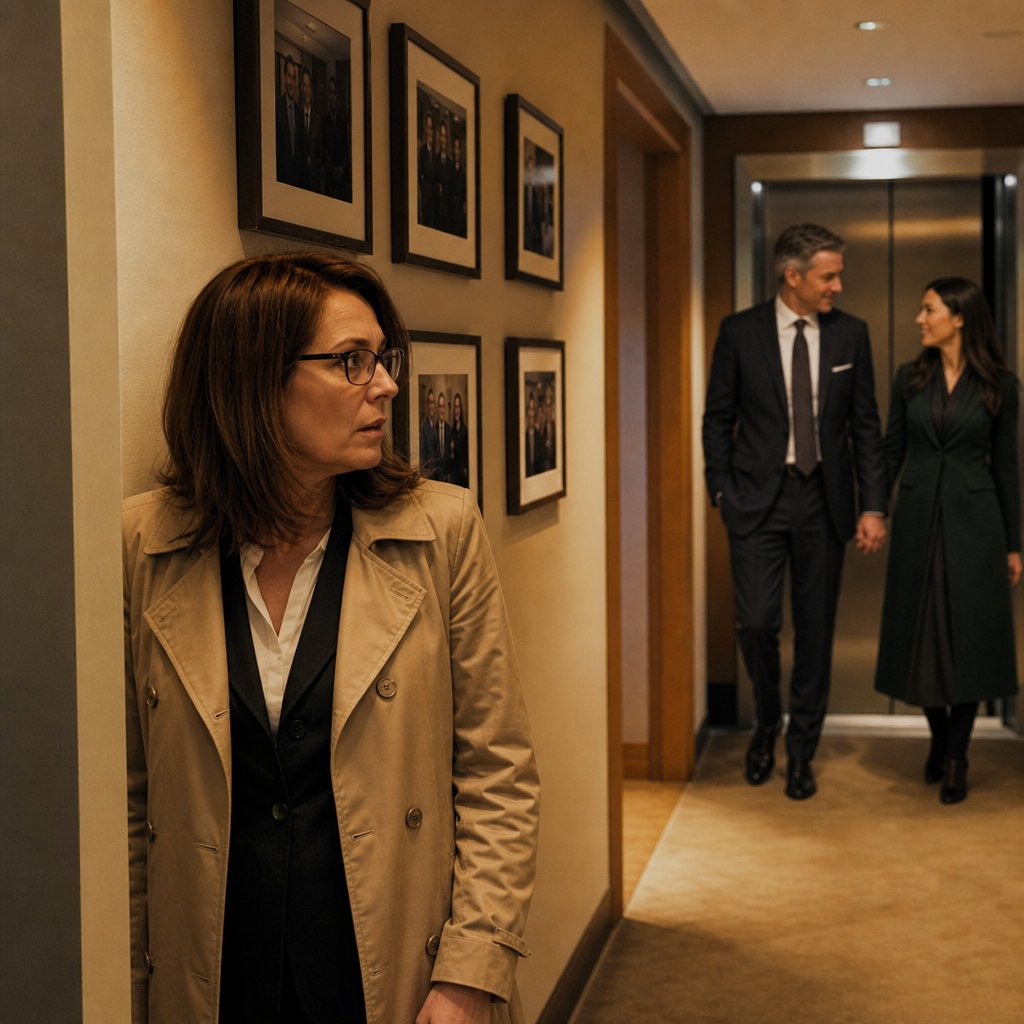
At 7:05, I waited by a corridor with framed photos of smiling leadership teams—Grant always centered, always alone. The carpet was so thick it swallowed my footsteps. My mouth tasted like metal.
At 7:08, the private elevator chimed.
Grant stepped out first—late 40s, silver at the temples, tailored suit that looked like it had never met a wrinkle. Lila followed, hair down, coat draped perfectly, not a speck of sleep on her face.
They didn’t speak at first. They didn’t have to.
And then—so small it could’ve been an accident if I wanted to lie to myself—his fingers brushed hers. Their hands touched, lingered, and she smiled up at him like the building belonged to them both.
The elevator doors began to slide shut, sealing them in, and I realized I was standing in full view.
The Update That Erased Me
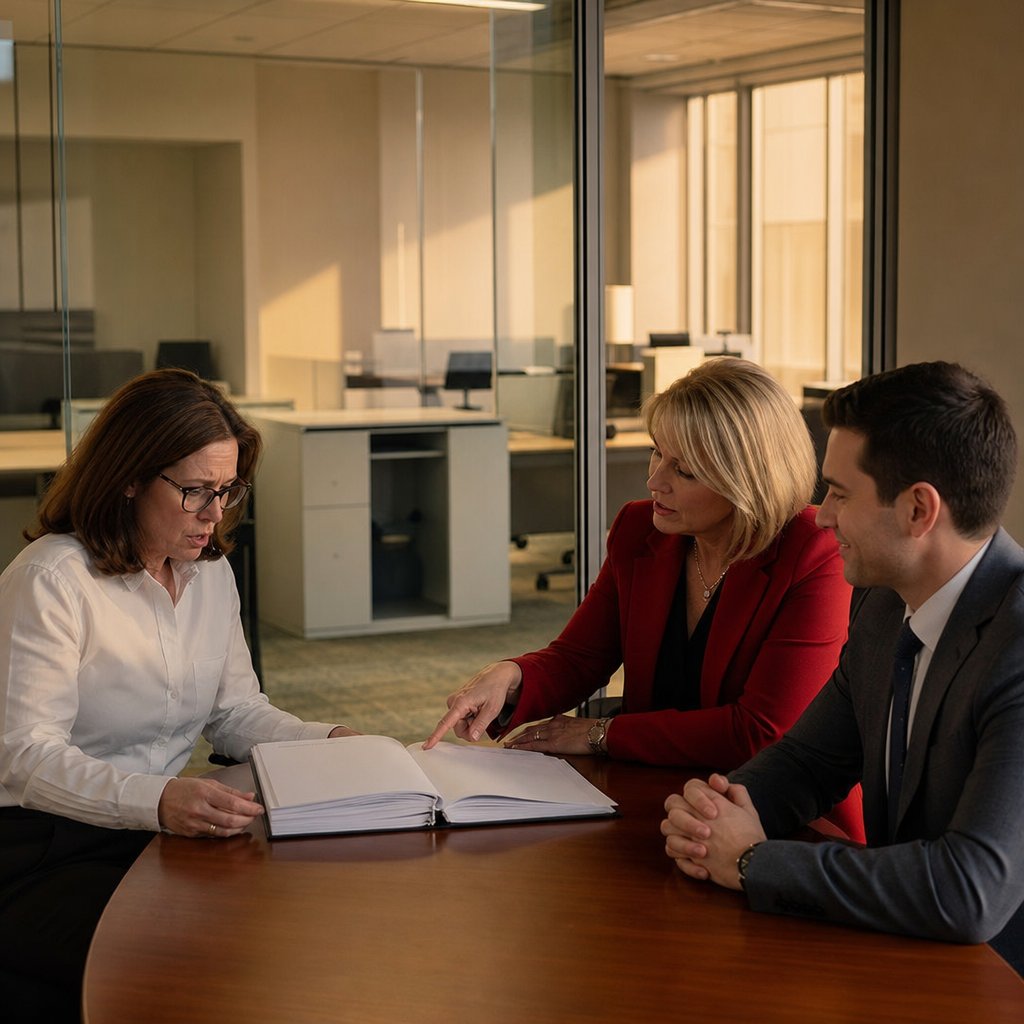
By lunchtime, IT had “pushed a security update.” That was the phrase in the all-hands email Tanya forwarded like it was a weather report. Everyone had to restart. Everyone had to re-authenticate. Everyone had to trust the process.
My evidence package—every file name carefully bland, every attachment duplicated—was gone after the reboot. Not corrupted. Not moved. Gone like it had never existed. My stomach turned cold, then hot, then cold again.
I ran to Marisol’s desk and found it stripped.
Her succulent was missing. Her framed photo was gone. Her chair pushed in like a museum display. Devon stood there with his hands in his pockets, face tight.
“They reassigned her,” he said quietly. “Effective immediately. Temporary coverage in… Facilities.”
Facilities. The place you sent people when you wanted them invisible.
I didn’t even have time to process the cruelty before Tanya pinged me to come to a “quick meeting.” The small glass conference room off HR was waiting, and inside sat Tanya and Owen from Compliance, both wearing the same polite expression people use at funerals.
Tanya slid a folder across the table. Thick. Heavy. It made a soft thud that sounded like a door locking.
“We value you,” she said. “We’re offering you a promotion.”
My throat tightened. “Why now?”
Owen’s smile didn’t reach his eyes. “Because we also value confidentiality.”
I opened the folder and saw pages of legal language—dense, aggressive—reading less like a benefit and more like a muzzle with my name on it.
The Blast Before The Roadshow
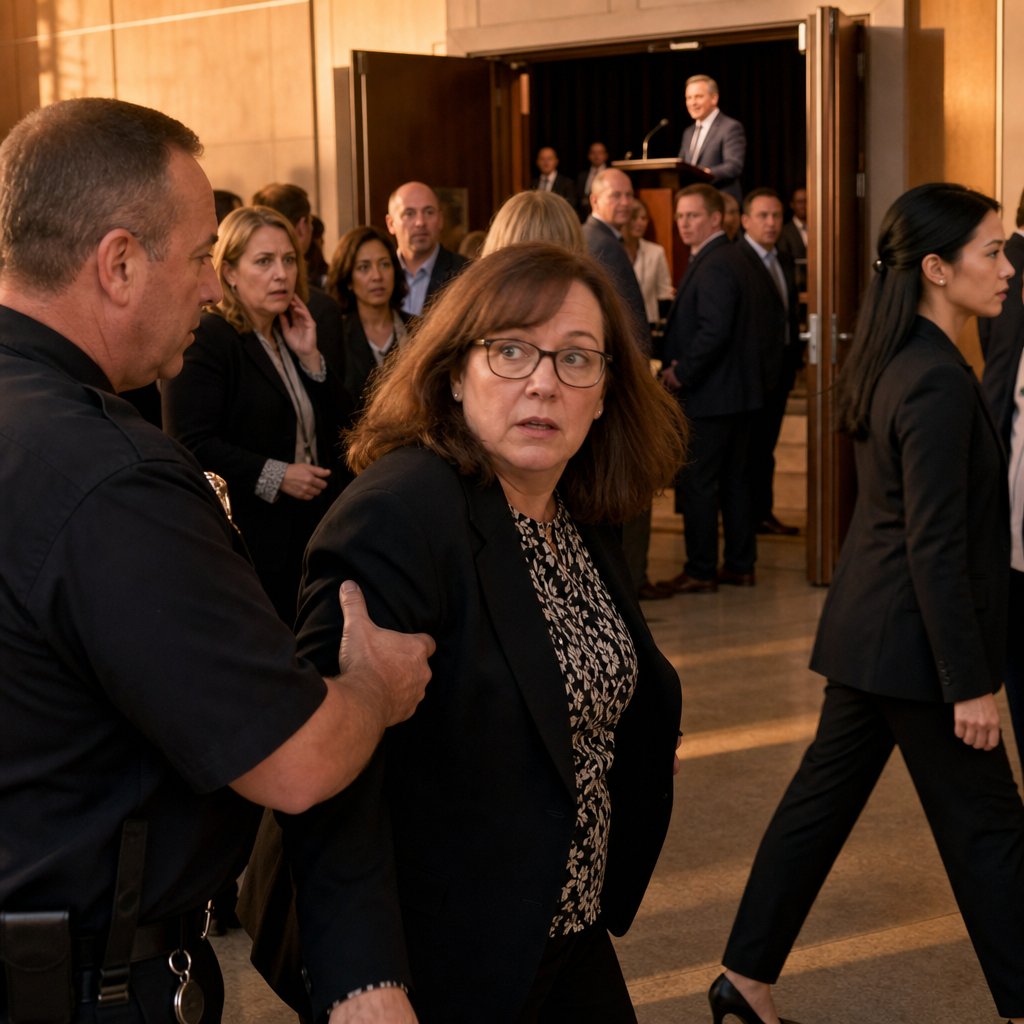
Roadshow morning had that manic, fake-holiday energy—catered pastries nobody touched, suits everywhere, voices pitched just a little too bright. The lobby smelled like cinnamon and expensive cologne. Investors were being escorted upstairs like royalty.
I stood near the side entrance to the auditorium with my badge lanyard twisted around my fingers until it burned. I hadn’t signed Tanya’s folder. Not yet. I’d smiled and said I needed “time to review,” and Tanya’s eyes had narrowed like I’d just confessed to stealing.
Grant was already backstage, laughing with a VP like he hadn’t built a whole second life inside our org chart. The massive screen behind the stage glowed with a generic holding slide—no details I could focus on, just light and movement.
Then a ripple went through the crowd. Not a gasp—worse. A sudden, synchronized stillness. People’s heads dipped. Hands moved. Jackets shifted as bodies angled away for privacy.
An internal blast had hit from an unknown sender.
I didn’t need to see anyone’s screen to know what it was. Devon’s face drained. Priya covered her mouth with her whole hand. Someone near me whispered, “Oh my God,” like a prayer that failed.
And then I saw Lila across the lobby—no blazer today, hair pinned back, moving fast. Not toward the stage. Away. Slipping through a side corridor like she’d practiced disappearing.
Grant walked onstage smiling, mic in hand, basking in applause that sounded suddenly thin.
Behind him, people turned and stared at him with a new kind of attention, and I realized the photo had finally escaped the cropping—timestamped, undeniable—right as the doors to the side corridor swung shut behind Lila.
Was Lila justified in using the CEO’s private elevator?