



The Blinds Went Down
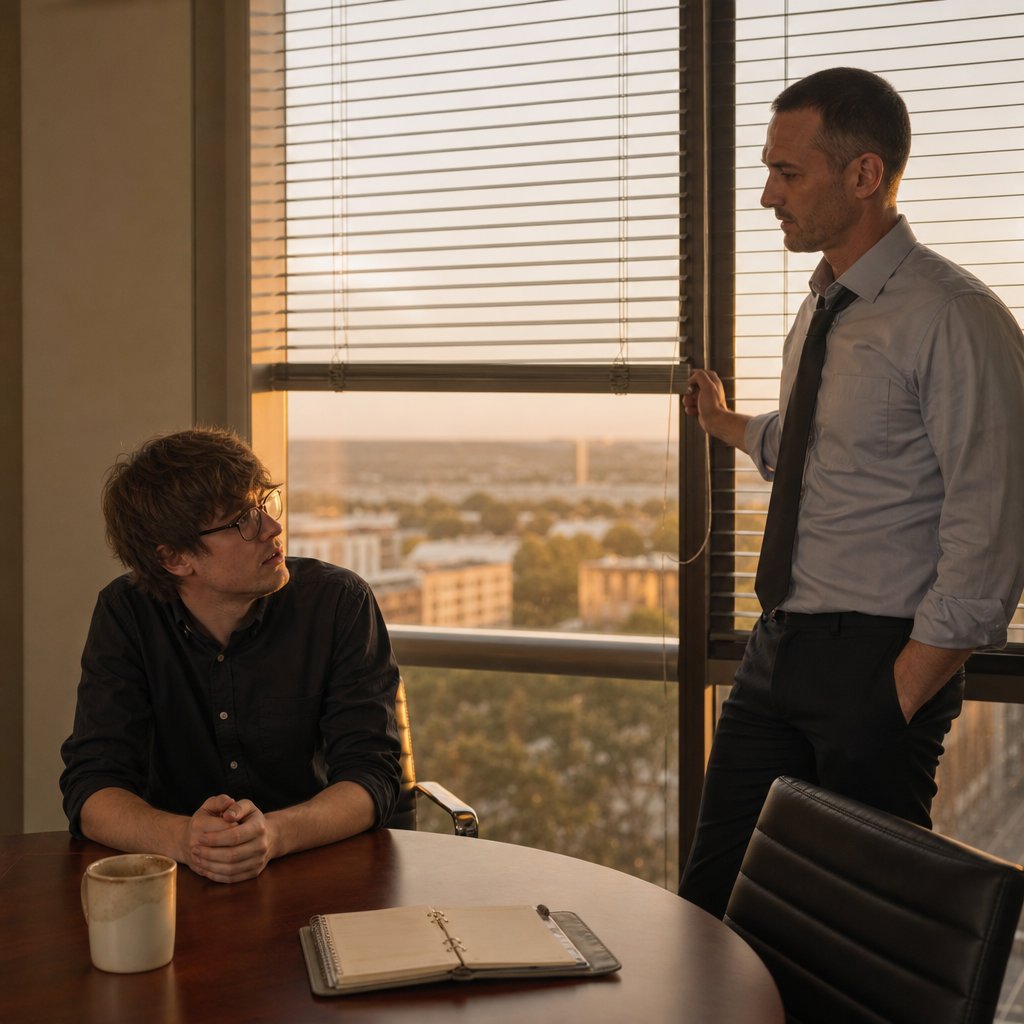
Graham slid the blinds down with two fingers like he was lowering a coffin lid, and the glass-walled conference room turned into a fishbowl with the lights off. He didn’t sit. He just stood there, tie loosened, jaw working like he was chewing on something bitter.
“Tell me who’s talking,” he said, soft enough that it felt practiced. Like he’d said it before and gotten answers.
I was in the chair across from him, knees angled toward the door out of instinct, my badge lanyard biting the back of my neck. On the table, his planner was open—paper, the kind executives used when they didn’t want a trail—and the block in thick, neat ink read Budget Review. Budget. That’s what this was supposed to be. That’s what I’d covered for him, rescheduled, protected with little white lies to people who didn’t have his access.
He tapped the page twice, right on that fake label, and looked at me over it like he expected gratitude. Like I owed him loyalty for every time he’d swooped in and made me feel safe from the office sharks.
Outside the blinds, the hallway lights hummed. Inside, all I could smell was his expensive cologne and the burnt coffee someone had abandoned in the corner.
He took one step closer and lowered his voice even more. “Iris. I’m not asking twice.”
Dev’s Joke Landed Wrong
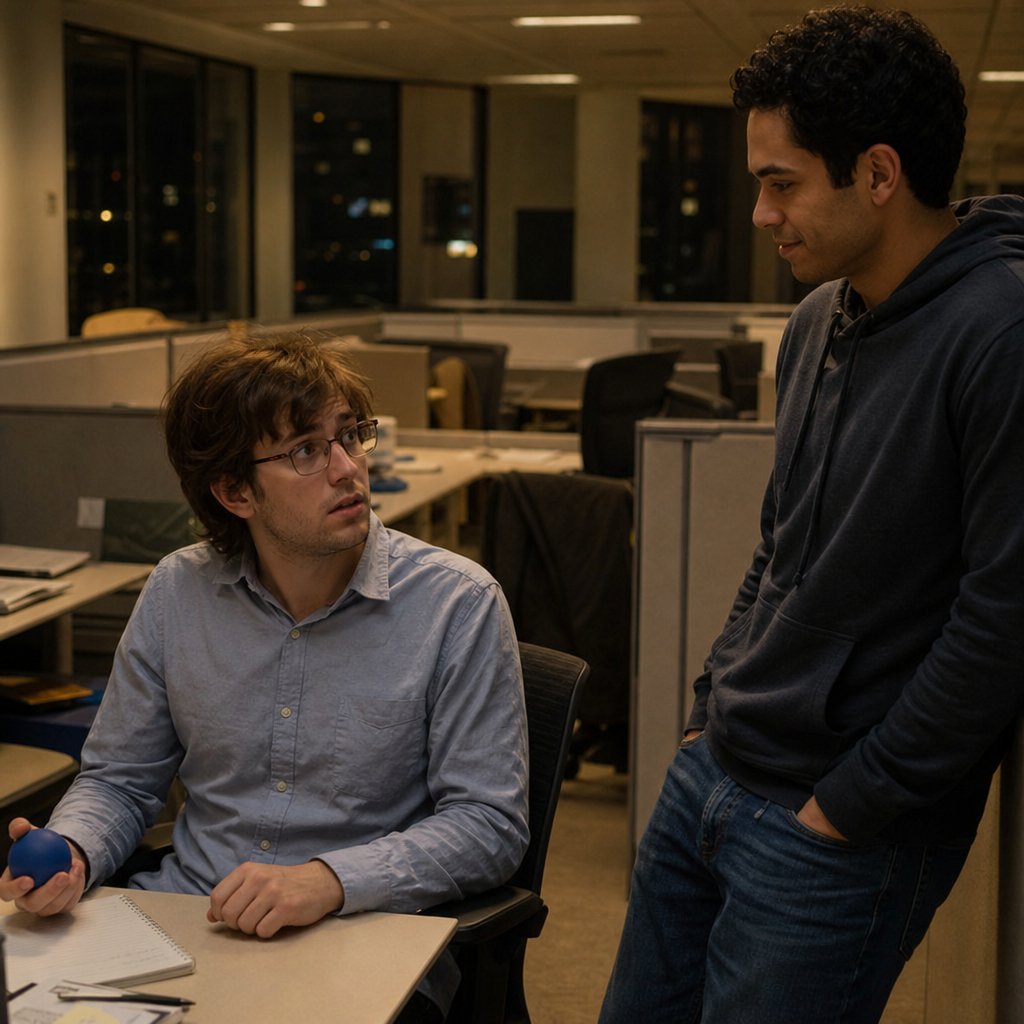
Back at my desk, the office felt too big—rows of empty chairs, the faint whir of the HVAC, and the smell of someone’s microwaved leftovers clinging to the carpet. Dev rolled up like he owned the quiet, leaning his hip against the edge of my cube wall.
Dev was the kind of handsome that got away with things: tan skin, dark curly hair always slightly messy like he’d just taken off headphones, and a grin that made people confess. He flicked my stress ball between his fingers and nodded toward the dark hallway. “So. Another one of Graham’s mentorship sessions?” he said, dragging the word out. “The kind that comes with wine and overtime?”
I tried to laugh. It came out thin.
His grin widened like he’d scored a point, but there was something sharp under it. I watched his eyes—brown, quick—track over my face like he was reading for damage.
“What have you heard?” I asked, casual on purpose. My voice cracked anyway. I hated that he could tell when I was scared. He knew my calendar better than my own mother did. He knew when I skipped lunch. He knew when I stayed late for Graham.
Dev’s fingers stopped mid-bounce. The stress ball thudded into my palm, heavier than it should’ve been.
He stared at me for a beat too long, and then his whole expression folded shut. “Heard about what?”
The Email With My Name

The next morning, my inbox refreshed and my stomach dropped so fast I actually grabbed the edge of my desk. A new message sat there like a live wire—subject line: Complaint re: Voss / Ops—multiple relationships.
And there it was, the petty little miracle that made it worse: my name still sitting in the recipient line, like I’d been invited to my own execution.
I didn’t open it at first. I just stared, hearing Graham’s voice from the night before—Tell me who’s talking—and suddenly every “quick sync” and “closed-door catch-up” he’d asked for felt like a fingerprint on my shoulder.
When I finally clicked, my eyes snagged on phrases before my brain could protect me: “pattern,” “department,” “retaliation concerns.” Three people. Our department. Graham. The complaint was written like someone had been collecting receipts for months, the kind of careful language you use when you know you’ll be called a liar.
I could feel my face heating, that prickly shame like I’d been caught doing something dirty even though I hadn’t. The air smelled faintly of toner from the printer bank behind me, and my hands started to sweat against the mouse.
Then I saw the timestamp. The email had been forwarded automatically. Not to me—through me. Like I was a link in the chain.
I scrolled down, heart hammering, looking for the sender’s name, and that’s when I realized the thread was longer than one message.
Deleting Doesn’t Unsend
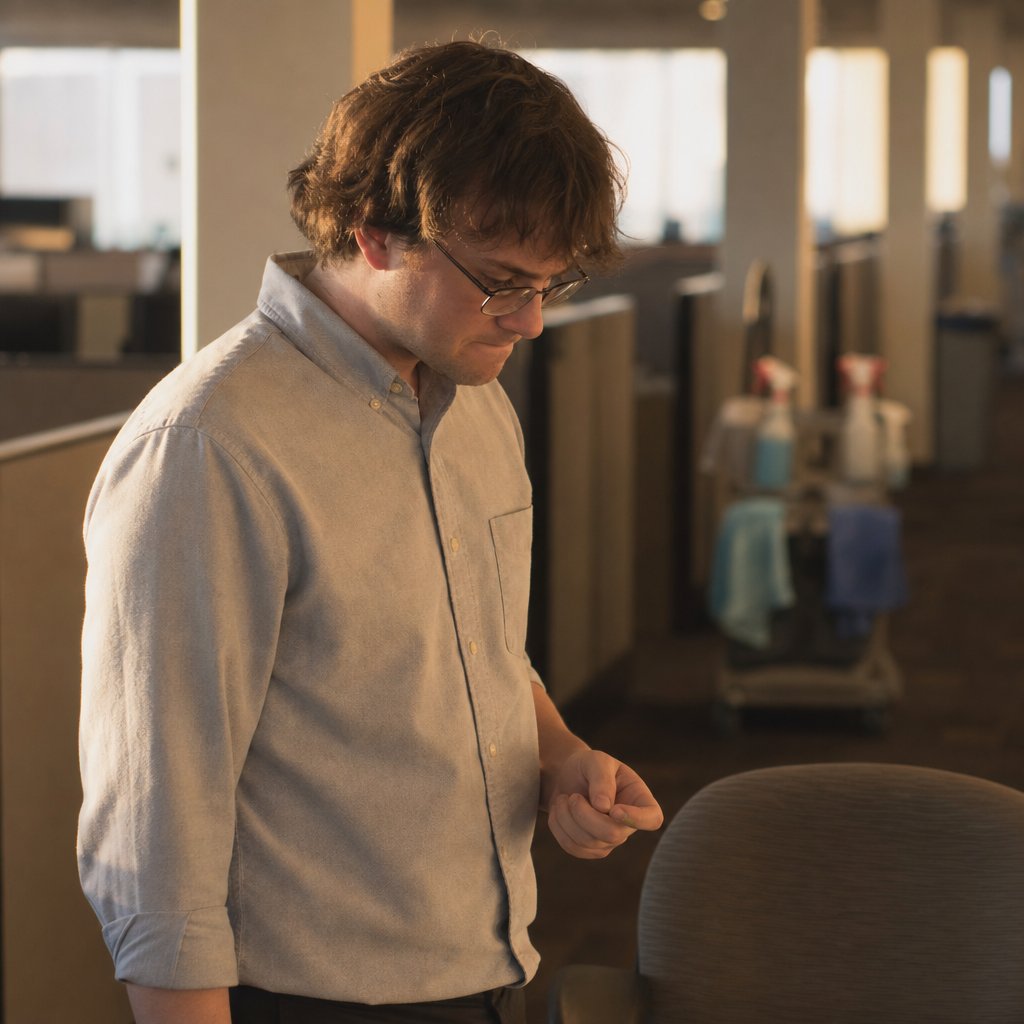
I deleted it.
Not elegantly. Not thoughtfully. I hit delete like I was swatting a wasp, then emptied the trash like it could sting me through the folder. My pulse was in my ears, and I kept glancing up, half-expecting Graham to be standing there with that calm executive face that meant he already knew.
For one delusional minute, I let myself believe it worked. That the universe had handed me an accidental peek and I’d shoved it back behind the curtain before anyone noticed.
Then my chat notification popped up and my skin went cold.
HR: “Quick conversation?”
Two words. A question mark. The corporate equivalent of a hand closing around your wrist.
I stared at the message until the letters blurred. In my head, I could see the system logs like a silent witness—auto-forward rules, access trails, the little timestamps that never forget. Deleting an email didn’t delete the fact that it arrived. Didn’t delete the fact that my name had been on it. Didn’t delete the fact that I’d opened it and scrolled.
My mouth tasted like metal. I could smell the lemony disinfectant from the cleaning crew’s cart passing somewhere behind me, bright and wrong against the stale office air.
I typed, erased, typed again. My fingers hovered over the keyboard, trembling, because any answer felt like choosing a side.
Before I could send anything, another notification appeared—calendar invite. Private. No title.
Questions Without His Name
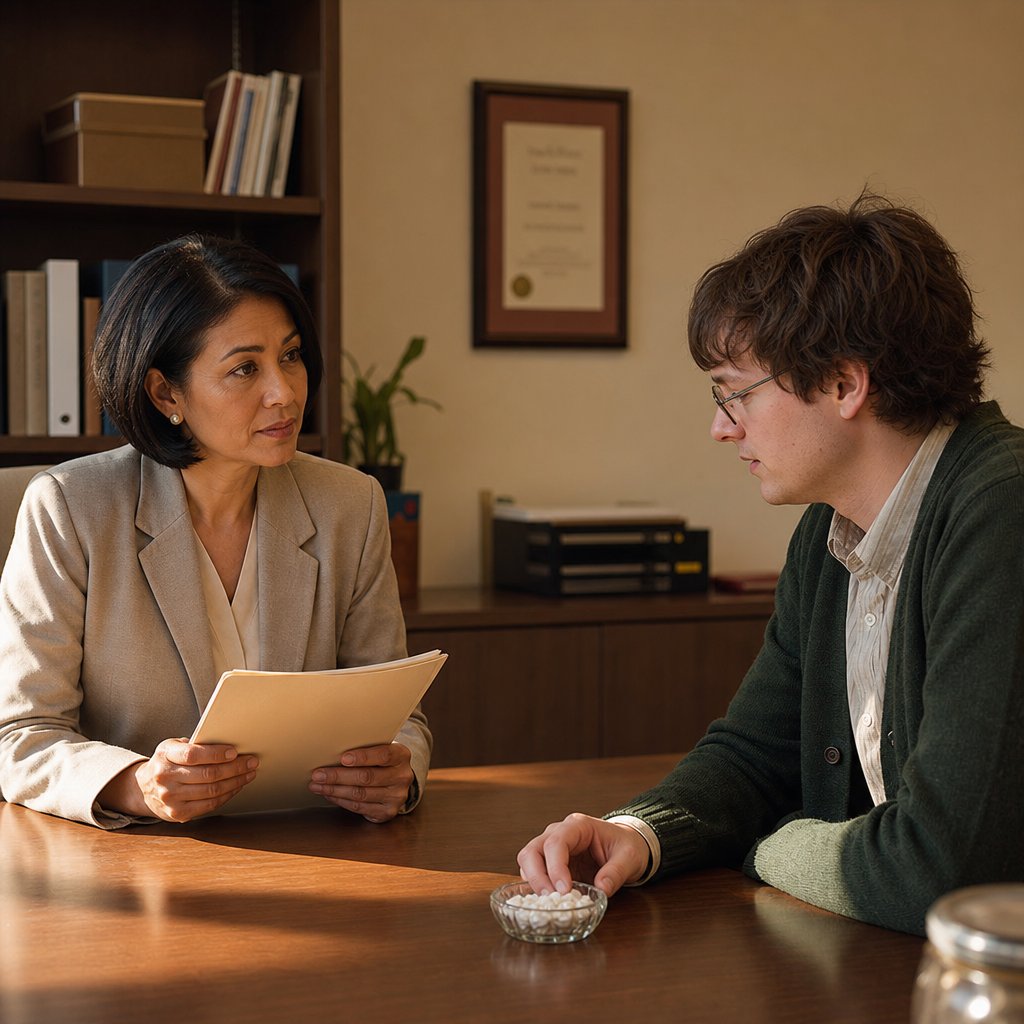
HR’s office always smelled like lavender air freshener trying to cover up panic. The partner—Dana, mid-40s, sleek bob, pearl studs, expression set to “neutral”—gestured me into a chair that was just a little too low, like the furniture itself wanted you to feel small.
She didn’t say Graham’s name. Not once.
“We’re doing fact-finding,” she said, flipping open a thin folder with tabs. No logos. No visible text. Just the sound of paper, crisp and final. “I’m going to ask some standard questions.”
Standard. Like this was a fire drill.
“Do you feel safe at work?” Dana’s voice was gentle in the way a dentist’s voice is gentle right before they start drilling. “Have you experienced or witnessed retaliation? Have you noticed favoritism related to—” she paused, eyes dropping for a fraction of a second, “—interpersonal relationships?”
Interpersonal. Like we were talking about a potluck romance, not someone with the power to freeze your career with a look.
I stared at the little glass dish of mints on her desk. The peppery smell hit my nose when I lifted the lid, just to have something to do with my hands. My reflection warped in the curved glass of a framed award on her shelf.
“We’re not here to assign blame,” Dana continued, still never naming him, “but we take concerns seriously.”
My throat tightened. If this was about protecting people, why did it feel like protecting a brand?
Then Dana leaned forward, lowered her voice, and asked, “How close are you to him, Iris?”
The Pattern I Couldn’t Unsee
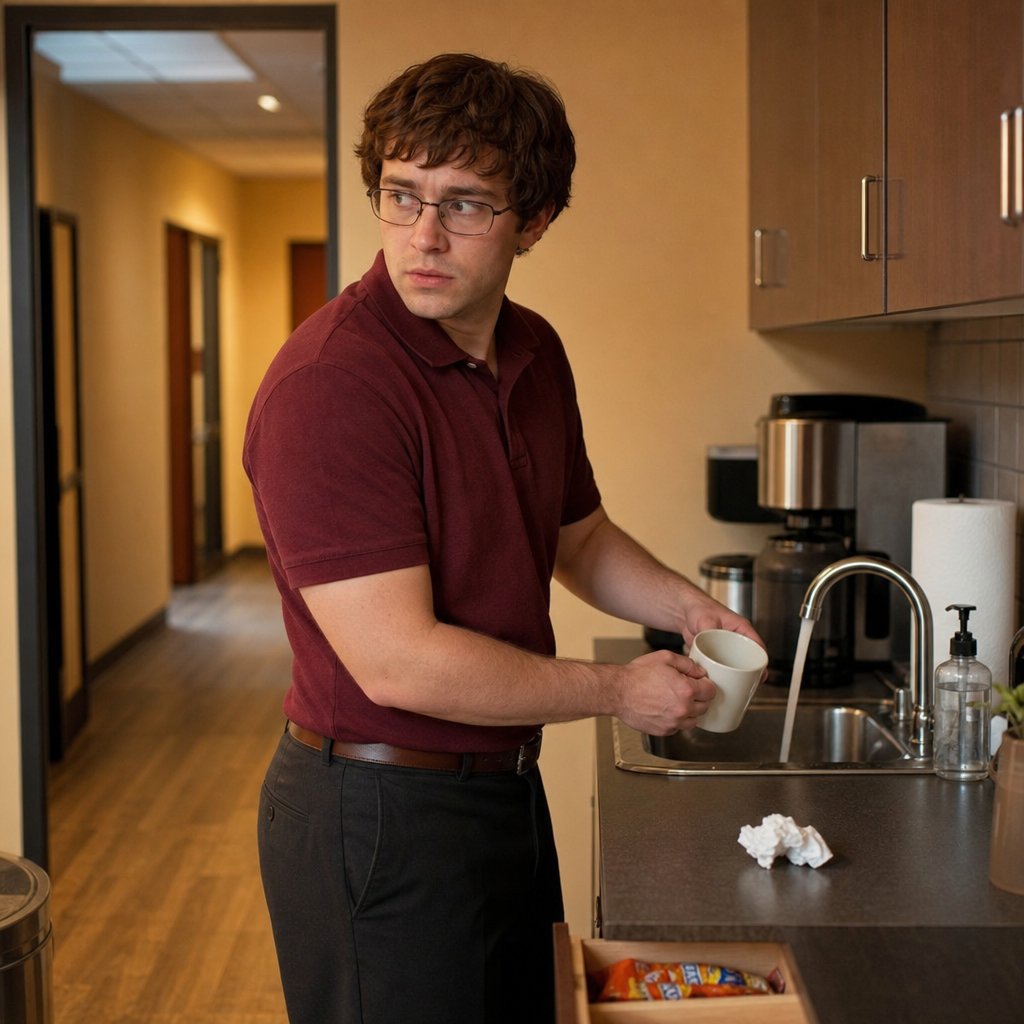
I started tracking things the way you track symptoms when you’re scared you’re sick.
Not on a spreadsheet—too obvious. In my head first, then in a battered pocket notebook I kept shoved under my keyboard like a guilty secret. Late nights. Last-minute “client emergencies” that weren’t clients. Promotions that didn’t make sense. Headcount that stayed protected even when budgets tightened everywhere else.
It was the petty details that made me furious: whose meetings I’d covered when Graham “had to step out,” whose calendar blocks I’d politely defended with “he’s in back-to-backs,” who got the benefit of the doubt when anyone else would’ve been dragged.
Three names kept surfacing like oil spots.
I’d see them in the hallway at odd hours, hear their laughter stop when Graham walked by, watch their faces do that quick calculation people do when they’re deciding whether to play dumb or play nice. I noticed who got invited to executive readouts with barely any ramp time. I noticed who never got their vacation requests denied. I noticed who Graham spoke to in that low voice that made his jokes feel like secrets.
And then there was me. The one who smoothed it all over. The one who told myself it was normal because he’d been kind to me. Because he’d called me “steady” in front of other leaders and it felt like being picked.
On Thursday, I stood by the break room sink, washing a coffee mug that wasn’t mine, and realized I could predict the next “late night” before it happened.
Because the same three people always stayed.
Lila’s Impossible Leap

Lila was new enough that her badge still looked stiff. Early 20s, petite, glossy black hair in a sharp bob, eyeliner so precise it looked like a decision. She’d started two weeks ago, and already she was gliding through the floor like she’d been here for years.
I first clocked it in the big conference room before an exec review. Lila stood at the front with a clicker in her hand, shoulders back, speaking like she’d written the strategy herself. The directors nodded. Someone laughed at one of her lines like it was a punchline they’d been waiting to hear.
Two weeks. I’d spent my first two months here learning where the bathrooms were and how to not look terrified.
Graham sat off to the side, arms folded, watching her with a calm little smile that made my stomach twist. When she finished a section, she glanced at him—quick, intimate—and he gave the smallest nod. Like a signal. Like a reward.
After the meeting, I caught the tail end of their conversation near the door. Lila’s voice was bright, almost sing-song. “Thanks, G,” she said, like it was the most natural thing in the world.
G.
I froze with my notebook pressed to my chest, feeling the edge dig into my ribs. Graham’s eyes flicked to me, and for a second his smile didn’t reach them.
Lila followed his gaze and looked at me like she was measuring what I knew.
Mason’s Ring And Flinch
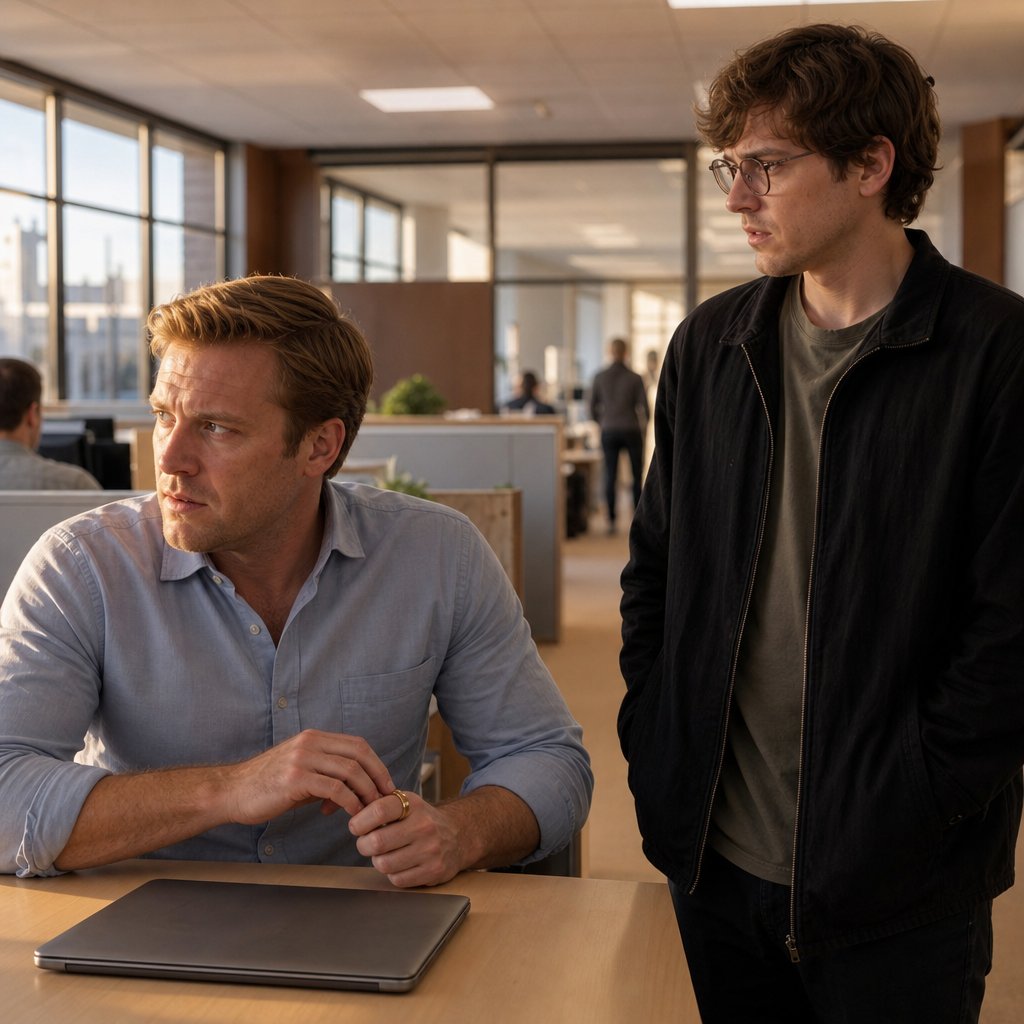
Mason was the one everyone liked because he was harmless on the surface. Early 30s, sandy-blond hair always neatly combed, broad shoulders squeezed into button-downs that were just a little too tight across the chest. He wore his wedding ring like a badge—gold, slightly scratched, the kind of ring that had survived moving boxes and hard days.
That’s why it hit so wrong when I started noticing him flinch.
It wasn’t dramatic. Just a tiny recoil when Graham’s shadow crossed his desk. A too-fast straightening of posture. A laugh that came half a second late, like he was checking first if it was safe.
One afternoon I walked past Mason’s pod and saw Graham pause behind him, hand resting on the back of Mason’s chair in that casual “friendly” way leaders do. Mason’s shoulders went rigid under his shirt like a wire had tightened. He kept his eyes on his work, blinking too hard.
When Graham moved on, Mason exhaled like he’d been holding his breath for minutes. He looked up and caught me watching. His face went blank so fast it was almost impressive.
“You good?” I asked, because I couldn’t stop myself.
Mason’s hand slid over his ring, twisting it once, twice. Then he snapped his laptop shut with a sharp little clap that echoed in the pod, like he was hiding something in there. Like closing it could make it disappear.
He leaned in, voice low. “Don’t,” he said, eyes flicking toward the hallway where Graham had gone.
Dev Was On The List

I didn’t want the third name to be Dev. I’d already rehearsed a world where it was anyone else.
Because Dev wasn’t just a coworker. He was the person who brought me an extra fork when the cafeteria ran out. The one who knew I hated morning meetings and quietly moved my 9 a.m.s when he could. The one who called me his “work spouse” in that teasing way that made other people roll their eyes like we were harmless.
So when the pattern tightened and his name clicked into place, it felt like someone reached inside my ribs and twisted.
I saw it everywhere once I let myself see it: how Graham’s tone changed when Dev spoke. How Dev could walk into Graham’s office without knocking. How Dev got staffed on the most visible projects even when his workload was supposedly maxed out. How Graham never corrected him when he interrupted, just watched like he enjoyed it.
And the worst part—my part—was how often Dev used me as cover without asking. “Can you grab that meeting for me?” “Can you tell them I’m tied up?” Little favors that felt like teamwork at the time.
I remembered every calendar shuffle I’d done to protect Graham’s “Budget Reviews.” Every time I’d defended him out loud because it felt good to be trusted.
In the kitchen, Dev bumped my shoulder with his, warm and familiar, and said, “You’ve been quiet lately.”
I looked at him and realized he knew my habits and my calendar because I’d handed him the keys.
And now I had to decide whether to lock the door or burn the whole building down.
The Copy Room Laugh
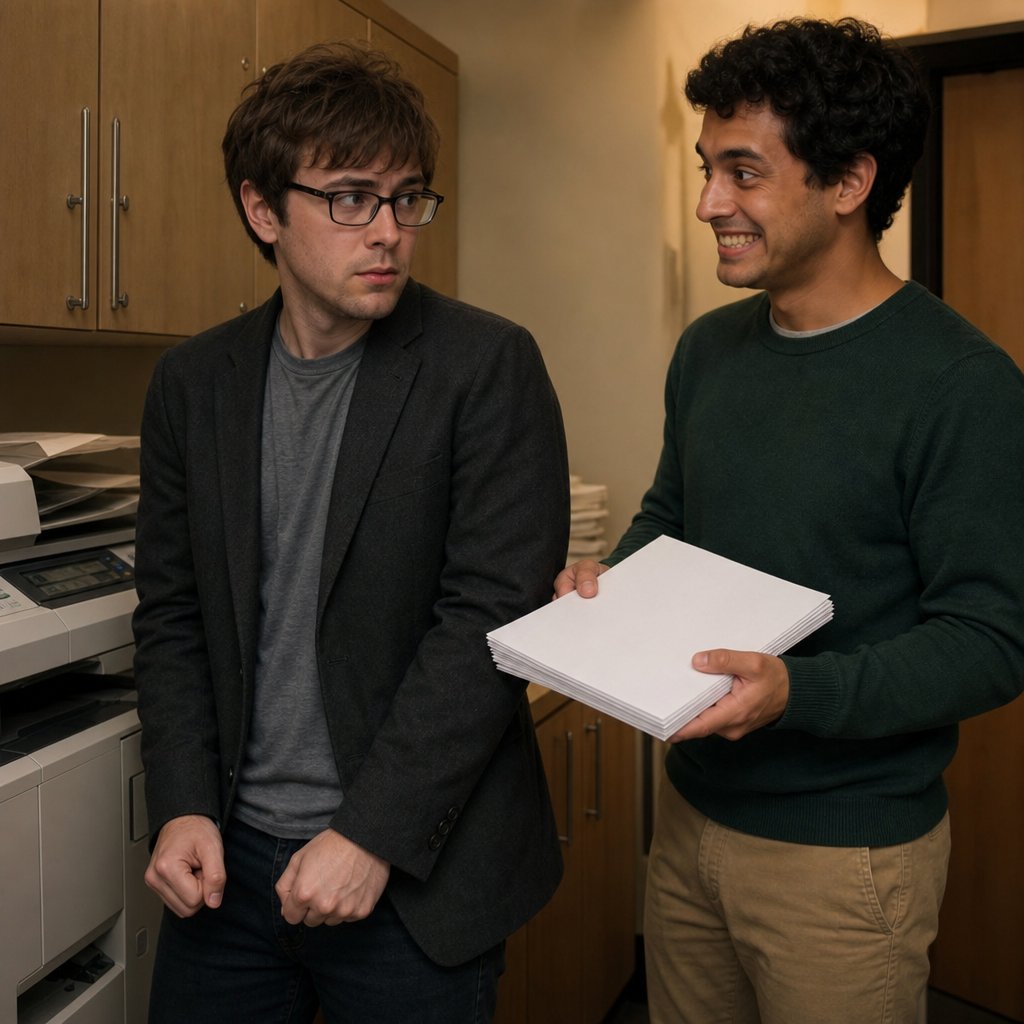
The copy room always felt like a confession booth—too small, too bright, with that hot plastic smell from the machine that made your throat itch. Dev followed me in like it was normal, like we weren’t standing on a trapdoor.
I didn’t even pretend to be casual. “Is your name in this?” I asked, and the words came out sharper than I meant. My hands were clenched so tight my nails bit crescents into my palms.
Dev blinked, then laughed—too loud, too long. The sound ricocheted off the cabinets. “Okay,” he said, still laughing, “you’ve been watching too many office dramas.”
But his eyes weren’t laughing. His eyes were doing math.
He reached past me for a stack of paper, close enough that I caught the clean scent of his laundry detergent, and he lowered his voice like we were sharing gossip instead of circling a grenade. “You don’t want to get cute with rumors,” he said, smile still pasted on. “People get… weird.”
Weird. Like retaliation. Like suddenly being “performance-managed.” Like your reputation turning to ash in a week while everyone swore they were just being objective.
I stared at him, trying to decide if he was offended—or warning me because he cared—or warning me because he didn’t.
Dev’s smile tightened at the corners. He tilted his head toward the door, listening. Footsteps passed in the hall, slow and deliberate, and Dev’s gaze flicked to my face.
“Who have you talked to?” he asked.
The Preview That Poisoned Me
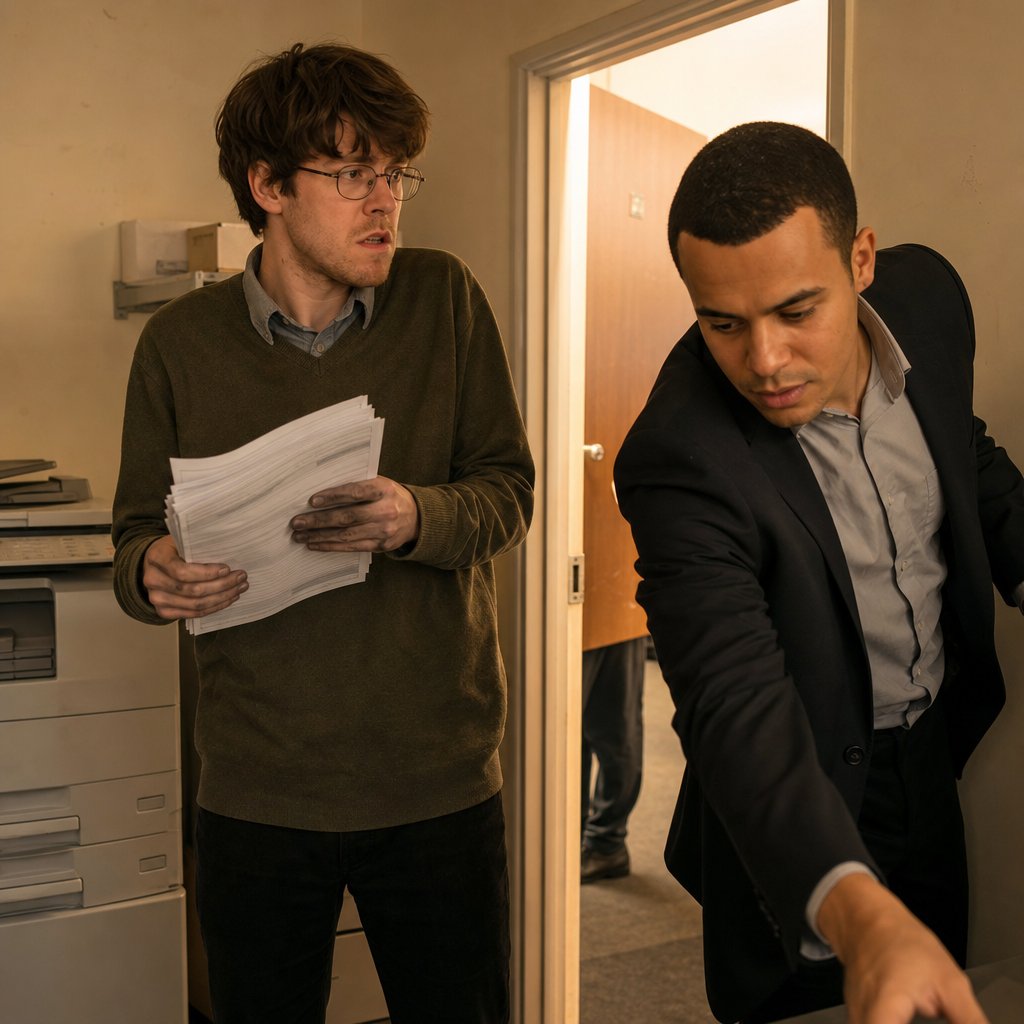
Dev’s phone lit up on the copy room counter like a flare, face-up, buzzing itself impatient across the laminate. I saw the preview before I could stop my eyes.
Graham Voss: You up?
Just the tiny, glowing strip of it. No context. No thread. No “sorry, wrong person.” Just enough to make my stomach drop through the floor tiles. Dev was in the hall, laughing too loudly at something someone said, the kind of laugh you do when you want people to hear you’re fine.
The footsteps outside the copy room paused. Whoever had been hovering—whoever Dev had heard—stood there long enough to make the air feel tight. I grabbed a stack of warm paper straight from the printer tray just to have something in my hands. It smelled like burnt dust and toner.
Dev came back in, still talking, still casual, and his eyes flicked to his phone so fast it was practically a tell. He scooped it up like it had bitten him, flipped it face-down, and finally looked at me—really looked, like he was checking what I’d seen.
“Who have you talked to?” he repeated, quieter now, and I realized he wasn’t asking out of curiosity. He was counting threats.
I opened my mouth, and he leaned closer, waiting for names—
What The Attachments Proved
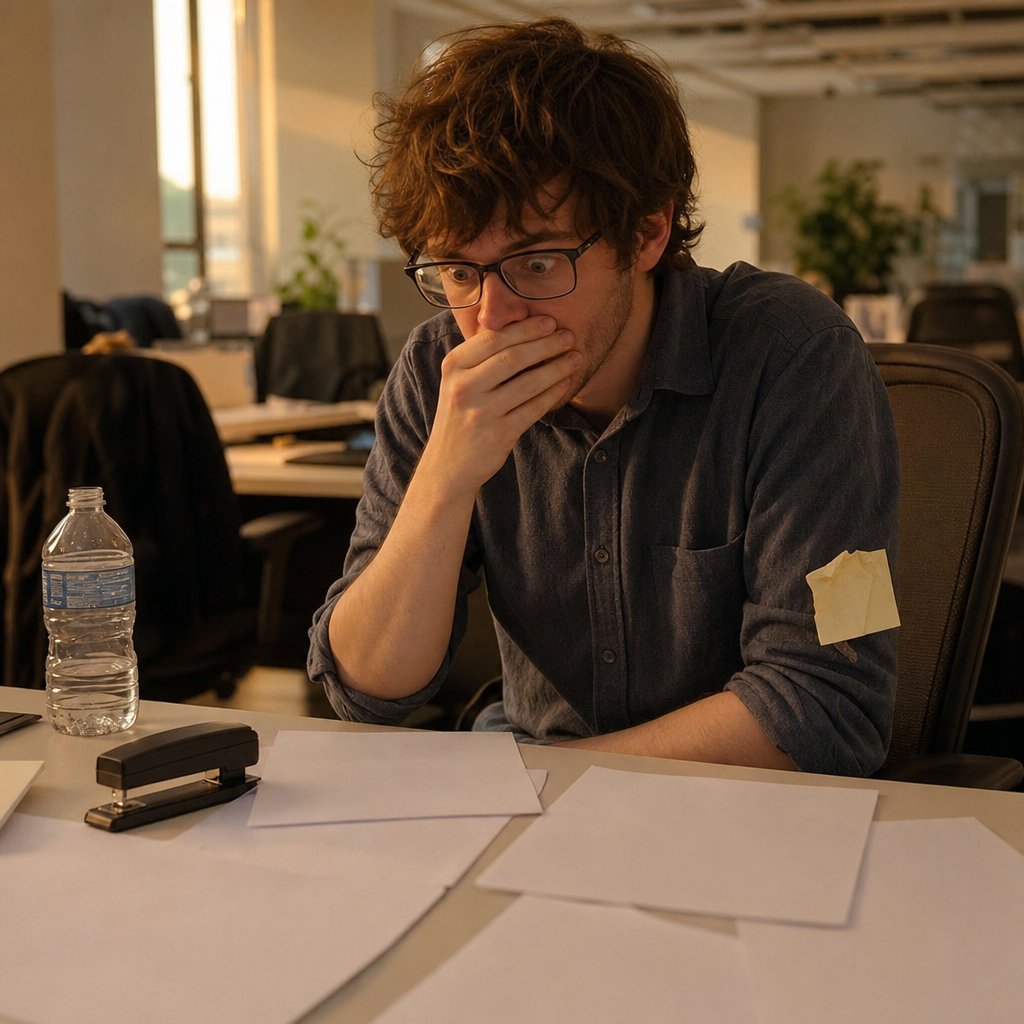
I didn’t go home after work. I went back to my desk like a ghost returning to the scene, the office dimmer now, the air conditioner making that wet clicking sound it made when it was tired. My hands were steady in a way that felt wrong—like my body had decided panic was inefficient.
Iris retrieving the deleted HR thread sounded dramatic in my head, like I was a hacker in a movie. In reality, it was me, hunched in my chair, clicking through folders I didn’t normally touch, using the kind of access you get when people assume you’re harmless.
There it was: the HR chain, dragged to trash, then emptied, then still… not gone. Someone had tried to erase it fast, not clean.
The first attachment opened and my throat tightened. Screenshots—cropped, annotated, and petty in the way only someone furious can be petty. Dates circled. Times highlighted. A line of “client travel” entries that didn’t match any client I’d ever heard Graham mention.
Then the receipts. Hotel folios disguised as expense backups, the kind Finance rubber-stamps if the category is boring enough. Two rooms on one night. A “late checkout” fee. A bar charge that wasn’t a bar Graham ever took us to after work.
I scrolled and felt my face heat. I recognized the dates because I’d been the one who “saved” his calendar that week—moved meetings, lied to colleagues, told them he was in back-to-backs.
At the bottom was a file name that made my stomach go cold. It wasn’t about him and three people.
It was about him and four.
The Note Under My Keyboard

The next morning, my keyboard felt wrong the second I touched it—like it had been nudged half an inch while I was gone. That tiny shift people do when they’ve been in your space and want to put things back exactly how they were… but they don’t know your exact.
I lifted it, expecting maybe a lost paperclip.
An envelope slid out onto my desk. No stamp. No name. Just my workstation like it was a mailbox and someone had decided I didn’t deserve the dignity of surprise.
I looked around. The office was waking up: chairs squeaking, someone cracking open a seltzer way too early, the smell of burnt coffee drifting from the kitchenette. Nobody looked at me. Which meant either nobody knew, or everyone did.
Inside were printed calendars—month views, the same template we all used—covered in thick circles. Not neat circles. Angry circles. Dates I recognized immediately because I’d been the one to “adjust” them: Graham’s “client travel,” Graham’s “offsite,” Graham’s “no meetings.”
And across the top, in blocky pen that dug into the paper hard enough to leave grooves:
STOP COVERING FOR HIM.
My mouth went dry. Not because of the message—because of what it implied. Someone knew exactly what I’d done behind the scenes. Someone had watched my little acts of loyalty and labeled them what they were.
I slid the calendars back into the envelope, hands shaking, and felt a shadow fall across my desk as someone stopped beside me—
My Signature, Not My Memory
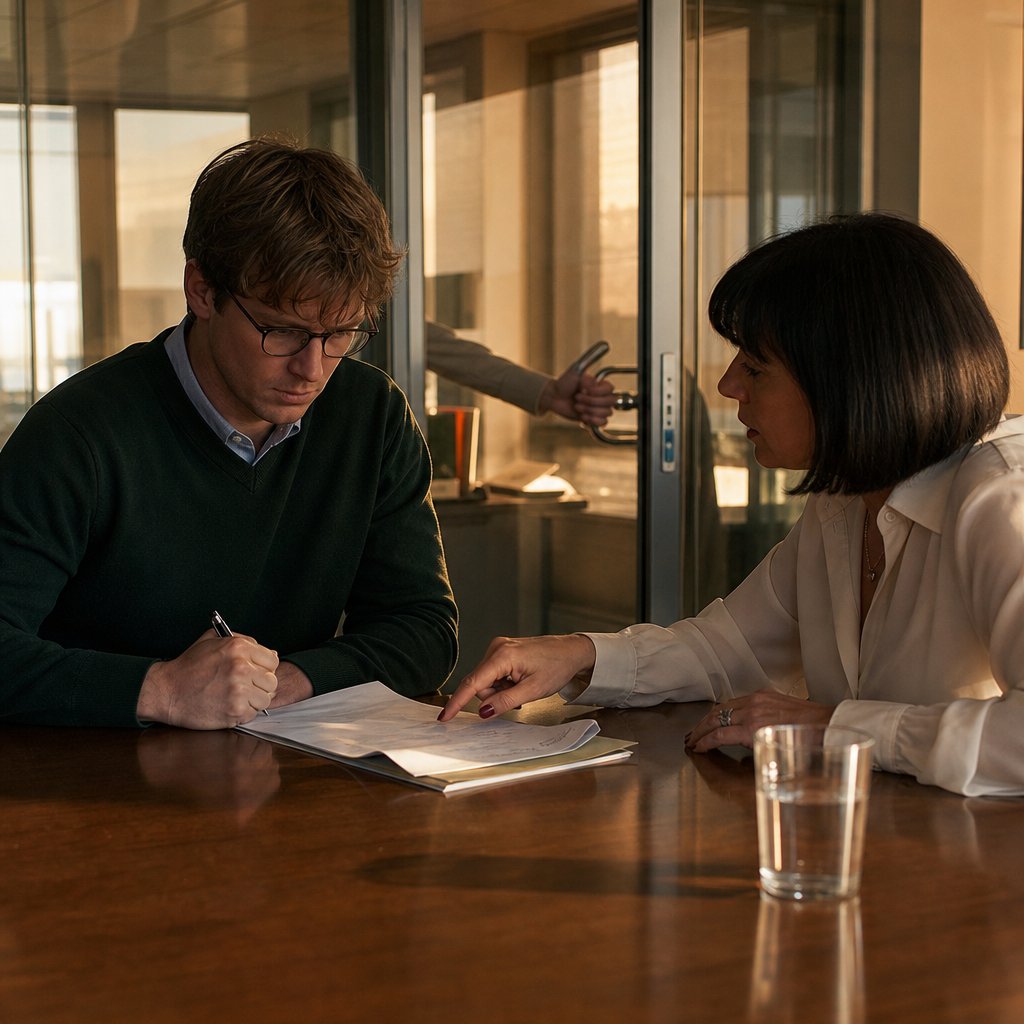
Finance didn’t call. They never called. They sent a calendar invite with a subject line so bland it made my palms sweat: “Quick Sync — Expense Clarification.”
I walked into their glass-walled corner and felt instantly on display, like an insect pinned under a neat little label. Jenna from Finance—late 30s, blunt bob, lipstick that never smudged—didn’t offer me a chair at first. She just slid a folder across the table with two fingers.
“This was approved under your name,” she said, like she was reading weather.
Inside was an expense report. No screen. Just paper. My signature at the bottom in that lazy slant I’d had since college. It looked so real my brain tried to accept it as fact.
I stared until the black ink seemed to rise off the page. “I didn’t sign this,” I heard myself say, and it came out too soft, like I was apologizing for existing.
Jenna’s eyes flicked up. Not sympathetic. Measuring. “Then you’ll want to explain why your approval code was used. Because it cleared a reimbursement for ‘client travel.’”
She tapped one line item with a manicured nail. A hotel charge. A car service. A dinner for two.
Dinner for two when Graham was supposedly alone.
My throat tightened as I realized the shape of it: someone was using me as the buffer, the clean hands, the disposable signature between Graham and consequences.
Jenna leaned back. “Do you know who submitted it?”
I opened my mouth—and the conference room door clicked as someone tried the handle from the outside—
Graham Didn’t Sit Down
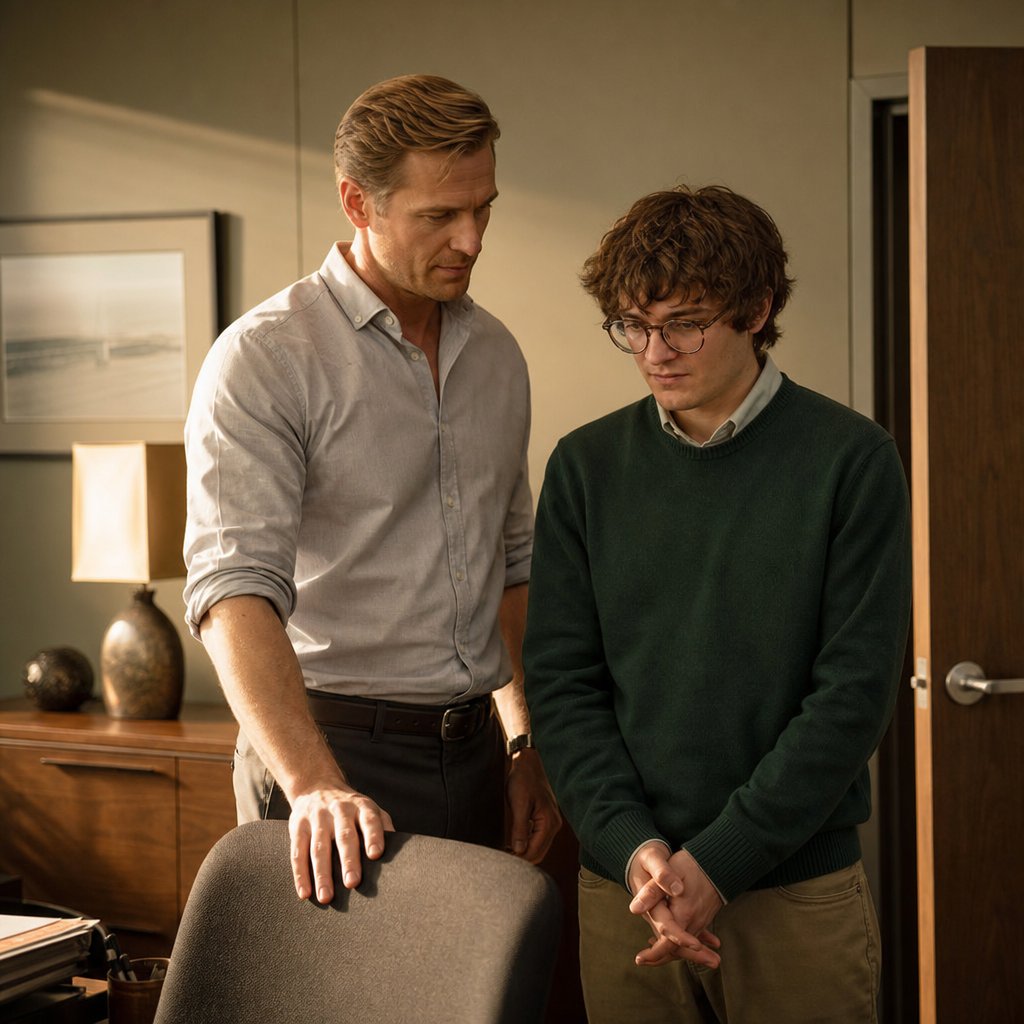
Graham’s office smelled like his cologne and fresh printer paper, like he wanted every conversation to feel expensive and clean. He shut the door behind me without looking, and that small click sounded like a lock even if it wasn’t.
He didn’t sit. He stayed standing, jacket off, sleeves rolled just enough to look approachable. It was a performance he’d perfected—casual power. He walked to the window, stared at the parking lot like it held answers, then turned and smiled like we were sharing a joke.
“Tell me who’s talking,” he said softly.
My stomach twisted because there it was—the same warmth he used to wrap around me when I was new. The praise. The “you’re the only one I can trust.” The way he’d made me feel safe in a department full of sharks.
He took a step closer. Close enough that I could see the faint shadow of stubble he didn’t quite shave, like he’d had a late night. Like he’d earned it.
“HR is sniffing around,” he continued, voice almost tender. “And you… you’re in the middle of this whether you meant to be or not.”
My throat went tight. I thought about the calendars in the envelope. About my signature on that expense report. About Dev’s phone lighting up with Graham’s name like a confession.
Graham tilted his head, studying my face. “I’ve always taken care of you, Iris.” He let the words hang there like a debt. “Don’t let people who don’t matter rewrite what we built.”
Then he reached toward my desk-side chair—my chair—and pulled it out for me like a gentleman, like this was normal.
“So,” he said, quieter. “Who’s talking?”
I swallowed, and the doorknob behind me turned—
What Lila Said He Promised

Lila caught me where everyone pretended not to hear anything—the snack wall, between the stale granola bars and the sad fruit bowl. She moved like she was trying to look casual, but her eyes were too bright, like she’d been holding back tears in a bathroom stall.
Lila was mid-20s, petite, with long black hair always pinned in a neat twist and nails painted a pale pink that somehow made her look more innocent than she was allowed to be. She held a bag of pretzels she hadn’t opened, twisting it in her hands until the plastic squeaked.
“Iris,” she whispered, like my name was a secret. “Can I ask you something without you… without you judging me?”
My heart did that awful stutter it did when I sensed a trap.
She leaned in, close enough that I could smell her peppermint gum. “He said you’d help me if I ever needed it.”
I went cold. “Who said that?” I already knew. My brain was just trying to buy time.
Her eyes flicked to the hallway, then back to me. “Graham.” The way she said it wasn’t flirty. It was terrified. “He said you’re loyal. That you always make things… easier.”
My mouth opened and closed. I thought about the times I’d smoothed his calendar, covered his “client travel,” told people not to bother him. I thought about how that looked from the outside: me as the gatekeeper, the fixer, the one who made sure nobody asked the wrong questions.
Lila’s voice dropped even lower. “I didn’t want to believe it, but then Dev told me you’d understand.”
Dev told her. Dev was spreading my name like it was currency.
“What do you need, Lila?” I asked, and she swallowed hard, eyes shining—
The Email IT Snatched Back
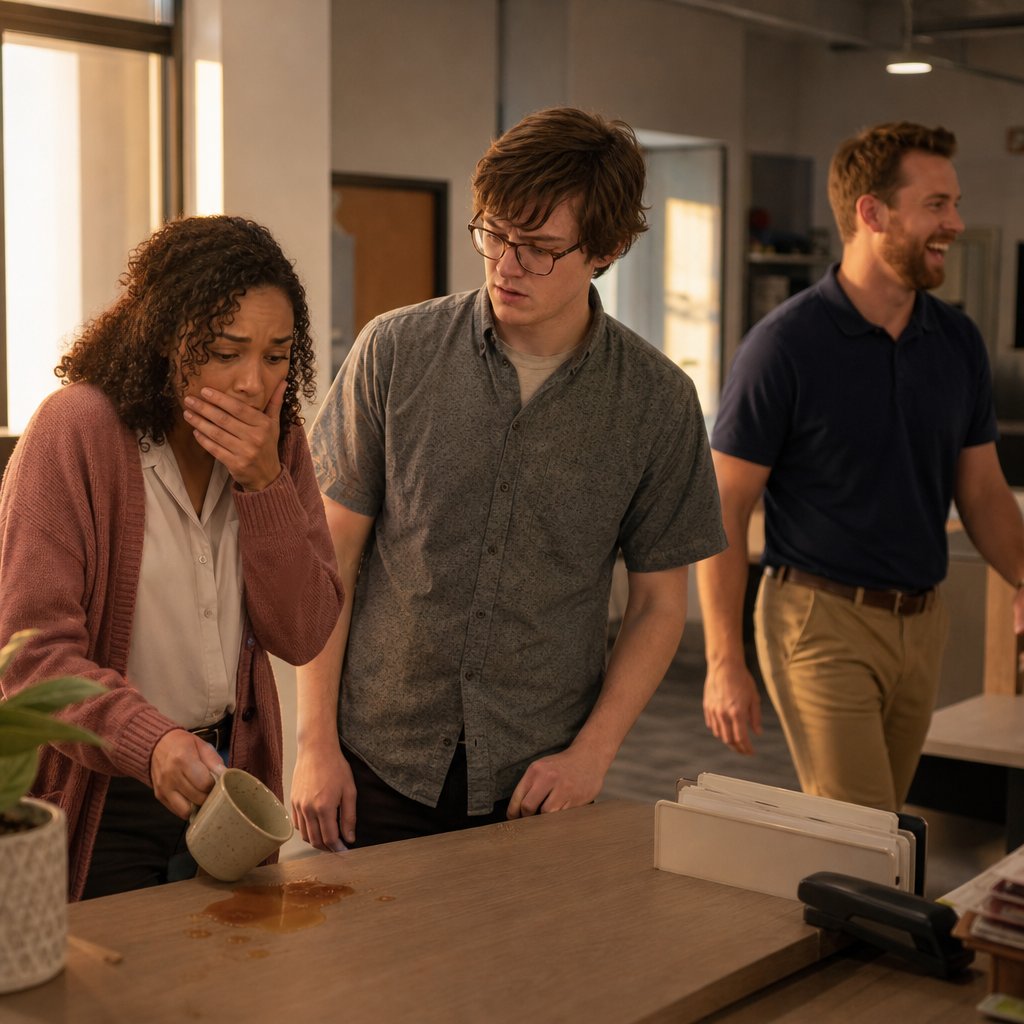
The department inbox pinged like it always did—another vendor, another calendar shuffle, another request someone would pretend not to see. I was walking past the admin station when I heard the sharp inhale from Kara, our coordinator, like she’d just touched a hot pan.
“Oh my God,” she breathed.
I stepped closer before I could talk myself out of it. Kara’s face had gone that drained, paper-white you only see when someone realizes they’ve stumbled into a mess they can’t un-know. She wasn’t looking at me. She was staring at the top of an email she’d opened by reflex.
She didn’t have to read it out loud. I caught the first lines before she slammed her mouse and the message vanished—ripped away like it had never existed.
Subject line: Is this your boss?
Sender: a woman’s name I didn’t recognize at first. Then it clicked—Mason’s wife. I’d seen her once at the holiday party, smiling too hard, hand glued to Mason’s arm like she was holding him in place.
The body started with: “I’m sorry to involve you, but I can’t—” and then it was gone. Not deleted. Not archived. Gone.
Kara stared at her empty inbox like she’d been slapped. “IT just recalled it,” she whispered, voice cracking. “They can do that?”
Mason walked by at that exact moment, laughing with someone, and his laugh sounded wrong—too easy. Like he’d already been warned.
I watched him and felt something sharp settle in my chest: this wasn’t just HR anymore. This was containment.
Kara’s hand trembled as she reached for her coffee, and I realized she was about to say what else she’d seen before it disappeared—
Dev Chose His Side
HR titled it a “listening session,” which was almost funny if it hadn’t made me feel nauseous. The invite came with a little warning dressed up as policy: no side conversations, no speculation, direct all questions to HR. Silence, professionally branded.
By the time I got to drinks that night, I’d rehearsed ten versions of what I’d say if anyone asked me point-blank. I ordered something I didn’t even like because my hands needed to do something besides shake. The bar smelled like citrus cleaner and old fries.
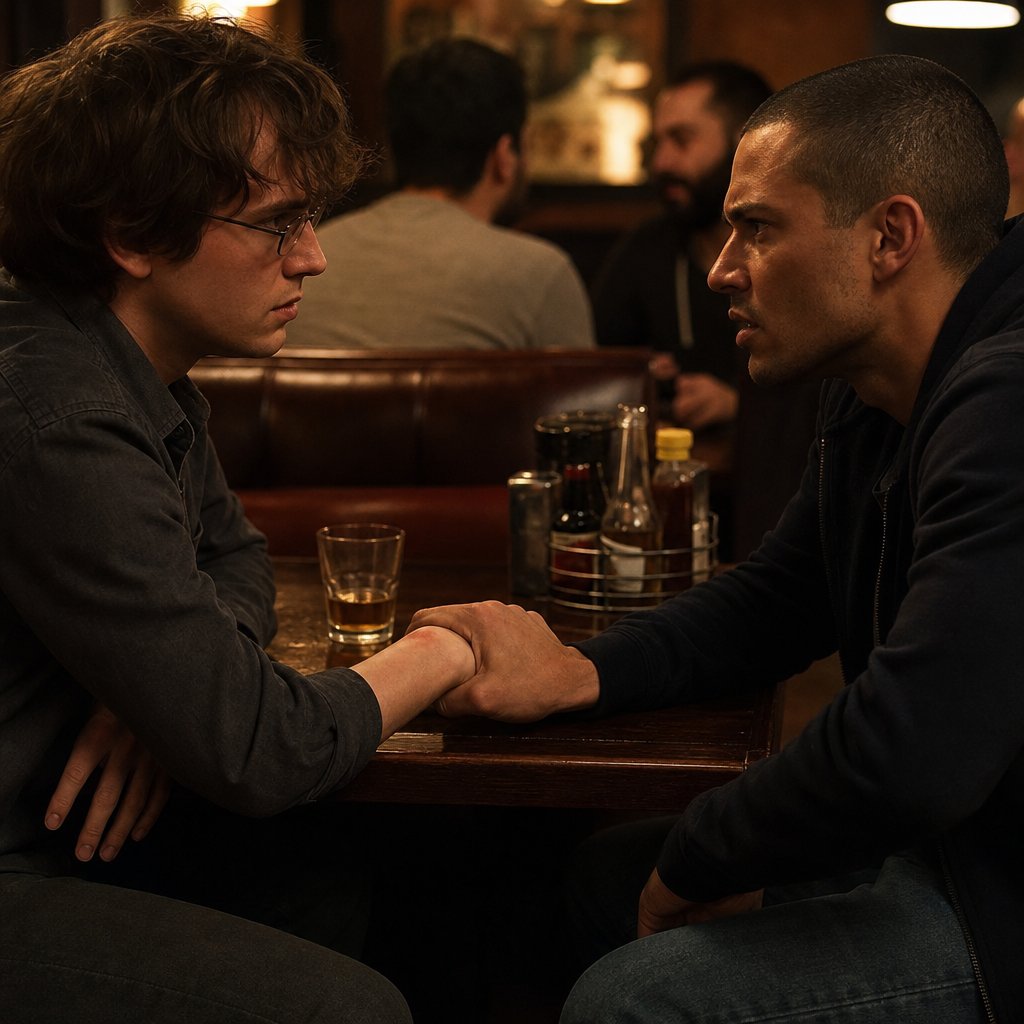
Dev showed up late, eyes already sharp, jaw working like he’d been grinding his teeth the whole walk over. Different outfit than the office—dark hoodie, jeans, trying to look like a normal guy meeting a friend—except nothing about his posture said normal. He slid into the booth across from me like we were negotiating.
“You’re talking to HR?” he asked.
I blinked. “HR is talking to me.”
He leaned in. “Don’t play cute.” His voice was low, angry in a controlled way that scared me more than shouting. “You’re not going to ruin him.”
There it was. Not us. Not the team. Him. Graham.
I felt something in me crack—something like loyalty finally hitting its expiration date. “Why do you care?” I asked. “Why are you acting like his attorney?”
Dev’s eyes flicked away for a second, and that tiny flinch told me everything: he wasn’t protecting Graham out of principle. He was protecting himself.
He reached across the table and grabbed my wrist, too hard to be friendly. “Listen to me,” he said. “If you say the wrong thing, you’re going down with him.”
I stared at his hand on my skin and realized he wasn’t warning me.
He was threatening me.
And then his phone buzzed in his pocket, and his face changed—
The Rule I Never Made

I knew something was wrong when HR stopped “following up.” Not because HR was ever warm, but because they were relentless. They didn’t just drop things. They hunted them.
I sat at my desk the next morning and felt that same wrongness as the keyboard envelope day—like my space had been handled. My inbox looked normal, too normal, like a room after someone cleans up a fight.
I dug into my email settings with a sick, methodical calm. Rules. Filters. The boring plumbing nobody checks unless they’re desperate.
And there it was: a rule forwarding anything from HR—anything with certain keywords—straight into a folder called “Q3 Notes.” A folder I never used. A folder I’d created months ago for a planning meeting that never happened.
My scalp prickled. Someone hadn’t just read my email. They’d rearranged my reality. They’d made sure I missed things, then could be blamed for missing them. The kind of sabotage that looks like incompetence until it’s too late.
I clicked into the folder and saw a neat stack of messages I’d never opened. Invitations. Follow-ups. A reminder about the listening session. A request for documents.
My mouth went dry as I scrolled. The timestamps weren’t subtle. This rule had been created on a day I wasn’t even in the office.
My first instinct was to call IT, but the memory of Mason’s wife’s email being yanked back flashed through me like a warning flare. If IT was part of containment, calling them would be like telling the arsonist you smelled smoke.
I sat back, chair creaking, and looked around the office. People moved, laughed, typed, lived their tiny work lives.
And somewhere in that motion was the person who had logged into my account and decided what I was allowed to know.
My phone buzzed face-down on my desk, and I didn’t need to see the screen to know it was going to be bad—
The Stairwell Confession

I found her in the stairwell because that’s where people go when they don’t want witnesses. The door thudded shut behind me, and the sound echoed down the concrete like a warning. The air smelled faintly of dust and industrial cleaner, too sharp for how human the moment was.
She was sitting on the step with her badge lanyard twisted around her fingers until it looked like a rope. Tessa—junior PM, early 20s, freckles, hair in a messy blonde ponytail that always slipped loose by noon. She’d been the one who always volunteered for conference logistics because she was “good at details.” Now her mascara was smudged in two dark crescents under her eyes.
“I can’t do this,” she whispered when she saw me, like she’d been waiting for someone but also terrified it would be me. “They said HR is listening but… nobody listens.”
I sat on the step across from her, close enough to hear her breathing hitch. “Tessa,” I said carefully, “tell me what happened.”
She swallowed, hard. “At the conference,” she started, staring at the wall like it was safer than my face. “He told me to come upstairs. He said it was about a client deck. He said I’d get face time.”
My chest tightened so fast it was like my ribs were shrinking.
“It was his hotel,” she said, voice shaking. “He said I was ‘mature’ for my age. He said he could make my career.” Her laugh broke in the middle, ugly and small. “And I didn’t report it. Because I needed the job. Because everyone acts like he’s untouchable.”
I tasted metal in my mouth. I thought about the calendars with circles. The receipts. The rule in my email. Dev’s grip on my wrist.
Tessa finally looked at me, eyes wet and furious. “You’re close to him,” she said. “You fix things for him. Are you going to fix this too?”
I opened my mouth to answer, and the stairwell door above us creaked—slowly, deliberately—
The Reorg Nobody Asked For
The stairwell door cracked open and a man in Facilities froze mid-step like he’d walked into a crime scene. Tessa didn’t move away from Iris. Iris didn’t blink. The fluorescent hum felt loud enough to be a siren, and the smell of lemon cleaner suddenly made my throat sting.
“Cute,” Tessa said, voice low and sharp. “You thought you could fix it.”
Iris’s jaw worked like she was swallowing glass. “I didn’t—”
Footsteps echoed again—more purposeful. Iris flinched, and for a second I saw it: the panic behind her perfect eyeliner. She wasn’t scared of Tessa. She was scared of what Tessa knew.
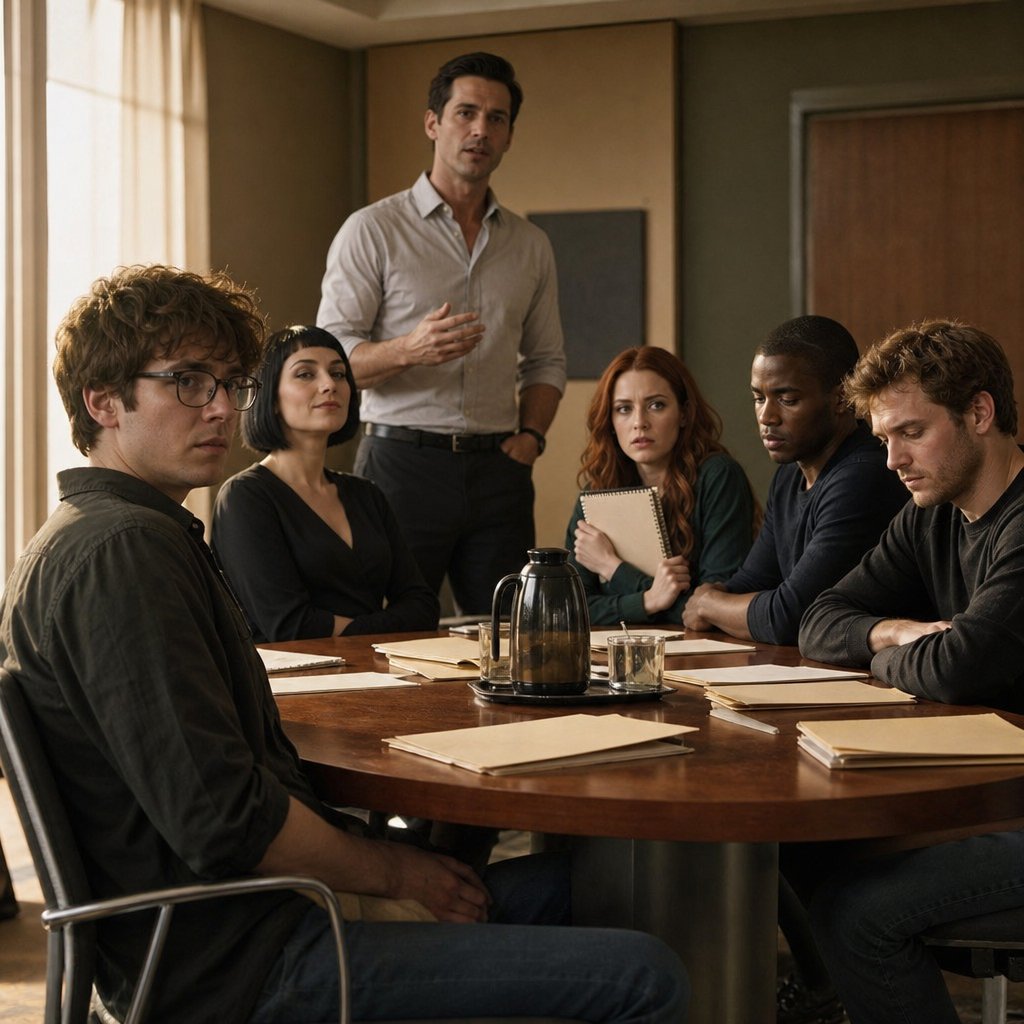
By the time we got back upstairs, Graham had already herded the whole department into the big conference room like it was an all-hands. He stood at the front with that smooth, practiced calm, sleeves rolled just enough to look “in it with us.” The air was stale with burnt coffee and overheated bodies.
“Quick organizational update,” he said, smiling like this was a treat. “Lila’s stepping into Senior Lead. Mason’s being assigned to a travel special project—high visibility. Dev, you’re on a leadership track starting immediately. And Iris…”
His eyes flicked to Iris like a judge delivering a sentence. “You’ll be moving under HR for support.”
Support. Quarantine. A velvet rope around the crime scene.
I watched Iris’s fingers tighten around her notebook until the spiral bit into her skin, and Graham’s smile didn’t wobble once as he added, “We need stability while we… address distractions.”
Then his gaze landed on me—warm, familiar—and he said my name like a reminder of who I belonged to.
“I’ll need you after,” he murmured, and I couldn’t tell if it was a request or a warning.
Behind him, Lila’s mouth twitched like she was trying not to grin.
Named Witness Or Nothing
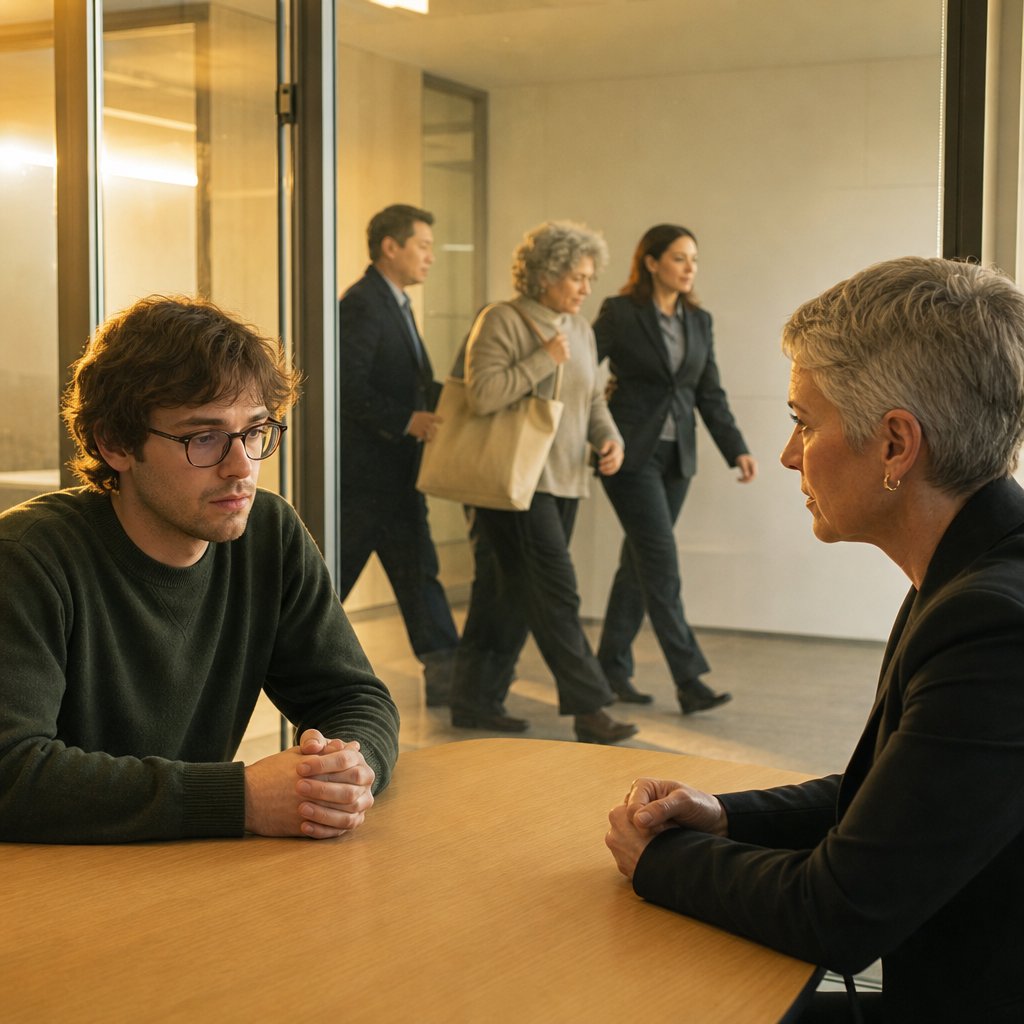
They moved Iris’s desk the next morning like she was radioactive. Not ceremonially—just quietly, a rolling cart, a box of pens, her little plant wobbling as if it knew. HR called it “support.” The rest of us called it what it was: containment.
I got the invite to meet the external investigator in a glass-walled room that smelled faintly like dry-erase marker and someone else’s cologne. The investigator was a woman in her 40s with cropped silver hair and a face that didn’t offer comfort. She set a small recorder on the table without turning it toward me like a weapon. Her eyes stayed level.
“Are you willing to be the named witness?” she asked, like she was asking if I wanted fries.
My mouth went dry. My hands were so cold I couldn’t feel the seam of my sleeve. I’d rehearsed careful, floating answers—the kind that keep you employed. But named meant my name attached to the blast radius. Named meant Graham would know exactly who lit the match.
Before I could answer, a commotion outside the room—quick, clipped voices. I glanced through the glass and saw two HR reps walking fast, flanking someone like guards. It was Marisol from admin—mid-50s, soft gray curls, always smelled like peppermint tea—her badge swinging wildly as she clutched her tote with both hands.
Her eyes met mine for half a second. Not anger. Not even fear. Just… apology. Like she’d been holding her breath for months and finally exhaled on the wrong person.
The investigator didn’t look away from me. “They’re saying the complaint came from her,” she said quietly. “Do you understand what that means for her?”
And then she leaned in just a fraction. “Or for you.”
I heard Marisol’s shoes squeak on the tile as they steered her toward the elevators, and my throat tightened around the one word the investigator needed.
Three Confessions, One Map

I started meeting them like I was arranging drug deals instead of conversations. Neutral places. Public enough to keep everyone polite. Quiet enough to hear the truth.
Lila chose the hotel lobby across the street—polished stone, over-air-conditioned, the kind of place that makes you whisper automatically. She wore a cream cardigan and a watch I’d never seen before, gold catching the light when she lifted her cup. “He didn’t promote me,” she said, too fast. “He rewarded me.”
“For what?” I asked.
Her smile faltered. “For being… available. For not asking questions when he said he needed me late. For backing his decisions in meetings I wasn’t even invited to.” Her fingers tightened on the handle. “And for keeping Iris out of the room when it mattered.”
Mason met me at a quiet airport-adjacent bar even though he wasn’t flying yet—like he needed to practice leaving. Hoodie, dark circles, the smell of stale beer on his breath. “The travel project?” he said, bitter. “It’s exile. He’s sending me away so I can’t be interviewed in person.” He stared at the condensation on his glass. “He booked my hotels. Upgraded them. Told me it was ‘for focus.’ Then he started showing up in the same cities.”
Dev chose a park bench near the office, suit jacket off, sleeves rolled, tie loosened like he’d been strangling himself all day. “He put me on a leadership track,” he said, voice flat. “But it’s not leadership. It’s leverage.” He swallowed. “He told me if I didn’t ‘stay loyal,’ he’d make sure my performance notes reflected ‘attitude.’”
Each of them gave me a date. A place. A perk. A threat. I wrote nothing down—just memorized it, like prayer. And when I lined up the timelines in my head, one detail hit like ice water:
All three stories overlapped with the nights my calendar had been mysteriously “cleaned” for Graham.
Which meant I wasn’t just adjacent. I was the hallway. I was the locked door. I was the reason nobody walked in.
And I still didn’t know who taught my account to do that.
Quiet Transfers, Loud Threats
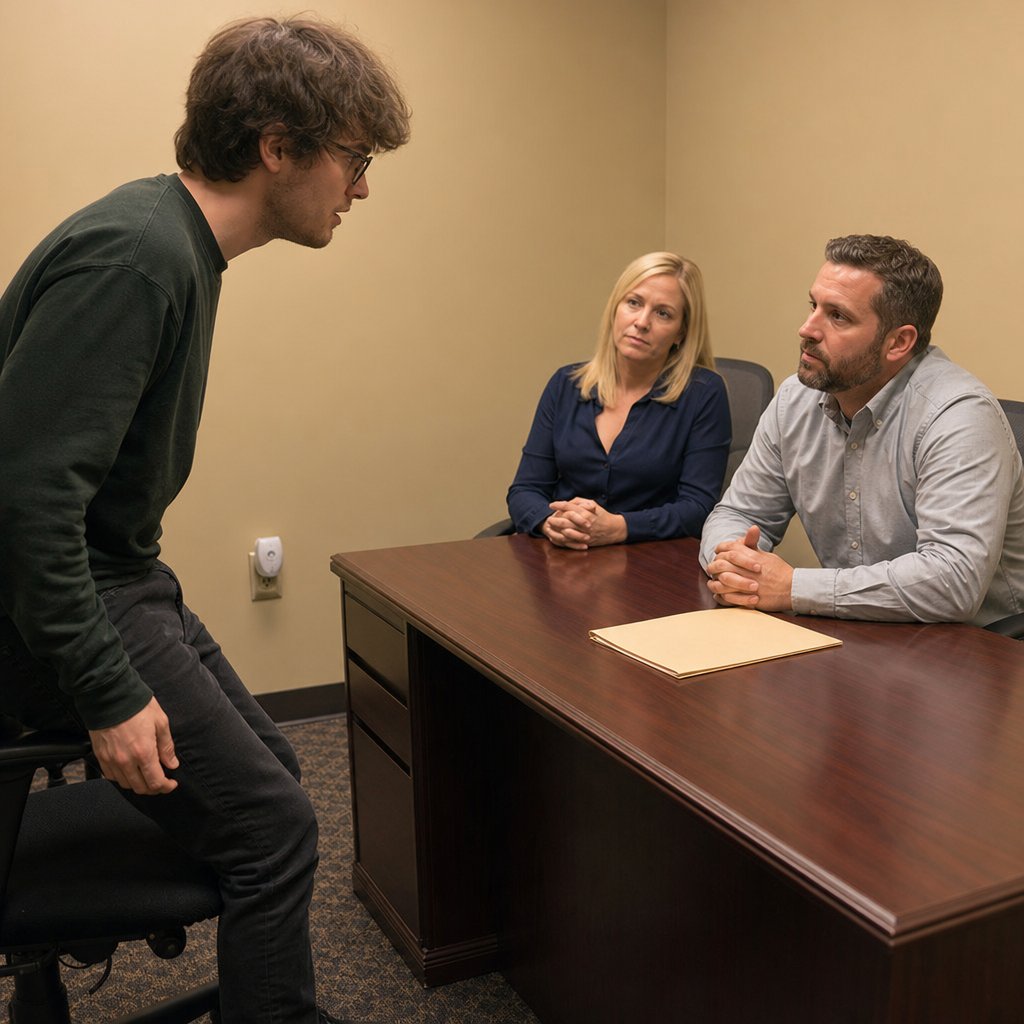
HR tried to make it all disappear with the softness of a pillow over a face.
I got called into a small interior office—no windows, just beige walls and a too-sweet air freshener that made my eyes water. Two HR people sat across from me with matching calm expressions, like they’d practiced in a mirror. One slid a folder toward me—blank cover, no label—and spoke in that voice that’s supposed to sound humane.
“We’re exploring options to resolve this quietly,” she said. “Transfers. Role changes. Mutually agreed separations.”
“Mutual,” I repeated, and it tasted like a lie.
“And of course,” the other HR rep added, “confidentiality agreements for everyone involved. It protects reputations.”
Reputations. Not people. Not truth. Just the company’s face.
I thought of Iris sitting in her new HR “support” nook like a prisoner in protective custody. I thought of Mason being packed off like a problem in a suitcase. I thought of Marisol’s apologetic eyes as they escorted her out, as if she’d volunteered to be the scapegoat so the rest of us could keep pretending we were safe.
Then my phone buzzed in my pocket—not a screen I could look at, just the insistent vibration against my thigh. HR’s eyes flicked down like they could hear it. I pulled the device out and set it face-down on the table, and the room suddenly felt smaller.
“Before we proceed,” I said, voice careful, “is Graham being told any of this?”
The HR woman hesitated. That half-second was the whole answer.
My pocket buzzed again, harder, like someone hammering a door. The HR man cleared his throat. “We need you to understand the sensitivity,” he said. “There are legal considerations.”
When I stood to leave, the HR woman’s tone sharpened for the first time. “If this becomes public, it will harm everyone,” she warned.
I stepped into the hallway and finally checked the message in private. It wasn’t from HR.
It was from Graham’s lawyer.
And the first line made my stomach drop: a defamation warning—sent to everyone interviewed.
The Emails Went Upstairs
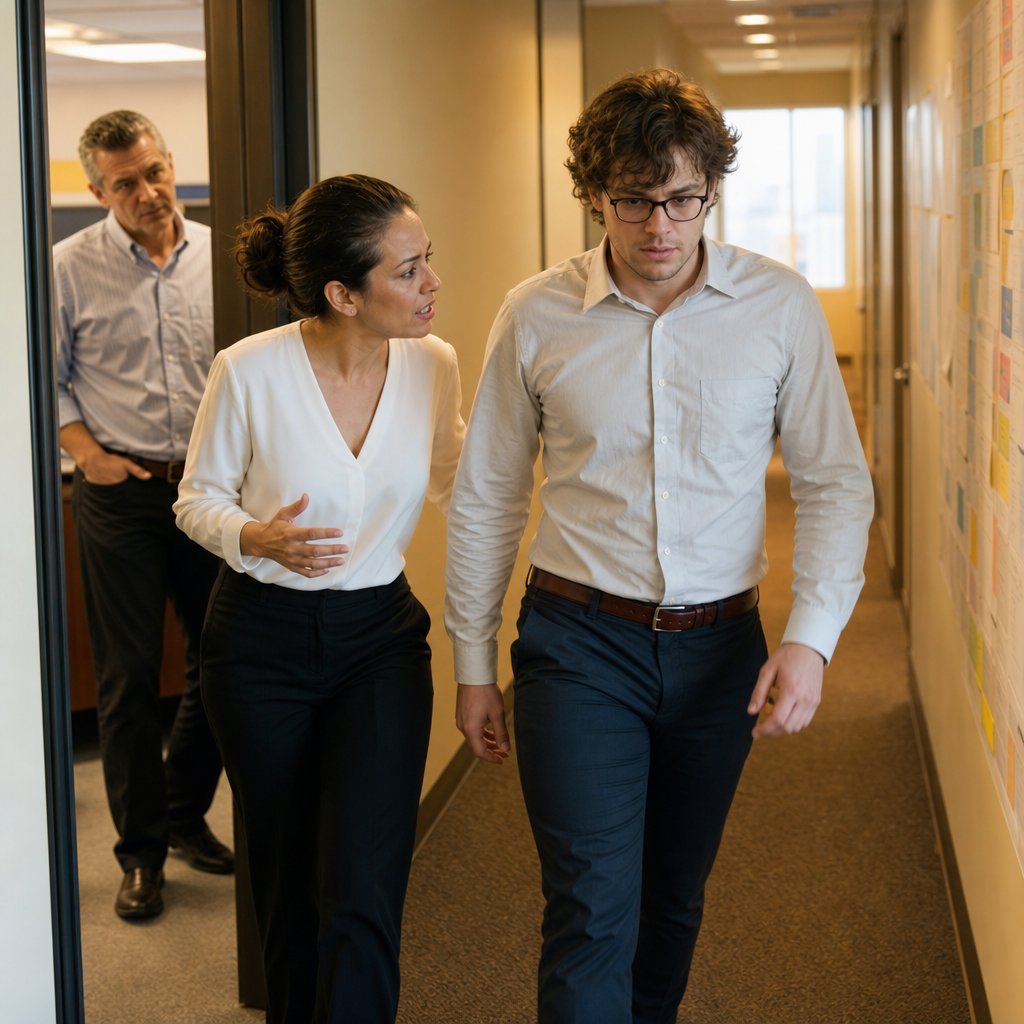
I didn’t leak it. Not to Twitter, not to a journalist, not even to the group chat that would’ve devoured it like candy.
I did something colder.
I waited until after-hours when the office felt like a museum—empty chairs, humming vents, the faint smell of carpet that had absorbed too many anxious footsteps. I walked to Finance first, because Finance doesn’t care how charming you are. Finance cares what you cost.
I asked for ten minutes with a director I’d only ever nodded at in the kitchen. In a conference room with a dead plant in the corner, I laid out what I had without handing over anything that could “go missing.” Dates. Patterns. Expense categories. Travel overlaps. The way perks weren’t perks—they were payments. The director’s face didn’t change, but his pen stopped moving, which told me everything.
Then Compliance. Then Legal. Then the board liaison—an executive assistant with a spine of steel and a neat bun that never moved. She didn’t react when I said Graham’s name. She just asked one question: “Do you understand what you’re triggering?”
I did. I understood that once you loop in the board, you don’t get to pretend it was a misunderstanding. You don’t get to negotiate it down to a transfer and a goodbye cake.
As I left her office, I saw launch week schedules taped up on walls—color-coded panic, the kind of planning that assumes leadership is stable. The smell of fresh toner drifted from the printer room, sharp and chemical, like the air right before a storm.
My phone buzzed again—face-down in my hand this time—another legal threat, another warning to “cease and desist.”
The liaison’s assistant caught up to me in the hallway, heels clicking fast. “They’ve called an emergency board meeting,” she whispered. “Tonight.”
Tonight. During launch week.
And Graham still thought he was the one holding the knife.
The Expense Trail Lit Up

The findings meeting didn’t feel like a meeting. It felt like court.
They put us in a larger boardroom than we deserved—long table, water pitchers sweating onto coasters, the air smelling faintly of lemon polish and something metallic. Graham sat two seats down from me, perfectly composed in a dark suit, like he’d shown up to accept an award. His lawyer sat beside him with a thin smile.
The external investigator stood at the front with a stack of materials and the kind of calm that only comes from already knowing the ending. “We’re going to walk through the facts,” she said.
When she started describing the expense trail, I watched Graham’s expression carefully—waiting for the crack. It came as a tiny twitch at the corner of his mouth when she mentioned travel reimbursements and “non-business hospitality.” Lila’s face went rigid. Dev stared at the table like it might open up and swallow him. Mason wasn’t there. Exiled, right on schedule.
Graham leaned back, slow and confident. “This is a misunderstanding fueled by personal grievances,” he said. “If you want accountability, look at the person who managed my calendar and access.”
Every head turned toward me like I’d been yanked on a string. My ears burned. The investigator didn’t look surprised. She nodded, almost gently, like she’d been waiting for him to try it.
“Let’s,” she said.
She slid a folder across the table toward the board liaison—no words visible, just color tabs—and spoke with surgical precision. “Here is Iris’s calendar history, including entries altered without his direct action.”
Graham’s lawyer’s smile faltered.
“And,” the investigator continued, “here is evidence of a hidden email rule tied to Iris’s account that redirected certain threads away from standard archiving.”
My stomach dropped through the floor. Because I hadn’t created any rule.
Graham’s eyes finally snapped to mine—sharp, offended, almost… betrayed.
“What did you do?” he mouthed silently, like I was the one who’d been sneaking around.
The investigator reached for the next page, and I realized with a cold rush she was about to say who created it.
The Witness She Needed
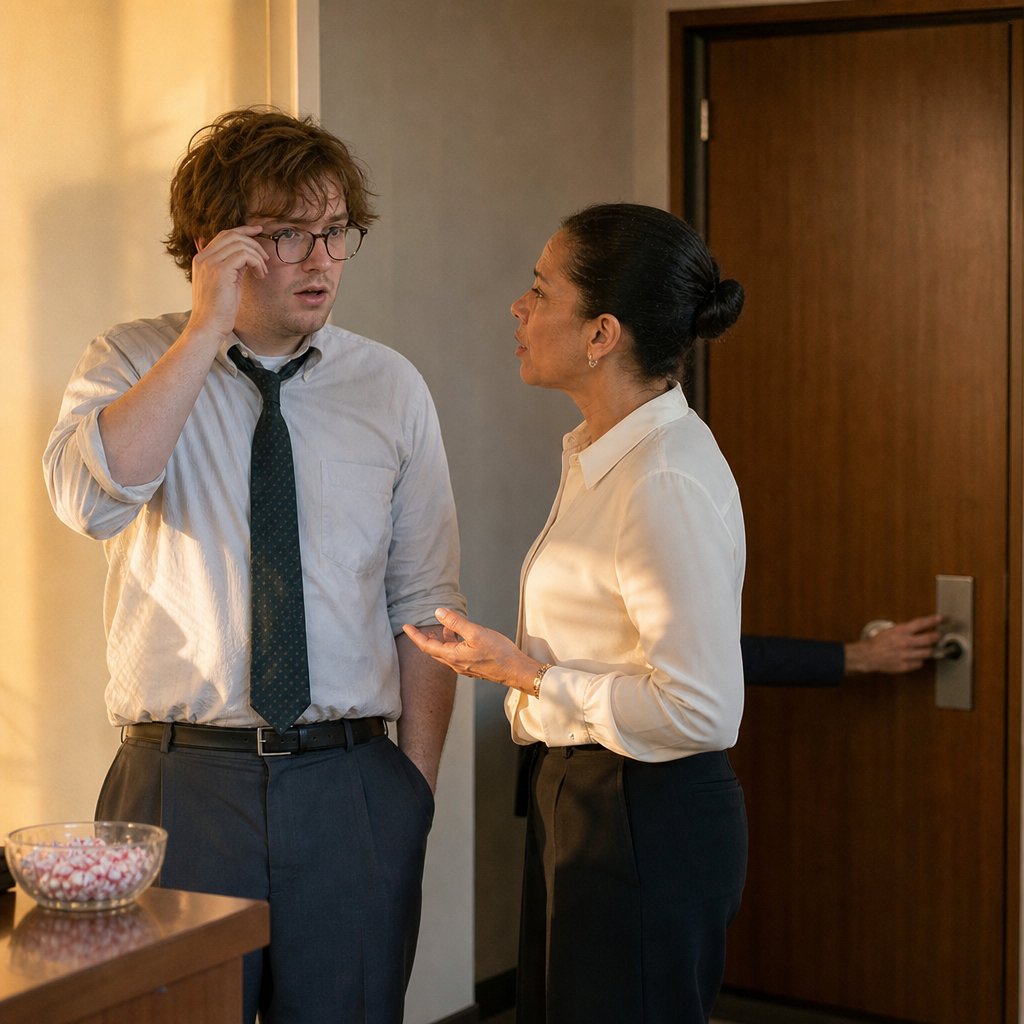
They fired Graham like they were cutting a tumor out.
No speeches. No soft landing. The board chair’s voice was flat and final: termination for cause, clawbacks initiated, access revoked immediately. Graham didn’t explode—he went quiet, which was somehow worse. His face lost its color as if someone had pulled the plug on him. For the first time since I’d met him, he looked like a man who couldn’t talk his way out.
Then the second blade: a retaliation review. Not just of Graham—of how HR handled it. The investigator didn’t even have to raise her voice. She just listed actions: quarantining Iris under “support,” attempting quiet transfers, pressuring for NDAs before findings. HR’s posture changed in real time, shoulders tightening like they’d been caught stealing.
I walked out of that room shaking, my body finally understanding what my brain had been denying for months—that the floor I’d been standing on had been built on threats and favors and my own stupid loyalty.
In the hallway, I found Marisol’s old desk area half-cleared, like she’d been erased. A faint peppermint smell lingered in the air, so specific it almost made me angry. I didn’t realize I was tearing up until my glasses fogged.
The board liaison assistant—tight bun, steady eyes—waited until no one else was close. “You should know something,” she said quietly.
My pulse kicked up again. “What?”
She glanced toward the closed boardroom doors like they might open and swallow us. “The original complainant,” she whispered, “was Graham’s assistant.”
My throat went tight. Graham’s quiet assistant—the one who always smiled politely and never spoke in meetings.
“She filed it,” the assistant continued, “but HR tried to pin it on Marisol to make it go away. Your name as witness…” She paused, letting it land. “She needed someone they couldn’t ignore.”
I stared at her, the whole map snapping into place with a sick clarity. All the calendar “help.” All the cleaned overlaps. The hidden rule.
“Why me?” I whispered.
The assistant’s eyes softened, just slightly. “Because you were the only one close enough to him to be believed,” she said.
And behind us, the boardroom door handle turned.
Would you have confronted HR after discovering the hidden affairs?