



The Locket Wasn’t Empty
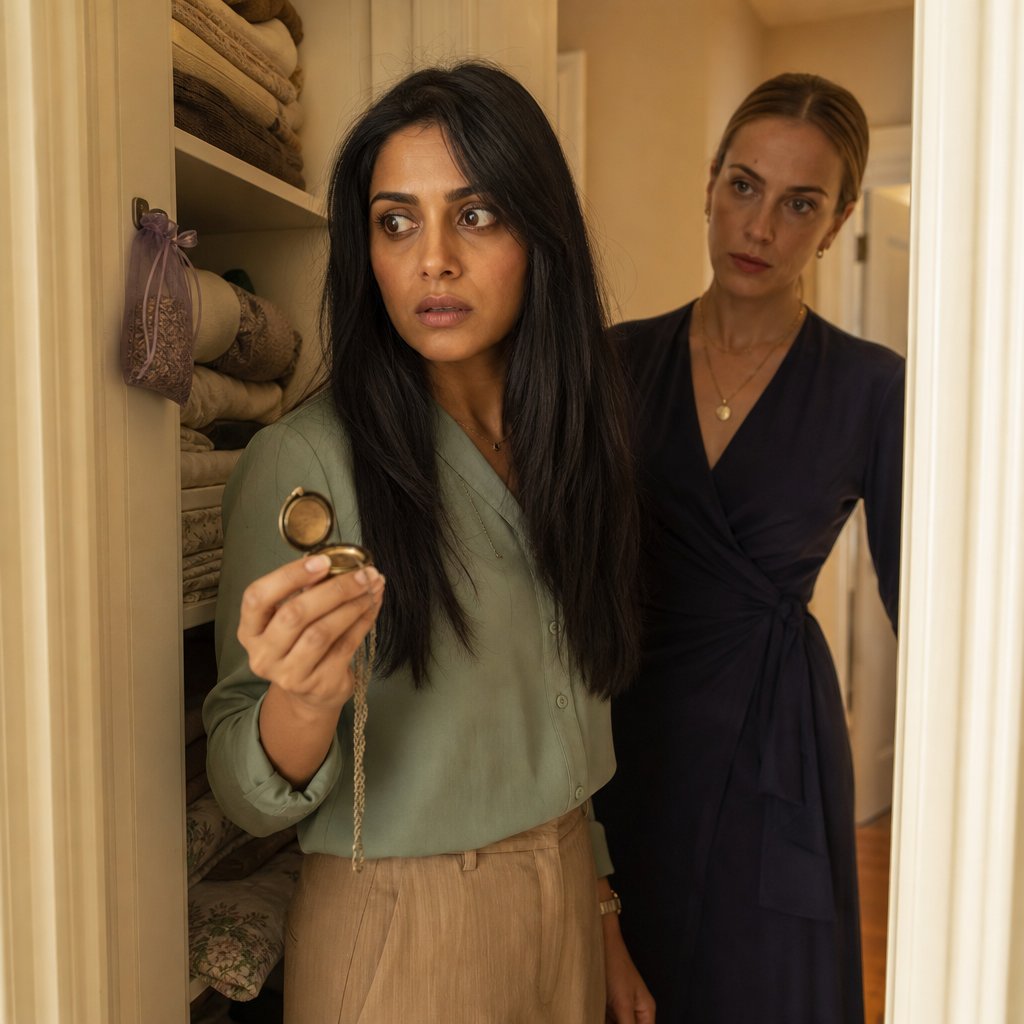
The hinge gave with a tiny, mean snap, and the vintage locket split open in my hands like it had been waiting to bite me.
Inside was a photo so small I had to tilt it toward the closet light: my mother at twenty, hair thicker, eyes sharper, holding a newborn wrapped in a hospital blanket. Not me. Not my sister. A baby I’d never seen in any album, never heard mentioned over decades of carefully edited family stories. The paper smelled faintly metallic, like old pennies and perfume trapped together.
My throat tightened so fast it felt like I’d swallowed a pin.
“You finally opened it.”
I froze with the locket cupped in my palm. Valerie’s voice wasn’t loud. It didn’t need to be. It landed right between my shoulder blades like a hand.
I turned slowly and there she was in the linen closet doorway, blocking the hall with the calm posture of someone who’d paid for the right to stand there. Early 30s, pale skin, honey-blonde hair in a sleek low bun, a thin scar cutting through her right eyebrow like a careless underline. She wore a simple navy wrap dress that looked almost respectful—until I saw her mouth curve like she was tasting my panic.
I hadn’t seen her since the night we both agreed never happened. And now she was in my parents’ house, watching me hold my mother’s secret baby like a trophy.
My fingers squeezed the locket too hard, and the photo shifted—just enough for me to see a hospital bracelet on the infant’s wrist with a name I couldn’t quite make out as Valerie stepped closer…
My Mother’s Text Read Like War
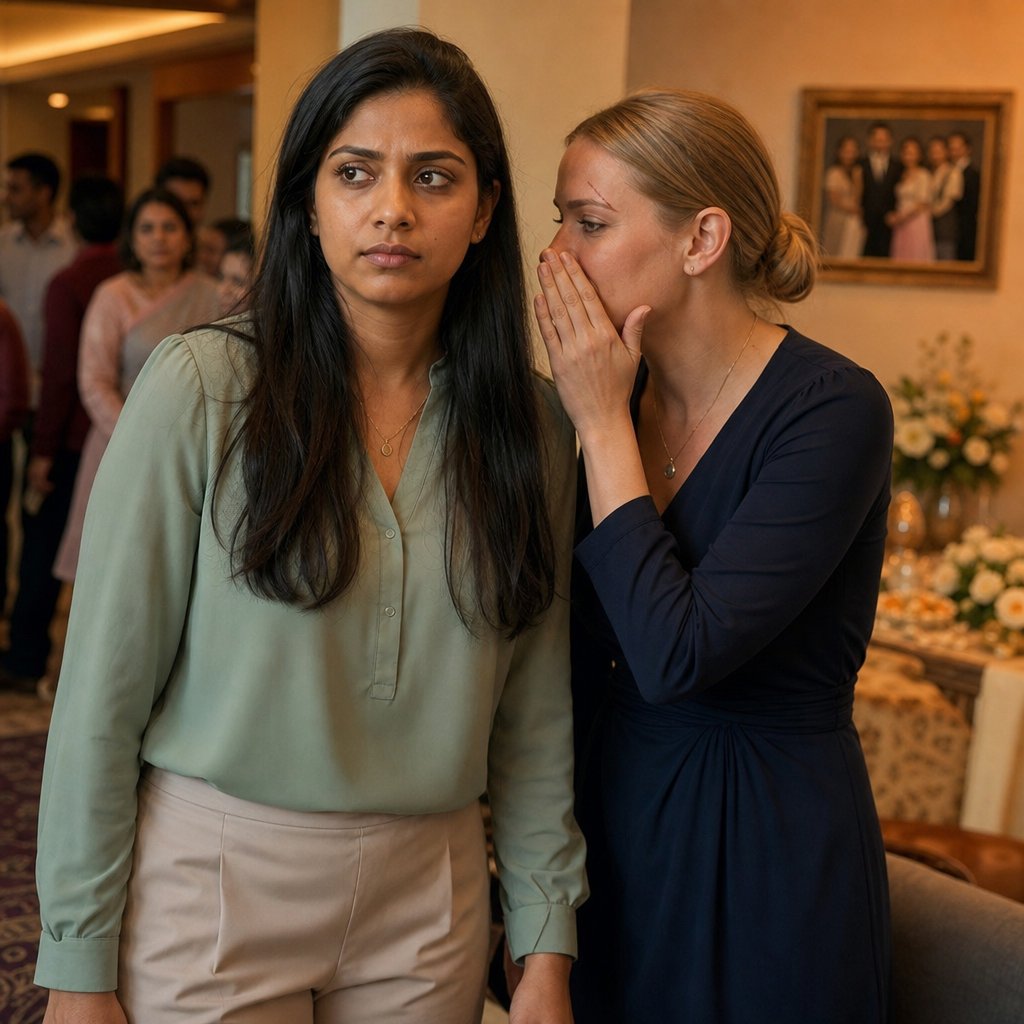
I shoved the locket into my fist and walked out like I owned the air in the hallway. Valerie followed at an easy distance, like she knew I wouldn’t dare run.
My phone buzzed in my other hand—one sharp vibration that made my stomach dip. My mother. Morning-of wedding chaos, right on schedule.
I looked down and saw her message, and the words didn’t feel like instructions. They felt like a blade pressed flat against my skin.
If anyone asks, Valerie is a colleague of your father’s. Smile.
Colleague. My father’s. Smile. Three neat lies stacked like folded linens—clean on the outside, hiding whatever stains were underneath. My mother didn’t do casual lies. She did lies that came with consequences.
Valerie’s perfume drifted closer—something expensive and cold, like white flowers left in a hotel lobby. She leaned in slightly, not enough to touch, just enough to make it clear she could.
“She texted you, didn’t she?” Valerie murmured, eyes flicking to my face, not my phone. “Your mom’s always been efficient. Even with… damage control.”
I tried to swallow and couldn’t. In my fist, the locket’s edge dug into my palm, a tiny crescent of pain that kept me upright.
“Why are you here?” I asked, keeping my voice low because the house was full of relatives and caterers and my sister’s laughter down the hall.
Valerie’s smile didn’t reach her eyes. “Ask your mother.”
Then she glanced past me toward the living room—toward the wedding programs, the flowers, the family photos on the mantel—like she was choosing where to strike first, and I realized my mother hadn’t warned me Valerie might talk.
She’d warned me I was expected to help her lie.
Her Name Was a Lie
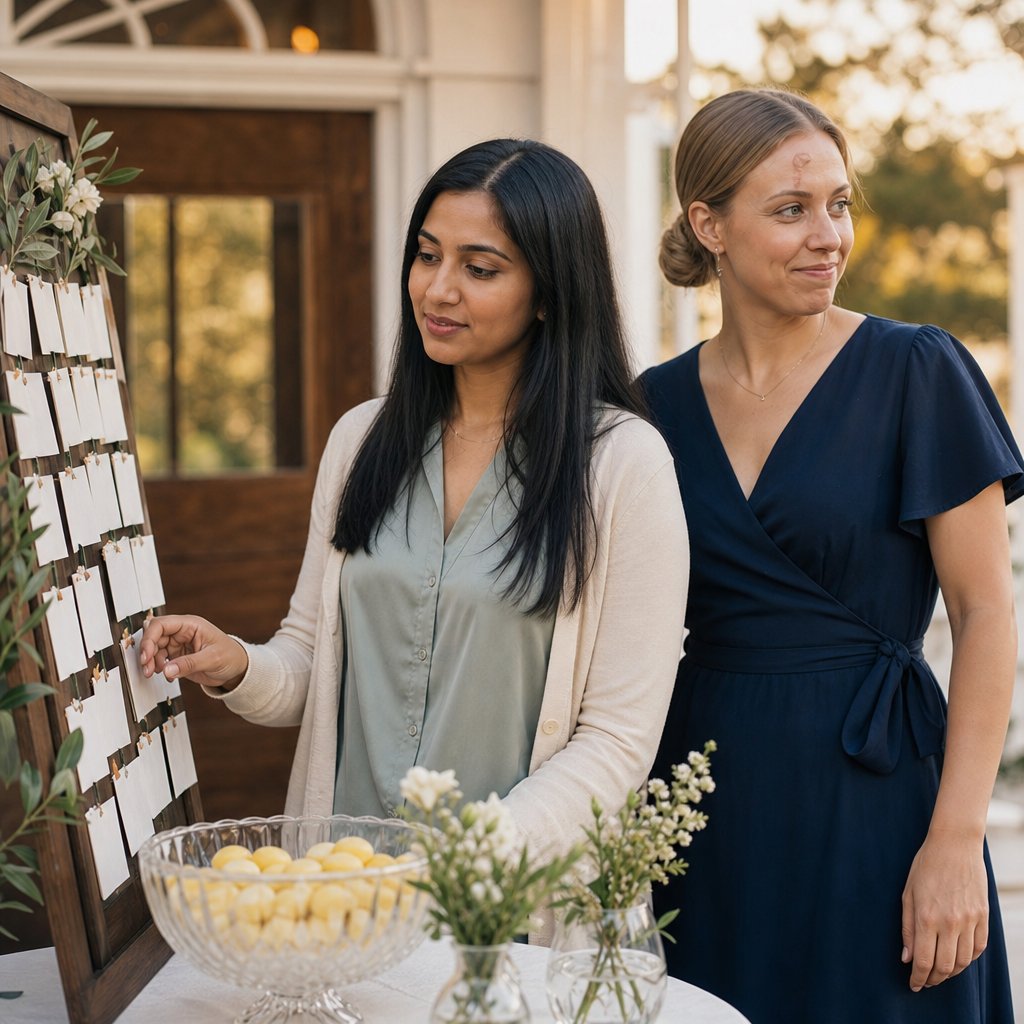
I escaped to the entryway under the excuse of “checking something for the planner,” because that’s what you say at weddings when you need to breathe without anyone asking why your hands are shaking.
The seating chart was propped on an easel near the front door, surrounded by bud vases and a bowl of lemon candies. I leaned in, pretending to scan for my aunt’s name, and there it was—an escort card that didn’t belong.
VALERIE HART — FAMILY ROW.
My stomach dropped so hard I felt it in my knees.
Family row wasn’t a cute label. It was a declaration. It meant front and center, visible in every photo, in every video, during the vows. It meant she’d be sitting close enough to my mother that their shoulders could brush.
And “Valerie Hart” wasn’t her real name. I knew it the way you know the shape of a scar you never show anyone. Valerie had been Valerie something else back when she and I were young enough to think we could bury a scandal by refusing to say it out loud.
I heard the soft scrape of shoes behind me and didn’t have to turn to know she’d followed. She stopped close enough that I could feel her presence like heat.
“Cute, right?” she said lightly. “How she made me family.”
I kept my eyes on the card, on the thick paper, on the clean black ink. My fingers hovered like I wanted to tear it in half. Like I wanted to pretend paper could undo people.
“You can’t sit there,” I whispered.
Valerie’s voice dropped. “Watch me.”
And then, with the smallest tilt of her head, she looked past me toward the hallway where my mother was, as if the two of them had already agreed on where Valerie belonged.
We Smiled Like Strangers
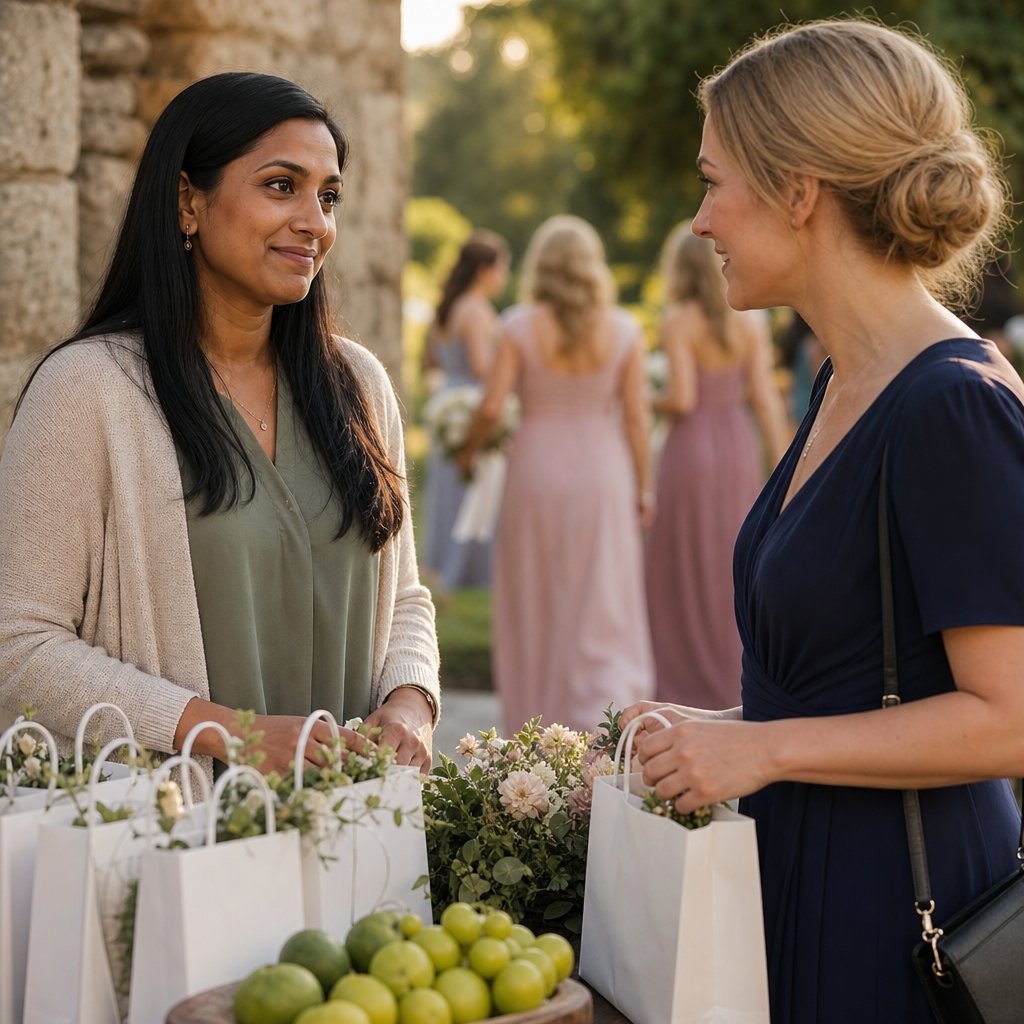
The welcome table was a blur of ribbons, guest books, and my cousin’s too-loud laugh. I took my place behind it for exactly one reason: it was the one spot where I could watch Valerie without chasing her.
She approached like she’d been invited personally by the universe. Not rushed, not nervous—just that smooth, practiced confidence of someone who’d already rehearsed every expression in the mirror. Up close, the scar through her right eyebrow looked older than I remembered, like time had tried to soften her and failed.
“Hi,” she said, bright and polite, as if we’d met once at a networking event and not in the aftermath of a night that still curdled my blood when I thought about it.
I forced my mouth into a smile that felt glued on. My hands were damp against the linen tablecloth. I could smell the sharp citrus of the centerpiece oranges and the faint sting of hand sanitizer someone had spilled.
Her eyes flicked to my ring finger—empty—and something wicked sparked there, fast and precise.
“You look… steady,” she said, the word chosen carefully. “Your family must be proud.”
Steady. Like she was talking about someone who’d almost drowned.
I slid a welcome bag toward her with shaking fingers. “Enjoy the wedding.”
Valerie took it, her nails perfectly manicured, and leaned in just enough that no one else could hear. “Do you ever wonder,” she murmured, “if your sister would still smile like that if she knew what you did to keep her life clean?”
My lungs forgot how to work. Behind her, my sister’s bridesmaids drifted past in pastel dresses, laughing, untouched by any of it.
Valerie straightened, smile back in place, and turned her head toward the aisle like she was already imagining herself in the front row.
The Note Hidden in Flowers
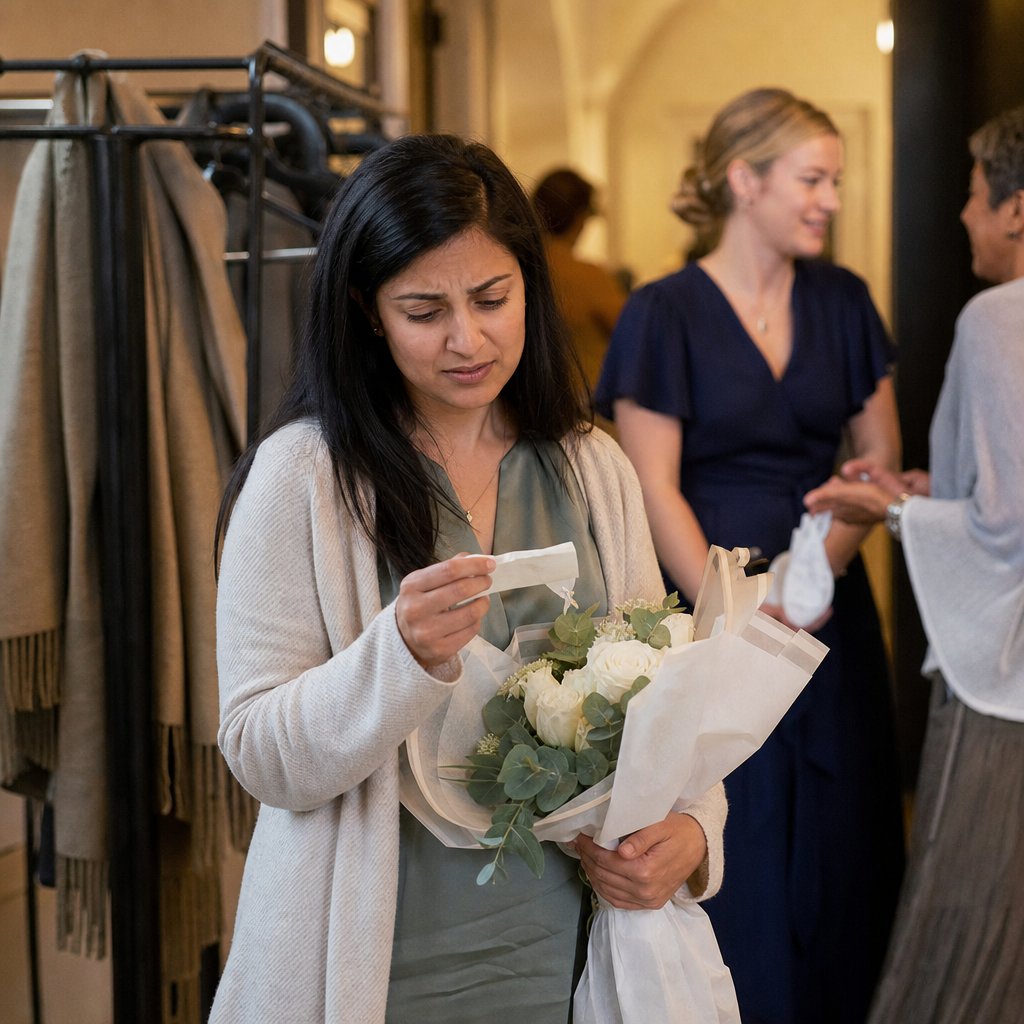
I didn’t even remember picking up my bouquet. One second it wasn’t in my hands, the next it was—a tight bundle of white roses and eucalyptus meant to make me look like I belonged in the family photos.
Valerie brushed past me near the corridor to the ceremony space, close enough that her shoulder grazed mine like an accident. A beat later, something papery shifted among the stems.
I stepped into the shadow of a coat rack and peeled the bouquet apart with careful fingers, as if the flowers might scream. There—folded once, tucked between the ribbon and the green.
A handwritten note.
Don’t make a scene. I didn’t come for you. I came for what your mother stole.
My mouth went dry. “Stole” hit harder than any insult, because it wasn’t vague. It was an accusation with a timeline. With receipts. With a victim.
I looked up and spotted Valerie across the room, talking to my aunt like she’d been around for years. She laughed at the right moment. She touched her own wrist absentmindedly—an old habit I remembered from the night everything cracked open.
My mother moved behind her, adjusting a boutonniere on my father’s lapel, serene as ever. She didn’t look at me. She didn’t have to. That text—Smile—was still vibrating in my bones.
I crumpled the note in my fist, petals brushing my knuckles, and for a second the scent of roses turned sour in my nose.
What did my mother steal?
And why did Valerie think showing up today—today, of all days—was the right time to collect?
I took one step toward my mother, and she finally turned, eyes narrowing like she already knew what I was about to ask…
My Father Wouldn’t Look Up
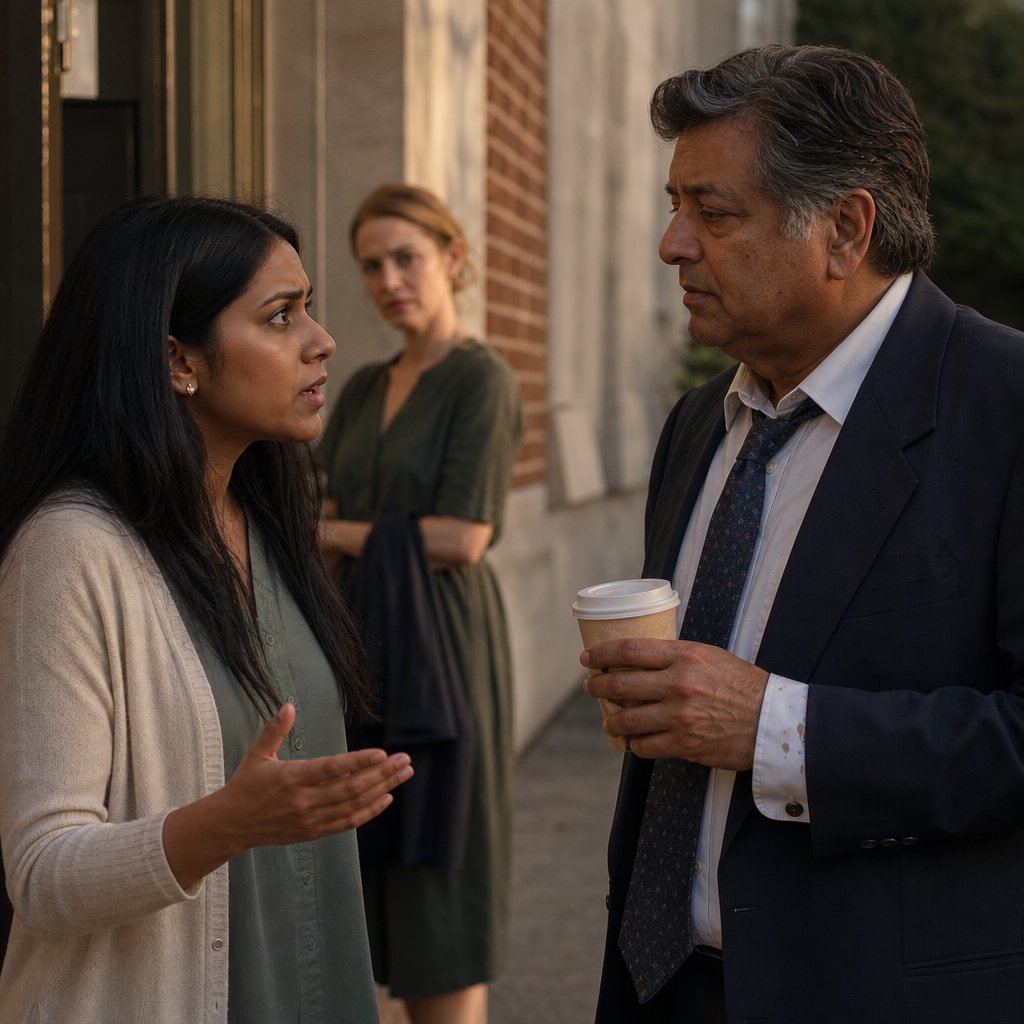
I found my dad near the side entrance where the caterers kept slipping in with trays. He was in his suit, tie slightly skewed, holding a paper cup of coffee like it was a life raft. He looked older than he had last week—like the day had already taken something from him.
“Dad,” I said, and my voice came out too sharp.
He flinched. That alone told me everything I didn’t want to know.
I kept my tone low. “Who invited Valerie?”
His face drained in a way that made me nauseous. Not confusion. Not annoyance. Recognition. He stared at the floor as if the grout lines could give him a better answer.
“Your mother handled it,” he said finally.
“Handled what?” I demanded, but my voice shook on the last word.
He tightened his grip on the cup until the rim bent. Coffee sloshed and a drop landed on his cuff like a bruise. He still wouldn’t meet my eyes.
“Please,” he said, barely audible. “Not today.”
Not today. As if the wedding date was some magical shield that made secrets harmless. As if my sister’s happiness was a curtain he could hide behind while Valerie sat in my mother’s row under a fake name.
I stepped closer. “Did you know she was coming?”
He swallowed hard. His jaw worked like he was chewing glass. “I told your mother it was a mistake.”
My pulse thudded in my ears. A mistake implies a choice. A decision made. A door opened on purpose.
Behind us, someone called for family photos. My dad’s shoulders jerked, reflexively obedient, like he’d been trained for decades to move when commanded.
He finally lifted his eyes toward me—and they were wet. “If you push this,” he whispered, “you’ll pull up things you can’t put back.”
Before I could answer, I saw Valerie at the end of the hallway, watching my father like she’d been waiting for this exact crack in him…
She Kept Stepping Into Us
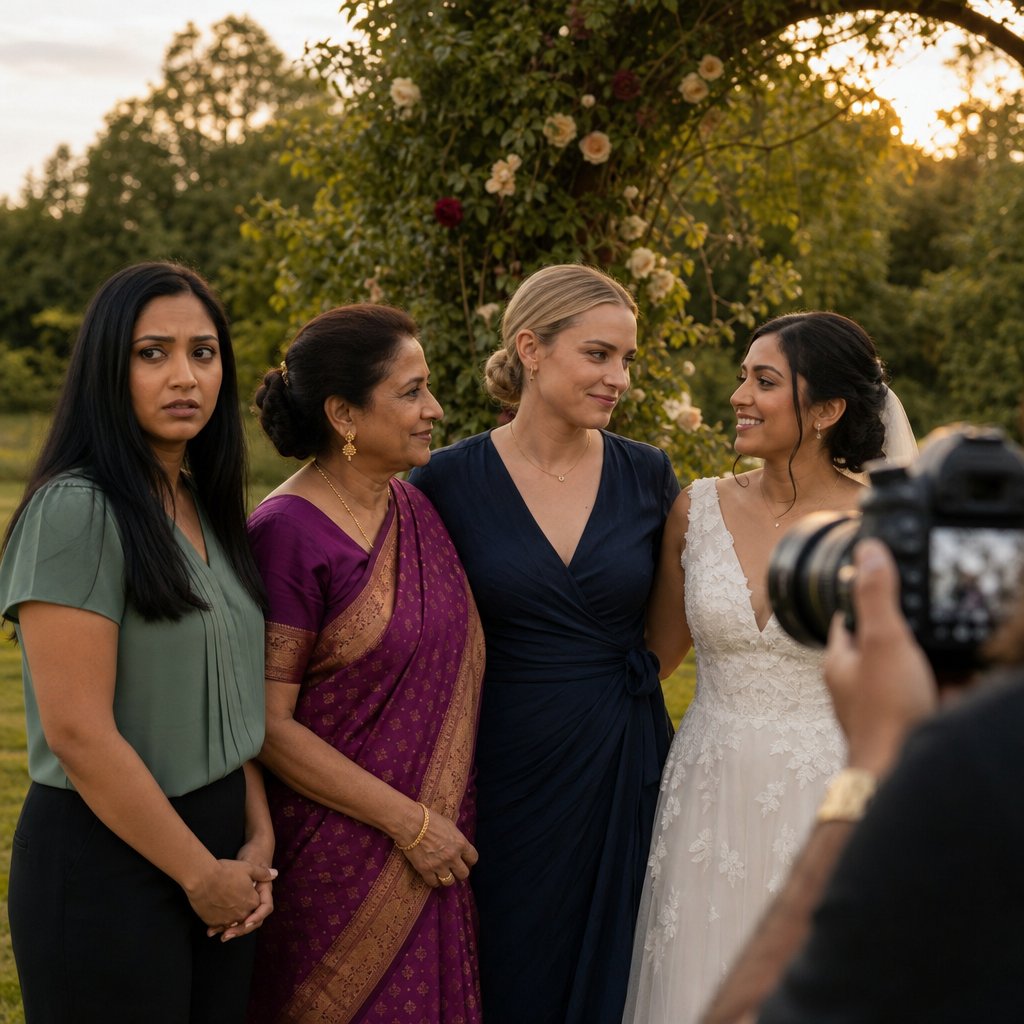
Family photos should’ve been harmless. Line up, smile, pretend you aren’t counting how many times your mother’s jaw tightens when someone says the wrong thing.
We were outside by the garden arch where the photographer kept chirping directions. My sister stood glowing in her dress, my mother beside her in a jewel-toned sari, chin lifted, perfect. I took my place where I always did—slightly off to the side, the reliable daughter, the one who fixes things quietly.
And then Valerie drifted in.
Not crashing. Not pushing. Just… appearing at the edge of the frame like smoke, inching closer with every “one more for safety.” A half-step here. A soft laugh there. Her hand resting on the back of a chair that wasn’t hers. She positioned herself beside my mother with the precision of someone who’d studied old pictures.
The photographer frowned. “Are you family?”
Valerie didn’t even glance at me. She smiled at my mother. My mother smiled back—small, controlled, the kind of smile you give a person holding a match near your curtains.
“She’s with us,” my mother said smoothly.
The words hit me like a shove. With us. Not “a colleague.” Not “a guest.” With us.
I watched Valerie’s shoulder brush my mother’s arm, casual as intimacy. My mother didn’t move away. Instead, she adjusted the edge of Valerie’s wrap dress at the waist—an affectionate little straighten that made my stomach twist.
I tasted something bitter, like I’d bitten my tongue, and realized my nails were digging crescents into my own palm again.
Valerie tilted her head toward my mother, whispering something I couldn’t hear, and my mother’s eyes flicked to me—warning, command, fear—all at once.
Then Valerie’s gaze slid to my sister, and her smile widened like she’d just found the softest place to press…
Two Seats That Shouldn’t Exist
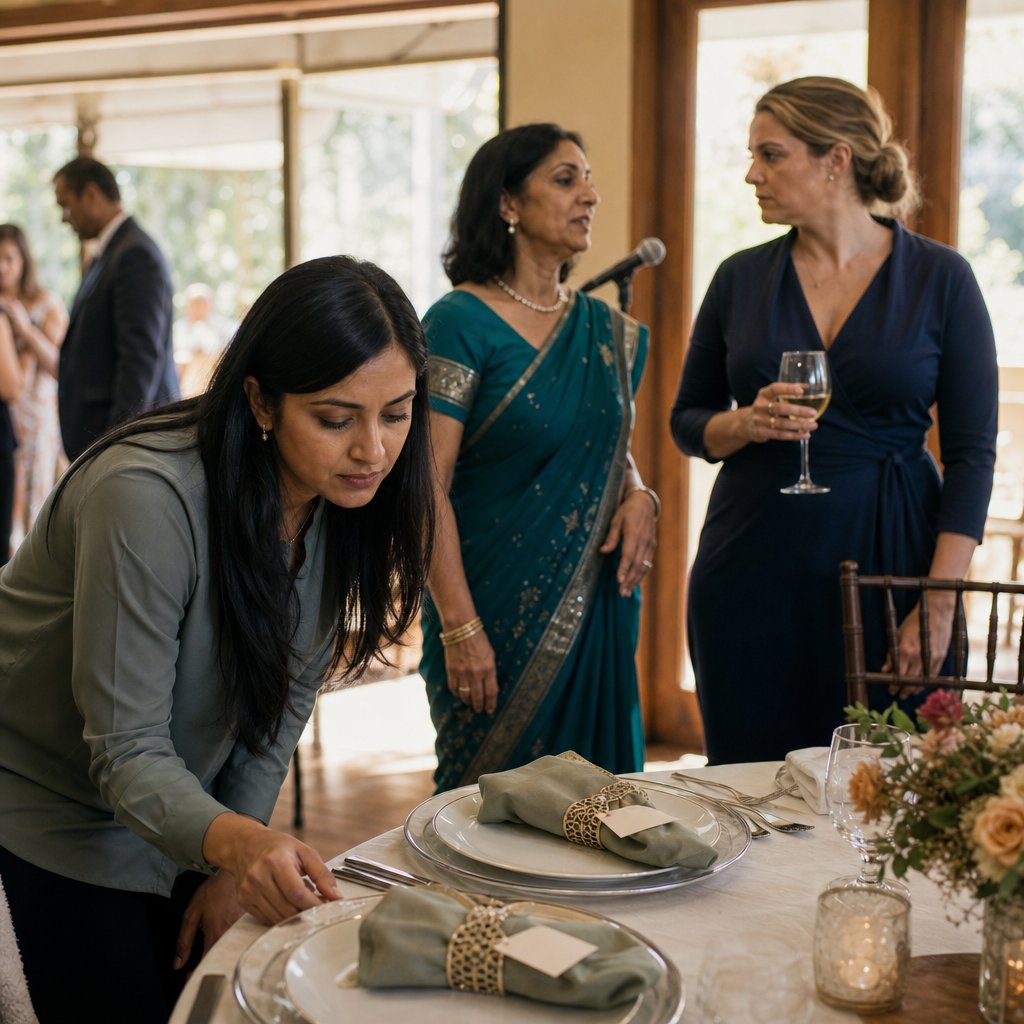
The reception hall smelled like butter and warm bread, the kind of comfort scent that usually makes me relax. Today it just made me feel trapped—like the room was trying to lull me while something sharp waited under the tablecloths.
The planner cornered me near the head table with her clipboard tucked to her chest. “We’re perfect on headcount,” she said, voice bright with practiced calm. “No surprises. No extra meals. We’re good.”
I nodded like I believed her. Then I walked the perimeter anyway, because my mother’s lies always came dressed as reassurance.
That’s when I saw it: two place settings on opposite sides of the room with identical meal cards clipped to the napkin rings. Same color. Same little embossed border. Same choice marked. Like someone had duplicated a seat on purpose—one person split into two locations, covered from every angle.
My skin prickled. Weddings didn’t make mistakes like that. People did.
I bent closer, pretending to straighten a fork. The napkin was folded into a crisp triangle that smelled faintly of starch. The meal card was blank to anyone else—just a pretty tag. But to me it screamed: there’s a plan here and you’re not reading it fast enough.
I scanned the room and found Valerie across the hall, talking to my uncle, laughing softly. She caught me looking and lifted her glass in a tiny toast—like she’d just confirmed I’d noticed the right thing.
I turned, searching for my mother. She was near the sweetheart table, speaking to the DJ, her hand resting lightly on the edge of the microphone stand as if it belonged to her.
My heart started hammering. Duplicate seats. A fake name. A family-row escort card. And now my mother touching the mic like she was setting the stage.
I took a step toward her, and my heel caught on something under the table—another place card, face down, as if someone had dropped it in a hurry…
She Said My Old Name
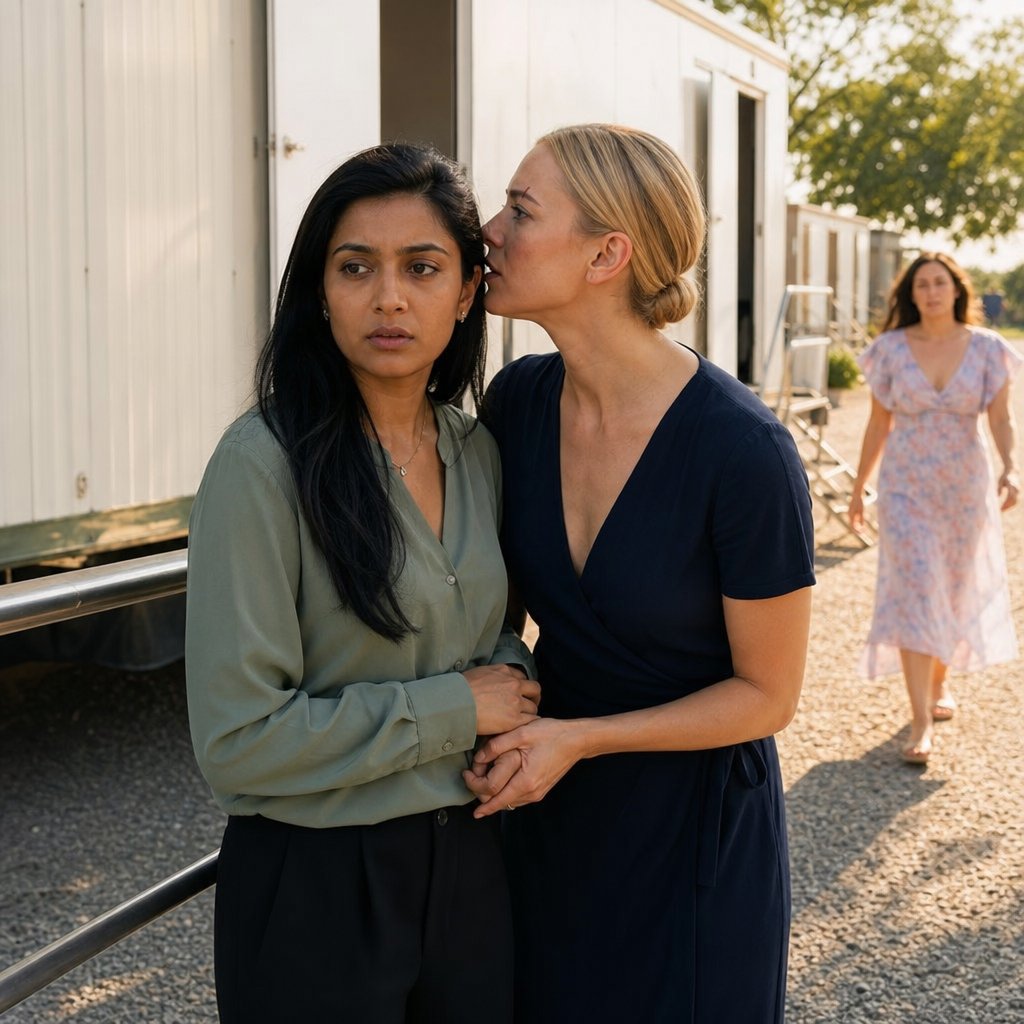
I fled to the restroom trailers because they were the only place no one expected me to be useful. The gravel crunched under my shoes, loud in the thin air behind the venue, and the smell of roses from the ceremony couldn’t reach back here. Instead it was damp earth and industrial soap.
I gripped the railing, trying to steady my breathing, when Valerie appeared beside me like she’d been poured out of the shadows.
“Don’t,” I hissed, scanning behind her. “Not here.”
She leaned closer anyway, her voice soft enough to be intimate and cruel at the same time. “Hi, Rani.”
The nickname hit like a slap. No one in my current life called me that. Not my coworkers. Not my sister. Not even my mother anymore. It belonged to a version of me I’d buried—messy, reckless, capable of doing things I’d sworn I never would again.
My hands went cold. “Don’t call me that.”
Valerie’s eyes gleamed, satisfied. “You always hated it. That’s why I love it.”
I forced myself to look at her, really look. The neat bun. The scar. The calm face of a woman who’d learned how to weaponize patience. “What do you want?”
She laughed once, under her breath. “What I’m owed.”
“By my mother?”
“By your family,” she corrected, and her gaze dropped to my hands like she was remembering them doing something. “You were there too, Rani. You didn’t just watch.”
The gravel shifted as someone approached from the parking area. I stiffened, ready to paste on a smile, but Valerie caught my wrist—lightly, almost gentle—holding me in place.
“If you try to warn her,” Valerie whispered, “I’ll tell your sister what happened in that car.”
My blood turned to ice, because I hadn’t thought about the car in years, not directly—not with the smell of vinyl and panic suddenly back in my nose—and then I heard my sister’s voice, bright and close, calling my name from around the corner…
My Mother Moved Her Closer
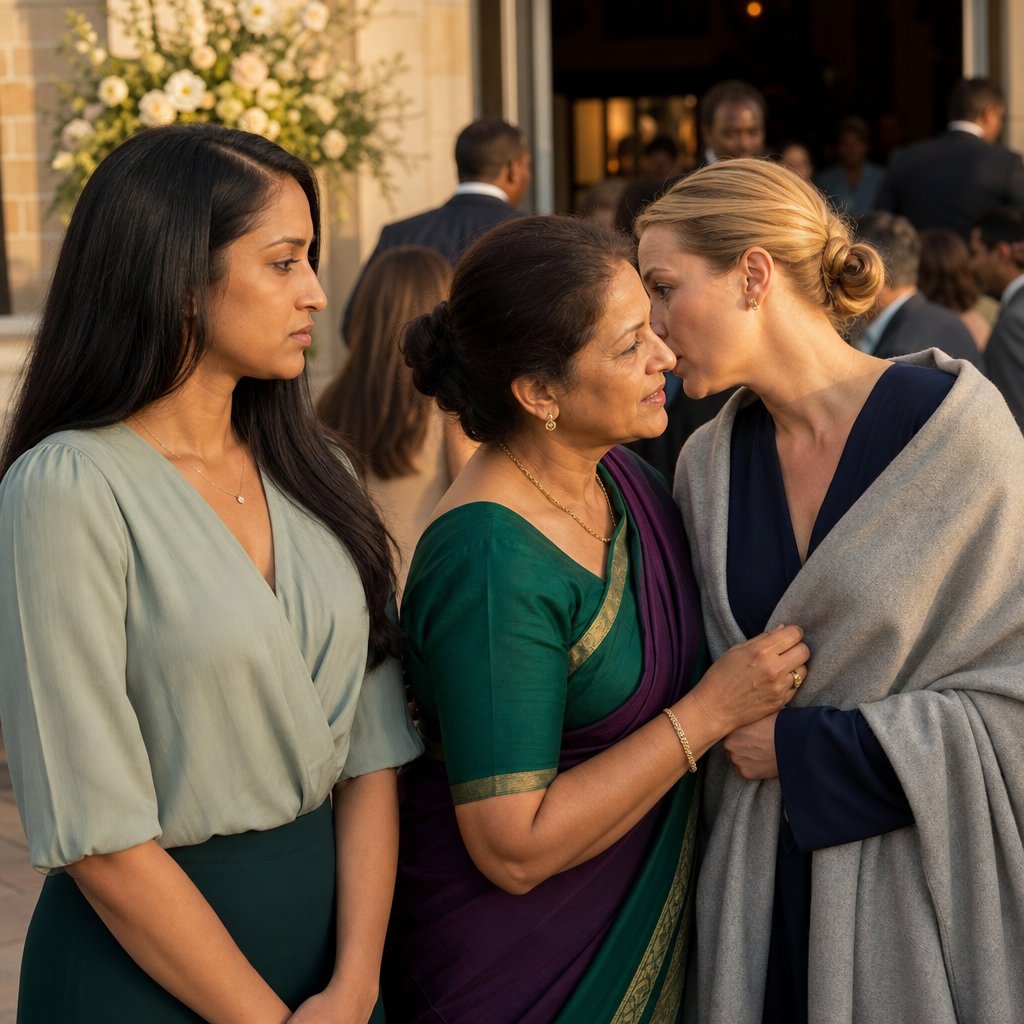
I got back inside with my smile stapled on so tightly my cheeks hurt. My sister looped her arm through mine for a second, chattering about how perfect the flowers looked, and I nodded like my brain wasn’t screaming.
Near the entrance to the ceremony space, the seating chart was… different.
Not the same easel. Not the same cards. My mother stood beside it, fingers gliding over the paper like she was smoothing wrinkles out of fabric. Her expression was serene, almost bored—like swapping a seating plan was as normal as refilling the water glasses.
I leaned in, heart pounding, and found Valerie’s name—Valerie Hart—moved. Not family row anymore.
Closer.
Closer to the sweetheart table. Closer to the aisle. Closer to the microphone where the toasts would happen, where “accidental” speeches could ruin lives in under sixty seconds.
My mother noticed me reading and didn’t flinch. She turned her head slightly, the edge of her sari catching the light like a blade.
“It’s better this way,” she said softly, as if we were discussing centerpieces.
I stepped in front of her, blocking her view of the room. “Why are you doing this?”
Her eyes were dry and unwavering. “Because,” she murmured, “Valerie doesn’t go away. She escalates.”
“So you’re giving her a front-row seat to destroy us?”
My mother’s mouth tightened. “I’m giving her what she thinks she wants. So she stops digging.”
Behind us, I heard the first notes of the processional music starting to cue, guests shuffling into place. Time was collapsing. Valerie glided into the room in a new outfit—a soft gray shawl over her navy dress—eyes locked on the microphone like it was her destiny.
My mother reached out and adjusted the shawl on Valerie’s shoulders with a tenderness that made my vision blur.
Valerie leaned in to my mother, whispering something that made my mother’s hand freeze midair…
If She Talks, We Lose
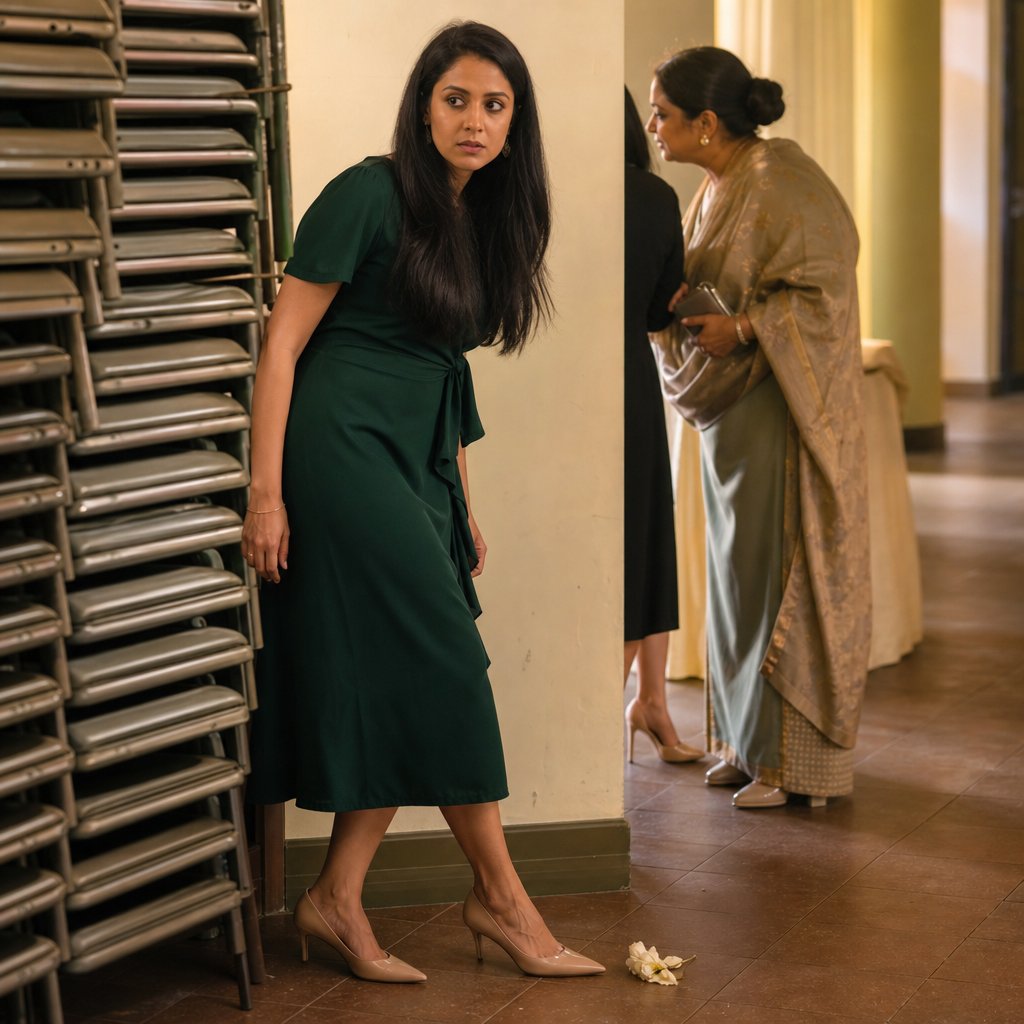
The music swelled, my mother’s hand still hovering in the air like she’d forgotten how to wave. Valerie’s perfume—powdery, expensive—hung between them, and I watched my mother’s knuckles go white around her clutch.
After the ceremony, I volunteered for the most boring job on earth just to get out of the room: dropping leftover florals and unopened favors back at the hall’s service entrance. The corridor smelled like wet greenery and bleach. My heels squeaked on the tile, and every sound felt too loud.
I rounded the corner and stopped so hard my breath caught.
My mother was there, half-hidden behind a stack of folded chairs, speaking to someone I couldn’t see. Her voice was low and sharp—nothing like her “proud mother” tone.
“Listen to me,” she hissed. “If she talks, we all lose.”
My stomach dropped so fast it felt physical, like missing a step on stairs.
“She” wasn’t my sister. It wasn’t a vendor. It wasn’t some distant aunt with a big mouth. There was only one “she” in this building who could make my mother sound like that.
I leaned closer, my palm braced against the cold metal of the chair stack, and I heard a soft laugh—female, controlled—right before a familiar pair of heels clicked once, deliberately, like a warning that she knew I was there…
Valerie’s Sweet Little Questions
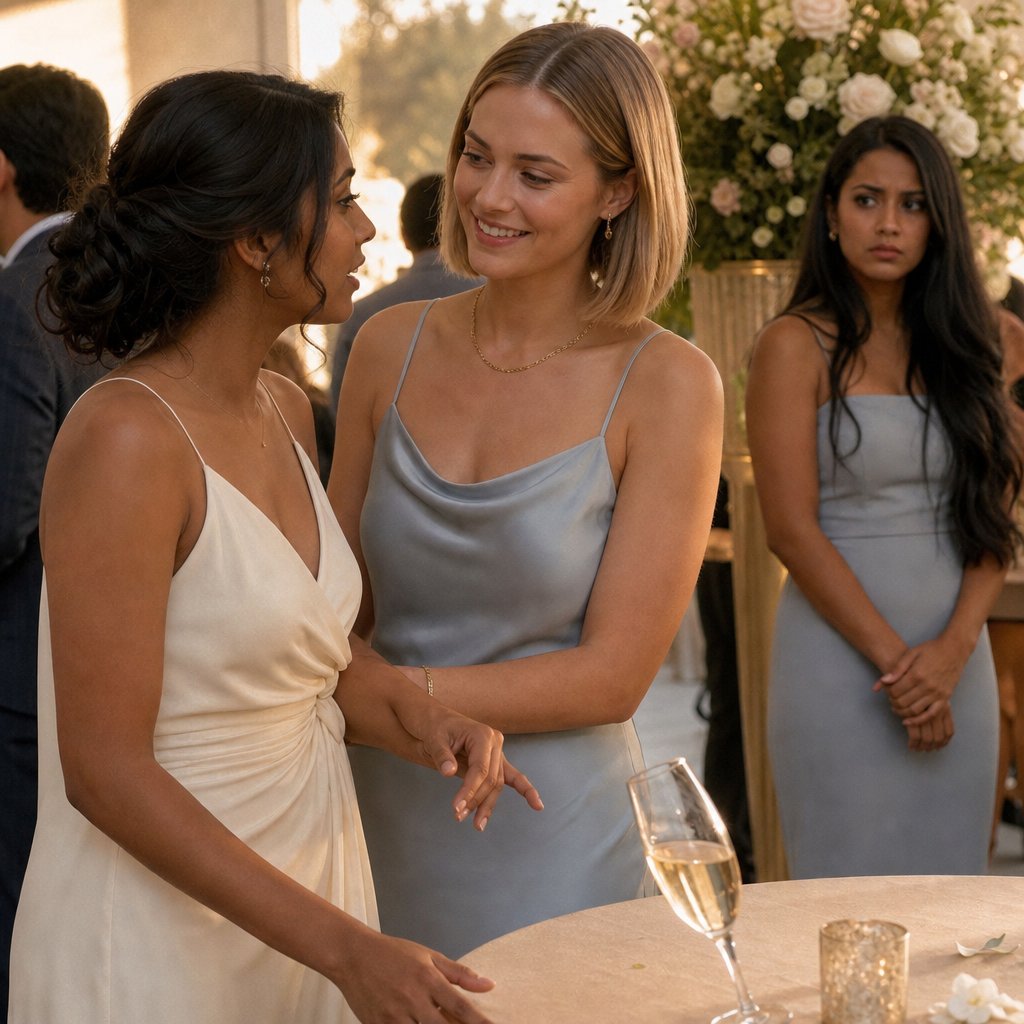
Valerie didn’t lurk after that. She circulated—like she belonged, like she’d rehearsed it.
At the cocktail hour, she found my sister near the champagne table and slid in beside her with a smile so warm it made other people relax. My sister—radiant, soft in her reception dress—actually lit up, because of course she did. She’s always trusted compliments like they were currency.
I watched from across the room, my throat tight, the smell of citrus and spilled prosecco sharp in my nose.
“You’re glowing,” Valerie purred, touching my sister’s arm like they were already friends. “Your family must be so proud. Where did you grow up again? Same house your whole life?”
My sister laughed and answered, easy. Valerie nodded, eyes bright, then tilted her head like she was genuinely curious.
“And school—did you go private? Your parents seem like they really…invested.”
My sister kept talking, oblivious, while Valerie’s gaze flicked—once—past her shoulder to me. Not a glare. Not even a smirk. Just a quick, clinical check, like she was taking inventory.
“This wedding is stunning,” Valerie added. “Your mom must have planned everything. Or did your dad handle the big expenses?”
My sister’s smile faltered for half a second, the first tiny crack. She glanced toward our parents—toward my mother—like she was doing mental math she’d never needed before, and Valerie leaned in, listening too closely…
The Joke That Landed Wrong
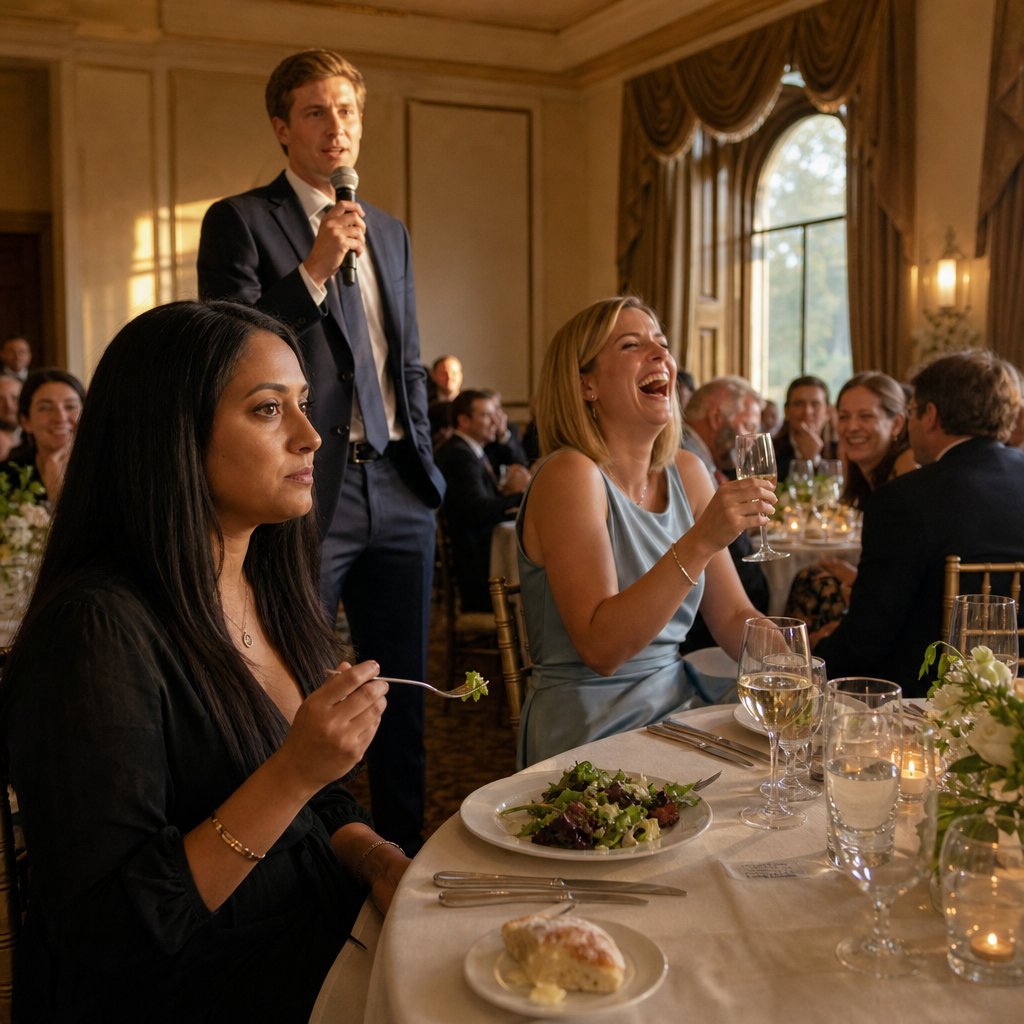
By the time dinner started, my nerves were so tight I could barely swallow. The ballroom smelled like butter and roasted garlic, and every clink of silverware sounded like a countdown.
The best man stood for his toast—tall, broad-shouldered, sandy-brown hair, the kind of guy who always thinks he’s the funniest person in the room. He tapped his glass and launched into the usual: college stories, harmless teasing, sentimental lines that made people dab their eyes.
Then he grinned and said, “You know, I’ve always believed in second chances.”
Polite laughter.
“Like—real second chances,” he went on, pausing like he was about to say something profound. “New jobs, new cities… even new names.”
My fork stopped halfway to my mouth.
Across the room, Valerie threw her head back and laughed—one beat too loud, one beat too long. It wasn’t the laugh of a guest enjoying a toast. It was a laugh that wanted to be heard. It had teeth.
I looked at my mother. She didn’t laugh at all. She stared at her plate so intensely it was like she could will the ceramic to crack. My father’s jaw flexed once, hard.
The best man kept going, oblivious. “Because if you’re brave enough to start over—”
Valerie’s eyes found mine over the centerpiece, and her smile tightened, the corners barely lifting. I felt heat flood my face. She was aiming it at us. She was reminding me that she could rewrite the story in front of everyone and call it a joke.
She lifted her glass—just slightly—like a private toast, and I realized she wasn’t laughing at him at all. She was laughing at how easy it would be to make the room laugh with her…
My Mother’s Hidden Concessions
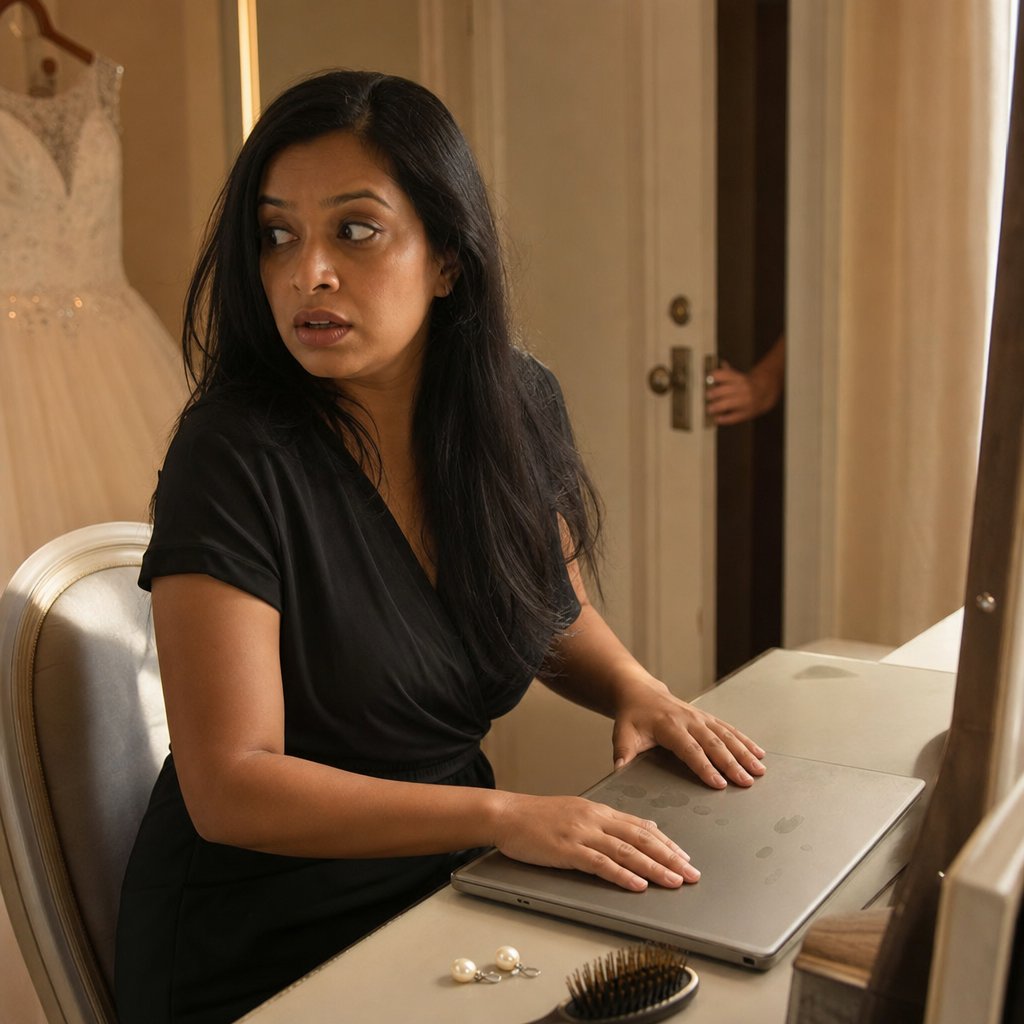
I told myself not to do it. I told myself I was being paranoid. Then I saw my mother’s purse left open on a chair—keys visible, the little habit she had when she felt safe—and something ugly in me made a decision.
Upstairs, in the bridal suite turned “family room,” the air smelled like hairspray and warm fabric. My mother’s laptop sat on the vanity beside a pair of earrings she’d taken off, the pearls catching the light like tiny eyes.
My hands shook as I opened it. I wasn’t looking for love letters or anything dramatic. I was looking for proof that I wasn’t losing my mind.
There were a few tabs open—vendors, schedules, boring wedding admin. Then, tucked behind them like it didn’t want to be seen, a tab with a title in all caps:
CONCESSIONS.
I clicked it.
A spreadsheet loaded—clean, intentional. Names. Dates. Notes. And there it was, halfway down, like a slap:
Valerie.
Next to her name was a dollar amount that made my throat close. Not a casual “gift.” Not a reimbursement. It was the kind of number you paid to keep someone from opening their mouth.
My pulse hammered in my ears as I scrolled, looking for context—anything. A second column had short phrases, clipped and cold, like someone trying to turn guilt into bookkeeping.
Footsteps sounded in the hallway outside the door—slow, familiar—and the laptop fan whirred louder as if it, too, was panicking. I snapped the screen down halfway, heart punching against my ribs, as the doorknob began to turn…
The Photo I Buried
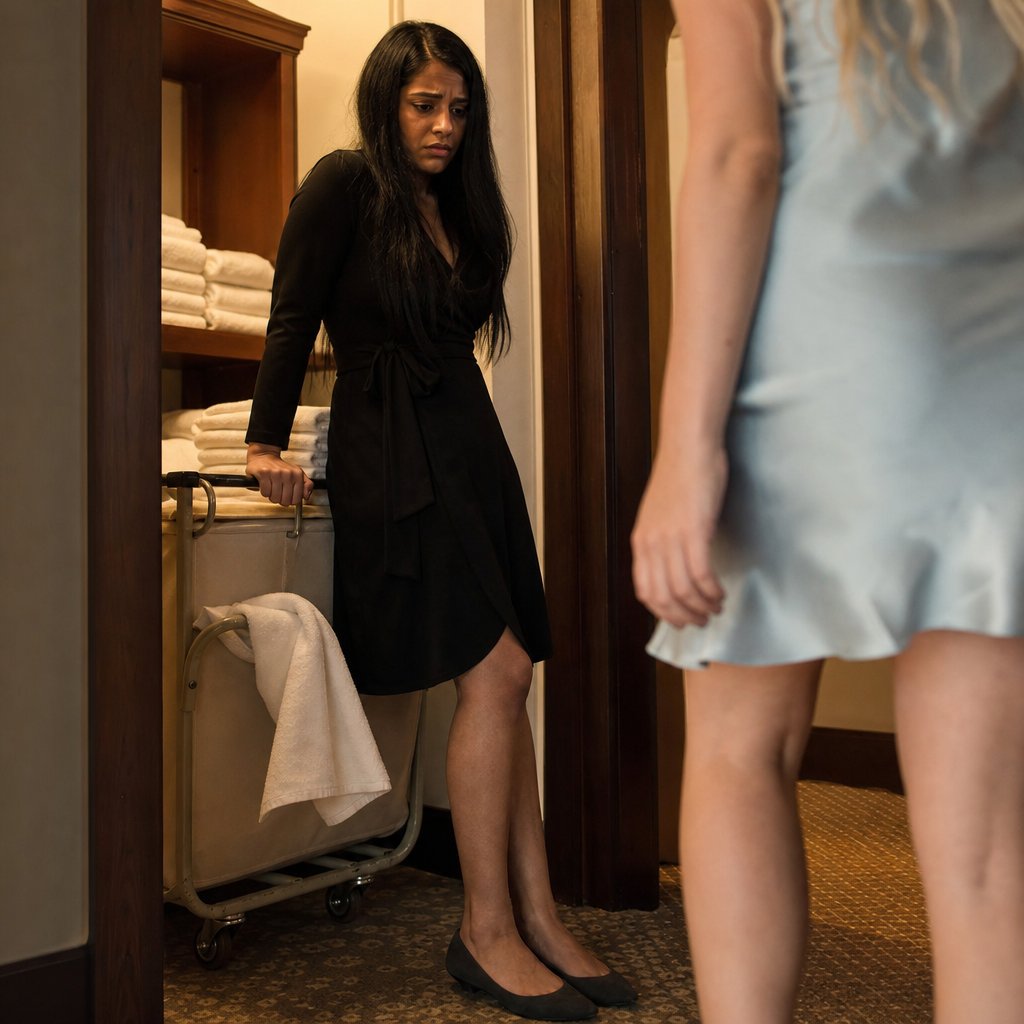
I barely made it out of that room without looking like I’d stolen something. My skin felt too tight, like my body was trying to crawl out of itself.
In the hallway, I stepped into a quiet corner near a linen closet, the air cooler there, smelling faintly of detergent and damp towels. My phone buzzed in my hand—once, then again—insistent.
Valerie.
I didn’t want to open it. I did anyway, because fear makes you stupid.
The image hit me like a punch: an old photo—cropped close—of me, younger, hair shorter, eyes too bright with the kind of confidence that comes from not knowing what you’re risking. I was standing beside someone I had spent years pretending I’d never met. Someone whose name I’d trained my mouth not to form.
My chest went hollow. I could almost smell that night again—cheap cologne and rain on hot pavement—like memory had teeth.
Under the photo, Valerie’s message was short, surgical:
You remember. Your mother does, too.
I stared at it until the hallway blurred. My fingers went numb, and I realized my other hand was gripping the edge of a rolling laundry cart so hard it hurt.
This wasn’t just blackmail. This was a reminder that she had receipts older than my sister’s relationship, older than this wedding, older than the version of our family I’d helped build with silence.
I heard footsteps approaching—light, unhurried—and I didn’t need to look up to know who walked like she owned the place. I shoved my phone down, face burning, as a shadow fell across the floor in front of me…
My Mother’s Quiet Threat
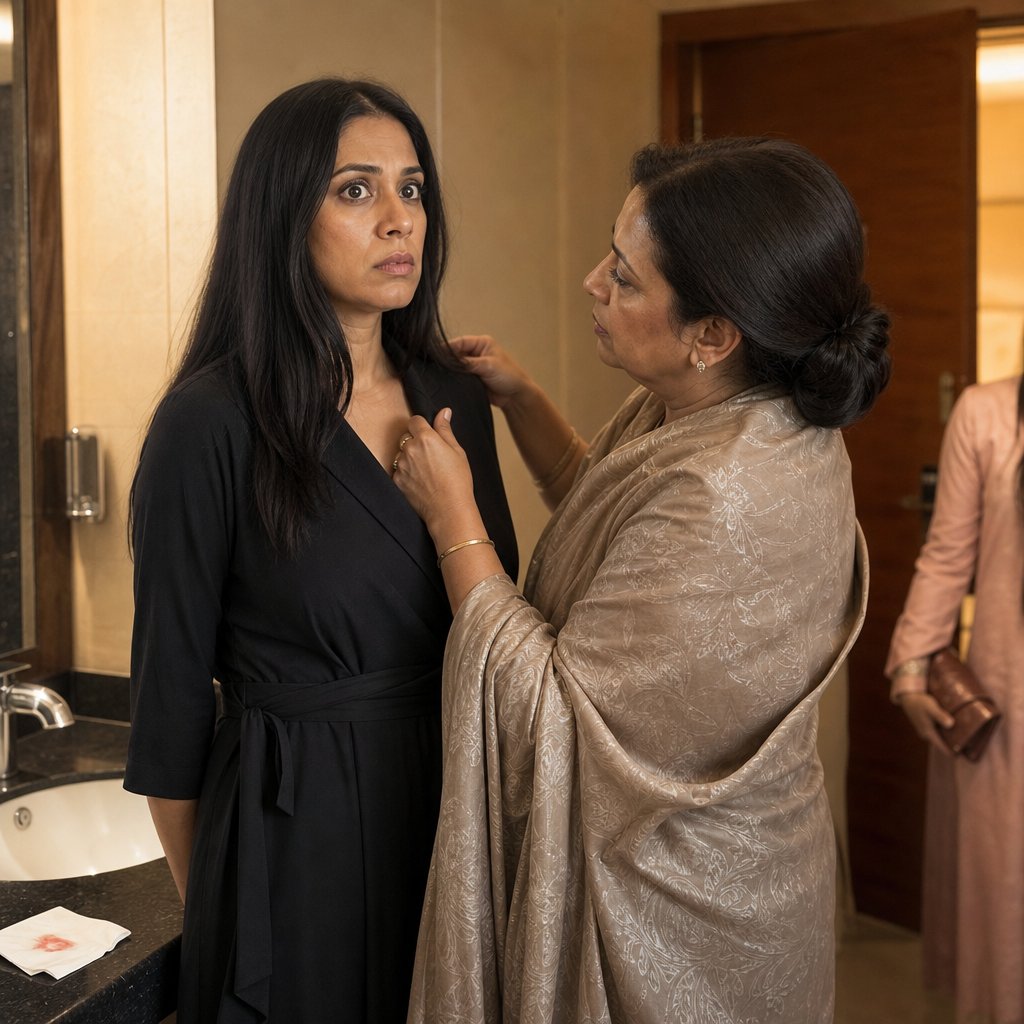
I found my mother in the ladies’ lounge, fixing her lipstick in a mirror like nothing in the world could touch her. The room smelled of rose-scented hand soap, and the faucets ran softly behind us, masking the edges of words.
“We need to talk,” I said, and my voice cracked on the last word.
She didn’t flinch. She capped her lipstick with a precise click and turned, eyes scanning my face like she was checking for damage.
“Not now,” she said, calm as ice.
“Valerie is here under a fake name,” I whispered. “I saw—”
“You saw what you wanted to see.” Her smile was small, practiced. “You’re emotional. It’s your sister’s day.”
My hands shook. “Why is her name on your—”
My mother’s gaze snapped, sharp enough to cut. She stepped closer until I could smell her perfume layered over the soap. “You are not doing this,” she said, each word measured. “Not today.”
“So it’s true,” I breathed. “You’re paying her. You’re—”
“I am protecting this family,” she hissed, the mask slipping for half a second. Then her voice dropped, almost gentle. “And I am protecting you.”
I felt my throat tighten. “From what?”
She looked me dead in the eyes. “From consequences,” she said softly. “From people knowing what you did back then. What you helped set in motion.”
The room tilted. My stomach rolled.
Then she leaned in, so close her earrings brushed her scarf. “If you ruin your sister’s day,” she murmured, “I will cut you out so clean you’ll swear you were never mine.”
My mouth opened, but no sound came. She reached past me, straightened my collar like I was a child, and in the mirror behind her I saw myself—wide-eyed, cornered—just as the bathroom door swung open and someone walked in…
Valerie Timing the Room
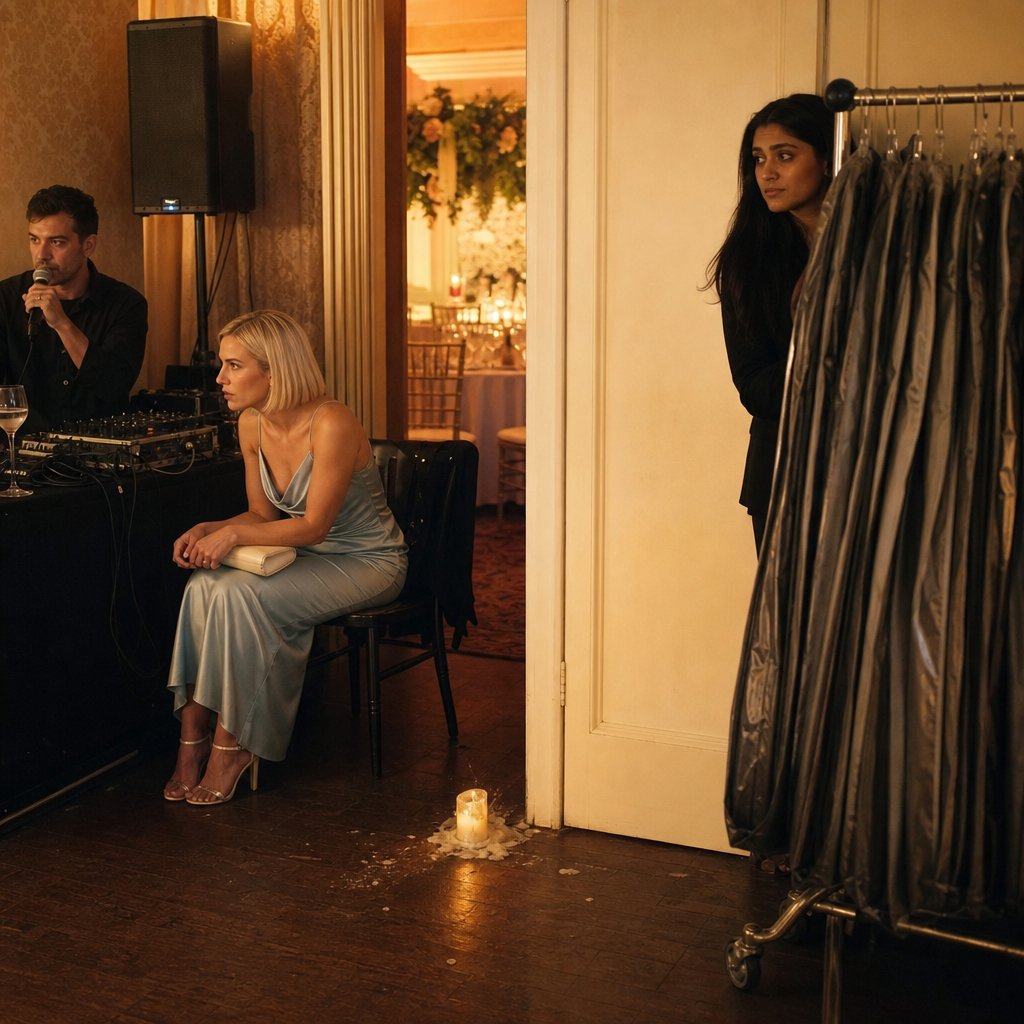
The final mic check happened in the side room off the ballroom—where the DJ had his equipment and the coordinator kept emergency kits and spare candles. It was supposed to be boring. It felt like a firing squad.
I stood near the doorway, half-hidden behind a rolling rack of garment bags, watching people test the microphone. One-two, one-two. Names called. Laughter. The scent of melted candle wax clung to everything.
Valerie was there, perched on a chair like she’d been invited to the planning meetings. Pale blue satin, perfect posture, hands folded around an ivory clutch. Her face was calm, but her eyes weren’t. They tracked each speaker as if she was timing breaths—measuring the gaps between applause.
The coordinator asked the maid of honor to say her line again. Valerie’s gaze flicked to the doorway, then to the DJ’s hand on the volume knob.
I told myself she was just curious. That I was spiraling.
Then she looked directly at my mother across the room. Not friendly. Not even hostile. It was business. A silent question.
My mother gave the smallest nod—so small no one else would catch it—and Valerie’s fingers tightened on her clutch until the fabric dimpled.
My heart hammered. She wasn’t attending a wedding. She was watching for her cue.
The DJ cleared his throat. “Okay, next speaker—”
Valerie leaned forward, ready, like the sound of her name was about to be called, and I realized with a cold rush that she might be planning to stand up in front of everyone without anyone’s permission…
The Envelope That Disappeared
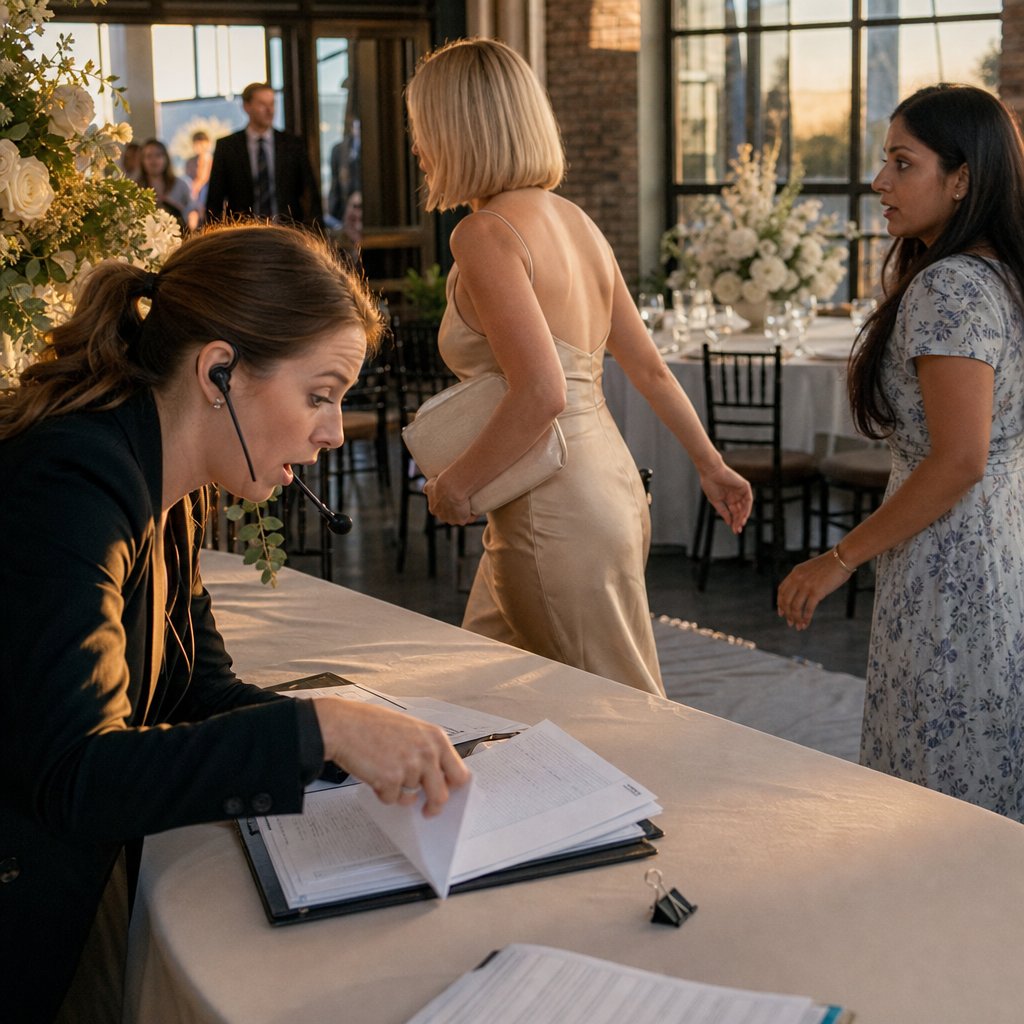
Chaos has a sound at weddings—heels on hardwood, clipped whispers, the soft rip of tape, someone always saying, “Where is it?” like it’s the first time in history an object has moved.
I was near the coordinator when she flipped through her binder, lips moving as she counted. Her finger stopped. She flipped back. Then forward again, faster.
“No,” she muttered. “No, no—where’s the vendor envelope?”
My stomach sank on instinct. The binder smelled like paper and peppermint gum, and the coordinator’s hands suddenly looked too shaky to belong to someone paid to be calm.
“It was right here,” she said, voice rising. “The final payment. The cash.”
People turned. The florist frowned. The DJ paused mid-setup. My mother’s head snapped up like she’d been yanked by a string.
And then I saw Valerie.
She was walking away from the coordinator’s table, unhurried, weaving between chairs like she was heading to the restroom. In her hand was that same ivory clutch—except it wasn’t flat anymore. It bulged slightly at the side, the clasp strained, like something rectangular had been shoved inside.
Maybe it was nothing. Maybe it was makeup. Maybe I was losing it.
But Valerie glanced back over her shoulder, caught my stare, and her mouth curved into the smallest smile—as if to say, see how easy.
The coordinator’s voice sharpened. “No one leaves this room until we find it.”
Valerie kept walking anyway, clutch held tight against her ribs, and I felt my feet move before my brain decided to follow…
My Sister’s Gift From Her
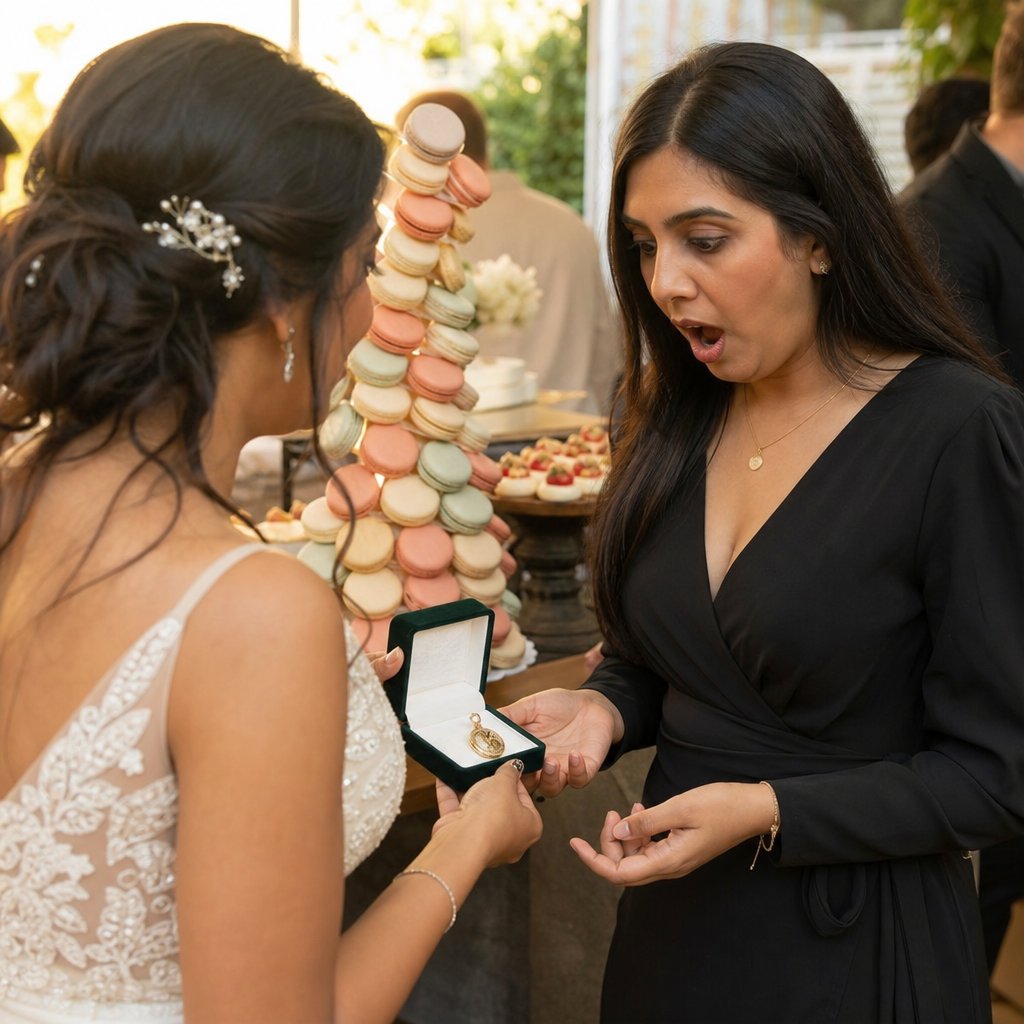
My sister cornered me near the dessert table before I could take three steps after Valerie.
“Okay,” she said, lowering her voice, smile still pasted on for the guests behind her. “What is wrong with you?”
Up close, I could see the tiny stress line between her brows that only shows when she’s trying not to cry. The air smelled like sugar and toasted almonds, and a tower of macarons leaned slightly, precarious.
I wanted to tell her everything. That our mother was making deals. That Valerie wasn’t a random guest. That there was a spreadsheet with a number big enough to buy silence.
“I just—” I started, and my voice broke into something humiliating. “I’m trying to keep you safe.”
Her expression softened, just enough for me to hate myself more. “From what? From who?”
I swallowed hard. “There’s someone here who—”
She cut me off, pulling a small box from under the table like it was a surprise meant to cheer me up. “Look what Valerie gave me,” she said, almost shy. “She’s actually…really thoughtful?”
My stomach turned.
Inside was a vintage locket—gold, heavy, the kind that looks like it has history. The metal was warm from her hands. When she tipped it toward me, I saw the engraving: our family initials, the exact ones my father has on his cufflinks and my mother insists on embossing into everything that matters.
I stared until my vision tunneled. Valerie didn’t just show up. She brought a piece of us with her.
My sister beamed. “Isn’t it gorgeous? How would she even know our initials?”
My mouth went dry, because I did know—and the answer was the kind that could ruin her marriage before the cake was cut…
Good. Now You Know.
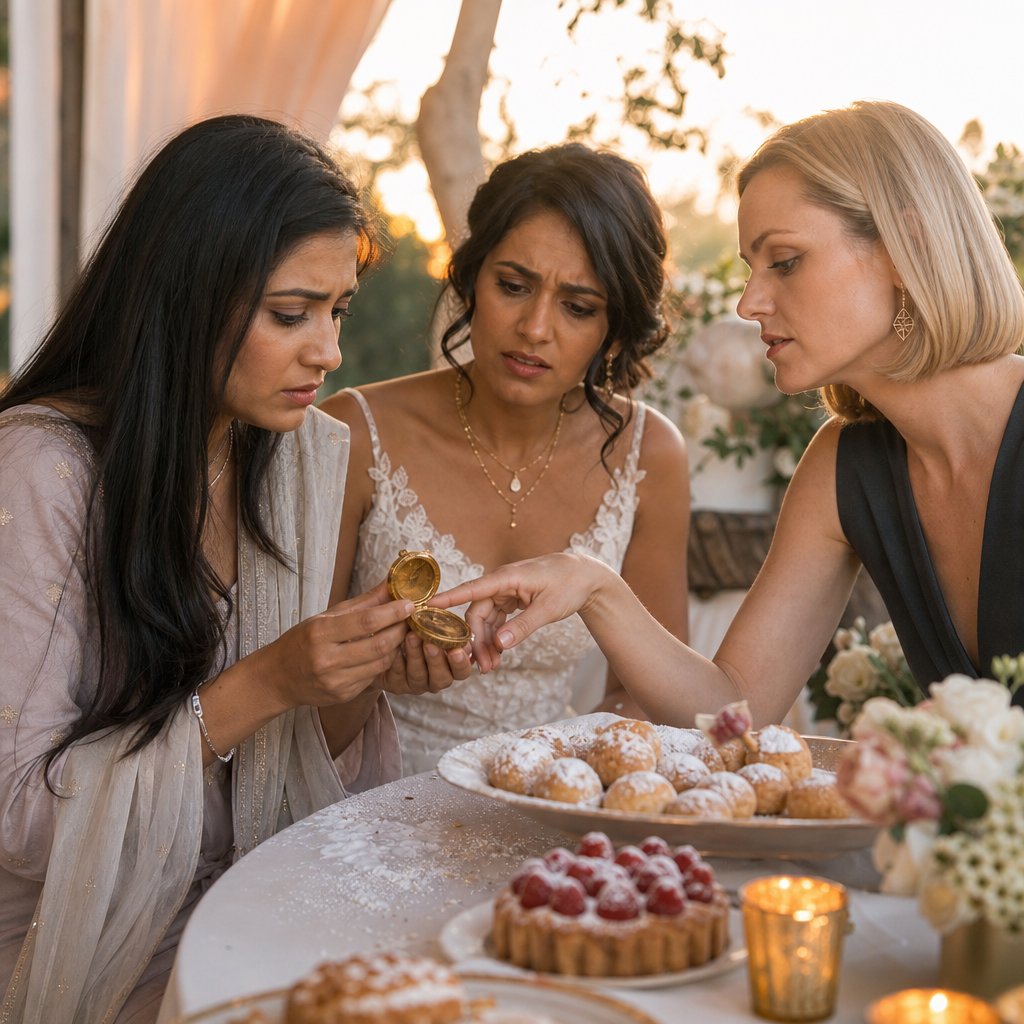
The locket felt heavier than it should have, like it carried more than metal and sentiment. My sister’s fingers hovered, waiting for me to admire it the way a normal sister would.
I didn’t. I couldn’t.
“Can I—” I said, and gently took it from her before she could say no. The hinge was old, stiff. I ran my thumb along the edge, feeling the tiny nicks and worn spots where someone else had opened it again and again.
My breath came shallow. The dessert table lights glinted off the engraving—our initials—too precise to be a coincidence. My sister watched me with hopeful eyes, like this was a sign the night was turning sweet again.
I flipped it open.
The click was quiet, but it landed in my chest like a gunshot. Inside, there was space for photos—empty now—but the lining had a faint indentation, as if something had been pressed there recently and removed. A missing piece. A placeholder. A promise.
“What is it?” my sister asked, her voice suddenly smaller.
I looked up—and Valerie was standing on the other side of the dessert table, close enough that I could see the tiny freckle near her left eye and the calm, satisfied set of her mouth. She hadn’t appeared; she’d been waiting for the exact second I opened it.
She didn’t bother with pleasantries. “Good,” she said softly, eyes on the locket. Then her gaze lifted to mine, and it was like being pinned to a wall.
“Now you know why I’m here.”
My sister turned between us, confused, smile fading. “Know what?”
Valerie’s fingers touched the edge of the open locket—possessive, familiar—like she had every right to it, and I realized she wasn’t here to beg. She was here to collect.
“Tell her,” Valerie murmured to me, voice velvet over steel, “or I will.”
The Paper She Left
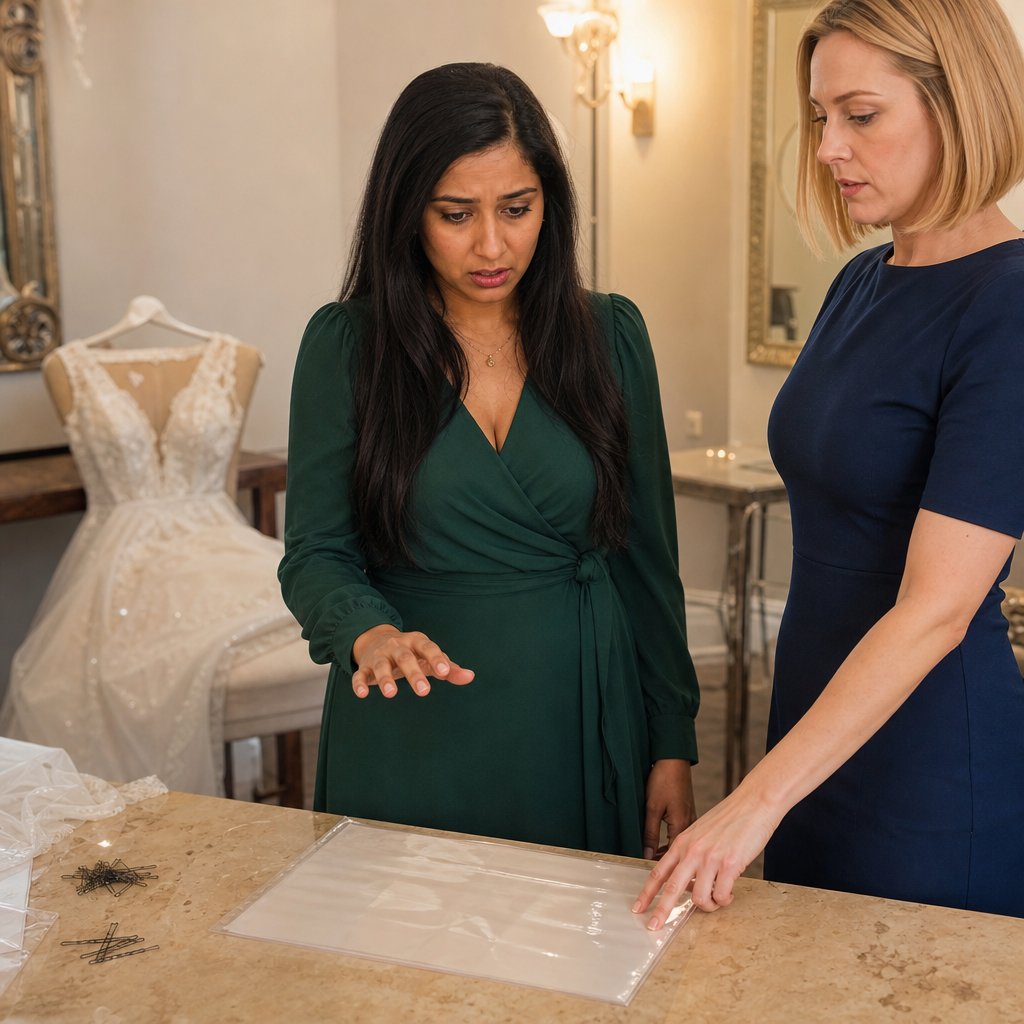
Valerie didn’t wait for my answer. She just smiled like she’d already won, then slipped past me into the bridal suite as if she belonged there—like she’d been invited, like she was family.
I followed, heart hitting my ribs so hard I tasted metal. The room was chaos in satin: my sister’s dress draped over a chair, a stray bobby pin on the carpet, a curling iron cooling on a towel. My mother’s perfume hung in the air—rose and something sharp—mixing with hairspray and panic.
Valerie didn’t rummage. She didn’t snoop. She walked straight to the vanity and placed one thing down with two fingers, delicate, reverent. A single sheet of paper, thick and official-looking, already clipped in a clear sleeve like it mattered more than the wedding itself.
“Read it,” she said softly. Not a dare. A sentence.
I looked down and my stomach dropped so fast it felt like I’d missed a step on stairs. A notarized affidavit. My father’s name printed where it shouldn’t be. His signature—his exact looping flourish, the one I’d watched him sign on birthday cards and hospital forms—sitting at the bottom like a confession.
Valerie’s eyes stayed on my face, waiting for the moment I broke. “Tell your sister,” she murmured, leaning in close enough that I could smell mint on her breath. “Or I will.”
My fingers hovered over the page, afraid to touch it like it could burn through my skin, and then I saw the line above his signature—what he’d sworn to—and my throat closed before I could even breathe in…
Music Over My Panic
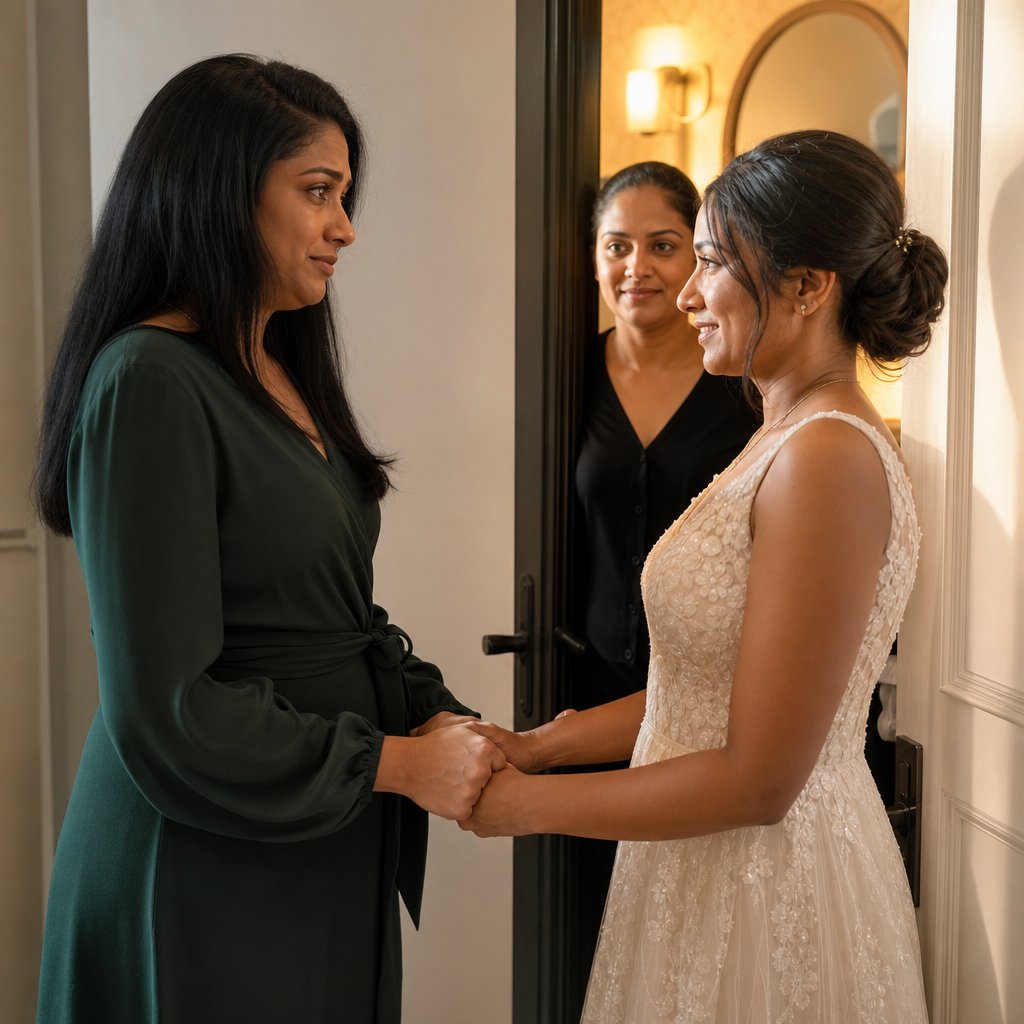
The first notes of the processional floated in—soft strings, too sweet for what was happening inside my chest. The bridal suite door clicked as someone in the hallway called that it was time. Time. Like this was just another schedule to keep.
My sister turned to me, glowing in a way that made my throat ache. Her skin looked luminous under the makeup, her eyes shiny, her smile so full it bordered on unbelieving. She squeezed my hand, hard, like she needed my bones to promise her this was real. “Okay?” she whispered.
I stared at her and saw everything I was about to ruin: the months of planning, the childhood photos on the memory table, the tiny stitched date inside her dress. I could still feel the affidavit’s weight in my palm, even though I’d set it back down like it was poisonous. My father’s signature kept flashing behind my eyes like a warning light.
Outside, guests shifted in their seats. Somewhere, someone laughed—bright and careless. The air in the room smelled like jasmine oil and hot fabric, the kind of smell you only notice when you’re trapped in it.
Valerie wasn’t in the suite anymore. She’d already returned to her seat, back in my mother’s row, her false name tucked around her like a costume. All she needed was one sentence at the wrong moment. One carefully chosen phrase that would sound like concern, like truth, like righteousness.
My sister’s fingers tightened again. “You’re shaking,” she said, still smiling for the photographer who wasn’t there, still believing I was just emotional. And as the coordinator reached for the door, I realized Valerie didn’t even have to wait for the vows—she could detonate everything before my sister took her first step…
She Stood To Object
I walked the aisle like I was underwater. The music swelled, and all I could hear was my own pulse and the soft rustle of fabric—my sister’s skirt whispering against the runner, a sound that should’ve been beautiful instead of terrifying.
From the front, the altar looked staged for a dream: flowers spilling from arrangements, candles flickering, the groom waiting with damp eyes and a smile that made everyone melt. I tried to melt with them. I tried to be the sister who cried happy tears, not the sister who carried a loaded secret in her ribs.
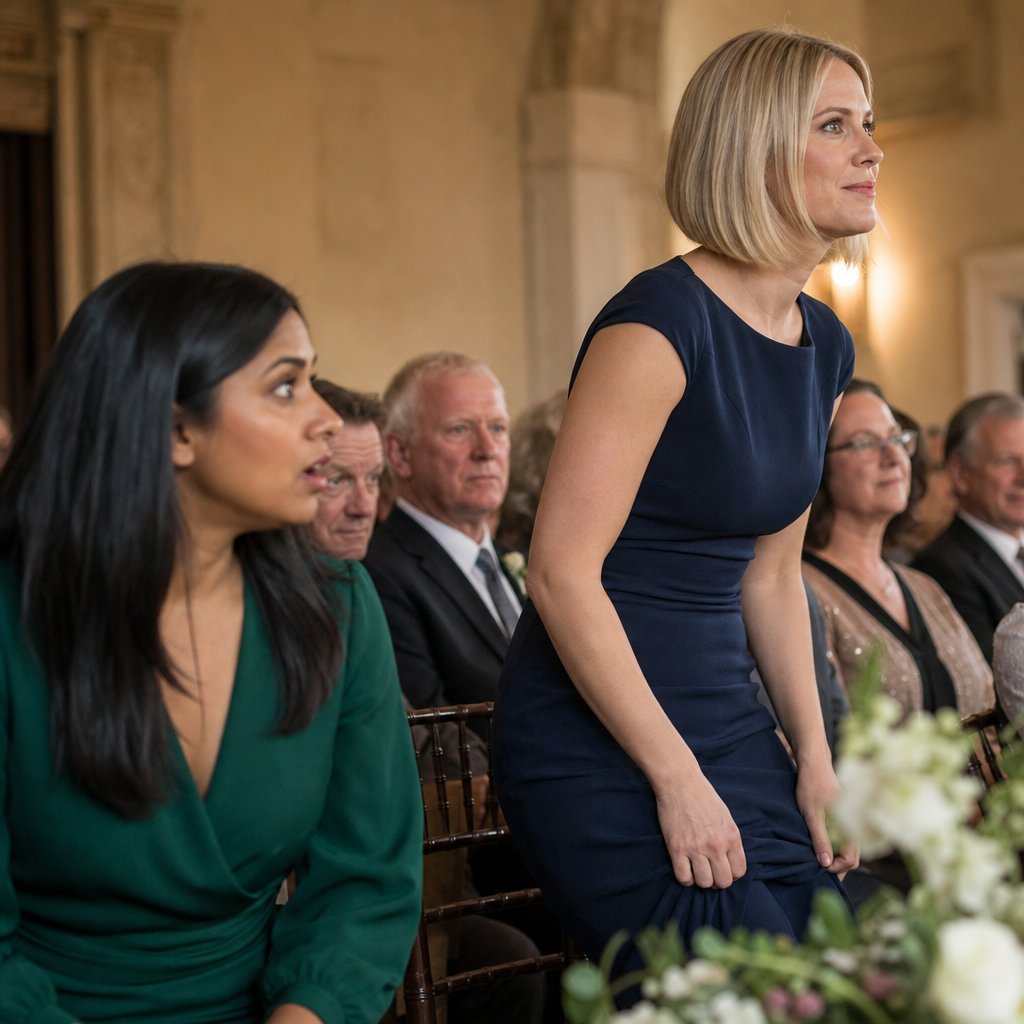
And then I saw Valerie again, perfectly placed in my mother’s row, posture straight, hands folded in her lap like she was at a board meeting. That blunt blonde bob, that calm pale stare. She didn’t glance around like someone afraid of being caught. She watched me like she was taking measurements.
The officiant began, voice warm, practiced. My sister’s hand found mine for a second, then let go as she stepped forward. Everyone stood and sat at the right times, obedient to ritual, comforted by it.
When the officiant reached the familiar line—almost sing-song in its predictability—my stomach turned to ice.
“If anyone objects to this union,” he said, smiling like it was a formality, “speak now or forever hold your peace—”
Chairs creaked. A few guests chuckled softly, like they always did, because who actually objects anymore?
Valerie rose.
Not hurried. Not shaky. Steady, prepared, smoothing her navy dress once as she stood. My mother’s head snapped toward her. My sister’s smile faltered, just a flicker, confused.
Valerie drew in a breath, eyes locked on the altar, and I felt every ounce of blood drain from my face as she opened her mouth to speak…
Should Valerie have spoken at the funeral despite the tension?