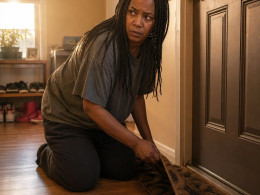




The Number That Shouldn’t Be

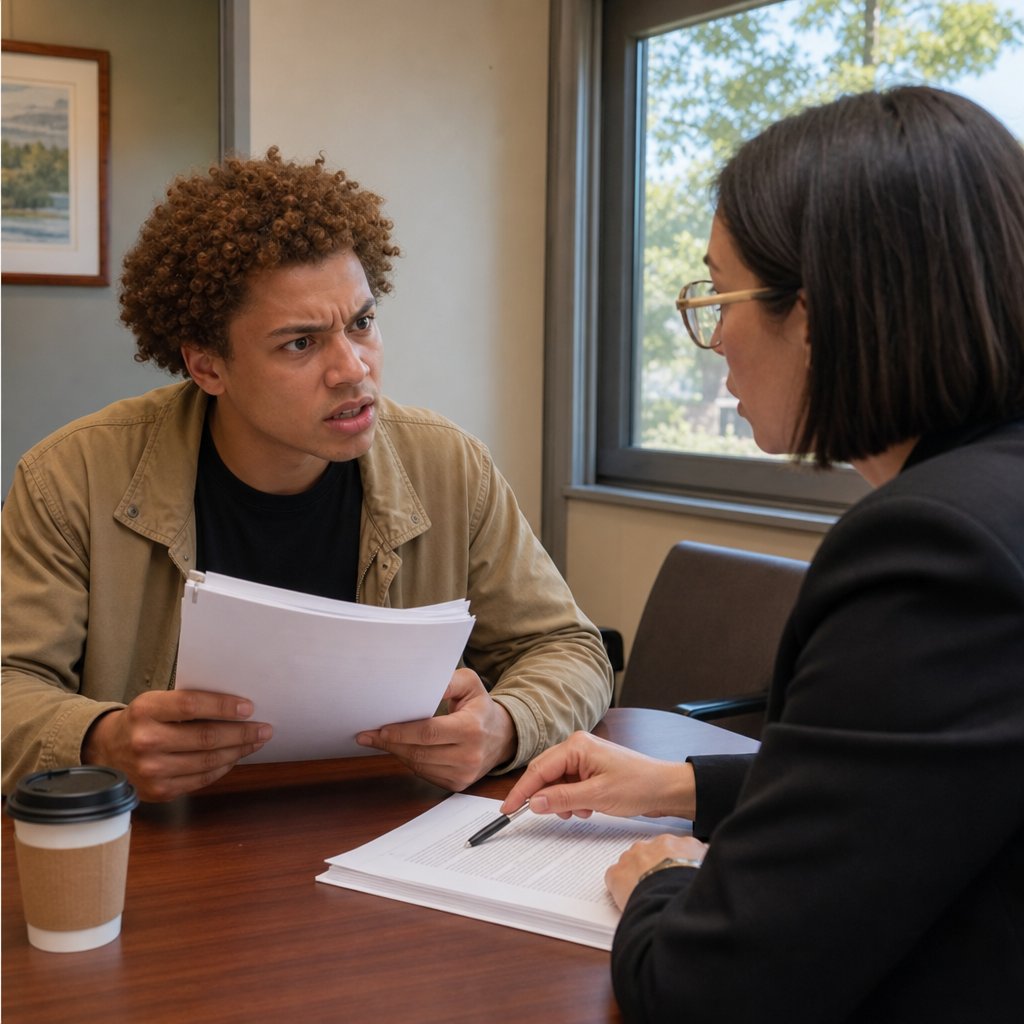
“We’re broke, Mara.” Evan said it like a prayer, palms up on the mediation table, like the universe owed him pity.
Then I saw it. A single line item buried in his financial disclosure packet: $327,418 routed through a credit union I’d never heard of. Not our bank. Not our mortgage lender. Something else. Something he’d never once mentioned when we were skipping dinners out and he was telling the kids, “Not this month.”
My lawyer—Dina, sharp bob haircut, narrow gold glasses—didn’t even look at Evan when she leaned toward me. Her voice went low, almost tender, which somehow made it worse. “We need to discuss this account.”
Evan’s mouth tightened. He didn’t glance at the number; he watched my face like he could erase it by force. His suit jacket was too crisp for a man who’d been telling the court he couldn’t afford his own attorney fees without “help.”
I ran my finger along the paper’s edge, feeling the cheap copier grit, like I could scrape the truth out of it. “What credit union is this?” I asked.
He let out a small laugh—practiced. “You’re misreading it.”
Dina slid her pen under the line and tapped once, hard. Evan’s lawyer shifted in his chair.
And then Evan said, too fast, “Let’s stay civil,” like I was the problem, and Dina’s eyes flicked to mine with a warning that made my stomach drop—because she’d just realized what he was about to do next…
The Shelf Gap Said Everything
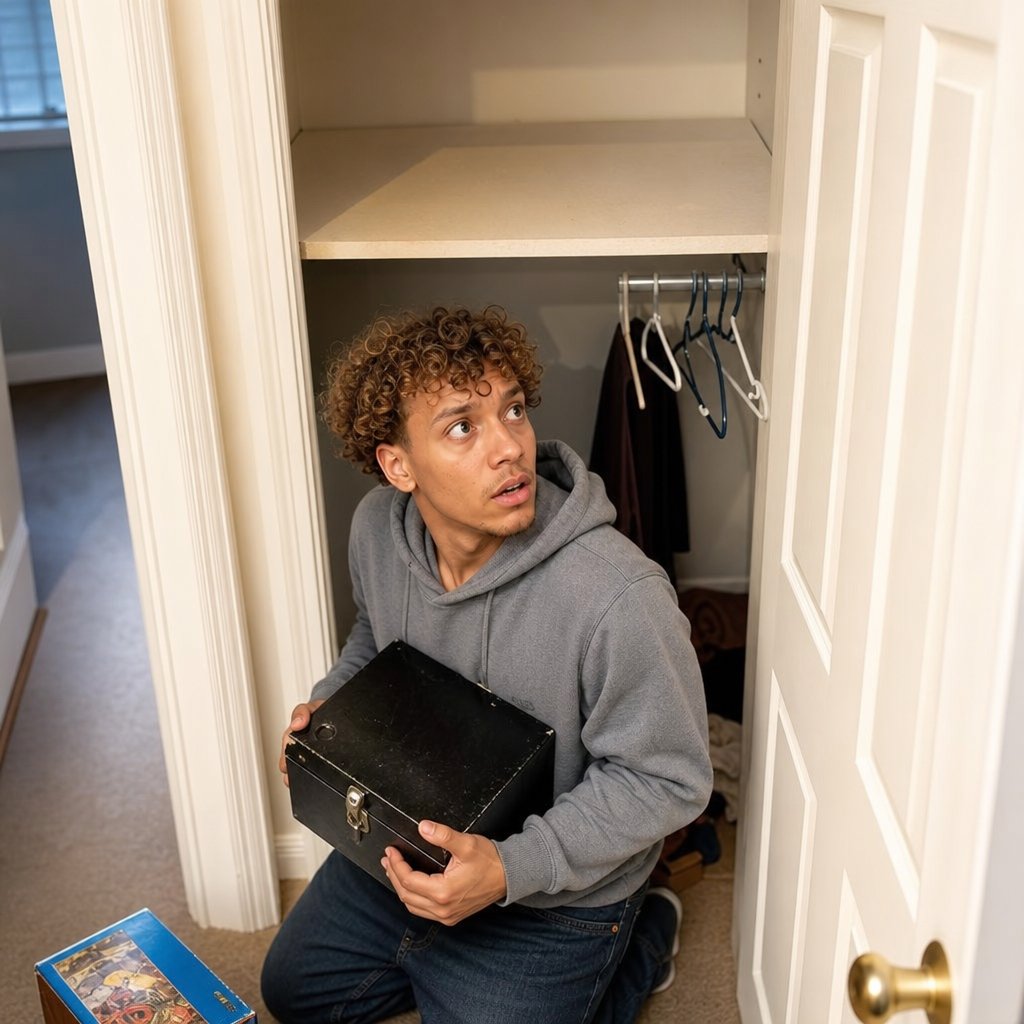
The house felt staged, like someone had walked through it with a checklist of what to erase. Half the closet was bare—hangers spaced out like missing teeth—while the other half still held my dresses, crowded and accusing. The air smelled faintly like cedar and the lemon cleaner I’d used the night he left, as if scrubbing could rewrite anything.
I found the gap on the top shelf first: a clean rectangle where dust should’ve been, where a box had sat for years. Evan hadn’t taken random things. He’d taken specific things. The things that could talk.
In the hall closet, behind an old board game, my fingers hit metal. A locked file box—black, scuffed at the corners, heavy enough to bruise my thigh when I pulled it out. The lock wasn’t new. It was familiar in the worst way: the same kind he’d used on his “work stuff” when he started keeping his briefcase in the trunk instead of by the door.
I shook it once, like an idiot, listening for anything that would tell me what he’d buried. Paper slid inside—thin, crisp, deliberate. Not junk mail. Not receipts from Home Depot. A curated stack.
My throat tightened. It wasn’t just that he’d hidden money. It was that he’d hidden the map to it, and he’d been planning this long enough to know exactly what he needed to remove from my reach.
I dragged the box to the kitchen counter, set it down hard, and stared at the lock until my eyes watered—because I suddenly understood the point wasn’t the money. The point was the missing paper trail.
And as I stood there, I heard my front door latch click—soft, careful—like someone was trying not to be heard…
Transfers Timed To My Life
The “someone” was nobody. Just the house settling and my own nerves turning every creak into footsteps. I hated that Evan had done that to me too—made my body jumpy in my own home.
Dina met me the next morning with a thicker packet, stapled so aggressively the corners curled. She didn’t hand it over like paper. She handed it over like a weapon. “We pulled what we could from the disclosure and prior statements,” she said. “Look at the timing.”
At first it was just rows. Dates. Amounts. Then my brain started snapping them to memories like magnets. Transfers on the same mornings I did the big grocery run. Transfers the week tuition hit. Transfers right after I’d texted Evan a photo of the kids’ school supply list, asking if we could swing it.
It wasn’t random. It was scheduled around my routines, like he’d built his secrecy into the rhythm of our life. Like he could predict when I’d be distracted, when I’d be tired, when I’d be too busy keeping everything afloat to notice him siphoning off the air.
When Dina asked for clarification in mediation—calm voice, clean language—Evan leaned back and looked at me with that familiar, pitying smile. The one he used when he wanted other people to think I was emotional and he was reasonable.
“She’s spiraling,” he said, not to Dina but to his lawyer, loud enough for everyone. “This is why I wanted civil mediation.”
I felt heat crawl up my neck. Spiraling. Like I hadn’t just matched his secret transfers to the exact days I was buying cereal and paying for field trips. Like I was inventing the math.
Dina’s pen stilled. “Evan,” she said, “answer the question.”
He shrugged, slow and theatrical. “What question? She’s connecting dots that aren’t there.” Then he turned his eyes to me, and they went flat. “You always did this.”
And Dina’s face changed—just a flicker—because she’d noticed something in the packet I hadn’t reached yet…
The Receipt That Slipped Out
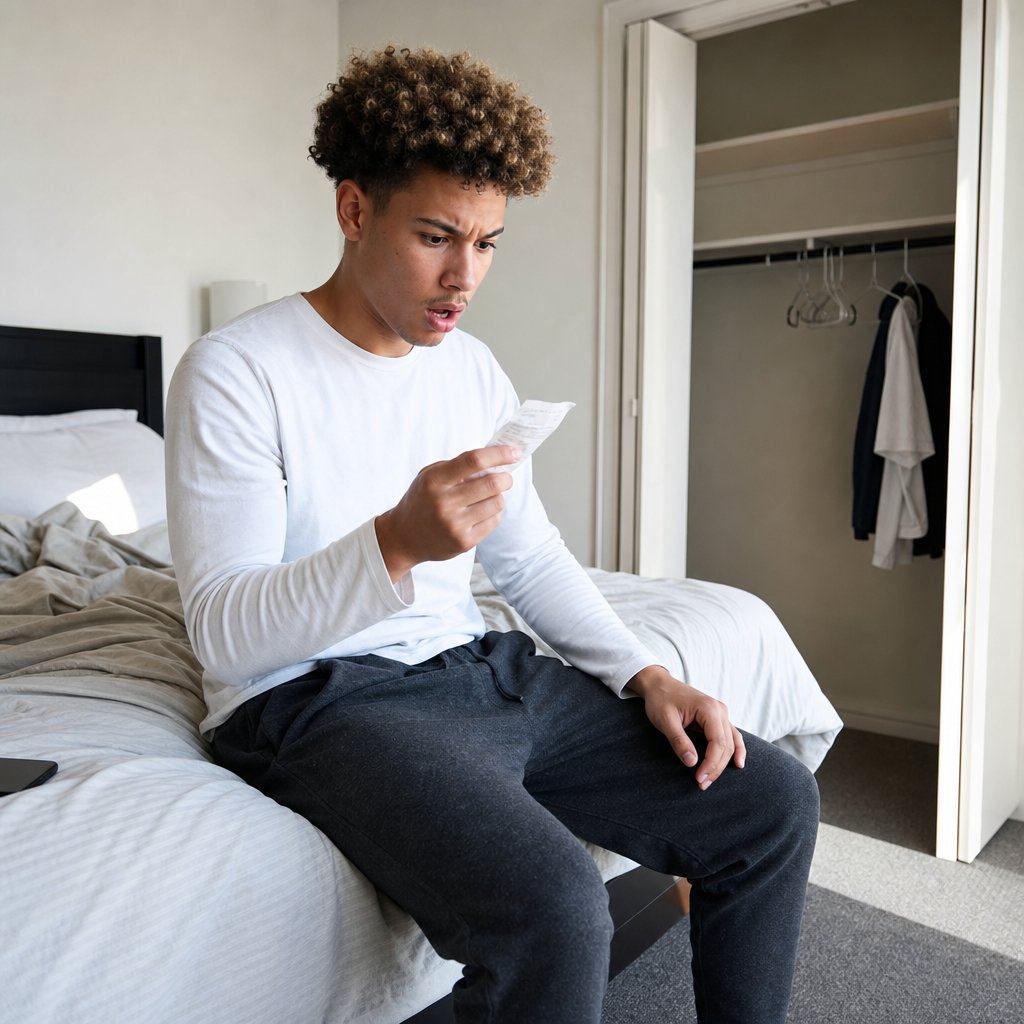
I went home and tore through the closet again like the missing pieces might have grown back. The top shelf gap stared at me, clean and smug. I climbed on a chair and ran my hand along the back wall, fingertips scraping dust until I found something wedged behind the trim.
A crumpled receipt—soft from being handled too many times—fell into my palm. The kind from a little market, not a chain. It smelled faintly like stale sugar and paper bag grease. I didn’t recognize the store name, but what made my stomach flip wasn’t the store.
At the top, above the list of groceries, was a loyalty number and an address printed like it belonged there. Not our address. Not Evan’s “new apartment” across town. Something else entirely. A lake-town address, the kind you only see on postcards and rental listings, the kind Evan used to talk about like a fantasy we’d “someday” have.
I read it three times, waiting for my eyes to correct themselves. They didn’t.
My hands started shaking, the receipt crackling like dry leaves. Because I knew every bill that ever came into this house. I knew every utility provider, every envelope, every “oops, forgot to tell you” subscription charge. I would’ve remembered an address like that. I would’ve asked why the market thought Evan lived there.
And then the petty, personal sting hit: the items on the receipt weren’t for us. Not our brand of cereal. Not the kids’ snack packs. It was baby food pouches. A tiny carton of whole milk. Disposable bibs.
I sat down hard on the bed, receipt in my fist, and pictured Evan insisting we were broke while someone else’s groceries went through a loyalty account tied to an address I’d never seen on any bill.
My phone buzzed against the comforter—face down, vibrating like a warning—and I knew before I flipped it over who it would be…
His Car Was Already There
I didn’t call him back. I didn’t give him the courtesy of a warning.
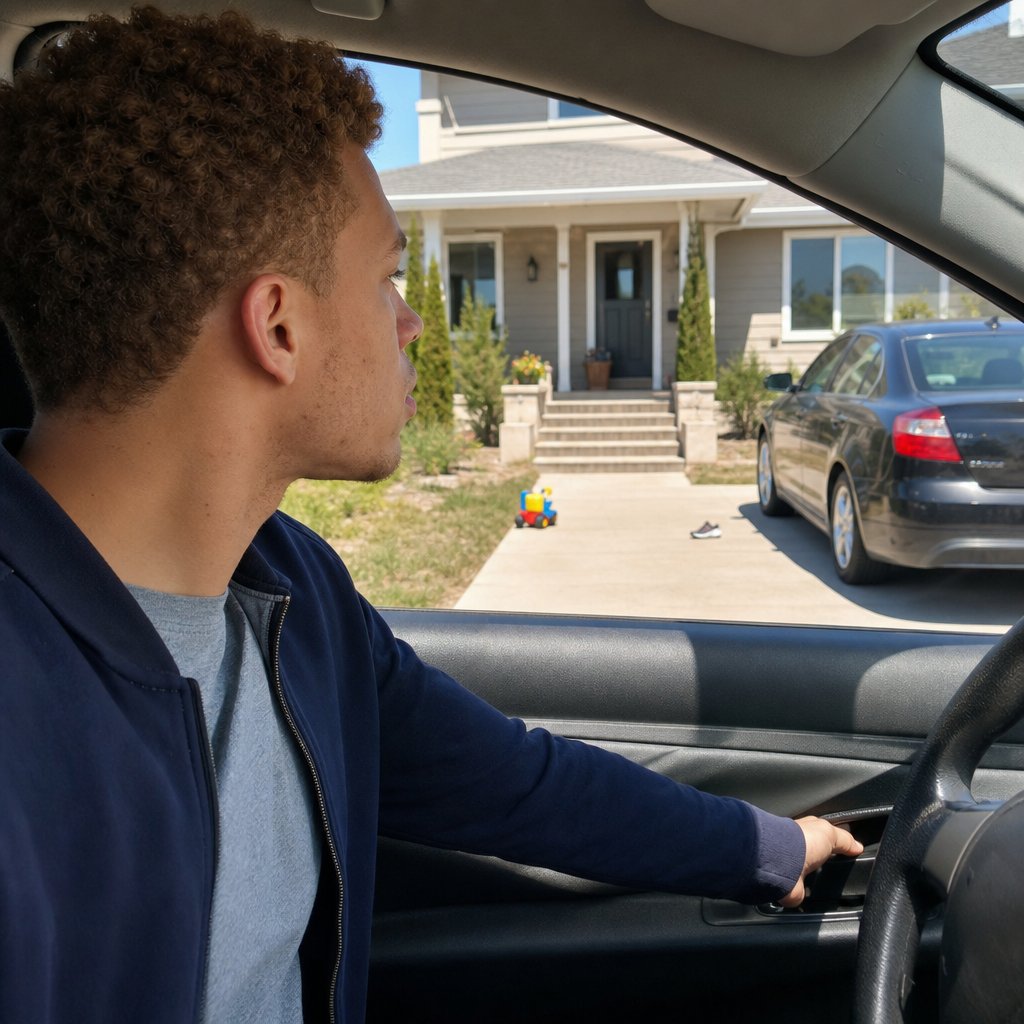
I drove to the lake-town address with the receipt flattened on my passenger seat like evidence and a threat. The farther I got from our neighborhood, the quieter the world seemed, like the trees were holding their breath with me. My hands stayed locked on the steering wheel so tight my knuckles ached.
The street was tidy and wrong—fresh mulch, trimmed hedges, porch swings that looked like they’d never held an argument. I slowed as the numbers ticked up, my heart thudding so loud I could feel it in my teeth.
And then I saw it.
Evan’s car. The same dark sedan with the small dent on the rear bumper from when he backed into our trash cans and blamed me for “leaving them out.” Parked in a driveway that was not his “new apartment.” Parked like it belonged there. Like it had been there a hundred times.
I rolled past once, pretending I was just another car on the street, and the urge to slam on the brakes fought with the urge to keep driving until the road ran out. My chest felt too tight for air.
There were toys in the yard. Not the sun-bleached kind neighbors forget to put away. Bright plastic, arranged with intention. A little sandbox lid tilted open. A tiny sneaker by the steps like someone had kicked it off in a hurry.
I pulled over half a house down and shut off the engine. The silence hit like a slap. My fingers hovered over the door handle, trembling. If I got out, I couldn’t pretend I didn’t know. If I stayed, I’d be letting him keep the story he’d been writing behind my back.
I stared at his car until my eyes burned, and then the front door of the house moved—just a crack—like someone was about to step out…
Someone Turned The Photo Around
The door didn’t open all the way. Just enough for someone inside to look out, then close it again. Like they’d sensed me without seeing me.
I forced myself out of the car, legs heavy, and walked up the sidewalk as if my body belonged to someone braver. Up close, the house smelled like fresh-cut grass and something sweet—laundry detergent, maybe—so normal it made my skin prickle.
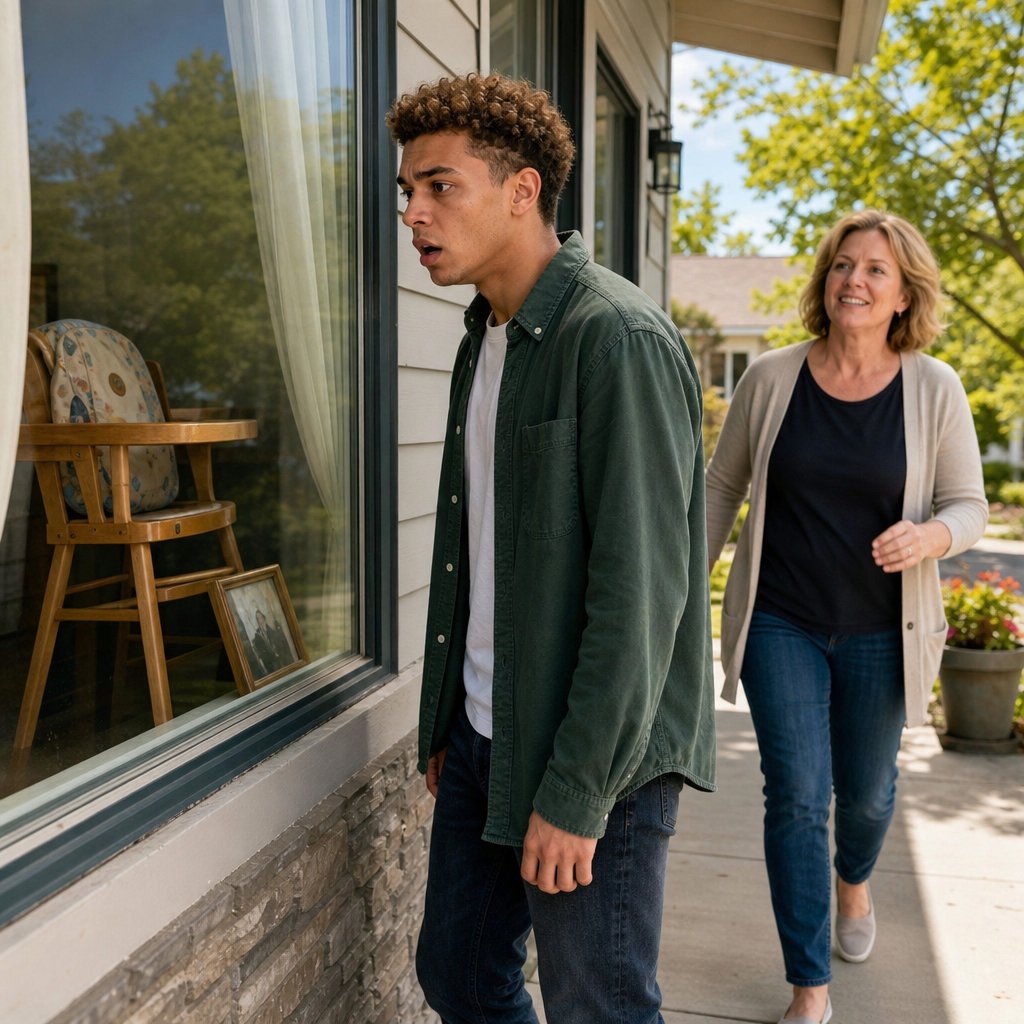
I didn’t knock. I couldn’t. Instead I drifted toward the front window, the one with the thin curtains that didn’t quite meet. I told myself I was just confirming what I already knew. I told myself I could leave after one look.
Inside, the living room was staged in a way our house never was. A wooden high chair near the kitchen threshold. A kid’s backpack slumped against the wall like it had been dropped after school. A sippy cup on the coffee table. Ordinary objects, arranged like a life.
And then I saw the frame.
A photo on a shelf—turned away from the street. Not knocked over. Not accidentally angled. Deliberately flipped so the image faced the wall, like someone had thought, What if she drives by?
My mouth went dry. That tiny act of hiding hit harder than the money. It meant someone else knew I existed. It meant someone else knew to conceal themselves from me. It meant Evan hadn’t just lied—he’d recruited a whole other person into the lie.
I leaned closer and my breath fogged the glass for a second, a pale ghost in the reflection. I could see movement deeper in the house—shadows crossing a doorway.
Then, from behind me, a voice said, warm and casual, “Oh! You must be family.”
I turned, and the smile on the stranger’s face made my stomach drop—because they weren’t asking. They were certain…
“You’re Here For The Little One?”
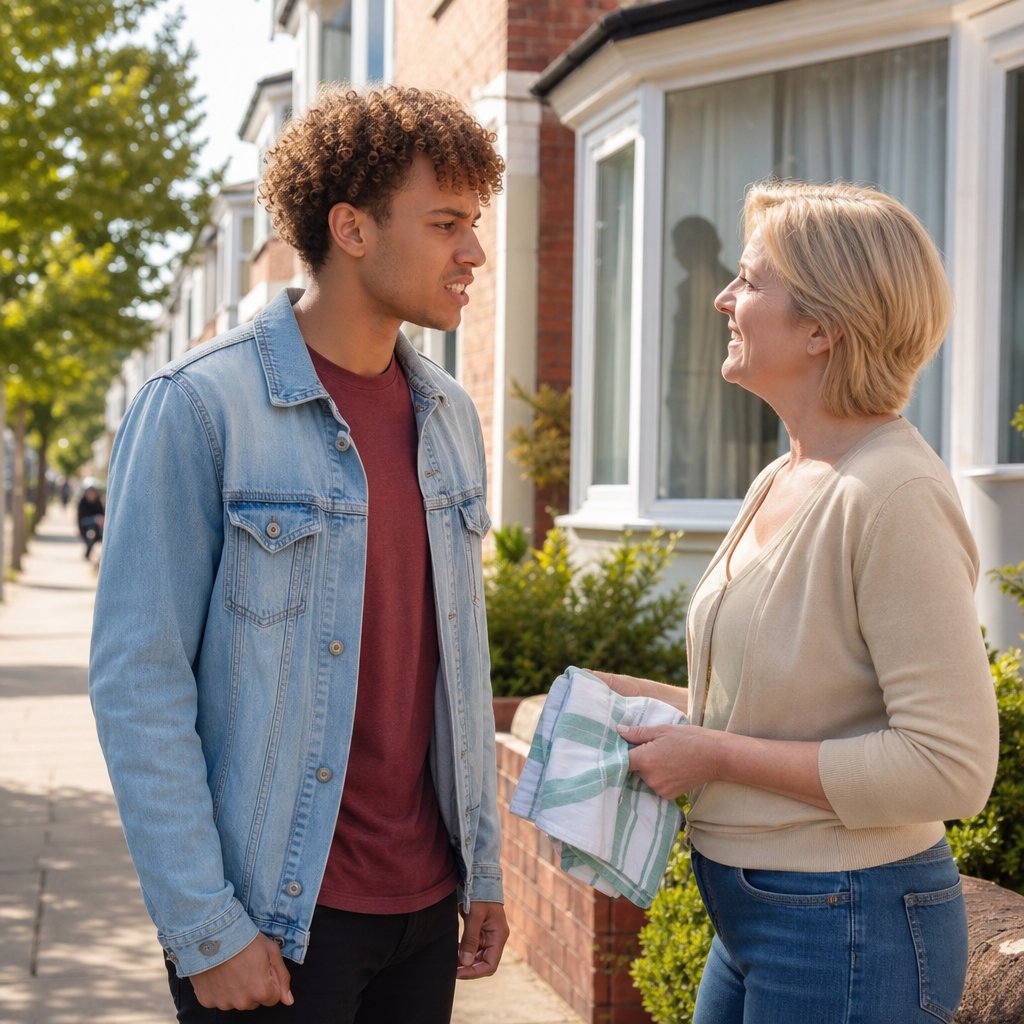
The neighbor was close enough that I could smell her hand lotion—something floral and clean. She held a folded dish towel like she’d been on her way to do something ordinary, like her day didn’t revolve around detonating my life.
“I’m sorry?” I said, because my brain needed time to catch up.
She laughed softly, the kind that says oh honey without words. “You’re here for the little one?” she asked again—singular. Like there was one child in that house, and everyone knew whose child it was. Like it was as normal as asking if I wanted sugar in my coffee.
My throat tightened. “What little one?”
Her eyebrows lifted, just a flicker of confusion. Then she recovered, and the recovery was the tell. “Oh—well, you know,” she said, lowering her voice like we were sharing gossip instead of evidence. “He’s got his hands full. But they’re sweet as can be. Comes and goes a lot. Always in a hurry.”
He. Evan. She didn’t say his name, but she didn’t have to. She said it like there was only one man who mattered in this story.
I felt my nails dig into my palm. “How long has he been coming here?”
She tilted her head, thinking. “Oh, goodness. Over a year, easy. Since before last winter. You must’ve seen the new swing set go up.” She pointed casually toward the backyard, like she was pointing out a garden feature.
Over a year. While he was telling me we couldn’t afford a weekend trip. While he was watching me budget groceries down to the dollar.
I tried to keep my face neutral, but my voice cracked anyway. “Who lives here?”
The neighbor opened her mouth—and behind the curtain, a shadow stopped moving, perfectly still, like someone had frozen to listen…
Evan’s Brother Said Too Much
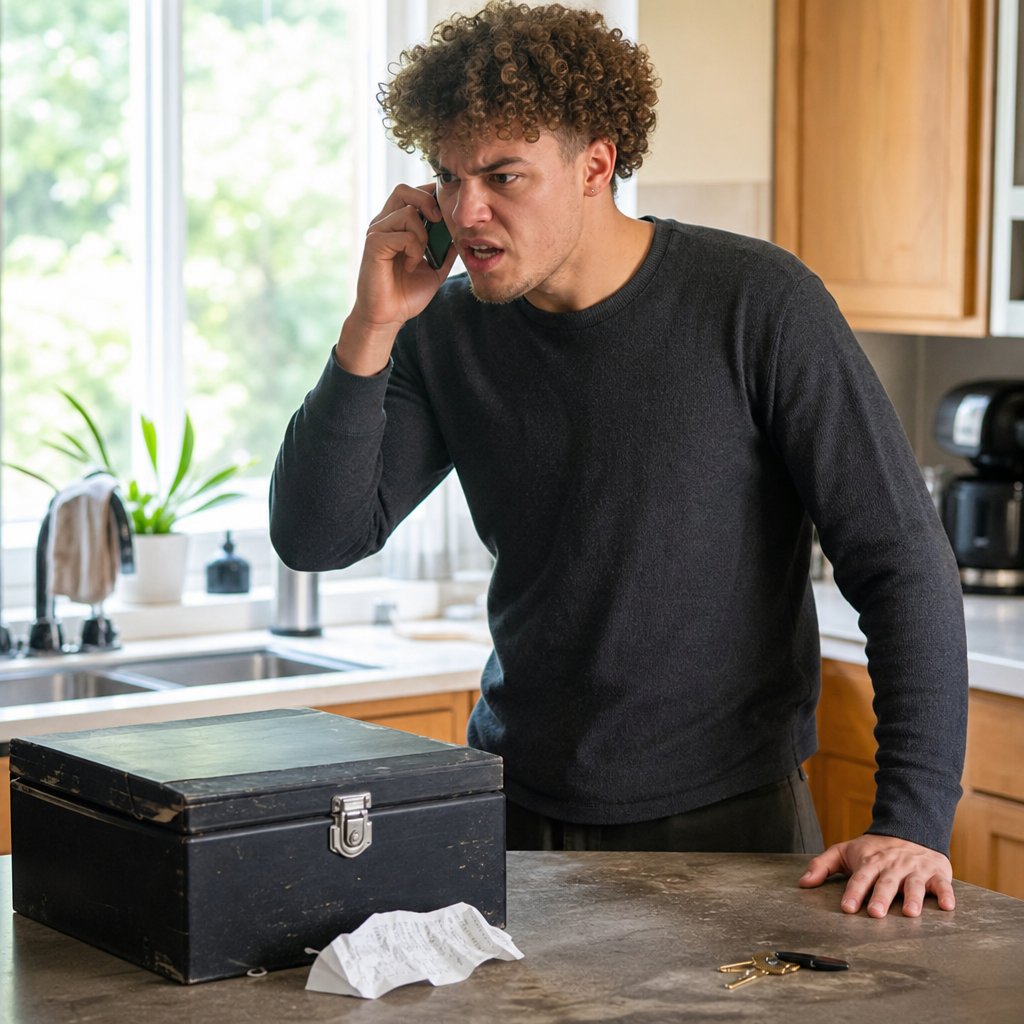
I left before the neighbor could finish. I didn’t run, but my body moved like it wanted to. Back to the car, hands shaking so badly I dropped my keys once onto the pavement. The metal clink sounded too loud in that quiet, manicured street.
By the time I got home, I was vibrating with unsaid words. I stood in my kitchen, staring at the locked file box on the counter like it was a dare. The receipt lay beside it, smoothed flat, its edges trying to curl back into secrecy.
My phone rang. Evan’s brother, Kyle.
Kyle had always been the “nice” one—tall, soft-faced, the kind of guy who hugged too long at holidays and called Evan out for being harsh, but never in a way that cost him anything. I answered with my heart pounding in my ears.
“Hey,” Kyle said, too bright. “Just… checking in. You okay?”
“Why?” I asked.
A pause. The smallest hitch. Then, like a slip on ice, he said it: “Evan mentioned you were upset about the… the lake place.”
My whole body went cold. “The what?”
Silence. I could hear his breath, suddenly careful. “I didn’t— I mean—” He cleared his throat. “Look, I shouldn’t have said that. It’s not my business.”
Not his business, but he knew. He knew enough to name it like it was a familiar landmark in their family map. Like it had been discussed over beers and holidays while I sat at the same table believing we were scraping by.
“Kyle,” I said, voice low, “who else knows?”
He didn’t answer right away. And in that pause, I heard something else—another voice, muffled, like someone was in the room with him prompting what to say next…
They Called It “Privacy”

Dina didn’t flinch when I told her about the lake-town address. She just got that expression—focused, sharp—as if my pain had finally become usable.
“We move now,” she said. “Emergency discovery. Before he cleans it up.”
By afternoon she had filings ready. I sat in her office chair, staring at the faint indentation her stapler had left on the blotter over the years, trying not to imagine Evan shredding whatever was left of the truth. Dina’s assistant whisked papers in and out without making eye contact, like she’d seen this exact kind of implosion a hundred times.
When Evan’s attorney responded, it wasn’t with denial. It was with offense.
Dina read it aloud, tone flat, but her jaw tightened on certain words. “They’re objecting on ‘privacy.’ ‘Irrelevant allegations.’ They’re implying you’re harassing him.” She looked up at me over her glasses. “That’s not a normal response to an innocent address.”
My stomach twisted. They weren’t arguing the facts. They were trying to make the question the crime.
Dina flipped to another page, tapping the margin with her pen like she was marking a pulse. “This tells me they’re preparing to bury the address before it becomes evidence. Utility accounts can be transferred. Properties can be put under someone else’s name. He can ‘move’ on paper overnight.”
“So what do we do?” I asked, and my voice sounded small in that room full of legal certainty.
Dina’s eyes went hard. “We subpoena utilities first. Fastest return. If his name is on the bills, it’s a tether he can’t explain away.”
She reached for her phone to make the call, then stopped, listening to something her assistant said at the door. Dina’s face shifted—quick, controlled—and she turned back to me. “Evan just filed something too,” she said quietly. “And it’s aimed straight at you…”
Utilities In His Name
The waiting was its own kind of torture. Every time my phone buzzed, my body snapped to attention like I was bracing for impact. I kept imagining Evan at that lake house, calm and smiling, moving money with the same hands that used to braid the kids’ hair when they were little.
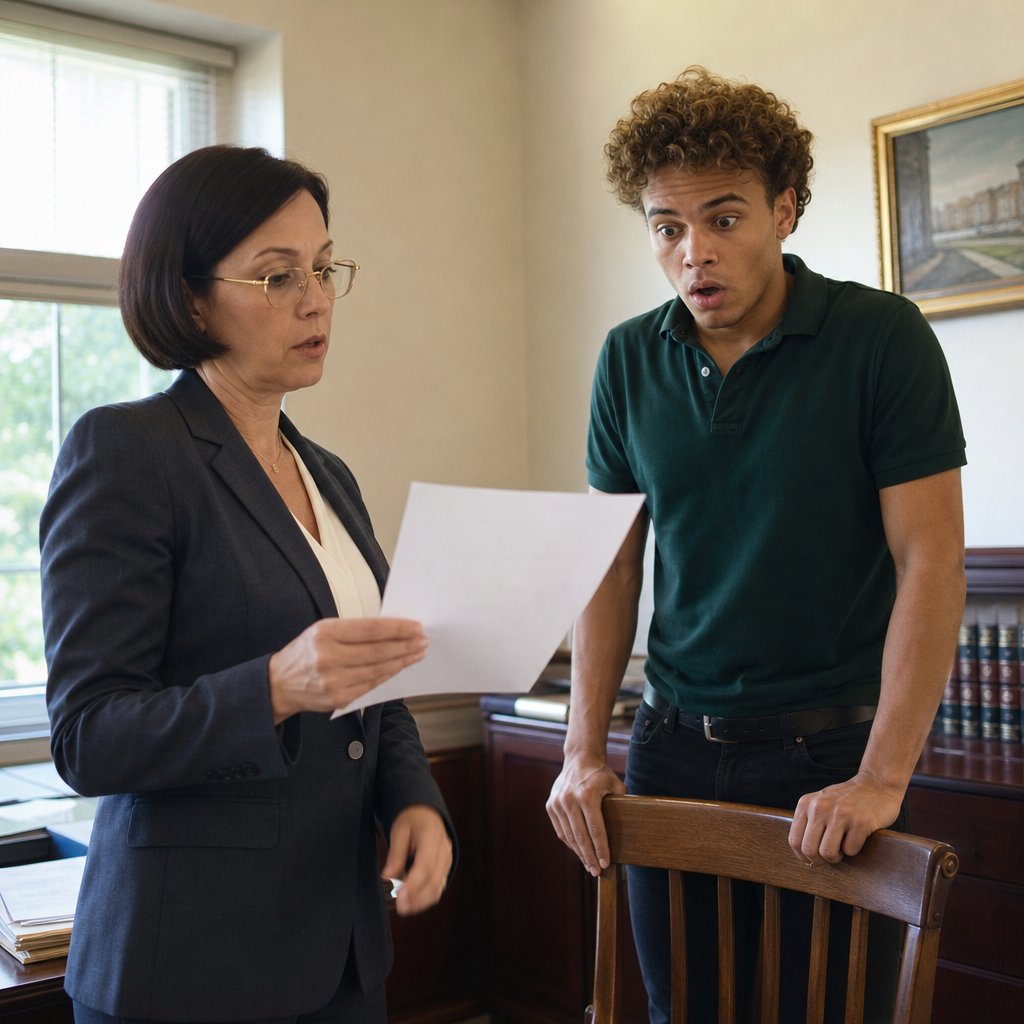
Dina called me into her office two days later. She didn’t offer me a seat. She didn’t soften her face. She held a single sheet in her hand like it was radioactive.
“First utility subpoena came back,” she said.
I stared at her fingers gripping the paper, the way her thumbnail pressed into the edge. “And?”
“Electricity and water,” she said, enunciating each word like she wanted it to land clean. “Both in Evan’s name. At the lake-town address. Eighteen months.”
My mouth went numb. Eighteen months was birthdays. Holidays. Parent-teacher conferences. It was me falling asleep on the couch with spreadsheets open, trying to make our ‘hardship’ make sense.
“And the payments?” I managed.
Dina’s eyes didn’t leave mine. “Paid from an account he swore didn’t exist.”
For a second the room tilted. I grabbed the back of her guest chair to steady myself, feeling the smooth wood under my palm. “So we have him,” I whispered.
“We have a thread,” Dina corrected, voice tight. “And now we pull it before he cuts it.” She lifted the paper slightly. “Because if utilities are in his name, there’s a reason. A lease, a deed, something tying him there.”
She reached for her calendar, already moving to the next strike. Then her phone rang—sharp, insistent. She glanced at the caller ID, and the color drained from her face.
“It’s Evan’s counsel,” she said. “And they’re calling way too fast.”
The Marker On His Wrist
Evan’s lawyer called so fast it felt like he’d been waiting with the phone in his hand, like my subpoena had pinged an alarm. His voice was syrupy—polite, wounded—offering “clarity” and “cooperation” while implying I was spiraling. I hung up before he could finish his sentence, and my palms stayed damp for an hour.
That afternoon, Evan showed up unannounced for the kids.
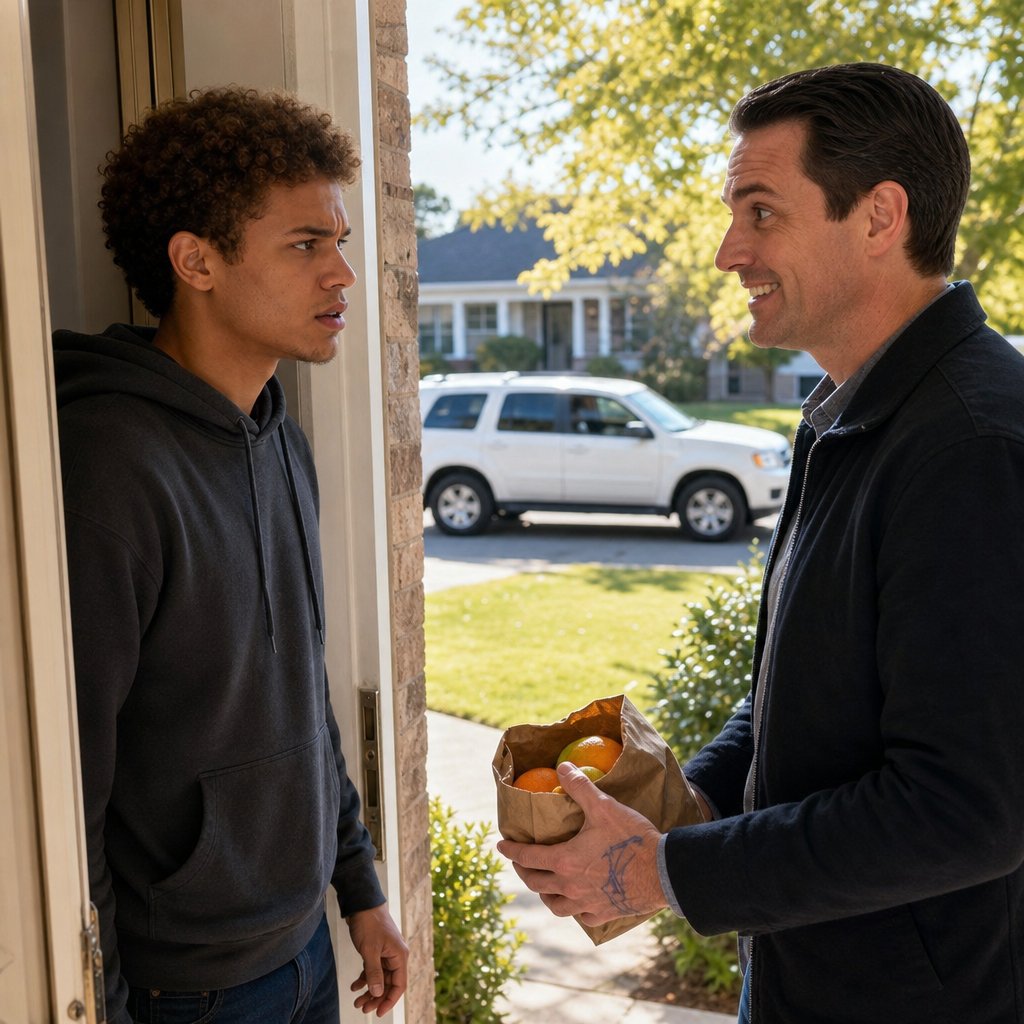
He stood on my porch like a man auditioning for “stable dad,” shoulders squared, hair combed, holding a paper bag of oranges like it was proof of character. Then I saw it: washable marker on his wrist—blue, looped like someone had drawn a little planet with rings. The kind of scribble you get when you’ve been leaning over a worksheet, patiently helping a kid sound out words.
“They ready?” he asked, too casual.
I stepped aside, and through the window I caught it—across the street, an unfamiliar white SUV idling at the curb. Not parked. Waiting. The engine vibration carried faintly through the glass. I angled my body to get a look at the driver.
Evan moved with me, smooth as a door closing. He shifted just enough to block my sightline, like he’d done it a hundred times before.
“Mara,” he said softly, warning disguised as my name. “Don’t.”
My kids ran past us, shoes squeaking on the hardwood, and Evan smiled wide for them—then cut his eyes back to me, daring me to push it while they watched as the SUV’s brake lights flared and—
A Child’s Schedule Underneath
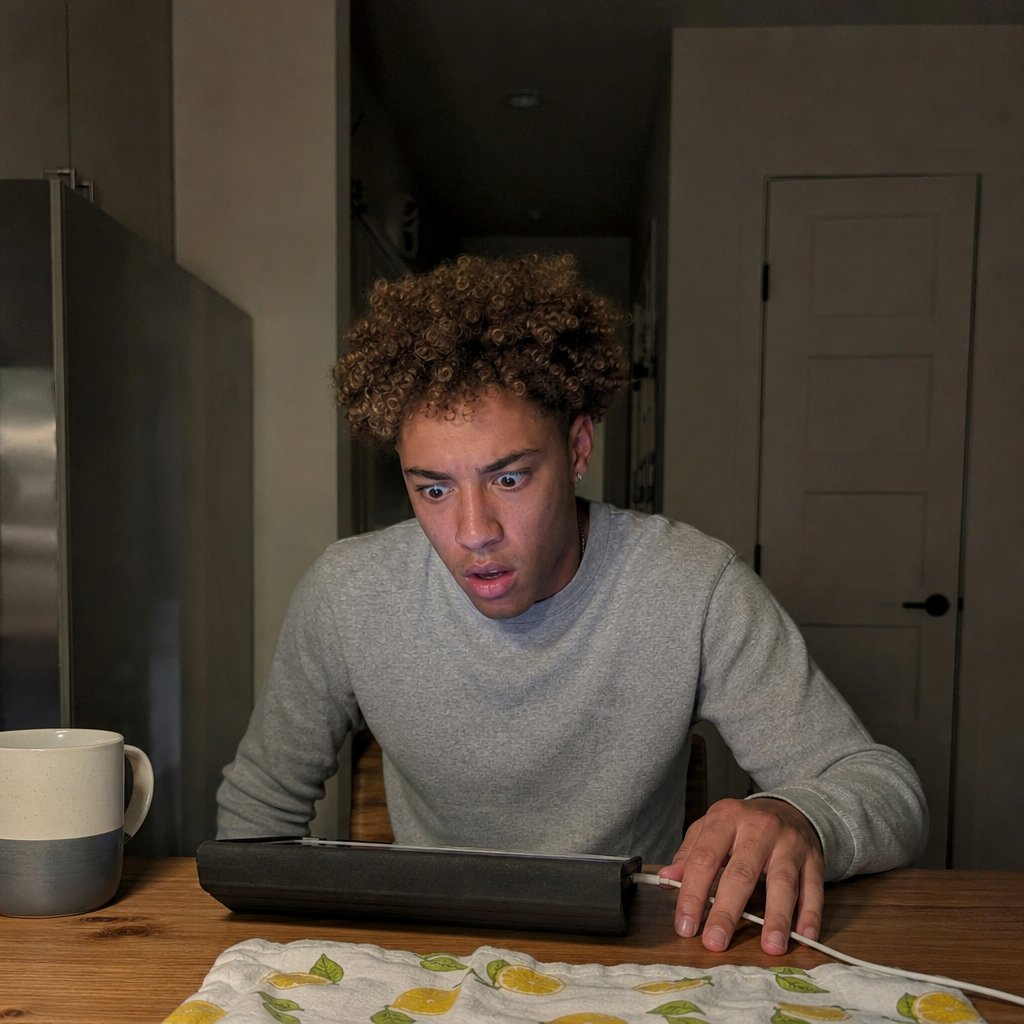
I waited until the house was quiet, until the kids were asleep and the air smelled like lemon dish soap from my hands scrubbing too hard. My lawyer had told me to let subpoenas do the work. But Evan’s warning—Don’t—sat in my chest like a thumb.
I dug out the old iPad from the hall closet, the one with a cracked corner and a smudge of glitter glue that never came off. It took forever to wake up. I plugged it in and watched the battery icon crawl back to life like it was reluctant to be involved.
When it finally loaded, his accounts were still synced.
I didn’t go hunting for photos. I went straight to what people forget: the calendar. Because lies need schedules. Lies have logistics.
At first glance it looked like his usual “work travel”—vague blocks, airport codes, meetings with initials. Then I scrolled back to the weeks he’d sworn he was out of town, the weeks he’d texted me from “hotels” about how lonely he was.
Underneath the work blocks were smaller entries, tucked in like annotations he assumed no one would ever see.
“Dentist—Lila.”
“Pre-K tour.”
“Target run.”
Not our kids. Not our dentist. Not our preschool. A whole separate domestic rhythm threaded through his supposed business trips, neat as a second heartbeat.
My throat tightened so hard it hurt. I clicked one of the events and watched the details populate, my finger hovering as if the screen might burn me, and then I saw the location field beginning to load—
Money As A Muzzle

My lawyer told me not to confront him. She said Evan’s counsel was already posturing, that anything I said could be spun into “instability.” I heard her. I still did it.
I caught Evan outside the kids’ soccer field after practice, when the parents were packing up folding chairs and orange slices. The grass smelled bruised and sweet under my shoes. Evan was by his car, acting like he belonged to the same world as everyone else—laughing, waving, being the man who “tries.”
“Who’s Lila?” I asked, low.
His smile didn’t falter at first. Then it did, just a millimeter, like a mask slipping on sweat. “What are you talking about?”
“Your calendar,” I said. “Dentist—Lila. Pre-K tour. On the days you told me you were traveling.”
His eyes hardened, and then he did the thing he always did when cornered: he made me the problem. “You’re jealous,” he said, like it was obvious. Like I was pathetic for caring. “You’re not thinking clearly, Mara.”
I laughed once, sharp and ugly. “That’s your defense?”
He stepped closer, voice dropping into something almost kind. “Look. I don’t want this to get… messy.” He glanced toward the kids—our kids—like they were props in his argument. “I can increase support. Immediately. We can make you comfortable.”
My stomach turned. “If I stop digging,” I said.
He didn’t deny it. He just tilted his head, like I was finally being reasonable, and I saw it plain: money wasn’t help. It was a leash. He reached into his jacket pocket, slow, deliberate, and pulled out his keys—along with something else that flashed in his palm before he closed his fist around it—
Declined At The Pharmacy
He didn’t even wait for court. He didn’t even wait for the next email from my lawyer.
The following week I took the kids to the pharmacy for antibiotics and the boring stuff—vitamins, bandages, the kind of normal errands that make you forget you’re in a war until the war reaches into your wallet.
I set everything on the counter. The cashier scanned, bagged, asked if I had a rewards number. I answered on autopilot, breathing in that sterile, powdery smell of baby shampoo and plastic.
“That’ll be $86.14,” she said.
I slid my card across. The machine beeped.
Declined.
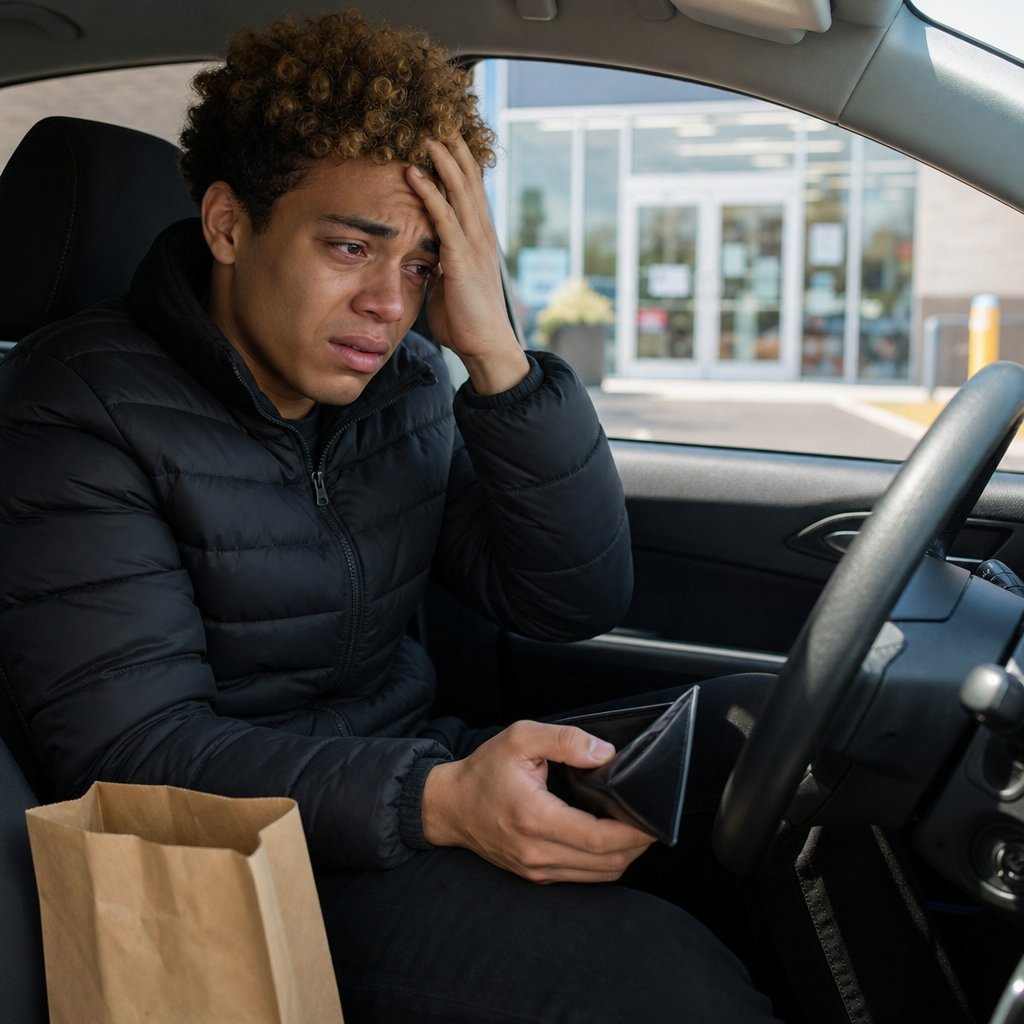
I tried again, feeling heat creep up my neck. Declined. The cashier’s smile tightened into sympathy, then impatience, then the look people get when they decide you’re irresponsible. My kid tugged my sleeve and asked if we could still get the grape-flavored chewables.
I stepped aside and checked my wallet like the answer would be there. Another card. Another decline. The line behind me shifted, a chorus of tiny sighs.
I walked out with nothing but the humiliation burning on my skin and the sound of the automatic doors hissing shut behind me.
In the car, I called the bank. I didn’t even get to a human before the automated voice told me my access level had changed.
Changed.
Like I was an employee who’d been demoted. Like I was someone who needed permissions. I called Evan next, and it went straight to voicemail. I left a message I barely recognized as my own, then checked the joint account notifications—no, not notifications, because those had stopped too—and when I got home there was an envelope wedged in my doorframe with his handwriting on the front—
The Apartment That Wasn’t Lived In

The envelope wasn’t cash. It wasn’t an apology. It was Evan’s latest performance: a “summary” of expenses, neatly printed, like he was doing me a favor by explaining my own life. My lawyer’s assistant called it what it was—an intimidation document meant to make me feel small.
Two days later, the process server called me directly because he couldn’t find Evan.
“I went to the address you provided,” he said. “New apartment, right? Nobody’s there. Neighbor says he’s never seen him. I tried twice.”
Evan’s “new place” was the address he’d filed with the court. The place he swore was his residence. The place he used to justify why he “couldn’t” keep up with support while paying rent somewhere else.
I drove over myself, heart hammering like I was about to catch him in bed. The building was quiet, hallways too clean, like a hotel pretending to be a home.
Through a cracked blind I saw a couch. Not a lived-in couch. A staged couch. No throw blanket. No dent. No shoes by the door. No photos on the walls. No kids’ drawings. No toothbrush cup by the sink. Just a single generic lamp and a stack of unopened mail on the counter like someone had scattered it for effect.
It hit me with sick clarity: this wasn’t where he lived. It was where he wanted the court to think he lived. A prop address. A decoy set.
My fingers shook as I took a step back, staring at the sterile window, and then I heard a lock turn behind me in the hallway—slow, deliberate—
The Second Line Labeled Work
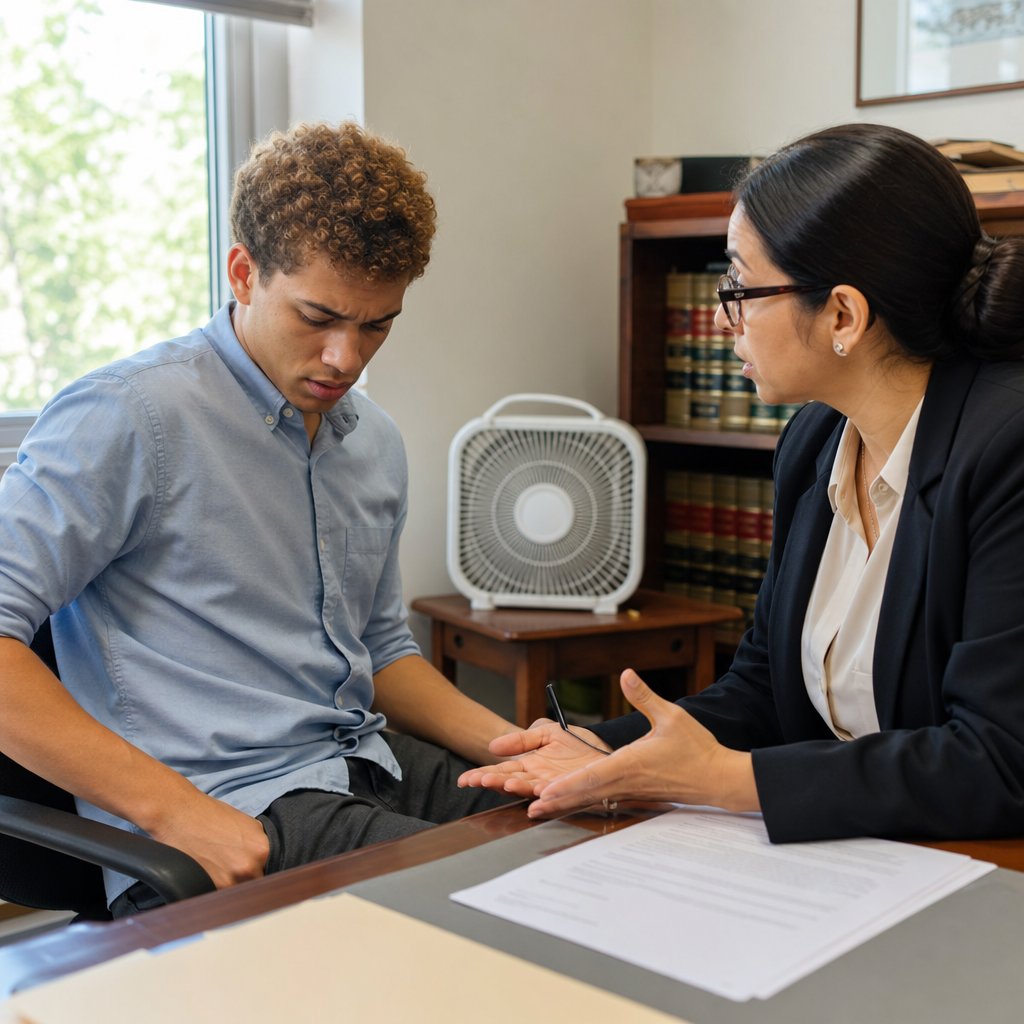
My lawyer didn’t sound surprised when I told her about the staged apartment. She sounded angry—controlled, professional anger that made me feel less crazy. “He’s creating a narrative,” she said. “We’re going to interrupt it.”
The next interrupt came from the phone plan.
She’d pulled the carrier records through discovery, and we sat in her office with a box fan rattling in the corner, pushing warm air that smelled faintly like paper and dust. She slid a single page across the desk—no drama, just facts.
“You were on a family plan,” she said. “Two lines for you and Evan. But there’s a third line.”
My throat went dry. “For the kids?”
She shook her head. “Labeled ‘work device.’ Added eight months ago.”
Eight months. A whole second life’s worth of time.
She pointed to the call pattern—late-night calls to one number, over and over, like a metronome. Then long stretches of silence at the exact times I used to walk into rooms and watch Evan snap his phone face-down like it was hot.
I remembered the way he’d smile at me while his thumb hovered, pausing mid-text. “Just a client,” he’d say. “Deadlines.”
It wasn’t coincidence. It was coordination.
My lawyer leaned in. “We can subpoena the number owner,” she said. “But Evan will move fast once he knows we see this.”
As if summoned by her warning, my phone buzzed in my pocket. I didn’t look at the screen. I didn’t need to. The vibration alone felt like him.
My lawyer’s eyes flicked to my pocket. “Don’t answer,” she said, too late, because the buzzing didn’t stop—it escalated into a call that kept ringing like a dare—
The Receipts For Nesting

The forensic accountant didn’t talk like a detective. She talked like someone reading weather patterns—calm, clinical, almost bored—which somehow made it worse. She laid out the transactions in categories, as if she were explaining a budget instead of dismantling my marriage.
“Daycare,” she said, tapping the page. “Pediatric co-pays. A streaming service subscription. A storage unit. Small payments, consistent intervals.”
I stared at the numbers until they blurred. Evan had cried poor to me. He’d sent my lawyer paragraphs about hardship. Meanwhile, he’d been paying the quiet costs of a household that wasn’t ours.
“The storage unit is interesting,” she continued, flipping to another sheet. “Because the receipts aren’t just rent. There are purchases tied to it.”
My lawyer’s office suddenly felt too small. The air smelled like burnt coffee. My hands were clenched so tight my nails left crescents in my palms.
The accountant slid a list toward me and read it out like it was nothing.
“Crib. Toddler mattress. Two sets of matching bath towels. A diaper pail. A nightlight.”
Matching towels.
It wasn’t an affair. It was nesting. It was building. It was preparing a place with soft edges and routines and a child-sized bed—while telling me he couldn’t afford to keep our kids in the activities they loved.
My lawyer’s voice sharpened. “This supports the second household theory,” she said. “We can tie this to the property and the utilities.”
The accountant nodded once. “And the totals align with the $327,418 discrepancy you identified.”
$327,418. A number that had started as a suspicion and was now a map. My lawyer reached for her phone to schedule the next subpoenas, and the accountant’s gaze flicked to the office door as footsteps paused outside—then the doorknob turned without a knock—
He Called Me A Harasser
Evan didn’t call me back. He didn’t explain the third line. He didn’t deny the crib.
He went on offense.
My lawyer forwarded the motion the next morning, and even without reading every word I understood the strategy: paint me as unstable, obsessive, vindictive. Limit discovery. Cut off the paper trail before it could become a chain around his ankle.
“He’s accusing you of harassment,” my lawyer said, voice flat. “He wants the court to restrict what we can request and how we can communicate.”
Harassment. Like I was stalking him, not trying to stop him from stealing the floor out from under our kids.
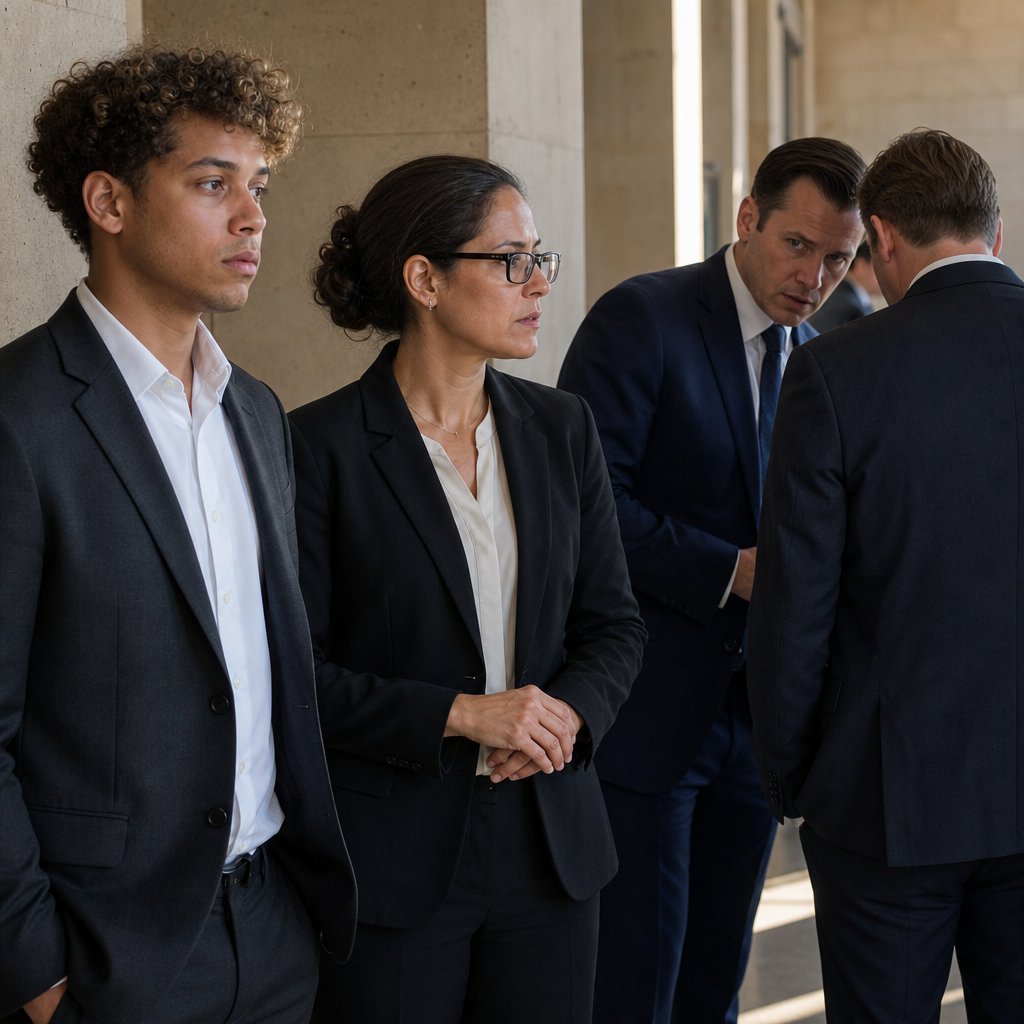
At the hearing, Evan sat two rows ahead of me in a suit that fit too well for a man claiming hardship. His jaw worked constantly, like he was grinding his teeth into dust. When his lawyer spoke, Evan kept his eyes forward, hands folded, the picture of restraint.
Then my lawyer stood and did what she does: she made it boring. She made it numbers and records and patterns. She used the words “material financial discrepancy” and “documented third line” and “unaccounted household expenditures.” She didn’t look at Evan once.
The judge listened without blinking. When Evan’s lawyer tried to argue I was fishing, the judge cut him off mid-sentence, voice sharp enough to sting. “Limited discovery is granted,” she said. “And I suggest both parties cooperate.”
It wasn’t everything. But it was something. It was a crack.
Evan finally turned his head. Our eyes met. His jaw tightened so hard a muscle jumped near his temple, and in that second I knew—I’d hit something real.
He leaned toward his lawyer and whispered urgently. His lawyer’s expression shifted, just for a second, into something that looked like calculation mixed with panic—and then Evan looked back at me and smiled like he had a plan—
His Mother’s Car At The Lake
The new bank subpoena came back with the kind of detail Evan’s lawyer had tried to outrun. My lawyer called me in, closed her office door, and slid the printout across like it was radioactive.
“There’s an automatic transfer,” she said. “It was originally titled ‘HOUSEHOLD 2.’”
My stomach dropped so hard I felt it in my knees.
“He renamed it later,” she continued, tapping the next line. “‘Consulting.’ Same amount, same schedule. Just… a different story.”
HOUSEHOLD 2. He hadn’t even bothered to be poetic. He’d just labeled us like accounts.
I left her office shaking and drove straight to the lake-house—our old weekend place that Evan insisted was “too expensive” to keep, the place he’d been pushing to sell fast. The gravel crunched under my tires, loud in the quiet, and when I pulled up my throat went tight.
Evan’s mother’s car was in the driveway.
Not just any car—her champagne-colored sedan with the dented rear bumper from the grocery store incident she still blamed on “kids these days.” It sat there like it belonged, like she’d been here recently, comfortably.
Family involvement. Not a lone affair. Not a mistake. A network.
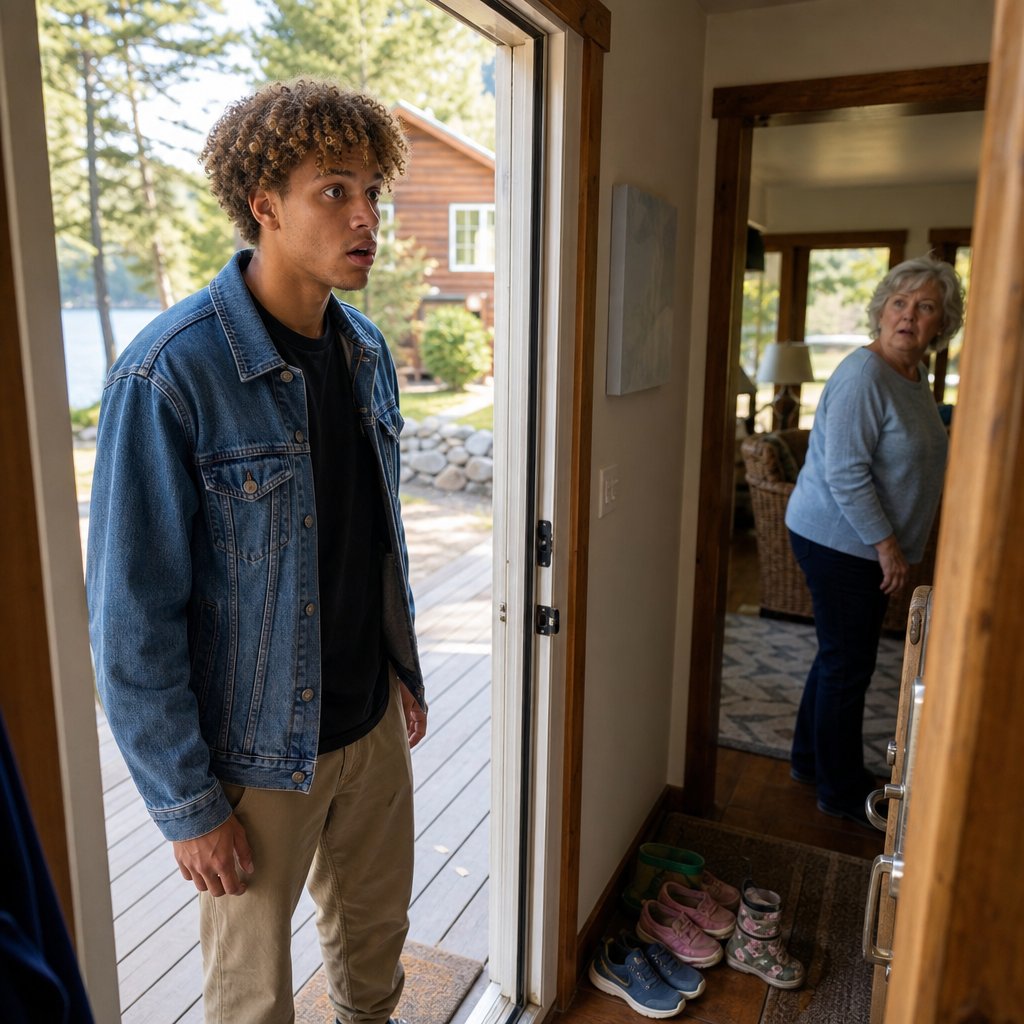
I got out and walked toward the front door, the air smelling like lake water and pine sap. My hands were cold on the doorknob. Inside, I heard movement—footsteps, a drawer closing, a voice that wasn’t Evan’s carrying through the house.
I pushed the door open, and the first thing I saw in the entryway was a set of small shoes lined up neatly by the mat—
Sienna Had A Higher Limit
The records finally gave her a name, and it landed like a slap because it made everything real.
Sienna.
Authorized user on the secret card. A limit higher than what Evan used to lecture me about for groceries. Higher than what I could spend without him acting like I was draining us. The audacity wasn’t just the betrayal—it was the budgeting of it. The way he’d measured my needs against hers and decided she deserved more.
My lawyer found the social media photo without even trying that hard. It wasn’t a clear “couple” post. It was worse. It was a blurred, casual family moment—someone’s arm around someone’s shoulder, a kid’s head turned away, a picnic table in the background. The kind of thing people post because it feels normal.
But Evan’s watch was unmistakable.
He’d worn it for years. A heavy silver thing with a scratched clasp that used to snag our towels in the laundry. I’d cursed that watch more times than I could count. Now it was there, on another man’s wrist in another life, pretending it had always belonged.
When my lawyer brought it up, Evan’s attorney moved instantly. “Speculative,” he snapped. “Prejudicial. No foundation.”
My lawyer didn’t flinch. “We can lay foundation,” she said. “The watch is distinctive. We have purchase records. We have contemporaneous photos.”
Evan’s lawyer’s eyes narrowed, calculating how to erase a truth once it had a name. He leaned forward, voice smooth again. “We will file to exclude it,” he said, like a promise.
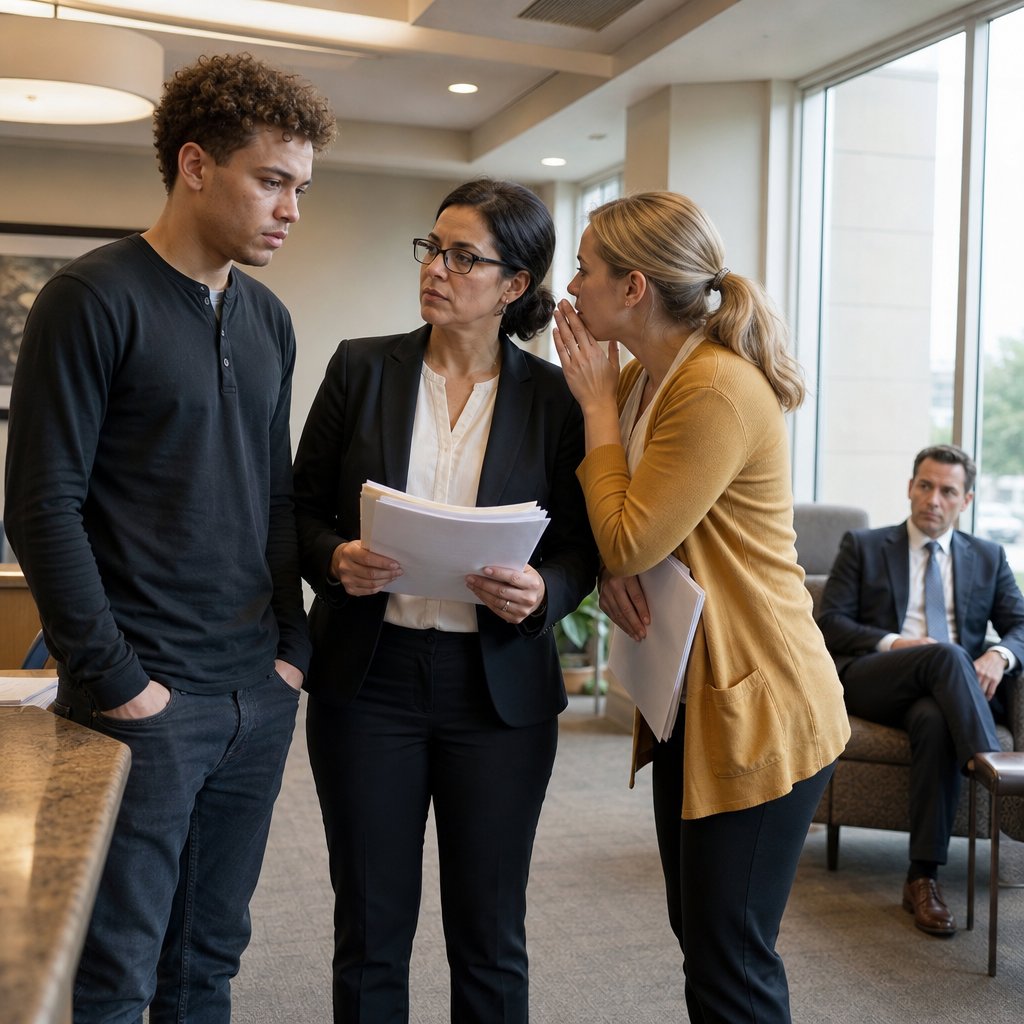
And then, as if the universe wanted to twist the knife, my lawyer’s assistant stepped in and whispered something in her ear. My lawyer’s face changed—fast, sharp—and she turned to me.
“Mara,” she said quietly, “Evan just submitted an updated financial affidavit.”
My heart lurched. “Updated how?”
She didn’t answer right away. She just stared at me like she was deciding how much truth I could take at once, and then she reached into her folder and pulled out the new filing—
His Name On Enrollment
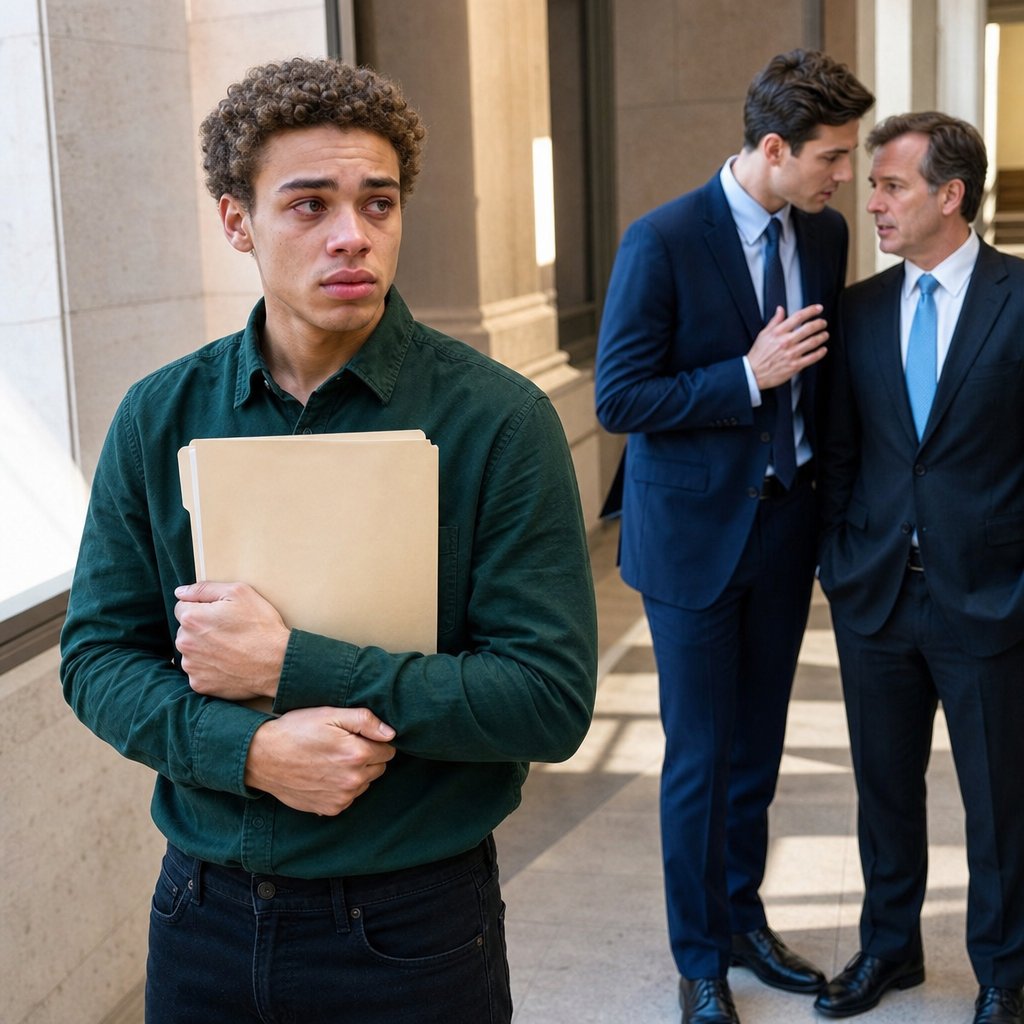
Evan’s updated affidavit hit the table like a slap—fresh ink, fresh lies—right as his lawyer slid a motion across the aisle to keep my photo evidence out. Evan didn’t even look at me. He stared past my shoulder with that practiced, bored confidence, like I was a noise he could get muted.
Then my attorney opened a thin manila folder and pulled out a stack of school enrollment forms. Not screenshots. Not hearsay. Originals with that stiff, over-handled paper feel, edges bent like someone had shoved them into a glove compartment in a hurry.
“Parent/Guardian,” the top line read, and under it: Evan’s full name. His signature. His old phone number—one I still had memorized the way you memorize a bad song you can’t unhear.
Evan’s face did something small but unmistakable. The smirk didn’t vanish; it cracked. His jaw tightened like he’d bitten down on a secret. He leaned toward his lawyer and whispered, fast, and his lawyer’s eyes flicked to the forms and then away like they were hot.
When the judge asked, point-blank, if he denied paternity, Evan lifted his chin and said, “Yes.” The courtroom went quiet enough that I could hear the squeak of someone’s shoe on the tile behind me.
My attorney didn’t blink. “Then we’re requesting the court-ordered process today.”
The judge’s pen hovered, then moved, and Evan’s confidence started leaking out through every rigid breath as the order was read aloud—until his lawyer suddenly stood again and asked for an immediate sealing of the results…
Sealed Results, Unsealed Panic
They didn’t read the result out loud. The clerk handed the sealed packet to the judge, and the judge’s eyes moved once—left to right—like it was just another line item. Evan tried to sit back like he didn’t care, but his knee bounced so hard the fabric of his trousers trembled.
“Entered into the record under seal,” the judge said. Then, without looking up: “Mr. Hart, you will comply with the support and disclosure orders pending further hearing.”
Evan’s throat worked. His lawyer touched his arm, a warning touch. Evan ignored it and leaned forward anyway, voice too loud. “This is—this is insane. This isn’t—”
The judge cut him off with a glance that could’ve stopped traffic. Evan’s face flushed up his neck, and for the first time in months, he looked like a man who couldn’t talk his way out of a locked door.
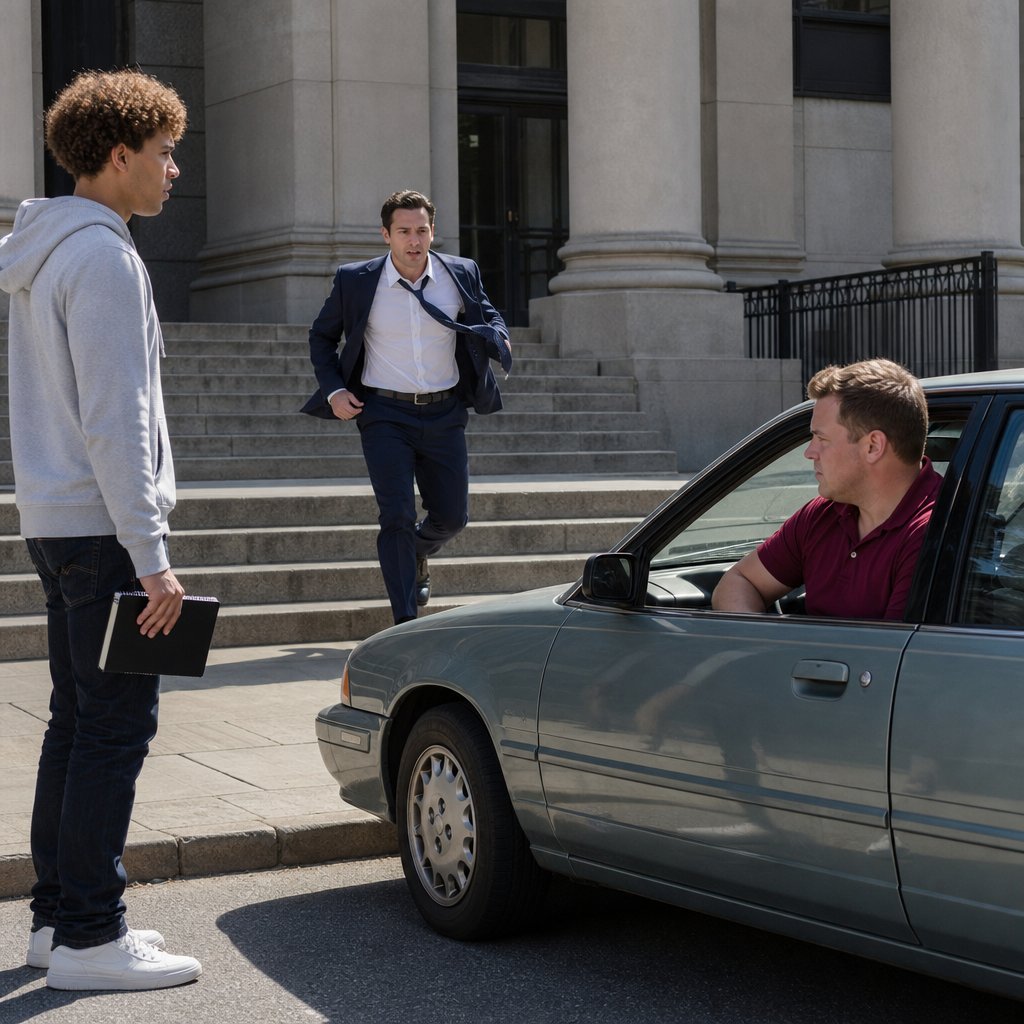
Outside, the air smelled like hot asphalt and cut grass from the courthouse landscaping. Evan didn’t even wait for the elevator. He bolted down the steps, phone face-down in his palm like he was afraid it might betray him. His cousin—Derek, the one who always showed up to family events in loud cologne and too-tight polos—was parked at the curb, engine running, eyes scanning like a lookout.
My attorney didn’t chase. She just watched, then quietly told me, “He’s going to try to move money. Today.”
And she was right. Within hours, the forensic accountant flagged a sudden cluster of transfers routed through Derek—same amounts broken into neat little pieces, like Evan thought math could make fingerprints disappear. The trail didn’t vanish; it lit up.
My attorney drafted the emergency motion for sanctions and a freeze, her pen moving fast enough to scratch the paper. “One ruling,” she said, not looking up, “and he can’t touch a dime.”
Then my phone buzzed in my pocket—Evan’s name flashing across the call ID—while my attorney was still mid-sentence…
Would you have trusted Evan after discovering hidden funds?