



Mabel’s Bed Was Cold
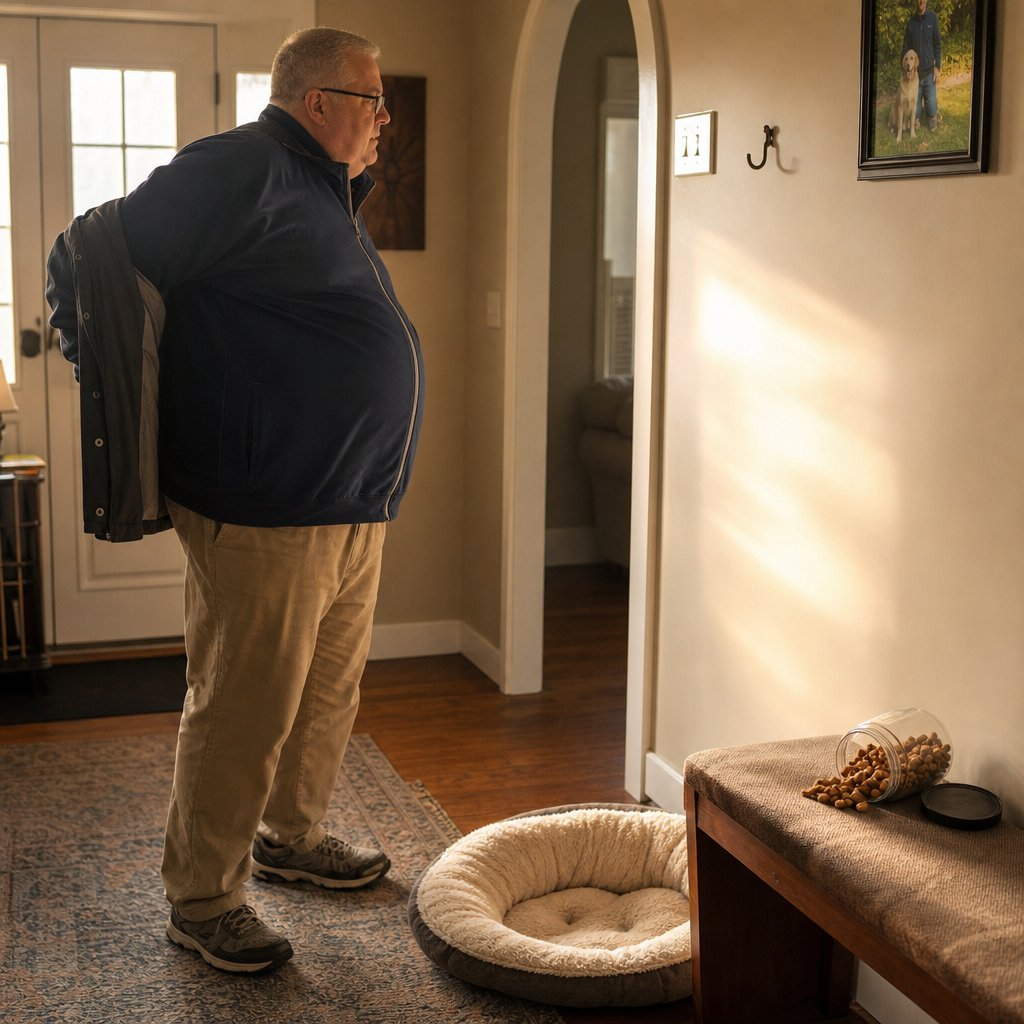
Mabel’s bed was empty—flat, like someone had pressed the air out of it with a knee. Her water bowl sat untouched, a pale ring of yesterday’s drool dried to the rim, and my stomach dropped so hard I tasted pennies.
I didn’t even take my shoes off. I walked straight down the hall like my body already knew where the damage would be, and there it was: the hook by the mudroom door, bare. No leash. No harness. The little jar of treats was shoved back, crooked, like a hasty elbow had knocked it aside.
Graham had promised we’d do this “like adults.” He’d said it with that calm, managerial voice he used on waiters and interns, like the world existed to be organized by him. Amicable. Fair. No surprises.
I pulled up the ring camera history with shaking hands and watched it in my head before I even saw it: Graham—tall, broad-shouldered, salt-and-pepper hair combed too neatly—walking out of my front door with Mabel’s leash looped around his fist. Mabel, golden and wagging, trusting as ever, trotting right beside him like it was a normal Tuesday.
He didn’t look back once.
I stood in the entryway, my glasses fogging from my own breath, staring at the empty hook like it had personally betrayed me, and then my phone buzzed in my palm—his name flashing—right as the front lock clicked from the outside.
“It’s A Civil Matter”
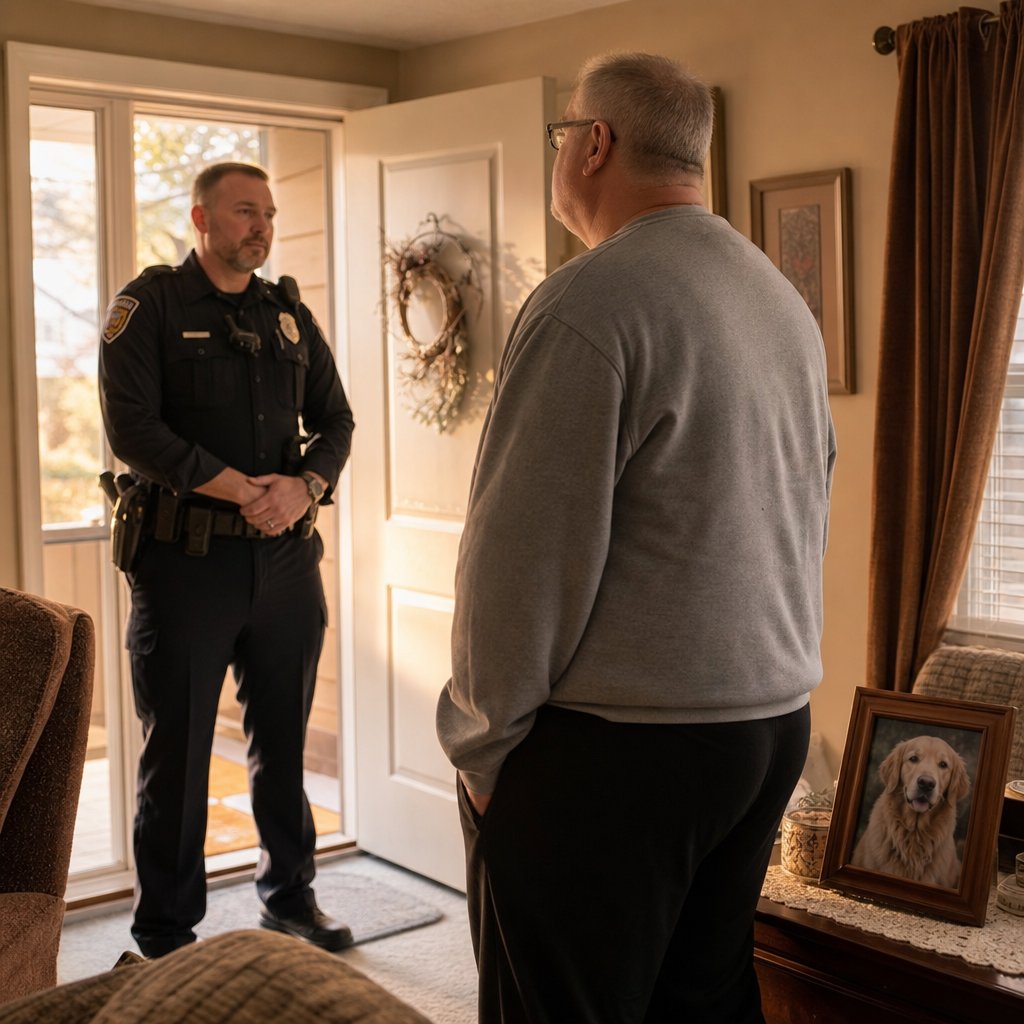
The officer didn’t even sit down. He hovered in my living room with his hands clasped in front of him, eyes sliding over the family photos like they were mildly embarrassing. “Sir, I’m sorry,” he said, and the apology was already halfway out the door. “That’s your spouse. That’s a civil matter.”
I stood there in my socks, too stunned to be angry yet, listening to the word civil like it was supposed to comfort me. Civil. As if Graham hadn’t walked off with the one living thing in this house that still ran to me without an agenda.
“So he can just take her?” I asked. My voice came out thin. I hated that.
The officer gave me the practiced look—sympathy measured out with a teaspoon. “You’ll need to handle it through the courts. Divorce proceedings. Custody of… property.” He actually said property, and my throat tightened.
When the door shut, the house went quiet in that brutal way quiet houses do—no nails clicking on hardwood, no soft huff of dog breath against my shin. The air smelled faintly of Graham’s cologne, the expensive kind he bought once a year and acted like it was a personal sacrifice.
My phone buzzed again. Graham’s text came through like a slap: “She’s fine. Stop being dramatic.”
Not “I’m sorry.” Not “We’ll talk.” Just fine, like she was a toaster he’d moved to the other counter.
I stared at the message until my eyes watered, and then another vibration hit—one more text from him, shorter, colder, like he’d gotten exactly what he wanted from the police call and was ready to twist the knife.
He Said It Like Fact
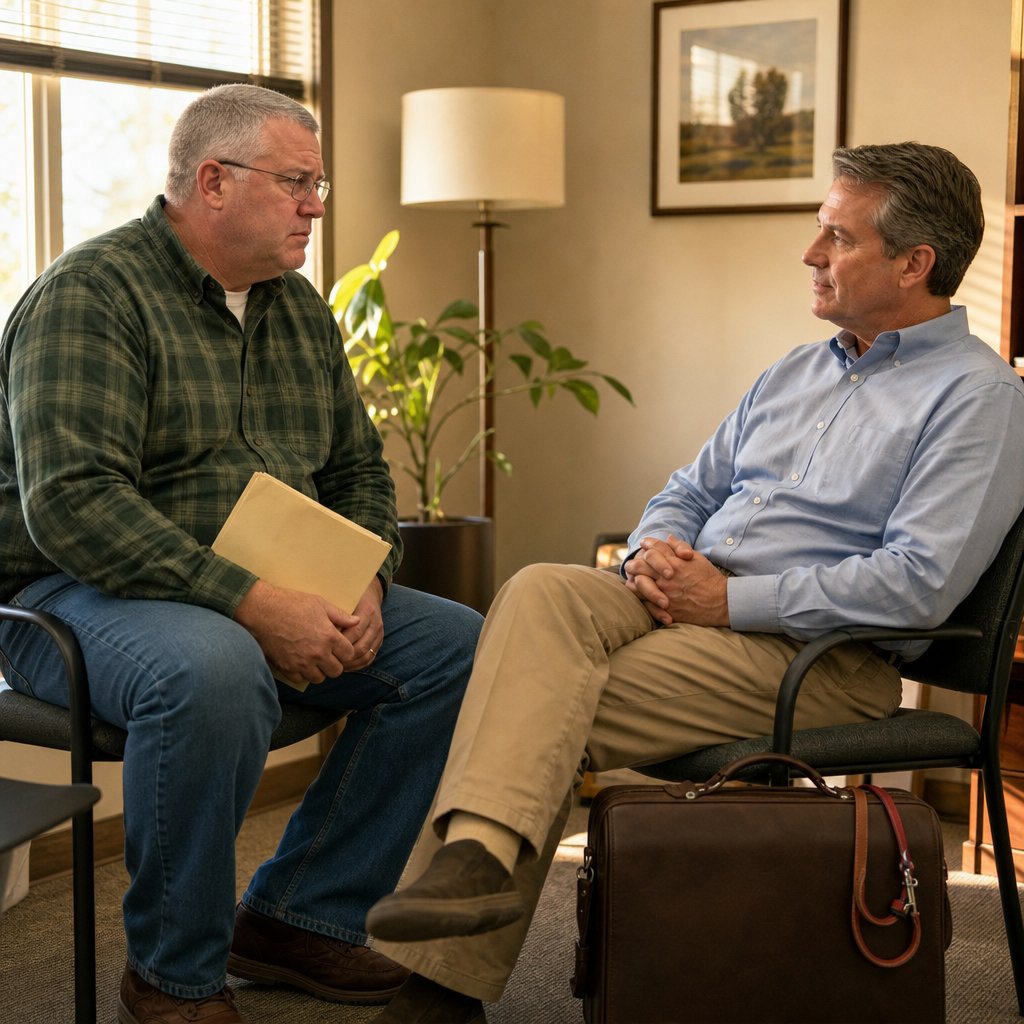
The mediator’s office smelled like lemon wipes and stale coffee, the kind of clean that’s trying too hard. Graham sat across from me with his hands folded, wedding ring already off, like he was attending a budget meeting instead of dismantling our life.
I’d come in ready to be reasonable. I’d rehearsed phrases in the car: shared schedule, what’s best for Mabel, no fighting. I even brought Mabel’s vet records in a manila folder like a fool who thought documentation mattered more than intimidation.
The mediator—a brisk woman with a soft scarf and sharp eyes—asked us to outline priorities. Graham didn’t hesitate. He leaned forward, smile polite enough to pass in public, and said, “Primary possession of the dog, for stability.”
Primary possession. Like Mabel was a timeshare. Like I was a weekend inconvenience.
My mouth actually fell open. I felt heat crawl up my neck, and I could hear my pulse in my ears. “Excuse me?” I said. “We agreed—”
Graham turned his palms upward in a slow, rehearsed gesture. “We agreed we’d do what’s easiest. Mabel’s routine is with me. You work late. You get overwhelmed.” He said overwhelmed like he was describing a toddler with sticky hands.
The mediator glanced at her notes, then back at me, waiting for my response like this was a normal negotiating position and not a hostage demand.
And that’s when it hit me: there had never been an amicable divorce. There had only been Graham, smiling, staging it, letting me think we were equals right up until he could say a sentence that rewrote the whole story.
I gripped the folder so hard it bent, and Graham’s eyes flicked to it—just for a second—like he’d clocked exactly what I’d brought and filed it away for later.
He Showed Up Early
My scheduled walk day was the one thing I’d been clinging to, like a scrap of dignity. Noon. Pick her up, take her to the park, bring her back. Simple. Something I could point to and say: I still matter to someone.
I pulled into the lot twelve minutes early because I couldn’t stand sitting at home. The sky was the color of dishwater, and the wind smelled like wet leaves. I parked, checked the time, and started scanning for Mabel’s golden blur the way you do when you love a dog more than you love your own pride.
Graham’s SUV was already there.
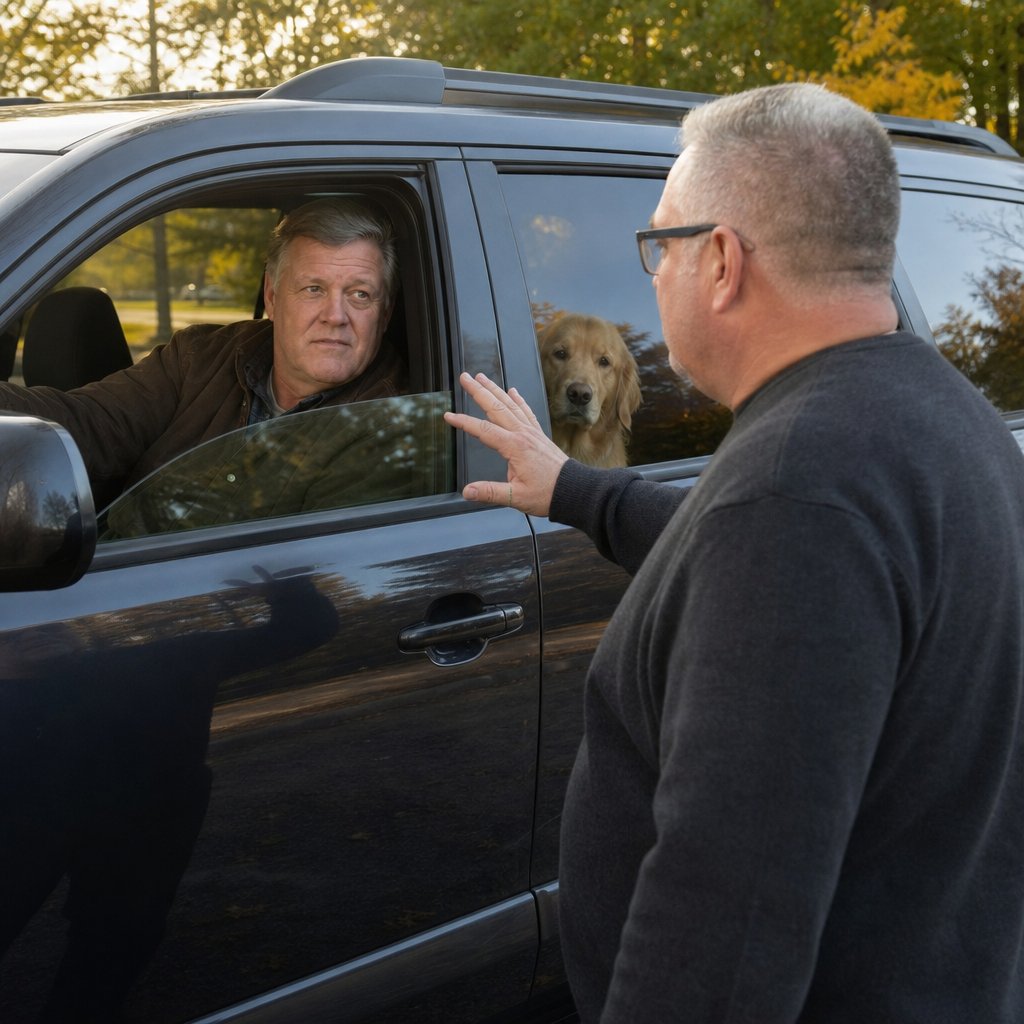
Not parked in a space—angled, possessive, like he’d claimed the whole curb. I saw him through the windshield, hand on the steering wheel, posture loose. And in the back seat, Mabel sat upright, tongue out, looking thrilled like this was a road trip.
I got out and walked up, my heart thudding in my throat. Graham lowered the window halfway. “Oh,” he said, like he’d just noticed me. “Misunderstanding. I thought today was my day.”
“No,” I said, too sharply. “It’s on the calendar. Noon. My day.”
He smiled—small, controlled. “I don’t want to confuse her. We should keep things consistent.”
Consistent. Like he hadn’t just snatched her out of my house and dared me to do something about it.
Mabel pressed her nose to the glass, fogging it with one warm breath, tail thumping. I lifted my hand without thinking, and she whined softly, a sound that landed in my chest like a hook.
Graham’s fingers tightened on the window controls. “Let’s not make a scene,” he said, eyes steady on mine, and the window started to rise.
A Key I Didn’t Know
I noticed the key by accident—because Graham always jingled when he walked, like he wanted the world to hear he’d arrived. He stepped past me in the hallway at the mediator’s building, and his key ring flashed silver at his hip.
There was a key on it I’d never seen before. Not the old brass house key. Not the mailbox. This one was sleek, newer, cut differently, with a small black plastic head. The kind of key you don’t get unless you’ve added a lock, or a door, or a whole second life.
“What’s that for?” I asked, forcing my voice to sound casual.
Graham didn’t break stride. “Oh, nothing. Storage,” he said, too fast. Then he smiled over his shoulder like I was being silly. “You’re spiraling again.”
That night I couldn’t sleep. I kept seeing that key in my mind, turning in something that wasn’t mine.
The next morning I went to the closet in the spare room—the one we’d turned into a catchall—and reached for my financial file box. The heavy plastic one with the snap lid. Tax returns, mortgage statements, retirement printouts, the boring paper trail of a marriage.
The space where it lived was clean. Not empty-dusty. Clean-clean. Like someone had lifted it out carefully and then wiped the shelf with a cloth. My throat went dry.
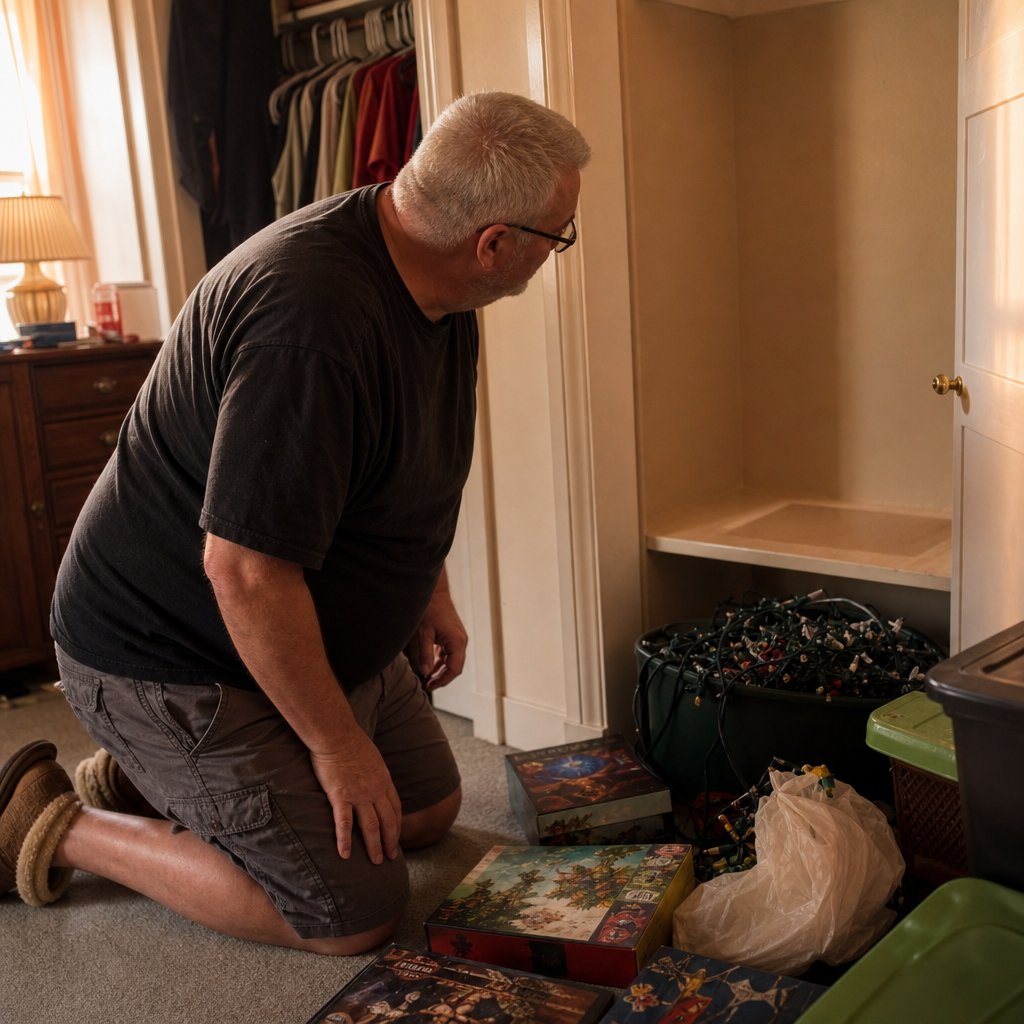
I yanked everything out. Old coats. A vacuum attachment. A stack of board games. My hands shook so hard I dropped a shoe box and it burst open, spilling tangled Christmas lights like veins across the carpet.
The file box was gone.
I stood there in the mess, breathing fast, realizing this wasn’t just about Mabel. Someone was actively removing evidence. And in the hallway, the front door clicked—soft, deliberate—as if someone had just tested the latch.
The Voicemail That Smiled
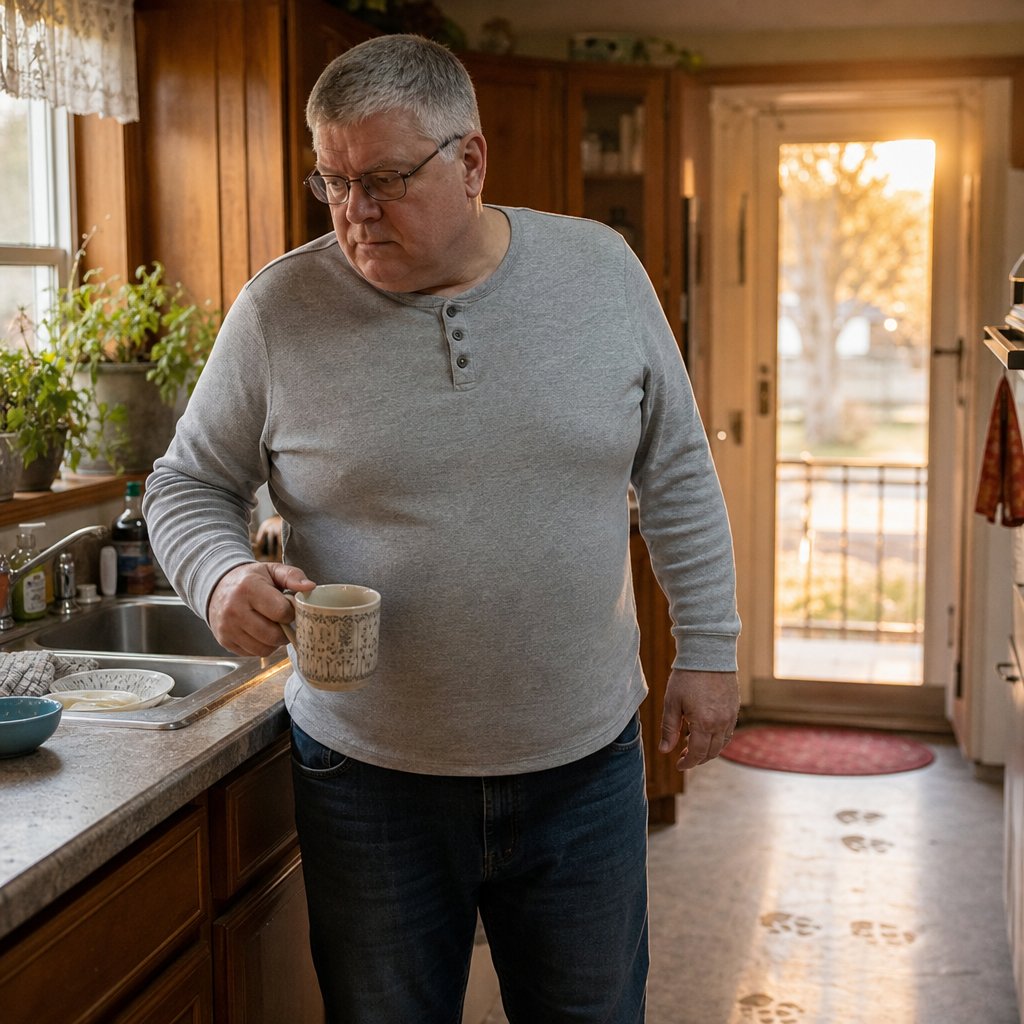
The voicemail came in while I was standing at the kitchen sink, scrubbing a mug that didn’t need scrubbing. My hands were red from hot water, and I realized I was doing it just to have something to control.
Unknown number. I let it go to voicemail because every part of me was tired of being ambushed.
The voice was warm—almost cheerful. “Hi, this is Daniel Price, counsel for Mr. Graham Whitaker.” He said it like he was introducing himself at a barbecue. “Just wanted to touch base and encourage you to be practical about the dog.”
Practical.
He kept going, smooth as oil. “These situations can escalate unnecessarily, and that tends to create… complications. So let’s keep things calm and reasonable. Give me a call back when you can.”
Complications. He didn’t say what they were, because he didn’t have to. The threat was in the pause, in the way he assumed I’d understand the rules of the game: Graham takes what he wants, and the system politely tells me to stop making noise.
I stared at the refrigerator door, at the faint smudges where Mabel used to nose it when she wanted cheese. My chest ached with a stupid, animal grief that made me furious at myself.
I replayed the voicemail again, listening for anything I could use—anything that sounded like overreach. But it was perfectly clean. A warning wrapped in a smile.
My phone buzzed with another notification right then—this time a calendar reminder for my next walk day—and my stomach twisted because I suddenly couldn’t remember who had access to that calendar besides me and Graham.
Her Heels On My Porch
The white Lexus showed up the first night Graham swore he “wasn’t there.” It sat two houses down at first, tucked in like it was trying to be polite, but it didn’t belong on our street. It was too clean, too deliberate, like a decision.
The second time, it was closer—right in front of the house. My house. The one I was still paying half the mortgage on while Graham played landlord with my life.
I told myself it could be a neighbor, a friend, a delivery. I tried to be the version of myself that didn’t assume the worst. That version lasted maybe thirty seconds.
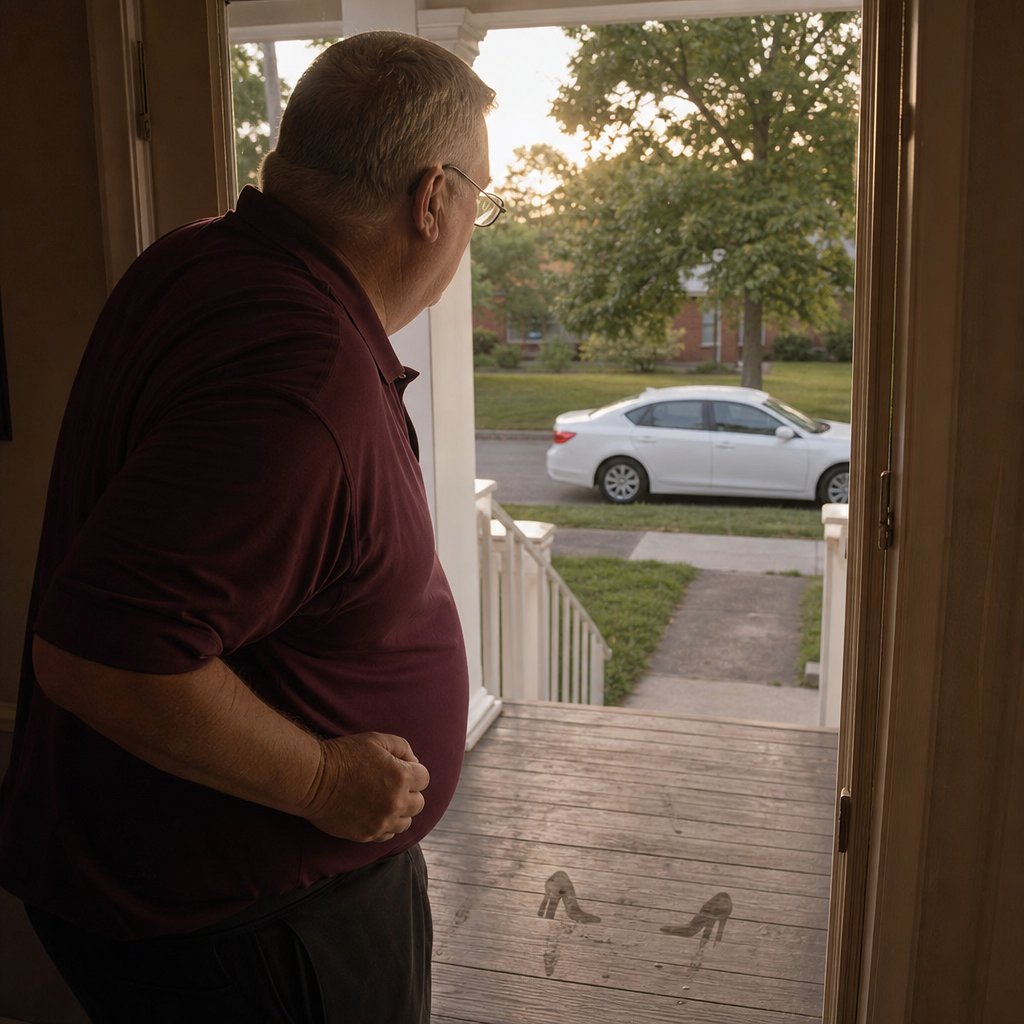
Because the next morning, I opened the door to get the paper and froze. There were faint scuffs on the porch boards—thin, sharp marks like someone’s shoes had dragged, heel-first, when they turned.
I went to the ring camera history and watched it without sound, my jaw clenched hard enough to hurt. The angle caught only the bottom half of her: bare calves, a knee-length skirt, and glossy black heels stepping onto my porch like she had a right to be there. She paused, just long enough to look down—like she was checking the welcome mat—and then she stepped inside.
Not sneaking. Not rushing. Walking in like a girlfriend who’d been there before.
My vision tunneled. I could practically hear Graham’s voice: stability, consistency, don’t make a scene. My hands shook so badly I had to brace them on the doorframe.
Then I saw the Lexus key fob clipped to Graham’s key ring in my memory, and something ugly clicked into place: this wasn’t just a hidden partner. This was a coordinated pressure campaign.
My phone rang—Graham’s name—and I stared at it, knowing if I answered, I’d give him the satisfaction of hearing me break.
He Named Her Like Family
Graham didn’t call to apologize. He didn’t call to explain. He waited until he could do it in the most humiliating way possible: cheerfully, in front of witnesses.
The family text thread had been quiet for weeks—my sister-in-law’s birthday, a cousin’s graduation, the usual harmless noise. Then it lit up with Graham’s tone-deaf optimism like nothing had changed.
“Hi everyone!” he wrote, and I could practically hear the exclamation point in his voice. “I want to introduce Lena. She’s been a big support to me through all this.”
Lena. A name placed into our circle like a new dish on the table. Like it belonged.
My face went hot. My fingers went numb. I could picture her from the porch: the glossy heels, the calm way she walked into my house like she’d already measured the rooms.
Graham added, “Mabel already loves her.”
That part did it. Not because it surprised me—Mabel loves anyone with hands and a heartbeat—but because he knew exactly what he was doing. He was using my dog as character witness. As proof he couldn’t be the bad guy if the golden retriever approved.
Responses started popping in—little bursts of validation, hearts, “so happy for you”—and each one felt like someone stepping on my chest with a clean shoe.
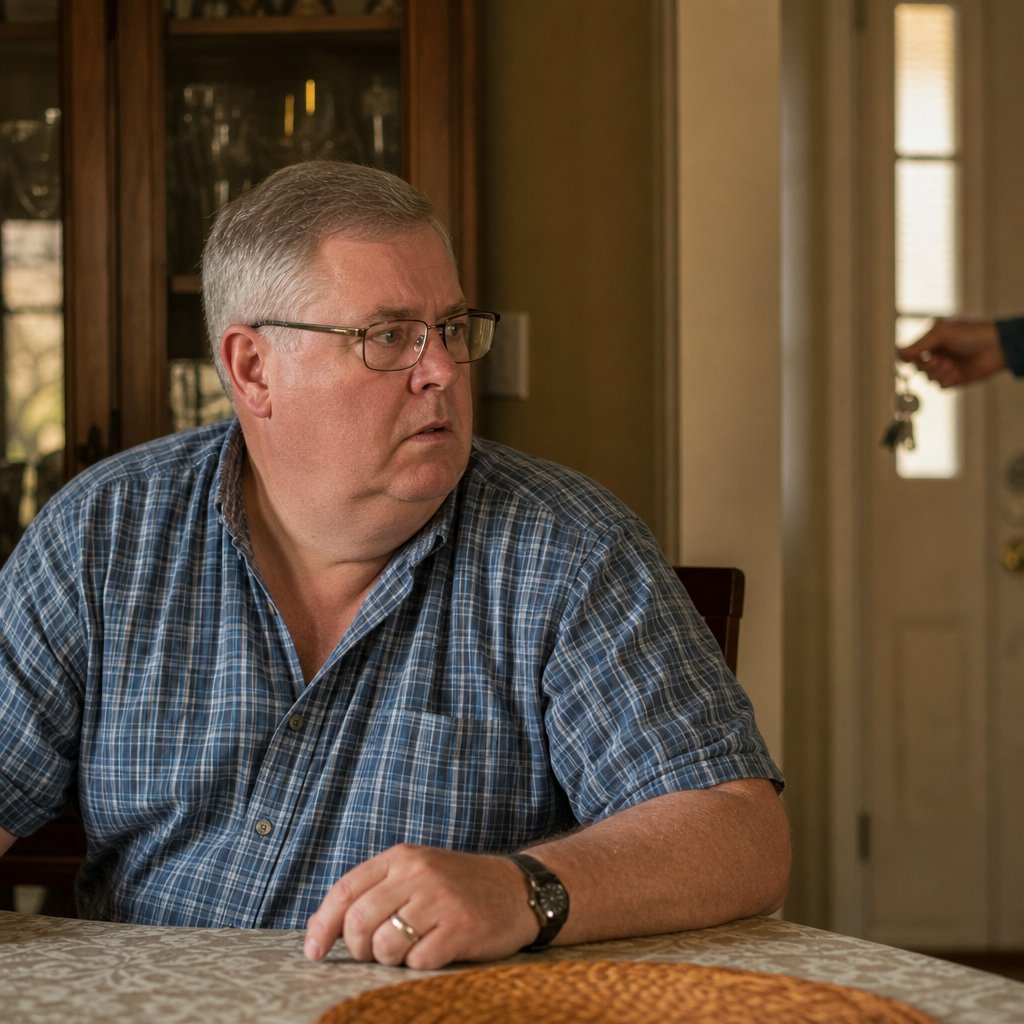
I wanted to throw my phone across the room. Instead I set it face-down on the table so carefully it looked controlled, and then I heard it: the faint jingle of keys at my front door, like someone was about to walk in without knocking.
The Collar Said His Name
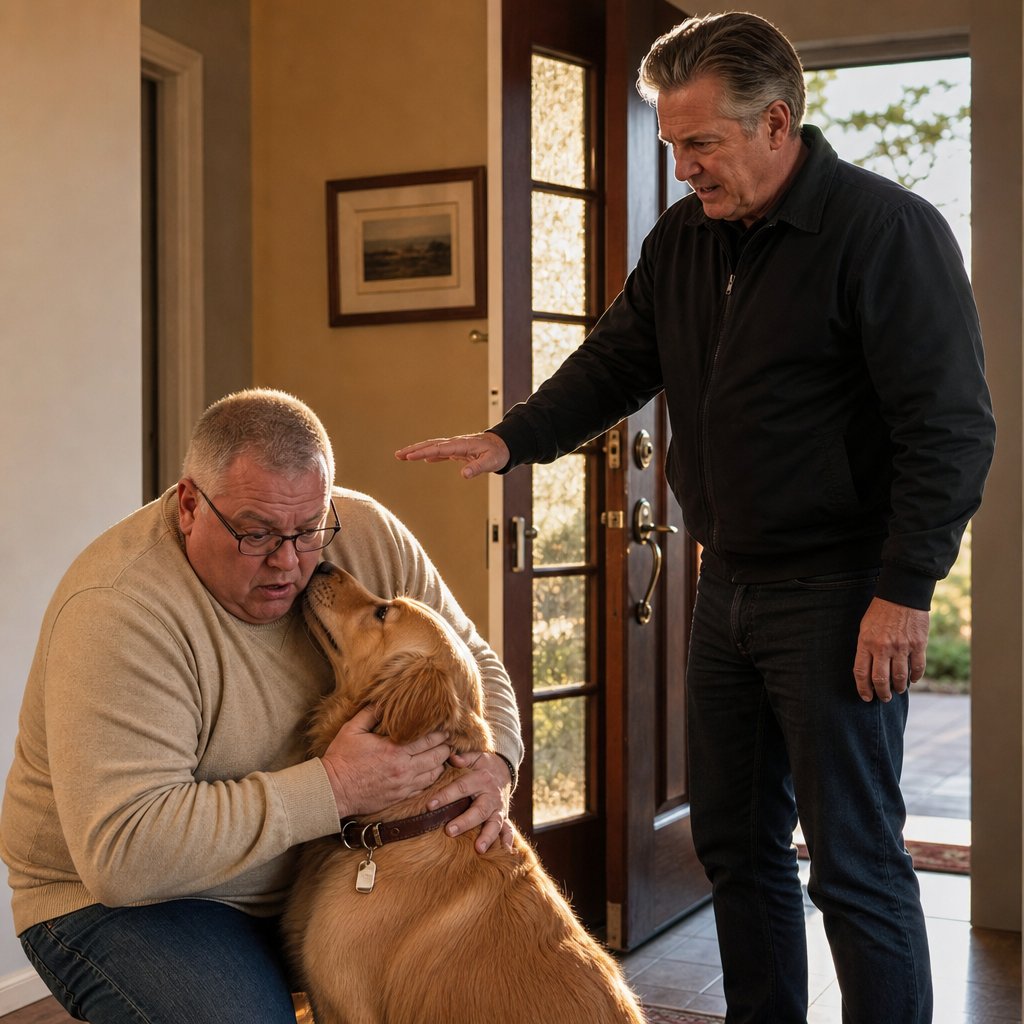
When Mabel finally came back, she barreled into me like she always did—whole-body joy, nails skittering on the floor, that warm dog smell like sunshine and corn chips. For half a second I forgot to hate anyone. I just buried my face in her neck and breathed her in.
Then I felt it.
A new collar—stiffer leather, unfamiliar weight. I pulled back to look, and my hands went cold. There was a little metal tag on it, shiny and smug.
It had Graham’s last name. Only his.
No mine. No shared anything. Just a rebrand, like she’d been acquired. Like she was a piece of property that had finally been labeled correctly for inventory.
Graham stood in my doorway like he was dropping off a package, not a living creature I’d raised from a puppy. He looked freshly shaved, confident, and I hated the tiny detail of it—how he’d made time to look good for whatever life he was building while I was here counting missing documents and trying not to beg.
“Nice, right?” he said, nodding at the collar. “Helps if she gets out.”
“Gets out,” I repeated, staring at the tag until my eyes burned. “Or gets taken?”
His smile didn’t reach his eyes. “Don’t start,” he said quietly, and the way he said it made my spine stiffen. Mabel leaned against my leg, trusting, heavy and warm.
I reached for the buckle, intending to take it off right then, right in front of him—one small act of defiance—and Graham’s hand shot out toward my wrist like he’d been waiting for exactly that moment.
The Pages That Vanished
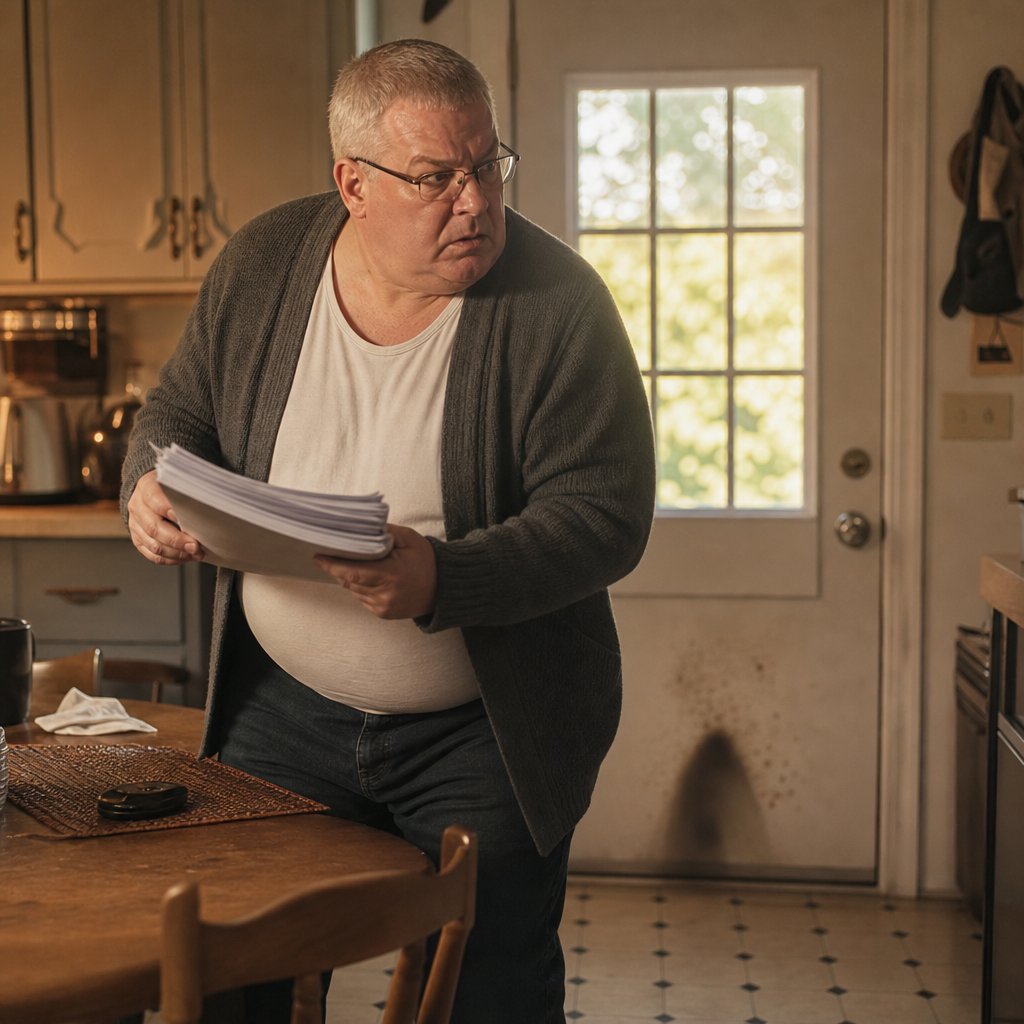
Graham sent the bank statements like he was doing me a favor. “Here,” he said, voice smooth, like transparency was his idea. I printed them at a friend’s house because I couldn’t stand the idea of him having access to my printer history too. I held the stack in my hands and felt the cheap paper flex, warm from the tray.
At the kitchen table, I spread them out and started checking month by month. It was tedious, the kind of work you do when you’re trying to prove to yourself you’re not crazy. I made a neat pile, then another. My pen hovered over the numbers, and I kept hearing his lawyer’s voice: practical, calm, complications.
That’s when I noticed the gaps.
Not missing transactions—missing pages. Whole months weren’t there. The pagination jumped like a skipped heartbeat, and suddenly my skin prickled. I flipped back and forth, faster, the paper whispering under my fingers. The months that were gone lined up with Graham’s biggest bonuses—years I’d watched him come home grinning, telling me we were “finally getting ahead.”
My throat tightened. I pulled out the tax return copy I still had—the one he hadn’t stolen yet—and compared the income lines to the deposits. They didn’t match the story he’d told me for years.
My hands started to shake, not from fear this time, but from fury so clean it felt like focus. This wasn’t sloppy. This was deliberate concealment, the kind you do when you’ve had practice.
I gathered the statements into a tight stack and stood up so fast my chair legs scraped the floor. In the silence, I heard the soft thump of something against the back door—then another—like a dog’s tail hitting it from the other side.
The Microchip Wasn’t Mine
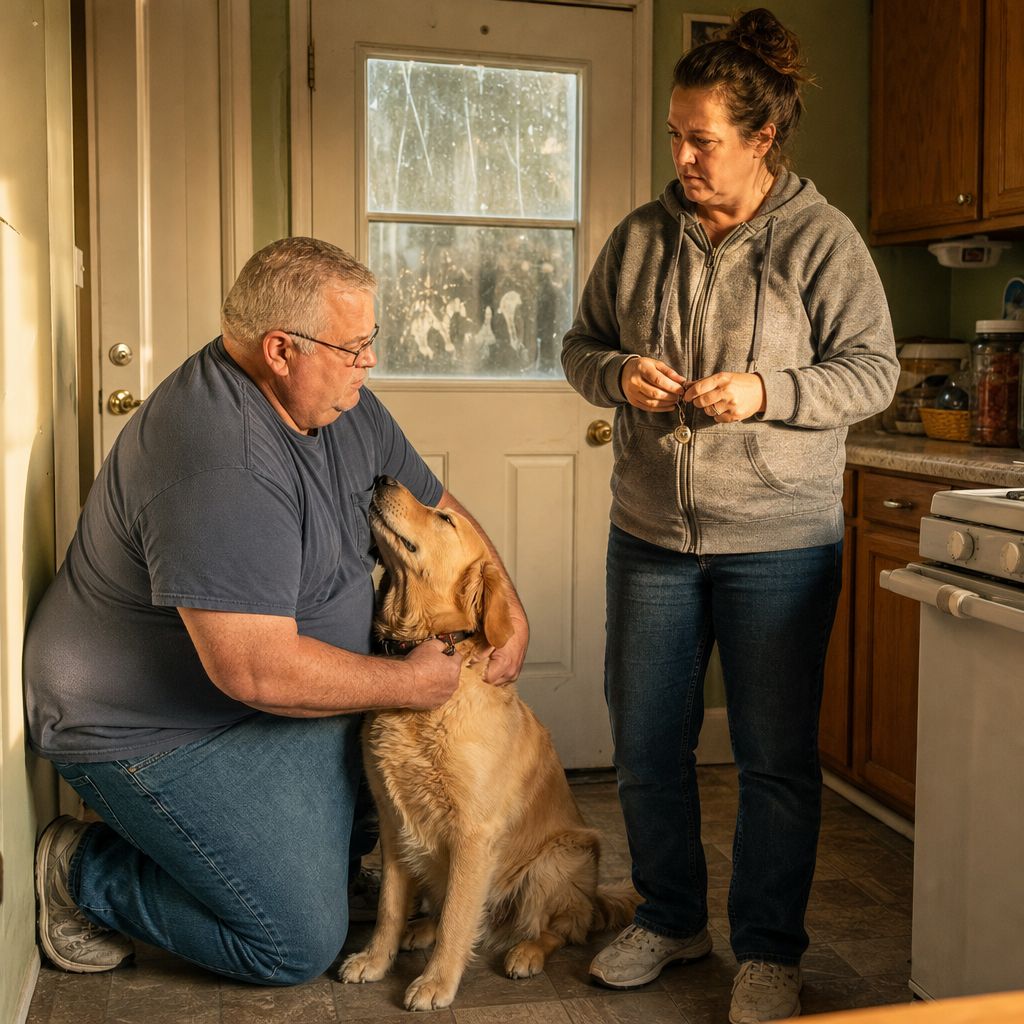
Something thumped against the back door twice—soft, impatient—like a tail hitting wood. I froze in the kitchen with my keys still in my fist, and when I turned, Mabel was there in the narrow window pane, her golden face pressed to the glass like she’d been waiting for permission to exist.
I cracked the door and she squeezed in, nails clicking on the tile, smelling like damp grass and someone else’s laundry soap. Her ears were pinned back. She kept glancing over her shoulder as if Graham might step through behind her.
I didn’t even have time to breathe her in before my friend Tessa showed up—messy bun, zip-up hoodie, the kind of practical energy I’d been borrowing for weeks. She crouched, scratched Mabel’s chest, and then her eyes went sharp.
“Did you ever register her microchip?” she asked.
I blinked. “We did it when we adopted her. Together.”
Tessa’s mouth did that tight line lawyers and nurses get before they deliver bad news. “No. Graham handled the paperwork, remember? That means the chip could be in his name.”
The words landed wrong, like a floorboard giving out. I pictured Graham—calm, reasonable Graham—signing something with that careful, looping handwriting while I was distracted by puppy breath and a wagging tail.
Tessa stood, wiped dog hair off her jeans, and said, “If the chip’s registered to him, he can walk into any vet and look like the owner.”
Mabel pressed her wet nose to my knee, and I realized I didn’t actually know what her ‘legal’ name was anymore.
He Called Me Unstable
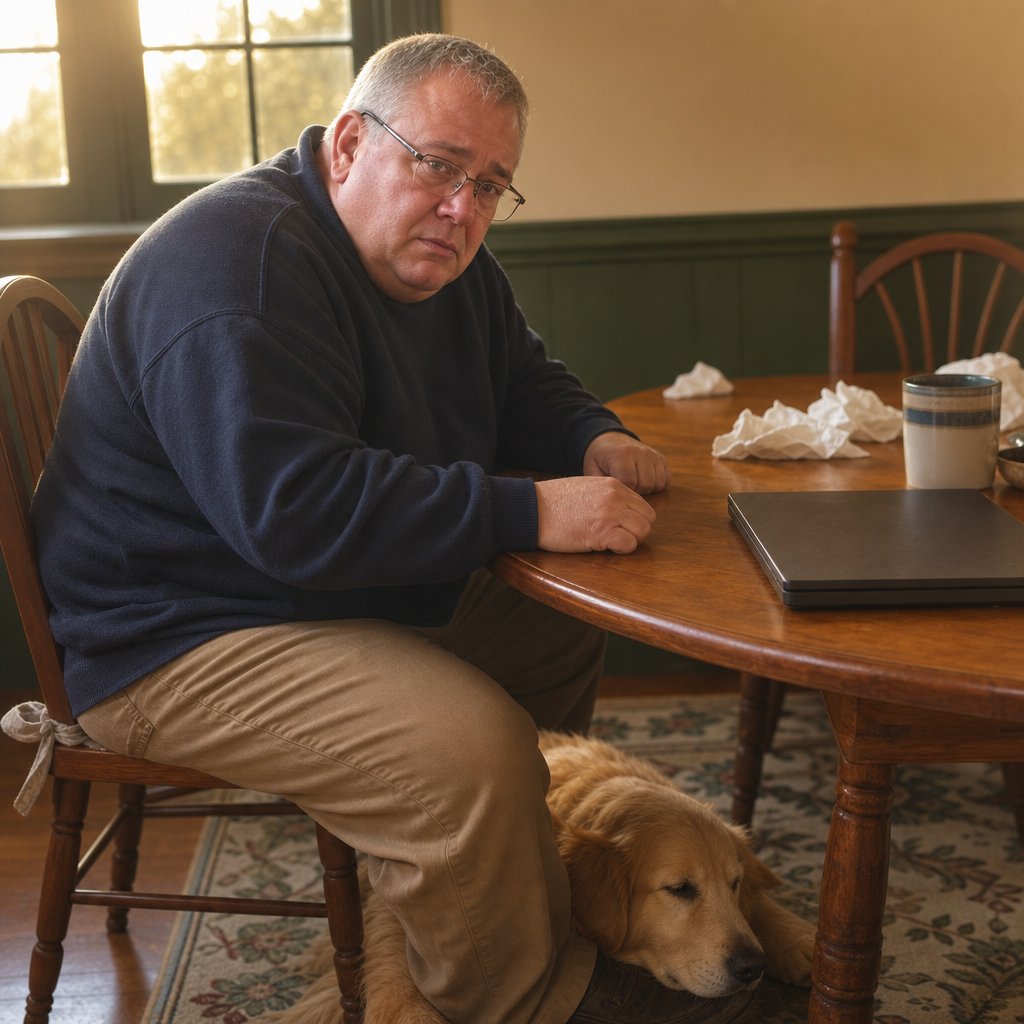
By the time my lawyer called, my throat felt scraped raw from not crying—like my body was holding its breath out of spite. I was at my dining table with a mug of cold coffee I kept forgetting to drink, Mabel’s head heavy on my foot like an anchor.
“He filed an emergency motion,” my lawyer said, voice too controlled. “He’s alleging you’re… unstable.”
The word hit me like I’d been slapped in public. Unstable. Not ‘upset.’ Not ‘struggling.’ Unstable, the way you describe a shelf before it collapses.
“And he attached a photo,” she added.
I couldn’t speak. My fingers dug into the edge of the table, finding a nick in the wood I’d never noticed before, like my house was suddenly full of evidence I’d missed.
“It’s you,” she said gently. “Tear-streaked. From the day you left the first mediation.”
My stomach dropped. That day I’d sat in my car and let myself crack for five minutes before going back to work. I’d thought I was alone. I’d thought the worst thing that could happen was someone seeing me cry.
Graham had been collecting me. Cataloging my weakest angles like he was building a case file instead of a marriage.
I pictured him scrolling through his camera roll, choosing the one where my face looked the most wrecked, the most believable as a warning label.
“We can fight it,” my lawyer said. “But we need to be smart about how you respond.”
Mabel lifted her head and stared at the front window, low rumble in her chest, and I realized the motion meant Graham was ready to tell a story about me that sounded clean—because he’d been rehearsing it.
The Vet Looked Away
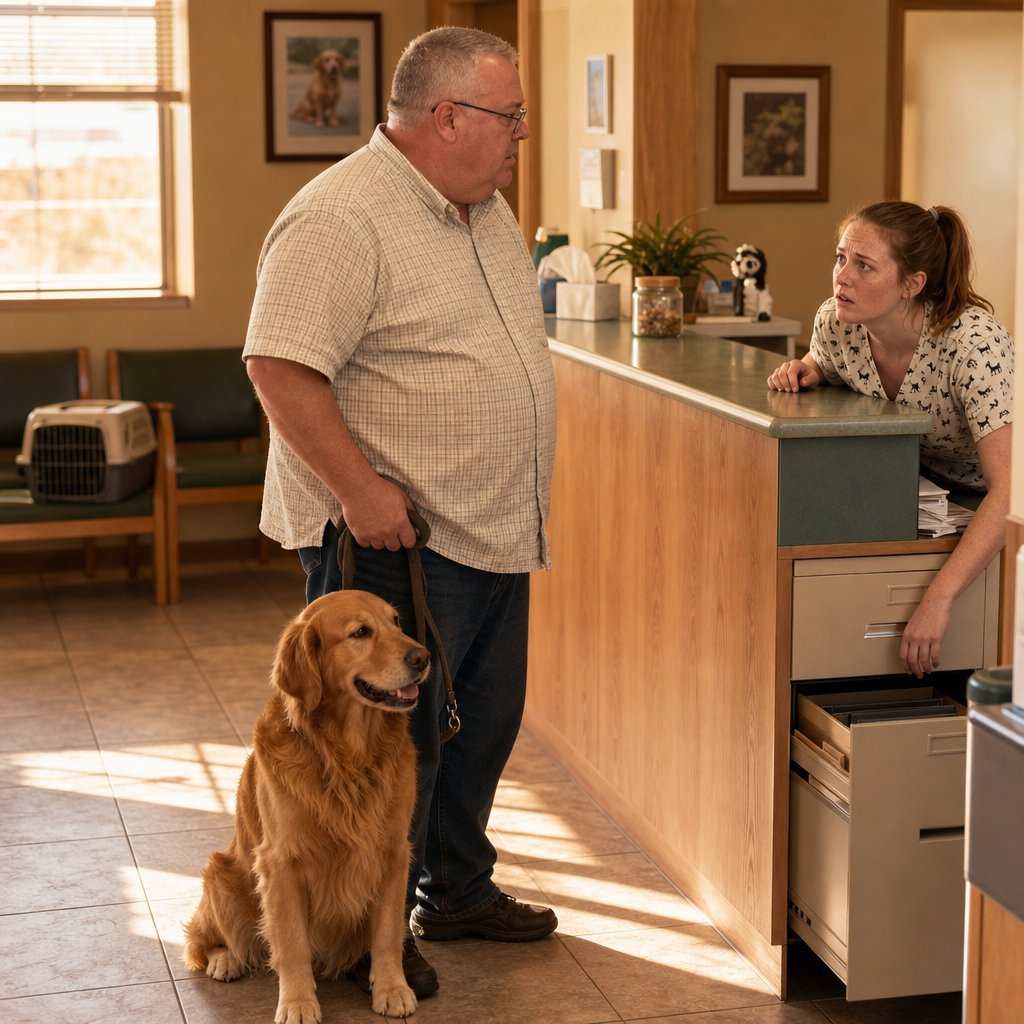
The vet’s lobby smelled like disinfectant and old biscuits, that sharp-clean scent that always made me think of tiny bodies and big bills. Mabel sat pressed against my leg, leash wrapped around my wrist like I could be pulled apart if I let go.
I walked up to the counter and asked, as calmly as I could, what name her microchip was registered under. My voice came out too polite, like I was ordering soup.
The receptionist—young, freckles, hair pulled back tight—typed with her lips pressed together. Then her eyes flicked up to mine and away again, like she’d seen something she wasn’t supposed to show.
“We can’t give out registration details without—” she started, then stopped. Her fingers hovered above the keyboard like they were suddenly guilty.
“Someone called,” she said quietly, leaning forward just enough that I could hear her over the barking behind the swinging door. “Earlier this week. They asked to transfer Mabel’s records.”
My mouth went dry. “Transfer… where?”
Her gaze dropped to the counter. “They said it was for her ‘new home’ and they needed her vaccination history. They weren’t you.”
Mabel’s tail thumped once, hopeful, completely unaware that grown adults were turning her life into paperwork. I could feel heat creep up my neck, the kind that comes right before you say something that makes a scene.
“Did you do it?” I asked.
The receptionist swallowed, and the way she hesitated told me Graham wasn’t just threatening me with court—he was building a paper trail to make it look like I’d already agreed to disappear.
The Clinic Near Her Lexus
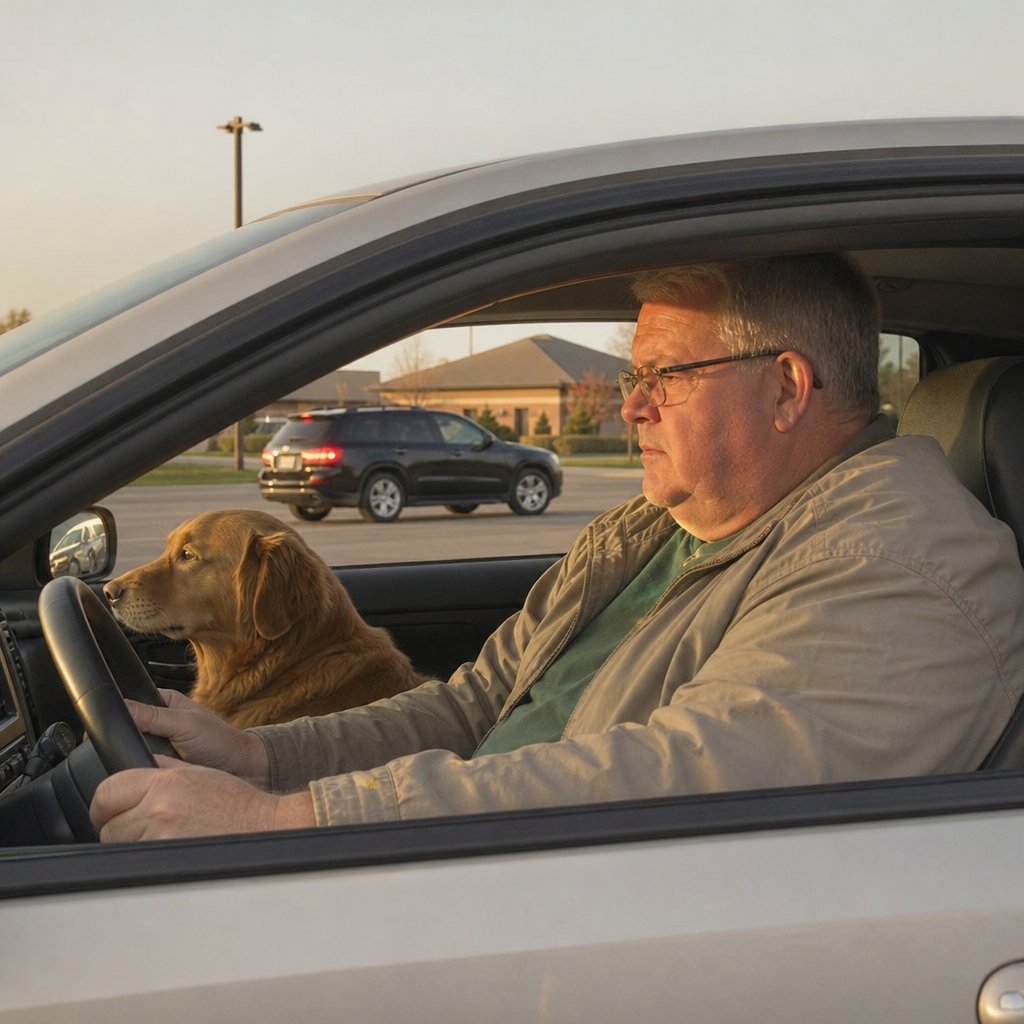
Outside, the air felt too bright, like the world didn’t get the memo that my life was being dismantled. I stood in the parking lot with Mabel panting beside me, her tongue lolling, trusting me with her whole body.
Tessa had sent me Lena’s Lexus registration address weeks ago—pulled from a public record search, nothing illegal, just the kind of thing women learn to do when men start playing games with ‘privacy.’ I hadn’t wanted to use it. Using it meant admitting Lena wasn’t a rumor. She was a plan.
I sat in my car and stared at the crumpled dog treats in my cup holder, my hands shaking as I compared the vet’s location the receptionist had whispered to me with the address Tessa had found.
Same zip code. Same strip of suburban sprawl. Close enough that it wasn’t coincidence; it was routine. A new route. A new ‘stable home’ narrative mapped out in advance.
My chest tightened with something ugly—jealousy wasn’t even the right word. It was the feeling of being edited out of your own life and replaced with a cleaner draft.
I imagined Lena walking into a clinic with Mabel’s leash looped around her wrist like she’d earned it, smiling that effortless smile Graham always praised as “low drama.” I imagined Graham in the passenger seat, calm, supportive, while I was painted as the unstable one who couldn’t handle transitions.
Mabel nudged my elbow, and I realized she still smelled faintly like my laundry detergent under the чужая soap from whoever had bathed her.
I started the engine, because if Graham was moving her routine closer to Lena, it meant they’d already decided where Mabel belonged—and it wasn’t with me.
Fifteen Thousand For Silence

Mediation smelled like stale carpet and lemon cleaner, like they’d tried to scrub emotions out of the room. Graham sat across from me in a crisp sweater that made him look like a man who returned library books on time. His wedding ring was gone, but the pale band of skin was still there, a ghost of commitment.
He smiled when he saw Mabel’s leash looped around my hand, like I’d brought a prop he’d requested.
“I’ve been thinking about what’s fair,” he said, voice soft enough to sound reasonable to anyone who didn’t know him. His lawyer—slick hair, too-white teeth—watched me like I was a problem to be managed.
My mediator asked us to focus on “practical solutions.” Graham nodded like he loved practical solutions. Then he slid a folder across the table without looking at it, as if money was something he could flick away with his fingertips.
“Fifteen thousand,” he said. “If you let the dog go.”
I stared at him. My ears actually rang, like my body couldn’t process the audacity fast enough. Fifteen thousand was not a compromise. It was a price tag. A hush amount.
“You can use it to get settled,” he added. “New place. Fresh start.”
The mediator’s pen paused. My lawyer’s jaw tightened. Graham’s eyes stayed on mine, steady, almost kind—like he was offering me a favor instead of trying to buy my silence with my own marital money.
That was when it clicked: Mabel wasn’t the goal. She was leverage. He was teaching me what everything I loved would cost me if I didn’t fall in line.
I opened my mouth to speak—and Graham leaned in, just slightly, like he was about to say the part he didn’t want anyone else to hear.
The Phone Under Receipts
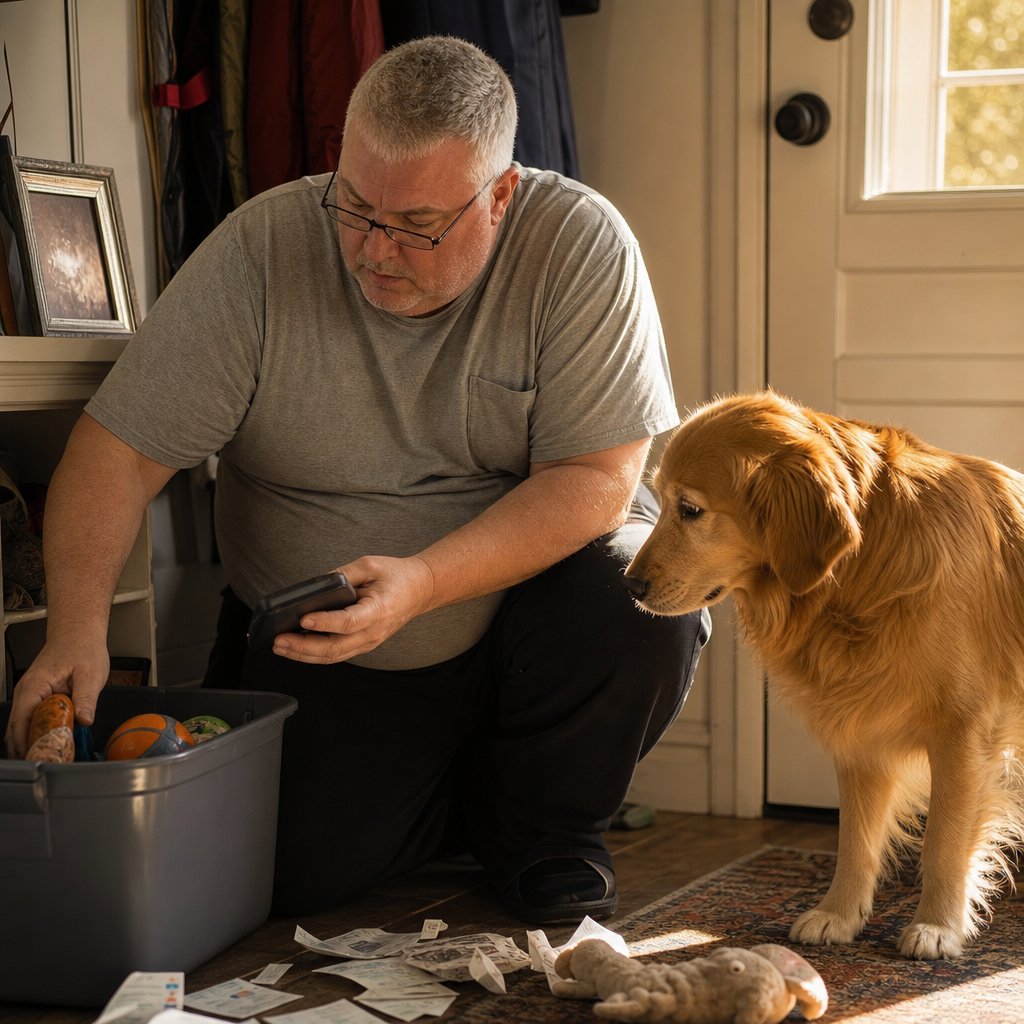
I went home and did the thing I swore I wouldn’t do: I rummaged. Not through his drawers—those were already half-empty—but through the junk zones he never thought anyone would touch. The basket by the mudroom. The drawer with dog nail clippers and mismatched batteries. The little pile of receipts he’d leave under the dog toy bin like trash was someone else’s job.
Mabel followed me, anxious, toenails tapping, watching my hands the way she watched Graham’s when he used to pretend he was about to throw the ball.
Under a stack of dog-toy receipts and a flattened squeaker shaped like a duck, my fingers hit something hard and slick. A phone. Not mine. Not the one I’d seen him use for years. Smaller, older, the kind you keep because it’s useful for secrets.
My pulse started hammering so loudly I could hear it in my ears. The phone was cold in my palm, like it had been waiting.
I pressed the side button.
The screen lit for a second—just a preview, just enough—and then my stomach turned over. A banking app notification banner flashed before it disappeared, showing an unfamiliar account number and a balance so high my brain refused to accept it as real.
Not a few thousand. Not a rainy-day fund.
It was the kind of number that rewrote the last ten years of my life in one brutal line: vacations I didn’t take, repairs I put off, the way he’d flinched every time I suggested we replace the roof.
Mabel whined, low and worried. I realized my hands were shaking so hard the phone rattled against my wedding photo frame on the shelf, making the glass buzz.
And then the phone vibrated again—another notification—like someone, somewhere, was actively moving money while I stood there holding proof.
He Gave Up The Couch
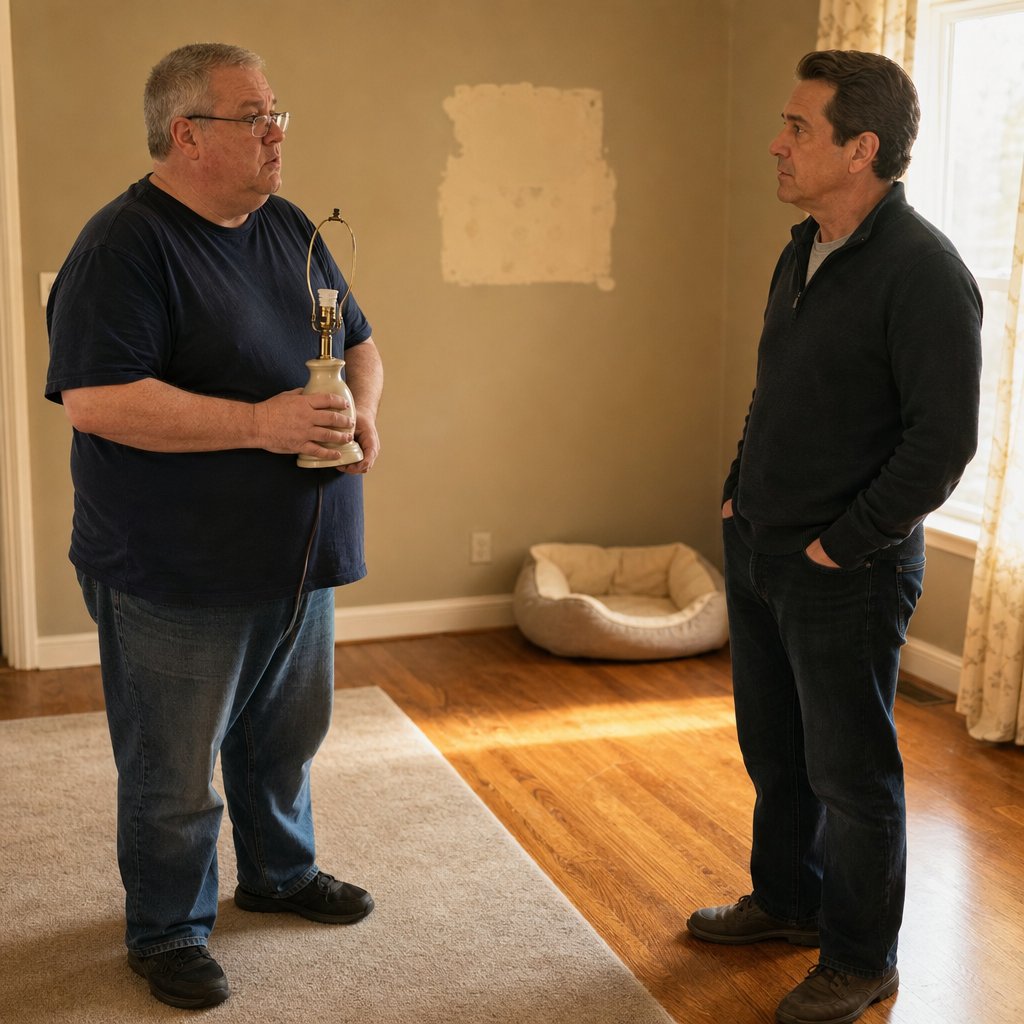
Once my lawyer sent the subpoena request, Graham’s tone changed so fast it made my skin crawl. Suddenly he was “being reasonable.” Suddenly he didn’t care about the couch he’d once lectured me about keeping “in pristine condition.”
We met at the house to walk through what I wanted to take. The living room looked wrong without his shoes by the entryway, without his jacket on the chair—like the place had been staged for strangers. Dust motes floated in the air over the rug where Mabel used to sprawl.
Graham stood with his hands in his pockets, watching me point at things like I was shopping in my own life. “Take it,” he said, waving at the coffee table. “Take the chair. Take the lamp. I don’t care.”
It should’ve felt like winning. Instead it felt like bait.
Because every time I glanced toward the hallway closet where Mabel’s leash used to hang, his eyes followed mine—tight, alert, like a guard dog.
“And Mabel?” I asked, keeping my voice flat.
He didn’t blink. “No.”
“You’re giving me the furniture,” I said. “You’re giving me the kitchen stuff. You’re giving me things you actually like. But you won’t budge on the dog.”
His jaw flexed once. A tell. A crack in the calm.
“She needs stability,” he said, and the word sounded rehearsed, like he’d practiced it into a weapon. “Not… whatever this is.”
I looked at his face and saw it—fear, buried under superiority. Not fear of losing Mabel. Fear of what that second phone could prove if I got enough time and enough leverage to make it matter.
He stepped closer, lowering his voice. “Let this go,” he said, and for the first time, it didn’t sound like advice. It sounded like a threat.
“Our Girl” In My Yard
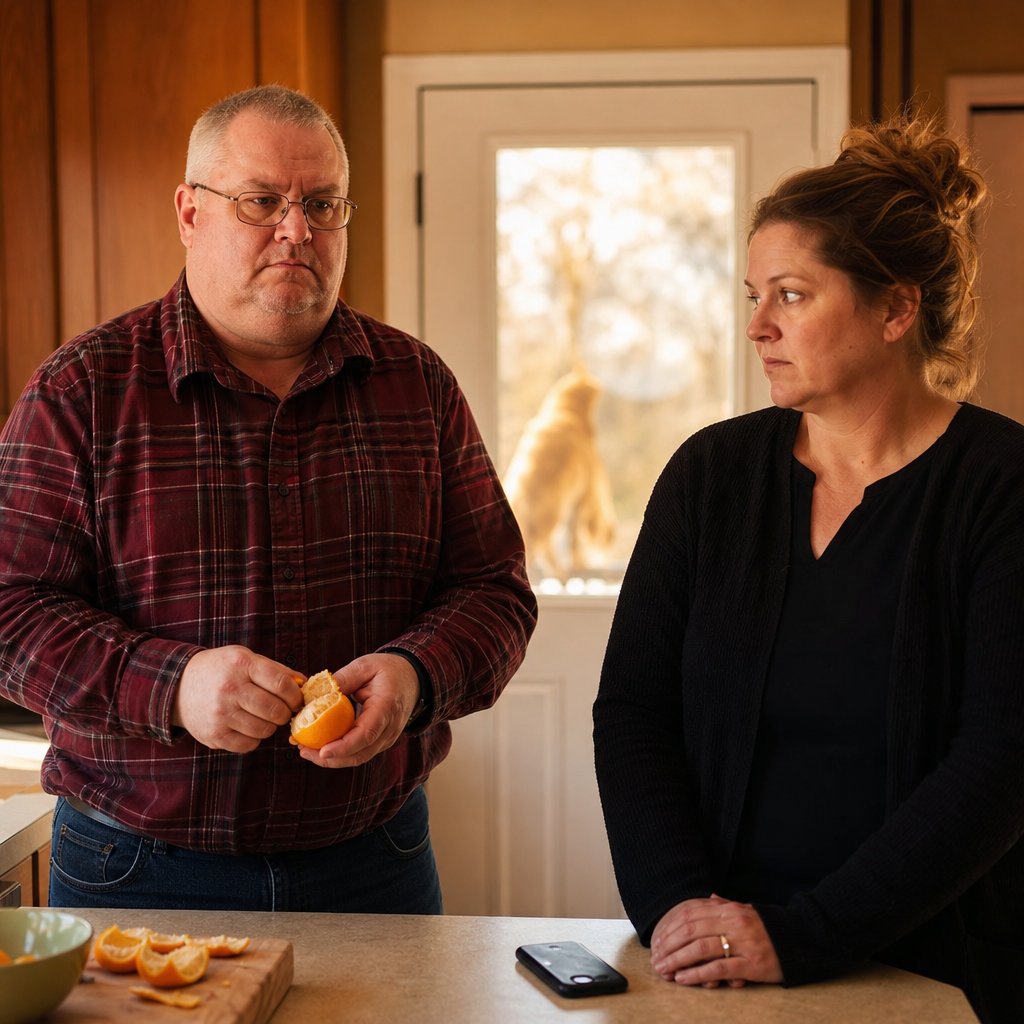
I didn’t go looking for it. That’s the lie I told myself, anyway. I was standing at my kitchen counter peeling an orange I couldn’t taste when Tessa showed up again, eyes wide, cheeks flushed like she’d run up the steps.
She didn’t hand me her phone. She set it face-down on the counter like it was contaminated.
“Don’t react,” she said. “Just… breathe first.”
My throat tightened. “What did she do?”
Tessa flipped the phone over just long enough for me to see the image before she turned it away again—because she knew I’d spiral. It was Lena: a woman in her late 30s with long dark hair and a sharp, glossy smile, crouched in my backyard like she belonged there. Mabel was pressed against her, tongue out, happy in that uncomplicated way that made me want to scream.
And the caption—two words Tessa repeated out loud like she couldn’t believe the nerve—was “Our girl.”
My hands went numb. My backyard. My fence. The same patch of grass where I’d thrown tennis balls until my shoulder ached. Lena had tagged my street, too, like she was dropping a pin on my dignity.
“This is bait,” Tessa said. “She wants you to show up. She wants you to look unhinged.”
I stared out the window at the yard, suddenly seeing it through a stranger’s eyes. My own home turned into a stage for their story.
Mabel’s water bowl sat by the back door, reflecting a thin line of light. I thought about the emergency motion, the ‘unstable’ label, the way Graham had collected my tears like trophies.
Then I heard it again—two soft thumps against the back door—like a tail, like a signal, like someone outside reminding me they still had access.
He Came While I Worked
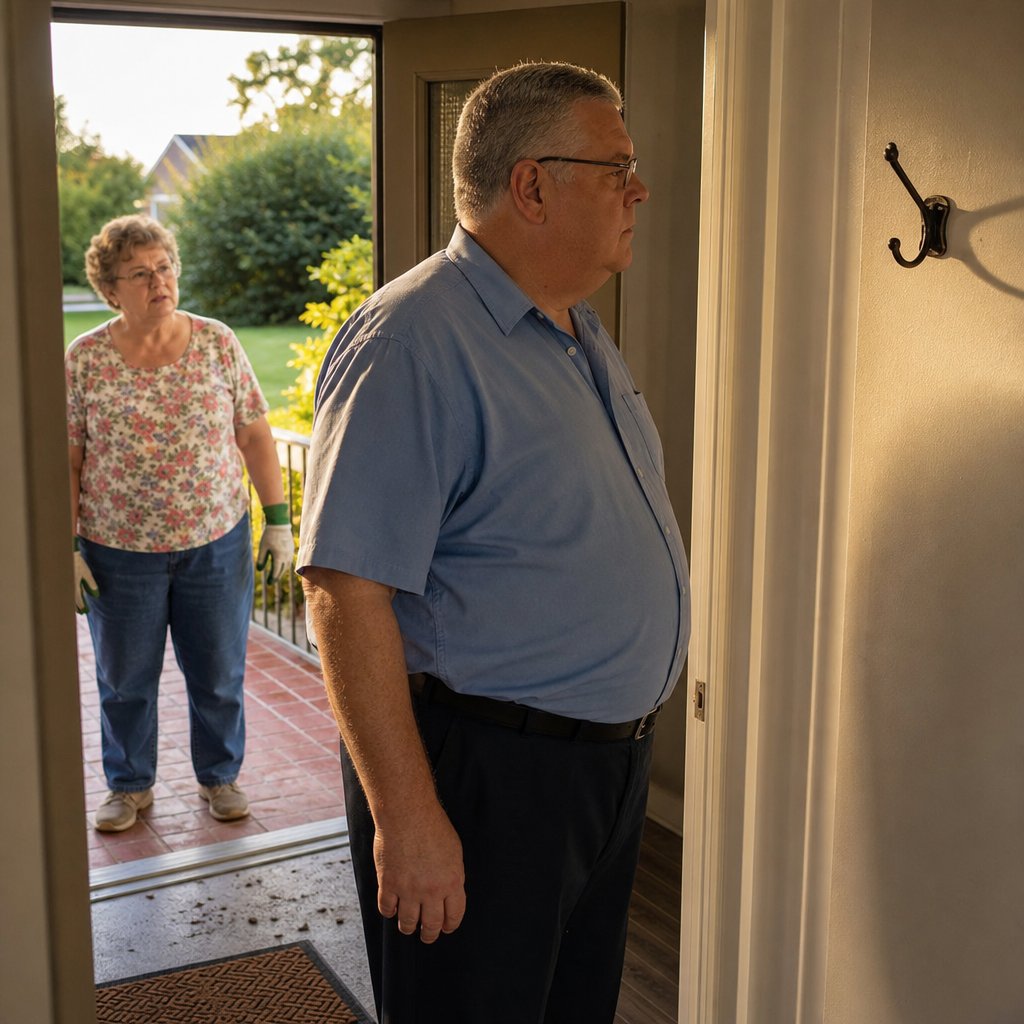
The next day, my neighbor Carol caught me in the driveway the moment I got home, like she’d been waiting behind her curtains for a reason to be brave. She was in her gardening gloves, dirt under her nails, mouth pinched with that tight, moral panic people get when they’ve witnessed something and don’t want to be involved.
“I didn’t know if I should say anything,” she started.
My stomach sank before she finished. “Say it.”
Carol nodded toward my porch. “Your camera… it went off. Yesterday. Midday. I saw the alert pop up on my end because we share the neighborhood thing.”
I didn’t answer. I couldn’t. My hands were suddenly cold even though the sun was hot on the back of my neck.
“It was Graham,” she said. “He came in like he owned the place.”
I tasted metal. “And?”
Carol’s eyes flicked away, ashamed. “He left with Mabel’s leash.”
The world narrowed to one detail: the leash. The red one with the frayed loop I’d meant to replace. The one that still had a smear of dried mud from our last walk by the creek.
“Did he have Mabel?” I asked, voice too high.
Carol hesitated, and that hesitation was a knife. “I didn’t see her on the porch. But he wasn’t empty-handed.”
I walked past her without saying goodbye, up the steps, key shaking in the lock. Inside, the house smelled faintly wrong—like someone else’s cologne had drifted through and settled into the upholstery.
I went straight to the hook by the door where the leash should’ve been.
It was gone.
And on the floor by the mat, a single golden hair clung to the wood like a signature.
Mabel Pulled Toward Me
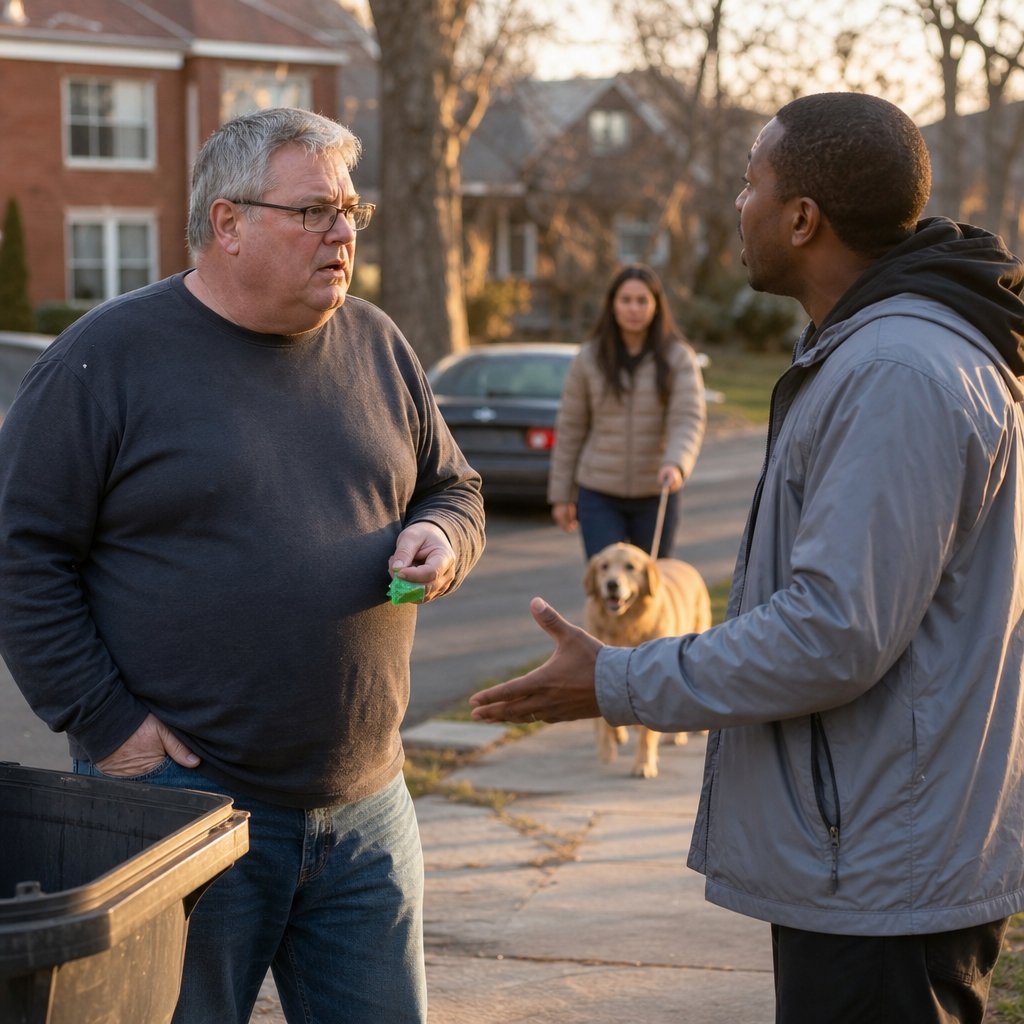
Carol’s confession wasn’t the only one. Two mornings later, I was taking out the trash before work when my other neighbor, Jamal, jogged up the sidewalk in a windbreaker, breath visible in quick puffs from the early chill.
“Hey,” he said, lowering his voice. “I saw your dog this morning.”
My heart lurched. “Where?”
“Six a.m.,” he said. “That woman—Lena. Dark hair. She was walking Mabel down the block like it was normal.” He shook his head, like he couldn’t decide if it was gossip or a crime. “And your dog kept trying to drag her this way.”
I gripped the trash can lid so hard my fingers hurt. In my mind I saw it perfectly: Mabel planting her paws, leaning into the leash with that stubborn golden strength, nose aimed toward my house because her body still knew where home was even if adults were rewriting the address.
“Lena was mad,” Jamal continued. “She kept yanking, telling her ‘no’ like she was correcting a bad habit.”
The image made my vision blur with rage. They were manufacturing the story in real time—showing a ‘routine,’ showing Lena as the handler, showing Mabel as compliant. But Jamal had seen the part that didn’t fit: my dog resisting the script.
“Did you… say anything?” I asked.
Jamal hesitated, then reached into his pocket and pulled out something small. Not a phone. A torn-off corner of a poop bag roll—bright green plastic—like he’d grabbed it without thinking.
“She dropped this,” he said. “Right by your mailbox.”
I took it, the plastic crackling between my fingers, and realized it wasn’t just proof Lena had been here. It was proof she’d been close enough to mark my street as hers.
Then Jamal added, almost as an afterthought, “Also… Graham’s car was parked two houses down, engine running.”
The Reimbursements Never Stopped
If Graham was watching Lena walk Mabel past my house at dawn, it meant this wasn’t custody—it was surveillance. And the more I replayed that leash flicking under the streetlight, the more I heard his voice in my head: For stability. Like I was the unstable variable he needed to manage.
I pulled our tax returns off the shelf and spread them across the dining table like a crime scene. The paper smelled faintly of old toner and the lemon cleaner I’d been using to scrub the counters like I could scrub my life back into shape. Line after line, the same neat little phrase: “consulting reimbursements.” Not income. Not wages. Reimbursements—like he was just being made whole for noble expenses.
They showed up over and over, always rounded, always tidy. Too tidy. The kind of number you pick when you don’t want questions. I traced them with my fingertip until my skin went slick with sweat.
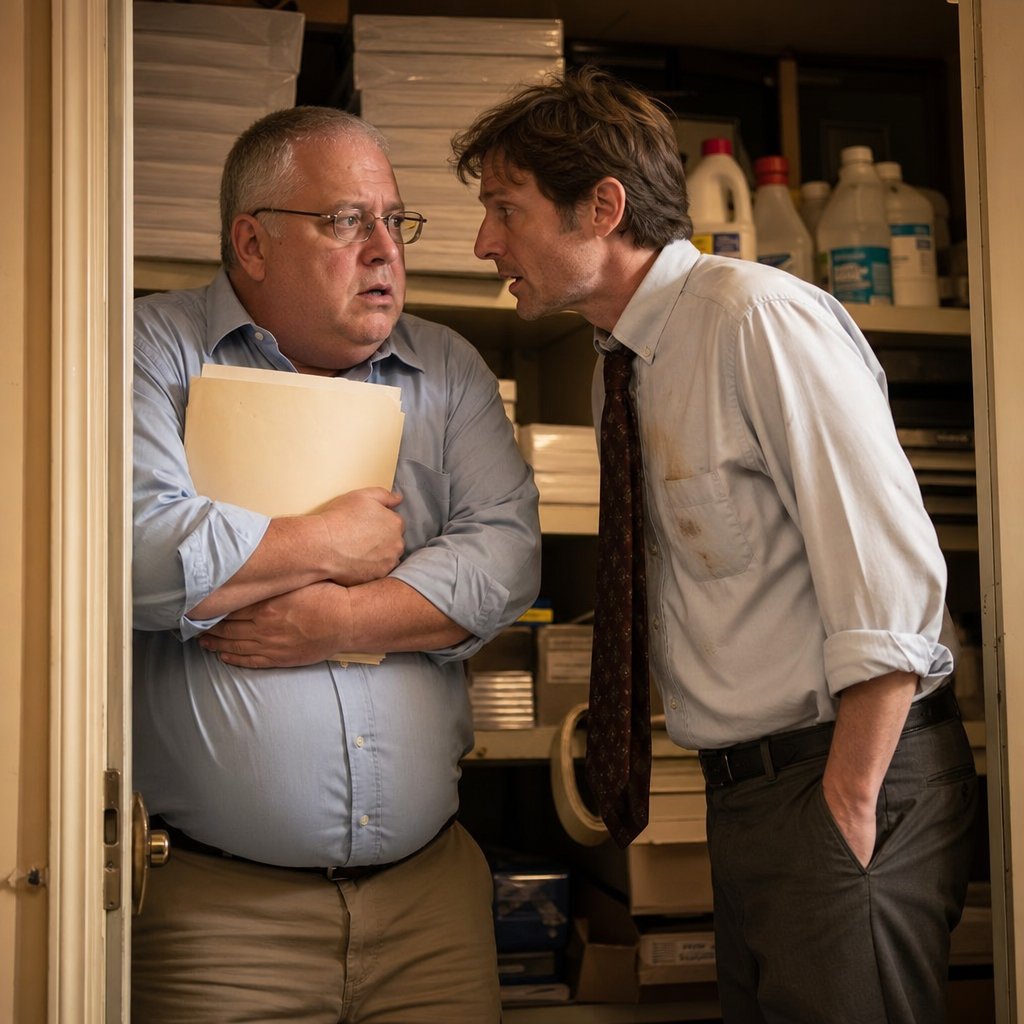
At work, I cornered Martin from accounting near the supply closet—Martin with his coffee-stained tie and the habit of talking too much when he thought he was helping. I didn’t even have to say Graham’s last name. I just said, “Is he… still doing side work?”
Martin’s eyes did that quick dart left and right like he expected Graham to step out from behind the printer. “Off-books,” he whispered. “He calls it ‘the gray pipeline.’”
My stomach dropped. A hidden cash stream with a nickname meant it wasn’t new. It was a system. And if it was a system, then the dawn walks weren’t random—they were part of it.
Martin leaned in closer, breath smelling like burnt coffee, and said, “You didn’t hear it from me, but there’s a place he parks it before it hits anything official…”
Transfers After Every Payday
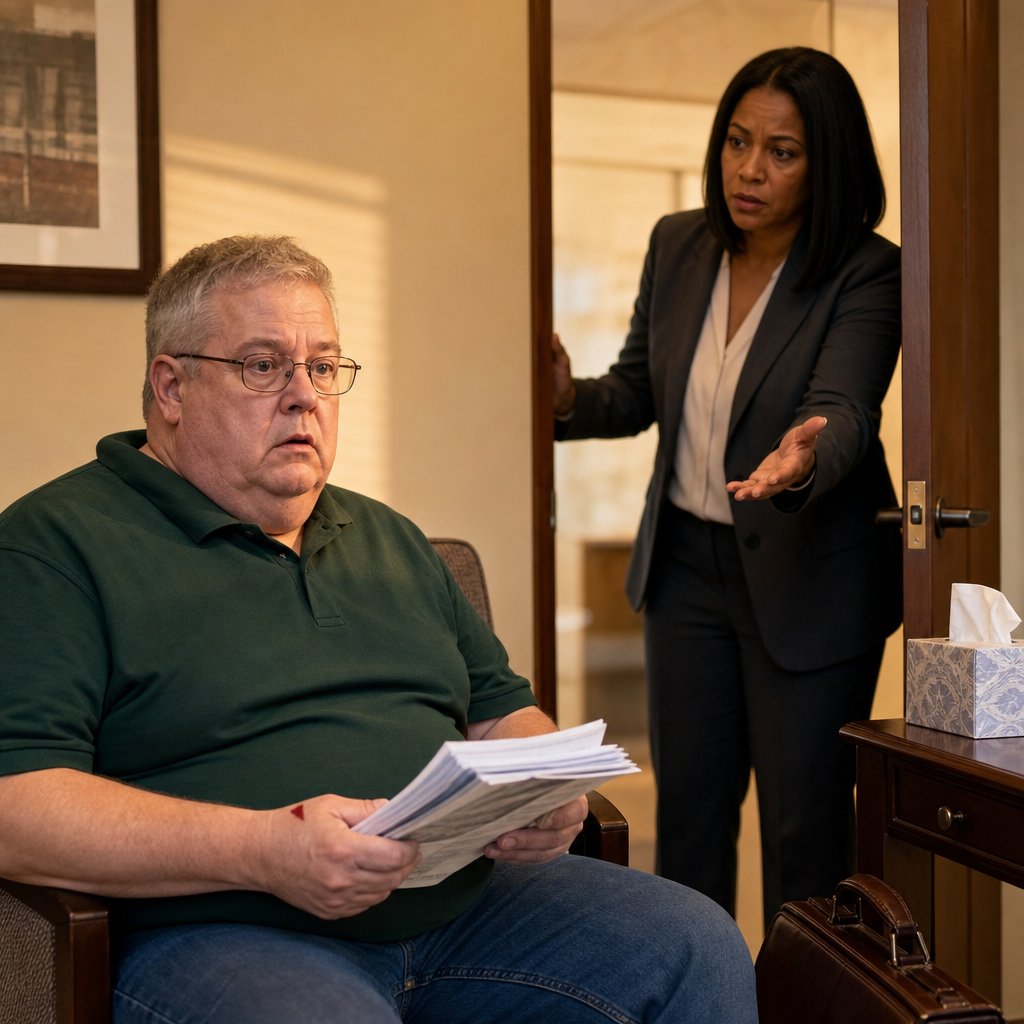
The subpoena packet came in a plain envelope that felt heavier than it should have, like it had gravity. I sat in my car in the parking lot outside my lawyer’s office and opened it with shaking hands, the edge of the paper slicing my thumb just enough to sting. Good. I deserved to feel something real.
Statements. Dates. Amounts. A neat little rhythm that made me want to throw up.
For three years—three years of me depositing my paycheck into the joint account like a good partner, like a person who believed in “us”—there were steady transfers out. Not random. Not occasional. Timed. Almost polite. Within forty-eight hours of my paychecks hitting, money slid away into an account that wasn’t ours. An account that had never existed in any conversation, never appeared in any “we should budget” talk, never came up when I skipped lunches to keep our groceries under control.
And the memo descriptions—sanitized, bland—made my skin crawl. The transfers were being framed as “premarital savings.” Like he’d simply been moving his money into his past, laundering it backward into a life before me. He’d been siphoning marital funds and repainting them as something untouchable.
I heard his voice again, casual at the kitchen island: Don’t worry, I’ve got us covered. The island where I’d once watched him slice oranges for Mabel, bright citrus scent filling the air while he smiled like a decent man.
I flipped to the summary page and there it was—an account number ending in the same four digits he used for everything. Not subtle. Just confident no one would ever look.
My lawyer called my name from the office doorway, and I forced my legs to move. The hallway carpet felt too soft under my shoes, like I was walking on something that wanted to swallow sound.
Inside, she took one look at my face and said, “There’s more. The destination account has a second owner.”
He Smirked About The Chip

Deposition rooms have a way of making everyone look guilty. Beige walls. A too-bright overhead hum. A pitcher of water sweating onto a plastic coaster. Graham sat across from me like he was at a parent-teacher conference, not the controlled demolition of our life.
He wore a navy sport coat he used to save for weddings and funerals, and he kept tapping one finger against the table like a metronome. Lena wasn’t in the room, but I felt her anyway—like perfume clinging to a coat you can’t throw away.
When the questions turned to Mabel, Graham’s mouth curled into that small smirk he used when he thought he was the smartest person present. “The microchip is in my name,” he said, slow and pleased with himself. “That’s ownership. That’s the end of it.”
I watched my lawyer’s face stay perfectly still, the way a surgeon stays calm right before the cut. She didn’t argue. She didn’t flinch. She just reached into her folder and slid a document across the table—no flourish, no warning.
Graham’s eyes tracked it like he couldn’t help himself. The rescue director’s statement. The training requirements. The adoption paperwork trail that mattered because it wasn’t about a chip—it was about who was approved, who attended, who signed, who completed the follow-up visits.
And there, in black and white, was only one name tied to the mandatory training sessions and handler sign-off: mine.
The smirk faltered. Not fully—Graham was too practiced for that—but it cracked at the corner like cheap paint. His finger stopped tapping. His jaw worked once, hard, like he was grinding down a word he didn’t want to say in front of witnesses.
My lawyer’s voice stayed even. “So, Mr. Harlan, if you were never approved as the handler, how exactly did you get that microchip registered?”
Graham’s gaze slid to me, and for the first time all day, he looked less amused and more… threatened. He opened his mouth, and I felt the air in the room change right before he answered.
Was Graham justified in taking Mabel unapproved?