



The Face-Down Phone Habit

Grant started doing this thing with his phone like it was a tic.
Face-down. Always. On the counter, on the arm of the couch, on the bathroom sink like it was allergic to being seen. If I walked into a room, his hand would glide over it, casual as a man smoothing out a wrinkle. Like I wouldn’t notice the choreography.
At first I told myself it was nothing. Everyone gets weird about their phones. But then it became… a lifestyle. He’d “forget” it in the car, “lose” it in the couch cushions, “leave it upstairs” when we were watching a movie. Meanwhile, mine lived in my back pocket like a normal person’s.
One Sunday morning, I reached for it without thinking—just to check the weather—and his whole body went tight. Not angry. Not defensive. Something worse. Trained. Like I’d stepped too close to an electric fence.
“Babe,” he said, still smiling, still making coffee like a man in a commercial, “can you not? My boss has been on me about boundaries.”
Boundaries. From me. In my own kitchen.
The smell of burnt espresso hung in the air, sharp and bitter, while he flipped his phone over with two fingers and slid it into his pocket like a magician palming a card.
And then, like he’d rehearsed it, he leaned in to kiss my forehead—soft, sweet, sealing—and I felt my stomach drop because I realized he wanted me to quit asking questions so badly he’d built a whole routine around it…
A Receipt That Didn’t Fit
I found it the way you find the things that change your life: by accident, with my hands still damp from unloading groceries.
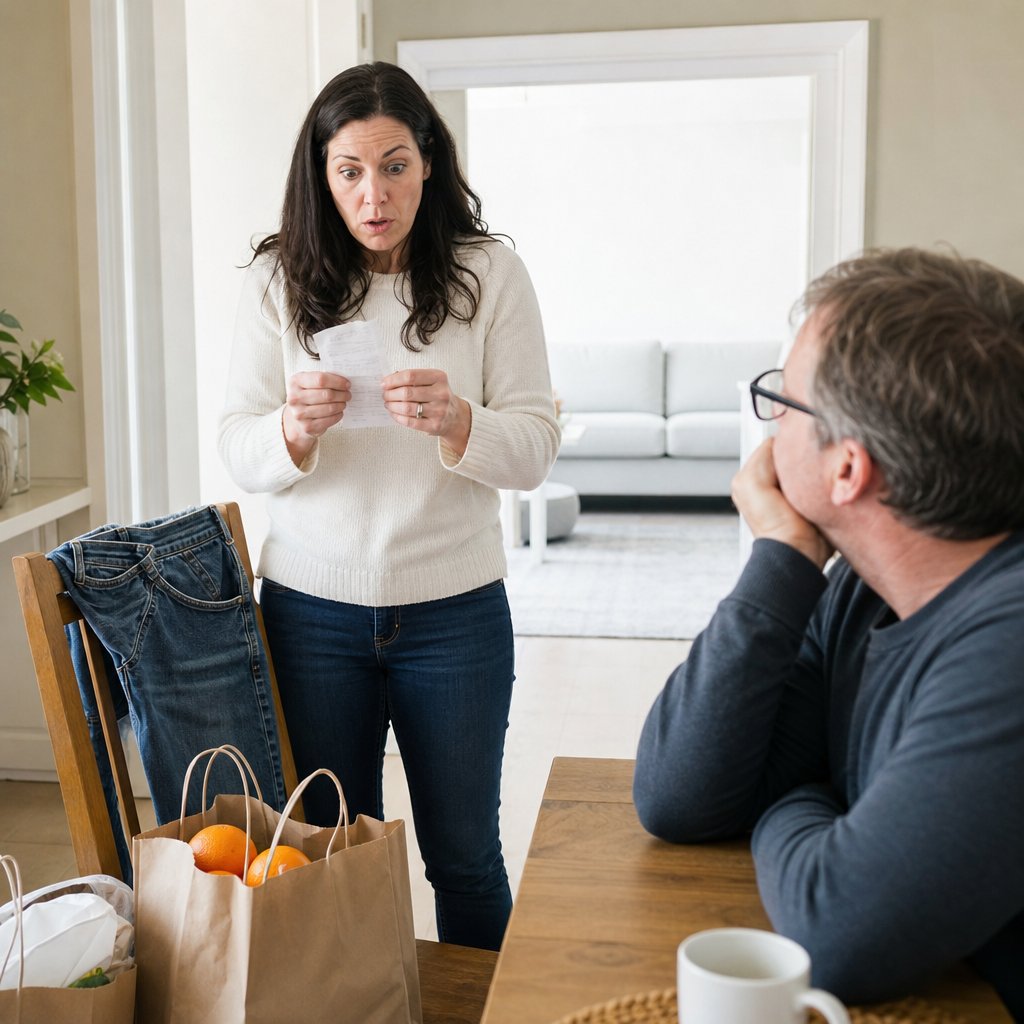
Grant’s jeans were draped over the back of a dining chair like he’d been peeled out of them. I went to grab them to toss in the hamper and my fingers caught paper in the pocket—thin, crisp, folded into a tight square.
I didn’t even think “evidence.” I thought “coupon.”
It was a receipt from my favorite place. Not just any place—my place, the little restaurant with the lemony candle smell and the chipped white plates I always defended like they were family. The date stamped at the top hit me like a slap.
Last Thursday. The night Grant swore he’d eaten alone at the bar near his office because he “didn’t want to bother me” while I had a migraine. I remembered him texting me that he was “keeping it simple,” and me feeling guilty for being sick, like I’d ruined his evening.
The receipt wasn’t simple. It was two entrées. Two glasses of Pinot. And a dessert I never order because it’s too sweet—crème brûlée, torched sugar and all.
I stood there in the quiet dining room, holding that stupid piece of paper like it was radioactive. The air smelled faintly of dish soap and oranges from the grocery bag at my feet, and my heartbeat was loud enough I swear I could hear it in my teeth.
Because a man doesn’t “eat alone” and accidentally order for two.
And suddenly I could picture him across that little table, laughing softly, leaning in like he belonged to someone else…
The Detail I Never Shared
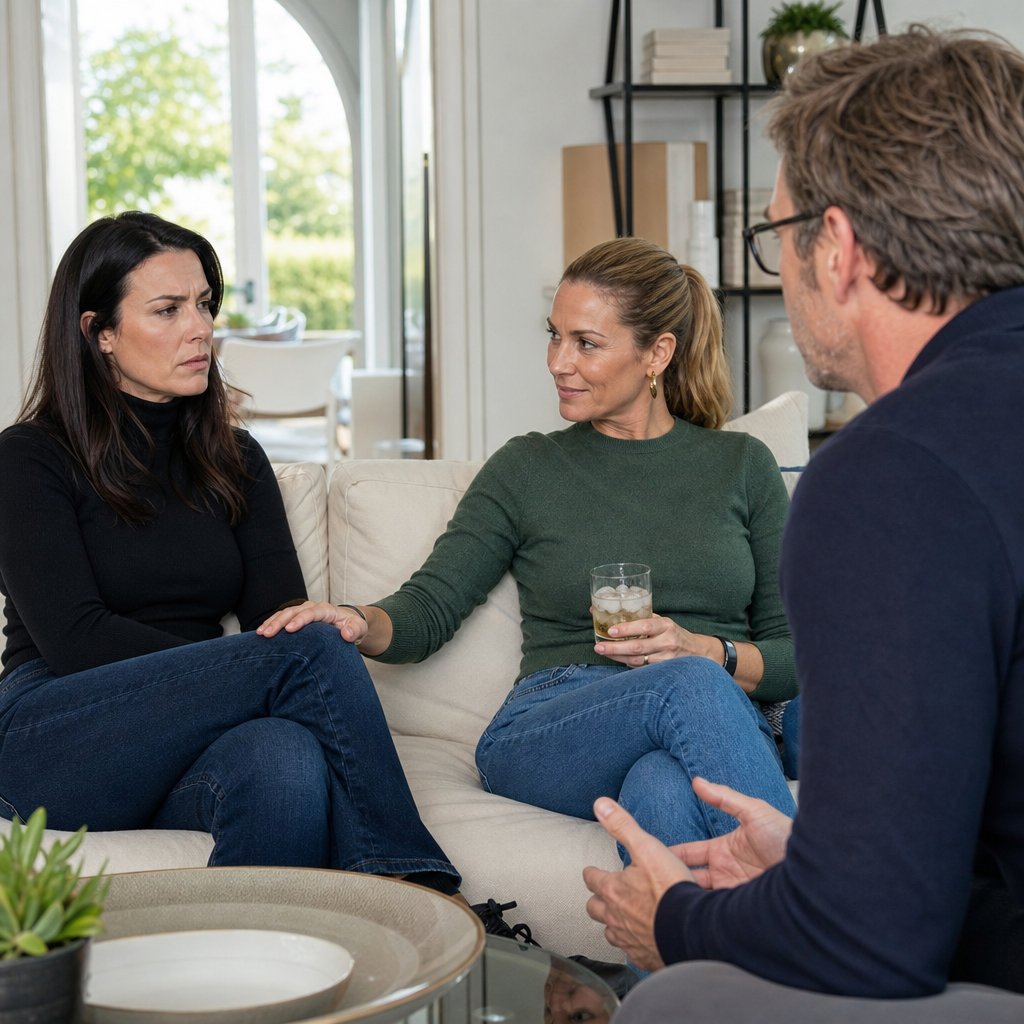
Tessa dropped it like it was nothing. Like she was commenting on the weather.
We were at her place—her neat little condo that always smelled like vanilla plug-ins and expensive hair products. She was stirring ice in a glass, talking about some coworker drama, and I was half listening, still carrying the receipt in my brain like a splinter.
Then she tilted her head, all casual curiosity. “So… how’s Grant doing after that disaster in Denver? The flight thing sounded brutal.”
I went still. My throat did that tight thing, like my body was trying to swallow a scream.
“What flight thing?” I asked, too fast.
Tessa blinked—just once—and in that one blink I saw it: the scramble. The mental math. The split-second recalculation of what she’d said versus what she was supposed to know.
“You know,” she said, waving a hand like she could dust it off, “the delay. The hotel mess. He mentioned it, I think? When you guys came over for—”
“We didn’t,” I cut in. My voice sounded polite, which scared me more than if it had sounded angry. “We haven’t been over in weeks.”
Her smile stayed in place like a sticker, but it didn’t reach her eyes. She took a sip of her drink and the ice clinked against the glass—bright, chirpy, wrong.
I had never told her about Grant’s “work trip.” Not the city, not the timing, not a single detail. I’d barely even said the word trip out loud because it made me feel lonely.
So how did Tessa know Denver?
She leaned forward, touching my knee like we were girlfriends sharing secrets, and I felt cold spread under my skin because I realized secrets were moving between them…
The Zip-Tied Charger Lie
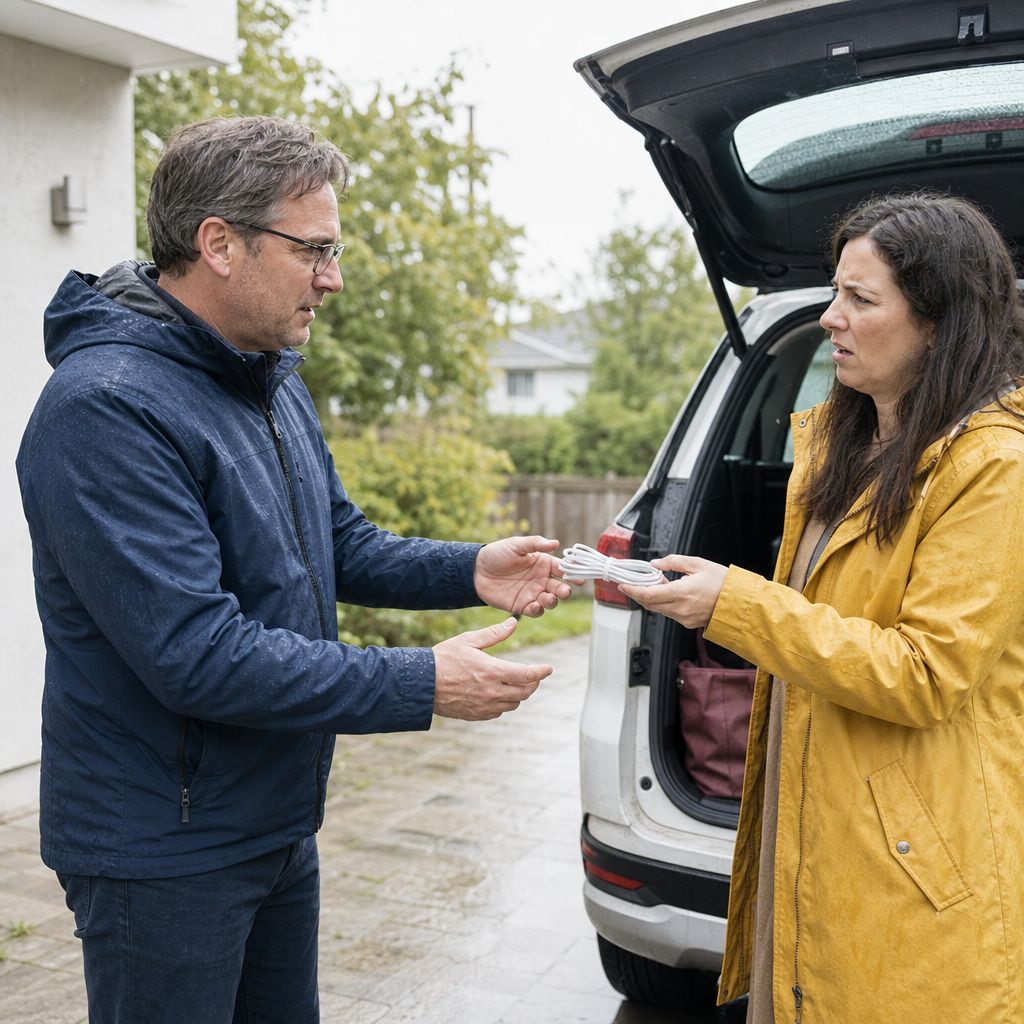
I wish I could tell you I went hunting. Like I turned into some spy overnight.
I didn’t. I was looking for an umbrella.
It was raining that sideways kind of rain, the kind that slaps your ankles and makes everything smell like wet asphalt. Grant had asked me to grab the big golf umbrella from the trunk before we left for dinner with his parents. I popped the trunk and leaned in, squinting at the clutter—reusable bags, a flattened cardboard box, an old hoodie.
And then I saw it: a brand-new phone charger still coiled tight, cinched with a little white zip tie. Not “used charger in the glove box” energy. New. Hidden. The kind of thing someone buys in a hurry.
My fingers closed around it and I just stood there, rain tapping my forearms, holding it like a question.
When Grant walked up behind me, I didn’t even turn around. “Why do we have this?”
He didn’t miss a beat. “Oh, that? Probably from the previous owner.”
I actually laughed. It came out sharp, ugly. “Grant. We bought this car new.”
He finally paused. Not long—just enough for me to feel the pause land in my bones. Then he shrugged like I was being adorable. “Okay, then it must’ve come with it. Dealership stuff. They throw extras in.”
He reached past me and plucked the charger out of my hand like it didn’t matter, like I was holding a gum wrapper. His palm brushed mine—warm, confident, possessive.
Inside the trunk, the spare tire well gaped dark as a mouth. The rainwater dripped from the edge in slow, steady beads.
And as he tossed the charger deeper into the mess, I realized he was counting on me to accept any explanation he handed me, no matter how stupid…
Behind The Spare Towels
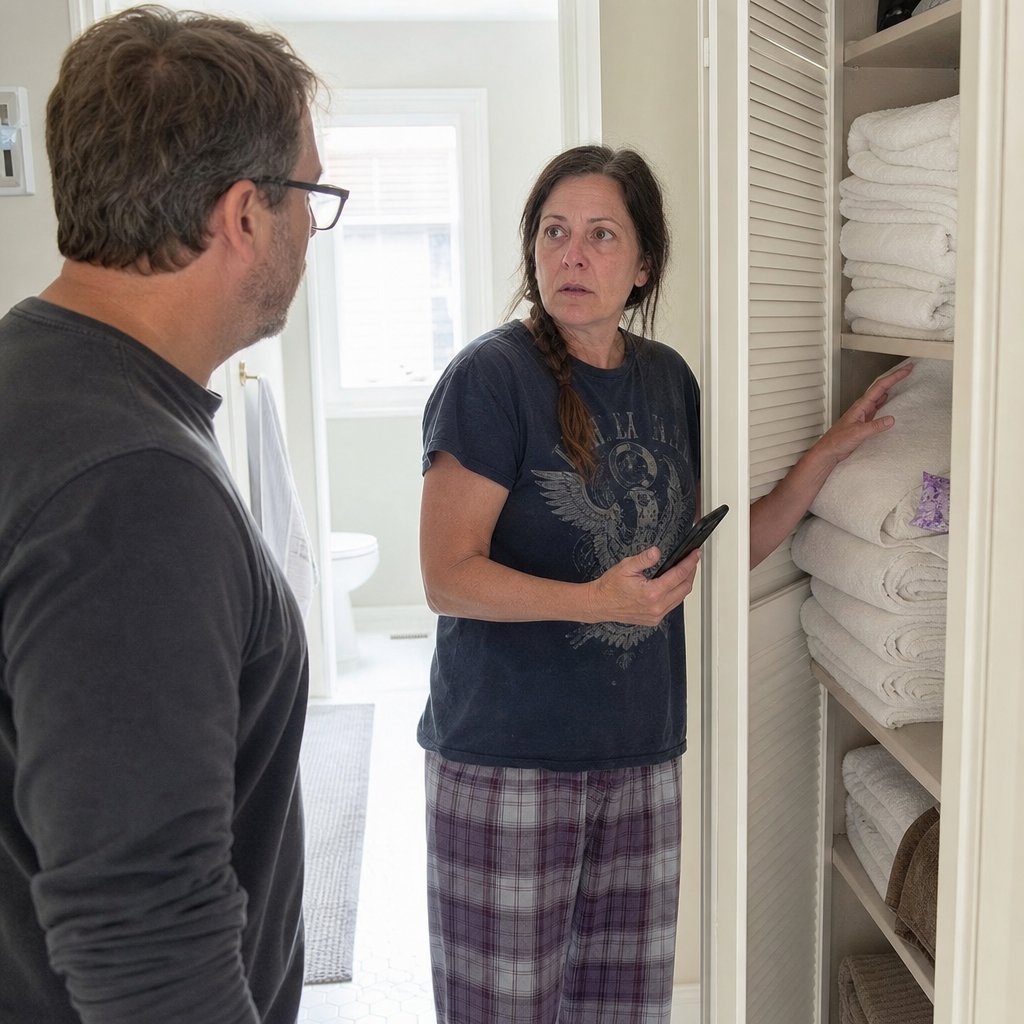
I didn’t go looking for a second phone. I went looking for ibuprofen.
That’s the part that makes me want to scream, because it’s so painfully normal. A Tuesday night headache. The house quiet. Grant “working late,” like always lately.
I opened the linen closet in the hallway bathroom—the one that always smells like lavender detergent and warm cotton. I moved the spare towels aside because the good ones are always shoved in the back, and my hand hit something hard.
Not a bottle. Not a box.
A phone.
It was tucked behind the towel stack like a secret someone had gotten comfortable hiding. Sleek, dark, heavier than mine. And when I pressed the side button—because of course I did—it lit up immediately.
Powered on. Charged. Waiting.
My mouth went dry. My hands started doing that shaky thing where you can’t tell if you’re cold or furious. I held it with the towel still half draped over my wrist, like I was afraid it might leave a stain on me.
It wasn’t mine. It wasn’t some old device in a drawer. This was active. Maintained. The kind of thing you check when you’re in the bathroom and no one’s watching.
I stared at it and my brain tried to bargain. Maybe it was a work phone? Maybe it was an old one he forgot? Maybe I was losing it.
Then I noticed the name at the top of the lock screen—just a simple label that made my stomach flip, because it wasn’t “Grant” and it wasn’t “Work.” It was something personal. Intimate. Like someone had set it up with care.
The towels smelled clean and innocent, and the phone in my hand felt like a live wire.
I heard my own breathing in the tiny bathroom, loud and ugly, and I knew—knew—I had just found a whole other version of my marriage…
The Dock In The Sunset
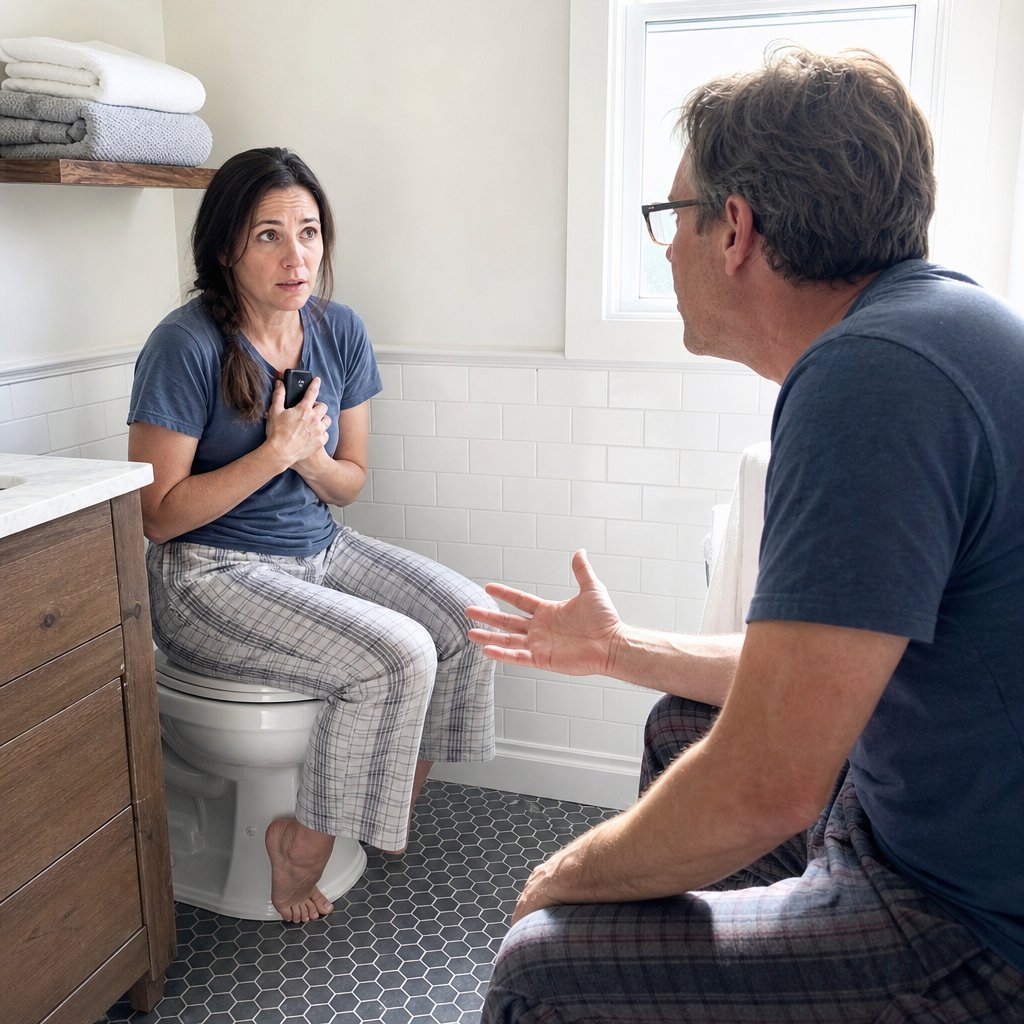
I couldn’t help it. I looked closer.
The lock screen image hit me so hard I actually swayed, like my body tried to step away from it. A sunset. Pink-orange streaks across water. The familiar crooked outline of the dock at my parents’ lake house—the one with the loose board on the left side that always catches your heel if you’re not careful.
My “safe place.” My childhood. My family’s little sanctuary where my mom insists everybody take their shoes off inside and my dad pretends he doesn’t cry when the grandkids run down to the water.
That dock was on this phone like a love letter.
I sat on the closed toilet lid because my knees suddenly didn’t trust me. The bathroom tile felt cold through my pajama pants. I held the phone in both hands, thumbs hovering, as if touching it too much would make the truth permanent.
Grant had been to the lake house with me a hundred times. So had Tessa—my best friend, my sister in everything but blood. We’d done bonfires. We’d done late-night talks. We’d watched storms roll in over the water with wine glasses sweating in our hands.
But this wasn’t a random photo from someone’s camera roll. This was chosen. Set. Saved as the first thing you see when you wake a device up in the dark.
My stomach rolled, hot and sour. Because if the dock was on the lock screen, then whoever this phone belonged to didn’t just know my life from the outside.
They were inside it. In the places I thought were protected.
I could smell lavender and toothpaste and the faint metallic tang of the shower drain, and all I could think was: how long has someone been standing on that dock with him, taking pictures like they belonged there?
My thumb finally moved toward the bottom of the screen, and my whole body braced like I was about to open a door I couldn’t close…
A Man’s Name, Her Voice
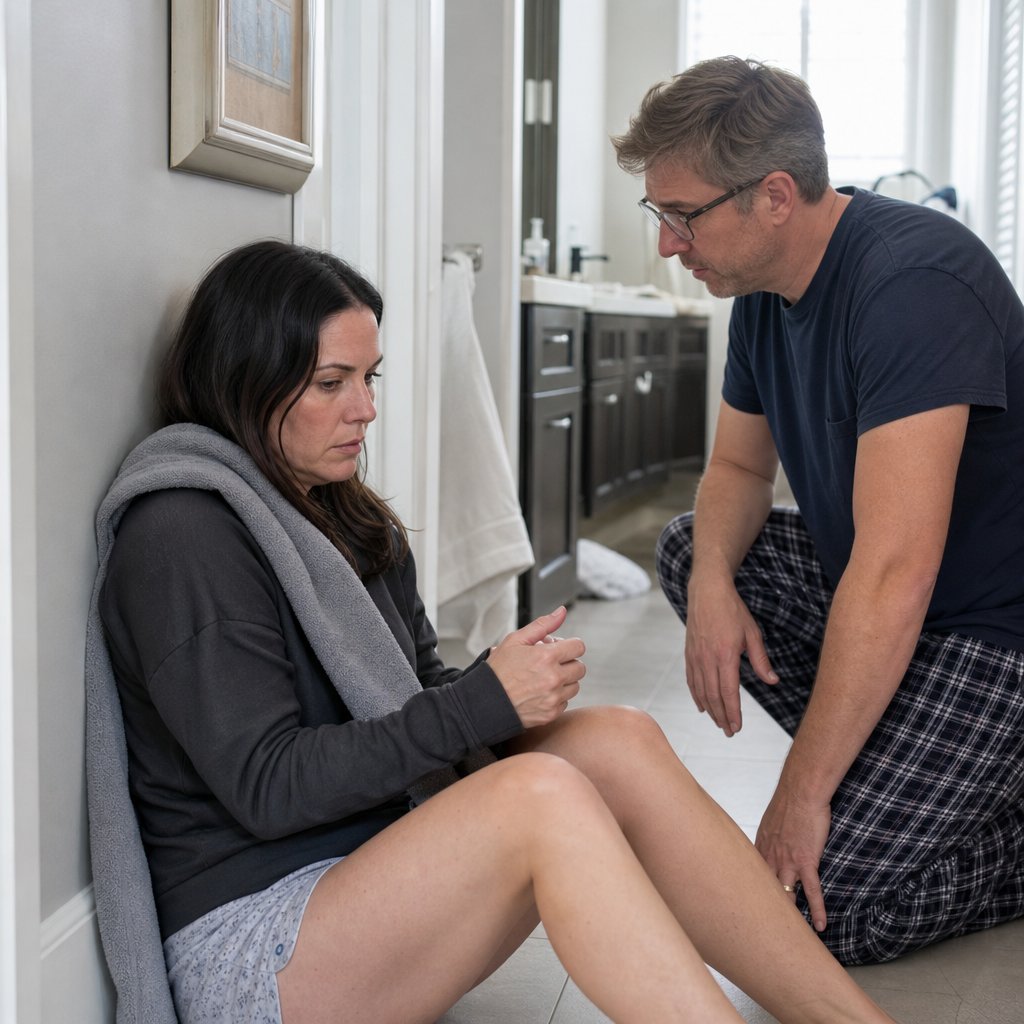
The phone didn’t have a passcode.
That was the first insult. Like whoever used it assumed no one would ever touch it. Like my curiosity was the least dangerous thing in the house.
I scrolled with a thumb that didn’t feel like mine. The messages were saved under a man’s name—something bland, something meant to camouflage. “Mike.” “Jason.” One of those names that disappears in a list.
But the second I opened it, my blood went cold because the punctuation was… her.
Little hearts where they didn’t belong. The way she dragged out words when she was teasing. The exact phrase she always used on me—“Be good for me”—except it wasn’t for me. It was followed by a winky face that I could practically hear in her voice.
Tessa’s voice lived in those messages like a ghost that didn’t even bother to hide.
My best friend: Tessa. Honey-blonde hair in that sleek ponytail. Perfect nails. The kind of woman who hugged you a little too long when she was “checking in.” The woman who called Grant “Grantie” in a baby voice and acted like it was a joke only she was allowed to make.
I stared at the thread and I swear my body split in two—one part of me trying to deny it, the other part of me watching it click into place with horrifying clarity. Denver. The receipt. The face-down phone. The charger.
I tasted something metallic in my mouth, like I’d bitten my tongue. My hands were steady now, which scared me more. Steady meant I was past panic and into something colder.
I scrolled up, down, up again, and it was like listening through a wall at your own life being stolen. Because even under a man’s name, the affection was unmistakable.
And then I saw a message that made my scalp prickle, because it mentioned me directly…
My Home, Their Schedule
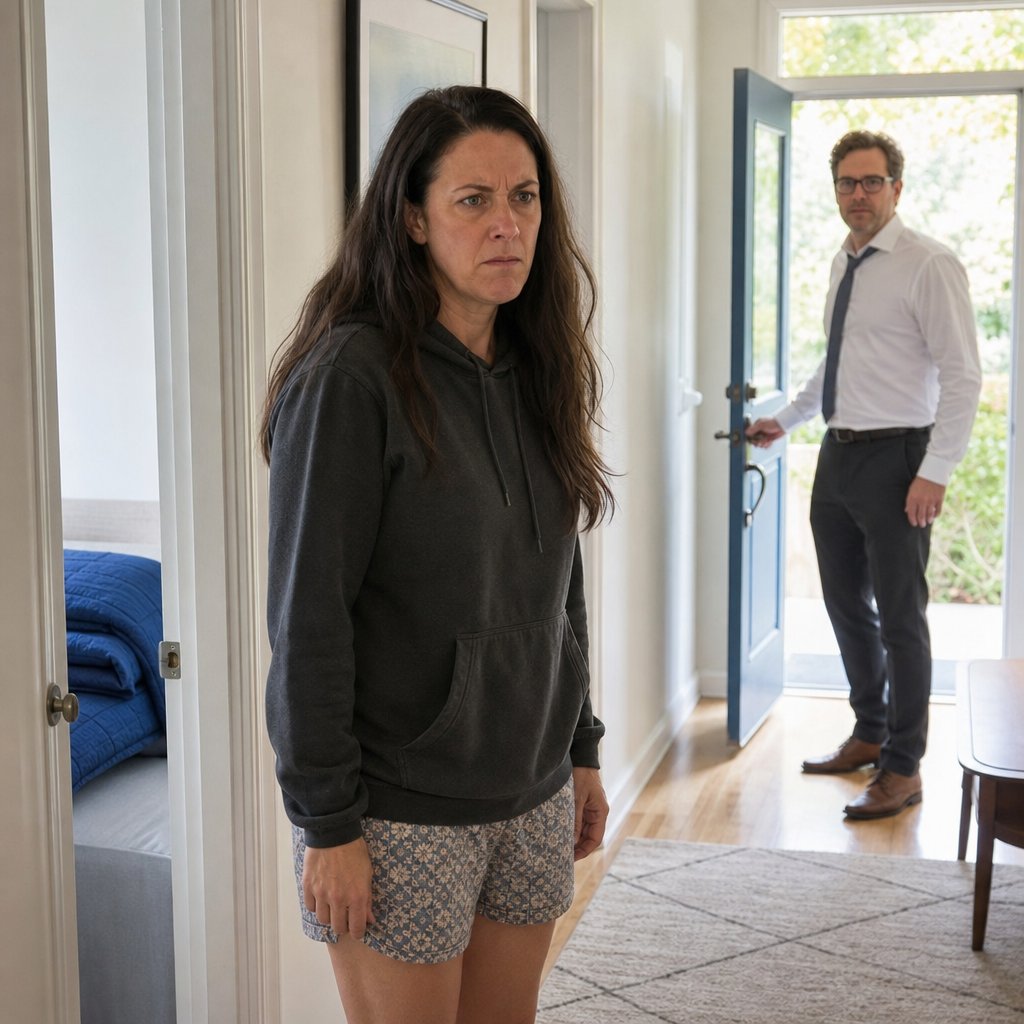
I found the line that turned my stomach into ice.
It was tucked in the middle of a normal-looking back-and-forth—little jokes, logistics, the kind of everyday intimacy that’s worse than anything dramatic because it means it’s routine.
“Tell Nina you’re working late. I’ll warm up the guest room.”
I read it once. Then again. Then again, like repetition could change the words into something else.
The guest room.
Not a hotel. Not some shadowy apartment. My house. The room where my mom slept last Thanksgiving. The room I’d painted myself, rolling creamy white over the old beige while Grant “ran errands.” The room with the quilt my grandmother made—blue squares stitched into little perfect rows.
I felt the kind of rage that makes you weirdly calm. Like my body had decided to preserve me by shutting off anything that would make me fall apart.
Because this wasn’t just cheating. This was management. They were scheduling around me like I was a dog that needed to be fed and walked and kept out of the way.
I could hear the house settling—tiny pops in the walls, the distant hum of the fridge. Everything ordinary continuing like it hadn’t just been violated. My hands gripped the phone so hard my wrists ached.
I thought of all the nights I’d stood at the window, watching Grant’s headlights finally swing into the driveway, telling myself I was being supportive. I thought of the guest room door closed, the hallway dark, the quiet that I’d mistaken for peace.
I didn’t cry. I didn’t scream. I just sat there, staring at that sentence, and realized they’d been doing this with a confidence that only comes when you believe you’ll never be caught.
And then the front door lock clicked, and I heard Grant’s keys hit the bowl like nothing in the world was wrong…
The Soft Test I Set
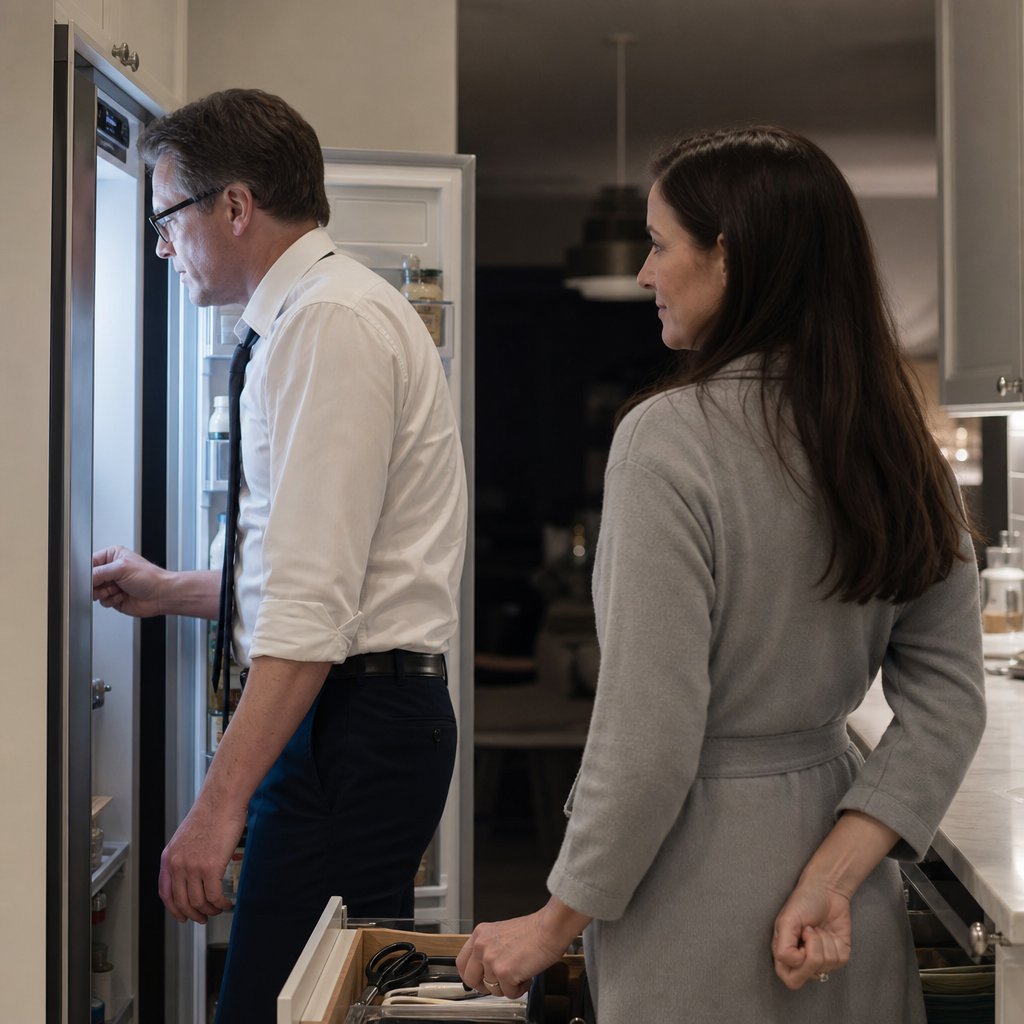
I didn’t come at him screaming. I didn’t throw the phone. I didn’t even say her name.
I tried something else—something quiet. A test.
Grant loosened his tie, sighed like the weight of the world lived on his shoulders, and kissed my cheek. His cologne mixed with rain and car air freshener, and I hated how familiar it still felt.
“Long night?” I asked, light as a feather. I leaned against the counter like I was just making conversation, like I wasn’t holding a grenade behind my back.
He nodded, already walking toward the kitchen. “Yeah. Meetings ran over. Then I grabbed a quick bite.”
“Where?” I kept my voice gentle. Curious-wife gentle. The kind of gentle men mistake for stupidity.
He didn’t even blink. “That little bar by the office. Nothing exciting.”
It was the smoothness that made my skin crawl. No pause. No searching for details. Just a polished, ready-to-go answer, like he’d picked it from a menu.
I watched him open the fridge, stare inside like he was thinking about leftovers, and I realized with a sick clarity: he wasn’t making this up on the spot.
He’d practiced. He’d said these lines before. Maybe to me, maybe to someone else. Maybe for years.
I nodded like I believed him. I even smiled, small and warm, and the petty part of me felt a flicker of satisfaction when his shoulders relaxed—because he thought he’d passed.
“You must be exhausted,” I said. “Go take a shower. I’ll heat something up.”
He looked relieved, grateful even, and headed down the hall.
As soon as he turned the corner, I reached for the kitchen drawer where we keep the scissors—because the zip tie on that charger suddenly felt like the next thread to pull…
Her Chirpy Little Check-In
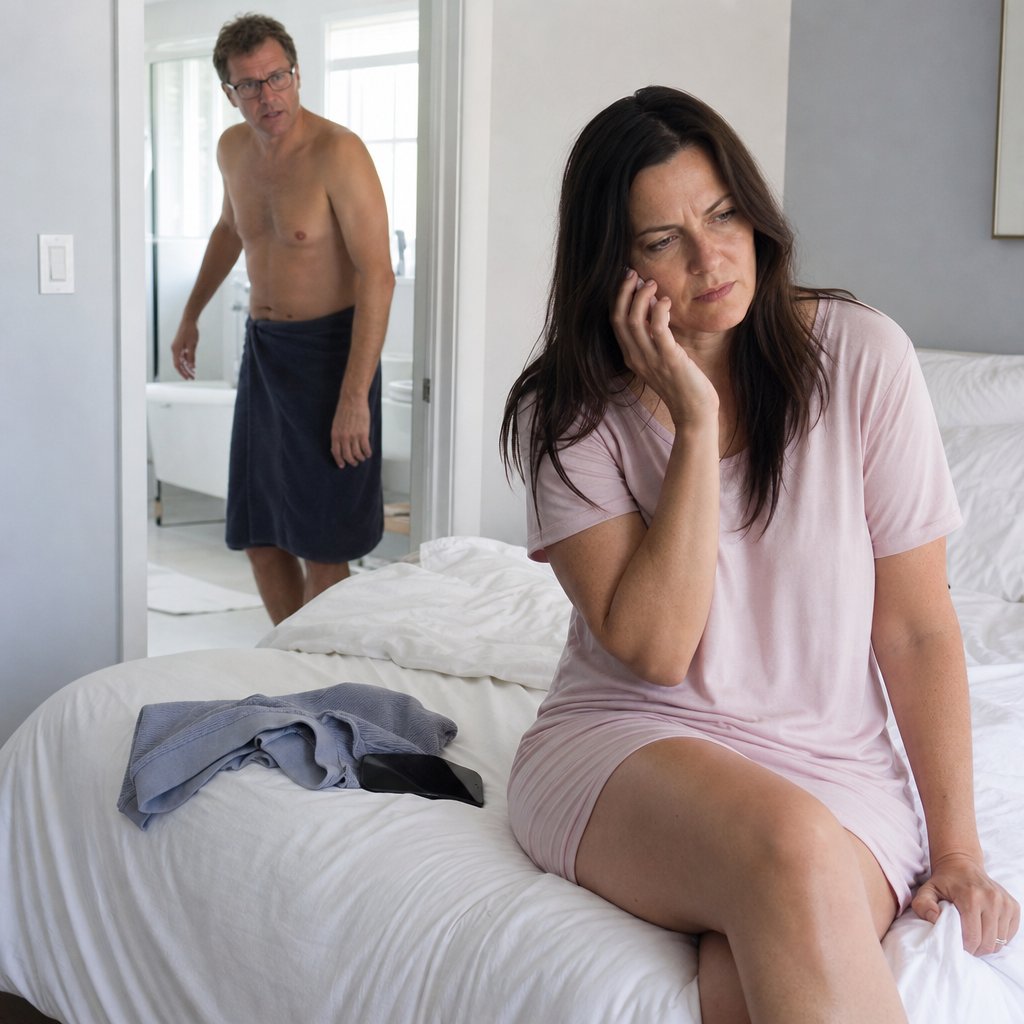
Tessa called that night like she always did when she wanted to feel involved.
Grant was in the shower, water pounding like steady applause down the hall. I sat on the edge of our bed with the second phone hidden under a folded sweatshirt beside me, my heart doing that slow, dangerous thud.
When Tessa’s name popped up on my phone, I stared at it until it stopped ringing. Then it rang again immediately—because of course she double-called. Of course she felt entitled.
I answered on the second ring, and I kept my voice even. “Hey.”
She was bright. Almost giddy. Like she’d had a glass of wine and was feeling cute. “Hi! How’s my favorite couple?”
My favorite couple.
I could hear her smile through the speaker, and I pictured her on her couch, honey-blonde ponytail swung over one shoulder, nails perfect, legs tucked under her like she belonged in my life.
“We’re fine,” I said. I pressed my thumb into the seam of the comforter, hard enough to hurt. The fabric was cool and slick under my nail.
She giggled—this tiny, private laugh. “Tell Grant I said… you know.”
It was the “you know” that made my stomach flip. Because I did know. It landed like an inside joke, a code word, something they’d used before when they were alone and I was the punchline.
“What do you mean?” I asked, letting a little confusion into my tone, like a trap baited with innocence.
There was the slightest pause, and then she recovered, sugary sweet. “Oh, nothing. Just… tell him hi.”
The shower shut off. Footsteps padded down the hall. And Tessa’s voice stayed in my ear, warm and familiar, while I realized she’d called to check the temperature of my marriage like it was a room she planned to walk into…
The Pattern I Couldn’t Unsee
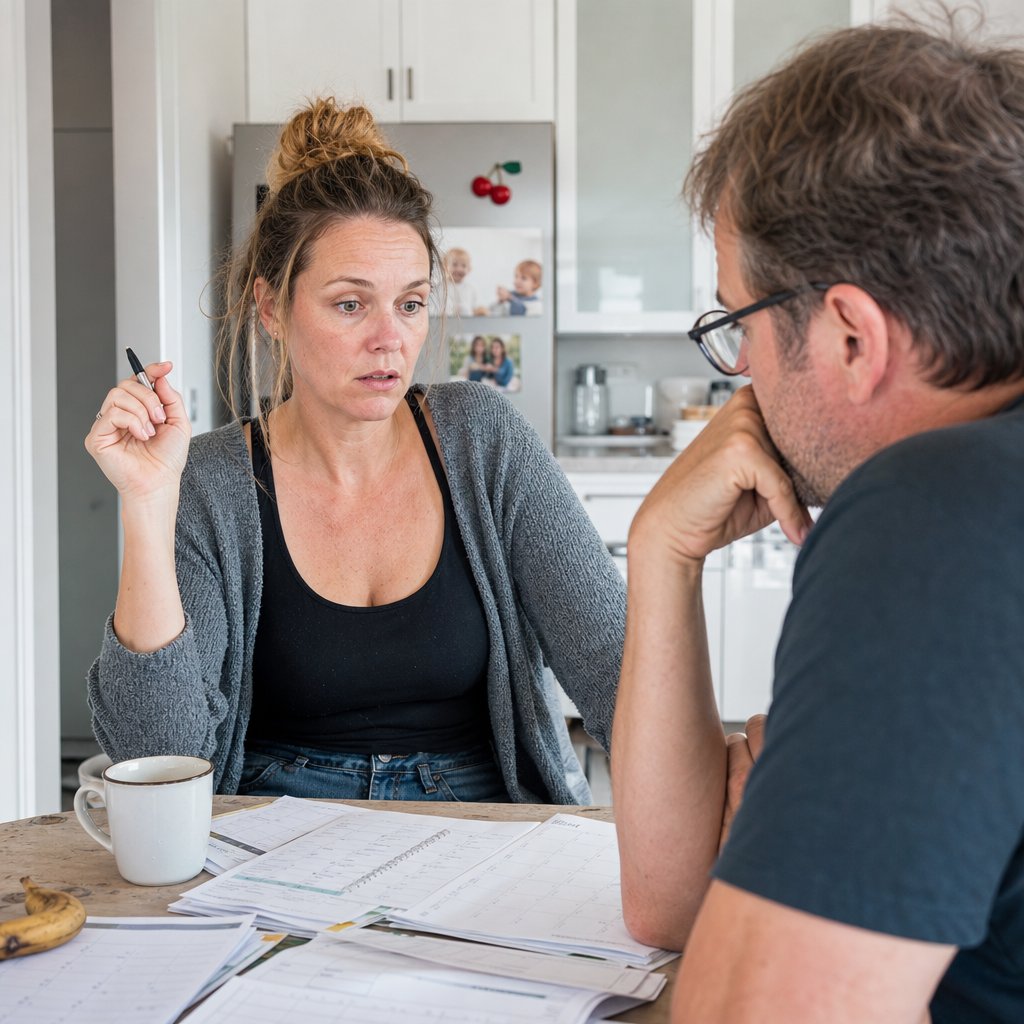
Grant came into the kitchen like he owned the air in it, loose shoulders, easy grin—like he hadn’t just been testing whether my house was safe for his secrets. Tessa hovered by the counter with her bright, too-clean smile, watching me the way you watch a dog you’re not sure will bite.
After they left, I didn’t cry. I didn’t even breathe right. I went straight for my planner and the family calendar we kept clipped to the side of the fridge with that stupid cherry-shaped magnet. I spread them out on the table like evidence. Pen marks. Doctor appointments. My sister’s “quick favor.” Mom’s “can you swing by.” The times I was the dependable one.
And then I started cross-checking. Every weekend I’d stayed overnight with my dad after his surgery. Every time I’d taken Mara’s kids last-minute. Every “girls’ lunch” where I’d insisted Grant relax at home. Every night I’d worked late and left dinner in the fridge with a sticky note.
Openings. That’s what they were. Not emergencies. Not family. Openings.
I could practically see the pattern like a dotted line—my sacrifice, their window, the same smooth slide into silence. My stomach went cold, like I’d swallowed a marble.
Then I hit one date that made my fingers go numb: the weekend of Mom’s “anniversary trip,” when she begged me to house-sit…
Eighty Dollars, Every Friday
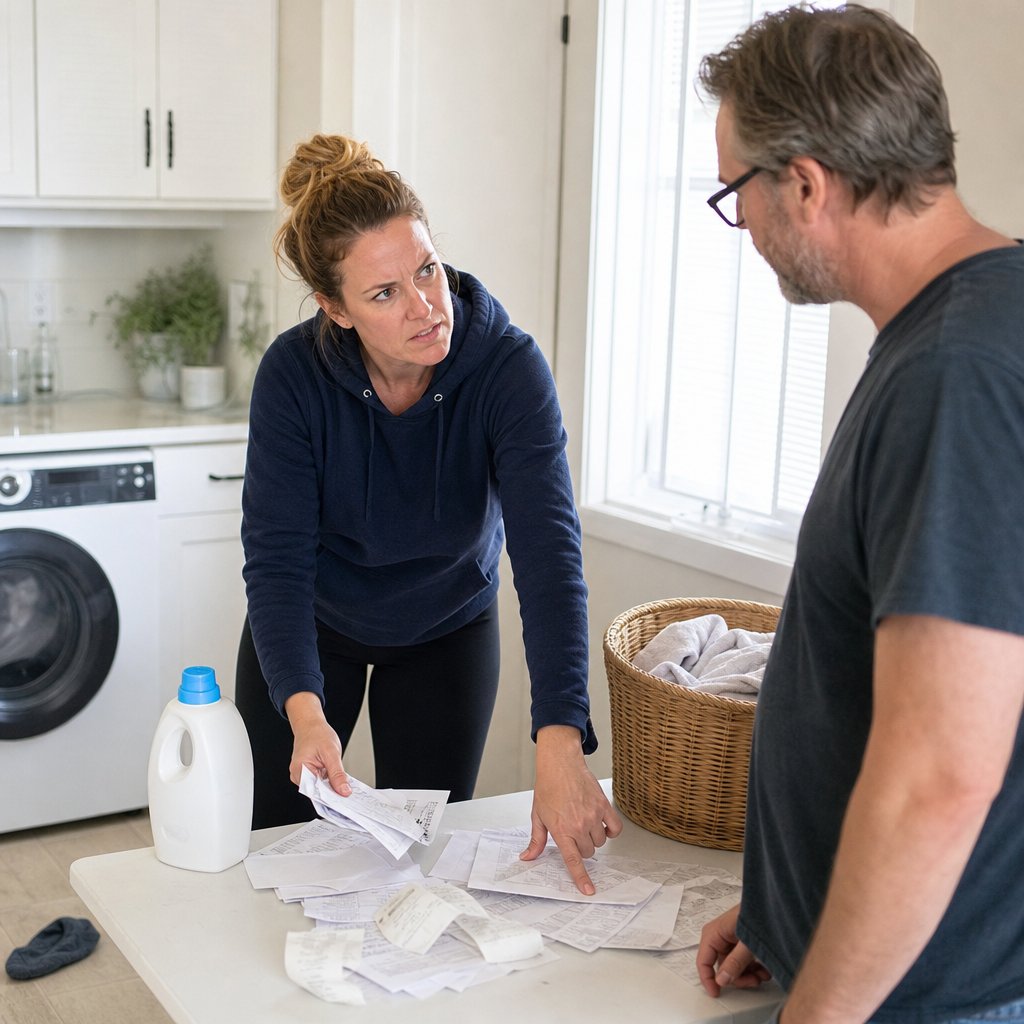
I went hunting where I never went: the folder Grant kept “for taxes.” The one he always acted casual about, like paperwork was beneath him. My hands shook so hard I had to press my knuckles into the edge of the counter until they steadied.
The statements weren’t dramatic. That was the sick part. No big hotel charges. No diamond necklaces. Just this tiny, ritual little heartbeat: cash withdrawal—$80. Cash withdrawal—$80. Every Friday. Like communion. Like an allowance for a second life that ran on exact change.
I stared until my eyes burned, tracing the dates with my fingertip. Fridays when he’d kissed my forehead and said, “I’m just running errands.” Fridays when he’d “grabbed a beer with the guys.” Fridays when I’d been home with the kids, wiping spaghetti off the floor, feeling proud that we were stable and normal.
The rage didn’t come hot. It came clean. Like someone had turned on a fluorescent light inside my chest.
I thought about the way Tessa always offered to bring dessert. The way she always had cash for “tips” and “parking” and “oh, I don’t want to bother with my card.” I thought about Grant’s little jokes about me being “too trusting.”
On the counter, the paper smelled faintly of toner and dust, and I realized this wasn’t sloppy cheating—this was budgeting.
Then I flipped to the next page and saw a Friday withdrawal that lined up with a hotel name I recognized from a wedding we’d attended…
Three Steps Behind Him

I told myself I was just confirming. Like this was a science experiment and I was the calm, rational observer. That lasted until I saw Grant’s car turn into the hotel lot and my throat closed up like I’d swallowed cotton.
I parked across the street, far enough to pretend I wasn’t doing this, close enough that my whole body buzzed. The hotel was the kind that tried to look fancy with potted plants and a little fountain out front. The fountain water sounded too cheerful.
Grant got out first. Mid-40s, brown hair going gray at the temples, those wire-rim glasses he always pushed up with one finger when he lied. He adjusted his jacket like he was headed to a meeting. Like he was a man with a schedule and a conscience.
Then Tessa appeared from the far side of the lot—late 30s, glossy dark hair, perfect posture, the kind of pretty that always looked intentional. She walked three steps behind him, not beside him. Not touching. Not looking at him. Like strangers who just happened to arrive at the same time.
My stomach dropped so hard I thought I might actually throw up in my lap. They reached the doors. Grant held them open for a woman with a stroller, charming as ever, then slipped inside. Tessa followed, eyes forward, lips pressed like she was concentrating.
I watched them wait for the elevator. The moment the doors opened, Grant angled his body just enough to block the view, and Tessa slid in after him like she belonged there.
The doors closed, swallowing them whole, and I realized I hadn’t even thought about what I’d do if I caught them because—oh my God—I had.
I grabbed my keys so hard the metal bit my palm, and I started walking toward the lobby before I could talk myself out of it…
How Much Do You Know?
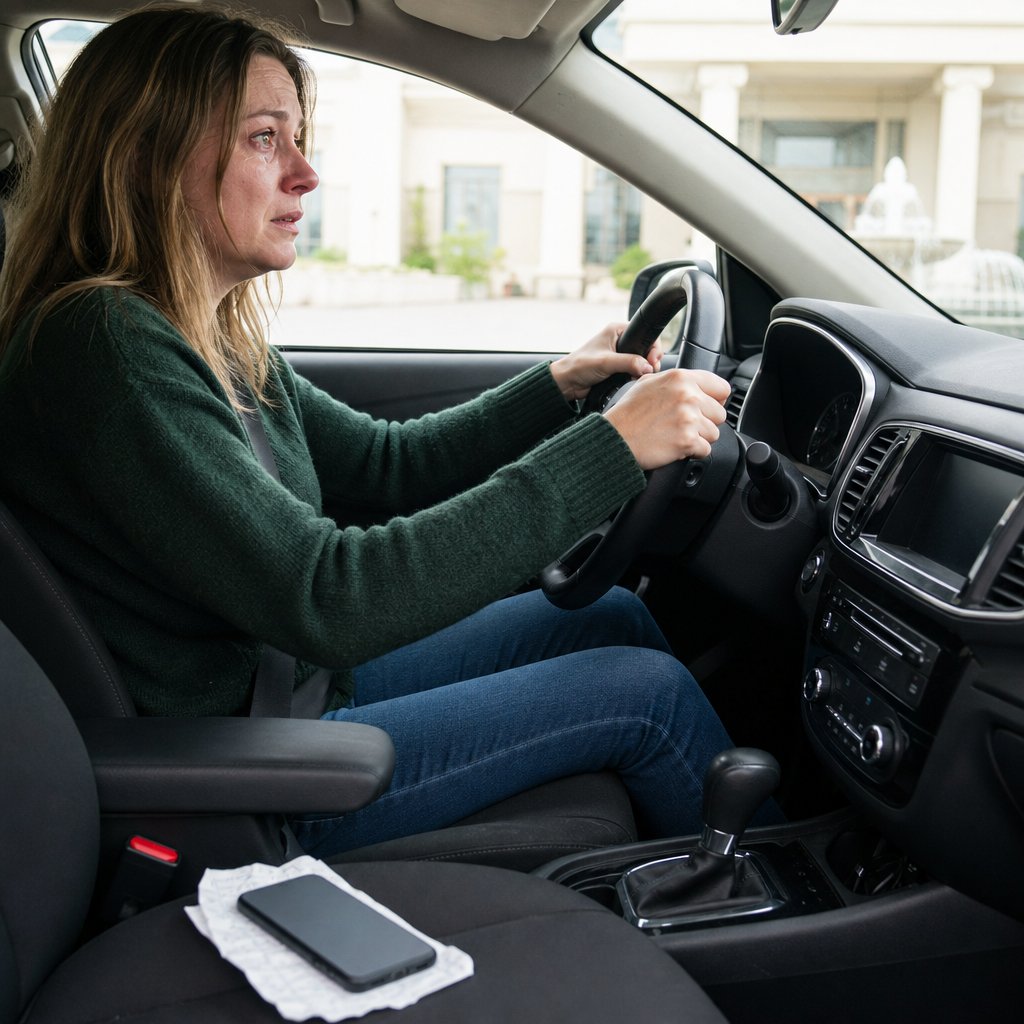
I didn’t go into the lobby. I don’t know if it was self-preservation or cowardice, but my legs carried me back to my car like they had their own brain. I sat there with my hands locked around the steering wheel until my fingers ached.
The person I called wasn’t my mom. Or my sister. Or Tessa, obviously. It was Mara.
Mara answered on the second ring, voice low, like she’d been waiting. She was my older sister—same dark-blonde coloring as me, but sharper edges, the kind of woman who looked like she slept with one eye open. I didn’t even get the words out. I think I made a sound—half laugh, half sob—and she went quiet.
“Where are you?” she asked.
“In my car,” I said, staring at the hotel doors like they might spit my husband back out. “Grant’s inside. With Tessa.”
There was this pause where I expected shock, denial, outrage on my behalf. Anything.
Instead, Mara exhaled like someone setting down a heavy bag.
“Okay,” she said, too steady. “How much do you know?”
My whole body went cold. Not because of Grant anymore. Because of her. Because that question didn’t belong to someone hearing this for the first time.
I swallowed hard, tasting stale coffee and panic. “What does that mean?”
Mara didn’t answer right away. I could hear movement—keys, a door, her life continuing while mine cracked in half.
“Nina,” she said finally, and my name sounded like a warning, “you need to tell me exactly what you’ve found so far.”
And I realized, sitting there watching that fountain burble, that I wasn’t discovering this alone. I was late.
“Mara,” I whispered, “how long have you known?”
She went silent, and the silence was its own confession…
The Circle Was Bigger

Mara made me meet her at her place, like she didn’t trust me to stay upright without supervision. When I walked in, her house smelled like lemon cleaner and something burnt—toast she’d forgotten in the toaster, probably. That was so Mara: even her panic came with chores.
She didn’t hug me. She just looked at me, really looked, like she was deciding how much truth my spine could hold.
“Sit,” she said, and I sat on the edge of her couch, hands tucked under my thighs so she wouldn’t see them shaking.
“Tell me,” I said. My voice sounded thin. “Tell me why you asked me how much I know.”
Mara’s mouth tightened. She stared at the coffee table, where a bowl of clementines sat like a cheerful joke, and then she said it fast, like ripping off tape.
“Mom knew,” she said. “Dad knew. Aunt Claire knew.”
My ears rang. I actually leaned forward, like I could physically catch the words before they hit the floor.
“What are you saying?” I asked. “Knew what? How?”
Mara’s eyes flicked up to mine, and there was guilt there, yes—but also something uglier. Resignation. Like this was old news in a family that collected secrets the way other families collected photos.
“It’s been… a while,” she admitted. “And it wasn’t just our side.”
I felt my stomach twist. “What do you mean ‘our side’?”
She swallowed. I watched her throat bob. “Grant’s mother knew too.”
I made this sound—honestly, it was animal. Like my body was trying to spit out the idea. Grant’s mom, with her church-lady voice and her handmade casseroles and her habit of squeezing my hands and calling me ‘sweet girl.’
“They all—” I started, and my voice broke. “They all knew and nobody told me?”
Mara’s eyes glistened, but she didn’t deny it. She just said, quieter, “They thought it was easier this way.”
Easier for who, Mara? I wanted to scream. I wanted to throw her clementines at the wall just to hear something break that wasn’t me.
Then she added, like the final shove: “And there’s a reason they decided you were the one who could take it.”
I stared at her. “What reason?”
Mara opened her mouth, and I swear I could see her choosing which knife to use…
Not Here, Nina
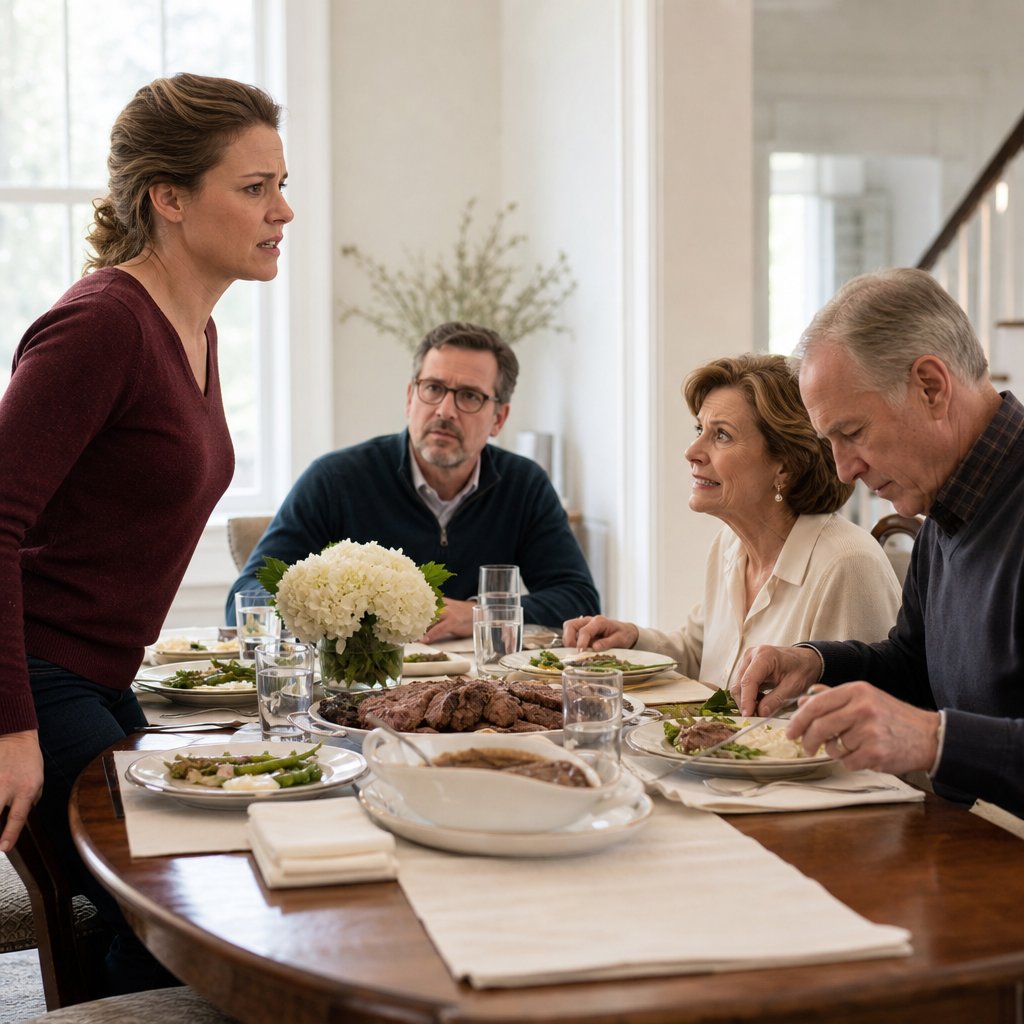
Sunday dinner at my parents’ house used to feel like a reset button. Pot roast smell in the hallway, Dad’s old jazz records humming in the background, Mom’s good napkins that she only brought out when she wanted to pretend we were fine.
That night, the napkins were out.
I sat at the table with my spine stiff and my hands folded so tightly my nails left crescents in my skin. Mara avoided my eyes. Dad kept clearing his throat like he had something stuck there. My mother—my mother—kept smiling. Too hard. Too bright. Like she was holding her face in place with invisible pins.
I waited until she set down the gravy boat—her hands steady, of course—and then I said it. Not loud. Not a scene. Just the truth dropped on linen.
“I know about Grant and Tessa,” I said.
The fork in Dad’s hand clinked against his plate. Mara’s shoulders jumped like she’d been slapped. Mom didn’t blink. She didn’t even look surprised. She just reached for her water glass, took a slow sip, and set it down with the kind of care you use around a sleeping baby.
Then she leaned toward me, smile still stretched, and said, “Not here, Nina.”
It wasn’t denial. It wasn’t confusion. It was management. Like I was a mess on her carpet and she was deciding when it was convenient to clean it up.
I stared at her, the room tilting slightly, the pot roast smell suddenly nauseating.
“Not here?” I repeated, my voice shaking. “So you do know.”
Mom’s eyes flicked to Dad, then to Mara, then back to me—silent signals passing across the table like a practiced routine.
“We’re having dinner,” she said, gentle as a threat. “Don’t do this right now.”
And that’s when I understood: there was a family policy. Smile. Swallow. Keep the peace. Sacrifice the person who would forgive it fastest.
I pushed my chair back, wood scraping the floor, and Dad finally looked up—his face gray, his lips pressed tight—like he was about to say something he’d been holding for years…
Praying For Me, Apparently
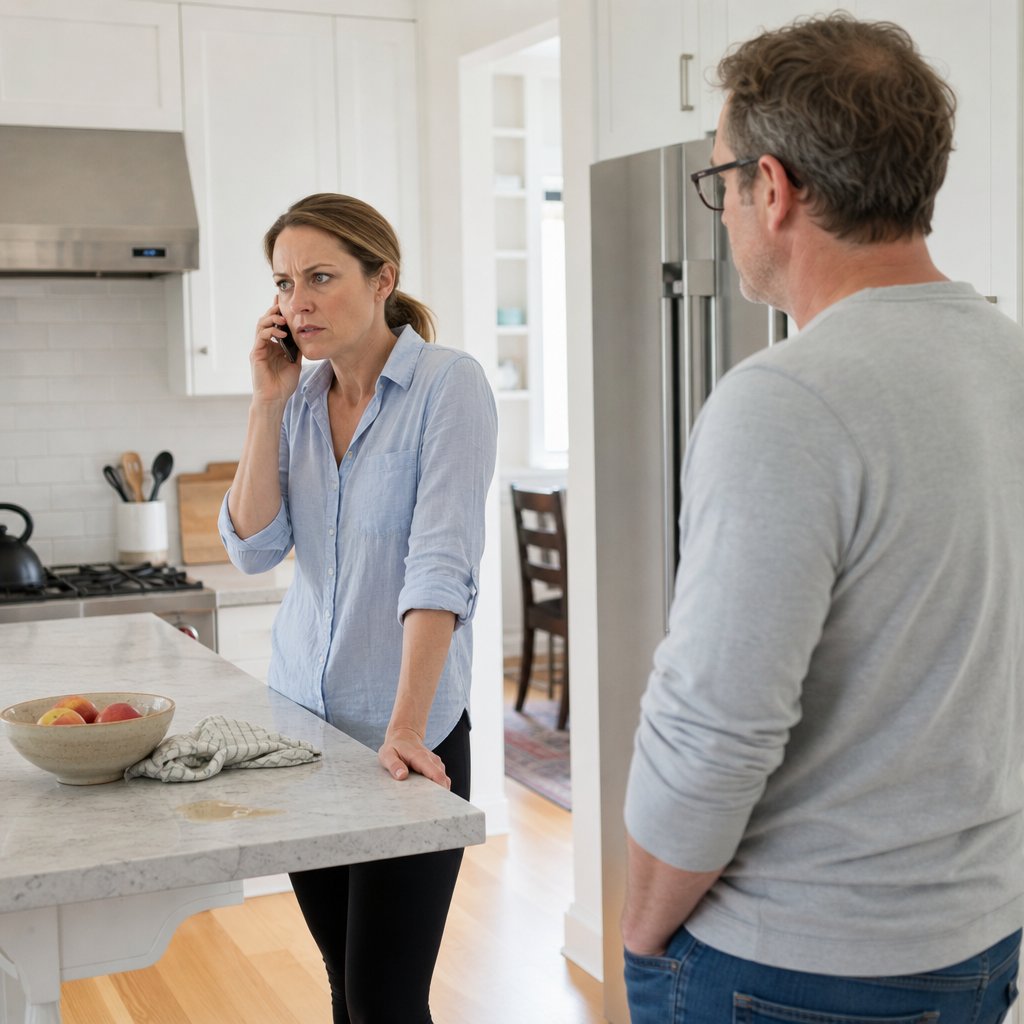
Grant’s mother called the next morning like she was scheduling a dentist appointment. I didn’t answer at first. I stared at the ringing phone on the counter until it stopped, then started again five minutes later. I finally picked up because some part of me still believed in manners, even while my life was burning.
“Nina, honey,” she said, voice syrupy. “I’ve been praying for you.”
I almost laughed. It came out as this sharp little breath. Praying. Like I was sick. Like Grant had a fever and I was the one who needed comfort.
“How long?” I asked. No hello. No small talk. “How long have you known?”
She made a soft sound, the kind of practiced pity you hear at funerals from people who didn’t like the deceased. “Now, Nina,” she said, “you don’t want to go digging for more hurt.”
My hands started shaking again, so I gripped the edge of the counter. The laminate was cool and slightly sticky, like some spilled juice I hadn’t wiped up yet. It made me furious—my house always had a mess to clean, always something I was expected to handle.
“Answer me,” I said.
She sighed. “We all just… wanted what was best for everyone.”
Everyone. Not me. Not my dignity. Not my right to reality. Everyone like a committee, like a town council meeting where they voted and I wasn’t invited.
“You mean you wanted it quiet,” I said, my voice rising. “You wanted me quiet.”
“Sweetheart,” she said, and I could hear the smile in it, “you’re strong. You always land on your feet.”
There it was. The reason. The justification. The way they’d wrapped my resilience around my throat and used it as a leash.
I swallowed hard. “So you all agreed I’m the easiest to sacrifice.”
She didn’t deny it. She just said, softer, “Don’t make this uglier than it has to be,” and I felt something inside me go perfectly still.
When I hung up, my hands were numb—and my eyes went straight to the drawer where I’d hidden the second phone…
The Lake Weekend Group
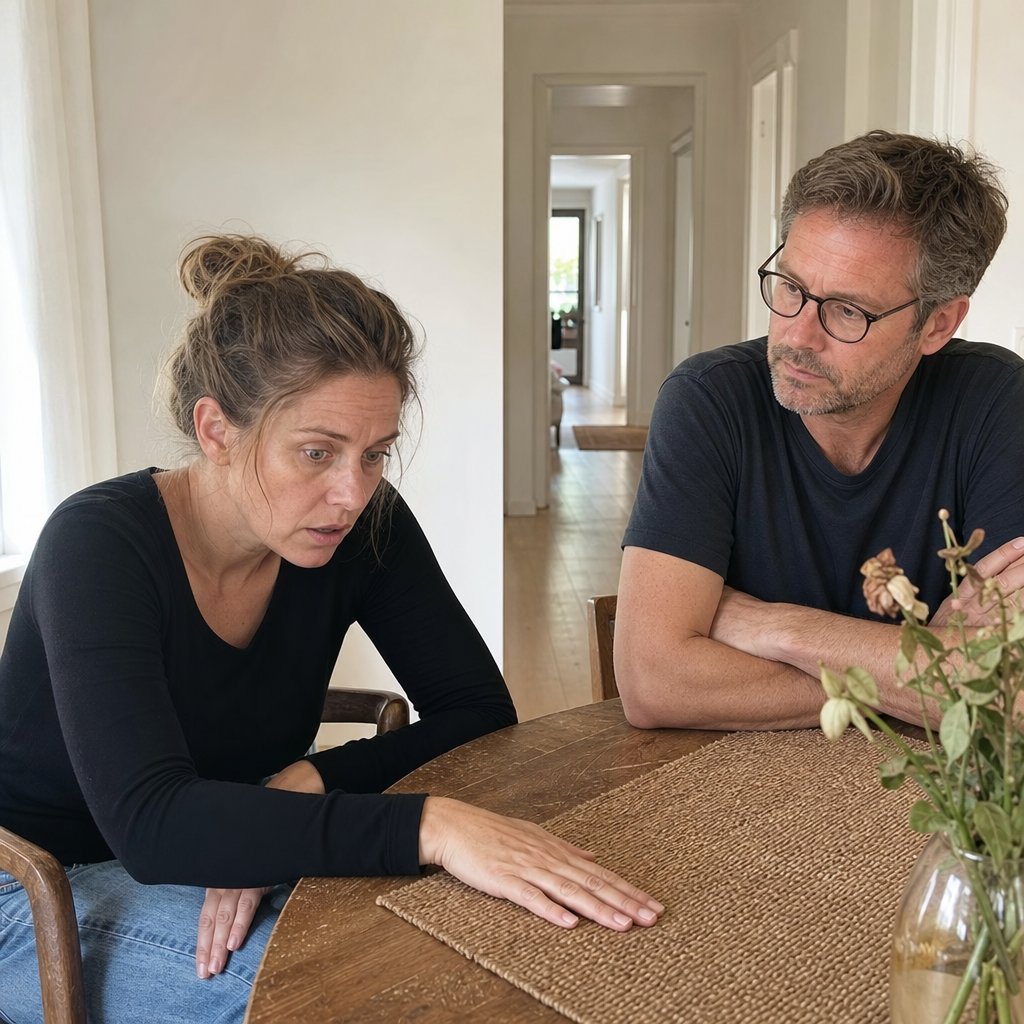
I’d found the second phone by accident weeks ago, tucked in the back of Grant’s gym bag under a pair of sweaty socks like it was just another piece of gear. At the time, I’d convinced myself there had to be an innocent reason. Burner for work. Spare for emergencies. Anything that didn’t make me the kind of woman who snoops.
Now I was absolutely that woman.
I pulled it from the drawer where I’d hidden it, my hands weirdly calm. Like my body had finally accepted the truth and switched into survival mode. The phone felt heavier than it should, like it was full of stones instead of circuits.
I sat at the dining table, the one where my mother had smiled and told me “not here,” and I forced myself to breathe through my nose. In. Out. Like I could oxygenate my way through betrayal.
I tapped through what I could without thinking too much about how I’d explain any of this to my past self. And then I saw it: a group chat labeled “Lake Weekend.”
My stomach gave that familiar sick lurch, but this time it wasn’t just Grant’s name in there. It wasn’t just Tessa’s.
There was my mother’s contact.
My actual mother. The woman who used to braid my hair before school, who cried at my wedding, who held my face in both hands and said, “You picked a good man.”
I stared at the phone like it had grown teeth. My mouth went dry. I could hear the refrigerator hum, steady and indifferent, like the house didn’t care who lied inside it.
I set the phone down on the table with my palm over it, like I was trying to keep it from escaping, and I whispered, “What the hell did you do?”
Then I lifted my hand and opened the thread, bracing for impact…
I Was A Schedule
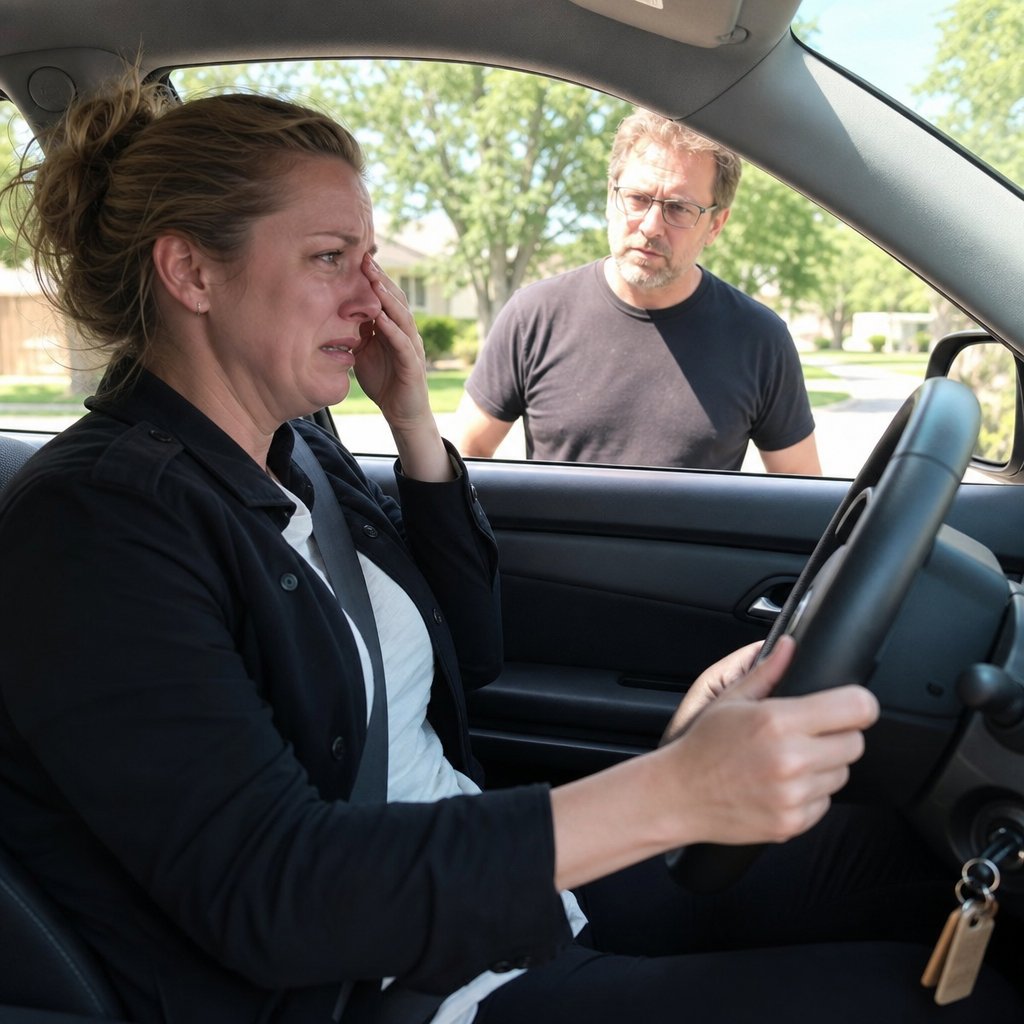
The messages weren’t romantic. There were no love notes, no guilt, no “I miss you.” That almost broke me more than anything. It was logistics. Efficiency. Like planning carpools.
Timing. Windows. My life reduced to availability.
“Nina’s in the shower.”
“She’s putting the kids to bed.”
“She’s at her parents’—you’ve got two hours.”
“Meet at the boathouse.”
I could feel my face getting hot, my ears burning, like my body wanted to combust from humiliation alone. The words blurred, not because I couldn’t see, but because my eyes kept filling. I wiped them with the heel of my hand, angry at myself for leaking.
The worst part was how familiar the moments were. I remembered being in the shower, humming to myself, thinking I was rinsing off a long day. I remembered the kids’ bedtime routine—two stories, one sip of water, one last stuffed animal rescue mission. I’d been so proud of how smoothly I ran our home.
And all along, they were using my competence like a clock. Like I was a predictable little machine that created openings on cue.
There were names popping in and out—Grant, Tessa, my mother—and the tone was casual, even amused. Like my absence was a shared joke.
I pressed my fingertips to my lips and tasted salt. My chest felt tight, not with sadness now, but with something sharper. A need to make someone look me in the eye and say it out loud.
I set the phone down so hard it rattled on the table.
Then I grabbed my keys and drove to the one person who had always been able to talk her way out of anything—Tessa—because I needed to hear her explain how my mother became her accomplice…
Your Mom Said You’d Be Okay
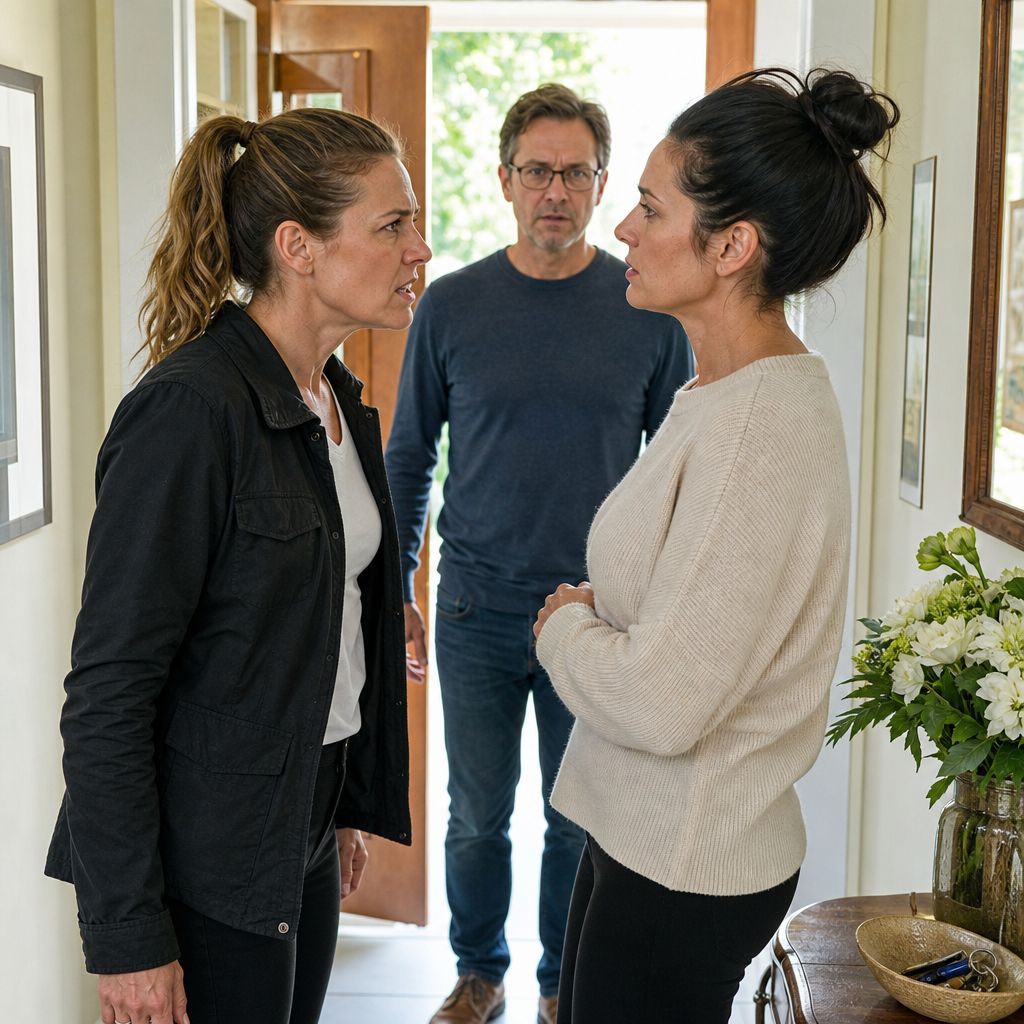
Tessa opened her front door like she’d been expecting a package, not me. She wore soft lounge clothes—cream sweater, black leggings—and her hair was up in that effortless bun that always made her look like she’d just come from yoga. Her house smelled like vanilla and something citrusy, the kind of clean that feels curated.
When she saw my face, her smile faltered for half a second. Then it snapped back on, defensive and bright.
“Nina,” she said, drawing out my name like she could soothe me with tone. “What’s going on?”
I walked right past her into the entryway. My heart was hammering so hard I could feel it in my throat. “Don’t,” I said. “Don’t do the innocent thing.”
Her eyes flicked toward the hallway like she was checking if someone else was home. Then she closed the door slowly behind me, the click loud in the quiet.
“How long?” I asked. My voice shook, but I didn’t care. “How long have you been with my husband?”
Tessa’s shoulders sagged, just a little, like she was tired of pretending. She didn’t cry. She didn’t even look ashamed. She looked annoyed—like I was late to a meeting she’d already had without me.
“Years,” she said quietly. “It wasn’t supposed to be like this.”
I laughed once, sharp and ugly. “Like what? Like me finding out?”
She swallowed and finally looked me in the eye. “Nina… your mom said you’d be okay,” she said, and her voice went softer, almost reassuring. “She said you always land on your feet.”
It hit me like a slap. My mother’s words—handed to my best friend like permission.
I stepped closer until we were only a foot apart, and I could see the tiny tremor in Tessa’s throat. “So my mom signed off on you sleeping with my husband,” I said, each word precise, poisonous.
Tessa’s eyes darted away, and she whispered, “It wasn’t just her,” and my stomach dropped all over again because I realized she was about to name names…
The Trust Papers Were Moving

Tessa’s whisper hit my ear like ice water. “It wasn’t just her.” Her eyes flicked past my shoulder—toward the hallway where my mom had been hovering like a nervous ghost—and my stomach did that slow, sick drop.
I didn’t let her finish. Not because I didn’t want the name—because I suddenly understood the shape of the lie. It wasn’t a secret. It was a system.
Two days later, I hired a lawyer the way you buy a fire extinguisher: quietly, urgently, and praying you’re not already too late. Her name was Marisol Vega—late 30s, sharp black bob, the kind of calm that makes you feel both safer and more exposed. We met in her office with the blinds half-drawn and a bowl of stale peppermints that tasted like plastic.
Marisol slid a thin folder across the desk. “I pulled the recent filings tied to your parents’ property.”
Lake house. Our lake house. The one I grew up in, where my dad taught me to bait a hook and my mom insisted on folding towels into perfect thirds.
Inside were draft trust documents—fresh, not dusty, not historical. The lake house shifting into a parent-controlled trust. And there it was, clean as a knife: Grant named as a future trustee.
My husband. My best friend’s… whatever he’d been. Being positioned to control my childhood home.
I stared at the signature lines, my hands going numb, because Marisol’s next sentence landed like a warning bell: “These aren’t just drafts, Nina. Someone’s been trying to push this through fast,” and my phone buzzed in my purse like it knew exactly who was calling…
The Silence Answered First

I hosted a “Big News” dinner like I was auditioning for Normal. Linen napkins. Roasted chicken. A bottle of red I didn’t even taste. My hands shook so badly I had to set the serving spoon down twice before I flung gravy on the tablecloth.
I set my phone face-down on the sideboard, recording audio like it was a life raft. No screens. No theatrics. Just proof, because I was done being the only person with feelings and no receipts.
They came like a cast arriving for a play they’d already rehearsed. My mom—Linda—blonde bob sprayed into place, pearl studs, a smile that didn’t reach her eyes. My dad—Rick—silver hair, thick mustache, smelling faintly like motor oil and aftershave. My sister—Paige—early 30s, long auburn hair, a little nose ring she pretended didn’t make her look like she had opinions. And my in-laws: Diane, sharp cheekbones and a cardigan buttoned wrong; and Frank, heavy-lidded and watchful.
Grant slid in last. Mid-40s, brown hair going gray at the temples, glasses, that familiar half-smirk he used when he thought I’d never push back. He kissed my cheek like we were fine. Like he hadn’t been living two lives.
We ate. We made small talk. The clink of forks sounded too loud. I waited until everyone had wine in their glass and chicken on their plate—until leaving would feel dramatic.
Then I smiled, sweet as poison. “So. When did you all find out?”
It was incredible, actually. The way the room didn’t just go quiet—it held its breath. My mother’s fork froze halfway to her mouth. Paige stared at her lap. Frank’s jaw flexed. And Grant’s eyes snapped to my dad like he was checking the script.
No one spoke. Not at first. But the silence answered me anyway, and I watched my father swallow hard like he was about to say a date…
I Dropped The Paper Bomb

My dad’s mouth opened—then closed. He looked at my mom like she had the right to answer first. Like she always did.
“Nina,” my mom began, and her voice had that warning-lullaby tone she used when I was little and embarrassed her in public. “Honey, let’s not—”
“No,” I said, still smiling. My cheeks hurt from it. “Let’s.”
I stood and walked to the kitchen counter where I’d stacked everything like a neat little altar. Printed screenshots—dates, times, hotel confirmations, the kind of evidence you can’t gaslight into disappearing. And on top, the trust documents Marisol had pulled, clipped and highlighted.
I brought the stack back to the table and let it land in front of my mom with a soft, thick thud. Paper on wood. Final.
Her face changed first. The color drained so fast it was like watching a tide pull out. She stared at the top page and her lips parted, soundless.
Grant, though? Grant snapped like a rubber band. He shoved his chair back hard enough it scraped the floor. “What the hell is this?” he barked, too loud, too quick—pure panic dressed up as anger.
“That,” I said, tapping the trust packet with one finger, “is the lake house being moved into a trust you all control. And look—Grant gets to be a future trustee. Isn’t that… convenient?”
Diane made a small choking sound, like she’d swallowed wrong. Paige whispered, “Oh my God,” but didn’t look at me—she looked at my mom.
I flipped to the screenshots. “And this is Grant and Tessa. For years.” I watched my father’s eyes squeeze shut for half a second like he’d been punched.
In that moment, the betrayal rearranged itself into something colder. This wasn’t just cheating. This was coordinated. Financial. A grab with a marriage as the cover story.
Grant leaned over the table, his face tight behind his glasses, and hissed, “You don’t understand what you’re doing,” and my mother reached for the papers with shaking hands like she could snatch time back…
The Money Trail Lit Up

The emergency hearing smelled like old carpet and burnt coffee, and my pulse wouldn’t slow down no matter how tightly I laced my fingers together. Grant sat two rows ahead of me in a suit he’d clearly slept in, shoulders squared like he could bully the room into forgetting facts.
Marisol sat beside me, calm as a metronome. She’d traded her blazer for a deep green dress and a thin gold chain, and she kept sliding me little notes on plain paper—breathe, don’t react—like I was a bomb she was trying to defuse without losing any fingers.
Grant’s attorney tried to paint me as hysterical. “Marital discord,” he said, like I was a toddler throwing a fit over nothing.
Then Marisol stood.
“We subpoenaed bank records,” she said, voice steady, and the judge’s eyes sharpened. “We have a forensic accounting summary of cash withdrawals inconsistent with the household pattern. We have ‘consulting’ payments made to Tessa—regular, structured. We have hotel points accrued during dates Mr. Hayes represented he was on business travel.”
Grant’s head jerked. His face went shiny, like his skin couldn’t hold the heat anymore.
Marisol didn’t even look at him. She turned a page. “And we have something else. Mr. Rick Alden’s personal guarantee.”
My dad’s name in that room felt like someone slapping me. My father—who couldn’t figure out how to apologize without sounding annoyed—had signed a personal guarantee funding Grant’s side business.
I heard my own breath go thin. My mom’s shoulders curled in on themselves. Across the aisle, Grant’s mother’s eyes widened in pure, horrified recognition.
Marisol’s voice cut clean through the air: “Your Honor, this is not a private affair. This is a coordinated diversion of marital and family assets,” and the judge lifted her gaze and asked, “Mr. Alden is present?”
Every head turned toward the back of the courtroom, toward the door, because someone was walking in late…
Receipts On The Mantel
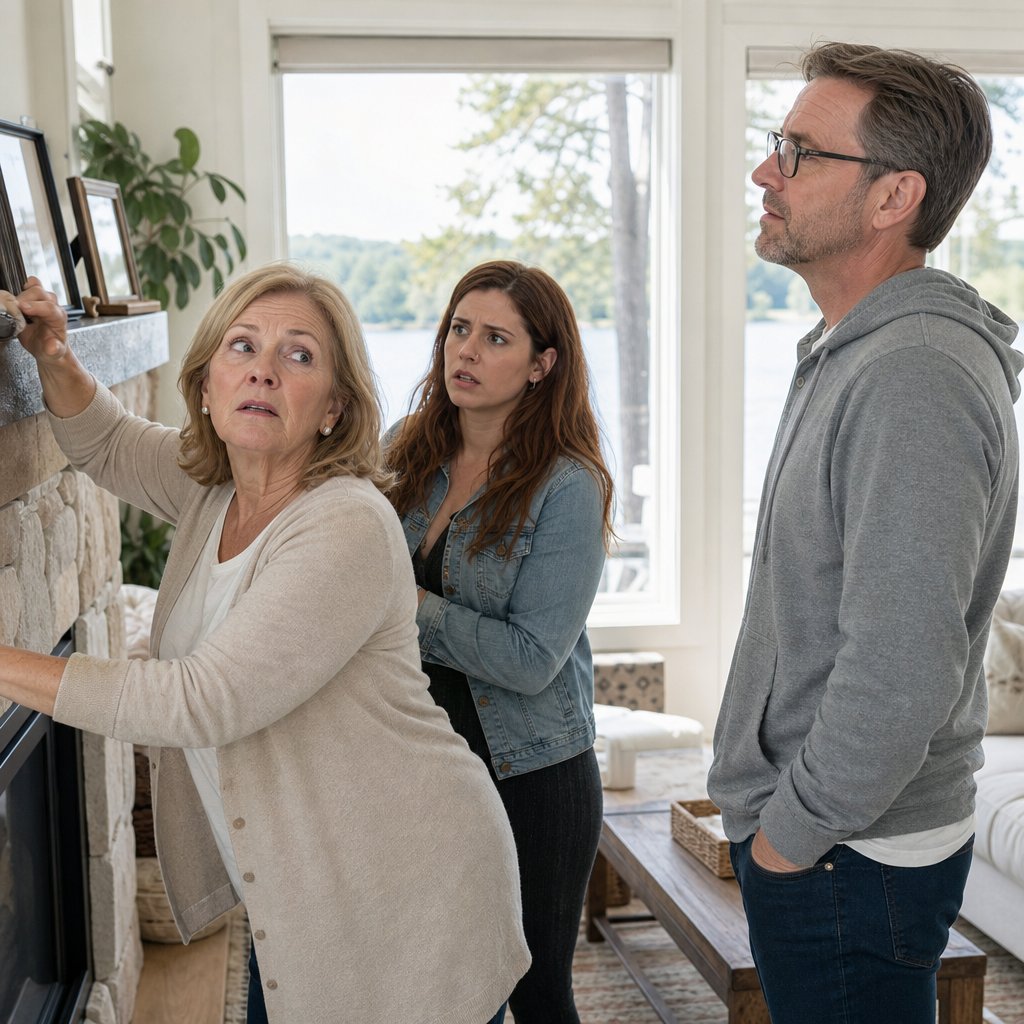
I told everyone it was “one last lake weekend.” Closure. Fresh air. Family. I said it with the soft voice people trust, the one I used to use when I wanted Grant to stop arguing and just come to bed.
What it really was? A crime scene tour with captions.
I got there early, alone, and I staged the house like an exhibit. Framed receipts on the mantel. A timeline printed on plain paper and slid into thrift-store frames. A photo of Grant and Tessa from a “work event,” cropped from someone else’s album, sitting on the entry table like a polite little grenade. I used painter’s tape and placed everything at eye level, so no one could pretend they “didn’t see.”
The lake outside was glittering and indifferent. You could smell sunscreen and algae through the screen door, that familiar summer stink that used to mean safety.
When Mom arrived, she stepped inside and stopped so hard her sandals squeaked on the wood floor. She looked older in that second—blonde bob slightly wind-tossed, cardigan hanging open like she’d forgotten how to put herself together.
“Nina…” she whispered, eyes darting from frame to frame.
Paige followed behind her, wearing a denim jacket and the same tight mouth she used at funerals. Grant wasn’t with them yet. Of course he wasn’t.
Mom lunged for the mantel, fingers already pinching the corner of a frame like she could rip it out of reality. Something hot and bright snapped in my chest.
I raised my voice—loud, crisp, echoing off the lake-house ceiling. “Don’t. That’s evidence.”
Mom froze with her hand midair, and Paige’s eyes flicked to the doorway like she’d heard a car on the gravel drive…
I Changed Every Lock
The payoff didn’t feel like fireworks. It felt like my body finally exhaling after holding its breath for years.
Court voided the trust transfer. Clean, blunt language that made my knees go weak. The lake house stayed out of their little parent-controlled trap, and Grant—my husband, my mistake—was ordered to repay the misused funds. Watching him hear that number was its own kind of petty satisfaction. His face went tight, then blank, like someone had unplugged him.
Tessa’s life detonated in parallel. Timeline scrutiny. DNA questions her husband couldn’t ignore anymore. The kind of unraveling you can’t charm your way out of. The last I heard, she’d been “staying with a friend,” which is the adult version of hiding under the bed.
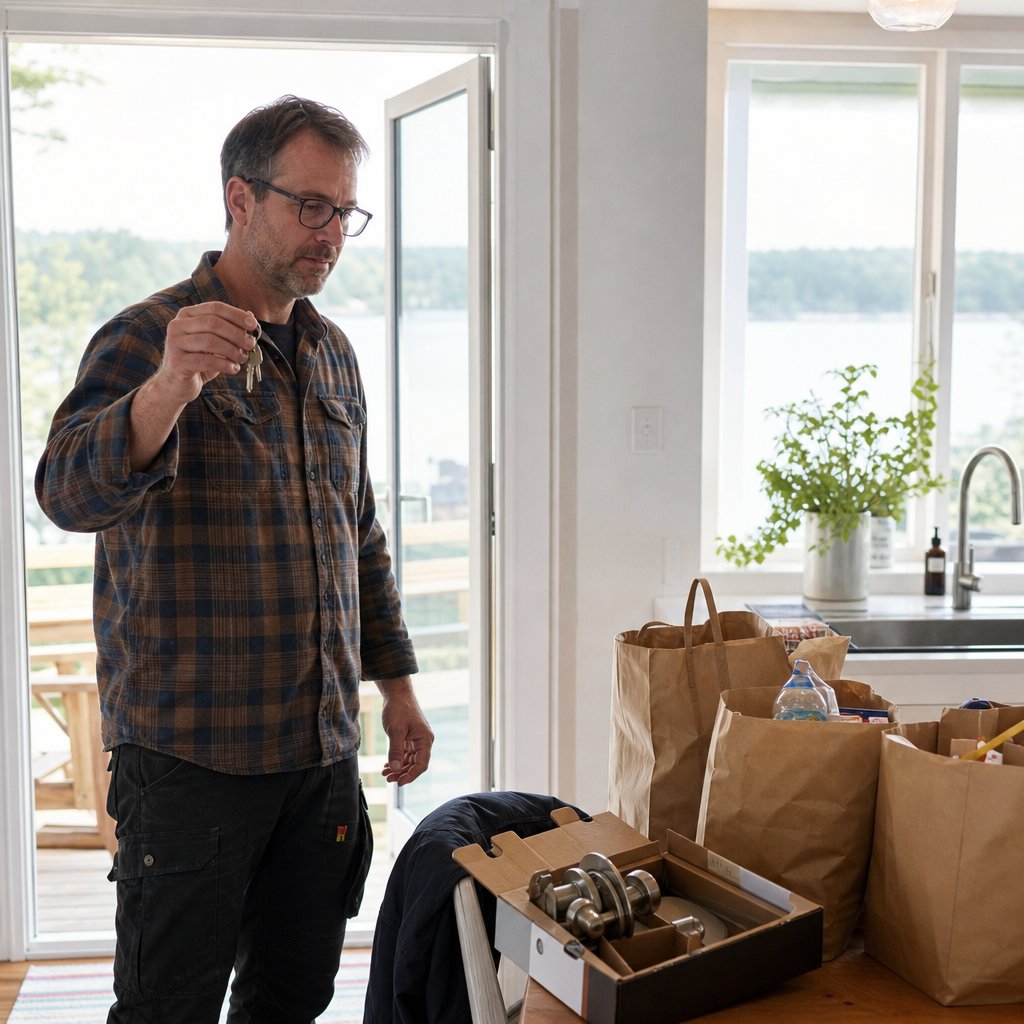
I drove to the lake house alone on a Tuesday with a bag of groceries and a locksmith’s business card. The new keys were cold and sharp in my palm. Inside, the house smelled like lemon cleaner and old pine, like it was trying to be brand-new for me.
I changed every lock. Front door. Back door. The little side entry by the mudroom where my dad used to stomp snow off his boots. I stood there afterward, listening to the silence, and realized how loud peace can be.
Then I sat at the kitchen table, set my phone face-down, and sent my mother one message: “You chose them. Now you don’t get me.”
I didn’t cry until I heard tires on the gravel outside—slow, deliberate—like someone was coming to test the new locks…
Would you have changed all the locks after finding the phone?