



The Photo From My Room
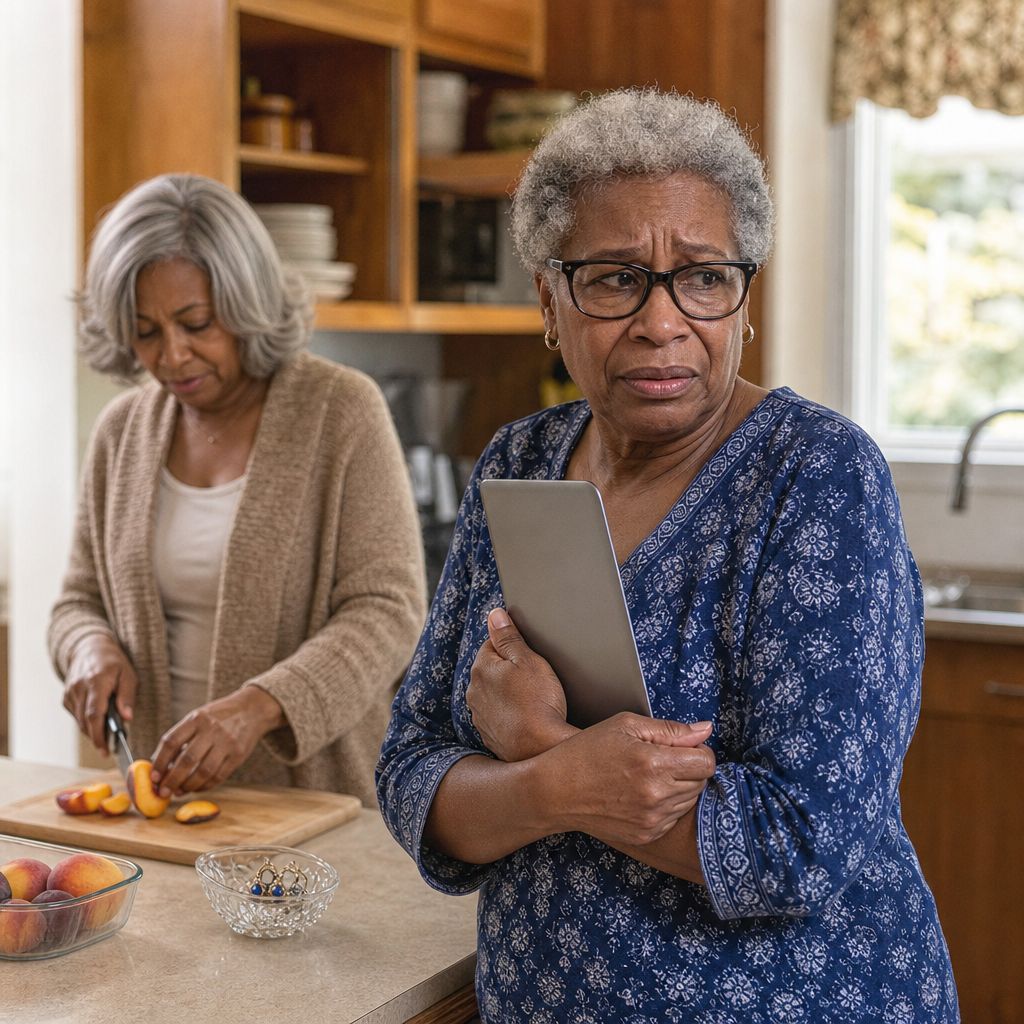
I was wiping my mom’s iPad with my sleeve when a muted chat banner slid down like it had been waiting for me: “Support Circle.” And there, right under my name, was a photo taken inside my bedroom—my quilt, my nightstand, my little glass dish of earrings—like my private space had been turned into evidence.
My stomach did that cold-drop thing. Not because I’d done anything wrong, but because the angle was wrong. It wasn’t a selfie. It was from the doorway, tilted slightly, like someone had paused just long enough to frame the mess on my chair and the open jewelry box on purpose.
I clicked into the thread and saw my name repeated in that careful, concerned way people use when they’re sharpening a knife. No one was yelling. That was the worst part. It was all “just checking in” and “we’re worried,” the kind of soft language that makes you sound crazy for flinching.
My mom, Gloria, was in the kitchen humming and slicing peaches like it was any other afternoon, like her hands hadn’t been part of this. I stared at the iPad until my eyes watered, my own reflection hovering over the glass.
Then I saw the tiny profile photo beside the message that posted the bedroom picture—my sister Lila’s face, smiling like she’d done me a favor—and my fingers went numb around the tablet.
The Memory Mom “Corrected”
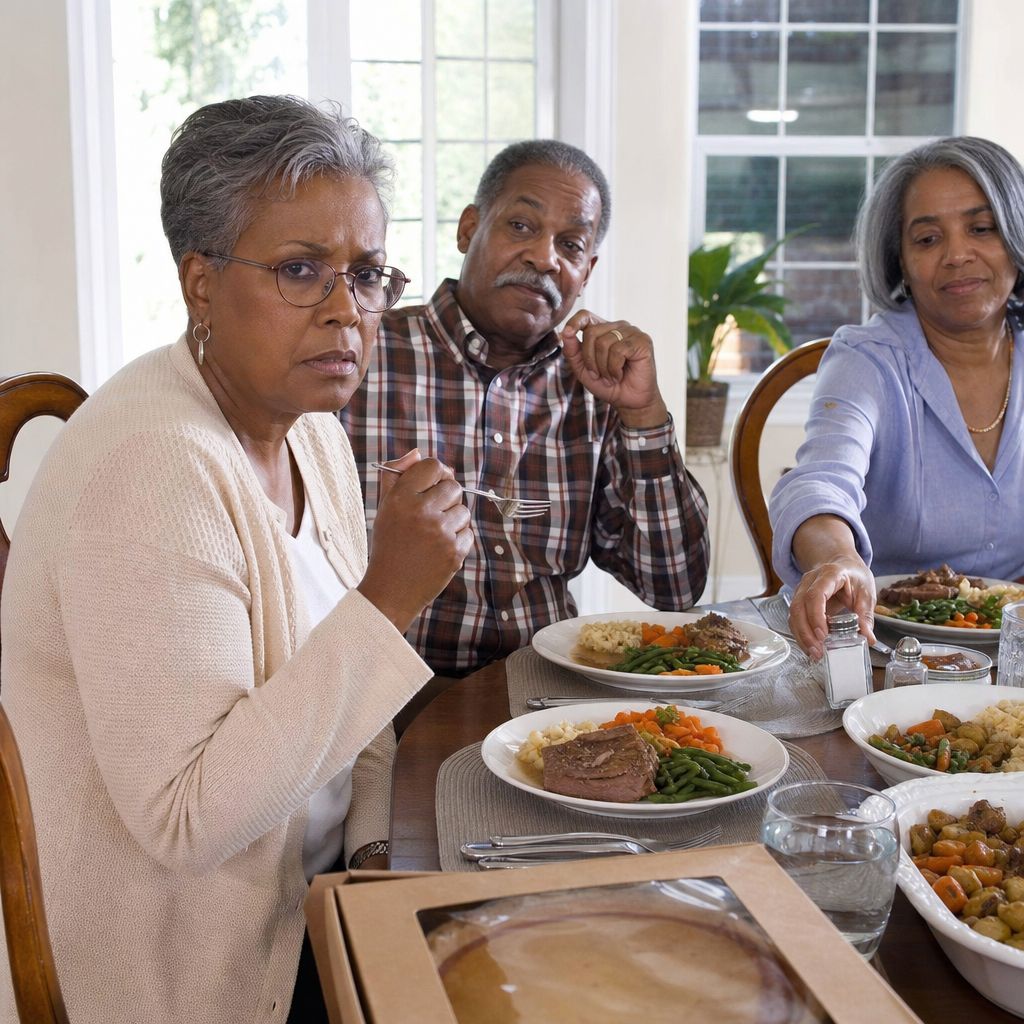
Sunday dinner smelled like pot roast and onion gravy, the kind of smell that usually wraps around you like forgiveness. I walked in with my store-bought pie and my best calm face, determined to act normal—even though my chest still felt bruised from that “Support Circle” chat.
We were barely ten minutes in when Mom said, sweet as iced tea, “No, honey, you didn’t bring the flowers last year. Lila did.” She said it like she was correcting a child who couldn’t remember her own birthday. I opened my mouth—because I had brought the flowers, I remembered the florist’s paper cutting into my fingers—but she kept talking right over me.
Dad leaned back in his chair and looked at me with that careful, appraising stare. “You doing okay?” he asked. Then, like it was casual, like it was a harmless question: “You been drinking more lately?”
The fork in my hand stopped halfway to my mouth. I felt heat crawl up my neck, the kind that makes you want to stand up and shout and also disappear at the same time. Nobody asked why he’d even think that. Nobody acted surprised.
Mom reached for the salt shaker without looking at me. “We just want you healthy,” she said, and the table went politely quiet, like this was something they’d already discussed.
I looked down at my plate and realized I wasn’t sitting at dinner—I was sitting in a courtroom, and the verdict had been whispered ahead of time.
The Financial “Check-In”
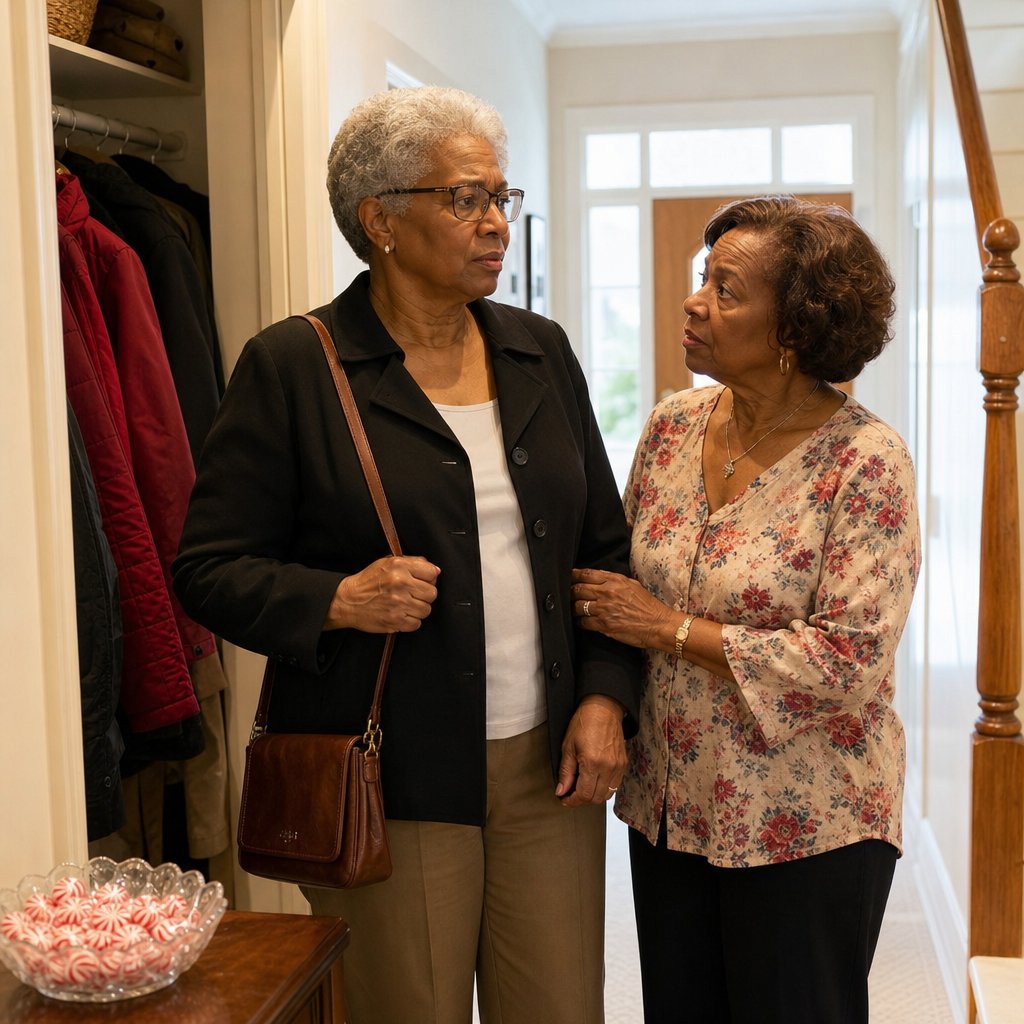
I was in the hallway by the coat closet when Aunt Denise caught my elbow—soft grip, sharp eyes. She smelled like powdery perfume and peppermint gum, and she pulled me just far enough away from the table to make it feel like a secret.
“Baby,” she said quietly, “are you… okay financially?” She tried to smile like it was caring, but her gaze flicked down to my purse, then back up, like she was taking inventory.
I blinked at her. “What do you mean?”
Her mouth tightened. “I just heard things. That you’ve been… struggling. That you’ve been asking for help. You know you don’t have to be ashamed.”
My ears started ringing. I hadn’t asked anyone for money. I hadn’t even hinted. My bills were paid. My mortgage was paid. But the way she said it—like the information had already settled into the family like dust—made my stomach twist.
“Who told you that?” I asked, keeping my voice low because I could feel myself getting loud inside.
Aunt Denise’s eyes did that little dart people do when they’re trying not to betray a source. “It’s not important,” she said quickly. “We’re just worried. We don’t want you—” She stopped herself, like she was about to say something uglier. Like she was about to say we don’t want you to end up like…
I could hear laughter from the dining room, silverware clinking like nothing was happening. I stared at my aunt’s face and realized she truly believed she was being kind.
Then she added, almost as an afterthought, “Lila said you’ve been under a lot of pressure lately,” and my throat went tight with rage.
The Calendar She Controlled
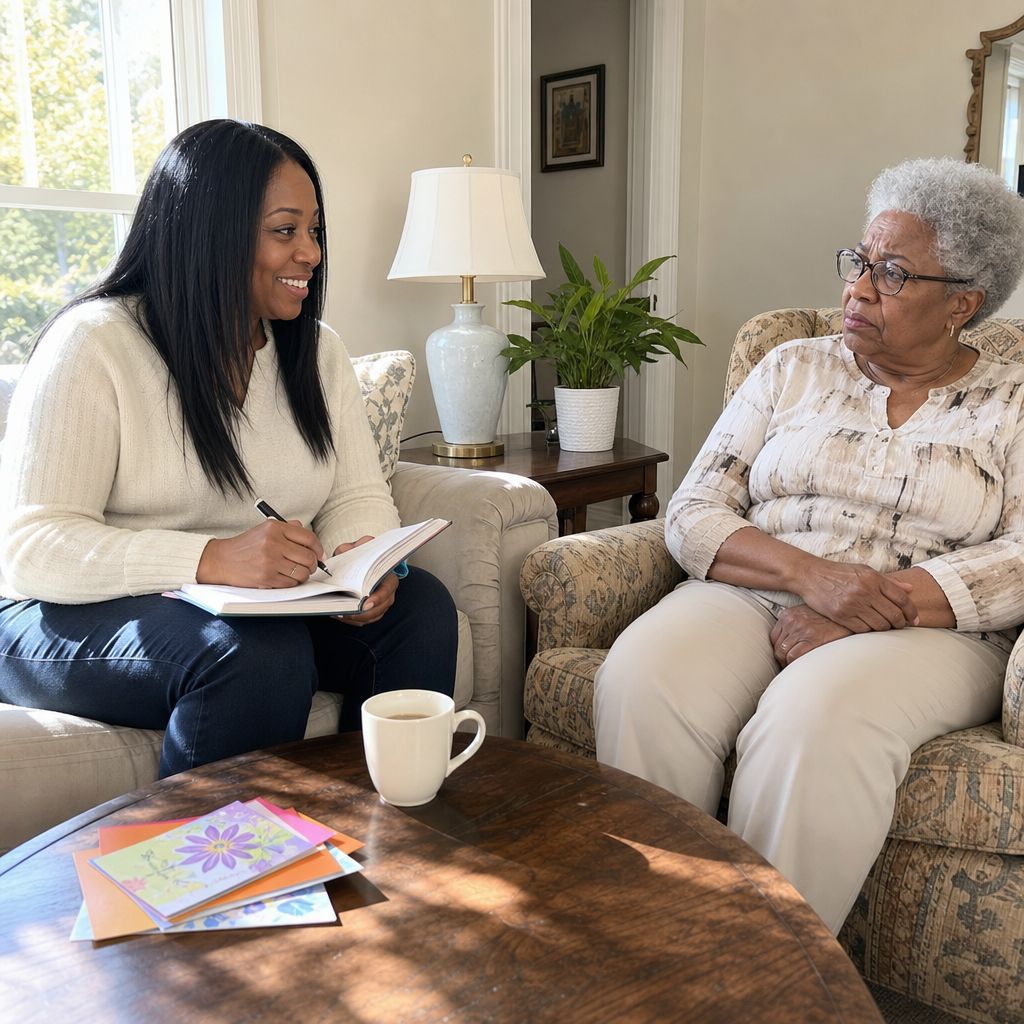
Lila announced it like she was volunteering at a soup kitchen. “I’m going to organize the family calendar,” she said over coffee one afternoon, all bright efficiency and fake humility. “You know, so nobody feels left out.”
Her nails were immaculate, her smile fixed. She tapped her pen against her planner—old-school paper, like she wanted to look wholesome—while I sat there trying to keep my face neutral. Because after the “Support Circle” and the dinner interrogation, I didn’t trust anything that came wrapped in helpfulness.
At first, it looked harmless. A birthday lunch here, a cabin weekend there. Then I started noticing how I’d find out about things the way you find out about an ex’s engagement: too late, through someone else’s pity.
“Oh, we thought you weren’t coming,” my cousin said, confused, when I showed up to a last-minute dinner I’d only heard about because my dad accidentally mentioned it. Lila widened her eyes like an innocent cartoon. “I told you,” she insisted, and everyone nodded like that settled it.
It was the specific little details that stung. The cabin weekend? Everyone packed matching flannels in family photos—except me, because I didn’t even know it was happening. The birthday brunch? They saved a seat at the end like an afterthought, like I was a coworker who’d wandered in.
I realized I wasn’t being forgotten. I was being edited out, event by event, until my absence looked natural.
And the worst part was watching my mother accept Lila’s “organization” like it was relief—like my sister had rescued the family from the inconvenience of including me.
The Screenshot I Wasn’t Meant To See
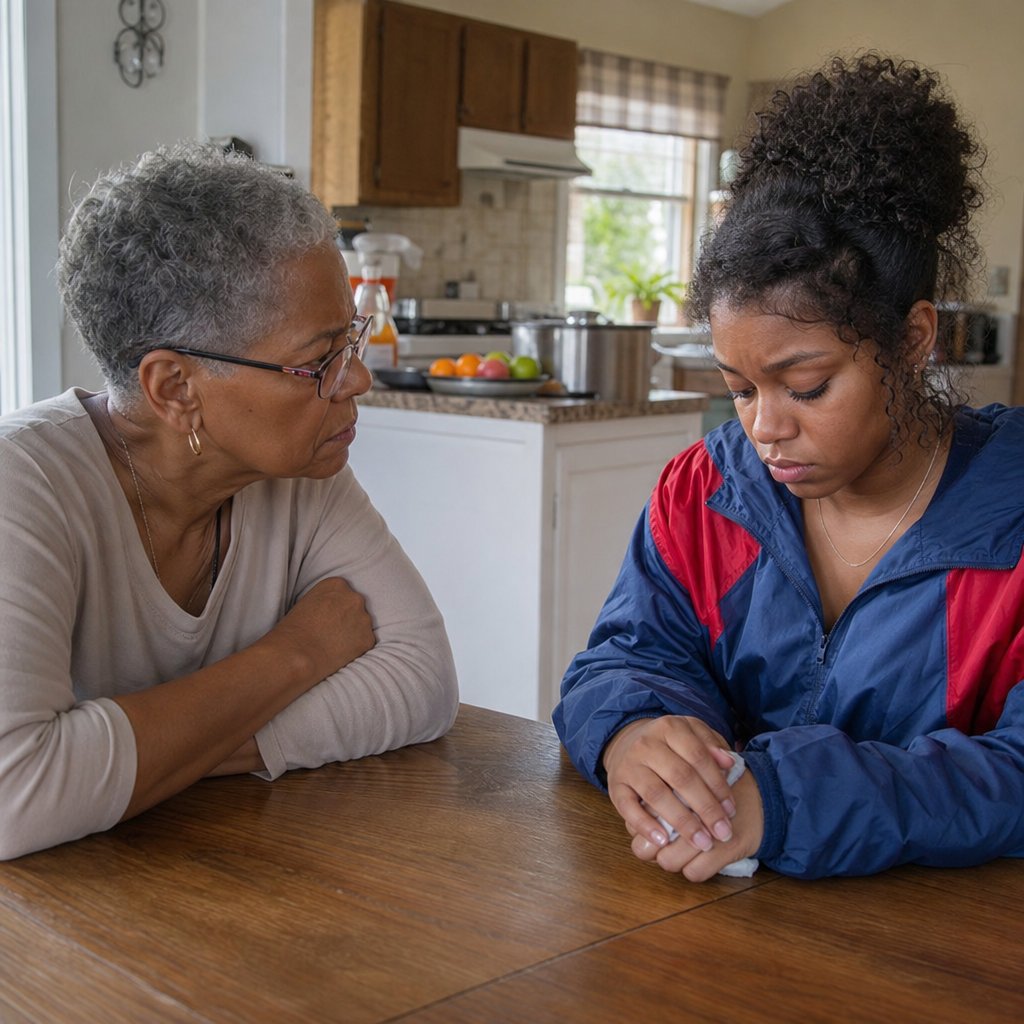
My cousin Mariah called me breathless, the way you sound when you’ve just realized you’re holding a live wire. “Auntie, I— I think I sent you something by accident,” she said, and I could hear the panic in her swallowing.
A minute later, she showed up at my house instead of risking saying it out loud. She stood on my porch in a windbreaker, cheeks flushed, clutching her phone face-down like it was radioactive. “I didn’t mean to,” she whispered. “I just— it popped up and I hit forward without looking. I’m so sorry.”
Inside, we sat at my kitchen table, the surface cold under my forearms. She slid the phone toward me but kept it face-down, like even she couldn’t stand to look at what she’d helped spread. “It’s Lila,” she said. “It’s about you.”
I didn’t need to see a screen to feel the betrayal. Mariah started describing it anyway, words tumbling out. Lila in a chat, telling people I’d “begged” her for money. That I was “scared” and “behind on bills.” That she’d “helped” me but couldn’t keep doing it.
My mouth went dry. Begged. That word wasn’t an accident. That word was a stain you couldn’t wash out once it hit family ears. I stared at Mariah’s hands—fingers twisting a napkin into a rope—because I didn’t trust my own face not to crack.
“Did she show… proof?” I asked, barely getting it out.
Mariah nodded once, miserable. “She had receipts,” she said, and my blood went ice-cold because I knew I’d never given her any.
Her Smile Said Everything
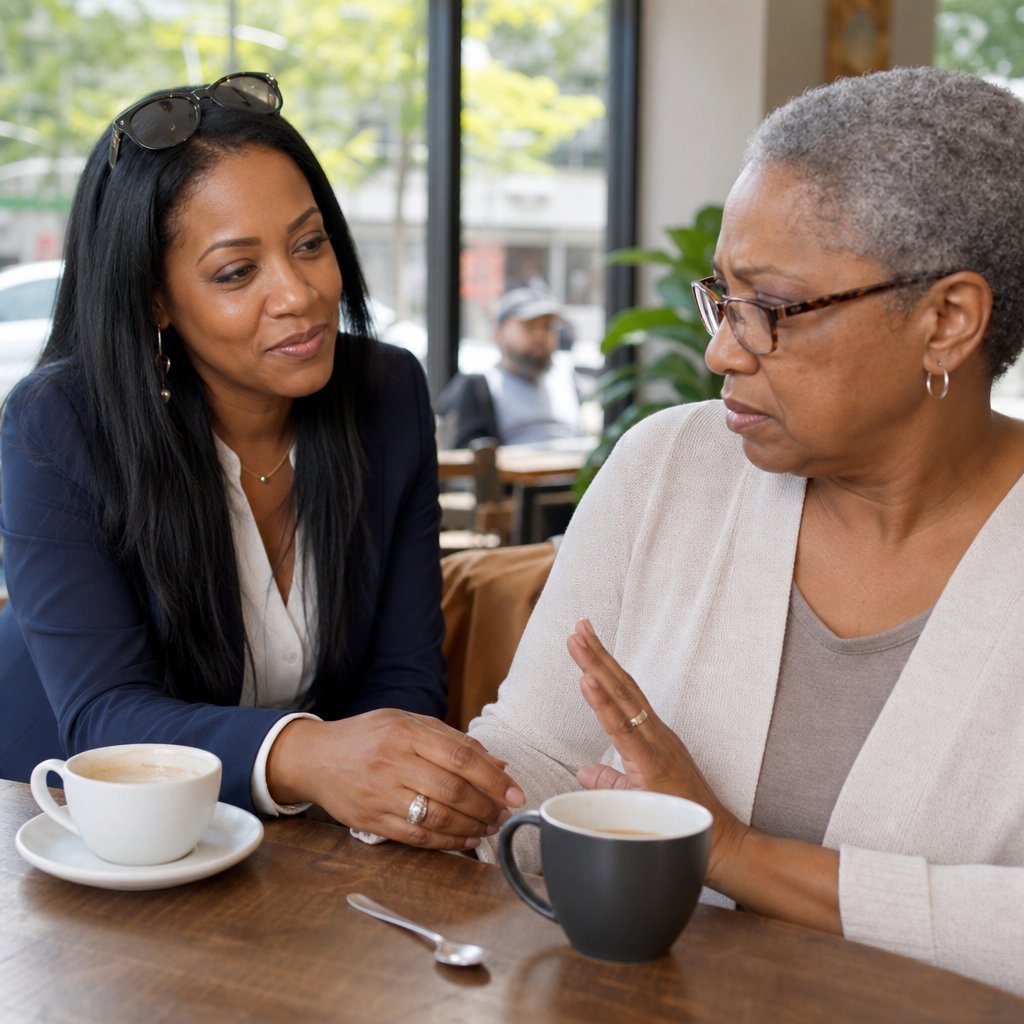
I didn’t confront Lila at a family event. I didn’t give her an audience. I asked her to meet me at a quiet coffee shop off the highway—the kind with sticky tables and a pastry case that always smells faintly burnt.
She arrived in oversized sunglasses and a crisp blazer like she was the one with boundaries. When she sat down, she didn’t even ask what was wrong. She just tilted her head and gave me that patient, pitying look people reserve for “difficult” women.
“You’ve been telling people I begged you for money,” I said, flat. My hands were steady, which felt like a miracle.
Lila smiled. Not surprised. Not offended. Smiled like I’d finally said the line she’d been waiting for. “There it is,” she murmured, stirring her drink slowly. The spoon clinked against the glass, bright and cruel. “The spiral.”
I felt my face heat. “Don’t do that. Don’t call it a spiral. You lied.”
She leaned in, voice soft enough to sound caring if anyone overheard. “I didn’t lie,” she said. “I interpreted. You were stressed. You were overwhelmed. You were asking questions about money, about bills. I was worried.”
“I asked you where you bought those cabinet organizers,” I snapped, and she actually laughed under her breath—like my anger was adorable.
Then she reached across the table and patted my hand like I was her child. “You’re doing it right now,” she said gently. “This is exactly why people worry.”
I yanked my hand back, pulse pounding, because she’d set the trap perfectly: if I got loud, I’d become her story.
And as I forced myself to sit there, quiet and shaking, she glanced past me—eyes widening just a fraction—like she’d spotted someone watching us.
The Receipt That Couldn’t Be Mine
I found the receipt folded into thirds like it had been tucked somewhere fast. It was wedged between the junk mail and a grocery flyer on my entryway table, the kind of thing you’d miss if you weren’t already looking for reasons to doubt your own reality.
It was a store return. My name printed on it. A date stamped right in the middle of the week I’d been out of town, taking photos of my grandbaby at a school play and eating hotel ice from a plastic bucket. I stared at it so long my eyes started to blur. My name. My address. A refund I never got.
I didn’t tell anyone. I tucked it into a cookbook on my shelf like it was contraband, then waited—because by then I understood Lila didn’t just gossip. She set scenes.
Two days later, Mom called in a tone that made my shoulders lift automatically. “My bracelet is missing,” she said, voice trembling with accusation dressed up as worry. “The gold one your father gave me. I can’t find it anywhere.”
I offered to come help her look. She declined too quickly. “It’s fine,” she said. “I just… I don’t know. Things have been strange around you lately.”
My breath caught. Strange. Around me. Like I was a storm system.
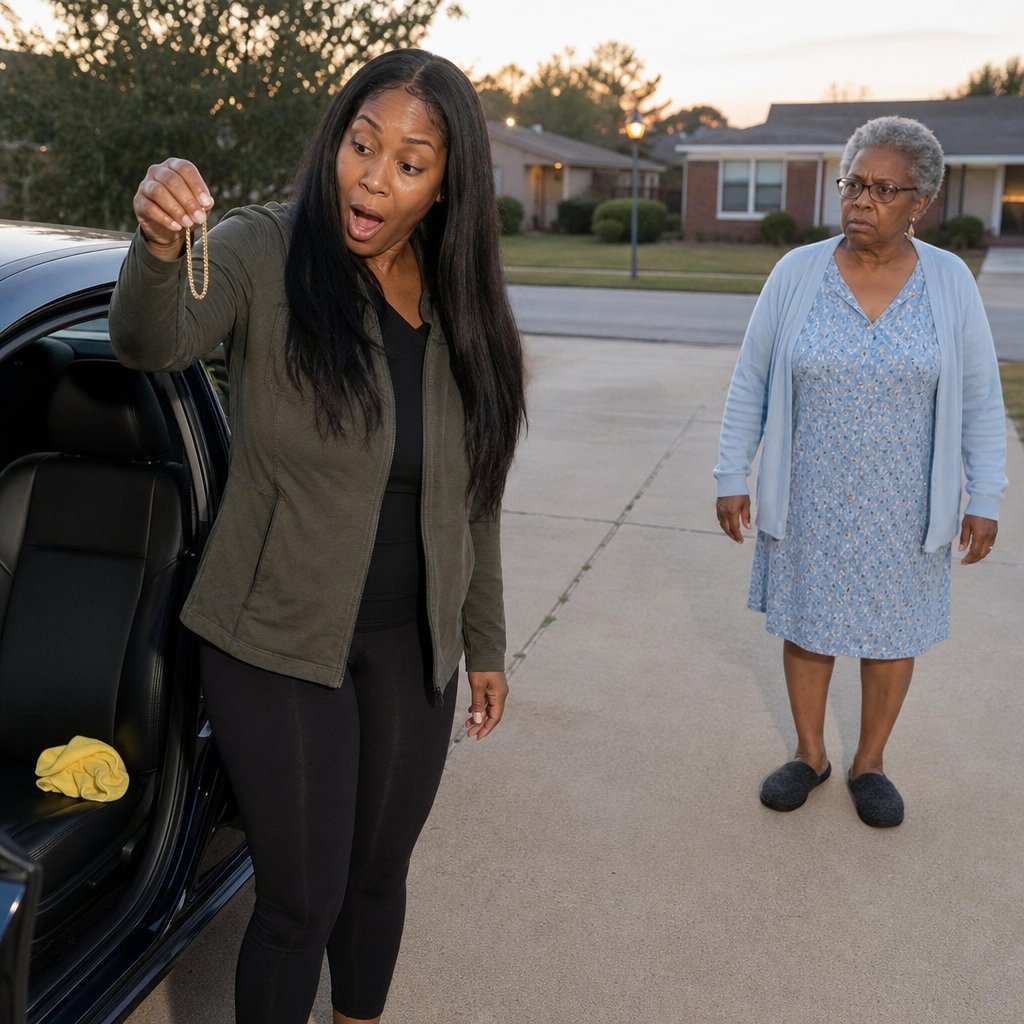
That evening, Lila showed up at my driveway like a hero arriving on cue. She opened the passenger door of my car without asking, leaned in, and—after a theatrical pause—straightened up holding my mother’s bracelet between two fingers.
“Oh my God,” she said, loud enough for the neighbors to hear. “It was in here.”
I didn’t move. I just stared at the bracelet glittering in the dusk, because I’d cleaned that car the day before.
The Drawer Wasn’t Quite Right
When I got the flu, it hit me like a demolition. Fever dreams, sour stomach, that ache in your bones that makes the hallway feel miles long. I hadn’t told anyone but my mother—because I still had that foolish instinct to keep family close when I felt weak.
Lila showed up with soup in a plastic container and a bag of saltines like she was a saint. She stood in my foyer in a bright sweatshirt and jeans, making a show of not stepping too far inside. “I’ll just leave this here,” she said, voice syrupy. “You look awful.”
I was too sick to fight her tone. Too sick to do anything but nod and shuffle back to bed. The soup smelled like garlic and pity. I heard her moving around—light footsteps, a cabinet opening, the soft click of something being set down—then the front door closed.
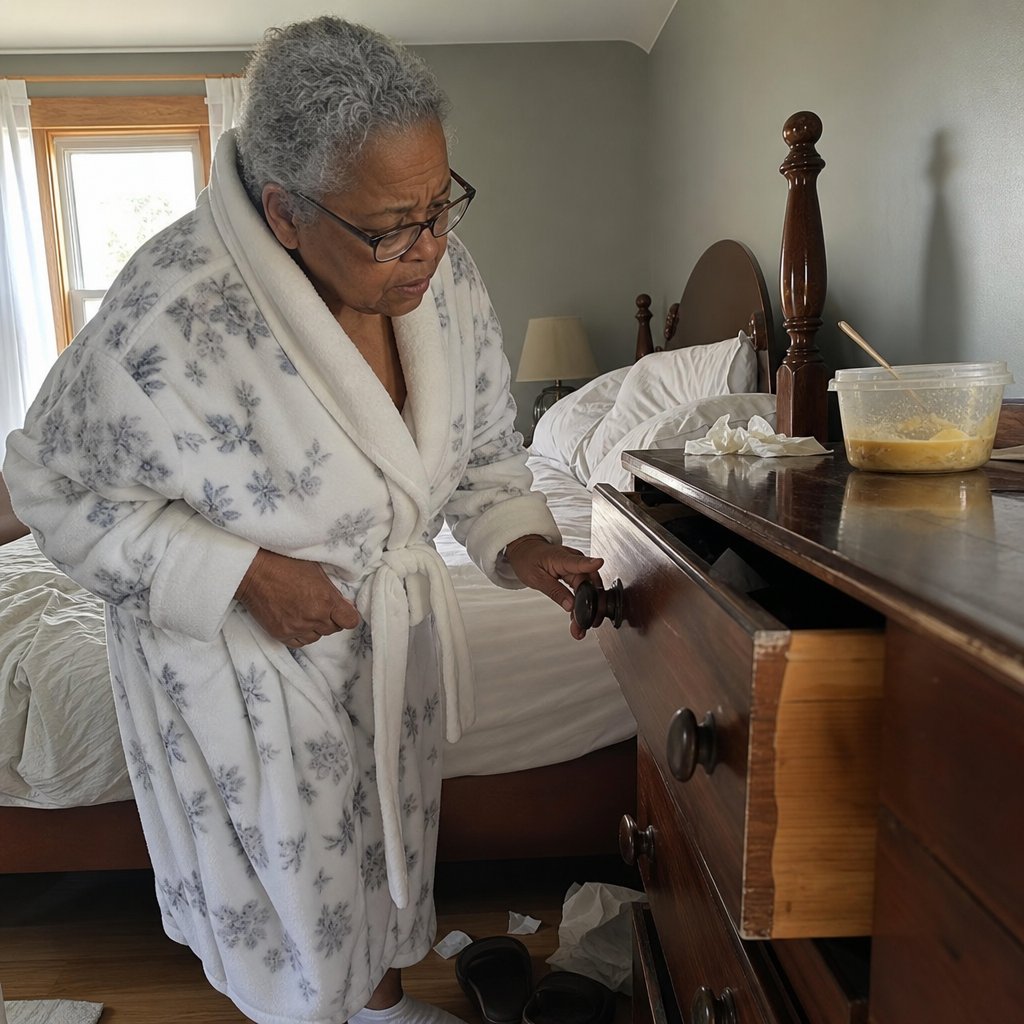
I slept for hours, sweating through my sheets. When I woke up, my mouth tasted like pennies and my head felt stuffed with cotton. I dragged myself to the dresser because I wanted my thermometer, the one I keep in the top drawer next to my important papers.
That drawer was always locked. Always. It was my one small act of control.
I put my hand on the drawer pull and stopped. The edge of it was… wrong. Not wide open—just the tiniest gap, like someone had pried it enough to slip fingers inside and then pushed it back into place.
The lock looked normal. The key was still on my ring. But the wood around the latch had a fresh pale scratch, like a fingernail dragged across it.
My knees went weak, and I realized I didn’t even know what was supposed to be inside anymore.
The Camera Angle Changed
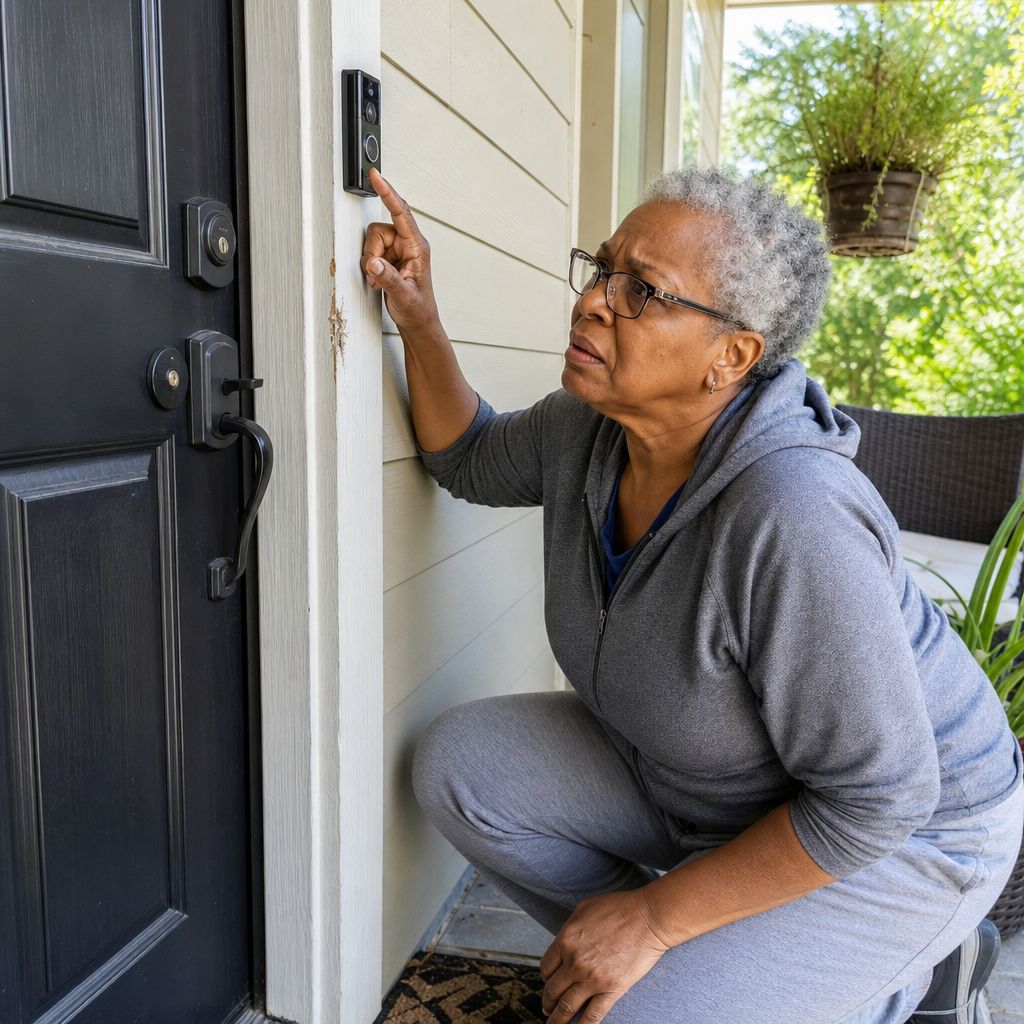
I didn’t announce the doorbell camera. I didn’t even tell my best friend. I installed it like I was hiding a diary—quiet hands, steady breath, no drama. If Lila was going to keep rewriting my life, I needed something that didn’t care who was charming at Sunday dinner.
The first night it was up, I slept with my glasses on the nightstand and my nerves lit like a porch light. I woke before sunrise, that weird half-second of peace before your brain remembers what it’s afraid of.
I made coffee and walked to the front door like I was checking the weather. The camera looked fine at a glance. But then I noticed it: the angle was subtly tilted down. Not enough for someone to spot from the street, but enough that it would catch more of the welcome mat and less of a face.
My hands started shaking, and not from caffeine. I crouched and stared, measuring it with my eyes like a carpenter. I knew exactly how I’d mounted it. Level. Straight. Pointed where it needed to point.
Someone had touched it. Someone had stood right here—close enough to my front door to smell my house, close enough to hear if I was inside—and decided to make sure the camera wouldn’t see what mattered.
I ran my finger along the edge and felt a faint smear, like lotion or oil left behind. My stomach rolled, because it wasn’t just sabotage anymore. It was confidence.
Whoever did it didn’t care about being caught.
And as I stood up, I noticed something else near the doorframe: a tiny scuff on the paint, right where a key would scrape if someone was rushing.
The Fight That Never Happened
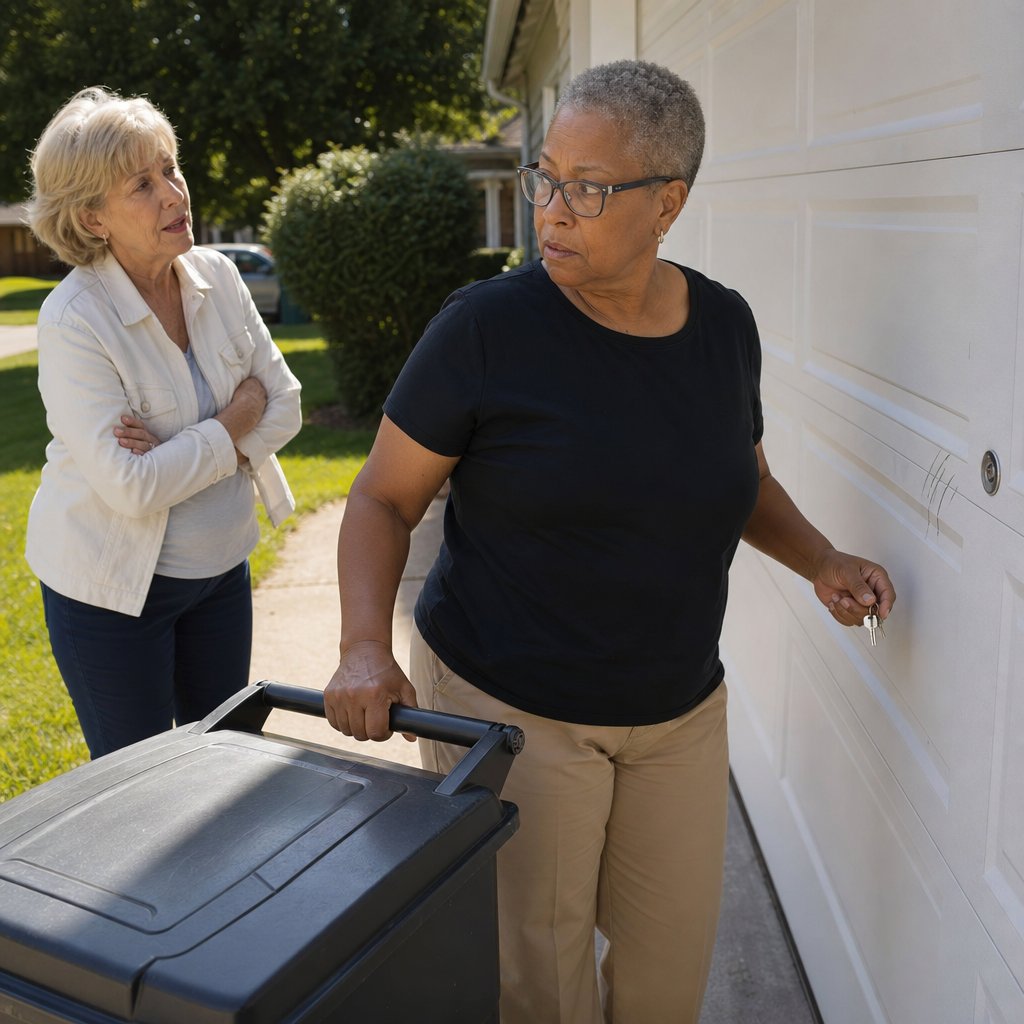
I was dragging my trash bin back up the driveway when Mrs. Kowalski from next door waved me down like she’d been waiting. She had that tight, polite smile people wear when they’re pretending they’re not dying to gossip.
“Honey,” she said, lowering her voice, “are you okay after… you know. The fight?”
I stopped so fast the bin’s wheels squeaked. “What fight?” I asked, and my voice came out sharper than I meant.
Mrs. Kowalski blinked, then did that little backpedal. “Oh—well—maybe it was nothing,” she said, but her eyes were already spilling the story. “I just heard yelling. A woman’s voice. And then someone left in a hurry.”
I stared at her, trying to keep my face from cracking into something ugly. There had been no fight. No yelling. Not from me. Not in my house. The only noise lately had been my own heartbeat in my ears and the quiet click of doors closing behind people who smiled too much.
“When?” I asked, forcing the word out like it weighed fifty pounds.
She hesitated, then shrugged. “Couple nights ago? Around nine? I didn’t want to intrude.” She leaned closer anyway. “I just hope you’re safe. People are… concerned.”
Concerned. That word again. Like a stamp. Like permission.
I thanked her because I’m still the kind of woman who thanks people while they insult her. Then I rolled my trash bin toward my garage, my hands numb on the handle.
Because if the neighborhood believed there’d been a fight, it meant someone wanted witnesses—people ready to swear they’d heard my life falling apart.
And as I turned the key to open my garage, I noticed a second set of faint scratches near the lock that hadn’t been there yesterday.
The Keys In Her Tote
Mrs. Kowalski was still standing there in her house slippers, chin lifted like a judge, when Lila breezed up my walkway with that too-bright smile. “See?” she said, like she’d been invited into the conversation. “Everybody’s worried.”
I swallowed my pride and asked her to come inside—because I needed her close enough to slip.
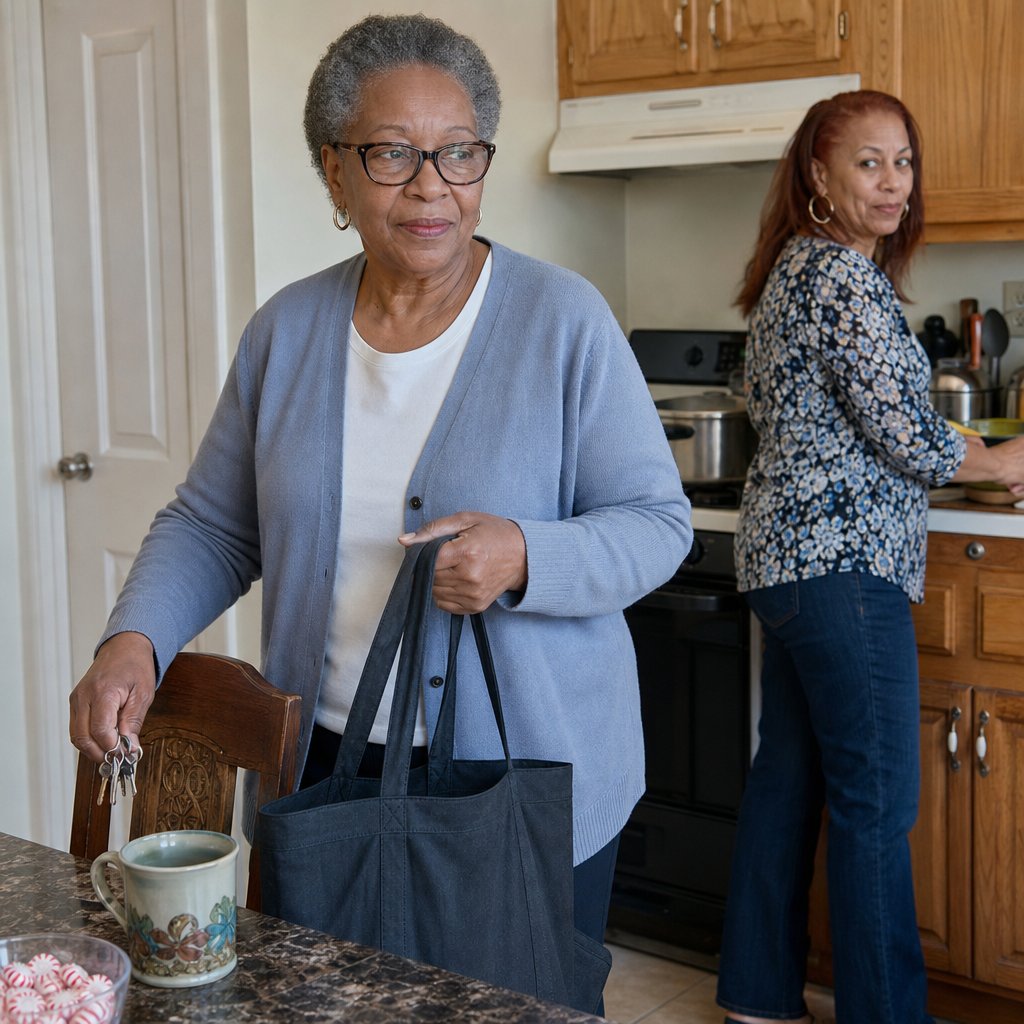
In my kitchen, she made a show of being helpful, patting her tote bag. “Can you grab my wallet? I left it in there.” She said it like she was doing me a favor, like we were sisters who shared sugar and secrets.
I opened her tote on the chair by the table, and the smell of her peppermint gum hit me. There was her wallet, sure. But right beside it—heavy, familiar metal—was a second set of keys on a plain ring.
My keys. Not just similar. Mine. The same little nick on the brass house key from when I dropped it on the driveway years ago. The same small black fob I’d thought I’d lost and replaced.
My fingers froze around them. My heart did that slow, icy slide down my spine.
Lila’s voice floated from the stove. “You find it?”
I closed my fist around the keys so hard the edges bit my palm, then lifted the wallet like nothing happened, while the keys stayed hidden in my hand—burning like proof I wasn’t ready to show yet.
And behind me, I heard Lila stop moving, like she could feel exactly what I’d just touched.
The Lie That Traveled
I didn’t confront her. Not yet. I did something meaner: I fed her a lie and watched where it went.
The next afternoon, I met Lila for coffee and acted tired. I sighed a little too dramatically. “Work’s sending me out of town for a few days,” I said, stirring my drink until the ice clinked. “Honestly, I hate leaving the house empty. I’ve just been… not great alone lately.”
I made my face soft, vulnerable—exactly the face she liked to describe to other people. Lila’s eyes flicked up, interested, like she’d just been handed a fresh knife.
“Oh, baby,” she cooed. “You don’t need to be by yourself.” She reached over and patted my hand like I was a child.
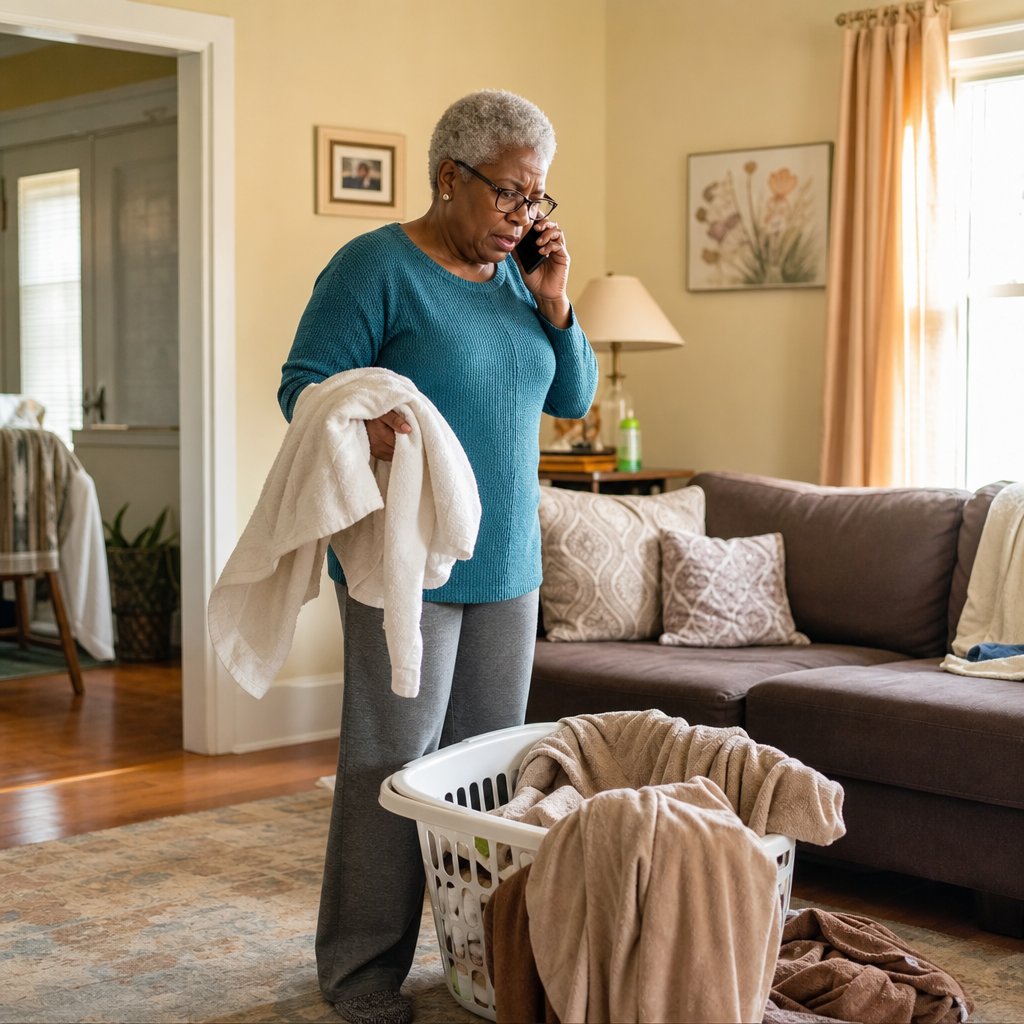
Two days later, my phone rang while I was folding towels. Mom’s name lit up, and I felt my stomach drop before I even answered.
“Why are you leaving town again?” she snapped, not hello, not how are you. “Lila said you’re doing that thing where you run off because you can’t handle being alone.”
The towel slid out of my hands onto the floor. My mouth went dry.
I hadn’t told anyone about a trip. There was no trip. There wasn’t even a work conference on my calendar.
That line—can’t handle being alone—was mine. I’d planted it like bait.
I pressed the phone tighter to my ear and forced my voice to stay steady. “Mom,” I said, “who exactly told you that?”
On the other end, she inhaled like she was about to say something she’d been coached to say.
The Tape That Snapped
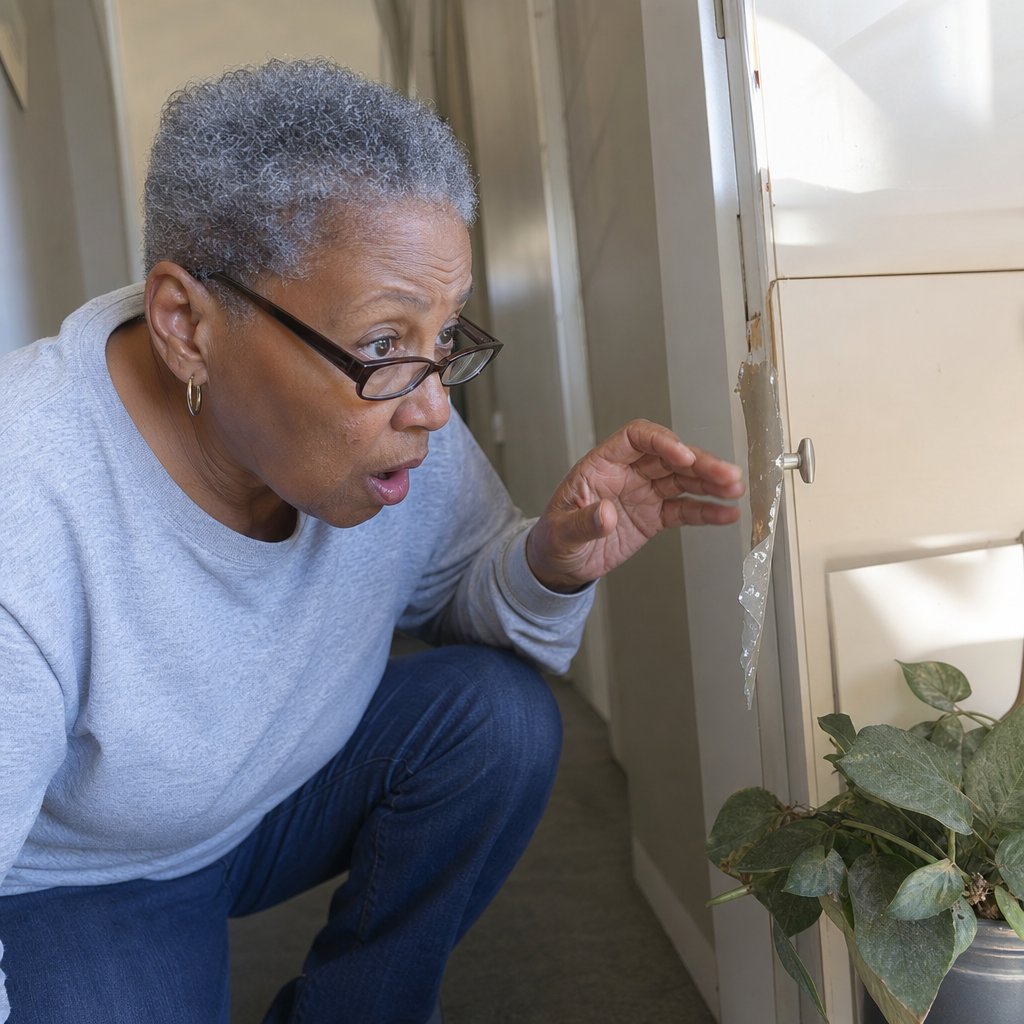
After Mom’s call, my whole house felt like it had ears.
I started small—because small things are harder to argue with. A thin strip of clear tape across the inside edge of my hallway cabinet, pressed down so carefully it looked like nothing. I angled it so if the door opened, it would tear in a jagged little smile.
Then I bought a cheap motion sensor at the hardware store and tucked it behind a plant near the entryway, half-hidden by dusty leaves. Nothing fancy. Just enough to tell me if someone moved through my home like they belonged there.
All day at work, I couldn’t concentrate. Every time my phone buzzed with an email, my pulse jumped anyway. I kept seeing Lila’s hand patting mine at the coffee shop, like she was soothing me while she sharpened something.
When I got home, the air inside my house smelled faintly different—like lemon cleaner that I don’t use. My stomach tightened.
I went straight to the hallway cabinet, pretending I was looking for ibuprofen. My fingers slid along the edge, searching for that smooth line of tape.
It wasn’t smooth.
The tape was torn clean through, one end dangling like a broken fingernail. The cabinet door sat a hair wider than I’d left it, just enough to make you feel crazy if you pointed it out.
I stared at it until my eyes burned.
Someone had been inside my house.
And whoever it was had been careful enough to close the door again—careful enough to think I wouldn’t notice—until the little strip of tape told on them.
My hand shook as I reached for the cabinet handle, because if I opened it fully, I was going to find out what they’d been looking for.
Mom’s Too-Long Pause
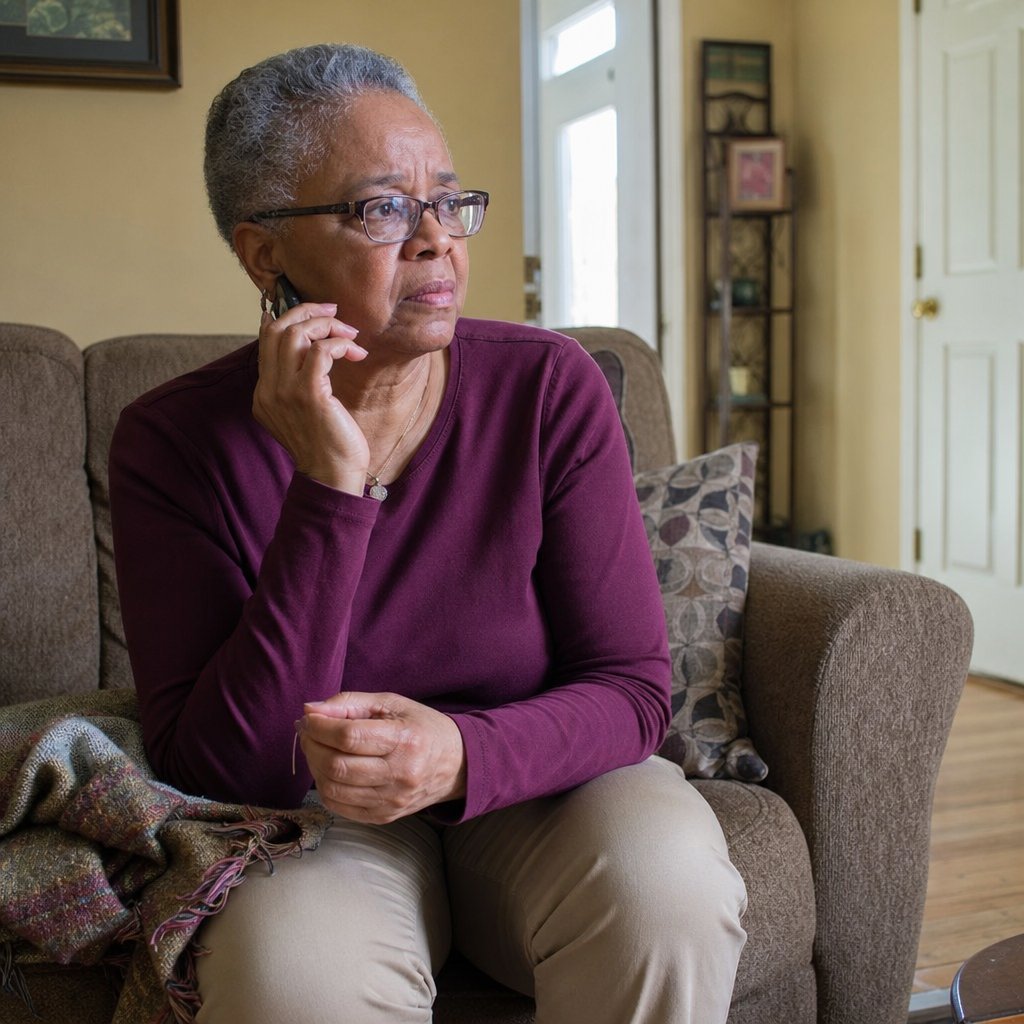
I didn’t even open the cabinet. I backed away like it might bite me, sat on the edge of my couch, and called Mom.
My voice came out too calm, which is how you know I was furious. “Have you been in my house?” I asked.
Silence.
Not the normal old-person pause to find the phone. Not the pause of confusion. This was a pause with weight—like she was looking at somebody across the room for permission.
“Mom?” I pushed. My fingers dug into the fabric of the cushion, nails catching on a thread.
She cleared her throat. “Why would you ask me that?”
“Because things have been moved,” I said. “And I need you to answer.”
Another pause, shorter this time, but worse—because now it sounded like she’d decided on a story.
Finally she said, “Lila said you asked her to check on you.”
I blinked hard. My living room swam for a second, like my body was trying to reject what I’d heard.
“She said I asked her,” I repeated, each word slow. “To check on me.”
Mom’s voice got tight, defensive, like I’d insulted Lila instead of asking about my own front door. “She’s your sister. She worries. She said you’ve been… up and down.”
There it was—the shape of it. Lila didn’t just sneak into my house. She used Mom like a human permission slip. If I got upset, I’d be the ungrateful, unstable daughter. If I accused Lila, I’d be “paranoid.”
I stared at my front door, at the deadbolt that suddenly felt like a joke, and I said, very softly, “Mom… did you see her go in?”
Mom inhaled, and the answer didn’t come right away.
The Key In Mom’s Drawer
I rekeyed the locks the next morning.
New deadbolt. New keys. I watched the locksmith’s hands work like a prayer I didn’t trust. When he left, I stood at my door and turned the key three times, listening to the click like it was a heartbeat I could finally control.
By noon the phone calls started.
Mom didn’t even pretend to be casual. “So you changed your locks,” she said, voice sharp with accusation.
I laughed once—short and humorless. “Who told you that?”
“Lila,” she snapped, like it was obvious. “She’s been trying to help you and now you’re cutting her off. After all she does.”
There it was again: Lila reporting on my house like it was her job. Like she got notifications when I protected myself.
That evening I drove to my parents’ place with my jaw clenched so tight it hurt. Mom was in the kitchen, clattering around with too much force, the air thick with fried onions. I kept my voice gentle—because I needed access more than I needed to win.
“Can I grab a pen?” I asked, and before she could answer, I drifted toward the little junk drawer by the phone—receipts, rubber bands, old batteries, the graveyard of everyone’s secrets.
My fingers sifted through the mess, and then I felt it: a crisp metal edge attached to a brand-new key.
It had a little plastic tag on it.
Mom’s hand slammed the drawer shut so hard my knuckles stung. Her eyes were wide, furious, and scared.
“Why are you digging?” she hissed.
I looked up at her, my heart pounding, because I’d seen the tag before the drawer closed—and I knew exactly what it said.
She Looked At The Lens
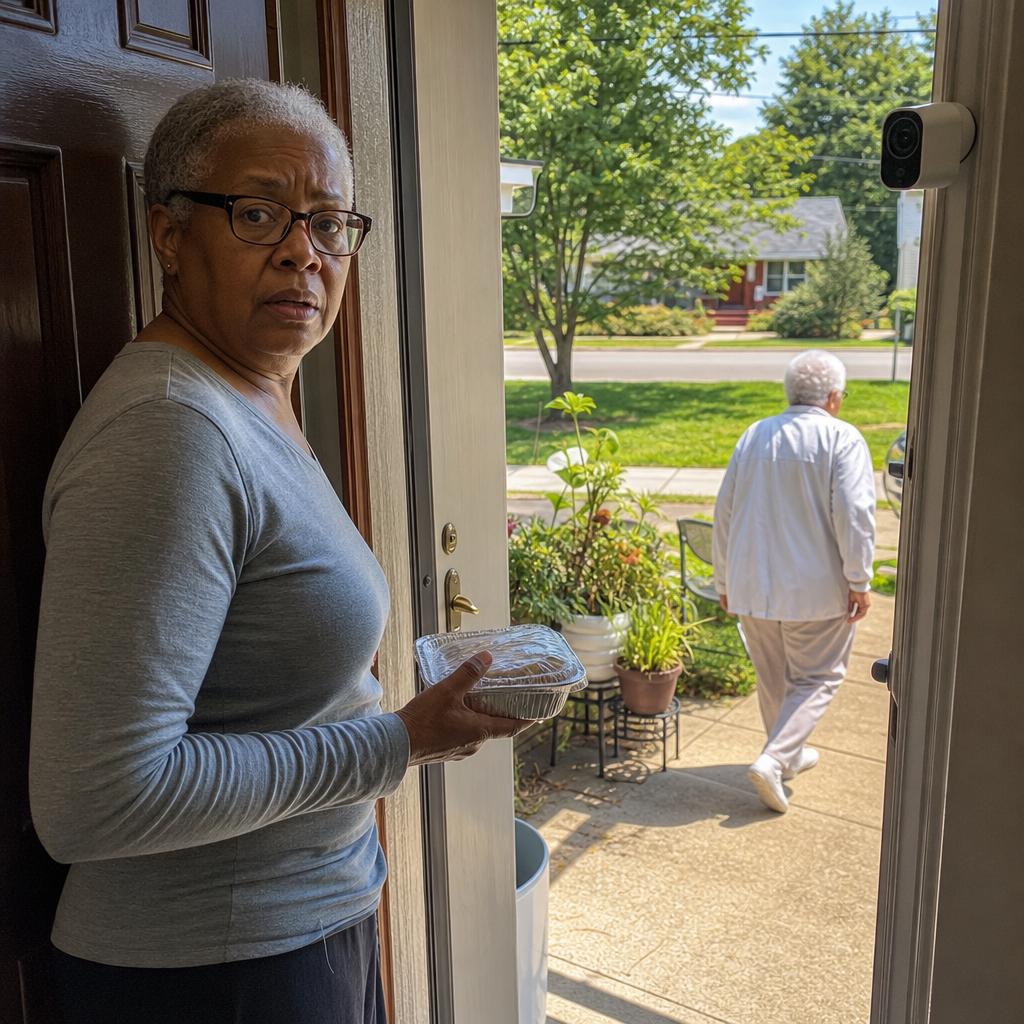
I went home and installed a small porch camera. Nothing dramatic. Just a quiet little eye pointed at my front steps. If anyone asked, it was for packages. If anyone judged, I didn’t care.
Two days later, I checked the footage with my hands sweating like I was about to open exam results.
There was Lila on my porch in a different outfit than the coffee day—white cardigan, dark leggings, neat little sneakers—holding her purse like she belonged there. She didn’t knock. Of course she didn’t.
She reached into her pocket and pulled out a key. The old key.
She tried it once. The lock didn’t give.
She tried it again, harder, her mouth tightening in irritation like the door had personally insulted her. Then she froze, head tilting, listening.
And then—like she could feel me watching from the future—Lila lifted her face and looked straight at the camera.
No surprise. No guilt. Just this cold, flat stare that said, I know you’re catching up.
My stomach flipped. My hands went numb around the device.
That night, Mom dropped off leftovers in a foil pan like everything was normal. She set it on my counter, patted my arm, and wandered toward the hallway like she was just looking around.
I walked her back to the door, smiling like a saint.
After she left, I went to pull the SD card—because I suddenly didn’t trust anything in my house to stay where I put it.
The little slot was empty.
I stood there staring at the open compartment, the smell of warm casserole filling my kitchen, and I realized someone had been close enough to my camera to take what it held.
My Name In Her Cabinet
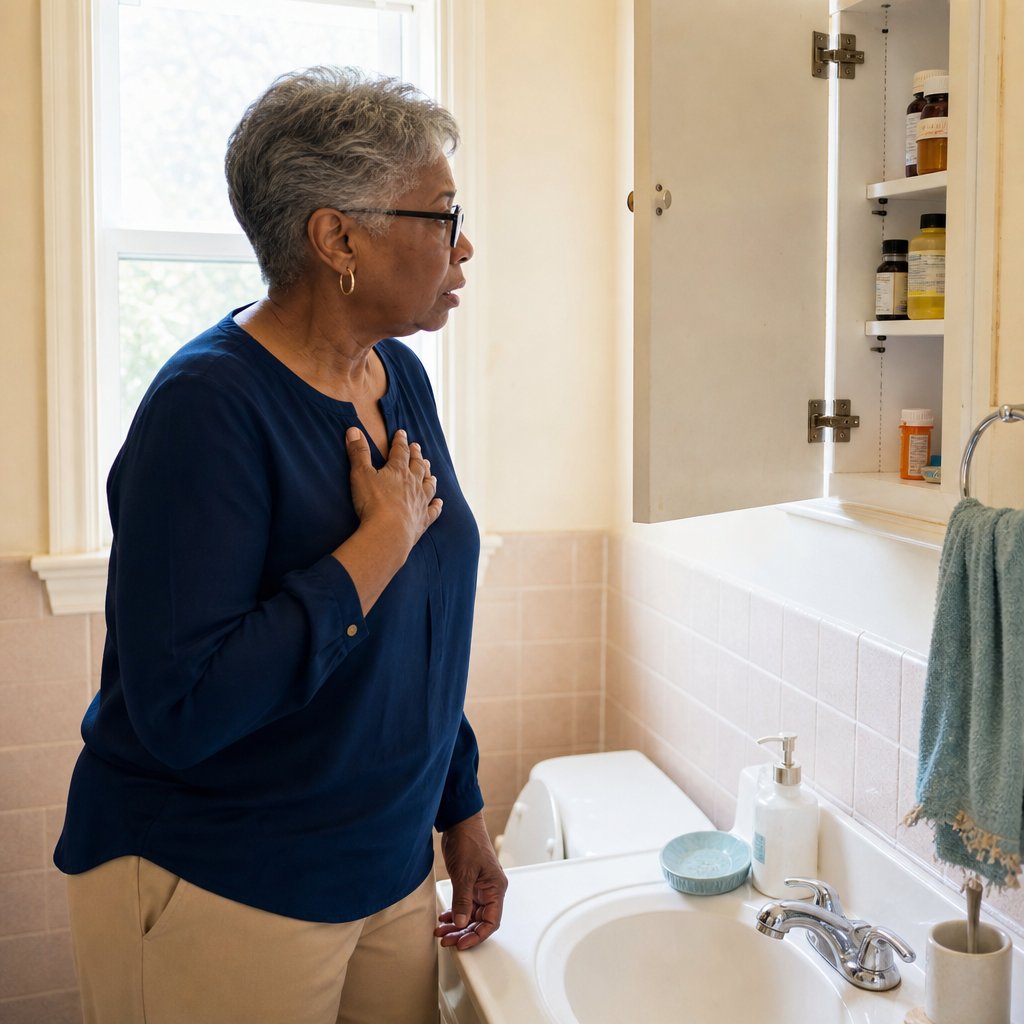
I went to Mom’s house the next day with my stomach in a hard knot and my sweetest voice loaded like a weapon.
“I’m just going to use your bathroom,” I called, like I needed permission in the house I grew up in.
In that tiny bathroom, everything smelled like powdery soap and old towels. I opened the medicine cabinet slowly, like I was opening a confession booth.
And there it was.
My prescription bottle.
Not “a” bottle. Mine. Same pharmacy sticker shape, same childproof cap, same little scuff on the side from bouncing around in my purse. It sat tucked behind Mom’s vitamins like it had always belonged there—like I was careless enough to leave my medication in her bathroom.
I didn’t even touch it at first. I just stared, heat rising behind my eyes. Because if anyone found that, the story writes itself: I’m forgetful. I’m dependent. I’m “not doing well.”
My phone rang in my pocket before I could breathe through the anger. It was my cousin Renee—mid-30s, honey-brown skin, short locs, always whispering family news like it was weather.
When I answered, she didn’t waste a second. “Auntie,” she said, voice low, “Lila’s been telling folks you’re about to accuse the family of abuse for attention.”
I gripped the sink so hard my wrist ached. In the mirror, my face looked older than it had yesterday.
“Who exactly is ‘folks’?” I asked.
Renee hesitated, and in that hesitation I heard the size of the circle Lila had already poisoned.
The Folder She Couldn’t Resist
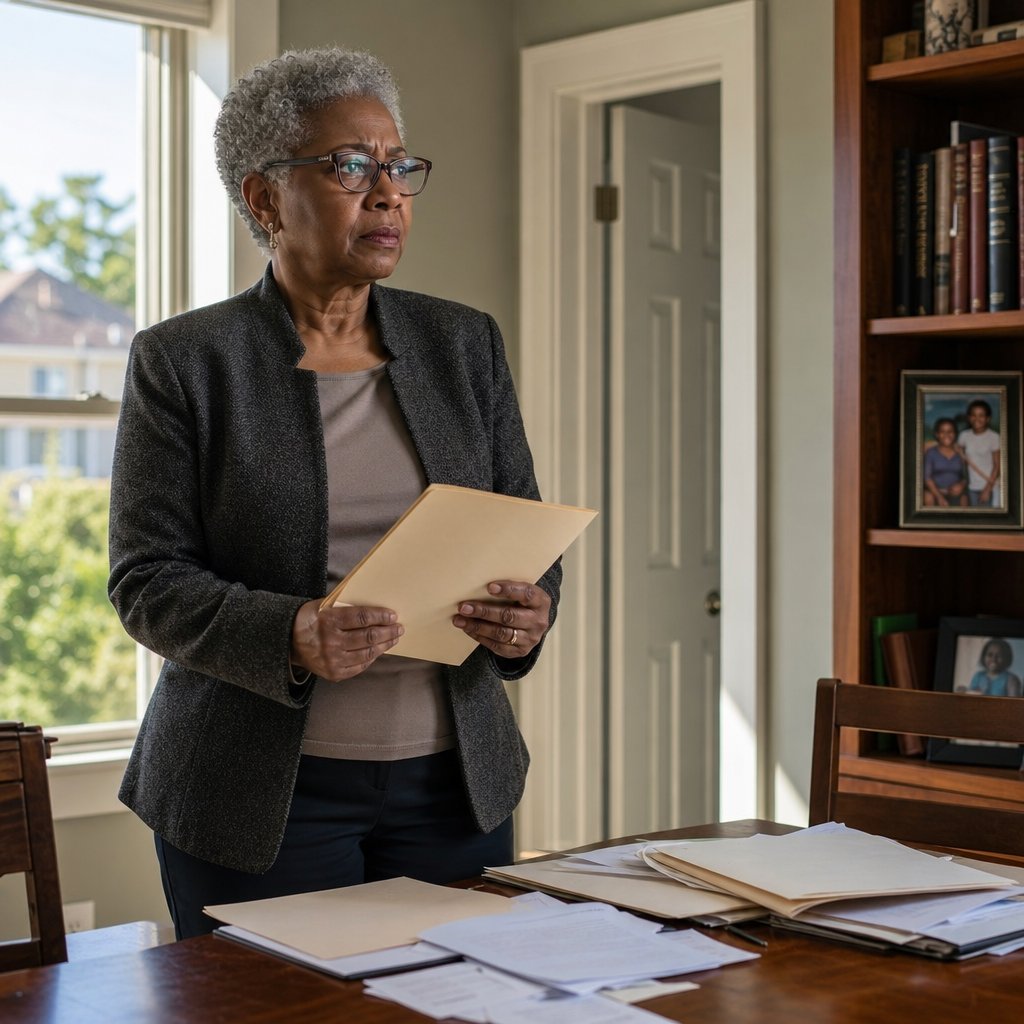
I stopped playing defense like a decent person. Decent wasn’t keeping me safe.
I bought two small indoor cameras and placed them where they looked like boring household clutter—one on a bookshelf angled toward the hallway, one near the kitchen doorway behind a framed family photo. Then I made my little trap: a manila folder on my desk with a bold label that didn’t need to be read out loud to be tempting. It screamed private from across the room.
Inside, I put nothing that could ruin me. Just decoy paperwork—old statements, harmless printouts, the kind of stuff that looks like it could start a fight at Thanksgiving.
I went to work and tried to act normal. I failed. My skin hummed all day, like I could feel my house being touched from miles away.
When I came home, the folder was gone.
Not moved. Gone. My desk looked naked, too neat, like someone had cleaned up after themselves. I stood there, breathing through my nose, forcing my hands not to shake as I scanned the room. A faint scent of Lila’s floral lotion lingered in the air, sweet and smug.
An hour later, the folder reappeared on my desk—slightly crooked, like it had been placed back in a hurry.
I didn’t open it. I went straight to the camera recordings.
There was Lila, slipping in like she paid the mortgage. She wasn’t using the old key. She used a different one—silver, unfamiliar, held with the confidence of someone who’d made copies.
She walked straight to my desk, flipped open the folder, and pulled out her own phone to take photos of my documents, lips pursed in concentration like she was doing office work.
Then she paused, head turning toward the bookshelf camera—like she sensed the room watching her—and she smiled.
The Card I Never Asked For
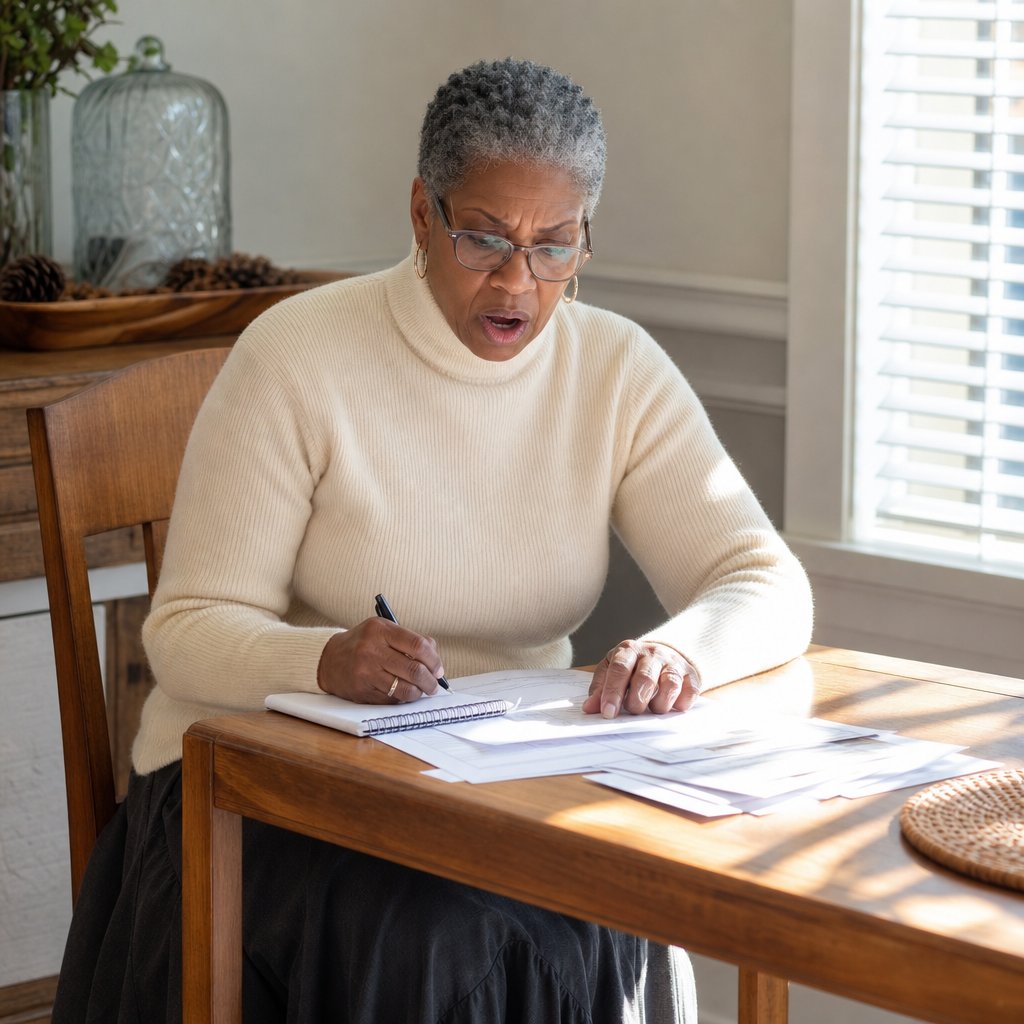
The next morning, I pulled my credit report like I was ripping off a bandage.
I sat at my dining table with a notepad and a pen, the sunlight making sharp rectangles on the wood. My glasses kept sliding down my nose because my hands wouldn’t stop sweating.
And there it was: a store credit card I had never opened.
Not maxed out. Not some obvious crime that screams for attention. It was worse than that—almost tidy. A few charges. A few payments. Paid just enough to look like a normal little account, like I’d casually decided to build points or buy a blender.
My stomach churned as I read the details, because the mailing address wasn’t mine.
It was my parents’ house.
I stared at that line until the numbers blurred. Because that meant someone hadn’t just been borrowing my keys and planting bottles. Someone had rerouted my financial life through the one place I was still expected to trust without question.
My mind raced through every “helpful” thing Lila had ever offered: “I can sort your mail.” “I can organize your papers.” “Let me handle that for you.” Each one a little hook, each one brushed off because it was family.
I thought about Mom’s junk drawer. The brand-new key. The way she’d slammed it shut. The way she’d sounded coached on the phone.
I pressed my pen so hard into the notepad it left a dent. If the card statements were going to their house, who was opening them? Who was paying them? Who was watching my money like it was theirs?
My phone buzzed with a call from Mom, and I didn’t answer. I just stared at the address again, realizing the next move would set the whole family on fire.
The Intervention I Agreed To
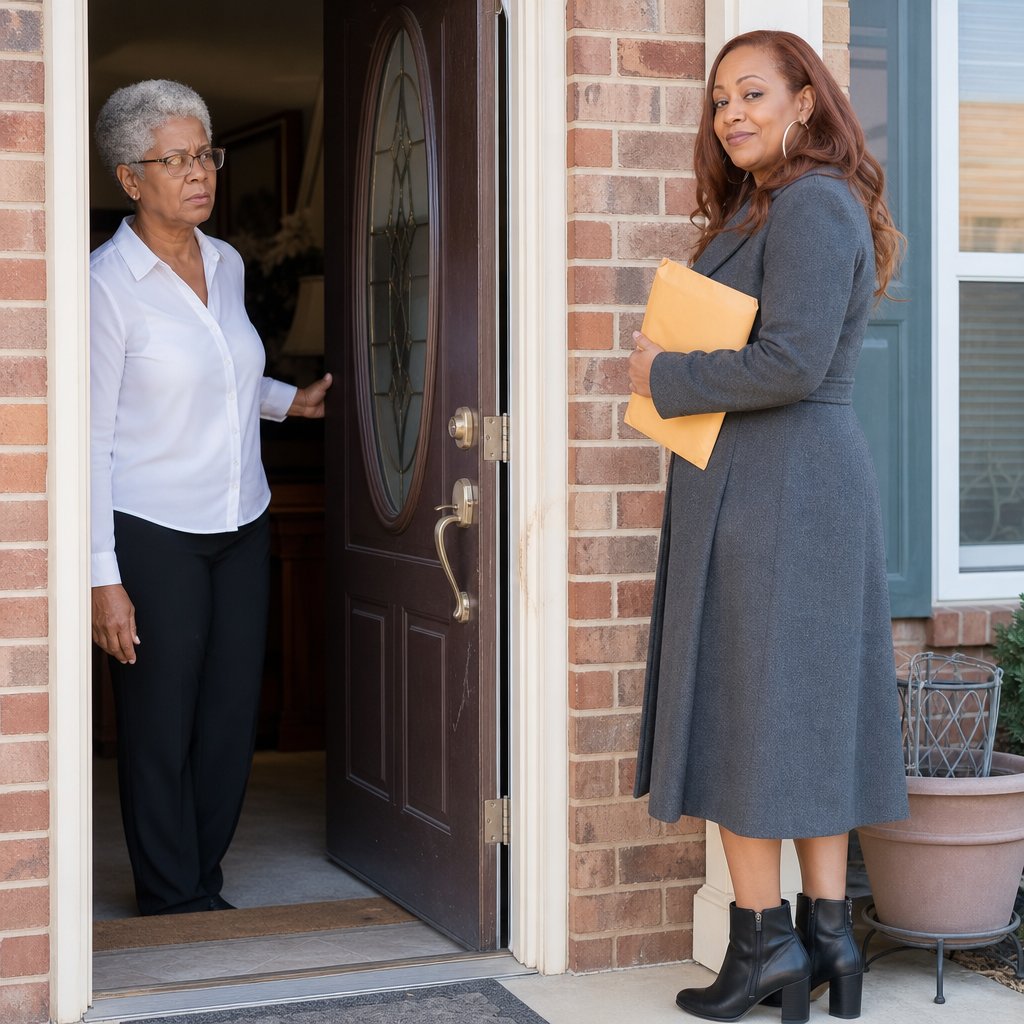
I filed the identity-theft report with hands that felt like they belonged to someone else.
Then I did the part that made my throat burn: I agreed to the family’s “intervention.” At my house. Of course it was at my house—on my turf, in my living room, where they could point at my furniture and decide what it said about me.
Mom called it “concern.” My aunt called it “love.” Lila called it “finally getting you help,” like she was the one bravely carrying me.
I smiled into the phone and said, “Okay.” Sweetly. Calmly. Like I hadn’t spent the last week being broken into and lied about and used as a storyline.
Then I texted Lila an apology that tasted like pennies in my mouth. I told her I’d been defensive. I told her I wanted to be open. I told her to bring her “records,” because if we were going to clear the air, we should have everything on the table.
I could practically hear her purring through the silence.
That evening, I walked through my living room and looked at it the way a prosecutor would. I straightened throw pillows. I wiped the counter. I set out a pitcher of water and paper cups like I was hosting a church meeting.
One concrete sensory detail kept yanking me back into anger: the faint scratch marks near my garage lock, still visible when the light hit them just right—someone’s insistence made physical.
My doorbell rang once, sharp and eager. I checked the peephole and saw Lila on my porch, dressed too nicely for “concern,” holding a thick envelope against her chest like a prize.
I unlocked the door, pasted on my best smile, and stepped back to let her in—already wondering what she thought she had on me.
The Envelope She Weaponized
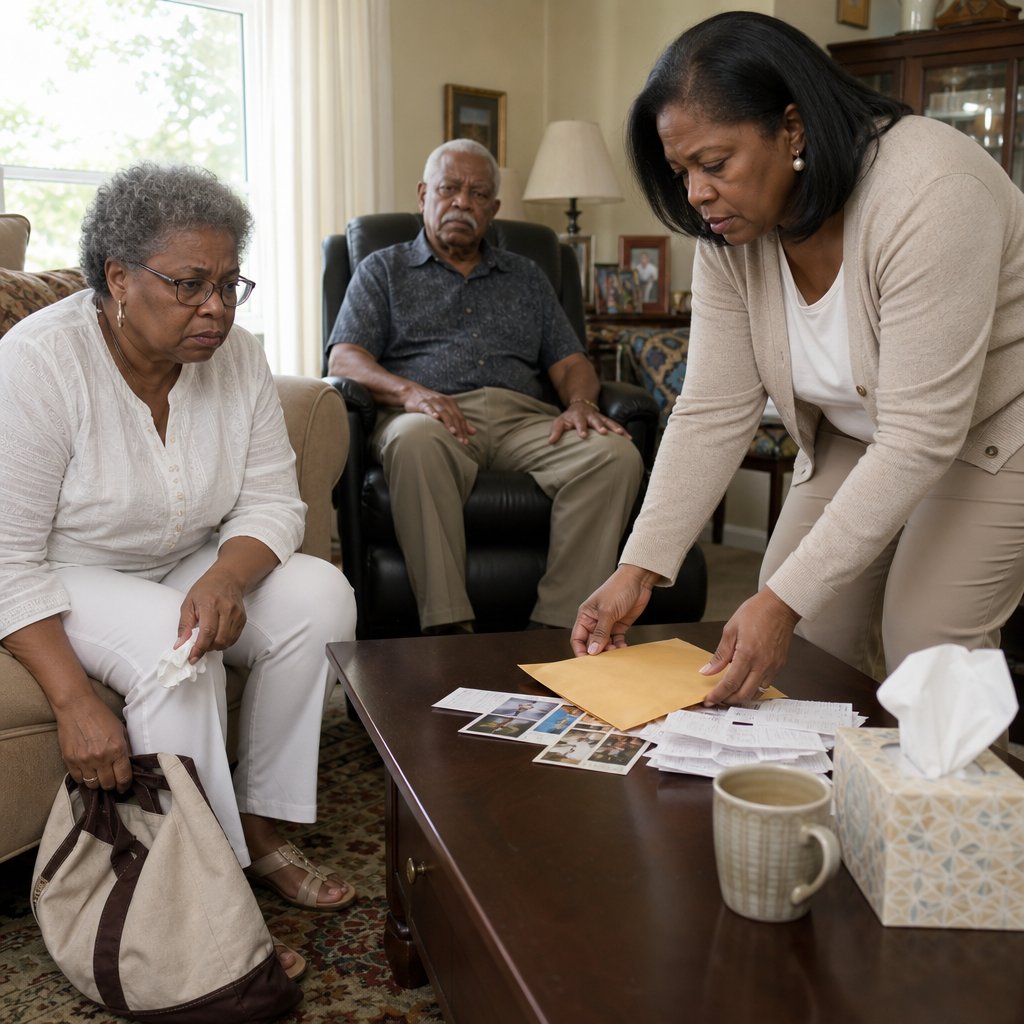
Lila walked in holding that thick envelope like it was a Bible and a blade. She didn’t sit down first—she laid it flat on Mama’s coffee table, smoothed it with her palm, and gave me that sad, careful face like I was a patient she’d already diagnosed.
My whole family was there in their “we’re worried” posture: Dad stiff in his recliner, Mama clutching a tissue she hadn’t used yet, my cousin Rochelle perched on the ottoman like she came for a show. I sat on the edge of the sofa, my knees tight together, my glasses sliding down my nose from the heat in my face.
Lila opened the envelope and started pulling out glossy photos like she was dealing cards. A picture of my kitchen sink with two coffee mugs. A crumpled receipt she claimed she “found” in my trash. A stack of printed messages—no screens shown, just paper—highlighted and circled in neon like a teacher grading my life. She dabbed her eyes and said, “I didn’t want to do this. I tried to protect you.”
Then she went for the throat.
“And before you say I’ve been in your house,” she whispered, voice shaking just enough to sound pure, “you gave me a key. Years ago. You don’t remember because… well.” She glanced at Dad like I was slipping already. “You forget things.”
I felt the room tilt. Mama’s mouth tightened. Dad’s eyes narrowed like he was measuring my sanity on a ruler.
I had everything I’d been collecting—my proof, my little quiet war—sitting in my tote bag by my feet. If I pulled it out in front of them, I’d either look like a woman finally telling the truth… or exactly the paranoid mess Lila had been painting.
And Lila kept sliding the next page out, like she’d saved the worst for last.
The Clip She Couldn’t Deny
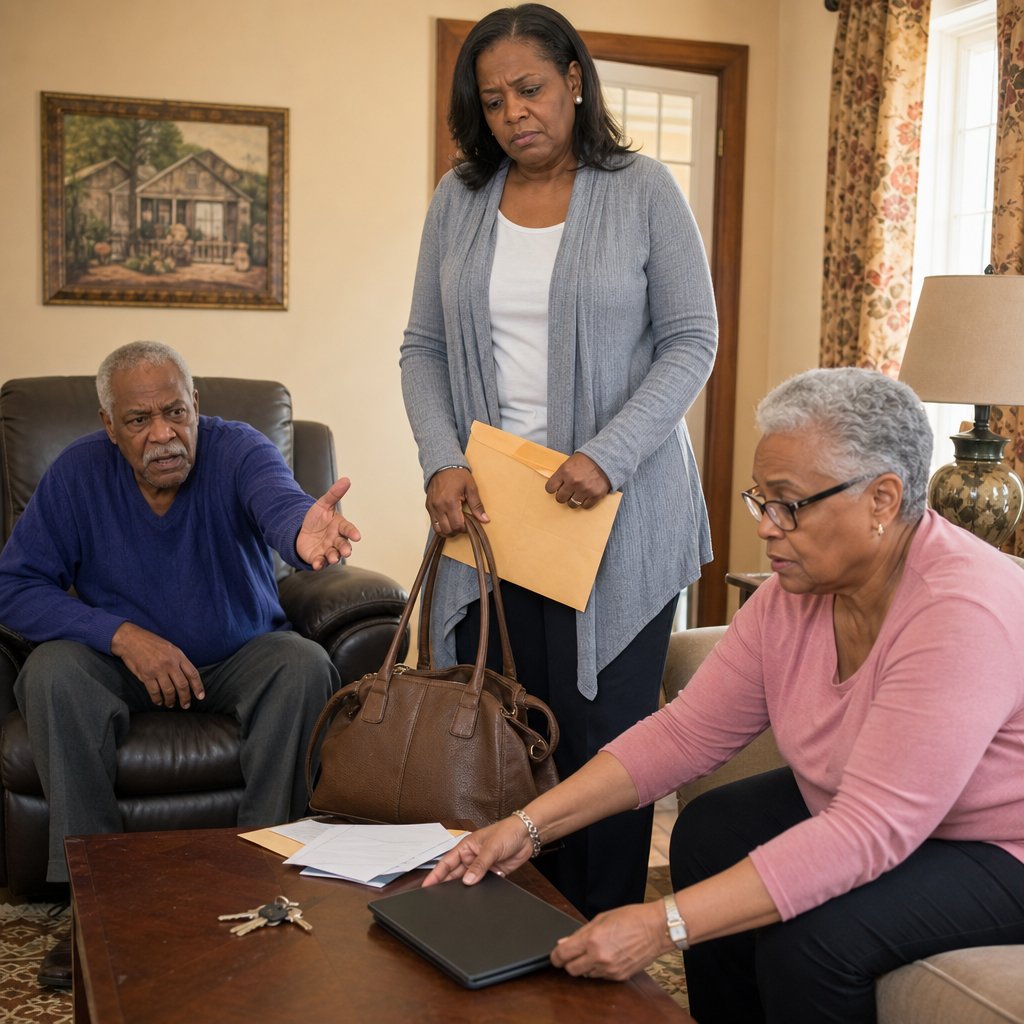
I didn’t ask permission. I just reached into my tote bag, pulled out my small tablet, and set it on the edge of the coffee table like I was laying down a final card. My hands were so steady it scared me.
“Since we’re doing records,” I said, and my voice came out low, almost polite, “let’s do mine.”
I hit play and turned it so Dad could see first.
The footage was grainy enough to feel real and ugly. My front hallway. The little runner rug. The coat rack with my rain jacket hanging crooked. Then Lila—same walk, same shoulders, same automatic confidence—stepping in like she belonged there. No knock. No hesitation. She didn’t look around like a guest. She moved with purpose, straight toward my desk like she’d done it a hundred times.
Rochelle sucked in her breath. Mama made a tiny sound in her throat like she’d swallowed something sharp.
On the video, Lila went right to the camera angle first. She reached up, adjusted it with two quick fingers, and the image jerked like someone being grabbed by the chin. Then she opened my desk drawer and slid something inside—small, pale rectangle—and shut it like she was closing a secret.
Lila’s face went a shade lighter. “That is edited,” she snapped, and the tears were gone so fast I almost admired it. “You’re trying to frame me.”
Dad didn’t even look at me. He stared at her. His voice went quiet in that dangerous way. “Lila. Give me your keys.”
For a beat, she didn’t move. Her fingers curled around the envelope like it was an anchor. Then she smiled—too slow, too practiced—and reached toward her purse.
And stopped.
The Drawer Mama Never Cleaned
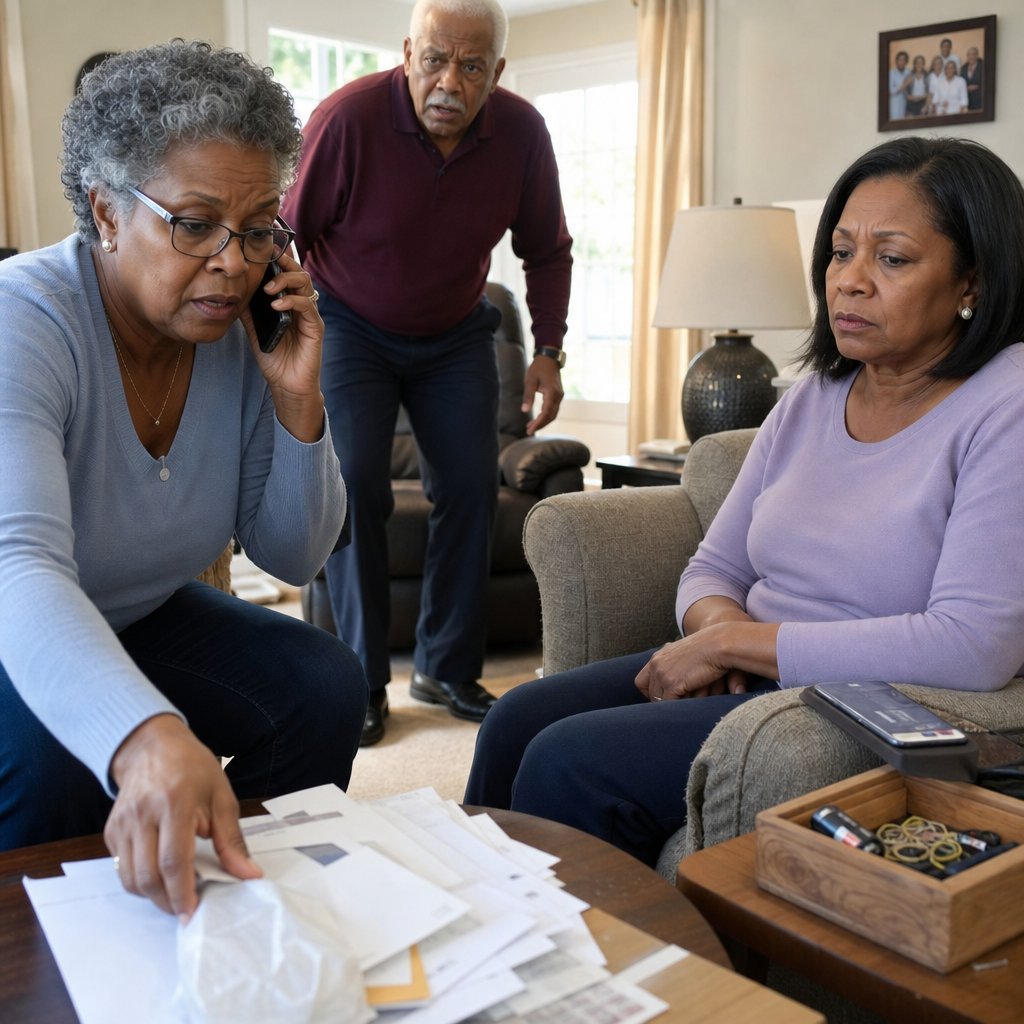
I didn’t let her recover. I leaned forward and slid one more thing onto the table—an ugly, wrinkled bundle of mail I’d photographed and then quietly replaced where it came from: Mama’s junk drawer. The one with dead batteries, rubber bands, and old birthday candles that smelled like dust.
“Before anybody calls me confused,” I said, and my mouth tasted like pennies, “I want you to see what she was hiding at your house.”
Mama blinked hard. Dad’s eyebrows lifted like he couldn’t believe I’d gone into that drawer. Lila’s eyes flicked to the bundle and then away, quick as a lie.
There were envelopes with my name misspelled the way only one person in our family always did it—an extra letter, like a little sabotage tucked into ink. There were bank-looking notices with the corner torn off. There was one official-looking piece, folded too many times, creased like it had been panicked over.
Rochelle reached like she wanted to touch it, then pulled her hand back like it might burn.
And then my phone rang.
The whole room went still, like even the air didn’t want to make a sound. I answered on instinct, holding it to my ear, not letting anyone see anything. A man’s voice—calm, trained—said, “Ma’am, this is Detective Harmon. I just need to confirm the number associated with the fraudulent application. The one it keeps circling back to.”
I couldn’t breathe. Dad’s head snapped toward me. Mama’s tissue finally crumpled in her fist.
Then Lila’s phone—face-down on the arm of the chair—lit up with a call.
And the number glowing on her screen matched the one the detective had just said out loud.
The Look On Her Way Out

Dad stood up all the way then, slow and shaking, like his bones were arguing with his pride. He didn’t yell. That was the scariest part. He pointed at the door like he was drawing a line in the carpet.
“Get out,” he said. Two words. Clean. Final.
Mama made a sound like she wanted to protest—like motherhood was trying to stand between consequences and her child—but nothing came out. She just stared at the mail on the table, her eyes wet and wide, like she was seeing her own house differently now.
Lila didn’t cry. Not anymore. Her face changed so fast it gave me chills. The softness dropped off her like a coat sliding to the floor. She picked up her purse, tucked the envelope under her arm, and smoothed her cardigan like she was going to church, not being thrown out.
She leaned close enough that I could smell her perfume—too sweet, like something trying to cover rot—and she murmured, “You think this makes you look innocent?”
I didn’t answer. I couldn’t. My throat felt sealed shut with all the years I’d swallowed her version of me.
At the doorway she paused and turned back, and for the first time all afternoon she looked directly at me—not past me to the audience, not up at Dad for approval. Just me.
Her eyes were cold calculation, like a ledger balancing itself.
Then she smiled, small and sharp, and stepped into the hall like she already had somewhere to go with my name in her mouth.
And as the door started to close behind her, she said one last thing—quiet enough that only I heard it.
Would you confront the person spying on you secretly?