



He Wasn’t Graham Here
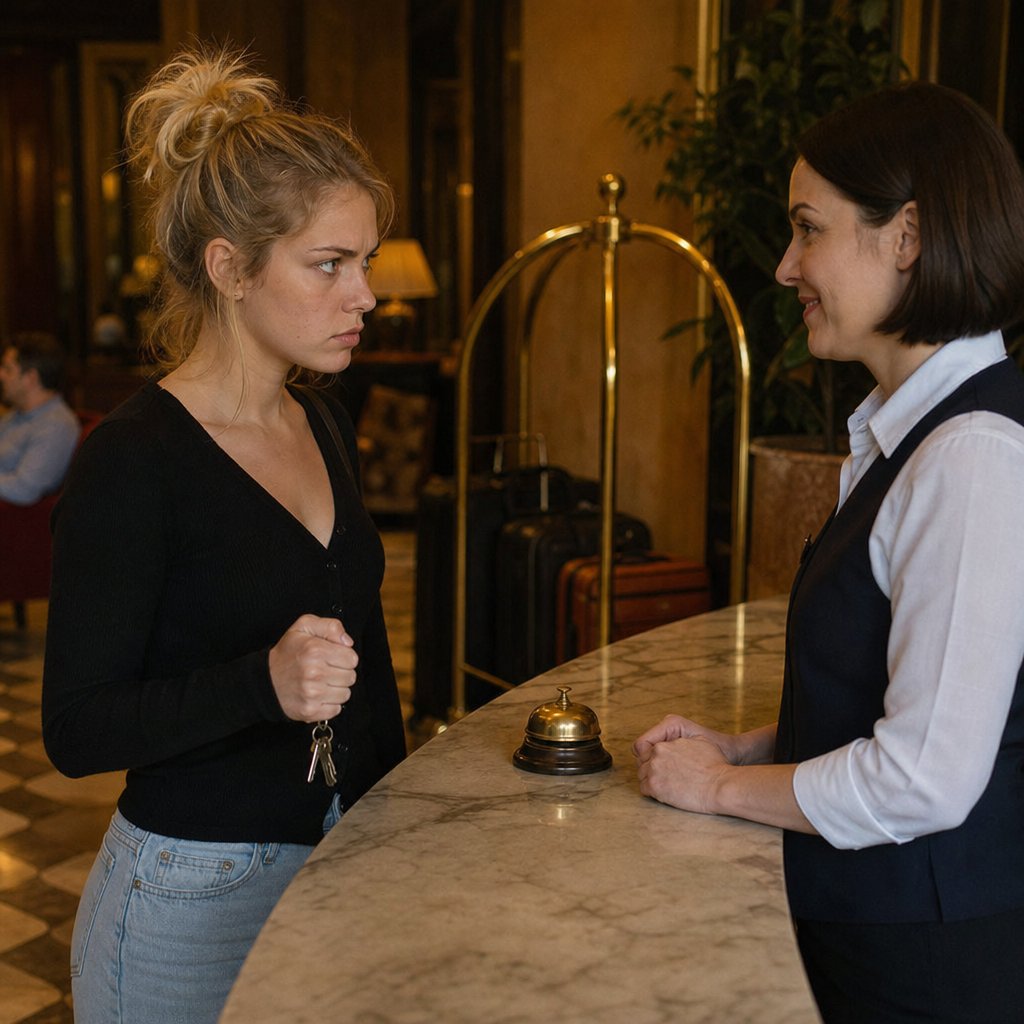
“Try Graham H.”
The boutique hotel clerk’s smile didn’t just freeze—it flickered, like I’d tapped a bruise. Her fingers hovered over the keyboard, then moved too fast, too practiced, and she looked past me at the brass luggage cart like it could save her. That tiny, guilty pause was louder than any alarm.
“And… your last name?” she asked, sweetly, already knowing the answer was going to be a problem.
My throat tightened. I gave it anyway. She typed, then her eyes did that thing people do when they’re trying not to react—down, up, neutral, like she was swallowing a comment. I watched the reflection of the lobby chandelier wobble in her glossy nails and felt my stomach drop in slow motion.
“We don’t have a reservation under that,” she said, too quickly. Then, softer: “Could it be under a different name?”
A different name.
I blinked at her, waiting for her to laugh, to say she was mistaken, to say sometimes the system glitches. But she didn’t. She just kept that careful customer-service face while her eyes begged me not to ask the next question.
Because she recognized him. She’d seen him here. Just not as my husband.
My hand tightened around my car keys until the metal bit my palm. “Okay,” I whispered, forcing my voice steady. “What name do you have him under?”
Denver Didn’t Match Anything
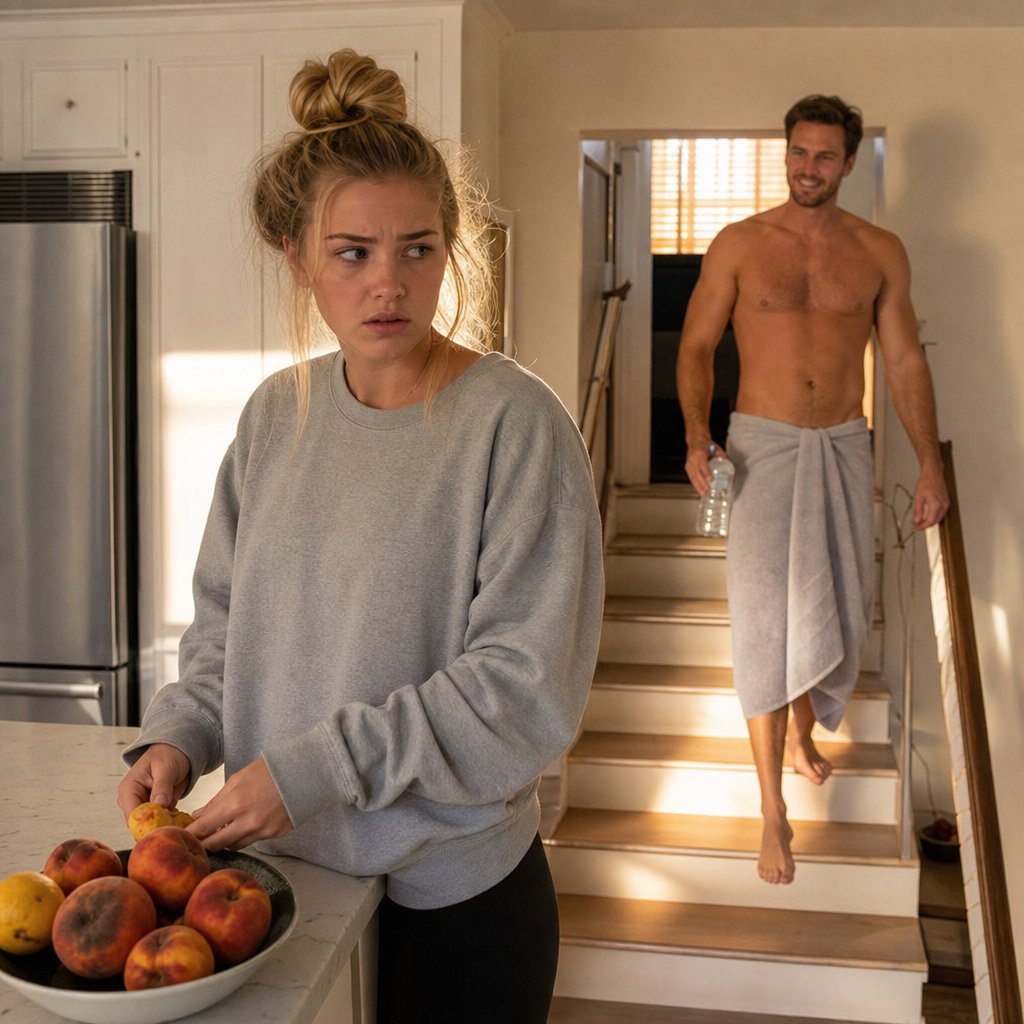
Back home, Graham announced it like he was telling me the weather. Shoes kicked off, tie loosened, that relaxed stretch in his shoulders like he’d earned the right to disappear.
“Denver client week,” he said, grabbing a bottle of water. “Leaving Monday. Back Friday.”
I watched him swallow, Adam’s apple bobbing, and waited for the part where he’d add some detail—names, a schedule, a complaint about airport parking. He didn’t. Just that neat little package of an excuse, wrapped and sealed.
When he went upstairs to shower, I moved like my body already knew the steps. I opened the company’s public events page on our tablet at the kitchen island, the one we used for recipes. My thumb shook as I scrolled.
There it was in clean, corporate bullet points: a local leadership summit. Our city. Same week. Mandatory attendance for “all directors and above.” Graham was a director. He’d bragged about it at Thanksgiving, like it was a trophy he could set on the table next to the mashed potatoes.
No mention of Denver. No client week. No travel.
I stared at the fruit bowl—three bruised peaches and a single lemon—and felt something sour rise in my throat. If his team was supposed to be in-office, then what exactly was he packing for?
Upstairs, the shower turned on. The sound was suddenly violent, like it was trying to wash away more than sweat.
I set the tablet down carefully, like it might explode. When he came back down, smiling, towel around his waist, I forced my face into something normal.
“Denver, huh?” I said, light as air, while my heart slammed against my ribs. “Which client is it again?”
The Lie Was Too Easy
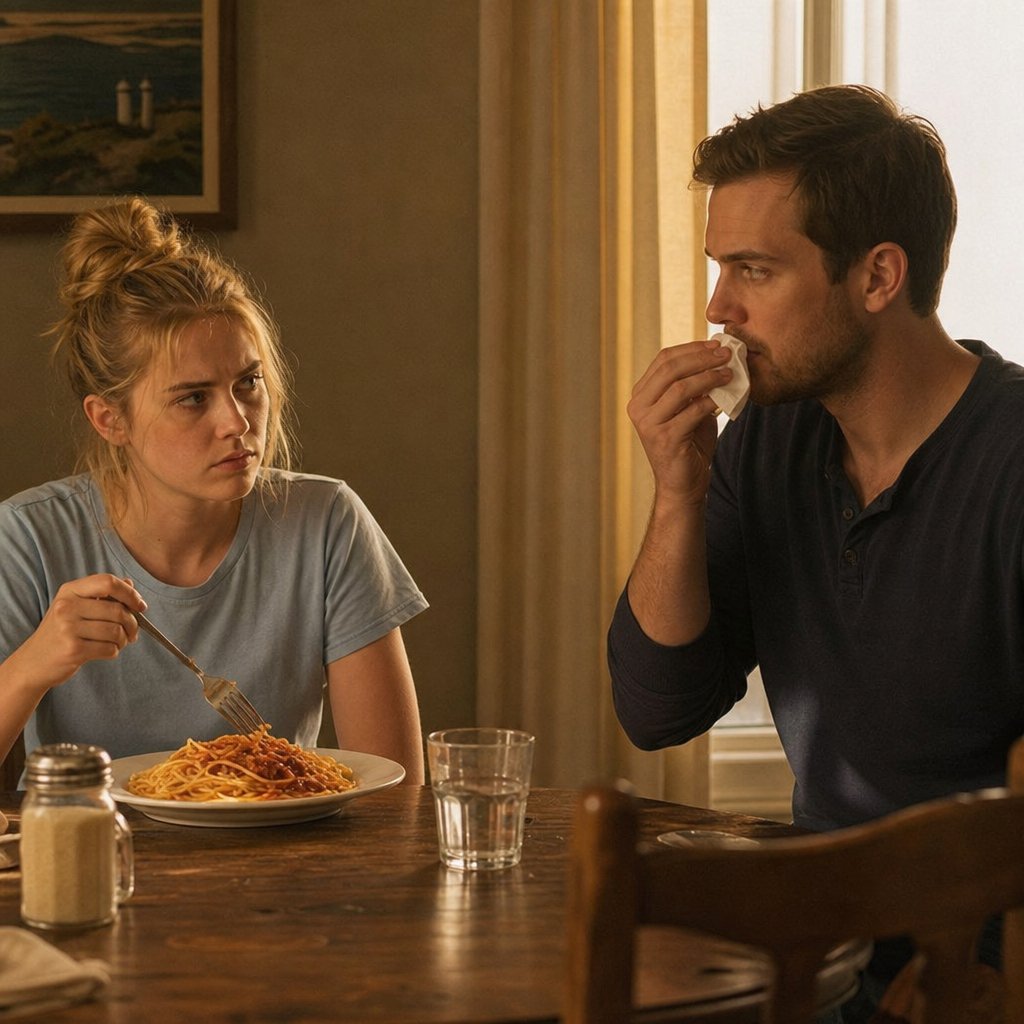
At dinner, I tried to do it like a normal wife. Like the kind of person who didn’t have a private hurricane spinning behind her eyes.
I twirled spaghetti and kept my voice airy. “Isn’t your team in-office Thursday?” I asked, like it was small talk. Like I hadn’t seen the leadership summit with his job title practically stamped on it.
Graham didn’t blink. He didn’t even pause to chew. He just wiped the corner of his mouth with his napkin—slow, confident—and said, “Different division.”
Different division.
He said it the way people say “traffic” or “weather,” like the explanation was so boring it didn’t deserve oxygen. Then he smiled at me, not warm—polished. Like he was checking a box labeled HANDLE MARA.
My fork hovered midair. I studied him the way you study a stranger who’s wearing someone you love’s face. His hair was still damp at the temples from the shower, and he smelled like his usual cedar deodorant. Everything about him looked normal, which made my skin prickle.
“Oh,” I said, and forced a little laugh I didn’t feel. “Right. Different division.”
He reached for the parmesan and dusted his plate, calm as a saint. “You worry too much,” he added, like it was affectionate.
And that’s what sliced me open: not the words, but how easy it was. How rehearsed. Like he’d told that exact lie before, to someone else, in another kitchen, under another light.
I took a sip of water and tasted metal. My hands were steady on the glass, but my stomach was doing that slow, sinking thing—like an elevator cable had snapped.
Across the table, Graham’s eyes held mine for one beat longer than normal. Then he smiled again, and I realized he was watching to see if I bought it.
I smiled back.
Inside my head, I made a decision I didn’t say out loud: I was going to stop asking questions he could answer.
Three Shirts, One Problem
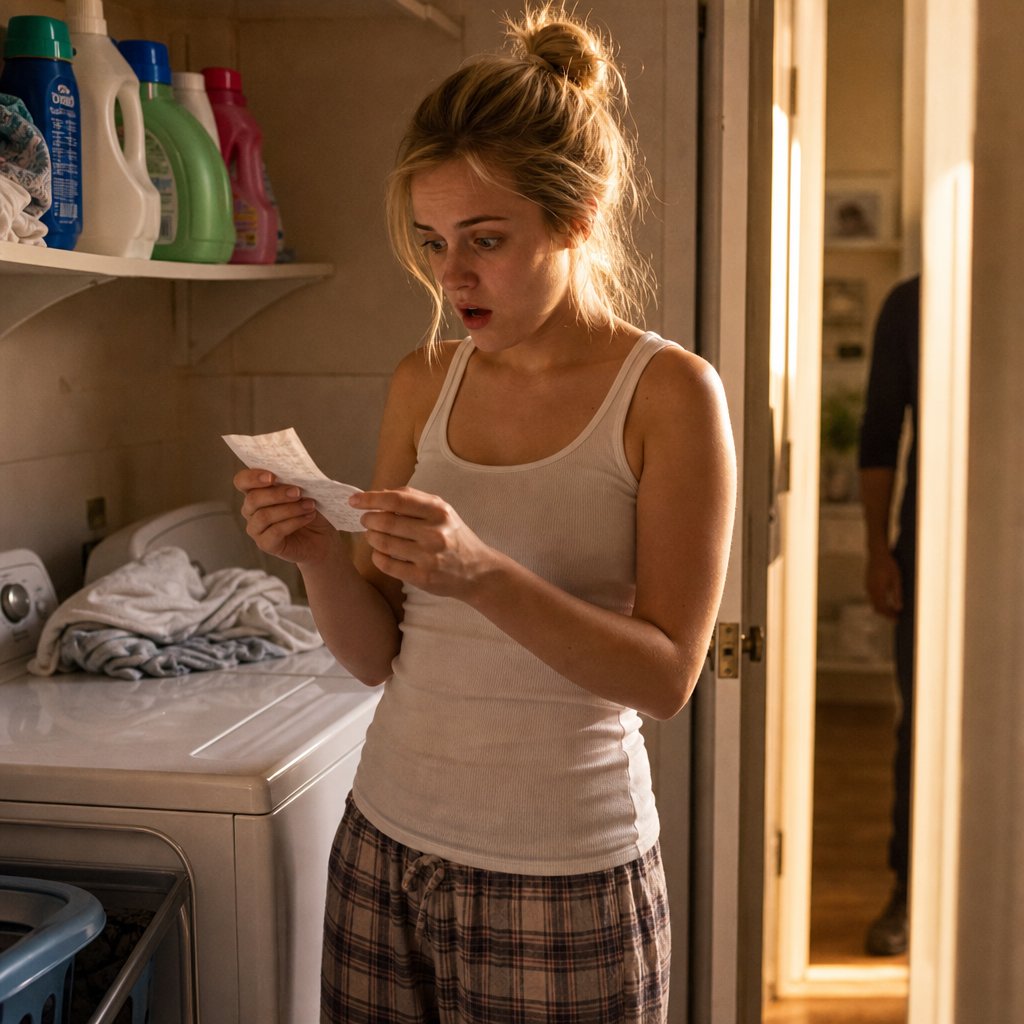
I didn’t go hunting. I swear I didn’t. I was just emptying his pockets because if I didn’t keep the laundry moving, it piled up and then somehow it became my fault.
His suit pants were heavy in my hands, warm from the dryer, and something crisp crackled inside the pocket. A receipt. Dry-cleaning. I smoothed it on top of the washing machine with my palm like it was nothing, like it wasn’t about to rearrange my entire life.
Two dress shirts. Graham’s size. Fine.
And then a third line item: one men’s shirt, smaller cut. Not his. Not even close. Graham was broad-shouldered, built like someone who’d played a sport in high school and never let it go. This shirt was for someone slimmer, narrower in the chest. Someone who’d borrowed a closet and left a fingerprint behind.
I held the receipt up to the laundry room light and felt my face go hot. The paper smelled faintly of chemicals and starch, that sterile clean that suddenly made me nauseous.
Maybe it was a mistake. Maybe the cleaner mixed it up. Maybe—
But the date on the receipt matched his last “Denver” trip. The one where he’d come home tired, kissed my forehead like a duty, and tossed his suitcase straight into the closet like he couldn’t wait to bury it.
I stared at the washer’s round glass door, my own reflection warped in it: messy blonde bun, wide eyes, mouth slightly open like I was trying to breathe through a punch.
Upstairs, Graham’s footsteps crossed the bedroom. I could hear him humming, careless, while I held proof that another man’s clothing had been cleaned on my husband’s dime.
I folded the receipt into a tight square and slid it into my pocket, my fingers shaking.
Then I heard the closet door open.
The Wrong Lanyard Date
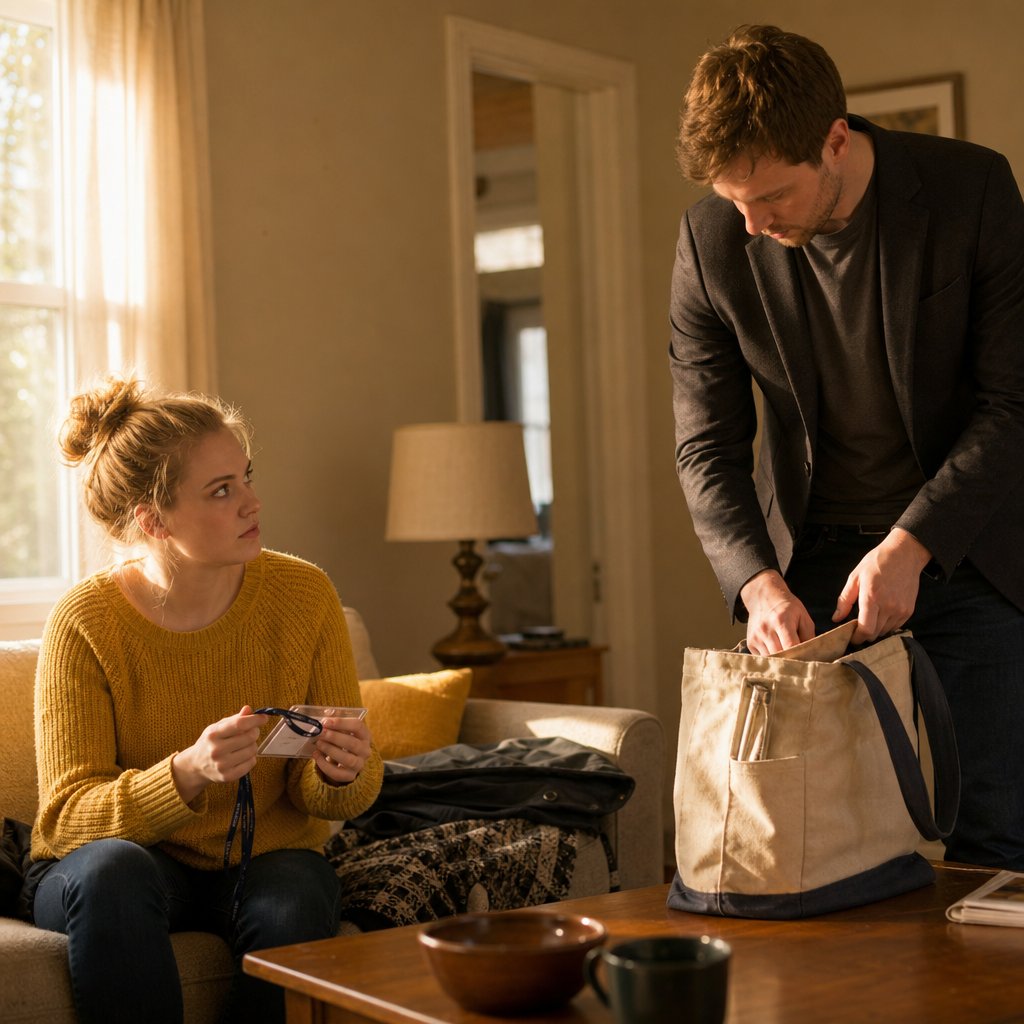
He came home swinging a conference tote like a prize, bright and cheerful in a way that made my teeth ache. “Look,” he said, dropping it on the couch. “Swag.”
The bag was canvas, stiff, too clean for something that had supposedly been dragged through airports and conference halls. He pulled out a lanyard and tossed it toward me like a bone for a dog.
I caught it on instinct. The plastic badge holder slapped my palm, cold and glossy. I didn’t even have to look closely—my eyes went straight to the date.
It wasn’t last week. It wasn’t even this month.
The event had ended two months ago.
I looked up slowly. “This… isn’t current,” I said, keeping my voice level with everything I had left.
Graham laughed, loud and easy. “Babe, they reuse stuff. It’s not a big deal.” He leaned over the kitchen counter, casual, like I was the one being dramatic. Like I was the one making it weird.
I turned the badge over in my hands. The edges were scuffed, like it had already lived a whole life before it got to me. It smelled faintly like cologne that wasn’t his—something sharper, expensive, too floral to be accidental.
“So,” I said, swallowing hard, “you went to an event that ended two months ago?”
His smile didn’t change, but his eyes did. They went flat for half a second, like a curtain dropping. Then he reached out and gently tapped the lanyard with one finger, patronizing. “You’re overthinking. Honestly, Mara. It’s a lanyard.”
He said my name like a warning.
My cheeks burned with that humiliating mix of anger and doubt, like he’d poured it on me. He picked up the tote again, rummaging, and I heard something clink—metal against metal—inside an inner pocket.
I stared at the tote, at the pocket he hadn’t opened all the way, and my pulse kicked hard.
The Blank Location Field

I waited until he fell asleep the way he always did—fast, effortless, like guilt was a myth other people invented. His breathing turned heavy, and the bedroom filled with that warm, stale mix of his deodorant and our fabric softener.
I slipped out of bed and went to the hallway calendar board we kept for groceries, bills, and the little lies we called plans. I’d written “Dentist” in my neat handwriting. He’d written “Client Dinner” in his, slightly slanted, confident.
Normally Graham loved details. He was the kind of man who put restaurant names, addresses, even parking notes. It was part of his whole competent-provider thing he performed like a role.
But this time, the location field was blank.
I stared at it until my eyes stung, like if I looked long enough the missing information would appear out of shame. Blank meant hidden. Blank meant he didn’t want even the calendar to know where he was going, because the calendar was shared, and I was a witness he could edit out.
My fingers traced the edge of the board, the plastic frame slightly chipped from when he’d slammed a door last year during a fight he later claimed he “didn’t even remember.”
I could hear my own heartbeat in my ears. I thought about the hotel clerk’s face. The wrong lanyard. The third shirt that wasn’t his. And now, this: the deliberate absence.
Behind me, a floorboard creaked.
I froze, my hand still on the calendar like I’d been caught stealing. The hallway felt suddenly too open, too exposed.
From the bedroom, Graham’s voice drifted out, thick with sleep. “Mara?”
I didn’t answer right away. I watched my own reflection in the glass of a framed photo nearby—us smiling on a beach, his arm around my waist like I belonged to him.
“What are you doing?” he called again, sharper this time.
I swallowed, forcing air into my lungs, and turned toward the doorway.
Dinner For Two, Finally
The card alert hit the next afternoon, and I felt it in my body before I even processed it—like my skin recognized the shape of betrayal.
Dinner for two. At the restaurant I’d begged him to try for three years.
The place with the handmade pasta and the tiny candles that made everyone look softer. The place he’d always waved off. Too expensive. Too hard to book. Too whatever.
But suddenly it wasn’t too anything.
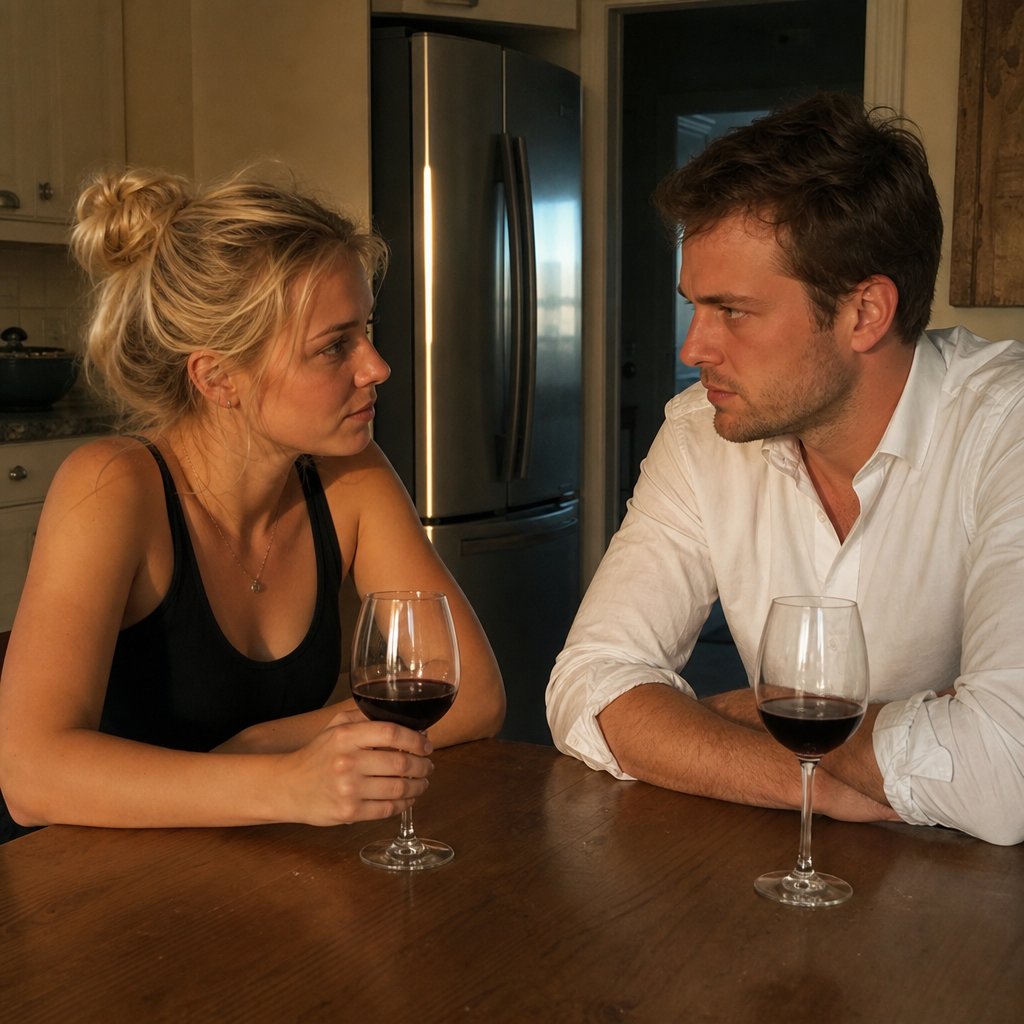
When he walked in that evening, I didn’t greet him with anger. I greeted him with sweetness so controlled it scared me. I set a glass of wine down in front of him and watched his shoulders loosen, thinking he was safe.
“How was your day?” I asked.
“Long,” he said, rubbing his neck. “Meetings.”
I nodded, like I believed in meetings the way children believe in monsters. “Oh—speaking of,” I said, lightly, “that dinner charge. You finally went to Barlowe.”
His hand paused mid-reach for the glass. “Yeah,” he said, too fast. “The team wanted to check it out.”
I let a beat hang. I could hear the refrigerator hum, steady and indifferent. “Which team?”
“You know,” he said, waving a hand. “The guys.”
“Names,” I said, still smiling.
He blinked. Once. Twice. His jaw tightened like he was doing math he hadn’t studied for. “Uh—Dan. And… Chris.”
I almost laughed. There was no Dan on his team. He’d complained about that fact last quarter, how they were “understaffed.”
I took a slow sip of my own wine, savoring the petty clarity. “That’s funny,” I said softly. “Because you don’t work with a Dan.”
The color rose in his neck, crawling up like a warning flare. He set the glass down a little too hard, and the stem clinked against the table.
“Why are you interrogating me?” he snapped.
I leaned forward just slightly. “Because you took someone else to my dream restaurant,” I said, quiet enough to be dangerous, “and you can’t even bother to pick believable names.”
His eyes flashed, and for a second I saw something cold and calculating underneath the husband mask.
“Drop it,” he said, low.
I didn’t.
“Who was she?” I asked.
That Detergent Wasn’t Ours
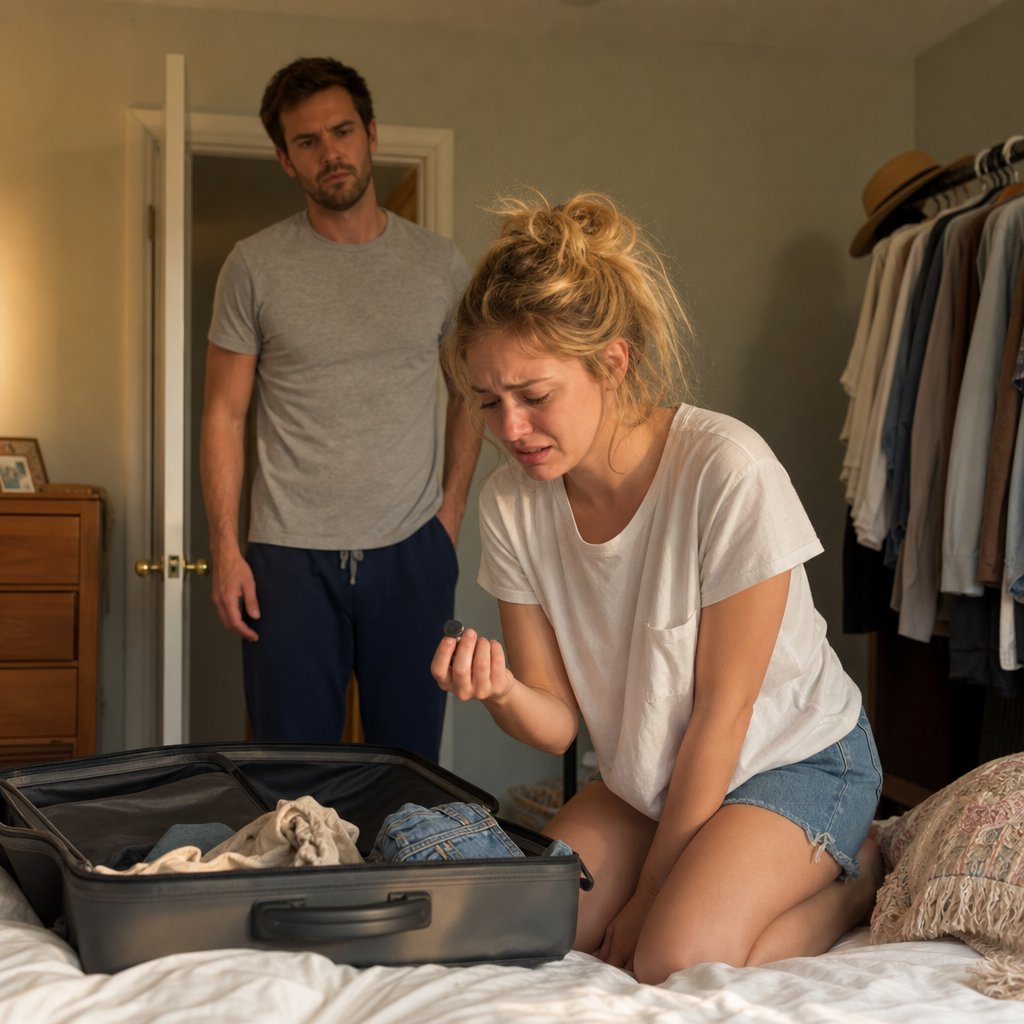
I didn’t even mean to smell it. I was putting his suitcase away—just doing the boring, wifely cleanup that kept our life looking normal from the outside.
The zipper rasped open, and a wave of scent hit me so sharp it made my eyes water.
Expensive floral detergent. Not our plain, unscented stuff. Not hotel soap. This was deliberate—like someone wanted the clothes to smell like a signature. Like a perfume you’d recognize in an elevator and think of one person.
I lifted one of his dress shirts and pressed it to my face before I could stop myself. The fabric was cool and too crisp, like it had been folded by hands that weren’t mine. The scent clung to it, sweet and aggressive, and underneath it was something else: a faint trace of smoke? A different cologne? A life lived in rooms I’d never seen.
My throat tightened so hard it hurt. I pictured him handing his laundry to someone—someone who smiled while they took it, like it was intimate. Like it was normal.
I dug deeper, fingers moving fast now, anger fueling me. Socks. A belt. A cheap hotel pen. Nothing that screamed proof. Nothing that let me stop this spiral.
Then I found a tiny, clear plastic baggie tucked into a side pocket. The kind you’d get from a boutique for cufflinks or jewelry.
Inside was a single button—dark, glossy, not from any of Graham’s shirts. Smaller. Nicer. Like it belonged to that third dry-cleaning shirt.
I held it between my fingers, the button cold against my skin, and felt my stomach flip. This wasn’t just a scent. This was a breadcrumb trail.
Behind me, the bedroom door clicked.
“What are you doing?” Graham asked from the doorway.
I didn’t turn around. I just closed my fist around the button until it dug into my palm.
The Second Phone Buzzed
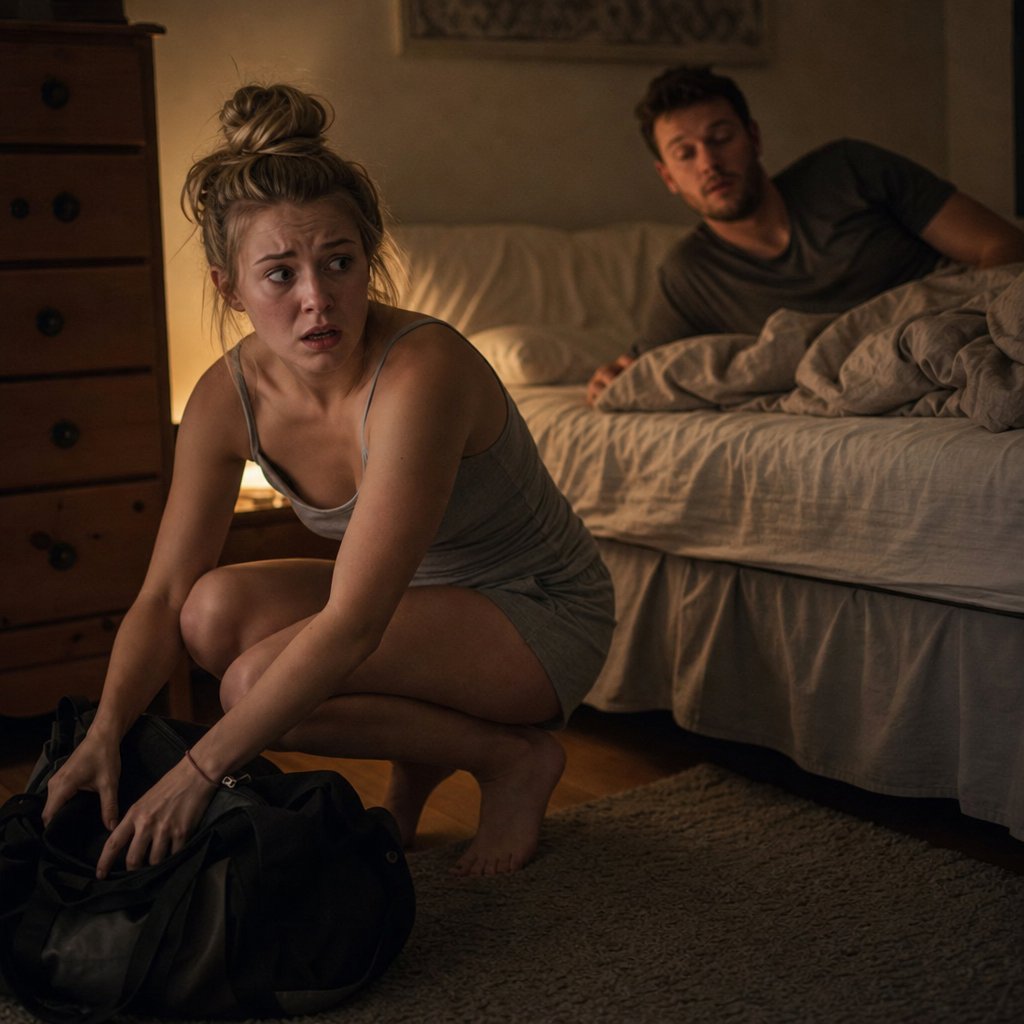
It was 2:13 a.m. when the buzzing started—soft at first, like an insect trapped in fabric.
Graham was dead asleep beside me, one arm flung over the pillow like he owned the whole bed, the whole house, the whole story. I lay there staring at the ceiling, my mind replaying dates and scents and blank calendar entries like a detective who didn’t want the answer.
The buzzing came again. Closer. Not on the nightstand. Not under his pillow.
In the corner, his gym bag sat slouched against the dresser, the zipper half-open like a careless mouth. The sound was coming from inside it.
I slid out of bed, my bare feet silent on the carpet. My hands were cold, but my face burned. I crouched by the bag and unzipped it slowly, like it might bite me.
There it was: a second phone.
Not his work phone. Not the one I knew. This one was slimmer, newer, and it lit up in the dark like a tiny stage spotlighting my marriage’s corpse.
A call was coming in. The contact name was a single word I didn’t recognize—something cutesy—and beside it was a heart emoji.
My stomach dropped so hard I thought I might throw up right there on the carpet. I didn’t touch the screen. I didn’t need to. The name alone was a confession.
The buzzing stopped. Then started again, more insistent, like whoever it was couldn’t stand being ignored.
I held the phone in my trembling hand, face-down, so I wouldn’t have to see it light up again. My pulse thundered in my ears. In the bed, Graham shifted, mumbled something, and rolled onto his back.
If he woke up and saw me holding it, there would be no pretending. No gentle questions. No way back to “normal.”
The phone buzzed again in my palm.
And Graham’s eyes opened.
His Eyes Went Cold
I tried to play it like I’d found a stray sock. Like my hands weren’t shaking. Like my heart wasn’t trying to escape my ribs.
“Hey,” I said, forcing a small laugh. “Your gym bag was buzzing.”
Graham blinked at me, then at the phone in my hand. For a split second his face did something honest—panic, naked and raw. Then it snapped shut, replaced by that smooth, managerial calm he used on difficult coworkers.
“That’s not what it looks like,” he said, too quickly, already reaching.
I didn’t pull away. I just held it. “What is it, then?” I asked, like I was curious, like I wasn’t standing on a cliff edge.
He chuckled. Actually chuckled. “Oh my God, Mara.” He rubbed his face like I was exhausting him. “It’s an old phone. Relax.”
“An old phone,” I repeated. “With a heart contact calling at two in the morning.”
That’s when the temperature changed. The air felt thinner. Graham sat up, the sheets sliding off his chest, and his voice dropped into something sharper.
“Why are you digging through my stuff?” he demanded.
There it was—the pivot. Not why do you have this, but why did you find it. He made me the criminal in my own bedroom.
“I wasn’t digging,” I said, but my voice cracked. “It woke me up.”
He swung his legs over the side of the bed, close enough that I could smell his breath—sleep and irritation. “You don’t trust me,” he said, like it was an accusation, not a fact he’d earned.
“Should I?” I whispered.
His eyes met mine, and something in them went flat and icy. Not anger—calculation. Like he was deciding what version of him I deserved now.
He held out his hand. “Give it to me,” he said, quiet.
I hesitated—just a beat.
And Graham’s expression changed again, darker. “Mara,” he said, warning threaded through my name, “don’t do this.”
“He’s Been On-Site”
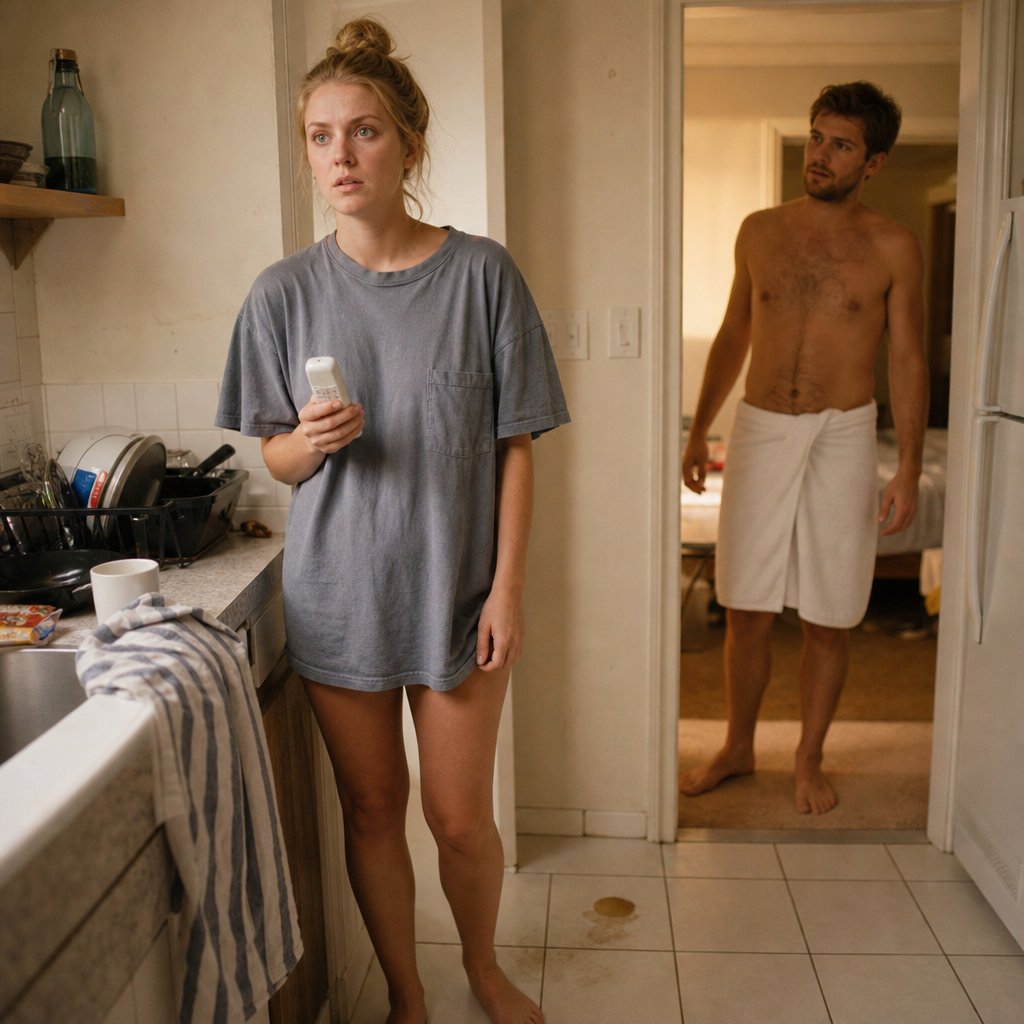
“Hand it over,” Graham said, and the way his voice dropped made my stomach go cold. His hand hovered, not grabbing yet—like he wanted me to do the obedient thing and save him the effort.
I smiled so hard my cheeks hurt. “Sure,” I said, and slid my phone across the counter… screen-down. My fingers were steady. My insides were not. The air smelled like the dish soap I’d used to scrub the pan he’d left crusted in the sink—like I was always cleaning up after him in some form.
He relaxed by a millimeter, like he’d just won. Like I’d just lost.
When he went to shower, I moved like a thief in my own kitchen. I used the landline number from the magnet on the fridge—his company’s main line. My voice came out sugary. “Hi! I’m trying to send my husband a surprise gift. Could you tell me if Graham Ellison is in the office this week?”
HR chirped like we were planning a birthday party. “Oh, absolutely! He’s been on-site all week.”
On-site.
My ears started ringing so loud I almost couldn’t hear her add, “Do you want his extension?”
I stared at the tile grout between my bare feet, the line of old coffee stain I’d never managed to bleach out, and I realized I couldn’t feel my hands anymore. “No,” I whispered, too fast.
Behind me, the shower shut off. The bathroom door clicked open.
And Graham’s footsteps started down the hall.
The Photos He Wasn’t In
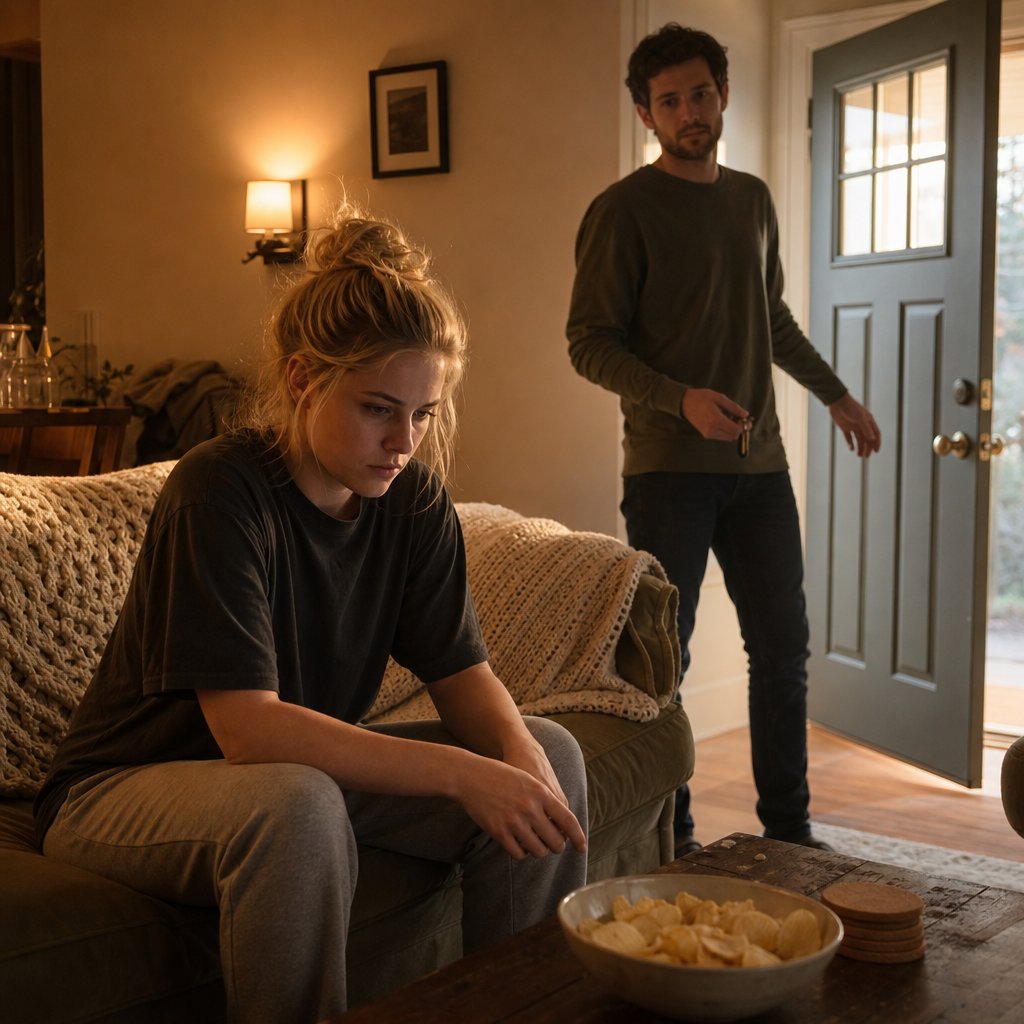
Graham didn’t ask what I was doing. He didn’t need to. He just leaned on the doorway like a bouncer and watched me too closely while I mumbled something about ordering flowers for his mom. His eyes were flat, scanning my face for the part where I’d slip.
When he finally left for “a quick meeting,” I did what I always did lately: I went hunting for proof like it was oxygen.
I found the company spouses/partners charity Facebook group in three clicks. The cover photo was all cheerful balloons and matching t-shirts. My hands shook anyway. I requested to join, and it approved instantly—like the universe wanted me to see it.
There it was: photos from the mandatory all-hands. The kind Graham had been complaining about for weeks. People clustered around a banner, laughing, holding plastic cups. A woman with a tight ponytail and sharp eyeliner stood front and center in one shot, gripping a microphone like she owned the room. I zoomed in on every background corner.
No Graham.
Not a shoulder. Not a blur. Not the stupid cowlick at the back of his head I’d smoothed down on our wedding day.
I scrolled faster, heart thudding. Group shot by the stage. Group shot by the dessert table. Group shot outside by the company sign.
Still nothing.
My mouth went dry, like I’d swallowed cotton. Because if he wasn’t at the all-hands… then where was he when he told me he was trapped there?
My front door lock clicked.
And I realized I’d left the group page open on the coffee table.
No Flights, Still Leaving
I snapped my hand out like a magician and shoved a throw pillow over the coffee table before Graham’s eyes could land on anything incriminating. “I was just… looking at donation stuff,” I said, too bright.
He stared for one extra beat, then smiled like a man practicing in a mirror. “You’re sweet,” he said, and kissed my forehead—right where a fever check would go.
That night, after he fell asleep, I slid his iPad out from under the bed like it was contraband. It was still logged into his airline app. My pulse hammered as I tapped through with a careful fingertip, like the wrong touch could set off an alarm.
No upcoming flights.
Not tomorrow. Not next week. Nothing pending. No boarding passes tucked away. Just… emptiness. Like the app had never known him.
I stared until my eyes burned. Then I checked again, because denial is a drug and I wanted another hit. Still nothing.
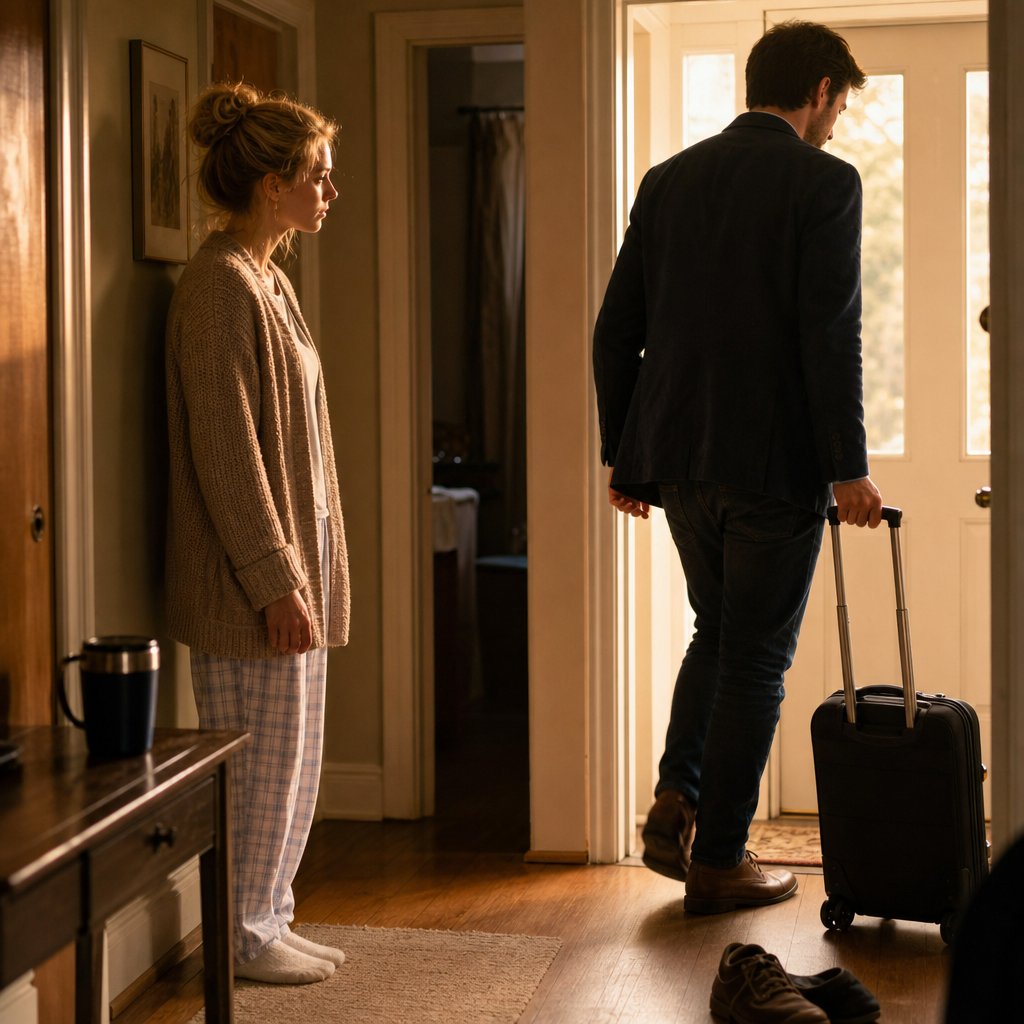
In the morning, Graham was all routine: travel mug, belt, that navy blazer he wore when he wanted to look important. He whistled while he packed, like he wasn’t about to detonate my life. He even patted his suitcase like it was a loyal dog.
“Airport run,” he said, breezy. “Quick hop, back Friday.”
I watched him lace his shoes, watched the casual confidence in his hands, and I swear I could hear the airline app’s silence screaming in my head.
“Want me to drop you?” I asked, too softly.
He froze—just a flicker.
Then he smiled again. “No. I’ll Uber.”
He lifted the suitcase.
And I watched him walk to the door with no flight waiting for him.
He Walked Out Backwards
I followed him in my car with my hands at ten and two like I was taking a driver’s test. My heart wasn’t beating right. It was doing that ugly flutter thing like a trapped bird. Every time he changed lanes, I changed lanes two cars back, pretending this was normal, pretending I wasn’t becoming a person I didn’t recognize.
The airport parking garage smelled like exhaust and old concrete. I found a spot where I could see the drop-off loop without being obvious, the kind of place you’d wait if you were picking someone up—if you had a life that made sense.
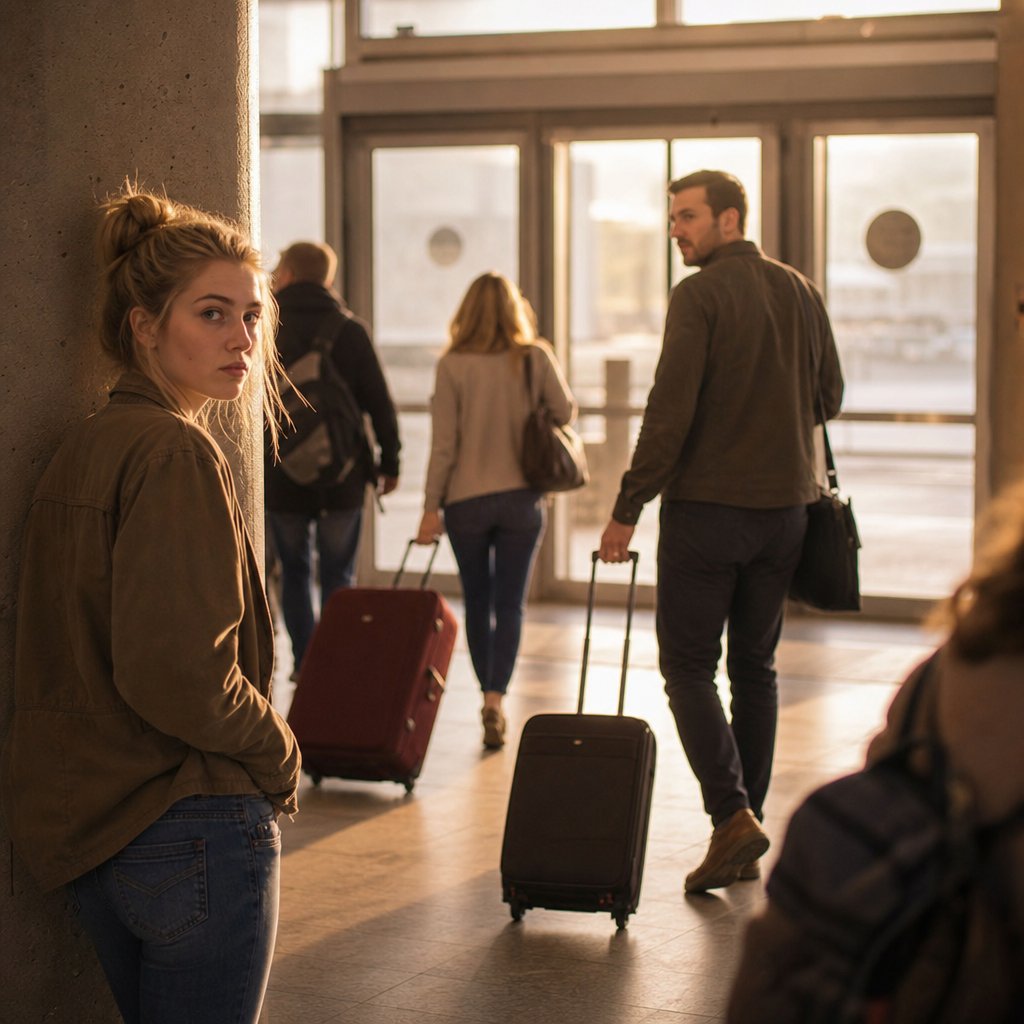
Graham got out, adjusted his blazer, and rolled his suitcase toward the terminal with that purposeful stride he used when he wanted strangers to assume he mattered. He didn’t look back once.
I stayed in my car until my legs went numb, then I moved closer, blending into the crowd like I belonged there. Families with strollers. Business guys barking into earbuds. A teenager crying into a hoodie. I kept my face blank, but my skin felt too tight.
I watched Graham approach TSA. He handed over his ID. He stepped forward. He disappeared into the line like he was actually flying somewhere.
My throat closed with the sick relief of it. See? You’re paranoid. He’s just—
Then, ten minutes later, I saw him again.
Not on the other side of security.
He emerged from a side corridor near arrivals, suitcase still with him, hair untouched, blazer perfect—like he’d never gone through at all. He glanced around once, quick and sharp, and then he turned toward the exit like a man leaving a building he’d only used as a backdrop.
I couldn’t move. My feet felt glued to the tile.
Because you don’t “accidentally” go through TSA and come out at arrivals.
He walked straight toward the rideshare pickup doors.
And I realized I was about to see who he was really meeting.
The Woman At Pickup
The rideshare pickup area was chaos—horns, rolling suitcases, people yelling names into the wind. My hands were sweaty on my keys. I stayed just far enough away to look like I was waiting for someone, too.
Graham stopped near the curb and checked his watch like he was the one being inconvenienced. He shifted his suitcase to his other hand. He looked… excited. Not stressed. Not tired. Not “work trip” Graham.
Then she arrived.
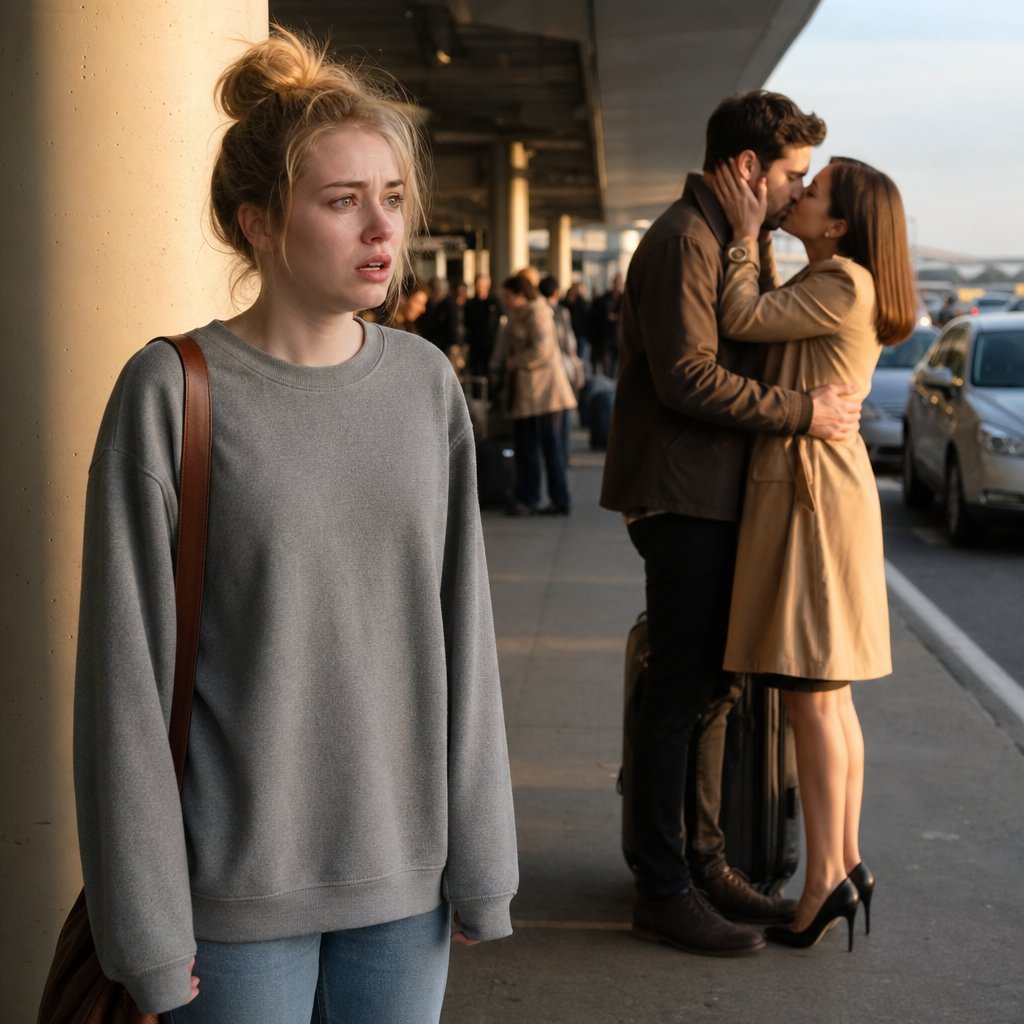
Polished. Confident. Mid-30s maybe, white, sleek chestnut hair cut blunt at her shoulders, a camel trench coat belted perfectly like it came that way. She walked straight to him without hesitation, like she’d done it a hundred times. Her heels clicked on the pavement with this crisp little authority that made my teeth clench.
Graham’s face changed before she even touched him—softened, brightened, the way his face used to look when he saw me in a crowded room.
She didn’t hug him like a coworker.
She cupped his jaw with one hand—familiar, intimate—and kissed him like she owned the schedule, the suitcase, the whole lie. Graham kissed her back without a second of surprise, like this was the real appointment and everything else was just calendar filler.
My vision tunneled. I tasted metal, like I’d bitten my own tongue.
They pulled apart and she said something that made him laugh—an actual laugh, warm and easy, not the forced one he gave me lately. Then she hooked her arm through his and steered him toward a waiting car.
I got in my own car so fast my seatbelt snapped my collarbone.
I followed them across town, headlights and red lights and my own heartbeat pounding in my ears, until they turned into the driveway of a boutique hotel with potted olive trees by the entrance.
Graham didn’t even look around.
He walked in with her like he belonged there.
Two Names, Not Mine
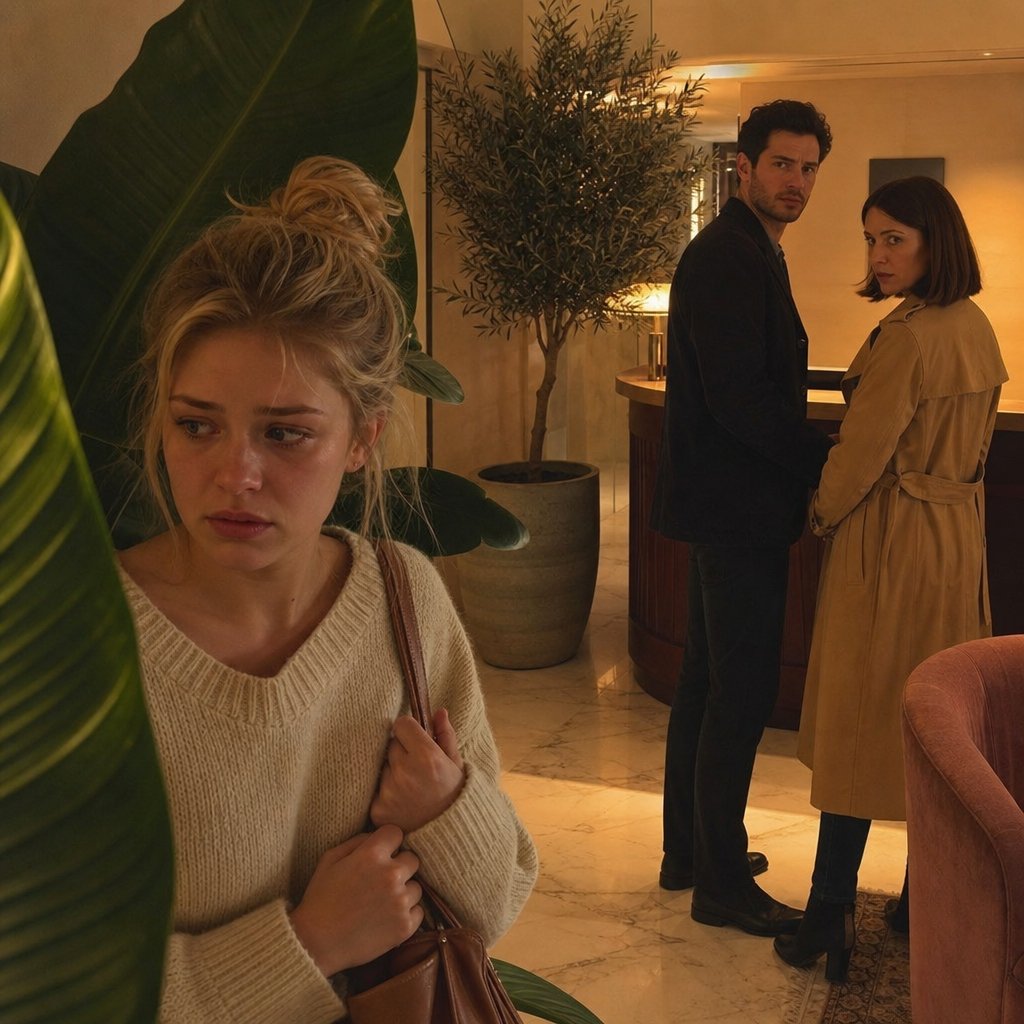
The hotel lobby smelled like citrus and money. Everything was soft—velvet chairs, muted music, a marble desk that looked too expensive to touch. I hovered near a tall plant pretending to read a brochure I didn’t care about, my nails digging crescents into my palm.
Graham and the woman—Tessa, I heard him say it like it tasted good—checked in with the easy entitlement of people who never worry about being caught. She leaned in close to the front desk clerk, smiling like they were sharing a secret. Graham stood behind her, one hand on the small of her back like it belonged there.
Then the digital welcome sign in the lobby rotated. Bright, cheerful, designed to make guests feel special.
And there it was.
“Graham H.”
Next line: “Tessa L.”
Not Ellison.
Not my last name.
My throat made a sound that never left my mouth. My brain tried to scramble for explanations—maybe it’s a different Graham—except his laugh carried across the lobby, and I knew the exact shape of it. I knew him the way you know the sound of your own name.
My hands moved on instinct, slick with sweat. I took a quick photo of the sign, the way you’d capture a license plate after a hit-and-run. Proof. Something solid in a world that kept turning to smoke.
The woman—Tessa—tilted her head, listening to Graham say something low. She smiled without showing teeth. Then she glanced around the lobby like she was checking for witnesses.
Her eyes swept past the plant.
Past the velvet chair.
And landed on me.
For half a second, her gaze sharpened like a blade, recognition flashing so fast I almost convinced myself I imagined it.
Graham followed her gaze.
His face drained.
Flowers That Felt Like Chains
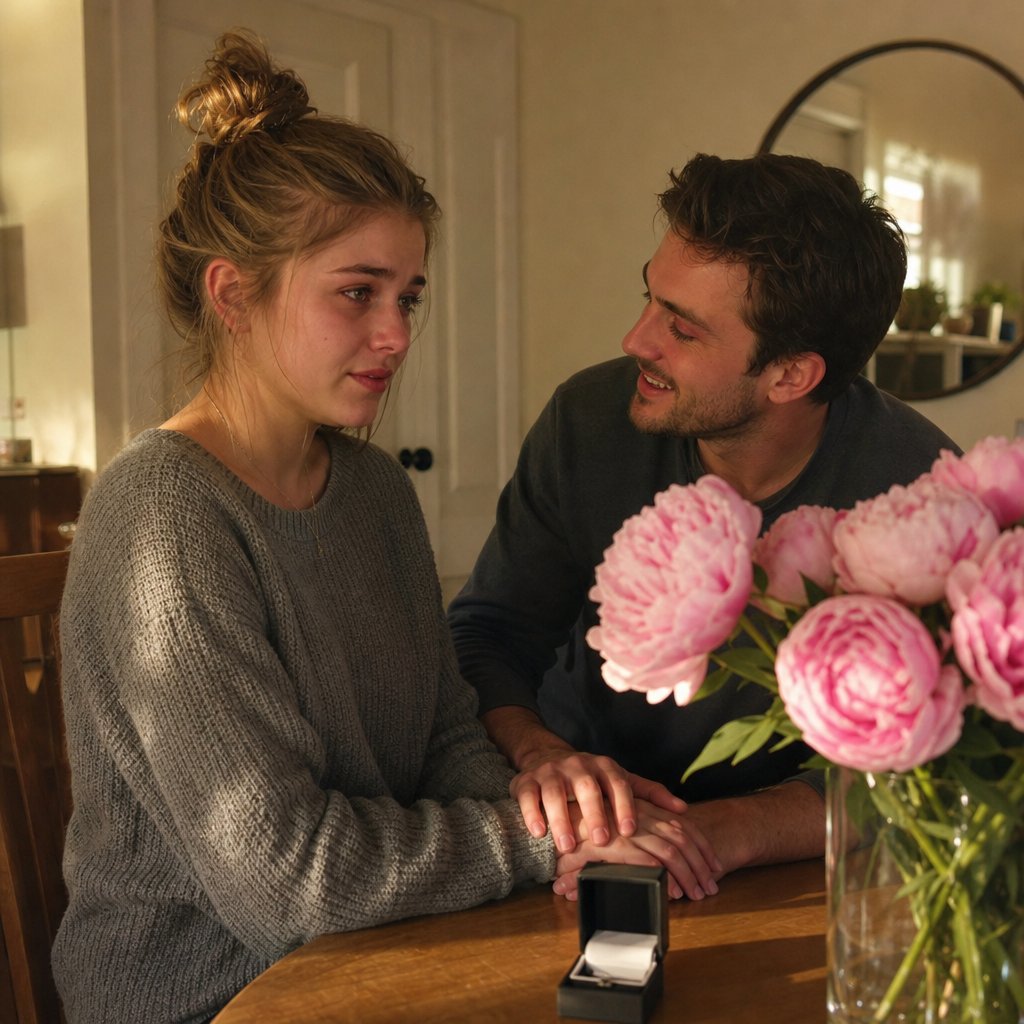
I didn’t confront him in the lobby. I didn’t scream. I didn’t do the movie thing. My body chose survival over justice and walked me out like a sleepwalker, because I could feel the trap closing and I didn’t know where the exit was.
Graham came home that night like nothing happened. Like he hadn’t turned white when he saw me. Like he hadn’t been standing under someone else’s name.
He showed up with flowers—peonies, my favorite, stupidly lush and pink—cradled in his arm like an offering. “For you,” he said, voice warm, eyes too bright. He kissed my cheek and held the kiss half a second too long, like he was pinning me in place.
Then dinner appeared. My favorite takeout. Extra dumplings. He lit a candle we’d never used because he always said it was “too much.” He called me “baby” like he’d remembered I existed.
My skin crawled under every sweet gesture. It didn’t feel like love. It felt like damage control wrapped in petals.
“I’ve been thinking,” he said, sliding a small box across the table. A bracelet inside—delicate gold, the kind I’d once pointed at in a shop window and then laughed because we were “being responsible.”
“We should get away,” he added. “Just us. No stress. No questions.”
No questions.
I stared at the bracelet, at the way it caught the candlelight, and I realized he wasn’t trying to make me happy. He was trying to make me quiet.
His hand covered mine. Warm. Heavy. Possessive. “Tell me you’re okay,” he murmured, thumb stroking my knuckle like he was erasing something.
I forced a smile so my face wouldn’t betray me.
Because if I said the wrong thing, I didn’t know what he’d do to keep me obedient.
The Account I Didn’t Know
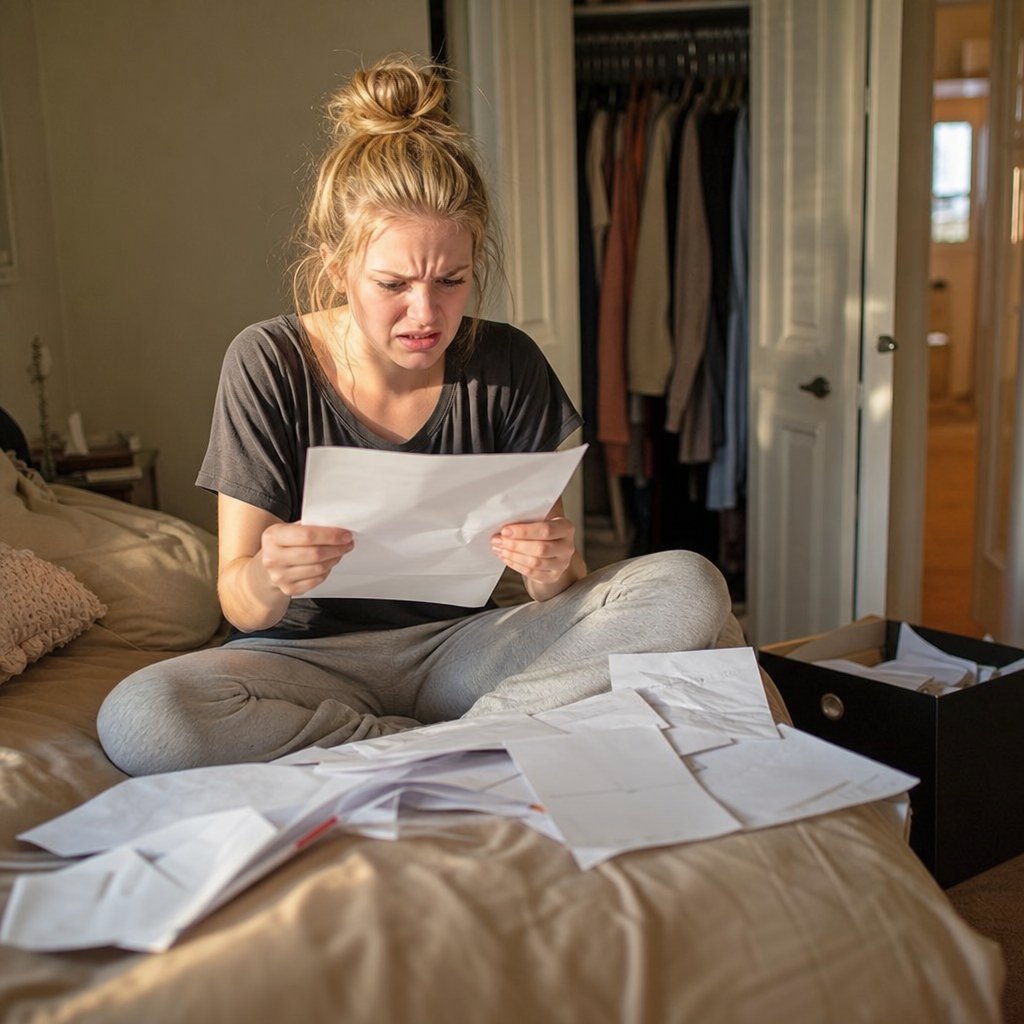
When Graham left for work the next morning, he kissed my forehead like a stamp of ownership. “Love you,” he said, casual. Like love was a blanket you could throw over a crime scene.
The second his car pulled away, I went for the file box in the closet—the one labeled “Taxes” in my handwriting, like a joke. Dust puffed up when I dragged it out, and it hit my nose with that dry paper smell that always makes me think of courts and funerals.
I spread documents across the bed: last year’s return, W-2s, reimbursement statements. My fingers moved fast, almost calm. This was math. This was fact. This wasn’t a vibe or a suspicion.
Then I saw it.
Reimbursement checks—his “travel reimbursements”—weren’t going into our joint account.
They were being deposited into an account number I didn’t recognize.
I stared at the routing info like it might rearrange itself into something less horrifying. I checked our bank statements again. Nothing. No matching deposits. No transfers. Just a clean absence where thousands of dollars should’ve been.
My hands started shaking so hard the paper crackled. I pulled my credit report next, because suddenly I didn’t trust the air in my own house.
There it was: a credit card I hadn’t opened. My name wasn’t on it. His was. And the address listed was our address—our mailbox, our front porch, our life.
My stomach dropped like an elevator cut loose.
He hadn’t just been lying about where he was going.
He’d been building something parallel, using our home as the mailing address like I was an unwitting receptionist for his second life.
I heard the mail slot downstairs clack.
Something slid onto the hardwood.
And I realized today might be the day the proof arrived in my name.
Charges That Mapped His Lies
I took the stairs two at a time and snatched the mail off the floor like it could bite me. My hands were clumsy, my brain running too fast. Most of it was junk—coupons, a catalog—until I saw an envelope with a familiar bank logo shape and my throat tightened.
I didn’t open it right there. I didn’t want to risk Graham coming home early and catching me with it like a teenager with contraband. I shoved it into my tote bag and went to the car, because the car felt like the only place in my life that was mine.
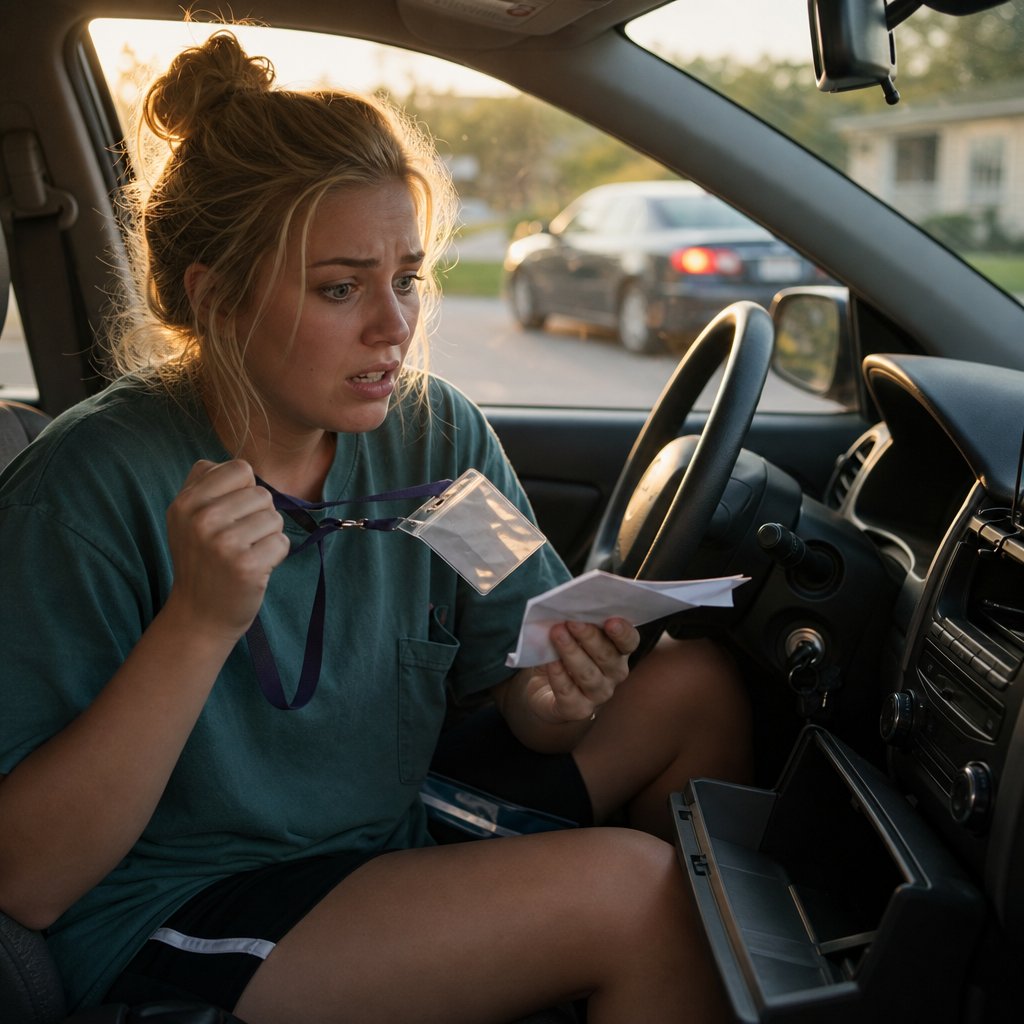
I sat in the driver’s seat, the steering wheel hot under my palms, and went through the credit card activity I’d pulled up from the report and the statements I found in the pile. The charges weren’t random. They were a map.
Boutique hotels on the exact “trip” dates he’d fed me. A jewelry store purchase two days after he’d told me he couldn’t afford new tires. A restaurant I’d begged him to try—charged on a night he’d claimed he ate “a sad airport sandwich.”
And none of it was for me.
My fingers dug into the leather of the steering wheel until my knuckles ached. The petty details were the worst—like the $38 valet charge at the same hotel where the welcome sign had said “Tessa L.” It was the kind of thing you only pay when you’re trying to feel fancy for someone.
When I got home, I popped open the glove box for a tissue because I’d started crying without permission.
Something slid forward instead.
A printed itinerary, folded into thirds like it had been checked and rechecked. An airport badge sleeve. A lanyard.
And a conference badge with a name on it I couldn’t unsee: Tessa L.
My breath hitched. Because this wasn’t just an affair.
This was organized.
I heard tires crunching on the driveway gravel.
Graham was home.
She Watched Me First
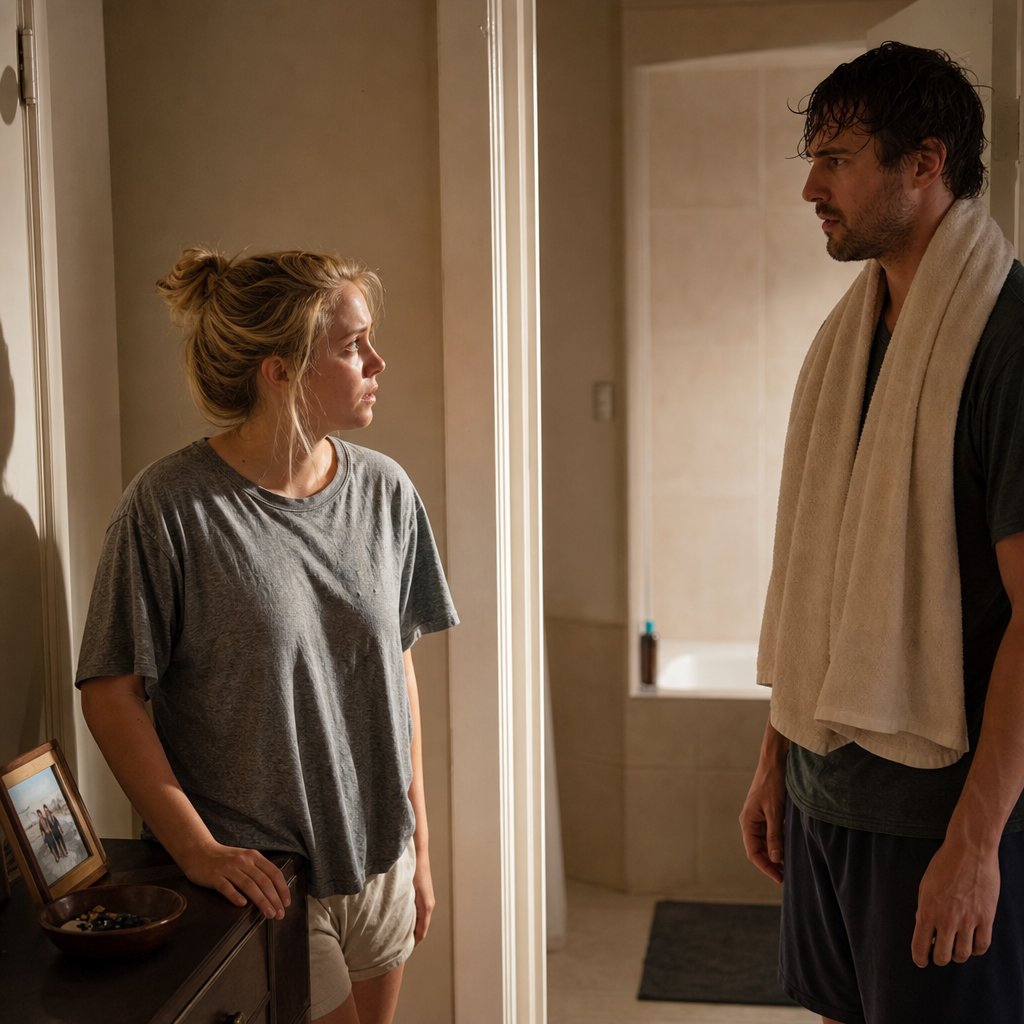
I hid the lanyard and itinerary under the spare tire cover in the trunk like I was burying a weapon. By the time Graham walked in, I’d washed my face and practiced my neutral expression in the hallway mirror until it looked believable.
He was… off. Not angry. Not sweet. Just tense in that coiled way, like he’d been bracing for impact all day. He kissed me, quick, and his eyes flicked over my shoulder toward the living room like he expected to find someone there.
That night, while he showered, I did the thing I swore I wouldn’t do again: I searched her.
Tessa Lark.
Project lead at Graham’s company. Smiling headshot. Comments full of inside jokes and praise. The same sleek chestnut hair. The same sharp confidence. There was even a photo of her at an event with coworkers—Graham nowhere in frame, which felt like its own kind of insult.
I joined the company charity page properly, found her recent post, and dropped the blandest reaction possible: a single heart. Not a comment. Not a message. Just a tiny, polite digital tap on the glass.
Two minutes later, my stomach flipped.
Tessa had viewed my story.
Not hours later. Not tomorrow. Minutes. Like she had alerts set for my existence. Like she was waiting to see if I’d make a move.
Graham came out of the bathroom toweling his hair, and the second he saw my face, his jaw tightened.
“What did you do?” he asked softly.
My blood went ice-cold.
Because I hadn’t told him her name.
Conference Room B, Actually
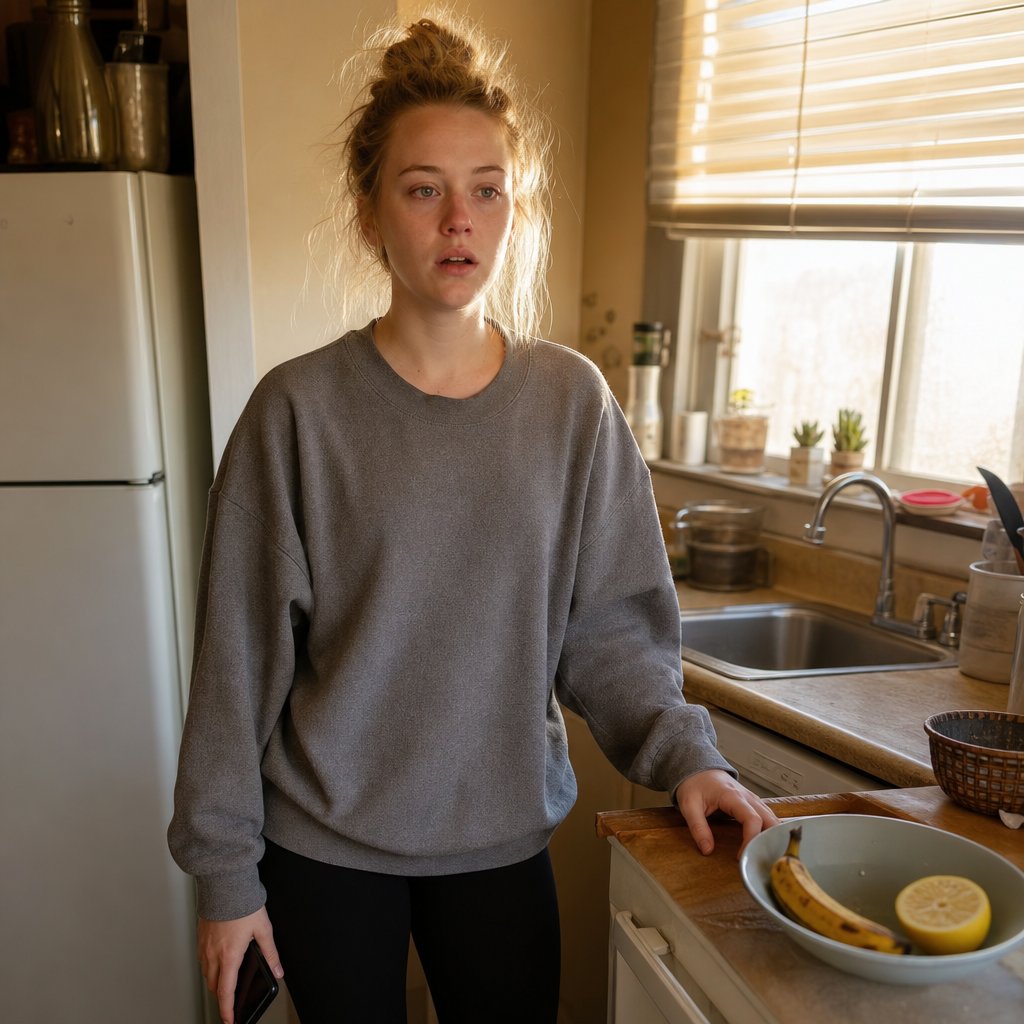
“What did you do?” Graham asked, and my stomach went cold because I hadn’t said Tessa’s name out loud.
I forced my voice into something light. “Nothing. Why?” I could hear the faint airport-announcement noise behind him—too perfect, like he’d queued it up on purpose. Nia’s words from last night rang in my head like a dare: Call his assistant during the ‘flight window.’ So I did.
I waited until the exact time his itinerary said he’d be “in the air,” then stepped into my kitchen with the blinds half-open and my hands shaking so hard I tapped the wrong contact twice. When his assistant picked up, her voice was crisp, professional—midday energy.
“Hi, this is Mara,” I said, tasting metal in my mouth. “Quick question—did Graham land yet? I don’t want to bother him if he’s still flying.”
There was a pause. Not the normal, courteous pause. The kind where someone’s eyes flick to a calendar they didn’t mean to check in front of you.
“Land…?” she repeated, and I heard papers shift. “He’s—” Another beat. “He’s in Conference Room B.”
My knees went loose. I stared at the fruit bowl like it had personally betrayed me, the overripe banana freckled brown and soft at the stem. “Conference Room B,” I echoed, too calmly. “At the office?”
Her inhale was sharp. “Yes. He’s been here since ten.”
In the background, Graham’s fake airport ambience suddenly sounded like a joke someone told at my expense. I thanked her, hung up, and my phone immediately buzzed with his call again—like he’d felt the truth shift in the room.
I didn’t answer. I just listened to it ring, and then it stopped—followed by a single, ominous notification sound that told me he’d left me something I wasn’t going to like.
TS—Receipts Was A Folder
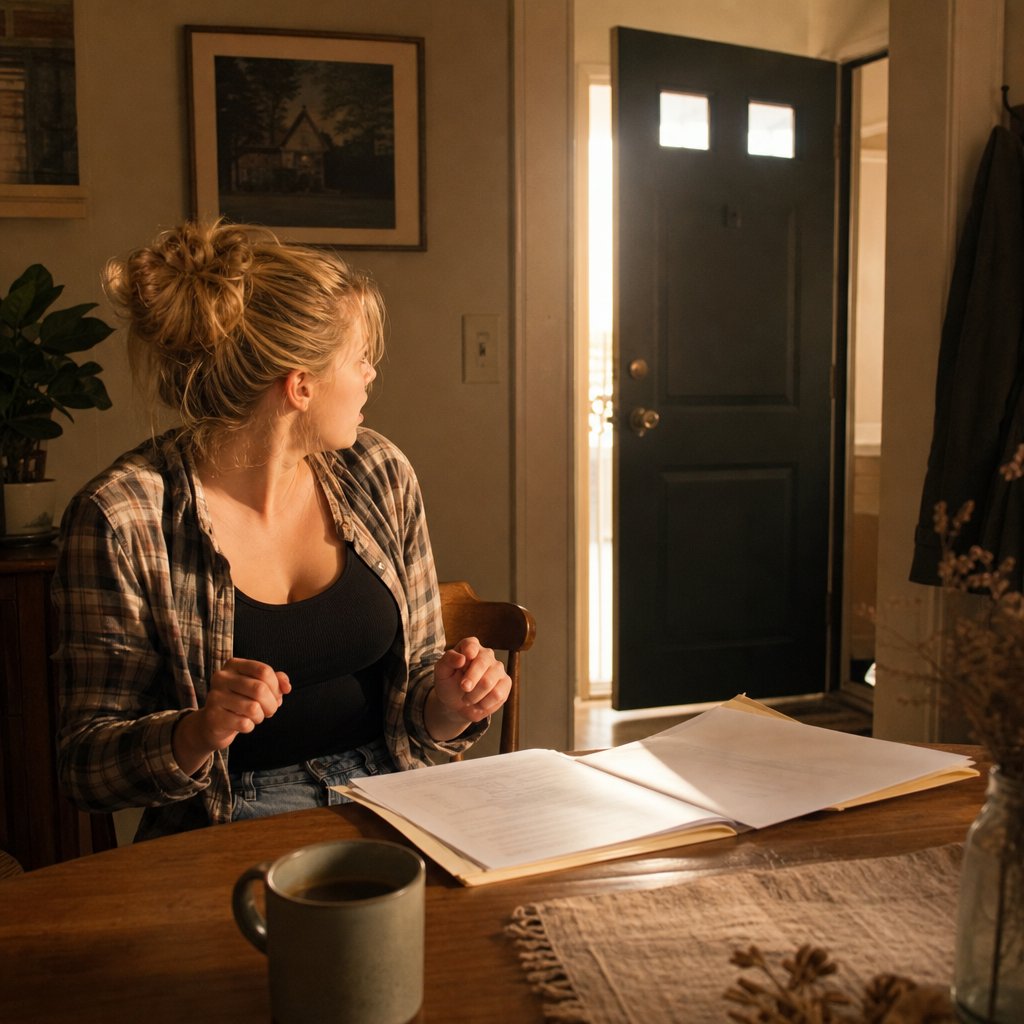
I didn’t open Graham’s message. I couldn’t. If I let his words in, he’d steer the whole thing back into his lane—where I’m the emotional one and he’s the calm, reasonable husband who’s just so confused why I’m “spiraling.”
So I went hunting for facts. Quiet, boring, undeniable facts.
Nia had shown me where to look for “forgotten” logins—places people get lazy. I sat at my dining table with a mug of coffee that went cold fast, the surface filmed over like it had been abandoned. I tried one old password of his—our anniversary plus the stupid exclamation point he always insisted made it “secure.”
It worked.
And there it was: a shared drive I’d never seen before. Not under his name—under a generic label that sounded like an internal project. My pulse thudded in my ears as I clicked through folders like I was walking down a hallway I wasn’t supposed to enter.
Travel spreadsheets. Rows and rows of dates, airlines, seat numbers. Gift lists with sizes and preferences—“gold hoops,” “oat-milk latte,” “no lilies (allergy).” None of it matched me. None of it was for me.
Then a folder titled: TS—Receipts.
I swear my vision tunneled. Inside were neat, obsessive files—hotel charges, rides, dinners for two, little purchases that added up to a second life. Not just an affair. A budget.
And then I found the PDF that made my hands go numb: an Austin relocation offer. Clean formatting, corporate language, the kind of document that decides your whole year in one signature.
Two beneficiaries listed for the package.
Neither was Mara.
I stared at the names until they blurred, then I heard my front door handle jiggle—once, twice—like someone was testing whether I was home.
An Envelope At The Desk
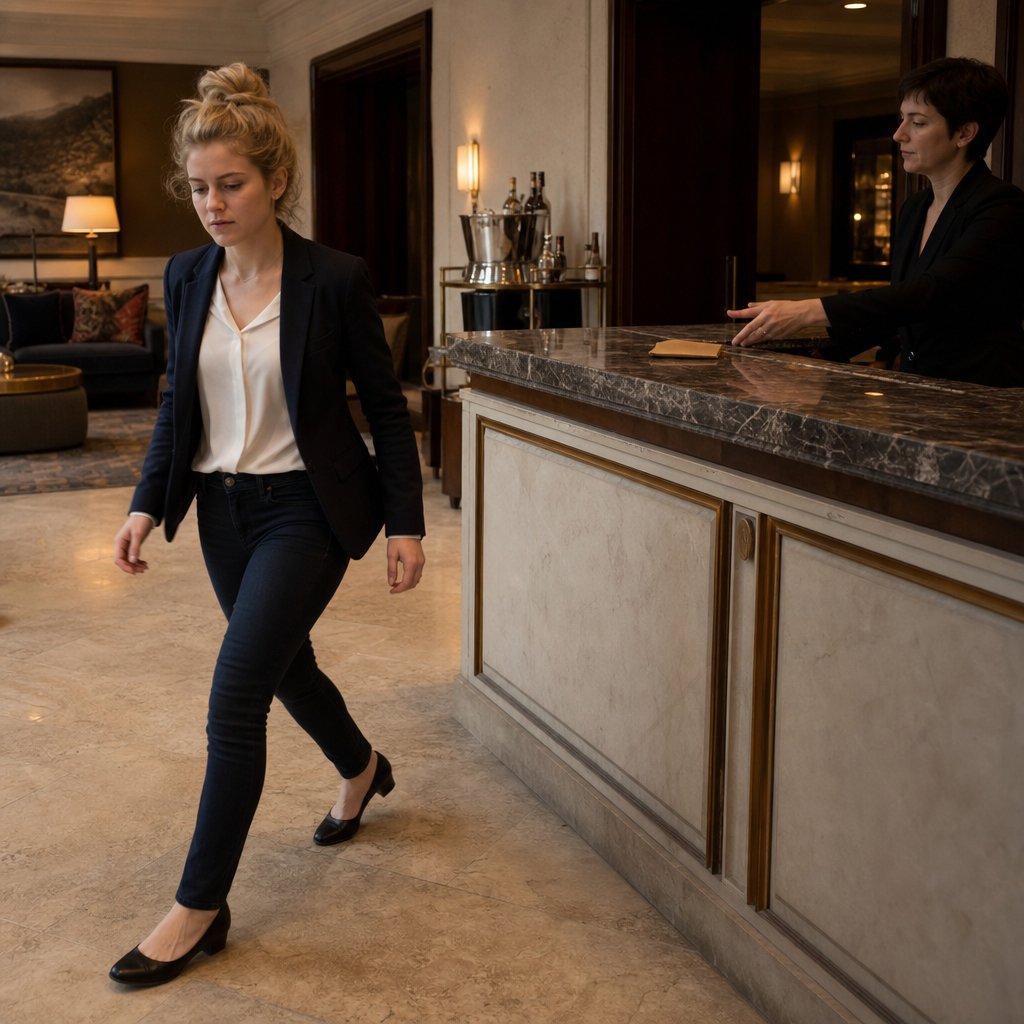
I didn’t wait to see who was at my door.
I grabbed my keys, shoved the papers into a tote like they were contaminated, and drove with my jaw clenched so hard my teeth ached. The boutique hotel sat there like it always did—polished and smug, those too-clean windows reflecting the afternoon like nothing ugly ever happened inside.
This time I walked in like I belonged there.
The lobby smelled faintly like citrus and expensive soap. I could hear ice clinking somewhere behind the bar, the soft laugh of someone who didn’t know my life was burning down. I approached the desk and smiled with my lips only, like I’d practiced it in the car.
“Hi,” I said. “I’m looking to confirm a guest stay. Graham H.”
The front desk clerk—young, neat hair, polite eyes—did the thing they always do before they decide whether to help you: a quick scan of your face, your ring finger, your posture. I watched his expression flicker when he found it.
“Yes,” he said carefully. “He’s—” He stopped himself, professional training snapping back into place. “He’s checked in.”
My chest tightened so hard I thought I might cough. “Great,” I whispered, because if I spoke louder I’d scream.
I slid an envelope across the counter. Thick. Heavy. Not dramatic—just deliberate. On the front I’d written one line in my neatest handwriting: Your company calendar is public.
Inside was a copy of the life-insurance beneficiary change I’d pulled from the drive—Graham’s signature, the date, and Tessa’s name where mine used to be. The betrayal wasn’t just romantic. It was mathematical. It was paperwork.
“Could you please make sure he gets that?” I asked, voice steady enough to scare me.
The clerk hesitated, fingers hovering over the envelope like it might bite. “Ma’am—”
I didn’t give him the chance to warn me. I turned and walked out, my heels clicking too loudly on the tile, my hands shaking at my sides. I pushed through the front doors into the bright air—
—and behind me, I heard someone say Graham’s name, sharp and urgent, like the first domino had just tipped.
Would you have confronted the clerk or walked away silently?