



That Logo Wasn’t Ours

The iPad lit up on the couch like it was trying to confess. A bank alert flashed across the screen—an unfamiliar logo, a balance with six digits, and a comma that made my throat clamp shut.
My hands started shaking so hard the glass of water on the coffee table shivered in place. I stared until my eyes burned, waiting for the numbers to rearrange into something normal. They didn’t. $312,418. Not in our joint account. Not in the savings I watched like a hawk. Not in any bank I’d ever stepped foot in with Evan.
It was his iPad—forgotten under a throw blanket like trash. Evan always acted like he was allergic to leaving devices around, so seeing it out in the open already felt wrong. The alert disappeared, and I swiped like a thief, my thumb slipping on the glass. The banking app wanted a passcode I didn’t have, like a door slamming in my face.
I sat there listening to the refrigerator hum and the distant drip of the kitchen faucet, trying to breathe through the nausea. Evan had been telling me we were “tight.” That we needed to be “careful.” That a divorce would wipe us out.
My phone buzzed on the armrest. Evan’s name. I let it ring once, twice—then I heard his key turn in the lock.
His Rules On Our Fridge
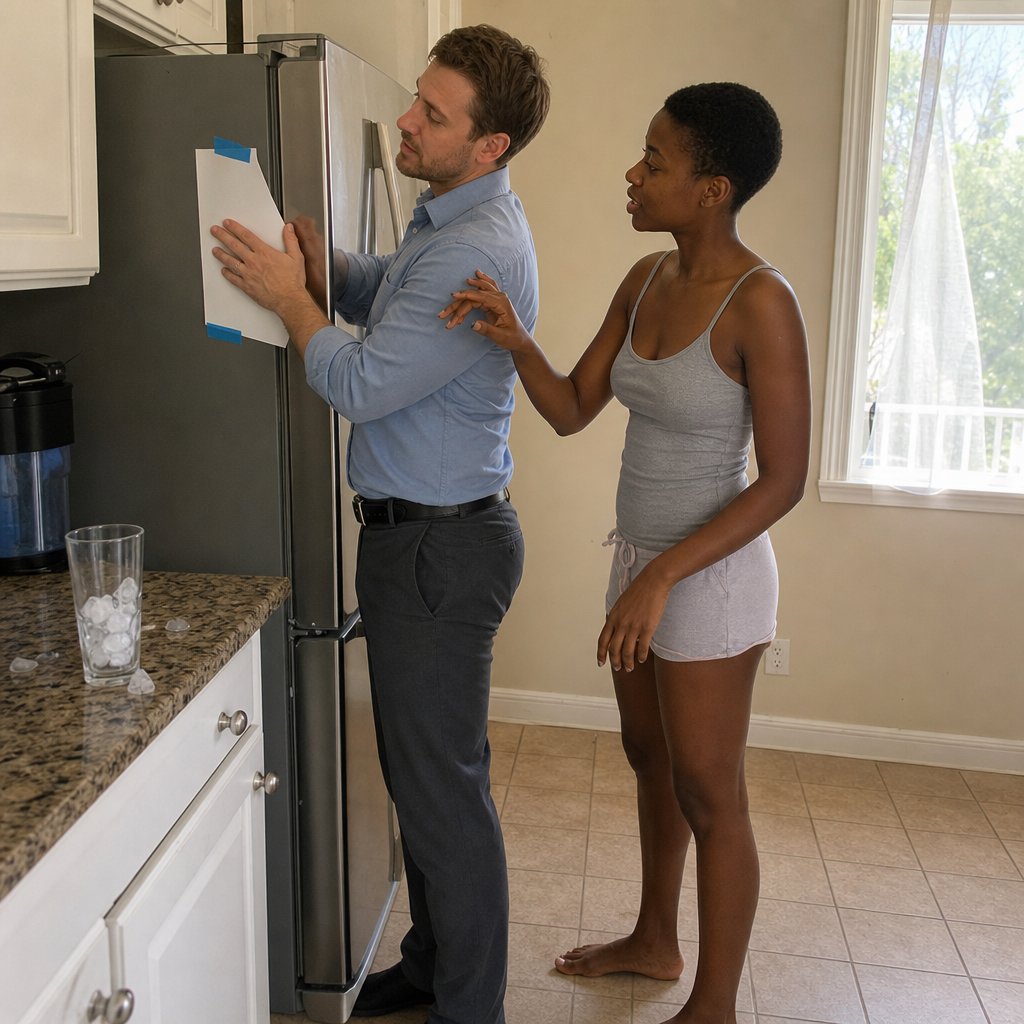
Evan taped the list to the fridge with two strips of blue painter’s tape like he was posting a notice in a lobby. “Shared Bills,” it said at the top in his neat, aggressive handwriting, and underneath: rent, utilities, car insurance—my half circled in red like a teacher grading me.
I stood barefoot on the cold kitchen tile, still in the same sleep shorts, watching him smooth the paper with his palm. He didn’t look at me when he said, “We can do this clean. Fast. Friendly.”
Fast. That word hit like a shove.
He opened the freezer, grabbed ice without asking, and dropped cubes into a glass so hard they cracked against the sides. “If we drag it out, we both lose,” he added, like he was doing me a favor. “Let’s just sign something this week.”
I stared at the list. It wasn’t a plan. It was a boundary line. A way to make me feel like a tenant in the life I’d built with him. Like I had a deadline to stop asking questions.
He finally turned, leaning against the counter in his work slacks and a button-down like this was a meeting. His eyes flicked to my face, then away, too quickly—like he was checking whether I’d seen something I wasn’t supposed to.
“Mara,” he said, softer, rehearsed. “Please don’t make this complicated.”
I reached up and touched the edge of the paper. The tape was still sticky-wet, like it had just sealed something shut.
“Why this week?” I asked, and his jaw tightened before he even answered.
My Card Said No
My debit card declined in front of the cereal display, and the cashier’s smile turned into that careful, pitying expression people practice. I tried again, cheeks burning, pretending it was a glitch. Declined. The little machine chirped like it enjoyed humiliating me.
I had a basket with eggs, rice, and the cheap chicken thighs Evan always complained about. I could smell the bakery bread from the front of the store, warm and sweet, and all I could think was: this is on purpose.
I stepped aside, digging in my purse for my credit card—also declined. My hands were slick with sweat as I mumbled an apology and abandoned the basket like it belonged to someone else. When I walked out, the automatic doors whooshed open like they couldn’t wait to get rid of me.
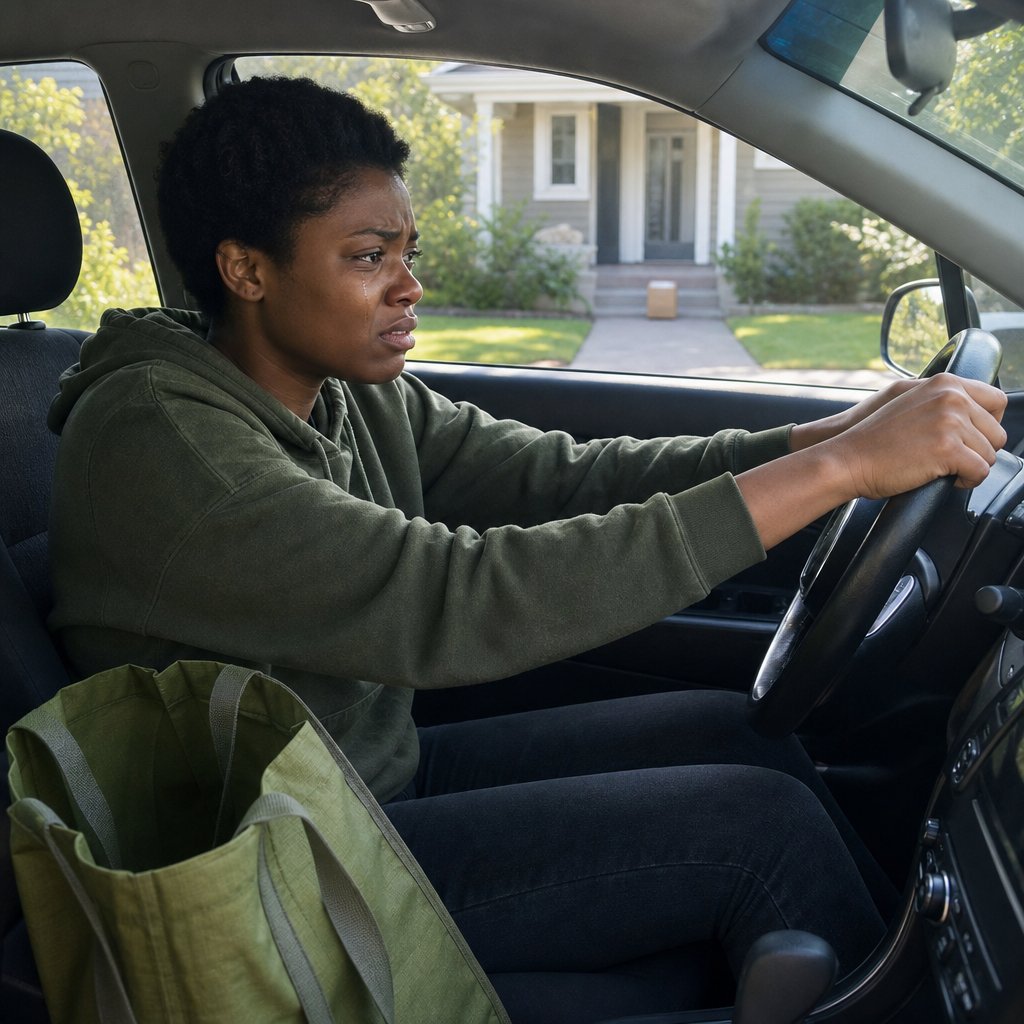
In my car, I gripped the steering wheel until my fingers ached. My phone buzzed again and again in the cup holder—notifications stacking up. Evan’s deliveries. Receipt after receipt, like he was ordering his way through a different life while I couldn’t buy groceries.
I drove home on fumes, rehearsing a calm voice, the kind of calm women are expected to use when something is being done to them. When I pulled into the driveway, a package sat at the front step, still sealed, like proof that someone’s money was flowing just fine.
Inside, the house smelled faintly like his cologne and the lemon cleaner I’d used the night before. I opened my banking app and saw the balance: lower than it should’ve been, like someone had pinched the line shut.
Then I heard the shower turn on upstairs—Evan home, humming like nothing had happened.
“Work Stuff,” Then Blame
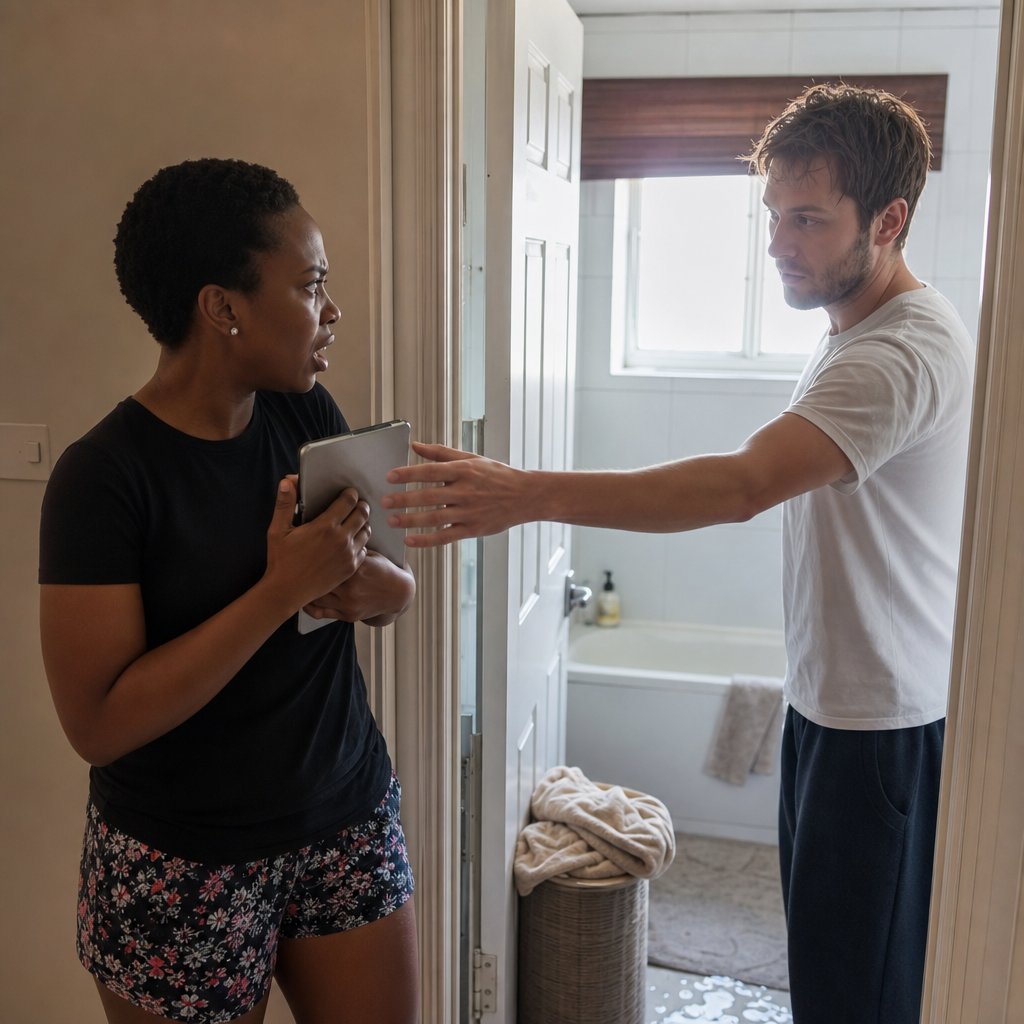
I didn’t ease into it. I walked into the bathroom doorway and held the iPad out like evidence. Evan was toweling his hair, water dripping down his neck, and the second he saw my face, his shoulders stiffened.
“What is this?” I asked. My voice came out steadier than I felt.
He squinted at the screen like he’d never seen it before, then laughed once—sharp and annoyed. “It’s work stuff, Mara.” He tossed the towel onto the hamper like the conversation was already over.
“Three hundred twelve thousand dollars is work stuff?” I took a step closer. The bathroom smelled like his eucalyptus soap, clean and expensive, and it made me want to scream.
His eyes narrowed. “You shouldn’t be going through my devices.”
“You left it on the couch.”
He exhaled like I was exhausting him. Then, like a switch flipping, he changed tactics. “You know what? This is exactly why we’re here. You don’t respect boundaries, and you spend like we’re made of money.”
I blinked. “My card declined for groceries today.”
He shrugged, pulling on a T-shirt like armor. “Because you don’t track anything. You just swipe. You always have.”
The audacity landed in my chest like a brick. He was looking at me like I was the problem—like the alert never existed, like the numbers didn’t just punch a hole through every story he’d told me.
Then he softened his voice, the way he did when he wanted to sound reasonable to an imaginary jury. “I’m trying to keep us afloat. And you’re… spiraling.”
I stared at him, realizing the argument wasn’t about the account. It was about making me doubt my own eyes.
He reached for the iPad in my hands, fingers closing around the edge.
The Clause That Trapped Me
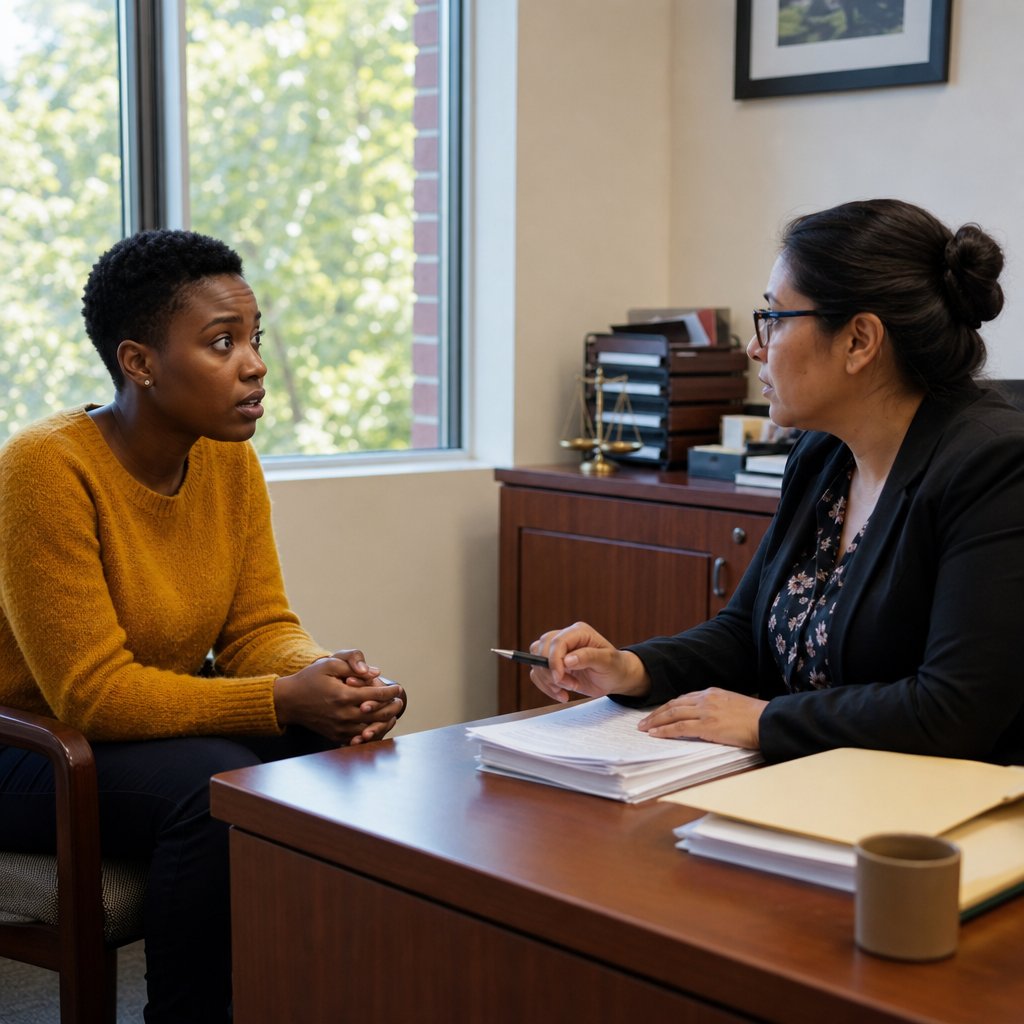
My lawyer’s office smelled like burnt coffee and copier toner. I sat in a stiff chair with my knees bouncing, watching her read Evan’s proposed agreement with a face that didn’t change—until it did.
She tapped one paragraph with her pen. Not hard. Just enough to make my stomach drop.
“This,” she said, “is not a friendly divorce.”
I leaned forward. The paper was covered in clean lines and polite language, the kind that pretends it isn’t a weapon. She pointed again, slower, like she wanted me to feel every word.
“You see this waiver?” she asked. “It says you’re giving up rights to unknown assets. Unknown to you. Known to him.”
My mouth went dry. “So if there’s money I don’t know about—”
“You’d be signing away your claim to it.” She looked up and held my eyes. “And he’s pushing a fast timeline because the less time you have, the less you can uncover.”
The room went quiet except for the soft click of her pen cap. I thought about Evan’s bills list on the fridge. The way he’d said this week. The way my card had declined while his deliveries kept coming.
“Can we stop it?” I asked.
She didn’t answer immediately. Instead, she slid the agreement toward me and turned to a second page, her finger hovering over a spot like it was radioactive.
“Mara,” she said carefully, “do you have any idea how aggressive we need to get if he’s hiding money?”
Before I could respond, her phone rang. She glanced at the caller ID, and her expression sharpened.
The 1099 That Didn’t Fit
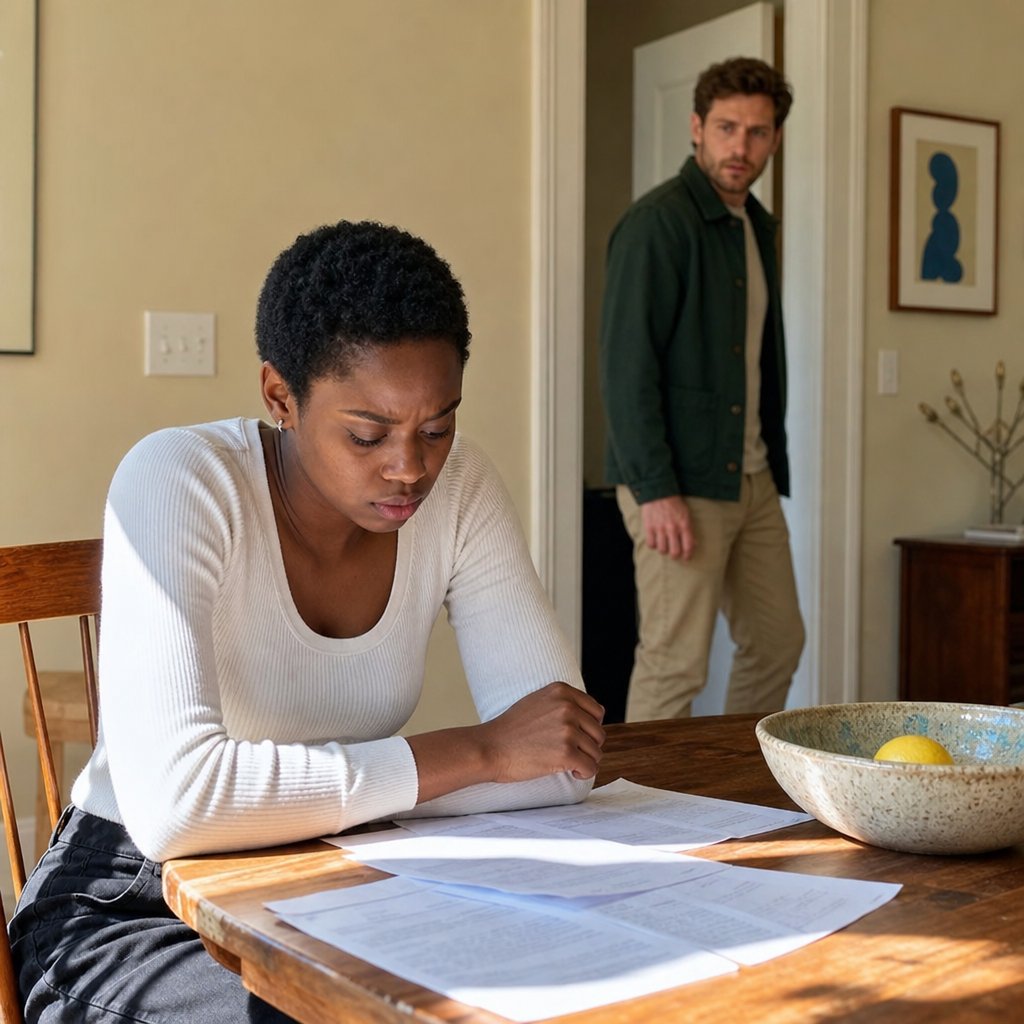
I spread the tax returns across my dining table like I was laying out a body. The pages smelled faintly like dust and old ink, and my fingertips left little streaks where I’d wiped sweat onto the paper without realizing.
The numbers didn’t lie the way people did.
There it was: 1099 income. Not a little side gig. Enough to matter. Enough that it should’ve shown up somewhere—our joint ledger, our budget app, the savings goals Evan used to pretend he cared about.
I traced the line with my nail, as if pressure could make it explain itself. “Consulting,” it said. Consulting for who? When? He left the house every morning with his laptop bag and came home with that same tired shrug, always complaining about his boss, always acting like his paycheck was the whole story.
I flipped through bank statements I did recognize, hunting for a matching deposit. Nothing. No mirror. No transfer. No trail. It was like the money entered his life through a door I didn’t know existed.
My stomach rolled as I remembered the alert—$312,418 sitting somewhere behind a passcode. This 1099 wasn’t random. It was a pipeline. A second river feeding a lake I wasn’t allowed to see.
I heard Evan’s car pull into the driveway. Gravel crunching. The front door opening with that familiar impatient shove. I swept the papers into a stack, but my hands hesitated over the top sheet, my name printed beside his like we were still a team.
Footsteps crossed the hallway. He was coming toward the dining room.
I stayed seated, palms flat on the table, and waited for him to see what I’d found.
“Update Both Addresses?”

The credit union smelled like carpet cleaner and stale air, the kind of place that tried to feel friendly with potted plants that were definitely plastic. I stood at the counter with my shoulders squared, telling myself I was just asking a question, just gathering information, just being normal.
The cashier looked up, and her face lit with recognition so immediate it made my skin prickle.
“Oh—Evan’s wife, right?” she said, cheerful. Her name tag caught the light, but I didn’t look long enough to read it. I didn’t want any more details than I could carry.
My stomach dropped. “I’m Mara,” I managed.
“Of course,” she said, already typing. Her fingers moved like she’d done this a hundred times. “Do you want to update both addresses on the membership or just yours?”
Both. Addresses. Membership.
I felt the room tilt. Evan had a credit union membership I’d never heard of, and somehow I was already in their system—tied to him like a tag on luggage. The cashier kept smiling, waiting for my answer like this was routine.
“What membership?” I asked, careful. My voice sounded far away to me.
Her smile faltered. “Oh—um. The account profile. You’re listed together.”
Together. Like a joke. Like a trap.
I swallowed hard, tasting metal. “Can you tell me what accounts are under that profile?”
She hesitated, eyes flicking to a manager behind her, and the manager’s head snapped up like she’d felt my question land.
Her Car In My Driveway
I came home with a box of packing paper under my arm and saw her car before I saw anything else. A glossy white sedan parked in my driveway like it had every right to be there, angled too confidently, tires perfectly inside the lines Evan always lectured me about.
My throat tightened so fast I almost gagged.
Through the windshield, I could see a pair of oversized sunglasses on the dashboard and a pale pink water bottle in the cup holder. Girly. Specific. Someone else’s comfort items sitting where my life used to fit.
I walked inside and the house was half-disassembled—my work, my labor. I’d been wrapping dishes in newspaper, stacking our wedding-gift plates like fragile proof I had tried. Cardboard dust clung to my fingers.
Voices floated from the living room. Evan’s laugh, too bright. And a woman’s laugh—lighter, practiced, like she wasn’t afraid of being heard.
I stepped closer and saw her: Tessa. I knew her face from office holiday photos Evan used to scroll past too fast. White woman, late 20s, long straight auburn hair, sharp cheekbones, the kind of smile that showed she’d never had to apologize for taking up space.
She stood near my bookshelf, holding one of my mugs like it belonged to her.
Evan turned, saw me, and didn’t flinch. That was the worst part. He didn’t even pretend.
“Hey,” he said, casual. “Tessa was in the neighborhood.”
Tessa lifted her hand in a tiny wave, like we were neighbors.
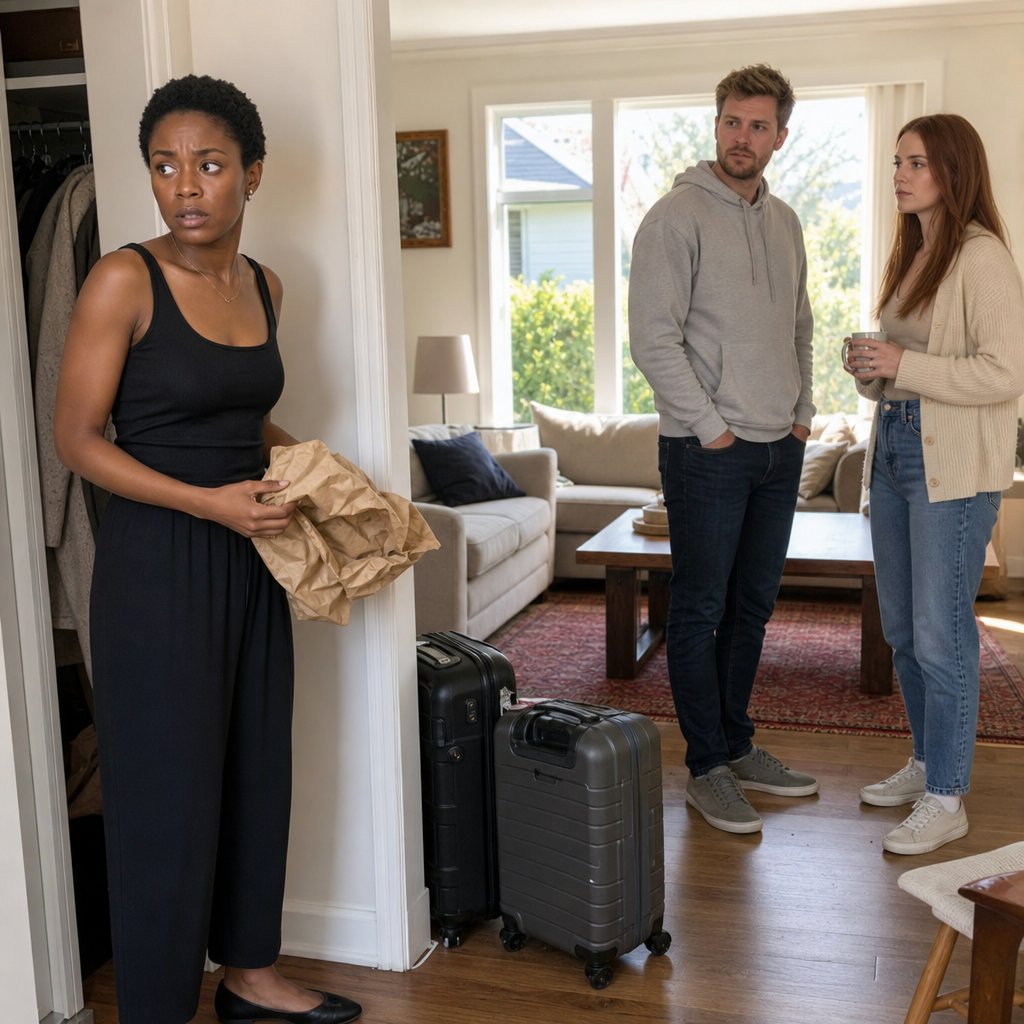
I looked past them—at the hallway—and saw two suitcases by the coat closet that hadn’t been there this morning.
He Used The House
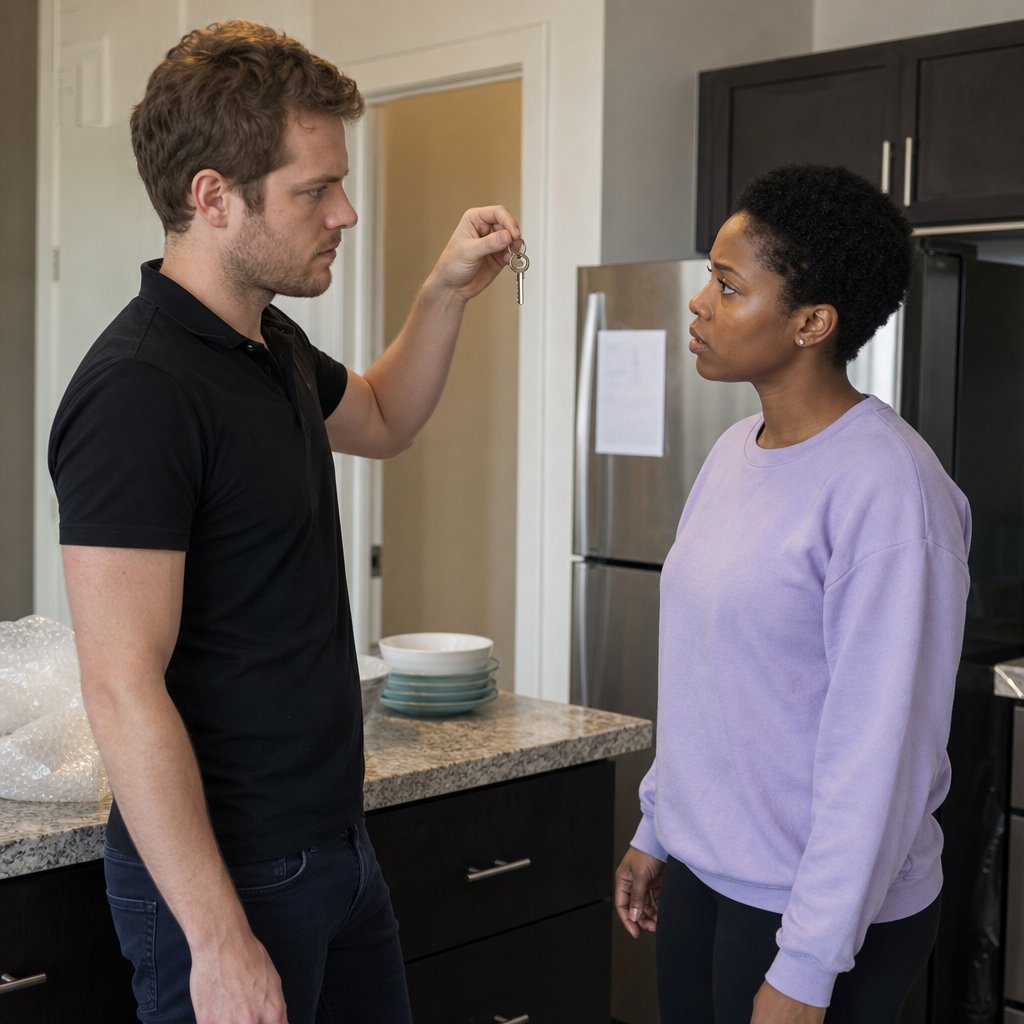
Evan waited until Tessa was out of earshot—until I heard the soft click of the guest room door—before he lowered his voice and went for my throat.
“If you make it ugly,” he said, “I’ll fight for the house.”
The words were calm. That’s what made them obscene. He stood in the kitchen in a fitted black polo and dark jeans, arms crossed, like he was discussing lawn care instead of threatening to rip the floor out from under me.
I stared at the countertop where I’d left a roll of bubble wrap and a stack of plates, my hands still smelling like cardboard and dish soap. “You don’t even want the house,” I said.
His smile twitched. “I want you to stop.”
There it was. Not the house. Not the divorce. Control.
“Stop what?” I asked, even though I knew.
He leaned closer, and I caught the faint scent of mint gum, like he’d freshened up for company. “Stop digging. Stop calling lawyers. Stop acting like you’re entitled to things you didn’t earn.”
I laughed once, ugly. “We were married.”
He shrugged. “And that ends when I say it ends.”
Behind him, the fridge list fluttered slightly when the air kicked on, the red circles around my half of the bills like bruises.
“You’re not going to intimidate me,” I said, but my voice shook.
He reached into his pocket and pulled out a key ring, letting it jingle softly in his palm. “You sure?”
The Dusty Safe Shadow
I started documenting everything the way people do when they know no one will believe them later. I didn’t trust my memory anymore—not with Evan rewriting reality in real time. I walked from room to room with my jaw clenched, opening drawers, counting what was missing, noting what had moved by inches.
The closet was the worst.
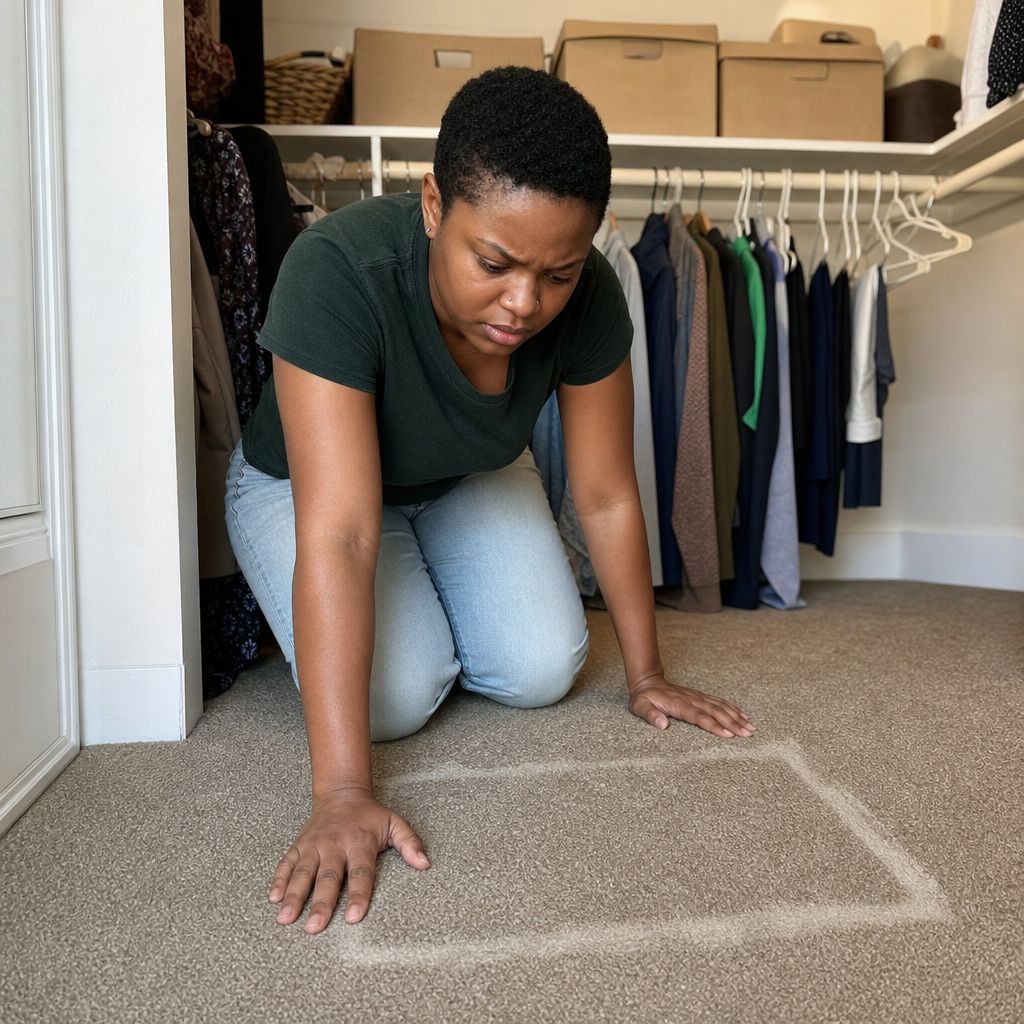
Half his side was already thinned out—gaps where hangers should’ve been, the empty space shaped like a decision. I knelt and ran my hand along the carpet near the back wall, where the vacuum never quite reached. My fingers came away gray.
That’s when I saw it: a clean rectangular outline on the floor, like a picture frame made of dust. Something heavy had sat there for a long time and been lifted out recently.
A safe.
I froze, staring at the sharp edges of the shadow. I could practically feel the weight that used to live there, the way the carpet fibers were crushed flatter inside the rectangle. My heart started pounding so loud it filled my ears.
There had never been a safe in our house. Not that I knew of. But Evan had always been weird about “important papers,” always insisting he’d handle them, always telling me I was too disorganized to keep track.
I stood up too fast and got dizzy, gripping the closet doorframe until the world steadied. From down the hall, I heard a drawer slide open in the office—smooth, deliberate.
Evan was home. And he was moving something again.
The Bank Woman Next Door
The office door finished closing like it had a mind of its own, soft as a whisper. I froze in the hallway, my hand still hovering where the knob should’ve been, listening for the scrape of a chair, the click of a pen—anything that proved Evan hadn’t just been in there.
Instead, I heard my name from the other end of the hall.
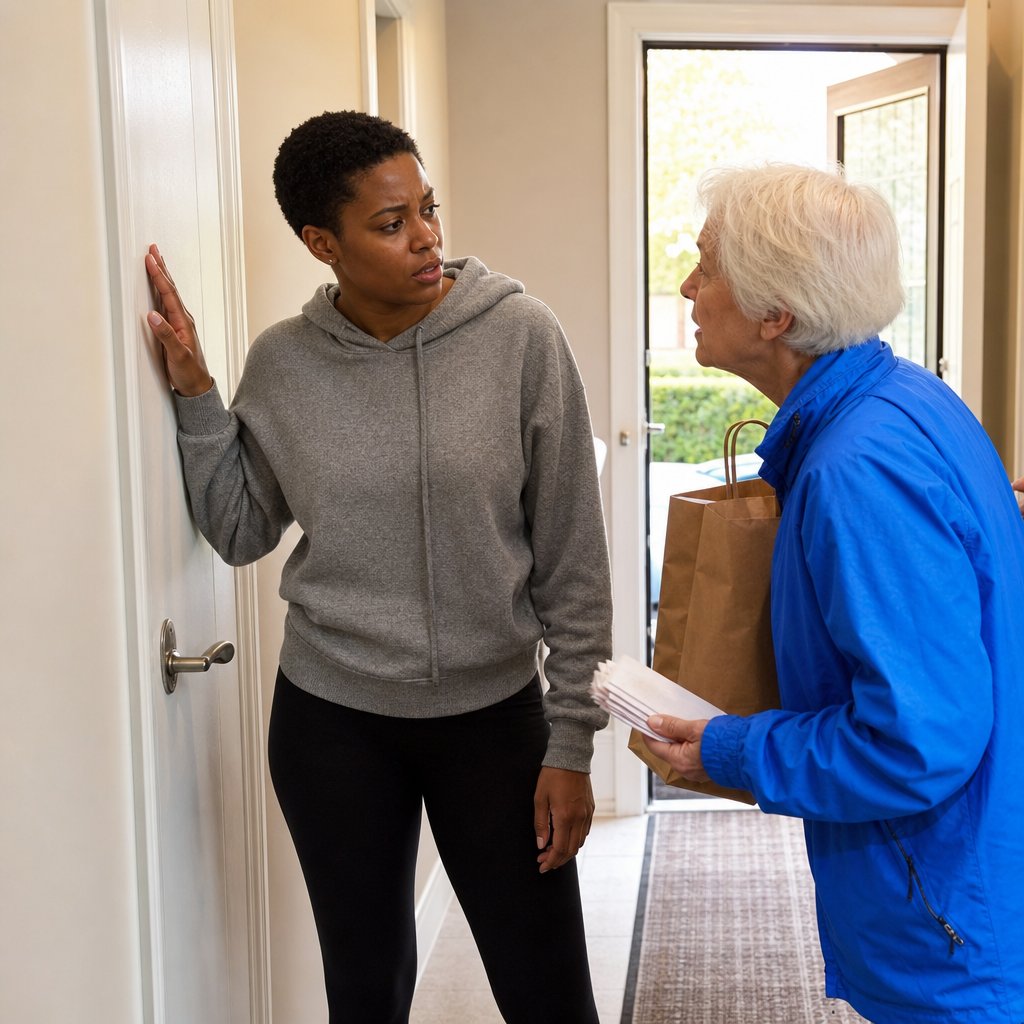
“Mara?” Mrs. Kline’s voice floated up from the front entry like she owned the air in my house. She was our next-door neighbor—thin, white-haired, always in a windbreaker no matter the weather—and she was standing half inside my open doorway with a grocery bag hugging her hip like evidence.
“Your mail got mixed in again,” she said, stepping closer. Her eyes flicked past me toward the closed office door, then snapped back to my face. “You doing okay, honey? I’ve been seeing Evan a lot lately.”
My throat went tight. “Seeing him where?”
She lowered her voice the way people do when they’re about to ruin your day. “The coffee place on Maple. Every Wednesday morning. Same table. Same… woman.”
I gripped the wall. “What woman?”
Mrs. Kline’s mouth pinched like she’d been waiting to say this. “Dark blazer, little badge on a lanyard. Evan called her ‘from the bank’ once. I only noticed because she always brings a folder, and he always leaves looking… lighter.”
My pulse started hammering in my ears. A woman from the bank. A folder. Every Wednesday.
Mrs. Kline leaned in like she could smell the lie on him. “You didn’t know about her?”
I opened my mouth to answer—and behind me, the office door handle turned a single, slow inch.
A Key That Wasn’t Ours
I didn’t confront Evan about the bank woman. I didn’t even breathe wrong. I waited until the house went quiet again, until his footsteps faded down the stairs and out the front door, and then I went straight to the junk drawer like my body already knew where the next lie lived.
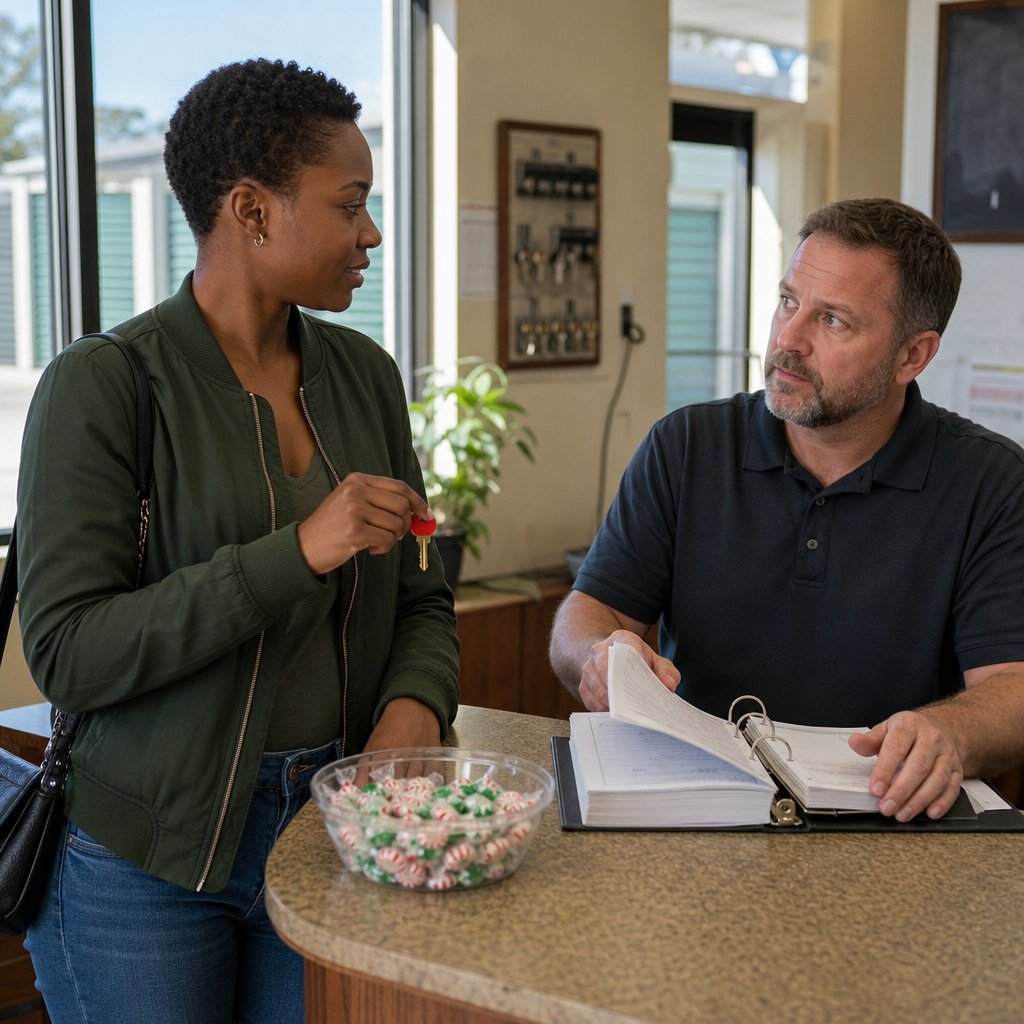
His old keyring was still there, tossed in with rubber bands and dead batteries—keys to places he’d claimed we didn’t have anymore. I dumped it into my palm, metal biting my skin, and there it was: a small brass key with a red plastic cap, the kind you get from a storage place or a lockbox. Not the house. Not the car. Not anything we shared.
My stomach dropped so hard it felt like an elevator cut loose.
I drove to the nearest storage facility I could think of, hands sweating on the steering wheel. The office smelled like stale air freshener and cheap carpet cleaner. I didn’t say Evan’s name. I didn’t say husband. I slid the key across the counter like it belonged to me because—legally, emotionally, morally—I was done asking permission to find out what he’d been doing with my life.
“I just need to cover one month,” I told the clerk, forcing my voice steady. “Unit access. Today.”
The clerk glanced at the key, then at me, like he could tell I was lying or bleeding. “We’ll need an ID. And the unit number.”
My fingers closed around the key. “The key should match,” I said, praying the universe hated Evan more than it hated me.
He hesitated, then reached under the counter for a binder.
When he flipped it open, my heart started to race—because if Evan had put it under his name, I was about to get turned away, and if he hadn’t… then he’d been sloppy.
The clerk’s eyes narrowed at a line on the page, and he looked up at me like he’d just recognized something he wasn’t supposed to mention.
The Ledger With My Birthday
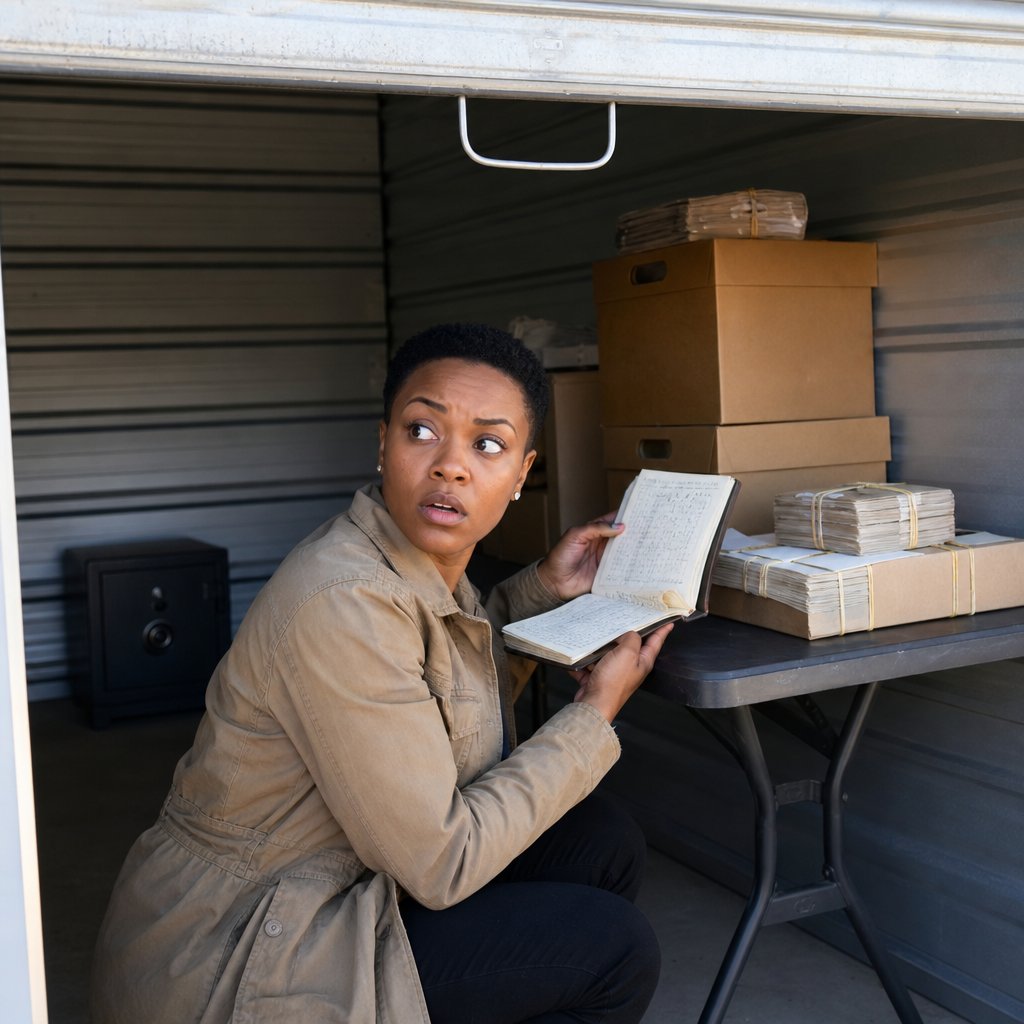
The hallway of the storage building was narrow and too bright, like it wanted to show you every mistake you’d ever made. My footsteps echoed as the clerk led me down rows of metal doors. I kept my face blank, but my hands shook so badly the key jingled against my rings.
“Unit’s current,” he said, voice flat, like he’d decided not to know me. He stopped at a door and pointed. “You’ve got the lock.”
My breath came in shallow pulls. I slid the key in. It turned too easily.
When the door rolled up, the smell hit first—dust and cardboard and that faint chemical scent of plastic bins left in heat. Inside wasn’t furniture or old clothes like a normal person’s unit. It was organized. Neat. Like a second office.
Three stacks of file boxes sat on a folding table, each box labeled in thick black marker with code-like abbreviations. A small safe squatted in the corner like a silent witness. On top of the table were cashier’s check stubs bound with a rubber band, edges worn from handling, and a notebook with a cracked spine.
I flipped the notebook open with two fingers, like it might bite.
Numbers filled the pages in tight columns. Dates. Amounts. Initials I didn’t recognize. And then, in the margin, a repeating pattern that made my vision blur: my birthday—written again and again, not as a date, but as a key. A cipher. A code he’d built around me like a joke I wasn’t allowed to laugh at.
My mouth went dry. This wasn’t a mistake. This wasn’t “forgotten.” This was a system.
I ran my thumb over the indented pen marks, feeling how hard he’d pressed, how certain he’d been.
Behind me, the metal door rattled—just once—like someone had touched it from the outside.
The Transfers Started After Dad
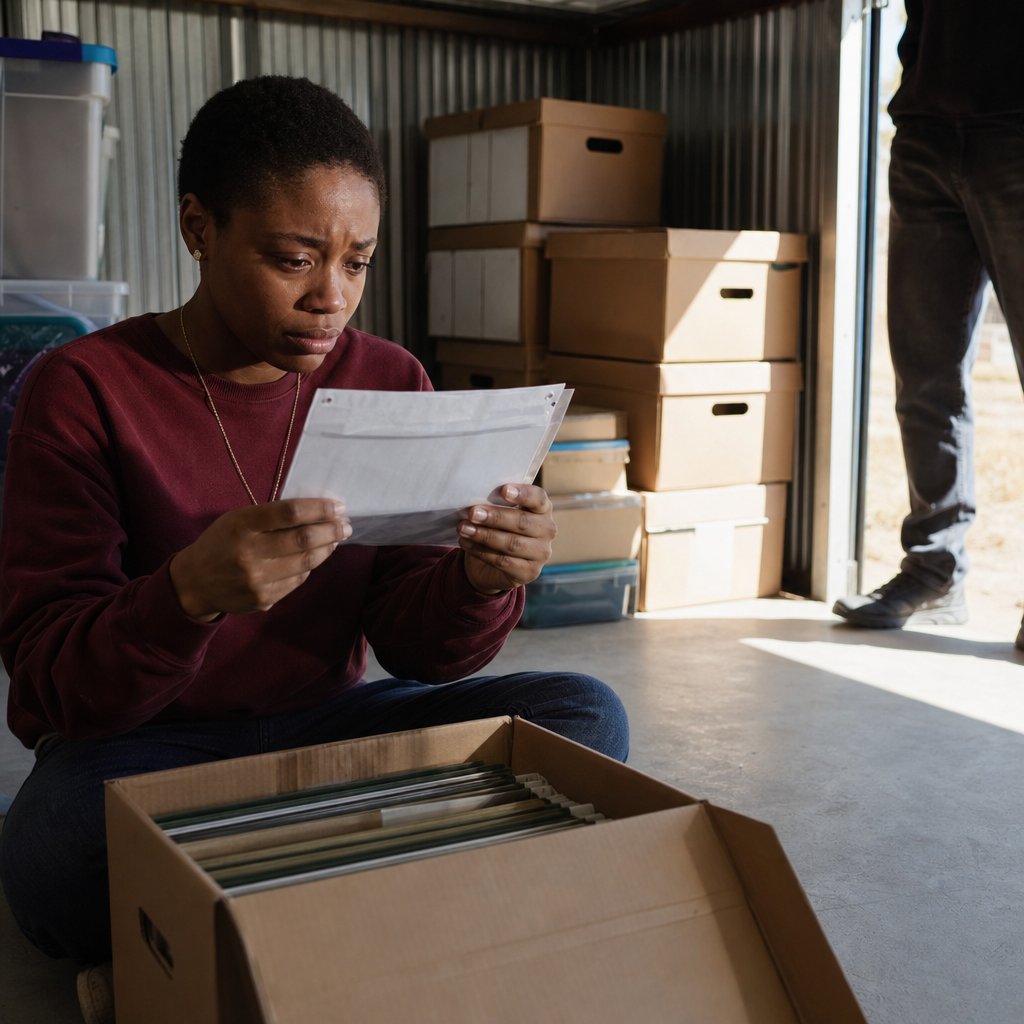
The rattling stopped. I didn’t move for a full five seconds, listening so hard my ears hurt. When nothing else happened, I swallowed the panic and forced my hands to work.
I opened the first file box. Inside were bank statements—clean, crisp pages in plastic sleeves, sorted by month like a scrapbook for theft. The second box held more of the same, plus deposit slips and withdrawal notes, all arranged with the kind of care Evan never gave our anniversary plans.
I pulled a stack labeled with a year I recognized immediately. The year my father died.
My fingers went numb as I flipped through. Small transfers. Weekly. Almost polite—like someone trying not to wake a sleeping person. Fifty here. Two hundred there. Always the same day of the week. Always the same pattern.
Then I saw the month stamp and my throat closed.
The first transfer happened exactly one month after the funeral. One month after I’d been sitting on my childhood bedroom floor, surrounded by my dad’s shirts that still smelled like his cologne, signing inheritance paperwork with hands that didn’t feel like mine.
Evan had made me tea that week. He’d rubbed my back. He’d told me, “Don’t worry about money, babe. I’ve got us.”
And while I was drowning in grief, he’d started siphoning—quietly, steadily—like he’d been waiting for the moment I couldn’t look too closely.
I pressed the heel of my hand to my mouth, tasting salt before I realized I was crying.
At the bottom of one statement was a deposit description that didn’t match the others—something labeled like “consulting,” bigger than the rest, a jump that made my stomach twist.
I flipped the page to see where it went—
—and a shadow crossed the storage unit opening, blocking the strip of light at my feet.
His Lawyer Called Me A Thief

I slammed the notebook shut and shoved the statements back into the box so fast I sliced my finger on a sharp paper edge. By the time I rolled the metal door down, my heart was punching my ribs like it wanted out.
I drove home on pure nerves, finger wrapped in a napkin, rehearsing lies I hated myself for. No one followed me. No one pulled up beside me. But the whole way, I felt watched—like Evan had finally turned his attention from my face to my hands.
The next afternoon, my lawyer’s office smelled like burnt coffee and copier toner. I sat in a chair that was trying too hard to be comfortable, staring at the framed degrees on the wall like they could protect me.
Gina Patel—my attorney, early 40s, Indian, sharp bob haircut, glasses that made her eyes look even more direct—walked in with a manila folder tucked under her arm. She didn’t sit right away. That’s how I knew.
“Evan’s counsel filed a motion this morning,” she said, voice controlled. “They’re accusing you of improper access. Snooping. ‘Self-help discovery.’”
My stomach dropped. “How would they even—”
Gina’s gaze didn’t flinch. “They’re also asking the court to block what they’re calling ‘irrelevant discovery’ related to outside accounts.”
Outside accounts. The words felt like a slap because they were admitting the thing they were pretending didn’t exist.
She slid the folder onto the desk between us like it was something dirty. “They want to bury this before we can make it admissible. And Mara—” Her voice softened just a fraction. “They’re hinting at sanctions.”
My cut finger throbbed in time with my pulse. “So he’s turning this into me being the criminal.”
Gina nodded once. “And there’s something else. Evan’s attorney attached an affidavit.”
She opened the folder, eyes scanning, then looked up at me with a tight expression. “He claims you threatened him.”
A Deal With A Clock
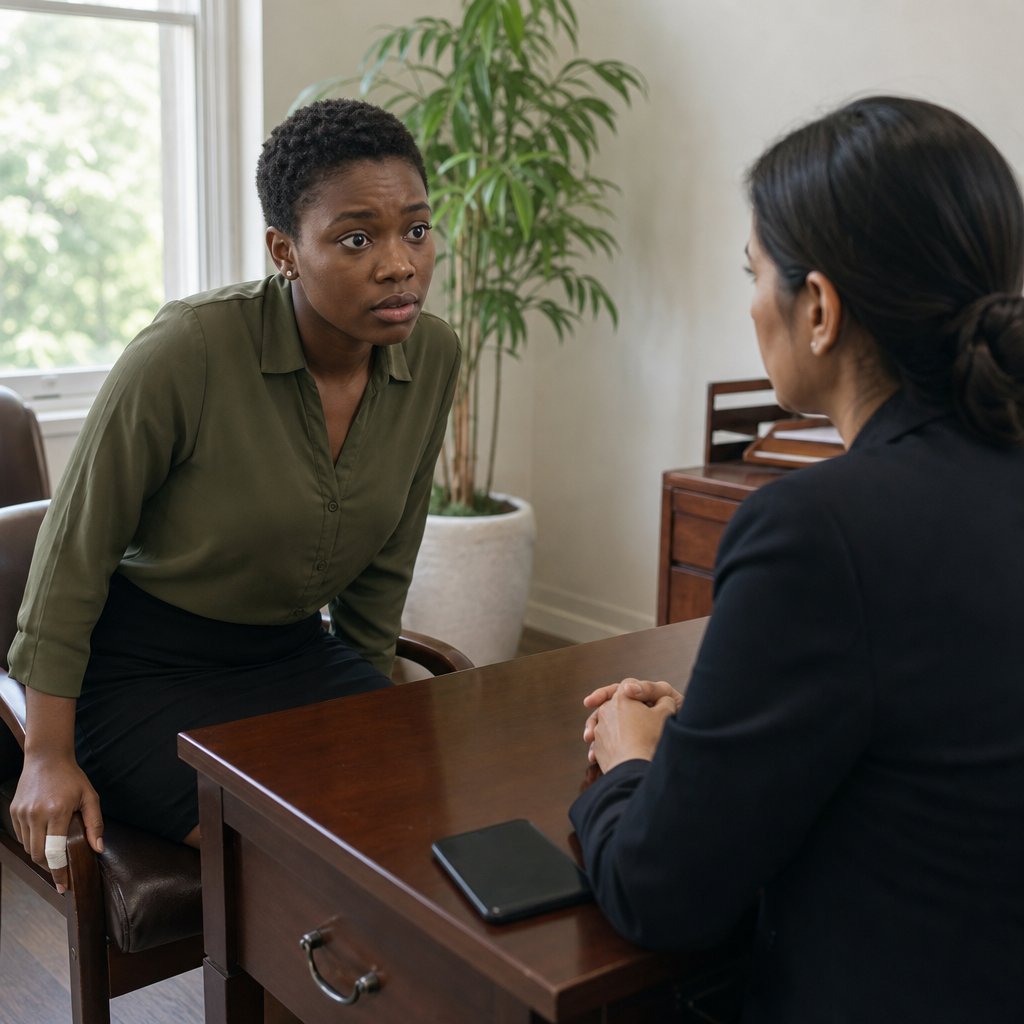
My lungs forgot how to work. “He’s lying,” I said, but it came out thin, like I was trying to convince myself more than Gina.
Gina sat down finally, elbows on the desk. “I know. But it’s a tactic. Make you look unstable. Make the court wary of letting us dig.” She tapped the folder once, a small sharp sound. “That’s why we need to move smarter now, not louder.”
“Then we get a forensic accountant,” I said. The words tasted like steel. “We stop guessing.”
For the first time, Gina’s expression shifted—approval, but also caution. “I was going to suggest the same.”
She made the call while I sat there twisting my bandaged finger, staring at the dust motes in the sunlight like they were tiny, floating deadlines. When she hung up, she didn’t even have time to breathe before her phone rang again.
She listened for ten seconds, and her eyebrows lifted in a way that made my stomach go cold.
“That was Evan’s counsel,” she said, ending the call. “They’re offering a lump sum settlement.”
“How much?” I asked, already knowing it would be framed like charity.
Gina told me the number. It was higher than anything he’d admitted he had. Not enough to match what I’d seen in that unit, but enough to make a tired person stop fighting.
“There’s a condition,” she added.
I laughed once, ugly. “Of course there is.”
Gina’s eyes held mine. “You have to sign within forty-eight hours. No extensions.”
My skin prickled. “Why the rush?”
Gina didn’t answer immediately. She just slid her phone across the desk, face-down, like it was suddenly dangerous.
“Because,” she said quietly, “people don’t put clocks on deals unless they’re trying to outrun something.”
My mind flashed to Mrs. Kline’s bank woman. The storage unit shadow. The weekly transfers.
And then Gina added, “Mara… he also asked where you’ve been going.”
The Money Route Had Turns

The forensic accountant didn’t look like a movie version of one. No slick suit. No smug grin. Harold Brooks was a Black man in his late 50s with salt-and-pepper hair and tired eyes, wearing a checked button-down like he’d rather be anywhere else than in the middle of my marriage’s autopsy.
He spread papers across Gina’s conference table in a fan, careful, methodical. The air smelled faintly like lemon cleaner and stress sweat.
“Evan’s ‘consulting’ deposits,” Harold said, tapping one page with a capped pen, “didn’t originate from any client you’d recognize. They’re tied to his employer.”
I sat up. “His job?”
Harold nodded. “Direct deposits routed into a side account. Not your joint. Then—” He slid another sheet forward. “Transferred out in small weekly pulls to an institution in another county. Not the same bank.”
Gina’s eyes sharpened behind her glasses. “So he was layering it.”
Harold’s mouth tightened. “Exactly. Then the trail goes quiet for a beat, and it reappears as cashier’s checks. Multiple. Repeated.” He lifted his gaze to me, and it felt like being seen through. “Cashier’s checks are a favorite when someone wants clean-looking money without a clean story.”
My hands clenched in my lap. I could feel the phantom weight of that notebook, the code built from my birthday like he’d branded the scheme with my skin.
Harold continued, voice steady like he’d done this too many times. “This isn’t accidental overdraft behavior. This is a mapped route. A pipeline.”
Gina leaned in. “Can you tie the cashier’s checks back to the purchases?”
Harold flipped to the last page, and the color drained from my face before he even spoke.
Because there, in the payee line—blurred in my memory but unmistakable in shape—was a name I’d seen before, on a temporary tag in my own driveway.
The SUV Had A Receipt
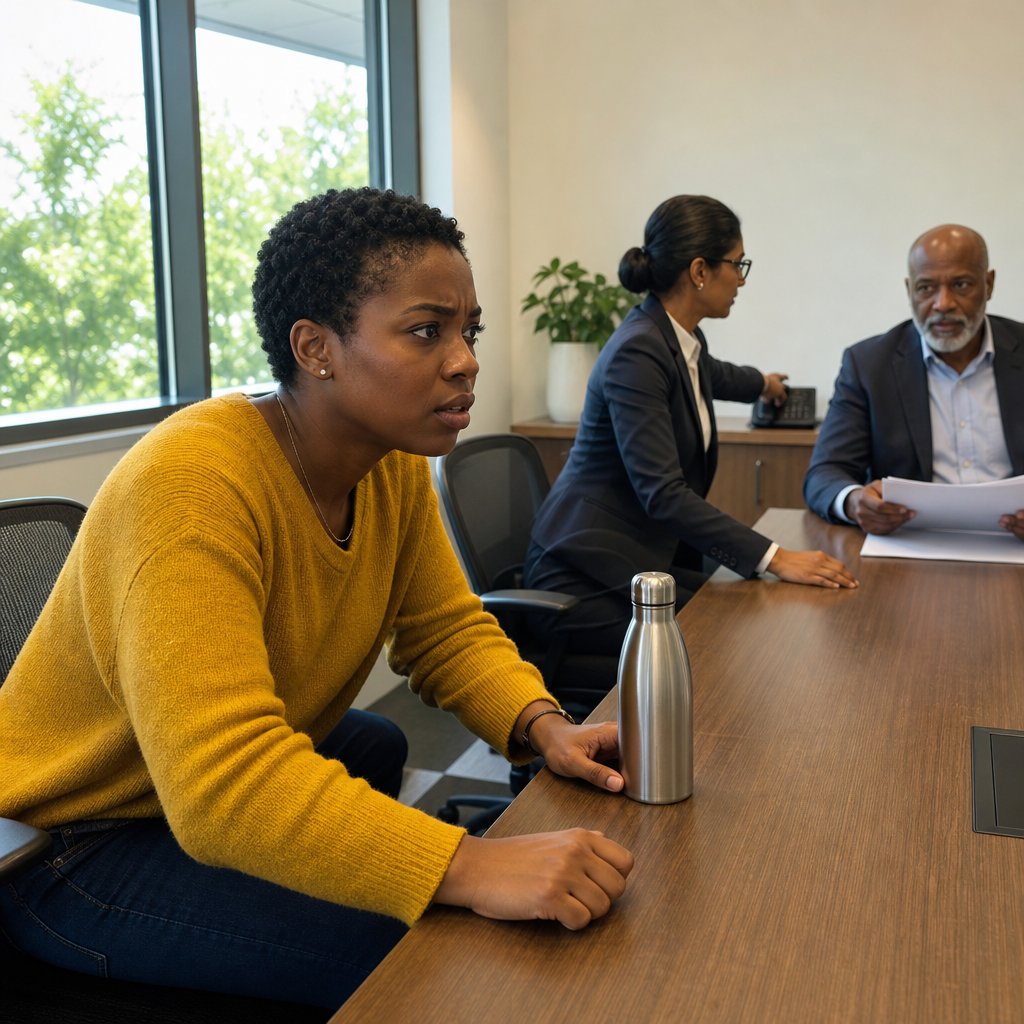
I didn’t say the name out loud. I didn’t trust my voice not to crack and give me away. My eyes just locked onto that payee line like it was a gun on the table.
“That’s a dealership,” I managed, the words scraping out of me. “It’s where—” I stopped, because even saying her name felt like inviting her into the room. “It’s connected to Tessa’s SUV.”
Tessa: Evan’s “just a friend,” late 20s, light-skinned with honey-blonde curls and a smile that always looked like she’d won something. The same woman who’d pulled into my driveway last month with a temporary tag still taped inside her rear window like a brag.
Harold’s eyes flicked to Gina, then back to me. “So you’ve seen the vehicle.”
“In my driveway,” I said, and the humiliation burned hotter than anger. “While he was telling me he was broke. While he was telling the court he couldn’t afford ‘extra’ support.”
Gina’s pen stilled. “If we can connect marital funds to a purchase for a new partner, that’s not just hiding assets. That’s dissipation.”
Harold slid another page forward. “This cashier’s check is dated two days before the SUV first appeared in your neighborhood.”
My stomach rolled. Two days. He’d timed it. He’d funded her shiny new life with money he was pretending didn’t exist, and then he’d parked it where I’d have to see it—where the neighbors could see it—like a punishment.
I gripped the edge of the table until my knuckles hurt. “So what now?”
Gina’s voice went quiet in that dangerous way. “Now we serve discovery requests that force him to explain this under oath.”
Harold nodded once. “And we move fast.”
As if on cue, Gina’s office phone buzzed on the credenza behind her. She glanced at it, then at me. “That’s Evan.”
My chest tightened. “Don’t answer.”
Gina reached for the receiver anyway, her eyes never leaving mine.
He Left Us Forty-Three
We served the discovery requests the next morning. Gina did it clean, official, undeniable. I walked out of her office feeling like I’d finally put my hands on the steering wheel of my own life again.
By afternoon, my bank app was open in my lap—screen face-down the second I realized I didn’t need to look to know something was wrong. The notification sound had already done the damage.
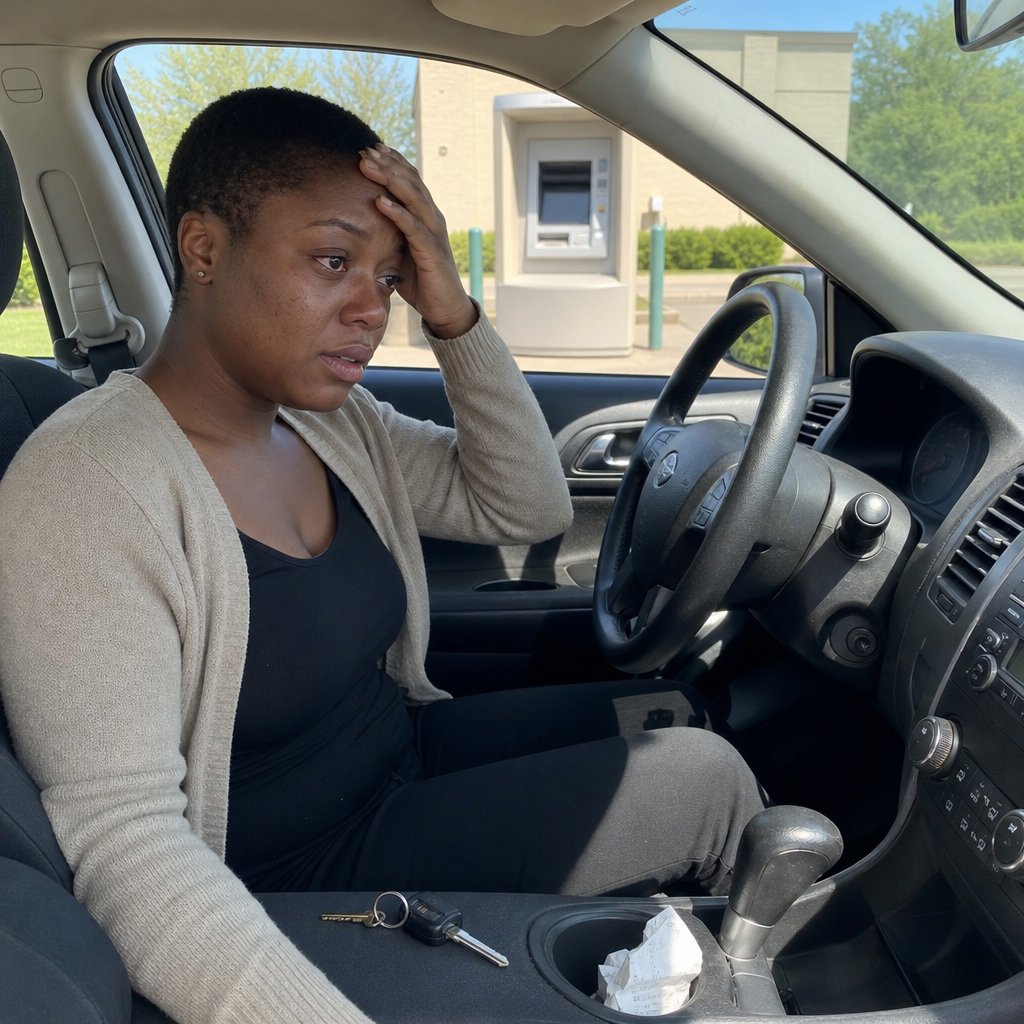
I went to the ATM instead because I needed the truth in a way that couldn’t be argued. The machine hummed, the air outside hot and smelling like asphalt, and I slid my card in with fingers that didn’t feel attached to me.
Balance: $43.
I stared at it until my eyes burned. Forty-three dollars. Not forty-three hundred. Not “tight this month.” Forty-three dollars like he’d emptied us on purpose and left a number that felt like a dare.
I stumbled back to my car and sat there, forehead against the steering wheel, listening to my own breath turn ragged. Rent. Groceries. Gas. The therapist bill Gina told me to keep because it proved “emotional distress.” All of it suddenly balanced on forty-three dollars and my pride.
Gina answered on the second ring. I could hear the shift in her posture through the phone. “Tell me.”
“He drained it,” I said, voice shaking. “The joint account. He left forty-three dollars.”
Silence—then a low, controlled exhale. “Okay. Okay. That’s retaliation. That’s escalation.”
I wiped my face with my sleeve and tasted salt. “Can he do that?”
“Not if we act now,” she said. “We’re filing for a temporary financial restraining order today.”
My hands trembled so badly I dropped my keys onto the passenger seat. Metal clinked against plastic, too loud in the small car.
“Mara,” Gina added, voice sharpened, “I need you to check something for me. Right now. Is Evan’s car at the house?”
He Broke The Order Anyway
The judge’s order came fast—temporary, blunt, the legal version of a hand held up in Evan’s face. No more withdrawals. No more transfers. Maintain the status quo. Gina read it to me like a prayer she didn’t fully believe in, and I still felt a thin ribbon of relief wrap around my ribs.
It lasted less than forty-eight hours.
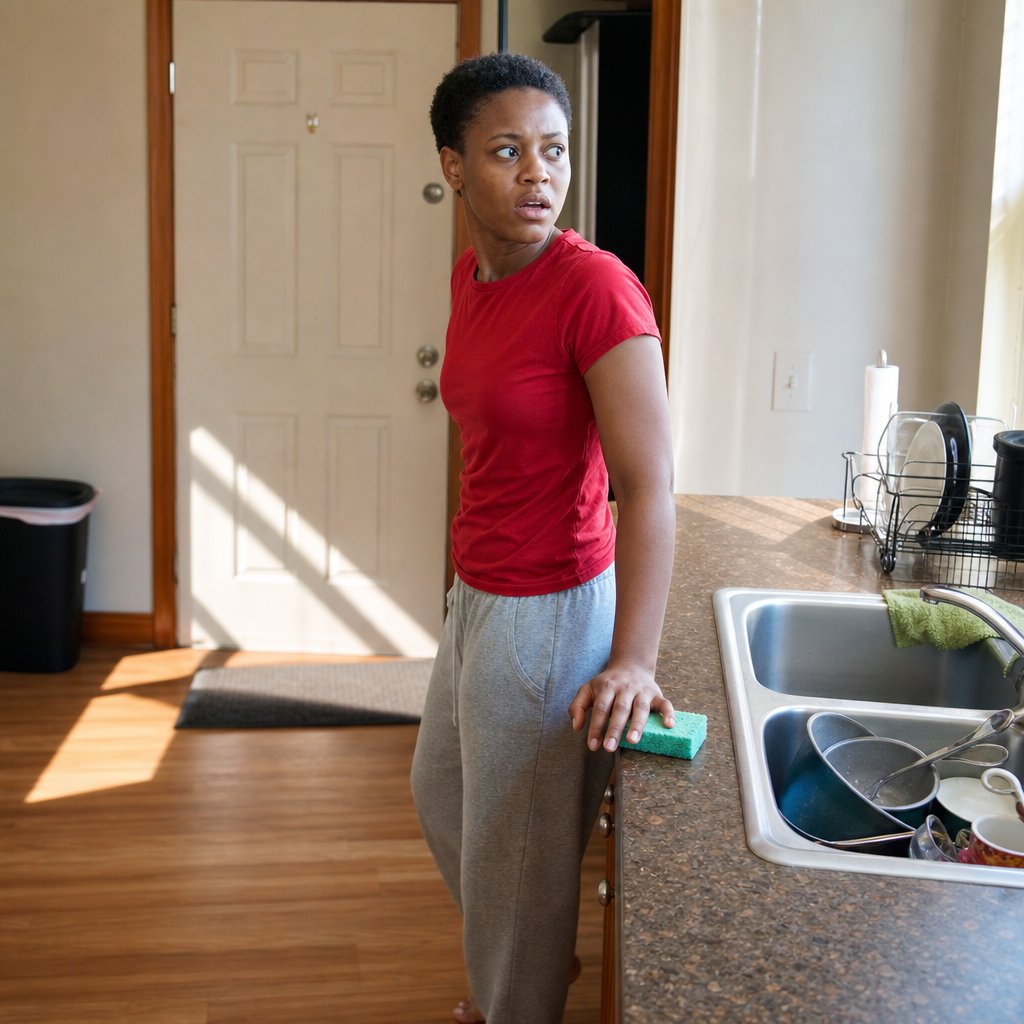
I was standing in my kitchen in sock feet, staring at the sink full of dishes I hadn’t had the energy to wash, when Gina called again. Her voice was clipped, all business with a tremor underneath.
“Mara,” she said. “He moved money after the order.”
The room tilted. My palm slid across the counter and hit something wet—dishwater, cold and greasy. The smell of old soap turned my stomach.
“That’s… that’s illegal,” I whispered.
“It’s contempt,” Gina confirmed. “We have the timestamps.”
I gripped the edge of the counter until my fingers ached. “So what did he say?”
Gina’s laugh was humorless. “He claims he ‘didn’t understand.’”
Of course he did. Evan, the man who could explain a fantasy football trade down to the decimal, suddenly couldn’t understand a court order written in plain language. He was scrambling now—less control, more panic. And panic made people sloppy.
Gina’s voice sharpened. “We’re filing for contempt and requesting immediate relief. But I need you to be ready for him to get meaner.”
I swallowed hard. “Meaner how?”
There was a pause, and in that pause I heard papers shifting, a chair creaking, the sound of Gina reading something she didn’t want to read to me.
“He’s alleging,” she said slowly, “that the hidden accounts are yours. That you set them up. That you’re trying to frame him.”
My vision went white at the edges. “What?”
“And,” Gina added, quieter, “he’s asking the court to freeze your access next.”
I opened my mouth to speak, to scream, to laugh—anything—but before I could, my front door handle jiggled once, then again, like someone was trying a key.
The Unit Was Already Listed
The front door handle jiggled like someone was trying a key. I froze in the hallway with my coat half on, heart thudding so hard it made my jaw ache, and when I yanked the door open Evan was right there—hood up, eyes darting past my shoulder like he was counting what I still owned.
“You can’t just show up,” I said, but my voice came out thin. He lifted both hands like I was the one threatening him.
“I’m just grabbing my stuff,” he said, too fast. “Storage unit. It’s being… cleared out.”
Cleared out. Like our marriage was a junk drawer.
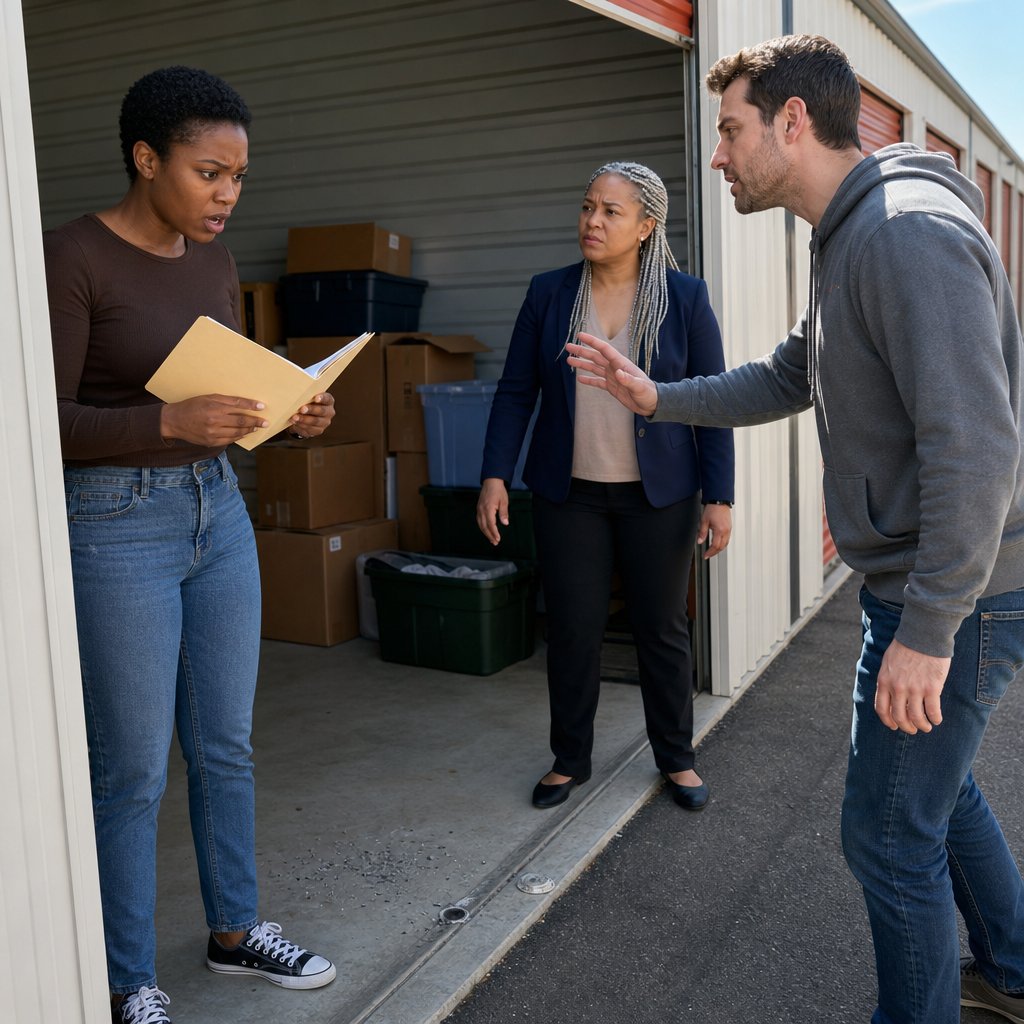
I didn’t argue. I stepped aside and watched him walk away, and the second his back turned I grabbed my folder—court order on top—and met Darlene outside. Darlene was my attorney’s paralegal, a compact woman with silver braids and the kind of stare that made men suddenly remember appointments. The locksmith she’d hired leaned against his van, chewing gum like this was just another Tuesday.
At the storage facility, Evan’s “auction guy” was already there: a tall white man in a puffer vest, clipboard tucked under his arm, smiling like he loved other people’s desperation. Evan stood beside him, jaw tight, acting broke in a fresh pair of sneakers.
Darlene held up the order. “This unit is subject to marital property restraint,” she said. Her voice didn’t shake once.
Evan’s face went blank, then bright with fake confusion. “That’s not—”
The manager arrived with a ring of keys. The metal clink sounded like handcuffs. The locksmith stepped in anyway, snapped on gloves, and drilled the lock while Evan watched like he was watching someone crack his ribs. When the door rolled up, the air that spilled out hit me—dust and old cardboard and the sour bite of mothballs.
Boxes. Plastic bins. A folded stroller we never used. A banker’s box sealed with fresh tape, sitting all the way in the back like it had been placed last.
“Inventory,” Darlene said quietly. “Photograph everything.”
Evan shifted his weight, eyes flicking to that back box. It was the first honest thing he’d done all month.
I walked straight to it and cut the tape with my key. Inside were file folders, neatly tabbed. One of them sat on top, written in thick black marker like someone wanted it found in an emergency.
MARA — IF NEEDED.
My throat tightened so hard it felt like swallowing glass. I slid it out, the cardboard edge scraping my palm, and Evan made a sound—small, involuntary—like he’d just realized the room had cameras.
I opened the folder, and the first page was a prewritten plan with my name on it, like he’d been practicing leaving me for years, and the second page—
—had account numbers I’d never seen in my life.
Evan took one step toward me, hand lifting, and Darlene moved between us without even looking back.
“Do not touch her,” she said, flat as a blade.
I stared down at the numbers, at the clean typed lines, and felt my whole body go cold as Evan whispered, almost pleading, “Mara, put that away,” and I realized this wasn’t just hiding money—this was a map for how to disappear with it.
The Voice From Nowhere
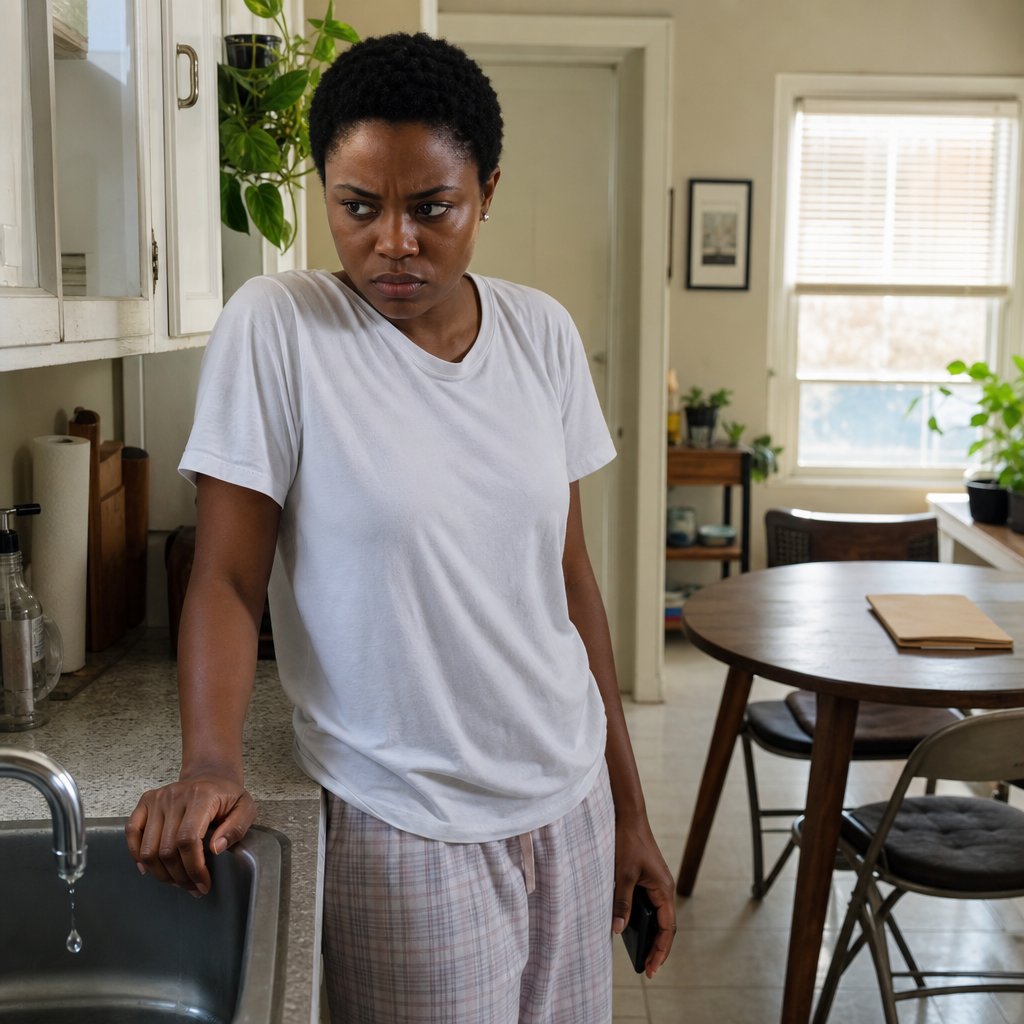
That night I didn’t sleep. I laid the folder on my kitchen table like it was radioactive and I kept walking past it, touching the edge with one finger like it might bite. The air smelled faintly like lemon cleaner because I’d scrubbed the counters at midnight, furious at myself for trying to disinfect a life that was already contaminated.
By morning, my hands were steady in a way that scared me.
Darlene had taken photos, logged everything, sealed the box back up. My attorney said the evidentiary hearing was tomorrow, and the words landed in my chest like a countdown. Tomorrow the judge would see what Evan had been doing while he played broke. Tomorrow he’d have to answer out loud.
I was standing at my sink, staring at the tap drip—slow, measured, infuriating—when my phone buzzed on the counter. Unknown number. I didn’t want to answer. I answered anyway, because curiosity is just fear wearing a different outfit.
“Mara?”
His voice was hoarse, like he’d been swallowing gravel. For a second I pictured him somewhere dramatic—hotel room, suitcase open, cash stacked neat. Then I pictured him exactly as he always was: alone, cornered, calculating.
“What do you want, Evan,” I said.
He exhaled hard, and I heard traffic in the background, the wet hiss of tires on pavement. “Please,” he said, and it didn’t sound like the way he used to say please when he wanted me to calm down. It sounded like a man who’d finally met a consequence he couldn’t flirt past.
“Please don’t ruin me.”
I closed my eyes. My fingers curled around the edge of the counter until my knuckles ached. He knew. He knew tomorrow would expose everything—the credit-union membership, the side accounts, the deposits labeled “consulting” like a joke only he was in on. He knew I had the folder that proved he’d planned for this.
“You already did this,” I said quietly. “To yourself. To me.”
His breath hitched like he was about to cry, and then his voice turned sharp, panicked. “I can fix it. I can—just tell me what you want. Just don’t—”
Don’t what? Don’t bring the folder? Don’t ask the judge to freeze everything? Don’t say the number out loud: $312,418 I didn’t know we had?
I stared at the folder on my table, my name on the tab like a threat he’d written to himself, and I realized I had a choice—quiet settlement, or public proof. Mercy, or a record that would follow him forever.
“Evan,” I said, and my voice surprised me with how calm it was, “where are you right now?”
There was a pause long enough to feel like a door closing, and then he answered—too carefully—
“Not where you think.”
Would you expose the secret or keep it quiet?